21 Entryway Remodel Ideas That Create a Lasting Impression
Your entryway is the first thing people see when they walk into your home. It sets the tone for every room that follows. Most people treat it like a dumping ground for shoes, bags, and mail they’ll never open.
Let’s fix that.
Whether you have a grand foyer or a narrow strip of floor between the door and the living room, these 21 ideas cover every size, budget, and style. No filler, no vague inspiration. Just real upgrades that work.
1. Install a Statement Front Door
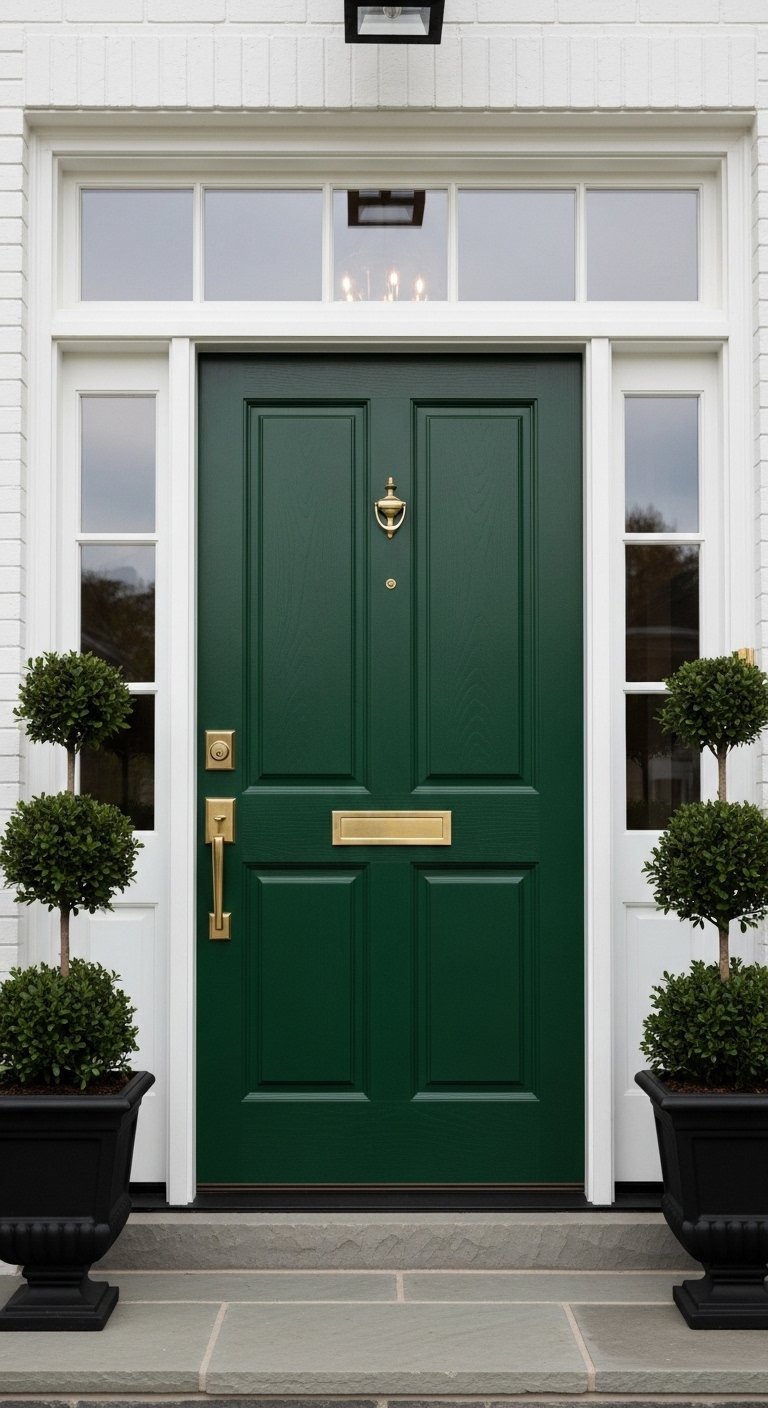
The front door is the entryway before the entryway. If it looks tired, nothing you do inside fully compensates for it.
A statement front door works through:
- Bold color: Deep navy, forest green, matte black, or oxblood red all perform well against neutral exteriors
- Hardware upgrade: Replace brass builder-grade hardware with matte black or brushed nickel
- Glass inserts: Sidelights or a transom window add light without sacrificing privacy
- Material upgrade: A solid wood or steel door reads as quality immediately
A new front door also delivers one of the highest ROI figures of any home improvement project. The function and the aesthetics both improve at once.
2. Add a Console Table
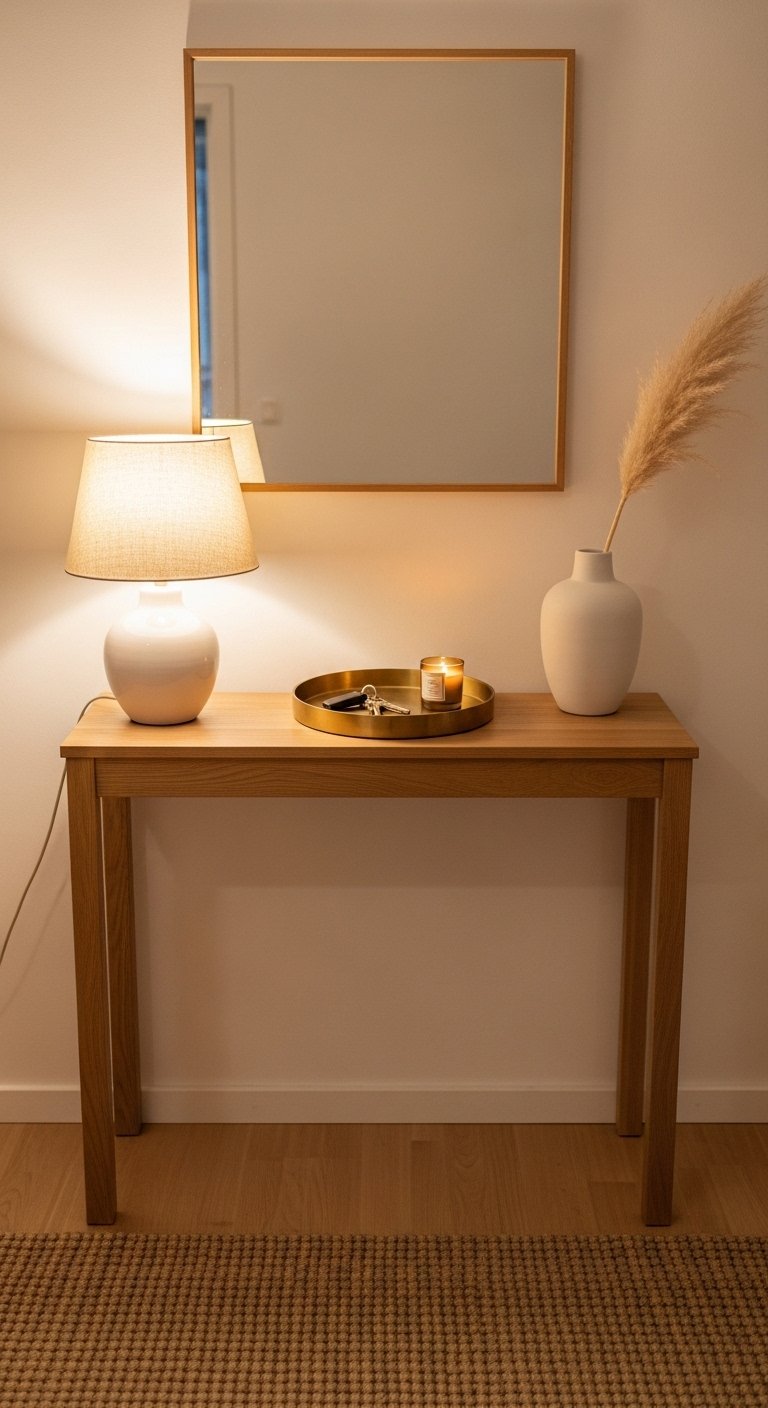
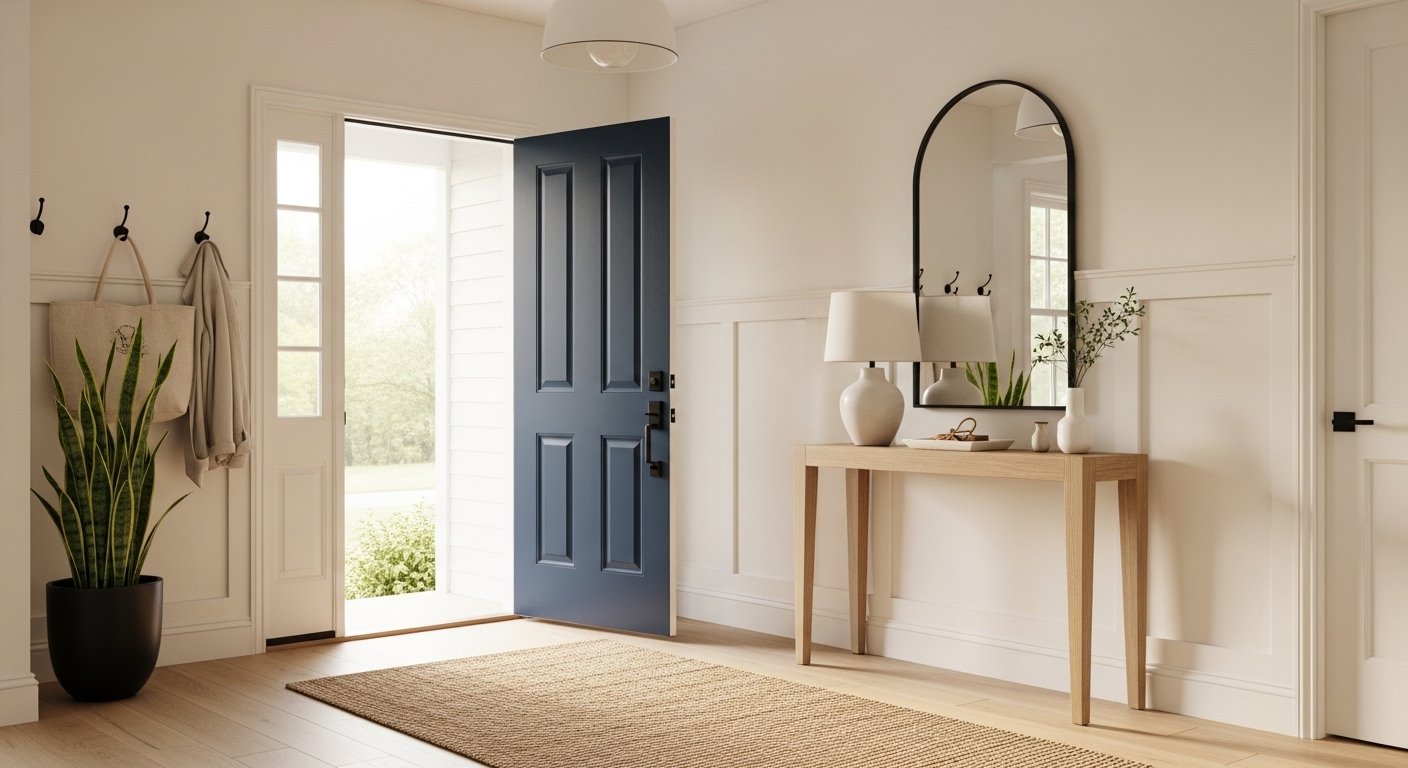
A console table gives your entryway a purpose and a focal point in one move. Without it, the space is just a floor between the door and the rest of the house.
Place it against the wall opposite or beside the entry door. Style it with:
- A lamp for warm light
- A small tray for keys and everyday items
- One plant or small vase
- A mirror or artwork above it
Keep the surface edited. A console table with too many objects looks like a shelf in a storage unit. Three to five items maximum.
3. Hang a Large Mirror
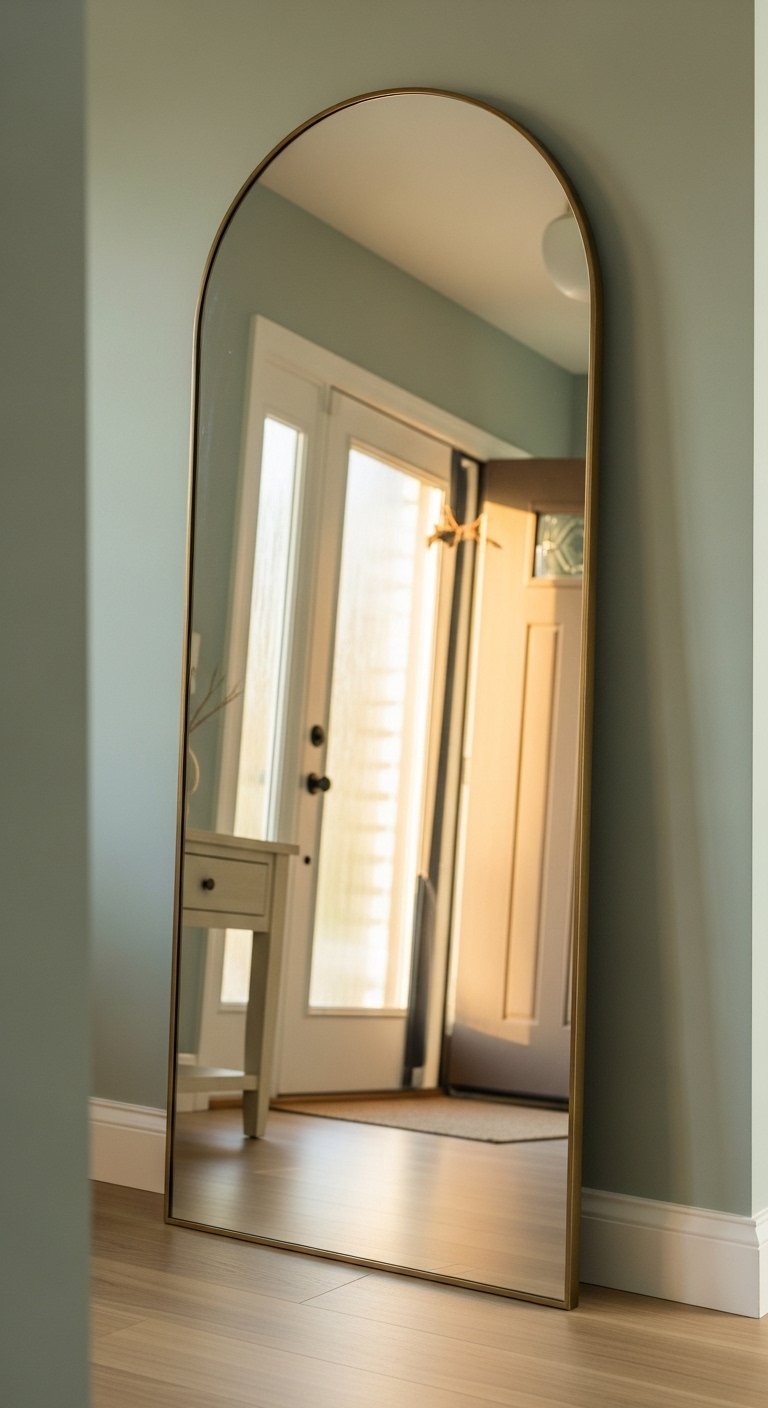
A mirror in the entryway does three things: it reflects light, makes the space feel larger, and gives you one last look before you leave the house. That last one is underrated.
Mirror styles that work well in entryways:
- Arched mirror for softness and height
- Sunburst mirror for a traditional or eclectic look
- Full-length leaning mirror for narrow spaces
- Oversized rectangular mirror for a bold, modern statement
Size up rather than down. A small mirror on a large wall looks timid. A large mirror on any wall looks intentional.
4. Build a Mudroom Bench With Storage
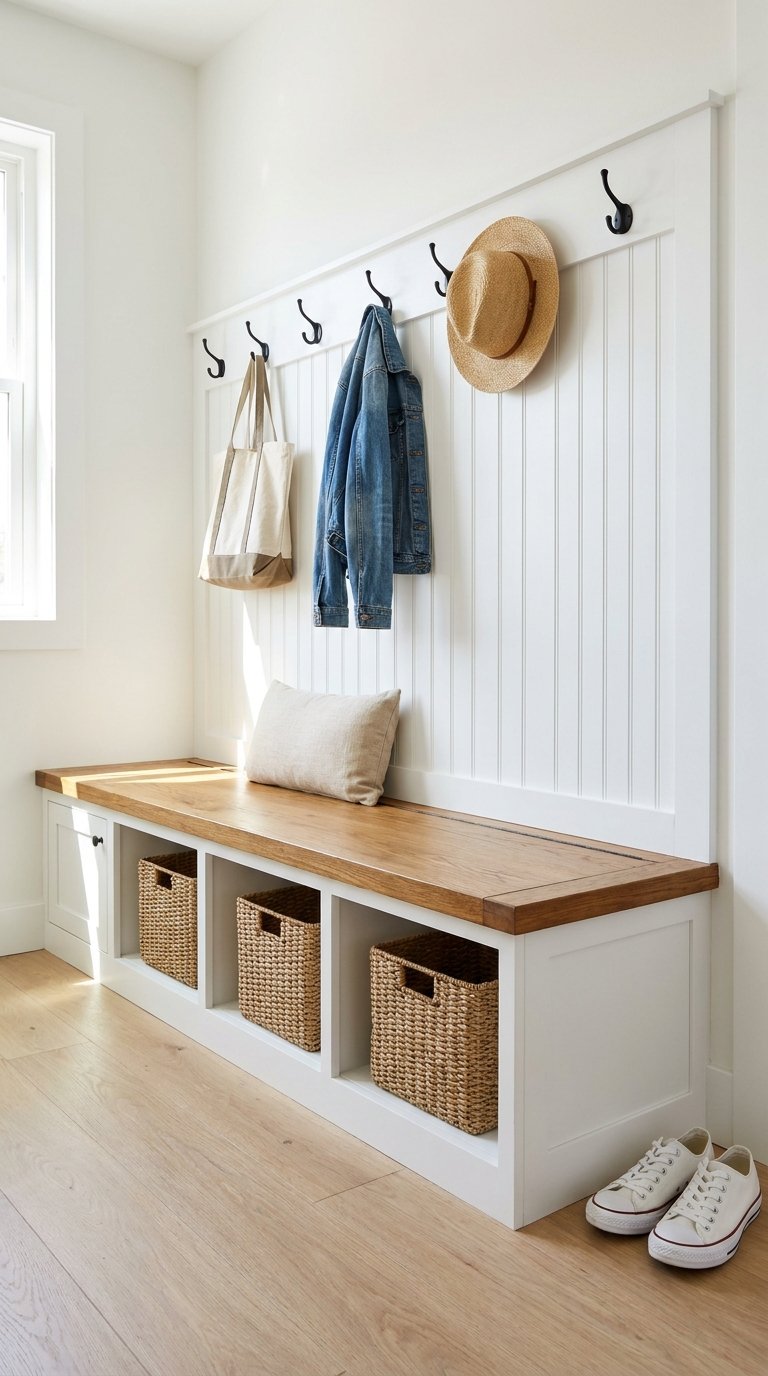
If your entryway handles daily foot traffic, a mudroom bench with built-in storage solves multiple problems at once. Shoes come off and go somewhere. Bags have a place. The floor stays clear.
A functional bench setup includes:
- A bench seat with hinged lid for hidden shoe storage
- Hooks above the bench for bags, coats, and keys
- Cubbies or baskets below for additional shoe storage
- A durable seat surface (wood, upholstered with performance fabric, or leather)
This is the single most functional upgrade for a high-traffic entryway. FYI, it works just as well in a narrow hallway as it does in a larger foyer.
5. Upgrade Your Lighting Fixture
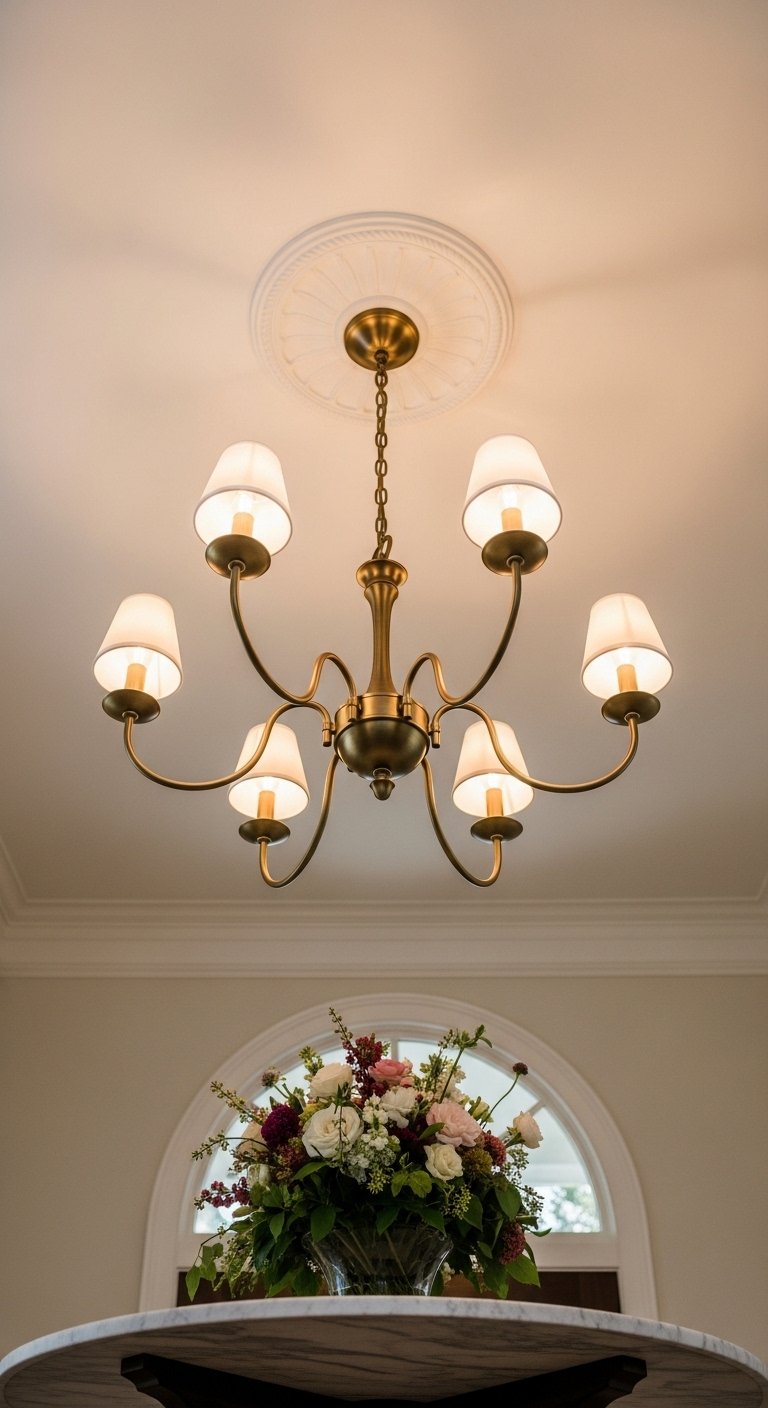
Builder-grade entryway lighting is almost always a flushmount fixture chosen for cost, not design. Replacing it changes the ceiling and the mood of the entire space.
Options by entryway height:
- Low ceiling (under 8 feet): Semi-flush or flush mount with a design-forward shade
- Standard ceiling (8 to 9 feet): A pendant light or small chandelier
- High ceiling (10 feet or more): A statement chandelier or large lantern pendant
The entryway light fixture is the jewelry of the space. It sits at the top of the visual field and sets the style tone immediately.
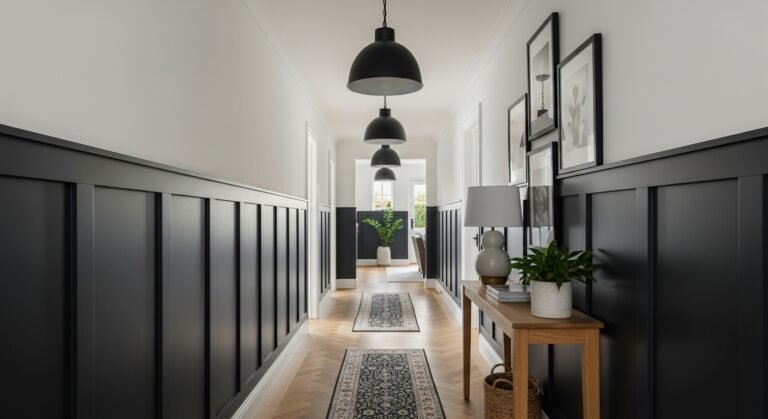
6. Add Wainscoting or Board and Batten
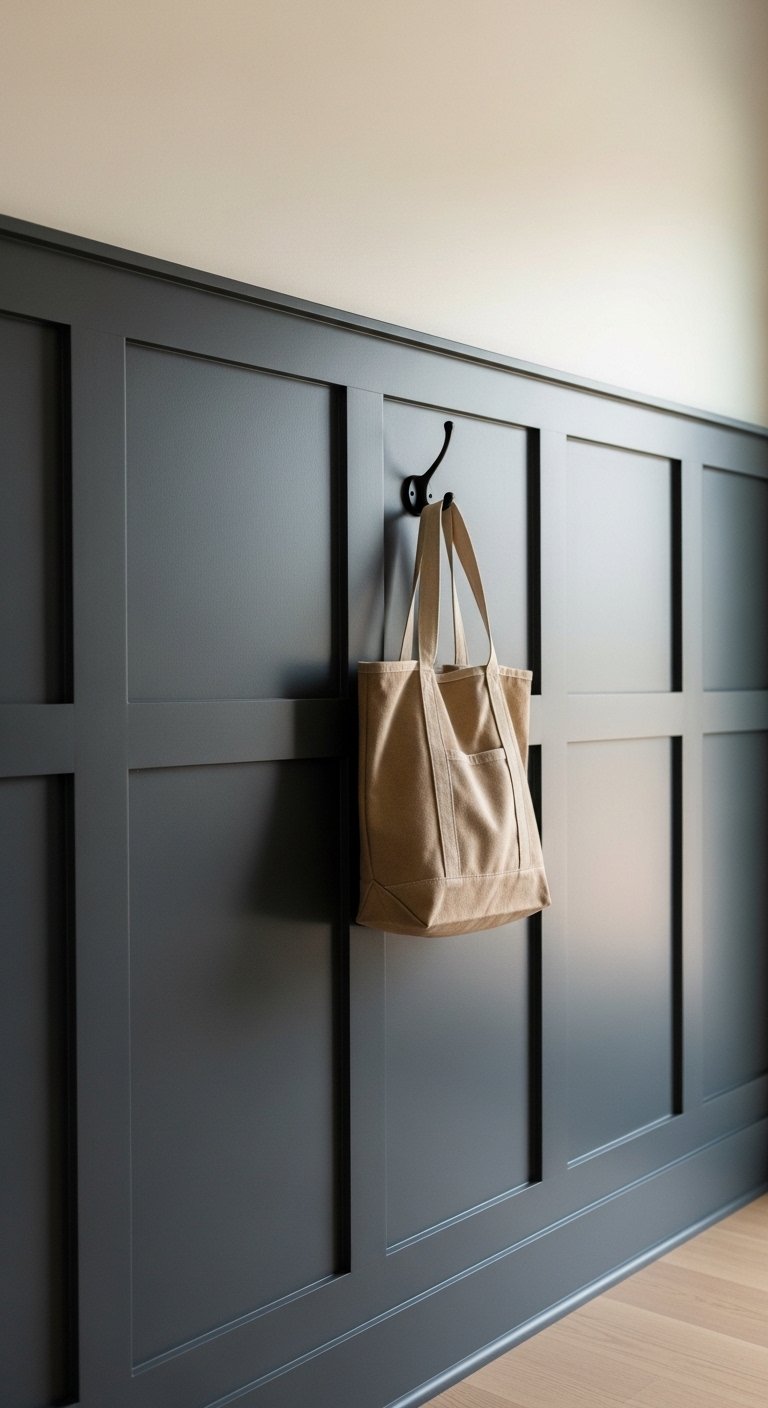
Wainscoting and board and batten add architectural detail to walls that are otherwise just flat painted surfaces. In an entryway, where wall space is often limited, this treatment has an outsized visual impact.
Both options work well:
- Wainscoting: Recessed panel detail, traditional and formal
- Board and batten: Flat vertical battens on a flush surface, more casual and modern
Paint the panels the same color as the wall for a subtle tonal effect, or go two-tone with a darker lower half and lighter upper half for stronger contrast.
This is a weekend DIY project for most entryway sizes. Material cost runs between $100 and $400 depending on ceiling height and linear footage.
7. Install Hardwood or Tile Flooring
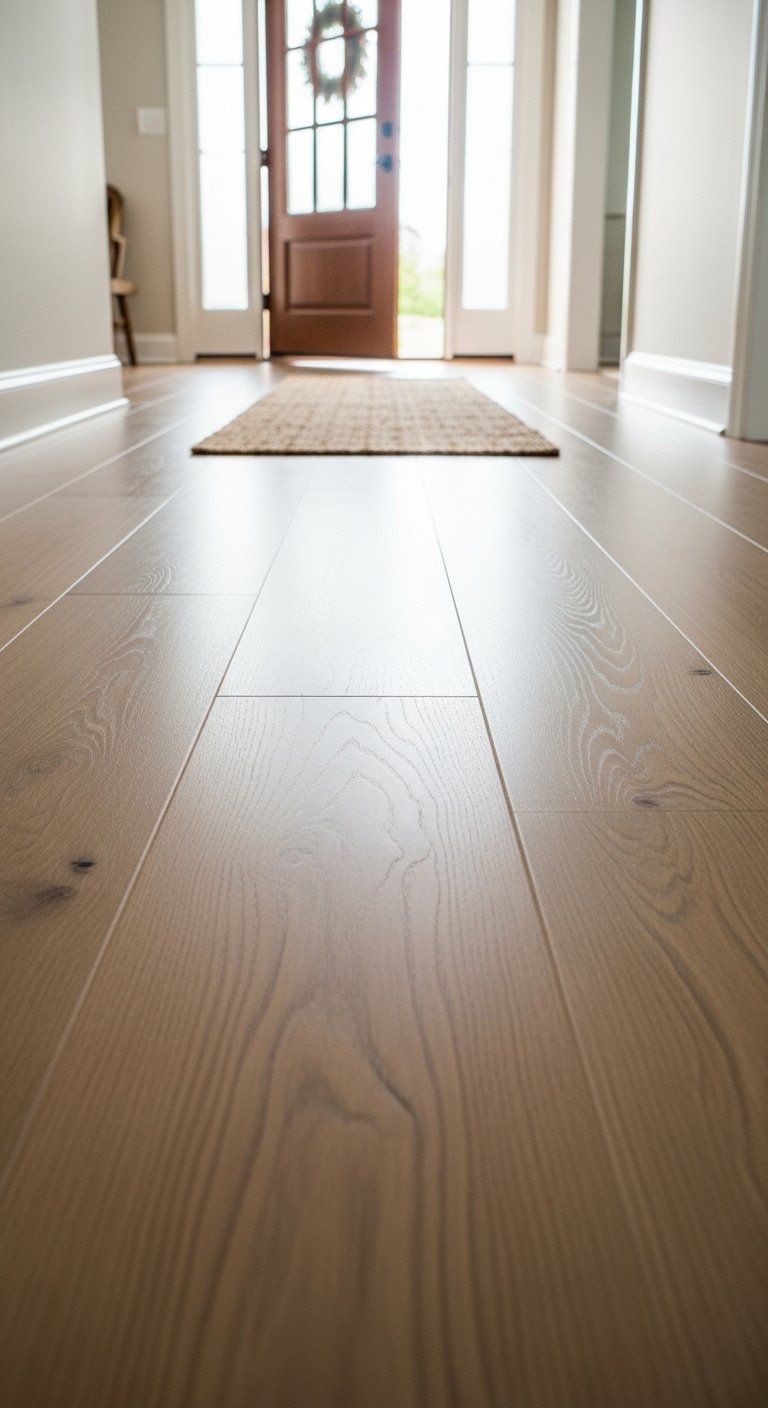
The entryway floor takes more abuse than any other floor in your home. Dirt, moisture, shoes, and pets all hit it first. If your current flooring is worn, stained, or simply outdated, replacing it transforms the entire space.
Best flooring choices for entryways:
- Porcelain tile: Most durable, handles moisture perfectly, wide range of styles
- Hardwood: Warm and classic, requires sealing near the door
- Engineered hardwood: More moisture-resistant than solid hardwood, same visual result
- Large-format stone tile: High-end look, very durable, heavier and more expensive to install
Avoid carpet in entryways entirely. It traps dirt, shows wear quickly, and sends the wrong message the moment guests walk in.
8. Create a Gallery Wall
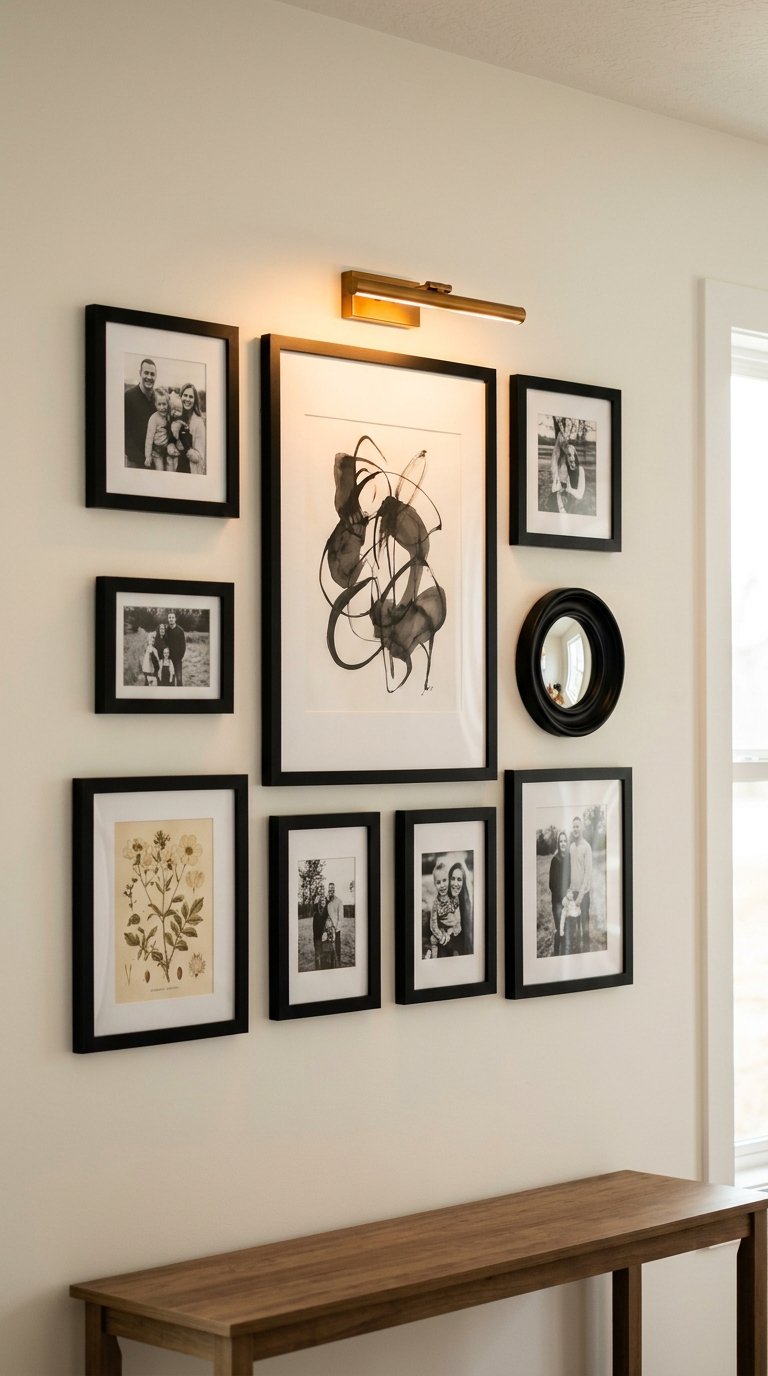
A gallery wall in the entryway personalizes the space immediately. It tells guests something about who lives there before they ever sit down.
How to do it without it looking chaotic:
- Choose one frame finish and stick to it (all black, all gold, all white)
- Mix frame sizes but keep consistent spacing between them (3 to 4 inches)
- Anchor the arrangement with one large piece in the center
- Mix photos, prints, and one or two dimensional objects (a small mirror, a decorative plate)
Lay the arrangement out on the floor first before putting a single nail in the wall. This step saves significant frustration.
9. Add a Coat Rack or Wall-Mounted Hooks
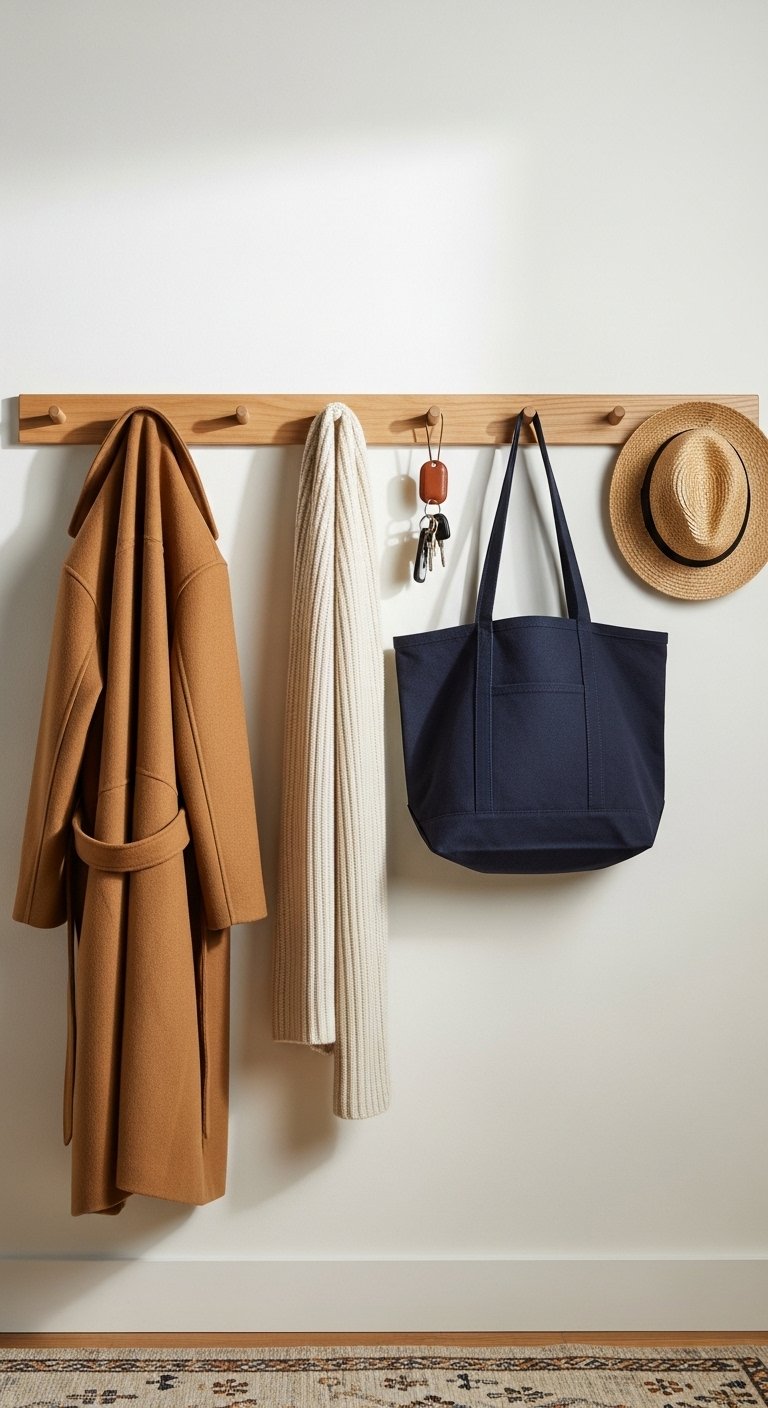
Coats, bags, and umbrellas need somewhere to go the moment someone walks in. Without a designated spot, they land on furniture, chairs, or the floor. A wall-mounted hook rail or a freestanding coat rack solves this with minimal investment.
Hook styles worth considering:
- Shaker-style peg rail: Classic, works in farmhouse and transitional spaces
- Black iron hooks: Industrial and modern, pairs with most contemporary styles
- Brass or gold hooks: Warm and elegant, works in traditional and glam interiors
- Oversized single hooks: Sculptural and modern, works as decor and function
Mount the rail at 66 to 72 inches from the floor for adult coat use. Lower for households with children.
10. Install Built-In Shelving or Cabinetry
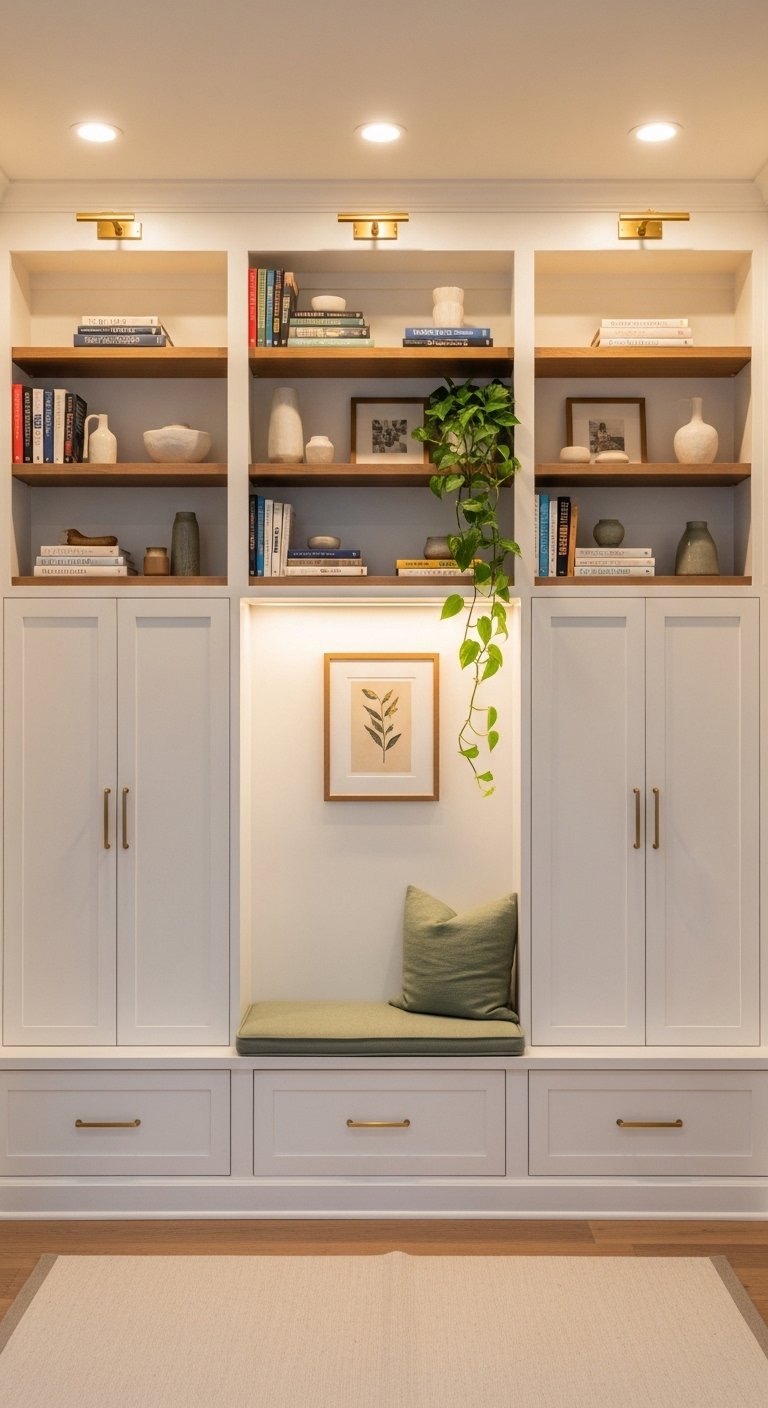
Built-in shelving or cabinetry turns dead wall space into organized, functional storage. In a larger entryway or foyer, floor-to-ceiling built-ins on one wall create a custom look that no freestanding furniture replicates.
Built-in options range from:
- Open shelving for display and accessible storage
- Closed cabinetry for hidden storage of seasonal items
- A combination of both: closed below, open above
The hallmark of a well-designed entryway is storage that handles the mess before it reaches the rest of the house. Built-ins do that better than any other single upgrade.
11. Paint an Accent Wall
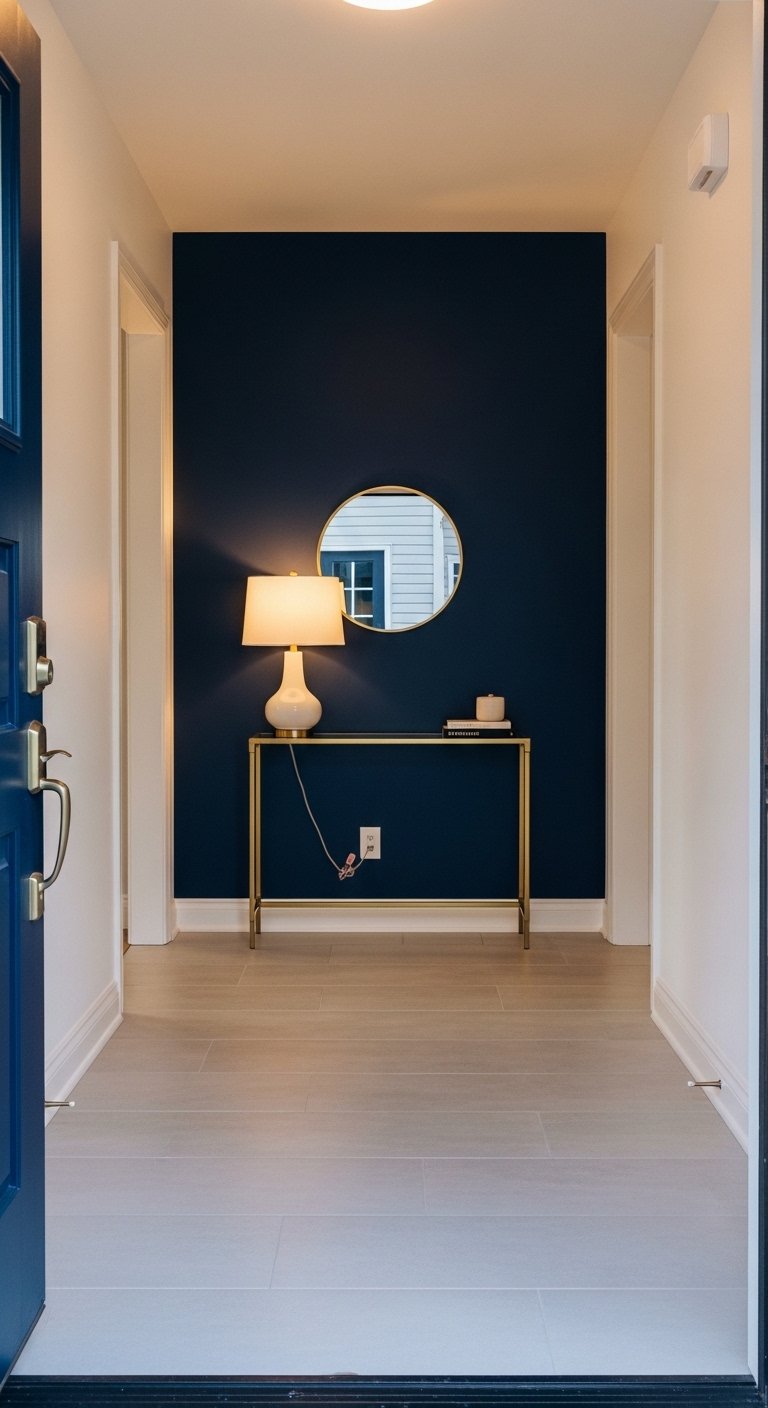
An accent wall in the entryway creates a strong visual anchor point from the moment the front door opens. It directs the eye and sets a color tone for the home.
Colors that work well as entryway accent walls:
- Deep navy or midnight blue
- Warm terracotta or burnt sienna
- Forest or sage green
- Charcoal grey
- Rich burgundy or oxblood
Avoid painting the wall directly opposite the front door a light neutral. It disappears. The accent wall needs enough contrast to function as a focal point.
12. Add a Rug
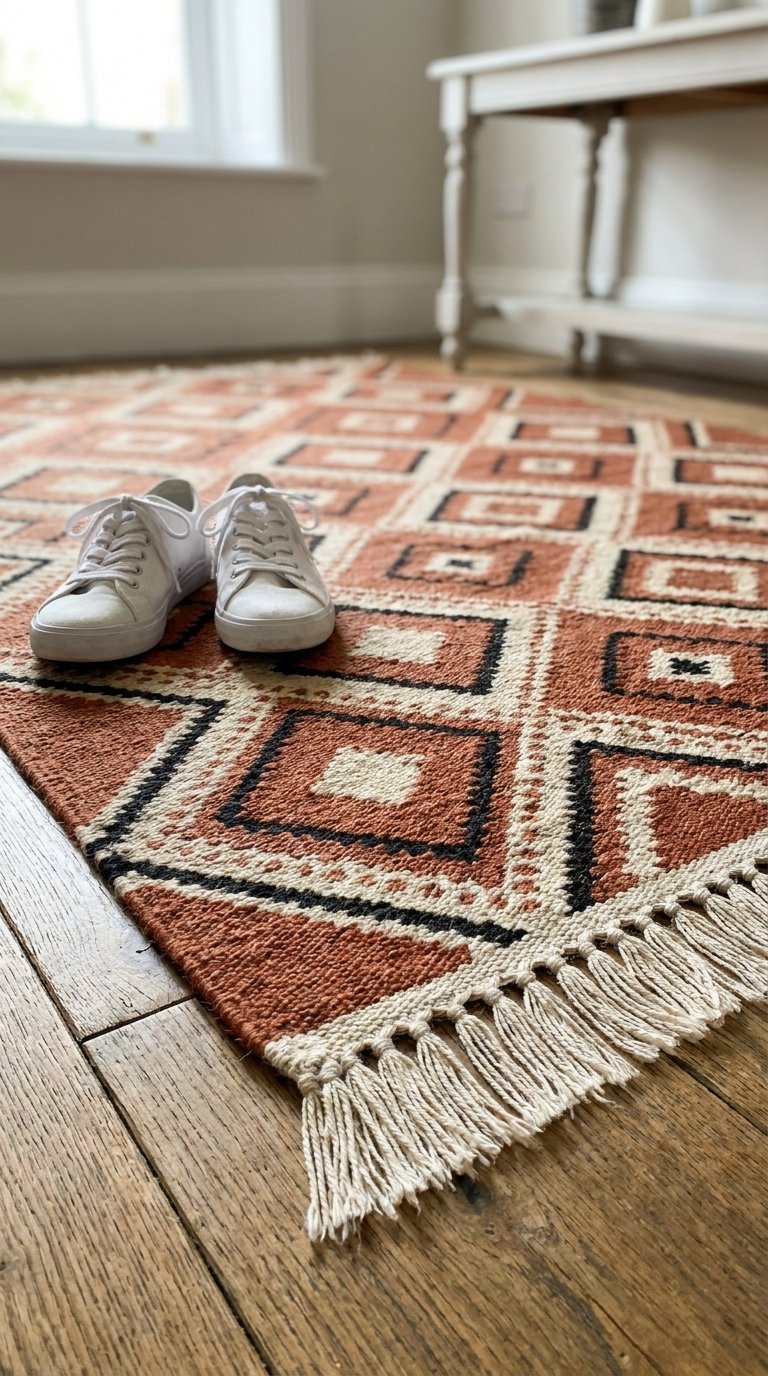
An entryway rug defines the space and protects the floor at the same time. Without it, even a beautifully remodeled entryway feels unfinished.
Rug requirements for entryways:
- Material: Wool, jute, or polypropylene all handle traffic well. Avoid delicate materials near the door.
- Size: The rug should be large enough that two people standing in the entry both stand on it
- Pattern: Patterns hide dirt and wear better than solid rugs in high-traffic areas
- Backing: Non-slip backing is non-negotiable on hard floors
Replace entryway rugs every two to three years. They take a beating and a worn rug undermines everything around it. :/
13. Install Wallpaper on the Entry Wall
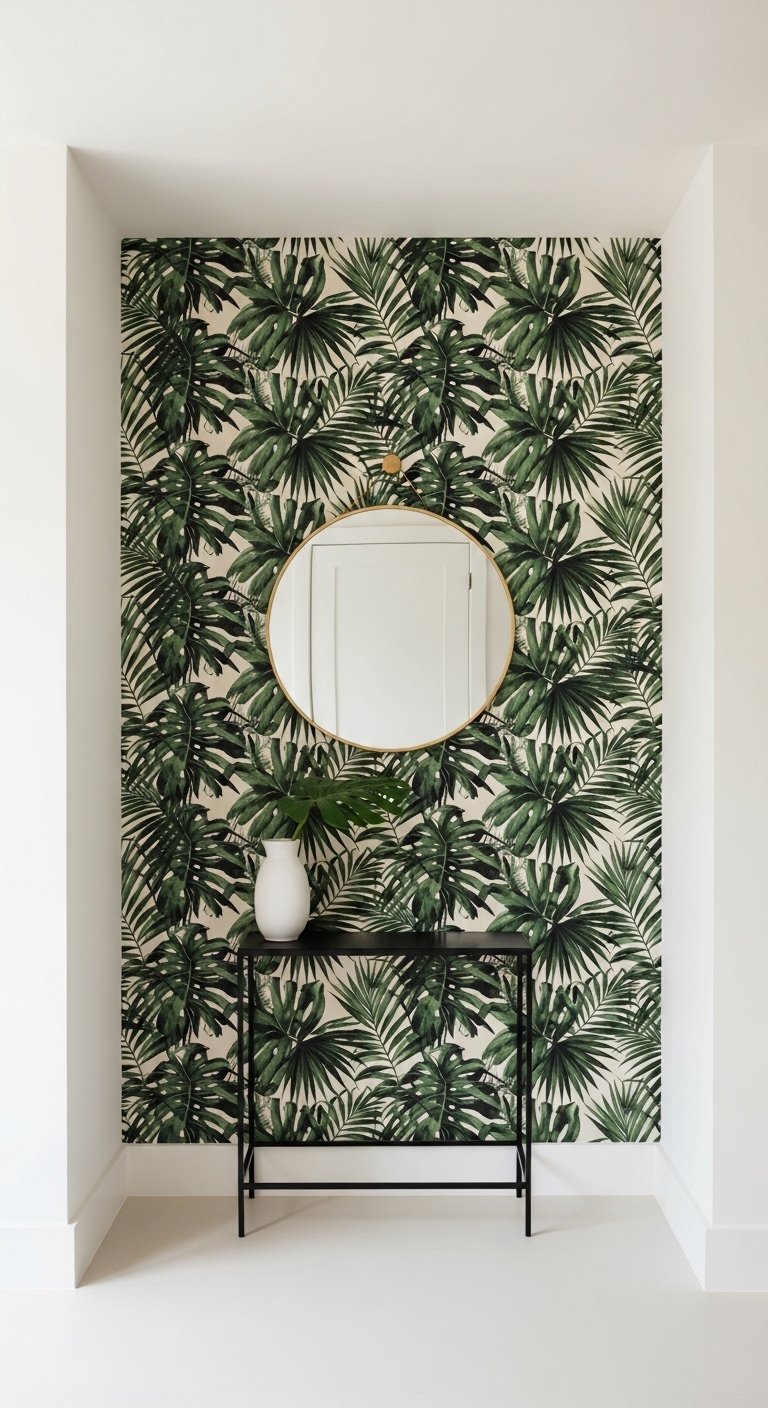
Wallpaper in the entryway creates immediate impact in a space where you only need to cover a limited amount of wall. The small square footage makes it one of the most cost-effective places in a home to use wallpaper.
Patterns that work well in entryways:
- Large-scale botanical prints
- Geometric patterns in two or three colors
- Textured grasscloth for subtle depth
- Classic stripe in a bold color combination
- Abstract painterly patterns for a modern, artistic feel
Use peel-and-stick options if you rent or want a lower-commitment version. Quality has improved significantly in the last few years.
14. Upgrade Your Door Hardware
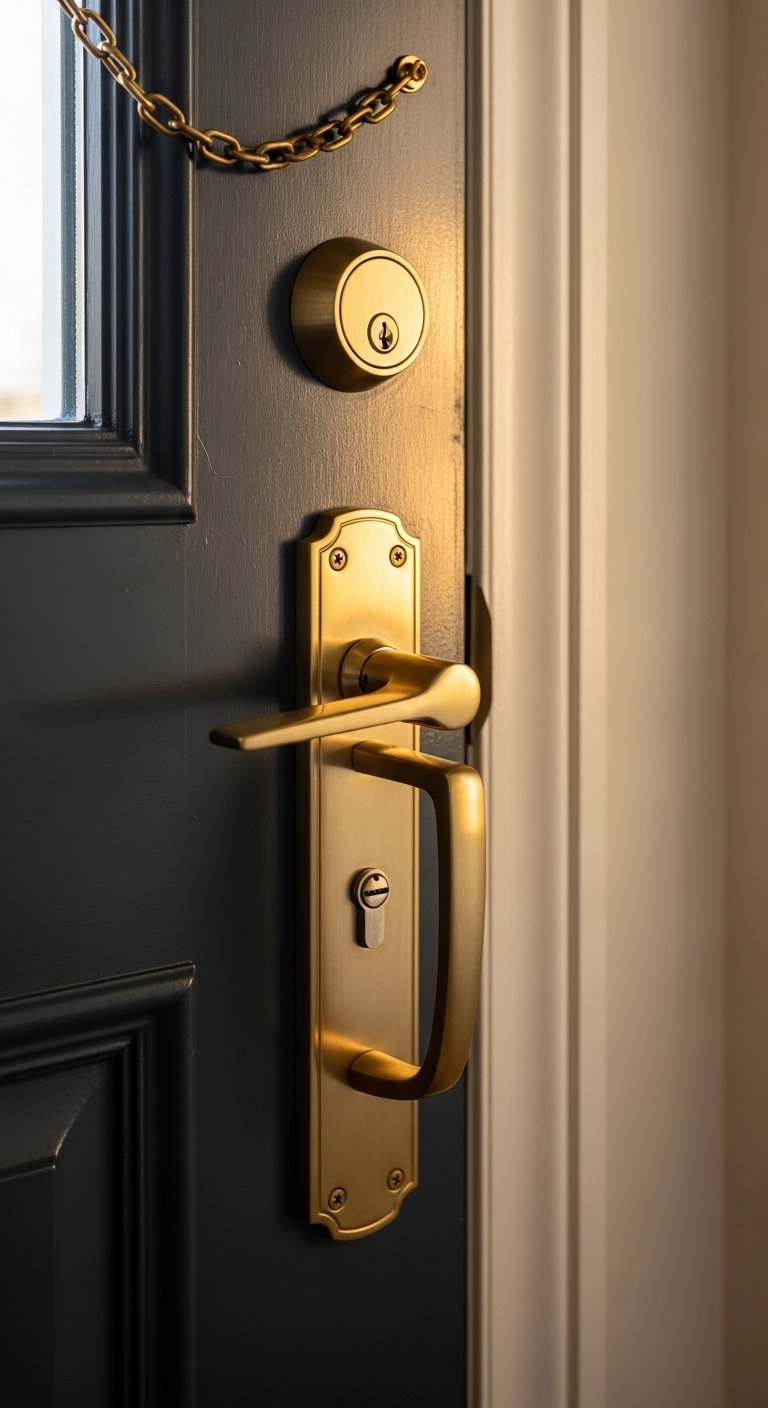
Door hardware is a small detail that everyone touches and most people overlook. The deadbolt, handle set, door knocker, and house numbers all contribute to the overall impression of your entryway, inside and out.
Hardware finishes to consider:
- Matte black: Pairs with everything, very current
- Satin nickel: Timeless, works in any style
- Unlacquered brass: Develops patina naturally, warm and distinctive
- Antique bronze: Traditional and warm, suits classic and craftsman styles
Match your interior and exterior hardware finishes. Mismatched hardware is one of those small details that registers subconsciously and makes a space feel unresolved.
15. Bring in a Plant or Two
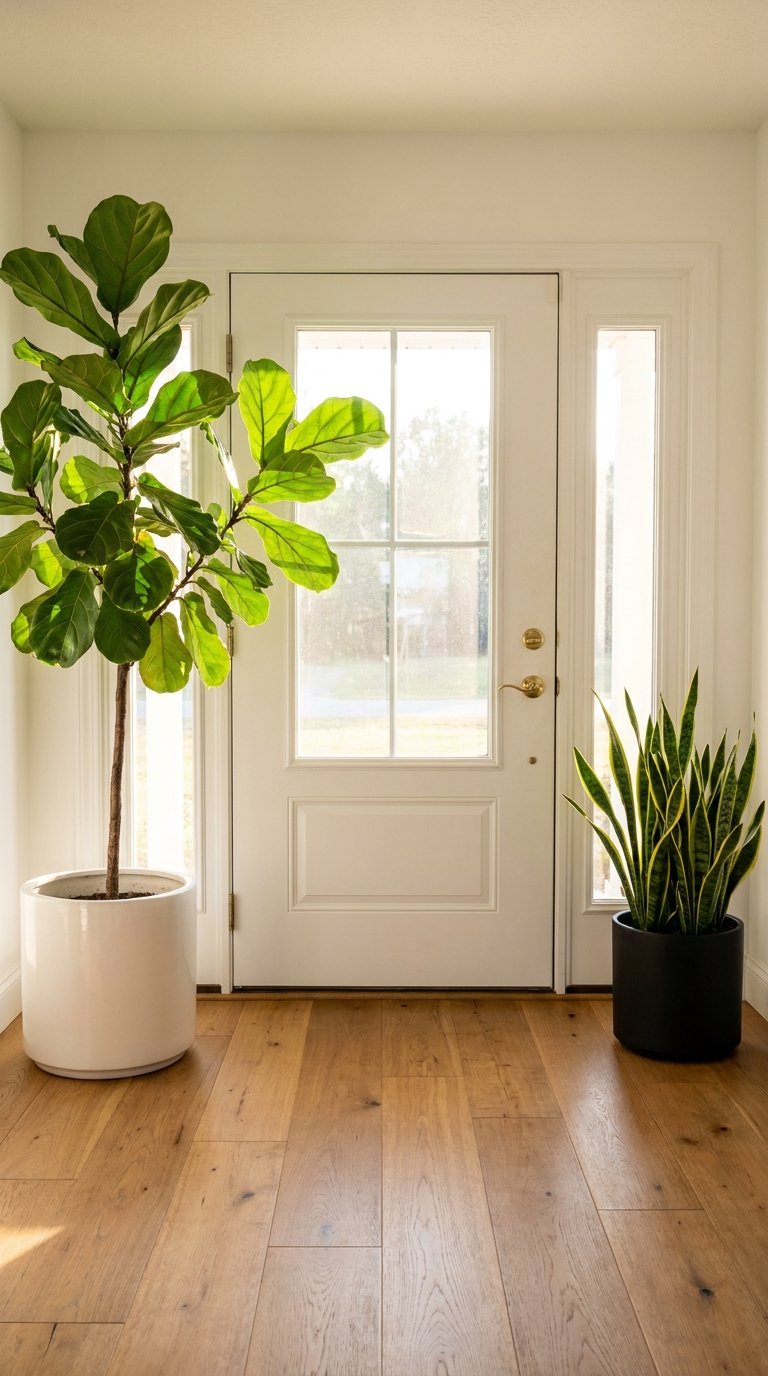
Plants in an entryway add life, color, and a welcoming quality that no furniture purchase delivers. A tall floor plant beside the console table or a pair of potted plants flanking the front door changes the atmosphere immediately.
Best plants for entryway conditions:
- Snake plant: Tolerates low light and irregular watering
- Fiddle leaf fig: Tall, architectural, needs bright indirect light
- Pothos: Trailing, easy, works on shelves or hanging
- ZZ plant: Nearly indestructible, handles low light well
- Olive tree in a pot: Mediterranean feel, needs decent light
Match the pot to your hardware finish. A black pot with matte black hooks and fixtures ties the room together without effort.
16. Add Smart Home Features at the Entry
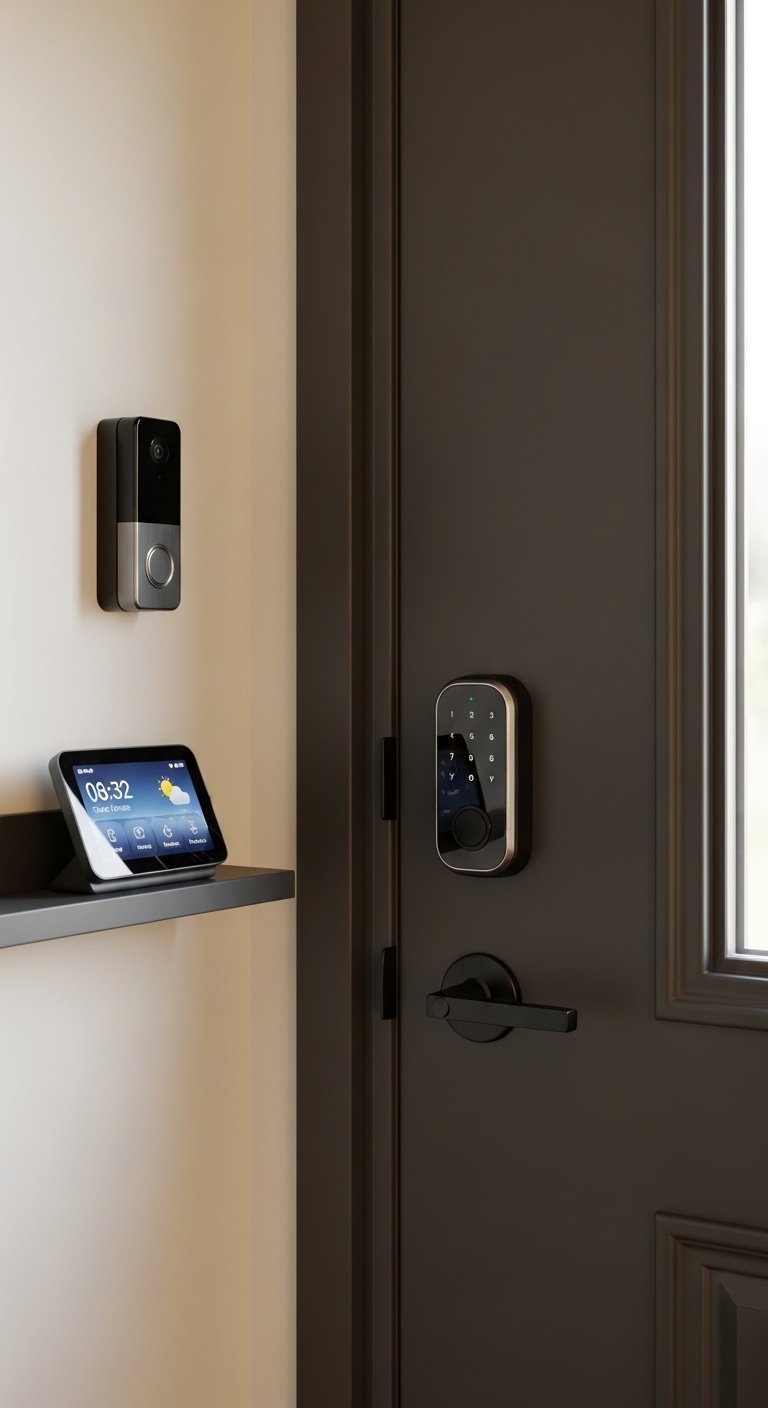
The entryway is the natural home for smart technology. A video doorbell, smart lock, and a small smart display panel modernize the entry point of your home functionally and visually.
Worth considering:
- Video doorbell: Replaces the standard doorbell with a camera and two-way audio
- Smart lock: Keypad or app-controlled entry, no physical key required
- Smart lighting: Motion-activated entry lights that turn on when you walk in
- Hidden charging station: A drawer or cabinet insert with built-in USB ports
These upgrades add genuine daily convenience. They also appeal strongly to buyers if you sell.
17. Use Molding to Frame the Doorway
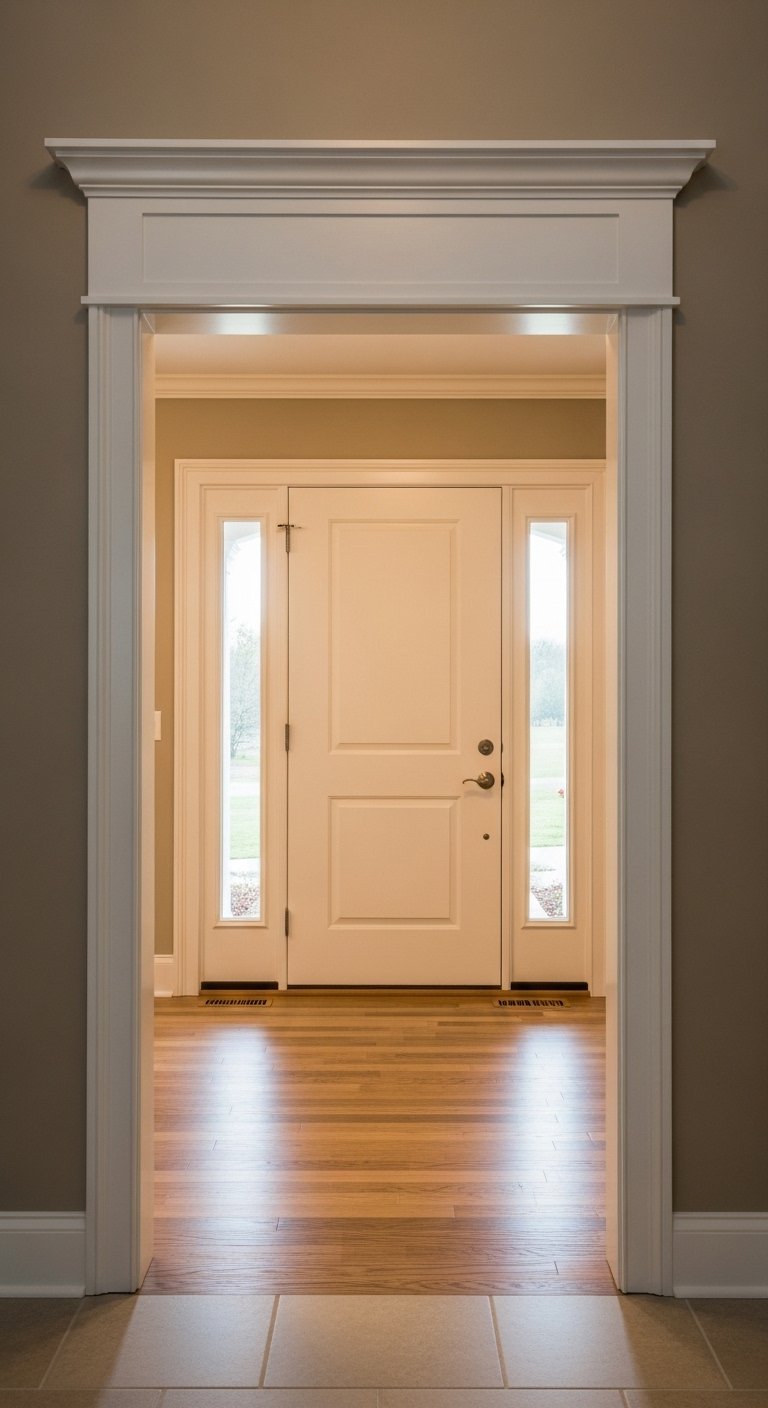
Door casing and molding around the entryway door frame adds architectural weight to the opening. Standard builder-grade door casing is thin and flat. Upgrading to wider, more detailed molding makes the door opening itself feel like a designed element.
Options range from:
- Simple craftsman-style casing (clean, flat, modern)
- Traditional ogee or colonial casing (detailed, classic)
- A full doorway surround with pilasters and a pediment above (formal and grand)
This is a high-impact, low-cost upgrade. Wide door casing costs between $3 and $8 per linear foot for standard profiles. The installation is straightforward for most DIY skill levels.
18. Install a Transom Window or Sidelight
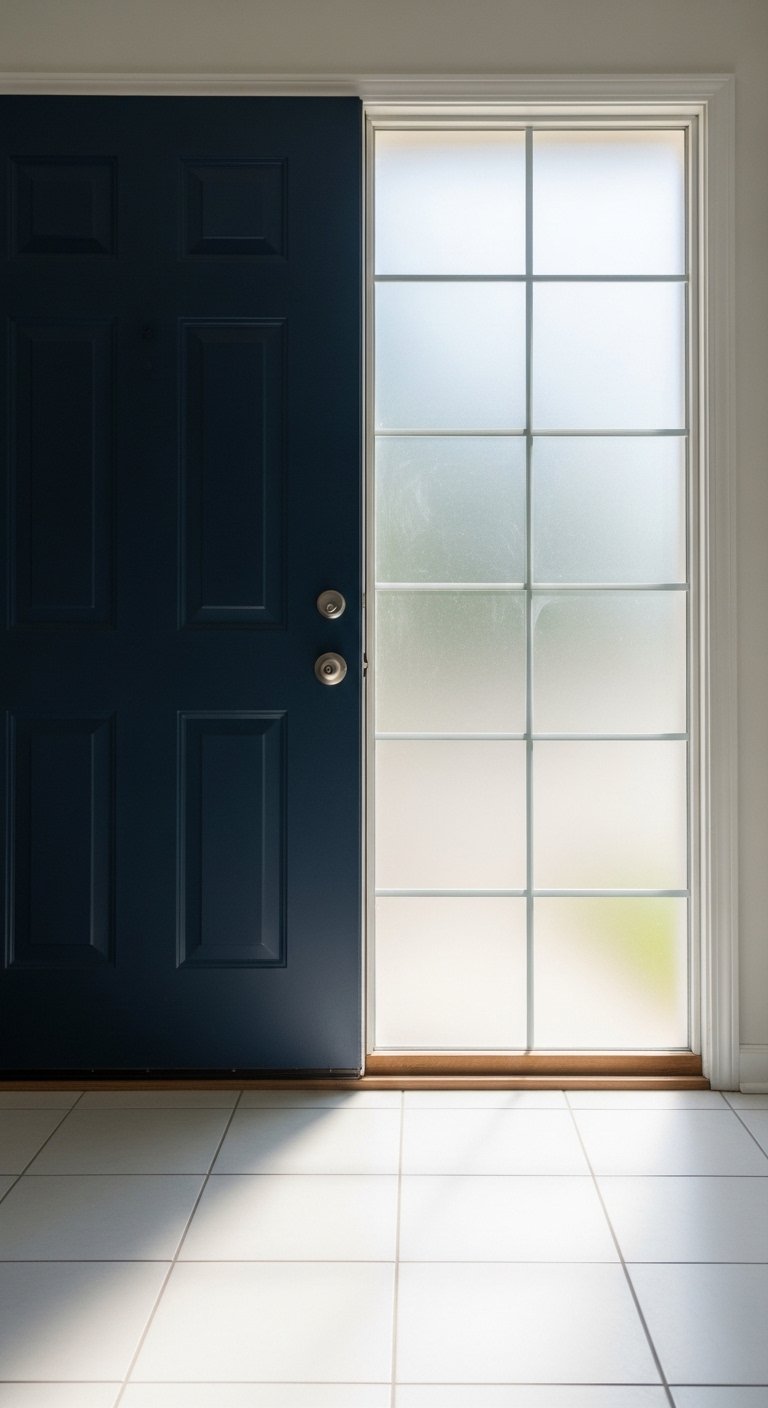
If your entryway feels dark, the most direct solution is adding glass. A transom window above the front door or sidelights on either side brings natural light into a space that often has none.
This is a structural upgrade that requires a contractor. The cost runs between $500 and $2,000 depending on the scope. The return in natural light and visual openness is significant.
Dark entryways feel unwelcoming regardless of how well they’re decorated. Light solves what no paint color or furniture arrangement can fully fix.
19. Create a Drop Zone
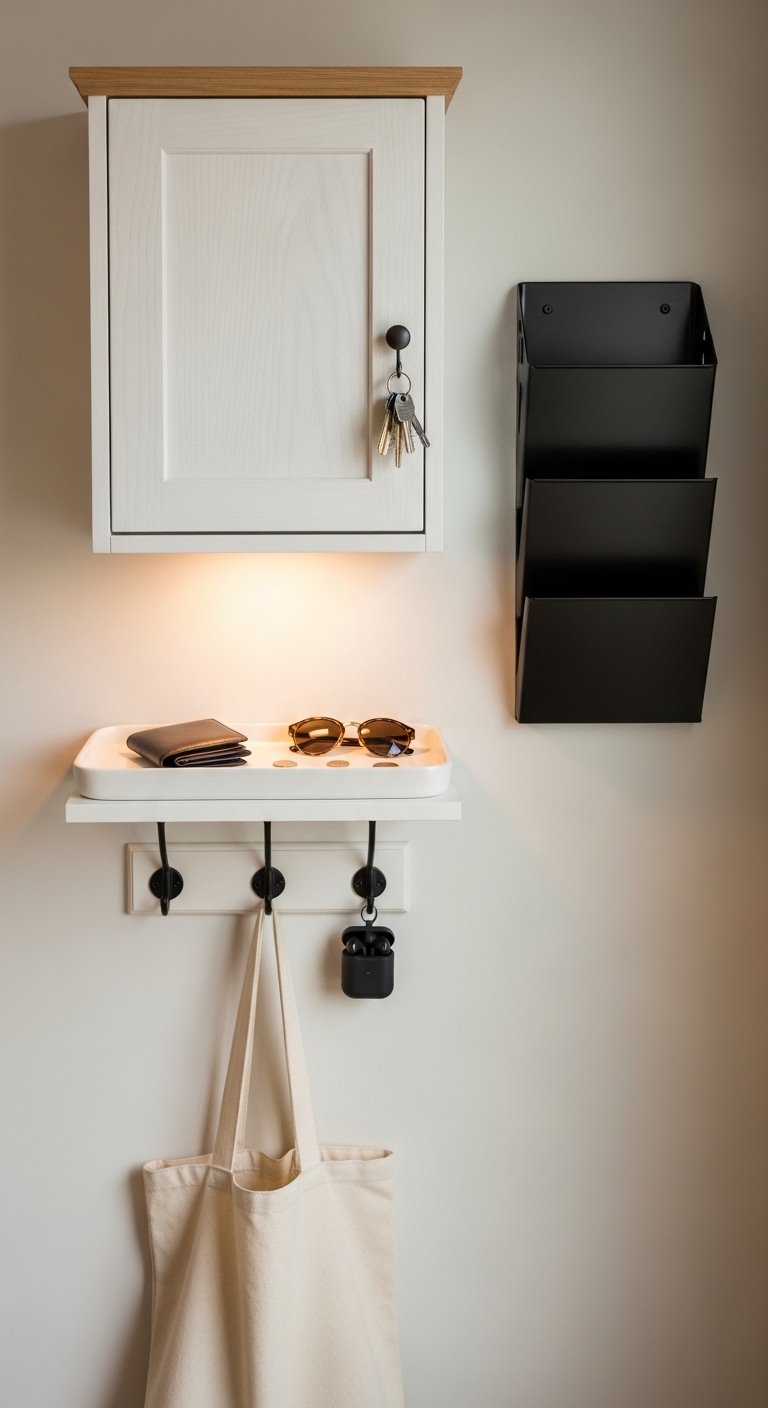
A drop zone is a designated area specifically for the items that come in with you every day: keys, wallet, phone, mail, bags. Without one, those items scatter across every surface in your home.
A complete drop zone includes:
- A wall-mounted key hook or small key cabinet
- A tray or bowl for small items
- A mail sorter or wall pocket for incoming paper
- A charging station for devices
- A small bench or rack for shoes
The drop zone’s value is entirely behavioral. It works only if every person in the household commits to using it consistently from day one.
20. Add Architectural Columns or Archways
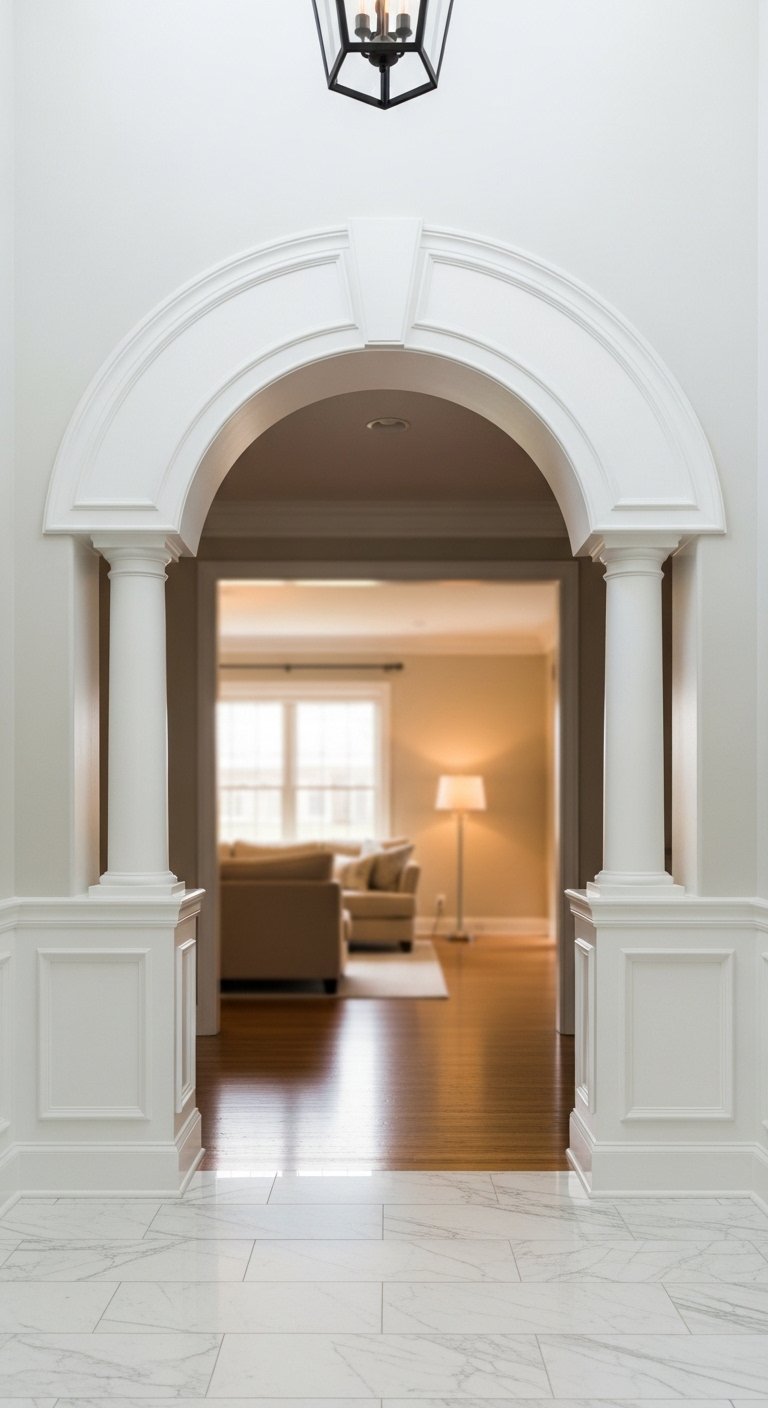
In larger entryways and foyers, architectural columns or a decorative archway between the entry and the main living space adds structure and formality. It defines the transition between spaces without closing them off.
Column options:
- Decorative non-structural columns: Purely visual, add height and elegance
- Half columns or pilasters: Mounted to the wall, take up no floor space
- Archway opening: Replaces a square doorway opening with a curved one
This is a significant renovation. Budget $1,000 to $5,000 depending on scope and whether structural work is involved. The visual payoff in a large foyer is considerable. IMO, nothing else makes an entryway feel like a proper foyer quite as effectively.
21 . Use Sconces for Layered Lighting
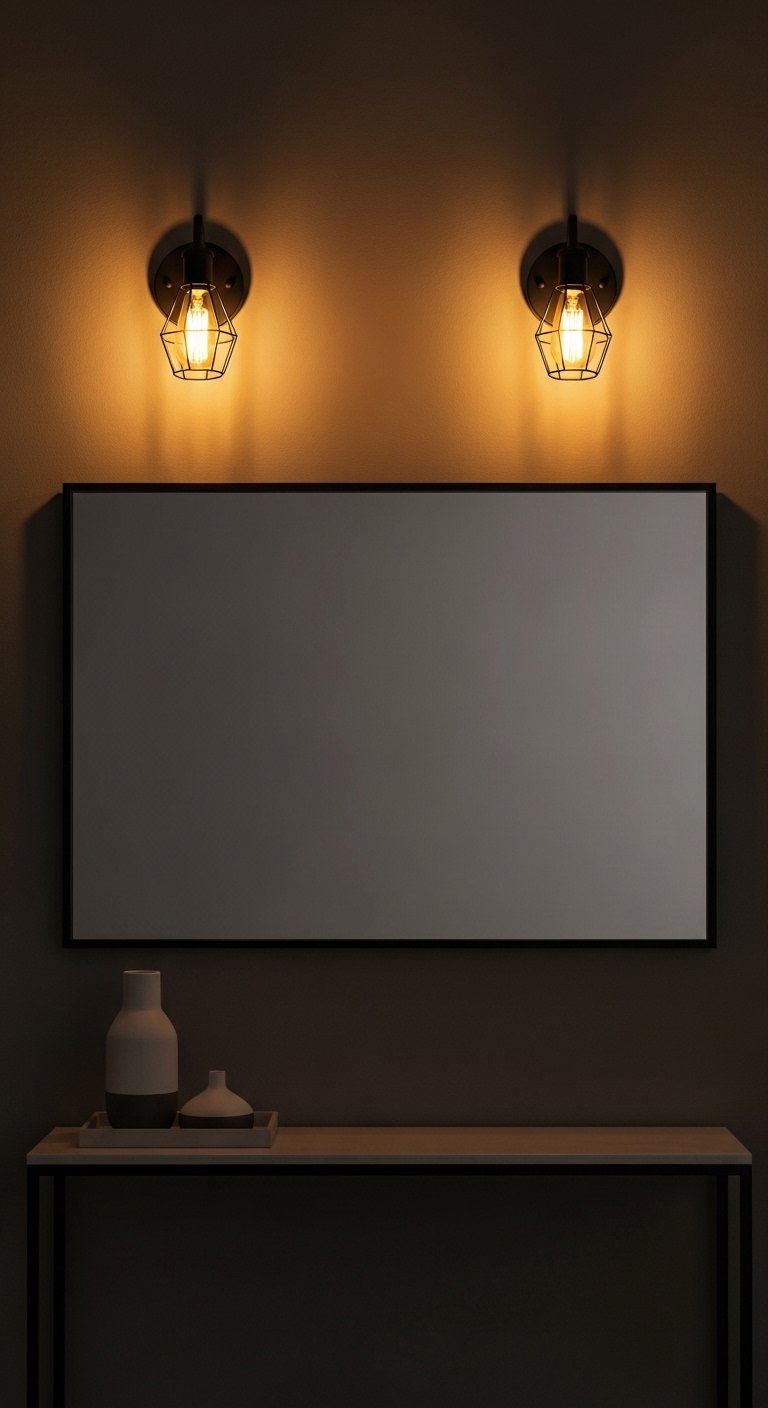
Overhead lighting handles the functional need for light in an entryway. Sconces add warmth, depth, and a sense of intention to the lighting scheme. They also flank mirrors and artwork beautifully.
Placement options:
- On either side of a mirror above the console table
- Flanking the front door on the interior wall
- On the wall at the base of an entryway staircase
- On either side of a gallery wall as accent lighting
Warm white bulbs (2700K) in sconces make an entryway feel genuinely welcoming. Cool white light in an entry feels clinical, which is the opposite of what the space should communicate.
Before You Start Any of These
A few things apply across every entryway remodel:
- Measure first. Entryways are often smaller than they feel. Furniture that works in a showroom can block traffic flow in a real entryway.
- Fix the lighting before anything else. Bad lighting undermines every other upgrade.
- Address the floor. A worn floor communicates neglect before a guest looks at anything else.
- Edit ruthlessly. Entryways fail when they try to do too much. Choose function first, then layer in style.
- Think about the sightline from the front door. Whatever sits directly in the line of sight from the entrance is the focal point of the entryway, whether you plan it that way or not.
Final Thoughts
Your entryway does not need to be large to be impressive. It needs to be intentional.
The most effective entryway remodels share one trait: every element in the space has a reason to be there. The lighting works, the storage handles the daily mess, the floor survives the traffic, and the styling reflects the rest of the home.
Pick the two or three ideas from this list that address your biggest current problems. Start there. An entryway that functions well is more impressive than one that looks good in photos but creates chaos every morning.
That’s the difference between decorating and actually remodeling.