25 Luxury Kitchen Ideas to Transform Your Dream Home Today
A luxury kitchen doesn’t require a $200,000 renovation budget. It requires the right decisions at the right price points. Some of the most impressive kitchens in residential design got there through one or two high-impact choices surrounded by smart, budget-conscious ones. Here are 25 luxury kitchen ideas with the specific details that separate a high-end result from an expensive disappointment.
1. Waterfall Island in Calacatta Marble
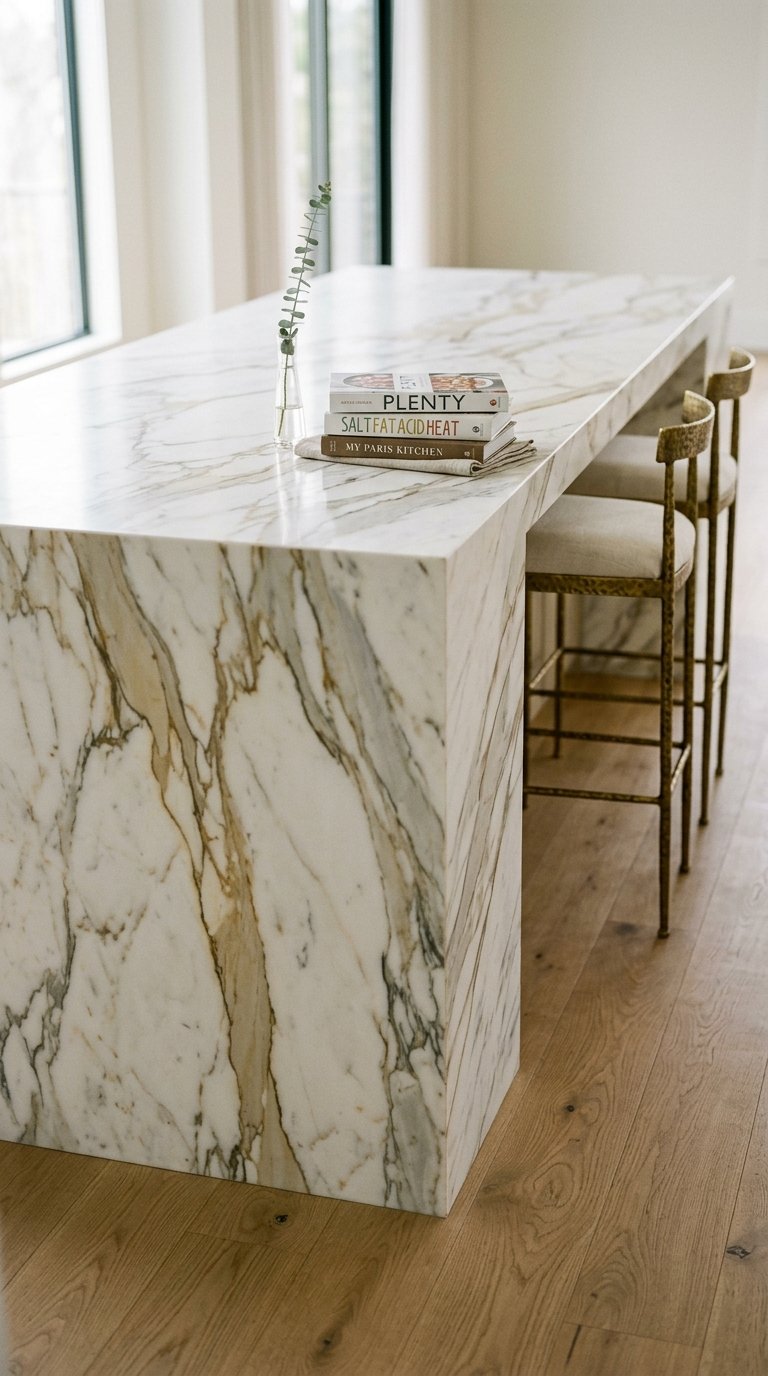
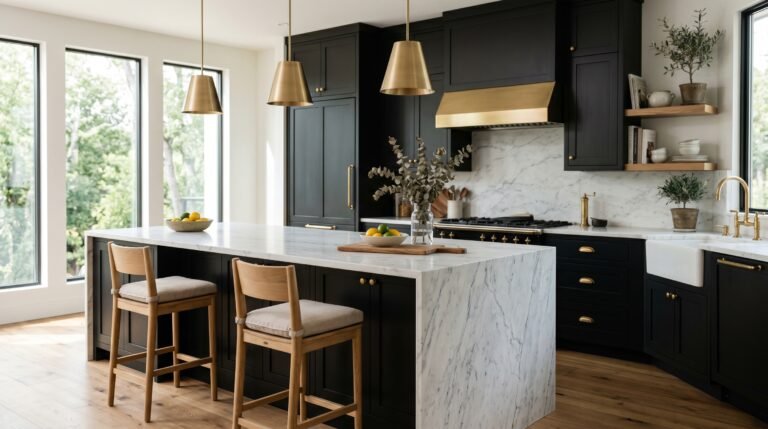
A waterfall island extends the countertop material down both sides to the floor, turning the island into a sculptural piece of furniture. Calacatta marble with bold gold veining is the material that appears most frequently in luxury kitchen features on Architectural Digest and Elle Decor.
The installed cost for a Calacatta marble waterfall island runs between $8,000 and $18,000 depending on slab size and fabricator. That’s a significant spend, but it’s the single element most likely to anchor a kitchen’s resale value in the luxury market.
2. Custom Range Hood as a Focal Point
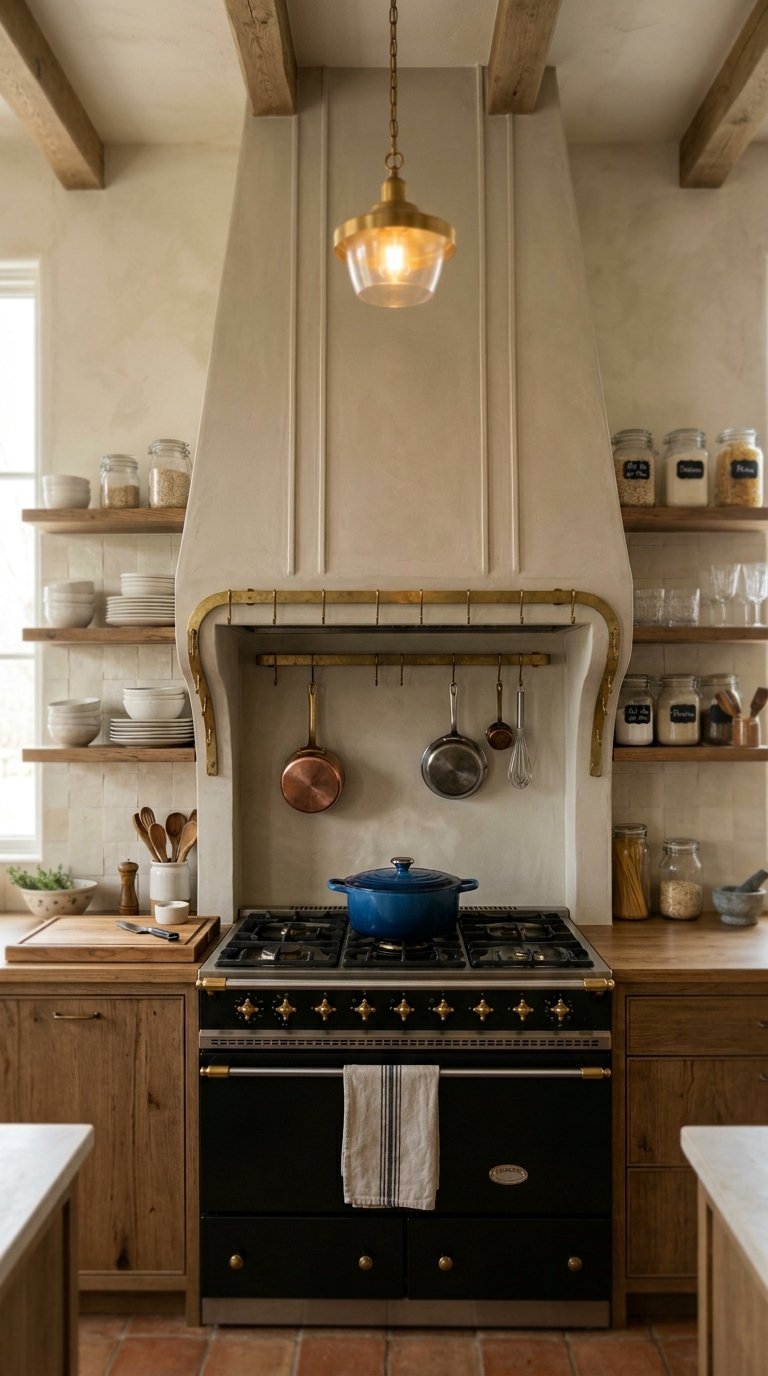
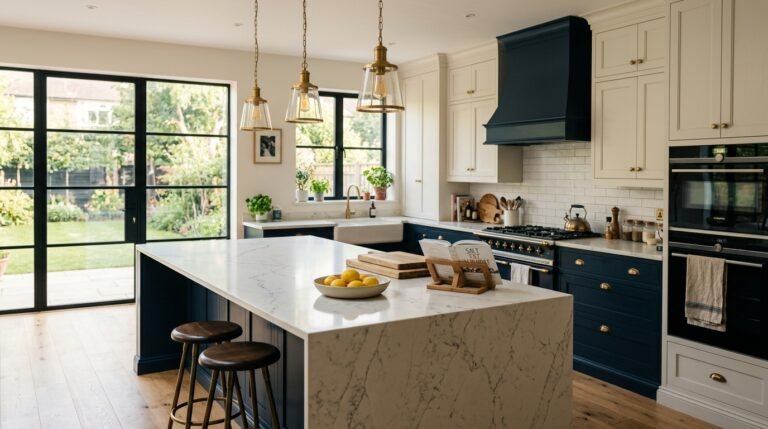
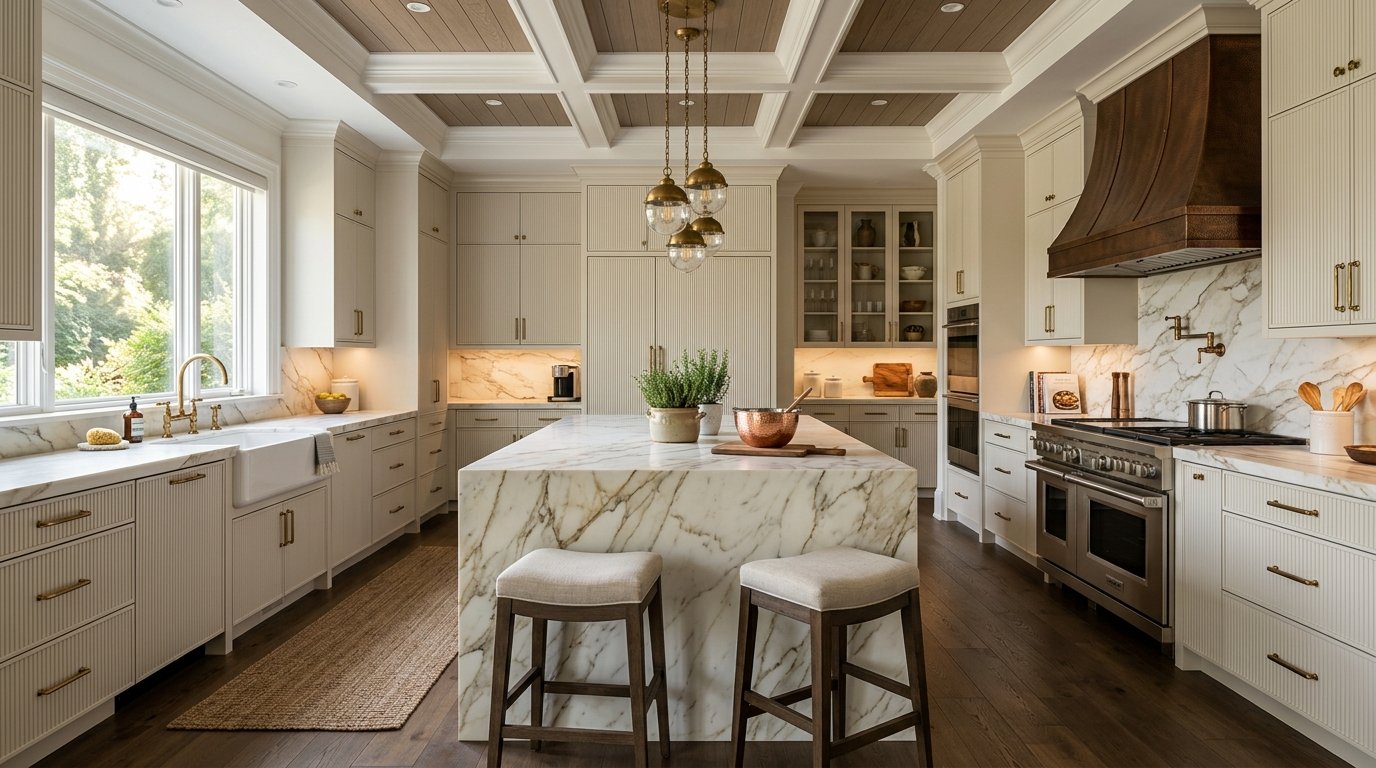
The range hood is the architectural centerpiece of a luxury kitchen, and most homeowners treat it as an afterthought. A custom plaster hood, a hammered copper hood, or a fluted wood hood above a professional range costs between $1,500 and $6,000 fabricated and installed.
The hood draws the eye upward, which makes ceilings feel taller and the overall kitchen feel larger. Designers like Jean Stoffer and Studio McGee use custom hoods in nearly every high-end kitchen project for precisely this reason.
3. Professional-Grade Range
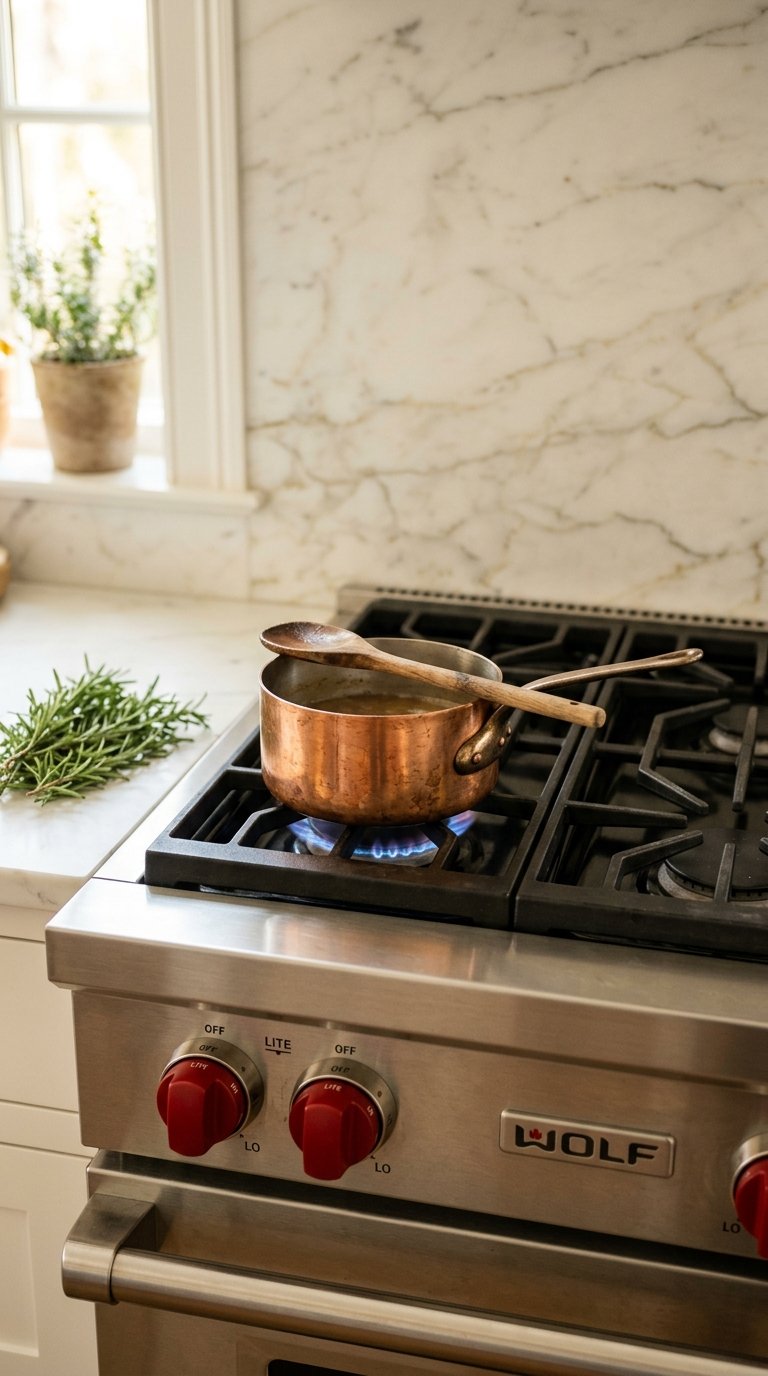
A Wolf or La Cornue range in a residential kitchen signals luxury before anyone sees another detail in the room. Wolf’s 48-inch dual-fuel range costs around $11,000, and it performs at a level no consumer appliance reaches: 20,000 BTU burners, dual convection ovens, and a build quality that outlasts the house it sits in.
If the budget doesn’t stretch to Wolf, the BlueStar 36-inch range starts at around $4,500 and delivers comparable cooking performance with a wider color customization range than any other manufacturer.
4. Integrated Appliances Behind Panel-Ready Doors
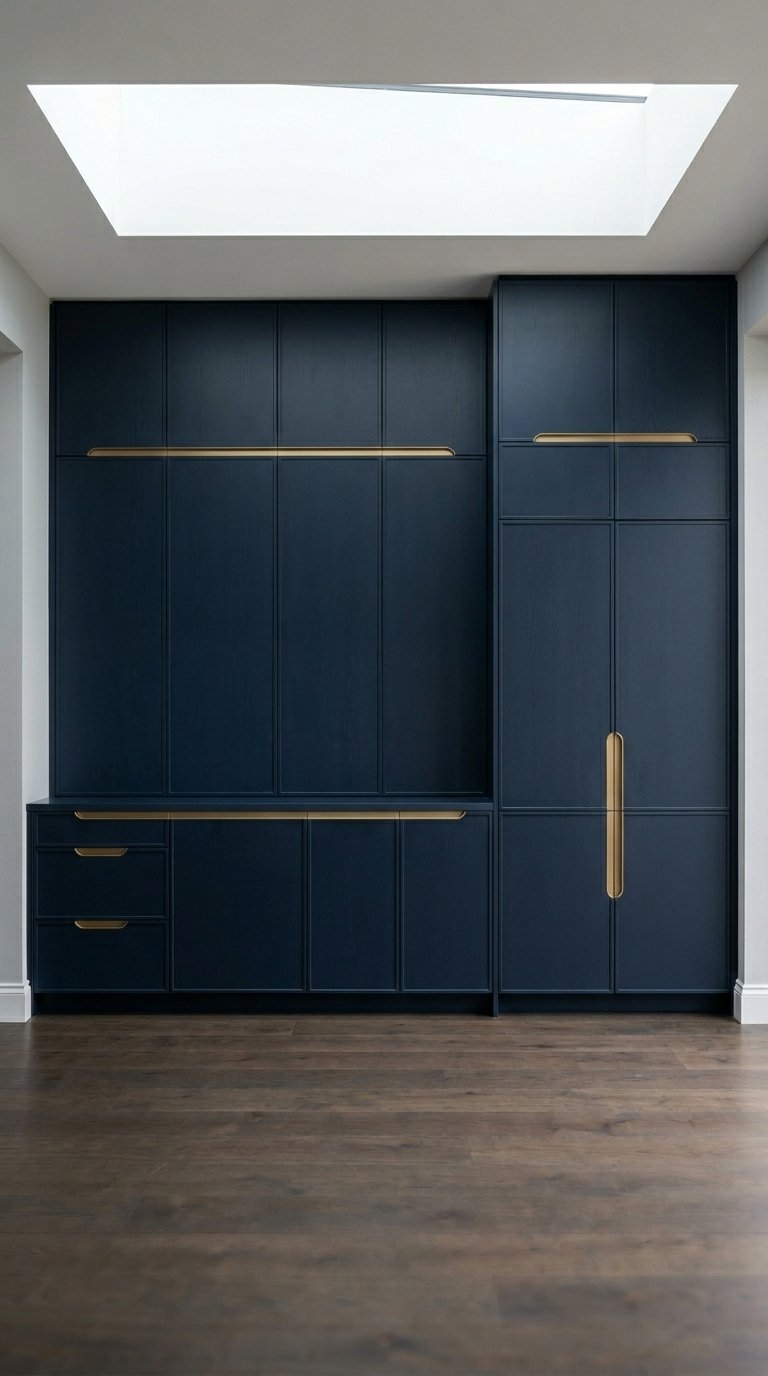
Panel-ready appliances sit behind cabinet doors that match the surrounding cabinetry, making refrigerators, dishwashers, and wine coolers disappear into the kitchen design. Sub-Zero’s 36-inch integrated refrigerator costs around $9,000 and accepts custom panels from any cabinet manufacturer.
The visual result is a kitchen that reads as pure cabinetry without appliance interruption. This is the design choice that separates kitchens photographed in shelter magazines from kitchens photographed on real estate listings.
5. Unlacquered Brass Plumbing Fixtures
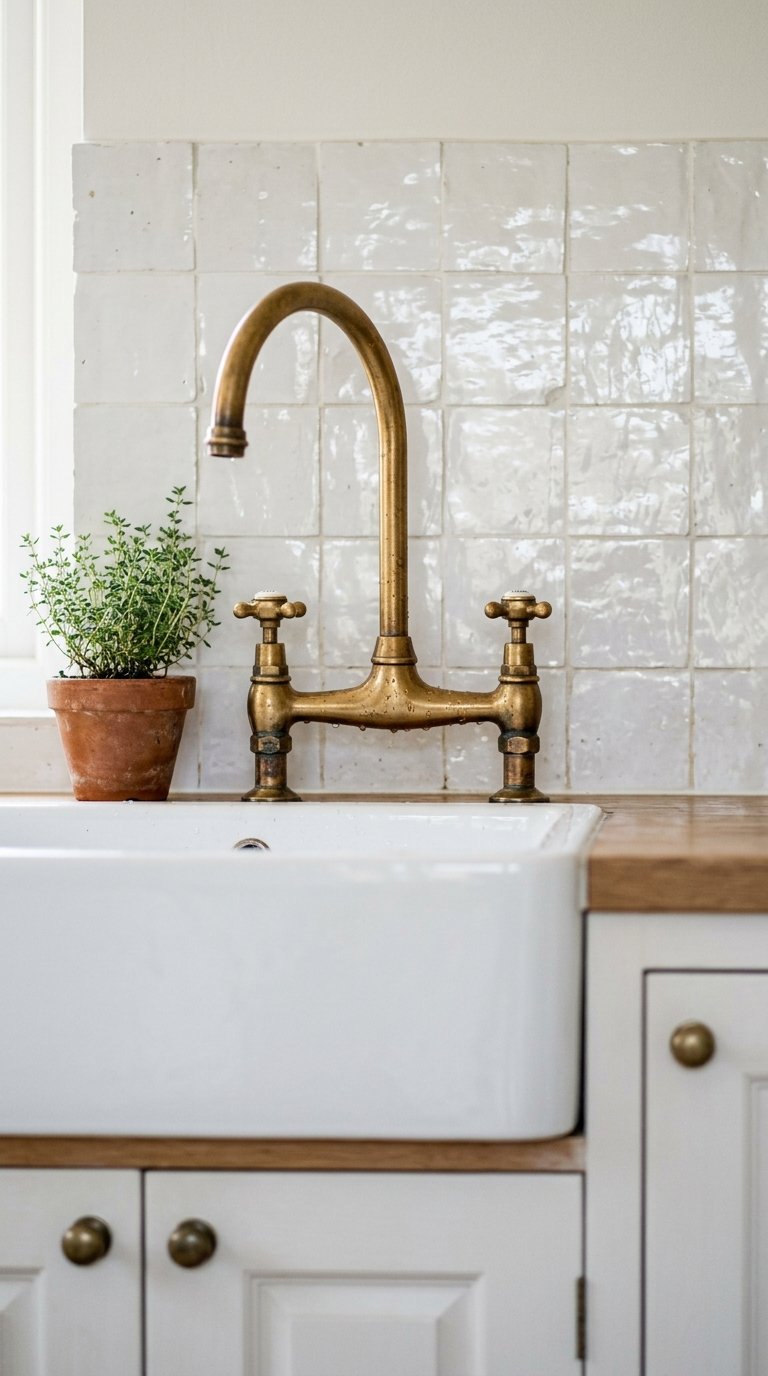
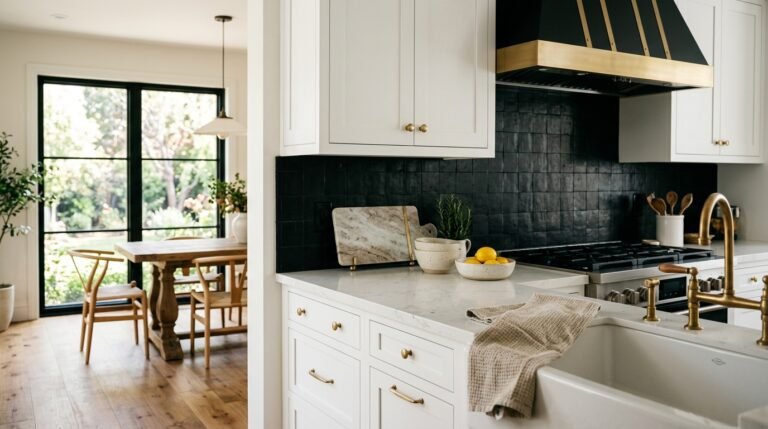
Unlacquered brass develops a living patina over time, which means a Watermark Designs or Rohl unlacquered brass faucet looks better at five years than it did at installation. The warm metal tone works with virtually every cabinet color from white to navy to black.
A Watermark Designs unlacquered brass bridge faucet runs between $800 and $1,400. Pair it with matching cabinet hardware for a cohesive metal story throughout the kitchen. This single fixture upgrade changes the perceived price point of the entire room.
6. Fluted Cabinet Doors
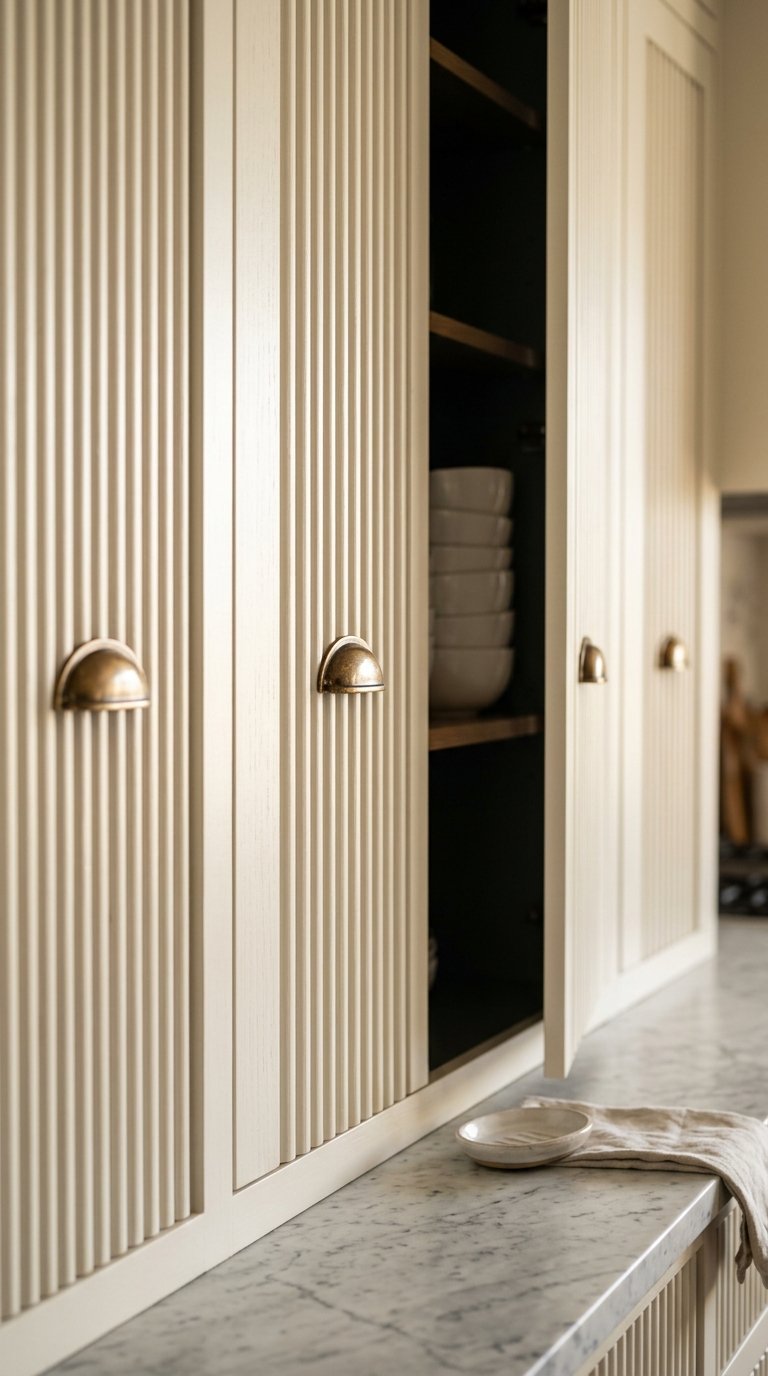
Fluted cabinet doors add vertical texture to a kitchen without introducing a second color or material. The ridged surface catches light differently at different times of day, which gives the kitchen movement and depth that flat-panel doors never achieve.
IKEA’s AXSTAD cabinet doors accept custom inserts, and several millwork companies sell fluted MDF inserts that retrofit into existing door frames for $15 to $30 per door. A full kitchen refresh with fluted inserts runs $300 to $600 in materials, producing a result that reads as custom cabinetry.
7. Statement Lighting Over the Island
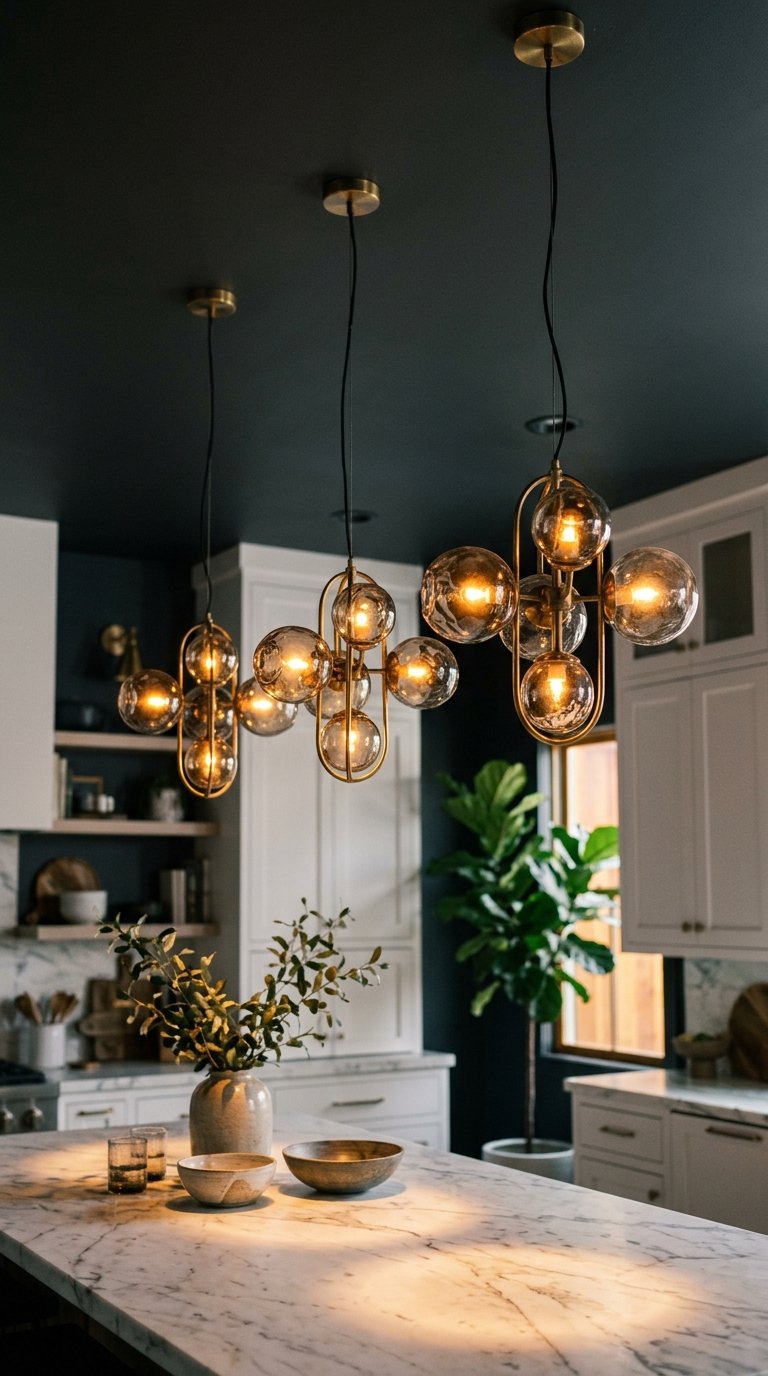
Luxury kitchens use lighting as architecture, not utility. A single large-format pendant, a sculptural chandelier, or a linear suspension light over the island functions as jewelry for the room.
Visual Comfort’s Darlana linear pendant runs about $800 and covers a 6-foot island with a proportional, high-end result. Apparatus Studio and Roll and Hill produce fixtures in the $1,500 to $5,000 range for homeowners who want lighting that genuinely cannot be found elsewhere.
8. Slab Backsplash to the Ceiling
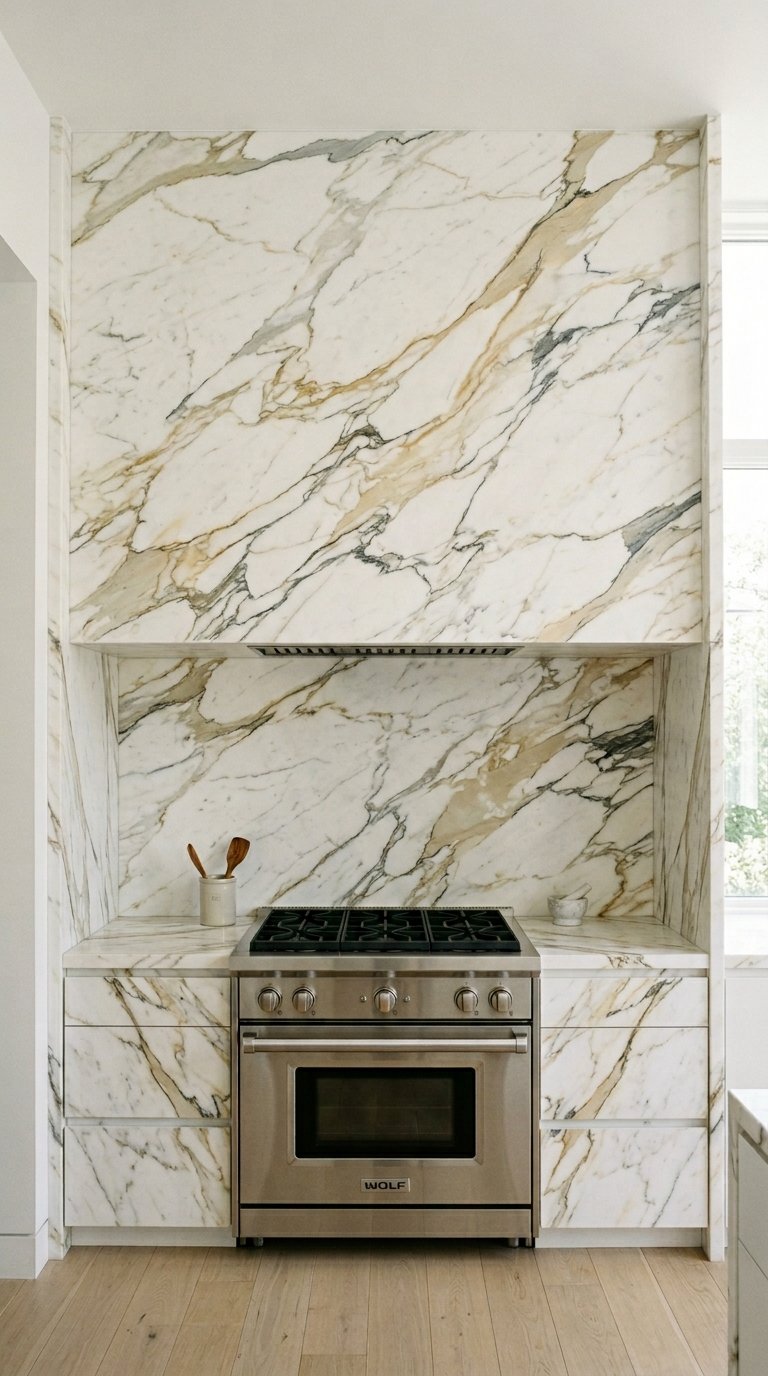
A backsplash that extends from the countertop to the ceiling in the same stone as the countertop eliminates the visual break between surfaces and makes the wall read as a continuous, architectural plane. This approach appears in nearly every luxury kitchen renovation published in the past three years.
The material cost increases by 30 to 50 percent compared to a standard backsplash height, but the fabrication is the same process. In a kitchen with 9-foot ceilings and a 10-foot run of countertop, the additional slab cost runs roughly $1,500 to $3,000. The visual return on that investment is disproportionately high.
9. Integrated Toe-Kick Lighting
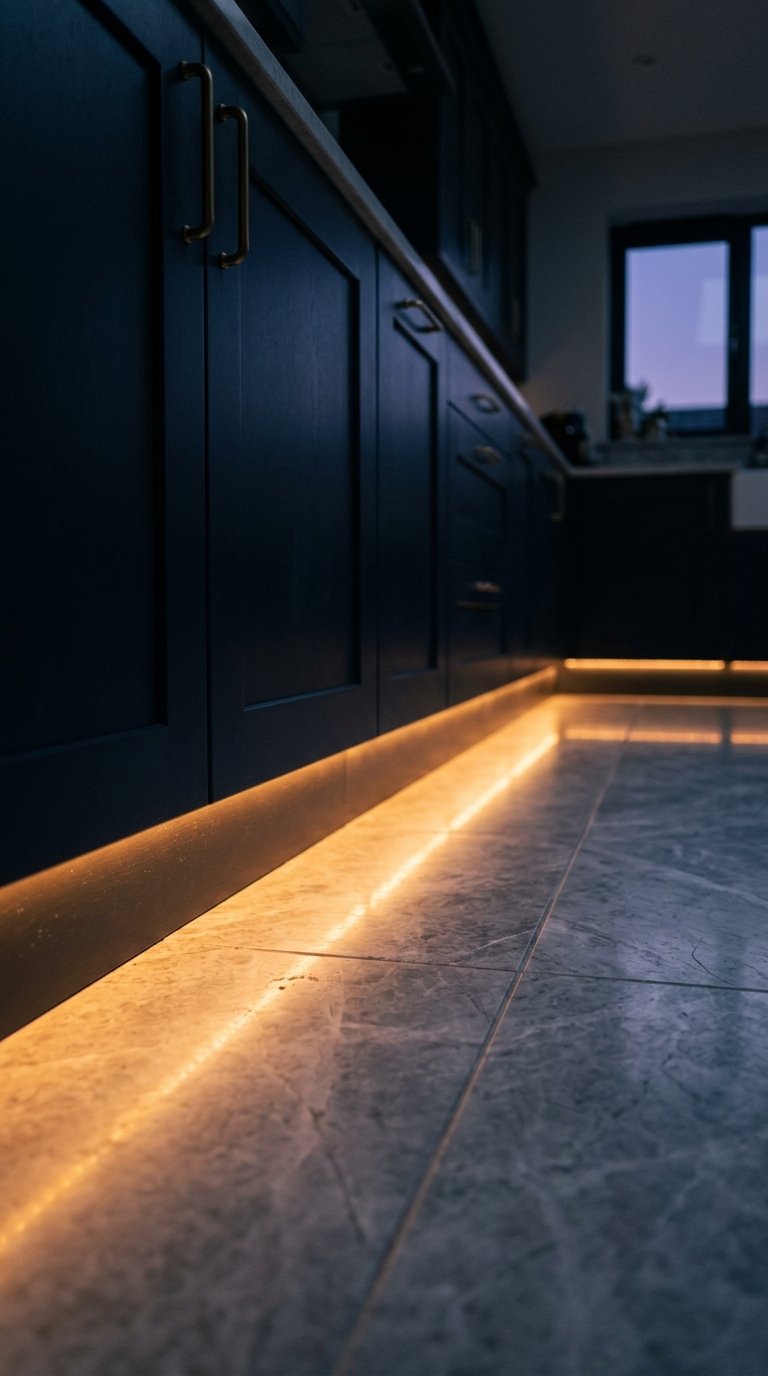
Toe-kick lighting runs LED strips along the base of the lower cabinets, creating the illusion that the cabinetry floats above the floor. It’s a detail most visitors notice without identifying, which is exactly what good luxury design does.
LED strip lighting from Govee or Waveform Lighting costs $30 to $80 for a full kitchen run. The installation is straightforward for any homeowner comfortable with basic electrical work. Warm white at 2700K produces the best effect, casting a soft glow that reads as intentional rather than decorative.
10. Quartzite Countertops in Super White or Taj Mahal
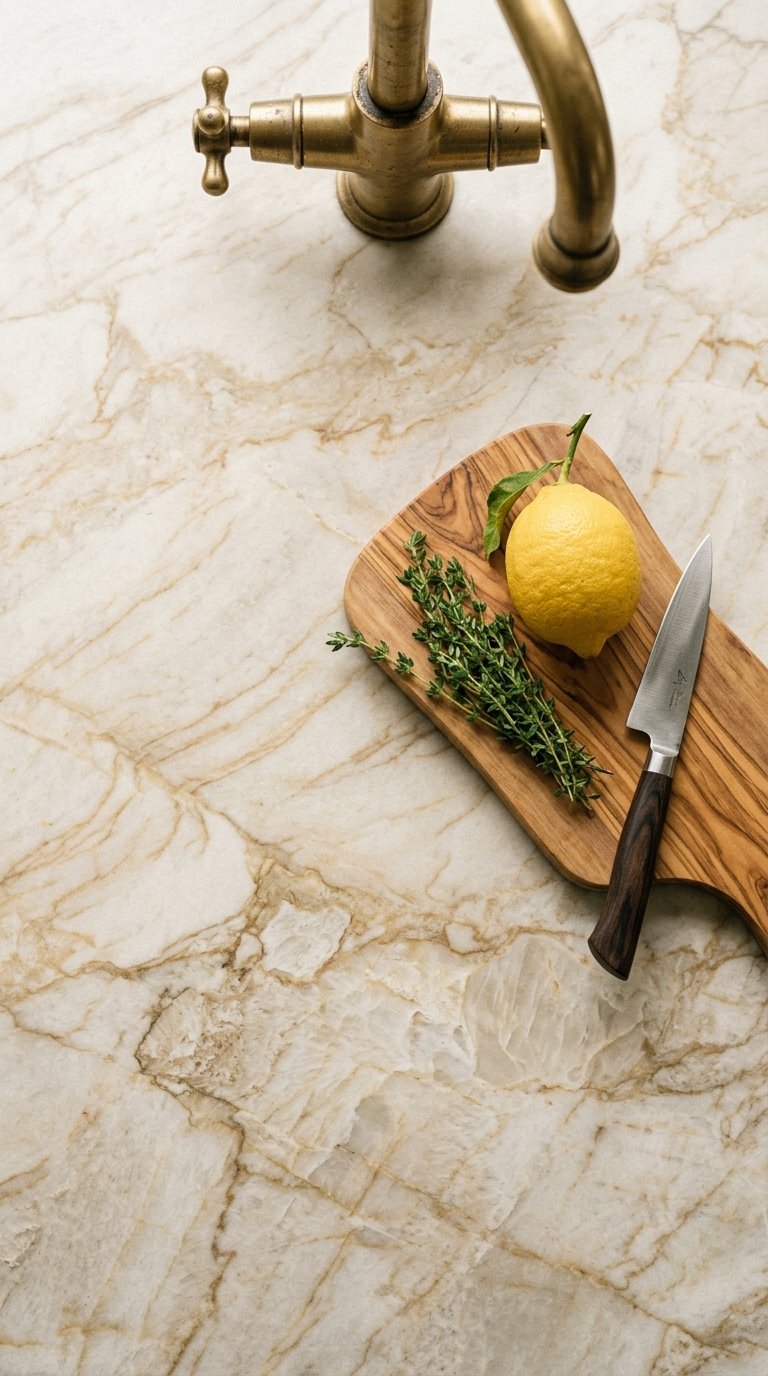
Quartzite outperforms marble in every practical category: it’s harder, more heat-resistant, and less prone to etching. But it looks like marble, which is why designers specify it for clients who want the aesthetic without the anxiety.
Taj Mahal quartzite runs between $80 and $150 per square foot installed and produces a warm, creamy surface with soft gold veining that pairs with brass hardware better than almost any other stone. Super White quartzite at $60 to $120 per square foot delivers a cooler, more graphic result for kitchens with a contemporary direction.
11. Full-Height Cabinetry to the Ceiling
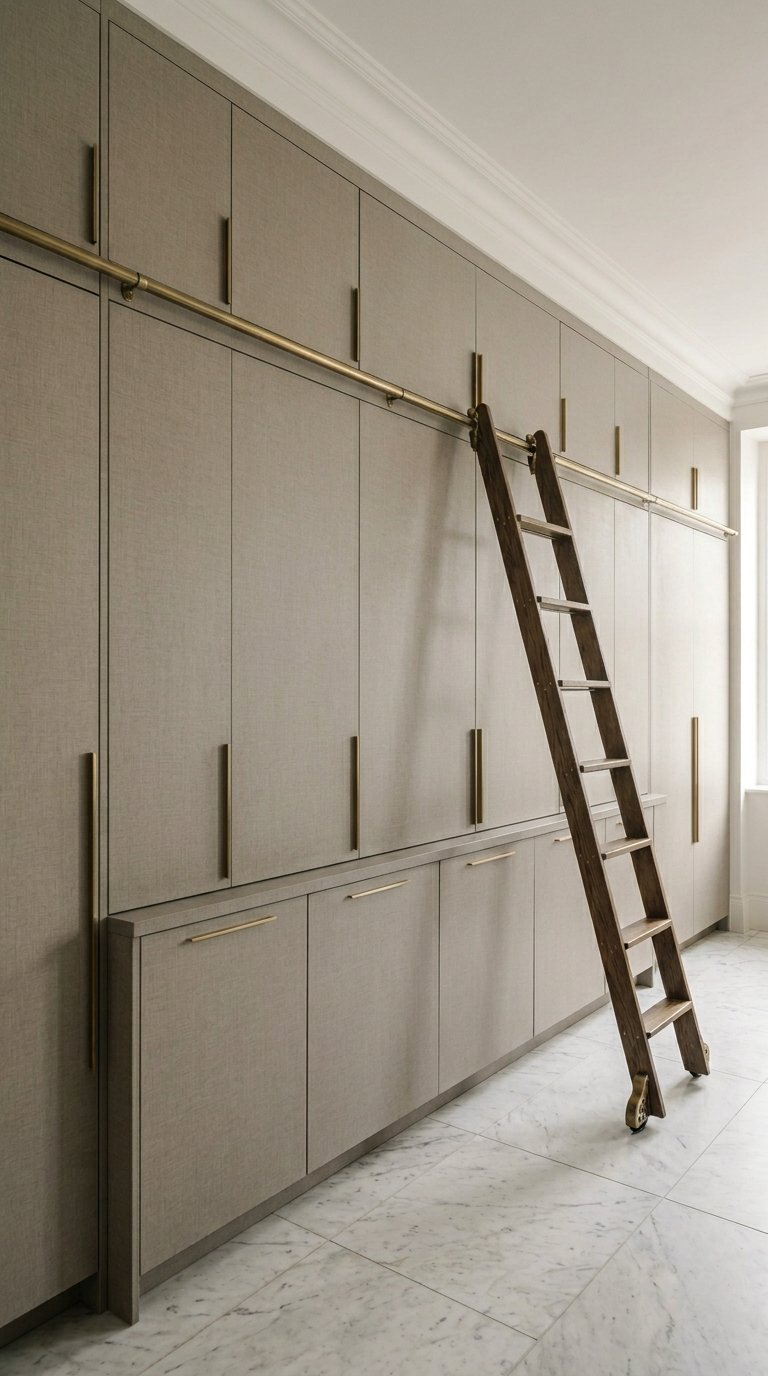
Cabinets that run from floor to ceiling eliminate the awkward gap above upper cabinets where dust collects and visual noise accumulates. The result is a clean, architectural wall of storage that reads as custom millwork regardless of the cabinet brand.
IKEA’s SEKTION system reaches ceiling height with the addition of filler panels, which cost $20 to $60 per panel depending on size. A skilled installer achieves a built-in look at a fraction of the cost of true custom cabinetry. The difference between a standard kitchen and a luxury-looking one often comes down to this single decision.
12. Scullery or Butler’s Pantry
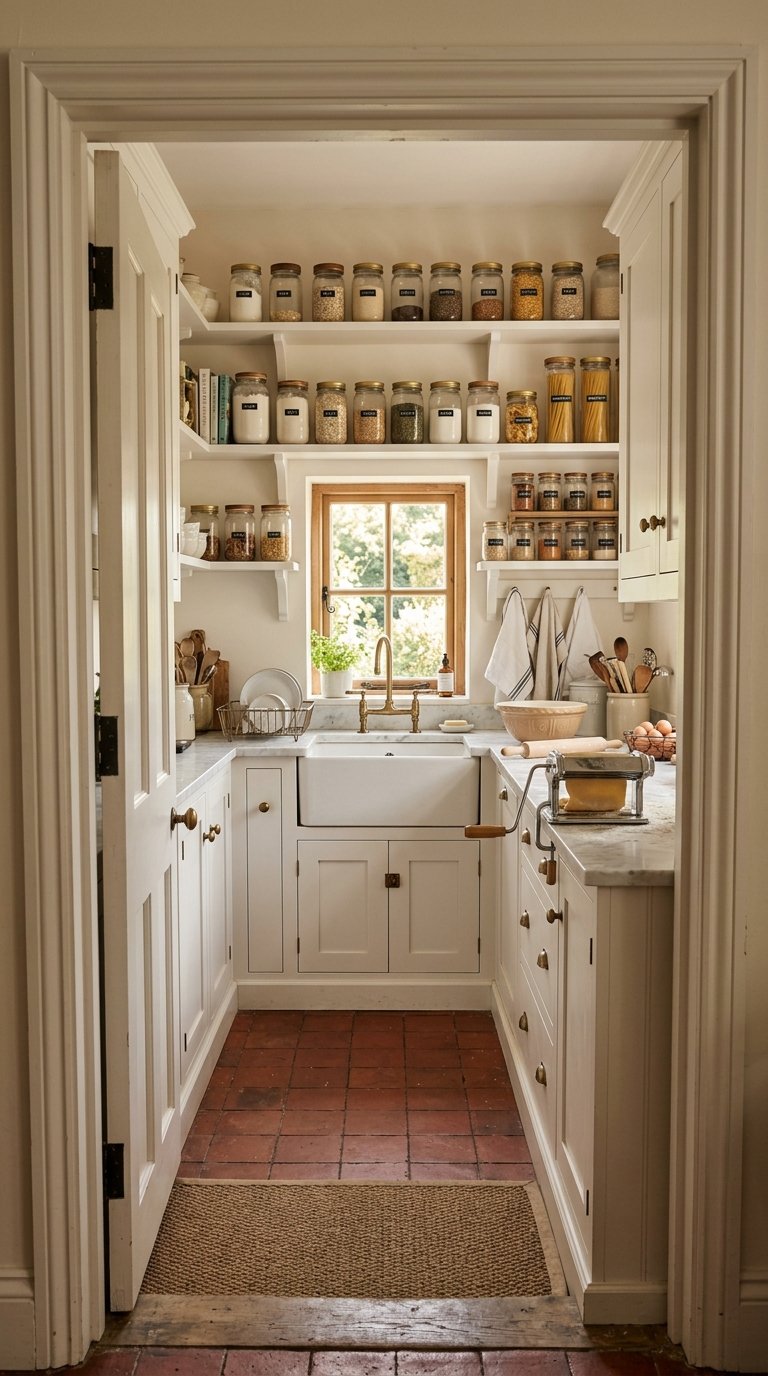
A scullery is a secondary kitchen or prep space adjacent to the main kitchen where messy work happens out of sight. High-end homes use sculleries to keep the main kitchen permanently presentable, which is the functional definition of luxury.
Adding a scullery to an existing layout requires a separate room or large closet with plumbing access. The basic build-out, including cabinets, a secondary sink, and storage, runs between $8,000 and $25,000 depending on size and finish level. For homeowners who entertain frequently, this investment changes how the entire home functions during events.
13. Warming Drawer
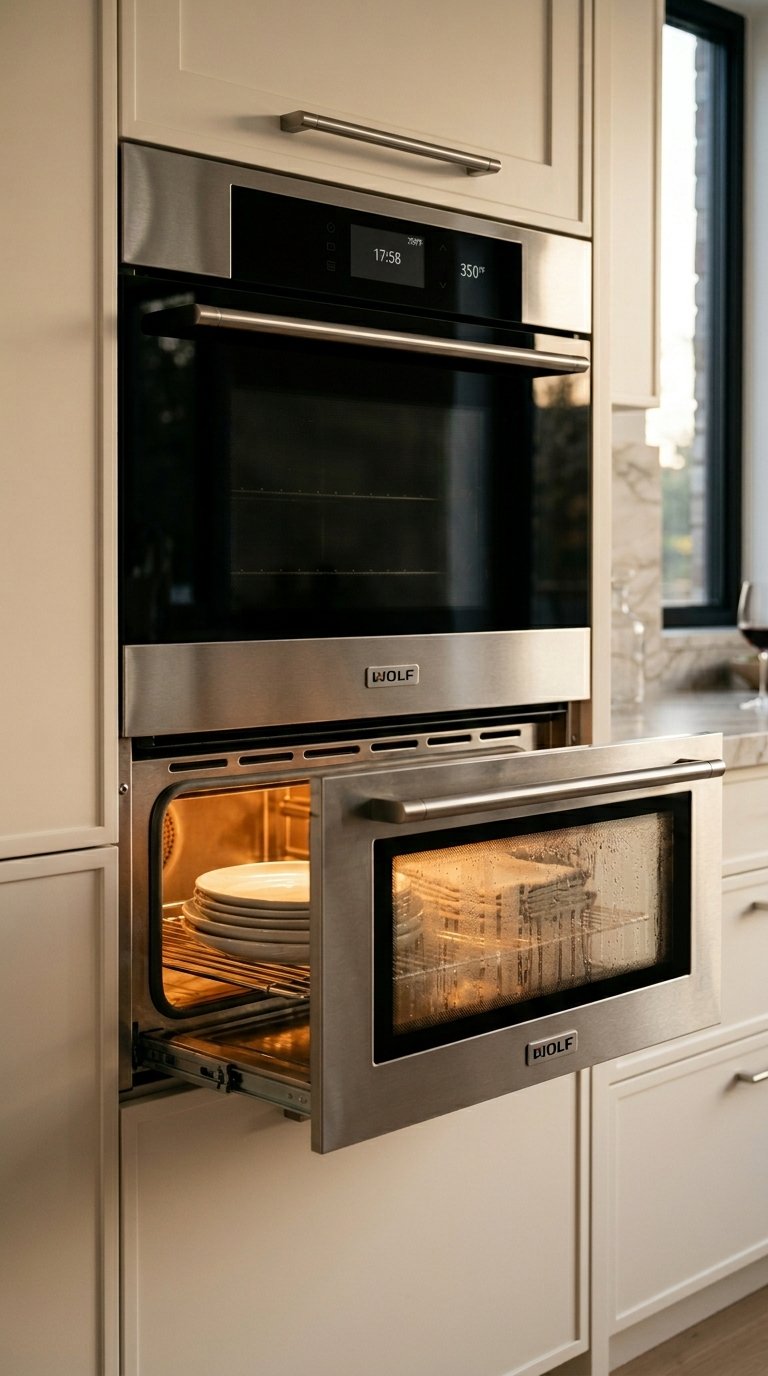
A warming drawer sits below the oven and holds plated food at serving temperature without continuing to cook it. Wolf and Miele both produce warming drawers in the $1,200 to $2,000 range that integrate flush with surrounding cabinetry.
It’s the kind of appliance you don’t know you need until you have one. FYI, every serious home cook who installs a warming drawer reports it changes their approach to dinner parties more than any other single appliance addition.
14. Unlacquered Brass or Aged Bronze Cabinet Hardware
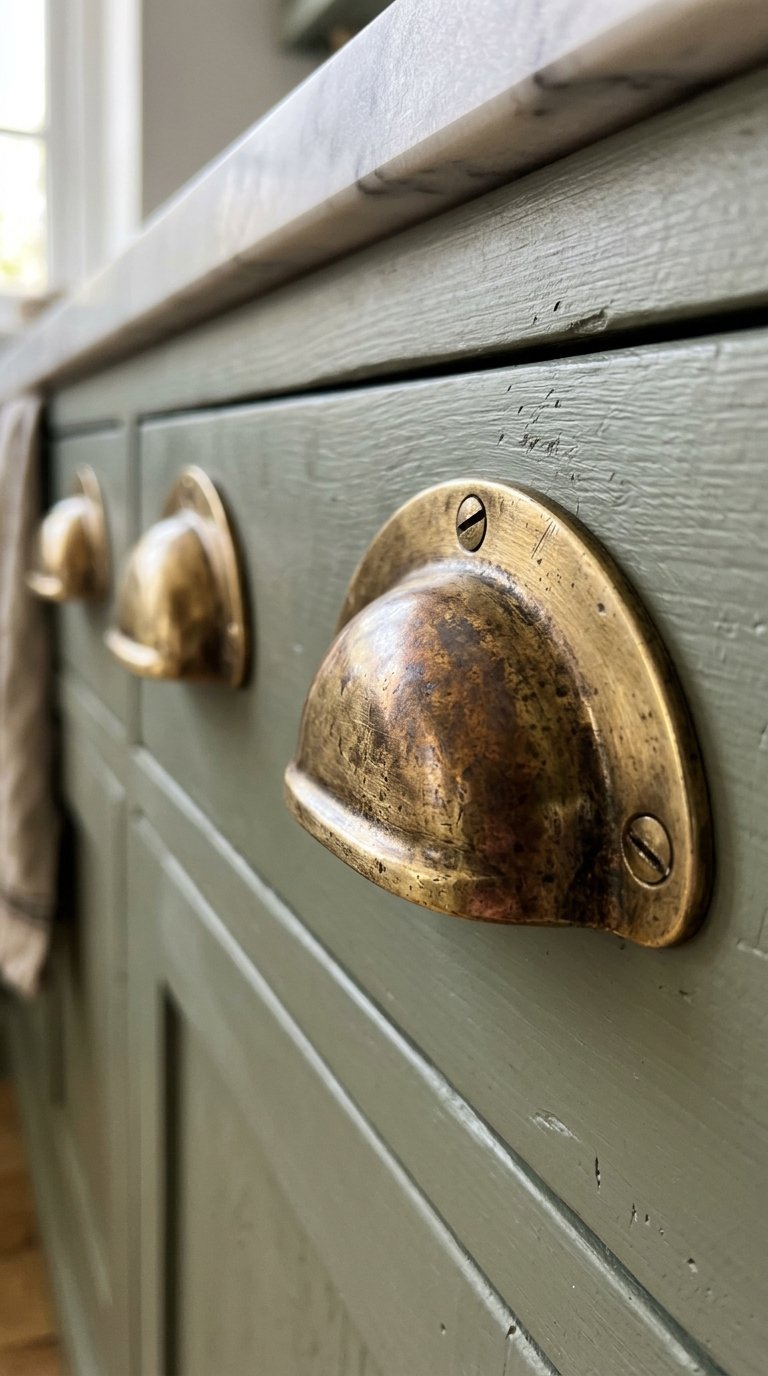
Hardware is the jewelry of a kitchen, and the quality difference between $2 pulls and $20 pulls is visible at arm’s length. Rejuvenation, Rocky Mountain Hardware, and Sun Valley Bronze all produce solid brass and bronze hardware in the $15 to $65 per piece range.
A full kitchen with 30 pieces of hardware runs $450 to $1,950 in quality hardware. The weight, finish depth, and tactile quality of solid brass hardware changes how a kitchen feels every time you open a door, which adds up to thousands of positive daily impressions over the life of the kitchen.
15. Integrated Coffee Station
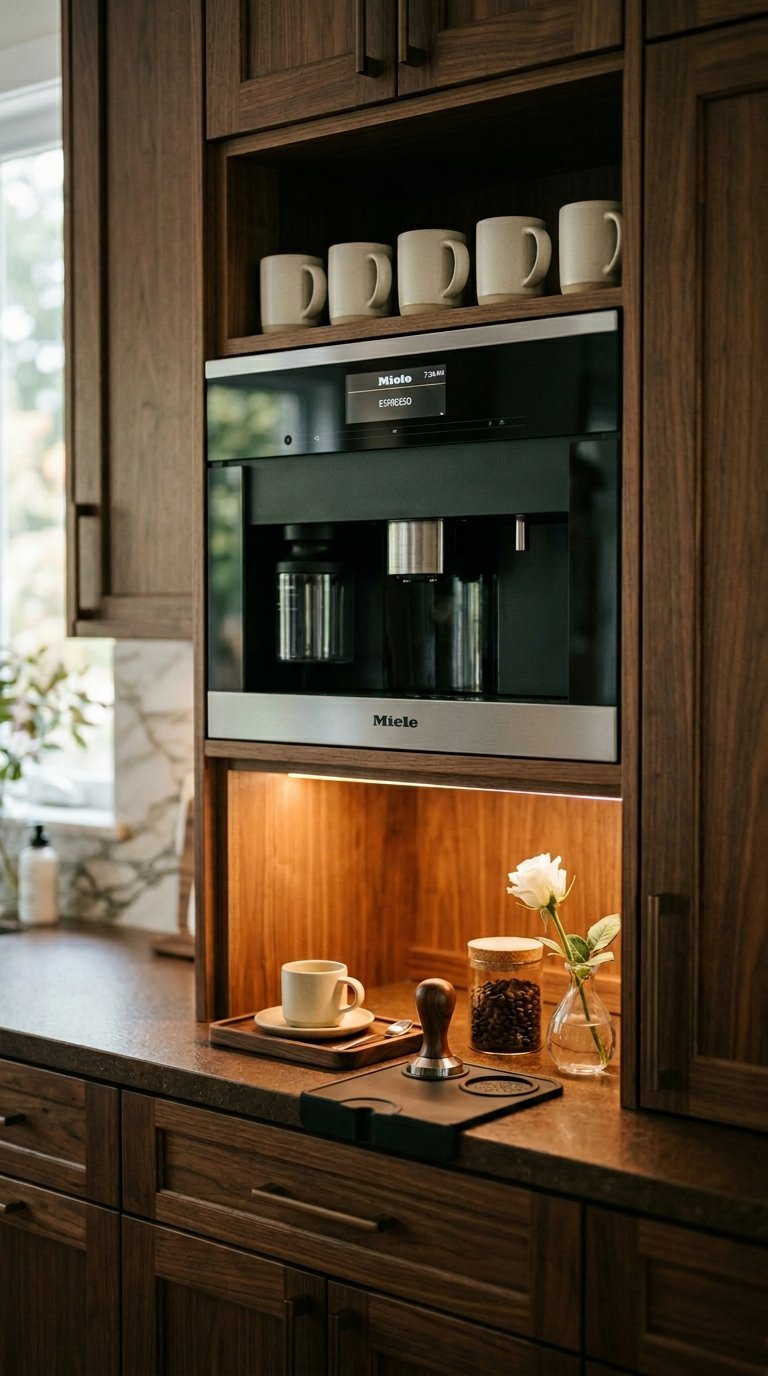
A dedicated coffee station with its own counter zone, under-cabinet storage for beans and equipment, and a plumbed-in coffee machine turns a daily routine into a designed experience. Miele’s CM7 built-in coffee system costs around $2,800 and produces barista-quality results from a fully integrated unit.
For a lower-cost version, a dedicated counter zone with open shelving above, a quality grinder, and a Breville Barista Express at $700 delivers a comparable ritual without the built-in price tag. The station costs under $1,500 total and adds a functional design moment to the kitchen.
16. Marble or Stone Kitchen Flooring
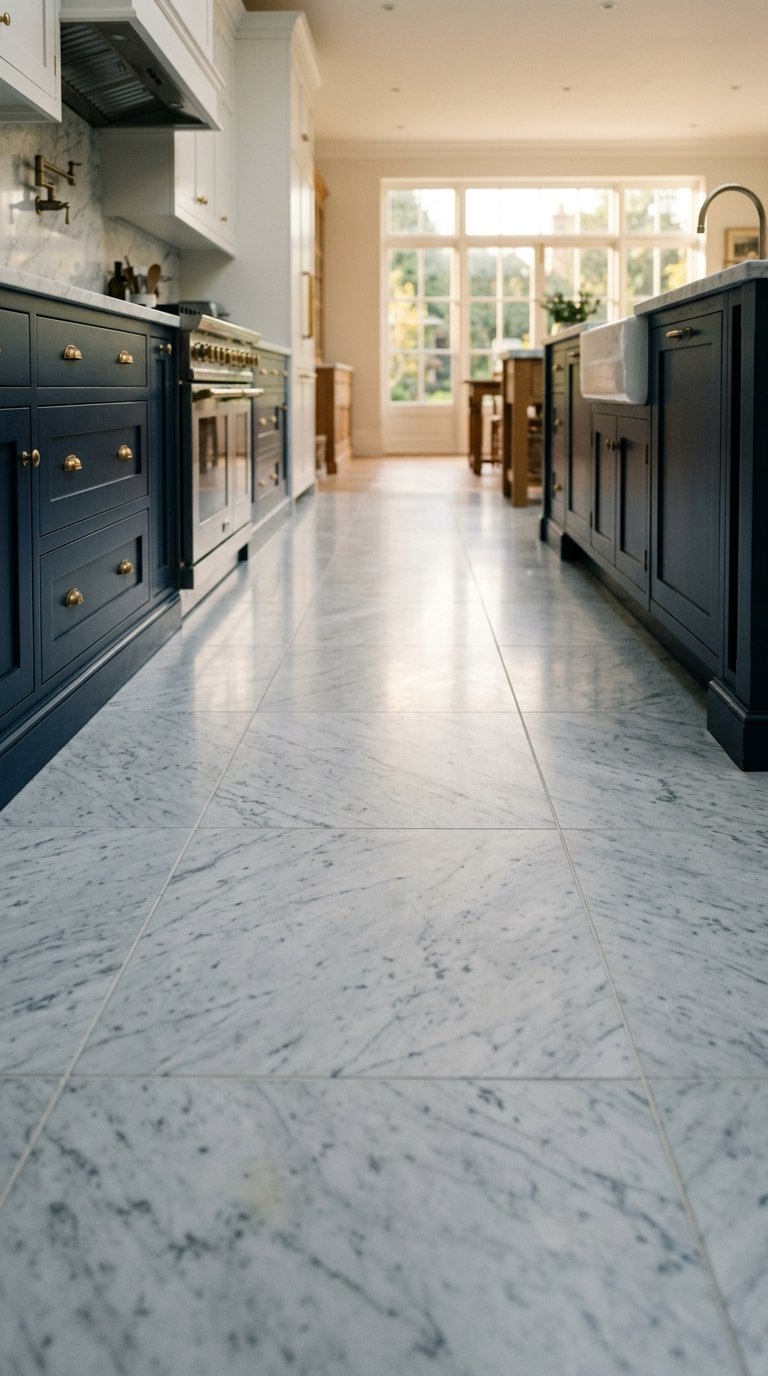
Luxury kitchens use stone floors because stone lasts longer than any other flooring material and develops character over decades rather than deteriorating. Honed Carrara marble tile costs between $10 and $25 per square foot for materials and transforms the floor into a surface that connects to the countertops and backsplash as a cohesive stone story.
Large-format marble tiles at 24×24 inches or bigger reduce grout lines and create a more seamless surface. In a 150-square-foot kitchen, the material cost runs $1,500 to $3,750, with installation adding $3 to $8 per square foot on top.
17. Hidden Storage Panels and Appliance Garages
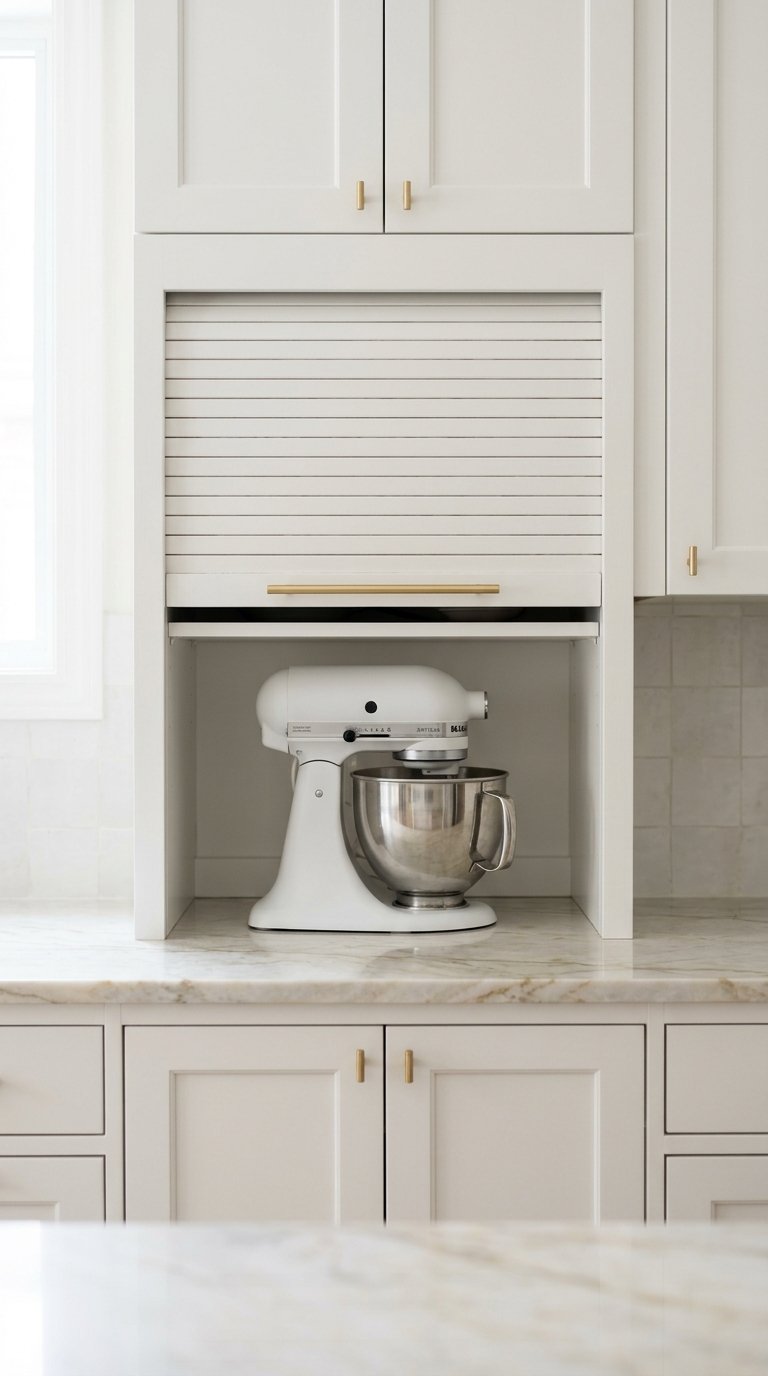
An appliance garage is a dedicated cabinet zone with a lift-up or roll-up door that hides countertop appliances when not in use. The result is a countertop that stays clear and a kitchen that looks like no one actually cooks in it, which is the baseline aesthetic goal of luxury kitchen design.
Custom appliance garages with integrated electrical outlets run $500 to $1,500 depending on size and door mechanism. They work particularly well for stand mixers, toasters, and coffee equipment that sits on the counter permanently but disrupts the visual cleanliness of the room.
18. Leathered or Honed Stone Finishes
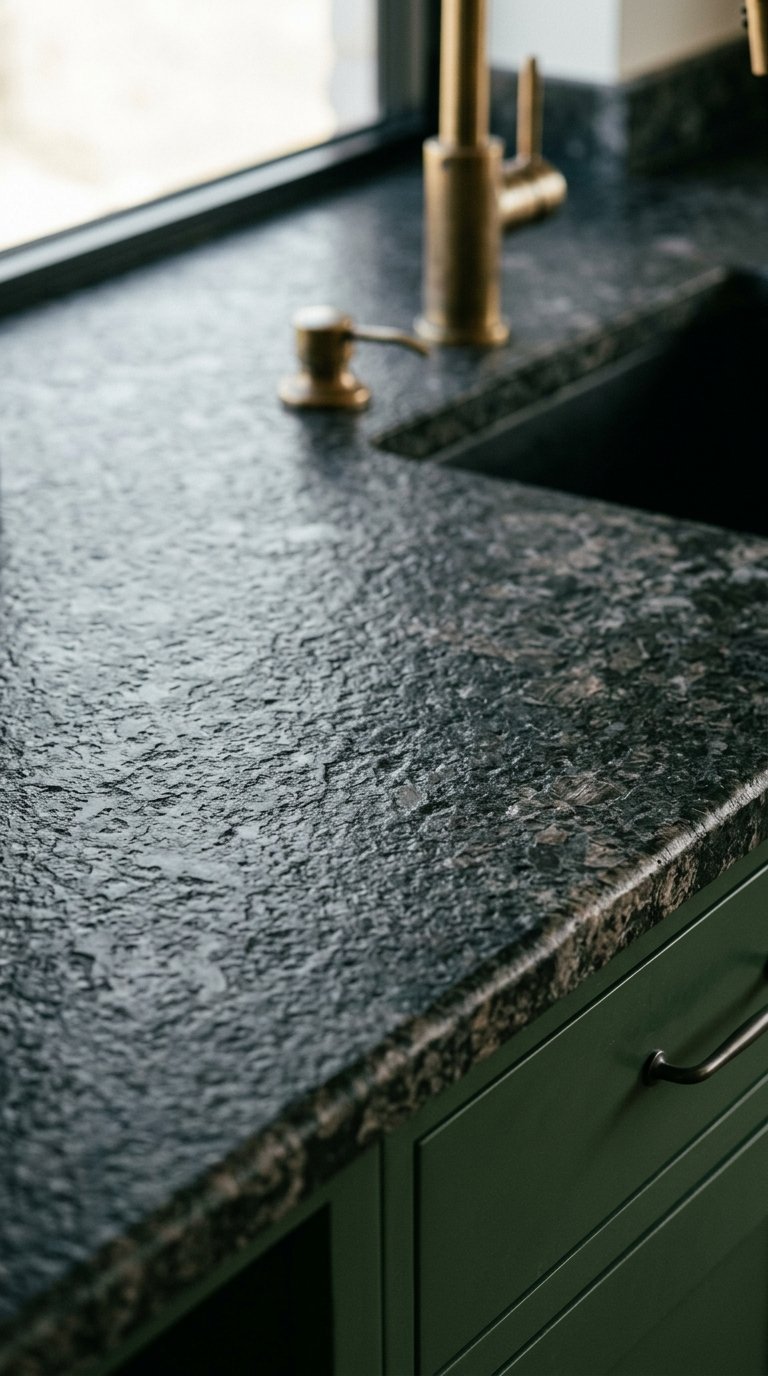
Polished stone reflects light and shows every fingerprint and water spot. Leathered granite and honed marble deliver the same material quality with a matte finish that hides daily wear and reads as more sophisticated in a luxury context.
The leathering process adds 10 to 20 percent to the cost of granite fabrication. On a 40-square-foot countertop in Black Forest granite, that’s an additional $200 to $400 for a result that requires half the maintenance and twice the visual impact of the polished version.
19. Built-In Wine Storage
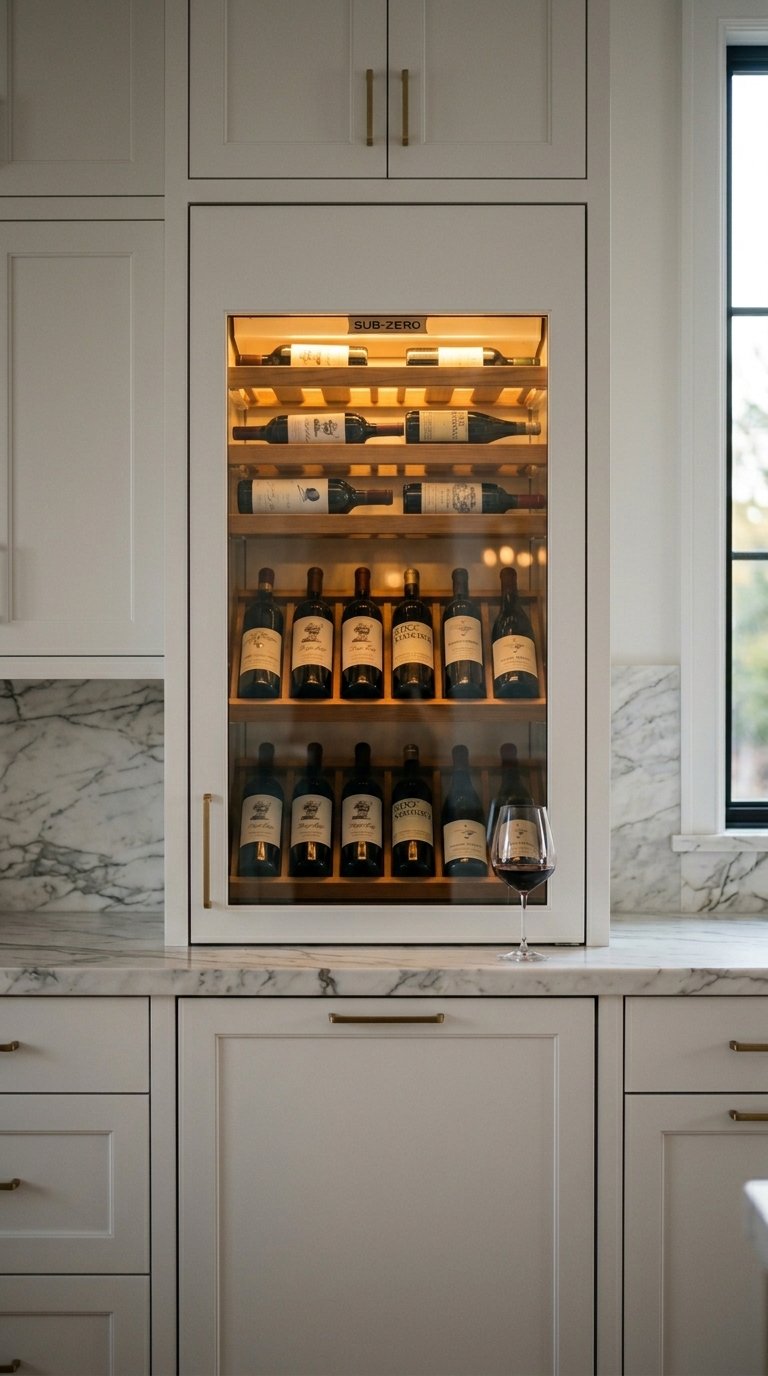
A built-in wine column or wine wall integrates temperature-controlled wine storage directly into the kitchen cabinetry. Sub-Zero’s 30-inch wine storage column costs around $6,500 and holds 147 bottles at precise serving temperature with UV-filtering glass doors.
For a lower-cost version, a 24-inch undercounter wine cooler from Kalamera or EdgeStar integrates behind a panel-ready door for $400 to $800. The result looks identical to the Sub-Zero from across the room and serves most homeowners’ actual wine storage needs completely.
20. Bespoke Cabinet Color With Hand-Applied Paint Finish
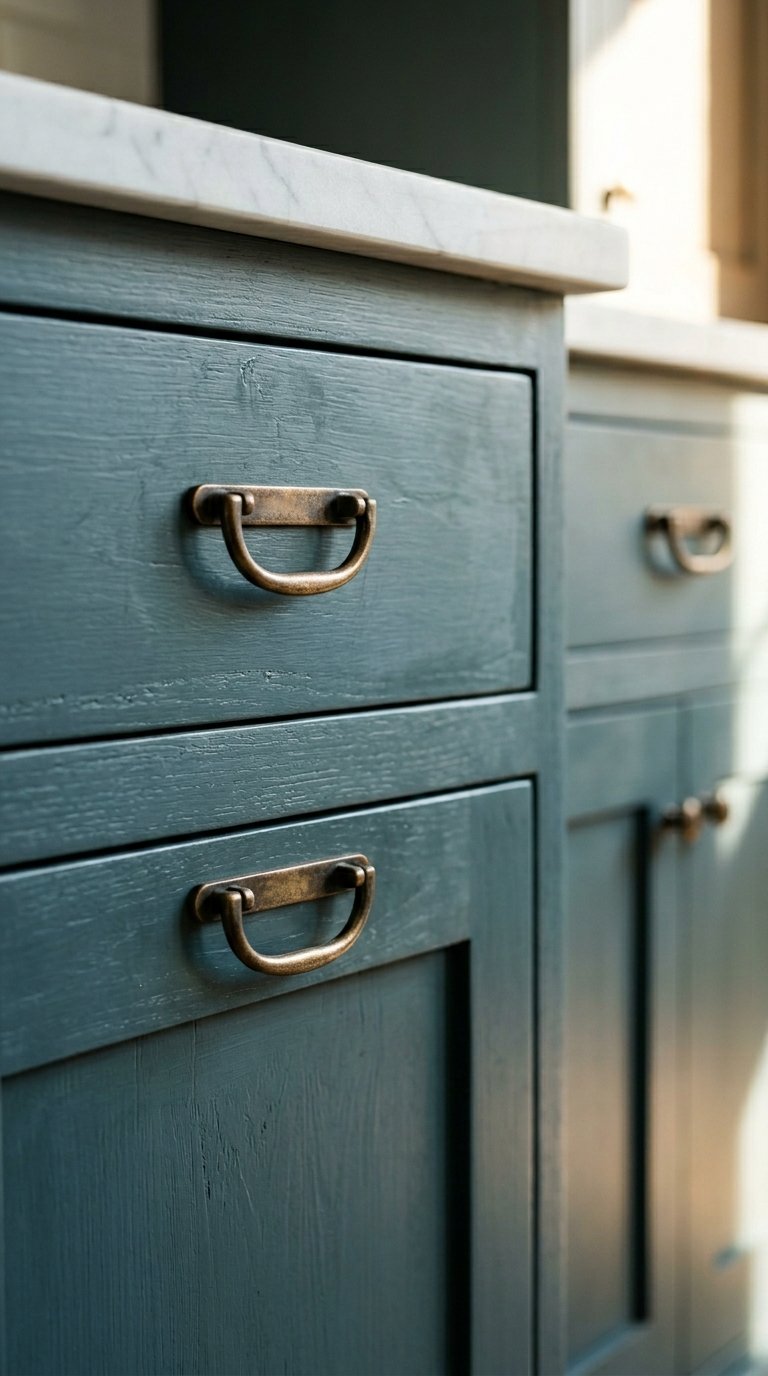
Factory-finished cabinets have a uniform, spray-applied surface. Hand-painted cabinets in a bespoke color have subtle brush texture and depth that photographs and presents differently at every angle. Benjamin Moore Advance in a custom-mixed color, applied by a skilled painter in three coats with light sanding between each, produces a finish that reads as genuine custom millwork.
The painting labor runs $1,500 to $4,000 for a full kitchen depending on the number of doors and drawers. The material cost is $70 to $100 per gallon. The total investment delivers a kitchen that looks genuinely one-of-a-kind.
21. Oversized Kitchen Island With Seating
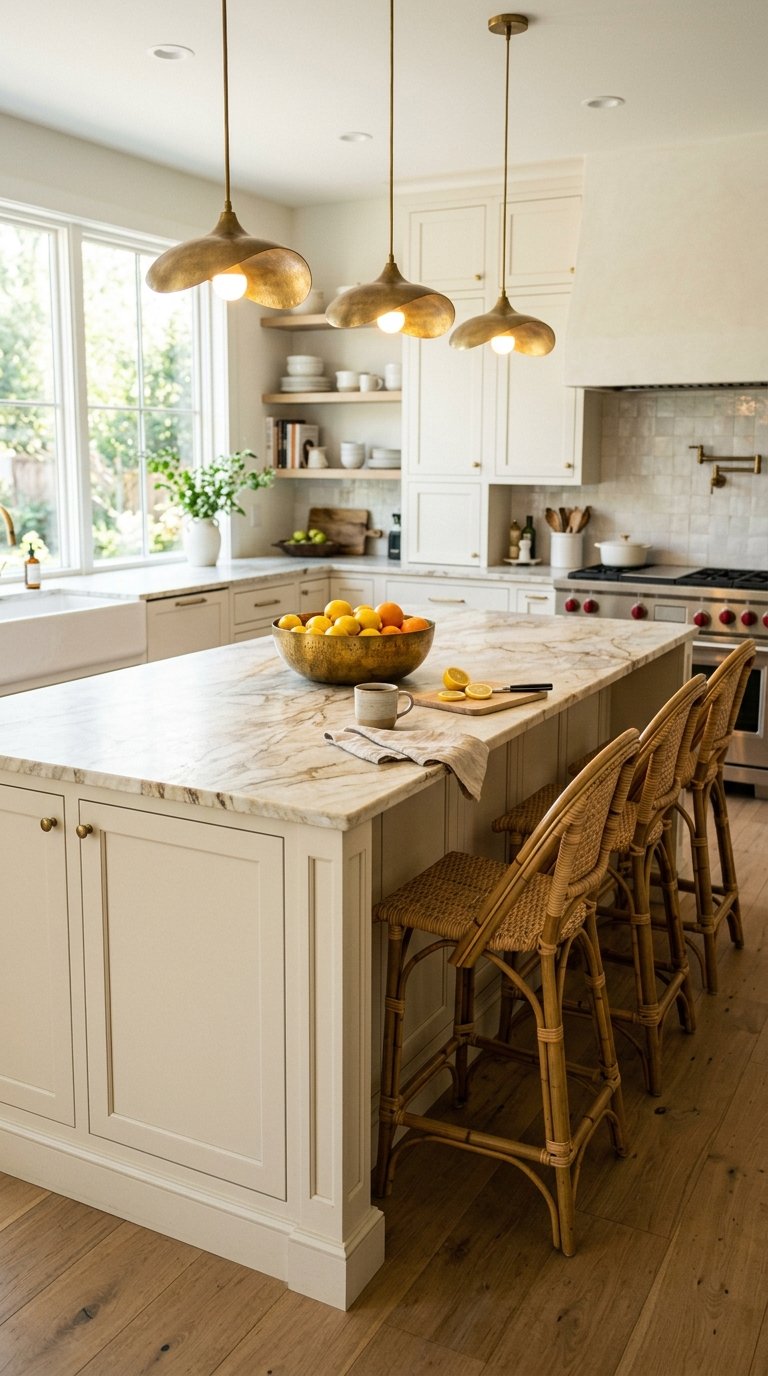
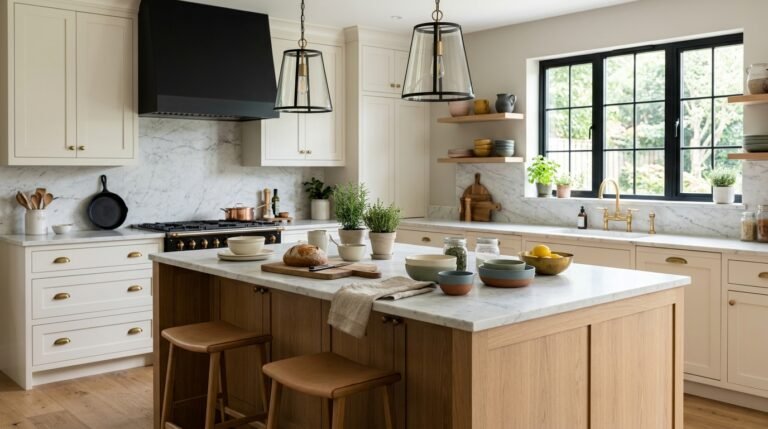
An island that seats four to six people functions as the social center of the home, not just the kitchen. The standard luxury island runs at minimum 4 feet wide and 8 feet long, with a 12-inch overhang on the seating side to allow for comfortable knee clearance.
Waterfall ends, a contrasting countertop material, or a painted base in a different color from the perimeter cabinets all elevate the island from a work surface to an architectural statement. Budget $3,000 to $15,000 for an island build-out depending on material and size choices.
22. In-Drawer Electrical Outlets
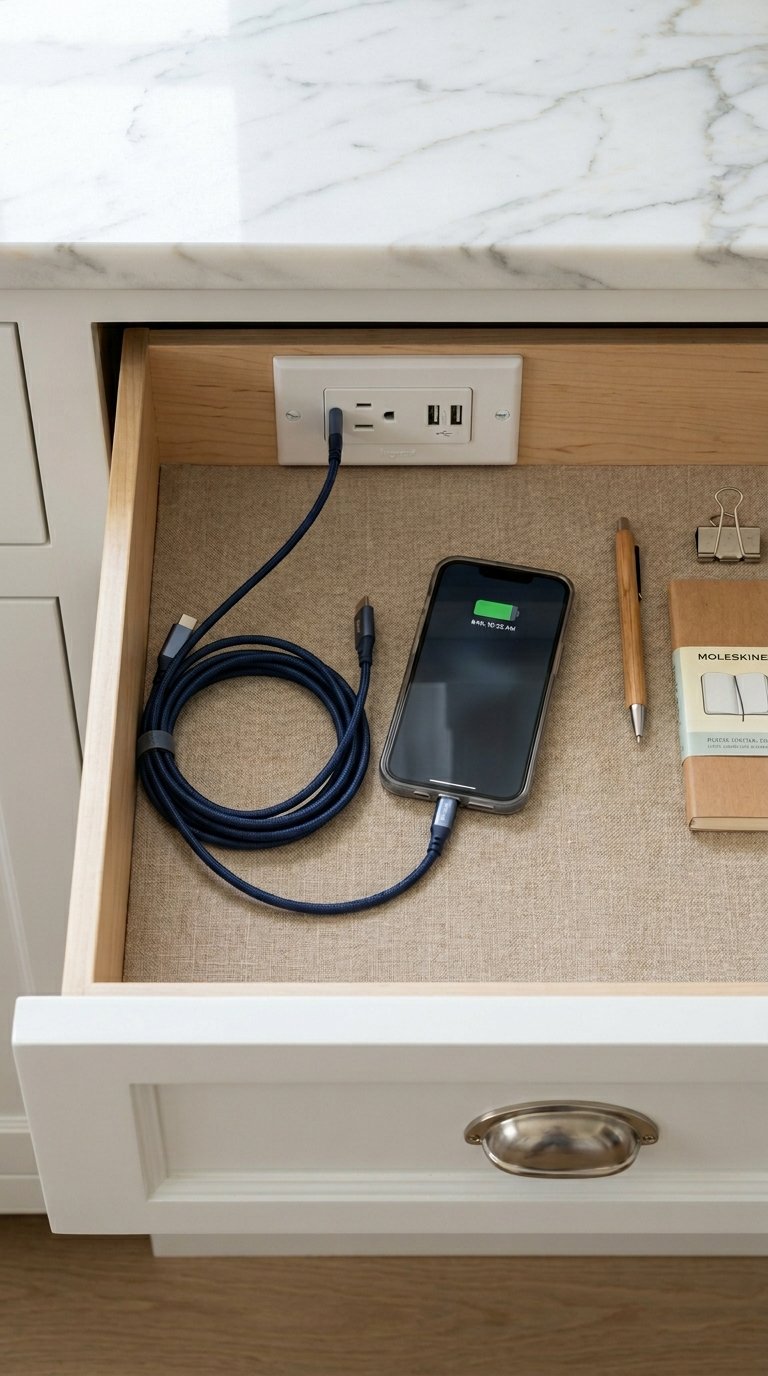
In-drawer outlets install inside deep drawers and charge devices out of sight, eliminating the cable clutter on luxury kitchen countertops. Legrand’s in-drawer outlet kit costs about $45 and installs in any drawer with enough depth to accommodate a standard device.
A kitchen with three in-drawer outlet installations costs $135 in materials and removes every charging cable from countertop view permanently. It’s a detail that costs almost nothing but signals a level of design intentionality that impresses every visitor.
23. Unlacquered Copper Sink
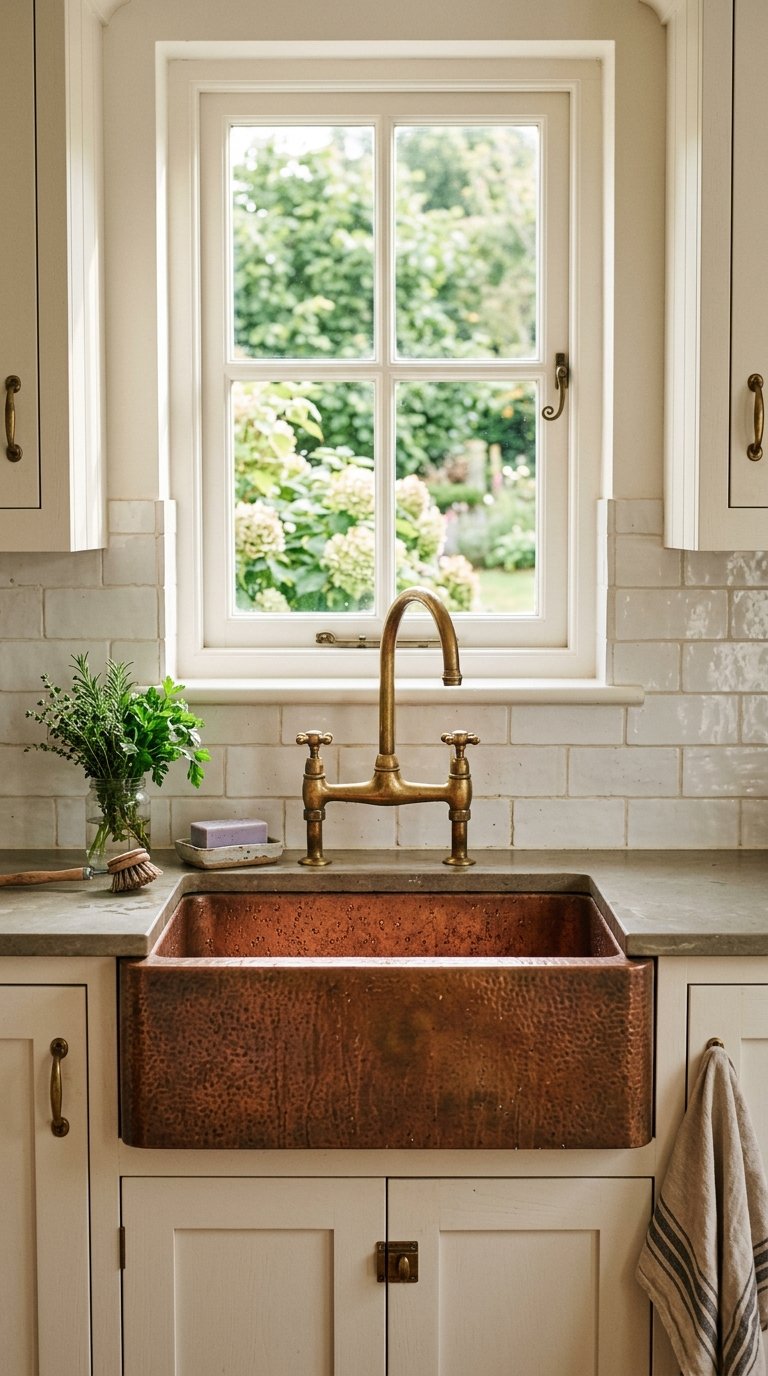
A hand-hammered copper farmhouse sink costs between $400 and $1,200 depending on size and manufacturer. It develops a natural patina over time that deepens and enriches the surface, which means it looks better at ten years than the day it was installed.
Native Trails produces hand-hammered copper sinks starting at $650 with a range of patina options from smooth to heavily textured. Against dark cabinetry or white subway tile, a copper sink functions as the most visually distinctive single fixture in the kitchen.
24. Plaster or Lime Wash Walls
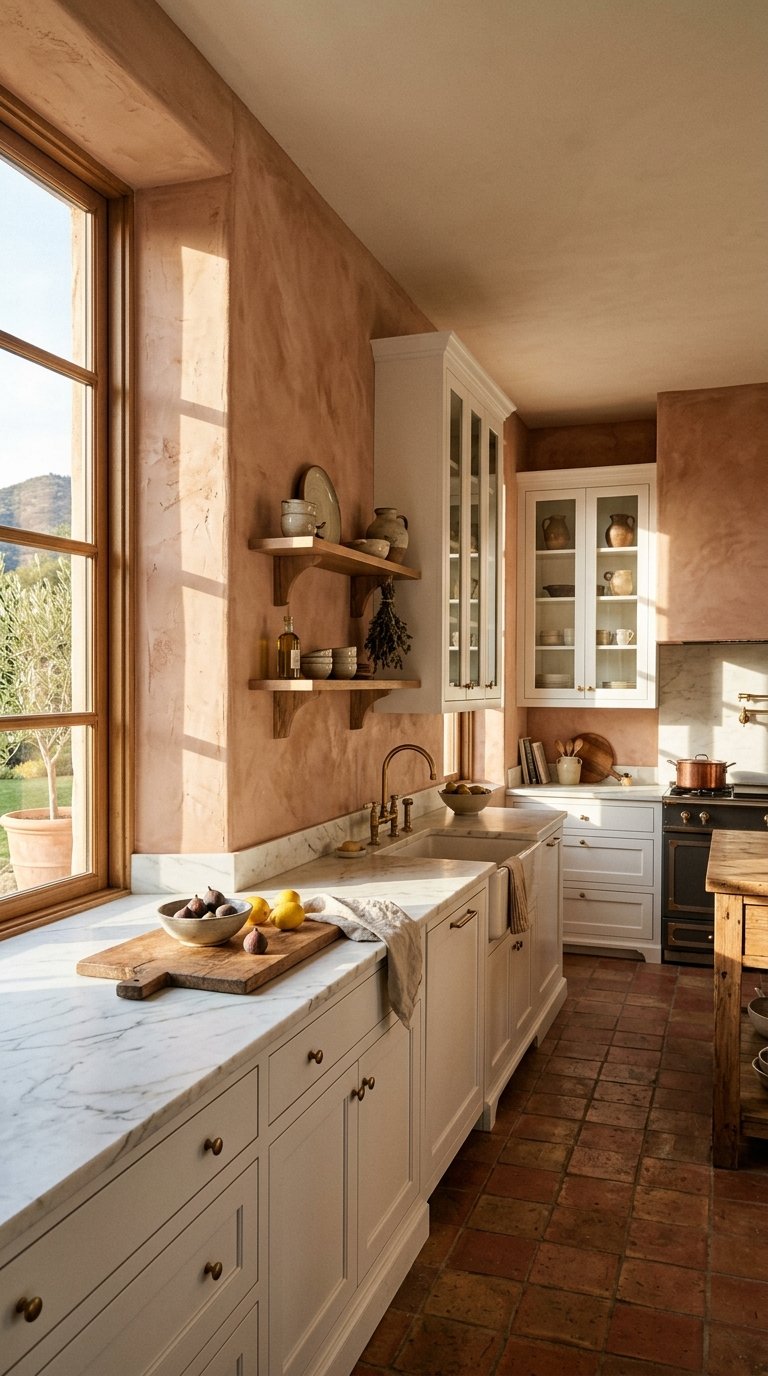
Plaster walls with a smooth or textured finish replace flat paint with a material that has depth, warmth, and light-catching variation. American Clay or Portola Paints’ Roman Clay finish costs $60 to $90 per gallon and covers approximately 200 square feet per gallon.
A full kitchen in Roman Clay plaster costs $150 to $300 in materials with a two-to-three day application timeline for a skilled painter. The result looks like nothing a standard paint finish produces and adds a material richness to the room that photographs extraordinarily well.
25. Architectural Ceiling Detail
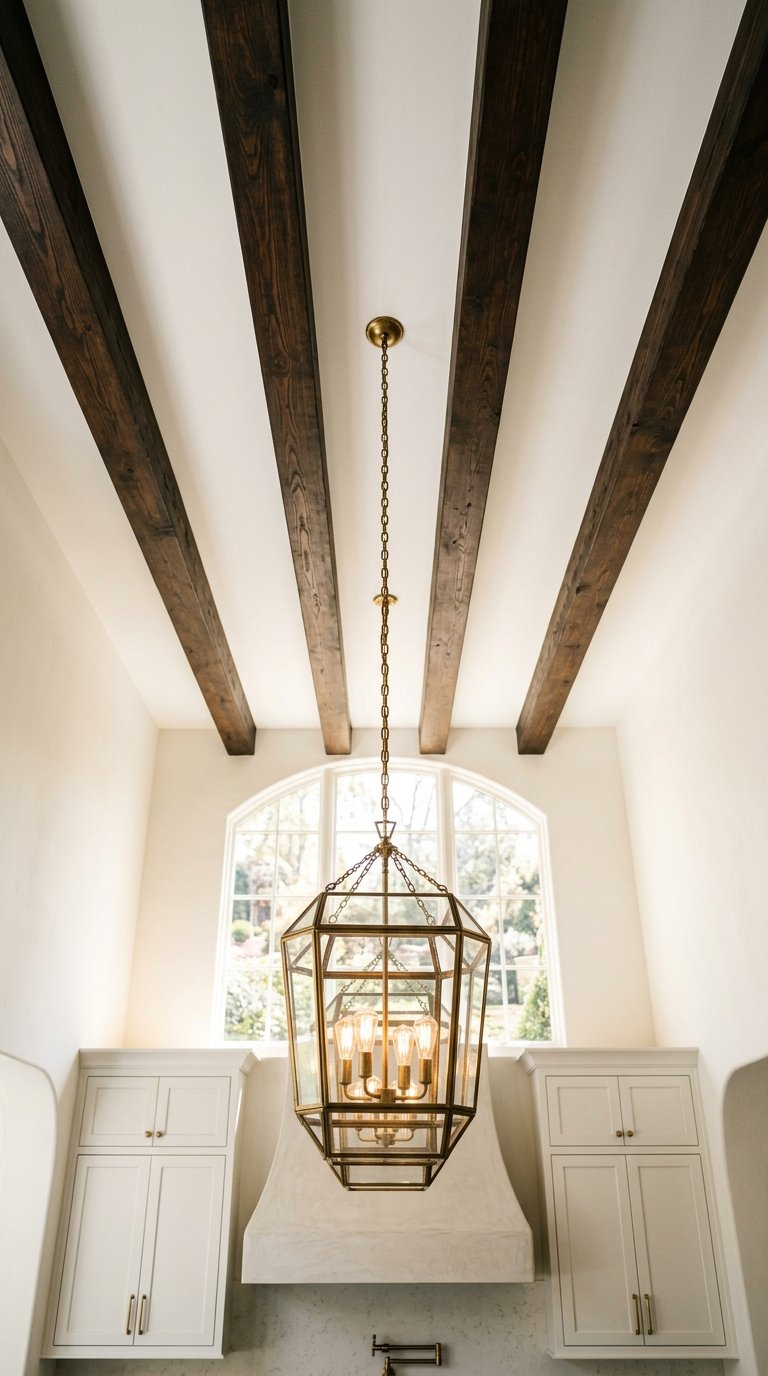
A coffered ceiling, exposed beam ceiling, or painted ceiling with a contrasting color turns the kitchen’s fifth wall into a design element. Faux wood beams from American Pro Décor cost $150 to $400 per beam and install with basic carpentry tools, adding the look of structural timber at a fraction of the weight and cost.
A 12×14 kitchen ceiling with four beams costs $600 to $1,600 in materials and changes the perceived architecture of the room completely. Pair the beam color with the cabinet hardware or island base color to tie the ceiling into the rest of the design.
Final Thoughts
A luxury kitchen rewards attention to detail more than it rewards raw spending. The 25 ideas above prove that the gap between a beautiful kitchen and an average one often comes down to hardware quality, lighting decisions, and finish choices rather than complete renovations.
Start with the details you afford today: fluted cabinet doors, toe-kick lighting, quality hardware, and a statement faucet. Add the bigger investments as your timeline and budget allow. Build a kitchen that reflects how you actually live in it, and the luxury takes care of itself.