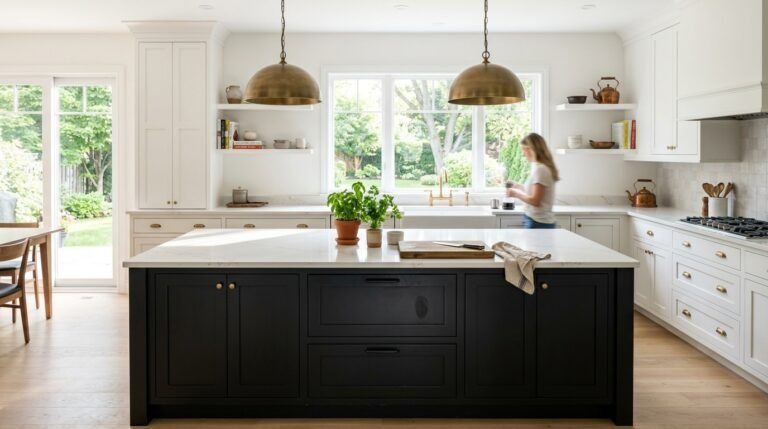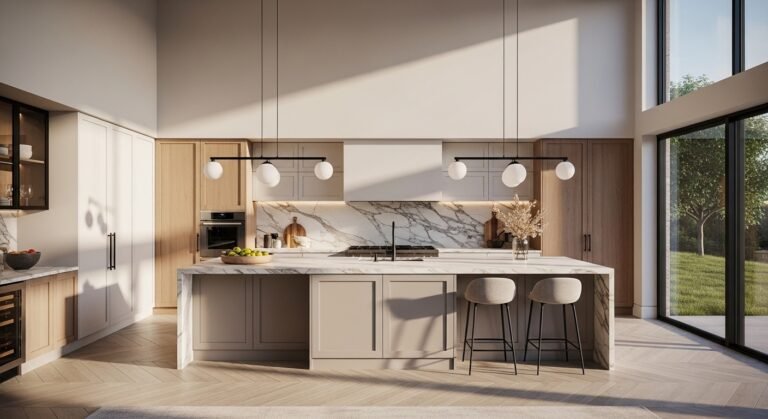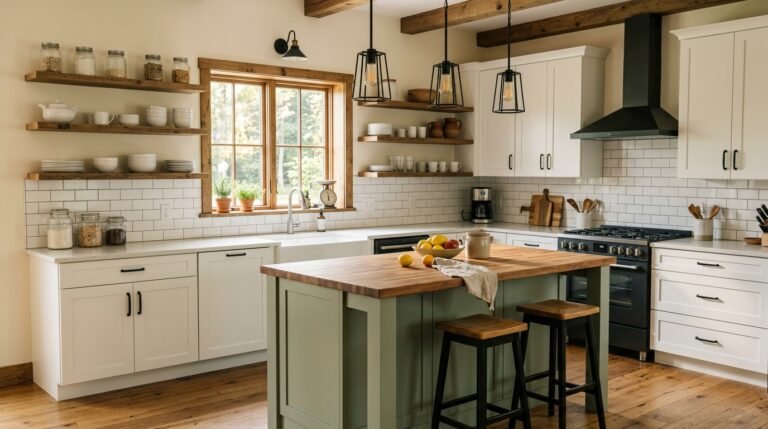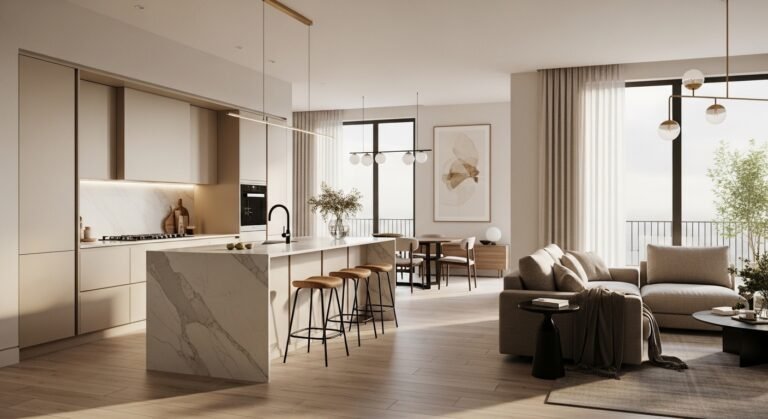
21 Minimalist Kitchen Ideas for a Clean and Stylish Home
Your kitchen accumulates clutter faster than any other room in your home. Appliances crowd the counter. Cabinet doors hide outdated organization. Hardware on every drawer pulls the eye in twenty directions at once. If your kitchen feels busy, chaotic, or just visually exhausting, these 21 ideas give you the specific details to fix it, permanently.
Every idea below includes real product names, accurate price ranges, and the honest reason it works. No mood boards. No aspirational showroom photos. Just minimalist kitchen solutions built for real homes and real budgets.
1. Flat-Front Slab Cabinet Doors With No Hardware
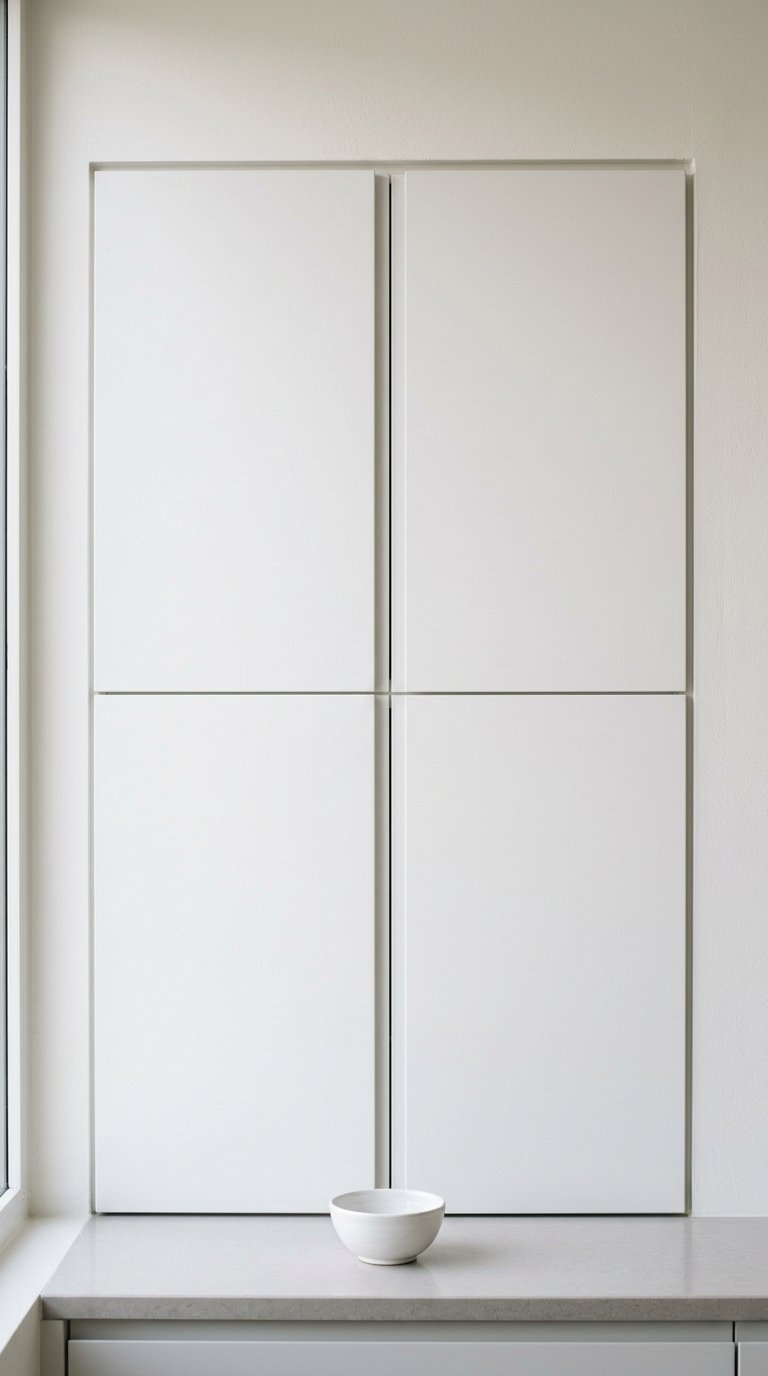
Replacing raised-panel or shaker cabinet doors with flat-front slab doors removes the single biggest source of visual noise in most kitchens. Every groove, frame, and shadow line on a raised-panel door competes for your attention. A flat slab eliminates all of it.
IKEA’s AXSTAD matte white slab fronts for their SEKTION cabinet system cost $18 to $55 per door depending on size. For a more furniture-quality finish, Semihandmade offers custom slab fronts compatible with IKEA carcasses starting at $85 per door in painted MDF, with wood veneer options in walnut or white oak starting at $140 per door. The swap from shaker to slab on a standard 10-cabinet kitchen costs $500 to $1,400 in materials and transforms the entire visual weight of the room.
2. Handleless Push-to-Open Cabinet System
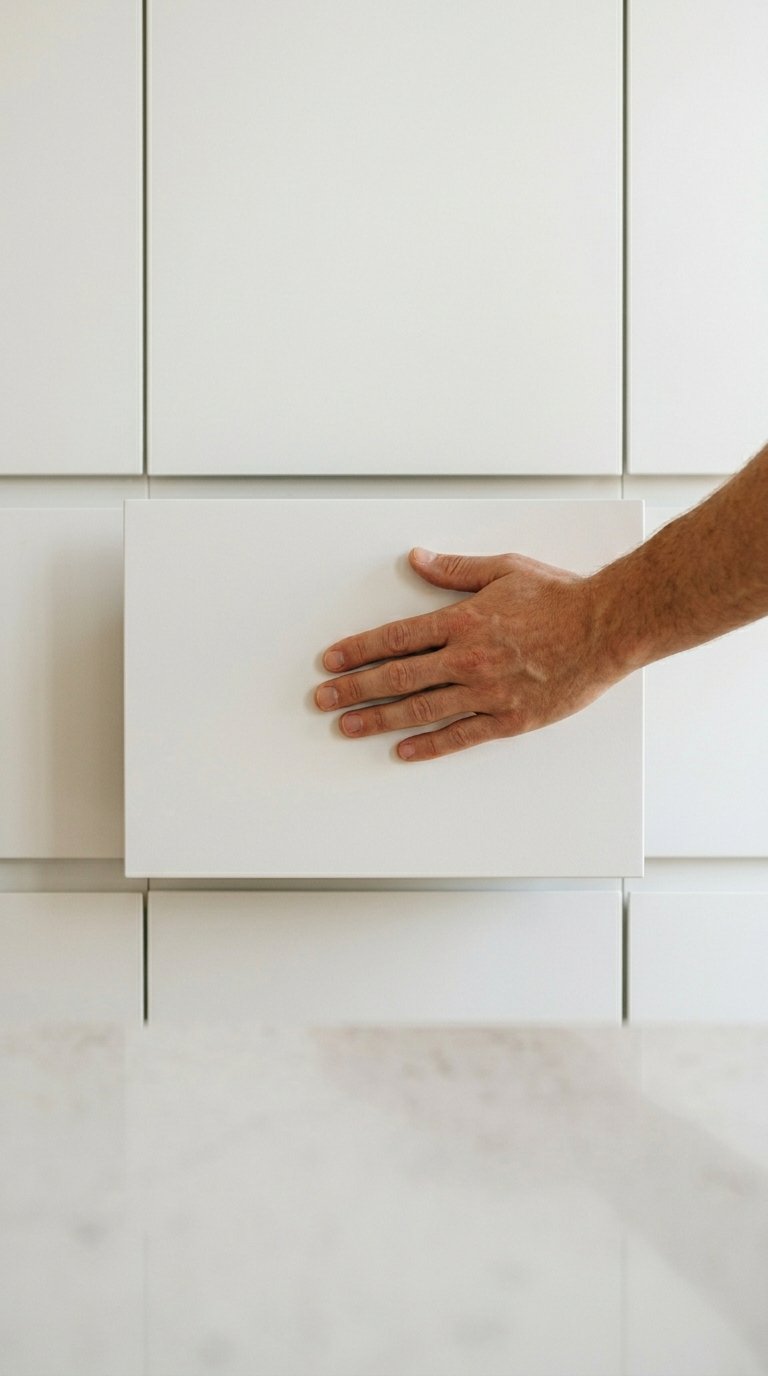
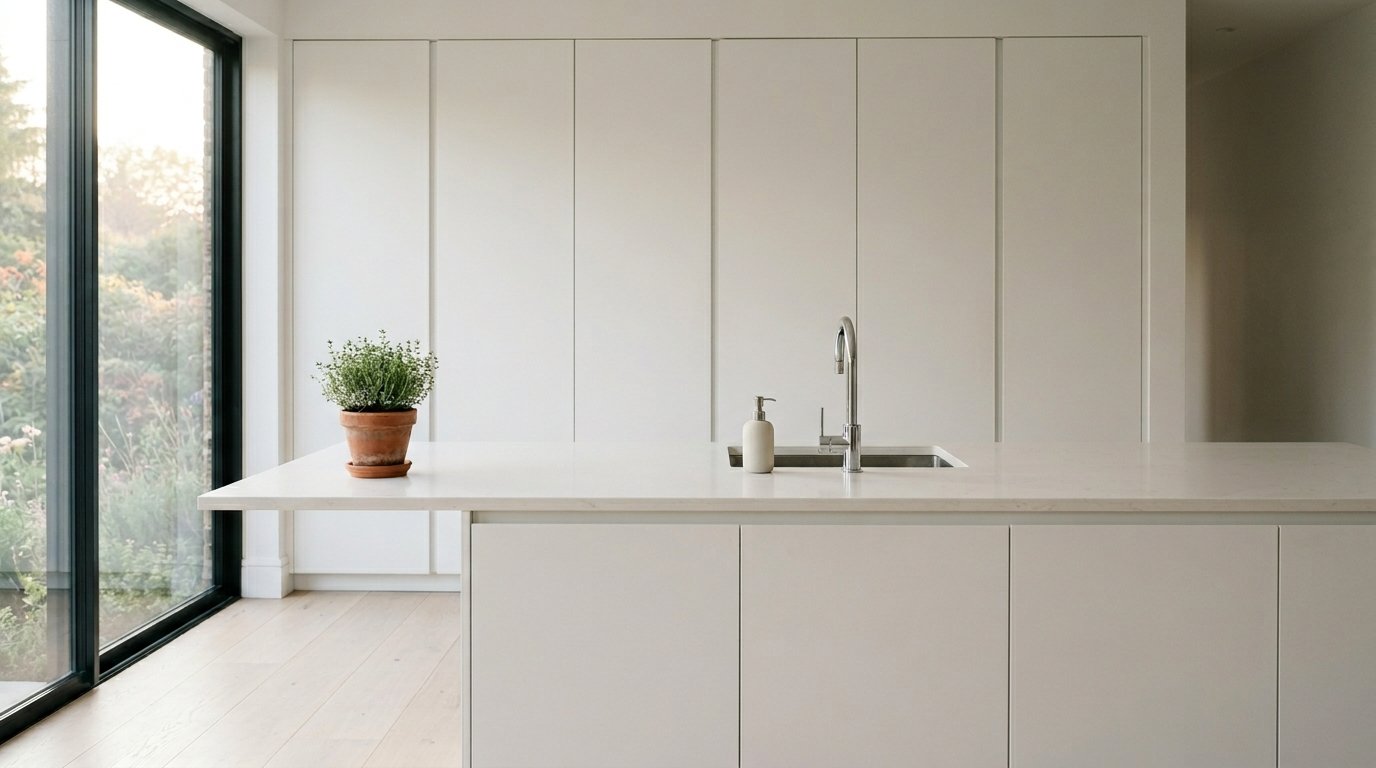
Removing hardware from your cabinets entirely cuts the visual clutter that hardware creates across an entire wall of cabinetry. A kitchen with 20 cabinet doors and drawers holds 20 pieces of hardware, each one a small visual interruption. Eliminating them produces a wall of unbroken cabinet surface.
Blum’s CLIP top hinge system with integrated push-to-open mechanism costs $8 to $14 per hinge pair and installs in standard European-style cabinet carcasses. For drawers, Blum’s TANDEM plus BLUMOTION drawer system with TIP-ON push-to-open costs $35 to $55 per drawer. The total hardware removal project on a standard kitchen runs $300 to $600 and produces the handleless, seamless look found in high-end minimalist kitchens.
3. Single Neutral Color Across All Cabinets
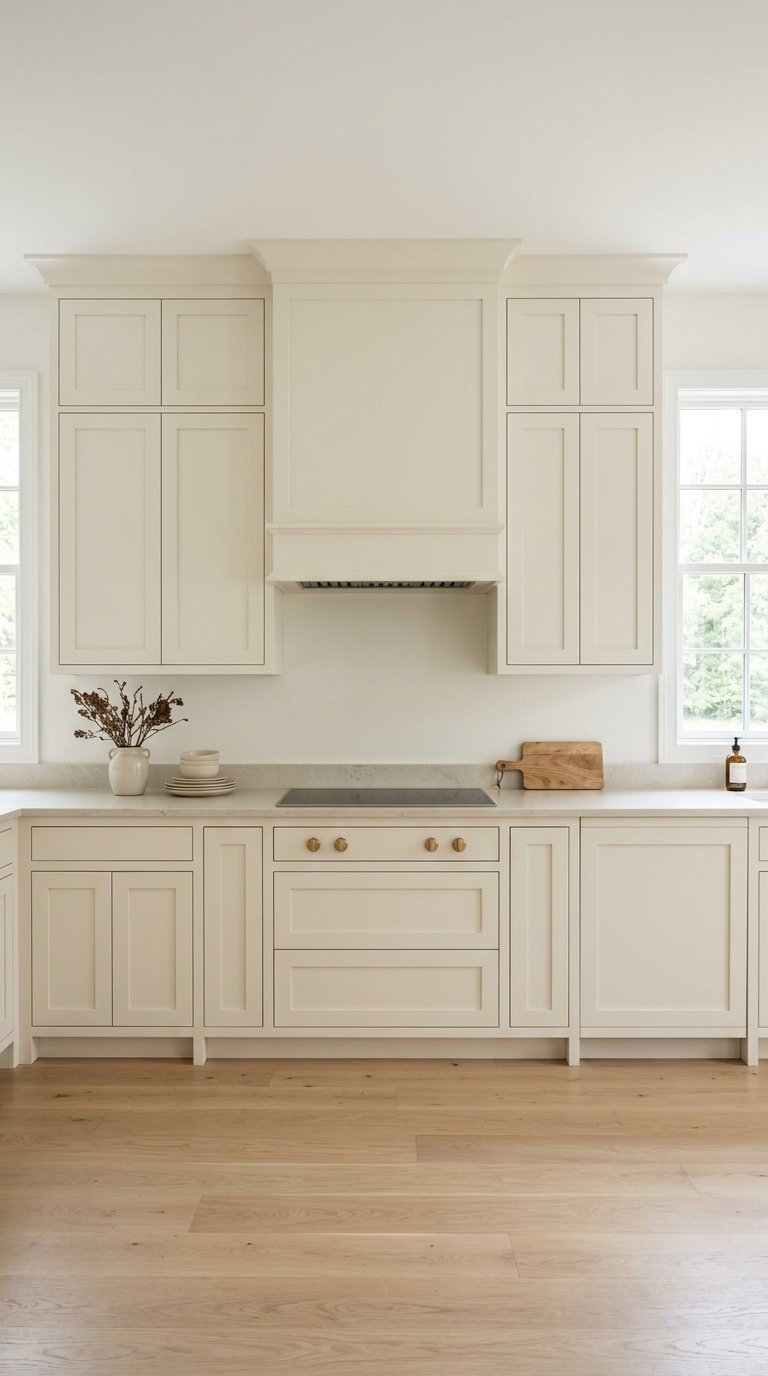
Painting your upper and lower cabinets the same single color removes the two-tone contrast that chops a kitchen into visual sections. Two-tone kitchens became popular for good reason, but they require precise execution. A single matte neutral requires none of that precision and works in every kitchen layout.
Benjamin Moore’s Chantilly Lace OC-17 is the most popular single-color cabinet choice for minimalist kitchens, producing a warm, off-white tone that reads clean without feeling sterile. For a warmer result, Sherwin-Williams Alabaster SW 7008 costs $65 to $75 per gallon and covers approximately 400 square feet per gallon. Painting a standard 10-cabinet kitchen yourself in a single neutral color costs $150 to $250 in materials and takes one weekend.
4. Quartz Countertop in a Solid or Subtle Neutral
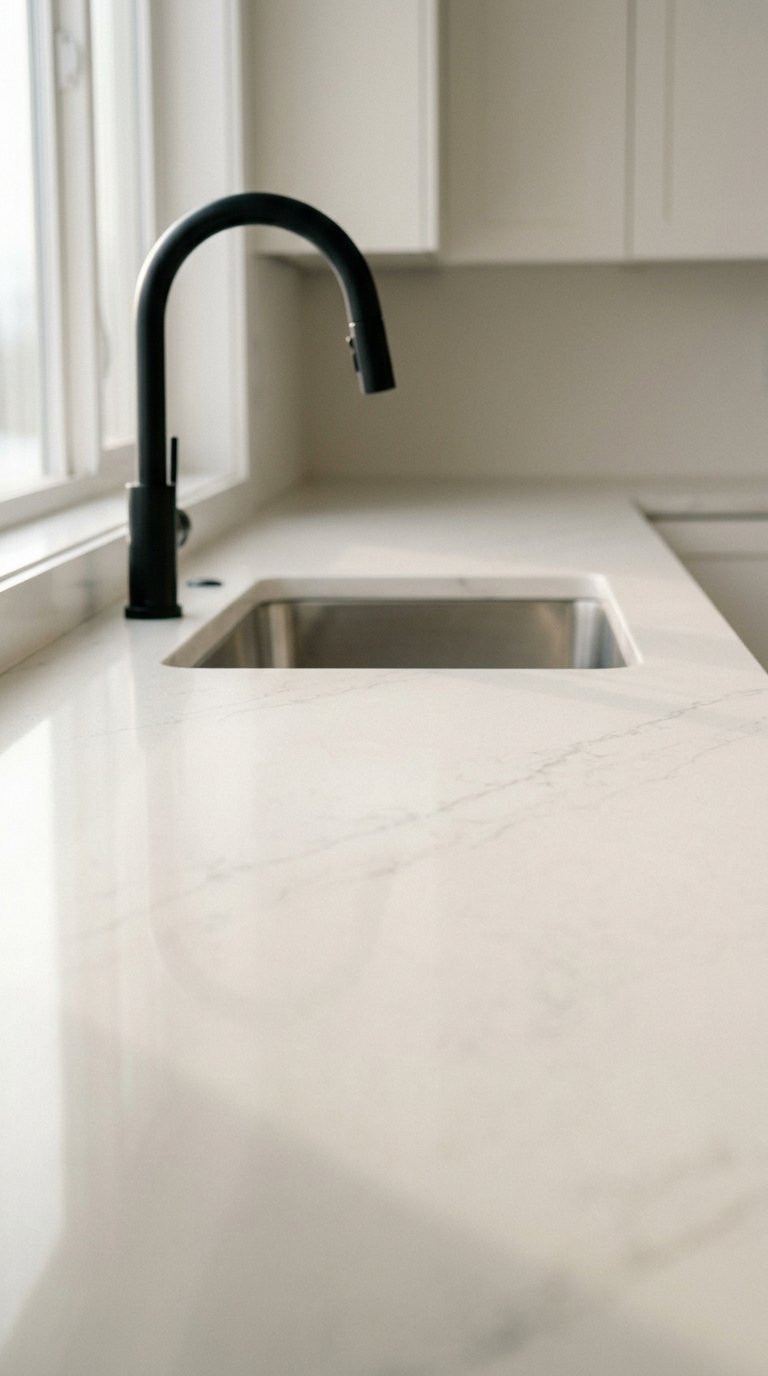
A countertop with heavy veining, bold movement, or dramatic contrast competes with your cabinet color for attention. A solid or softly veined neutral quartz surface lets the rest of the kitchen read as calm and unified. The countertop becomes part of the backdrop rather than a focal point.
Standard quartz in popular colors like white with soft gray veining costs $50 to $80 per square foot installed. Caesarstone’s Pure White or Silestone’s Blanco Norte are both solid-surface options in the $60 to $90 per square foot range that pair with any cabinet color without competing. A standard kitchen with 35 square feet of countertop averages $3,500 for a mid-grade quartz installation.
5. Appliance Garage With Pocket Doors
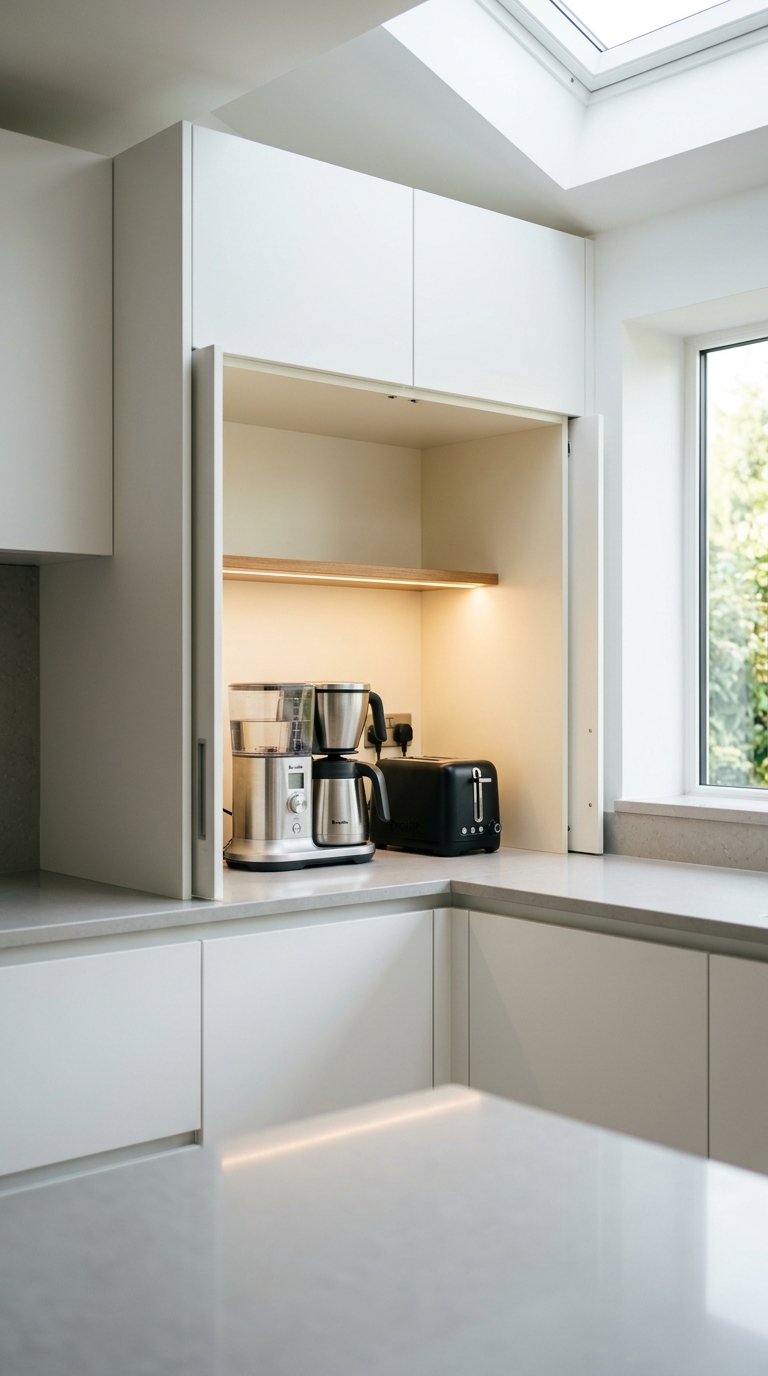
An appliance garage built into your upper cabinet run hides your toaster, coffee maker, and air fryer behind doors that slide completely out of sight when open. Countertop appliances disappear when not in use, leaving the counter completely clear. In a small kitchen where counter space is already limited, this is a genuine quality-of-life upgrade.
Pocket doors slide into hidden pockets on the side of the unit, so the doors hide next to the unit instead of swinging out and taking up space. WoodHarbor’s pocket door wall cabinets are available in 48 to 60-inch lengths and sit above the countertop to create a dedicated appliance zone. More complex installations using pocket doors or tambour doors increase the renovation budget but deliver a genuinely clean and minimalist result.
6. Integrated Appliances Behind Cabinet-Matched Panels
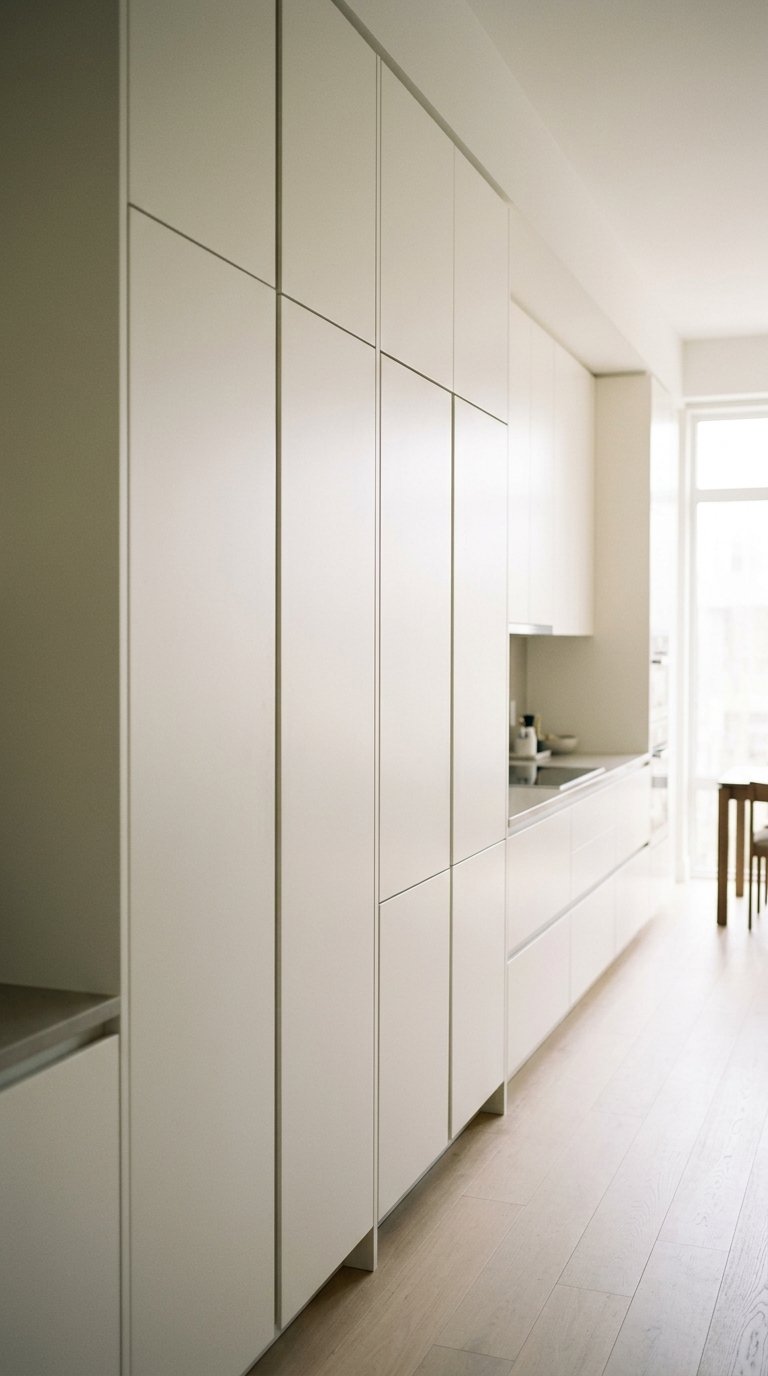
Integrated appliances sit behind cabinet-matched door panels so the refrigerator, dishwasher, and oven read as part of the cabinet run rather than as separate objects inserted into it. A standard kitchen with exposed stainless appliances has three large surfaces that visually interrupt every cabinet wall they touch. Panel-ready appliances eliminate all three.
Fisher and Paykel’s panel-ready refrigerators start at $3,800 and accept custom cabinet panels up to 3/4 inch thick that match your existing cabinet fronts exactly. Bosch’s 300 and 500 series dishwashers offer a panel-ready option starting at $900 that accepts a custom front panel for $60 to $120 in additional material cost. The total panel cost for matching three appliances runs $200 to $400 on top of appliance prices.
7. Open Floating Shelves Replacing Upper Cabinets
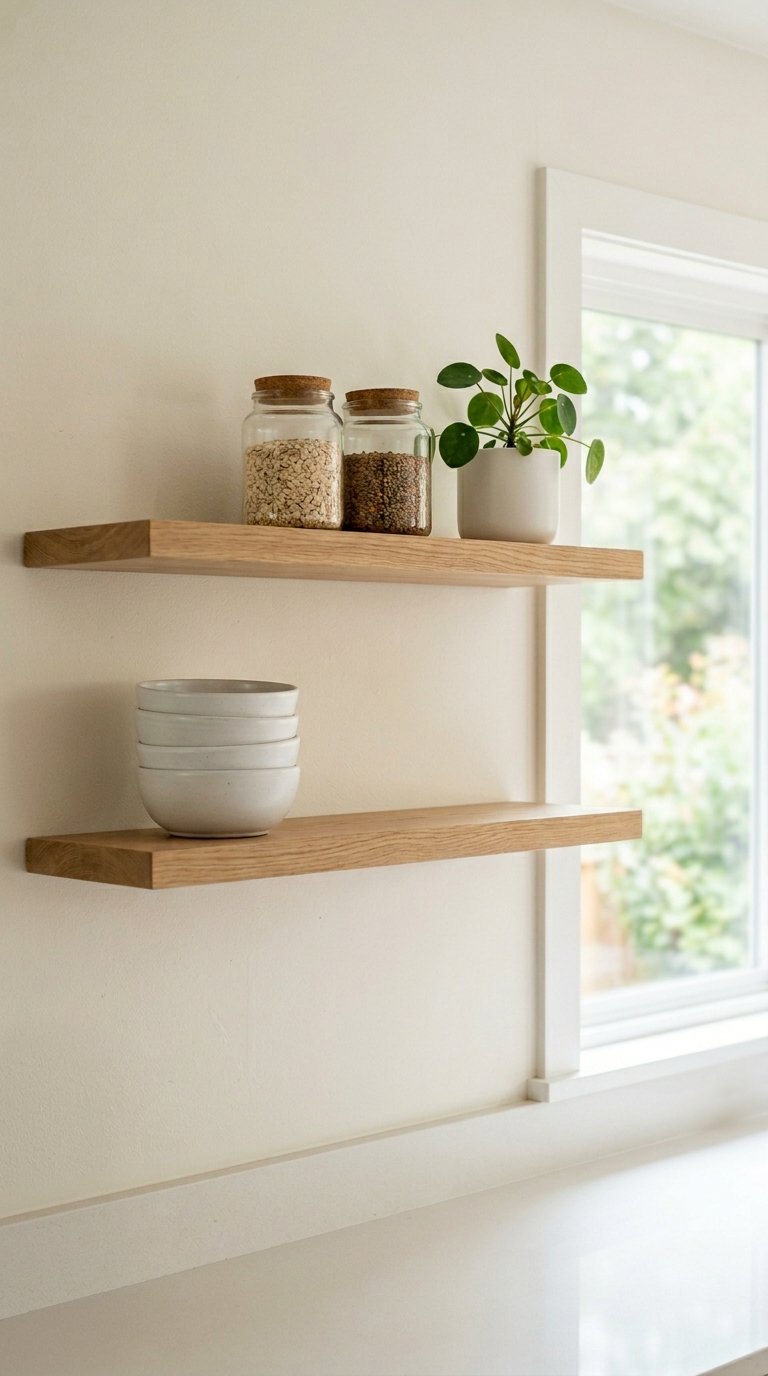
Removing upper cabinets on one wall and replacing them with two or three floating shelves opens the kitchen visually and eliminates the enclosed, heavy feel that full upper cabinet runs create. Studies by the National Kitchen and Bath Association show that open shelving in kitchens makes the space feel up to 30 percent larger than closed upper cabinetry of the same footprint.
IKEA’s LACK floating shelves in white cost $15 to $25 each and mount directly to studs with a concealed bracket for a clean wall-mounted appearance. For a more substantial shelf, a 2-inch thick white oak floating shelf from a local millwork supplier runs $80 to $150 per linear foot and adds warmth without adding visual weight. Limit open shelves to one wall and keep them to two or three items deep to prevent them from becoming clutter surfaces.
8. Under-Cabinet LED Lighting on a Dimmer
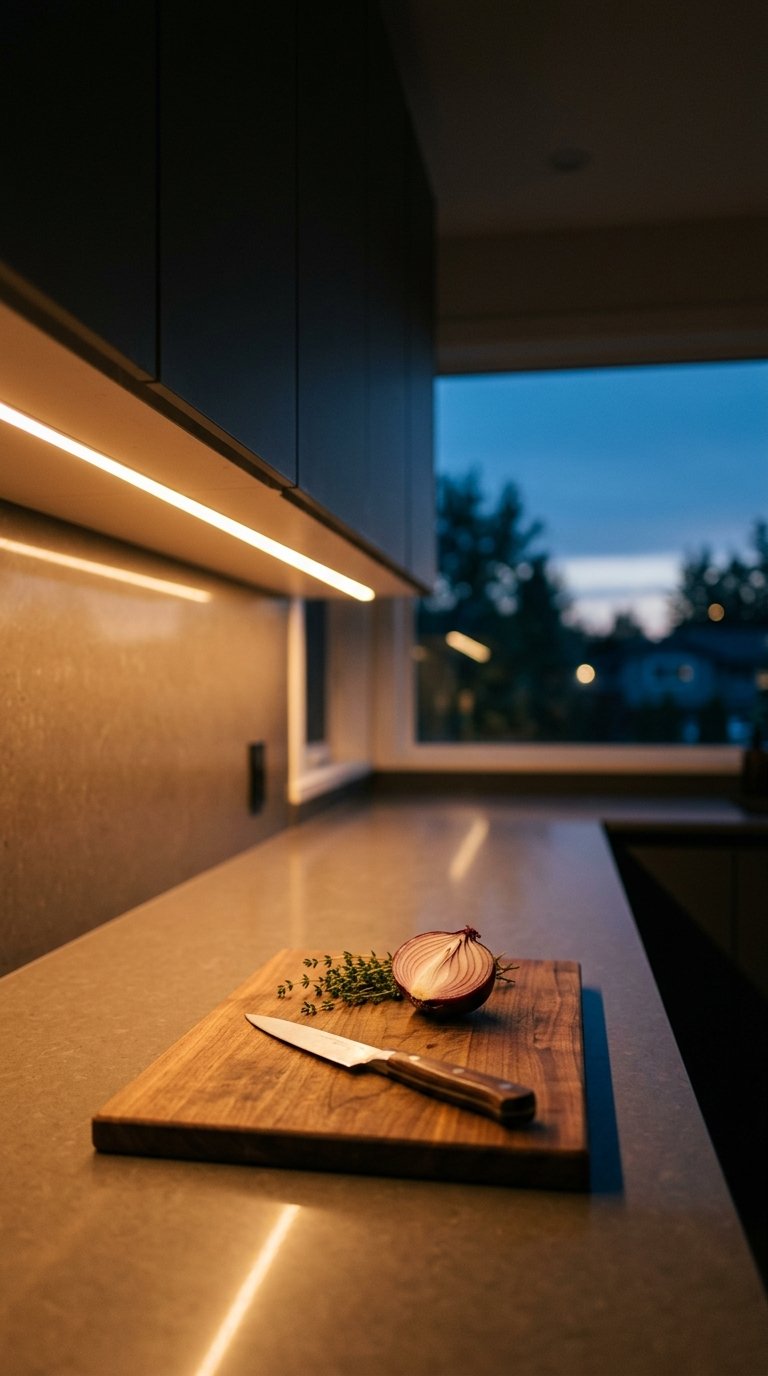
Under-cabinet LED lighting installed on a dimmer switch solves the problem of a kitchen that feels either over-lit and clinical or too dim for food prep. The lighting sits below the upper cabinets and illuminates the countertop directly, which also eliminates the hard shadow that upper cabinets cast over the work surface.
WAC Lighting’s LED Linear Series is the top-rated premium hardwired option, while Kichler’s LED under-cabinet fixtures are rated best for designer finish and color quality. Kichler’s 6U Series 30-inch LED bar costs $55 to $85 per fixture at Home Depot and installs in under an hour per cabinet section. A complete under-cabinet lighting setup for a standard 10-foot cabinet run costs $200 to $400 in fixtures and adds task lighting that reduces the need for overhead lighting entirely.
9. Single Consistent Metal Finish Across All Hardware and Fixtures
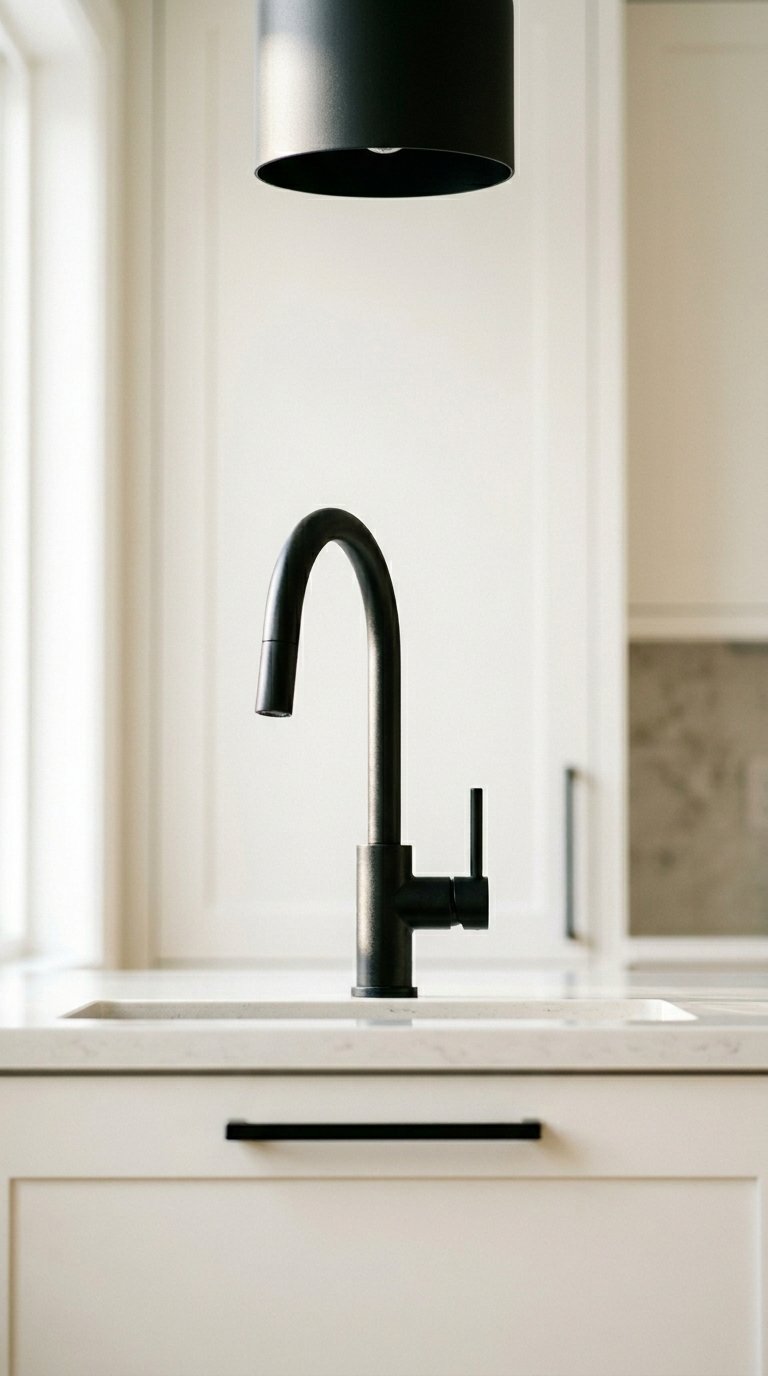
Using one metal finish across every faucet, handle, light fixture, and cabinet fitting in your kitchen eliminates the visual conflict that mixed metals create. Most kitchens accumulate chrome, brushed nickel, and matte black hardware over years of piecemeal upgrades. The result is a kitchen that feels unresolved regardless of how organized it is.
Matte black is the most forgiving single finish for a minimalist kitchen because it reads as intentional in every light condition. Delta’s Trinsic kitchen faucet in matte black costs $230 to $280 and pairs with matte black cabinet pulls from Amerock’s Blackrock collection at $4 to $8 per piece. Replacing 20 pieces of mixed hardware with a single matte black finish costs $80 to $160 in hardware alone and produces an immediately unified result.
10. Deep Pull-Out Drawers Instead of Base Cabinet Shelves
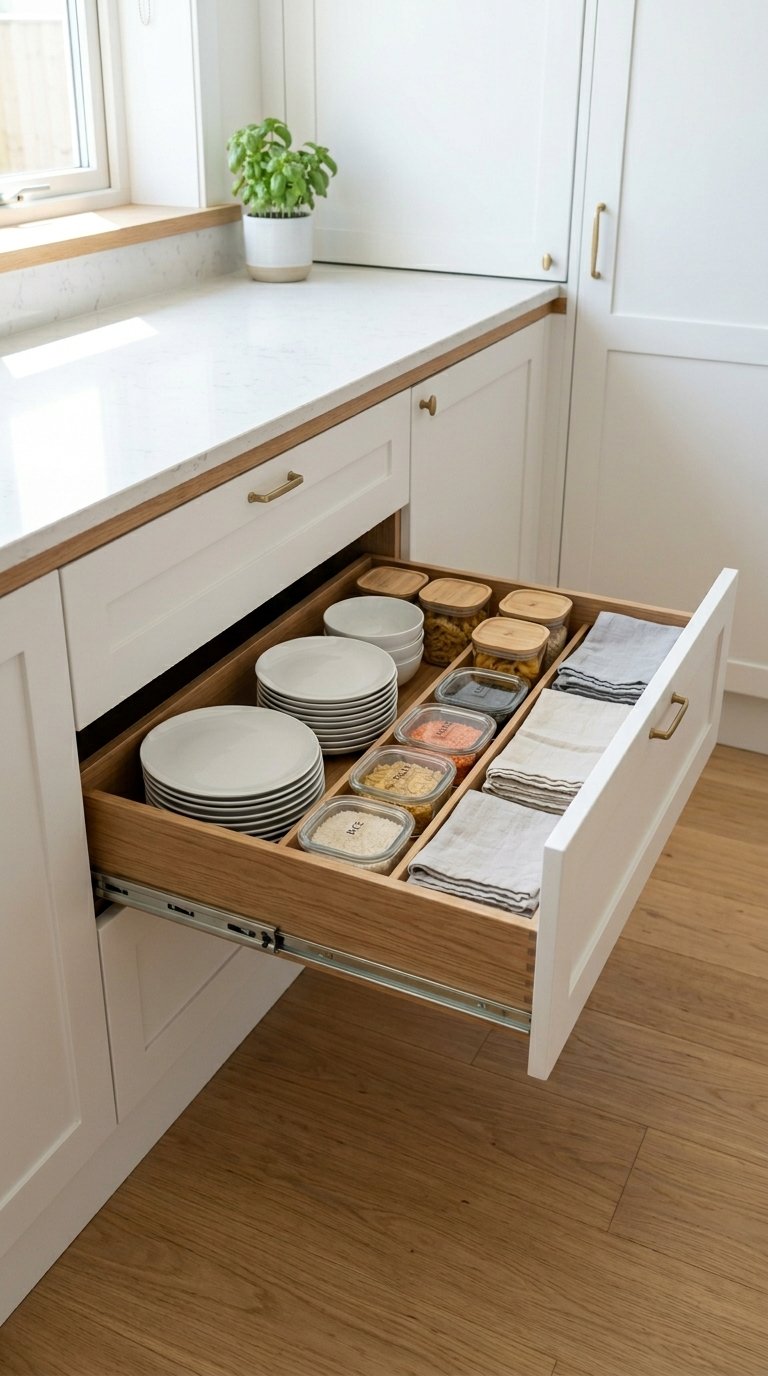
Replacing standard base cabinet shelves with deep pull-out drawers solves the most common kitchen frustration: items pushed to the back of a base cabinet become invisible and inaccessible. A 2022 survey by the NKBA found that 68 percent of homeowners cited hard-to-reach base cabinet storage as their top kitchen organization complaint.
Rev-A-Shelf’s 4WD series pull-out drawer organizers in 18-inch and 24-inch widths cost $180 to $320 per unit and install inside existing cabinet carcasses without modification. Installing two pull-out units per base cabinet converts four shelves of difficult-to-reach storage into eight fully accessible drawer levels. The total investment for a standard kitchen with six base cabinets runs $1,000 to $1,800 installed.
11. Recessed Toe-Kick Drawers for Hidden Storage
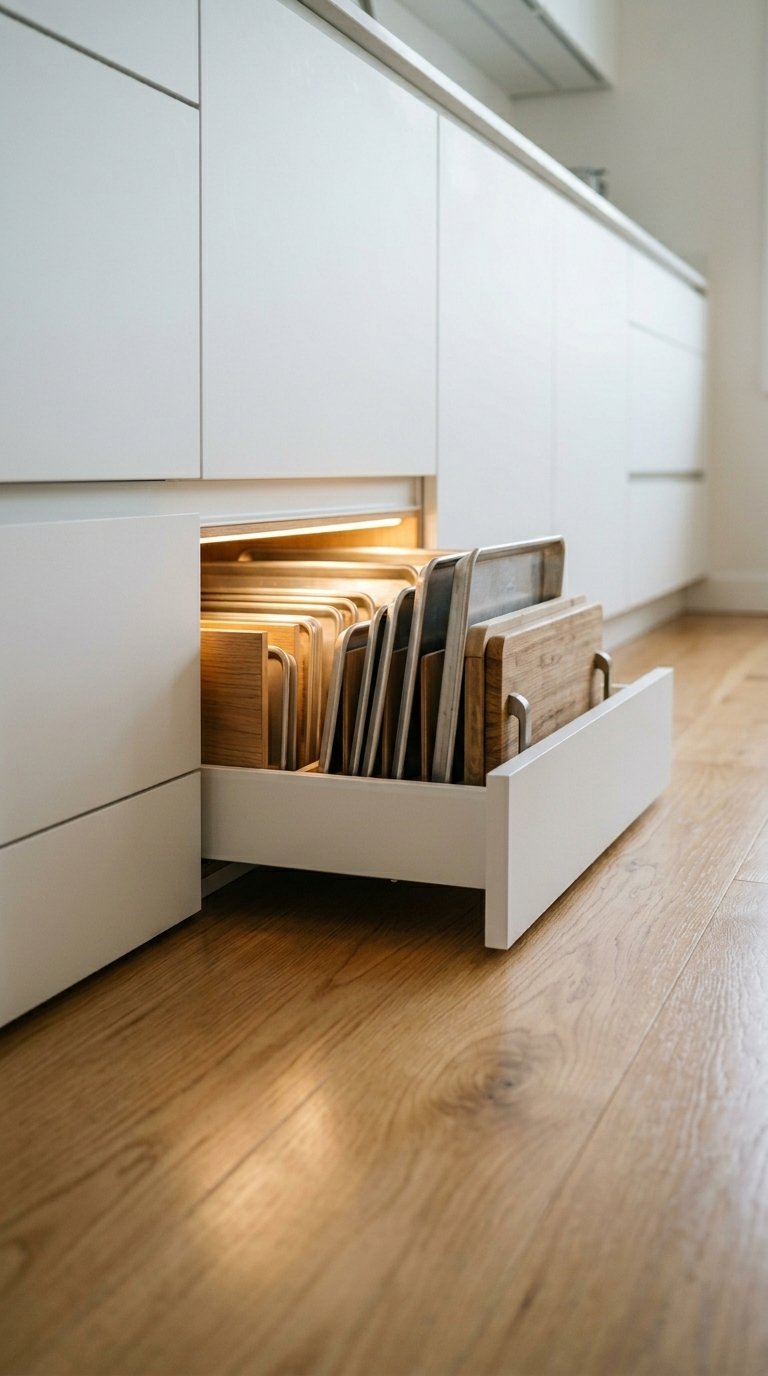
Recessed toe-kick drawers built into the base of your kitchen cabinets add a full drawer of storage in the 3.5-inch space between the cabinet floor and the floor that every kitchen wastes. A standard 10-foot cabinet run has 10 linear feet of toe-kick space, which converts into 40 to 60 inches of actual drawer storage.
Rev-A-Shelf’s toe-kick drawer system in a 30-inch width costs $85 to $120 per unit and mounts on full-extension soft-close slides. Use the drawers for flat items like baking sheets, cutting boards, or tablecloths that consume valuable cabinet space when stored vertically. The system adds zero visual bulk to the kitchen and keeps the floor-to-ceiling cabinet face clean.
12. Continuous Backsplash in a Single Large-Format Tile
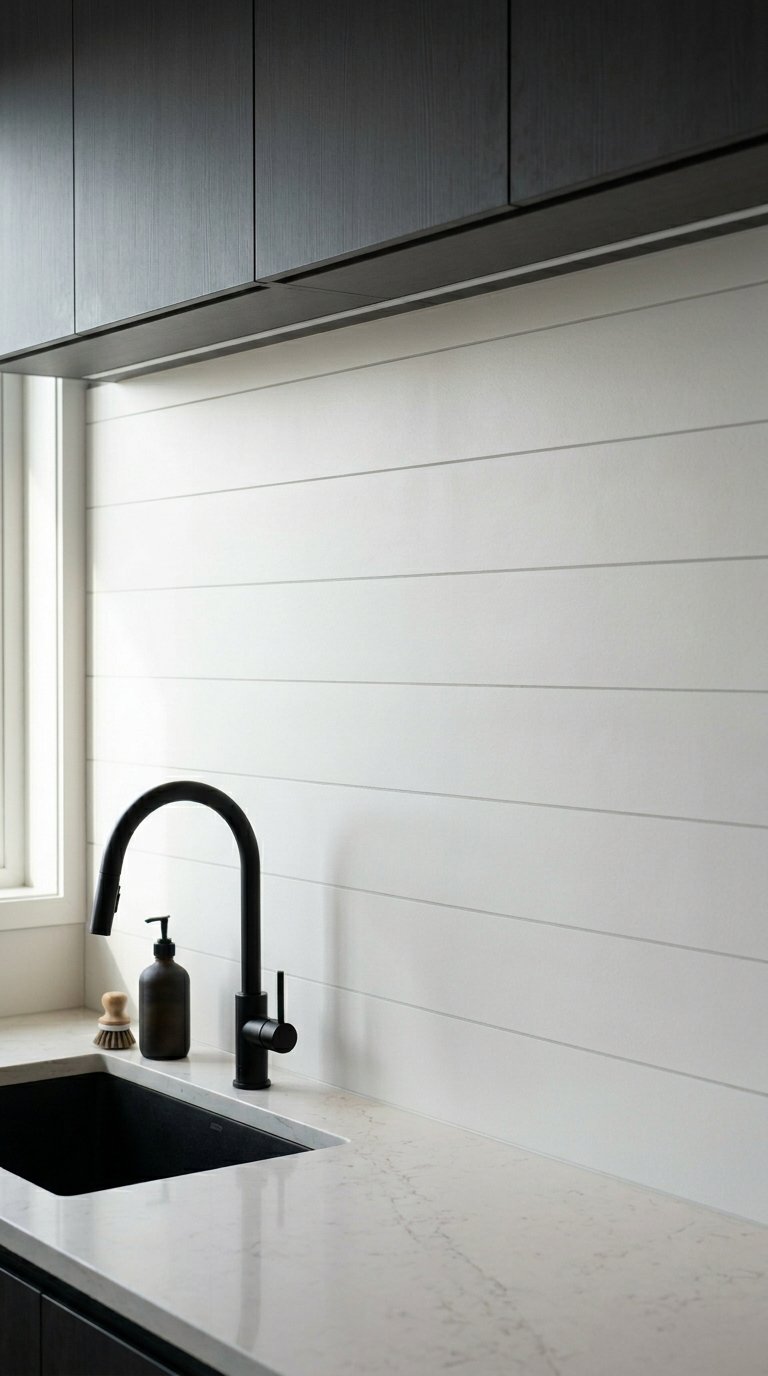
A backsplash made from large-format tiles in a single color with minimal grout lines reads as one uninterrupted surface rather than a grid of small tiles divided by grout. Standard 3×6 subway tile has a grout line every three inches, which adds hundreds of visual interruptions across a typical backsplash wall.
Daltile’s Restore collection in a 12×24 matte white format costs $3 to $5 per square foot and produces a backsplash with one grout line every 12 inches horizontally. For a full slab look without grout lines at all, a porcelain slab backsplash from MSI’s Staturino series costs $8 to $14 per square foot and installs as one continuous surface. The grout-free version eliminates the cleaning problem that grout creates and keeps the wall surface visually quiet.
13. Flush-Mount or Integrated Range Hood
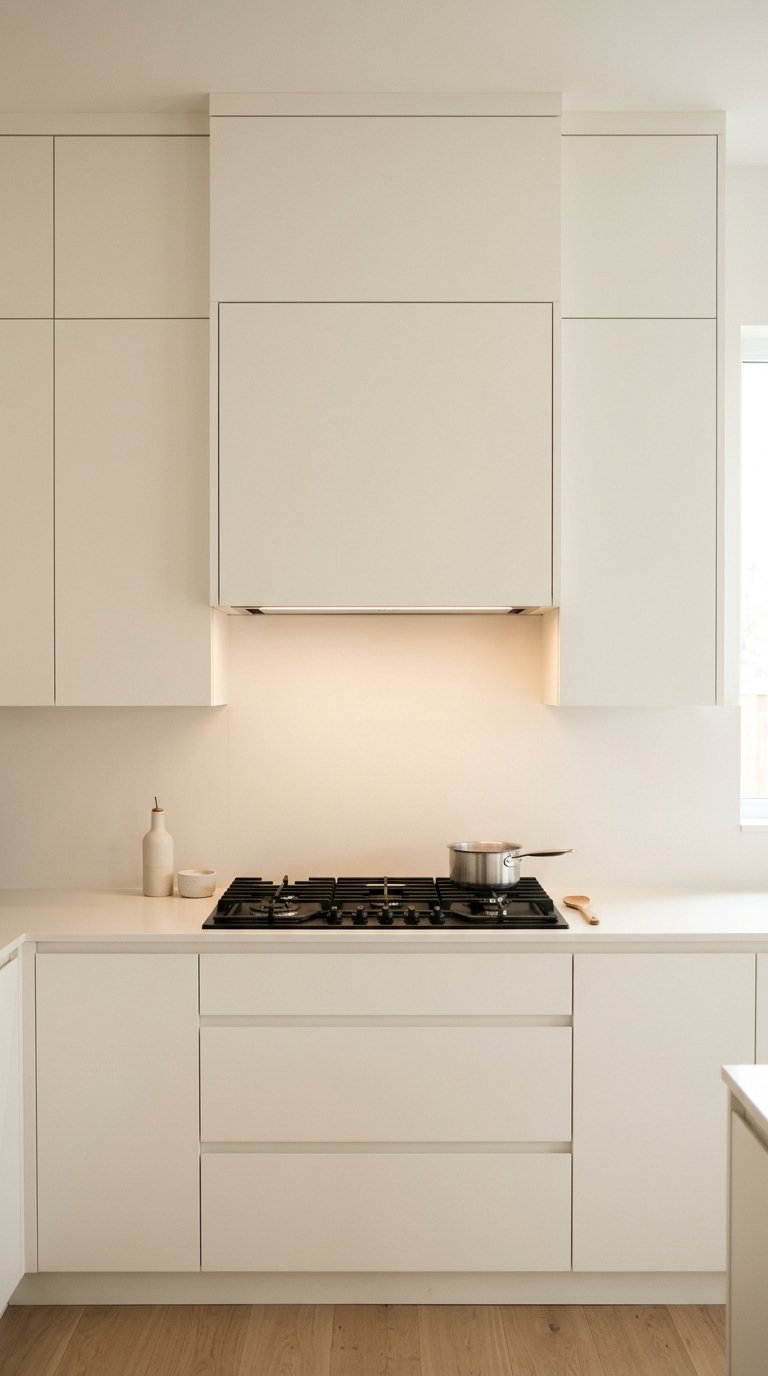
A range hood that protrudes into the kitchen at eye level draws the eye toward it every time you stand at the stove. A flush-mount or integrated hood built into a cabinet column sits flush with the cabinet face and reads as part of the cabinet run rather than a separate appliance.
Broan’s Elite E64000 series flush-mount range hood in stainless or black stainless costs $400 to $650 and installs inside a custom cabinet surround that your cabinet maker builds to match the surrounding cabinetry. For a fully integrated look, IKEA’s LUFTIG range hood at $200 inserts into a standard SEKTION tall cabinet frame and disappears behind a matching cabinet front. Both options remove the large projecting hood that dominates most kitchen sight lines.
14. Concealed Pantry Behind Full-Height Cabinet Doors
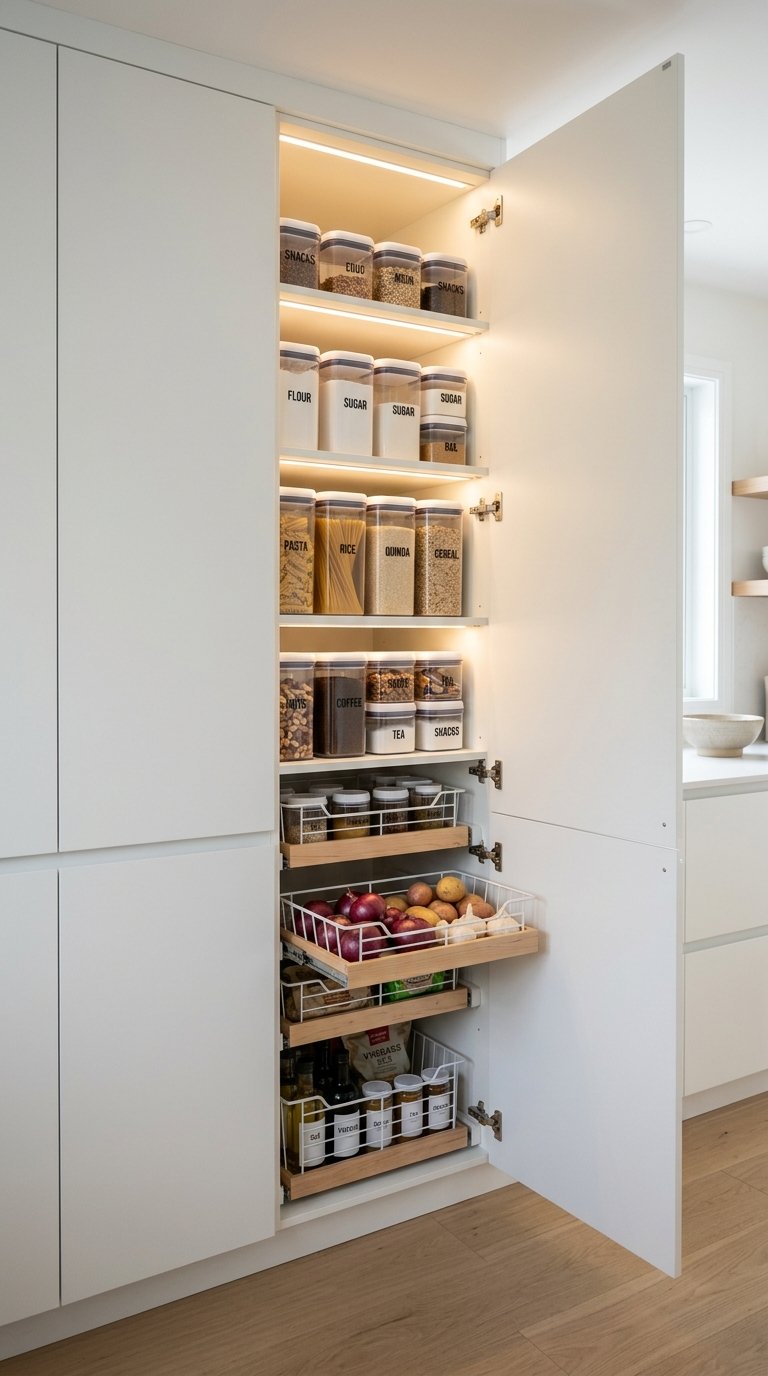
A concealed pantry built behind full-height doors that match your cabinet fronts stores everything a dedicated pantry closet holds without announcing itself as a storage unit. The doors align with the rest of the cabinet run and produce a seamless wall of cabinetry with no visible breaks.
IKEA’s PAX wardrobe system configured with interior pantry shelves at $250 to $500 installs against any kitchen wall and accepts SEKTION-compatible door fronts for $18 to $55 per door to match the existing cabinetry. Add Rev-A-Shelf’s pull-out pantry organizers at $180 to $320 per unit inside the PAX carcass for full-access pull-out storage behind the seamless door face. The total concealed pantry system costs $500 to $900 and adds dedicated pantry storage without a single visual interruption.
15. Undermount Sink Flush With the Countertop
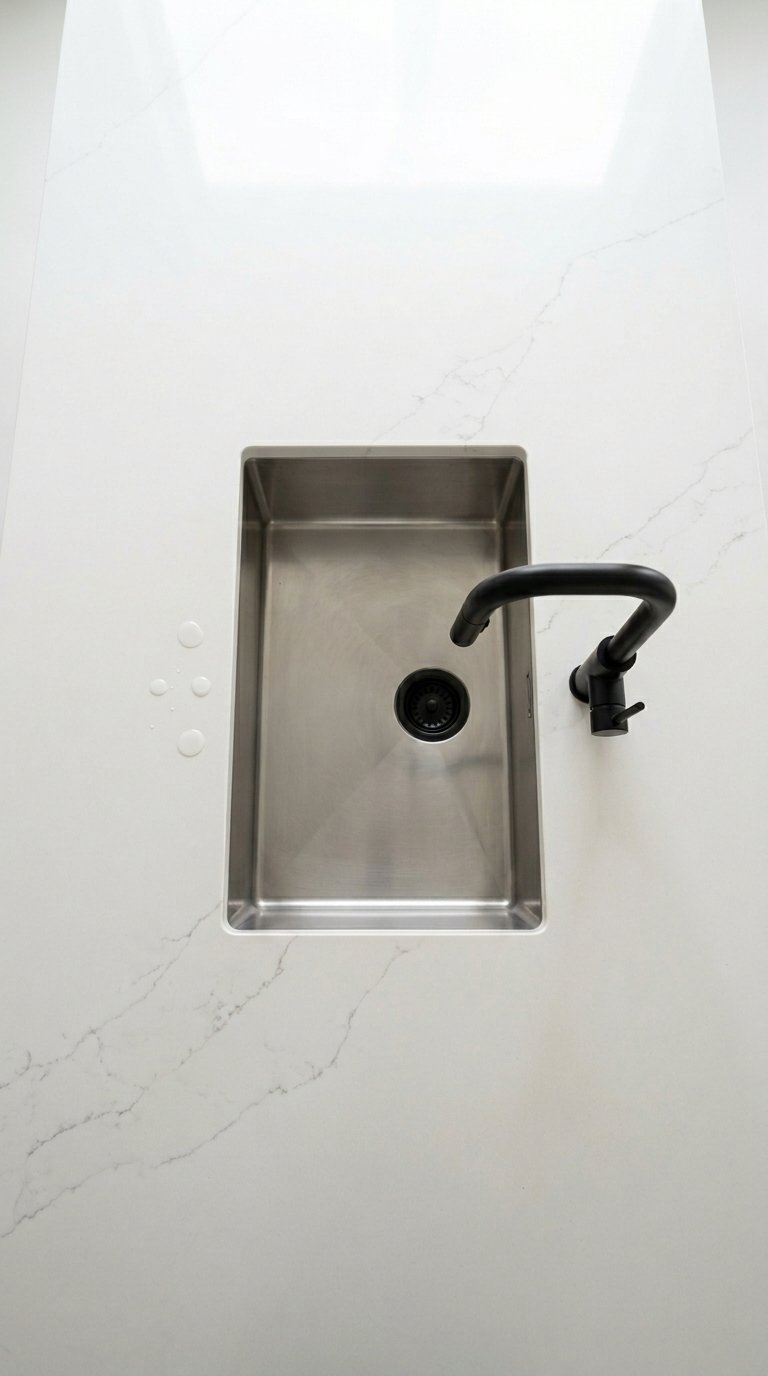
An undermount sink installed flush with the countertop surface eliminates the rim that a drop-in sink adds at the countertop edge. The drop-in rim collects debris, requires caulking, and creates a visible break in the counter surface. An undermount installation removes all three problems.
Kraus’s Standart PRO undermount kitchen sink in 16-gauge stainless steel costs $160 to $280 depending on size and drops into a standard counter cutout from below. BLANCO’s PRECIS undermount sink in silgranit at $350 to $450 comes in matte neutral tones including white, biscuit, and anthracite that match quartz counter surfaces without showing water spots. Both install using standard undermount clips and cost $150 to $250 in labor for a plumber to make the transition from drop-in.
16. Matte Finish on All Surfaces Including Appliances
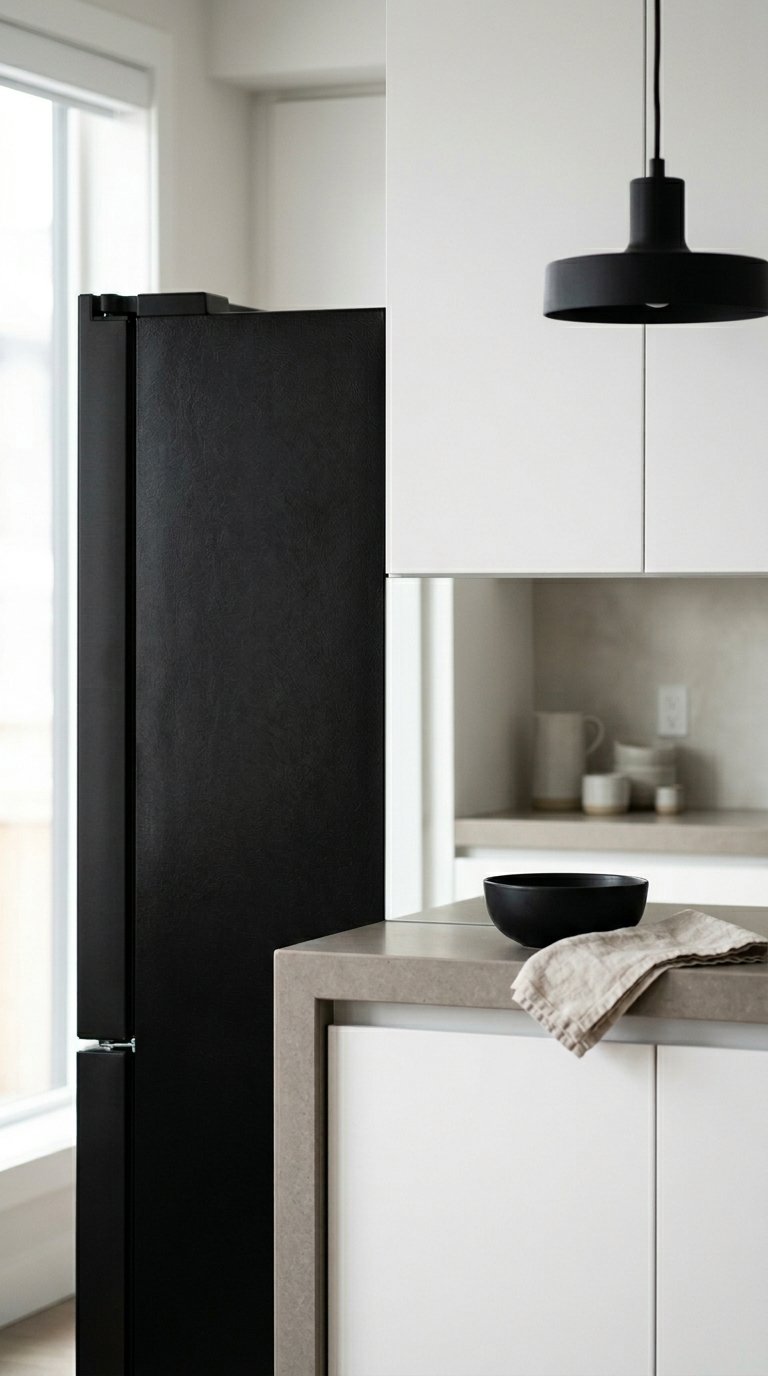
Matte finishes on cabinets, countertops, tiles, and appliances produce a visually quieter kitchen than high-gloss surfaces. High-gloss finishes reflect light and create highlights and shadows that make surfaces appear more complex and active than they are. Matte absorbs light and flattens those reflections into a calm, uniform surface.
Samsung’s Bespoke refrigerator line in matte black steel or matte white steel costs $1,800 to $2,400 and accepts custom panel colors in a matte finish. For cabinet surfaces, Benjamin Moore’s Advance paint in a matte or eggshell finish at $70 to $80 per gallon produces a matte cabinet surface that wipes clean without the reflective quality of satin or semi-gloss. The material cost difference between gloss and matte finishes is minimal. The visual difference is significant.
17. Minimal Window Treatment or No Treatment at All
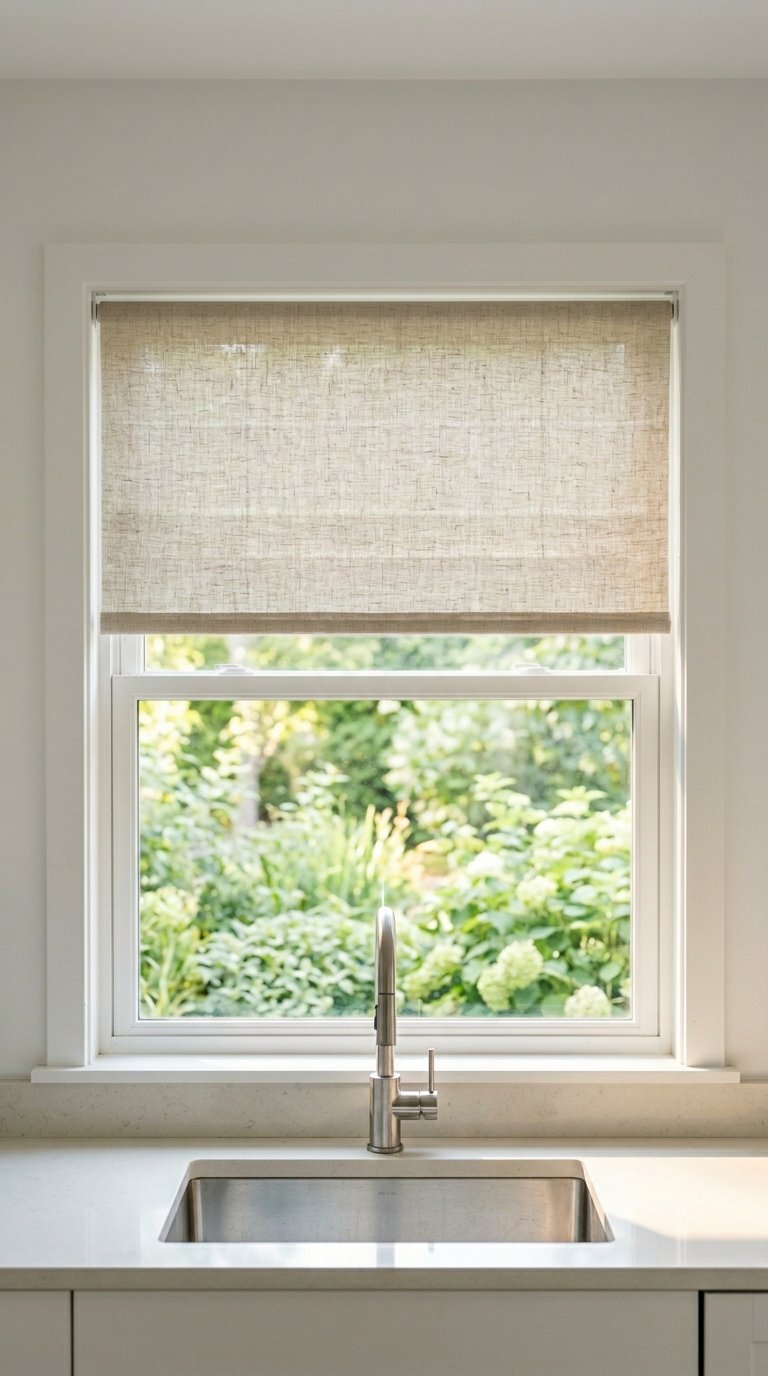
Removing heavy curtain panels or dated window valances from kitchen windows and replacing them with nothing, or with a simple roller shade, removes one of the most common sources of decorative clutter in older kitchens. A kitchen window dressed in a fabric valance, a rod, and side panels carries the visual weight of furniture in a space that benefits from restraint.
Hunter Douglas’s Duette cellular shade in a single neutral color costs $150 to $300 per window and rolls completely out of sight when raised. For a rental-friendly option, a simple blackout roller shade from IKEA’s TUPPLUR line costs $15 to $30 per window and mounts with two screws. Either option reduces the window to its essential function, letting light in and blocking it when needed, without adding visual weight to the kitchen wall.
18. Dedicated Knife Storage Built Into a Drawer
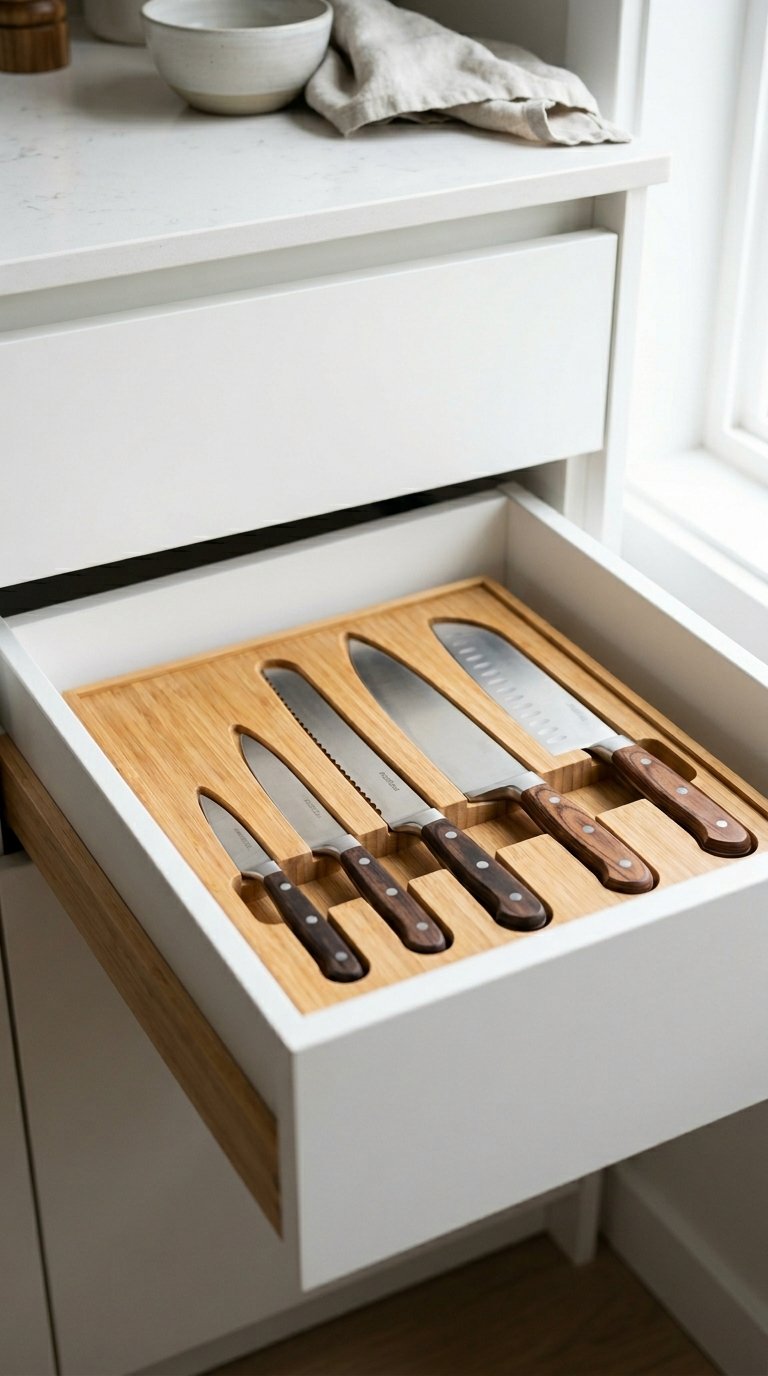
Storing knives on a countertop knife block places a 12-inch wooden object permanently on the counter surface and takes up approximately one square foot of prep space. Moving knife storage into a drawer-mounted magnetic insert removes the block entirely and keeps the counter clear.
Wusthof’s in-drawer knife organizer in bamboo costs $45 to $75 and fits in a standard 18-inch wide drawer. Crate and Barrel’s in-drawer knife tray at $35 holds up to 8 knives horizontally in a slotted bamboo insert that installs in under two minutes. Both eliminate the countertop knife block without reducing knife accessibility or safety.
19. Decanted Dry Goods in Matching Airtight Containers
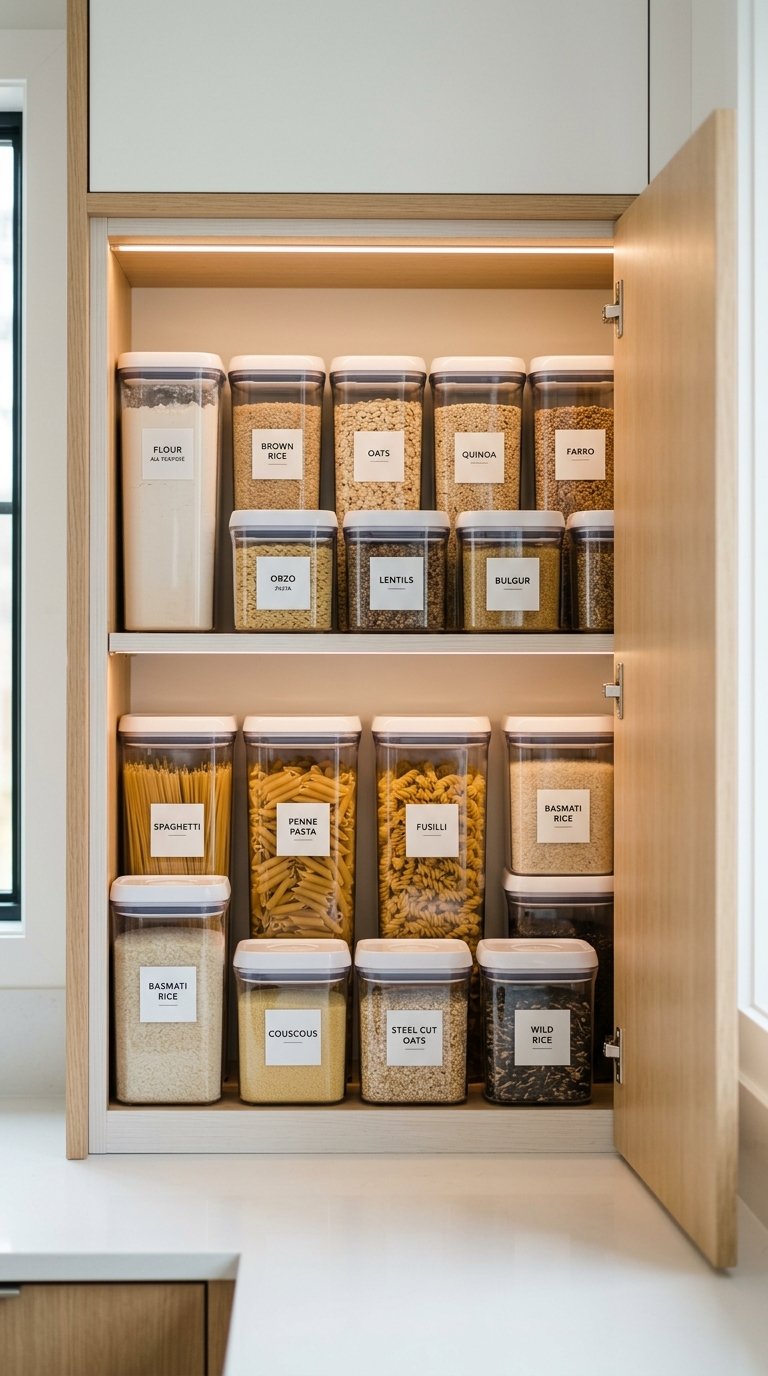
Storing dry goods in their original packaging creates a pantry and cabinet interior filled with different sizes, colors, and graphics that make every shelf look busy. Decanting into uniform airtight containers makes the interior of every pantry cabinet read as organized regardless of what is inside. Research from the National Center for Home Food Preservation shows that airtight storage extends the shelf life of dry goods by 30 to 50 percent compared to original packaging.
OXO Good Grips POP containers in a set of 20 cost $130 on Amazon and cover every common pantry staple in a square-profile, stackable format. Use a Brother P-Touch label maker at $30 to apply uniform printed labels to each container. The complete decanting system for a standard pantry costs $160 to $200 and produces shelves that look organized at a glance without any additional organization effort.
20. Hidden Recycling and Trash System Inside a Base Cabinet
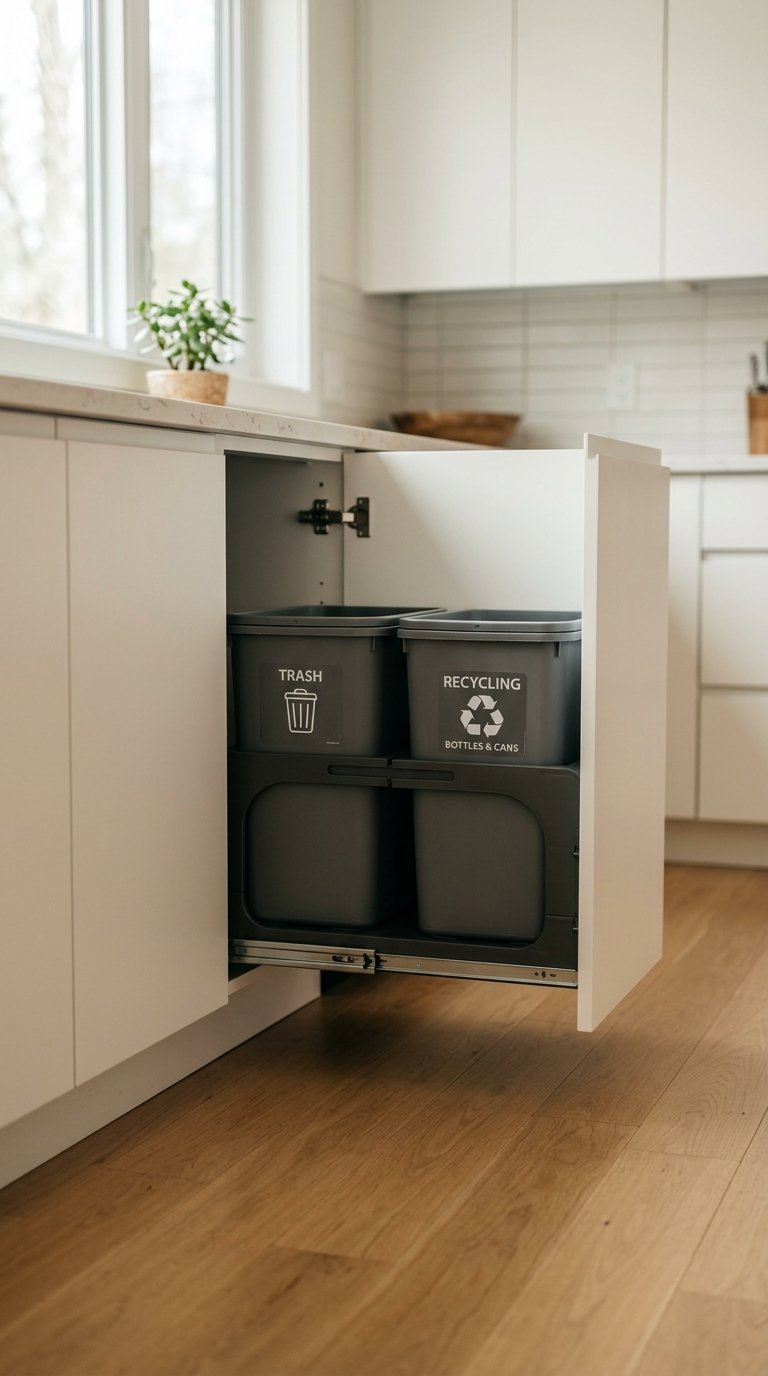
A freestanding trash can on the kitchen floor adds a large, visible object to the kitchen that no amount of minimalist design elsewhere compensates for. A pull-out trash and recycling system built into a base cabinet removes it entirely from view.
Rev-A-Shelf’s 8-Series double pull-out trash system in an 18-inch cabinet costs $160 to $220 and holds two bins of 35 and 50 liters on a full-extension soft-close frame. The system installs inside an existing base cabinet without structural modification and includes bins. Removing the freestanding trash can and replacing it with an in-cabinet system recovers 2 to 3 square feet of visible floor space and eliminates the object that most contradicts a minimalist kitchen aesthetic.
21. Decluttered Counter Surface With Three Items Maximum
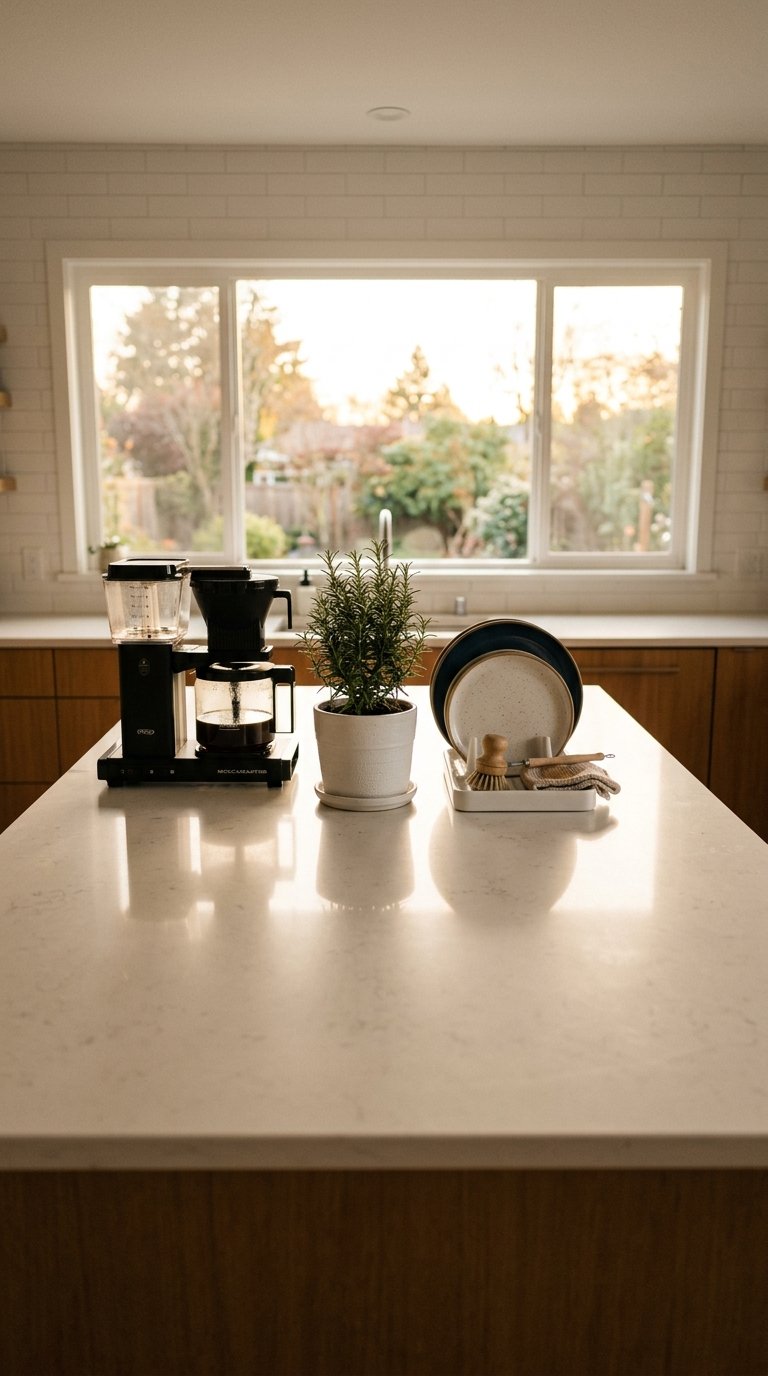
The most effective minimalist kitchen upgrade costs nothing. It requires removing everything from the counter surface that is not used daily and storing it inside a cabinet. Research from Princeton University’s Neuroscience Institute found that physical clutter in a visual field directly reduces the brain’s ability to focus and increases stress responses.
Limit your counter surface to three objects maximum: a coffee maker if used every morning, a dish rack if used daily, and one herb plant or single decorative object. Everything else goes into a cabinet. A Legrand Wiremold outlet strip installed inside a base cabinet at $45 keeps appliances plugged in and ready to use without their cords and bodies occupying counter space. The result is a kitchen that looks designed, regardless of what the cabinets hold.
Final Thoughts
Your minimalist kitchen problem is always a surface problem or a visual noise problem. Either your counters hold too many objects, or your cabinet faces carry too many competing elements.
Every idea on this list addresses one or both problems with a specific product, a real price point, and a clear reason it outperforms what you are doing now. You have options from a $15 floating shelf to a $3,800 integrated refrigerator. Start with the idea that solves your most visible problem first, and the rest of the kitchen follows naturally from there.