23 Easy Pantry Makeover Ideas for a Clutter-Free Life
Let’s be honest. Your pantry has been judging you. Every time you open that door and a can of mystery soup falls on your foot, it’s sending a message. And that message is: “We need to talk.”
I’ve been there. My pantry used to look like a grocery store had a nervous breakdown inside a closet. But after some serious trial, error, and a few too many hours on organization rabbit holes, I figured out what actually works. So here are 23 pantry makeover ideas that are practical, budget-friendly, and genuinely life-changing.
1. Start With a Full Purge
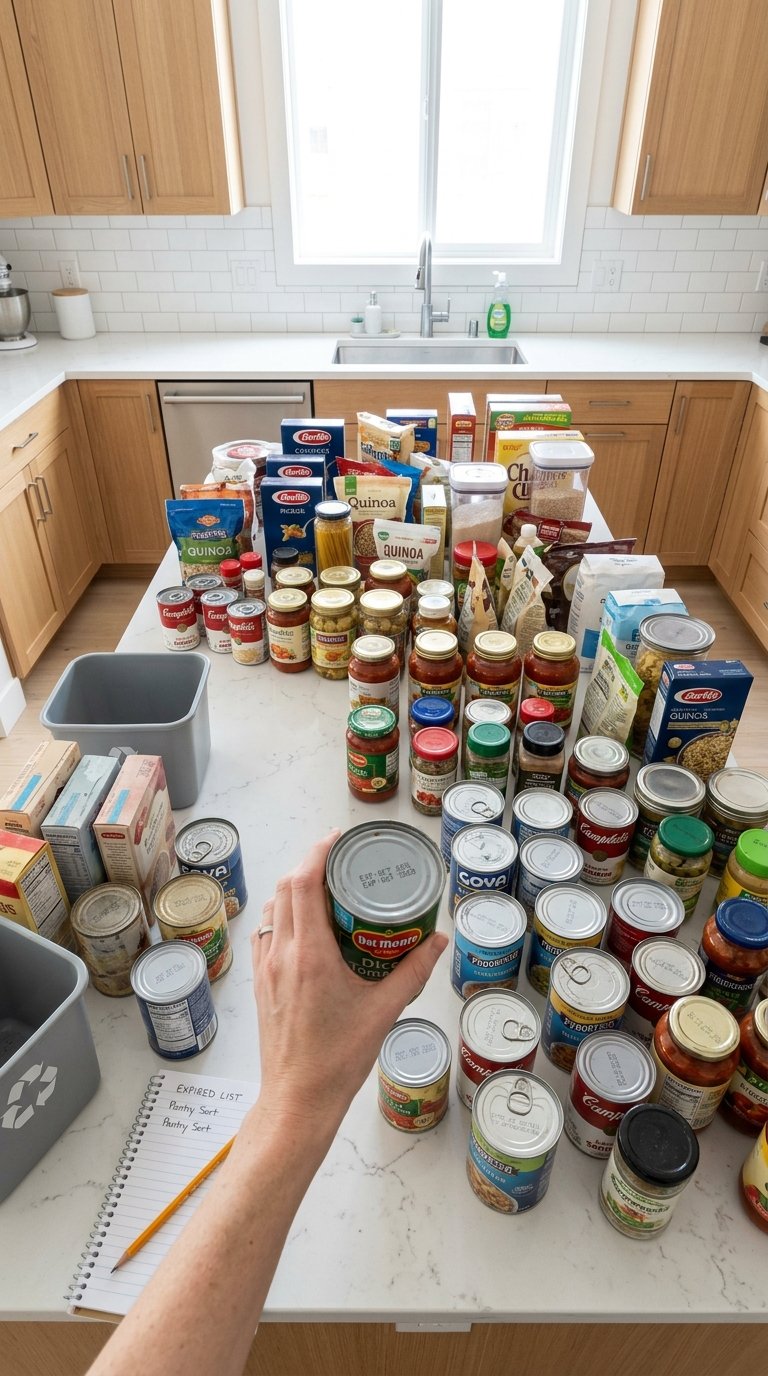
Before you buy a single basket or label maker, take everything out. Yes, everything.
This is the step most people skip, and it’s exactly why their pantry looks the same six months after a “makeover.” You need to see what you have, what’s expired, and what you bought for a recipe you’ll never make again (looking at you, tamarind paste from 2021).
Pro tip: Lay everything out on your kitchen table or counter. Group similar items together. This gives you a clear picture of your actual pantry habits.
2. Measure Your Space Before Buying Anything
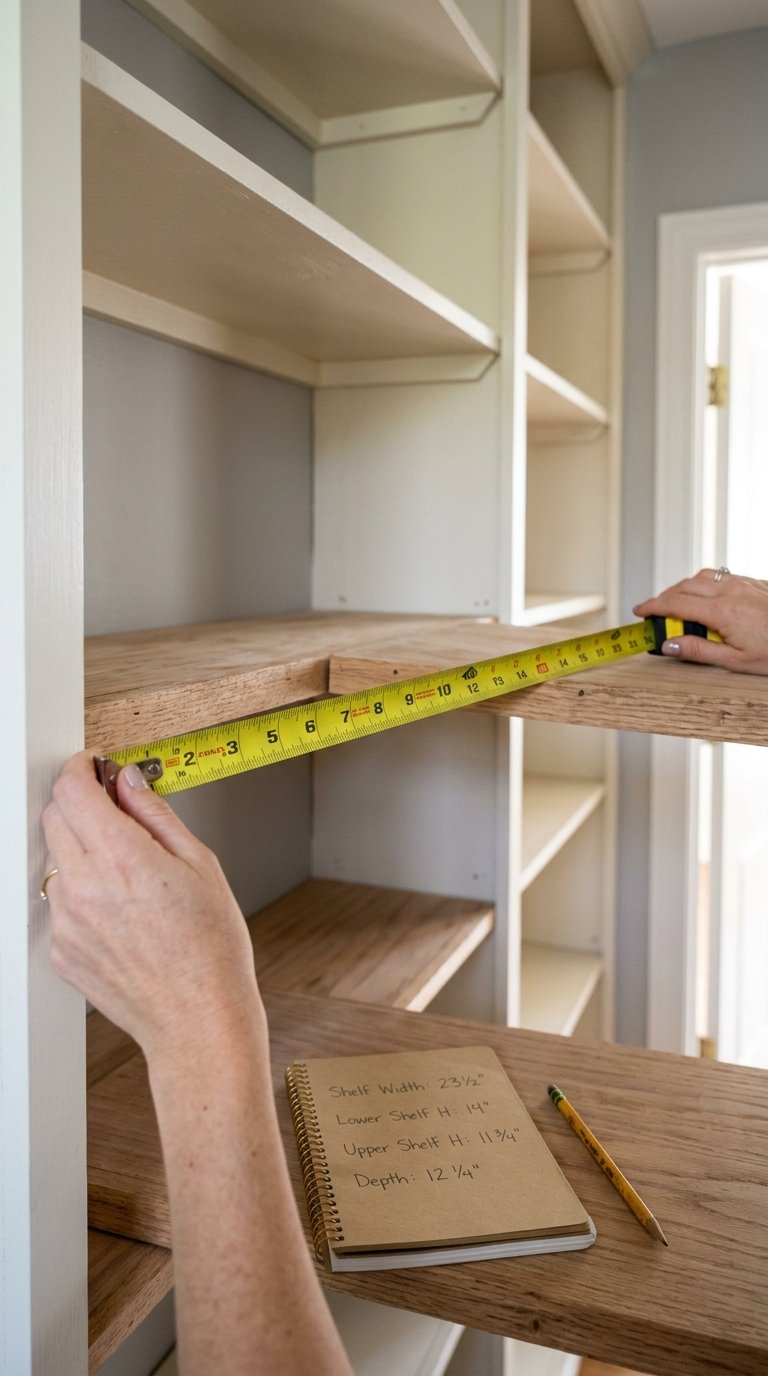
I cannot stress this enough. Measure your shelves, the depth, the height between each shelf, and the overall width of the space.
I once bought 12 beautiful matching containers only to discover they were two inches too tall for my shelves. It was a low moment. Don’t repeat my mistakes.
Write down your measurements and keep them on your phone. That way, when you’re standing in a store or scrolling online, you can actually buy things that fit.
3. Decant Your Dry Goods Into Airtight Containers
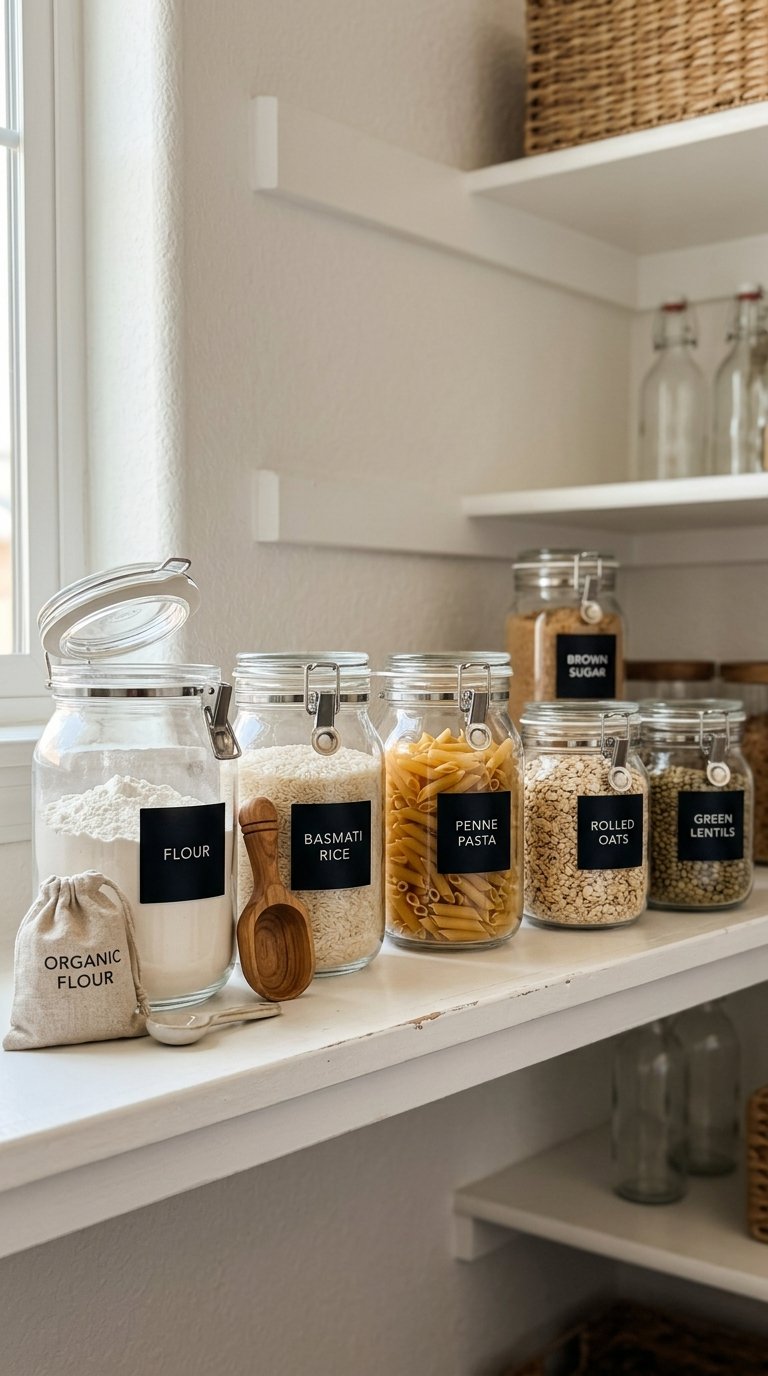
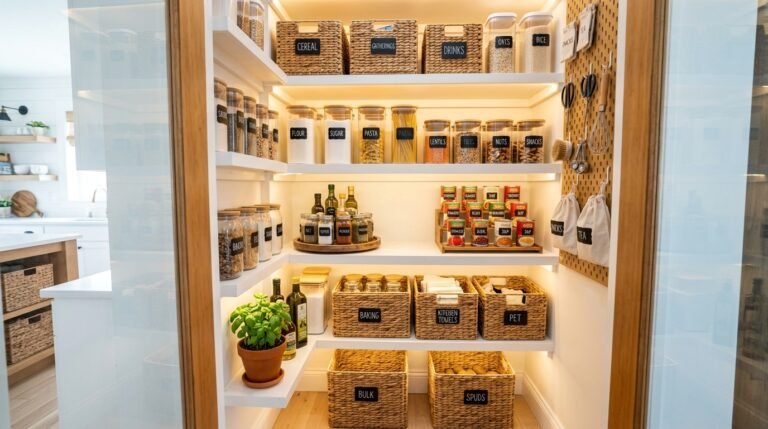
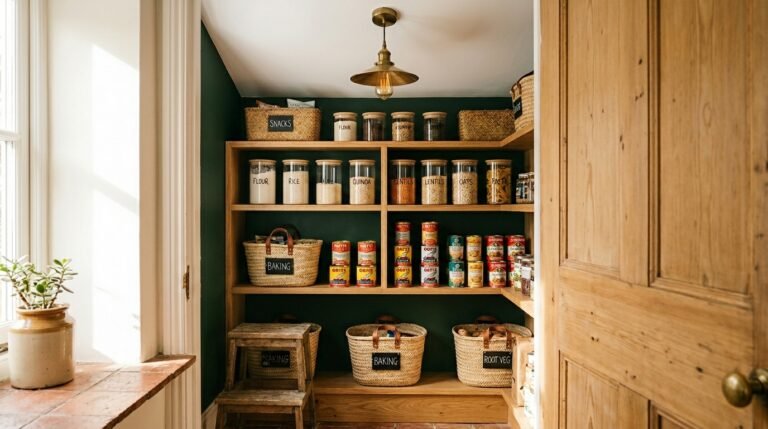
This is the single biggest visual upgrade you can make. Transferring flour, sugar, rice, pasta, oats, and cereals into clear airtight containers makes your pantry look like a magazine shoot.
It also keeps food fresher for longer and lets you see at a glance when you’re running low. Win-win. Look for containers with a wide mouth so scooping is easy, and make sure the lids actually seal properly.
Good options to consider:
- OXO Good Grips POP containers (very popular for good reason)
- Topmart airtight containers (budget-friendly and stackable)
- Glass mason jars (affordable and beautiful, just a little heavy)
4. Use a Lazy Susan for Corner or Deep Shelves
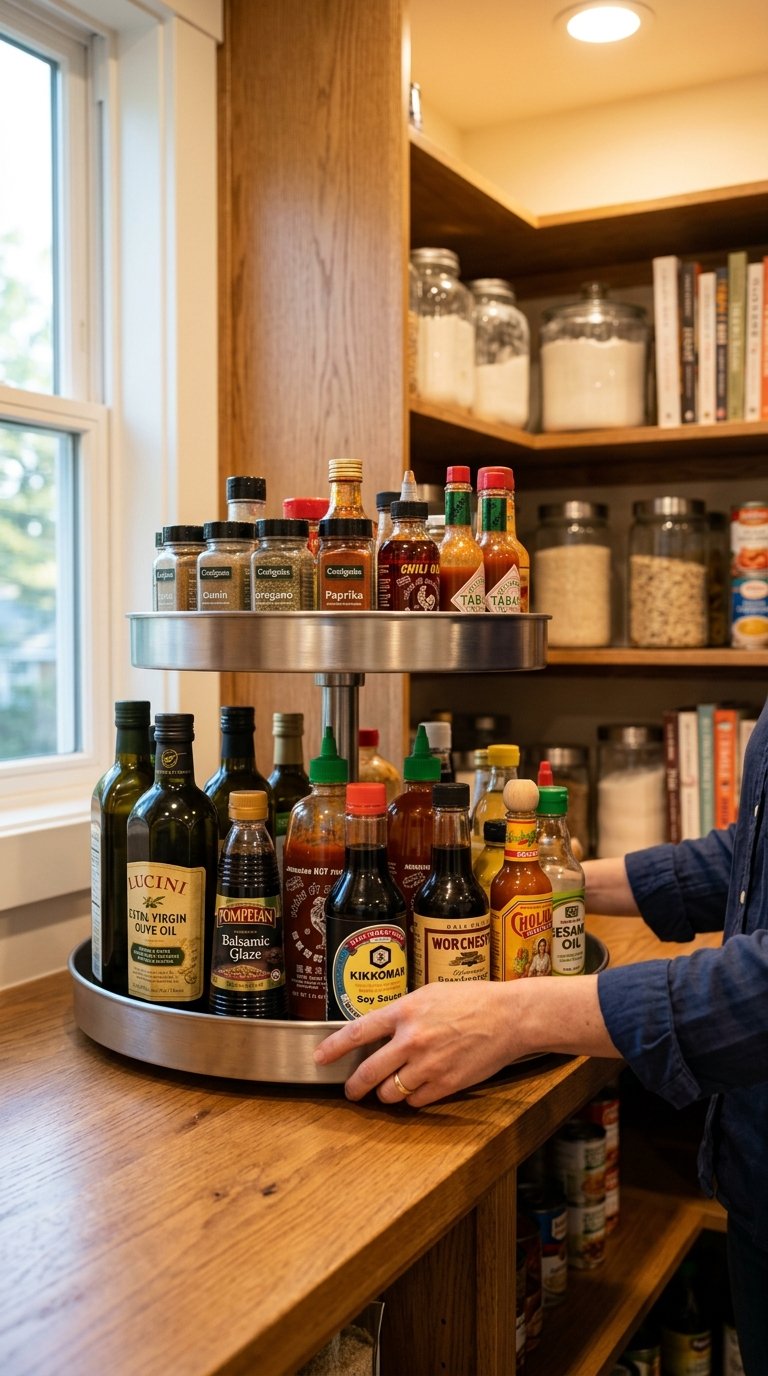
Deep shelves are a pantry villain. Things get pushed to the back, you forget they exist, and then you buy duplicates. A rotating lazy Susan fixes this completely.
Put your oils, vinegars, sauces, and condiments on a lazy susan and you can spin it to see everything in seconds. This works especially well in corner pantries or cabinets where reaching the back is a workout.
5. Label Absolutely Everything
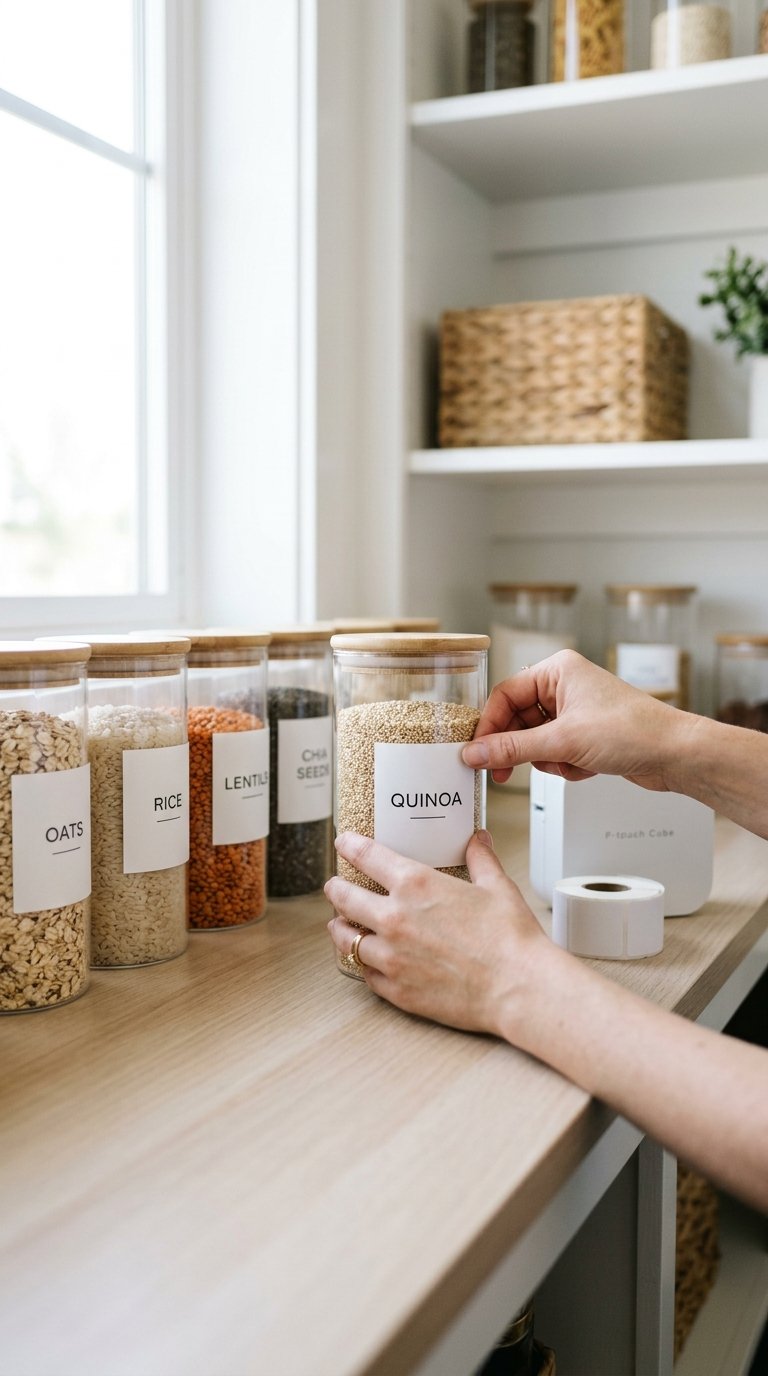
Labels are not just for aesthetics. They actually change how you and your family interact with the pantry. When everything has a clear home, people actually put things back in the right place. Revolutionary, I know.
You can use a label maker, chalkboard labels, or even printed labels in a font you like. Just keep it consistent so it looks intentional rather than chaotic.
6. Add a Door Organizer
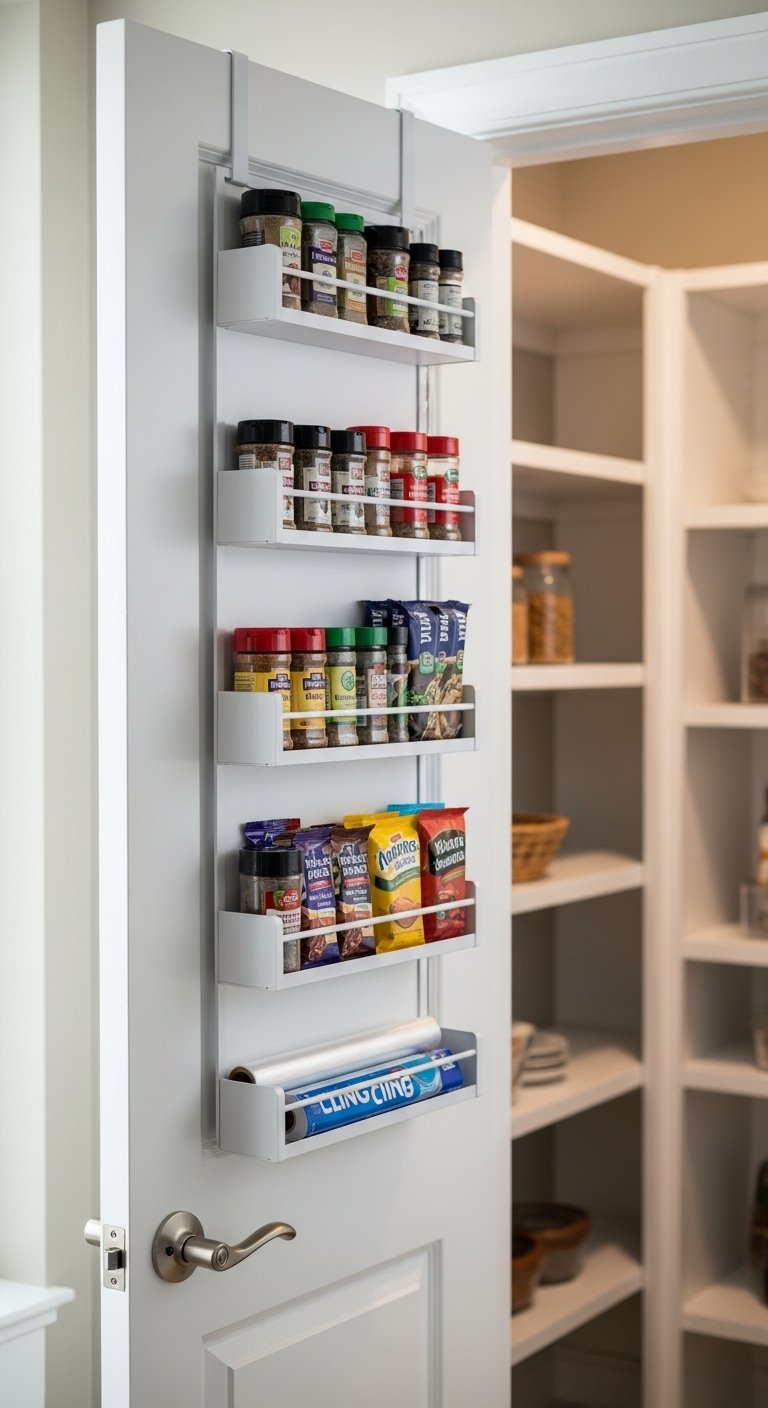
The inside of your pantry door is free real estate. A good over-the-door organizer can hold spices, snack bars, packets, foil, cling wrap, and all those small things that clutter your shelves.
There are organizers designed specifically for pantry doors with adjustable shelves and deep pockets. They mount with hooks, so no drilling required. This one change can free up a surprising amount of shelf space.
7. Group Items by Category, Not by Size
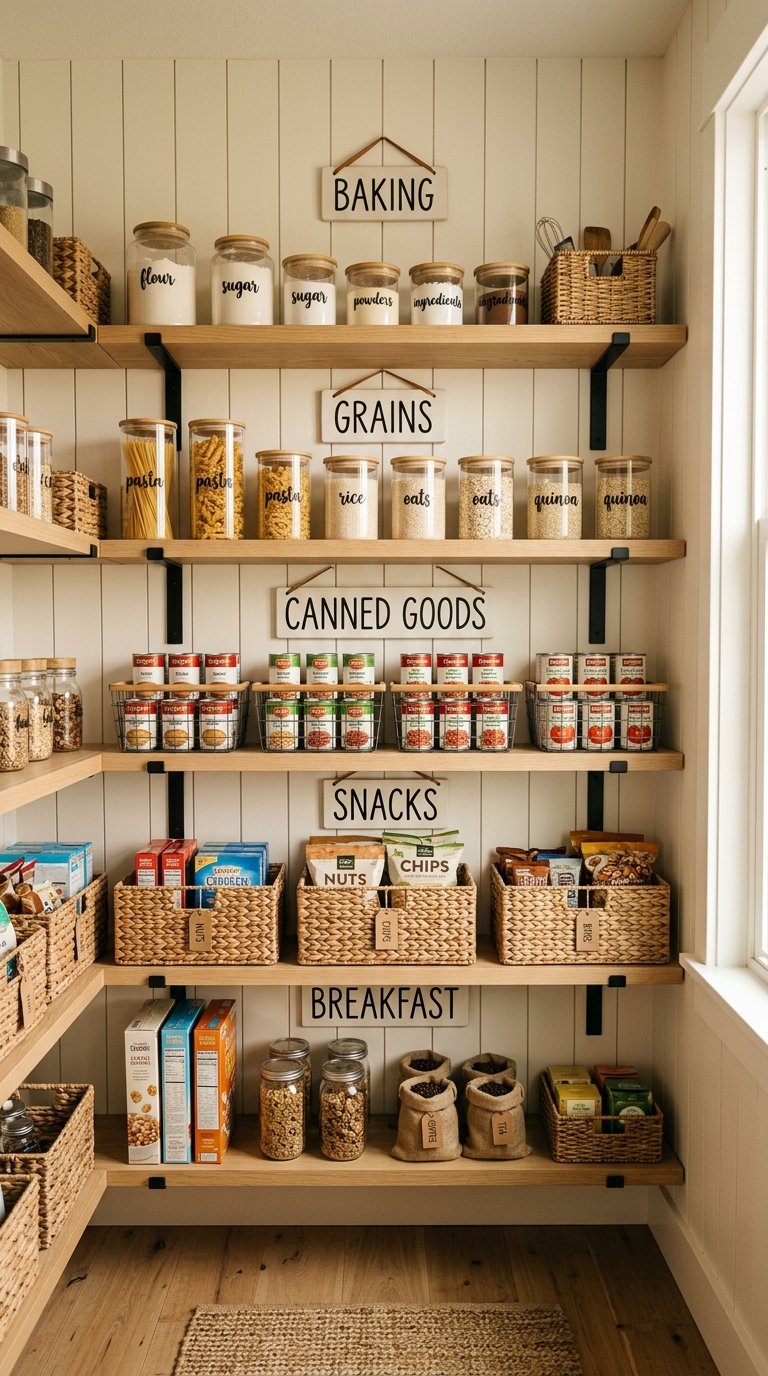
A lot of people organize by what fits where. That’s understandable, but it creates chaos when you’re cooking and need to find things fast.
Instead, group everything by category. Create zones for:
- Baking (flour, sugar, baking soda, cocoa, vanilla)
- Grains and pasta (rice, couscous, lentils, noodles)
- Canned goods (beans, tomatoes, soups, fish)
- Snacks (crackers, nuts, dried fruit, bars)
- Breakfast (cereals, oats, pancake mix)
- Condiments and sauces (oils, vinegars, soy sauce)
Once you have zones, everything has a logical home.
8. Use Shelf Risers to Double Your Space
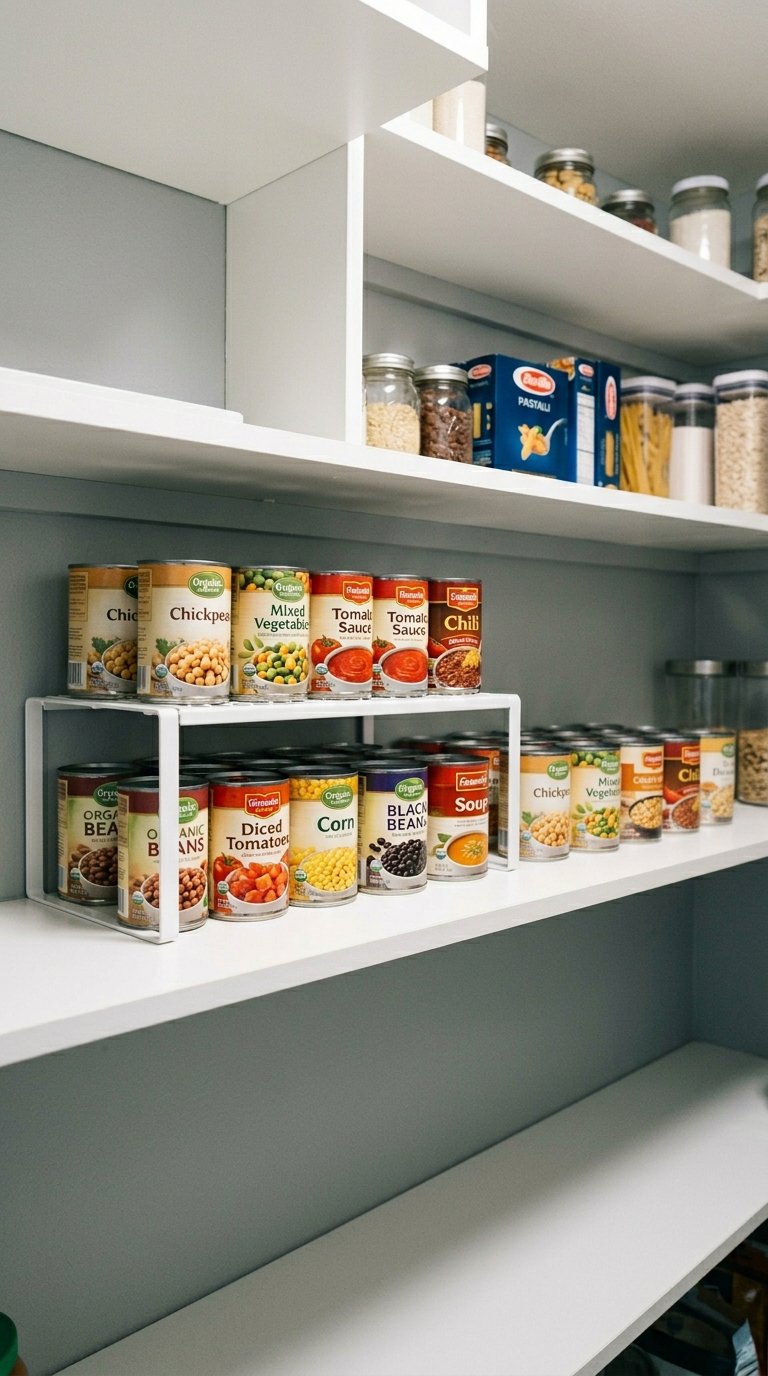
If your shelves have a lot of vertical space between them, shelf risers are your best friend. They basically create a second level on a single shelf, so you can store twice as much.
These work brilliantly for canned goods, spice jars, and small bottles. Suddenly you go from one row of cans to two rows, and everything is visible. It’s almost too satisfying.
9. Store Canned Goods on a Tiered Rack
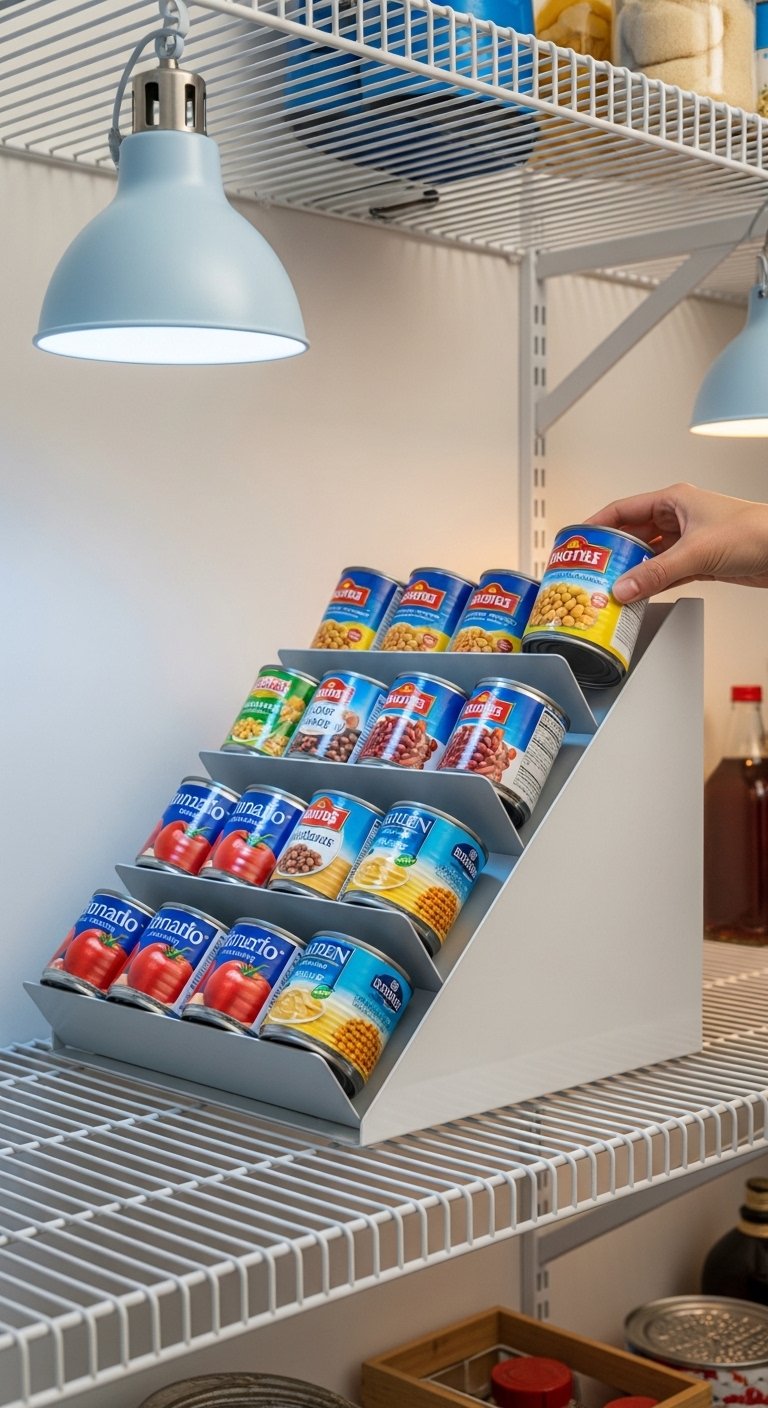
Tiered can organizers hold your cans in a slanted rack that lets the oldest cans roll to the front automatically. You load from the back and use from the front. This is called FIFO (first in, first out), and it means you always use things before they expire.
IMO, this is one of the smartest pantry tools you can buy, and they’re not expensive at all.
10. Create a Snack Station
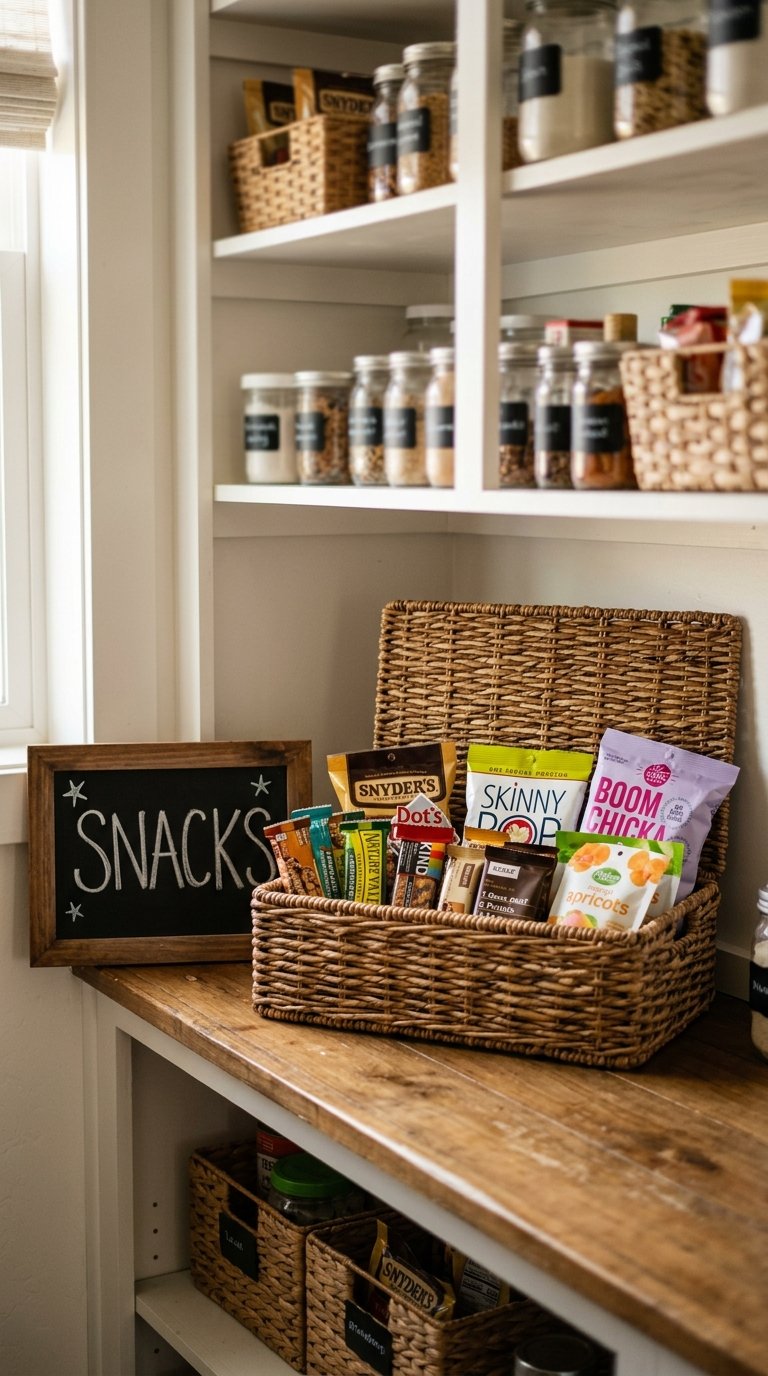
If you have kids (or, let’s face it, snack-happy adults), a dedicated snack station is a game changer. Put everything snack-related in one accessible spot, ideally at a height that’s easy to reach.
Use a basket or bin and let it be the one slightly messy area of your pantry. This actually keeps the rest of your pantry tidier because snacks are no longer scattered across multiple shelves.
11. Use Baskets for Bulky or Awkward Items
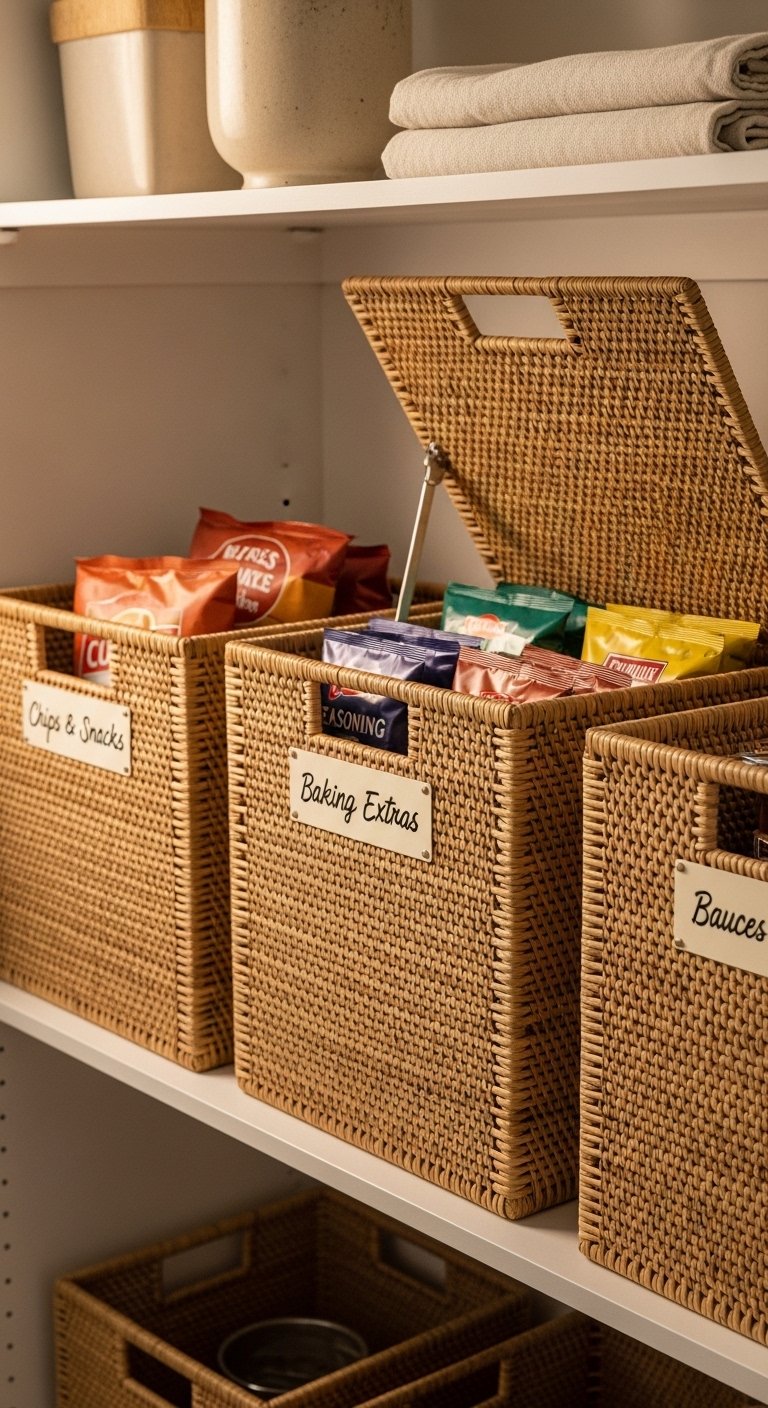
Some things just don’t fit neatly on shelves. Think: packets of seasoning, random bags of chips, pouches of things, boxes of stock. A deep wicker or wire basket corrals all of these so they look intentional rather than chaotic.
Use one basket per category and label it clearly. You’d be surprised how much cleaner this looks compared to stacking random bags directly on a shelf.
12. Install Extra Shelving If Possible
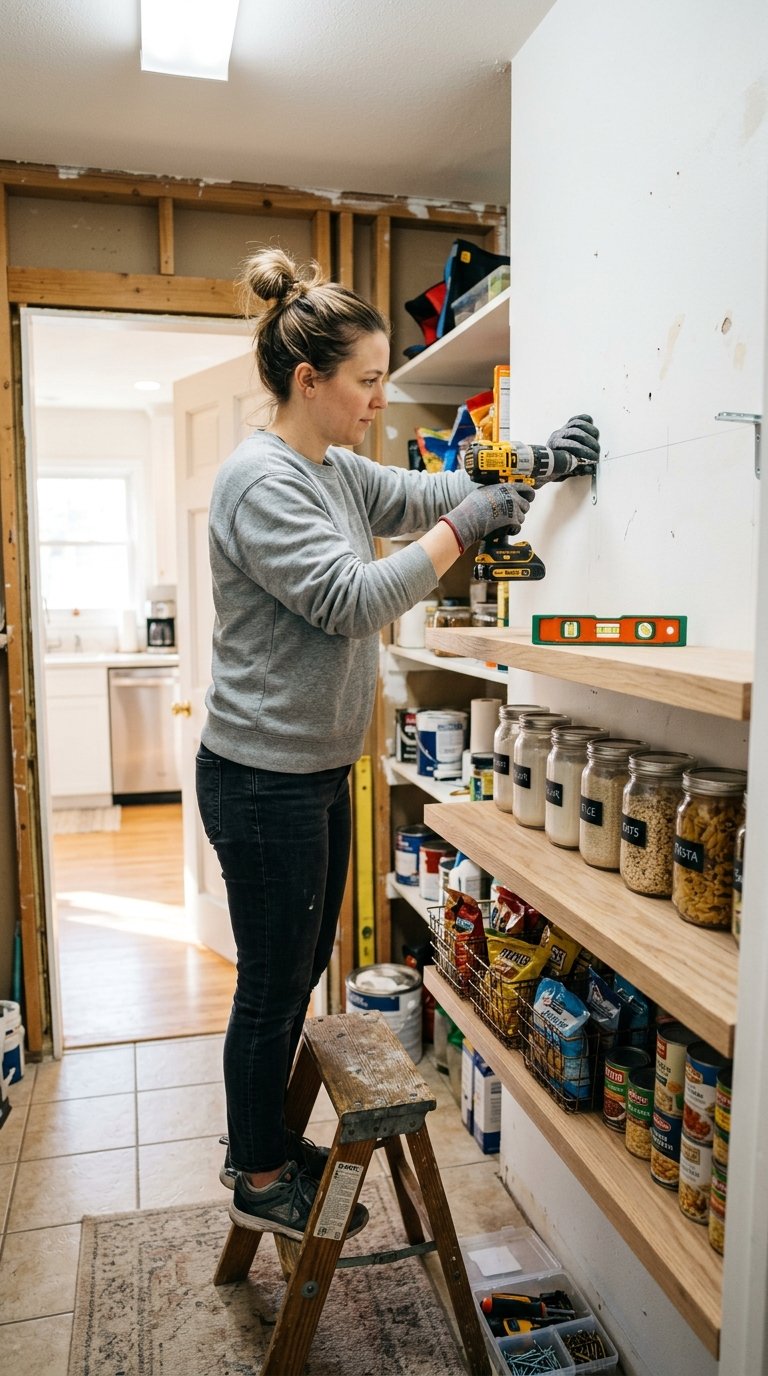
Sometimes a pantry makeover means realizing your pantry just doesn’t have enough shelves. If you have wall space above or below existing shelves, adding a floating shelf or a wire shelf kit can dramatically increase your storage capacity.
Wire shelf kits are adjustable and easy to install yourself. They work well in closet pantries and freestanding pantries alike.
13. Keep Your Most-Used Items at Eye Level
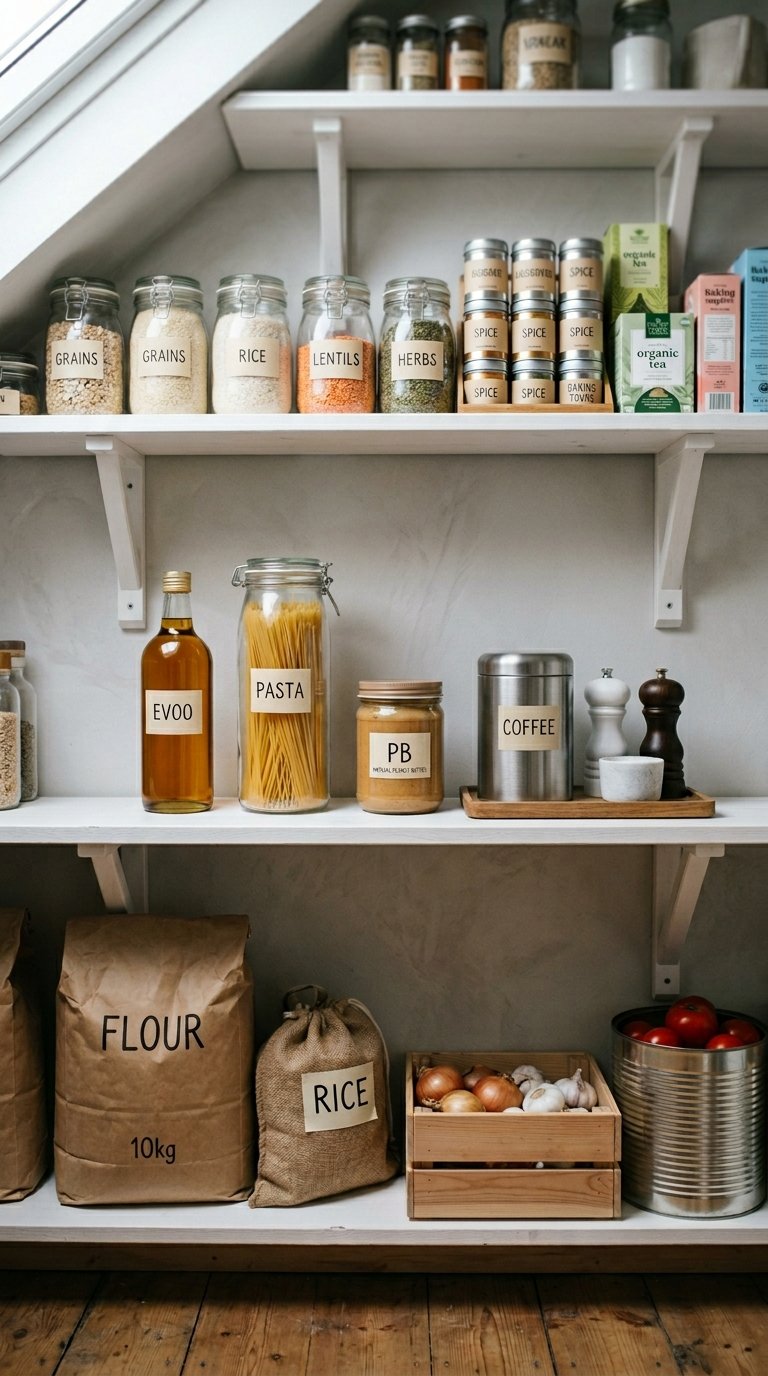
This sounds obvious, but it’s something people constantly get wrong. Your everyday items, the ones you reach for multiple times a day, should live at the most accessible height. For most people, that’s somewhere between shoulder and waist level.
Reserve top shelves for overflow stock, rarely used items, and appliances. Bottom shelves work well for heavier things like large bags of flour or bulk items.
14. Use Clear Bins for the Fridge Pantry Overlap
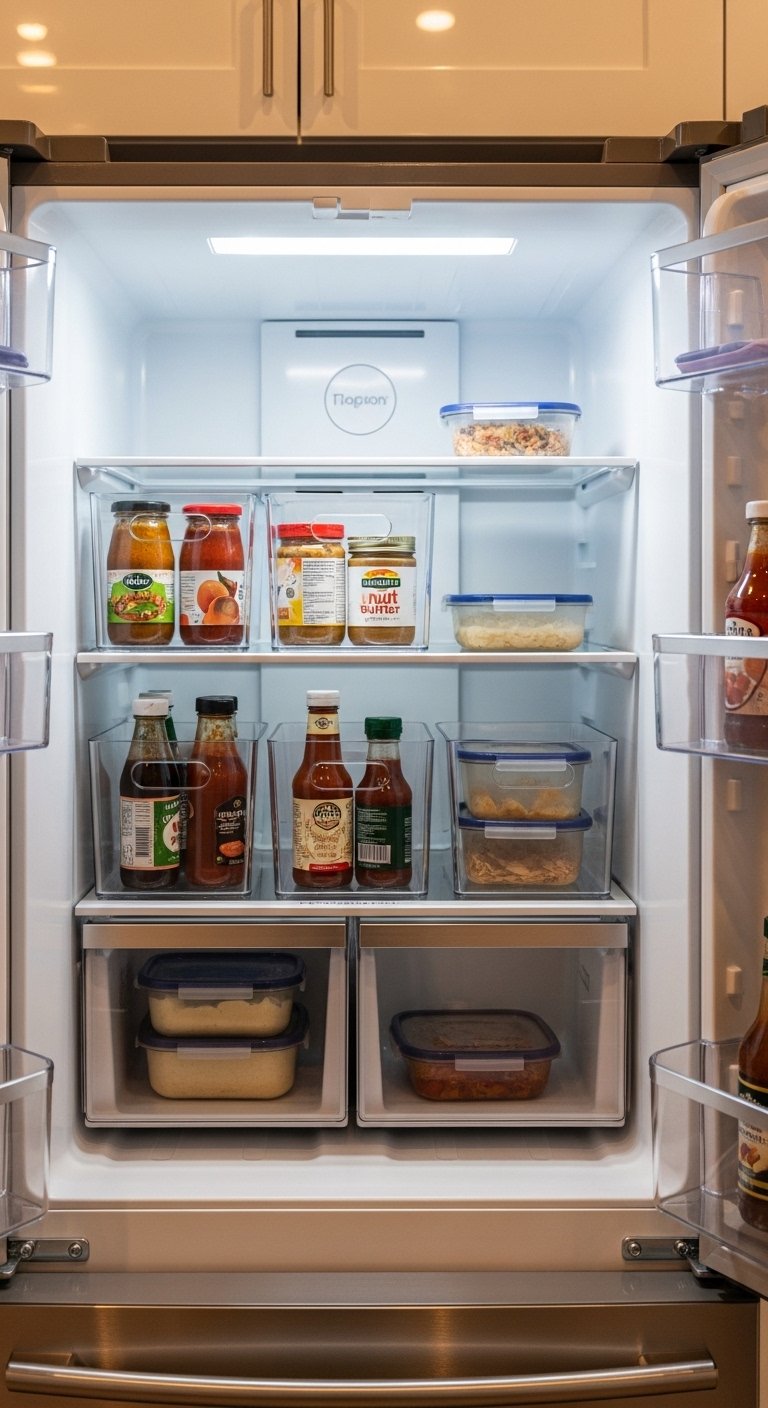
Some pantry items straddle the line between pantry and fridge. Think: nut butters you keep open, sauces, condiments you buy in bulk. Clear bins in the fridge help these items live neatly and stay visible.
This cross-category thinking, managing both your pantry and your fridge as one system, makes cooking and shopping so much more logical.
15. Add a Chalkboard or Whiteboard Inside the Door
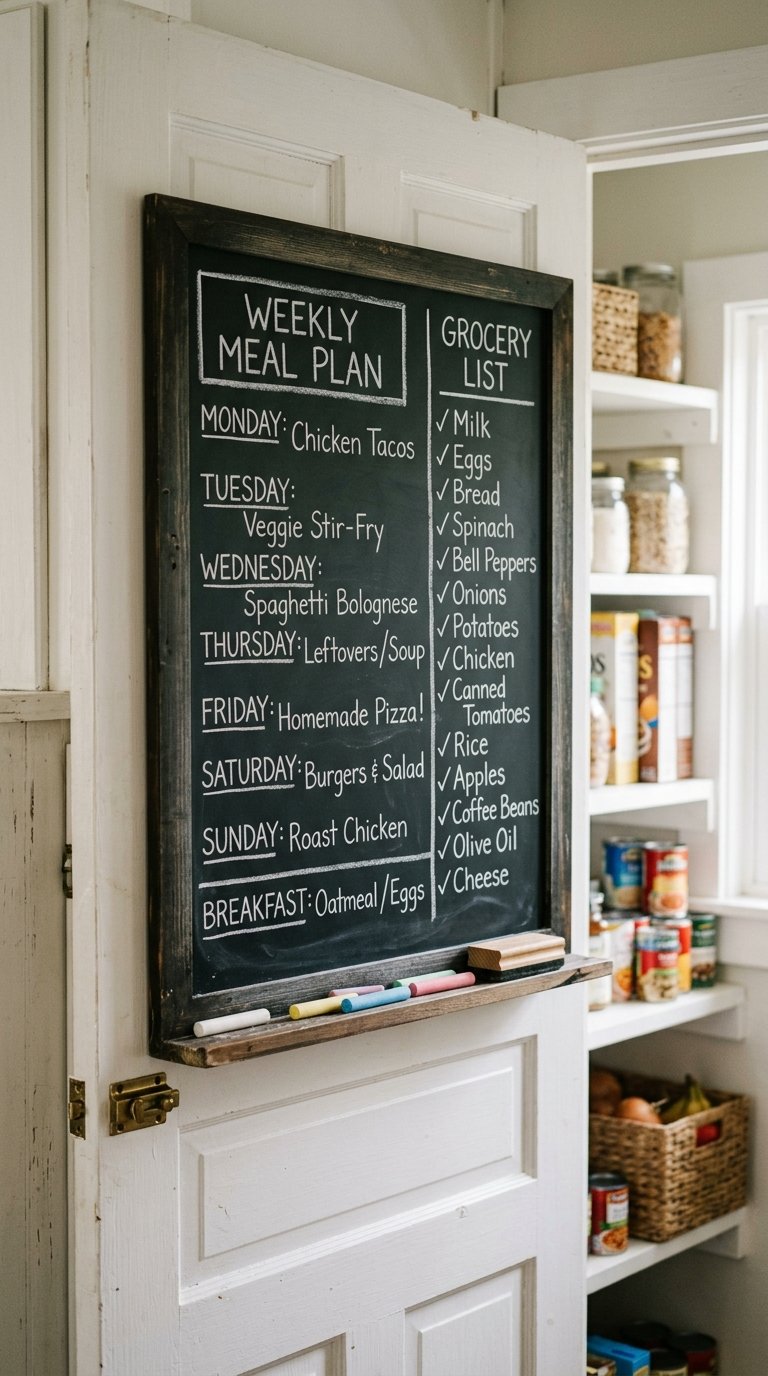
A small chalkboard or whiteboard inside your pantry door is one of those ideas that sounds basic but works brilliantly in practice. Use it to jot down what you’re running low on, your current meal plan, or even a grocery list.
No more opening the fridge to check if you have pasta only to forget by the time you open the app. Just look at the board.
16. Decant Snacks and Nuts Into Smaller Jars
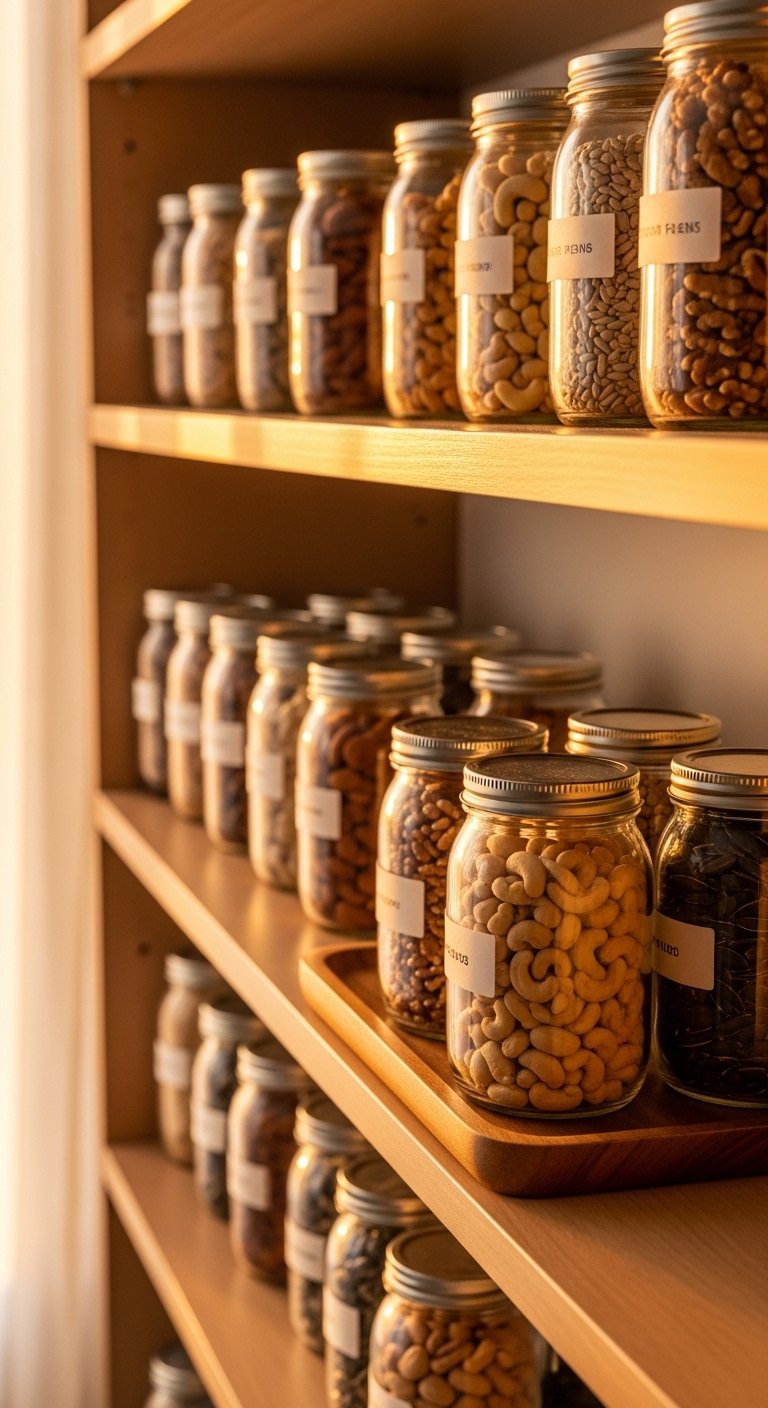
Big bags of nuts, seeds, or trail mix look messy and take up lots of space. Decanting them into smaller glass jars not only looks cleaner, it also lets you stack or line them up neatly.
This is one of those small changes that makes a big visual difference. Plus, it actually helps with portion control if that’s something you care about.
17. Make a “Use First” Box
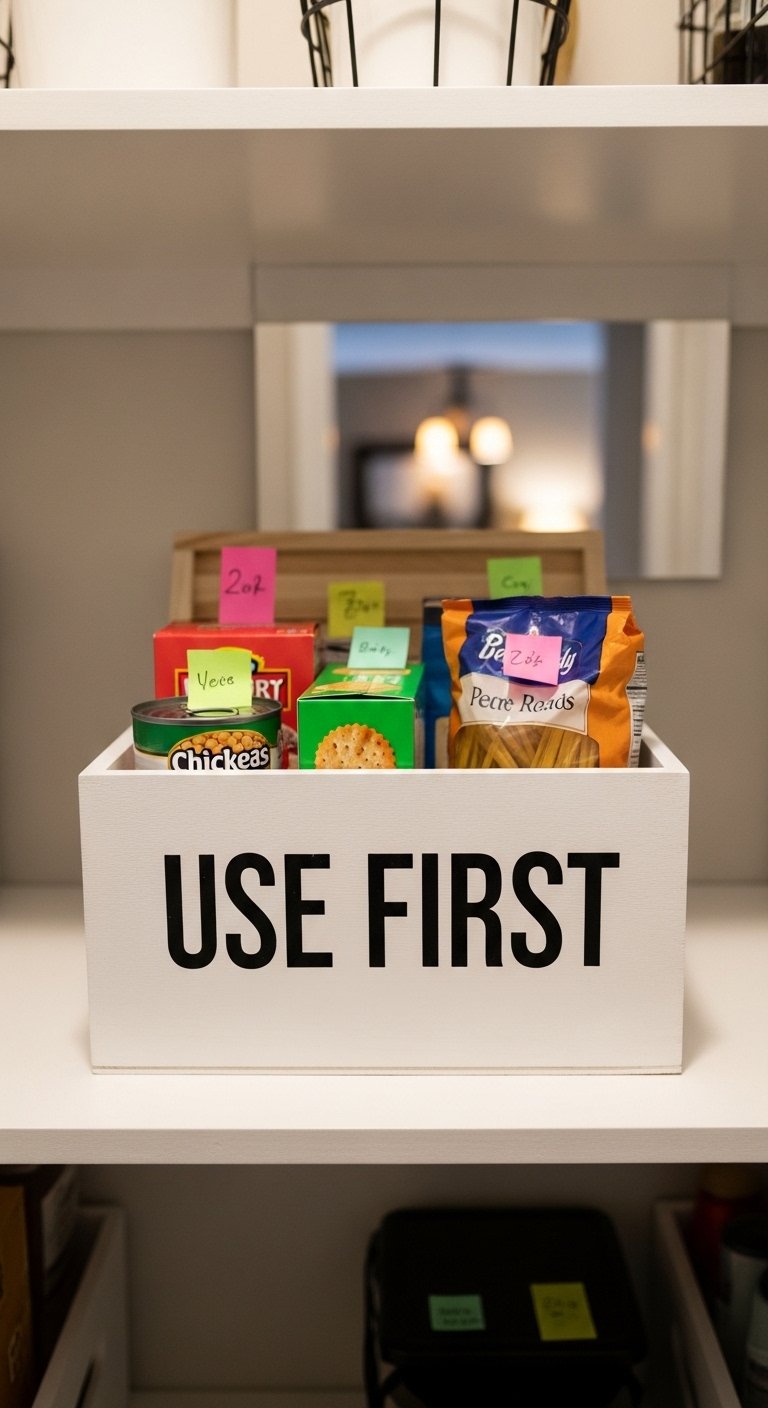
This is one of my favorite practical ideas. Keep a small bin or box labeled “use first” and put anything that’s close to its expiry date in there. Every time you cook, check that box first before reaching for a fresh item.
This simple habit reduces food waste significantly. It’s not glamorous, but it’s genuinely useful.
18. Store Baking Supplies Together in One Zone
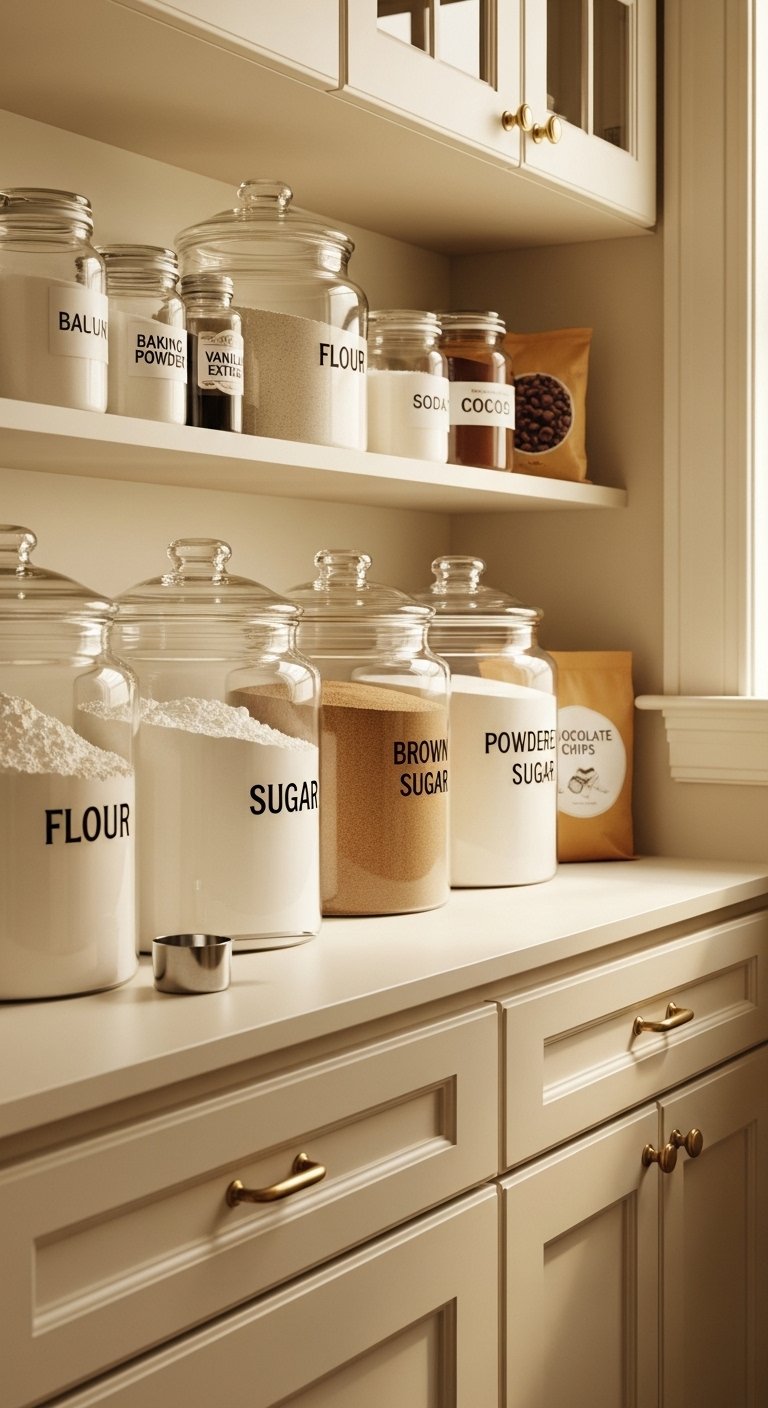
Baking is a distinct activity from everyday cooking, and your pantry should reflect that. Group all your baking supplies: flour, sugar, brown sugar, powdered sugar, baking powder, baking soda, cocoa powder, chocolate chips, vanilla, yeast.
Use a designated section or even a pull-out bin just for baking. When you decide to bake something, you go to one place and everything is there. No hunting across shelves.
19. Use Magazine Files for Foil, Wrap, and Bags
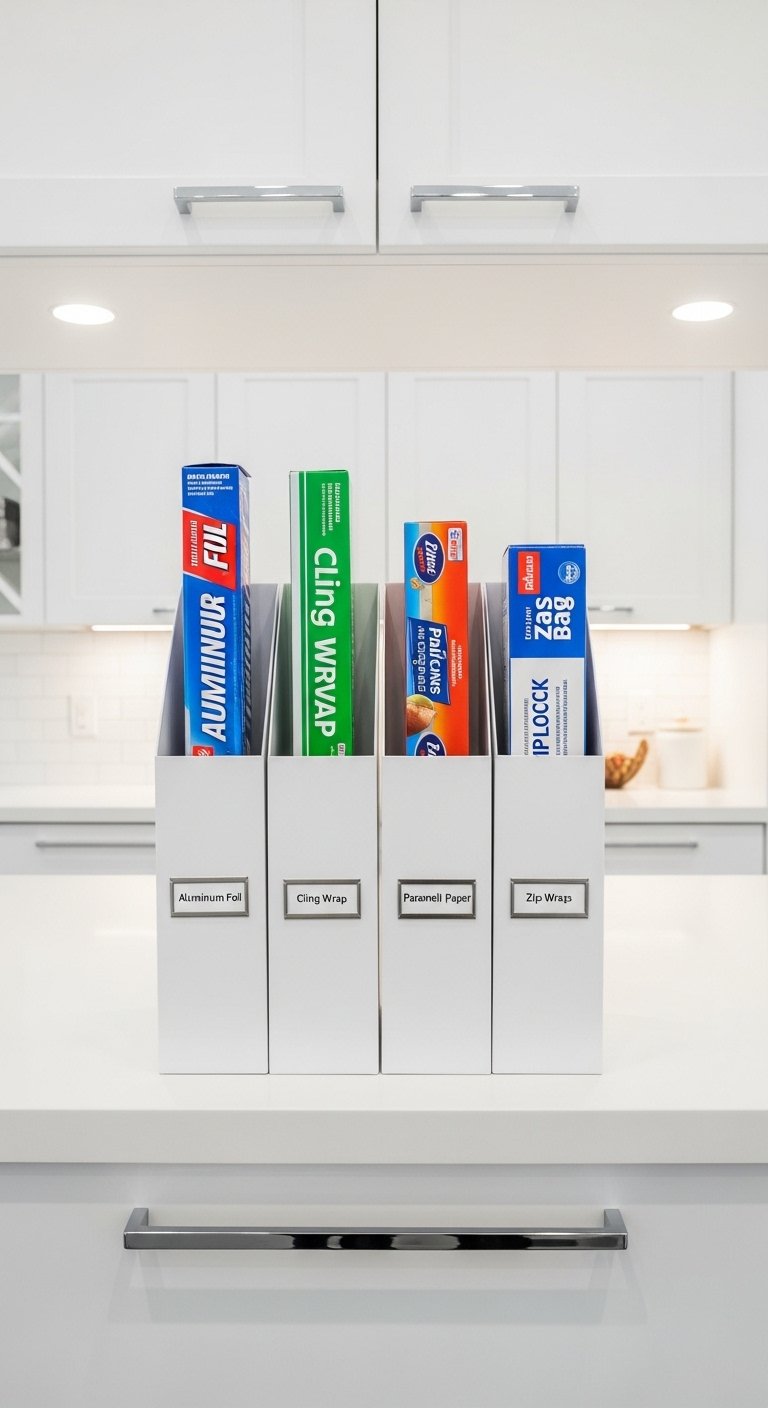
Those long boxes of cling film, foil, parchment paper, and zip-lock bags are impossible to store neatly. Magazine file holders are actually the perfect shape for these. Stand them upright in a magazine file and suddenly they’re organized, easy to find, and take up much less room.
This works great in a pantry drawer or on a shelf. It’s one of those ideas that feels almost too simple but genuinely works.
20. Create a Breakfast Basket
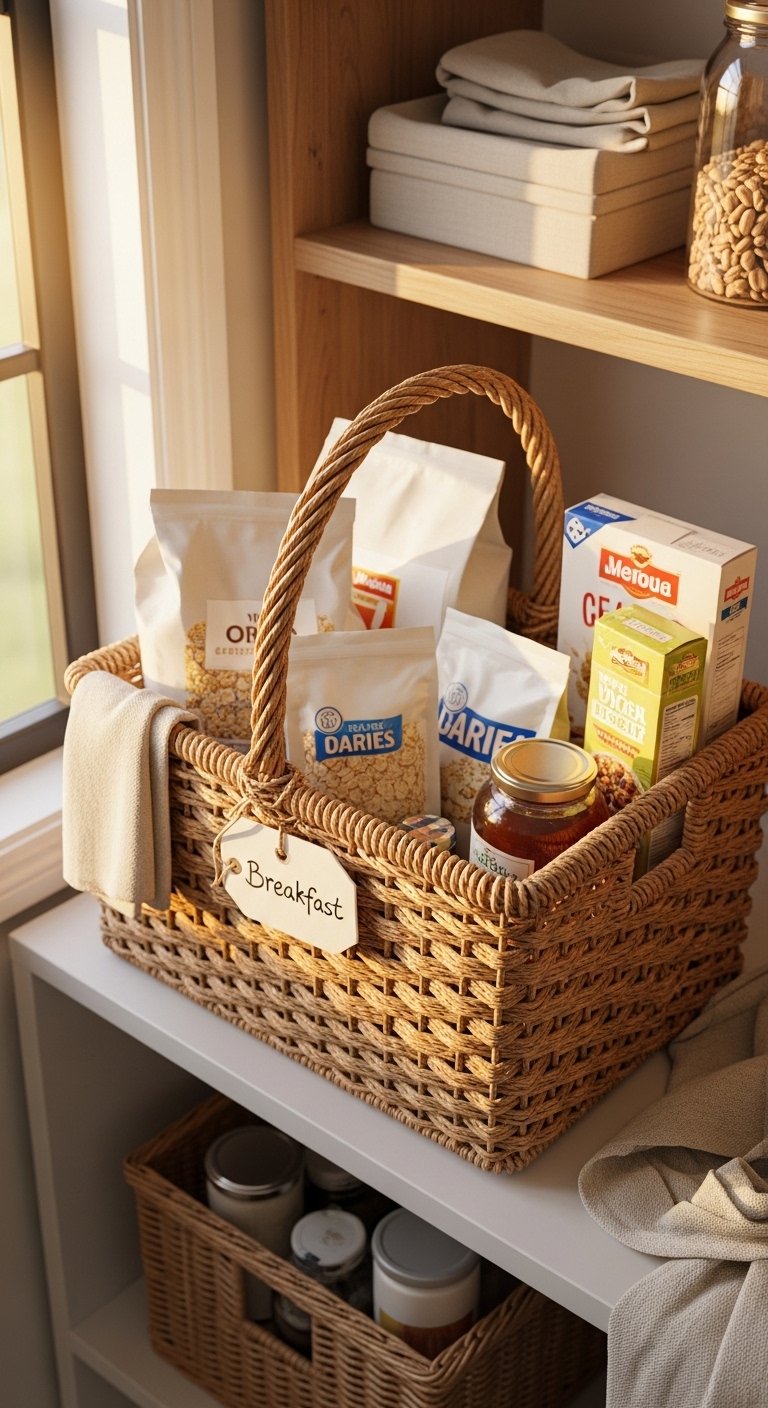
Similar to the snack station idea, a dedicated breakfast basket saves time every single morning. Put your cereal bags, oat packets, granola, and anything else you eat for breakfast in one basket.
When you wake up, you go to one spot instead of scanning across three shelves half-asleep. FYI, this also works brilliantly for households with kids who are making their own breakfasts.
21. Hang a Small Pegboard for Tools or Bags
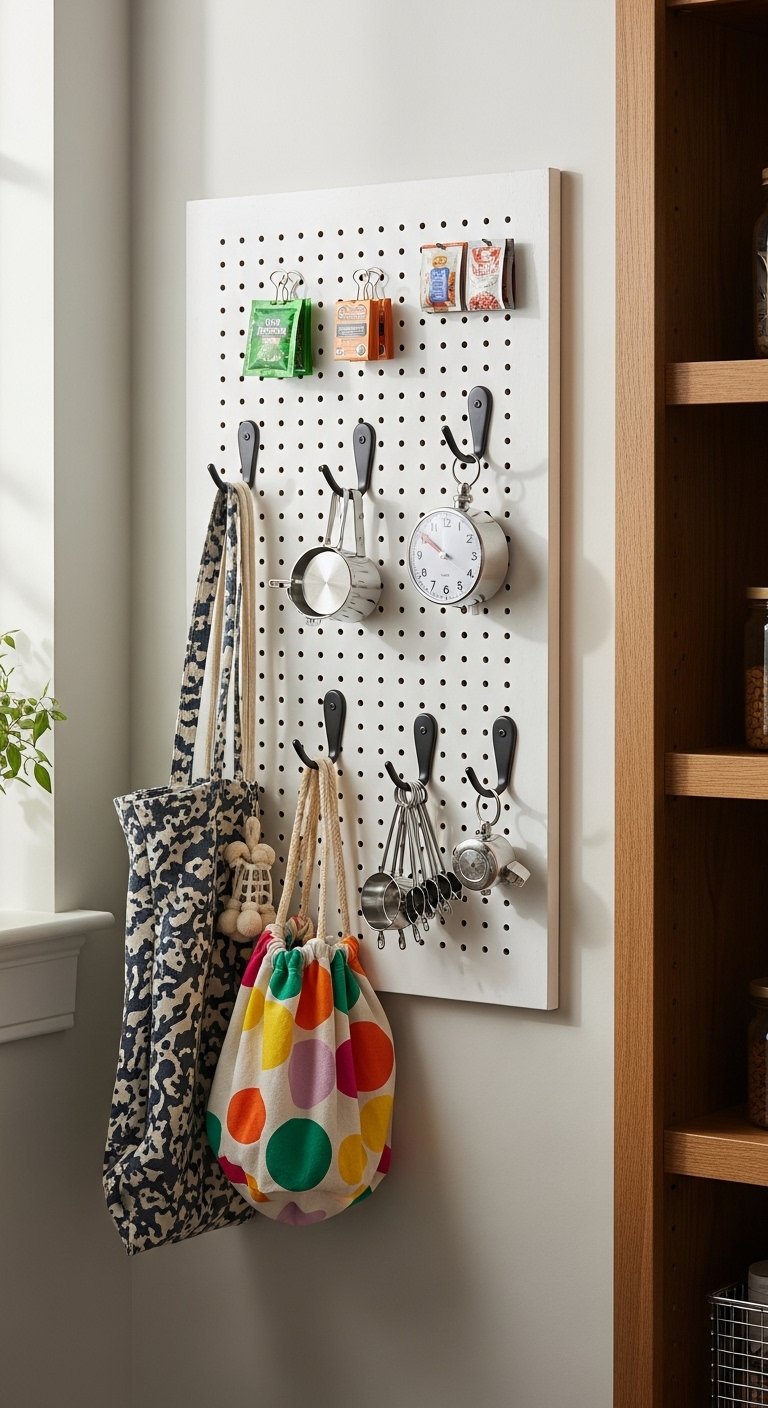
If your pantry has wall space, a small pegboard gives you a customizable place to hang things. Think: reusable shopping bags, measuring cups, small tools, or even a magnetic strip for seasoning packets.
Pegboards are affordable, easy to install, and incredibly flexible. You can move hooks around as your needs change, which is great as your pantry evolves.
22. Invest in a Good Spice Organization System
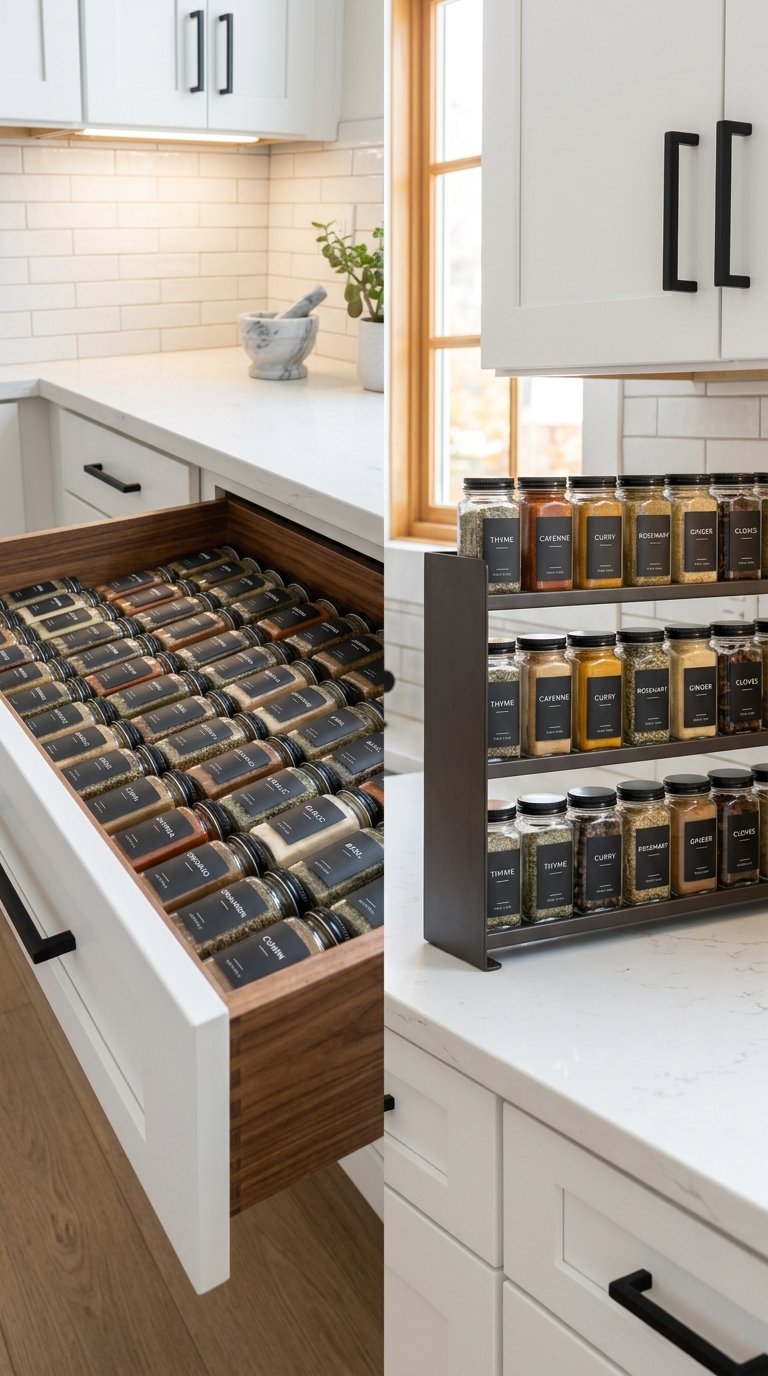
Spices deserve their own section because they’re genuinely one of the trickiest things to organize. You have two main options:
Option A: Drawer spice organization Lay spice jars horizontally in a drawer with labels on the lid so you can read them from above. This is visually clean and makes finding spices incredibly fast.
Option B: Tiered shelf organizer A two or three-tier spice shelf sits on a pantry shelf and lets you see all your jars at once. This works well if you don’t have a drawer option.
Whichever you choose, transferring spices into matching jars with uniform labels is what really ties it all together. Yes, it takes an afternoon. Yes, it’s absolutely worth it.
23. Do a Monthly Pantry Check
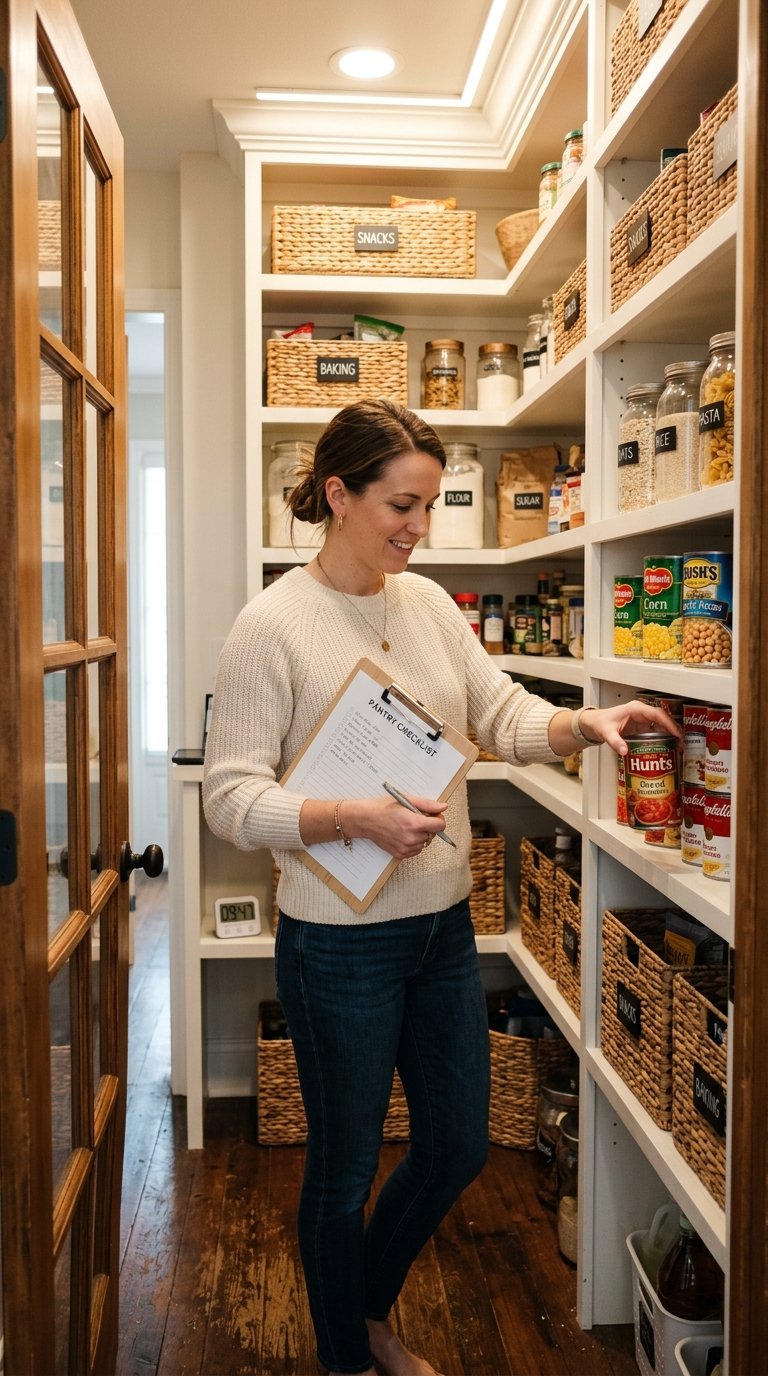
A pantry makeover is not a one-time event. The secret to maintaining a beautifully organized pantry is a quick monthly reset. Set aside 15 to 20 minutes once a month to:
- Pull things forward that are close to expiry
- Restock your “use first” box
- Check that items are in the right zones
- Wipe down shelves if anything has spilled
- Update your chalkboard shopping list
This small habit keeps the chaos from creeping back in. It really does. And once your system is in place, the monthly check takes almost no time because everything already has a home.
Final Thoughts
A great pantry makeover starts with a full purge, measuring your space, and creating clear zones for different categories. Then you layer in the good stuff: airtight containers, labels, tiered racks, door organizers, lazy Susans, and smart storage solutions for everything from spices to snacks.
The biggest mistake people make is skipping the planning phase and just buying things. But when you take time to measure, sort, and think through your zones first, every purchase you make actually works.
Your pantry doesn’t need to be Pinterest-perfect. It needs to work for you and your household. Start with two or three of these ideas and build from there. Even one change, like a lazy susan or a tiered can rack, can completely shift how you feel about your pantry every single day.
So go ahead. Open that door. And this time, nothing’s going to fall on your foot.