23 Small Pantry Design Ideas to Organize Any Kitchen
Most small pantries fail for the same reason. Not because there isn’t enough space there almost always is but because nobody designed them properly in the first place. A shelf or two, a bare bulb, and a door that barely opens all the way. That’s not a pantry. That’s a cupboard with ambitions.
I’ve reorganised enough of these spaces to know that a small pantry done well outperforms a large pantry done badly every single time. The difference is entirely in the details. Here are 23 ideas that actually work.
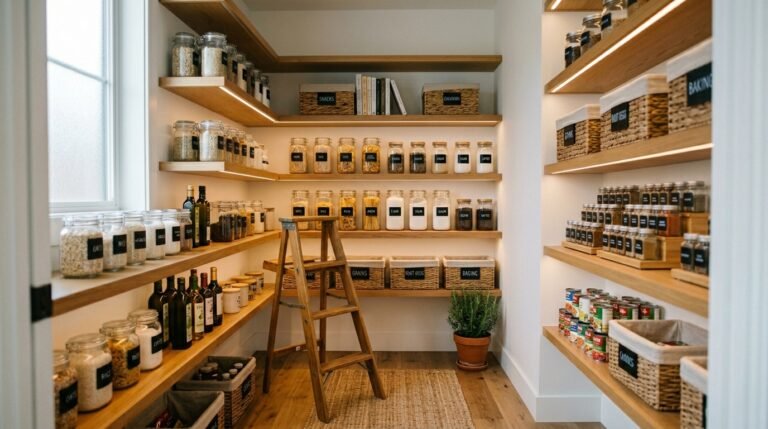
1. Floor-to-Ceiling Shelving
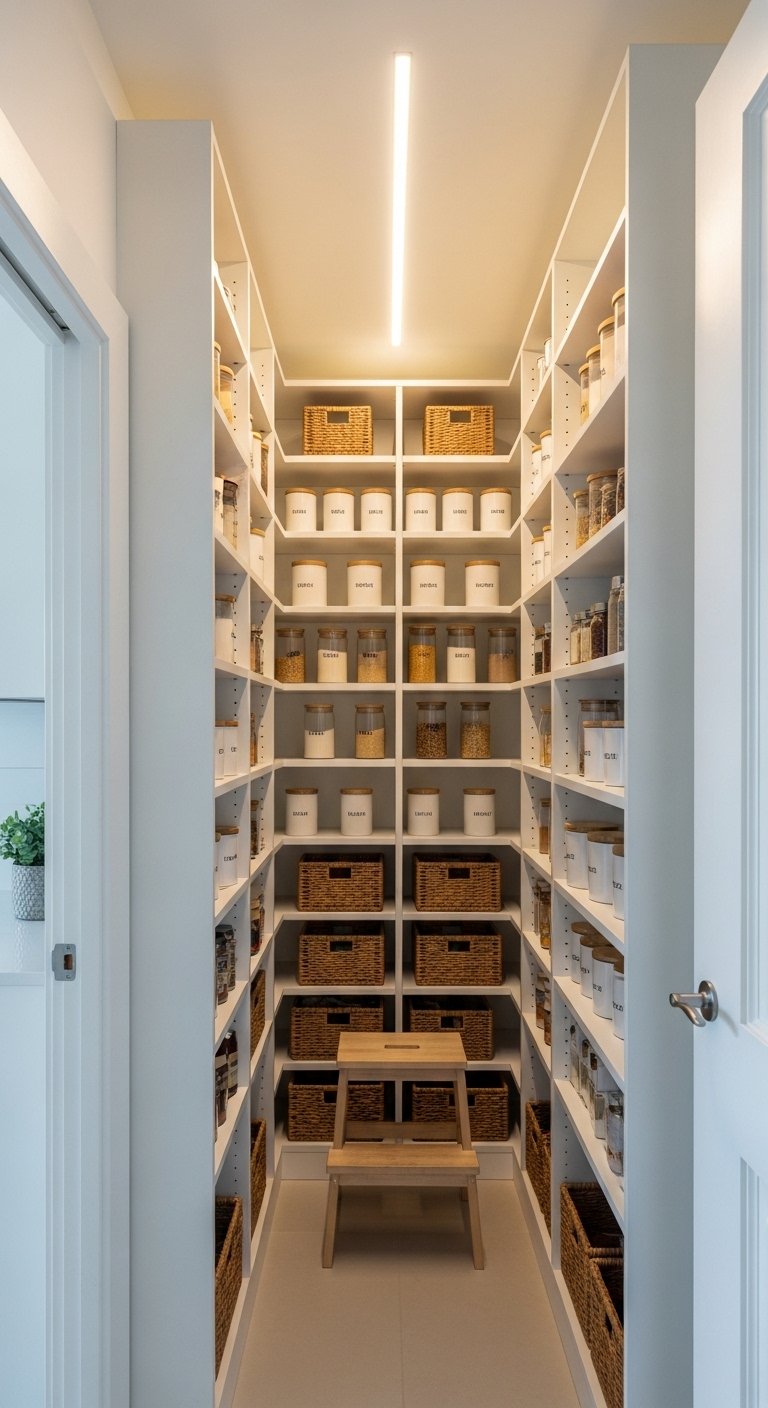
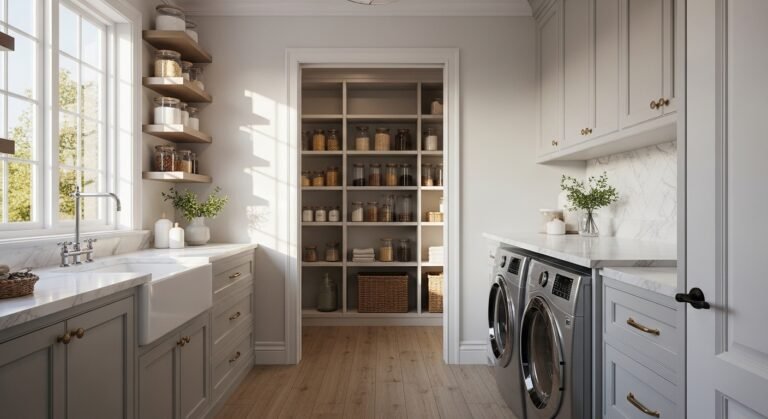
The single most impactful thing you can do in a small pantry is use the full height of the room. Most people stop shelving at eye level and leave 60cm of perfectly usable space sitting empty above their heads. That’s where the bulk storage goes the spare pasta, the extra olive oil, the things you buy in quantity and reach for every few weeks.
Use a small step stool rather than stretching. It takes three seconds and it means you can realistically use every shelf you install. The items that earn lower shelves are the ones you reach for daily. Everything else earns its place higher up.
2. Pull-Out Drawers Instead of Deep Shelves
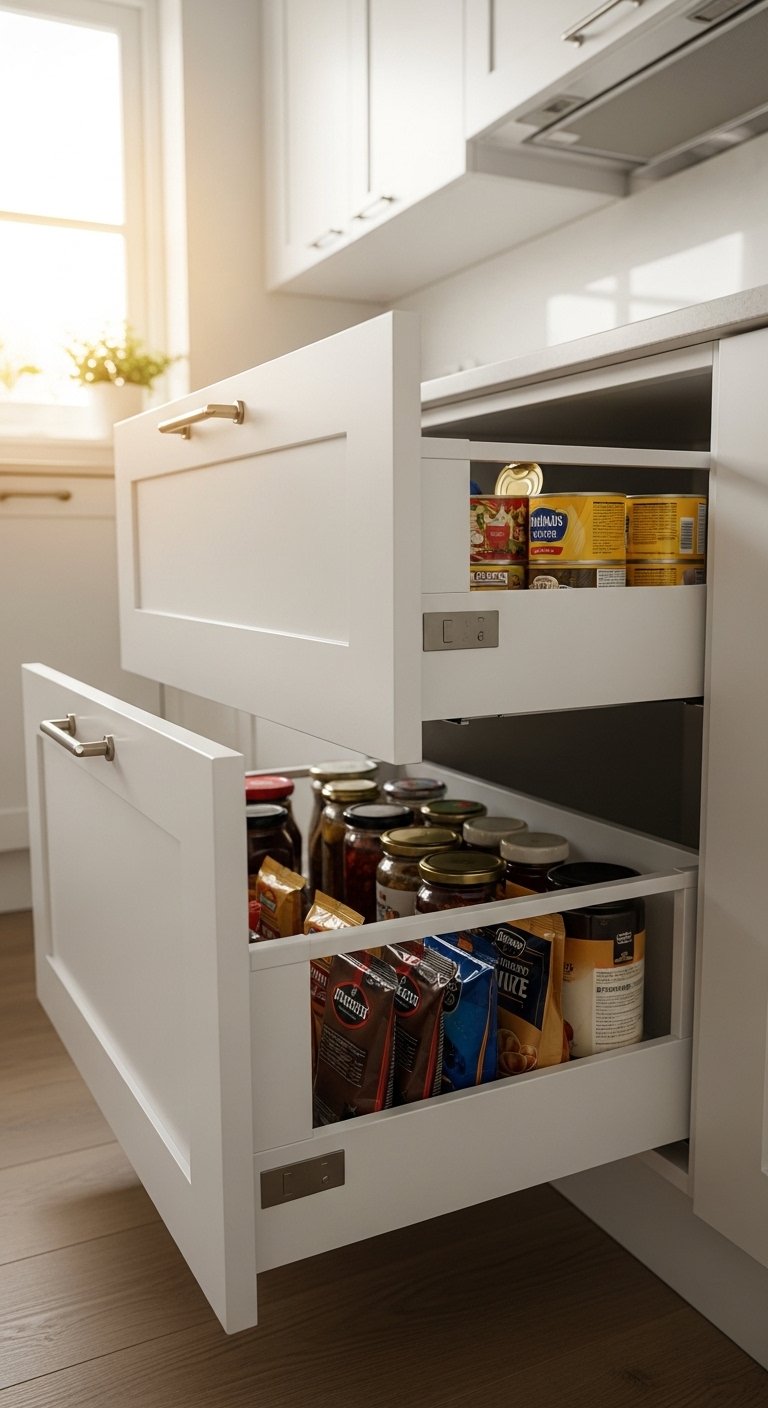
Deep fixed shelves are where things go to disappear. You push something to the back in a moment of optimism and rediscover it two years later, expired. Pull-out drawer inserts solve this completely; you pull the drawer out, the full depth becomes accessible, and nothing hides.
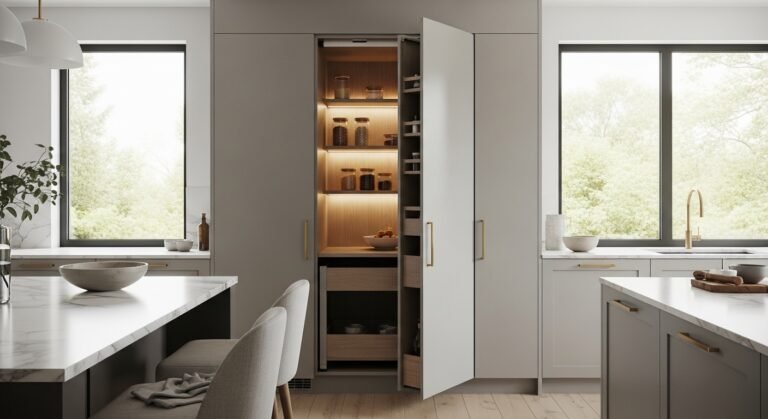
These are available as retrofit inserts for existing shelving or as purpose-built drawer units. The retrofit versions are relatively affordable and can transform shelves you already have. If you’re building a pantry from scratch, specify drawers for any shelf deeper than 30cm.
3. Door-Mounted Storage Racks
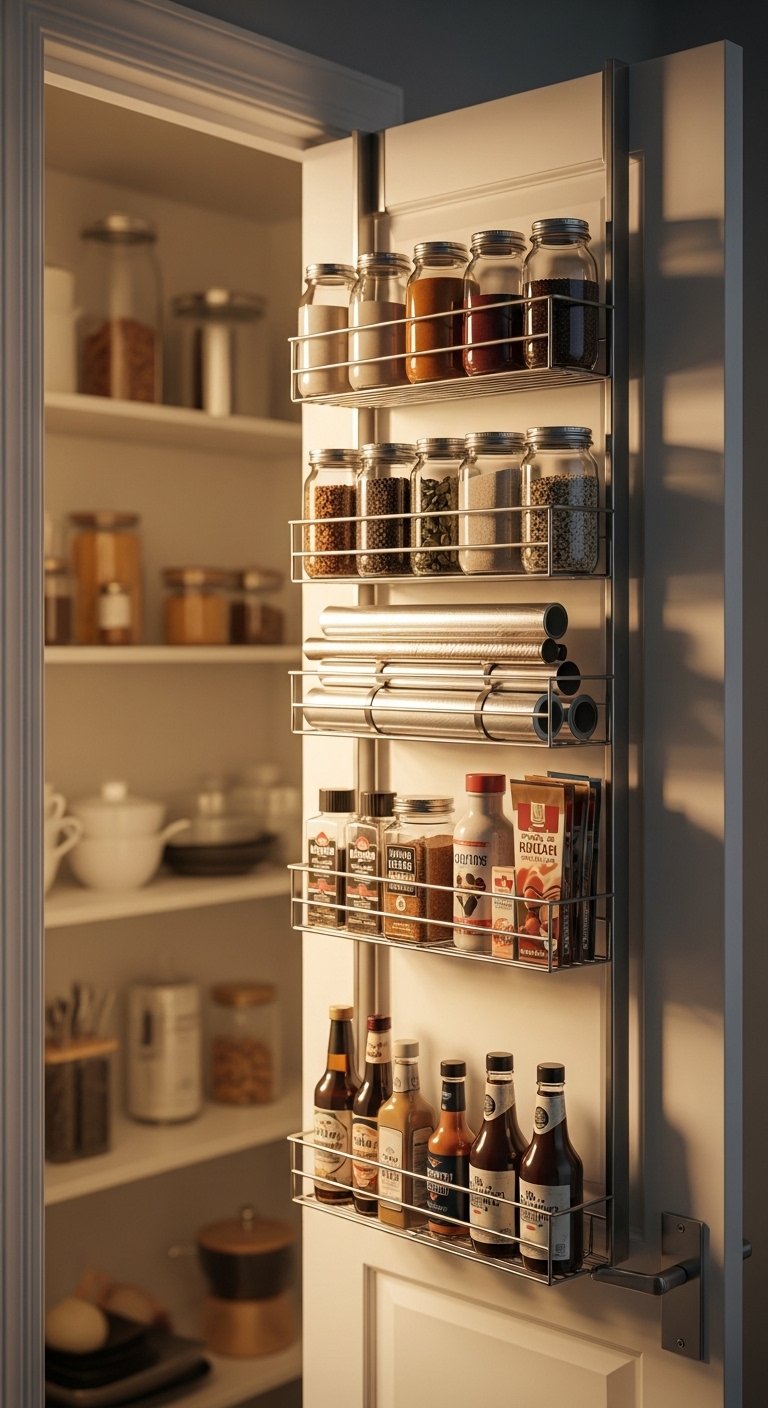
The back of the pantry door is storage space that almost nobody uses. A door-mounted rack with narrow shelves or individual pockets can hold spices, small jars, packets, foil, cling film, and a surprising number of other items that would otherwise claim shelf space inside.
The key is choosing a rack designed for the door weight you’re working with. Overloaded door racks put stress on the hinges over time. Keep the door storage to lighter items and make sure the door still clears the shelving inside when it opens fully.
4. Adjustable Shelf Systems
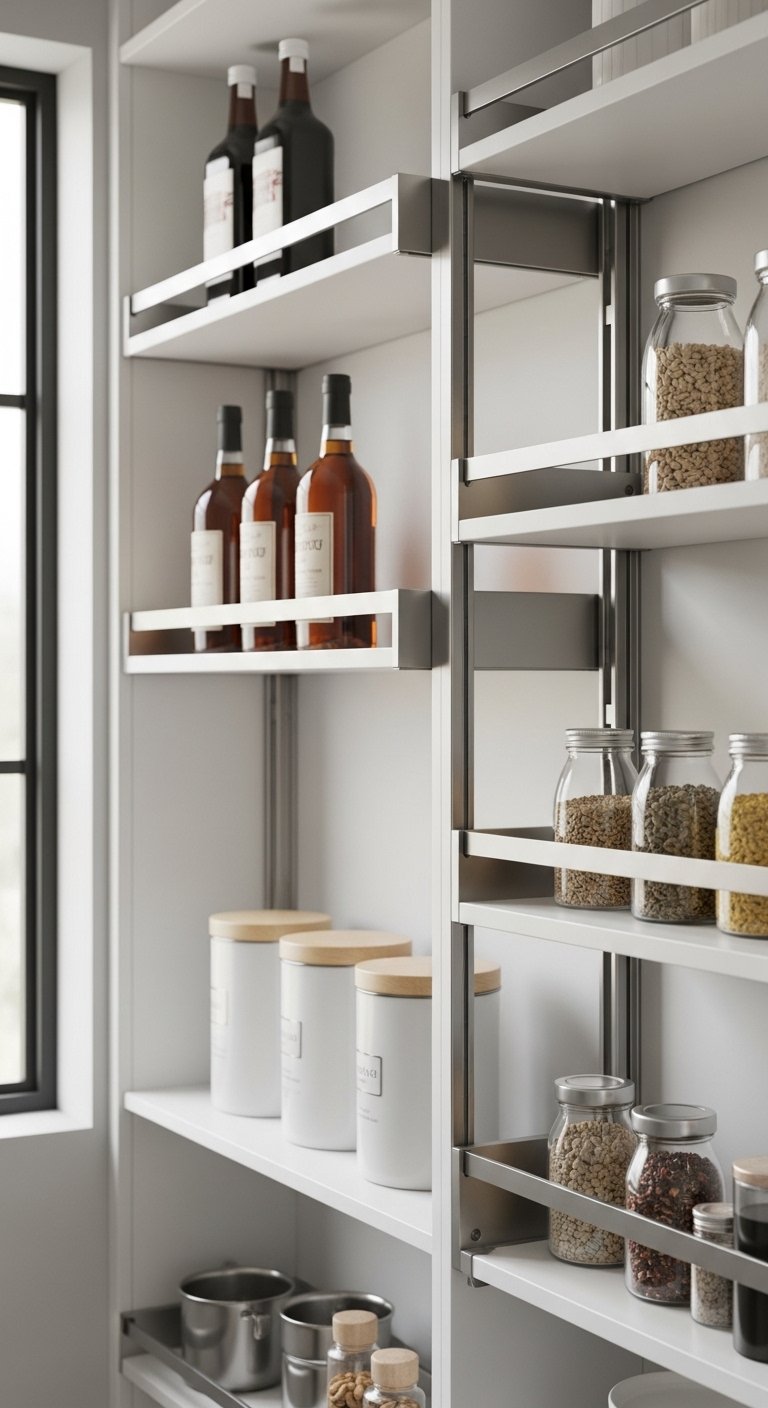
Fixed shelving commits you to one configuration forever. Adjustable shelving on a track system lets you reconfigure the entire pantry as your storage needs change and they always change. A shelf that suits your current arrangement might be completely wrong in two years when your household changes, your buying habits shift, or you simply want things organised differently.
Track and bracket systems are inexpensive, straightforward to install, and available at every hardware store. They also look more intentional than the old peg-and-hole system. Investing in proper shelf brackets at the right intervals sagging shelves under full loads are a genuine storage problem.
5. Labelled Clear Canisters
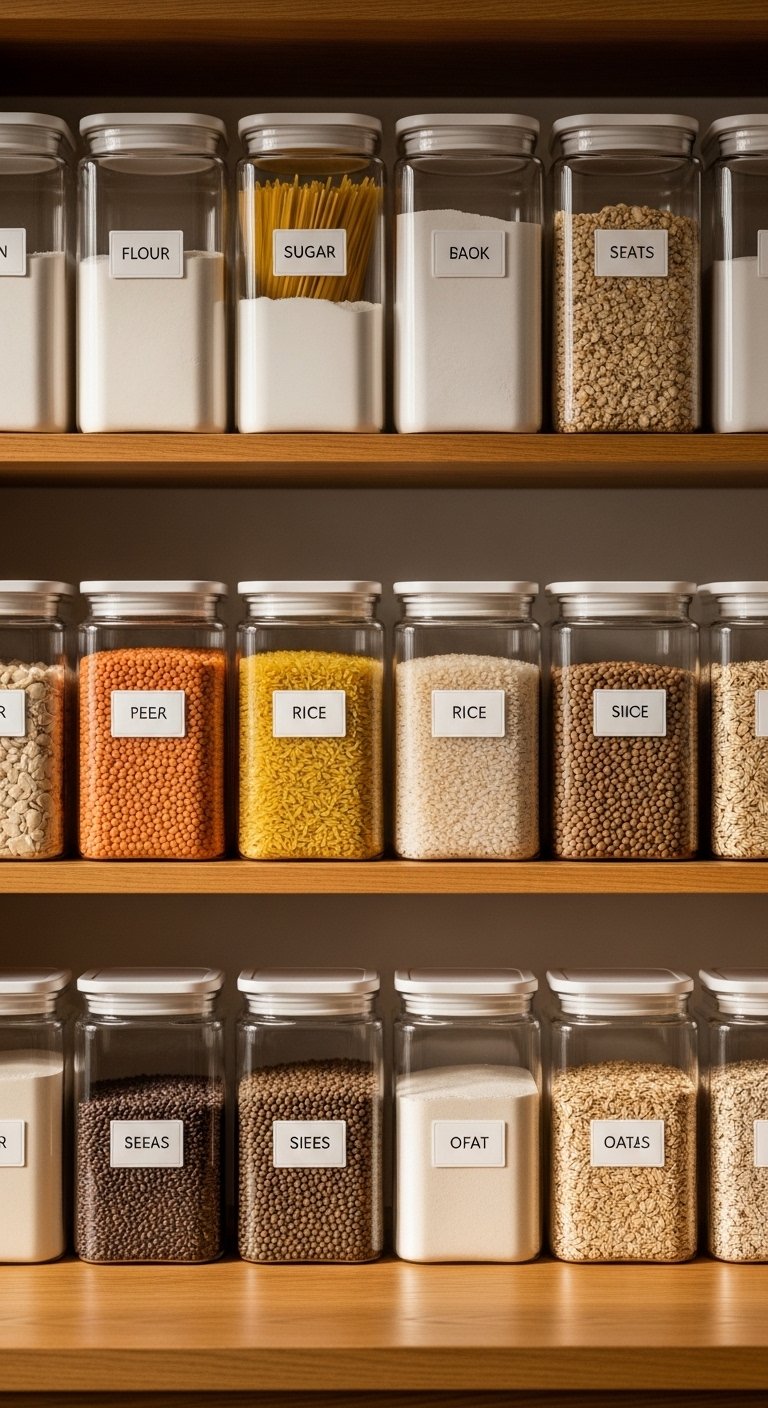
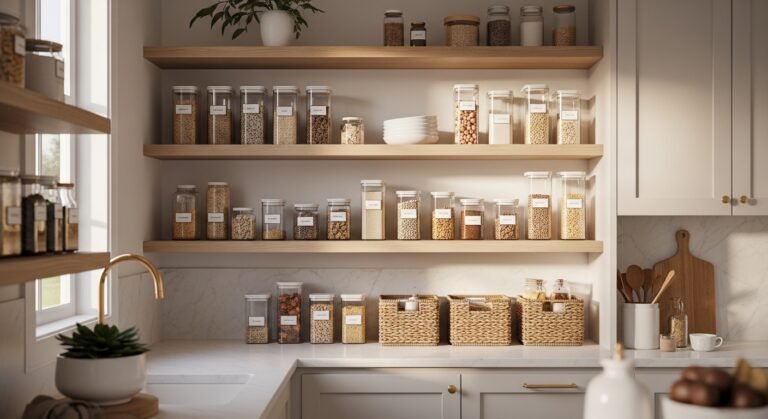
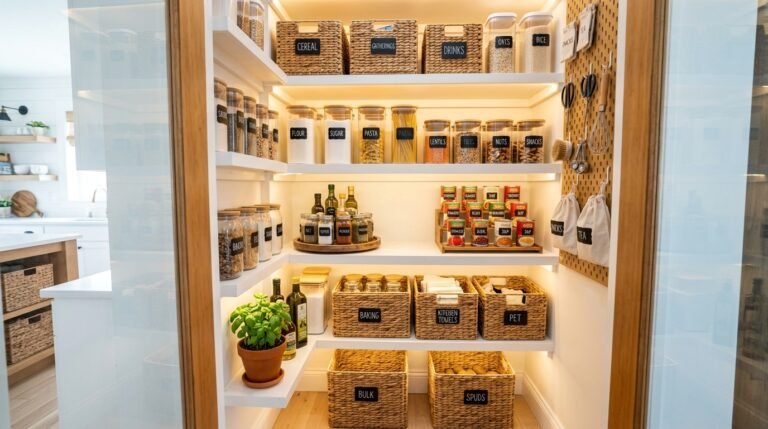
Decanting dry goods into clear labelled canisters is the single change that makes a pantry look like it belongs in a magazine rather than a student flat. Pasta, rice, lentils, flour, sugar moved from their original packaging into identical clear containers with clean labels, they suddenly look organised even when the overall pantry is fairly full.
The practical benefit beyond aesthetics is real: you can see exactly how much of everything you have at a glance, you know when to reorder, and the uniform containers stack and fit shelves far more efficiently than irregular original packaging. Buy a full matching set rather than mixing different styles consistently is what makes it work visually.
6. A Dedicated Baking Zone
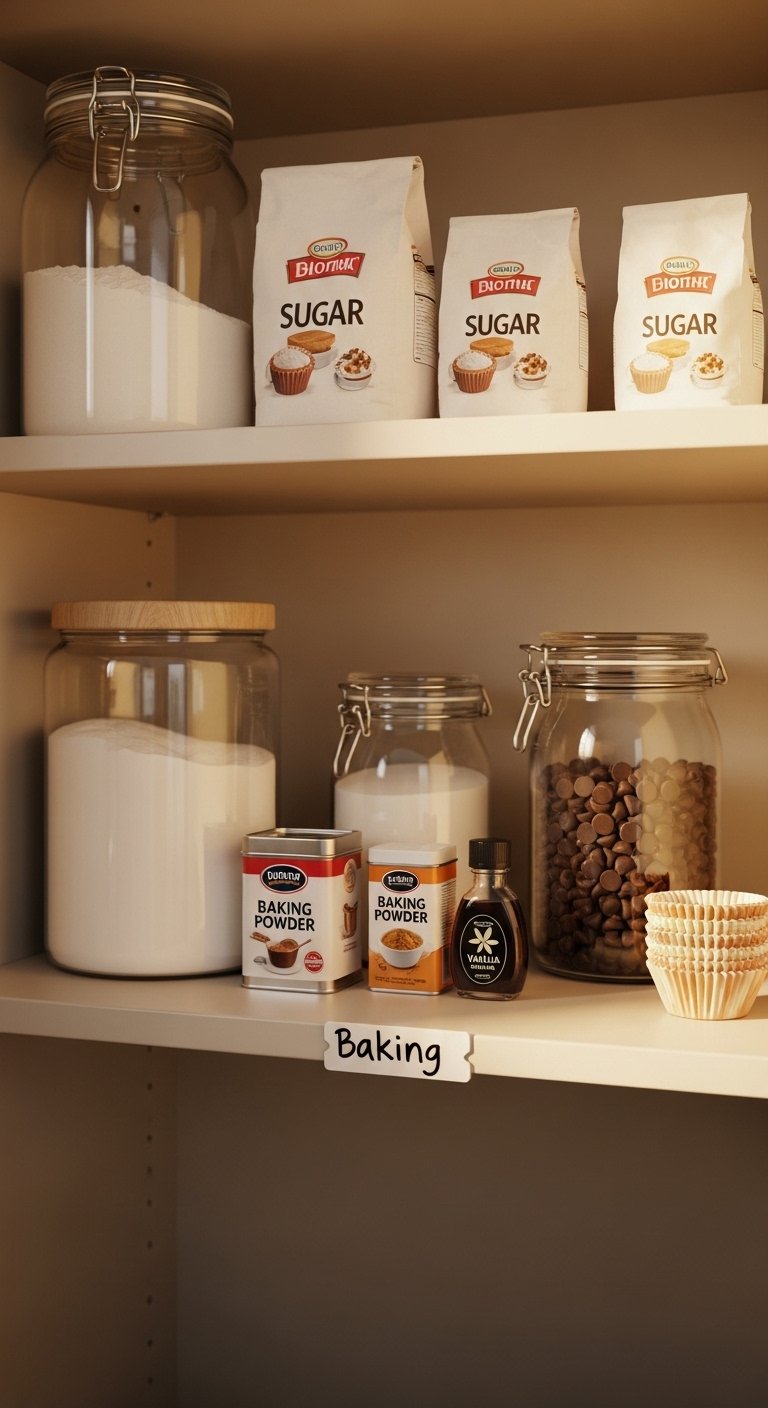
If you bake regularly, grouping everything baking-related into one dedicated zone of the pantry saves an extraordinary amount of time and mental energy. Flour, sugars, baking powder, bicarbonate, vanilla, chocolate chips, spare cake tins all in one place, all accessible without hunting across multiple shelves.
This principle applies beyond baking. A breakfast zone, a pasta zone, a snack zone. Grouping by use rather than by size or container type means you shop the pantry the way you cook by meal intention rather than ingredient type. It sounds minor. In practice it changes how the whole pantry feels to use.
7. Built-In Wine Storage
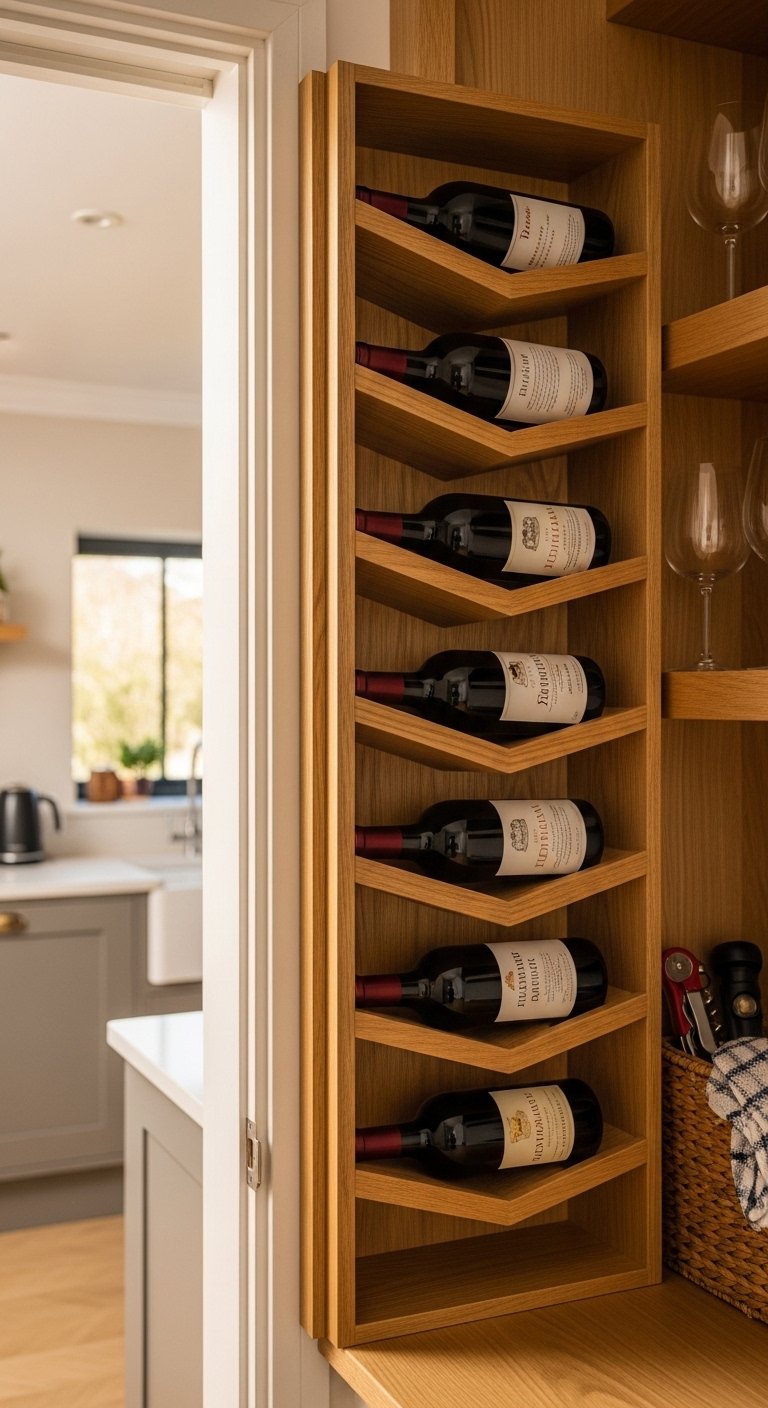
A small pantry with integrated wine storage, whether a dedicated wine rack section, a pull-out wine drawer, or purpose-built angled bottle holders solves the problem of where wine lives in a kitchen that doesn’t have a cellar or a separate drinks fridge.
Bottles stored horizontally keep the cork moist and last longer. A built-in rack also prevents the bottles from rolling off shelves or cluttering counter space. Even a small section of angled storage holding six to twelve bottles is enough to keep the kitchen bench clear and the wine properly stored.
8. A Small Built-In Work Surface
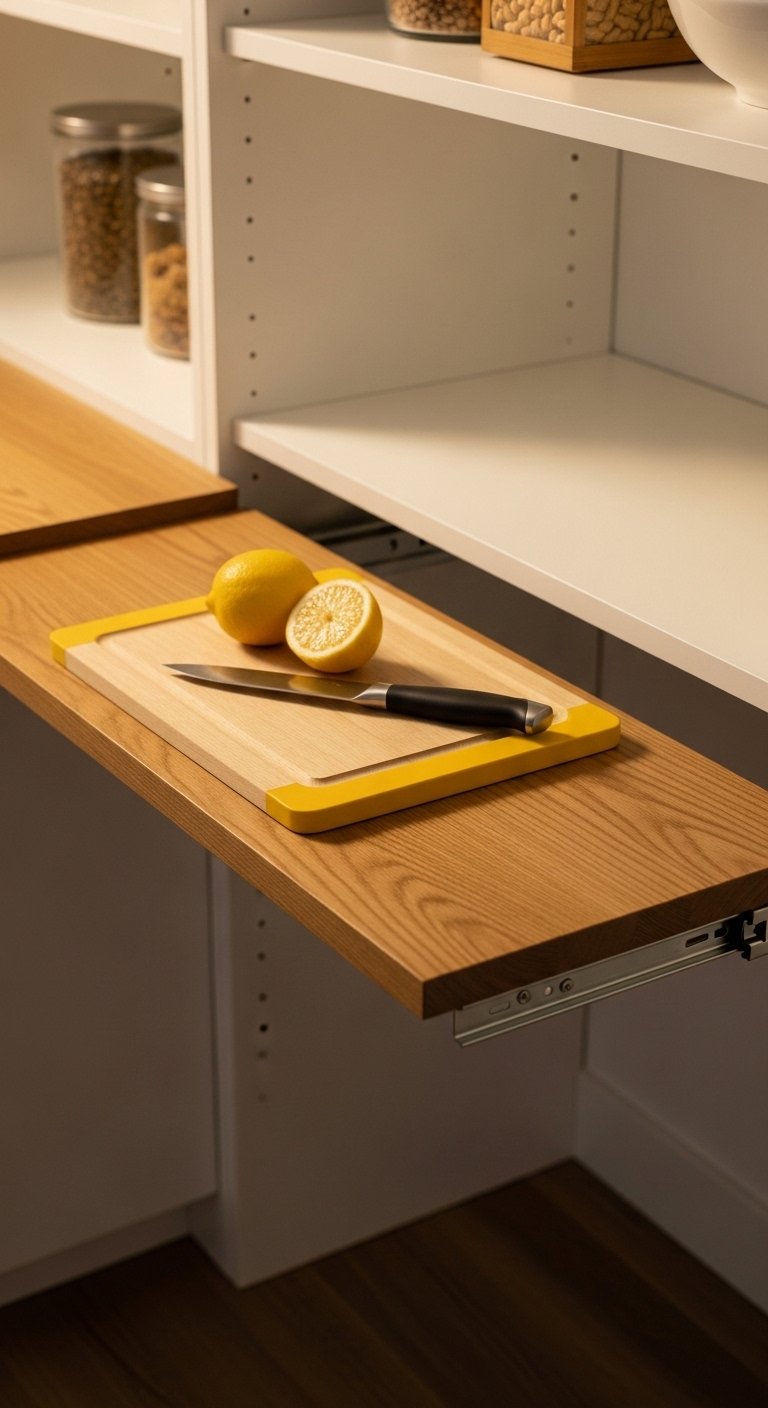
A narrow pull-out or fold-down surface inside the pantry gives you a prep area that’s separate from the main kitchen bench. This is particularly useful if your kitchen counter space is limited you can use the pantry surface for prep work, staging, or as a coffee station while keeping the main bench clear.
Pull-out versions slide under a shelf and disappear completely when not in use. Fold-down versions hinge from the wall and fold flat. Either approach adds genuine functionality without consuming permanent space. Even a 40cm deep by 60cm wide surface makes a meaningful difference.
9. Good Lighting
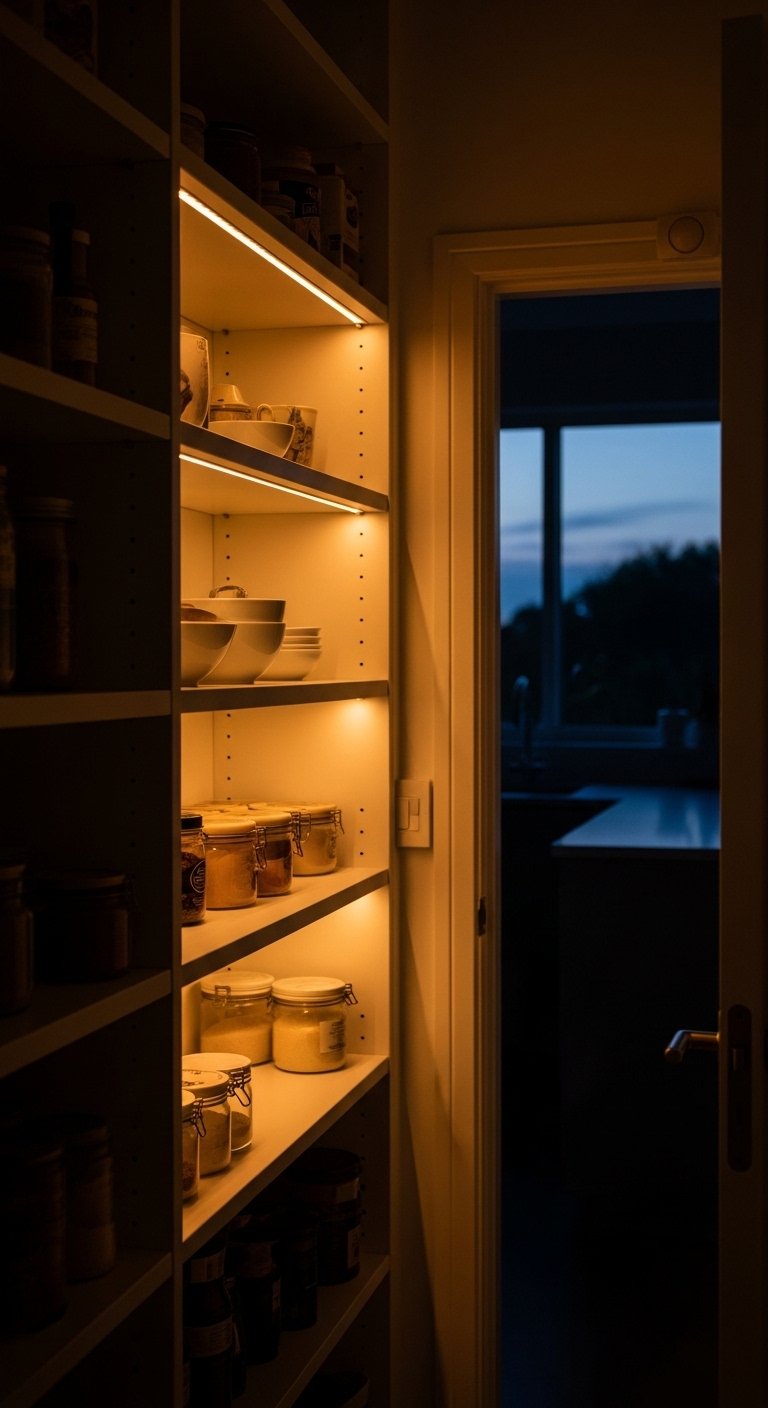
A pantry without proper lighting is a pantry you can’t actually use efficiently. The back corners stay dark, you miss things that are there, and the whole space feels less functional than it is. LED strip lighting under each shelf is the most effective solution it illuminates exactly the shelf below it, eliminating shadows entirely.
Motion-activated LED strips are available for around the same price as standard strips and mean the pantry lights up automatically when you open the door. No fumbling for a switch with full hands. For a very small pantry this is one of the best upgrades available, costing almost nothing and making an immediate practical difference.
10. A Chalkboard or Whiteboard Wall Panel
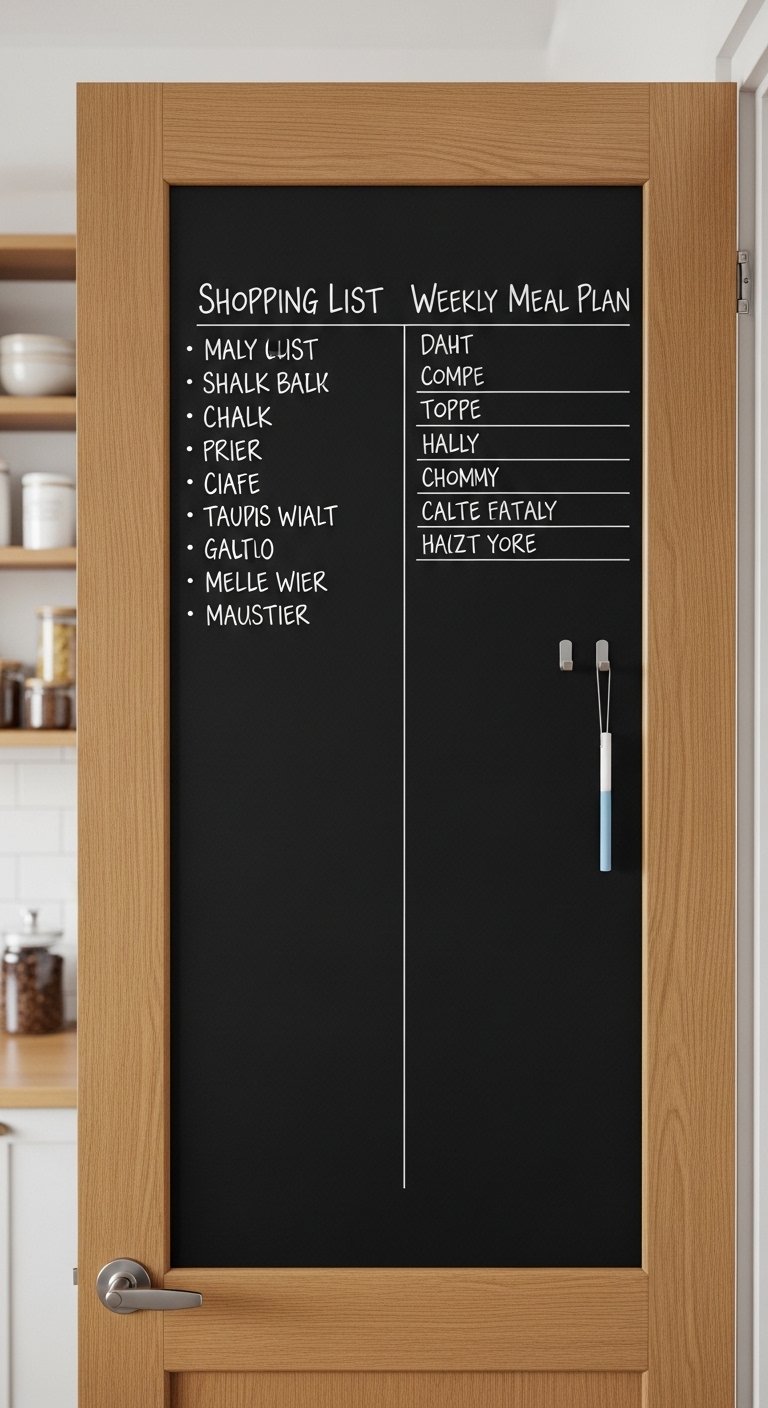
A small chalkboard or whiteboard panel mounted on the inside of the pantry door or on one wall turns the space into a functional household communication point. Shopping list, meal plan for the week, things running low, notes about what needs using before it expires.
This sounds like a small detail and it is but it’s the kind of detail that saves the “we’re out of X” conversation at the supermarket checkout. Keep a chalk pen or dry-erase marker hanging on a hook beside it so it actually gets used rather than becoming another surface that collects dust.
11. Tiered Shelf Risers
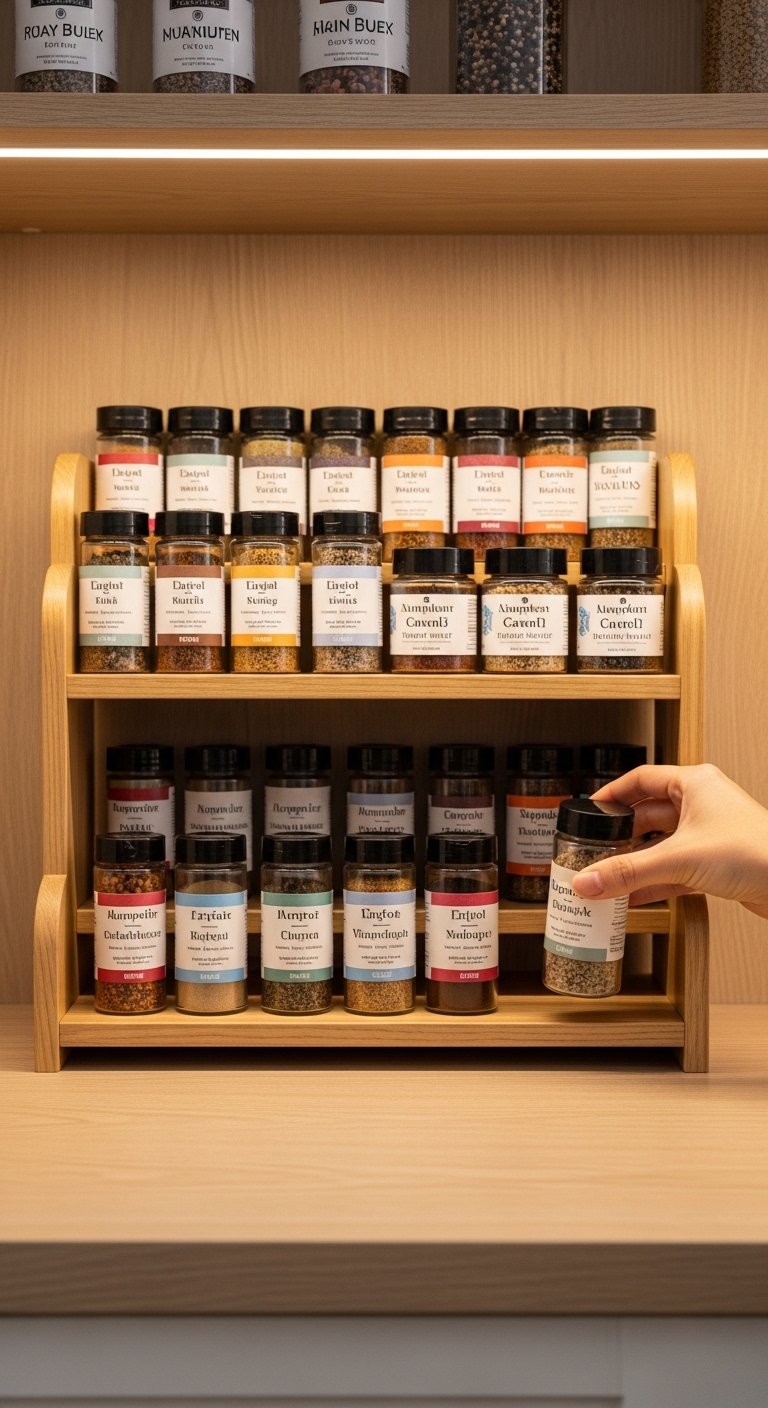
Flat shelves hide things behind other things. Tiered shelf risers stepped platforms that raise items at the back above the items in front fix this completely. You can see every jar, every tin, every bottle at a glance rather than moving three things every time you want the one at the back.
These are particularly effective for spices, condiments, tinned goods, and any category where you have multiple similar-sized items. They work equally well on fixed shelves and in pull-out drawers. The cost is minimal. The improvement to how the pantry functions daily is disproportionate.
12. Basket and Bin Organisation
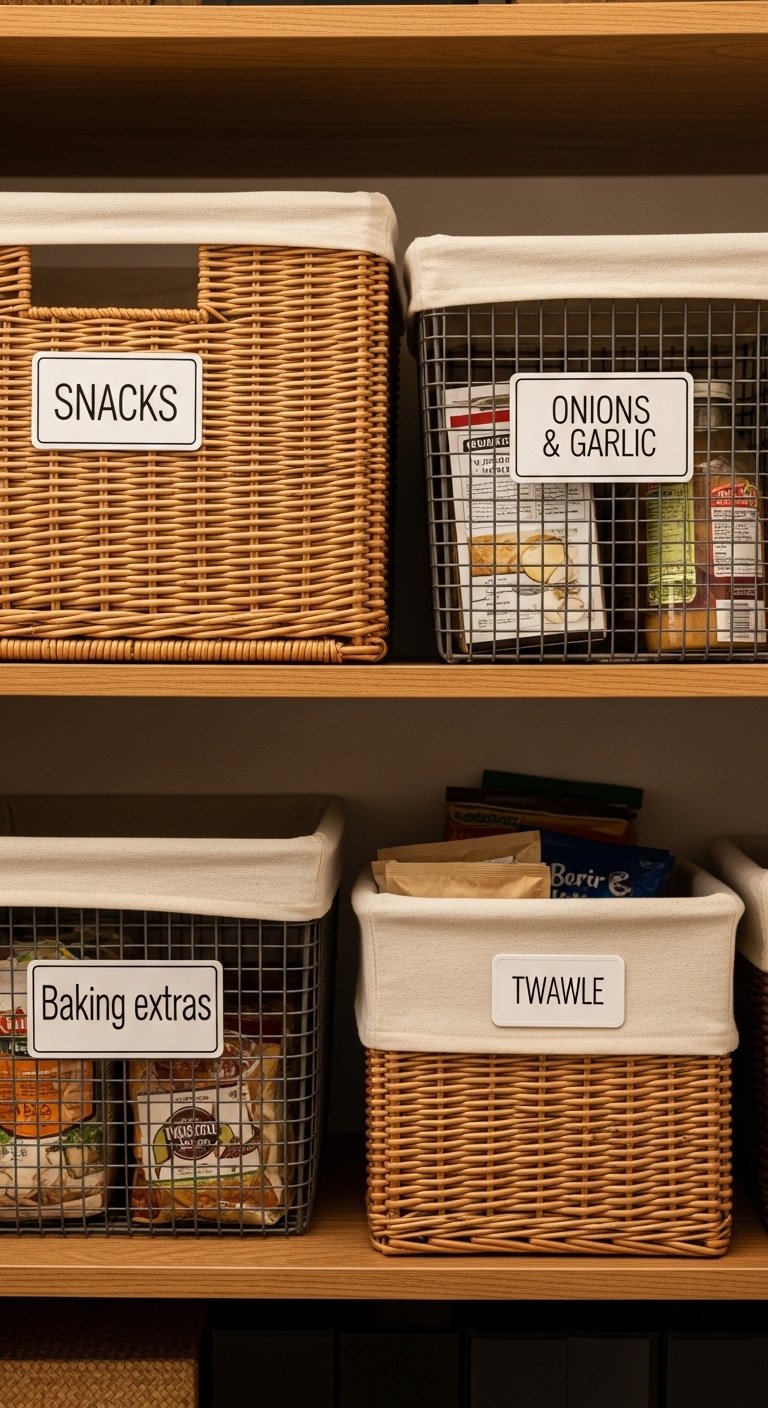
Not everything stores well in jars or on open shelves. Labelled baskets and bins wicker, wire, fabric, or plastic depending on the look you want group loose or irregularly shaped items into contained units that stack cleanly and keep the shelves looking ordered.
A basket for snacks the kids reach for, a bin for baking supplies that don’t justify canisters, a wire basket for onions and garlic that need airflow. The key is labelling everything clearly so the baskets stay organised over time rather than becoming holding areas for whatever doesn’t fit elsewhere.
13. A Spice Drawer
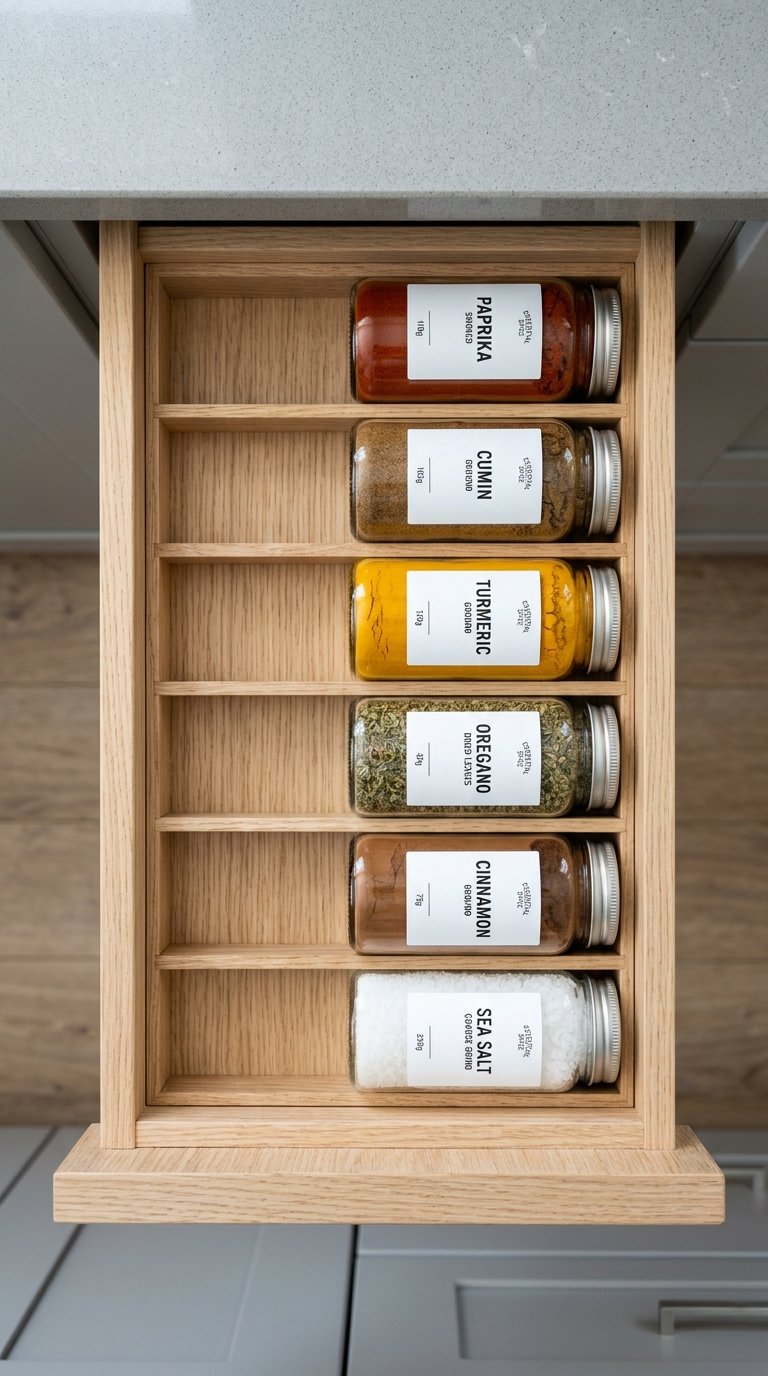
A dedicated spice drawer with spices stored flat, label-side up, in a single layer is the solution that professional kitchen designers use and home cooks discover too late. You can read every label at a glance, find what you need in seconds, and see immediately when something needs replacing.
This beats wall-mounted spice racks, overcrowded door racks, and tiered shelf arrangements for one reason: accessibility. You open the drawer, you see everything. It requires a single shallow drawer dedicated entirely to spices roughly 8–10cm deep which is a small investment for the daily return it provides.
14. Narrow Vertical Dividers for Trays and Boards
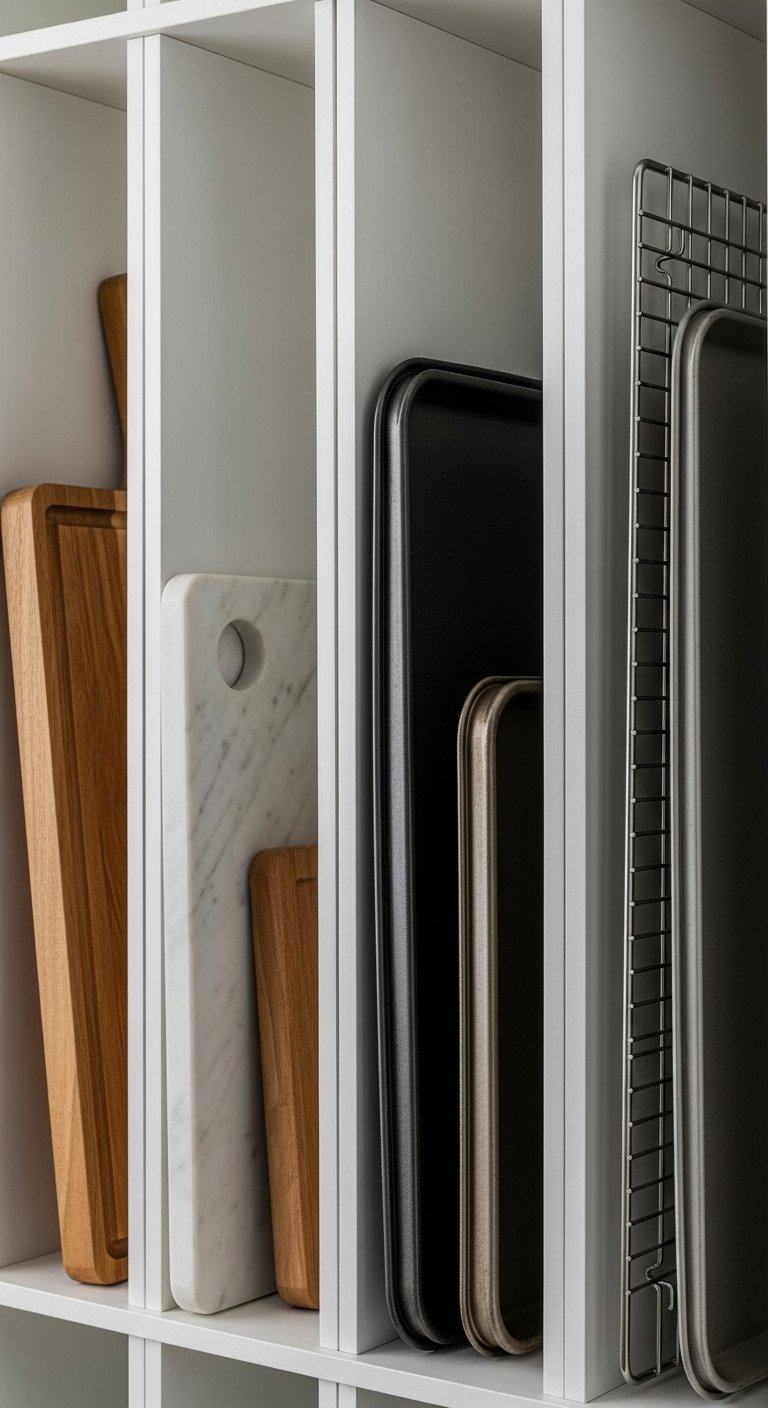
Baking trays, chopping boards, cooling racks, and flat lids have nowhere sensible to live in most kitchens. Narrow vertical dividers are essentially a section of the pantry shelving divided into vertical slots that store all of these items upright, accessible, and without creating an avalanche every time you need one.
These can be built from timber and installed in an afternoon, or purchased as purpose-made pan organiser inserts. Dedicate a section roughly 30cm wide and the height of one shelf opening. Every flat item in your kitchen suddenly has a proper home.
15. A Pegboard Back Wall
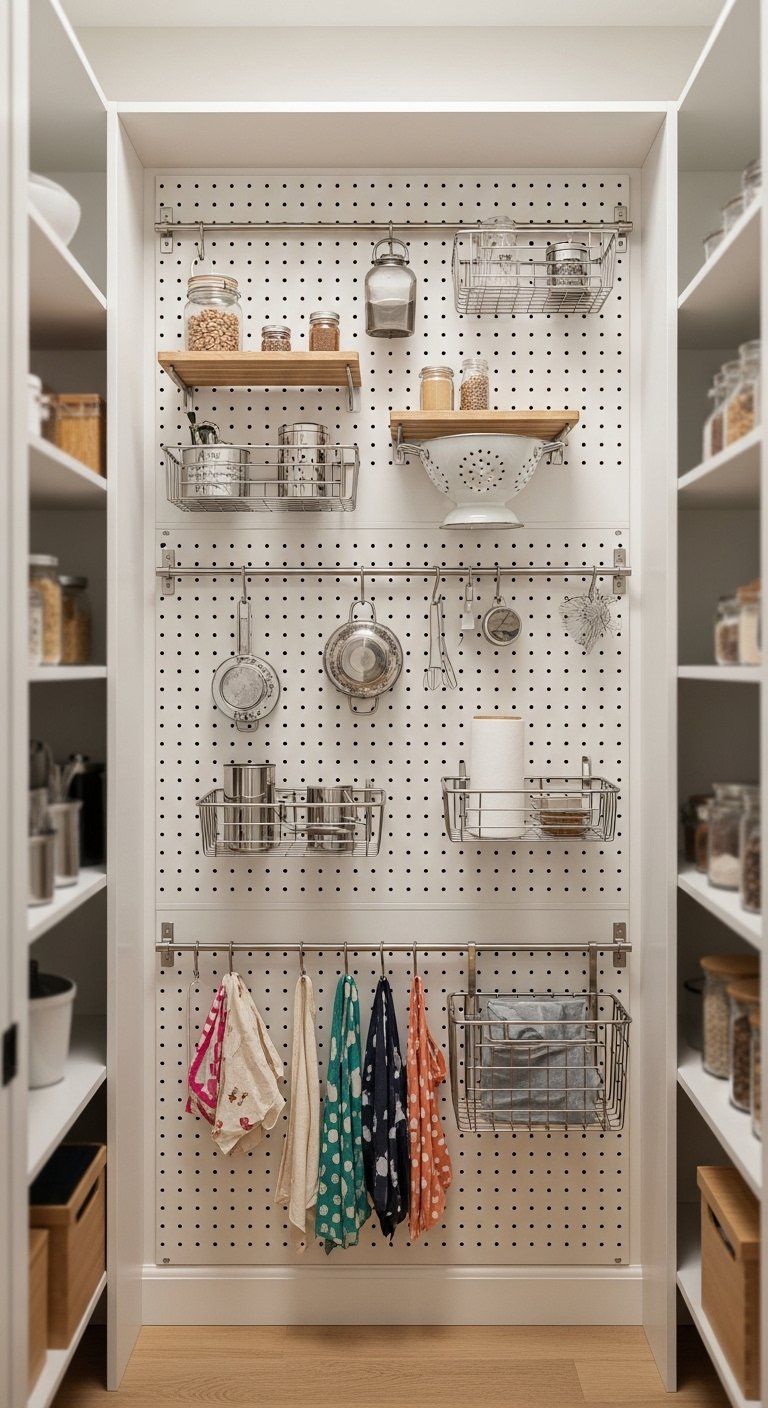
A pegboard panel mounted on the back wall of a pantry turns an otherwise static surface into a fully adjustable storage system. Hooks, small shelves, bins, and rails can be positioned and repositioned anywhere on the grid as your needs change.
Pegboard suits a more utilitarian or industrial pantry aesthetic but can be painted any colour to match the space. It works particularly well for hanging frequently used items measuring cups, small colanders, reusable bags that would otherwise take up shelf or drawer space. The visual openness of the pegboard also makes a small pantry feel less enclosed.
16. A Rolling Cart for Flexible Storage
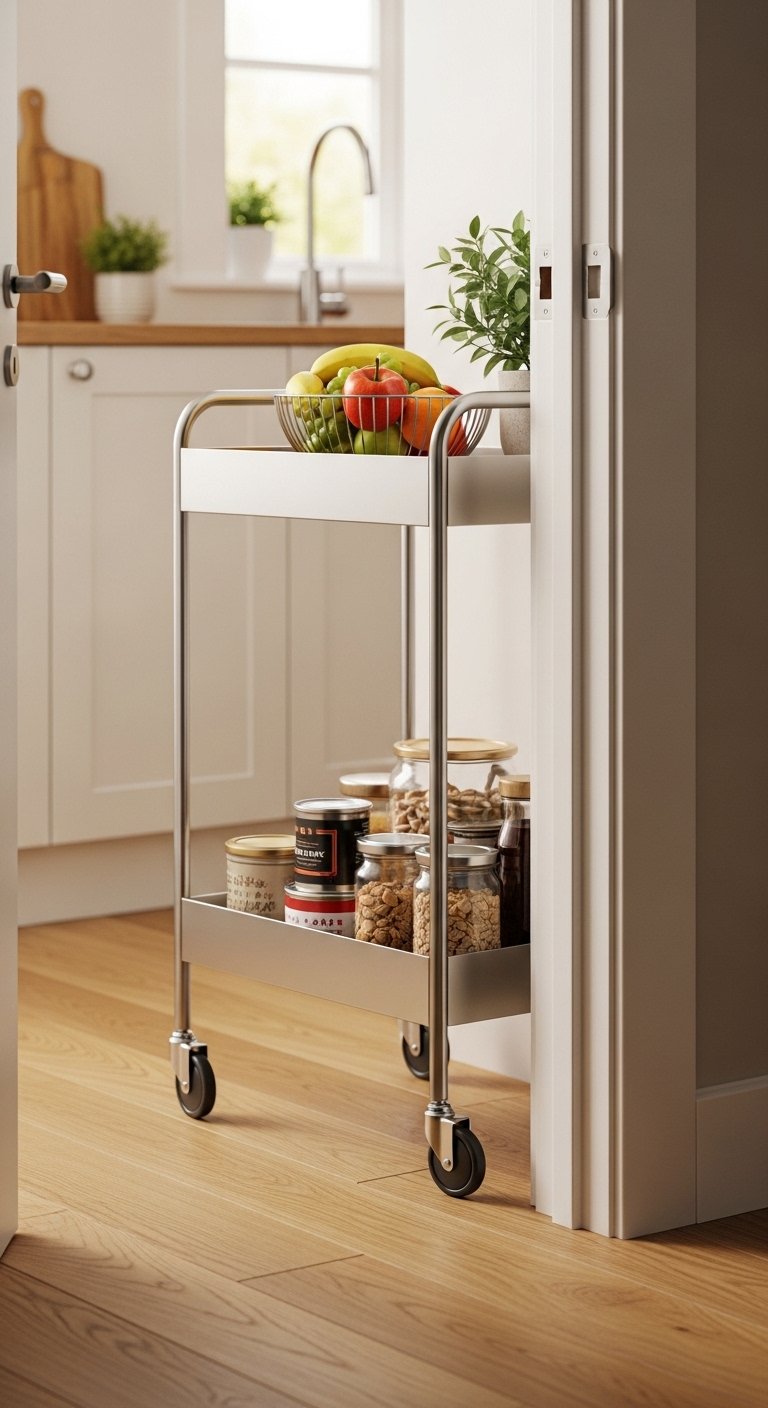
A narrow rolling cart parked inside or just outside the pantry adds flexible extra storage that can move with you. Keep it stocked with frequently used items and roll it to wherever you’re cooking. Park it back in the pantry when you’re done.
Stainless steel kitchen carts look clean and utilitarian. Wooden carts with a butcher block top add warmth. Either way, the flexibility of mobile storage is something fixed shelving can never offer. In a very small pantry where you can’t install everything you need, a rolling cart parked beside it effectively extends the storage without any installation.
17. Frosted Glass or Mesh Cabinet Doors
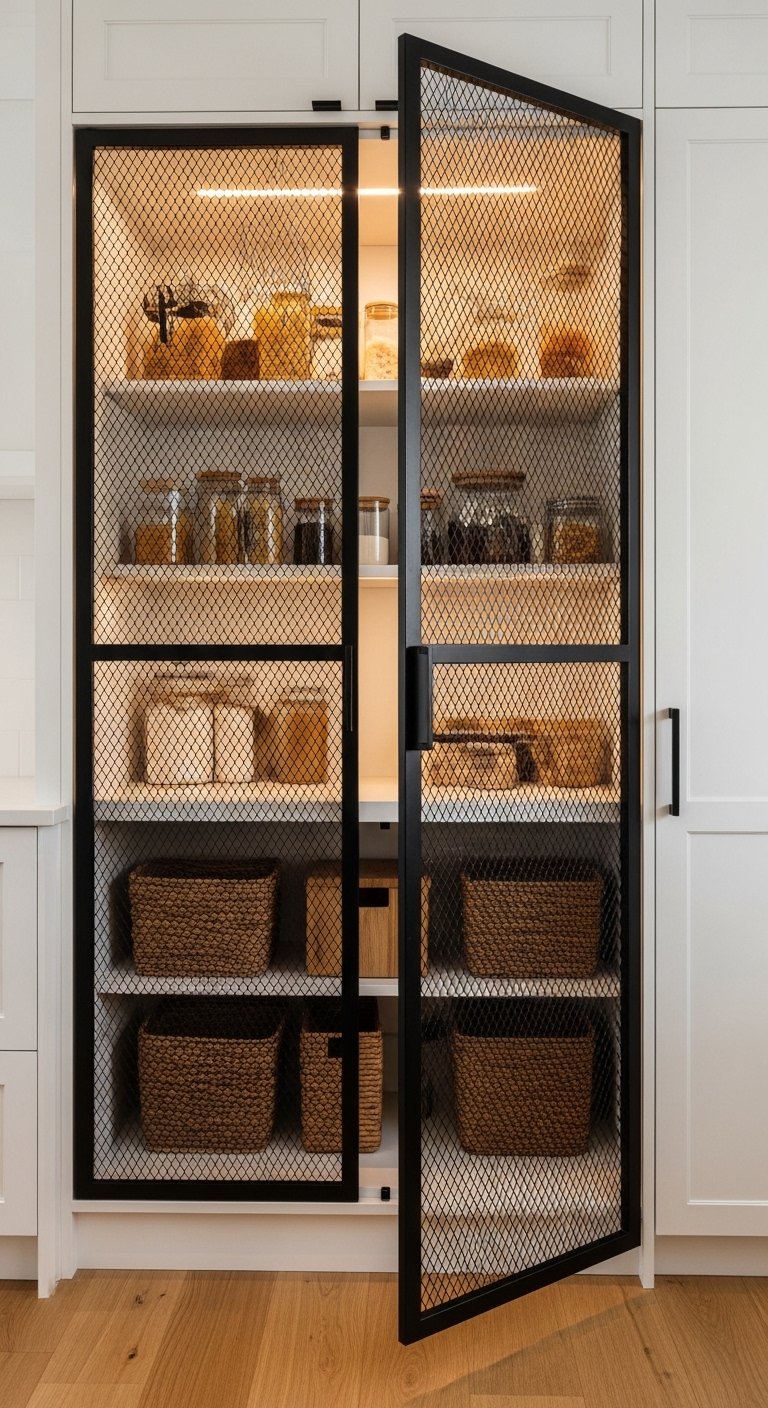
A pantry with frosted glass or mesh door panels instead of solid doors has two advantages: it visually opens up the kitchen by making the pantry feel less like a closed box, and it reminds you what’s inside without opening the door. That second point is more useful than it sounds seeing that the pasta shelf is getting low before you’ve started cooking.
Mesh doors suit a more farmhouse or utilitarian kitchen. Frosted glass suits contemporary and transitional kitchens. Either replaces a solid door without any structural change to the pantry itself, typically requiring only a door swap.
18. Dedicated Appliance Parking
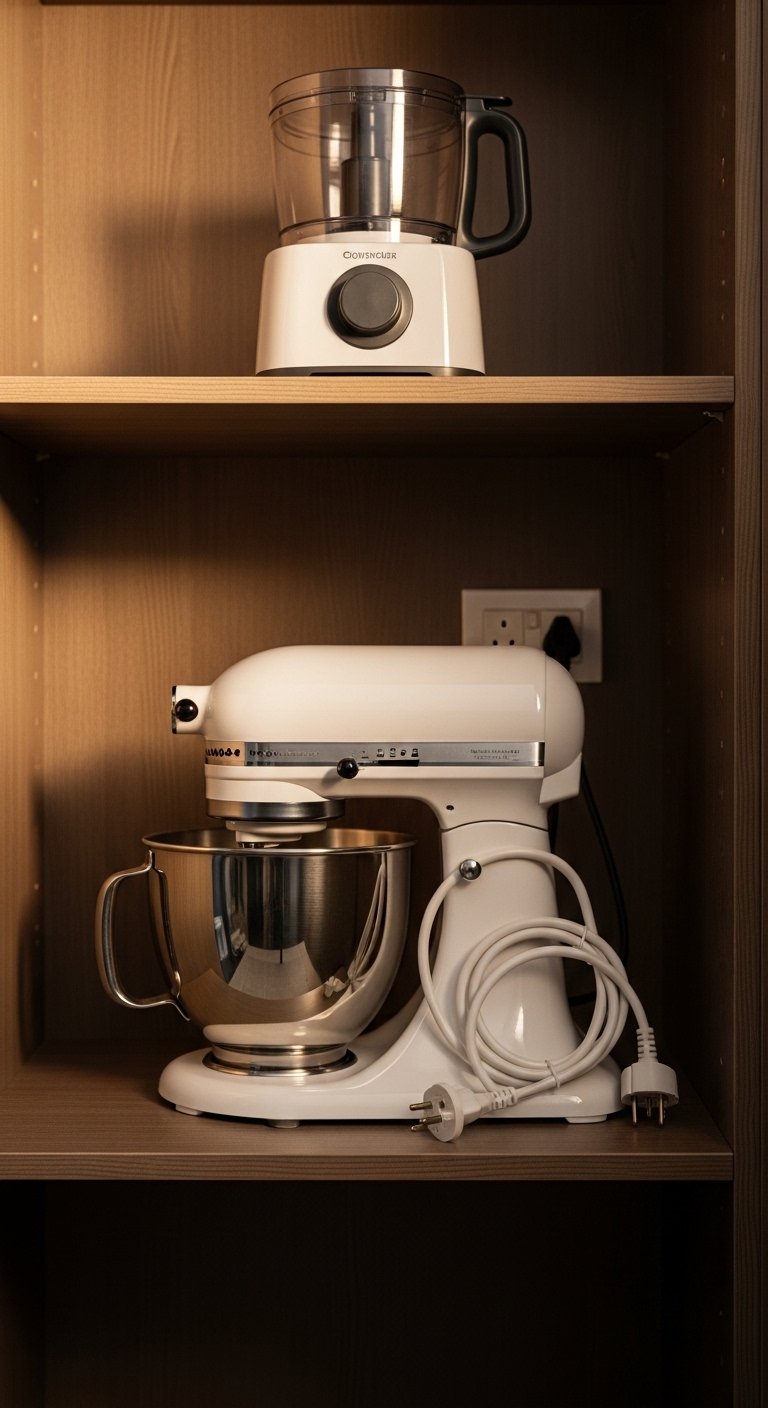
Small appliances are the enemy of kitchen counter space. A pantry shelf designed specifically to park appliances, the stand mixer, the food processor, the air fryer, the slow cooker with a power outlet installed in the pantry wall keeps the bench clear and the appliances accessible without carrying them from a distant cupboard.
This requires an electrician to install the outlet if one doesn’t exist. It’s a modest cost for a meaningful result. The shelf depth needed to suit the appliances 50–60cm is usually enough for most standalone appliances. Keep frequently used appliances at counter height and relegate the rarely-used ones to a higher shelf.
19. Open Shelving on a Feature Wall
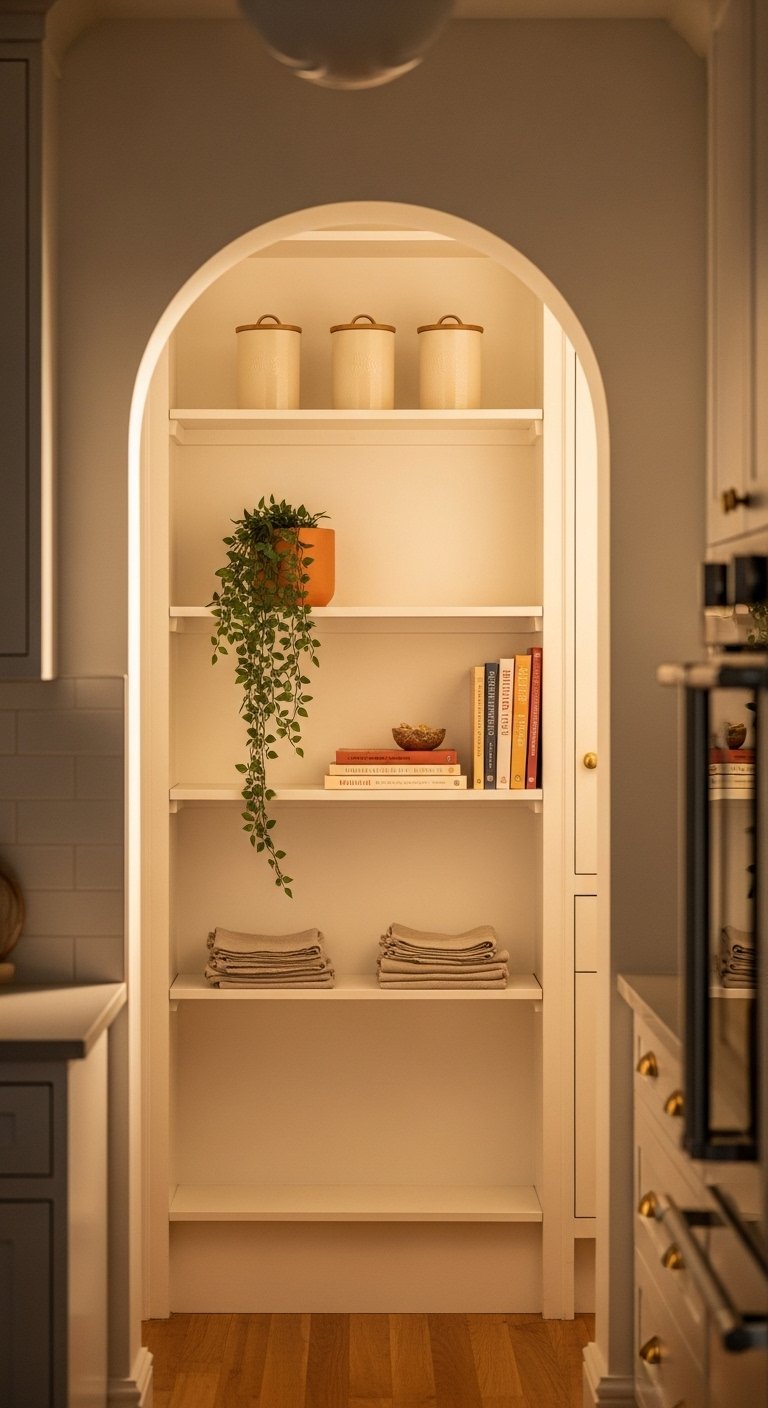
If one wall of the pantry is visible from the kitchen perhaps through a wide opening or archway, open shelving style intentionally turns that wall into a design feature rather than hidden storage. Consistent containers, plants, attractive packaging, and neatly arranged items make the pantry worth looking at.
This approach commits you to maintaining the appearance. The neatly stacked canisters and the well-organised baskets need to stay that way or the feature wall becomes visual clutter. It suits households where the pantry stays organised naturally. If your pantry is usually mid-chaos, close the door.
20. A Step Stool Built Into the Design
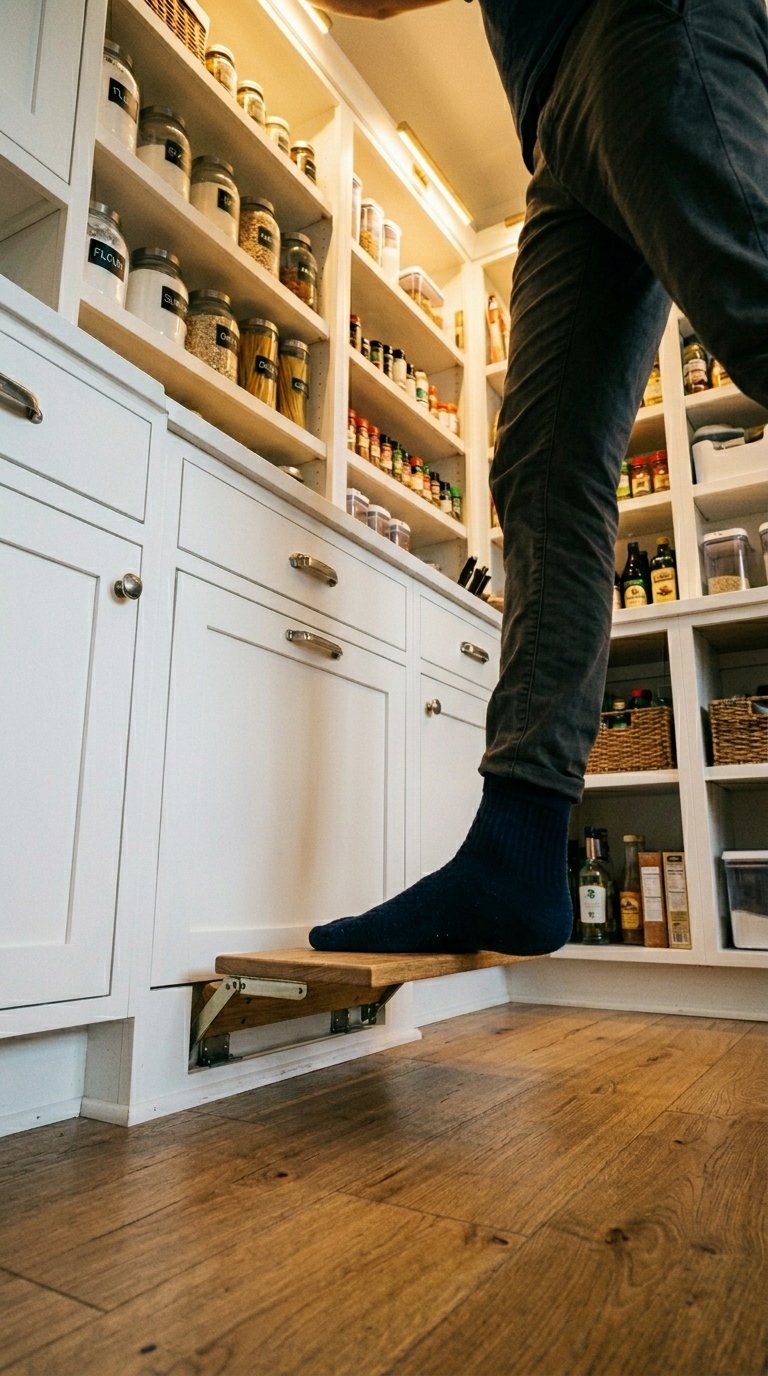
A small fold-away step stool built into the base of the pantry hinged so it folds flat against the toe-kick when not in use solves the upper shelf access problem without a separate stool cluttering the kitchen. When you need it, you flip it down. When you don’t, it disappears.
This is a detail that custom pantry builders include as standard and that most flat-pack pantry systems ignore entirely. It can be retrofitted into an existing pantry base by a competent joiner for a modest cost. For anyone using shelves above head height daily, it’s worth the effort.
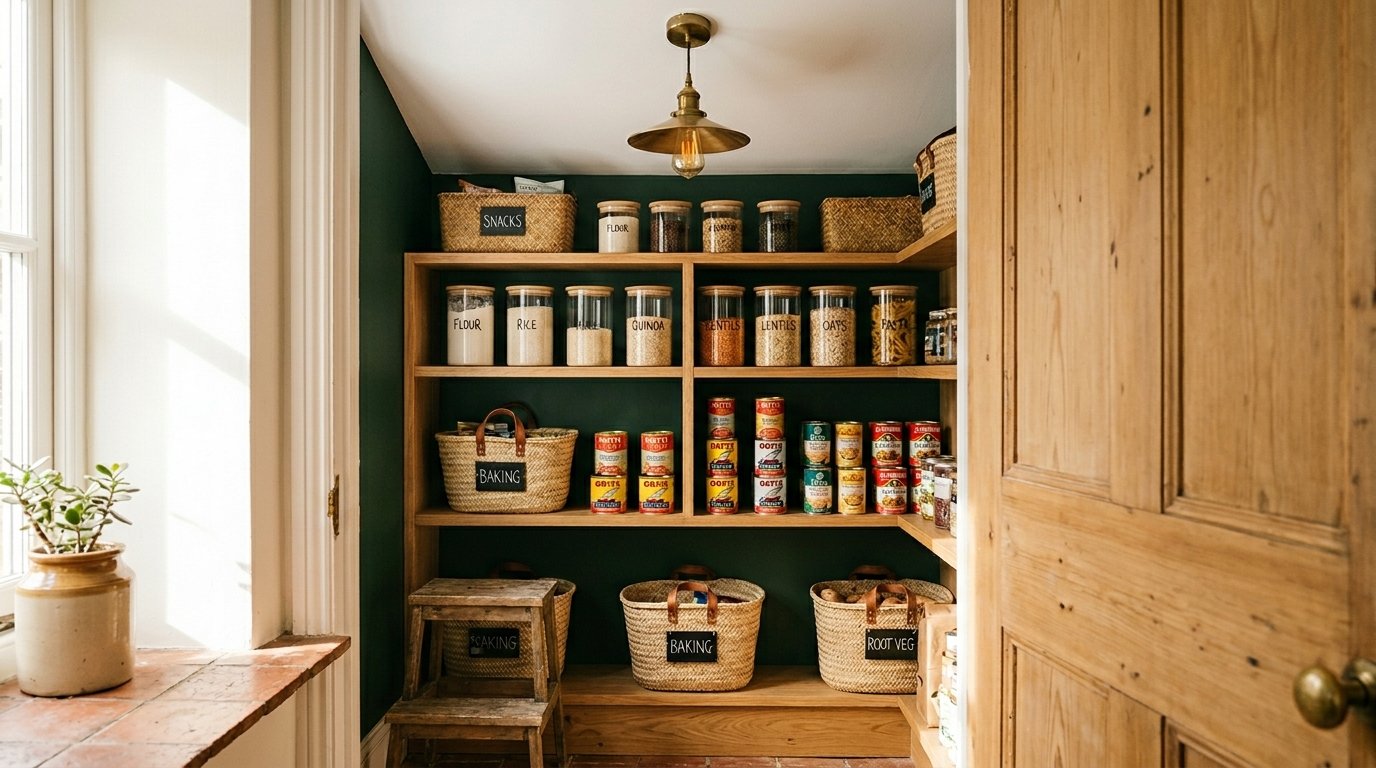
21. Contrasting Interior Paint
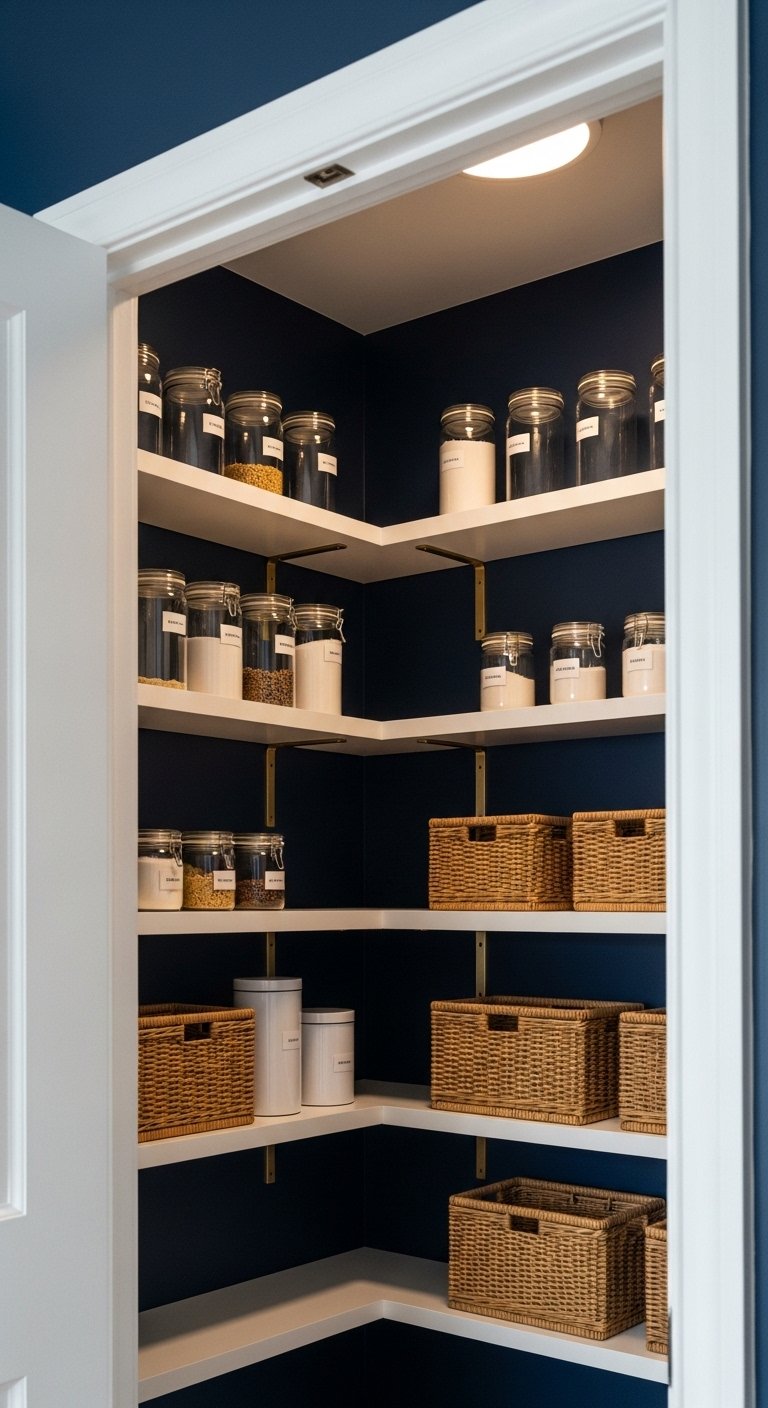
Most pantry interiors are white or off-white by default. Painting the interior walls in a contrasting colour navy, deep green, warm terracotta, or charcoal turns the pantry into a deliberate design moment rather than just a storage cupboard. Every time the door opens, there’s something worth seeing.
This costs almost nothing, a small pantry interior requires barely half a litre of paint and takes an afternoon. The colour also makes the shelving and the stored items stand out more clearly, which has an indirect organisational benefit. You see the contents more distinctly against a dark background than you do against a matching white wall.
22. A Memo Board and Meal Planning Station
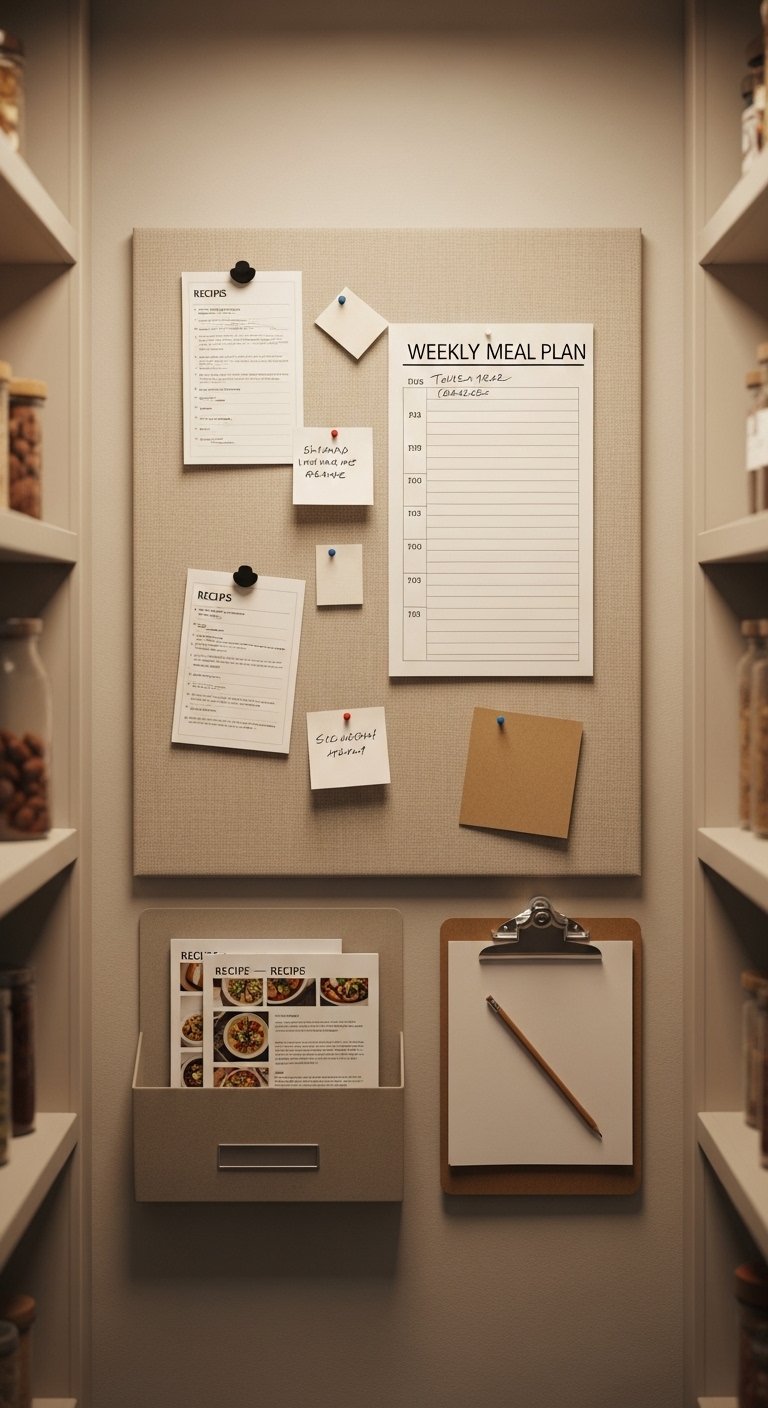
A pantry that doubles as a meal planning station with a mounted memo board, a small file holder for recipes, and a dedicated notepad or clipboard centralises the household food planning in the one place where you already assess what you have and what you need.
This works especially well in households that plan meals weekly. Having the planning tools immediately available in the pantry means the weekly shop and the meal plan happen in the same physical place, informed by what’s actually on the shelves rather than what you think is on the shelves from memory.
23. A Consistent Colour System for Organisation
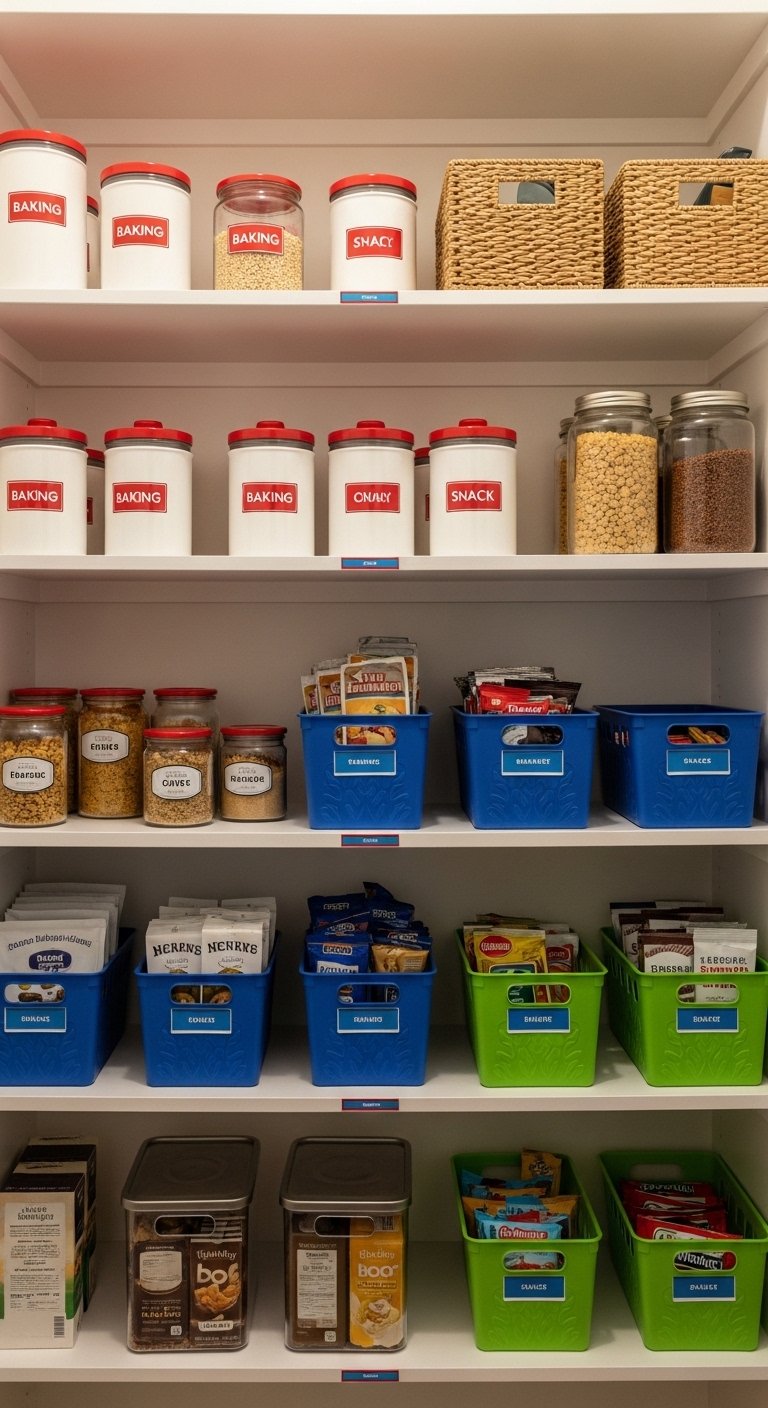
The most organised pantries use colour coding across every category. Red lids for baking. Blue labels for breakfast items. Green baskets for snacks. The colour system means anyone in the household can find and return things correctly without needing to read every label.
This sounds elaborate but it takes one afternoon to implement and then runs itself. The colour coding doesn’t need to be rigid or complex, just consistent enough that the organisation is self-explaining. Children can use it independently. Partners who don’t usually cook can find things without asking. That alone is worth the afternoon it takes to set up.
Final Thoughts
A small pantry is not a limitation. It’s a design problem with a very solvable set of solutions. The ones that work best share a common logic: they make everything visible, they put the most-used items closest, and they use every dimension of the available space rather than just the obvious surfaces.
Start with the shelving and the lighting. Get those right and everything else becomes easier the organisation, the labelling, the zones. A pantry that works properly is one of the quieter pleasures of a well-run kitchen. You stop wasting food, you stop buying things you already have, and you stop spending five minutes looking for the cumin before every curry.
Sort the pantry. Thank yourself later.