23 Easy Summer Kitchen Shelf Decor Ideas That Work
Your kitchen shelves are doing one of two things right now working hard for you or quietly embarrassing you every time guests walk in. Summer is the best season to fix that, and you don’t need a renovation budget or a Pinterest-perfect kitchen to pull it off. These 23 summer kitchen shelf decor ideas work in real kitchens with real limitations rental restrictions, low budgets, awkward shelf depths, and the kind of lighting that makes everything look beige. Let’s fix your shelves.
1. Lead With a Wooden Bread Board as a Display Anchor
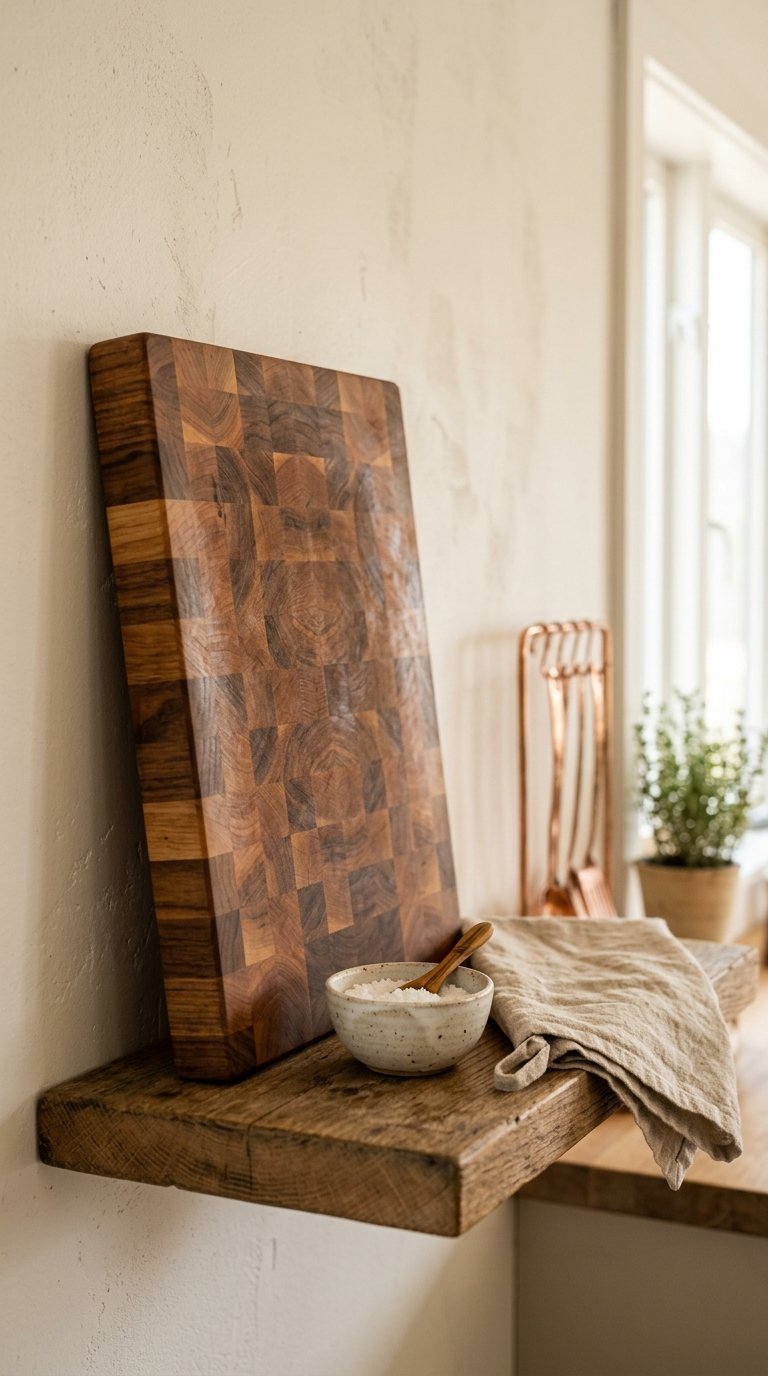
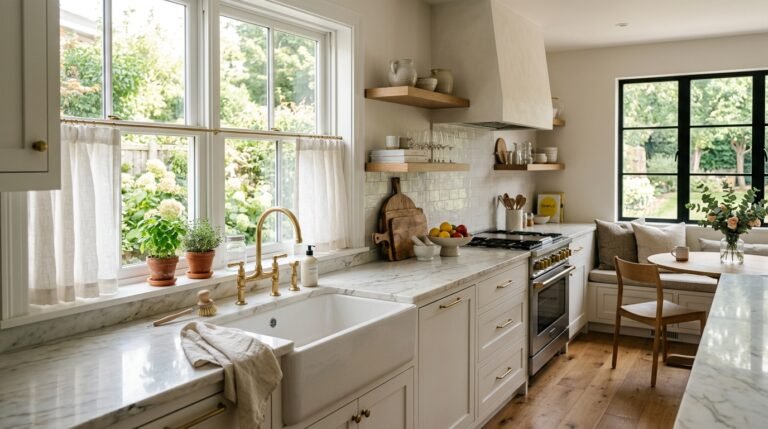
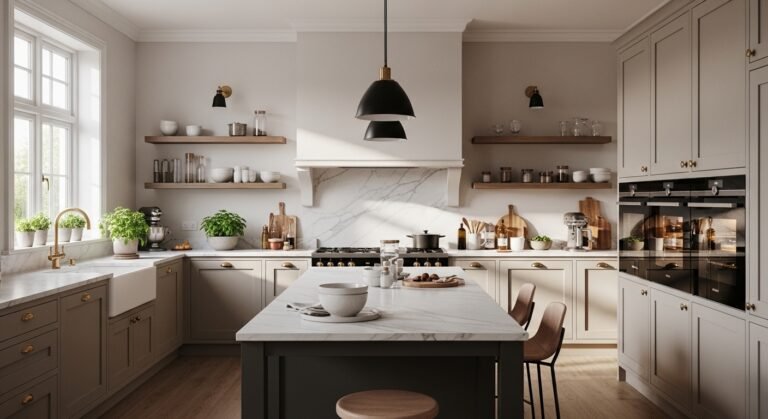
A large end-grain or edge-grain cutting board leaned against the back wall of a kitchen shelf does something no decorative object can replicate — it looks both functional and intentional at the same time. Williams Sonoma and Boos boards get all the press, but end-grain boards from Amazon’s private label brands run $25 to $45 and photograph identically at normal viewing distance.
Lean it at a slight angle rather than flat against the wall. The lean creates depth and stops the shelf from looking like a product display. Place it at one end of the shelf as an anchor, then build your arrangement outward from it. Every well-styled kitchen shelf you’ve seen on food blogs uses this exact technique — the board is never the star, but the shelf never works without it.
2. Group Olive Oil and Vinegar Bottles as Functional Decor
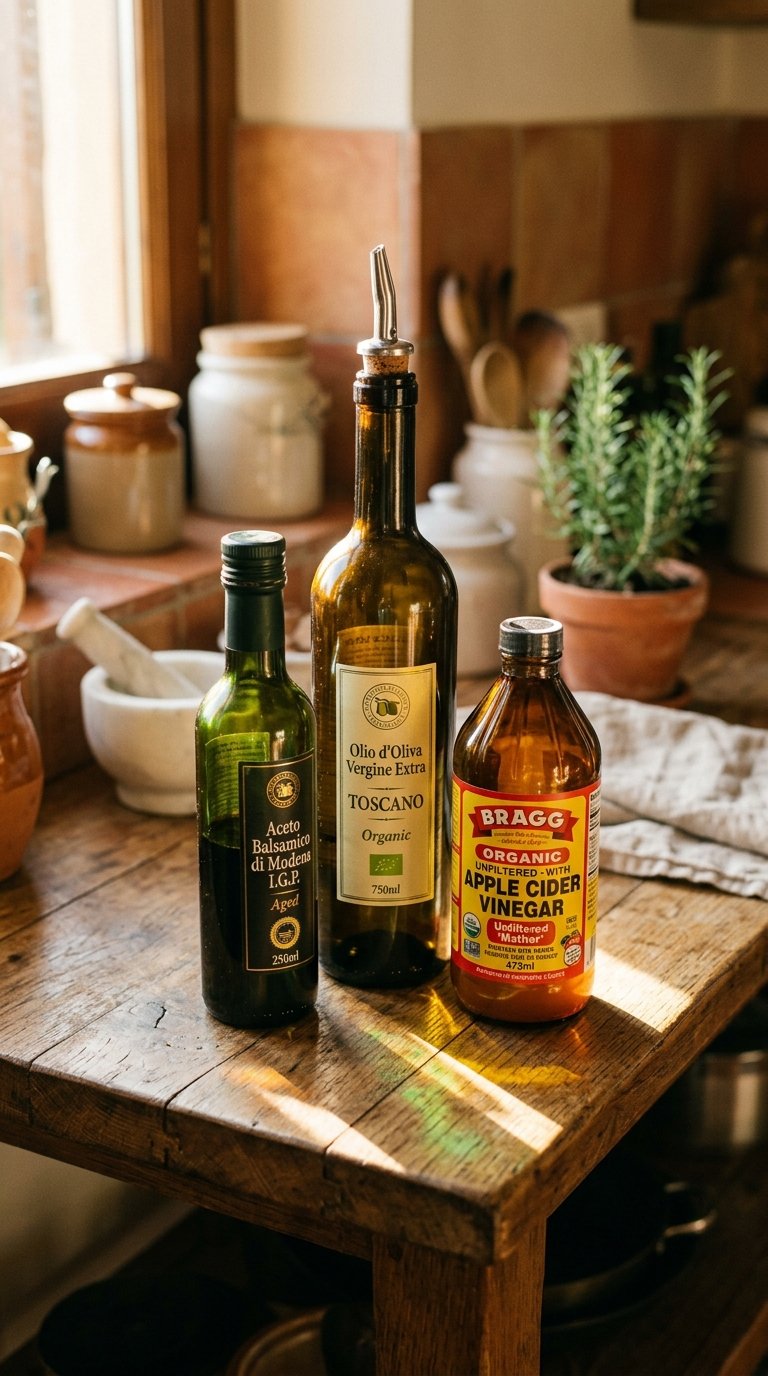
Your cooking oils and vinegars are already on your shelf. The question is whether they look like a gas station rack or a considered collection. Decanting your olive oil into a dark glass bottle with a pour spout and grouping it with a bottle of white wine vinegar and apple cider vinegar creates an instant “artisan pantry” effect that costs nothing if you already own the products.
Dark glass bottles (amber or dark green) protect oil from light degradation while looking dramatically better than plastic squeeze bottles. OXO and Prepara make pour-spout glass decanters for $10 to $18 each. Arrange bottles in a triangle formation with the tallest at the back — this is the same height-hierarchy principle florists use in bouquet arrangement, and it works equally well on a kitchen shelf.
3. Add a Small Herb Pot Row for Living Color
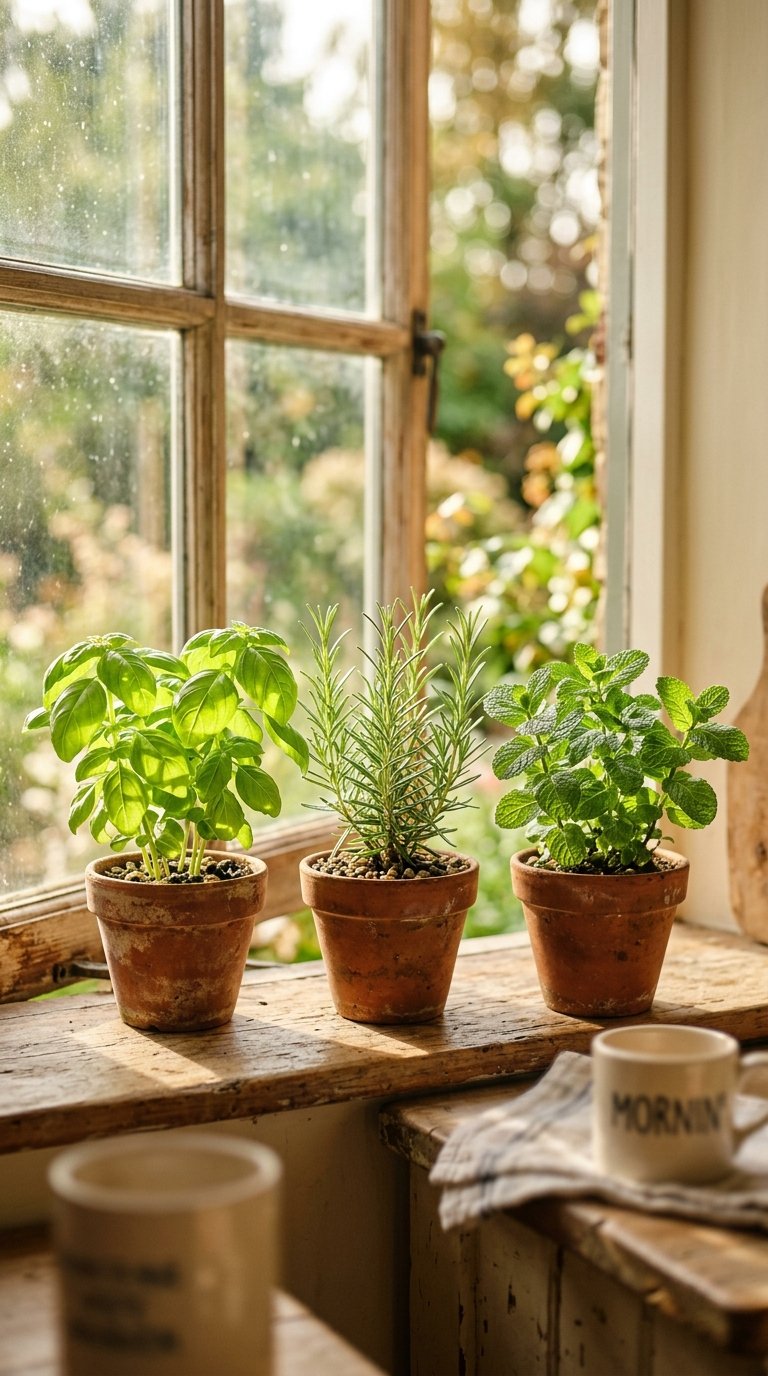
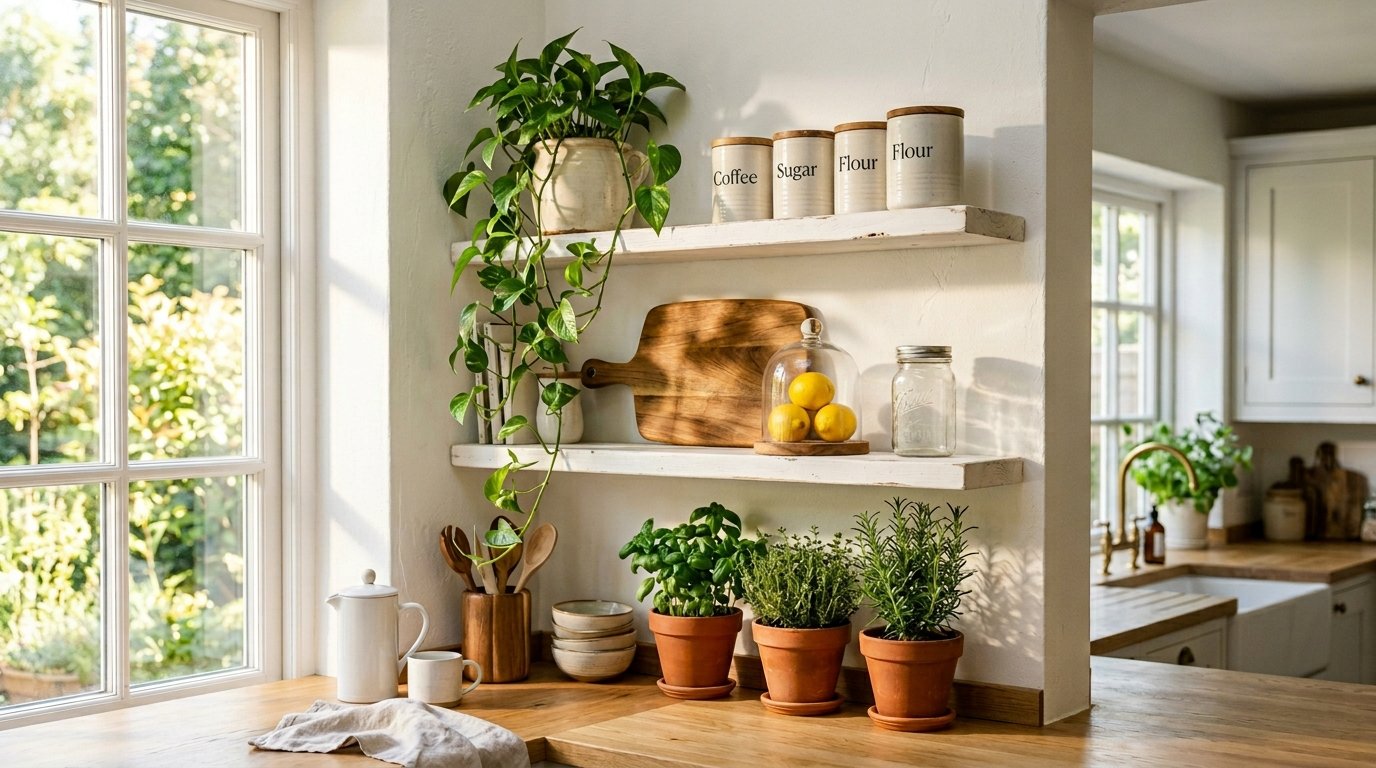
Three small terracotta pots lined up on a kitchen shelf one basil, one rosemary, one mint add the kind of organic color no ceramic or print can replicate. Living green plants against a white or wood shelf background read immediately as summer. A three-inch terracotta pot costs under $2 at any garden center, and the herbs themselves run $3 to $5 per plant at most grocery stores.
The practical advantage is that you actually use them. IMO, a herb row that serves dinner is more satisfying than a shelf that only serves Instagram. Keep them near the window shelf closest to natural light, water them every two days, and trim them regularly — a trimmed herb plant looks bushier and more lush than one left to grow wild. Replace any plant that yellows immediately; one dead herb tanks the whole shelf.
4. Introduce a Ceramic Utensil Crock in a Summer Color
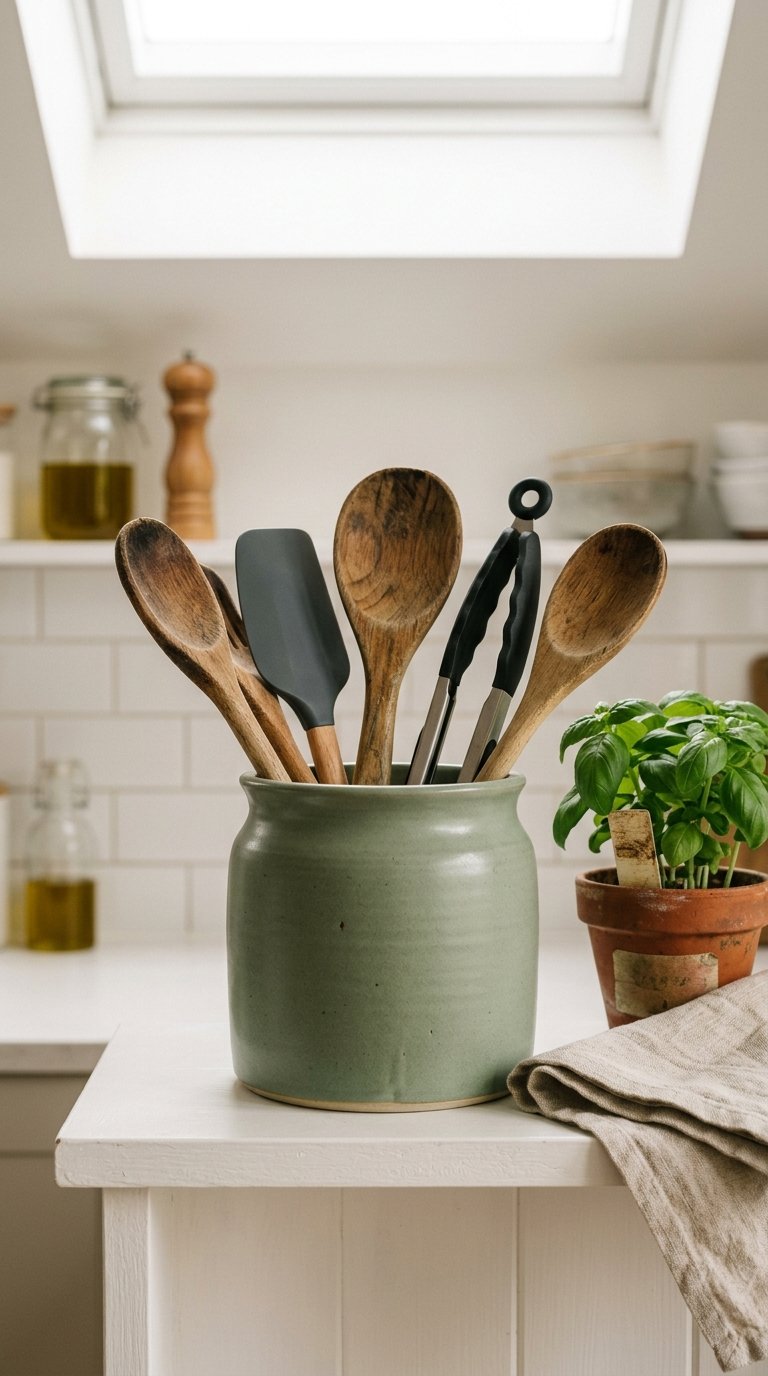
A wide ceramic utensil crock holding your wooden spoons, spatulas, and tongs is one of the most genuinely useful pieces of kitchen shelf decor because it solves a real storage problem while adding color. Summer shades that work particularly well: sage green, matte terracotta, cobalt blue, or creamy white. Target’s Threshold ceramic crocks run $12 to $18 and come in seasonal colors that rotate with the summer collection.
The size rule matters here: your crock needs to be wide enough that utensils don’t topple, and tall enough that handles don’t disappear inside. A 4-inch diameter, 6-inch tall crock holds twelve to fifteen utensils comfortably without looking overstuffed. Place it toward the front edge of the shelf so the utensil handles are visible and accessible — a crock pushed to the back wall loses both its function and its visual presence.
5. Style a Cookbook as Art, Not Storage
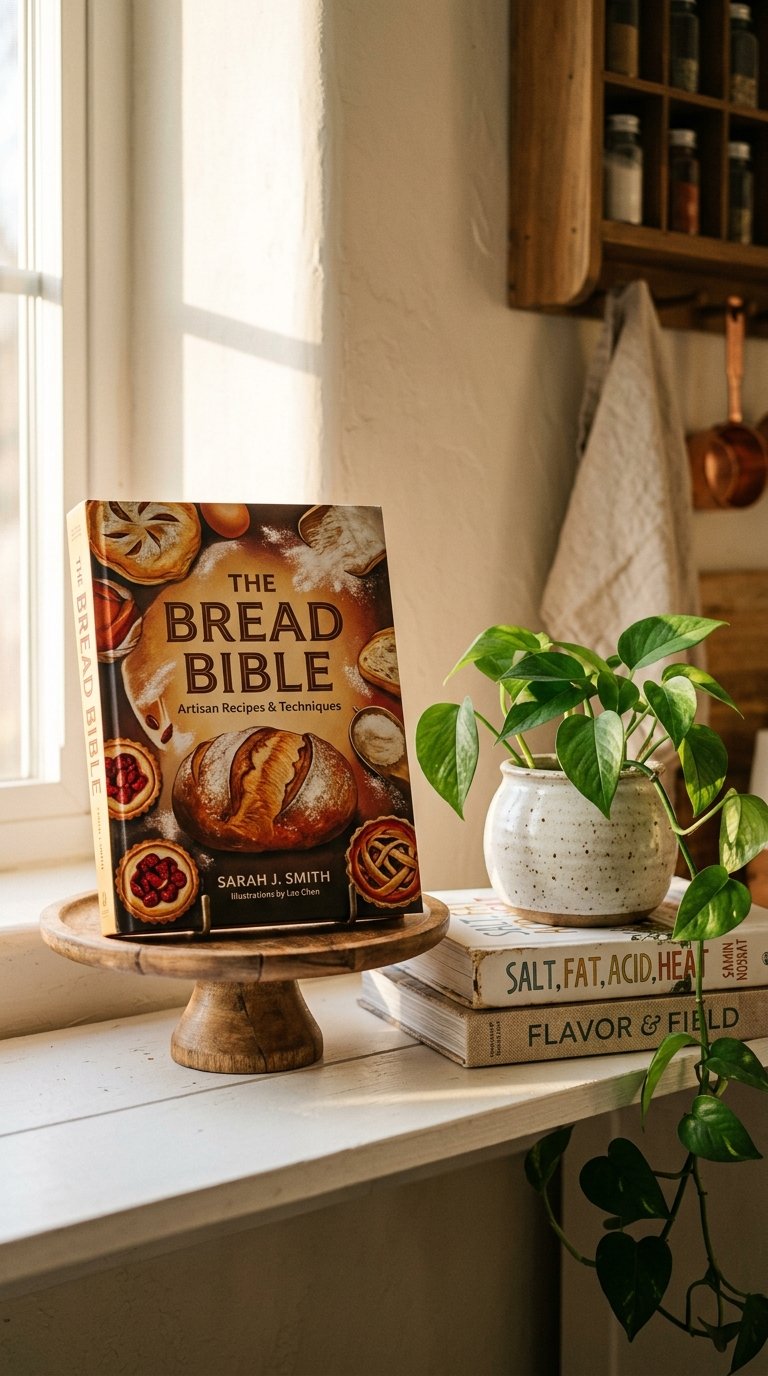
Most people shelve cookbooks spine-out and never look at them. Flip one or two face-out so the cover shows a well-designed cookbook cover functions as framed art on a kitchen shelf. Ottolenghi, Salt Fat Acid Heat, and any Magnolia Table volume have covers designed specifically to be displayed. You already own them; now show them.
Prop the face-out cookbook on a small plate stand ($5 to $8 at HomeGoods) so it leans forward slightly rather than lying flat. Stack two or three additional cookbooks horizontally beside it as a base for a small plant or ceramic object. This horizontal-plus-vertical combination breaks the monotony of a row of vertical spines and creates the layered depth that makes a shelf look professionally styled. Ever noticed how bookstore display tables use this exact stacking method? There’s a reason.
6. Bring in a Small Woven Tray to Corral Loose Items
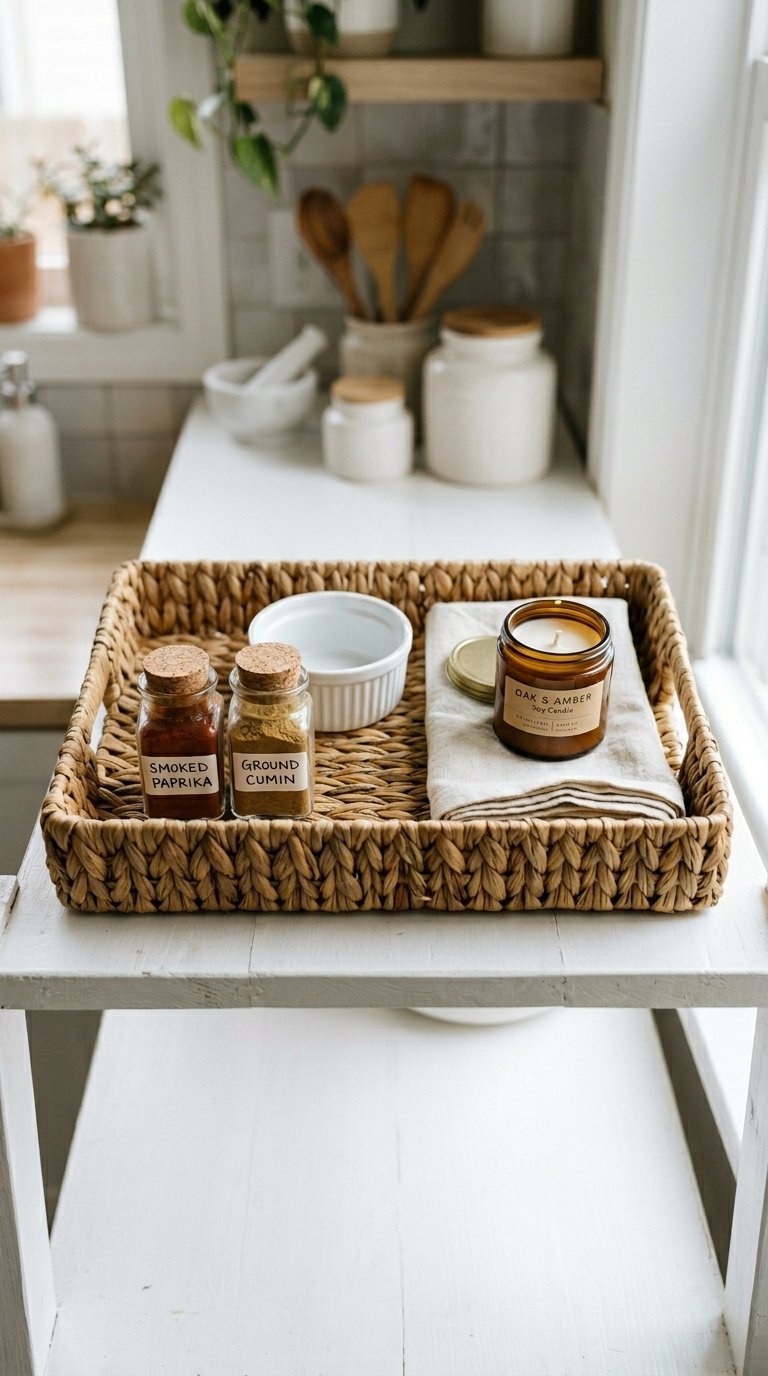
A loose collection of spice jars, ramekins, and random kitchen objects on a shelf reads as clutter regardless of how nice each individual item is. A small woven seagrass or rattan tray corrals those items into a defined zone and transforms “stuff sitting on a shelf” into a styled grouping. IKEA’s LUSTIGKURRE baskets and similar woven trays from HomeGoods run $8 to $20 and fit standard 12-inch shelf depths.
Use one tray per shelf section not every shelf needs one, but the shelf that holds your most chaotic collection of small items will benefit immediately. Keep the tray’s interior contents to three to five items maximum. More than five and the tray just becomes a contained version of the same clutter it was meant to solve.
7. Display a Single Piece of Pottery as a Focal Point
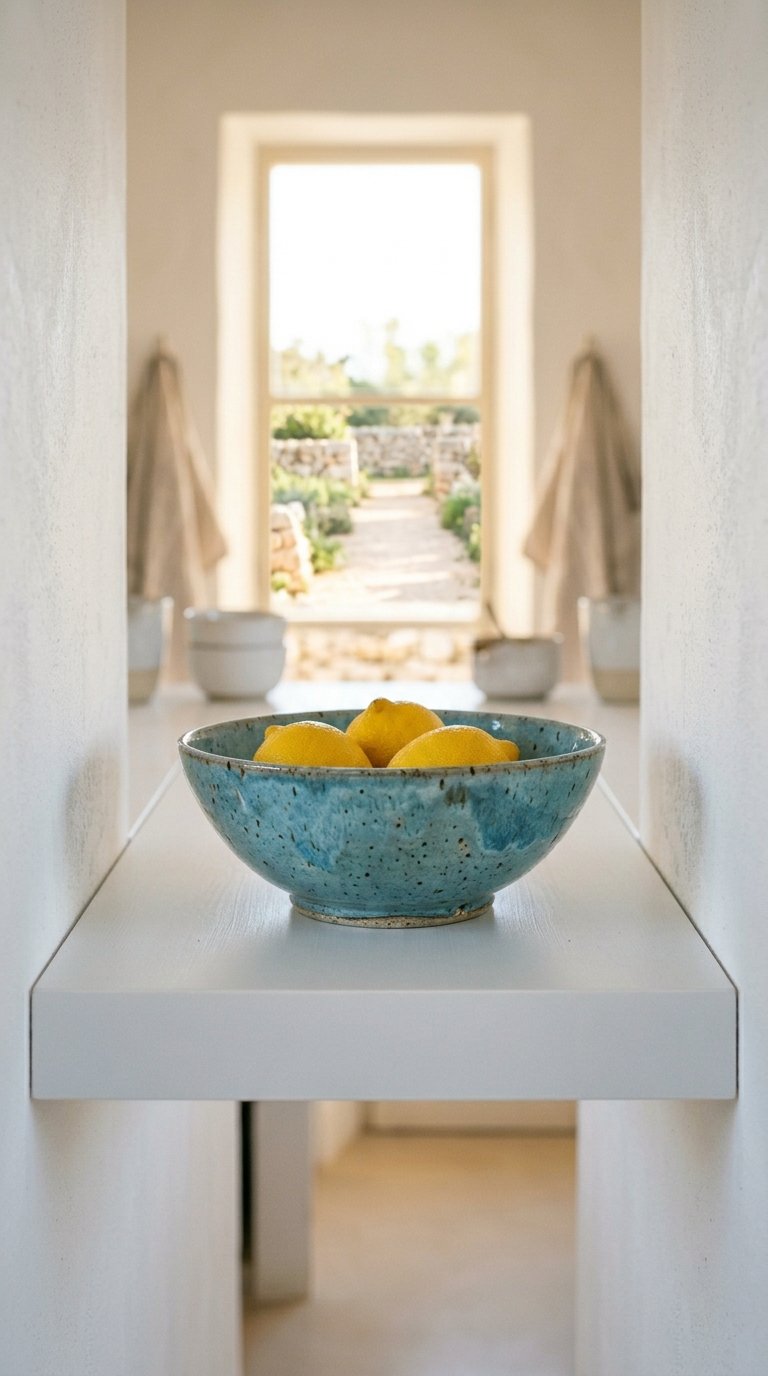
One handmade ceramic piece a wide bowl, a vase, a pitcher does more visual work on a kitchen shelf than a collection of ten mass-produced objects. Handmade pottery has surface variation, subtle color shifts, and texture that catch light differently at different times of day. Etsy potters offer functional pieces in summer-appropriate glazes (sea glass blue, speckled cream, matte sage) for $28 to $65.
Place the pottery piece at the end or center of your most visible shelf not tucked behind other objects. Give it at least four inches of clear space on either side. Negative space around a single strong object is what separates a “styled shelf” from a “full shelf.” Interior food stylists use this isolation technique in every editorial kitchen shoot because the eye needs breathing room to appreciate what it’s looking at.
8. Hang a Small Magnetic Spice Rack on the Shelf Side Panel
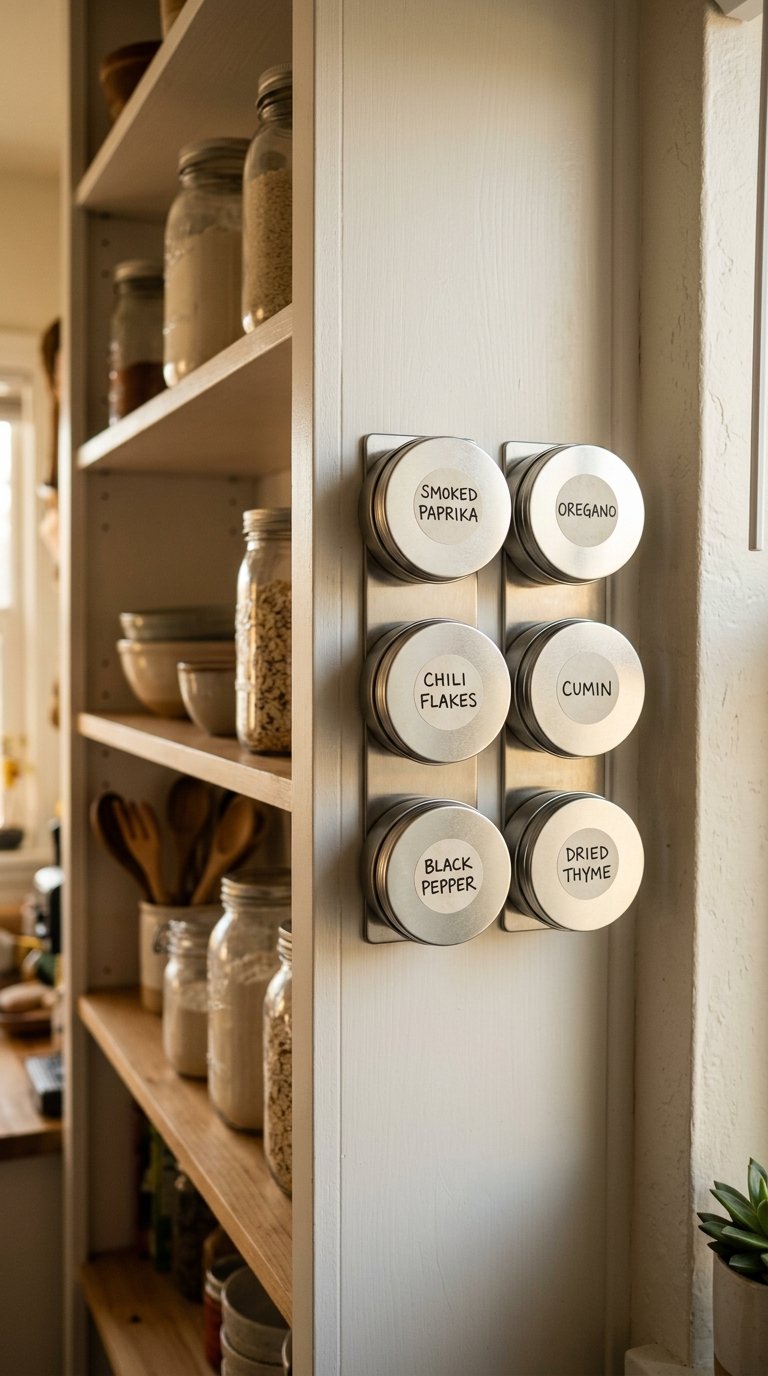
If your shelves have visible side panels, a small magnetic spice rack mounted on the panel takes spice jars completely off the shelf surface and frees that real estate for actual decor. Magnetic spice racks with round tins run $18 to $35 on Amazon and mount with screws or heavy-duty adhesive strips. This is a particularly smart move in small kitchens where every inch of horizontal shelf space matters.
The visual benefit is that magnetic spice tins on a side panel look architectural rather than functional — like a design decision rather than a storage solution. Label the tin tops rather than the sides so you can read them from above when cooking. Command adhesive strips rated for 10 pounds hold a 6-tin magnetic strip on a painted wood surface without lease-violating screws.
9. Use a Glass Cloche to Highlight One Object
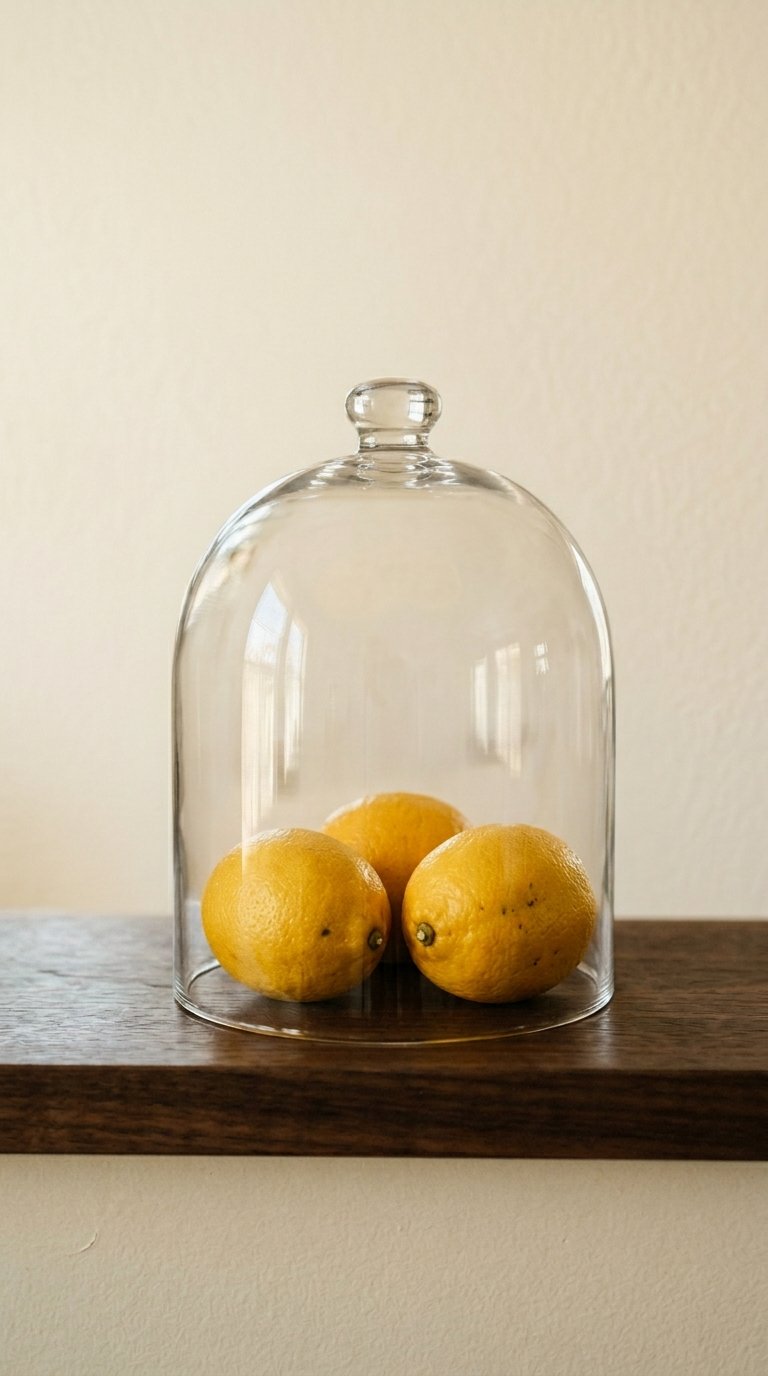
A glass cloche the dome-shaped cover used in restaurant displays turns any single object into a display piece. Place one over a lemon, a small succulent, a decorative salt cellar, or even a seasonal fruit arrangement and it immediately looks intentional and editorial. Glass cloches from Amazon run $12 to $25 and come in sizes from 4-inch to 10-inch diameter.
Summer is the right season for a cloche because the objects inside naturally skew citrus and botanical. A cloche holding three lemons on a kitchen shelf looks like a still-life painting without requiring any arrangement skill. Rotate what’s inside every week or two to keep the shelf feeling seasonal and alive. This is the one kitchen shelf decor move that genuinely makes guests stop and look twice. 🙂
10. Add a Linen or Cotton Tea Towel as a Color Layer
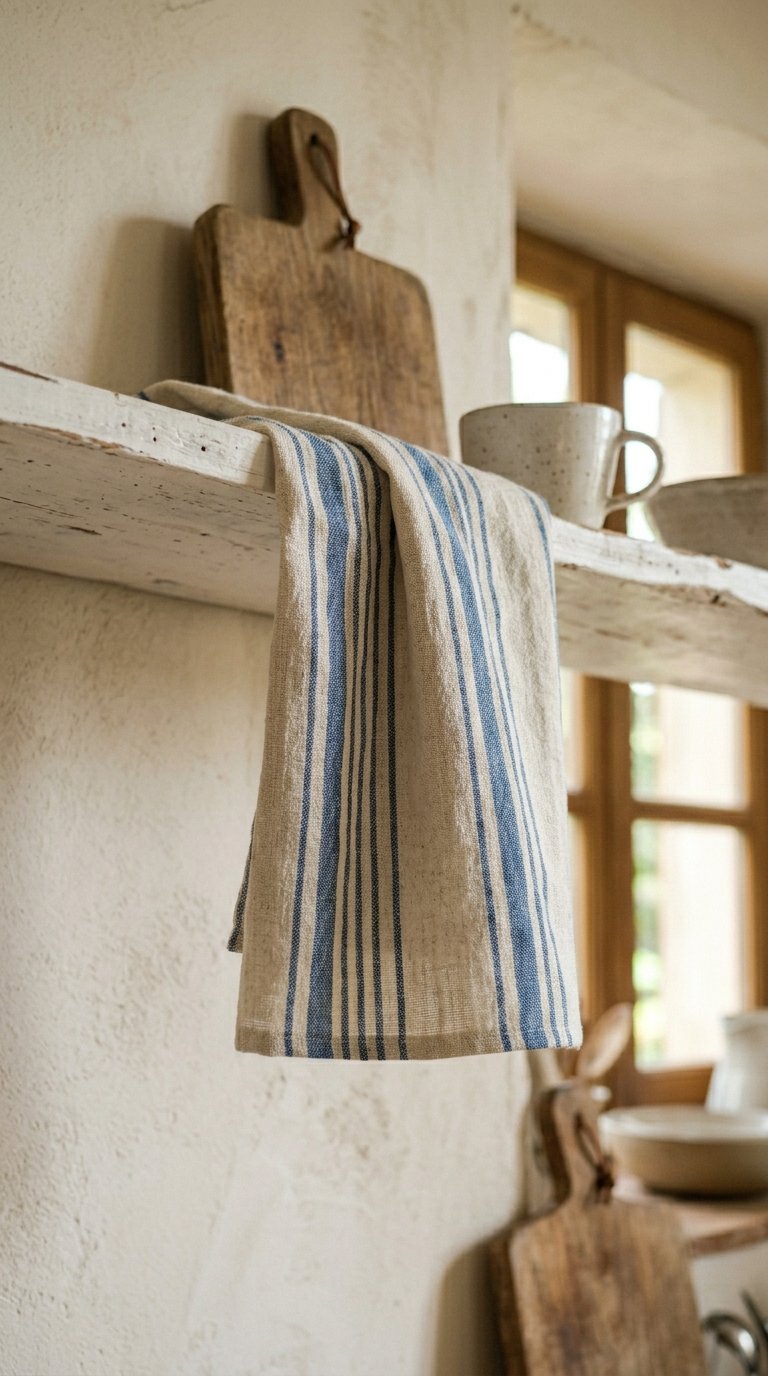
A folded or loosely draped linen tea towel hung over the edge of a shelf adds softness to what is otherwise an entirely hard-surface environment. Kitchens are full of ceramic, glass, wood, and metal — a fabric element breaks the material monotony and adds a tactile quality the eye responds to positively. Linen tea towels in summer stripe patterns from Fog Linen, Danica, or IKEA run $8 to $18 each.
Fold the tea towel in thirds lengthwise and drape it over the shelf edge with roughly six inches hanging down the front. Don’t hang it flat and pressed — a slight, natural fold reads as relaxed and intentional. Stripes work best in summer: a classic French linen stripe in blue and white or red and white signals the season without requiring any other seasonal decor changes.
11. Create a Coffee and Tea Station on One Dedicated Shelf
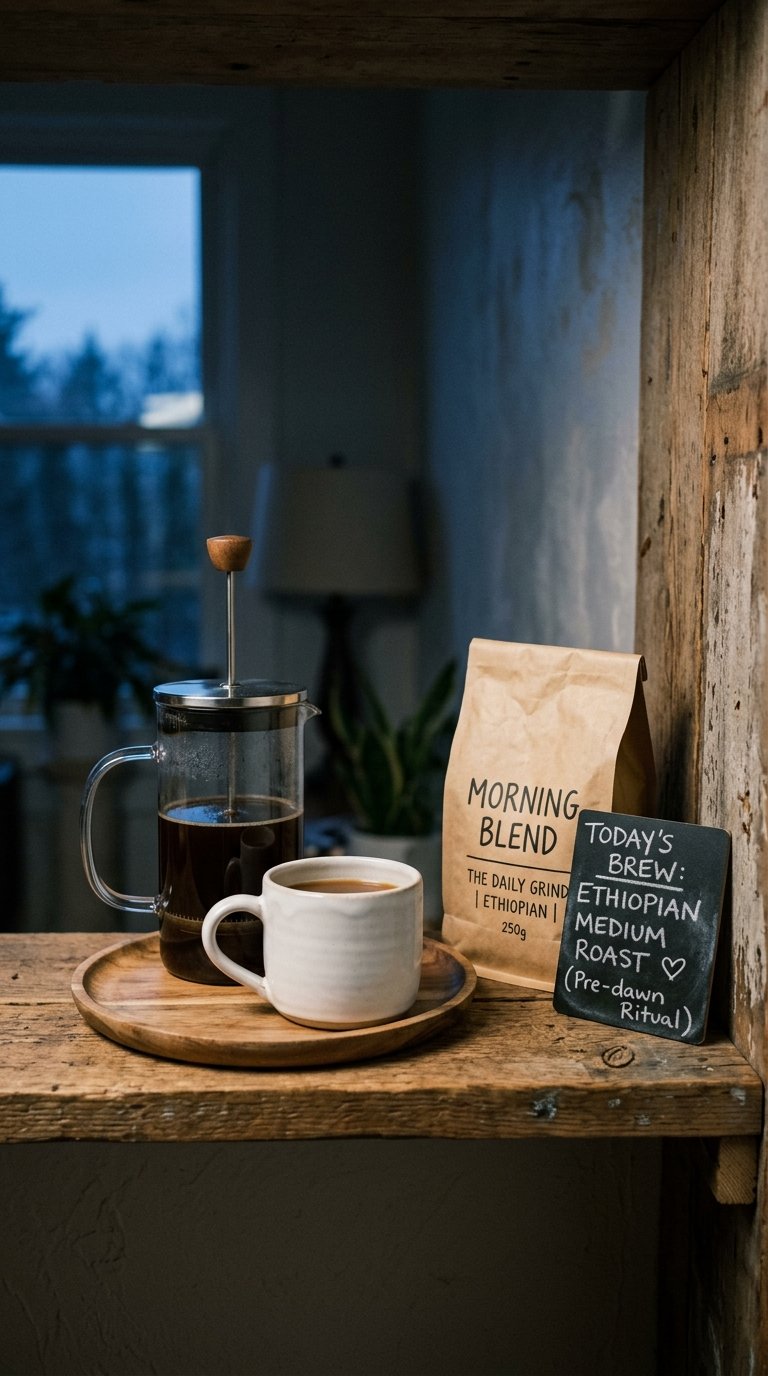
Designating one full shelf as a coffee and tea station solves two problems at once: it organizes your morning routine and creates a visually cohesive shelf arrangement because everything belongs to the same category. A French press, a ceramic mug, a small canister of coffee beans, and a wooden tray to hold them all creates a shelf “vignette” that looks curated because it IS curated around a single purpose.
Keep the color palette tight within this station — all white ceramics, or all natural wood and terracotta. Mixing too many finishes within a single-purpose station defeats the cohesion you’re creating. A small chalkboard label ($3 at a craft store) leaned against the coffee canister adds a handwritten, artisan touch that elevates the whole station without adding cost.
12. Introduce Seasonal Fruit as a Living Display
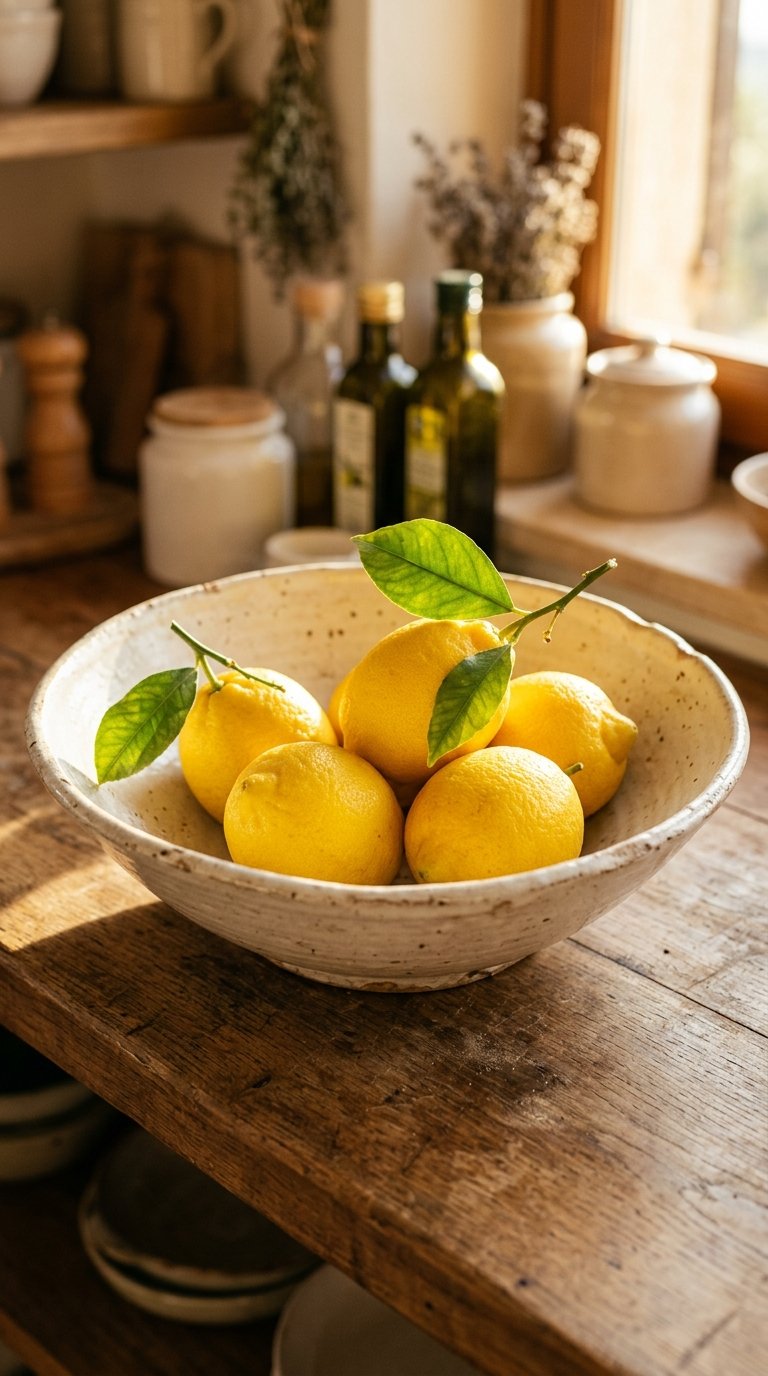
A wooden bowl or wide ceramic dish holding three to five lemons, a cluster of figs, or a small pile of peaches on a kitchen shelf functions as both decor and pantry. Seasonal summer fruit in a displayed bowl costs what you’d spend on it anyway you’re buying fruit, not decor. The difference is placement: a fruit bowl on a shelf reads as a deliberate design choice, while the same bowl on a counter reads as overflow storage.
Lemons are the strongest year-round summer signal in kitchen decor — their color, shape, and cultural association with Mediterranean kitchens make them universally recognizable as a summer styling element. A $2 bag of lemons in a $15 handmade ceramic bowl outperforms nearly every decorative object you could buy specifically for that shelf. Swap the fruit weekly so the display stays fresh and the fruit actually gets eaten.
13. Stack White or Neutral Plates Horizontally for Texture
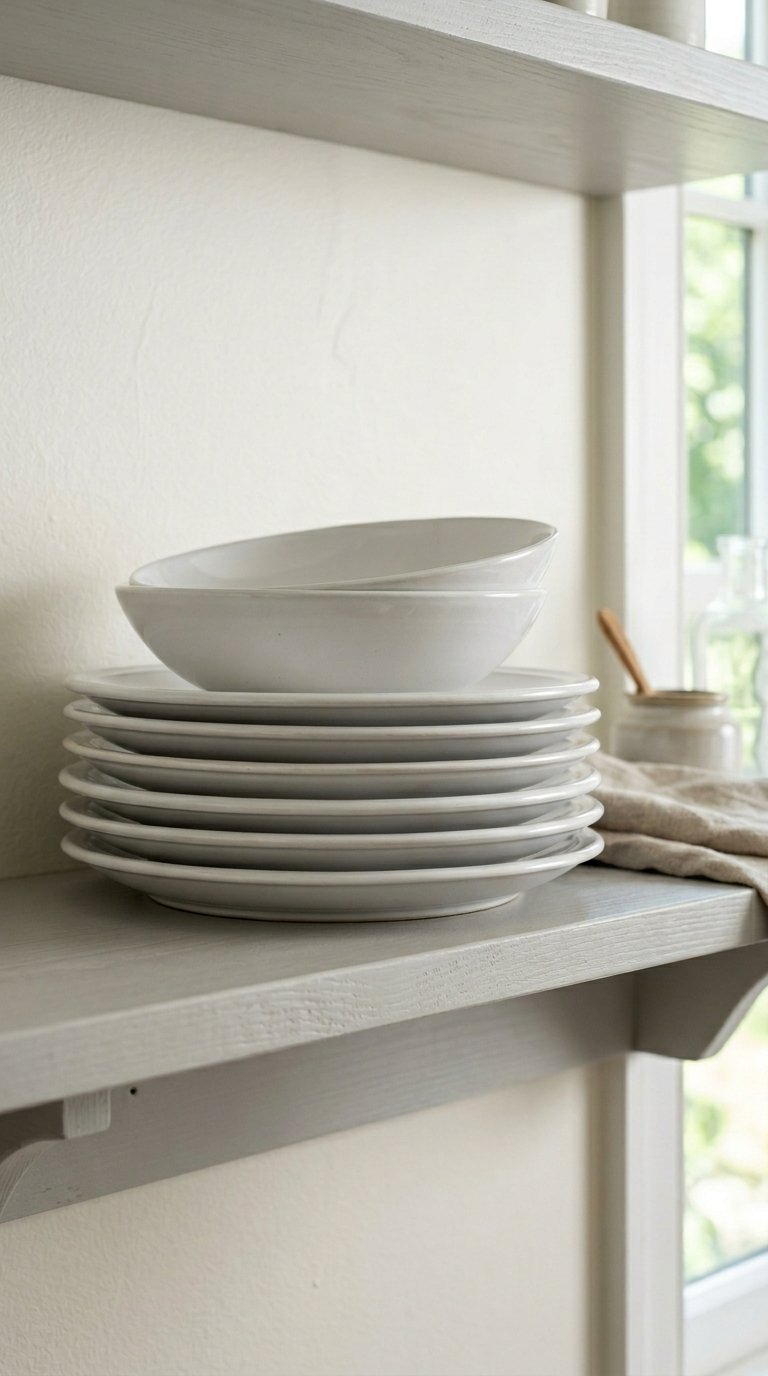
A stack of four to six white dinner plates or wide shallow bowls placed horizontally on a shelf adds a clean, graphic element that reads as both functional and styled. This works because the stacked plate profile that rhythmic horizontal line of plate edges — creates visual interest without color competition. It’s a technique every Shaker-style and farmhouse kitchen uses because it’s honest about what a kitchen shelf is for.
Plates with a subtle texture, rim detail, or slight variation (like the IKEA 365+ line or any handmade ceramic set) photograph better than perfectly smooth mass-produced sets because the light catches differently on each surface. Stack them toward one end of the shelf and layer a smaller bowl or single cup on top of the stack to break the perfect symmetry. Symmetry reads as retail display; slight imperfection reads as home.
14. Add a Beeswax or Soy Candle for Scent and Visual Warmth
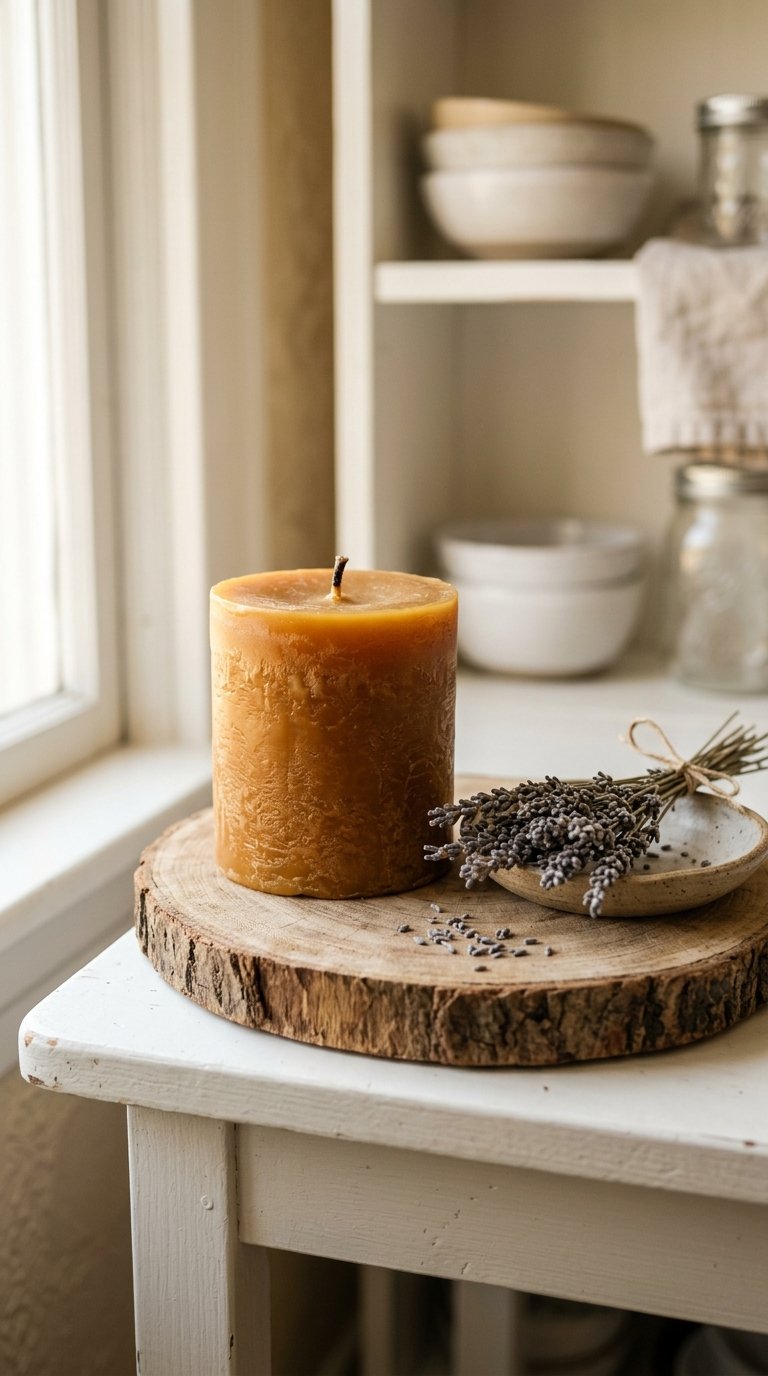
A wide, short pillar candle in a natural wax finish placed on a kitchen shelf adds warmth without competing with the kitchen’s functional objects. Beeswax candles in their natural honey-amber color look particularly strong against white shelves or wood backgrounds. Fontana Candle Co. and similar small-batch makers sell wide pillar candles for $14 to $28 that burn 40 to 60 hours.
Keep the candle unlit on the shelf for decor purposes — save the burning for cooking sessions when you want the ambient warmth. A candle holder or small ceramic dish underneath catches any wax drips and frames the candle as a display object rather than a loose item. FYI, lemon verbena and basil candle scents work particularly well in a summer kitchen because they complement rather than compete with cooking smells.
15. Use Tiered Spice Steps to Create Visual Height
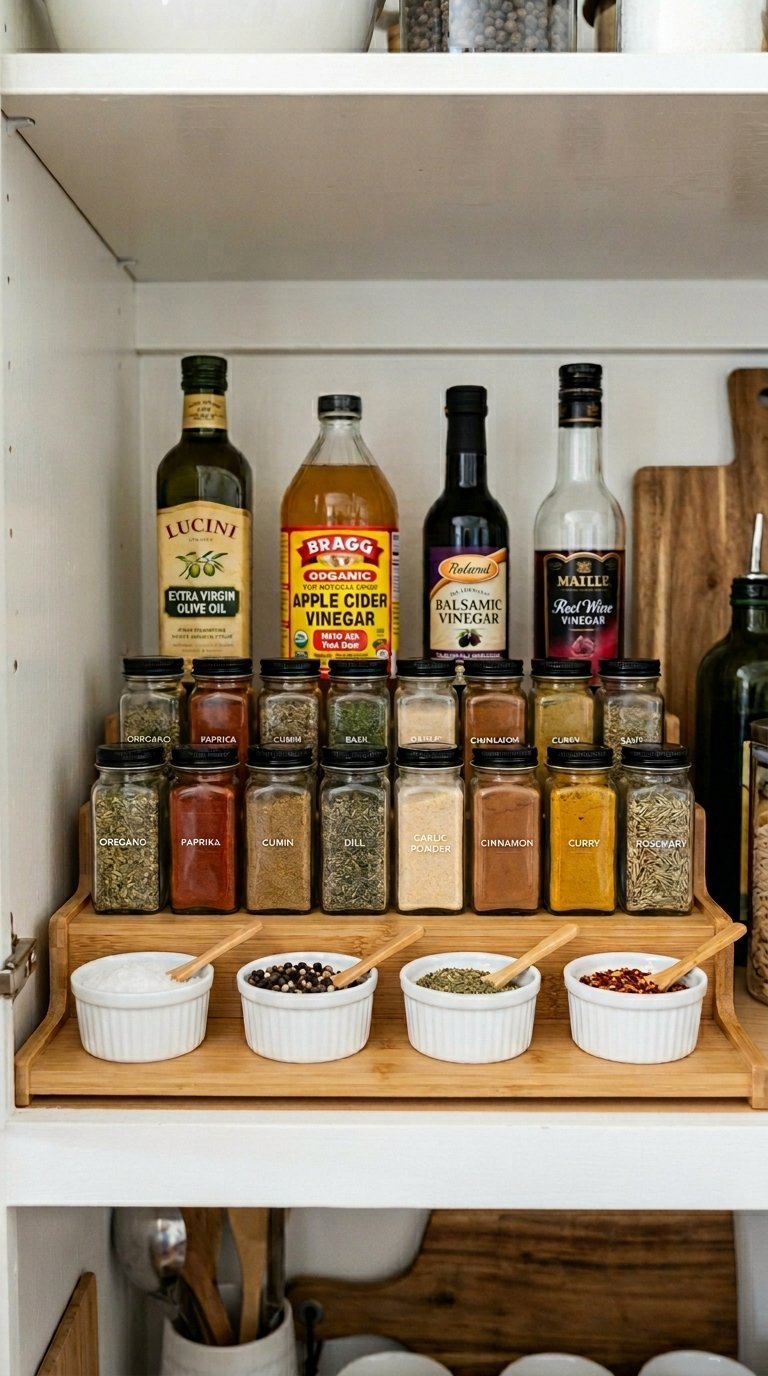
A tiered spice step organizer a two or three-level riser that sits inside a shelf creates visual height variation within a single shelf row. Without it, every jar and bottle sits at the same height and the shelf reads as flat. With it, a back row of tall vinegar bottles, a middle row of spice jars, and a front row of small ramekins creates a stadium-seating effect that shows every object clearly.
Bamboo tiered risers from Amazon run $12 to $22 for a two-tier version. They fit shelves as shallow as 10 inches and hold up to 20 pounds. The key is keeping the front row low — small objects, short jars, or decorative items — so the riser reveals rather than hides what’s behind it. A tiered shelf never looks cluttered because the height variation naturally organizes items into a foreground and background.
16. Frame the Shelf With Trailing Pothos Vines
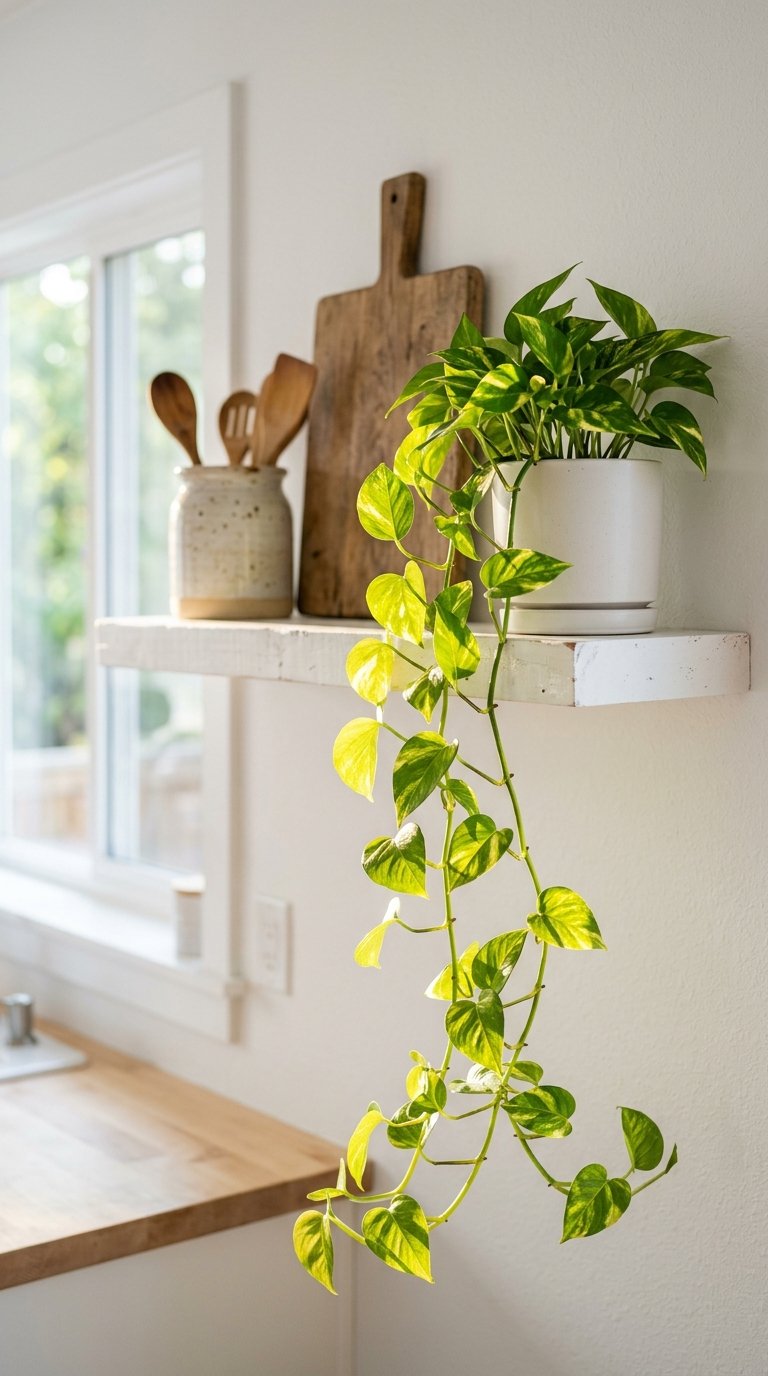
A small pothos plant placed at one end of a kitchen shelf, allowed to trail naturally over the edge, softens the hard geometry of a shelf in a way no other decor element achieves. Pothos is the right plant for this because it tolerates low light, inconsistent watering, and kitchen humidity without complaint. A 4-inch pothos from any garden center costs $4 to $8 and grows fast enough to trail noticeably within four to six weeks.
Let the vine trail freely over the shelf edge rather than tucking it back. The trailing quality is the entire point it breaks the shelf’s hard horizontal line and introduces organic movement. Golden pothos against a white shelf creates a graphic contrast; marble queen pothos against a dark shelf creates a lighter, airier effect. Either way, one trailing plant changes the entire energy of the shelf it occupies.
17. Display a Vintage Scale as a Summer Kitchen Centerpiece
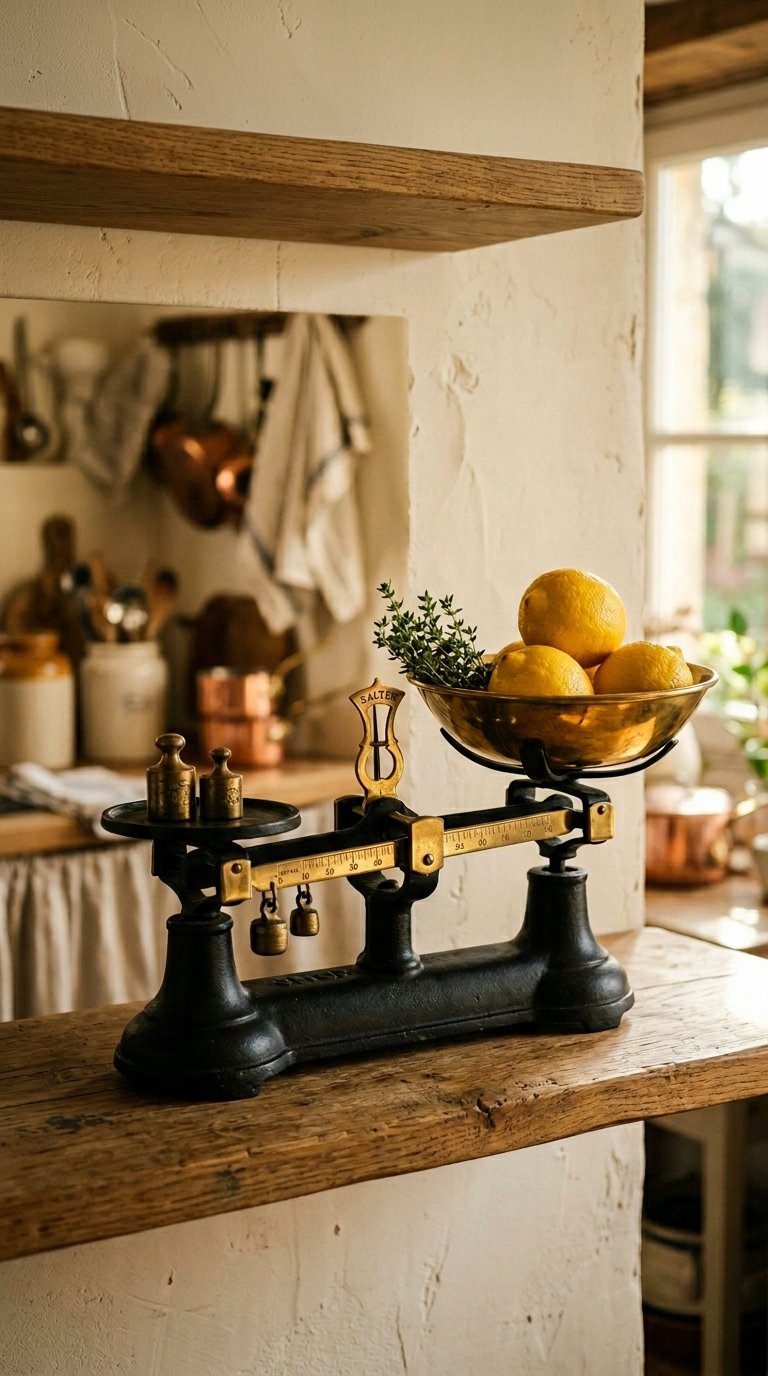
A vintage-style kitchen scale the balance type with a bowl on top works as the most useful decorative object in a kitchen because it stores fruit, holds a lemon and small herb bundle, and looks like it belongs in a French country farmhouse. Restoration Hardware and Anthropologie sell new versions for $45 to $90, but thrift stores regularly stock them for $5 to $15.
Place it as the tallest object on your most prominent shelf and fill the bowl with whatever seasonal fruit or vegetable you’re currently using. The scale itself becomes a permanent fixture while the contents rotate seasonally, which means the shelf stays fresh without requiring any repositioning. It’s one of the few kitchen shelf pieces that improves visually every time someone actually uses it.
18. Line the Back of the Shelf With Removable Wallpaper
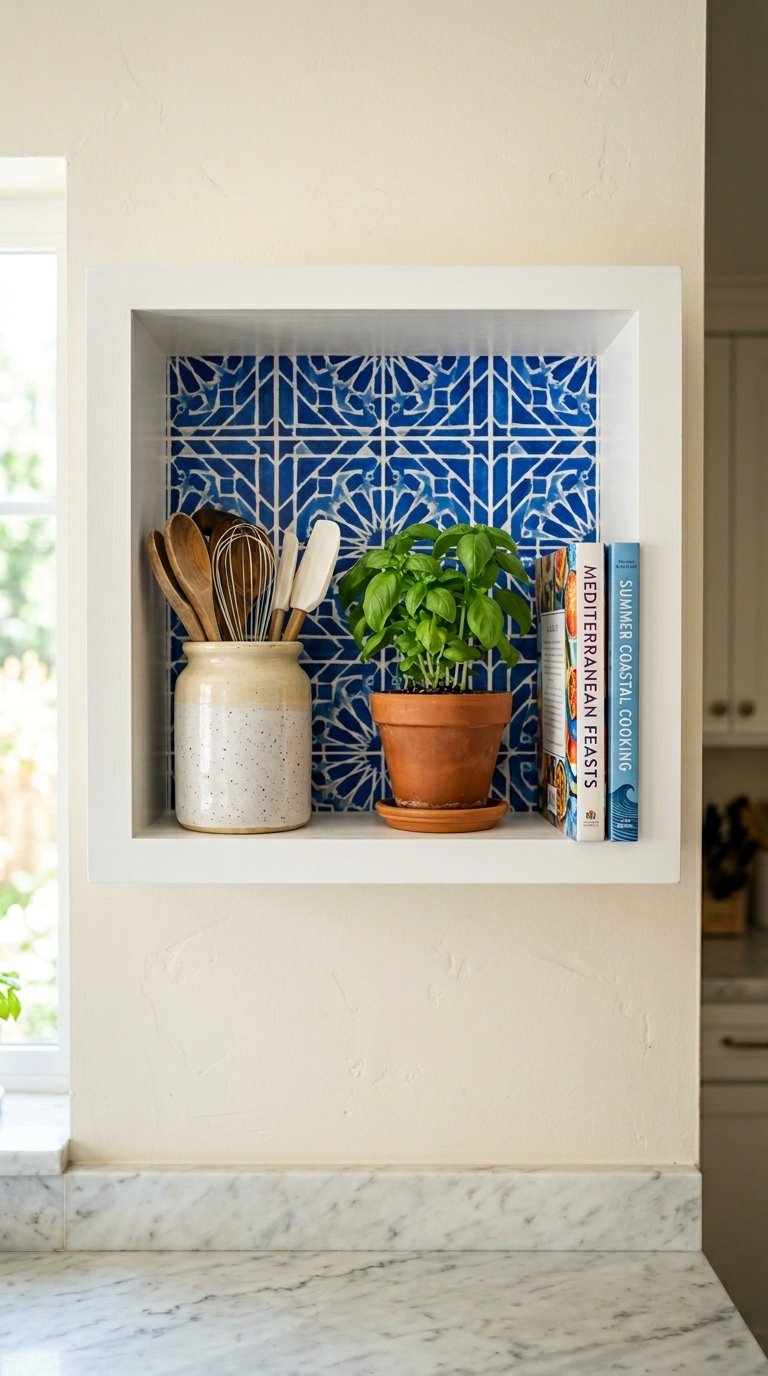
A strip of removable peel-and-stick wallpaper applied to the back panel of one kitchen shelf transforms the entire shelf into a framed vignette. Every object in front of the patterned or textured background instantly looks more deliberate. Chasing Paper and Tempaper make removable options in lemon print, blue tile, and botanical patterns that run $25 to $45 per roll — one roll covers three to four standard shelf back panels.
This works particularly well on open floating shelves where the back wall is bare painted drywall or unfinished wood. Apply the paper cleanly with a credit card smoother to eliminate bubbles, and choose a pattern with enough negative space that it doesn’t compete with the objects in front of it. A lemon-print or Mediterranean tile pattern on the shelf back does more for a summer kitchen aesthetic than any single decor object placed on top of it.
19. Add a Small Framed Print Leaned Against the Back Wall
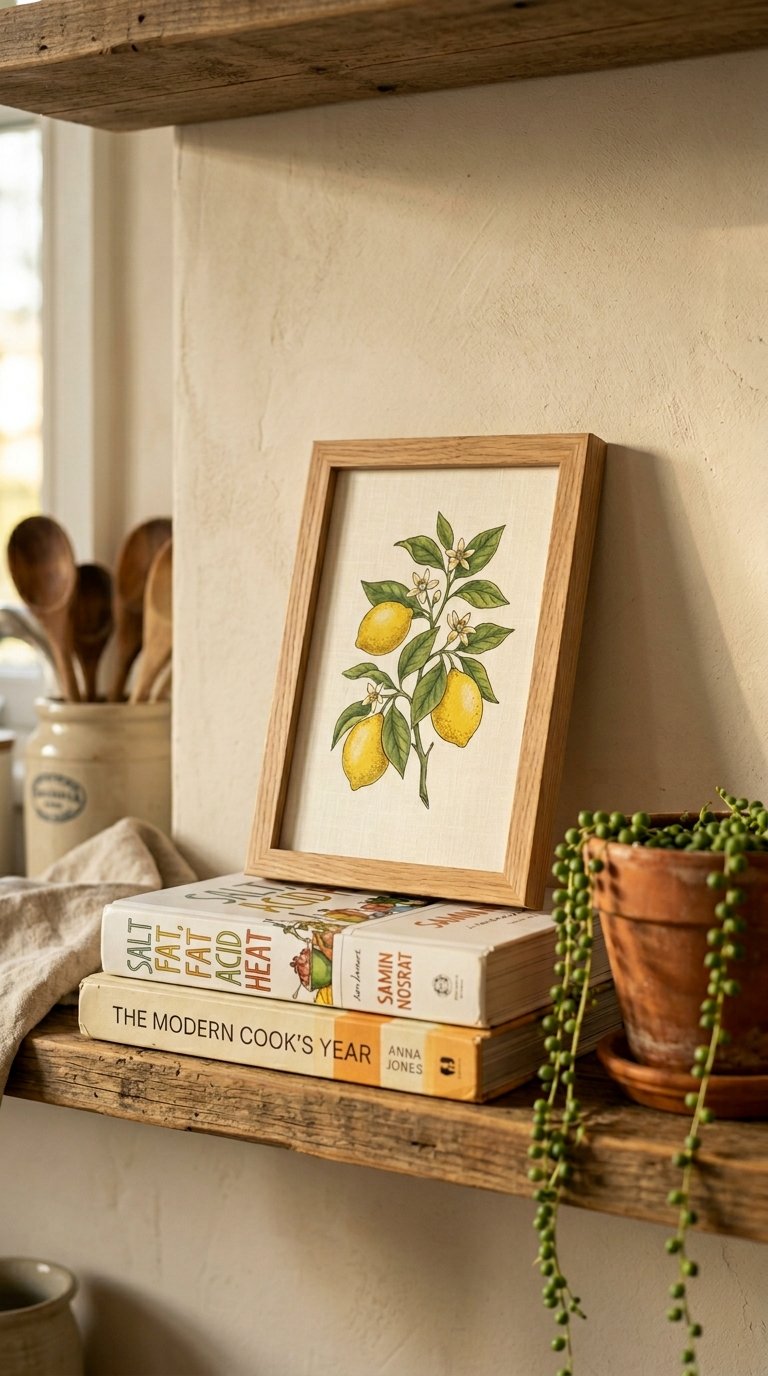
A small 4×6 or 5×7 framed print leaned against the back wall of a kitchen shelf rather than hung on the wall adds an art element that feels casual and easy to swap. Botanical prints, lemon illustrations, vintage seed packet reproductions, and hand-lettered recipe cards all work well. Etsy digital downloads in summer kitchen themes print for under $5 and frame in a basic frame from IKEA for $3 to $8.
Lean the frame slightly forward so it rests against a taller object behind it. Leaning instead of hanging signals “collected over time” rather than “purchased as a set,” which is the difference between a shelf that reads as personal and one that reads as staged. Swap the print seasonally — summer botanical, autumn harvest print, winter botanical — and the shelf stays current without any structural changes.
20. Group Matching Canisters for a Clean, Cohesive Look
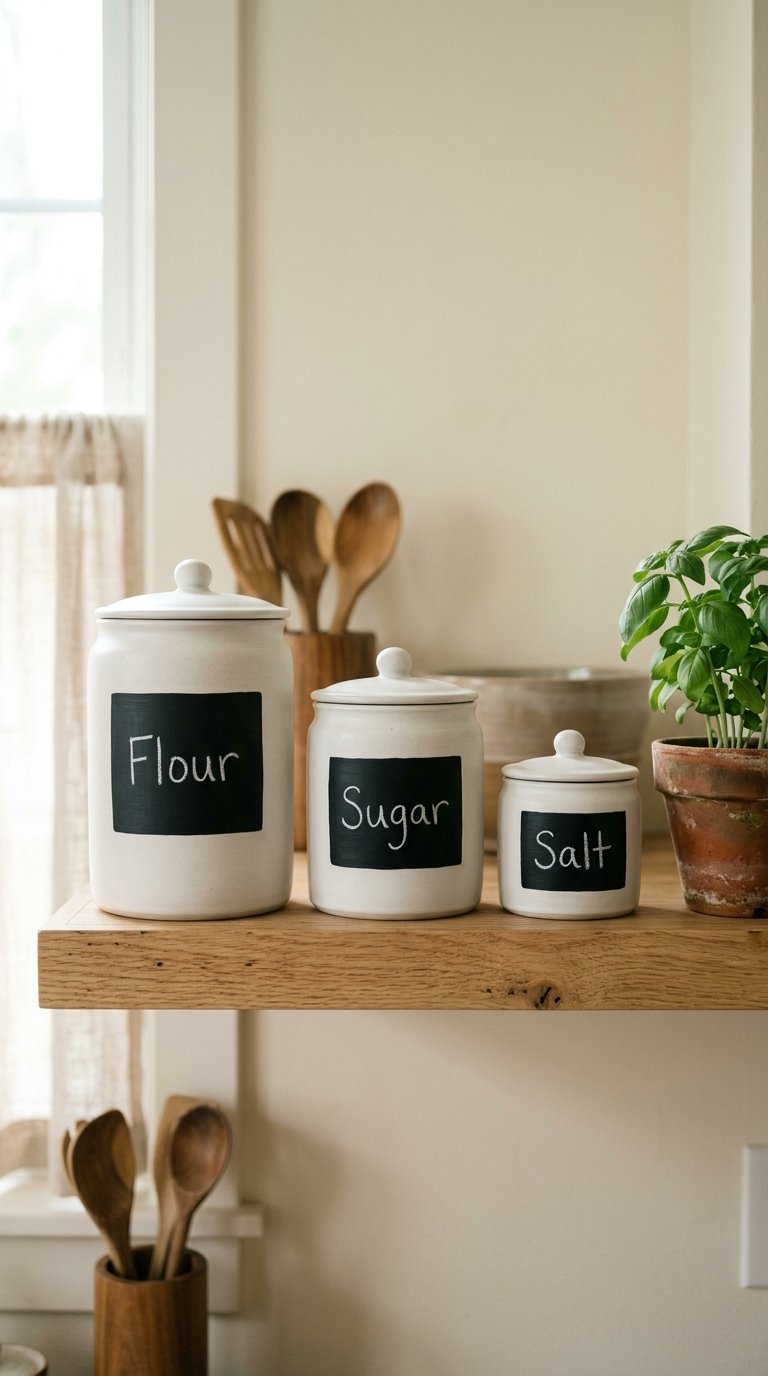
A set of three matching canisters in graduating sizes large for flour, medium for sugar, small for salt creates instant visual coherence on any kitchen shelf. The matching-set principle works because the eye processes repeated shapes and finishes as a single unit rather than three separate objects, which reduces visual noise. OXO Good Grips, Hearth & Hand at Target, and IKEA’s BURKEN series all offer three-piece canister sets for $18 to $45.
Matte ceramic in white, cream, or sage green works best for summer because glossy finishes reflect fluorescent kitchen lighting in unflattering ways. Label each canister with a simple handwritten chalk label or a printed adhesive label in a clean font — unlabeled canisters look incomplete, and generic factory labels look like you never finished unpacking. The canister group becomes both storage and a deliberate design moment.
21. Introduce a Wood Slice or Trivet as a Decorative Base
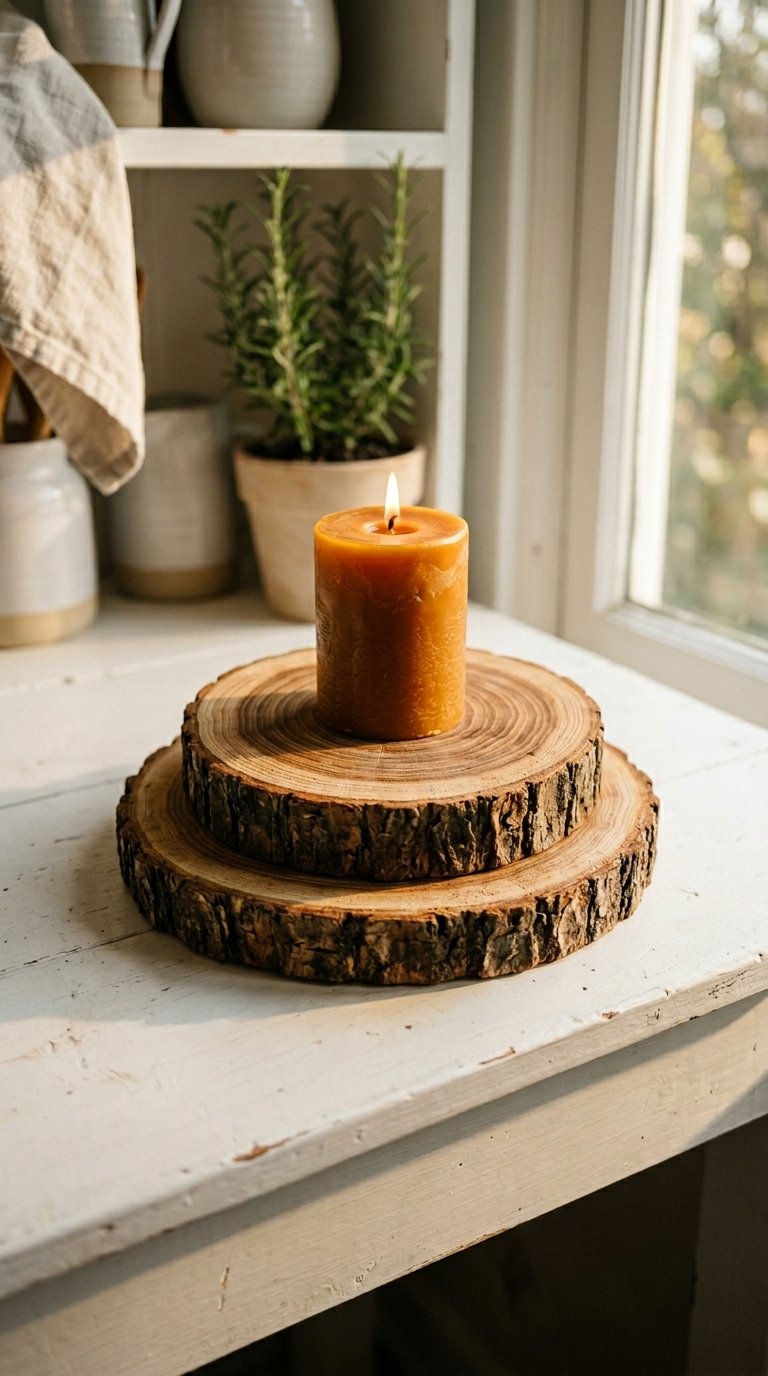
A round wood slice or a handcrafted wooden trivet placed flat on a shelf surface creates a natural “platform” for displaying a single object a candle, a small plant, a ceramic bowl. The wood rounds out (literally) what would otherwise be a flat, textureless shelf surface. Wood slices from craft stores run $3 to $8; decorative trivets from Etsy or HomeGoods run $12 to $25.
The circular shape of a wood slice is particularly valuable on a shelf because it contrasts with the shelf’s horizontal geometry. Round objects on rectangular surfaces create visual interest through shape contrast — this is a basic principle that interior stylists apply consistently in shelf compositions. Stack two wood slices of different diameters to create a pedestal effect for a small plant or candle.
22. Hang a Small Chalkboard Label Row Across the Shelf Edge
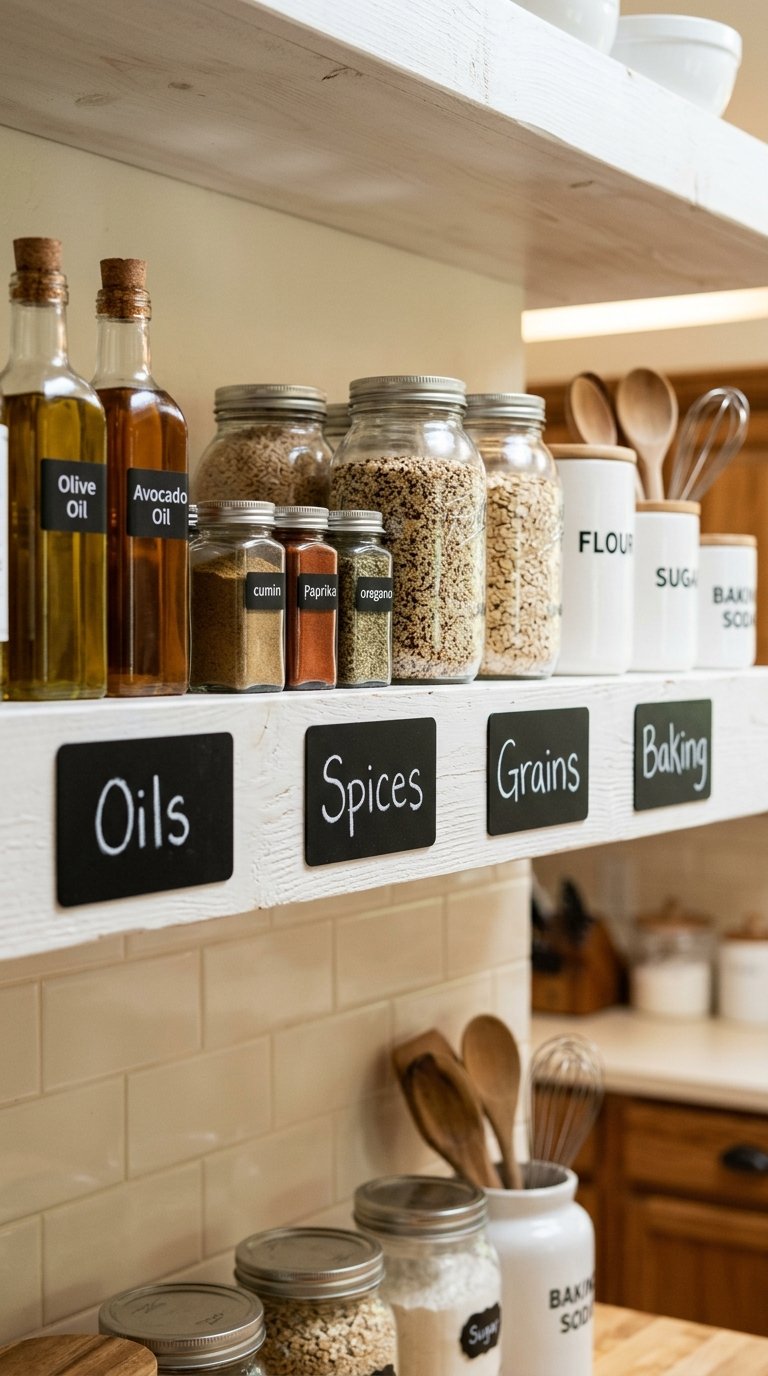
A strip of small chalkboard labels attached along the front edge of a shelf labeling what’s stored on that shelf adds a farmhouse-kitchen detail that costs under $5 and takes fifteen minutes. Chalkboard label stickers from Amazon come in sets of 50 for $4 to $7 and peel cleanly from most painted wood surfaces. Write the contents in chalk marker for a clean, permanent-looking finish.
This is a decor move that works hardest in pantry-style open shelving where multiple shelf rows hold similar-looking items. It solves a functional problem — you stop opening the wrong canister — while adding a handcrafted, intentional quality to shelves that would otherwise look purely utilitarian. The handwritten quality is the point: it signals that a person made deliberate choices about this kitchen, not a staging crew.
23. Rotate One Seasonal Hero Object Every Six Weeks
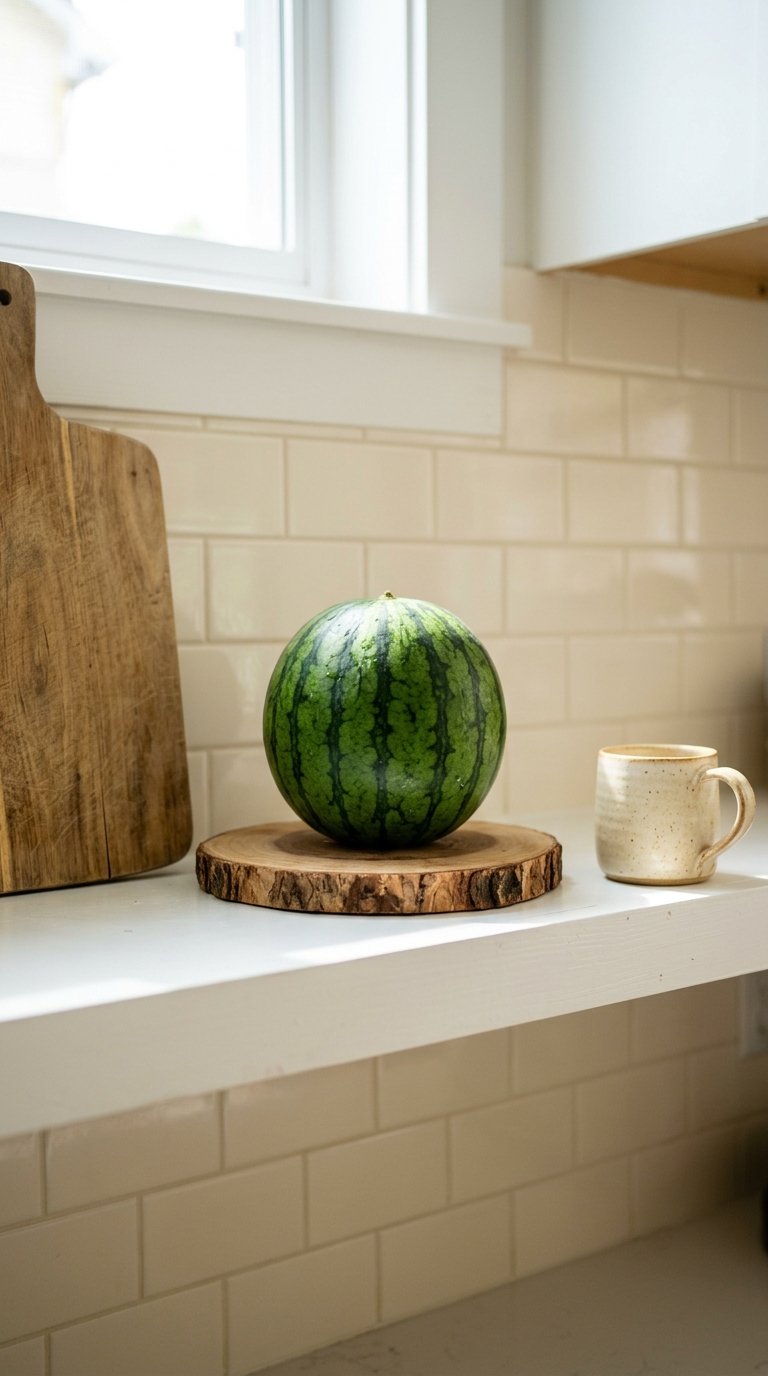
The single most sustainable summer kitchen shelf decor strategy is the “hero object rotation” designating one spot on your most visible shelf for a single object that changes every six weeks. In early summer: a glass jar of preserved lemons. Mid-summer: a small watermelon on a wood slice. Late summer: a bundle of dried sunflowers in a ceramic vase. Each object costs under $15 and takes thirty seconds to swap.
This rotation strategy keeps your kitchen feeling current without requiring a full seasonal redecoration. It also forces you to edit the rest of the shelf — when you bring in a new hero object, you remove something else, which prevents accumulation drift. The shelf that looked great in June won’t look tired in August if you follow this one rule. Seasonal intention beats seasonal spending every single time.
Final Thoughts
Your kitchen shelves communicate something about how you live every time someone walks into your room. The 23 ideas above don’t ask you to buy an entirely new set of objects or repaint your kitchen. They ask you to rearrange what you have, subtract what’s creating noise, and add one or two specific pieces that earn their place visually and functionally. Start with the bread board anchor and the herb pot row — those two moves alone reframe an entire shelf. Then work through the list at your own pace. Summer is long enough to try all 23. 🙂