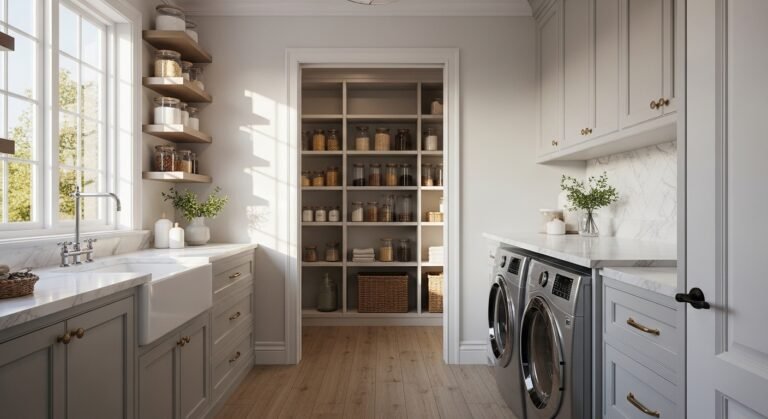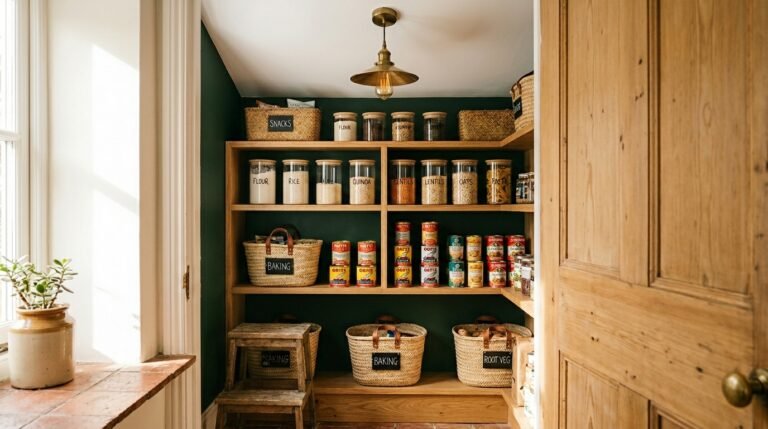
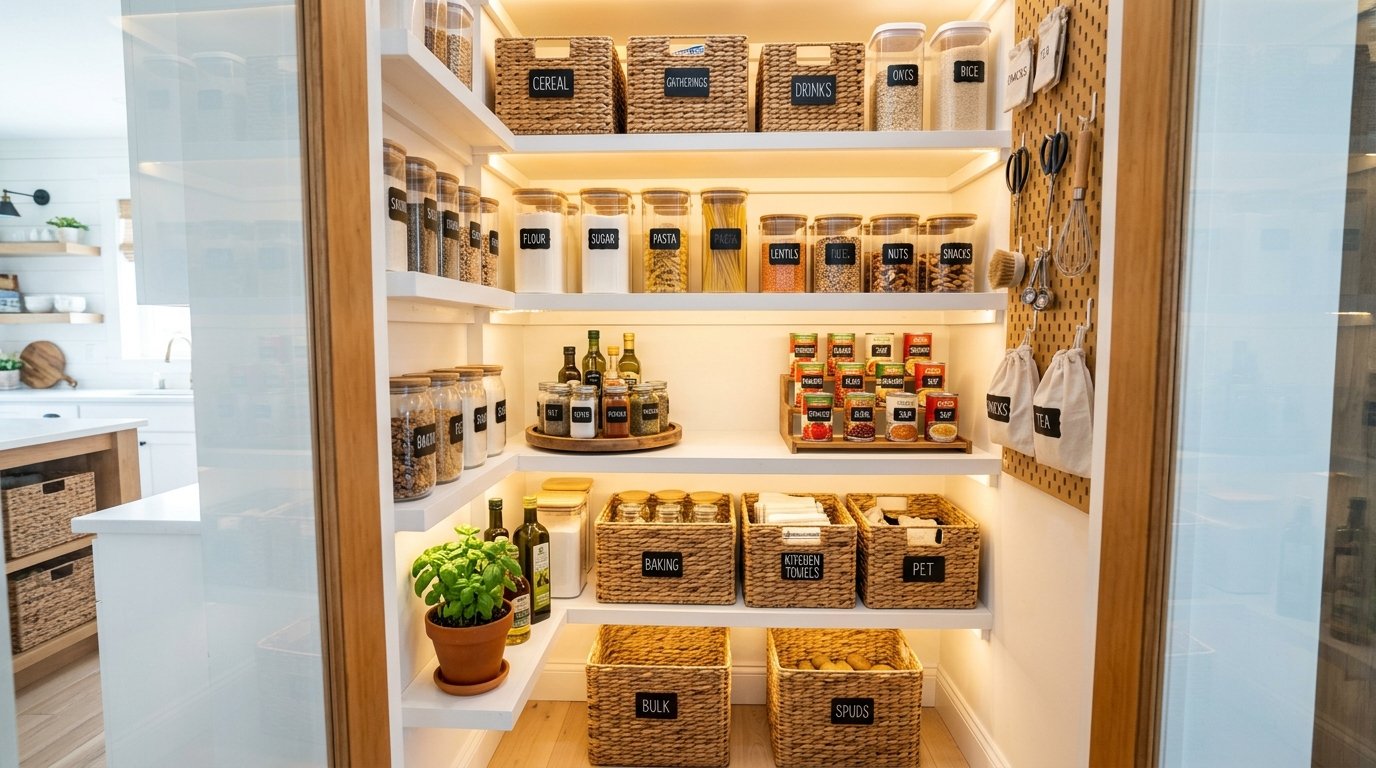
25 Tiny Pantry Design Ideas to Maximize Every Inch
A tiny pantry is not a problem. A tiny pantry with no plan is a problem. There is a massive difference between those two things, and once you understand that, everything changes.
I used to have a pantry the size of a coat closet that somehow managed to swallow things whole. Cans would disappear. Spices would multiply. Bags of pasta would breed in the dark corners. Sound familiar? After trying almost every organization trick out there, I finally figured out what actually works in a small space. So here are 25 tiny pantry design ideas that turn even the most cramped closet into something genuinely functional.
1. Floor-to-Ceiling Shelving
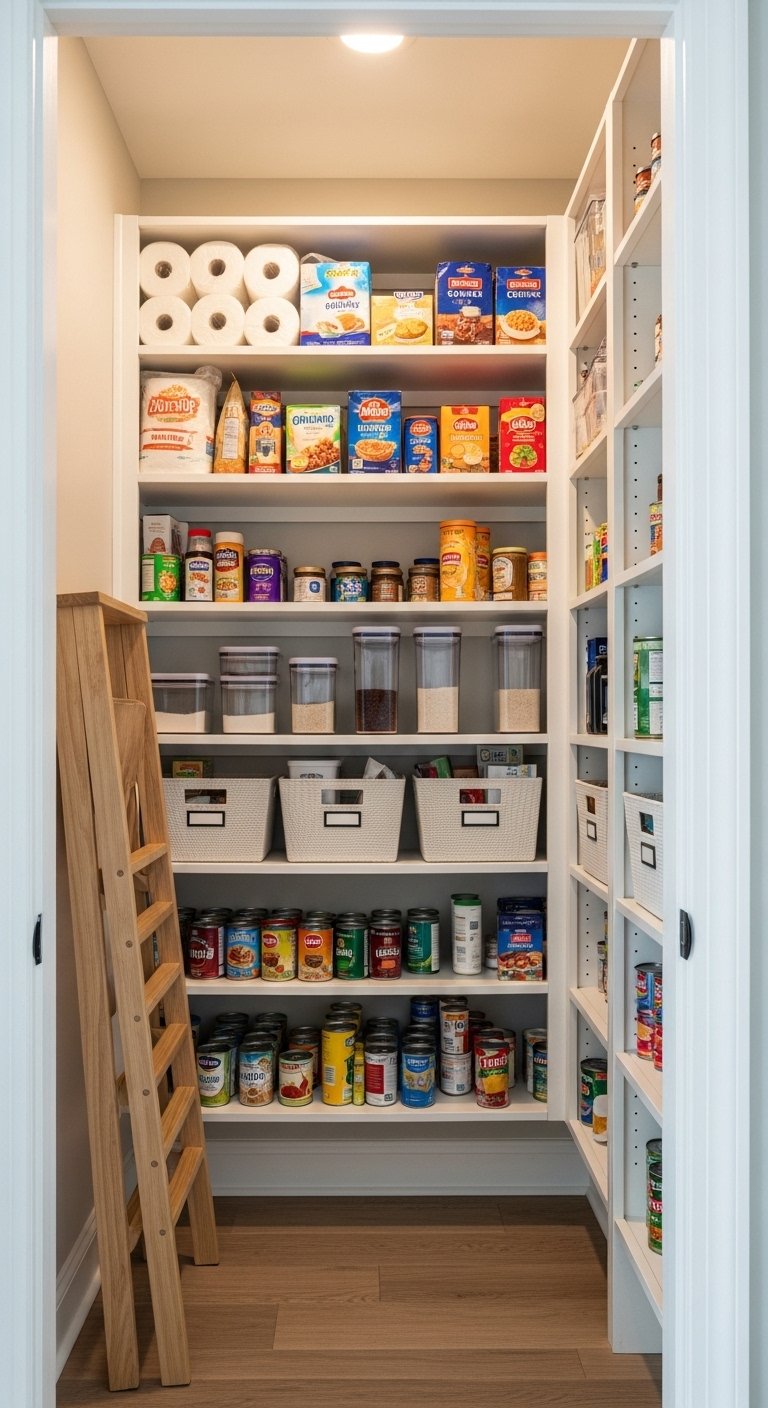
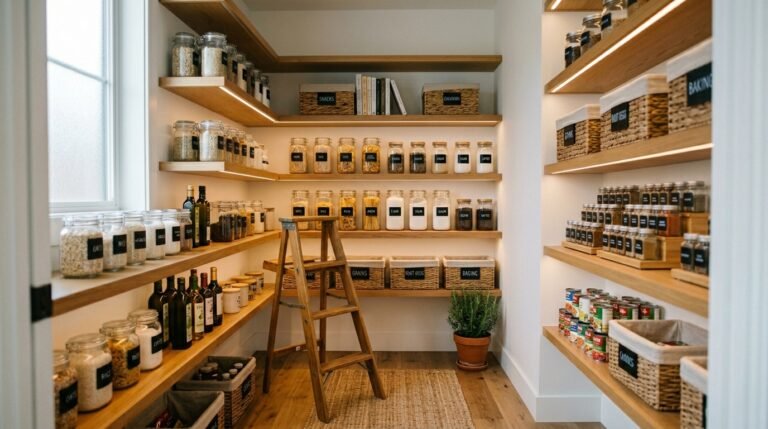
The number one mistake people make in a tiny pantry is ignoring vertical space. If your shelves only go halfway up the wall, you are leaving free storage space just sitting there doing nothing.
Floor-to-ceiling shelving maximizes every inch of wall height and dramatically increases your total storage capacity without adding a single square foot to your footprint. Use the highest shelves for rarely used items and bulk overflow stock. Keep everything you use daily within easy reach at eye level and below.
What to store on high shelves:
- Bulk dry goods and overflow stock
- Rarely used appliances
- Seasonal baking supplies
- Extra paper towels and cleaning supplies
2. Pull-Out Drawers Inside Cabinet Pantries
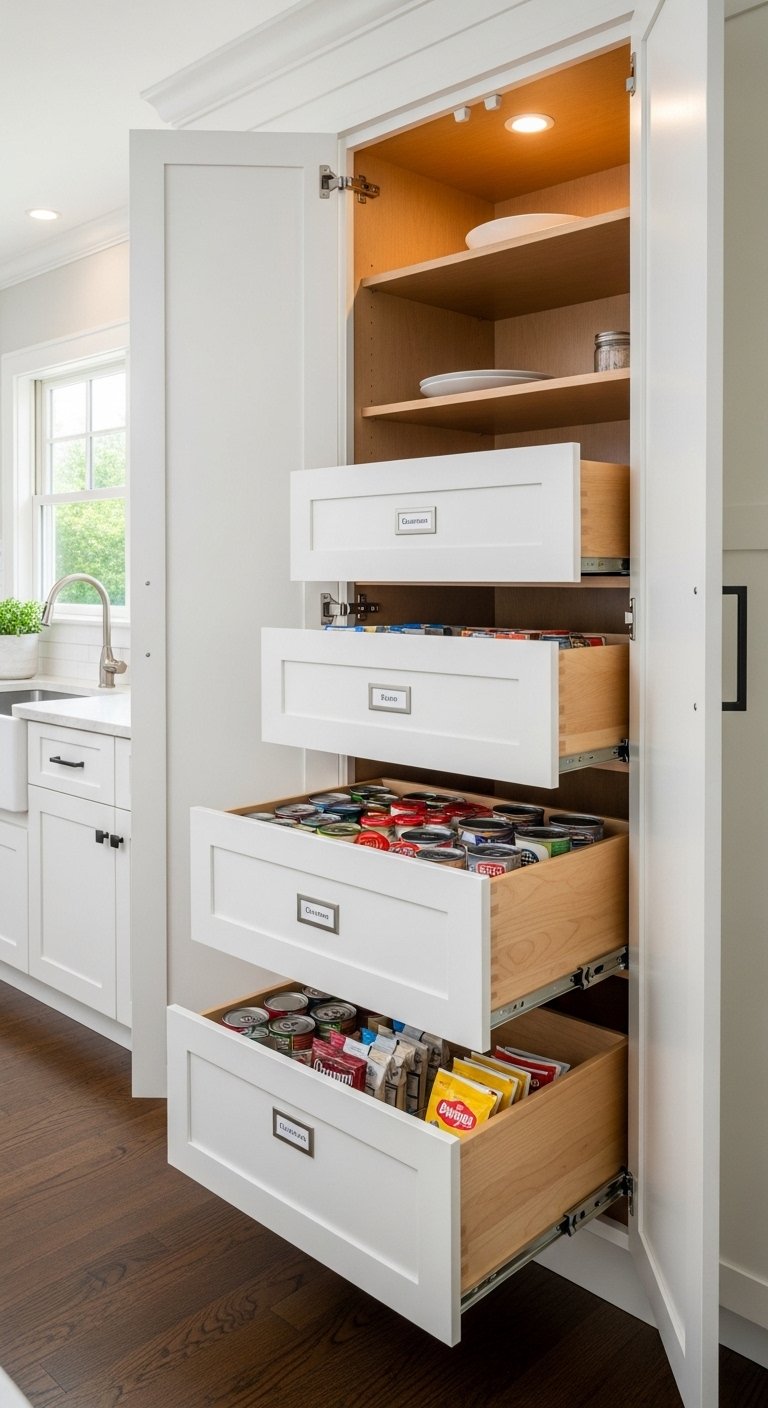
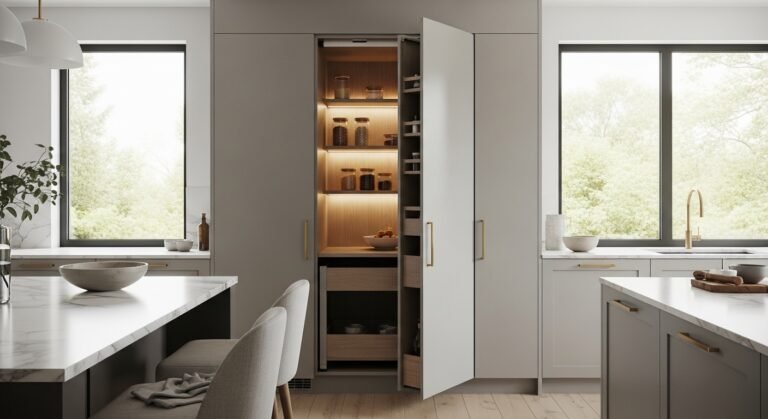
If your tiny pantry has cabinet-style doors rather than open shelving, pull-out drawers inside the cabinet change everything. Fixed shelves inside a deep cabinet force you to stack things and then forget what lives at the back. Pull-out drawers bring everything to you.
Full-extension drawer slides are the ones you want. They pull out completely so you can see and reach every single item without bending, squinting, or knocking things over. This upgrade is absolutely worth the investment, especially in a small pantry where every inch of depth counts.
3. A Narrow Freestanding Pantry Cabinet
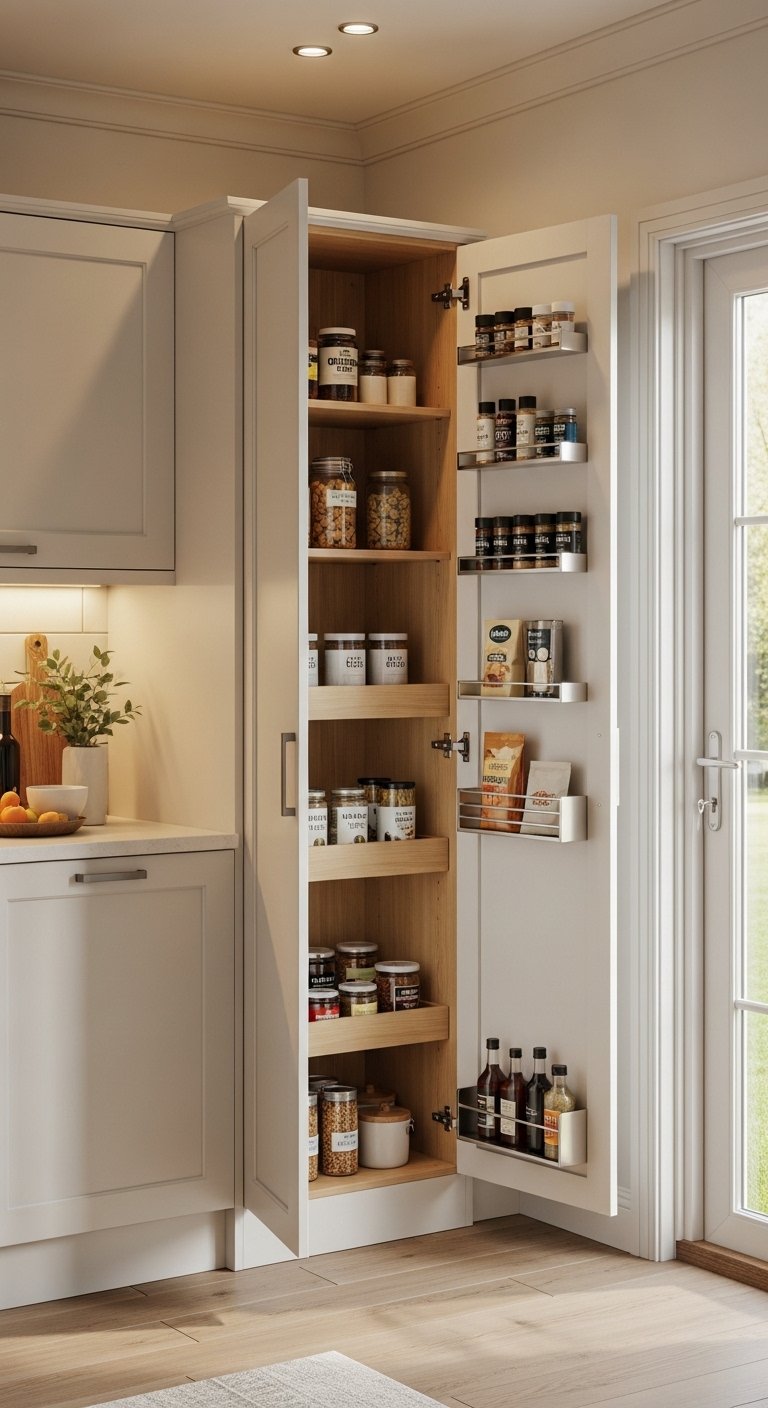
Not everyone has a dedicated pantry closet. If your kitchen has a spare wall or an awkward gap beside the fridge or oven, a narrow freestanding pantry cabinet solves the problem brilliantly.
Look for cabinets between 12 and 18 inches deep. Anything shallower limits what you can store, and anything deeper starts eating into your kitchen floor space. Many freestanding pantry cabinets now come with adjustable shelves, pull-out drawers, and door storage racks, giving you a surprising amount of capacity in a very small footprint.
4. Door-Mounted Spice Racks
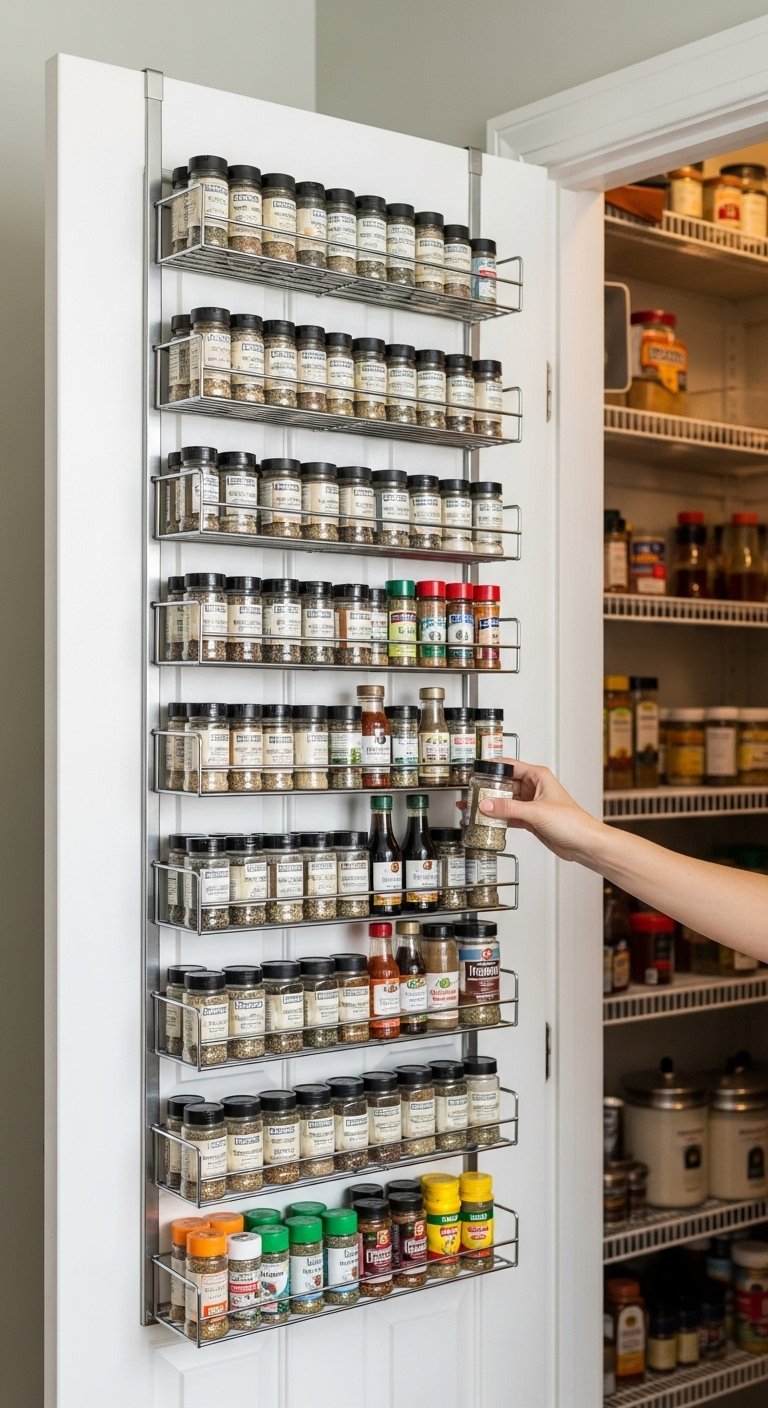
The inside of your pantry door is not doing enough work. A door-mounted spice rack turns this overlooked surface into a fully functional storage zone for all your herbs, spices, and small seasoning bottles.
There are two main options here. Wire door racks that mount with screws give you the most capacity and stability. Over-the-door hanging racks require no drilling and work well for lighter items. In a tiny pantry, using every surface including the door is not optional, it is essential.
5. Adjustable Shelving Systems
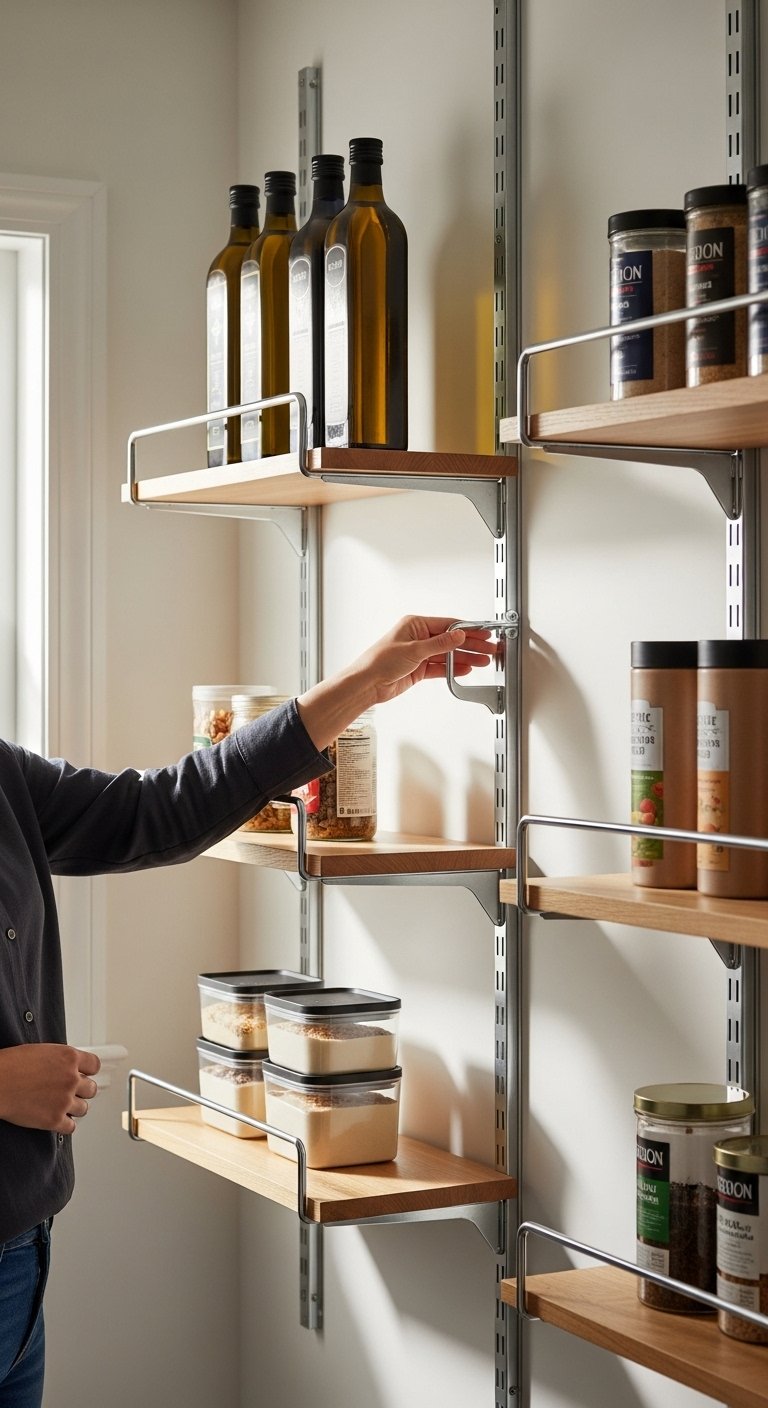
Fixed shelves are the enemy of a small pantry. If your shelves are set at one height and you need to store a tall bottle of olive oil or a large cereal box, you either squeeze it in awkwardly or leave it out entirely. Adjustable shelving systems solve this completely.
Wall-mounted adjustable shelving with bracket systems lets you move shelves up or down to accommodate whatever you’re storing right now. Your storage needs change constantly, and your shelving should be able to change with them. This is one of the smartest investments you can make in a tiny pantry design.
6. Clear Airtight Containers for Dry Goods
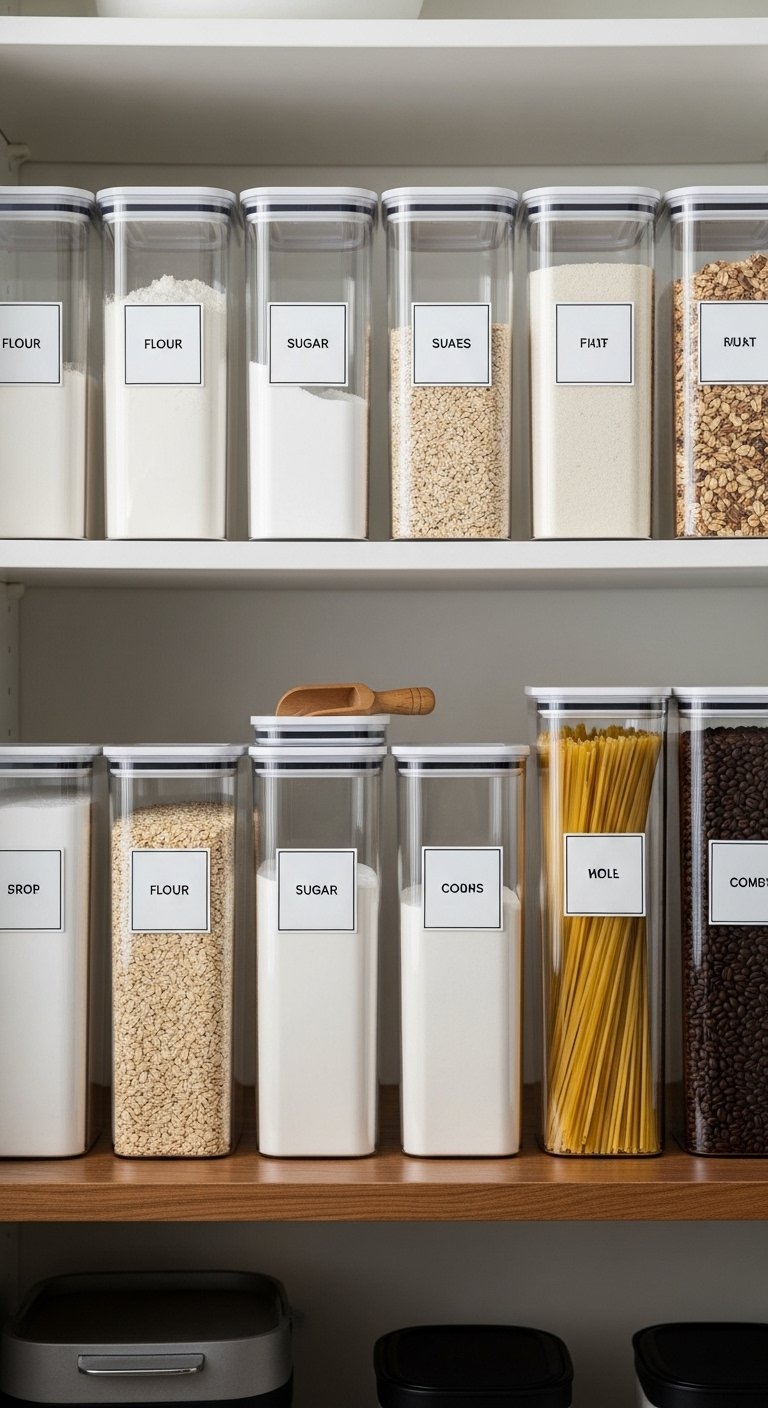
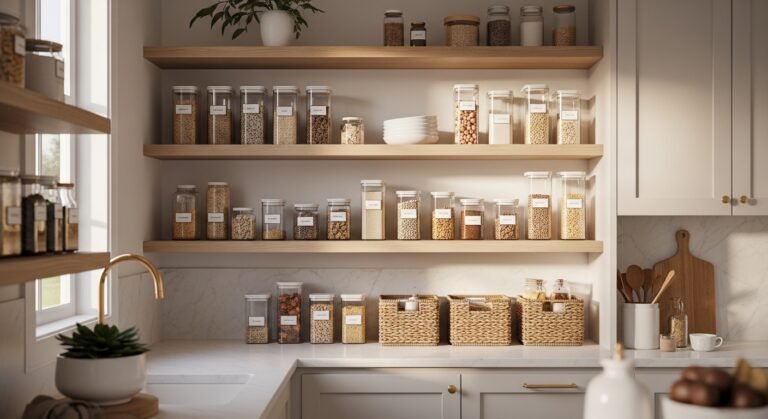
In a tiny pantry, clear airtight containers for dry goods do three things at once. They keep food fresher longer, they let you see exactly what you have and how much is left, and they create a visual uniformity that makes a small space feel calm and organized rather than chaotic.
Decant flour, sugar, rice, pasta, oats, lentils, and cereals into matching containers and label each one clearly. The visual transformation alone is remarkable. IMO, this single change does more for a tiny pantry than almost anything else you can do.
Best container types for small pantries:
- Tall rectangular containers for pasta and grains
- Square containers for coffee and cereal
- Small round containers for spices and seeds
- Stackable sets to maximize vertical space
7. A Pegboard Wall for Flexible Storage
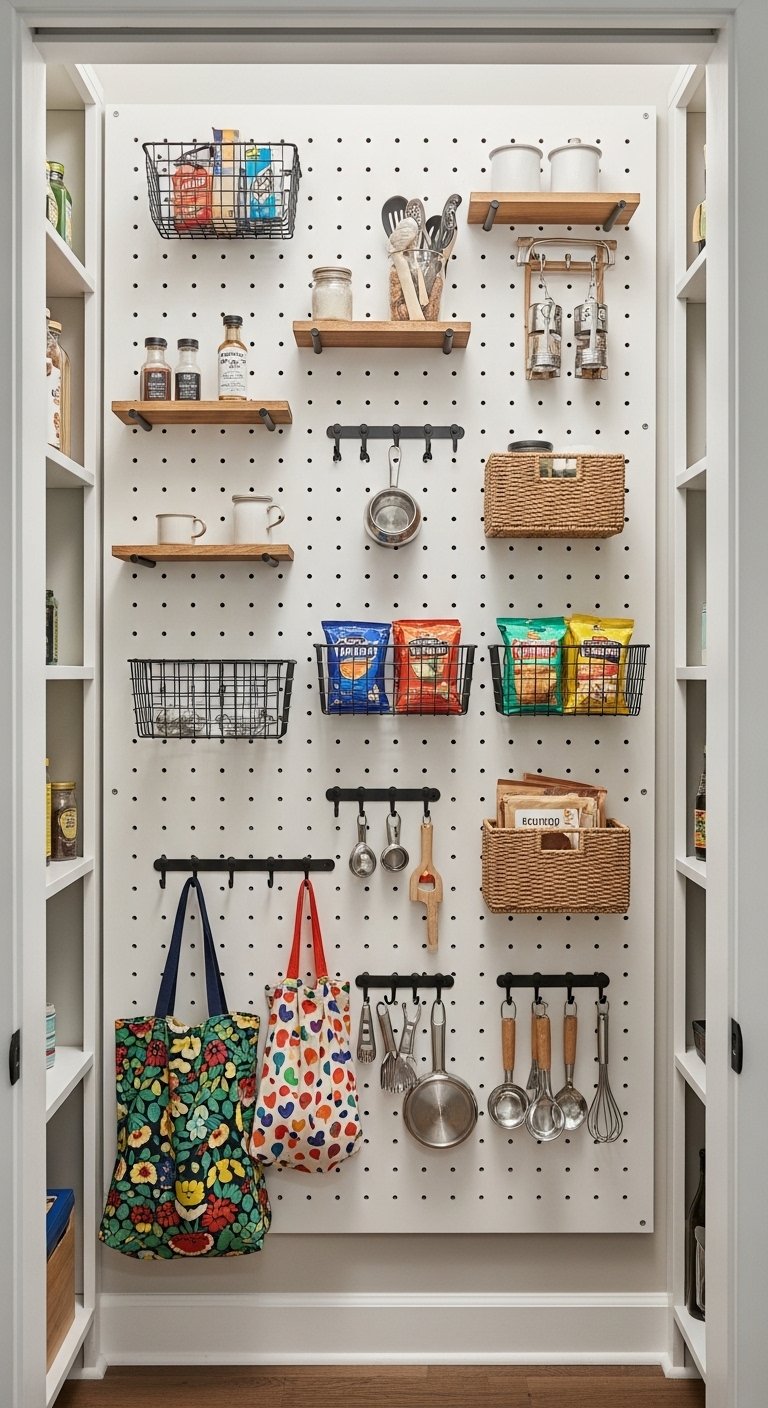
If one wall of your tiny pantry has space, a pegboard gives you completely flexible, customizable storage that you can rearrange as your needs change. Hooks, baskets, shelves, and clips all mount directly onto the pegboard and reposition without any tools.
Use your pegboard for things that don’t sit well on standard shelves: reusable bags, measuring cups, small kitchen tools, clips for open bags, and even small baskets for snack packets. Pegboards work especially well in pantries that also double as utility storage areas.
8. Lazy Susans on Every Deep Shelf
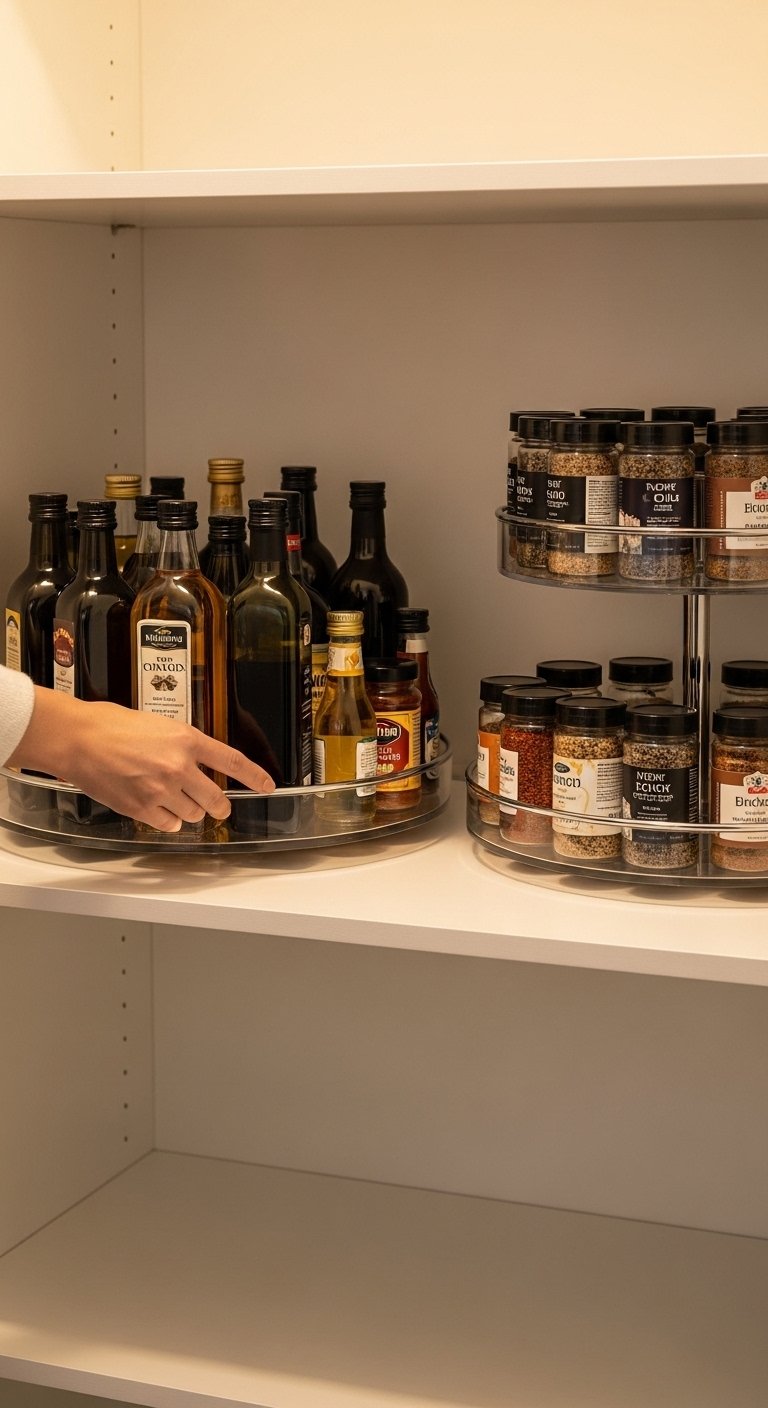
Deep shelves and tiny pantries are a difficult combination. Things slide to the back and disappear. A lazy Susan on every deep shelf fixes this problem permanently. Spin it and everything stored on the shelf comes to you.
Use large lazy Susans for oils, vinegars, and condiments. Use smaller ones for spice jars and seasoning bottles. Two-tiered lazy Susans double your capacity on a single shelf. In a tiny pantry with deep shelves, these are genuinely one of the best tools you can use.
9. Labeled Wicker or Wire Baskets
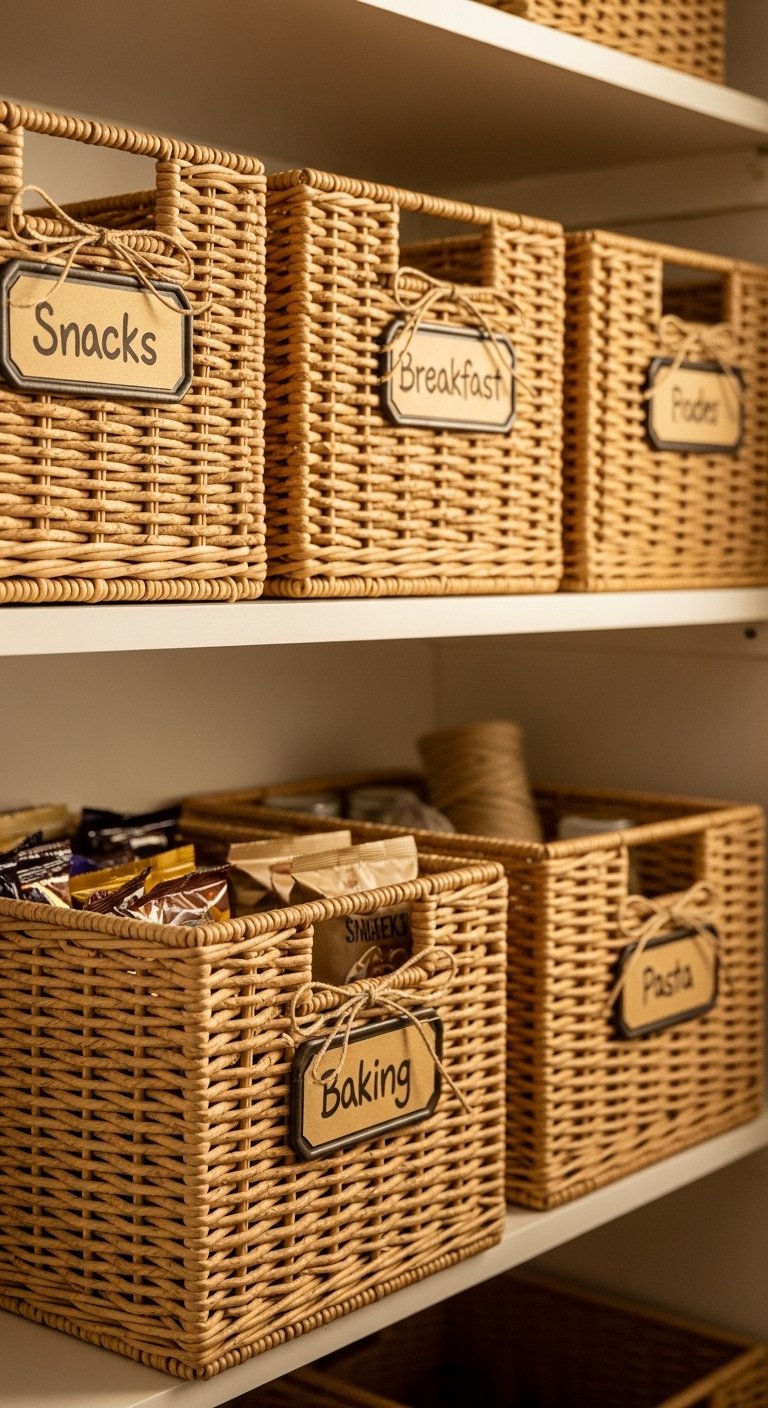
Baskets give you a way to corral all the awkward, bulky, irregularly-shaped items that resist neat shelving. Labeled wicker or wire baskets group these items by category so they look intentional rather than chaotic.
Use one basket per category. Snacks. Breakfast items. Baking extras. Pasta and grains overflow. When everything has a basket and every basket has a label, your tiny pantry starts functioning like a much larger, more organized space. The labels matter because they hold everyone in the household accountable for putting things back in the right place.
10. A Sliding Barn Door for Space Saving
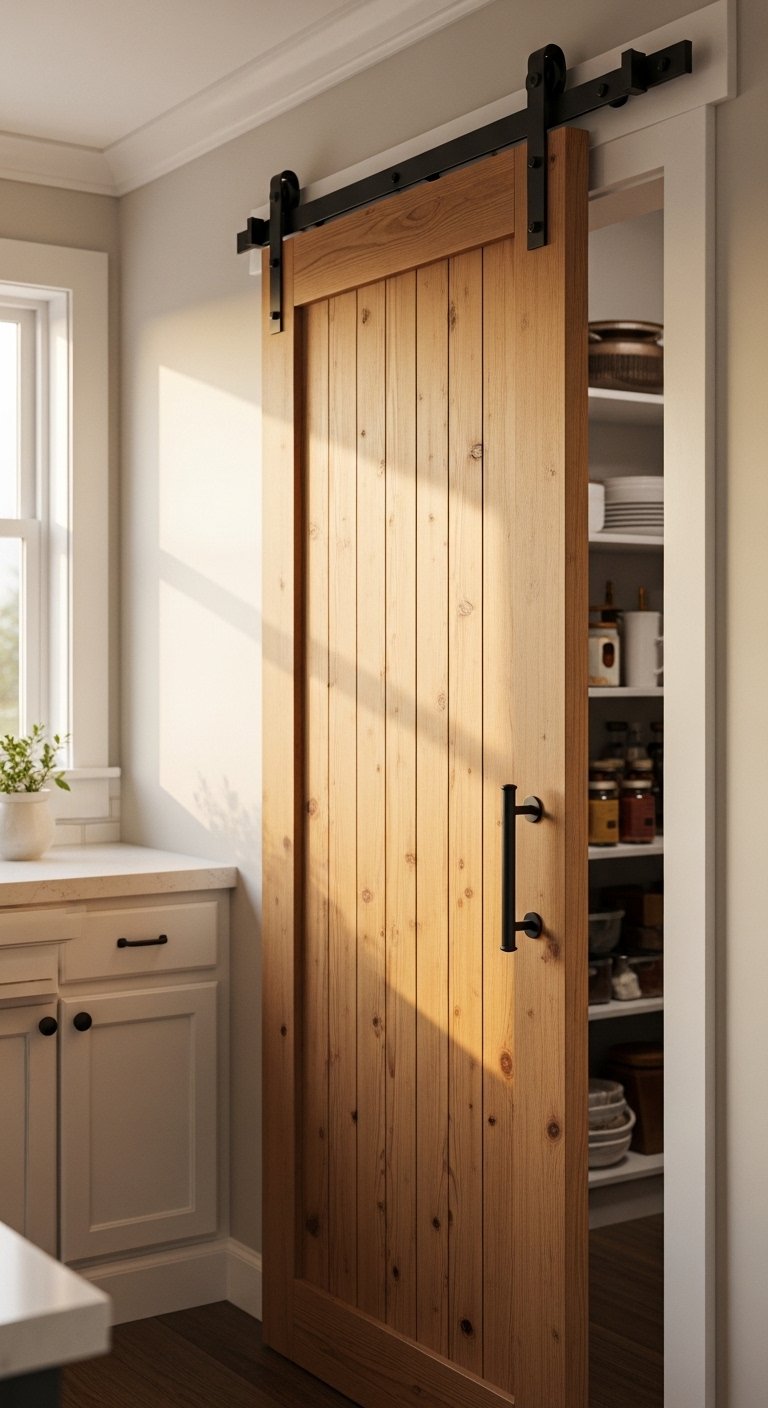
If your tiny pantry has a standard swing door, that door eats into your kitchen floor space every time you open it. Replacing it with a sliding barn door eliminates that wasted swing arc and frees up usable floor space.
A sliding barn door also adds serious style. Whether you choose a rustic wood panel, a painted shiplap door, or a sleek modern flat panel, a barn door makes your pantry feel like a design feature rather than just a storage closet. Function and style working together. Always a good combination.
11. Built-In Drawers at the Base
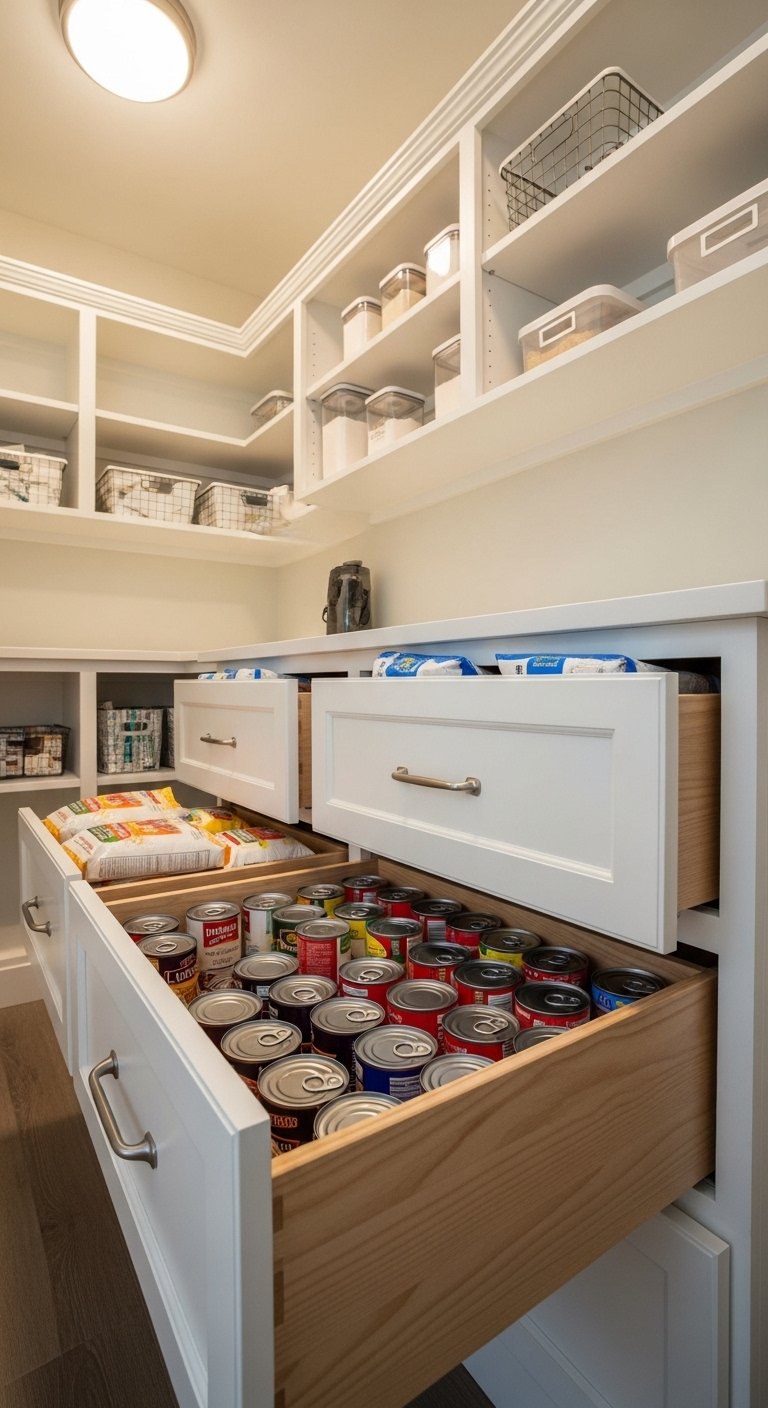
The very bottom of a pantry closet is often wasted as empty floor space where things pile up messily. Built-in drawers at the base of your pantry turn this dead zone into active, accessible storage.
Use base drawers for heavy items like canned goods, large bags of rice or flour, and bulk storage items. Drawers at floor level are much easier to use than shelves because you can pull them out fully and see everything inside without bending down and peering into a dark corner.
12. Magnetic Spice Jars on a Metal Strip
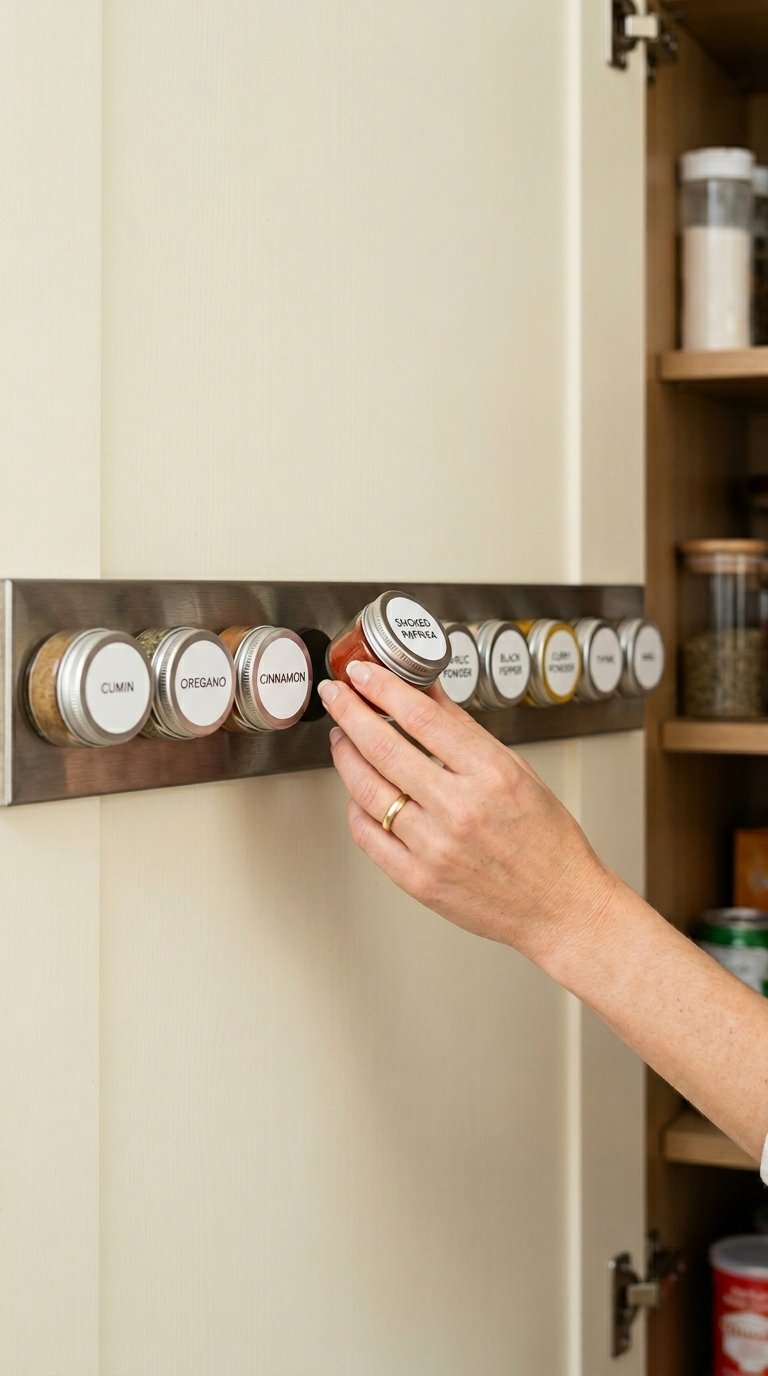
Magnetic spice jars mounted on a metal strip take your spice storage completely off the shelves and onto the wall, freeing up valuable shelf space for larger items. A metal strip screwed into the wall holds a row of small magnetic jars that you can grab and replace with one hand while cooking.
This works beautifully on the inside of a pantry door or on any small wall section that would otherwise sit empty. It is a compact, clever solution that genuinely saves space. And honestly, it looks pretty great too.
13. Color-Coded Organization Zones
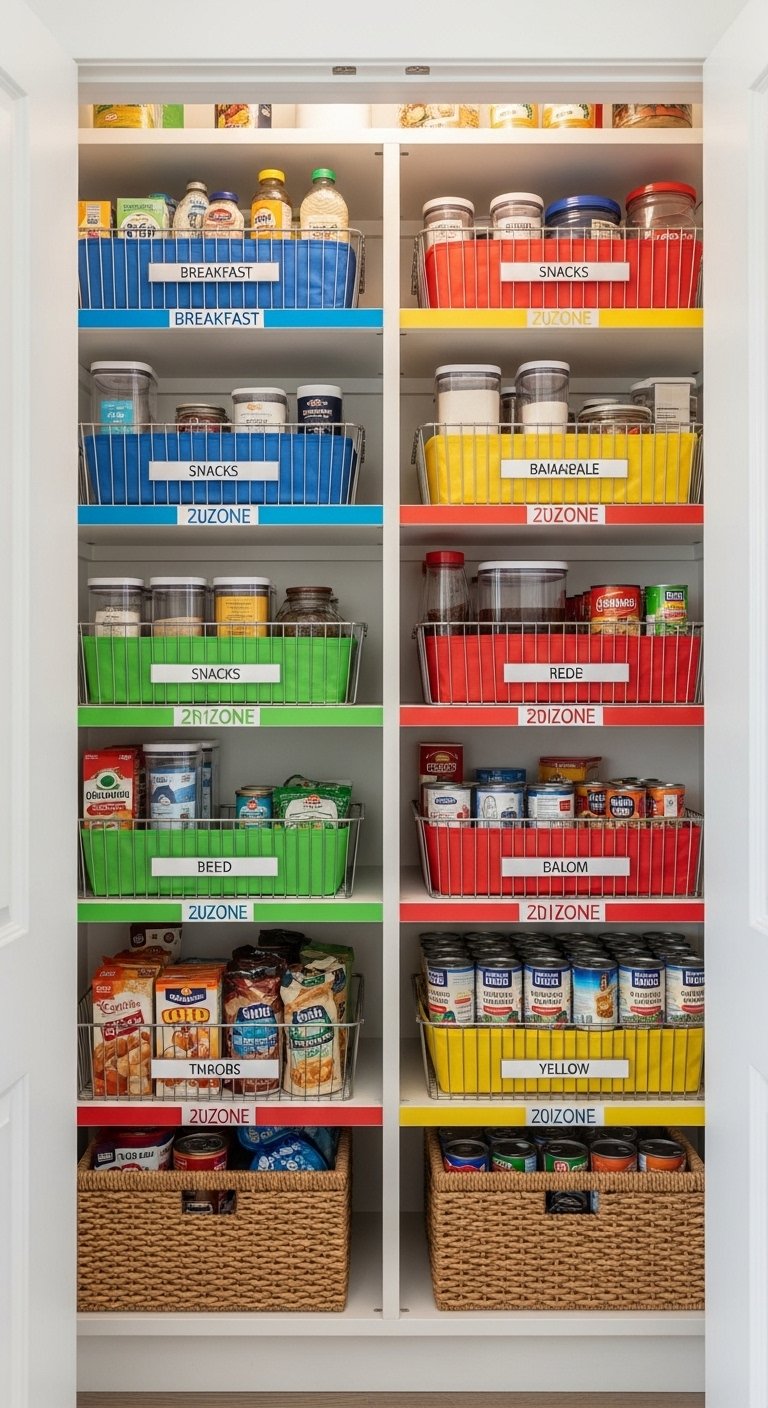
In a tiny pantry, color-coded zones help every member of your household find things quickly and put them back correctly. Assign a color or a section to each category. Everything baking-related lives in one zone. All snacks live in another. Canned goods have their own section.
You don’t need to paint anything or buy matching colored containers to make this work. Simple colored labels or colored basket liners are enough to create visual zones that make navigation instinctive. The goal is to make the pantry’s organization system obvious to everyone who uses it.
14. A Tall Slim Rolling Cart
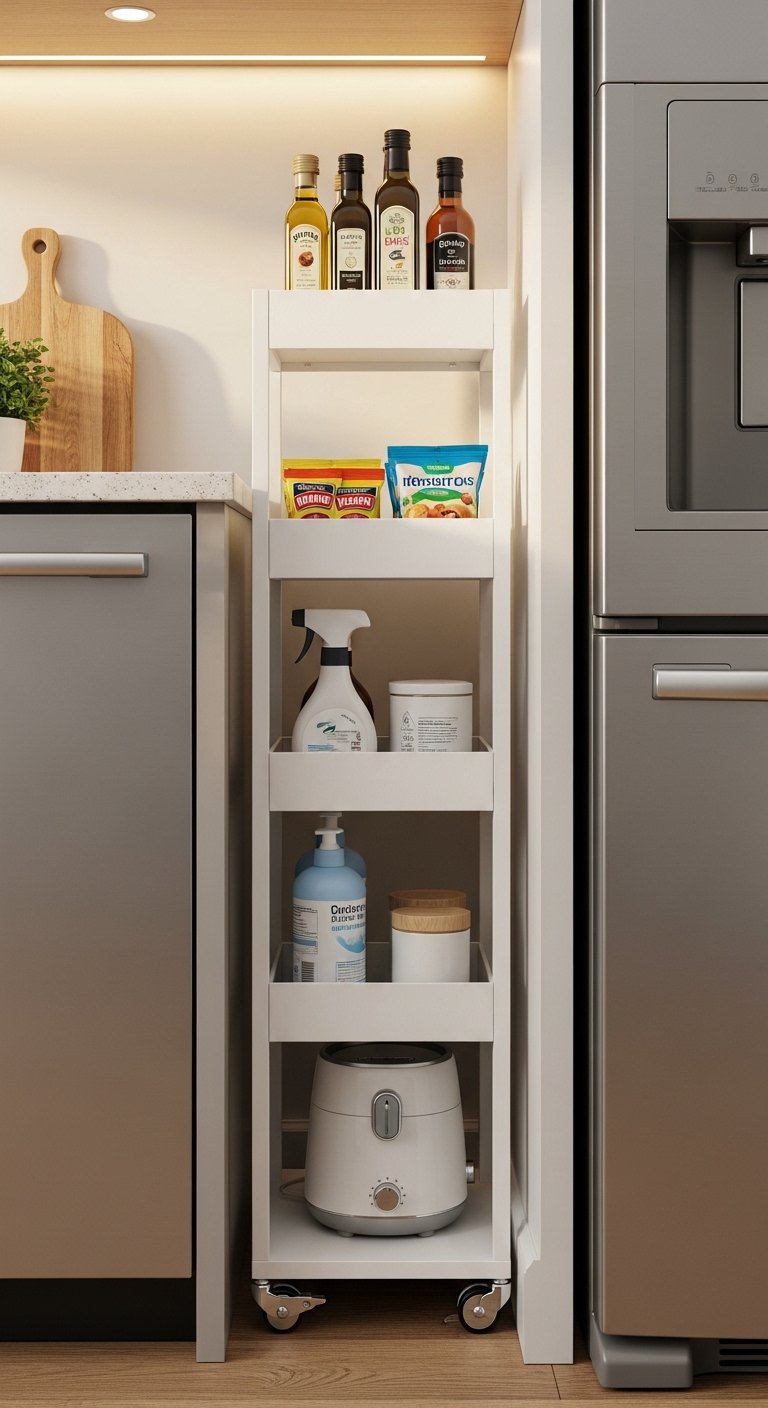
A tall slim rolling cart beside or inside your pantry adds extra storage capacity that you can pull out when you need it and tuck away when you don’t. Look for carts between 8 and 12 inches wide with multiple shelves or drawers.
These work especially well in the gap between a pantry wall and an appliance, or in the narrow space beside the pantry door. You can store oils, vinegars, snacks, or even cleaning supplies on a rolling cart and roll it directly to where you need it in the kitchen. Practical and flexible, which is exactly what a tiny pantry needs.
15. Under-Shelf Hanging Baskets
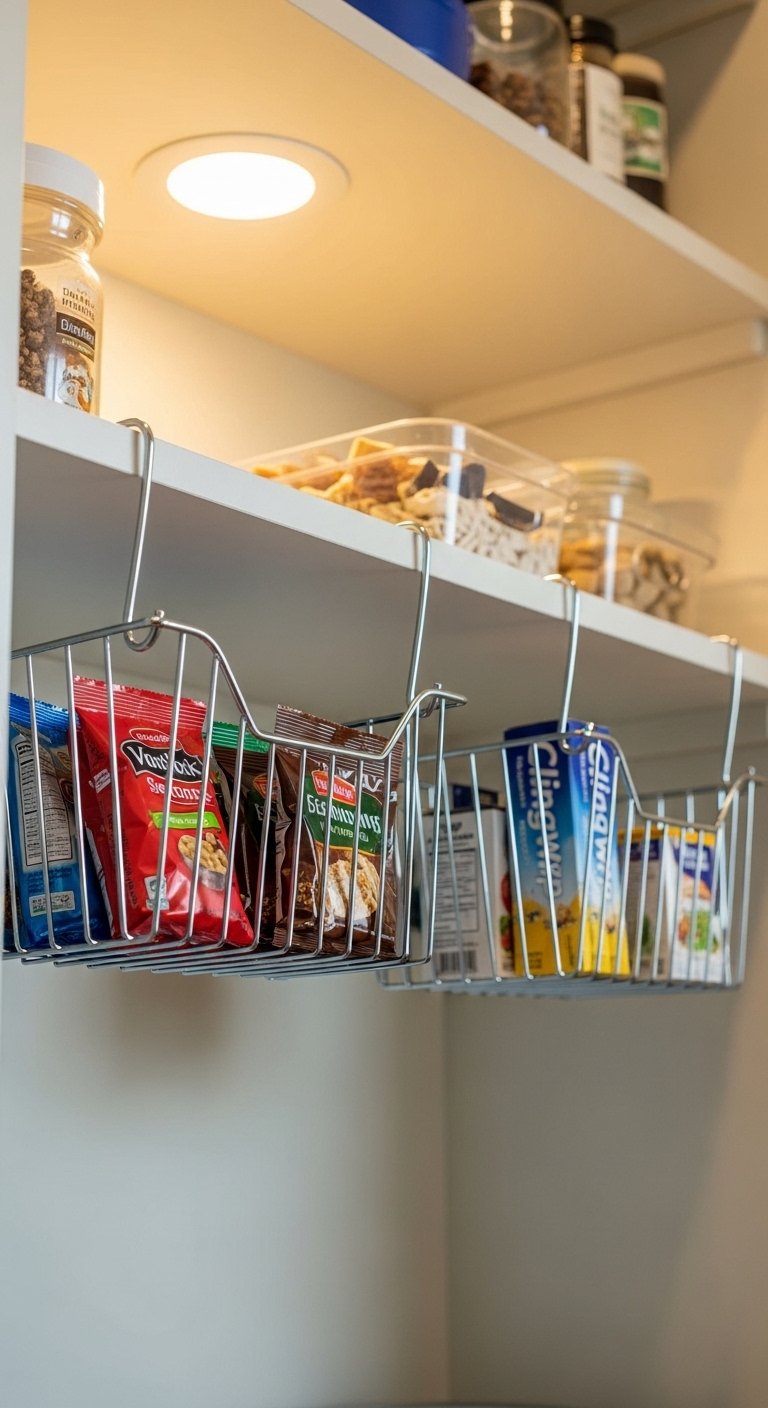
Under-shelf hanging baskets clip or slide onto the underside of an existing shelf and create a bonus storage level below it without adding any new shelving. They are one of the most overlooked and most effective tiny pantry hacks available.
Use them for lightweight items like small snack bags, packets of seasoning, foil and wrap boxes, or fruit that you want to store at room temperature. Each basket adds a meaningful amount of storage without requiring any installation work. FYI, these cost almost nothing and make an immediate visible difference.
16. A Dedicated Wine or Bottle Rack
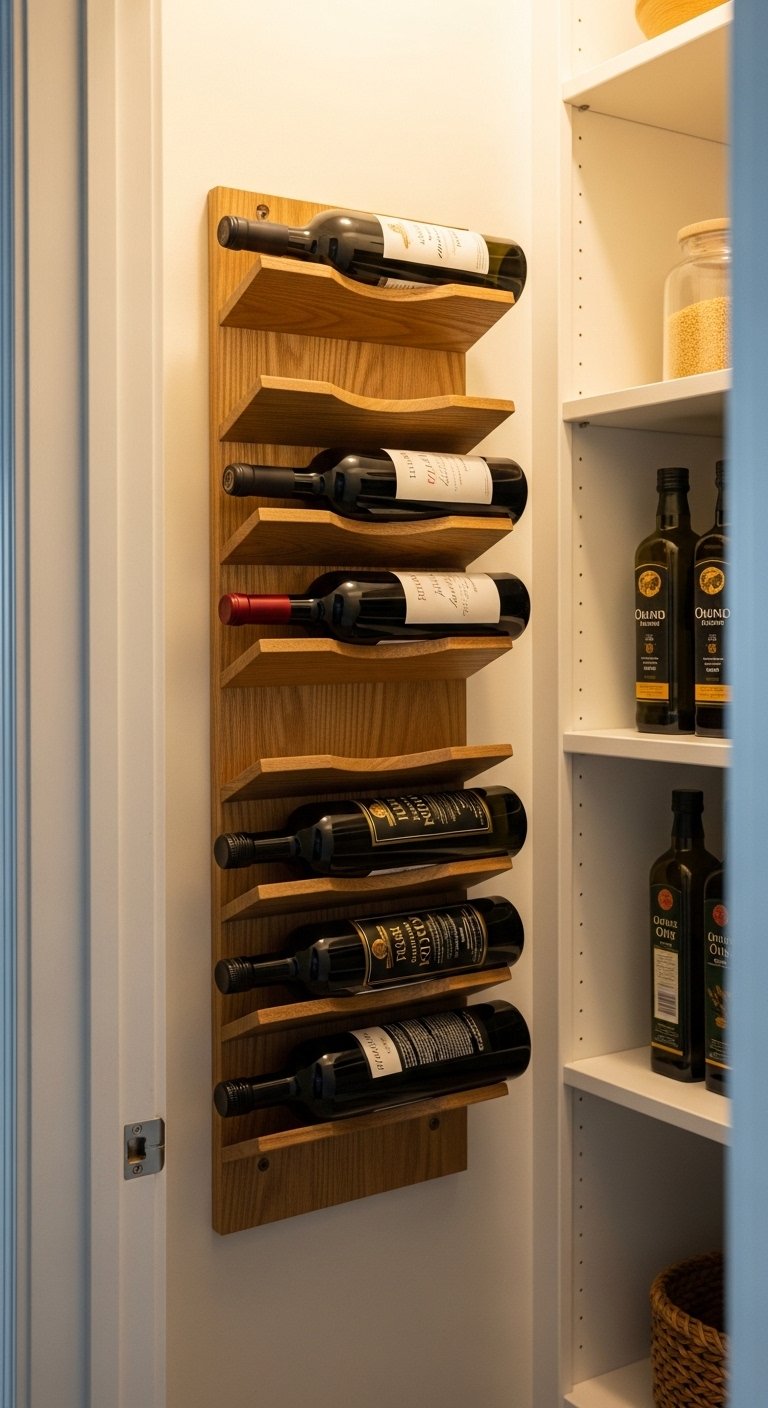
If you store wine, olive oil, large sauce bottles, or any other tall bottles in your tiny pantry, a dedicated bottle or wine rack organizes them far more efficiently than standing them upright on a shelf.
A wall-mounted wine rack or a freestanding bottle rack uses the bottles’ horizontal storage position to stack them compactly, taking up much less vertical space than bottles standing upright. This frees your shelves for items that need to stand flat and makes the bottles themselves much easier to grab.
17. A Chalkboard Paint Back Wall
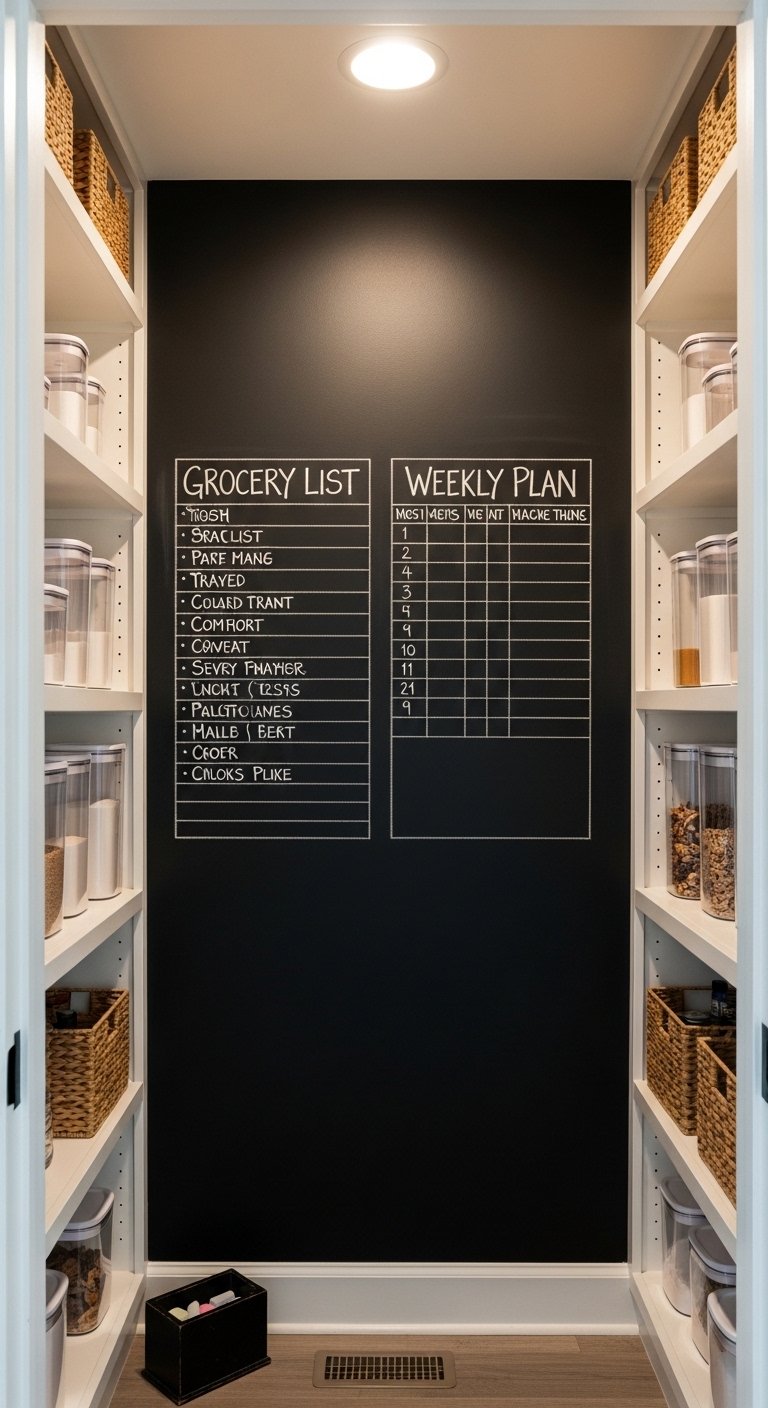
Paint the back wall of your tiny pantry with chalkboard paint and you gain a functional writing surface for grocery lists, meal plans, and inventory notes without using any shelf or floor space.
This also adds a visual depth trick to the pantry. A darker back wall makes the space feel more intentional and designed, like a contrast color in a room rather than just the inside of a closet. It costs almost nothing and adds real functional value every single week.
18. Tiered Shelf Risers for Canned Goods
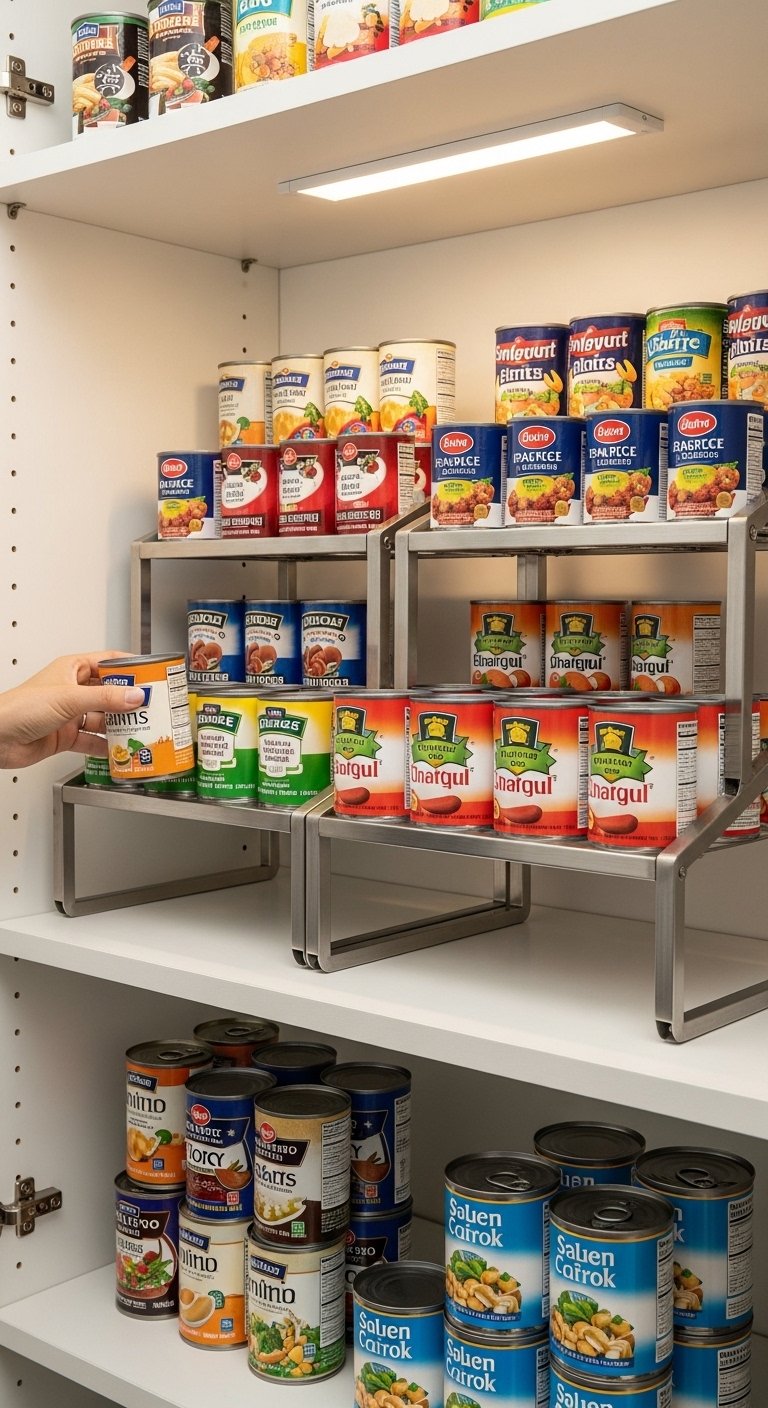
Tiered shelf risers sit on existing shelves and create two or three levels of display so you can see every can at once rather than stacking them on top of each other. In a tiny pantry, this means you use the full height of each shelf section rather than just the front half.
Choose risers sized to your shelf depth and made from materials that won’t warp or bend under the weight of full cans. Stainless steel and heavy-duty acrylic risers are the most durable options. Bamboo risers look beautiful but work best with lighter items.
19. A Small Built-In Desk or Fold-Down Surface
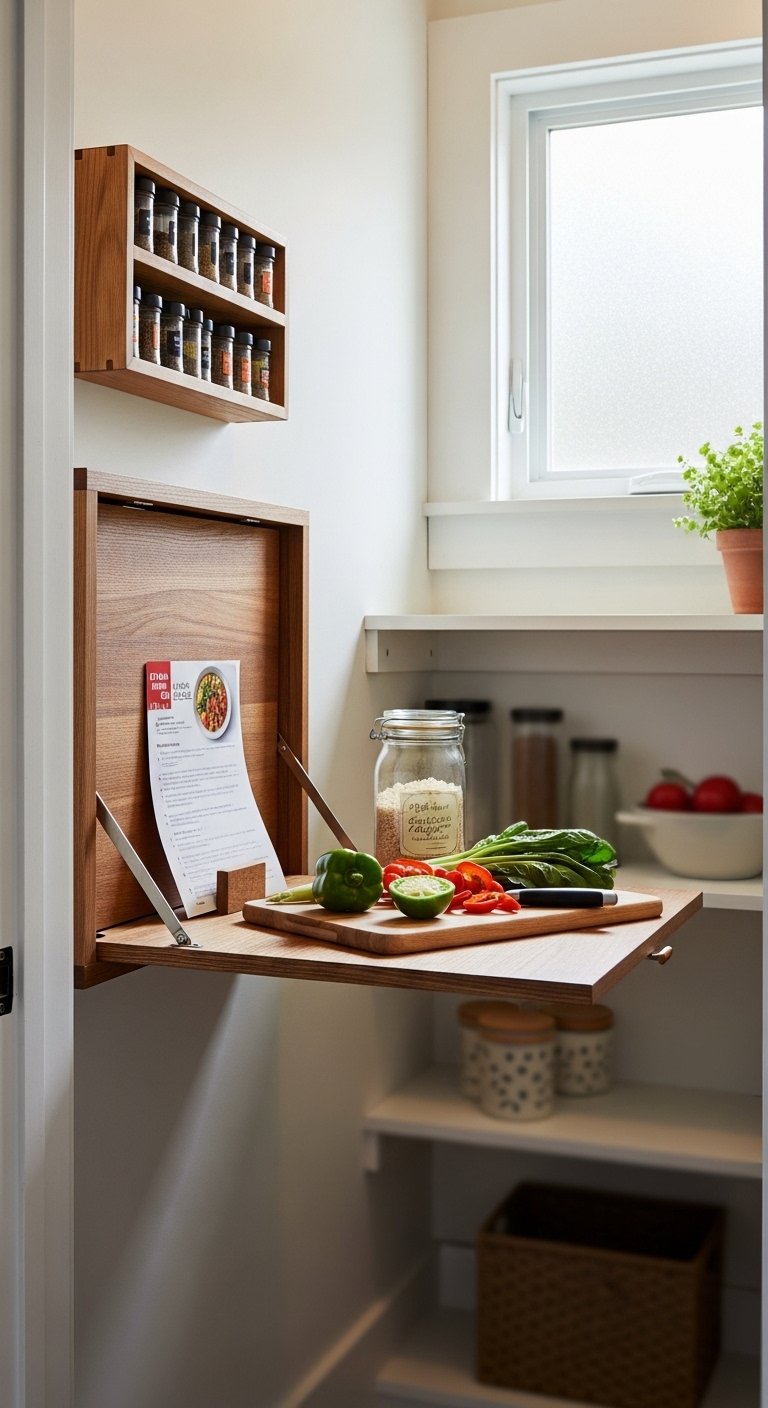
A tiny pantry can do more than just store food. If you have even a little extra width, a small built-in fold-down surface or a narrow counter turns the pantry into a mini meal prep station or a household command center.
Fold-down surfaces mount to the wall on hinges and collapse flat when not in use. Open them up for meal prep, recipe browsing, or sorting groceries. This works especially well in apartment kitchens where counter space is genuinely scarce and every extra surface matters.
20. Stackable Bins for Produce Storage
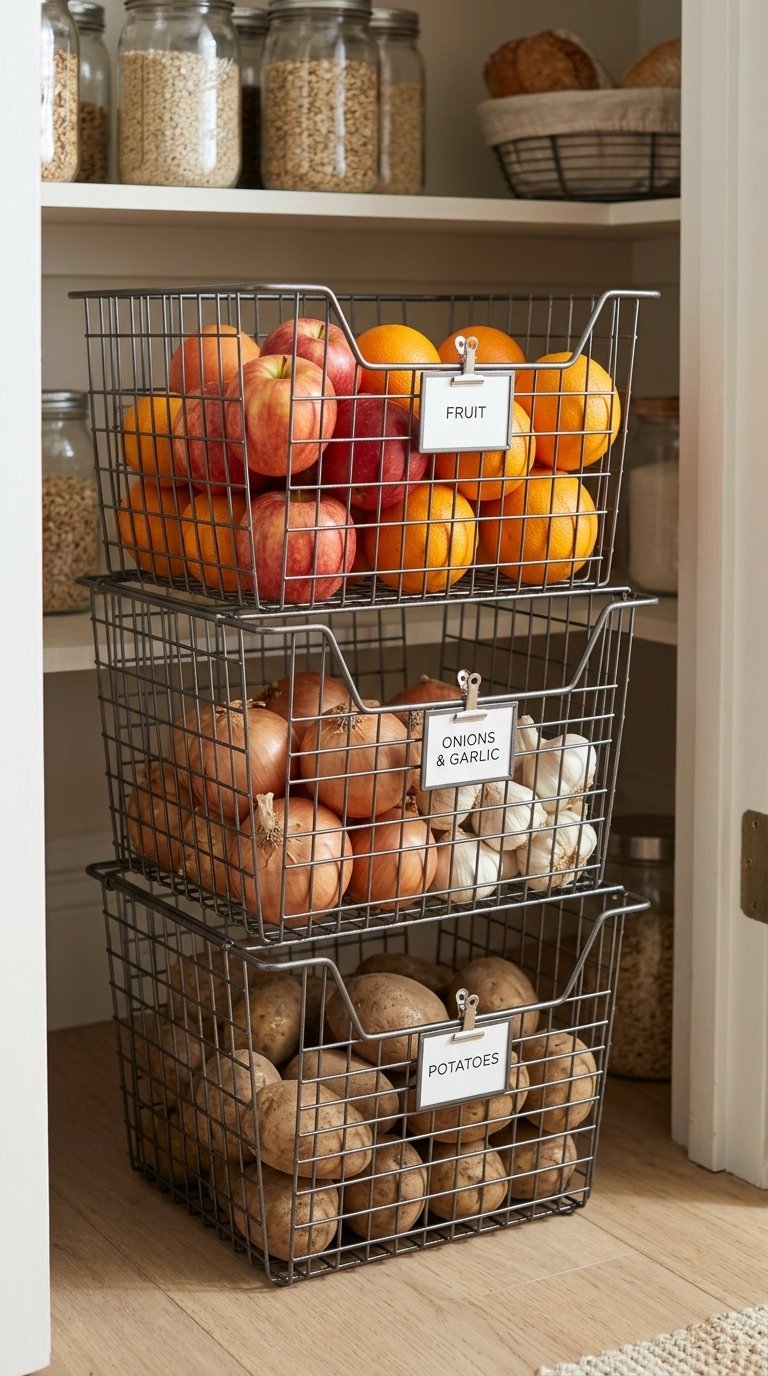
Stackable produce bins store fruits and vegetables in a tiny pantry without taking up shelf space that better-suited containers need. The open wire or mesh design allows airflow, which keeps produce fresher longer at room temperature.
Stack two or three bins to create a vertical column of produce storage that takes up only a small footprint on the pantry floor or on a low shelf. Use the top bin for items you use daily and lower bins for items you use less frequently.
21. A Mirror or Light-Colored Paint to Open the Space
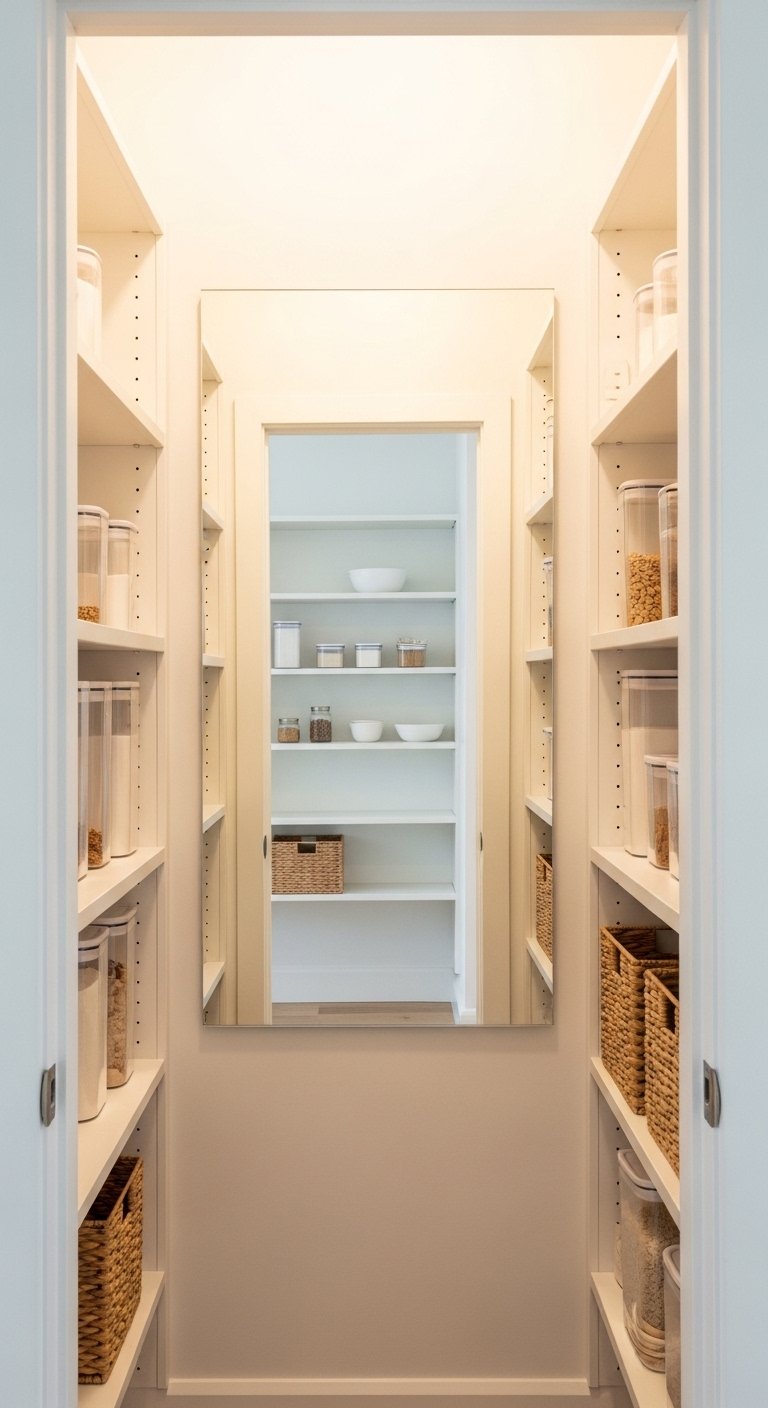
Small spaces benefit enormously from visual tricks that make them feel larger. Painting your tiny pantry in a light color or adding a small mirror panel on one wall makes the space feel more open and less claustrophobic.
White, soft cream, and pale sage are all excellent choices for a tiny pantry interior. A mirror panel on the back wall or inside the door reflects light and visually doubles the perceived depth of the space. These changes cost very little but make a meaningful difference in how the pantry feels to use every day.
22. Motion-Sensor LED Lights
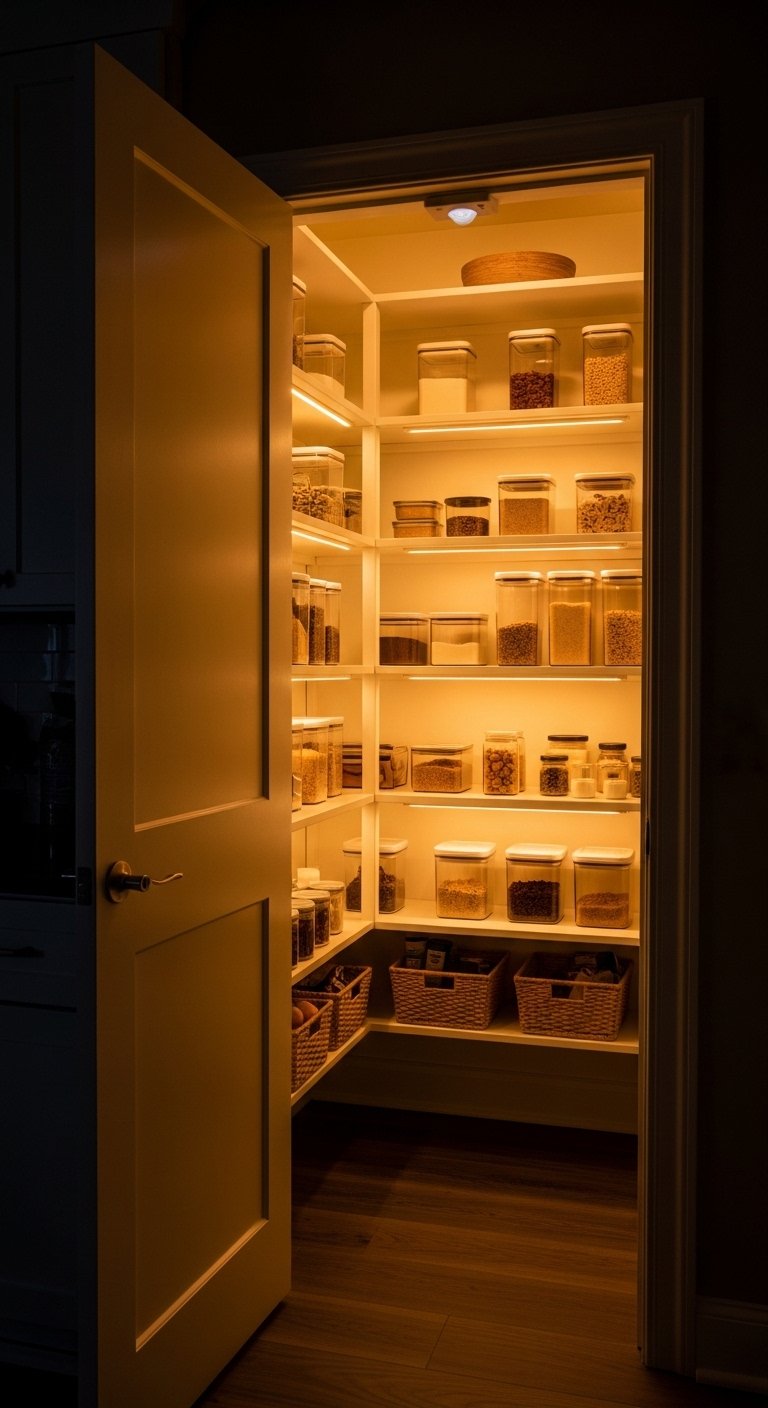
A tiny pantry with poor lighting feels twice as small and half as useful. Motion-sensor LED lights that switch on automatically when you open the pantry door fix the lighting problem without requiring any electrical work.
Battery-powered LED strip lights or puck lights with motion sensors stick directly to the underside of shelves and activate instantly when you enter the pantry. They illuminate every shelf clearly, make finding things faster, and switch off automatically so you never waste battery life.
23. A Bespoke Built-In Pantry Unit
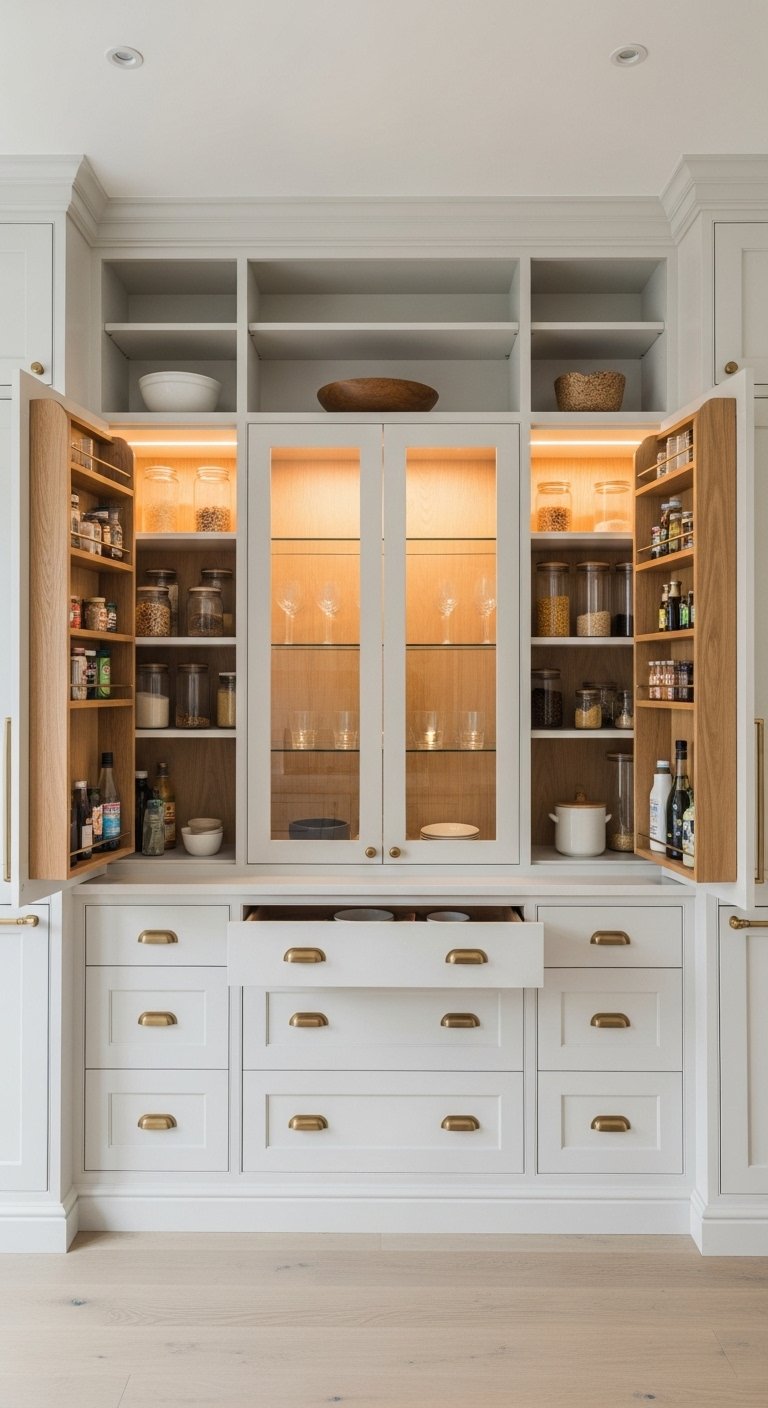
If your budget allows it, a bespoke built-in pantry unit designed specifically for your space and storage needs is the ultimate tiny pantry solution. A cabinetmaker can design every shelf, drawer, basket, and door rack to perfectly suit your exact inventory and your exact space dimensions.
Built-in units make use of every awkward corner, ceiling height, and wall niche that off-the-shelf solutions simply cannot accommodate. They also add real value to your home. If you plan to stay in your current kitchen for years, this investment pays dividends every single day.
24. Repurpose a Wardrobe or Armoire
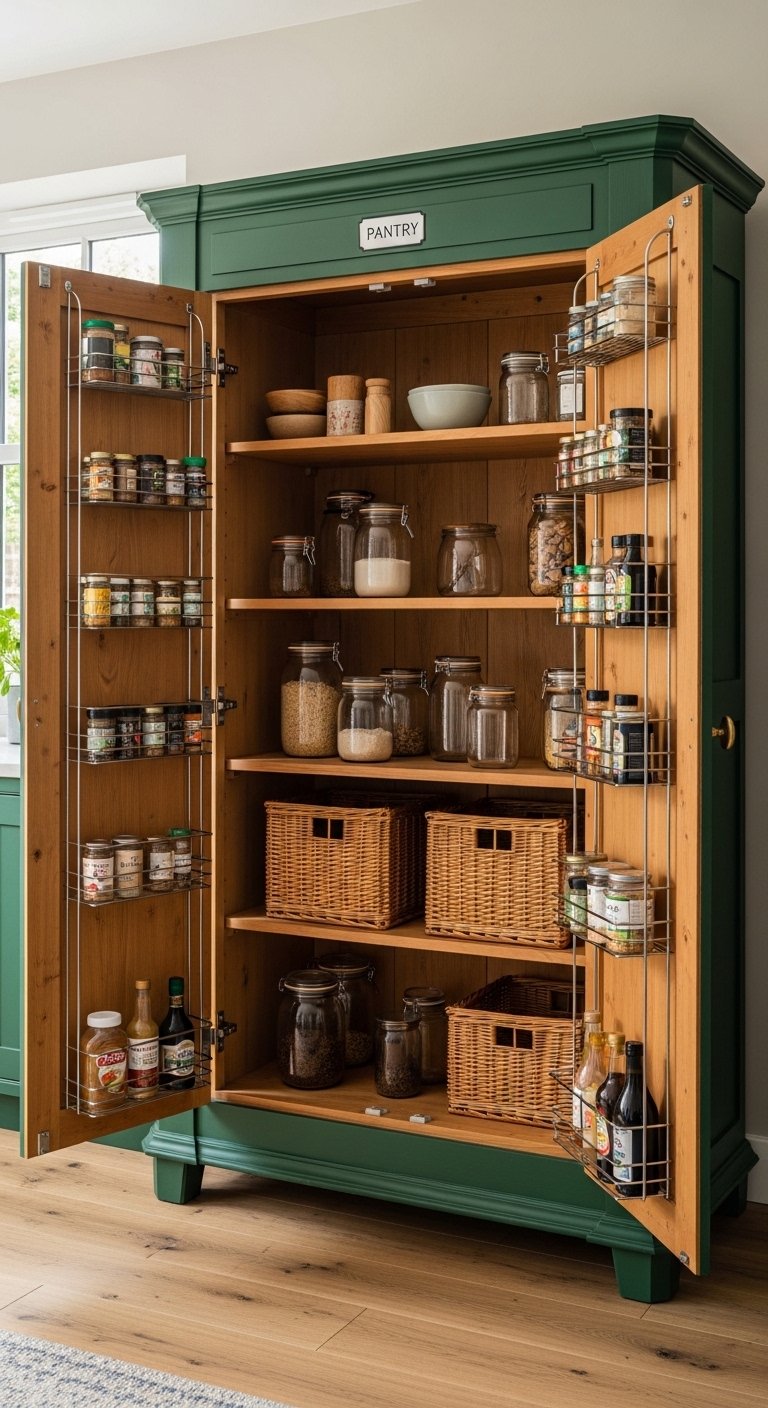
No dedicated pantry space at all? Repurpose a wardrobe or freestanding armoire into a kitchen pantry. Remove the hanging rail, add shelves at the heights you need, fit the door interiors with racks and hooks, and you have a fully functioning pantry in a piece of furniture.
This approach works beautifully in open-plan kitchens, studio apartments, or any kitchen without a dedicated storage closet. Paint the exterior to match your kitchen cabinets and the armoire looks like it was always meant to be there. Customization is the key to making this look intentional.
25. Regular Decluttering as a Design Strategy
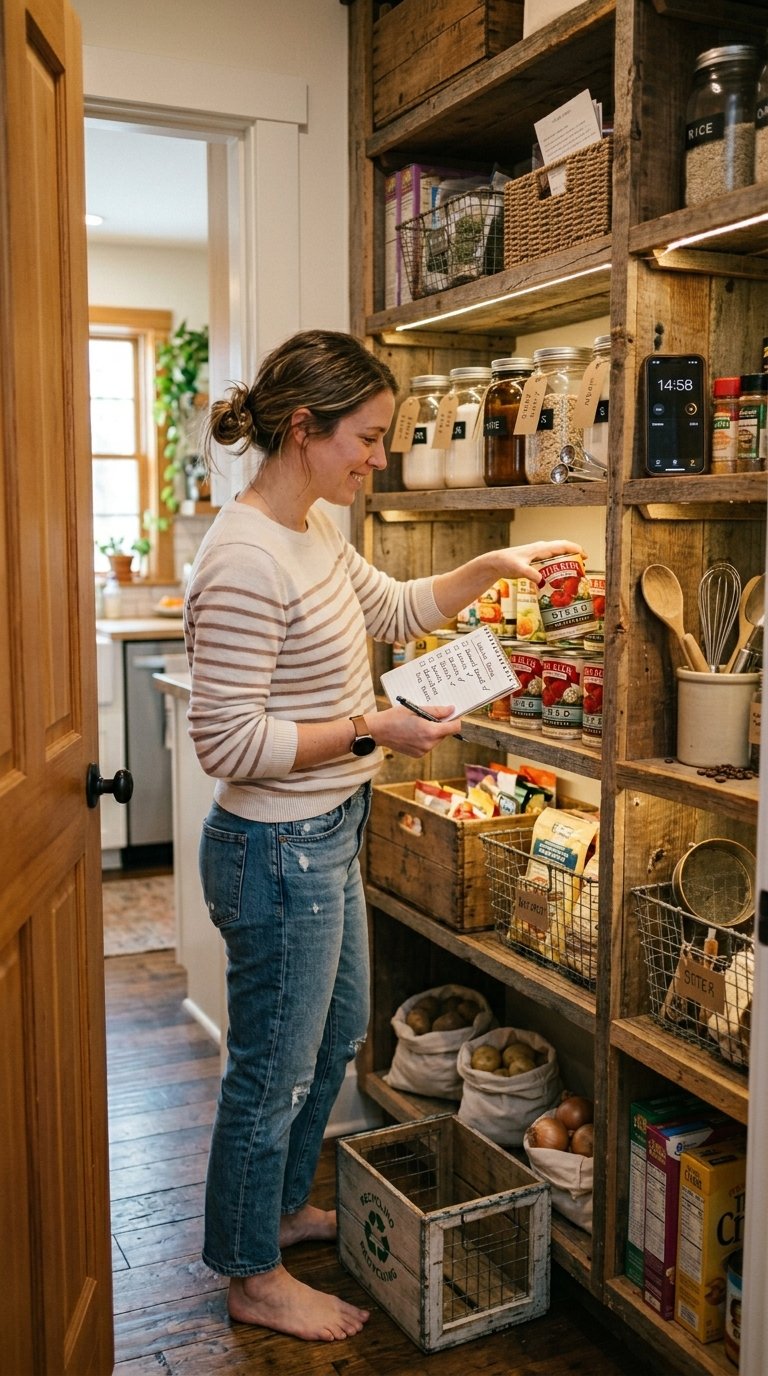
Here is the design idea that costs absolutely nothing but makes the biggest long-term difference. Regular monthly decluttering keeps a tiny pantry functioning at its best. A small pantry has zero tolerance for items that don’t belong there.
Set aside 15 minutes once a month to pull things forward, check expiry dates, remove items that have migrated from other rooms, and reorganize anything that has drifted out of its zone. A tiny pantry that you maintain consistently will always outperform a larger pantry that nobody manages. Size matters less than system, and system only works if you maintain it.
Final Thoughts
A tiny pantry is genuinely workable when you approach it with the right strategies. The ideas that make the biggest difference are using vertical space fully, keeping every surface including walls and doors active, using clear containers so you always know what you have, and maintaining the system with a quick monthly reset.
You don’t need to implement all 25 ideas at once. Pick three or four that address your biggest pain points and start there. Floor-to-ceiling shelving, clear containers, a door rack, and a lazy Susan can completely transform even the most hopeless tiny pantry.
The goal is not a perfect pantry. The goal is a pantry that works for you every single day without frustration. And with a little planning and the right tools, even the tiniest pantry space can absolutely do that.
Now go measure that closet. Your organized tiny pantry is closer than you think.