21 Family Room Ideas to Create a Space Your Family Loves
Your family room gets more use than any other space in your home. It absorbs movie nights, homework sessions, Sunday mornings, and everything in between. Most family rooms fail because they prioritize looks over function, or function over looks. The best ones do both.
1. Build Around a Sectional Sofa
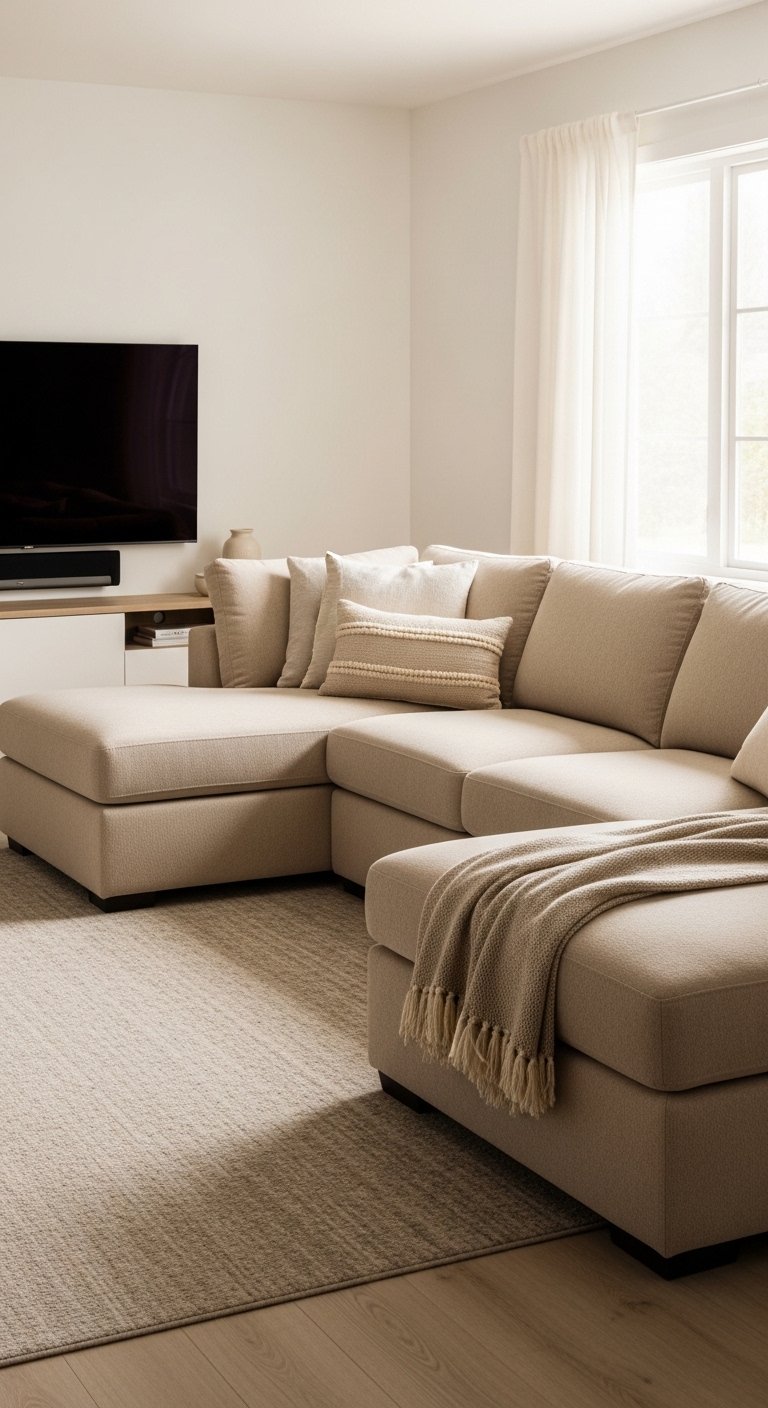
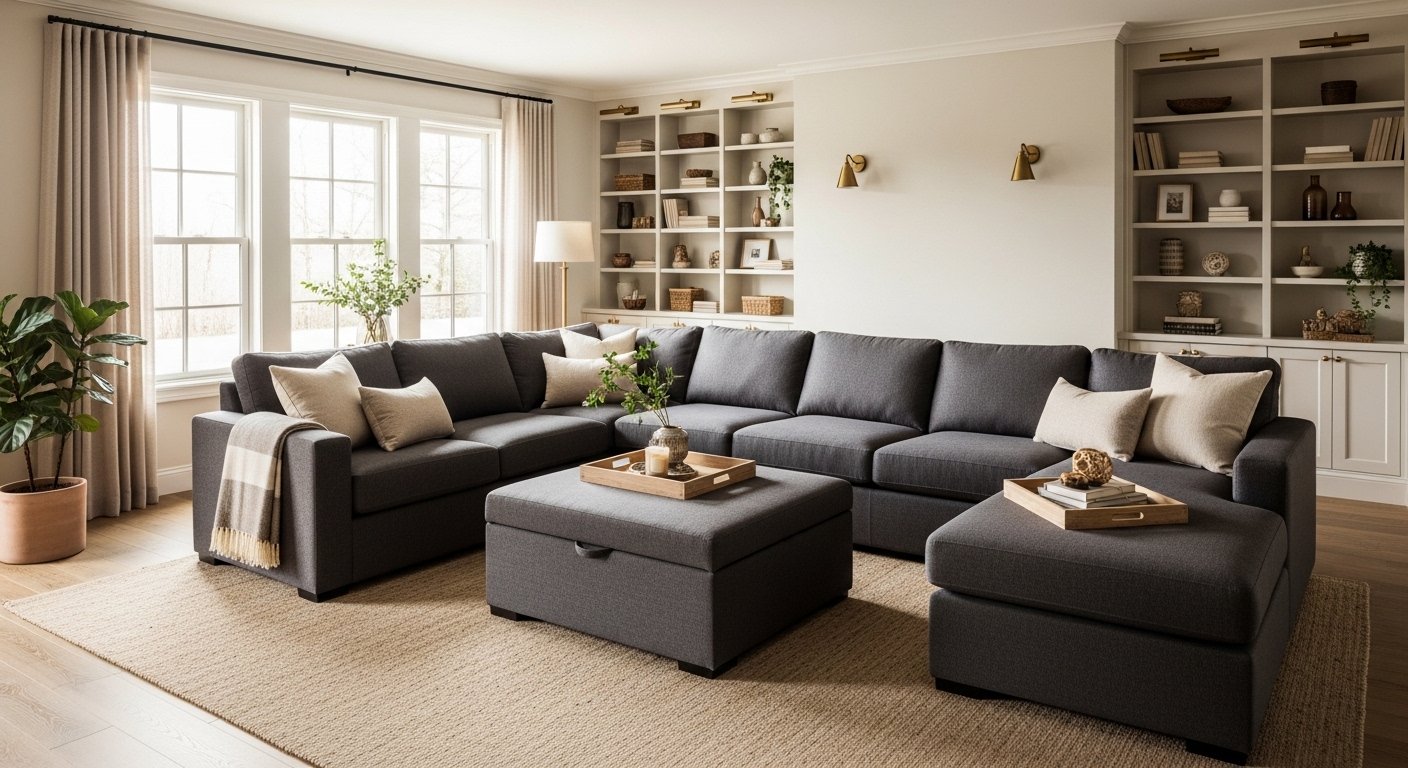
A sectional sofa solves the seating problem once and for all. It fits more people than a sofa and two chairs, keeps everyone facing the same direction, and anchors the entire room layout.
Choose an L-shape for square rooms and a U-shape for large rectangular spaces. Fabric matters more than color. Performance fabric in a tightly woven weave handles spills, pets, and daily use without showing wear in six months.
Best fabric options: Bouclé for low-traffic homes, performance velvet for medium use, solution-dyed acrylic for homes with kids and pets.
2. Mount the TV at the Right Height
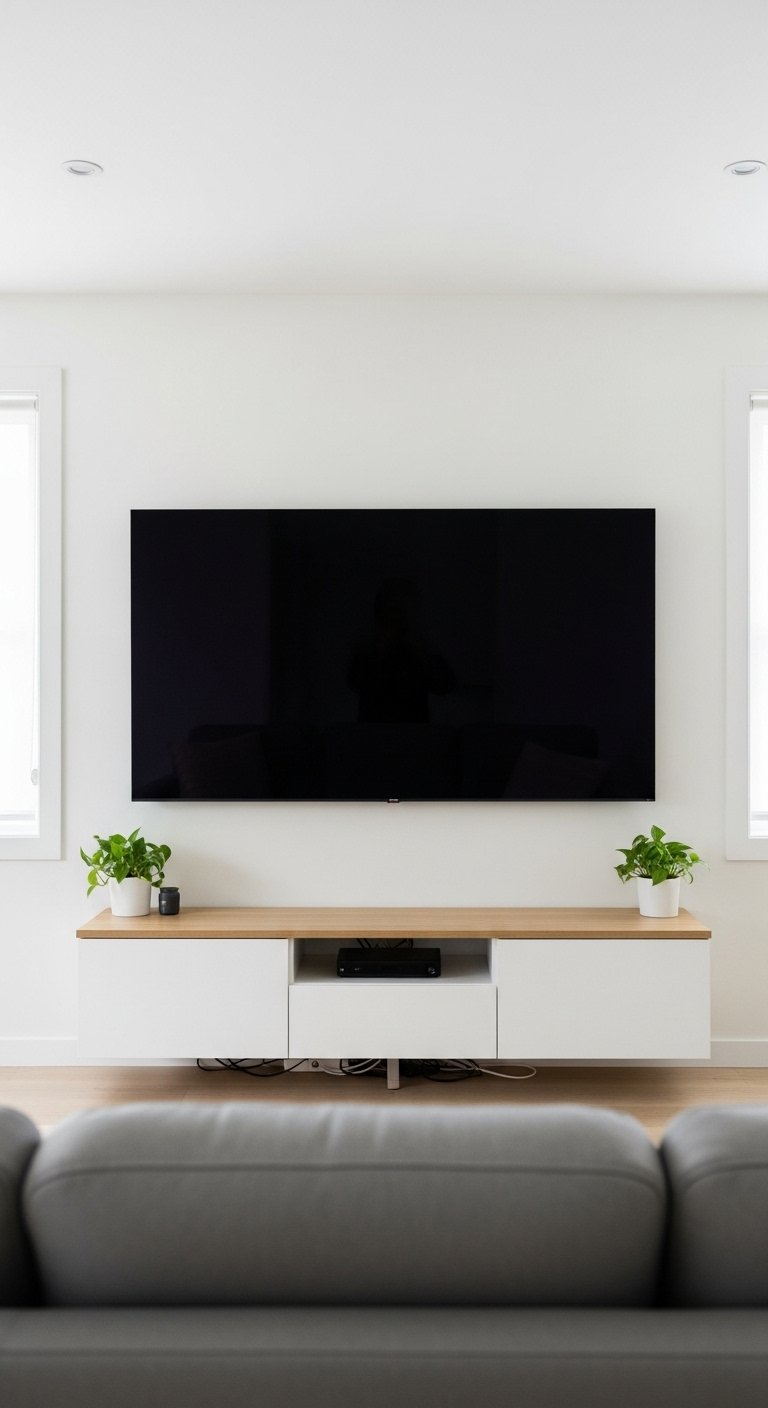
Most people mount their television too high. Eye level when seated is the correct height. That means the center of the screen sits at roughly 42 to 48 inches from the floor for standard sofa seating.
Mounting it above the fireplace looks symmetrical but forces your neck into an uncomfortable upward angle for every viewing session. Move it to a dedicated media wall instead.
Rule: Center of screen at seated eye level. No exceptions.
3. Add a Second Seating Zone
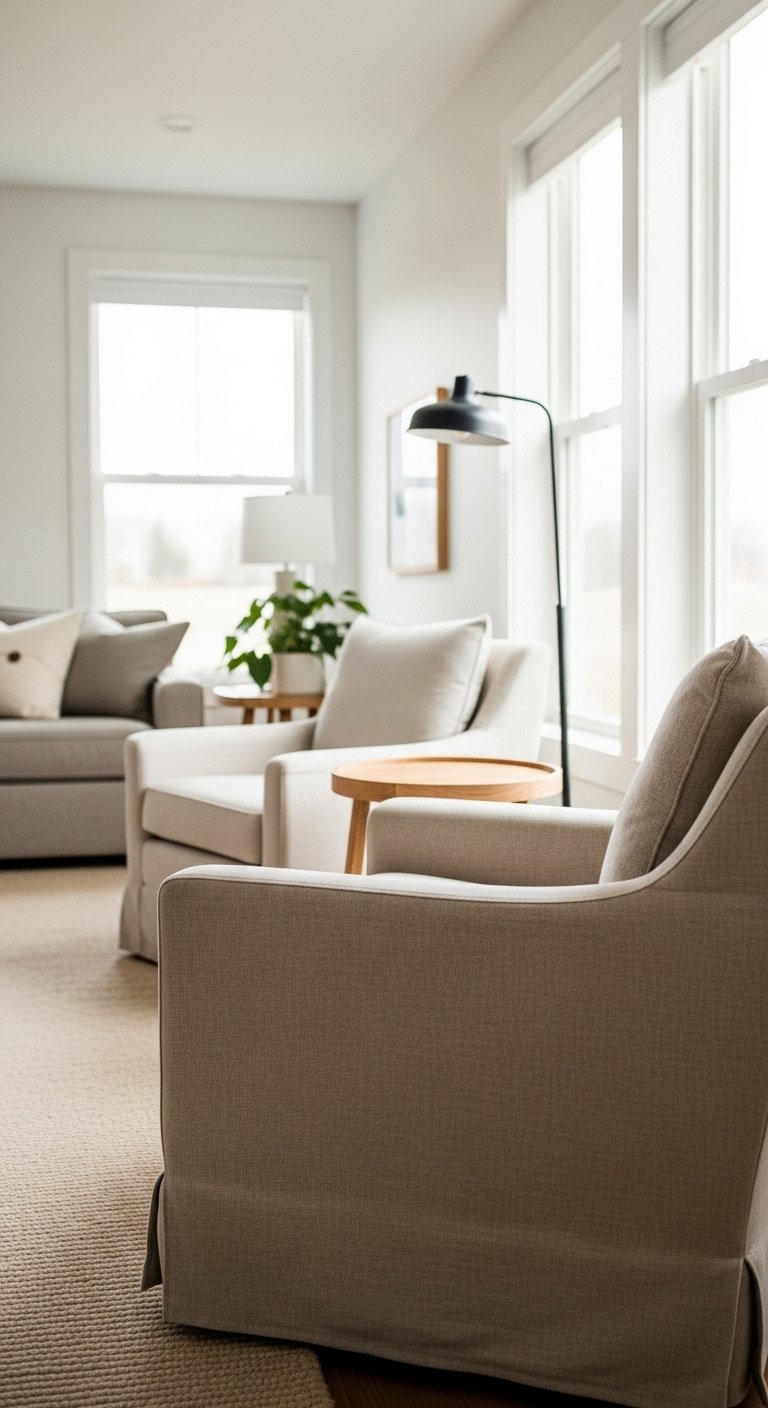
A single seating arrangement limits how the room gets used. Add a second zone with two chairs and a small table in a corner or beside a window. This creates a reading area, a conversation spot, or a place for one person to sit separately without leaving the room.
Two zones make a family room feel larger, not smaller. The defined areas give the space purpose beyond the main sofa.
Best chairs for a second zone: Swivel chairs, wingback chairs, or a pair of linen armchairs.
4. Use a Large Area Rug to Define the Space
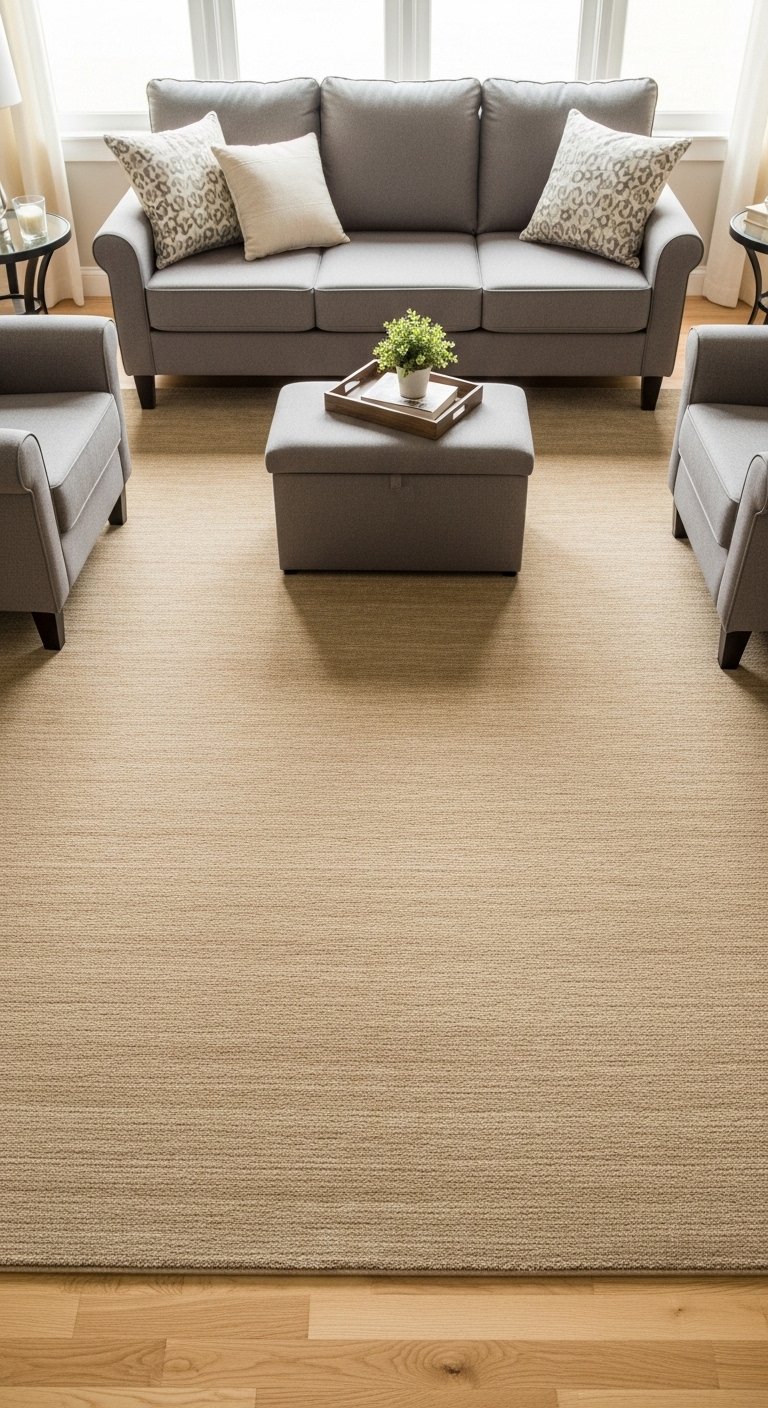
An area rug defines the seating zone and separates it visually from the rest of the room. The most common mistake is choosing a rug that is too small. All four legs of every sofa and chair should sit on the rug, or at minimum the front two legs of each piece.
In a family room, choose a rug with a low pile. High pile rugs trap crumbs, shed fibers, and wear unevenly under heavy furniture.
Minimum rug size for most family rooms: 8×10 feet. Go to 9×12 for larger spaces.
5. Install Built-In Shelving Around the TV
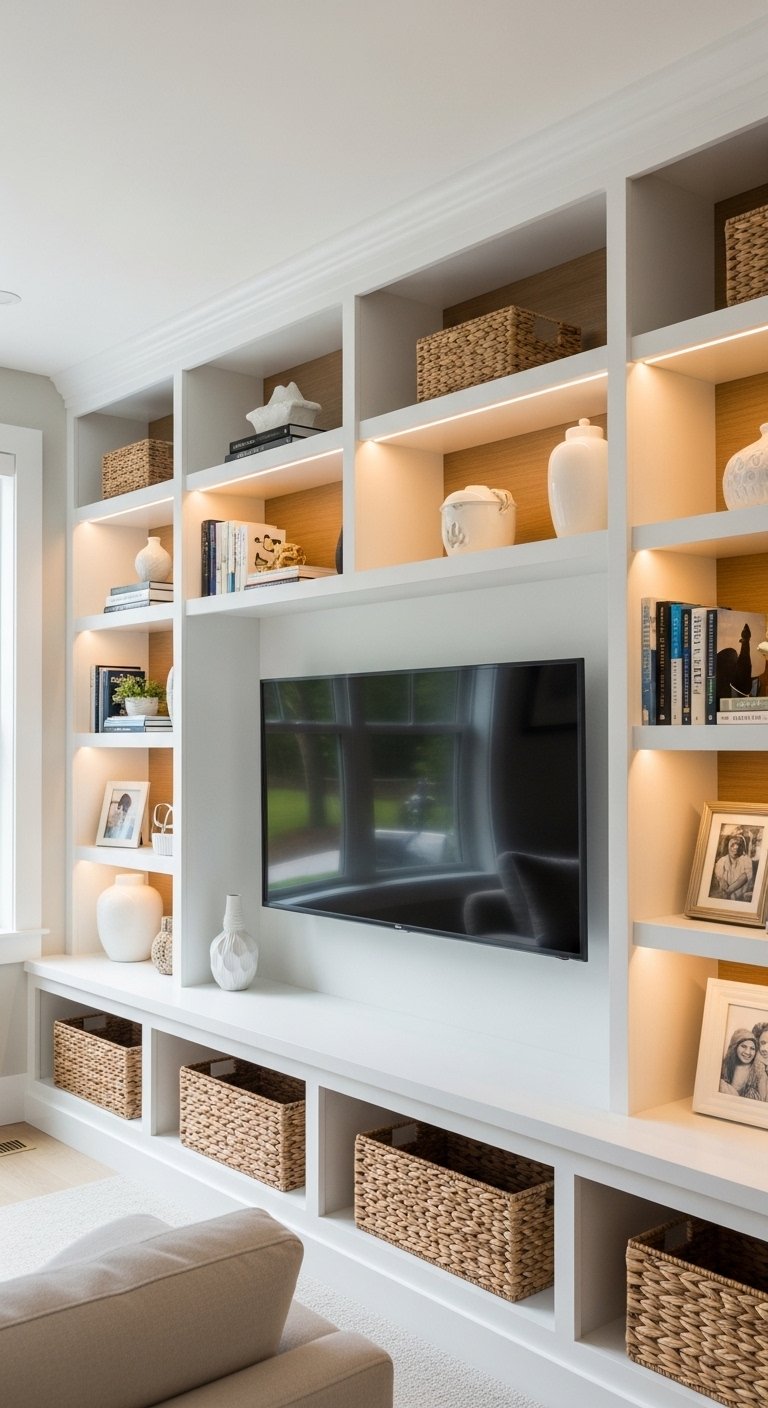
Built-in shelving flanking the television turns a blank media wall into a functional feature. The shelves hold books, objects, baskets for remotes and chargers, and personal items that make the room feel lived-in.
Symmetrical built-ins on either side of the TV create a formal, considered look. Asymmetrical arrangements feel more relaxed. Either works. The key is building them floor to ceiling to maximize storage and visual impact.
Storage tip: Use closed baskets on lower shelves to hide toys, cables, and clutter at child height.
6. Choose Wipeable Paint Finishes
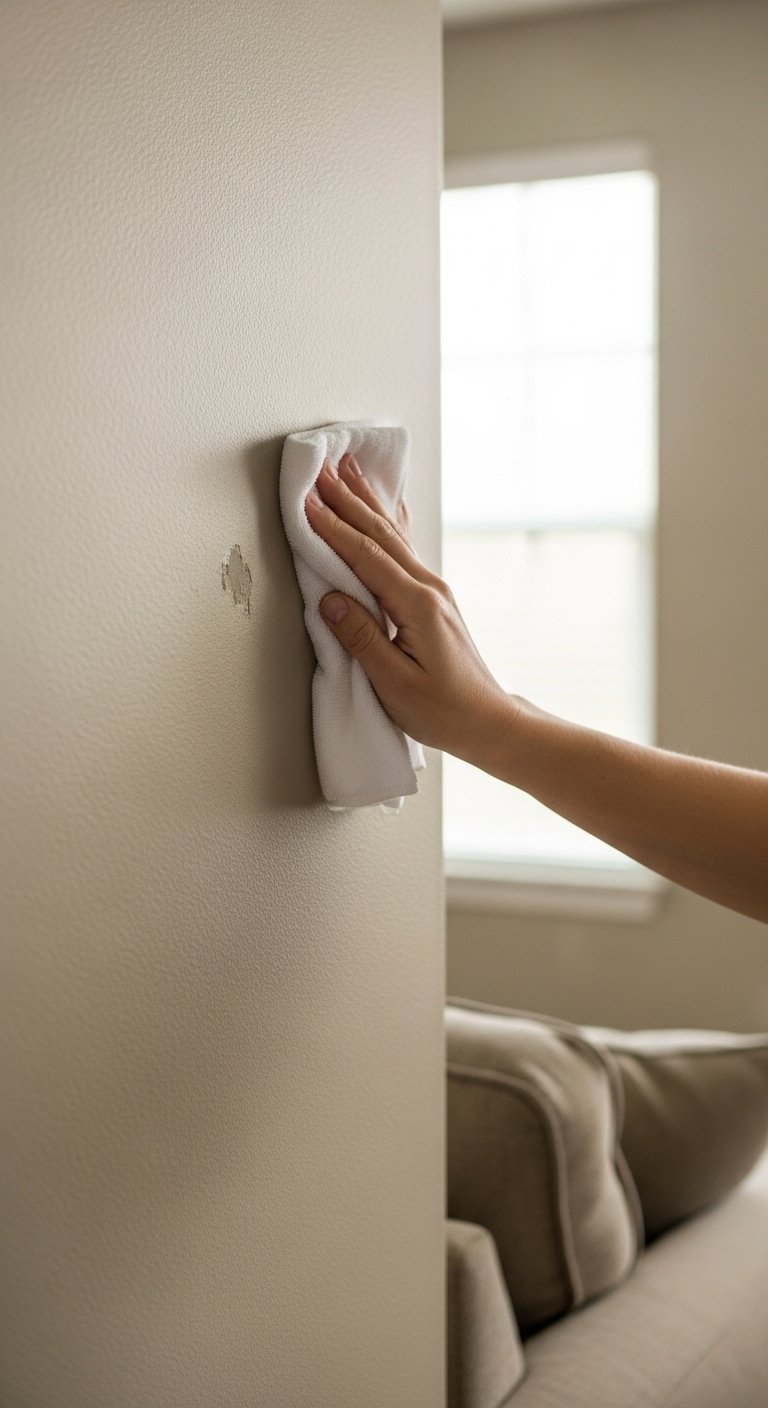
Flat paint absorbs marks and scuffs permanently. In a family room, use an eggshell or satin finish on all walls. Both finishes clean with a damp cloth without removing the paint layer underneath.
This is a small decision with a large daily impact. Scuff marks, handprints, and crayon on an eggshell wall disappear in seconds. On flat paint, they stay.
Best finish for family rooms: Eggshell. Satin for walls near high-traffic zones like doorways.
7. Add Storage Ottomans
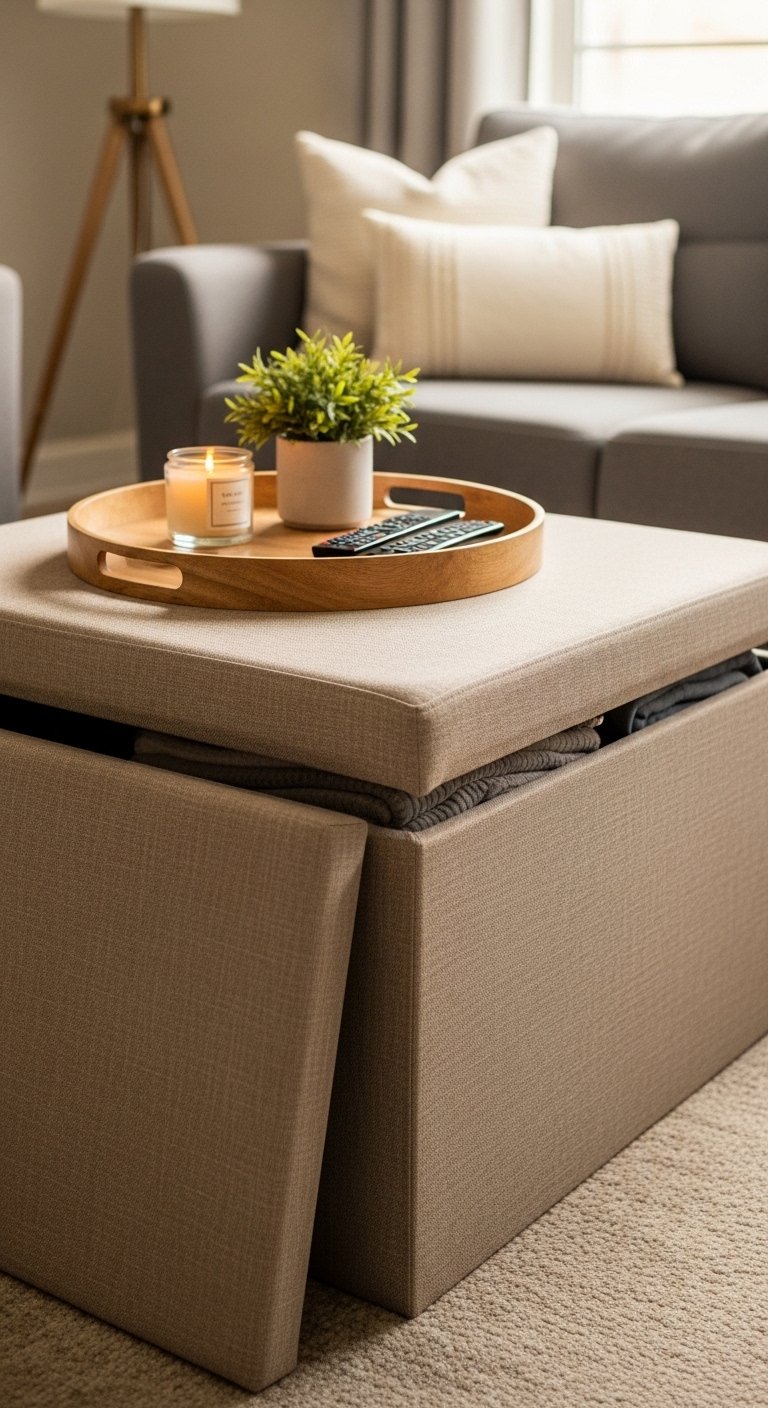
A storage ottoman replaces a coffee table, provides extra seating, and hides items inside. In a family room, it solves three problems with one piece of furniture.
Choose a firm-topped ottoman if you want it to function as a coffee table with a tray on top. Choose a soft-topped version if you want it primarily as a footrest or extra seat.
Sizing: The ottoman should be roughly two-thirds the length of your sofa.
- Stores blankets, games, and remotes
- Works as extra seating for guests
- Replaces a hard coffee table in homes with young children
8. Layer Your Lighting
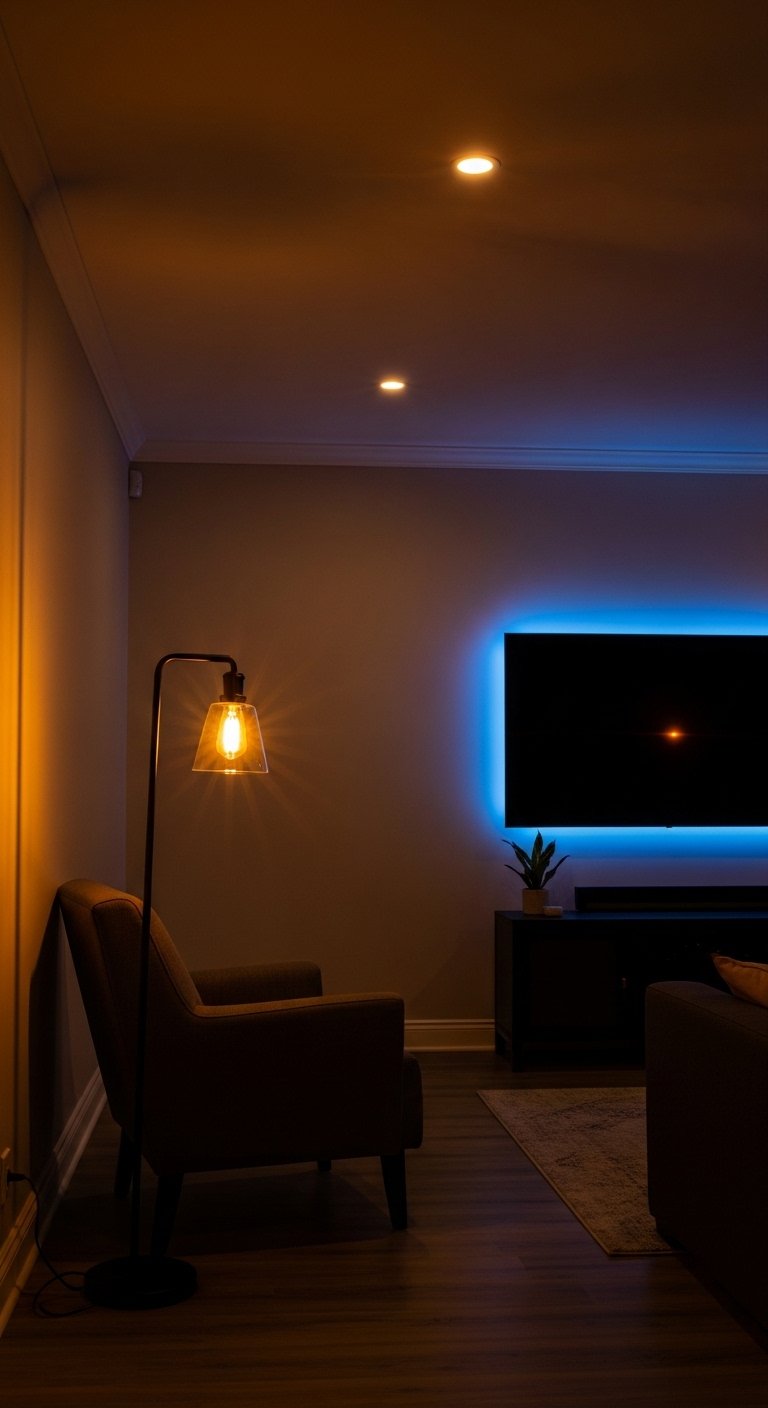
A single overhead light makes a family room feel flat and institutional. Layer three types of lighting instead.
- Ambient: Overhead fixture or recessed lights for general illumination
- Task: Floor lamps beside reading chairs, table lamps on side tables
- Accent: LED strip lighting behind the TV, picture lights above art, shelf lighting inside built-ins
The combination creates a room that shifts from bright and functional during the day to warm and relaxed in the evening. Put everything on dimmers.
9. Create a Dedicated Kids’ Corner
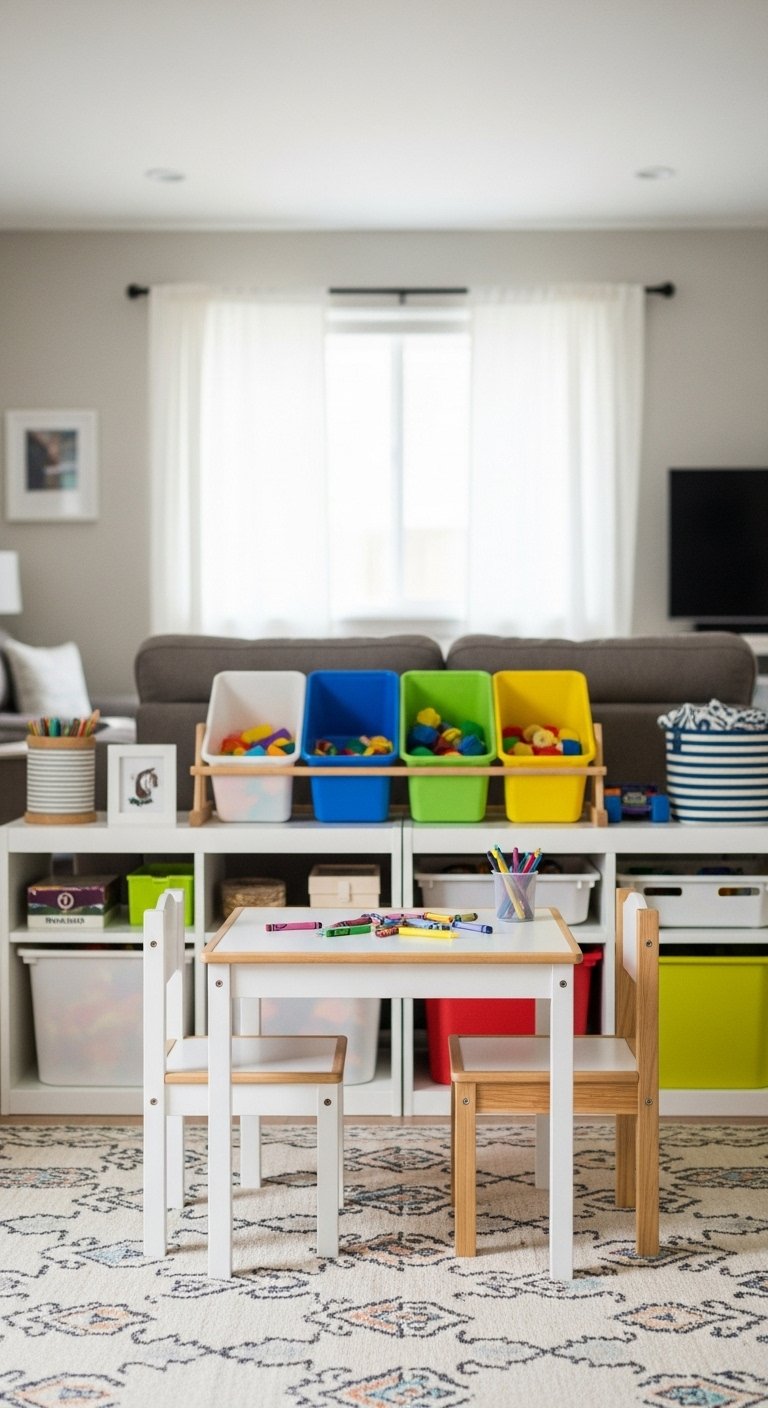
If children use the family room daily, give them a defined zone. A low shelf with toy storage, a small table and two chairs, and a soft rug creates a space that belongs to them within the larger room.
This keeps toys contained to one area instead of spreading across the entire floor. Children also engage better with a space that feels designed for their scale.
What to include:
- Low open shelving for toy bins
- Small table for drawing and games
- Washable rug in a dark pattern that hides stains
10. Use Curtains to Add Height
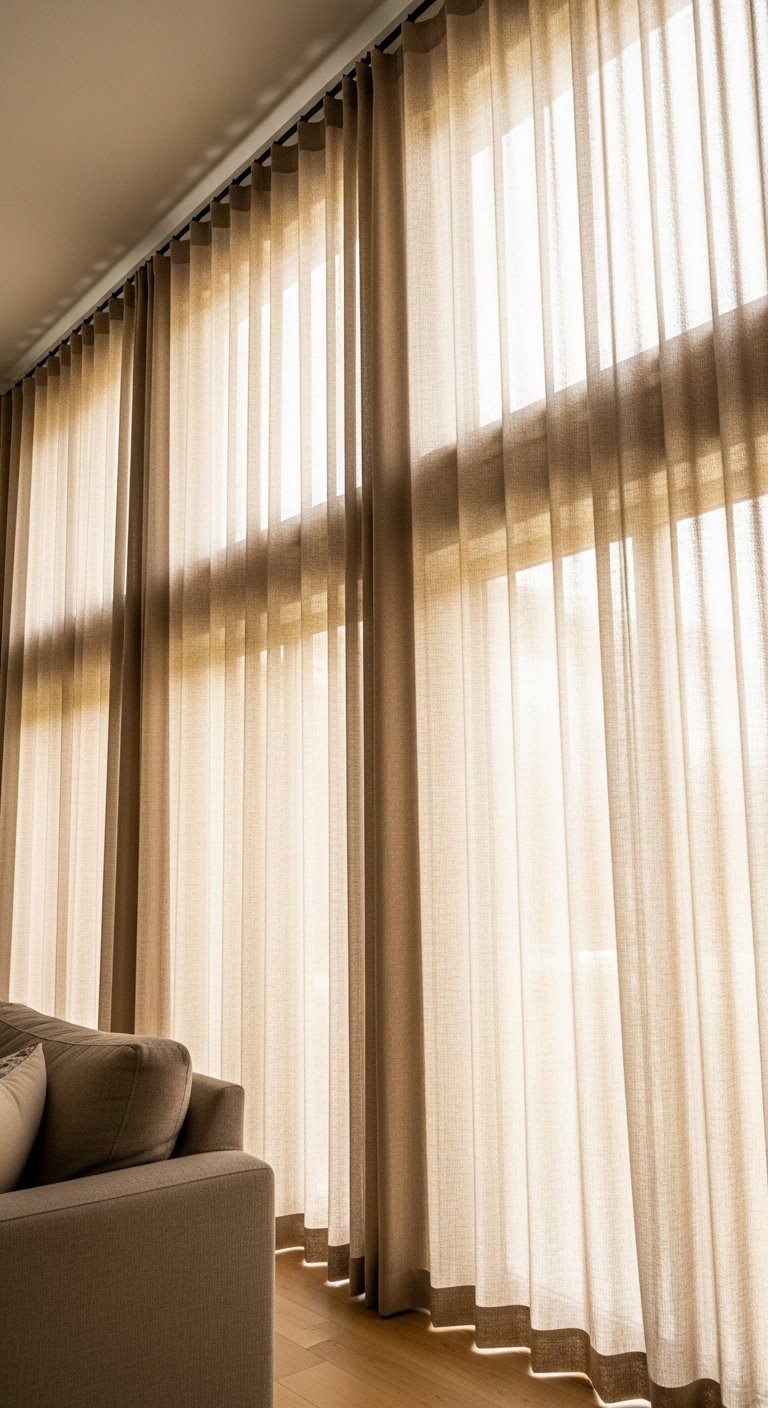
Hang curtain rods at ceiling height, not at window frame height. Curtains that run from ceiling to floor make windows appear taller and the room feel larger.
Choose a fabric with enough weight to hang straight. Sheer linen looks good in low-traffic rooms. In a family room, choose a medium-weight fabric in a washable material. Curtain panels collect dust and occasional spills in a heavily used room.
Rod placement: 4 to 6 inches above the window frame at minimum. Ceiling height for maximum effect.
11. Add a Fireplace Surround as a Focal Point
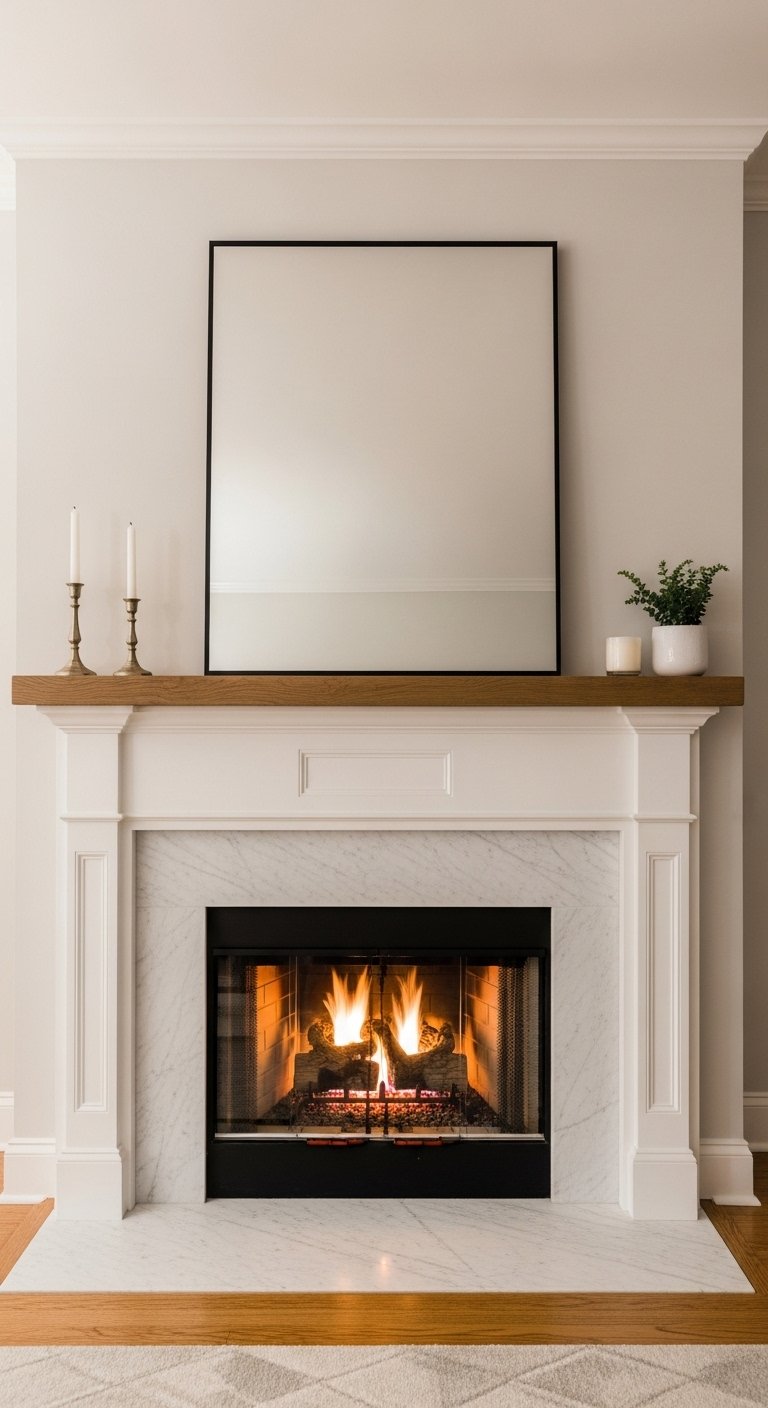
A fireplace gives the room a natural focal point that the TV wall alone rarely achieves. If you have an existing fireplace, invest in a proper surround and mantel. A well-designed surround in marble, plaster, or painted wood changes the entire character of the wall.
If you don’t have a gas or wood fireplace, an electric insert with a well-built surround delivers the visual effect without the installation cost.
Mantel styling: Keep it simple. Two to three objects maximum. A large mirror or artwork above.
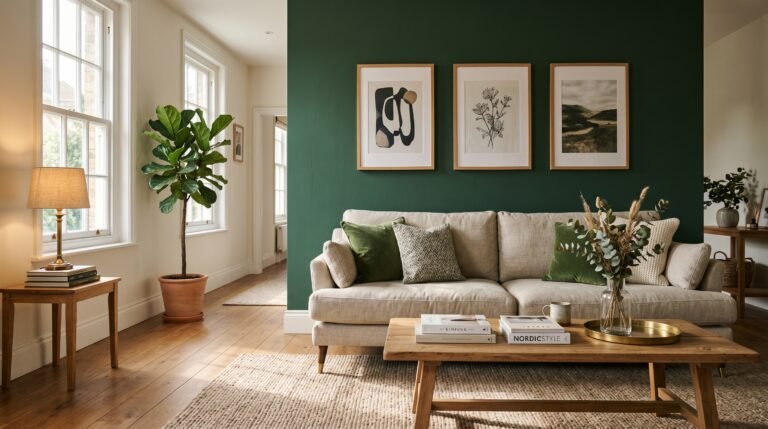
12. Paint an Accent Wall
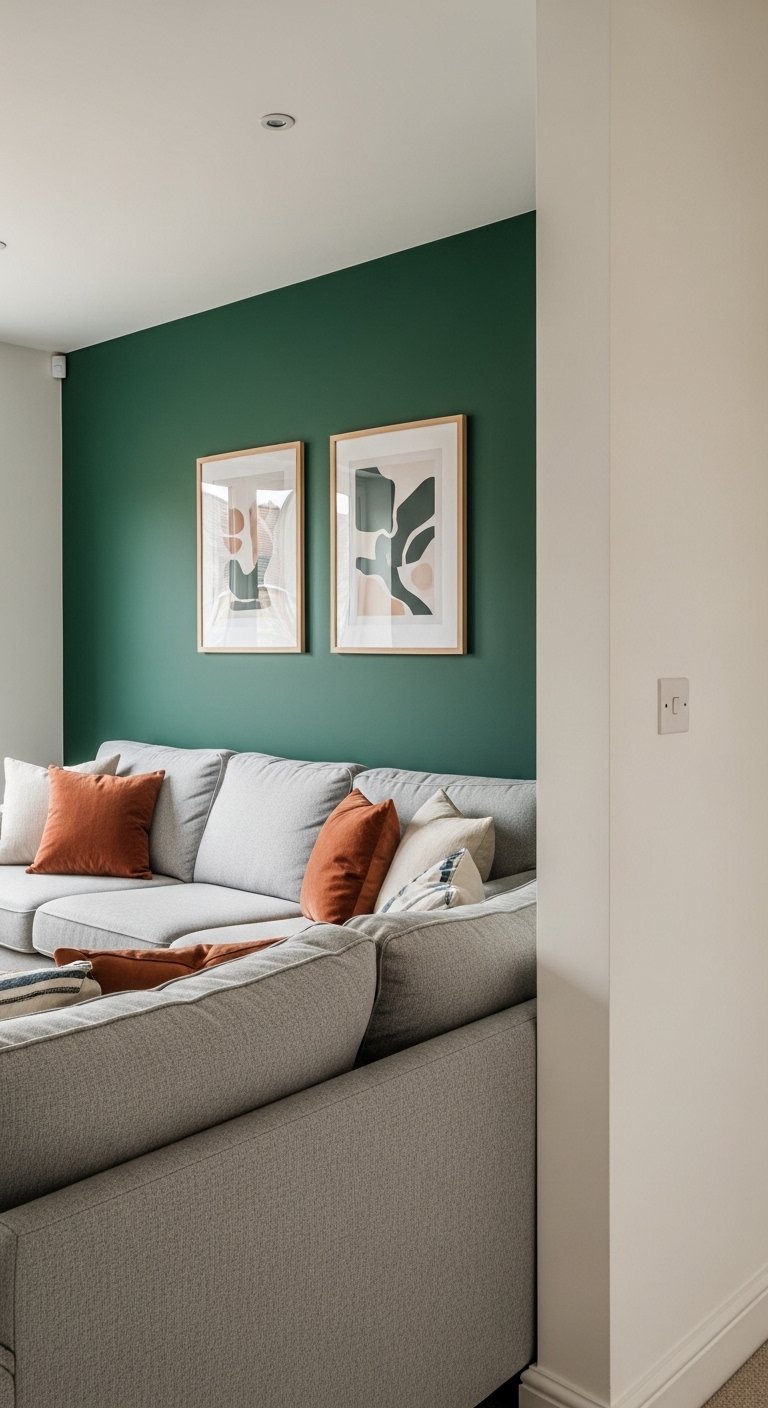
One wall in a deeper color adds depth and direction to a family room without committing the entire space to a bold color. The wall behind the sofa or the media wall are the two best candidates.
Choose a color two to three shades darker than your main wall color for a cohesive result. A completely unrelated color works if your furniture and rug already contain that tone.
Colors that work well: Deep green, navy, warm terracotta, charcoal grey.
13. Use a Console Table Behind the Sofa
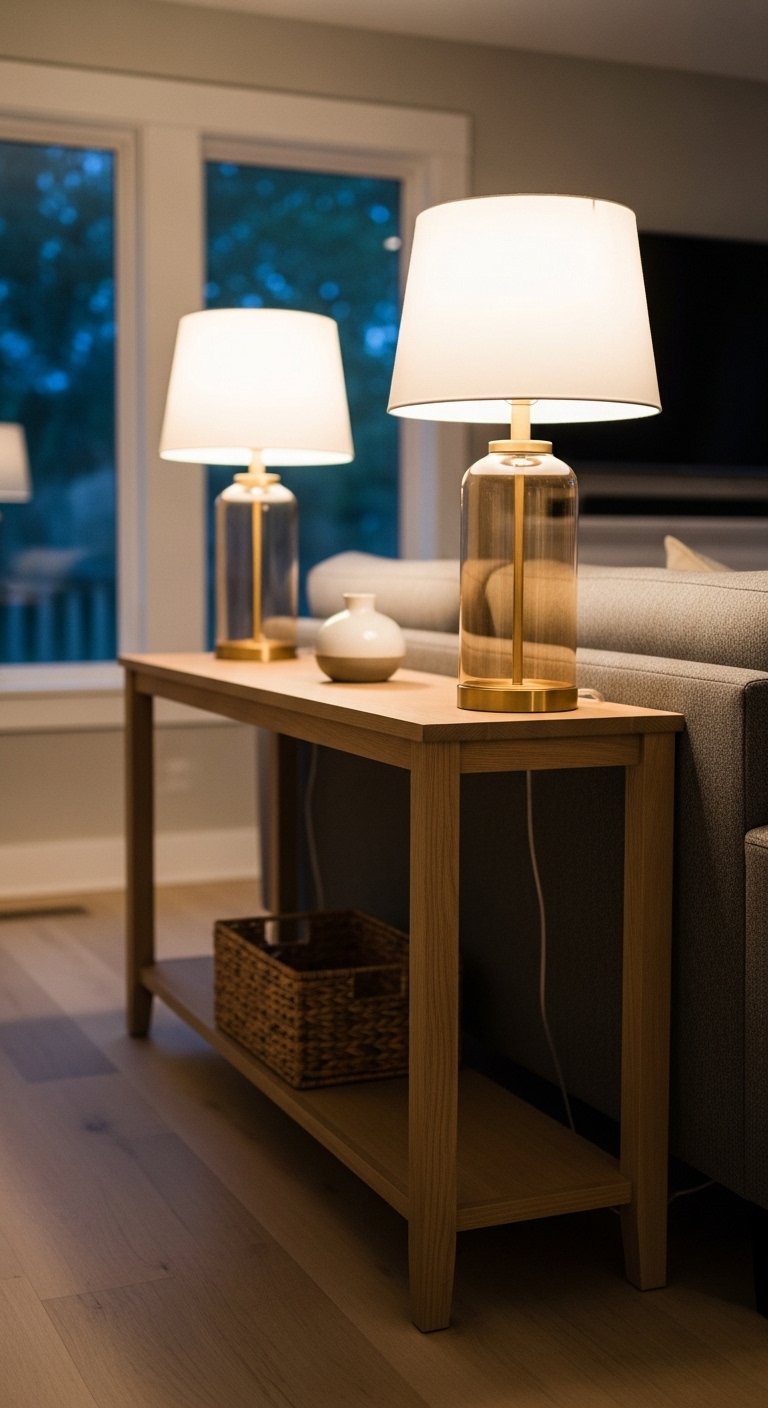
A console table placed directly behind a floating sofa defines the back of the seating zone and adds a surface for lamps, books, and objects. It prevents the sofa from looking like it is floating aimlessly in the middle of the room.
Keep the console table height within 2 to 3 inches of the sofa back height. Too tall and it dominates. Too low and it disappears.
Best use: Two table lamps on either end of the console, one central object, and a basket below for storage.
14. Incorporate Natural Wood Elements
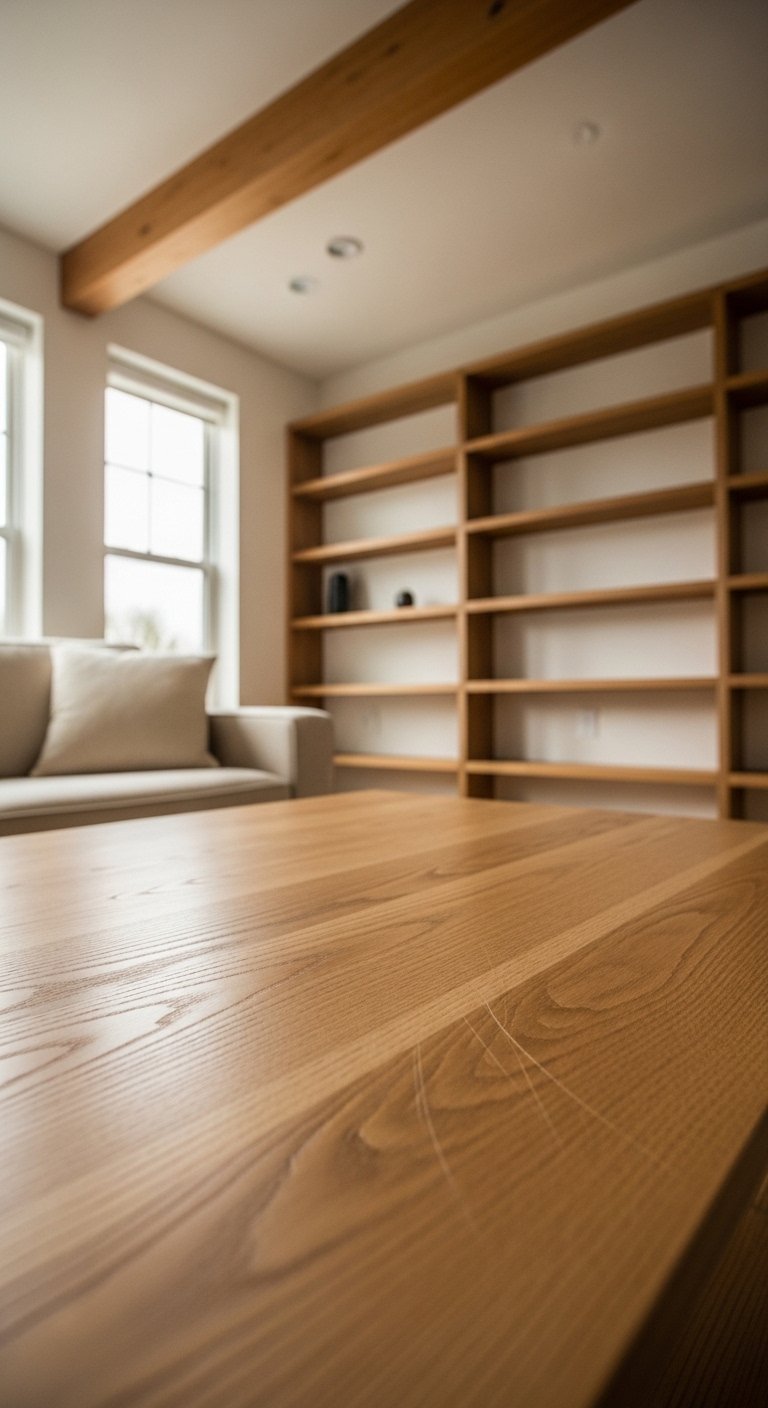
Raw or lightly finished wood warms a family room in a way no paint color achieves. A wood coffee table, wood shelving, exposed ceiling beams, or a reclaimed wood accent wall all add texture and warmth.
Wood also ages well in a family room. Minor scratches and marks on a wood coffee table add character. The same marks on a lacquered white table look like damage.
Best wood tones for family rooms: Medium warm tones: white oak, walnut, or teak. Avoid very dark woods in rooms with limited natural light.
15. Choose a Sofa in a Neutral Base Color
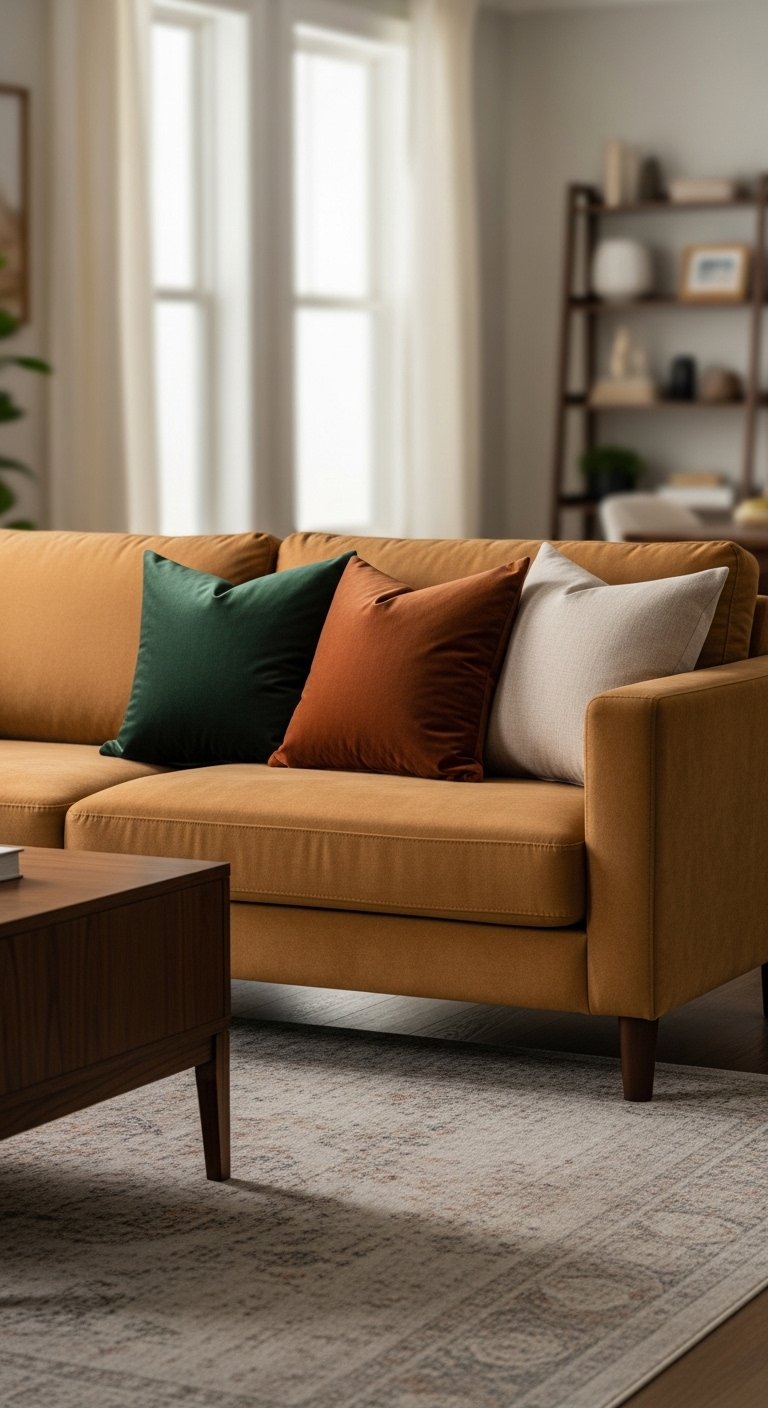
Bold sofa colors commit you to a color scheme for the life of the sofa. Neutral base colors, warm white, greige, grey, or camel, allow you to change the room’s color story through cushions, rugs, and accessories without replacing the sofa.
A camel or warm beige sofa works with almost every accent color. Grey works in cool-toned rooms. Warm white works in bright rooms with strong natural light.
Avoid: Bright blue, emerald green, or mustard yellow as a sofa base color unless you are certain you will not tire of it.
16. Add a Gallery Wall
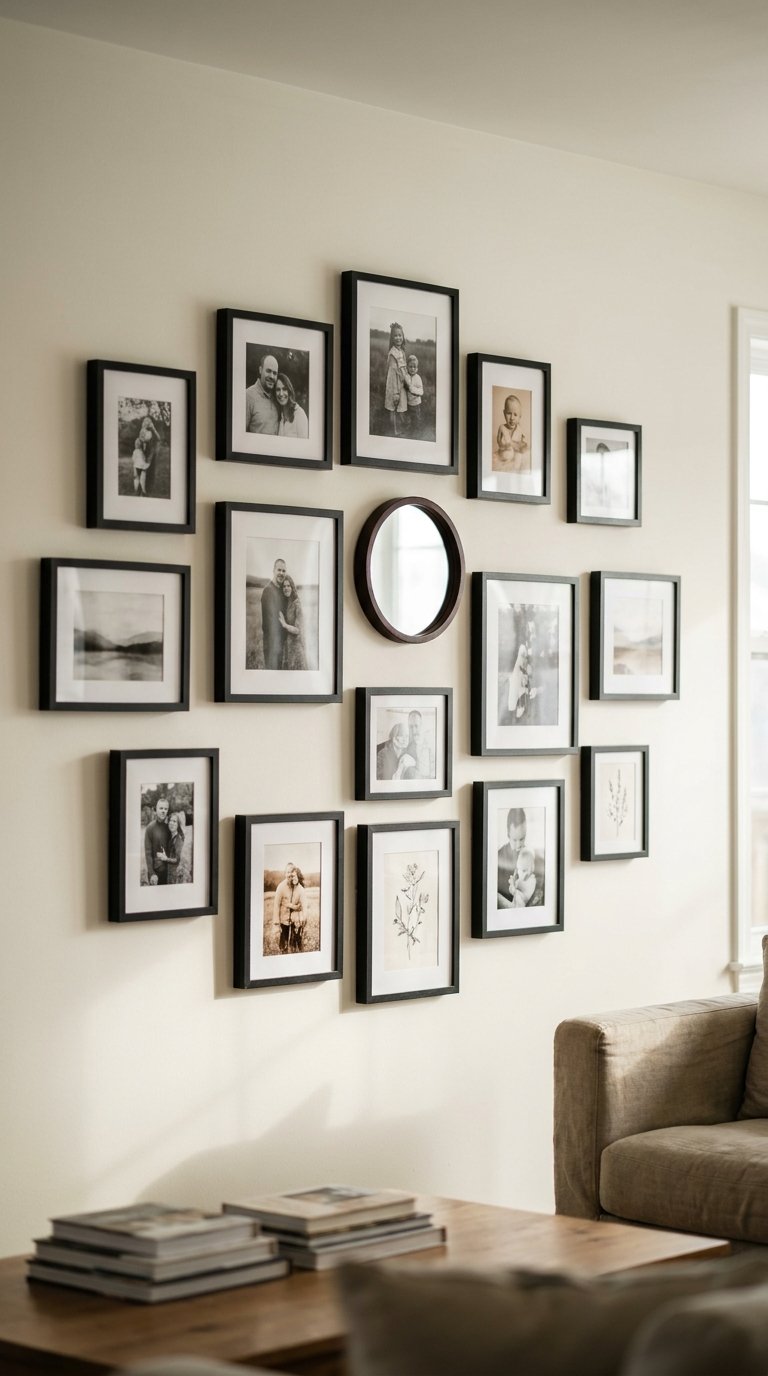
A gallery wall fills a large blank wall with personal content: family photos, art prints, mirrors, and objects. It turns an empty surface into a room feature without requiring expensive art.
Plan the arrangement on the floor before committing to wall holes. Keep a consistent frame finish, all black, all natural wood, or all white, for cohesion. Mixed frame finishes work only if the arrangement is very tightly curated.
Spacing: 2 to 3 inches between frames. Any more and the arrangement looks scattered.
17. Install Ceiling Beams
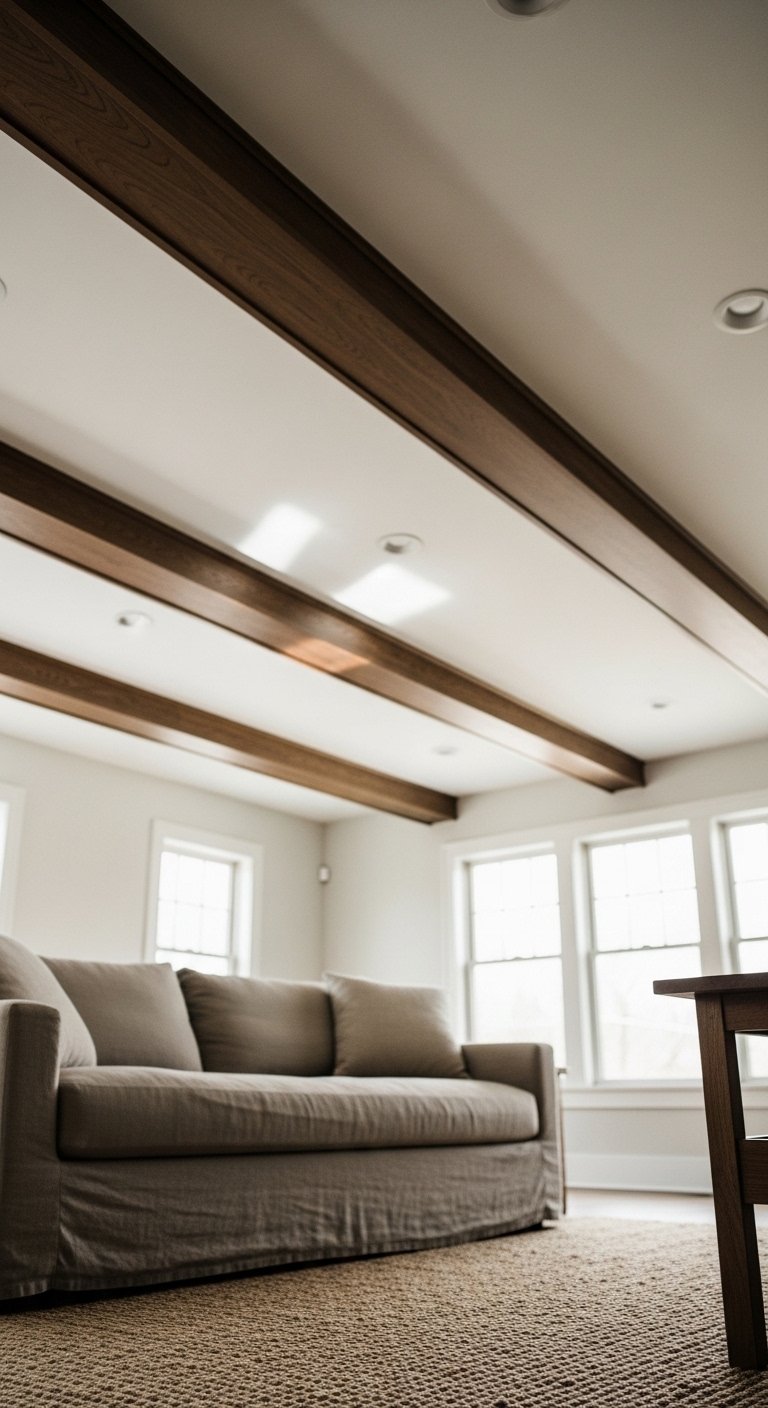
Exposed ceiling beams add architectural character to a plain box room. Real wood beams require structural work. Faux wood beams in lightweight polyurethane install in a weekend and look convincing at ceiling height.
In a family room with standard 8-foot ceilings, keep beams shallow to avoid making the ceiling feel lower. In rooms with 9-foot or higher ceilings, deeper beams add genuine drama.
Beam finish: Match to the wood tones already present in the room, flooring, shelving, or furniture.
18. Use Mirrors to Expand the Space
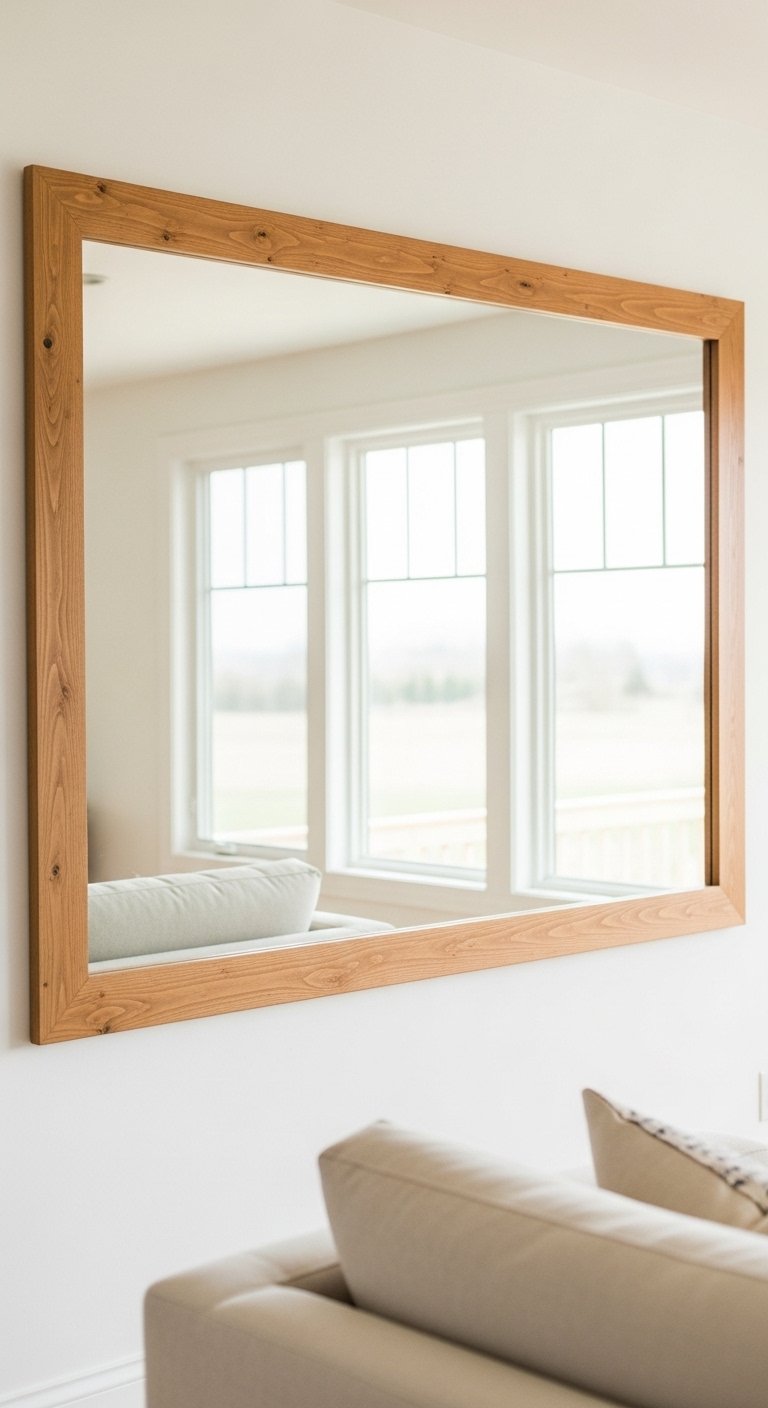
A large mirror on a wall opposite a window reflects natural light across the room and makes the space feel wider. In a family room with limited windows, this is one of the most effective changes you can make.
Choose a mirror with a frame that fits the room’s style. A simple wood or metal frame suits most family rooms. Ornate frames suit traditional spaces. Frameless mirrors suit modern rooms.
Minimum size: 36 inches wide for a noticeable effect. Larger reads better on a wide wall.
19. Add Indoor Plants
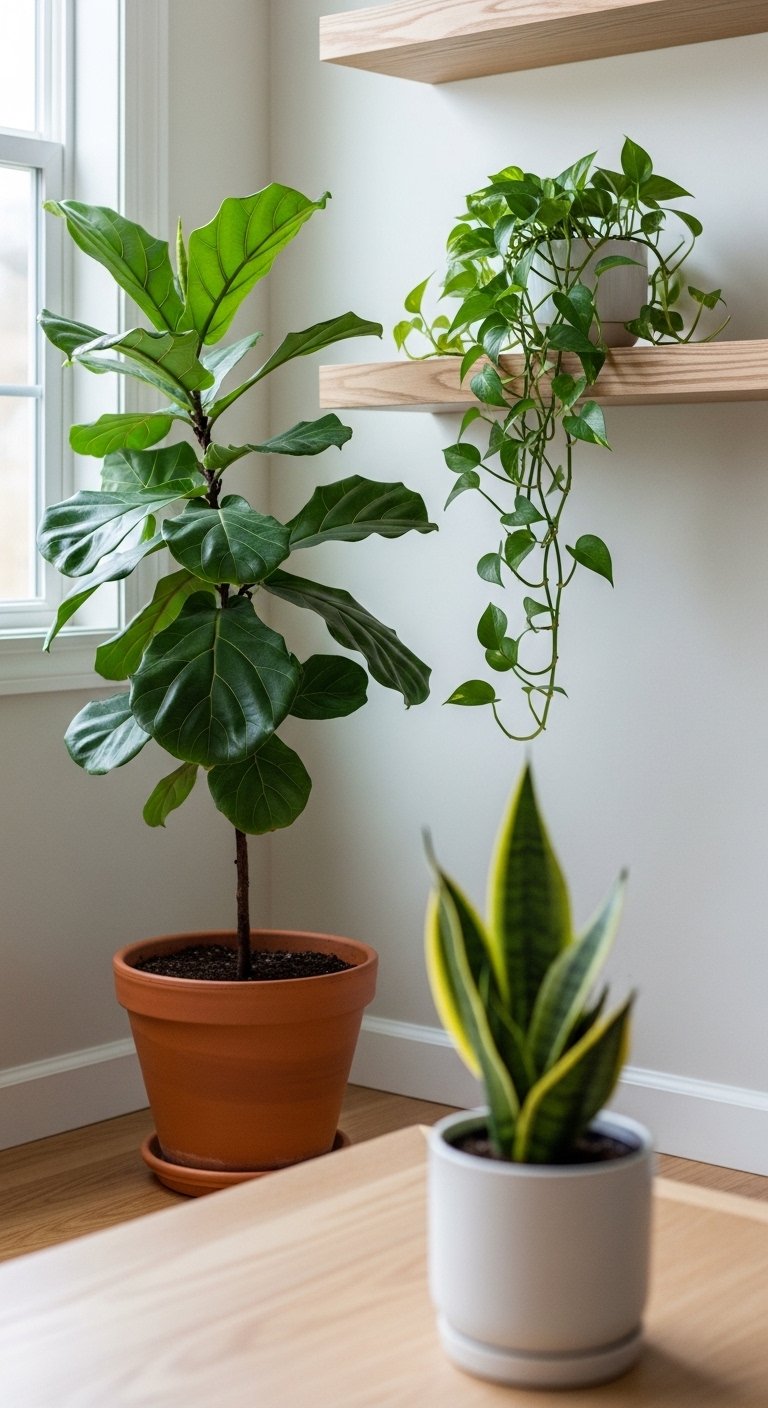
Plants add life, color, and texture to a family room without adding visual clutter. A large floor plant in a corner, a trailing plant on a shelf, and a small potted plant on the coffee table create three layers of greenery at different heights.
Choose low-maintenance varieties for a heavily used room. FYI, the most forgiving options are snake plants, pothos, ZZ plants, and rubber trees. All tolerate low light and irregular watering.
Pot material: Terracotta for a warm, natural look. Matte ceramic for a modern space.
20. Upgrade the Ceiling
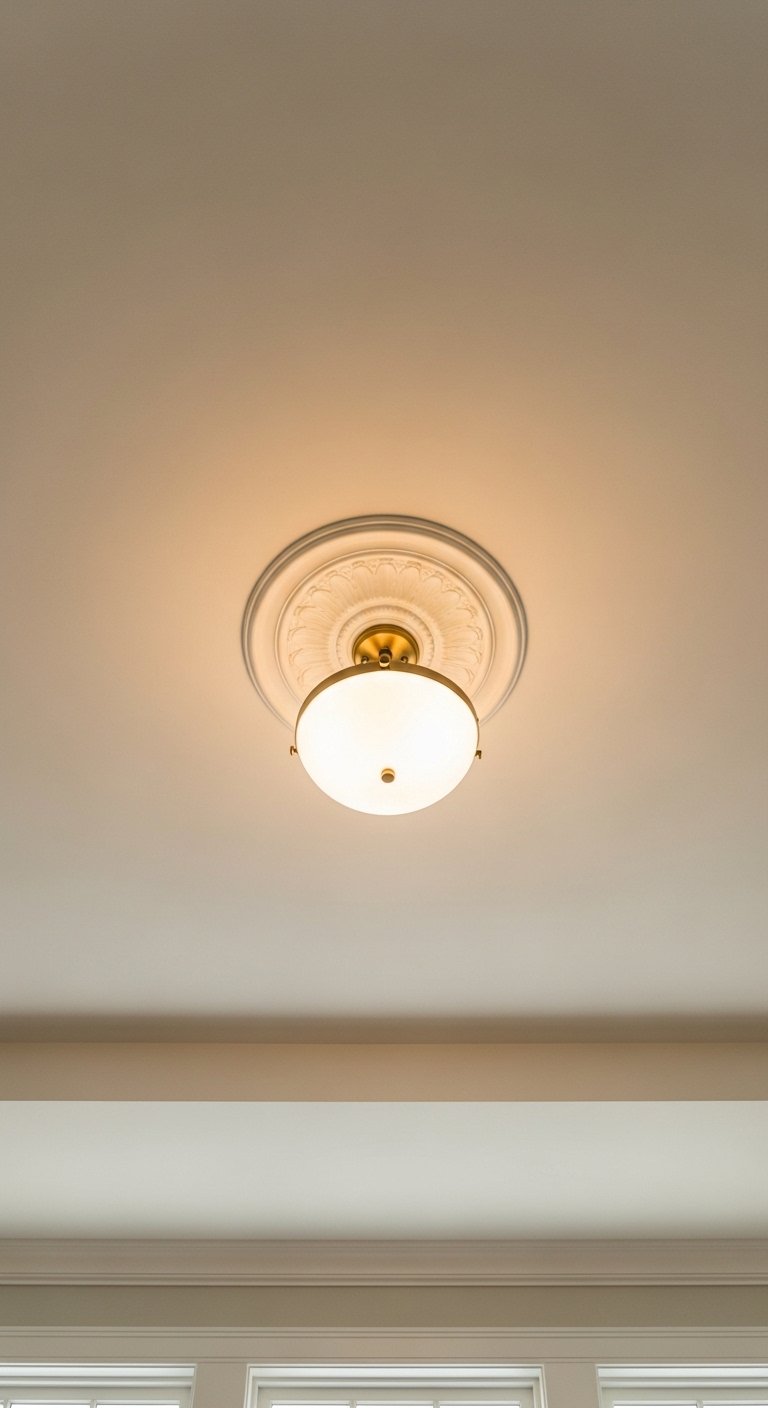
Most family rooms ignore the ceiling entirely. A coat of paint in a warm white, an added ceiling medallion around a light fixture, or a wallpapered ceiling transforms the room’s fifth wall from an afterthought into a feature.
Painting the ceiling the same color as the walls creates a cocooning effect that works well in rooms used primarily in the evening. A lighter ceiling keeps the room feeling open for daytime use.
Quick upgrade: Paint the ceiling in a warm white two shades lighter than your wall color. The difference is subtle but noticeable.
21. Edit the Room Regularly
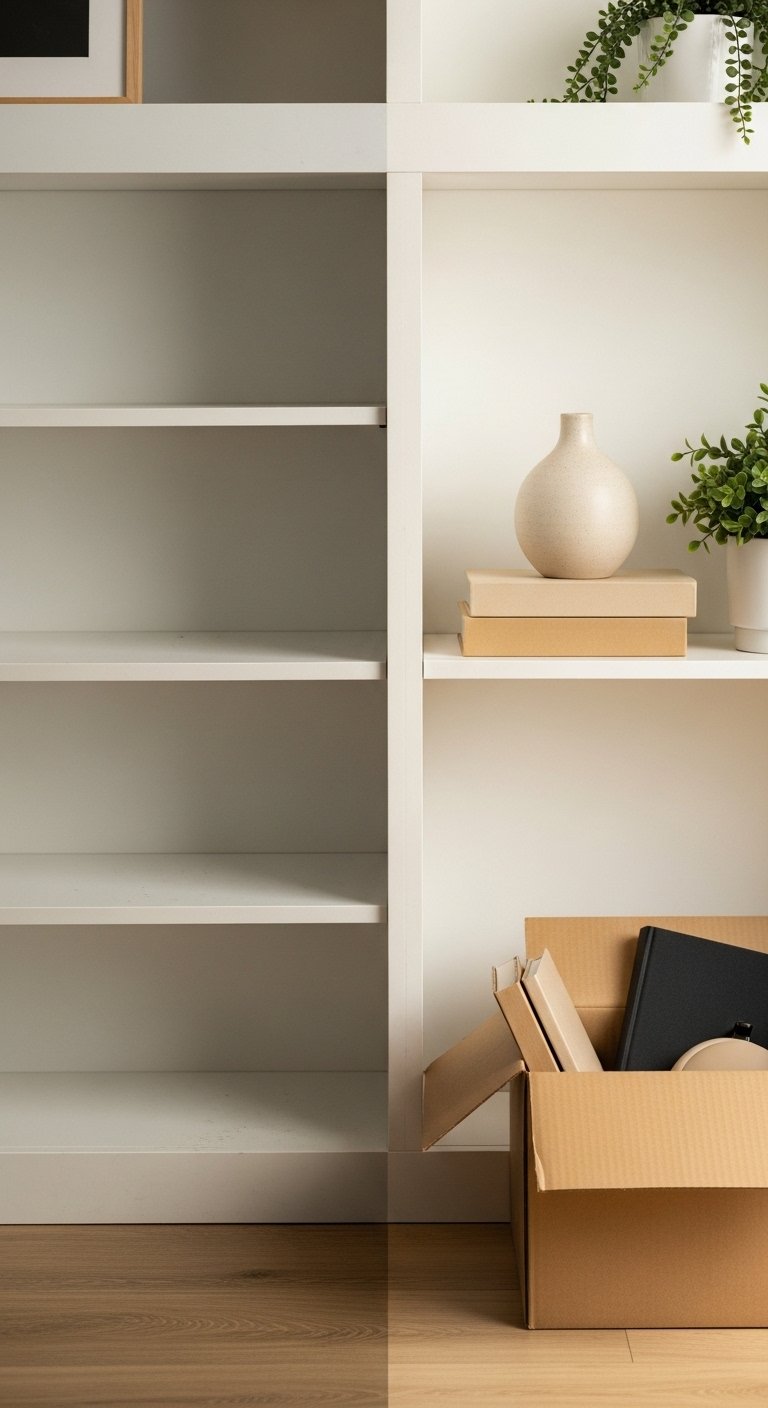
Most family rooms accumulate objects over time until the space feels busy and hard to relax in. Every six months, remove everything from shelves, surfaces, and the floor. Put back only what earns its place.
A family room with fewer, better objects feels larger and more deliberate than one filled with everything the family owns. Storage solves clutter. Editing prevents it from returning.
Rule: If you haven’t noticed an object in three months, it doesn’t need to be in the room.
Final Thoughts
A family room works when it serves the people who use it daily. That means enough seating, smart storage, good lighting, and surfaces that handle real life without constant maintenance.
The 21 ideas above cover every element of a functional, well-designed family room. You don’t need all 21. Pick the ones your room currently lacks and start there.
A room your family actually wants to spend time in is the only measure that matters.