21 Hallway Remodel Ideas That Make Your Home Feel Complete
Most people walk through their hallway twenty times a day and never actually look at it. It connects every room in your home and gets zero design attention. That’s a problem worth fixing.
Hallways are small. That’s the point. Small spaces cost less to remodel, take less time, and have an outsized visual impact because every element is close together. A well-designed hallway makes your entire home feel more intentional.
Here are 21 ideas that work in narrow hallways, wide corridors, and everything in between.
1. Install Wainscoting or Board and Batten
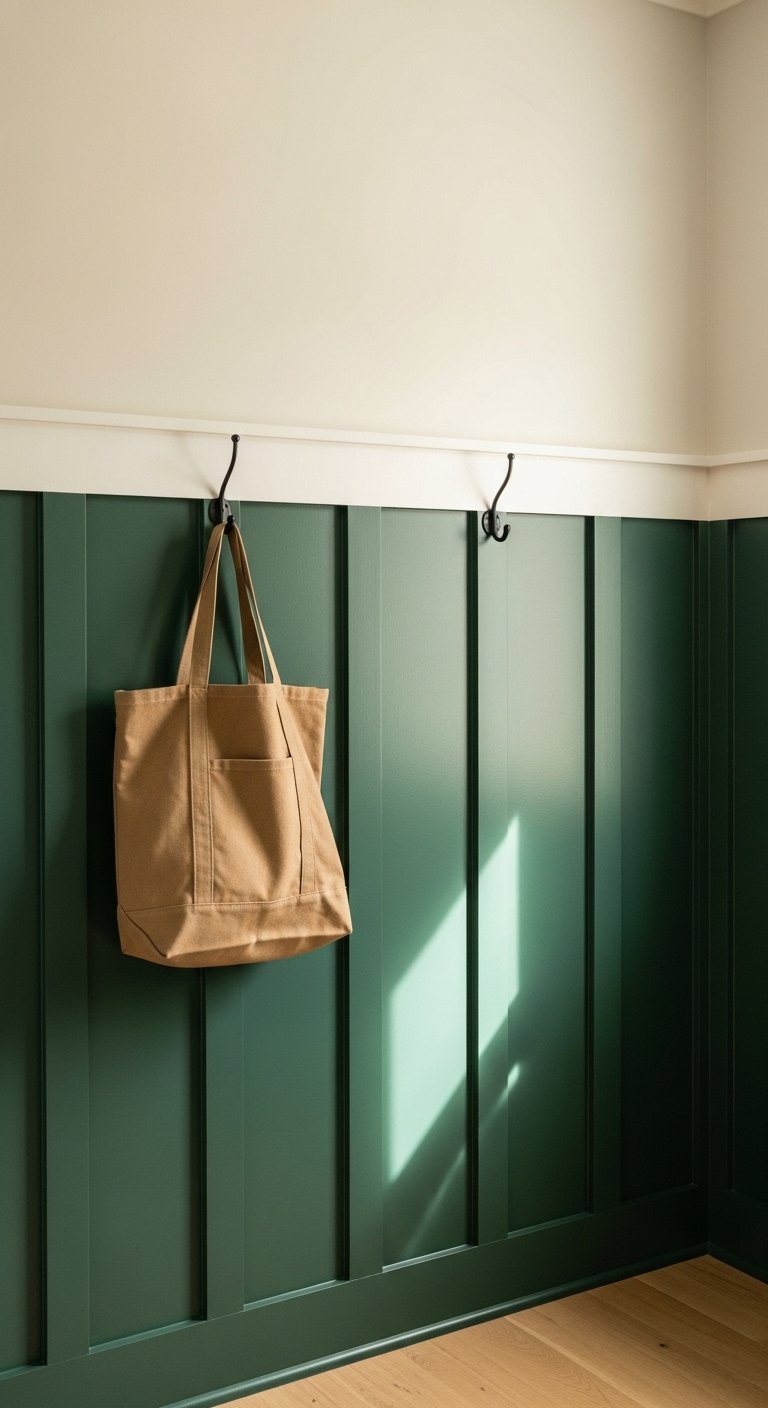
Hallway walls take more damage than any other walls in your home. Scuffs, handprints, bumped corners. Wainscoting and board and batten solve this while adding serious architectural character.
Both options work well in hallways:
- Wainscoting: Traditional recessed panel detail, suits classic and transitional homes
- Board and batten: Flat vertical strips on a flush surface, works in modern and farmhouse styles
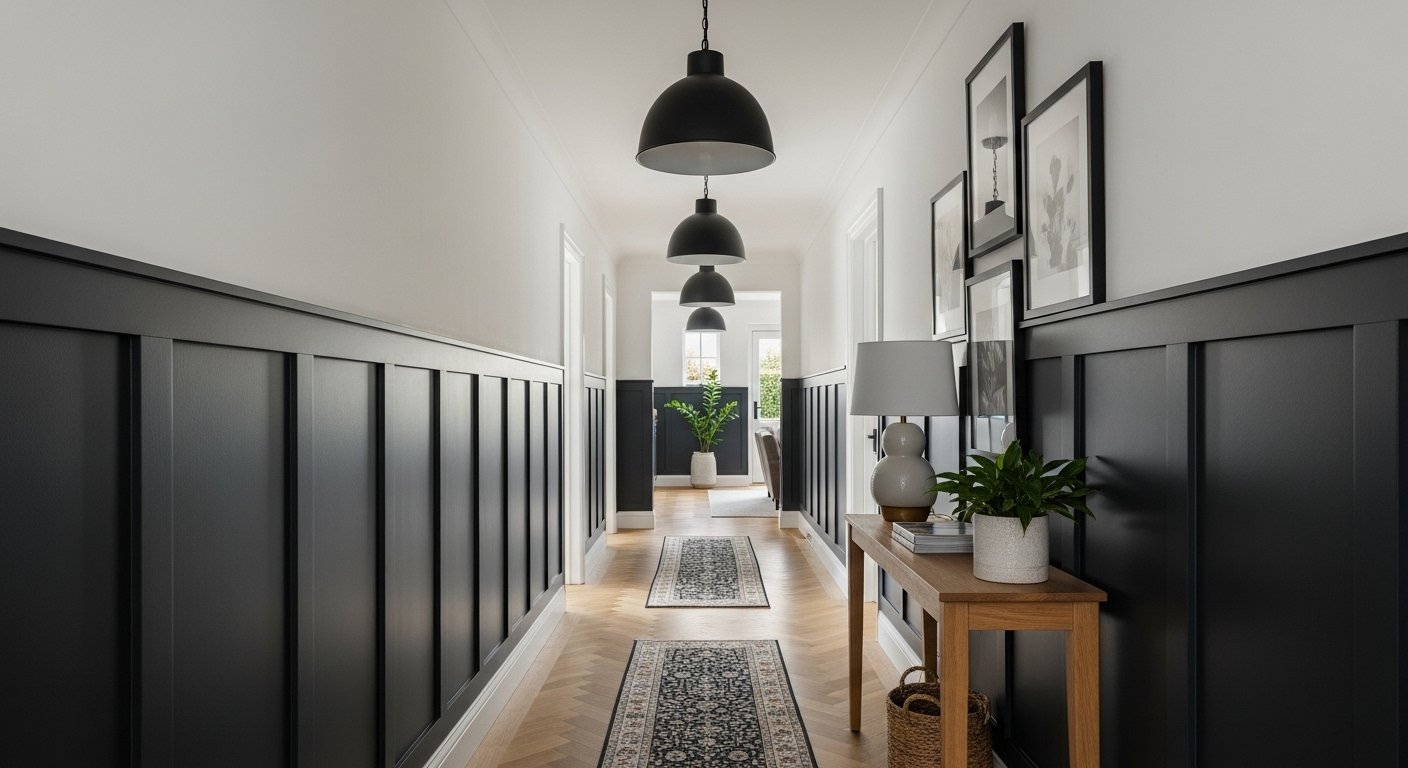
Paint the paneling a contrasting color to the upper wall for maximum impact. A dark lower half with a light upper wall makes narrow hallways feel taller and more structured.
Material cost runs between $100 and $500 depending on hallway length and ceiling height. This is one of the most achievable DIY projects on this list.
2. Add a Runner Rug
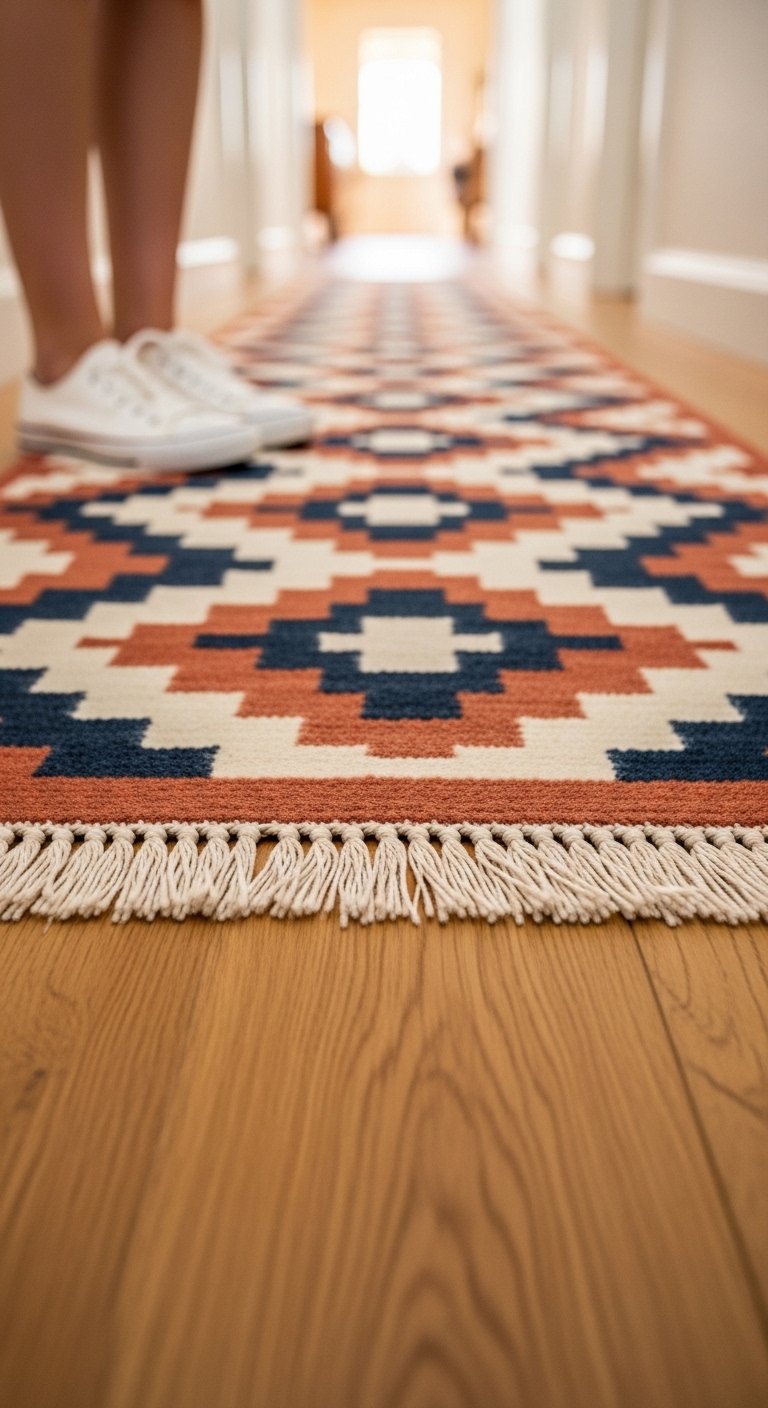
A bare hallway floor, even a beautiful one, feels unfinished. A runner rug adds warmth, color, pattern, and sound absorption in one move.
Runner selection rules:
- Width: Leave 3 to 4 inches of floor visible on each side of the runner
- Length: The runner should stop 6 to 12 inches from each end wall
- Material: Wool handles traffic and cleans well; jute adds texture but shows dirt faster
- Pattern: Geometric or traditional patterns hide wear and dirt better than solids
Replace runners every three to four years in high-traffic hallways. A worn runner undermines every other upgrade around it.
3. Create a Gallery Wall
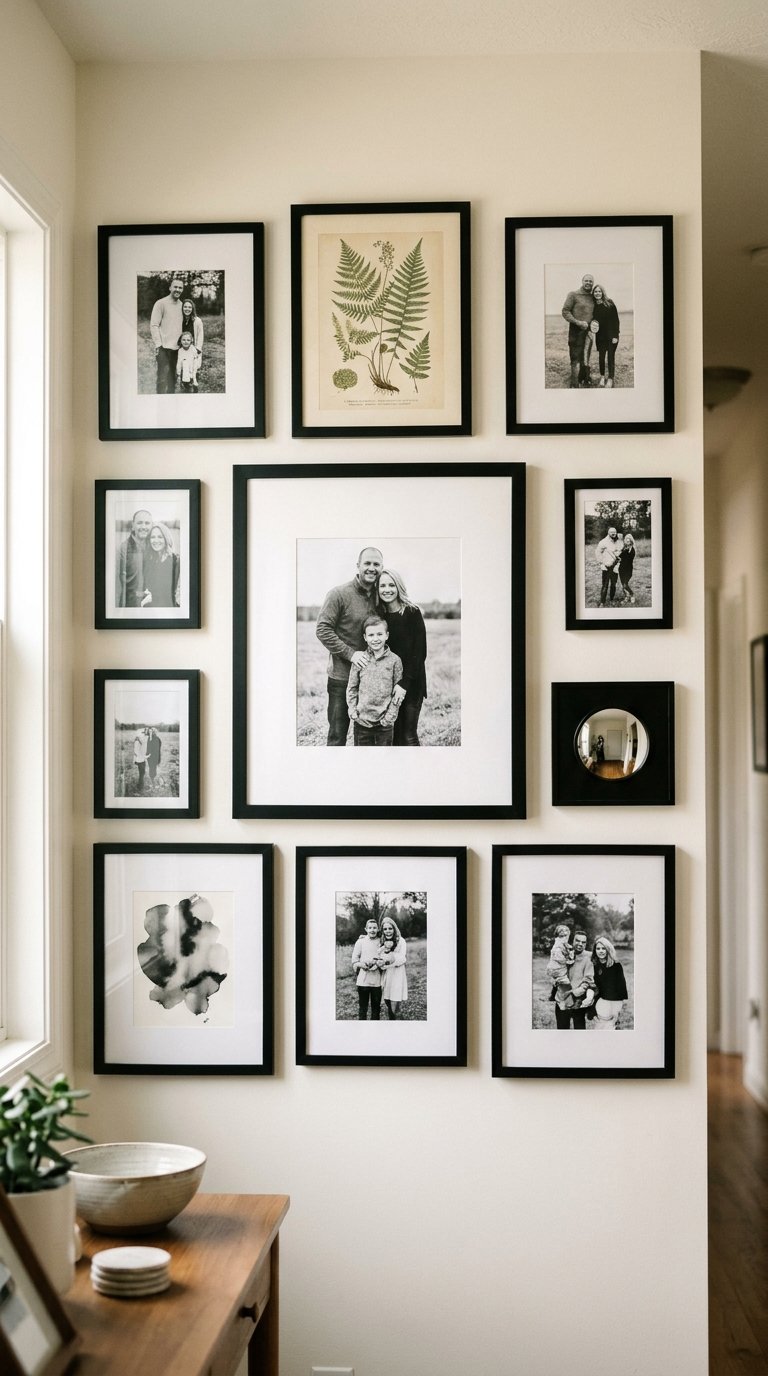
A hallway gallery wall is one of the most personal things you put in a home. It tells a story as someone walks from one room to another. Done well, it stops people in their tracks.
How to execute it without chaos:
- Choose one frame finish and commit (all black, all brass, all white)
- Use one dominant large piece to anchor the arrangement
- Mix frame sizes but keep consistent 3 to 4 inch spacing between all pieces
- Include a variety: photographs, prints, one small mirror, one dimensional object
Lay the full arrangement on the floor before touching the wall. This step is non-negotiable if you want the result to look intentional rather than accidental.
4. Paint the Ceiling a Bold Color
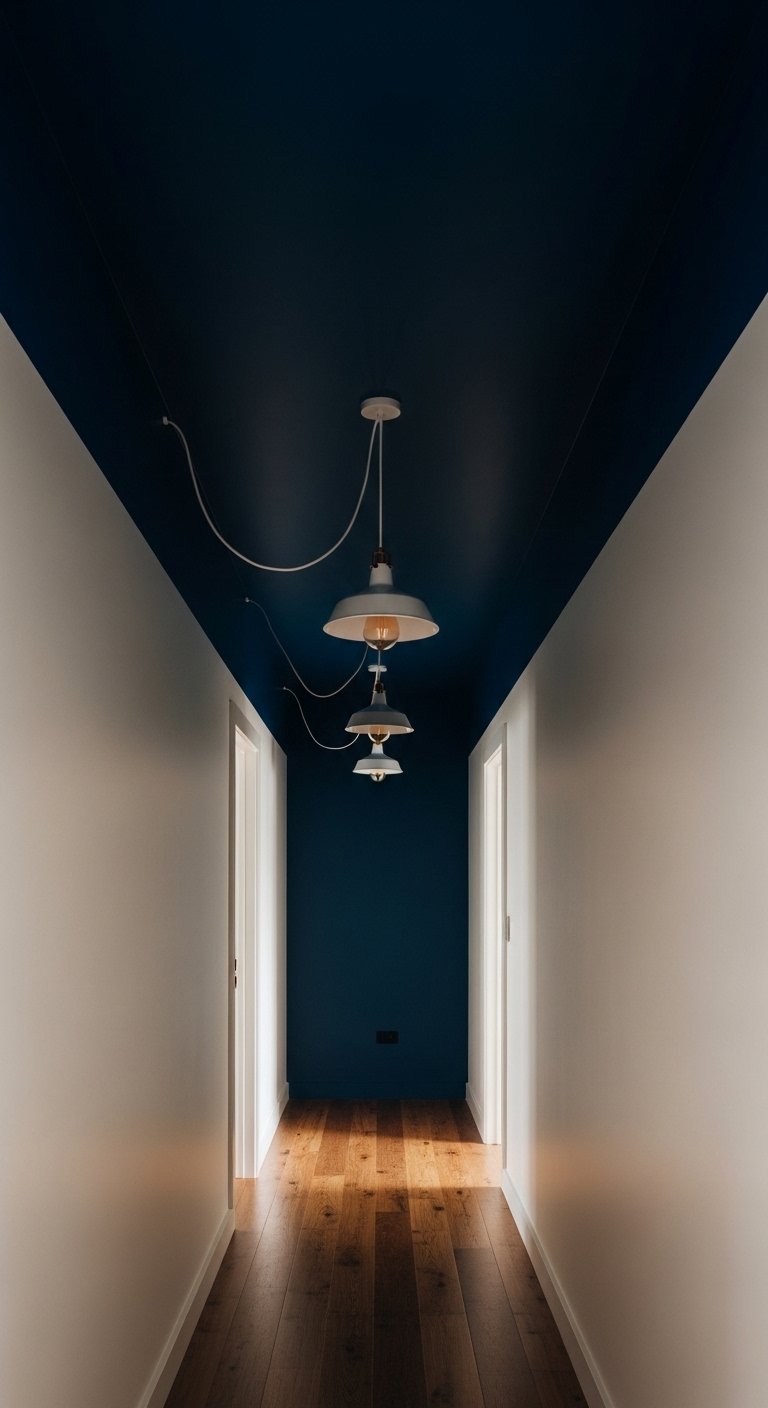
Nobody expects a bold ceiling in a hallway. That’s exactly why it works. A dark navy, deep forest green, or rich terracotta ceiling in a hallway creates an enveloping, dramatic effect that costs nothing but paint and a Saturday afternoon.
This technique works especially well in narrow hallways where the ceiling feels close. Instead of fighting that closeness, lean into it. A dark ceiling in a narrow corridor feels intentional and moody rather than cramped.
Pair a bold ceiling with white or light walls to keep the space balanced. Going dark on both walls and ceiling simultaneously requires more confidence and usually more square footage.
5. Upgrade Your Hallway Lighting
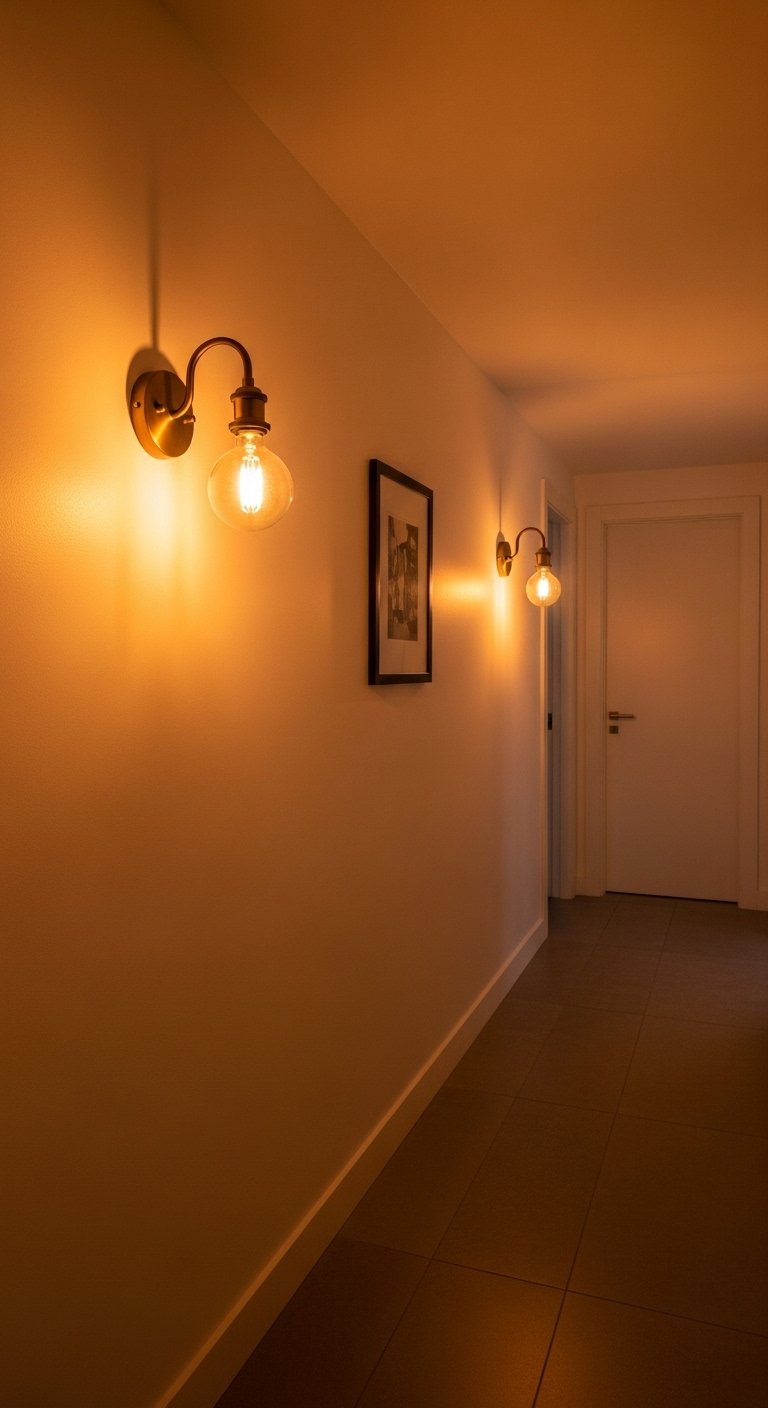
Hallway lighting is almost always an afterthought. A row of generic flushmount fixtures does the job and nothing else. Replacing or augmenting that lighting changes the entire character of the corridor.
Options that work well:
- Pendant lights in a series: Works in hallways with 9-foot or higher ceilings
- Wall sconces: Add depth and warmth without affecting ceiling height perception
- Recessed lighting in a grid: Clean, modern, and flexible with a dimmer
- Picture lights: Illuminate gallery wall pieces and add directed warm light
Motion-activated lighting works particularly well in hallways. Lights that turn on when you enter and off when you leave add both convenience and a small moment of drama every time.
6. Install Wallpaper
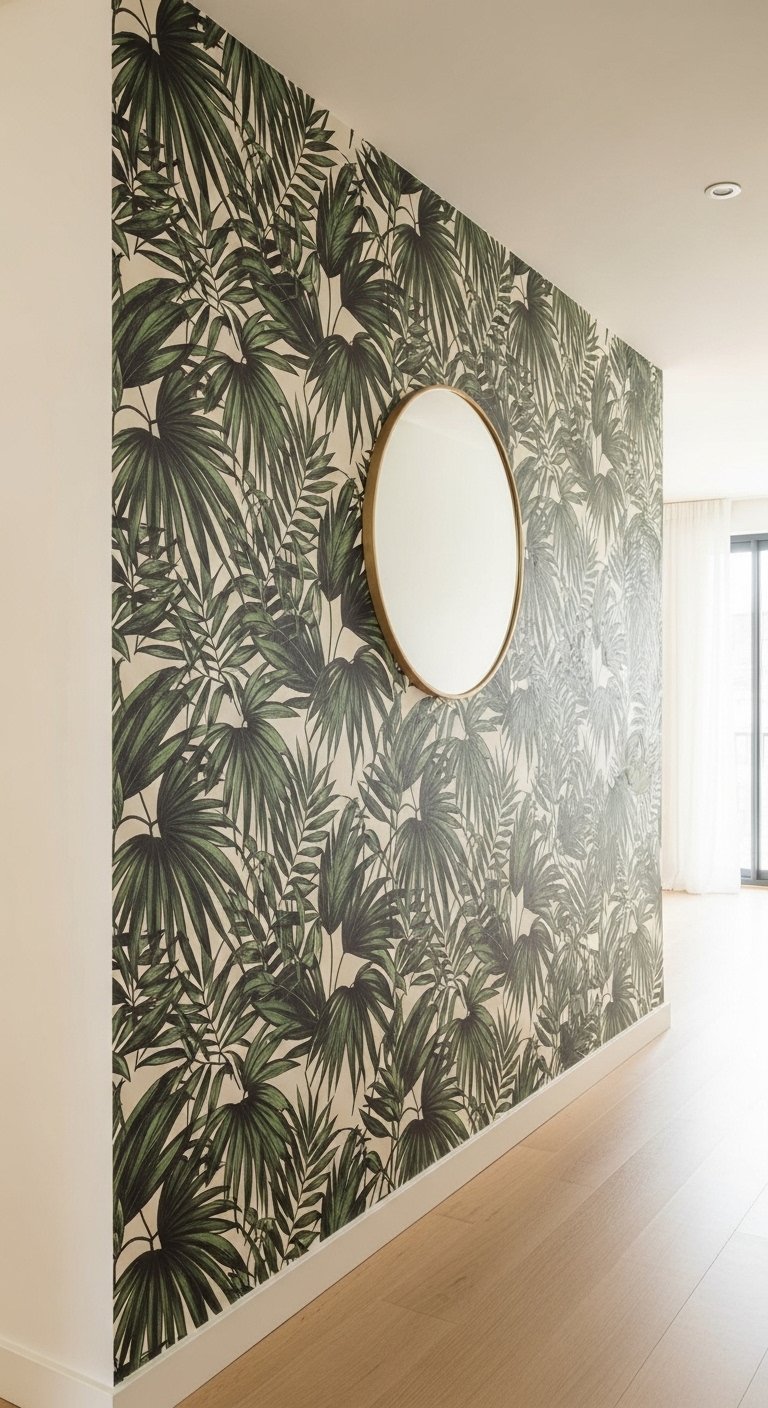
A hallway is one of the best places in a home to use wallpaper. The square footage is small, which limits cost. The enclosed space amplifies the pattern impact. And you see it from multiple angles as you walk through.
Patterns that perform well in hallways:
- Vertical stripes (make low ceilings feel taller)
- Large-scale botanicals (dramatic and organic)
- Geometric repeat patterns (modern and graphic)
- Grasscloth texture (subtle depth, works in any style)
- Classic toile (traditional and narrative-rich)
Avoid very small, busy repeat patterns in narrow hallways. They create visual noise rather than intentional pattern and make the space feel smaller.
7. Add Built-In Storage
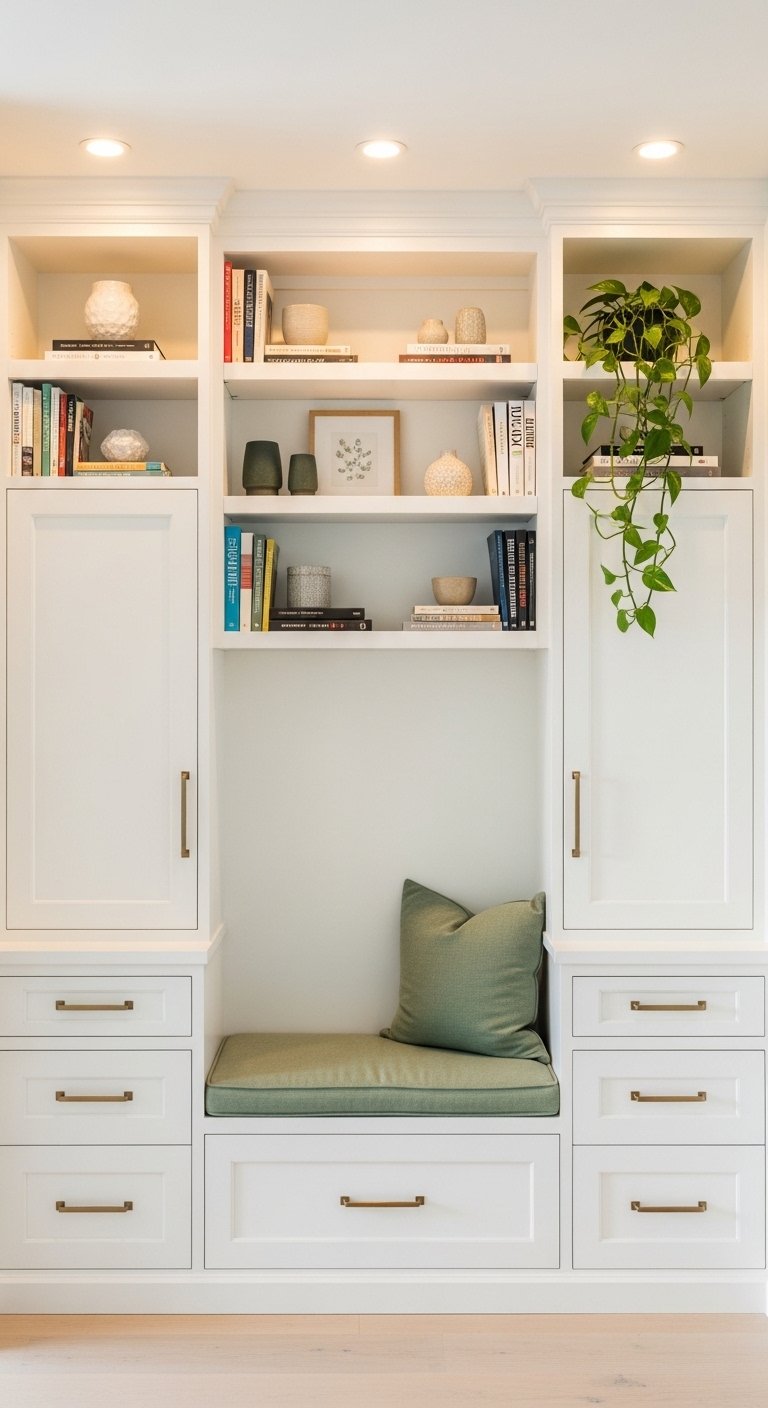
A hallway with no storage is a hallway where things pile up on the floor. Built-in storage solves this while adding architectural value to the corridor.
Built-in options scaled to hallway width:
- Shallow built-in shelving: 8 to 12 inches deep works in most hallways without blocking traffic
- Built-in window seat with storage: Works where a hallway widens or meets a landing
- Recessed wall niche: Carved into the wall itself, takes zero floor space
- Built-in bench with hooks above: The classic mudroom solution adapted to a hallway
The hallmark of a well-designed hallway is that storage handles the daily mess before it spreads into the rest of the home. Built-ins accomplish this permanently.
8. Use Mirrors to Open the Space
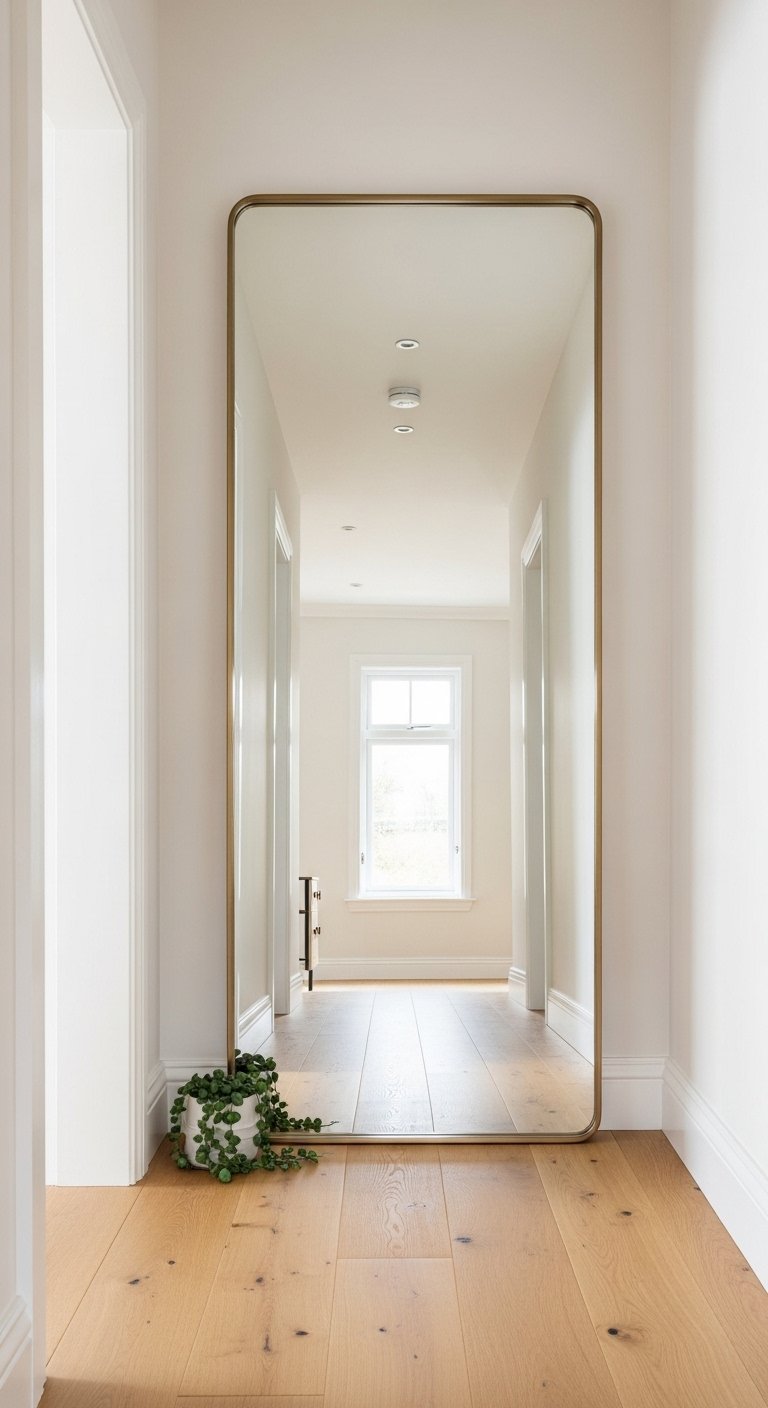
A mirror in a hallway does more functional work than almost any other decorative element. It reflects light from windows at either end of the corridor, bounces that light deeper into the space, and creates a visual doubling effect that makes narrow hallways feel wider.
Mirror placement strategies for hallways:
- One large mirror on the longest wall, filling most of the vertical space
- A series of smaller mirrors arranged as a gallery
- A full-length leaning mirror at the end of the hallway
- Mirrored cabinet doors for storage that also reflects light
The end-of-hallway mirror is the most dramatic placement. It creates a visual infinity effect that makes even a short corridor feel significantly longer. FYI, this is also the cheapest per-square-foot upgrade on this list.
9. Replace the Flooring
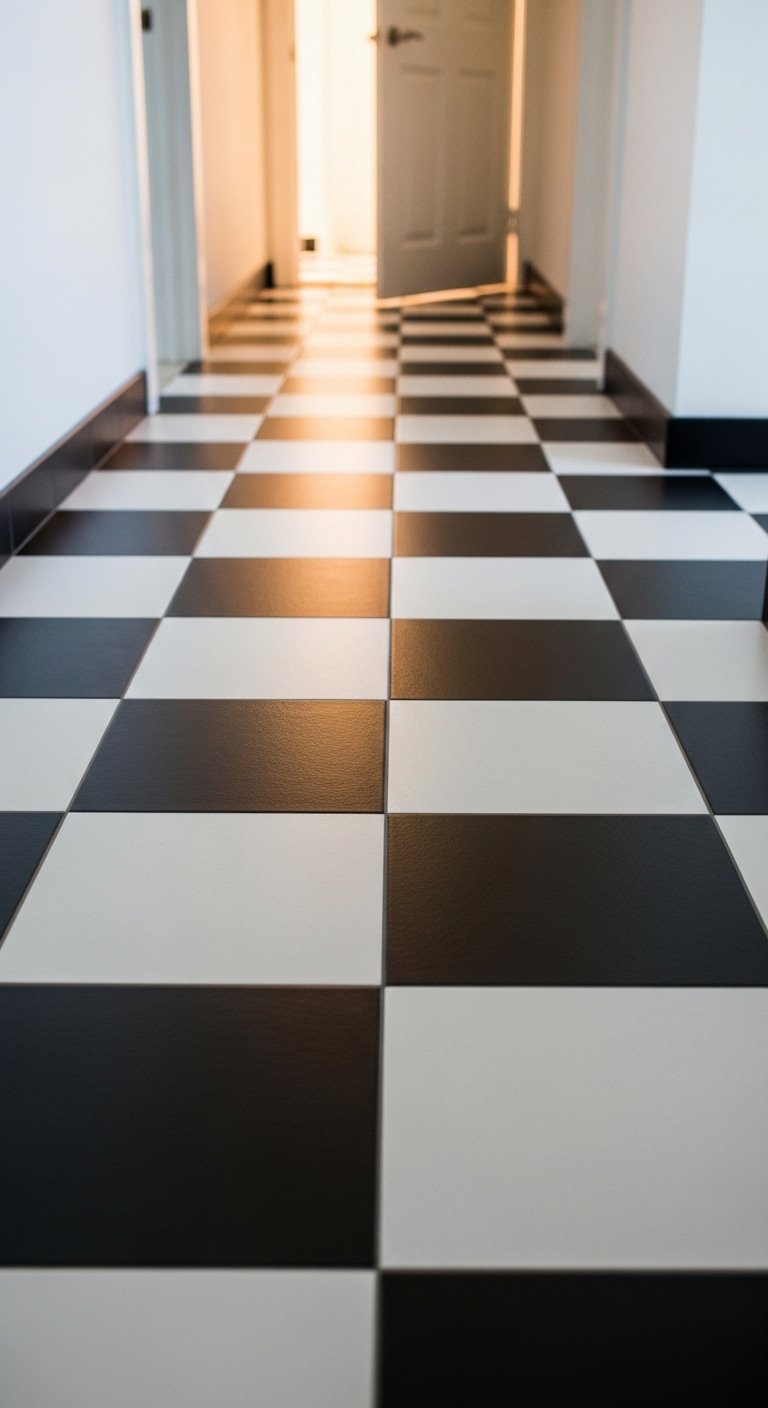
Hallway floors wear out faster than any other floor in a home. If yours shows scratching, staining, or outdated style, replacing the flooring is the most impactful single upgrade you make.
Best flooring choices for hallways:
- Porcelain tile: Most durable, handles heavy traffic and moisture perfectly
- Engineered hardwood: More stable than solid wood, handles temperature changes better
- Luxury vinyl plank: Extremely durable, waterproof, wide range of styles at lower cost
- Natural stone tile: High-end look, very durable, requires sealing and professional installation
Avoid carpet in hallways entirely. It traps dirt, wears unevenly in the traffic path, and signals neglect faster than any other flooring material.
10. Add Architectural Molding
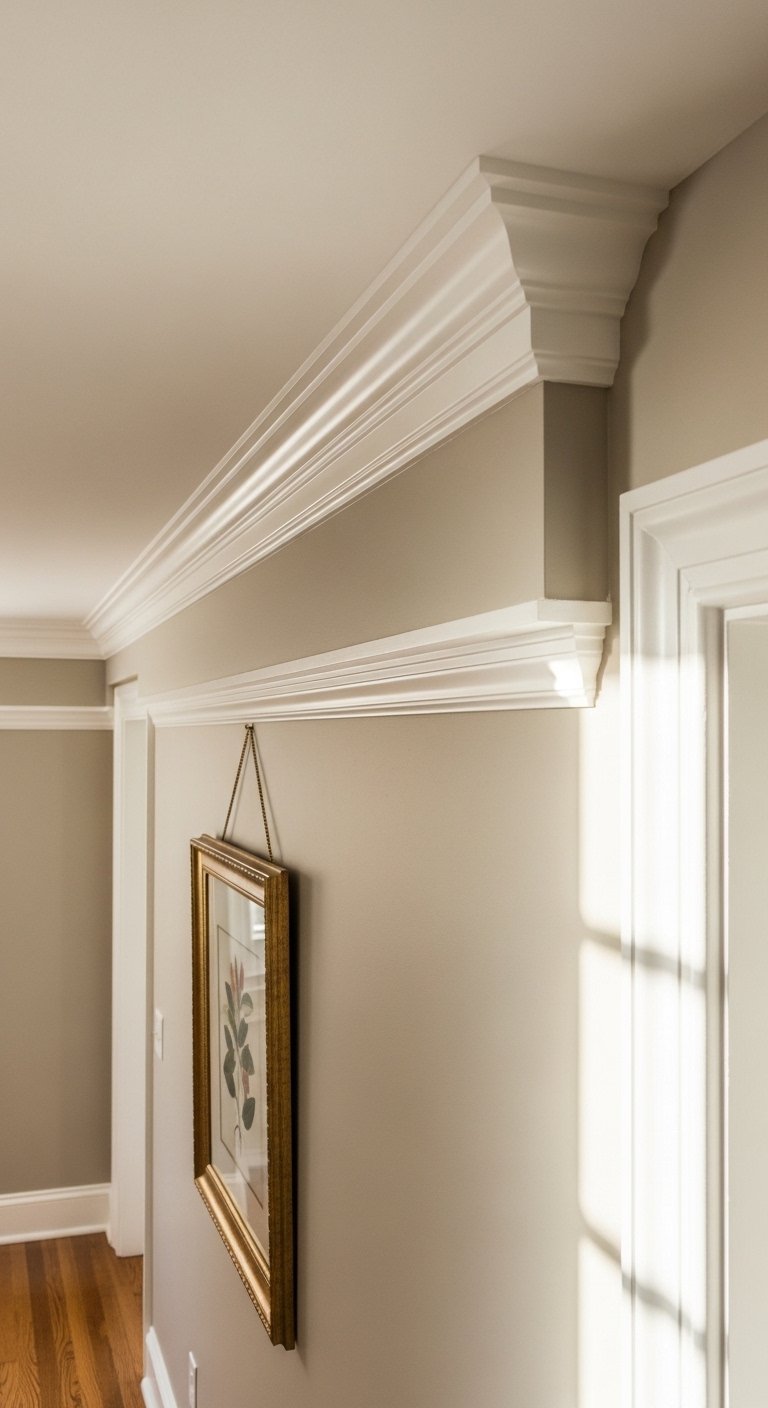
Crown molding, picture rail molding, and chair rail molding all add detail and dimension to hallway walls that are otherwise flat painted surfaces. In a space where you’re always close to the walls, that detail reads clearly.
Molding options worth considering:
- Crown molding: Finishes the ceiling-wall junction, adds height perception
- Picture rail molding: Historic detail that also functions for hanging art without nails
- Chair rail: Divides the wall horizontally, works well with two-tone paint or wainscoting below
- Coffered ceiling panels: For wider hallways with height, adds serious architectural presence
Crown molding alone changes how finished a hallway looks. The cost is modest. The impact is immediate and permanent.
11. Paint With a Dark, Moody Color
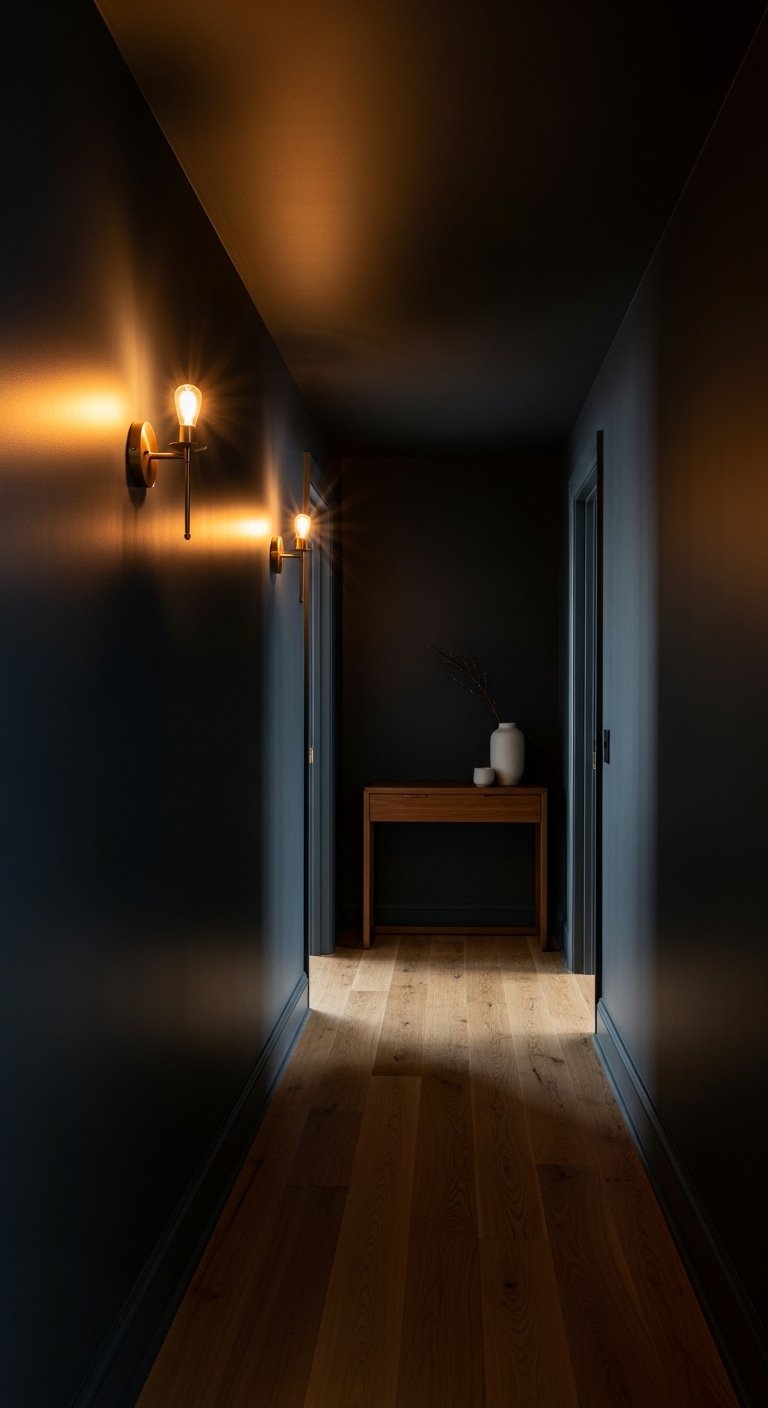
A dark hallway is not a problem. It’s an opportunity. Hallways don’t need to be bright. They need to be interesting. A deep, saturated color on all four walls of a hallway creates a specific atmosphere that lighter colors never achieve.
Colors that work particularly well:
- Deep navy (classic, pairs with brass and gold hardware)
- Charcoal grey (sophisticated, pairs with everything)
- Forest green (organic and rich, pairs with natural materials)
- Aubergine or deep plum (bold, unexpected, theatrical)
- Black (the most committed option, surprisingly works in many hallways)
Dark hallways work best when the adjoining rooms are lighter. The contrast creates a sense of transition and arrival when moving between spaces.
12. Install a Built-In Bookcase
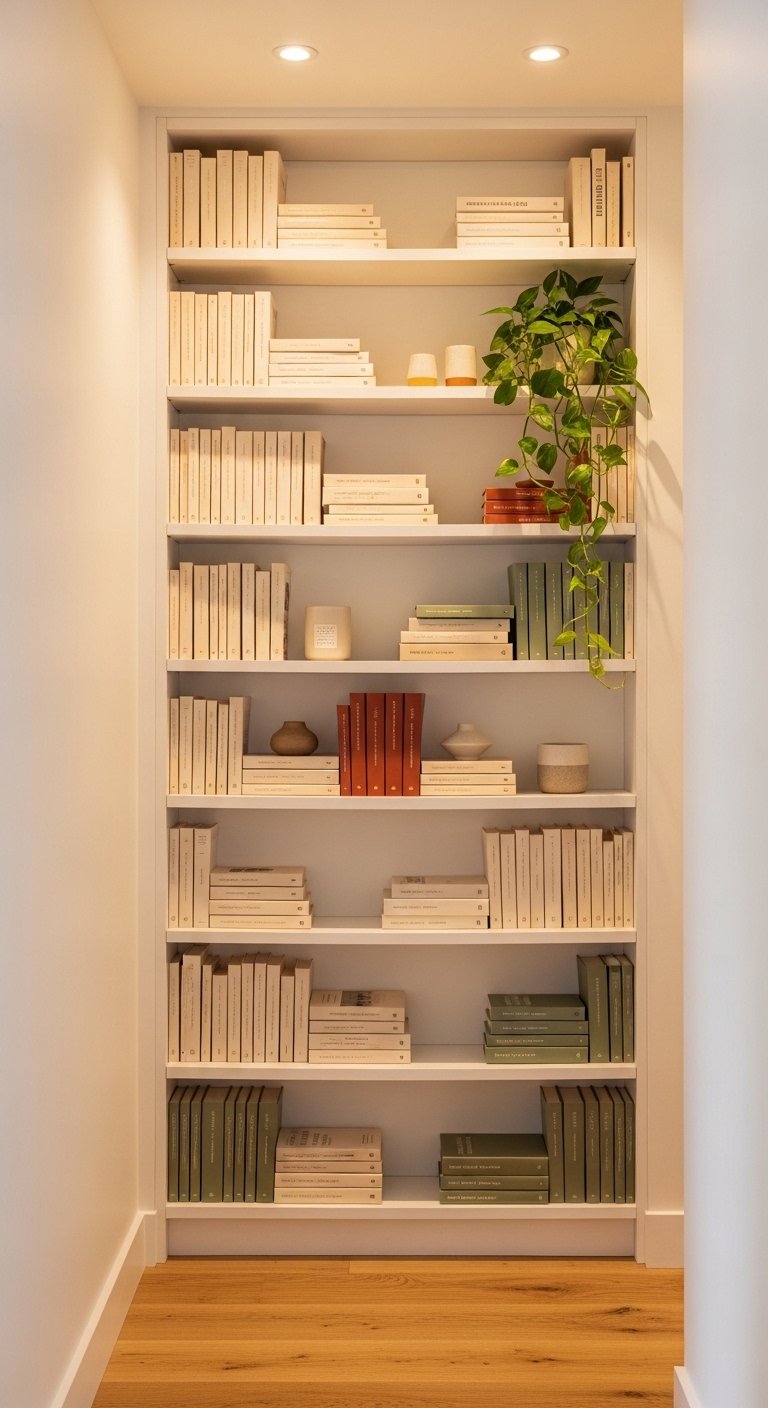
A narrow built-in bookcase along one hallway wall turns a transit corridor into a destination. Floor-to-ceiling shelving on one side of a hallway creates a library effect that most homes have nowhere else to achieve.
The bookcase needs to stay shallow: 10 to 12 inches maximum to maintain comfortable passage width. That depth holds standard books, small objects, and plants without problem.
Style the shelves with books facing spine-out, small plants at intervals, and deliberate empty space between groupings. An overcrowded bookcase in a hallway feels claustrophobic. A curated one feels like a feature.
13. Create a Mudroom Zone at One End
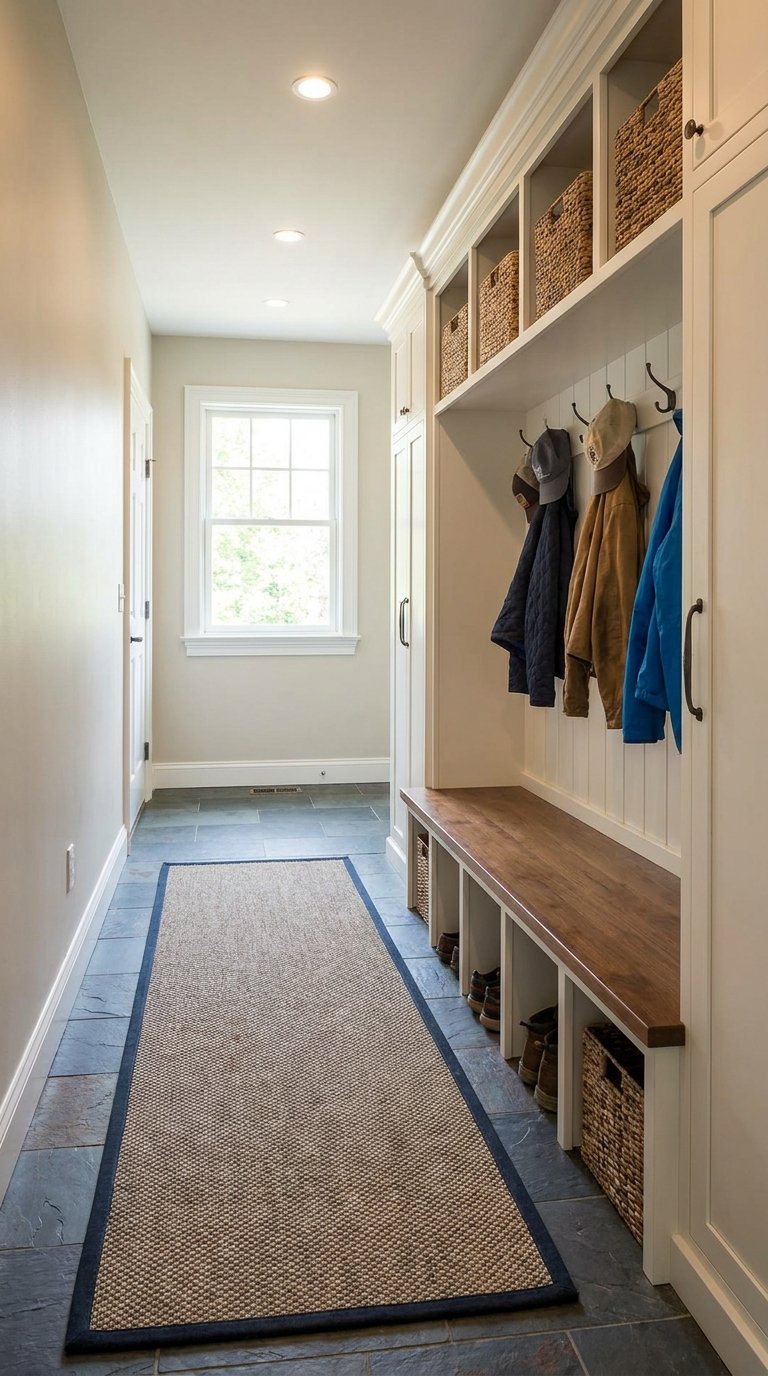
If your hallway connects to an exterior door, creating a mudroom zone at that end solves the entry mess problem permanently. You don’t need a separate room to create a functional mudroom.
A hallway mudroom zone includes:
- A wall-mounted bench or fold-down seat
- Hooks above at coat height (66 to 72 inches from floor)
- A basket or cubby below for shoes
- A small tray or dish for keys and small items
- A mirror above for last-look convenience
The zone’s value is behavioral. Outdoor gear stays at the entry point instead of spreading through the rest of the home. This requires every household member to commit to using it from day one.
14. Add Sconce Lighting on the Walls
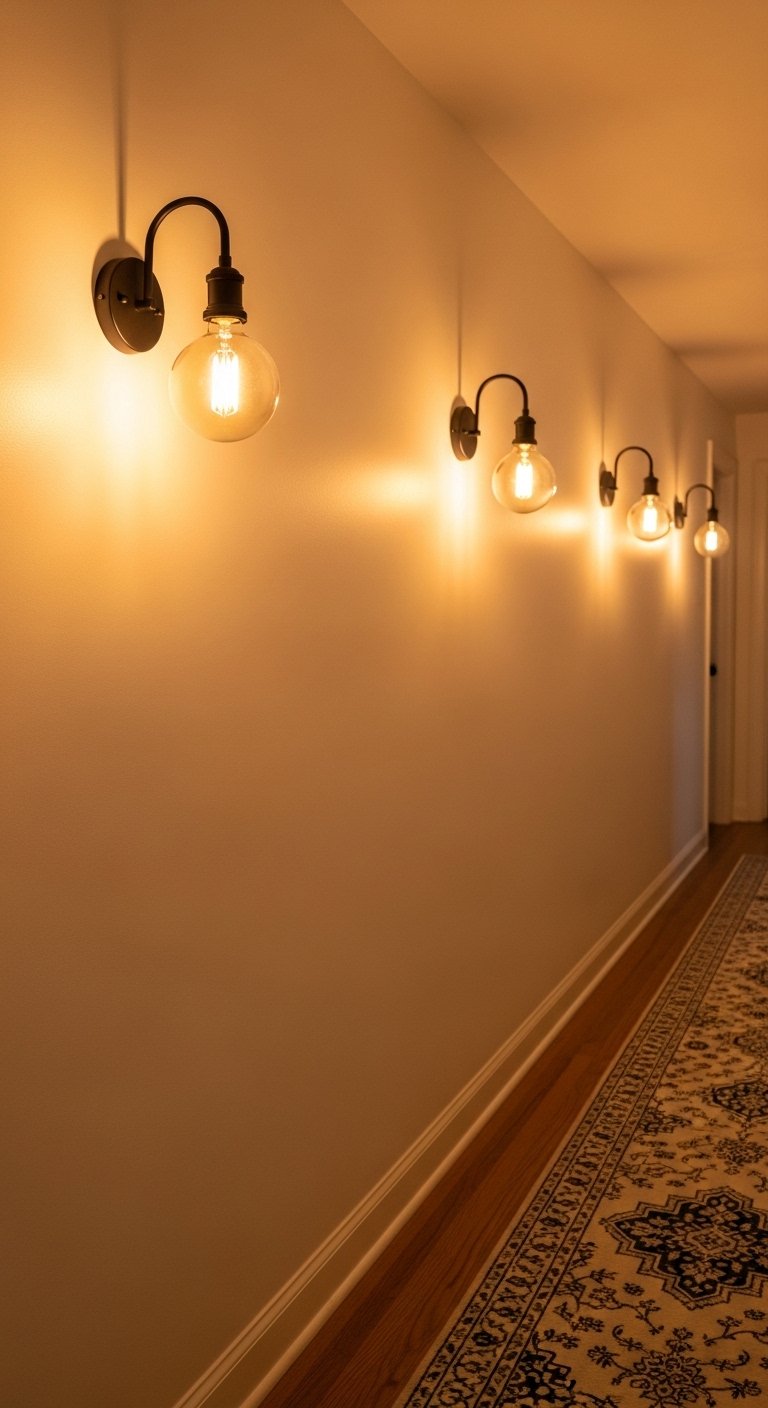
Overhead lighting in a hallway creates flat, even illumination with no depth. Wall sconces add a second layer of light that creates shadow, warmth, and visual interest in a space that usually has neither.
Sconce placement in hallways:
- Mount at 60 to 65 inches from the floor for standard eye-level positioning
- Space evenly along the corridor at 6 to 8 foot intervals
- Use matching pairs on opposite walls for symmetry
- Use single sconces on one wall alternating with art pieces on the other
Warm white bulbs at 2700K make hallways feel welcoming. Cool white bulbs make the same hallway feel like a hospital corridor. The color temperature matters as much as the fixture itself.
15. Use Vertical Stripes to Add Height
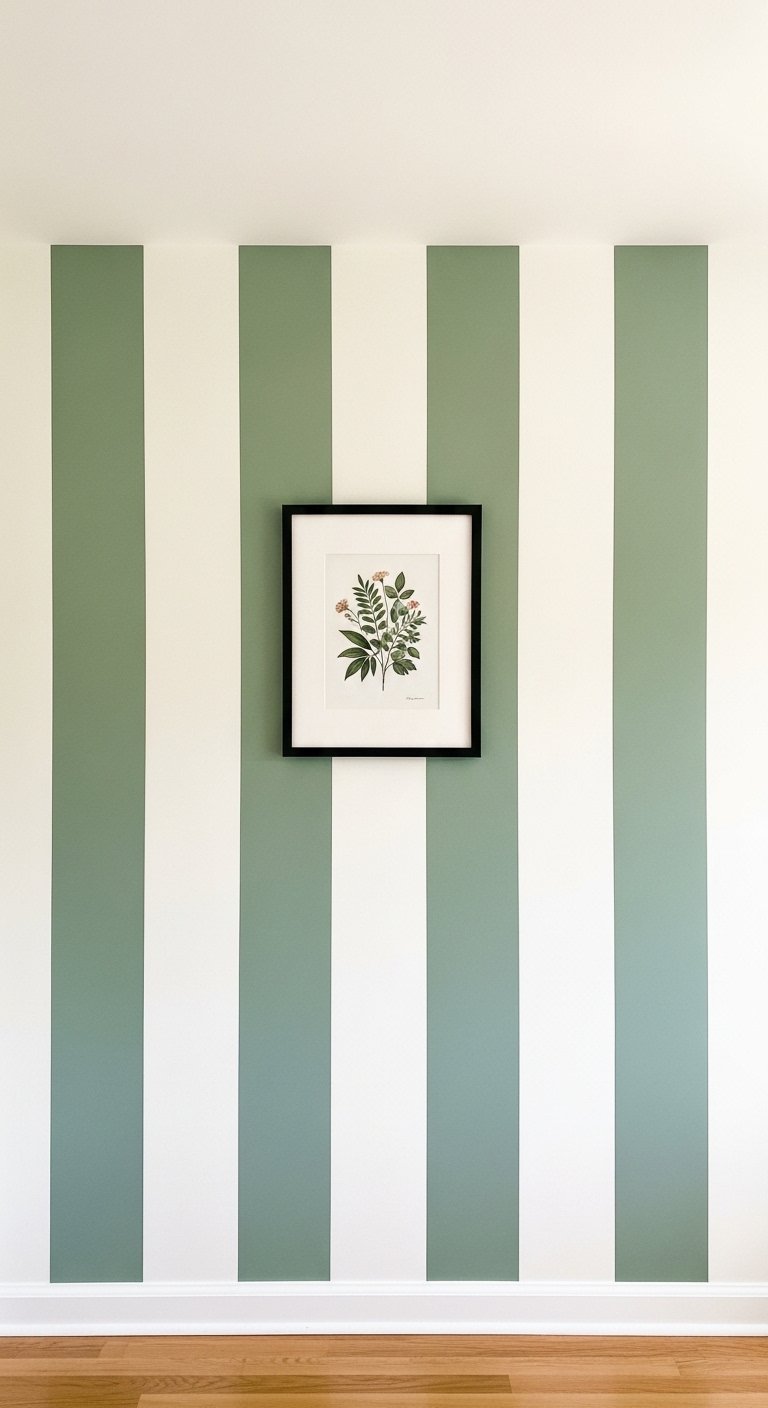
Low ceilings in hallways feel oppressive. Vertical stripes on the walls fix this without touching the ceiling. The eye follows vertical lines upward, which creates the perception of greater height even when nothing changes structurally.
Methods for adding vertical stripes:
- Painted stripes: Tape and paint in two tones of the same color for a subtle effect
- Striped wallpaper: More precise edges, wider range of patterns
- Board and batten: Vertical battens create structural stripes with real dimension
- Tall narrow frames in a vertical gallery: The art arrangement creates implied vertical rhythm
The narrower and taller the stripe, the more height it adds. Wide stripes add width. Narrow stripes add height. Know which problem you’re solving before you commit.
16. Install a Statement Floor
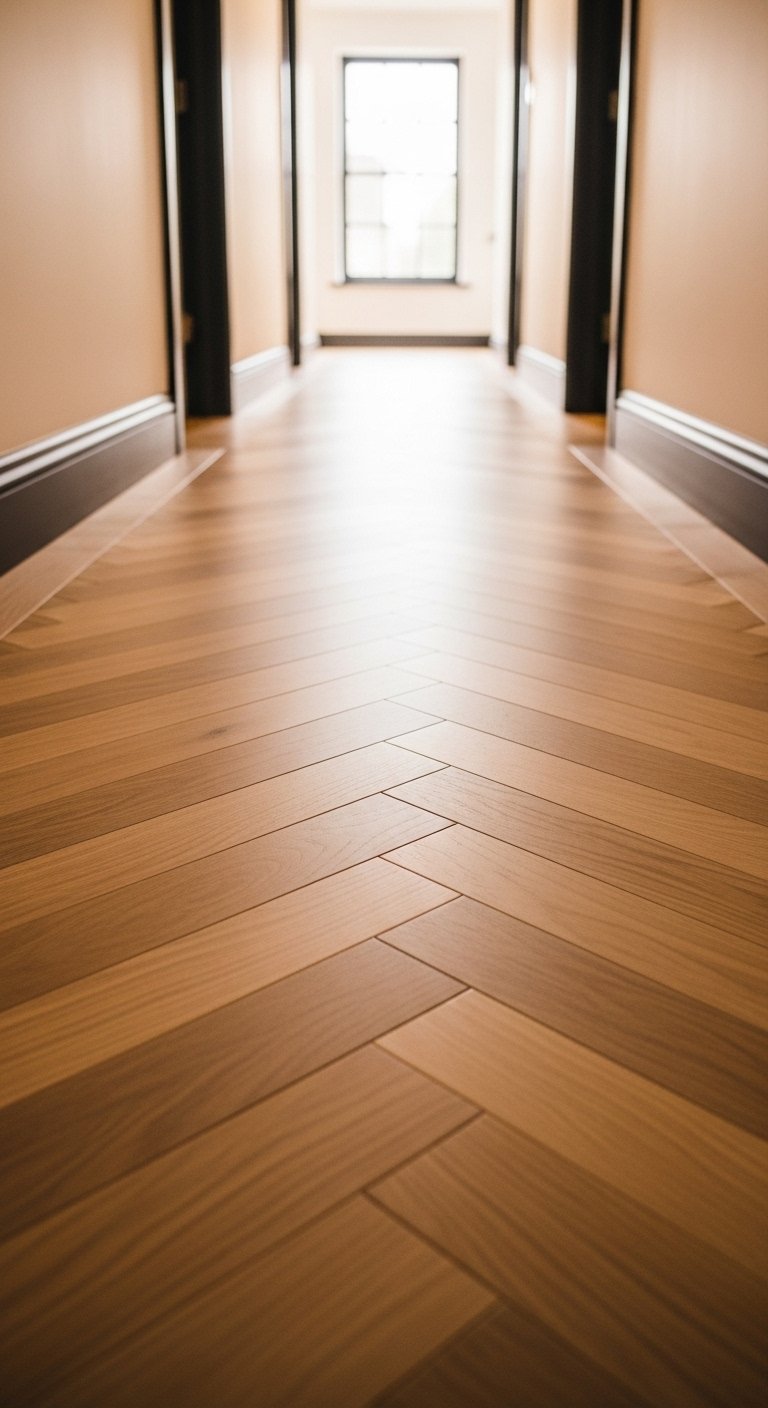
Most hallway remodel advice focuses on walls and lighting. The floor gets less attention than it deserves. A statement floor in a hallway creates an immediate visual impact the moment you step into the space.
Statement floor options:
- Encaustic cement tile: Bold geometric or floral patterns, very durable
- Herringbone hardwood or LVP: Classic pattern that adds direction and movement
- Black and white checkerboard tile: Timeless, works in traditional and modern spaces
- Moroccan mosaic tile: Intricate, colorful, unmistakable
- Patterned porcelain: All the visual impact of cement tile with better durability
A patterned floor works best with simpler walls. Let the floor carry the pattern. Keep the walls relatively quiet so neither element fights for dominance.
17. Hang a Series of Pendant Lights
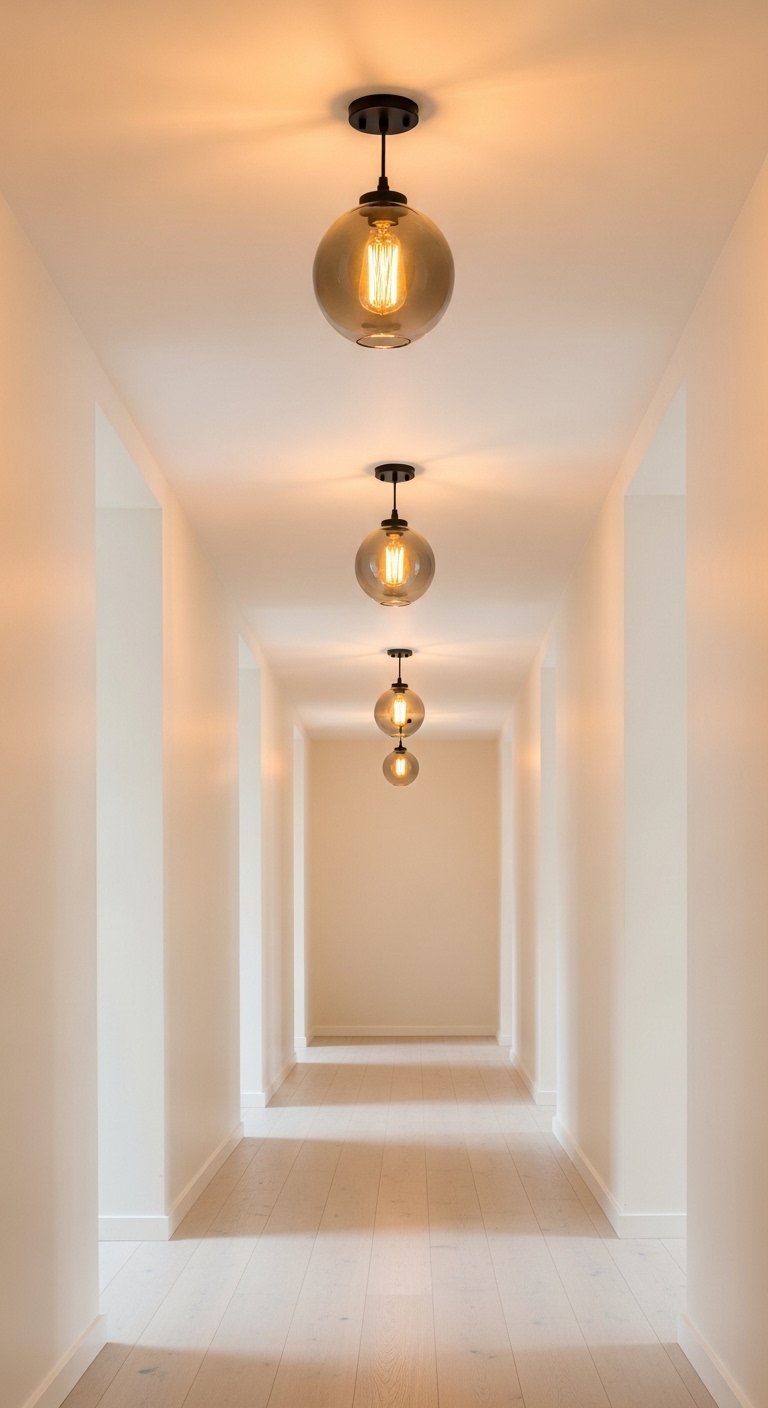
A single hallway pendant is fine. A series of pendant lights hung at consistent intervals transforms the corridor into something architectural. The repeated form creates rhythm as you walk through.
This works best in hallways with ceiling heights of 9 feet or more. Standard 8-foot ceilings can accommodate pendants if the fixture hangs close to the ceiling and the shade is compact.
Choose pendant styles that work in series:
- Simple globe pendants in black or brass
- Small drum shade pendants in a neutral linen
- Exposed Edison bulb pendants for an industrial feel
- Geometric cage pendants for a modern edge
Keep all pendants in the series identical. Mixing pendant styles in a hallway series reads as indecision rather than eclecticism. 🙂
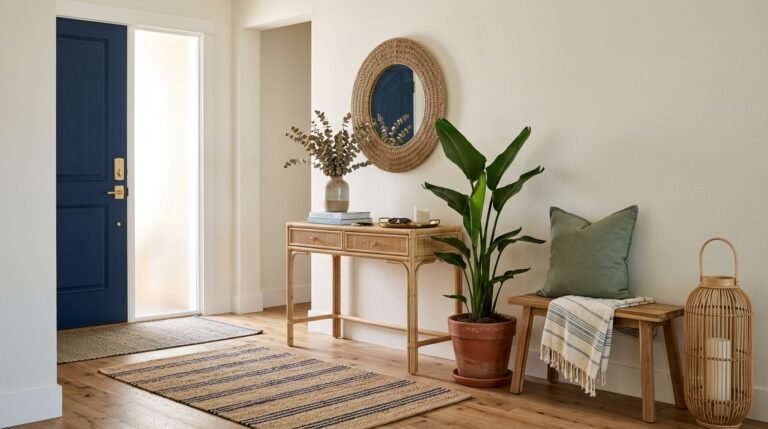
18. Add a Console Table or Narrow Sideboard
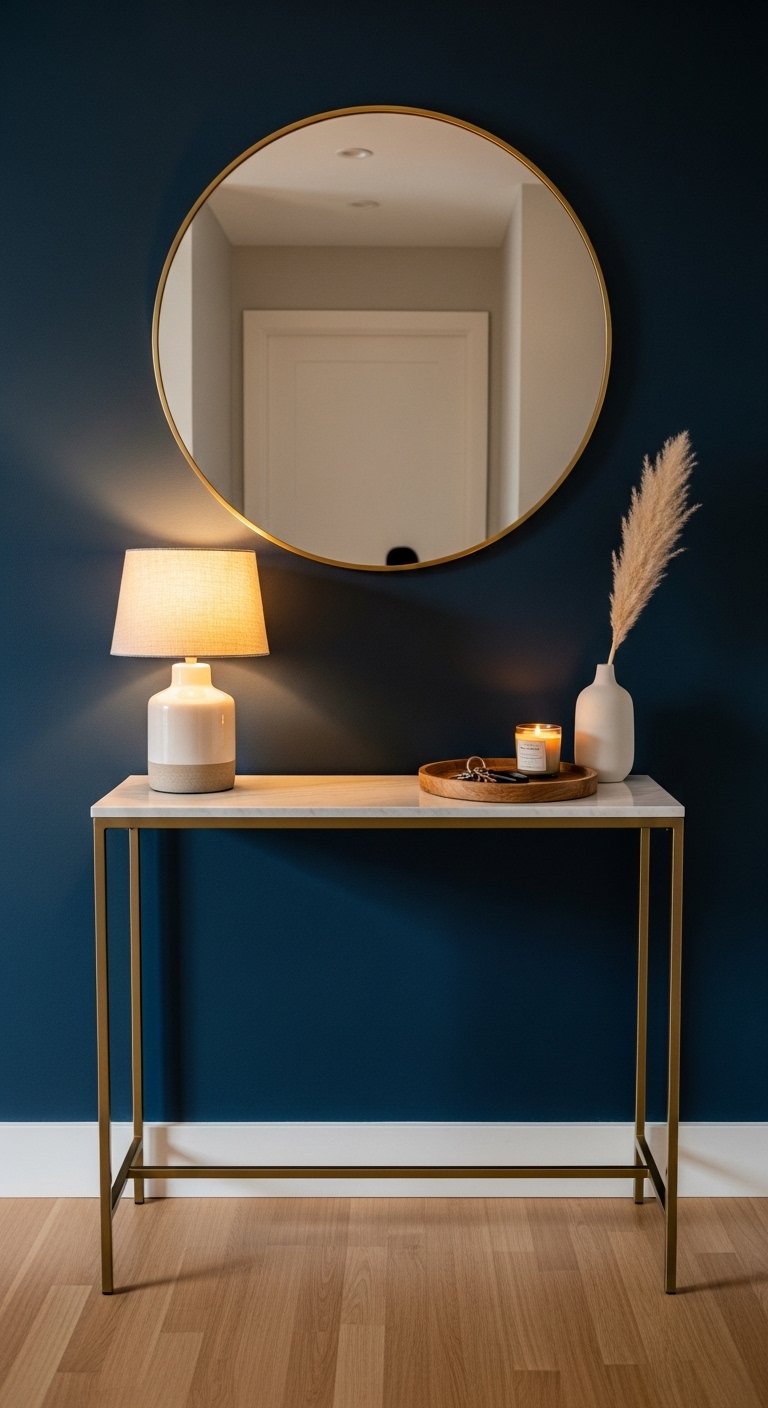
A console table in a hallway needs to be narrow. 10 to 14 inches deep is the practical range for most hallways. That depth holds surface objects without blocking traffic flow.
Style the console with restraint:
- One lamp for warm light
- A small tray for keys and everyday items
- One plant or small vase
- A mirror or single piece of art above
The console table turns a bare wall into a destination within the corridor. Without it, there’s nothing to stop for in a hallway. With it, there’s a moment of interest and function.
19. Install Recessed Niches
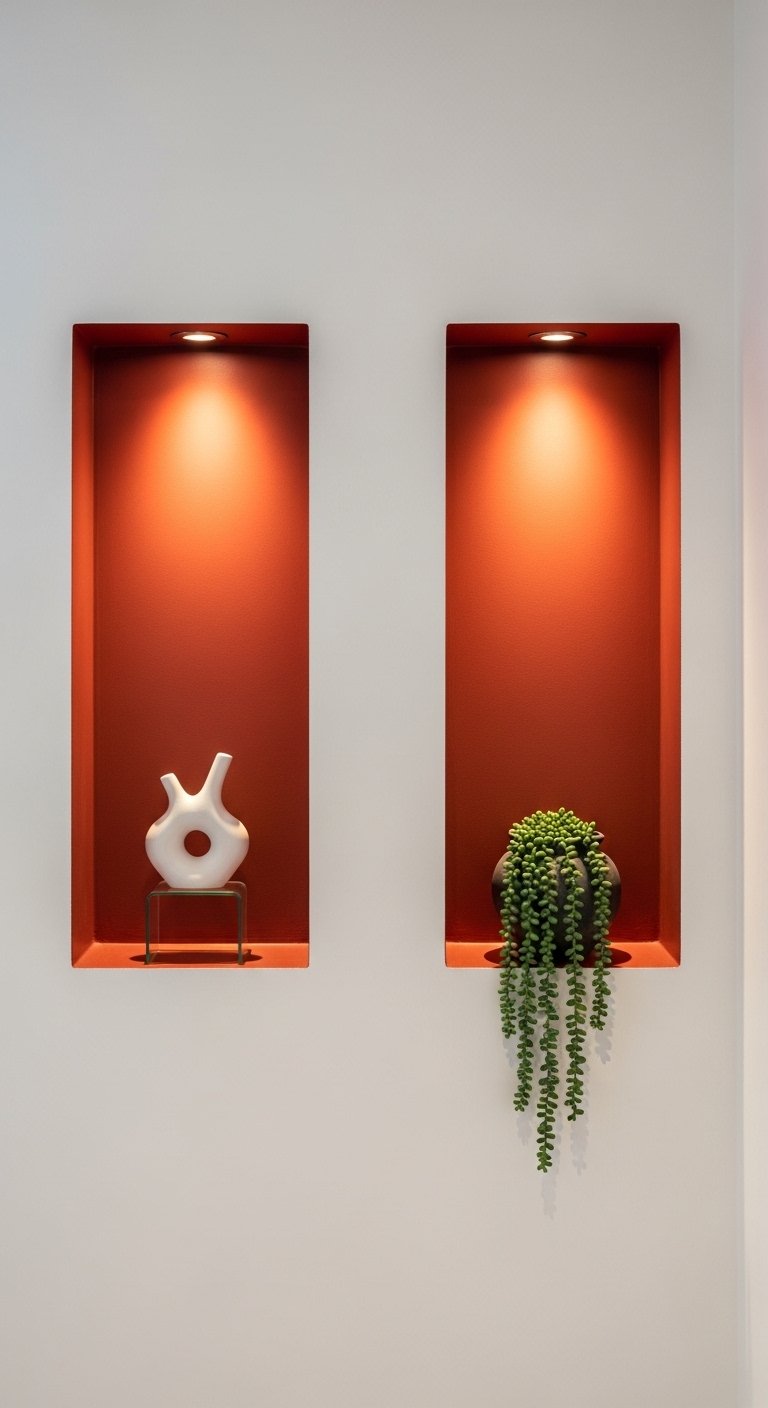
A recessed niche is a small alcove carved into the wall itself. It takes zero floor space and zero wall projection. In a narrow hallway where every inch matters, a niche provides display or storage space that simply doesn’t exist anywhere else.
Niche depths of 3.5 to 4 inches work between standard wall studs. Deeper niches require structural work.
Common niche uses in hallways:
- Art display with a small picture light above
- Small plant with grow light
- Decorative objects grouped as a still life
- Charging station with a power outlet at the back
Finish the niche interior in a contrasting color or material to frame it as an intentional design element rather than a hole in the wall.
20. Use Color Blocking on the Walls
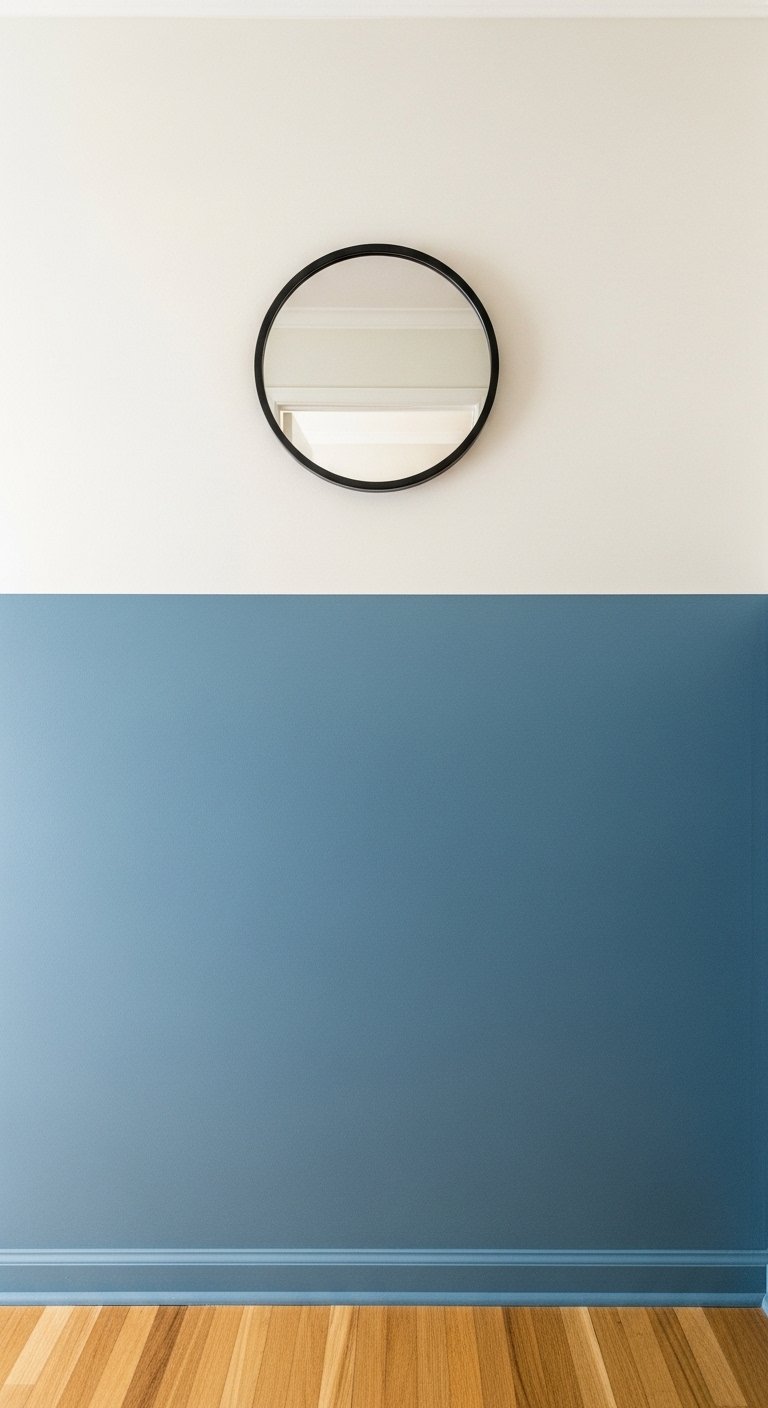
Color blocking divides the wall into distinct color zones without using molding or trim. In a hallway, you apply one color to the lower portion of the wall and a different color above a clean horizontal line.
Approaches worth considering:
- Two-tone paint: Lower half in a bold saturated color, upper half in white or a light neutral
- Geometric color blocking: Diagonal or angled transitions between colors for a graphic effect
- Tonal blocking: Two shades of the same color, subtle and sophisticated
- Three-tone blocking: Lower, middle, and upper thirds in coordinated colors
The dividing line between colors should sit at chair rail height (approximately 32 to 36 inches from the floor) for the most visually balanced proportion. Going higher or lower creates imbalance unless done very deliberately.
21. Add Hooks and Storage at Every Level
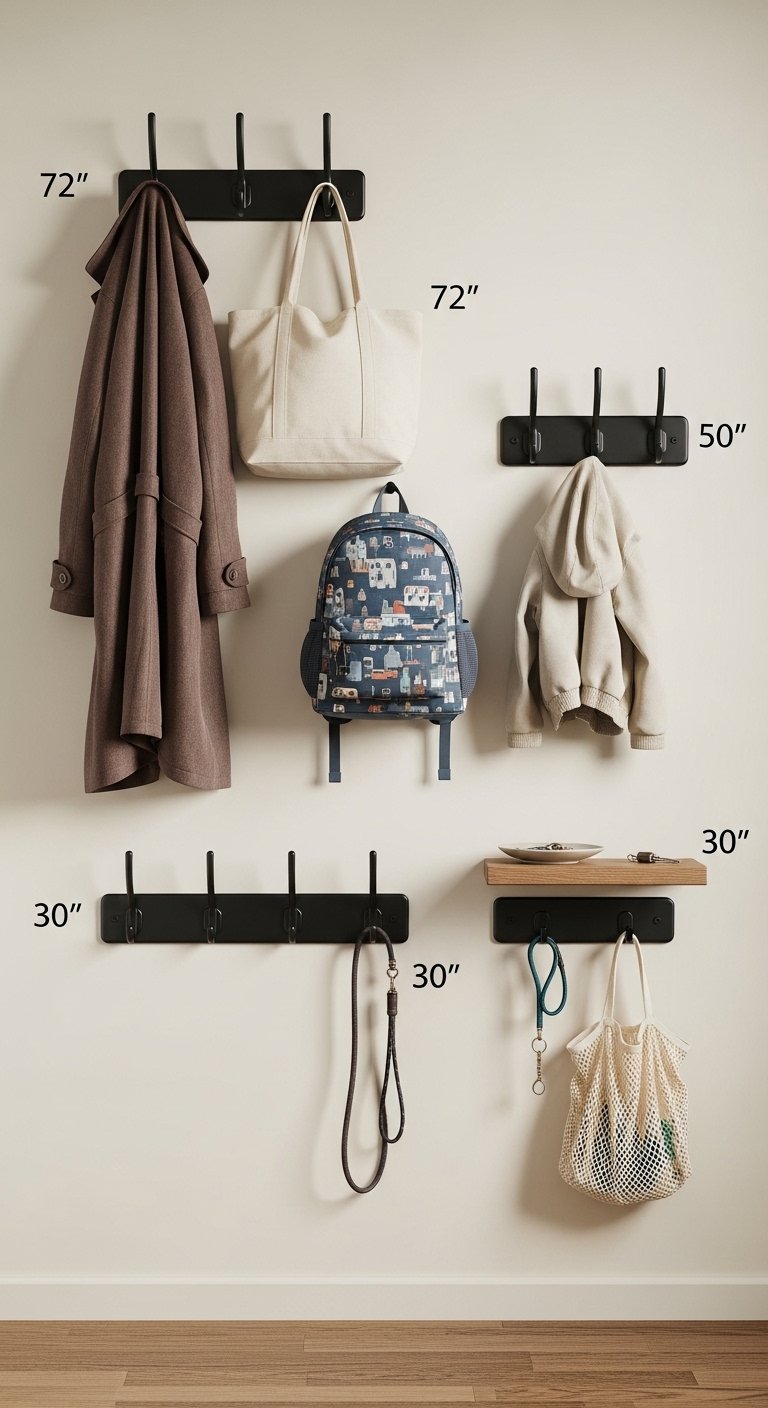
Hallways in active households need storage at multiple heights because the people using them are different heights and carry different things. A single row of hooks at adult coat height ignores children, bags, umbrellas, and everything else that needs a home near the entry.
A multi-level hook and storage system includes:
- High hooks (72 inches): Adult coats and heavier bags
- Mid hooks (48 to 54 inches): Children’s coats and backpacks
- Low hooks (24 to 36 inches): Dog leashes, small bags, reusable totes
- Floor level: A basket for shoes or a built-in bench with cubby below
The system works only when everyone uses it. The hooks serve no purpose if coats still land on the stairs or kitchen chairs. Habit formation matters as much as the hardware. IMO, this is the most underrated practical upgrade on the entire list.
Before You Start Your Hallway Remodel
A few things apply to every hallway project:
- Measure the width carefully. Hallways are often narrower than they feel. Furniture and storage additions need to leave at least 36 inches of clear walking space.
- Fix the lighting before anything else. A dark hallway undermines every other upgrade.
- Consider the sightlines. What you see from each end of the hallway matters. Design with those terminal views in mind.
- Check the ceiling height. It determines which lighting options work and whether vertical-emphasis treatments are necessary.
- Think about the full corridor. Individual elements in isolation often look disconnected. Plan the hallway as one unified space.
Final Thoughts
A hallway is not a leftover space between rooms. It’s a connective tissue of your home that every person and every guest passes through multiple times a day.
The best hallway remodels take one of two approaches: they either maximize function through smart storage, lighting, and flooring, or they maximize character through bold color, pattern, and art. The strongest hallways do both.
Pick the two ideas from this list that address your biggest current problems. Start with lighting if your hallway is dark. Start with storage if it’s cluttered. Then layer in the character pieces.
Your hallway deserves more than a coat of white paint and a prayer. Give it some actual attention.