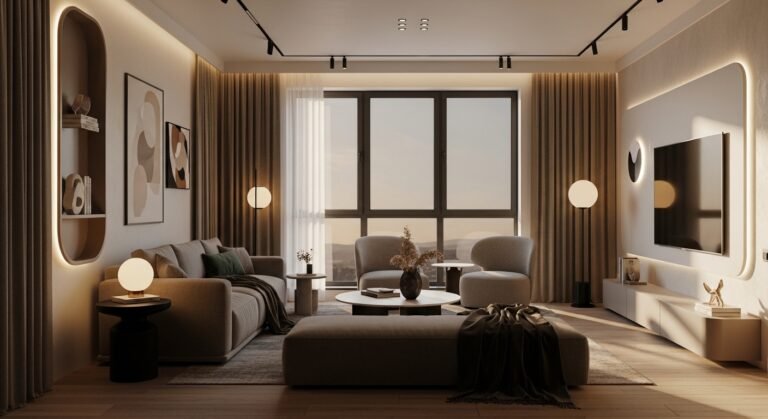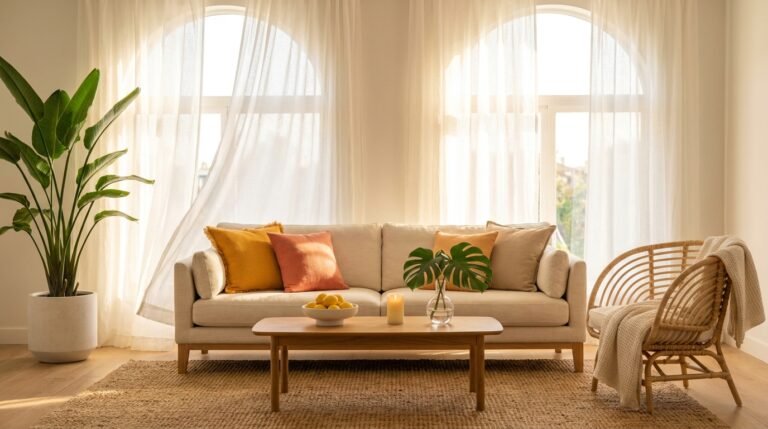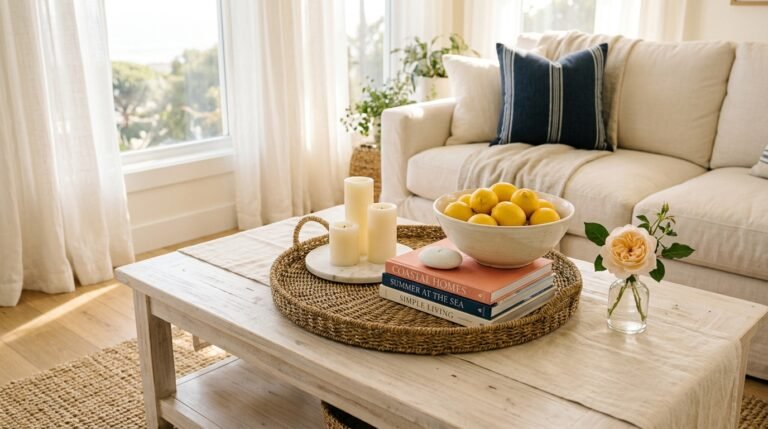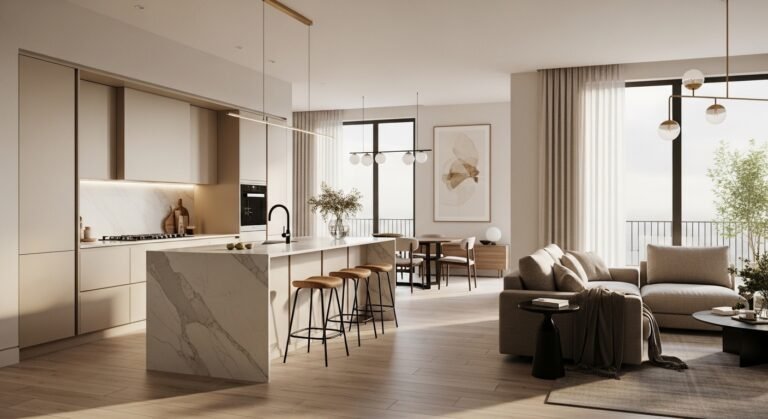
25 Sofa Ideas That Make Your Living Room Look Expensive
The sofa is the most important piece of furniture in your living room. Everything else, the rug, the coffee table, the lighting, the art, responds to it. Get the sofa right and the room falls into place. Get it wrong and no amount of styling fixes it.
Most people choose a sofa based on how it looks in a showroom under flattering retail lighting, then bring it home and wonder why the room doesn’t feel right. The sofa choice involves more than aesthetics. It involves scale, placement, fabric, configuration, and how it interacts with every other decision in the room.
Here are 25 sofa in living room ideas that address all of it.
1. Size the Sofa to the Room, Not to Your Ambitions
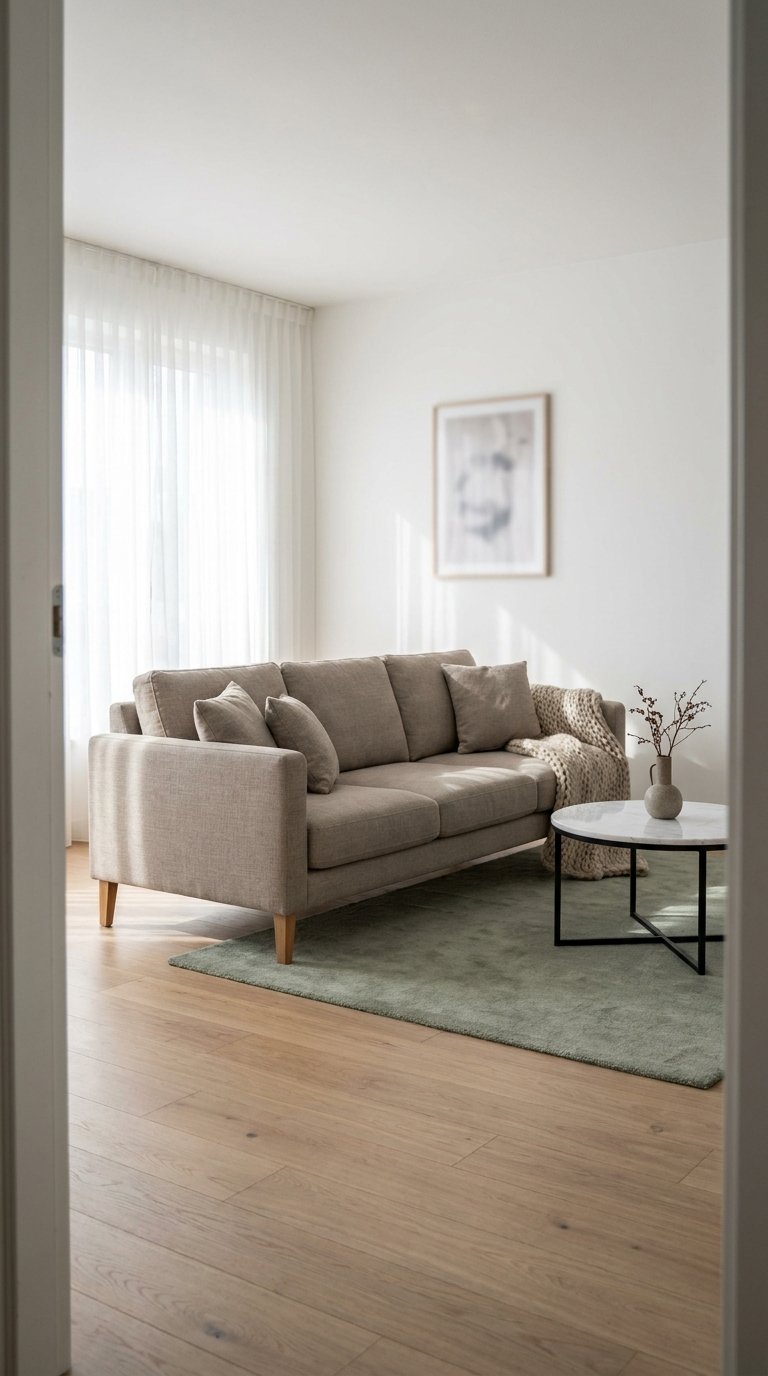
The most common sofa mistake: buying a sofa that looks impressive in the showroom and dominates the living room at home.
A sofa should leave at least 18 inches of clear walkway on every accessible side. It should face the room’s focal point, whether that’s a fireplace, a TV, or a window, without blocking traffic flow. The front legs should sit on the area rug if one is present.
Sofa sizing by room size:
- Small living room (under 150 sq ft): a compact two-seater or apartment sofa, maximum 72 inches wide.
- Medium living room (150 to 250 sq ft): a standard three-seater, 84 to 96 inches wide.
- Large living room (250+ sq ft): a full-size sofa or sectional, 96 inches and above.
Measure the wall the sofa will sit against. Then measure the room depth from that wall to the opposite wall or coffee table. A sofa that leaves less than 36 inches between its front edge and the coffee table feels cramped.
2. Float the Sofa Away From the Wall
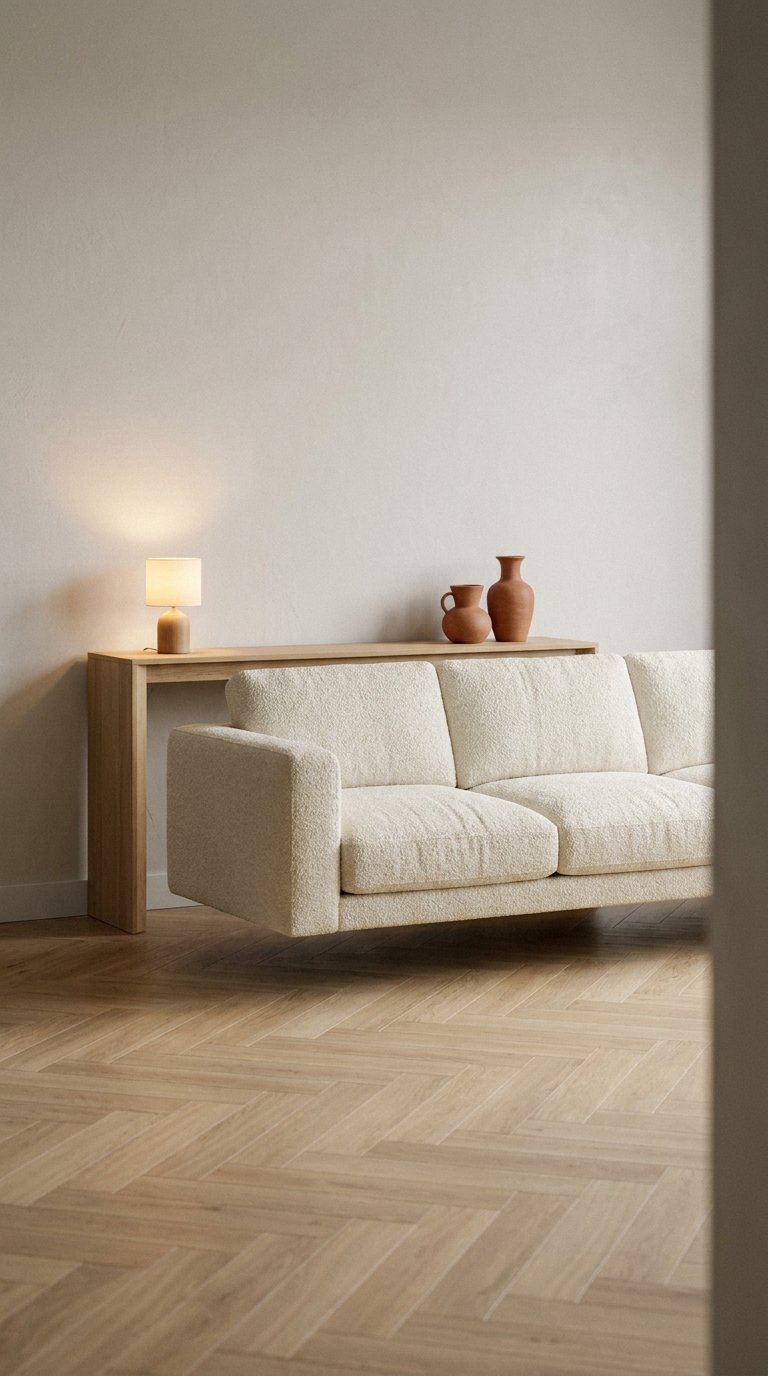
Pushing the sofa against the wall feels like it maximizes space. It doesn’t. It makes the room feel like a waiting room.
Pulling the sofa forward, even 4 to 6 inches from the wall, creates a more intentional arrangement. The gap between the sofa back and the wall is barely noticeable in practice but the effect on the room’s feel is significant. The seating arrangement becomes a defined zone rather than furniture lined against a perimeter.
In larger living rooms, floating the sofa well into the room, 2 to 3 feet from the wall, anchors the seating arrangement at the room’s center and creates usable space behind the sofa for a console table or a walkway.
3. Choose a Neutral Sofa and Introduce Color Through Accessories
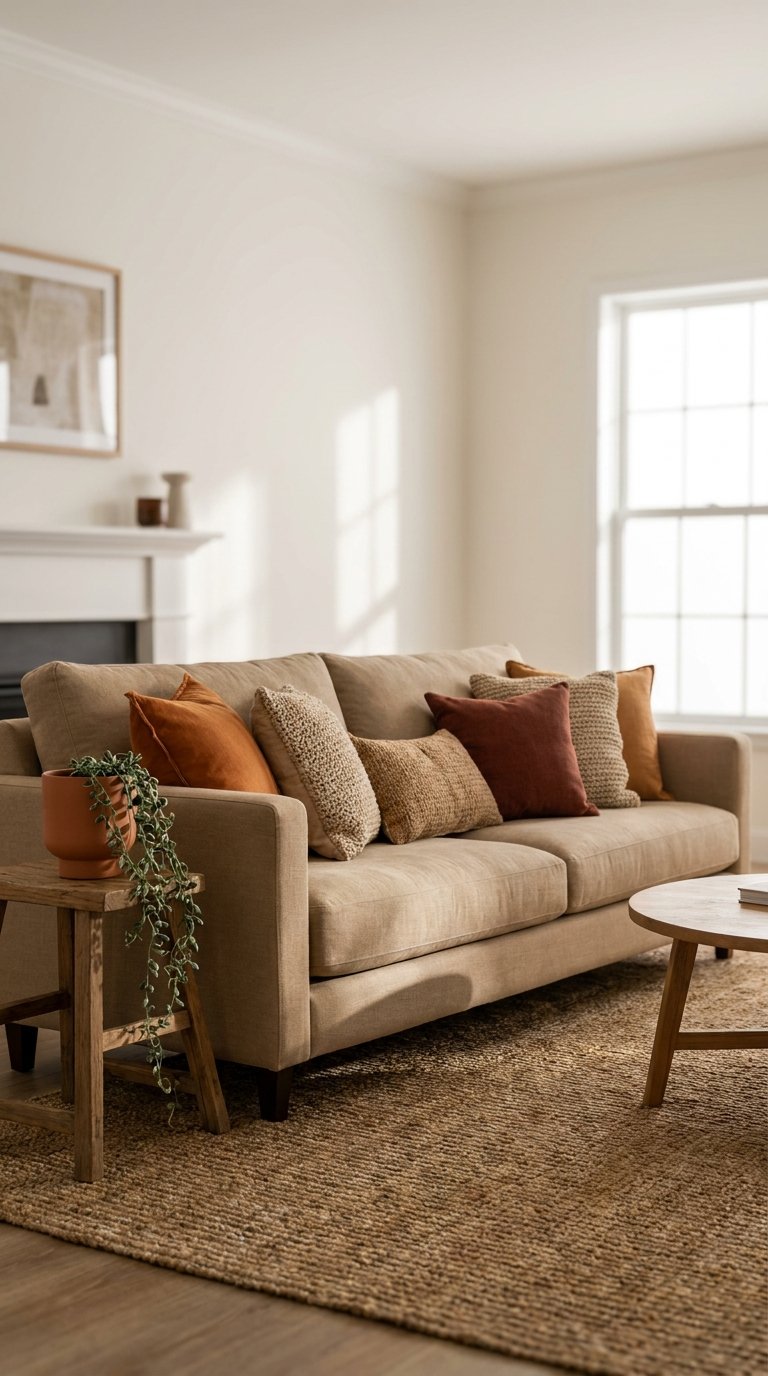
A sofa in a bold color makes a statement for approximately six months. Then it becomes a design constraint that limits every other decision in the room.
A neutral sofa, warm white, cream, light gray, warm sand, or oatmeal, accepts every seasonal accessory change, every rug swap, and every wall color decision without conflict. The color and personality of the room come from cushions, throws, art, and rugs. These change. The sofa doesn’t.
Neutral sofa tones by room style:
- Warm white or cream: works in Scandinavian, organic, and classic living rooms.
- Warm sand or oatmeal: works in natural, boho, and transitional living rooms.
- Light gray: works in contemporary, industrial, and modern living rooms.
- Warm greige: a gray-beige blend that works in almost any room style.
A neutral sofa is not a safe choice. It’s a strategic one. IMO, it’s the right choice for the majority of living rooms.
4. Use a Sectional to Define an Open-Plan Space
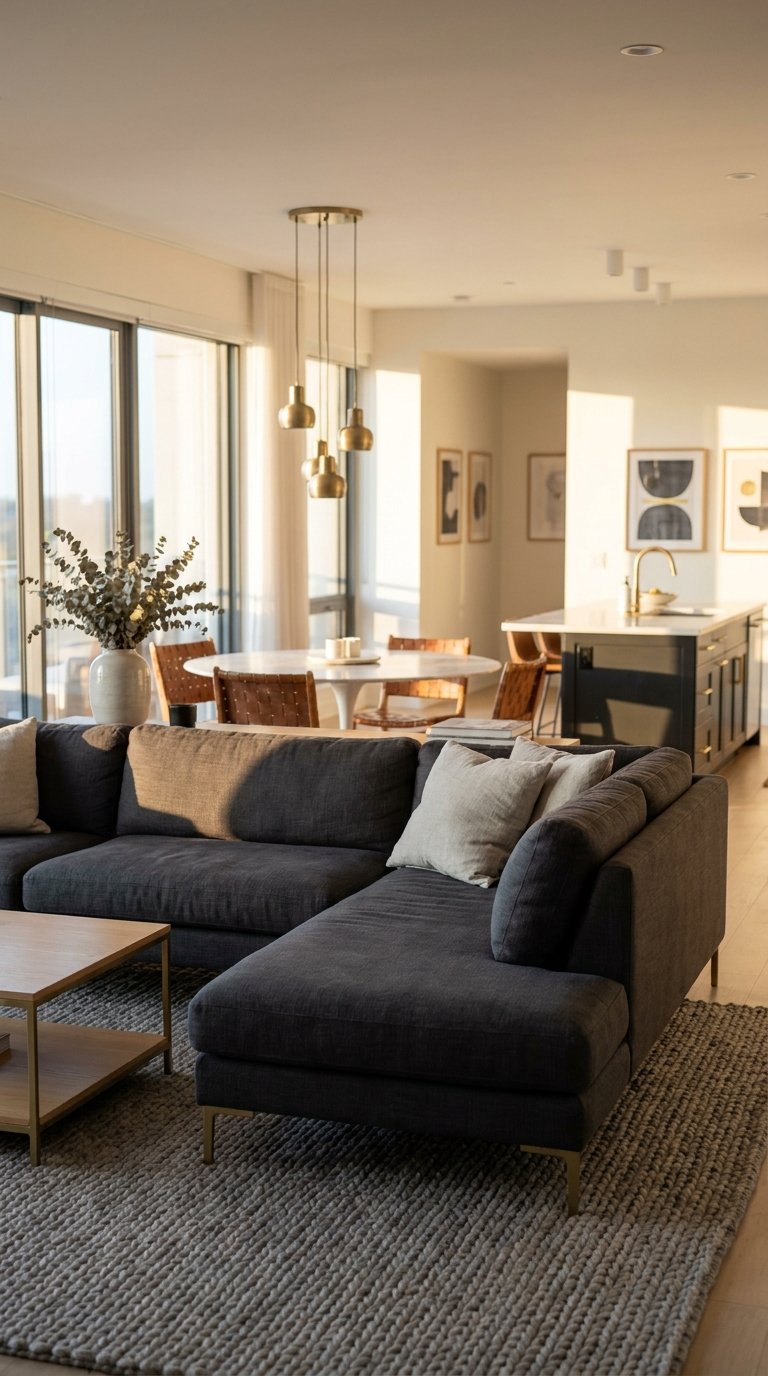
In an open-plan living, dining, and kitchen space, a sectional sofa does something a standard sofa cannot: it defines the living zone as a distinct area within the larger open space.
The L-shape of a sectional creates a visual boundary that signals where the living area begins and ends. The back of the longer arm faces the dining or kitchen zone, creating a soft room divider without a wall.
Sectional configuration considerations:
- Left-hand or right-hand configuration based on the room layout and entry point.
- Chaise end facing the direction that keeps traffic flow clear.
- Minimum 48-inch clearance behind the sofa arm for walking through the space.
- A modular sectional offers future reconfiguration if your layout or room changes.
A sectional in the wrong configuration blocks the room. Sketch the floor plan before ordering.
5. Try a Curved or Round Sofa
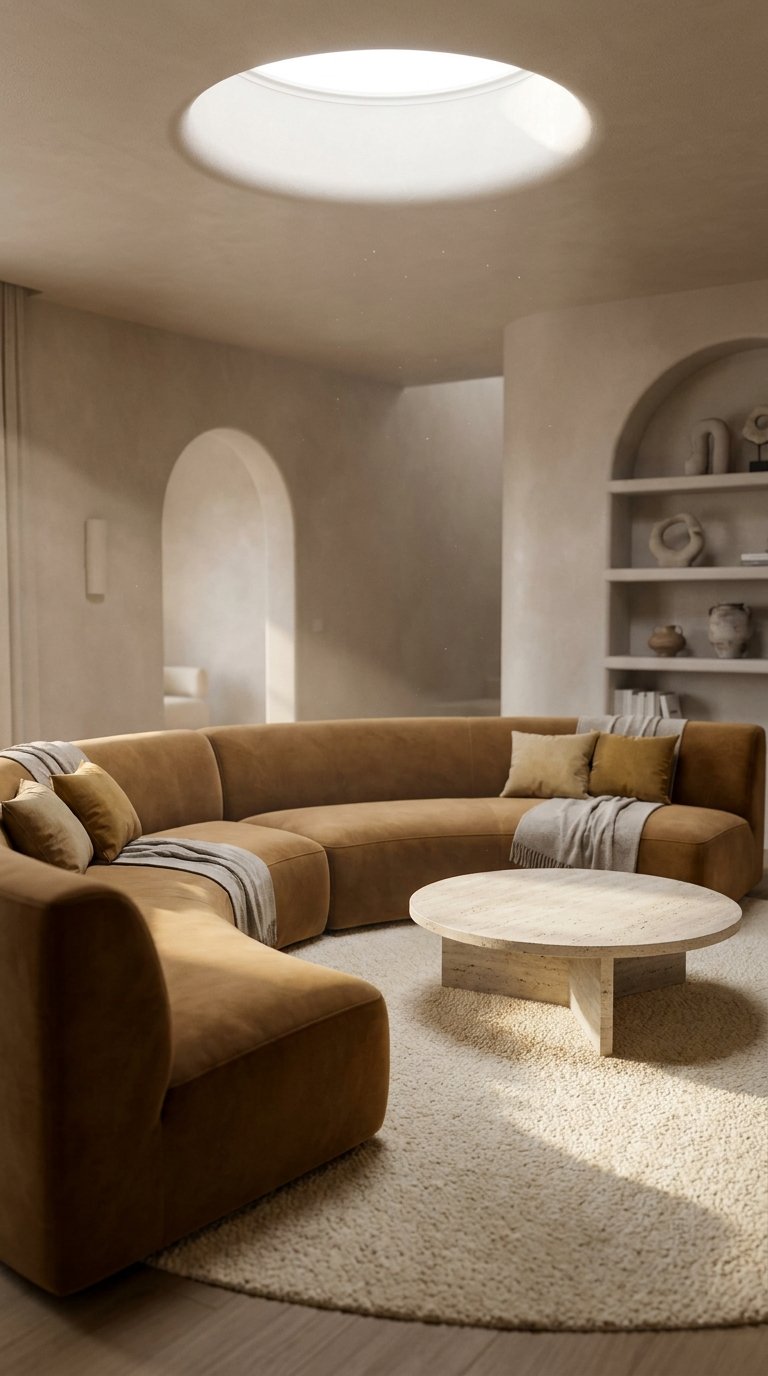
Curved and round sofas create a conversation-focused arrangement that standard rectangular sofas don’t deliver. The curve turns the seating inward, orienting everyone on the sofa toward each other rather than toward the TV.
A curved sofa works particularly well in a round or square living room where a rectangular sofa creates awkward corner gaps. It also works as the primary seating piece in a room without a TV, oriented around a fireplace or a view.
Curved sofa styles:
- Gentle arc sofa: a subtle curve on a standard three or four-seat sofa.
- Full crescent sofa: a pronounced curve that seats four to six people facing inward.
- Conversation pit or sunken curved sofa: a built-in curved arrangement around a lowered floor area.
- Round modular sofa: individual curved modules arranged into a full circle or partial arc.
A curved sofa requires more floor space than its seat count suggests because the arc extends the footprint. Measure carefully.
6. Place Two Sofas Facing Each Other
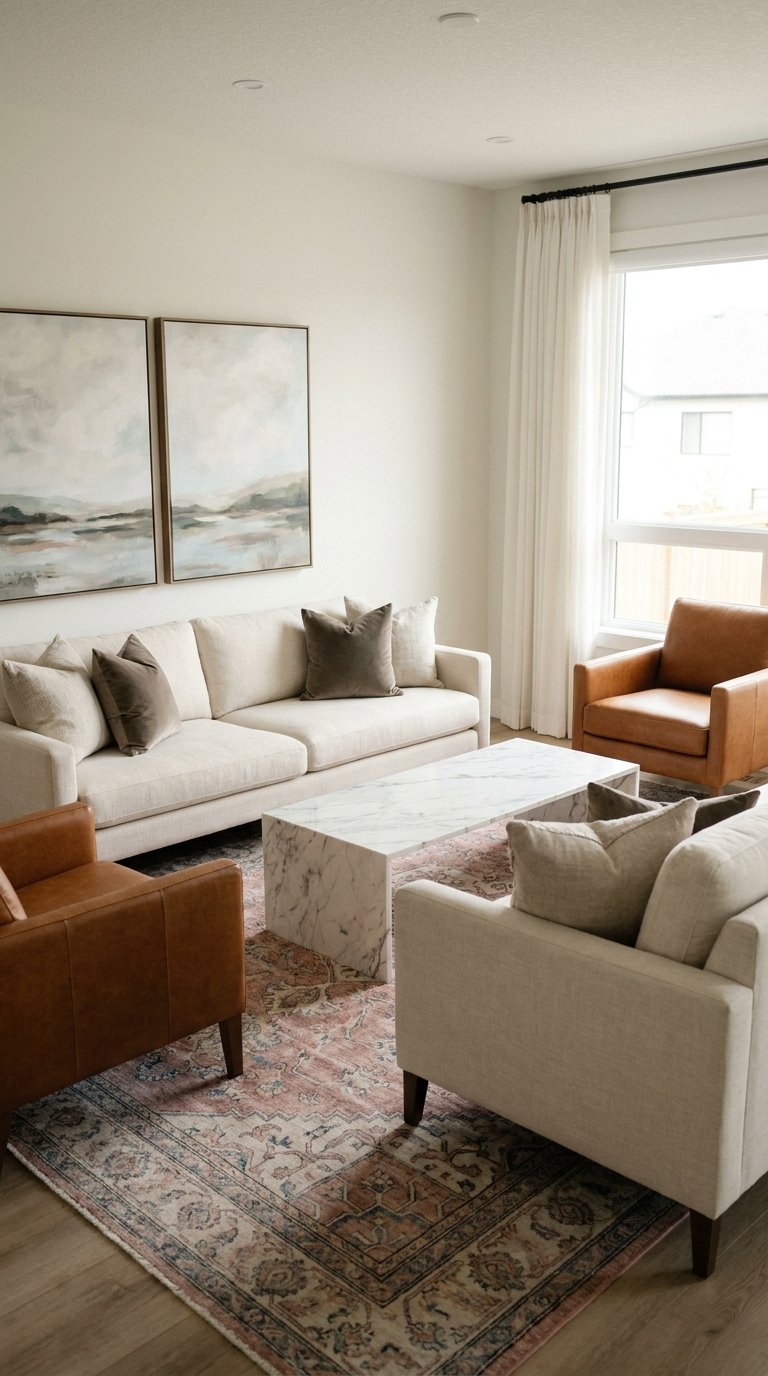
Two matching sofas facing each other across a coffee table creates one of the most balanced, elegant living room arrangements available. It works in rooms with enough depth to accommodate both sofas with adequate space between them.
The facing arrangement encourages conversation and creates clear visual symmetry. It works well in formal living rooms, wide rectangular rooms, and open-plan spaces where the living zone benefits from a strong geometric anchor.
Facing sofa arrangement guidelines:
- Leave 36 to 48 inches between the two sofa fronts for the coffee table and walkway.
- The sofas don’t need to match exactly; two sofas in the same color family read as intentional even if they differ in style.
- Add two accent chairs at the ends to complete the conversation zone without requiring a third sofa.
- A large rectangular rug anchors the full arrangement as one unified zone.
7. Use a Sofa With Storage for Small Living Rooms
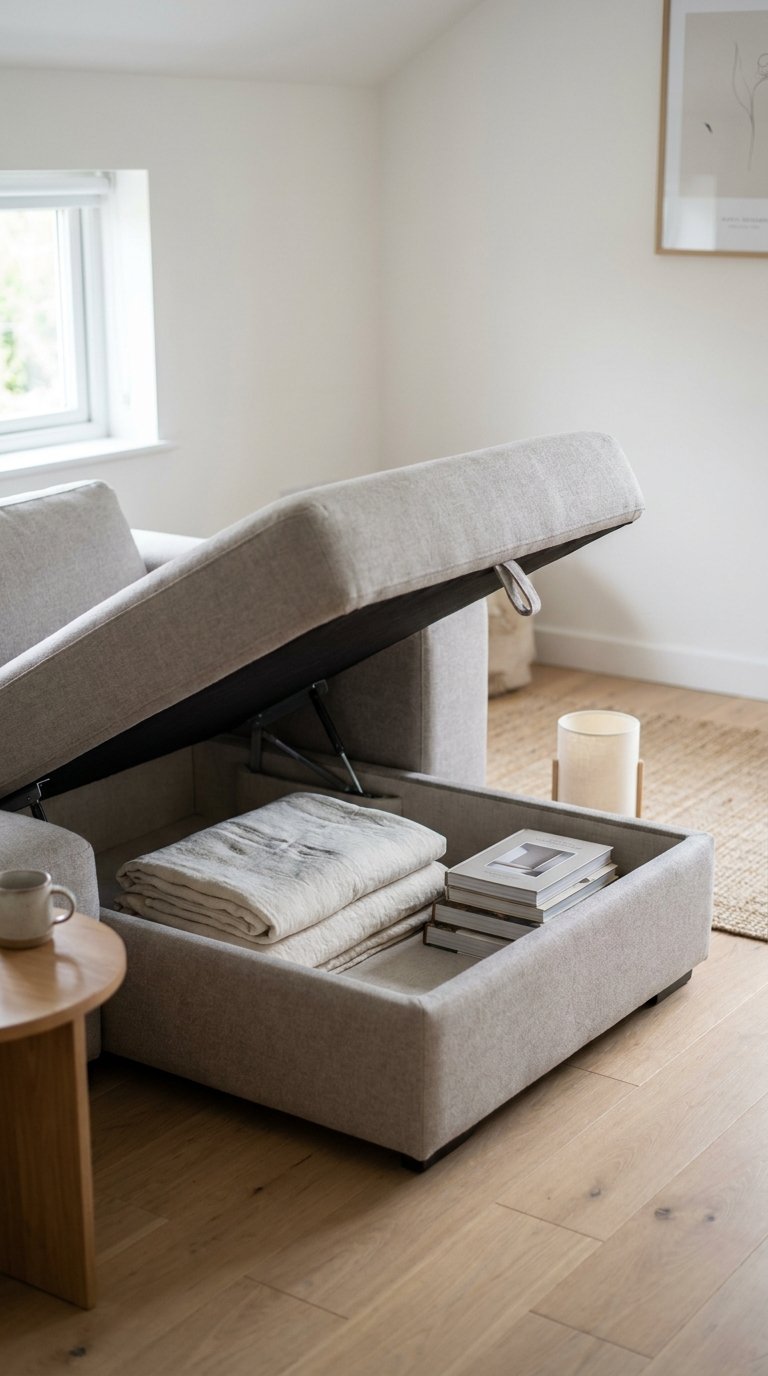
In a small living room where storage is limited, a sofa with built-in storage, either in the base or in the arms, removes the need for additional storage furniture and keeps the floor plan clear.
Storage sofas typically have a lift-up base that reveals a cavity for blankets, cushion covers, books, or anything else that would otherwise require a dedicated storage piece. The storage is invisible from outside and doesn’t affect the sofa’s appearance.
Storage sofa types:
- Lift-top base: the seat cushions lift as one unit to reveal a full-width storage cavity.
- Ottoman storage sofa: a matching storage ottoman provides additional hidden storage.
- Storage arm sofa: narrow built-in trays in the arms for remotes and small items.
A storage sofa is not a compromise. Several quality brands produce storage sofas with the same aesthetic standard as their non-storage equivalents.
8. Choose a Sofa With Exposed Legs for Small Spaces
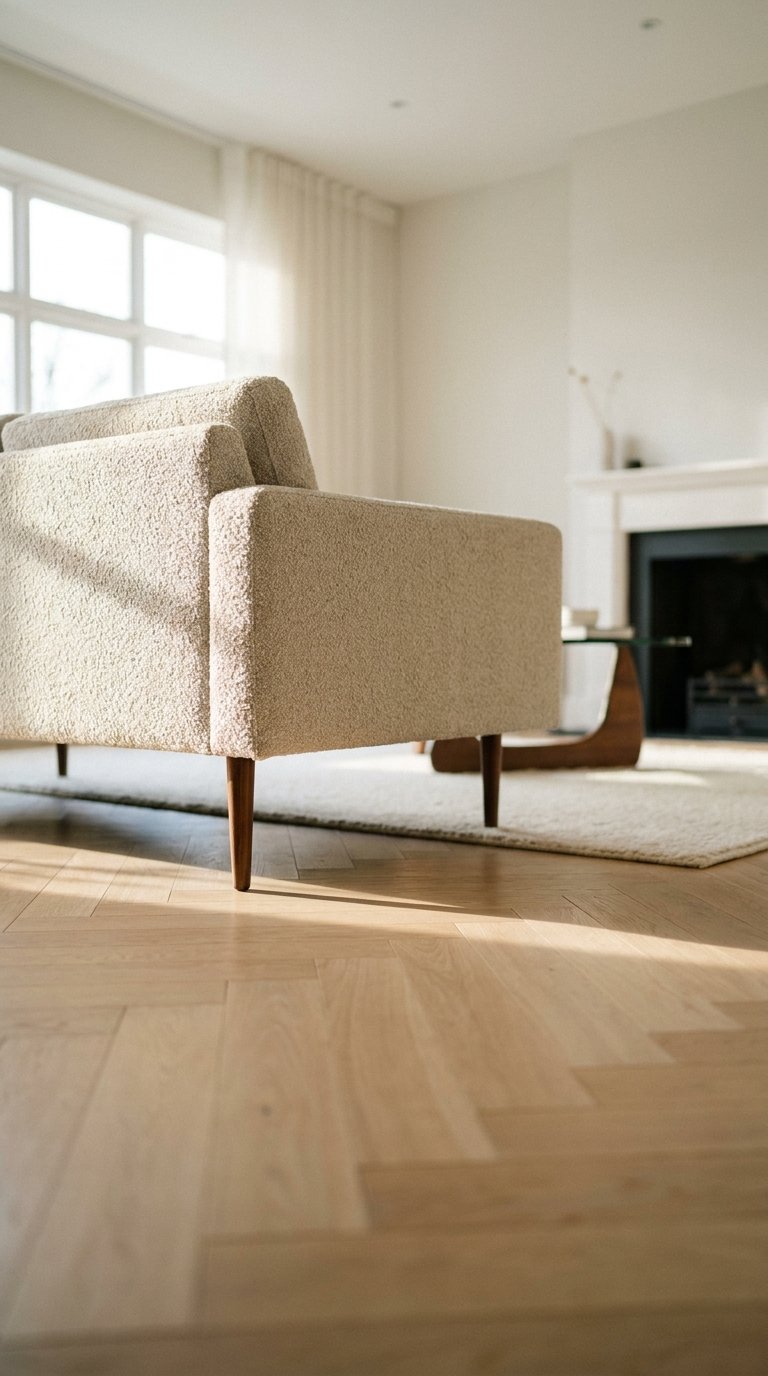
A sofa that sits directly on the floor with a solid base blocks the sightline at ground level and makes the room feel heavier and smaller. A sofa on visible legs, particularly tapered or slim legs, creates visual clearance at floor level.
The floor visible beneath the sofa makes the room feel larger. The eye travels under the sofa and reads the room as more spacious than it actually is. This is not a minor effect. It’s a measurable visual change that costs nothing when choosing between two sofas of equal price.
Leg height and style by room aesthetic:
- Tapered wooden legs: warm, Scandinavian, mid-century modern.
- Slim metal legs: contemporary, industrial, modern.
- Turned wooden legs: traditional, classic, cottage.
- Brass or gold metal legs: transitional, glam, warm modern.
Minimum leg height of 4 inches for the effect to read clearly from a seated or standing position.
9. Add a Sofa in a Bold Color as the Room’s Focal Point
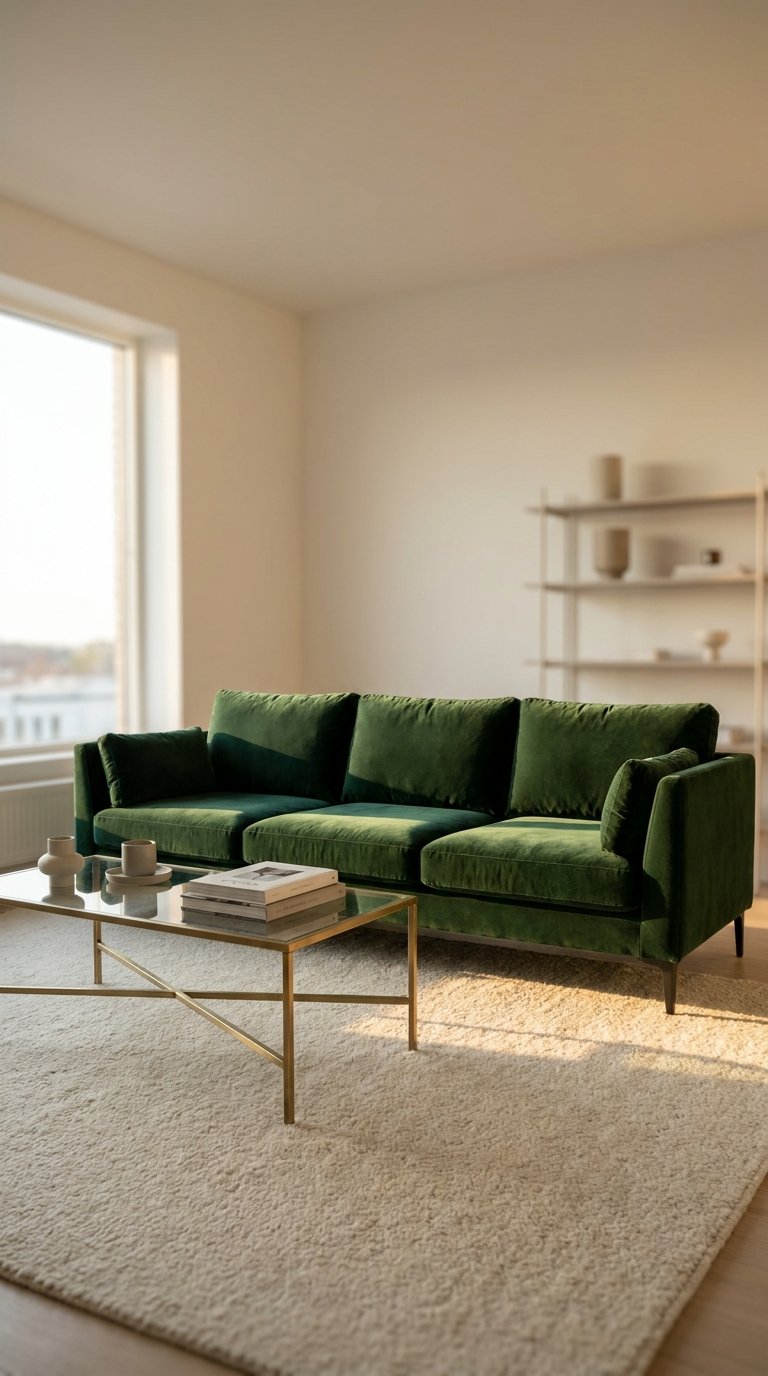
A bold sofa works when it’s the only bold element in the room. Every other piece, the rug, the curtains, the walls, the art, stays neutral. The sofa earns its color by being the room’s uncontested focal point.
This approach works best when the bold color is chosen deliberately and confidently. A deep emerald green, a rich burnt orange, a navy blue, or a warm terracotta sofa in a neutral room looks designed. A half-committed medium blue in a room with other competing colors looks accidental.
Bold sofa colors that hold their value over time:
- Deep emerald green velvet.
- Rich navy blue in a tight weave or velvet.
- Warm burnt orange or terracotta in a textured fabric.
- Deep burgundy or wine in velvet or boucle.
- Warm mustard yellow in a linen-look fabric.
Bold sofas in velvet age better than bold sofas in flat weave fabrics because velvet’s light-shifting quality keeps the color visually interesting over time.
10. Style a White Sofa With Layered Neutral Cushions
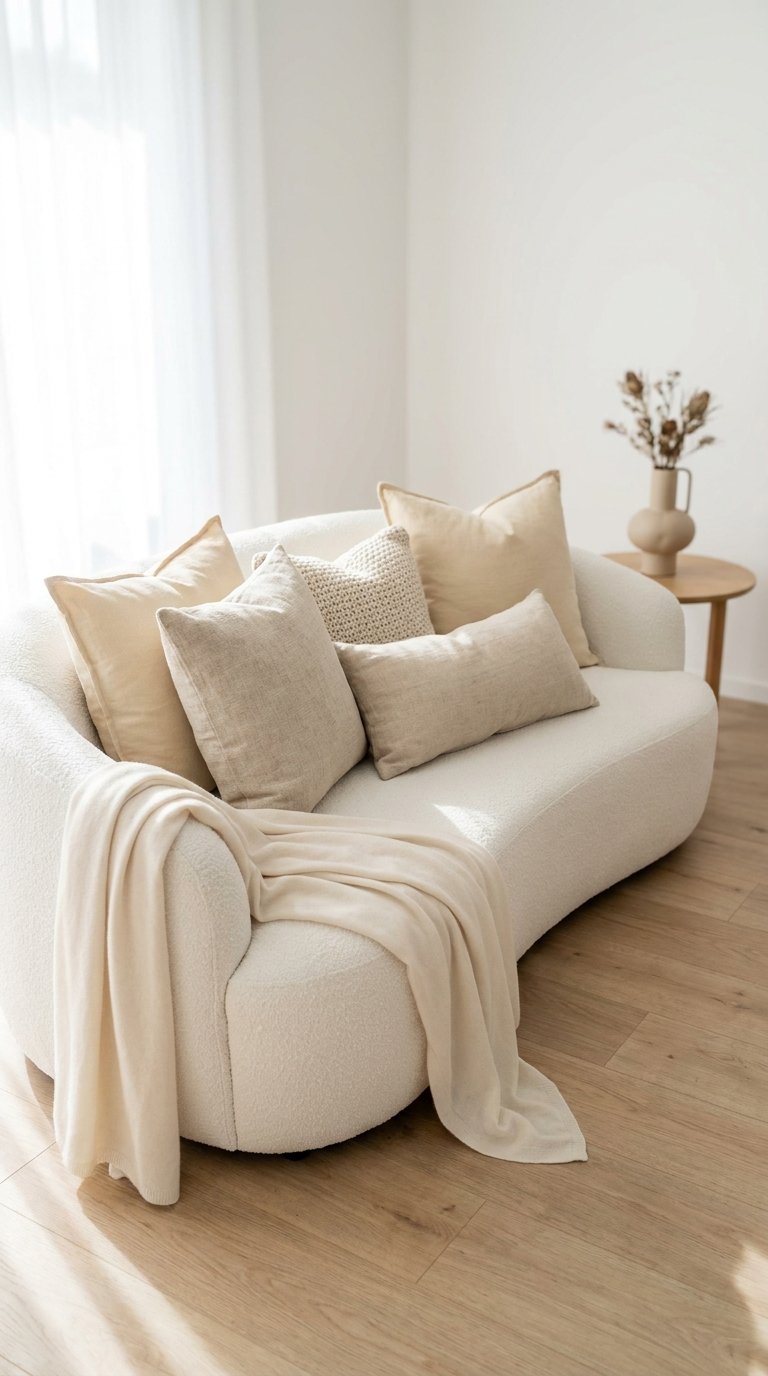
A white sofa is more practical than most people assume, but only when the fabric choice and maintenance approach are right. A white sofa styled with layered neutral cushions creates a cohesive, editorial look that no other color delivers with the same ease.
The key is fabric selection. A white performance fabric or a slipcover sofa makes white upholstery genuinely livable. Bouclé in white hides minor surface marks better than flat weave white fabric.
White sofa cushion layering formula:
- Two large cushions in warm cream at the back.
- Two medium cushions in oatmeal or natural linen in front.
- One small cushion in a contrasting texture: chunky knit, velvet, or embroidered.
- One lumbar cushion in a complementary tone or subtle pattern.
The layers add texture and depth to what would otherwise be a flat white surface.
11. Use a Sofa Table Behind a Floating Sofa
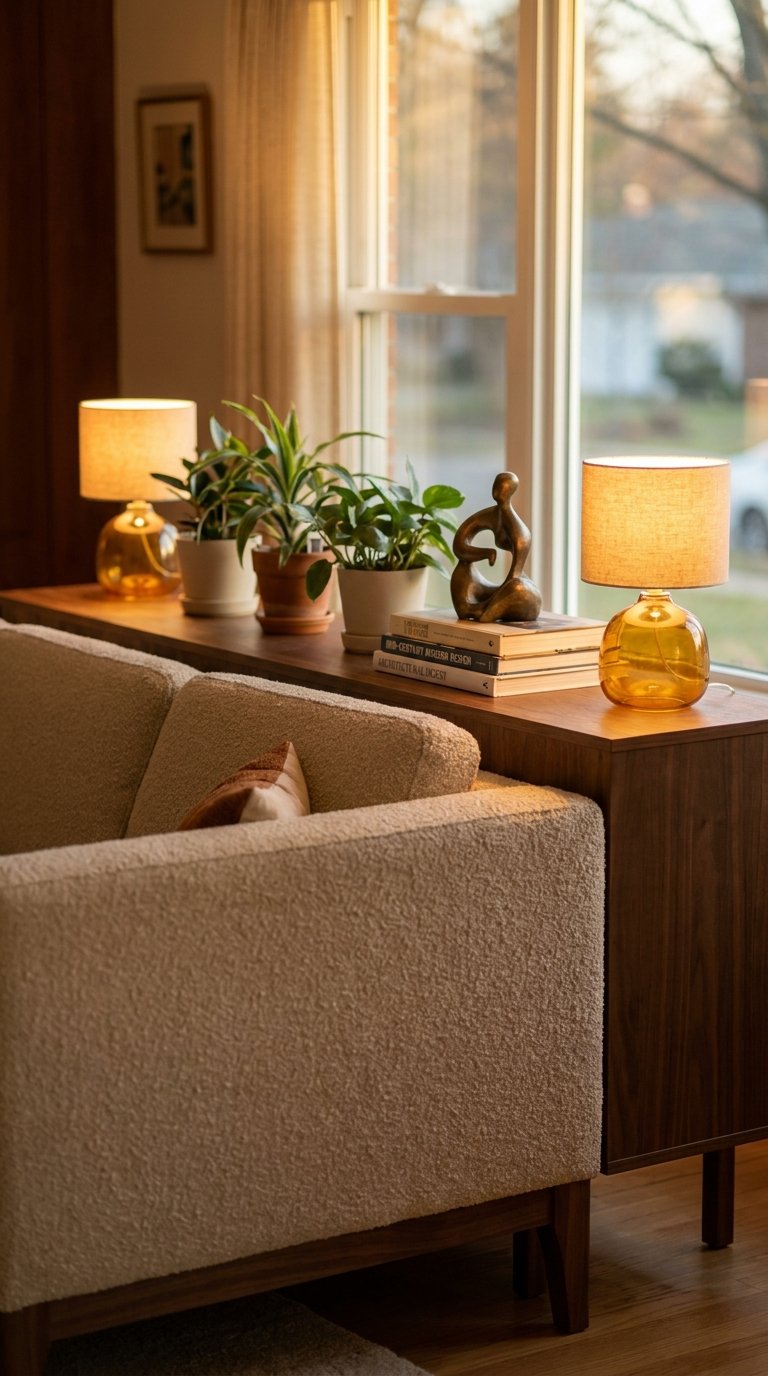
When a sofa floats away from the wall, the gap behind it creates an opportunity: a narrow console table running the full length of the sofa back.
A console table at sofa-back height behind a floating sofa adds a surface for lamps, books, plants, and objects without cluttering the room. It visually fills the gap between the sofa and the wall and prevents the floating arrangement from feeling unanchored.
Console table proportions for behind a sofa:
- Height: 28 to 32 inches, approximately the same height as the sofa back.
- Depth: 10 to 14 inches, narrow enough not to impede walking behind the sofa.
- Length: ideally the full width of the sofa or slightly shorter, not significantly wider.
A lamp at each end of the console table, flanking the sofa from behind, creates a warm lighting effect visible from the front of the sofa.
12. Choose a Velvet Sofa for Texture and Depth
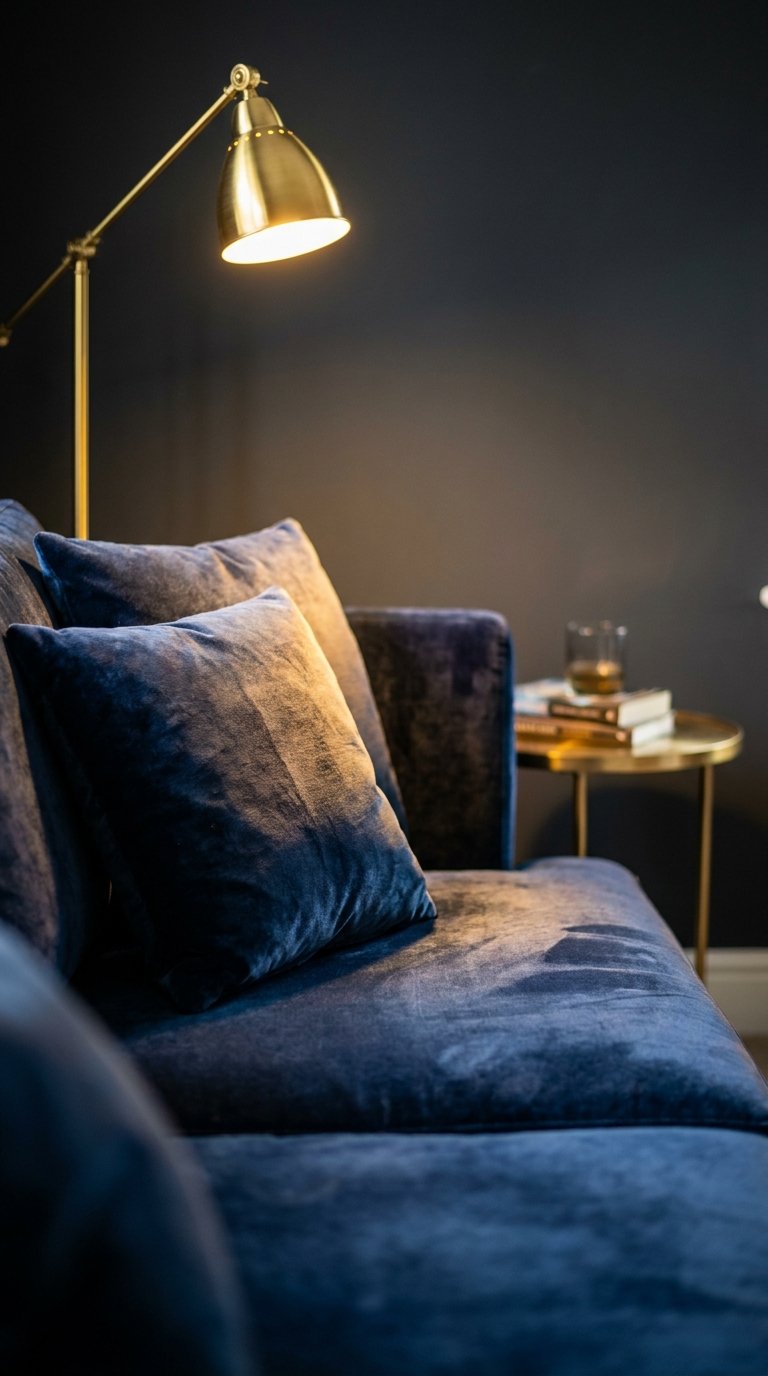
Velvet upholstery catches light differently from every angle. The pile creates a subtle color shift depending on the viewing direction and the light source, making a velvet sofa more visually interesting than the same sofa in a flat fabric.
Velvet also feels significantly more luxurious underhand than most other sofa fabrics. In a living room where the sofa is the most tactile surface, this matters daily.
Practical velvet sofa considerations:
- Choose a crushed or performance velvet for better resilience than standard velvet.
- Brush with a soft velvet brush regularly to maintain the pile direction.
- Blot spills immediately rather than rubbing; velvet recovers from blotting but not from rubbing.
- Avoid velvet in homes with pets that shed heavily; the pile traps hair more than flat fabrics.
Deep jewel tones in velvet, emerald, navy, burgundy, and sapphire, look more expensive than the same tones in flat weave fabrics. Velvet earns the premium for those colors specifically.
13. Pair a Gray Sofa With Warm Accent Tones
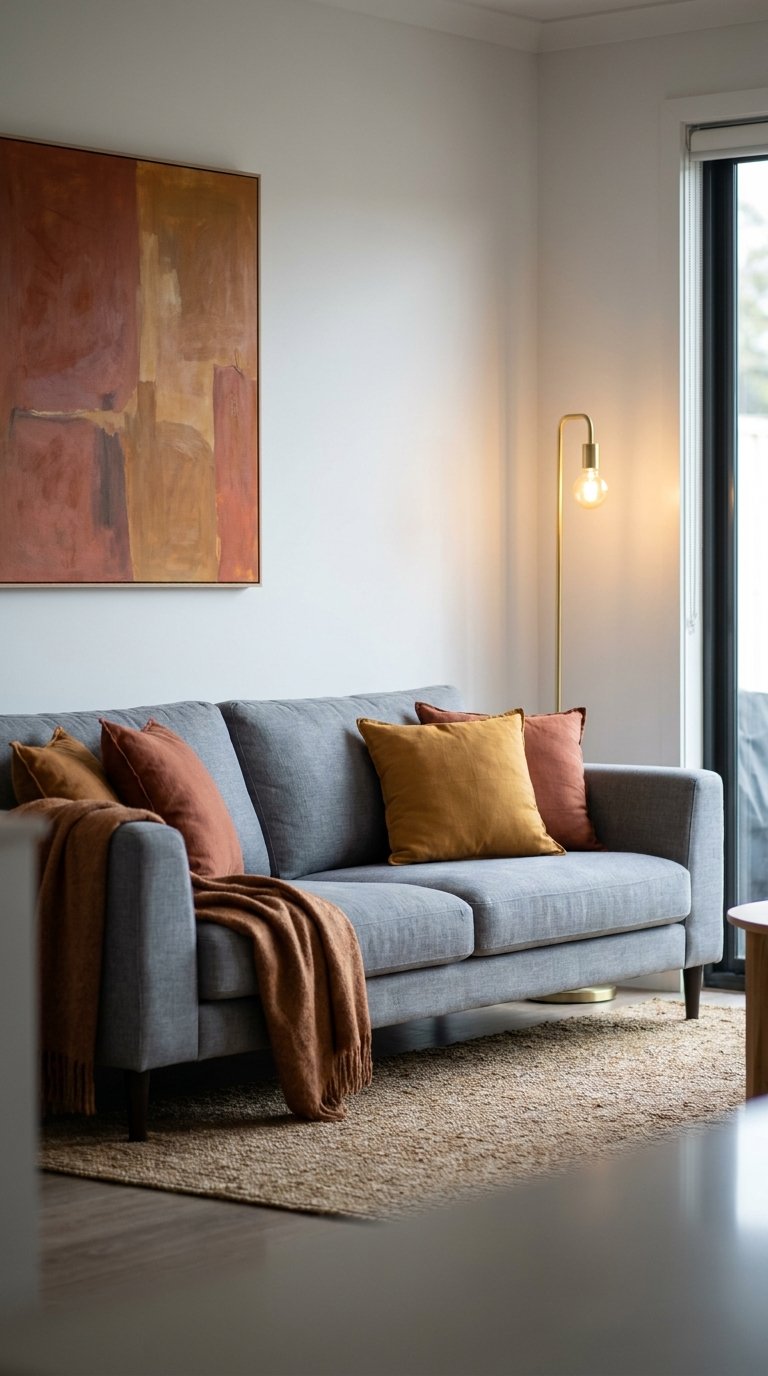
A gray sofa is the default choice for millions of living rooms because it works with almost everything. The risk is blandness. A gray sofa surrounded by equally neutral everything produces a room that is inoffensive but completely forgettable.
Warm accent tones, mustard yellow, burnt orange, terracotta, warm blush, or deep rust, pull a gray sofa arrangement away from bland and toward considered. The warm accents create the contrast that gray alone cannot.
Gray sofa accent color combinations:
- Cool gray sofa with warm terracotta cushions and a jute rug.
- Warm charcoal sofa with mustard yellow cushions and a brass floor lamp.
- Mid-gray sofa with burnt orange throw and a rust-toned abstract art piece.
- Light gray sofa with blush cushions and a rose-gold accent table.
The accent color should appear in at least three places in the room to read as intentional rather than accidental.
14. Use a Chesterfield Sofa for Character and Permanence
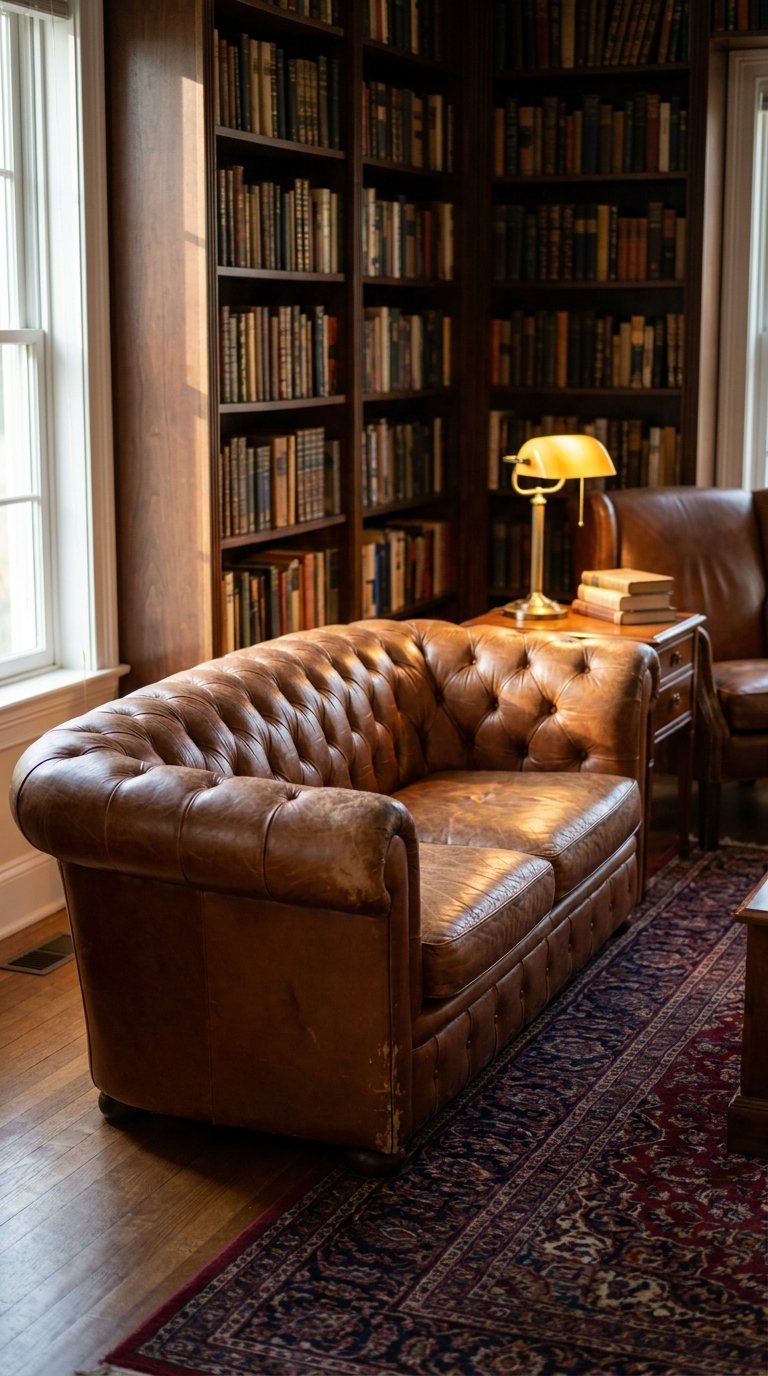
A Chesterfield sofa, with its deep button tufting and rolled arms, brings more character to a living room than almost any other sofa style. It signals permanence and confidence. Nobody puts Chesterfield in a room tentatively.
Chesterfields work in traditional, eclectic, industrial, and even contemporary living rooms depending on the material. A leather Chesterfield reads as traditional. A velvet Chesterfield reads as contemporary. A linen Chesterfield reads as relaxed and approachable.
Chesterfield material by room style:
- Dark leather: traditional, library-style, or masculine contemporary room.
- Velvet in a deep tone: eclectic, maximalist, or bold contemporary room.
- Soft linen or cotton: relaxed, transitional, or coastal room.
- Cognac or tan leather: warm contemporary or mid-century modern room.
A Chesterfield sofa ages well. The tufting, the rolled arms, and the overall form look better with minor wear rather than worse. This is a quality most modern sofas don’t share.
15. Place an L-Shaped Sofa in a Corner to Maximize Seating
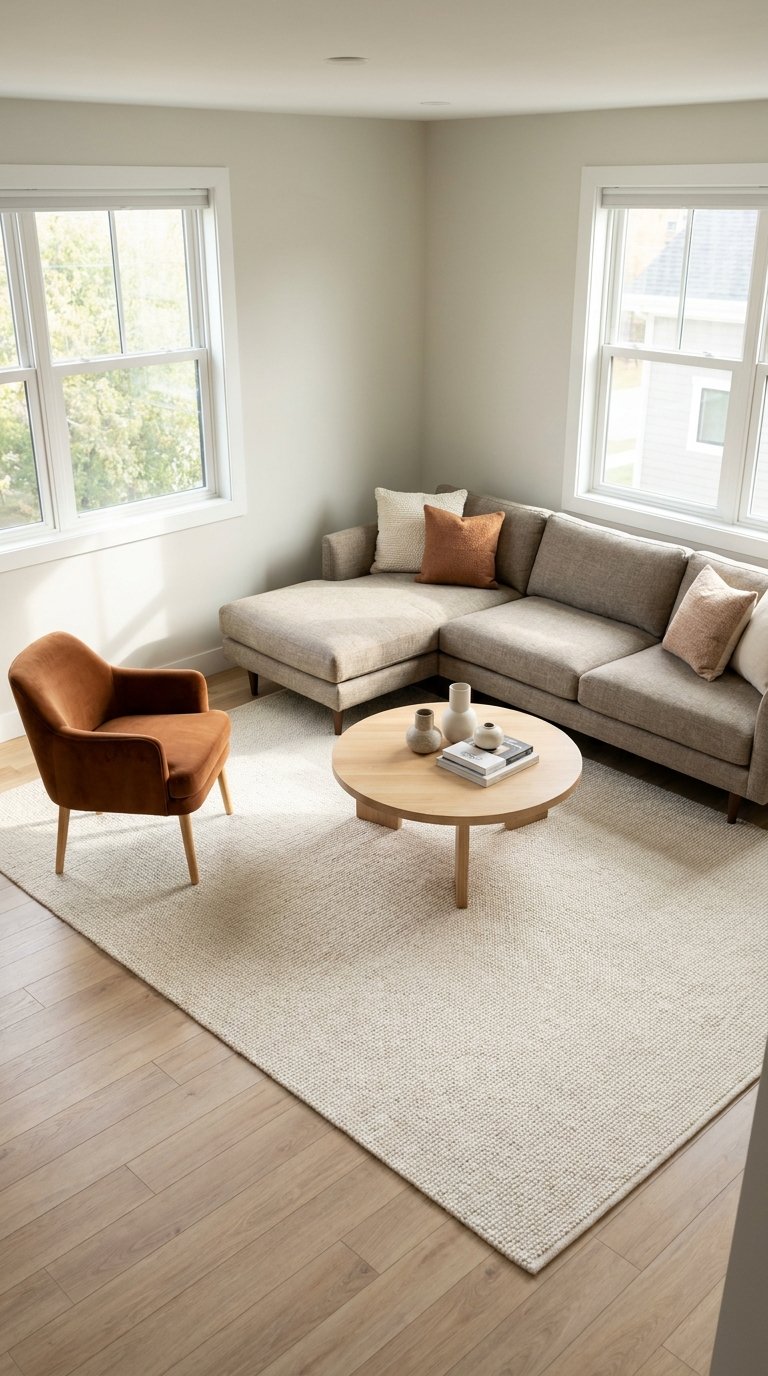
An L-shaped sofa placed in a corner uses the corner of the room, which is otherwise the least useful space in a living room, as the anchor point for the seating arrangement.
The corner placement leaves the center of the room open and creates maximum seating capacity within a manageable footprint. It works particularly well in square living rooms where a straight sofa arrangement leaves large areas of unused floor space.
L-shaped corner sofa placement guidelines:
- Place the corner section in the room corner, not against a single wall.
- Leave at least 18 inches of clearance from the chaise end to the nearest wall or furniture.
- Add a single accent chair at the open end of the L to complete the conversation circle.
- A large square rug sits better under a corner sofa than a rectangular rug.
16. Use a Two-Tone Sofa and Cushion Combination
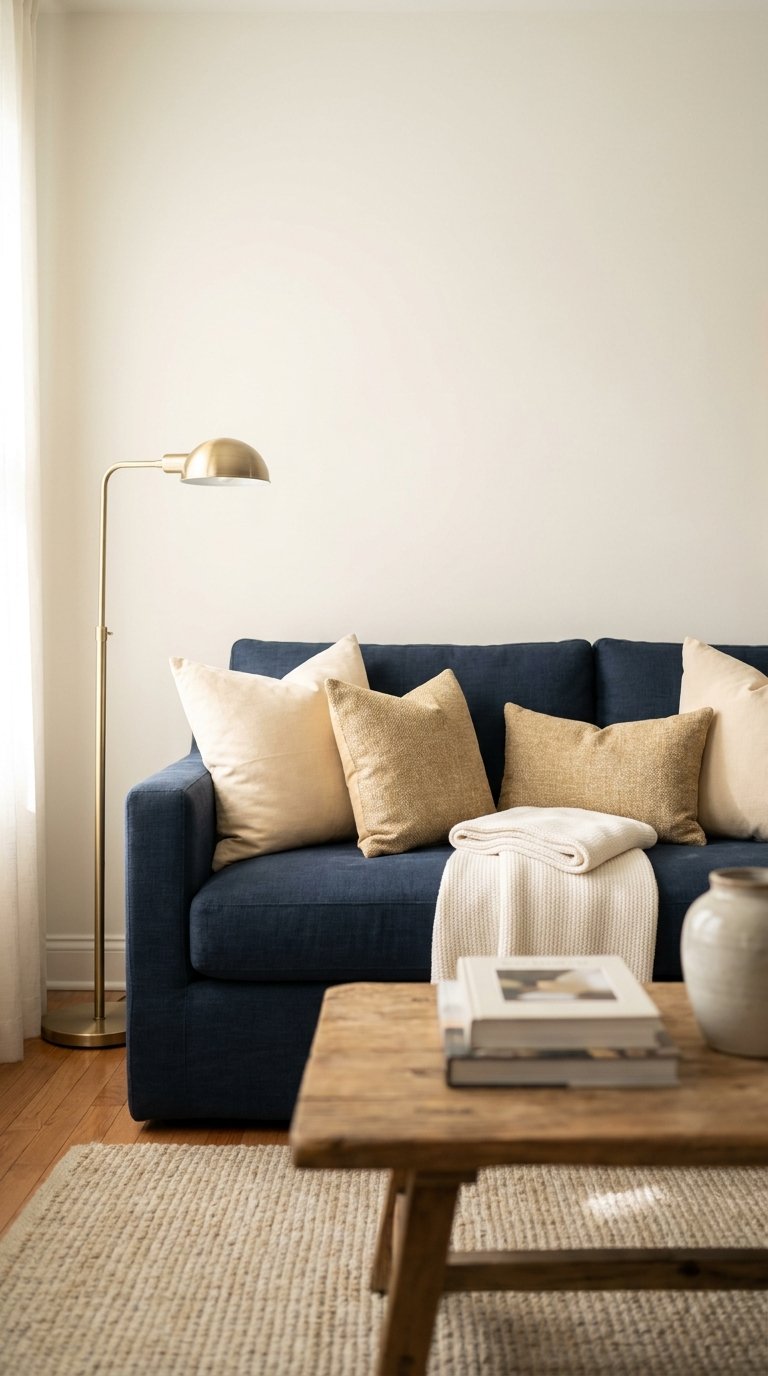
A two-tone approach, sofa in one color and cushions in a contrasting but complementary tone, creates more visual interest than a monochromatic sofa arrangement without the commitment of a bold sofa color.
A cream sofa with warm sage green cushions. A navy sofa with warm brass-toned cushions. A warm gray sofa with dusty pink cushions. Each combination uses the cushions to add color while keeping the sofa as a neutral base.
Two-tone combinations that work consistently:
- Cream sofa + sage green and terracotta cushions.
- Navy sofa + warm cream and brass accent cushions.
- Warm gray sofa + dusty rose and warm white cushions.
- Charcoal sofa + mustard and natural linen cushions.
- Oatmeal sofa + deep teal and natural woven cushions.
Keep the cushion color in at least two pieces per sofa to avoid a single lonely cushion effect. Two or three cushions in the accent color reads as deliberate.
17. Add a Matching Armchair to Complete the Sofa Arrangement
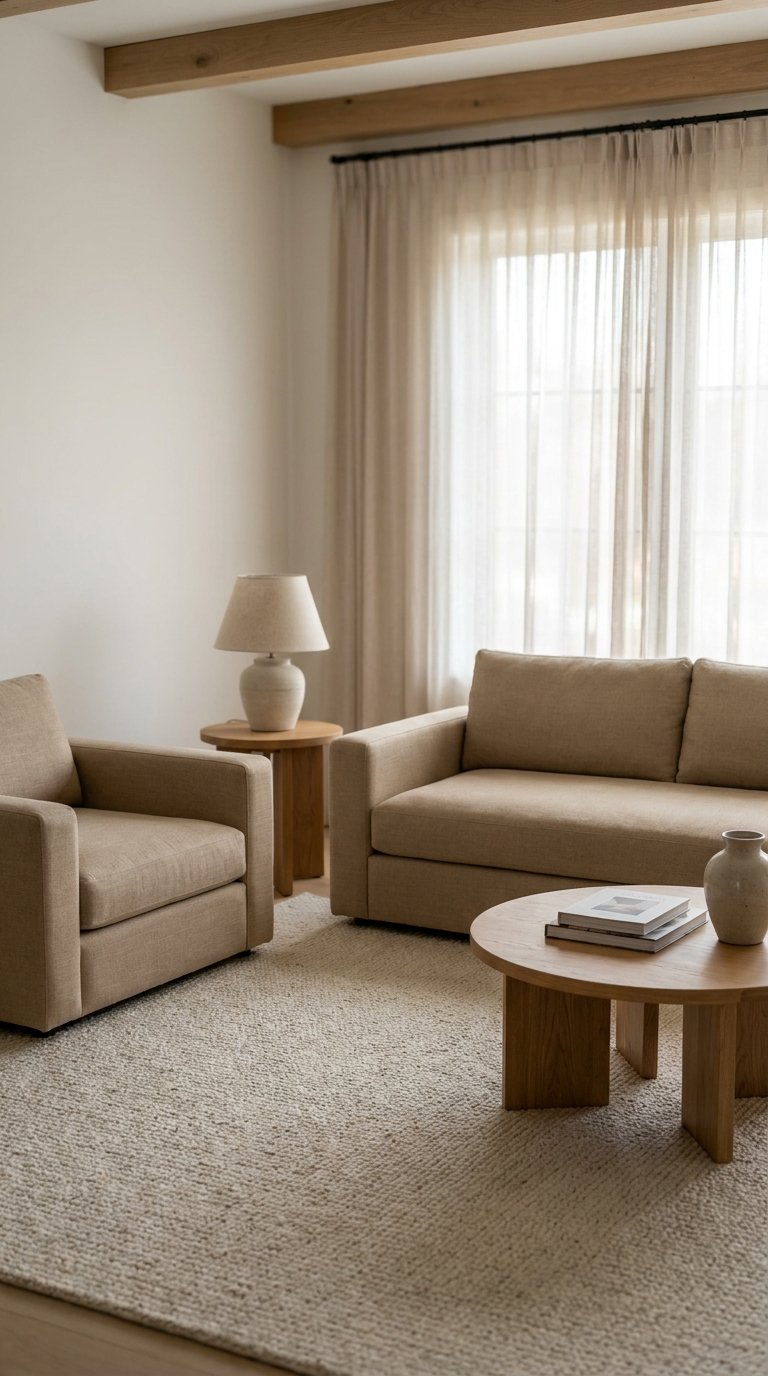
A sofa alone rarely creates a complete living room arrangement. A matching or complementary armchair, placed at a 90-degree angle to the sofa end, completes the conversation zone and gives the arrangement visual balance.
The armchair doesn’t need to match the sofa exactly. It should share something in common: the color family, the leg style, the fabric weight, or the overall proportion. A chair that shares nothing with the sofa looks like it arrived from a different room.
Armchair placement in relation to the sofa:
- At a 90-degree angle to the sofa end, connected by the shared rug beneath both pieces.
- Facing the sofa diagonally from across the coffee table for a more informal arrangement.
- In a corner behind and to the side of the sofa as a reading chair separate from the main seating zone.
A sofa arrangement with one or two well-chosen armchairs always looks more resolved than a sofa arrangement on its own. 🙂
18. Use a Low-Profile Sofa to Open Up the Room Visually
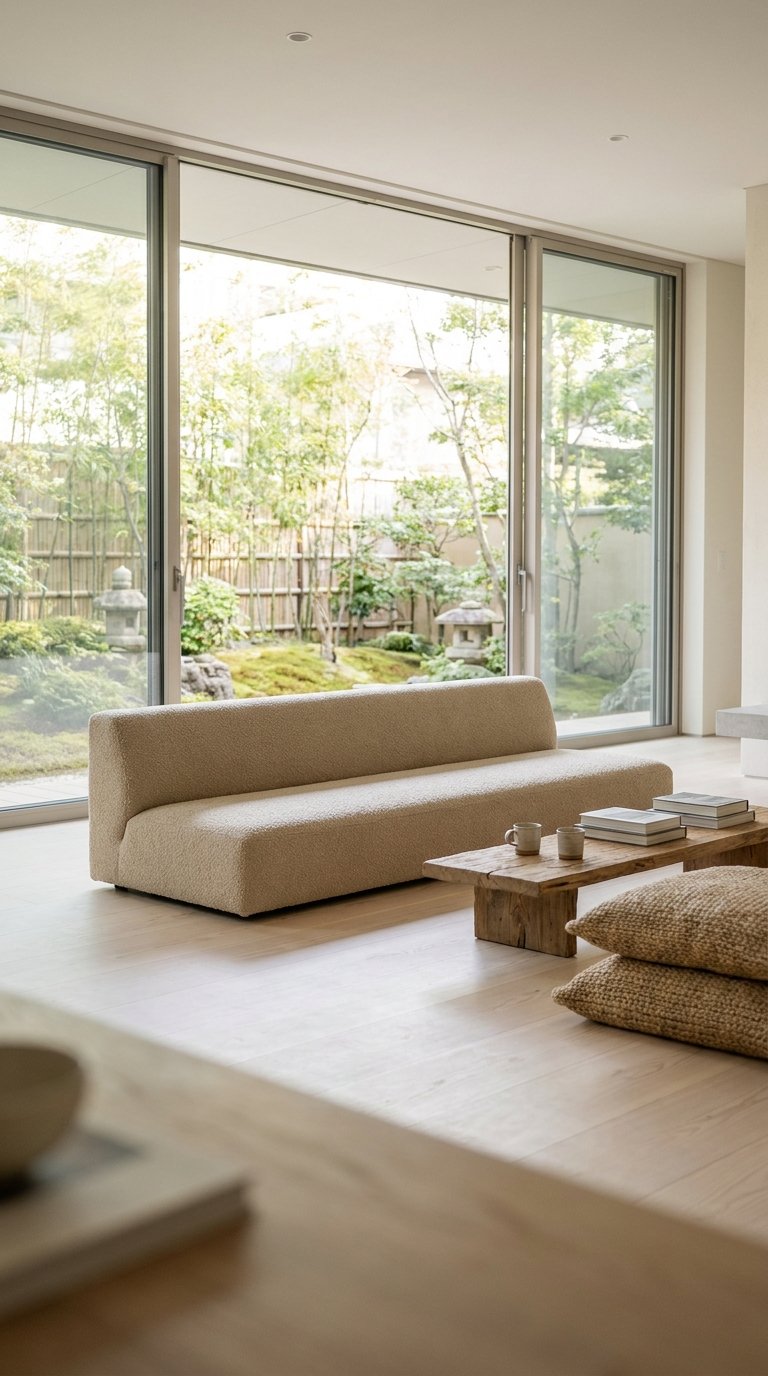
A sofa with a low back height, below 30 inches from the floor, keeps the sightline across the room open at seated eye level. The room feels larger because the eye travels over the sofa back rather than stopping at it.
Low-profile sofas work particularly well in rooms with architectural features behind them, a window wall, a fireplace, or an art wall, because the low back doesn’t compete with or block the feature.
Low-profile sofa styles:
- Mid-century modern platform sofa: clean lines, low back, tapered legs.
- Japanese-style floor sofa: extremely low profile, minimal or no legs.
- Contemporary low-slung sofa: modern proportions with a seat height under 16 inches.
- Modular low sofa: customizable low-back sections arranged to suit the room.
A low sofa requires cushions or bolsters for adequate back support. The aesthetic gain is real; the lumbar trade-off is also real. Consider your primary sofa users before committing.
19. Style the Sofa With a Throw Blanket for Texture
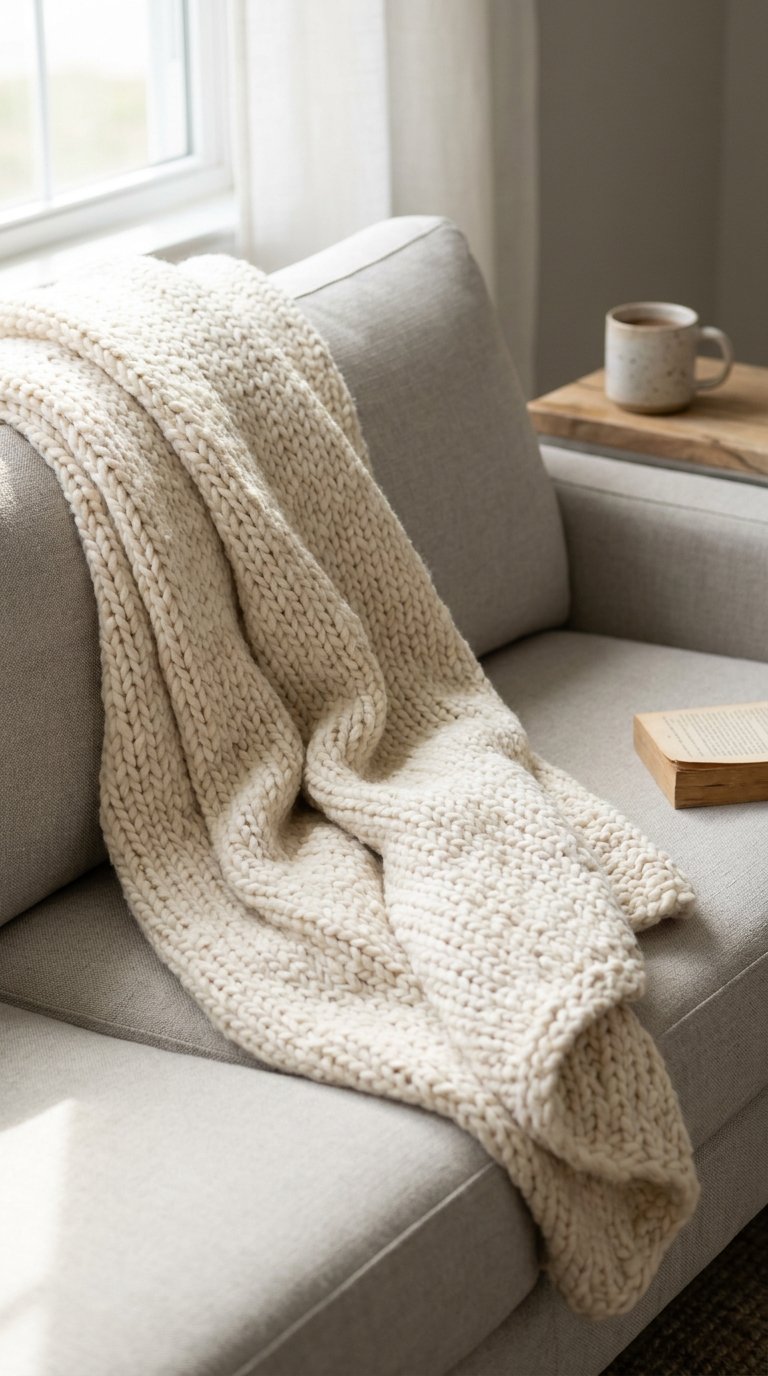
A throw blanket draped over the sofa arm or back adds texture, color, and a lived-in quality that transforms a sofa arrangement from staged to residential.
The throw also serves a practical purpose in most households. A decorative throw that gets actual use justifies its presence more than a purely decorative one.
Throw placement options by style:
- Draped over one arm: casual, relaxed, and natural-looking.
- Folded across one seat cushion: more considered and deliberate.
- Casually piled in one corner: the most lived-in, informal approach.
- Folded neatly over the sofa back: the most editorial, styled approach.
Choose a throw in a texture not already present on the sofa. A chunky knit throw on a flat-weave sofa. A smooth silk-look throw on a boucle sofa. Texture contrast adds more than color alone.
20. Position the Sofa to Face the Room’s Best Feature
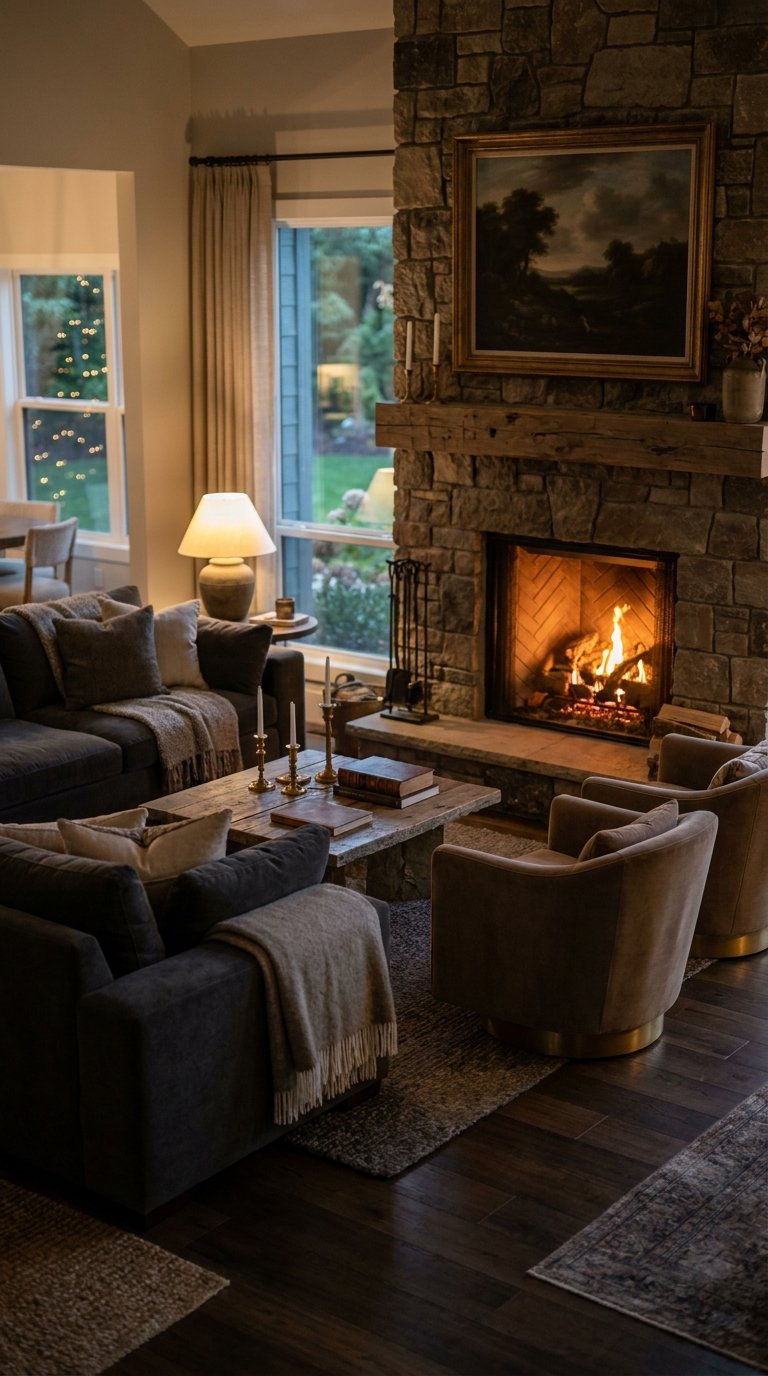
Most sofas face the TV by default. This is not always the best arrangement. A fireplace, a view, a feature wall, or an architectural detail all compete with the TV as a focal point. The sofa should face whatever makes the room worth sitting in.
If both a fireplace and a TV are present, the ideal solution is to position both on the same wall so the sofa faces both simultaneously. When that’s not possible, prioritize the feature that gets more use in your household.
Focal point hierarchy by lifestyle:
- Active TV-watching households: sofa faces the TV, fireplace to one side.
- Conversation-focused households: sofa faces the fireplace or into the room.
- View-focused households: sofa angled toward the window with the TV on the adjacent wall.
The sofa’s orientation determines what the room prioritizes. Make that decision consciously rather than by default.
21. Use a Slipcovered Sofa for Practical White or Light Upholstery
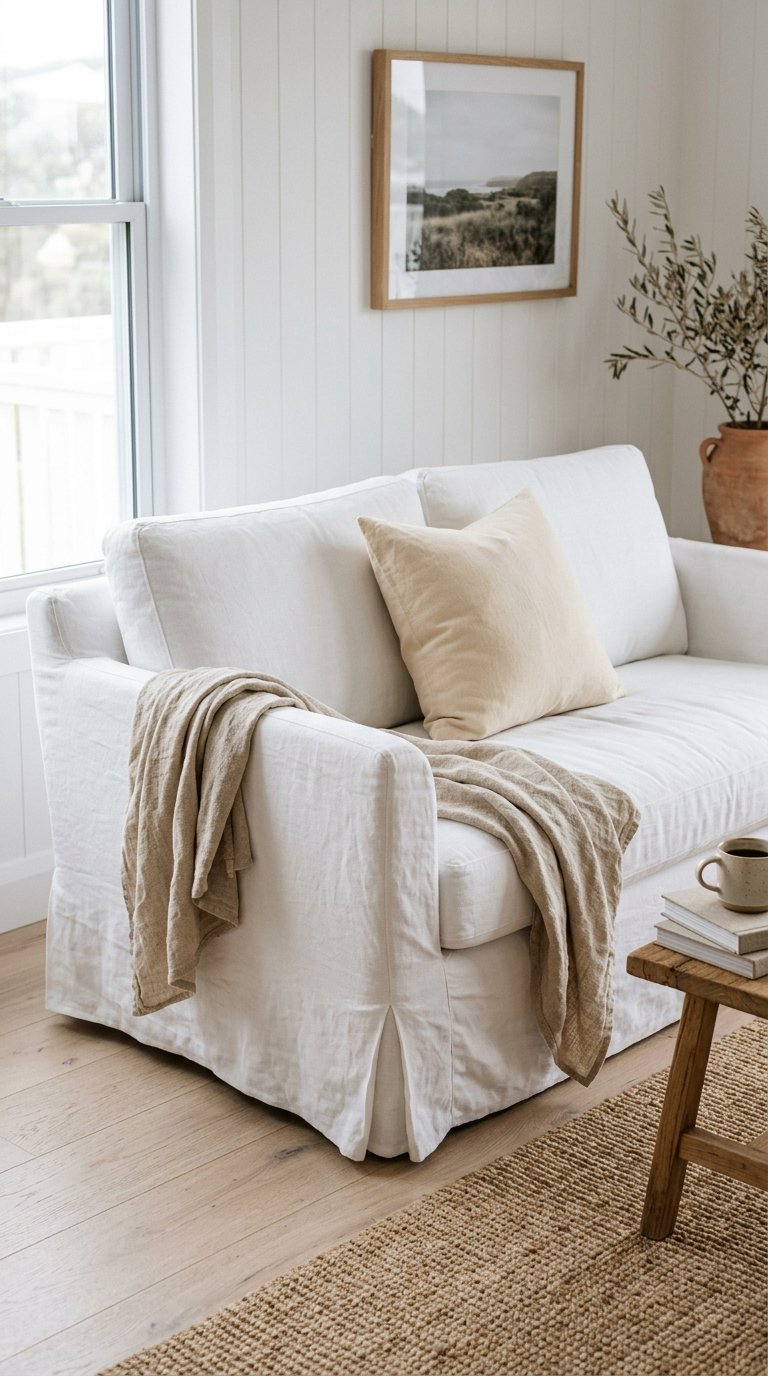
A slipcovered sofa with a washable linen or cotton slipcover makes light-colored upholstery genuinely practical. The slipcover goes in the washing machine when needed. The sofa looks consistently fresh.
Slipcovered sofas photograph beautifully and wear practically. The slight casual ease of a slipcover, the gentle fold at the skirt, the slight texture of the cotton or linen, suits relaxed living rooms that prioritize comfort over formality.
Slipcover care for longevity:
- Pre-wash the slipcover before first use to prevent future shrinkage.
- Iron or steam the slipcover after washing for a crisp result.
- Buy a spare slipcover for the most-used pieces so cleaning never means going without.
- Choose a slipcover weight that resists wrinkling quickly during daily use.
22. Create a Symmetrical Sofa Arrangement With Matching Side Tables
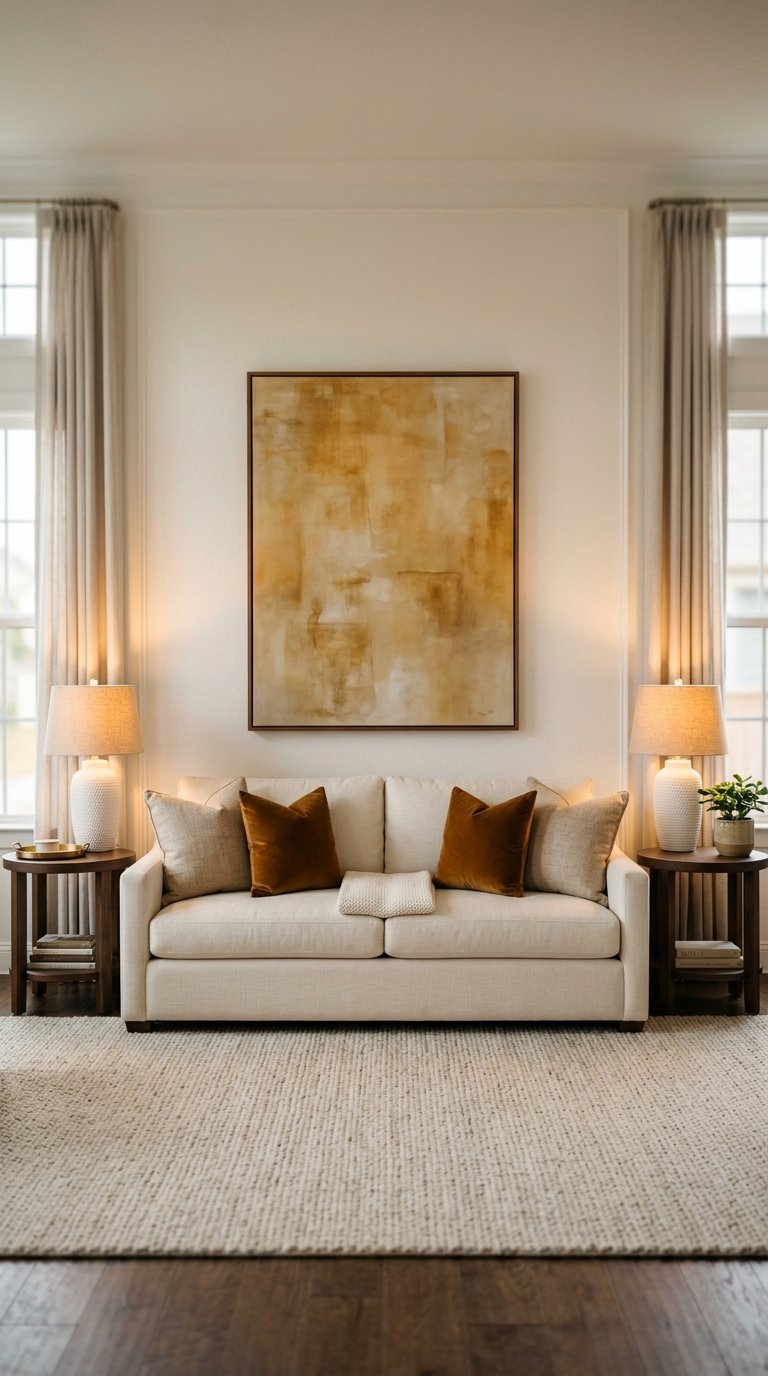
Symmetry in a living room creates a sense of order and calm that asymmetric arrangements can’t fully replicate. A sofa flanked by two identical side tables, each with a matching lamp, creates the most classic and reliable living room arrangement available.
The symmetry provides visual balance, equal lighting on both sides of the sofa, and a structured quality that works in traditional, transitional, and contemporary rooms equally.
Symmetrical sofa arrangement elements:
- Two matching side tables at sofa arm height.
- Two identical table lamps for even bilateral lighting.
- Cushions arranged in a mirror-image pattern across the sofa.
- Art centered above the sofa horizontally.
Symmetry works best with sofas that have clean, even proportions. A sofa with uneven arms or an asymmetric back undermines the symmetrical arrangement it sits within.
23. Layer a Rug Under the Sofa to Anchor the Arrangement
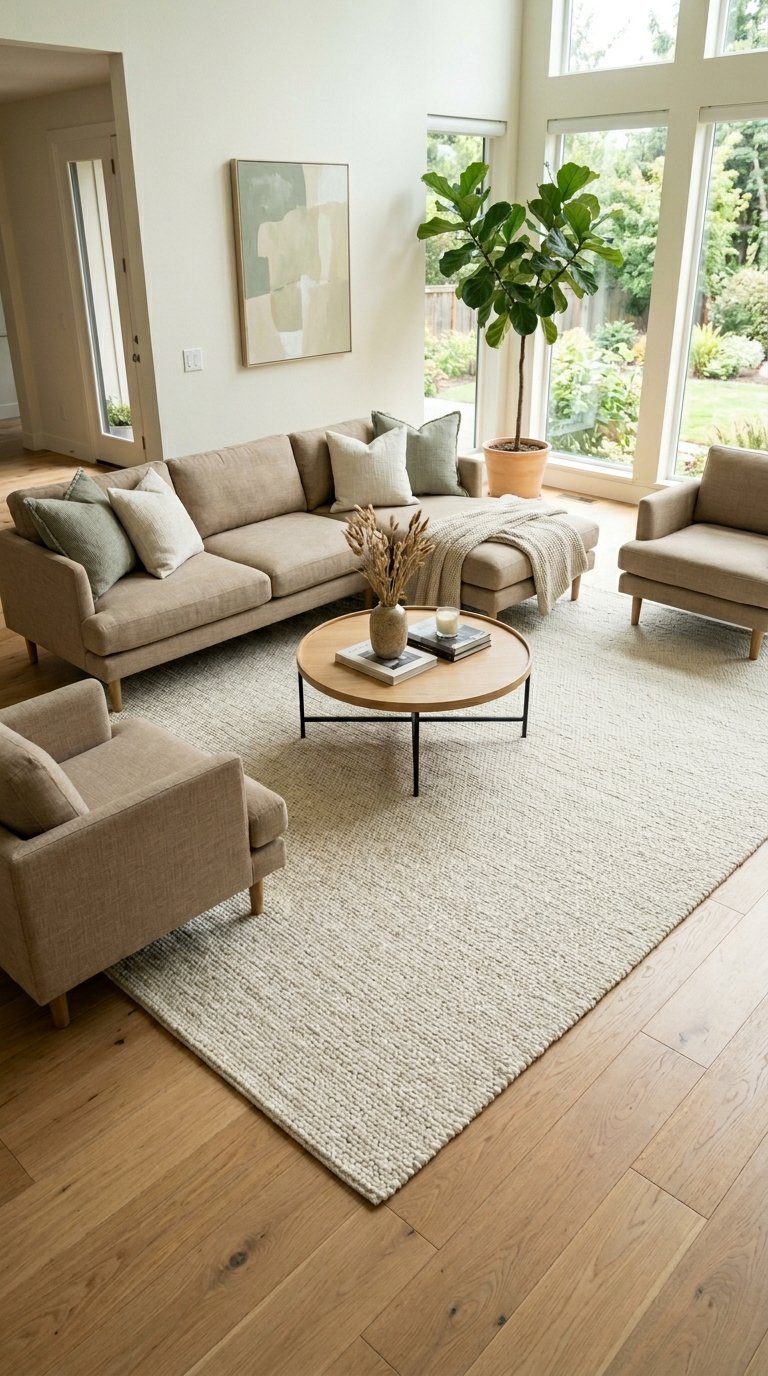
A rug that sits entirely in front of the sofa looks disconnected from the seating arrangement. A rug that extends under at least the front legs of the sofa, and ideally all the main seating pieces in the arrangement, anchors the furniture as one unified zone.
The rug defines the living area as a deliberate space within the room, particularly important in open-plan layouts where the living zone needs definition without physical walls.
Rug sizing for sofa arrangements:
- All front sofa and chair legs on the rug minimum.
- All four legs of every piece on the rug for the most grounded, cohesive look.
- A rug that is too small makes the sofa look like it’s floating on an island.
A rug sized to the full seating arrangement makes the room look larger, not smaller, because it creates one cohesive zone rather than multiple disconnected pieces.
24. Use the Sofa Back as a Room Divider in Open Spaces
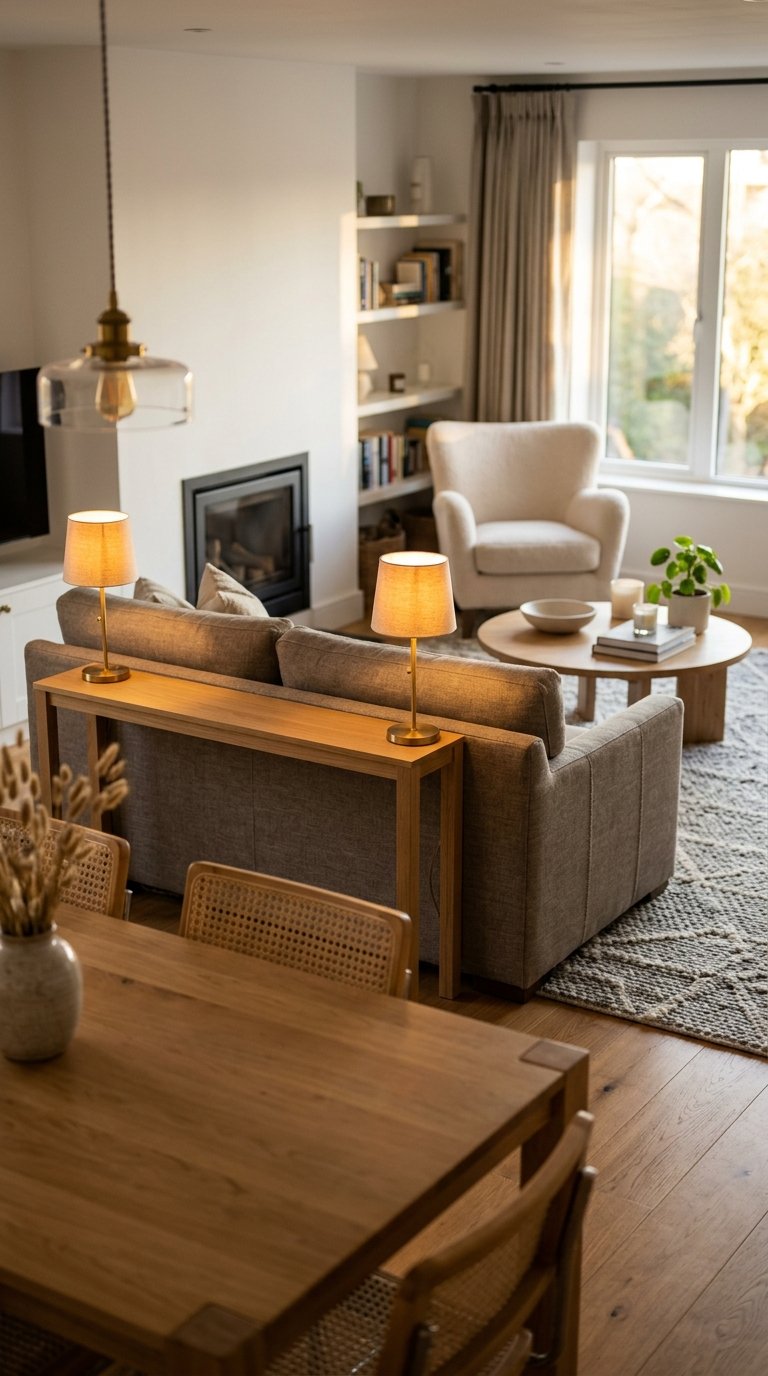
In an open-plan home where the living area connects to a dining room or kitchen, the sofa back, rather than a wall, defines where the living zone ends.
A sofa positioned perpendicular to the open-plan flow, with its back facing the dining or kitchen area, creates a visual boundary between the two zones. It signals that crossing the sofa line moves you from one functional area to another.
Making the sofa back work as a divider:
- A console table behind the sofa at back height fills the gap between sofa and dining zone.
- A pendant light above the dining table on one side and a floor lamp beside the sofa on the other side reinforce the two zones independently.
- The rug under the sofa arrangement defines the living zone footprint clearly.
The sofa as a room divider is one of the most practical uses of furniture in an open-plan home.
25. Edit What Goes on and Around the Sofa
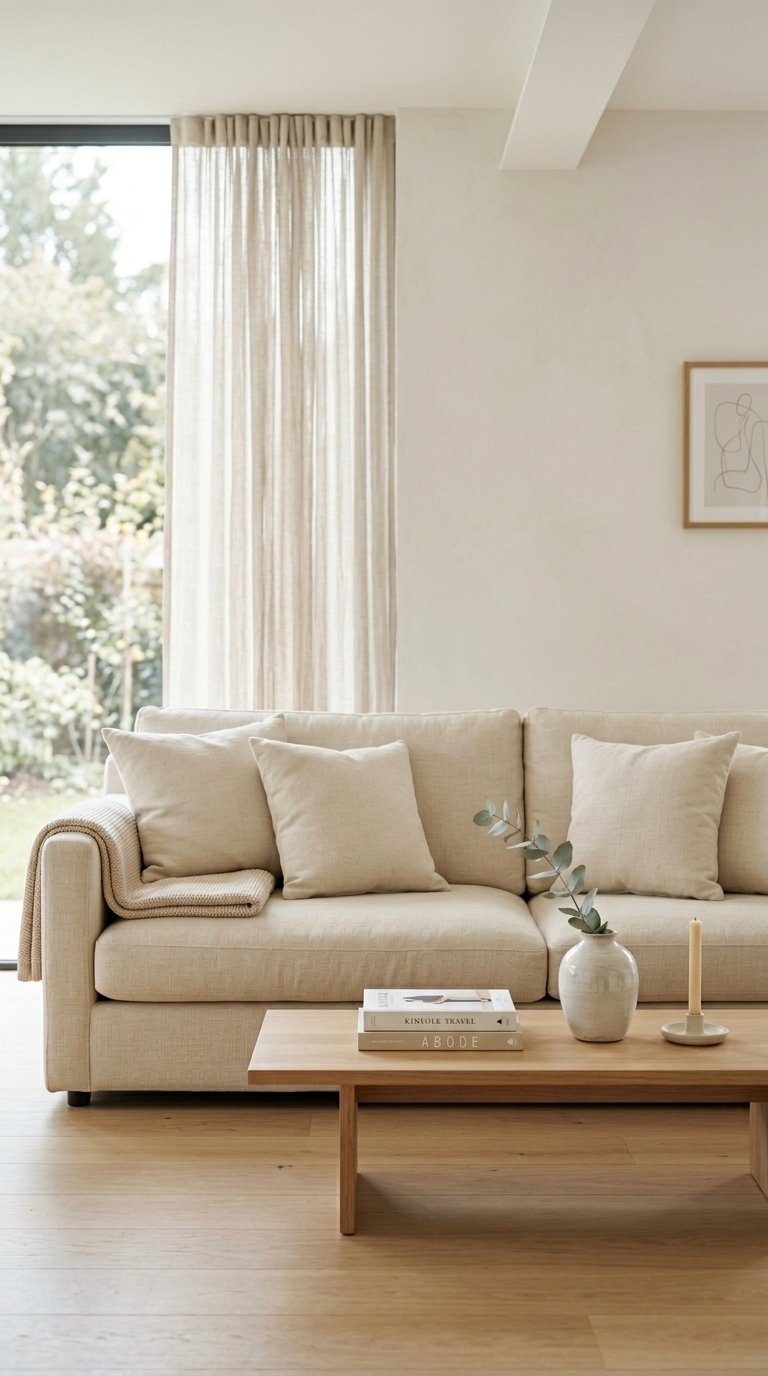
The final sofa idea: edit ruthlessly. A sofa buried under twelve cushions, three throws, a pile of books, two remotes, and a half-read magazine stopped being a design asset at some point.
A well-styled sofa needs three to five cushions maximum, one throw, and clear arms. The coffee table in front should have room to function as an actual surface. The floor around the sofa should have no items sitting directly on it.
A practical sofa editing routine:
- Remove every cushion and throw, then put back only what serves a clear purpose.
- Return remotes, books, and loose items to their proper storage after each use.
- Straighten cushions as a daily habit rather than a weekly project.
- Replace worn or pilling cushion covers rather than accumulating more on top of them.
The sofa in a well-edited living room looks like a design decision. The same sofa surrounded by accumulated objects looks like furniture you haven’t noticed in months.
Final Thoughts
The sofa shapes everything in your living room. Its size determines the room’s scale. Its color determines the room’s palette. Its placement determines the room’s flow. Its fabric determines the room’s texture.
Start with size and placement. Get those right and every other decision becomes easier. Then choose the style, fabric, and color that suits your household’s actual daily life, not the household you imagine you might become.
A sofa that fits the room, faces the right thing, sits at the right scale, and gets maintained consistently will serve your living room well for a decade or more. That’s the standard worth buying toward.