23 Moody Bedroom Ideas That Feel Calm Cozy and Stylish
Most bedrooms are designed to be inoffensive. Beige walls, white bedding, a generic headboard. Safe. Predictable. Forgettable. A moody bedroom makes the opposite choice. It prioritizes atmosphere over approval, depth over brightness, and character over comfort-by-committee.
I converted my own bedroom to a dark, moody aesthetic two years ago and the first night I slept in it I understood immediately why people never go back. Here are 23 ideas that do it right.
1. All-Dark Walls, Ceiling, and Woodwork
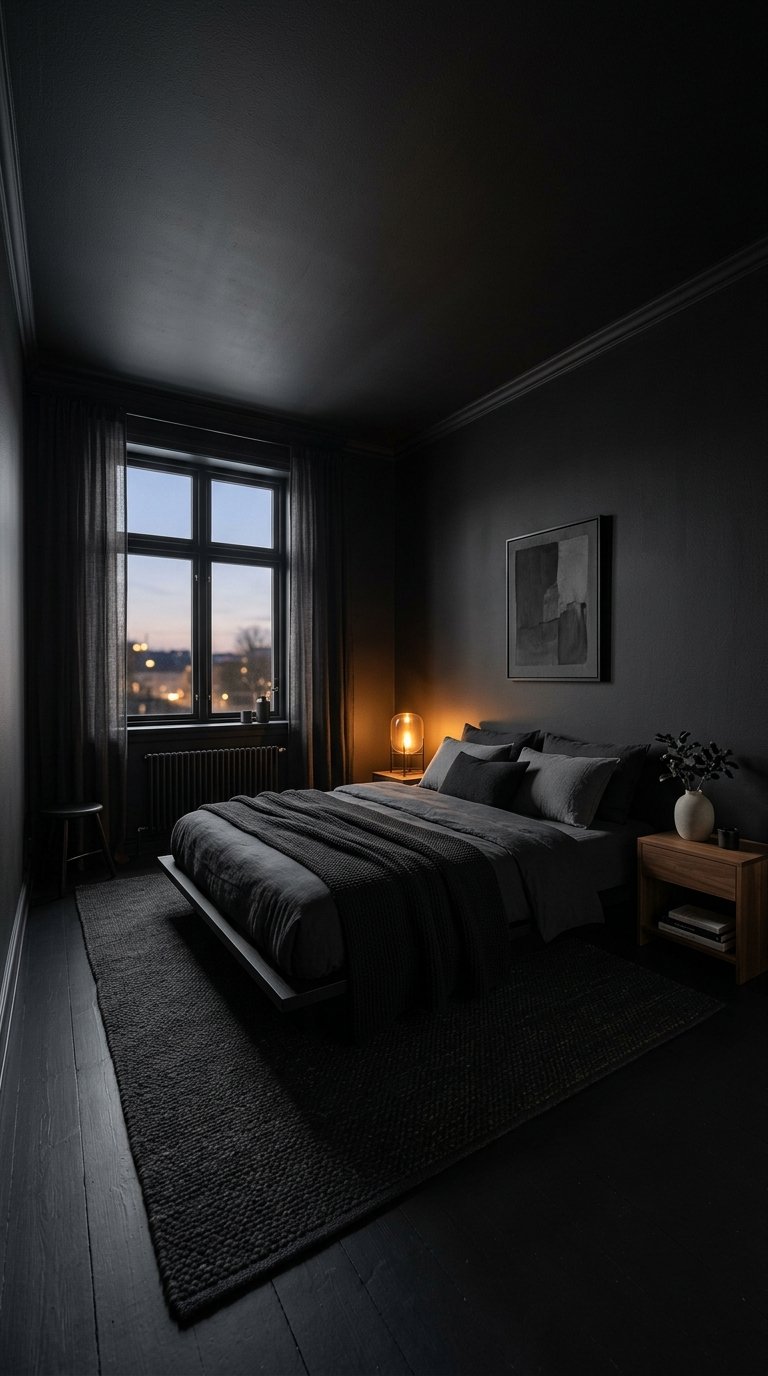
The most committed moody bedroom decision is painting everything the same dark color: walls, ceiling, woodwork, and door frames. No breaks. No contrast. One enveloping tone throughout.
This approach removes every visual boundary in the room. The corners disappear. The ceiling height becomes ambiguous. The room feels like one continuous cocoon rather than a box with six separate surfaces. It scares most people. It rewards everyone who tries it.
Best dark paint colors for full-room application:
- Farrow and Ball Railings: deep blue-black with warm undertones
- Farrow and Ball Hague Blue: deep teal-navy, rich and complex
- Benjamin Moore Black Beauty: near-black with subtle warm undertone
- Sherwin-Williams Tricorn Black: clean, neutral, very dark
- Little Greene Obsidian: complex dark green-black, extraordinary depth
Warm lighting is non-negotiable. Cool white bulbs in an all-dark room feel institutional. Warm amber at 2700K makes it feel like a five-star suite.
2. Dark Velvet Headboard
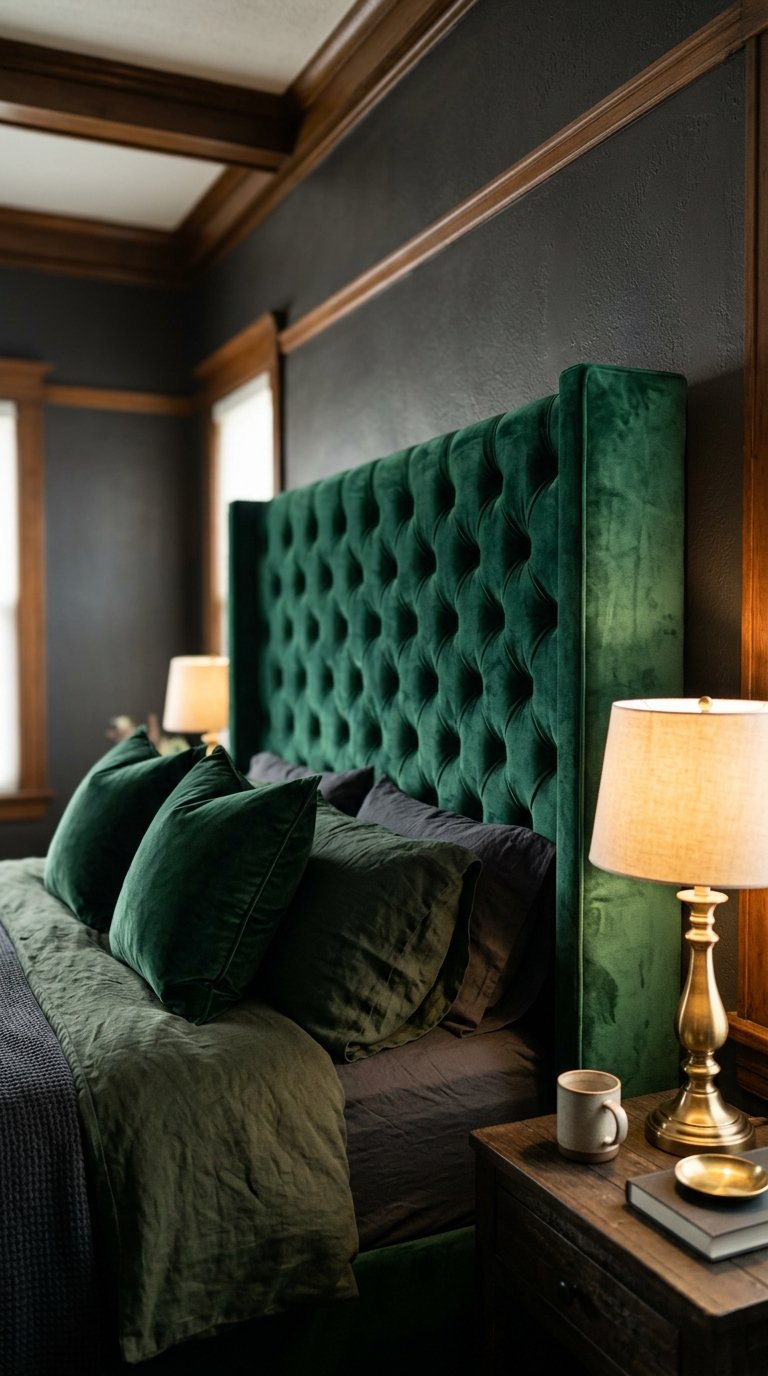
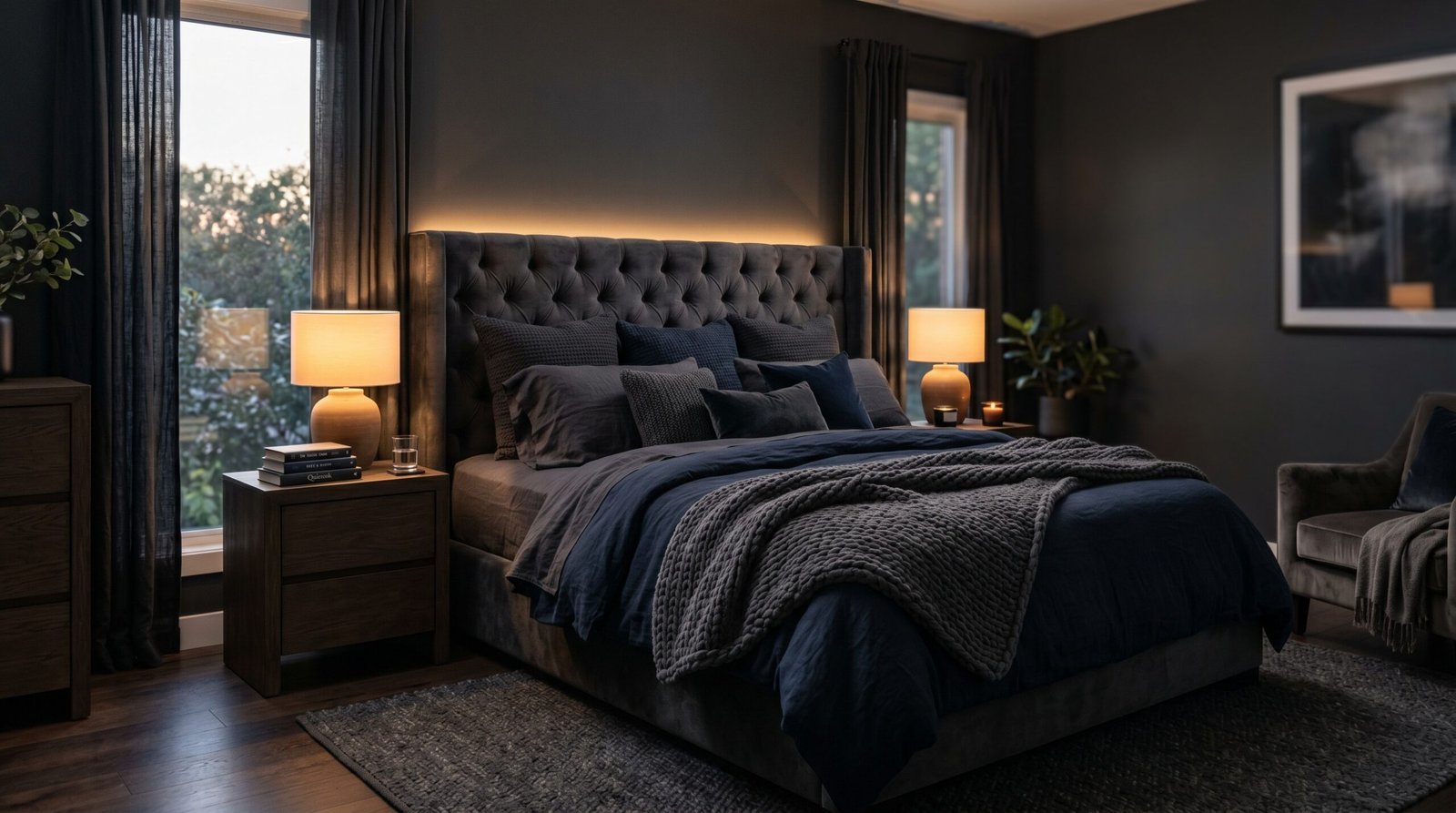
A large dark velvet headboard is the single most impactful piece of furniture in a moody bedroom. Velvet in deep jewel tones, emerald, sapphire, aubergine, or midnight navy, absorbs and reflects light simultaneously, creating a surface that changes appearance throughout the day.
Go large with the headboard. A headboard that reaches within 15 to 20 centimeters of the ceiling scales the bed to the room and creates the strong visual anchor that a moody bedroom needs. A small headboard against a dark wall disappears. A large one becomes the focal point the room is built around.
Dark velvet headboard colors that work:
- Deep emerald green: rich, botanical, suits forest green or black walls
- Midnight navy: versatile, sophisticated, suits most dark wall colors
- Aubergine: warm, dramatic, suits terracotta and warm dark walls
- Charcoal velvet: tonal with dark walls, adds texture without color contrast
- Deep burgundy: warm, traditional, suits oxblood and dark olive rooms
3. Layered Warm Lighting
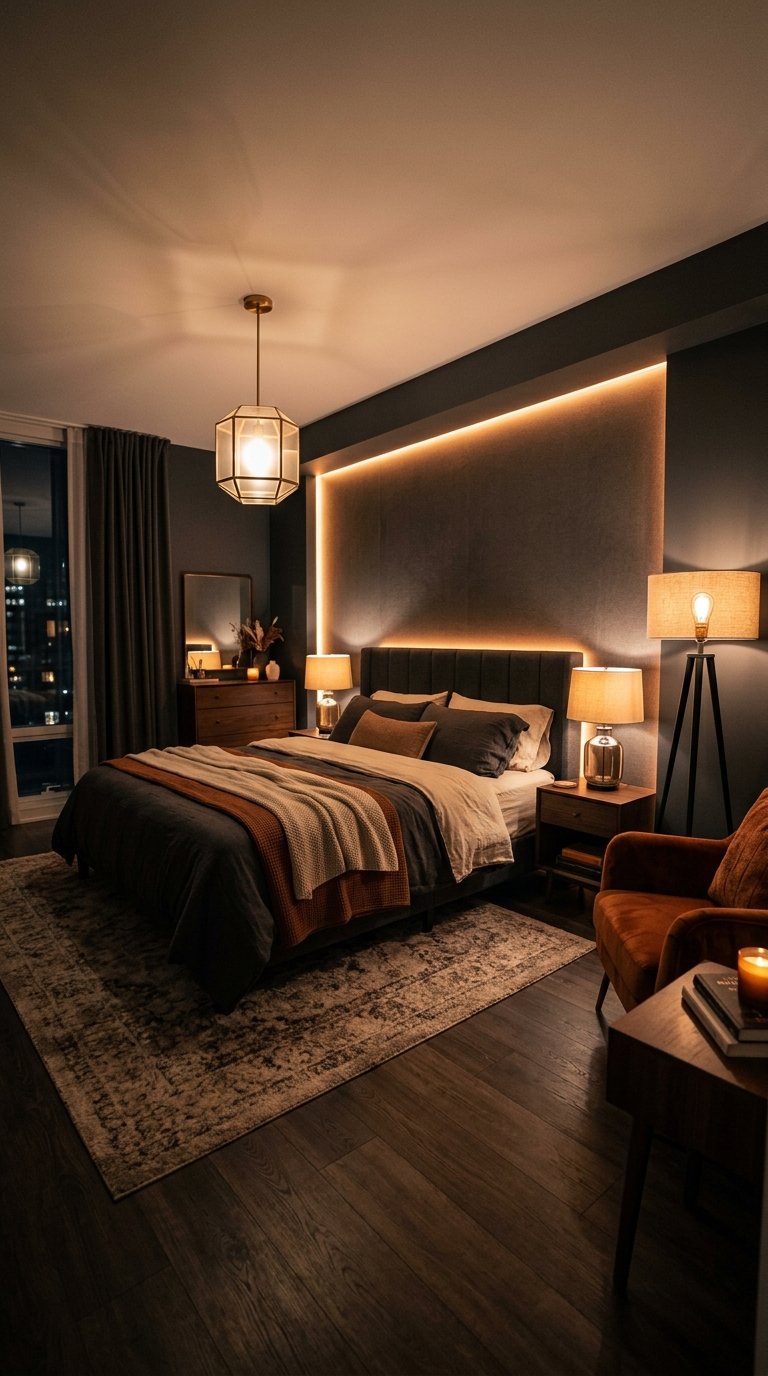
A moody bedroom without proper lighting is just a dark room. Layered warm lighting at multiple heights creates the atmospheric depth that makes a dark bedroom feel intentional rather than just dim.
The layers work together: a warm pendant or chandelier above for ambient light, warm bedside table lamps for reading and bedside glow, concealed LED strips behind a floating headboard panel for a soft backlight, and a floor lamp in one corner to lift shadow from the lowest zone of the room.
Moody bedroom lighting checklist:
- All bulbs at 2700K maximum, warmer is better in dark rooms
- Dimmer switches on every circuit without exception
- Bedside lamps with opaque or dark shades that direct light downward
- Concealed LED strips behind headboard or floating shelf for indirect backlight
- No cool white or daylight bulbs anywhere in the room
4. Deep Forest Green Walls
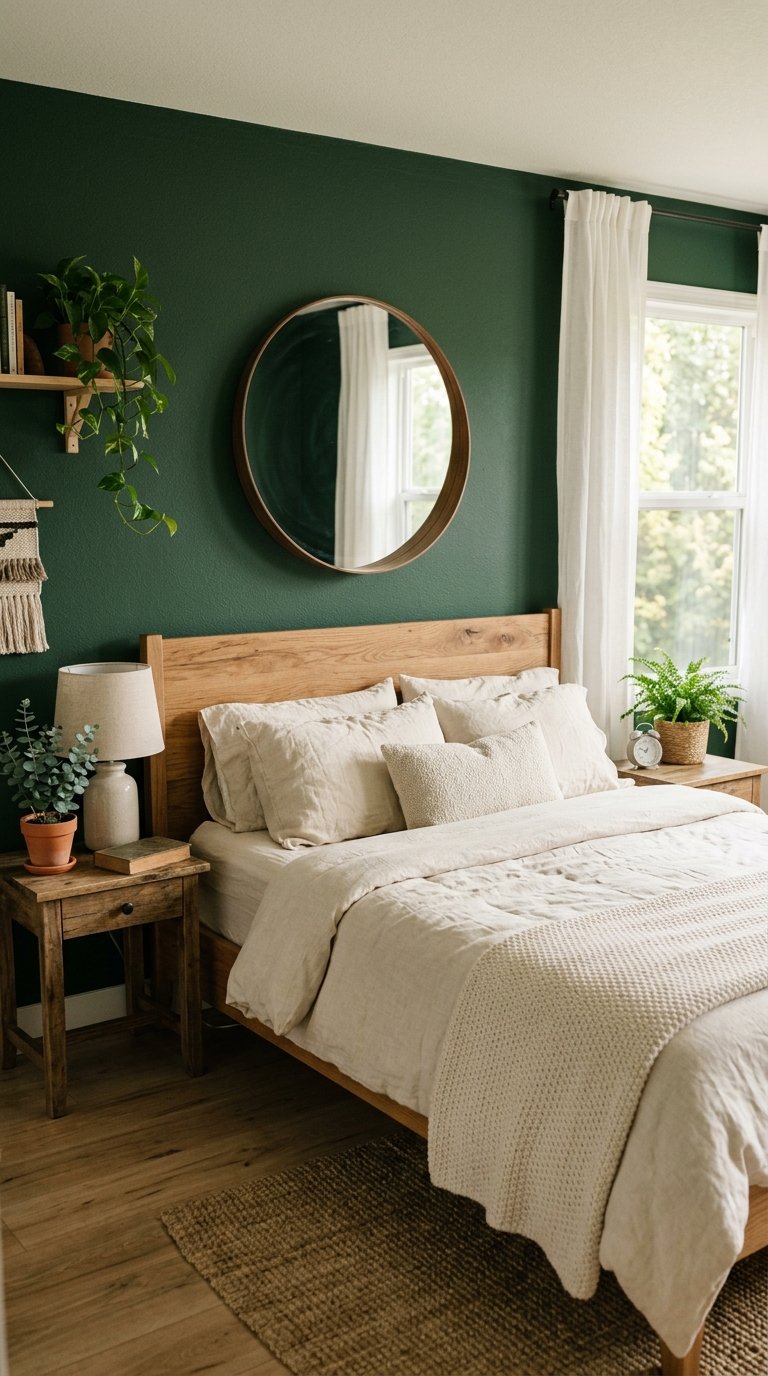
Deep forest green is the most livable dark wall color in a moody bedroom. Where black and charcoal can feel stark, forest green feels organic, natural, and grounded. The color references ancient forests, which is either very soothing or slightly unsettling depending on your outlook. For most people, it’s the former.
Forest green walls suit warm wood furniture, brass fixtures, cream bedding, and natural materials across the board. The green creates a backdrop against which organic materials, rattan, linen, wood, clay, all look more considered and deliberate than they would against white.
Forest green paint shades worth testing:
- Farrow and Ball Calke Green: deep, complex, slightly grey-green
- Little Greene Obsidian Green: very dark, almost black-green
- Benjamin Moore Hunter Green: classic, warm, universally flattering
- Farrow and Ball Studio Green: mid-depth, artistic, suits creative spaces
- Sherwin-Williams Rookwood Dark Green: deep, warm, earthy undertone
5. Ceiling Canopy or Draped Fabric
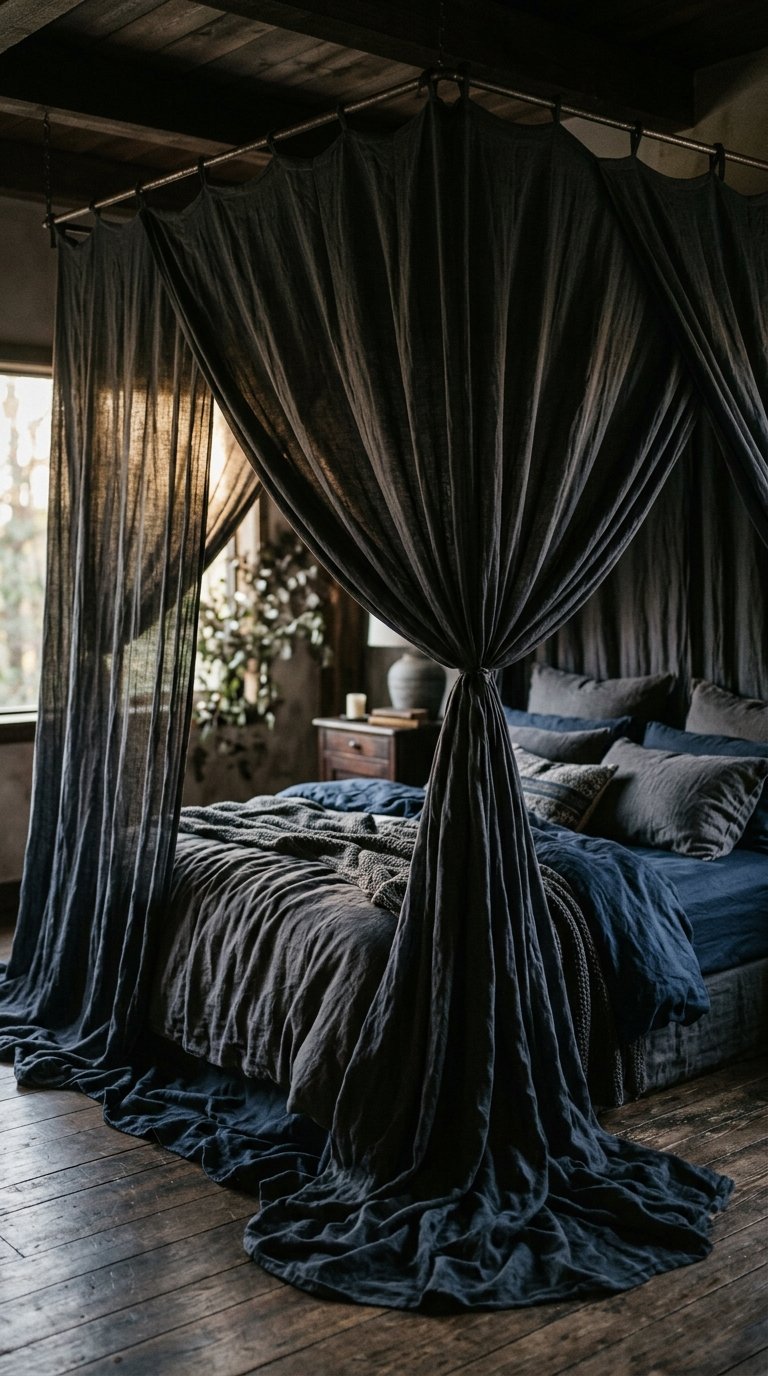
A ceiling canopy of draped fabric above the bed creates an enclosed, tent-like atmosphere that amplifies the cozy, retreat quality of a moody bedroom. Sheer linen or lightweight cotton in a dark tone, charcoal, deep navy, or forest green, hangs from a ceiling-mounted ring or rod frame above the bed and drapes to the floor at the corners.
The canopy creates a room within a room. The bed zone becomes a fully enclosed, private sleeping environment that requires no structural change. It suits four-poster beds naturally. It also works brilliantly above a standard bed frame by mounting the canopy ring directly to the ceiling above the bed center.
6. Dark Botanical Wallpaper
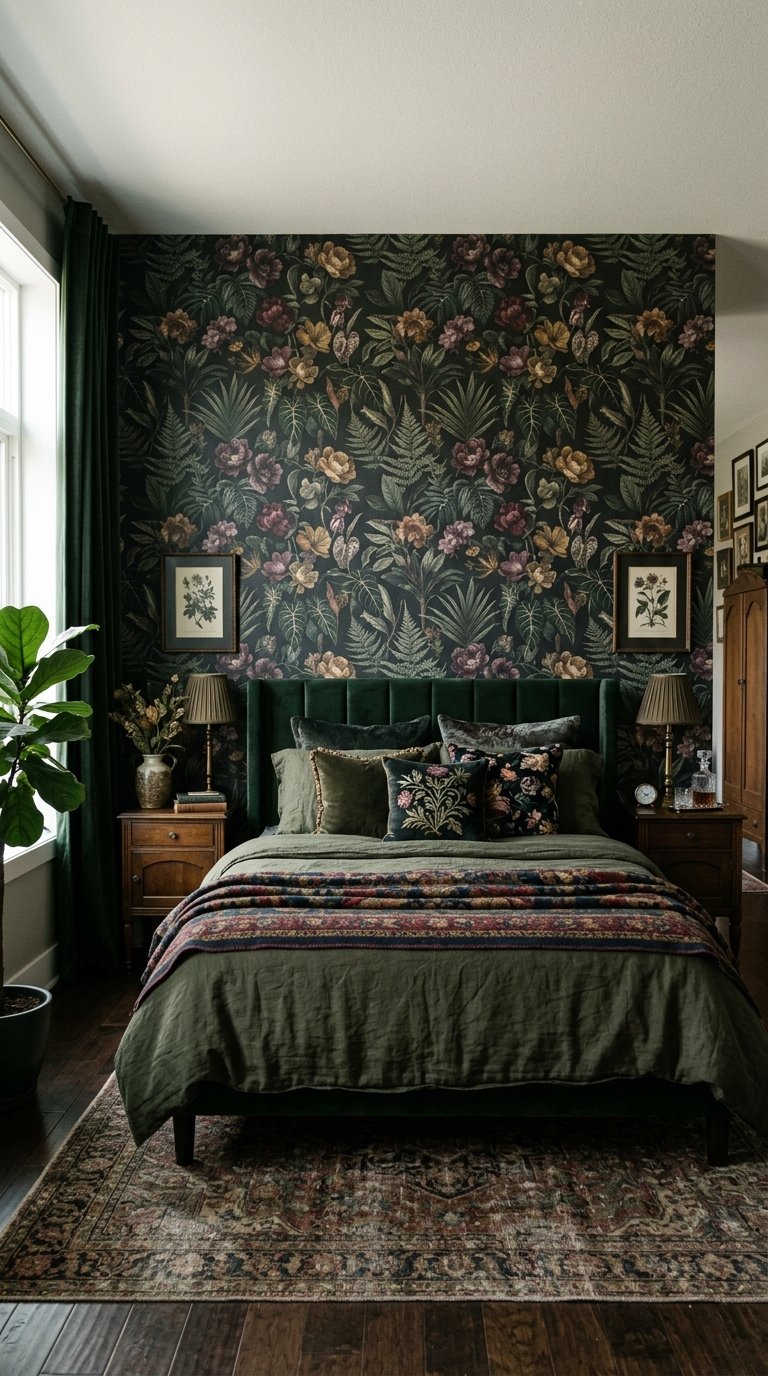
Dark botanical wallpaper in deep greens, blacks, and jewel tones creates an immersive environment that flat paint cannot replicate. Large-scale leaf prints, jungle botanicals, and oversized floral designs all work on a moody bedroom accent wall or across all four walls for maximum impact.
The pattern adds depth and complexity to the room. Even in low light, botanical wallpaper creates visual interest because the pattern remains partially visible in shadow. This is one of the qualities that makes dark wallpaper work better in bedrooms than in other rooms. The pattern does its job even when the lights are low.
Dark botanical wallpaper brands worth exploring:
- Cole and Son Fornasetti range
- Graham and Brown Fresco collection
- Sanderson Voyage of Discovery
- Osborne and Little Folium range
- Designers Guild Marquisette
7. Black Bed Frame
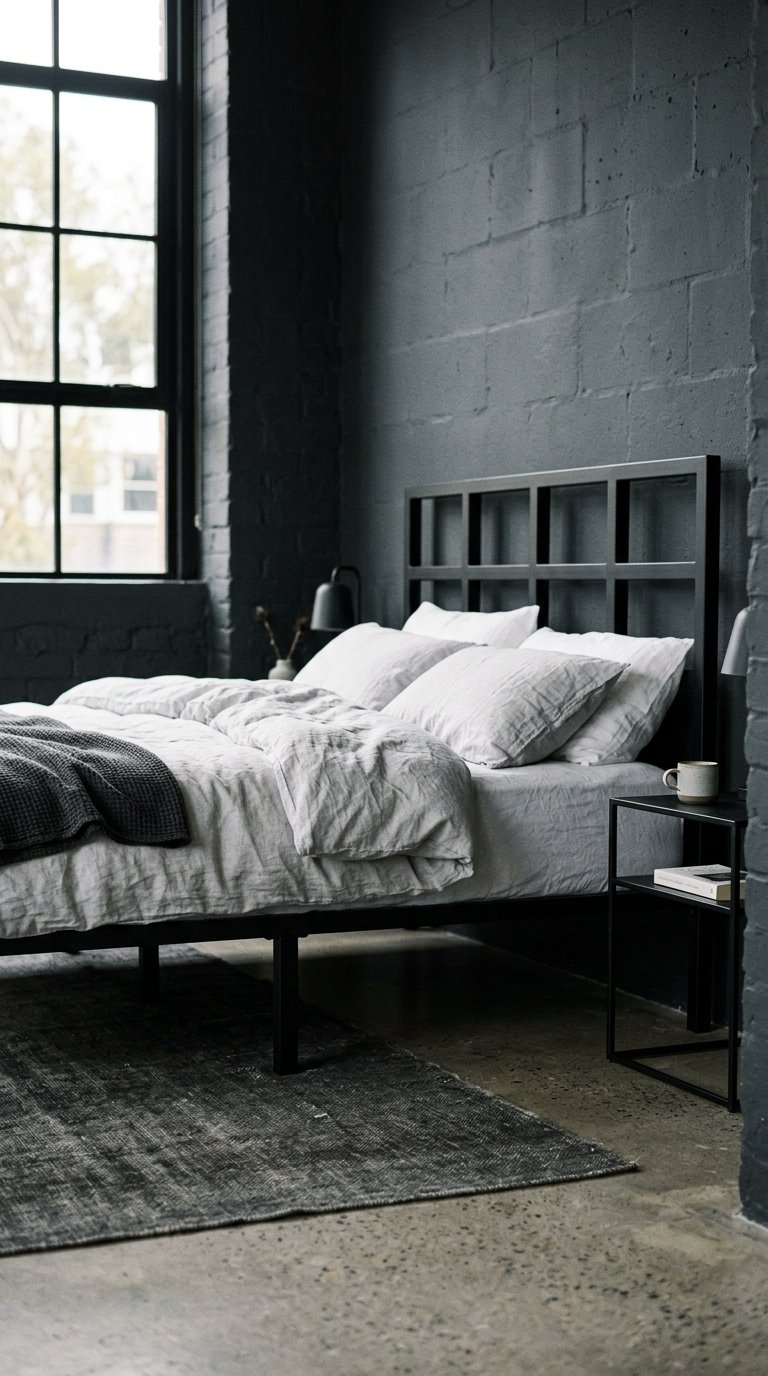
A matte black bed frame against dark walls creates a tonal composition that feels intentional and architectural. The frame doesn’t disappear against the dark walls. Instead it creates a subtle material contrast, matte metal against matte paint, that adds depth without introducing color.
A black metal frame with minimal detailing suits contemporary and industrial moody bedrooms. A black painted wooden frame with panel detail suits more traditional or Japandi-influenced moody rooms. Both work. The material choice should relate to the surrounding room’s other materials.
What to pair with a black bed frame:
- White or cream linen bedding for maximum tonal contrast
- Dark walls in charcoal, forest green, or navy for a tonal composition
- Brass or aged bronze hardware and lighting for warmth
- Natural wood nightstands to prevent the room from reading as cold
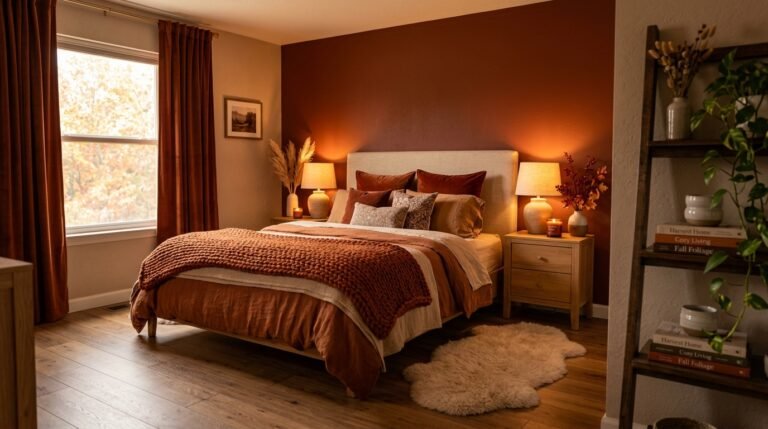
8. Oxblood Red Accent Wall
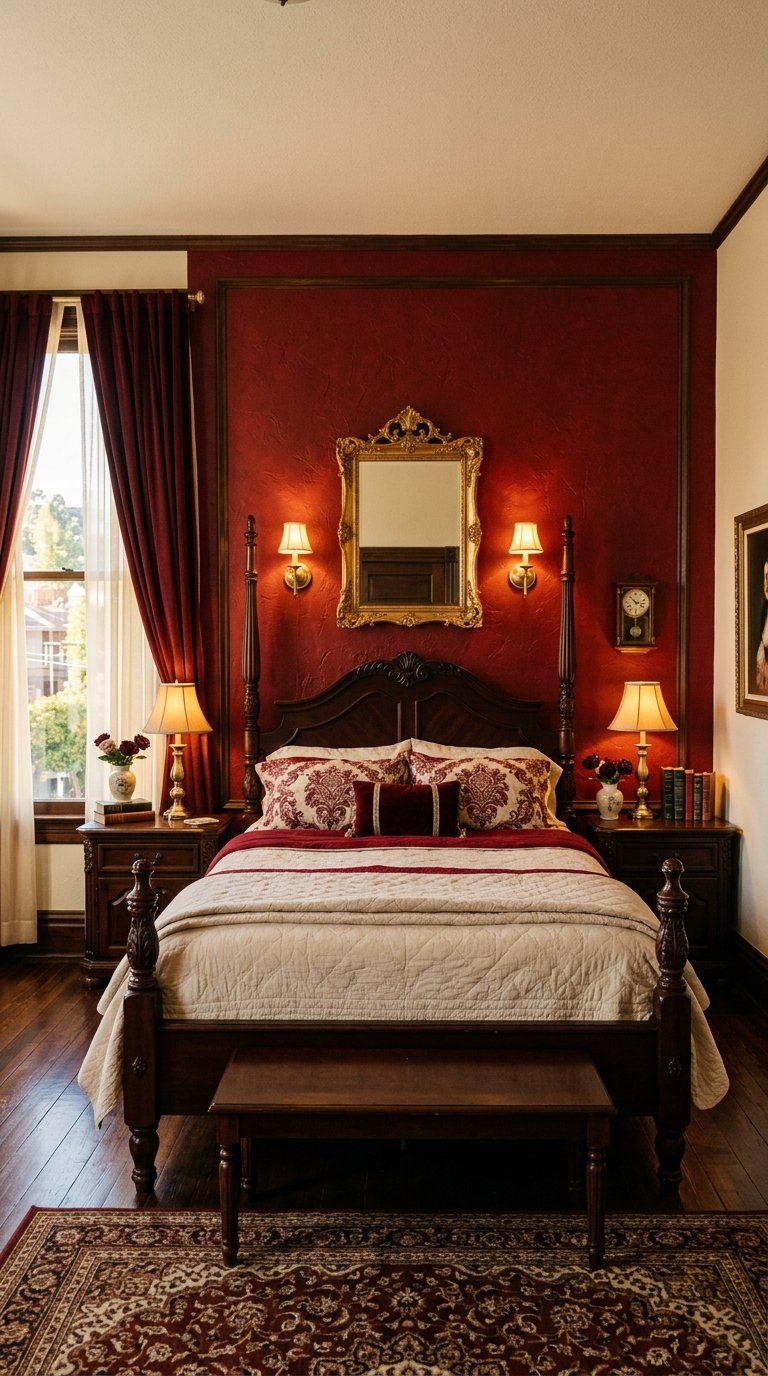
Oxblood red, also called deep burgundy or wine red, creates one of the most dramatically moody accent walls available. It’s warmer than charcoal, deeper than terracotta, and more complex than standard red. On the wall behind the bed it creates a theatrical backdrop that transforms the entire room’s atmosphere.
Oxblood works best with dark wood furniture, aged brass fixtures, cream or off-white bedding, and leather accents. It suits period homes and eclectic interiors particularly well. In a contemporary minimal room it can feel out of place. Match the wall color to the room’s material and furniture language before committing.
9. Candlelight and Ambient Flame Lighting
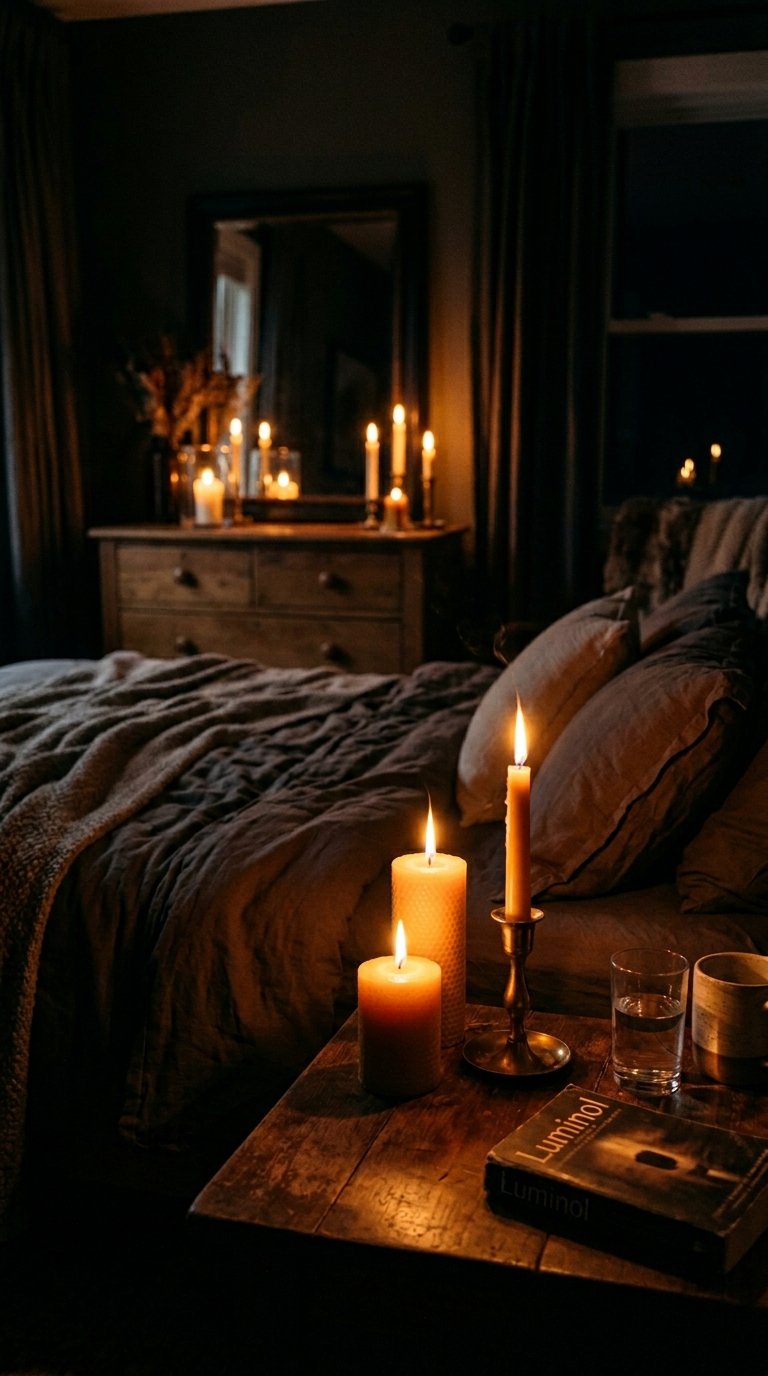
Real candles in a moody bedroom add a quality of light that no bulb can fully replicate. The slight flicker, the warm amber color temperature around 1800K, and the soft directional illumination from multiple small sources creates an atmosphere that every other lighting approach is trying to imitate.
Group candles on the bedside table, the dresser, and a low surface at the foot of the bed. Use candles of different heights in simple holders: glass hurricanes, minimal ceramic holders, and pillar candles on a tray. Scented candles add an olfactory layer to the moody atmosphere that makes the room genuinely multi-sensory.
Candle safety in a bedroom:
- Never leave burning candles unattended
- Keep candles at least 10 centimeters from fabrics and soft furnishings
- Use flameless LED candles as a safe alternative in an electric holder group
- Extinguish all candles before sleeping without exception
10. Layered Dark Bedding
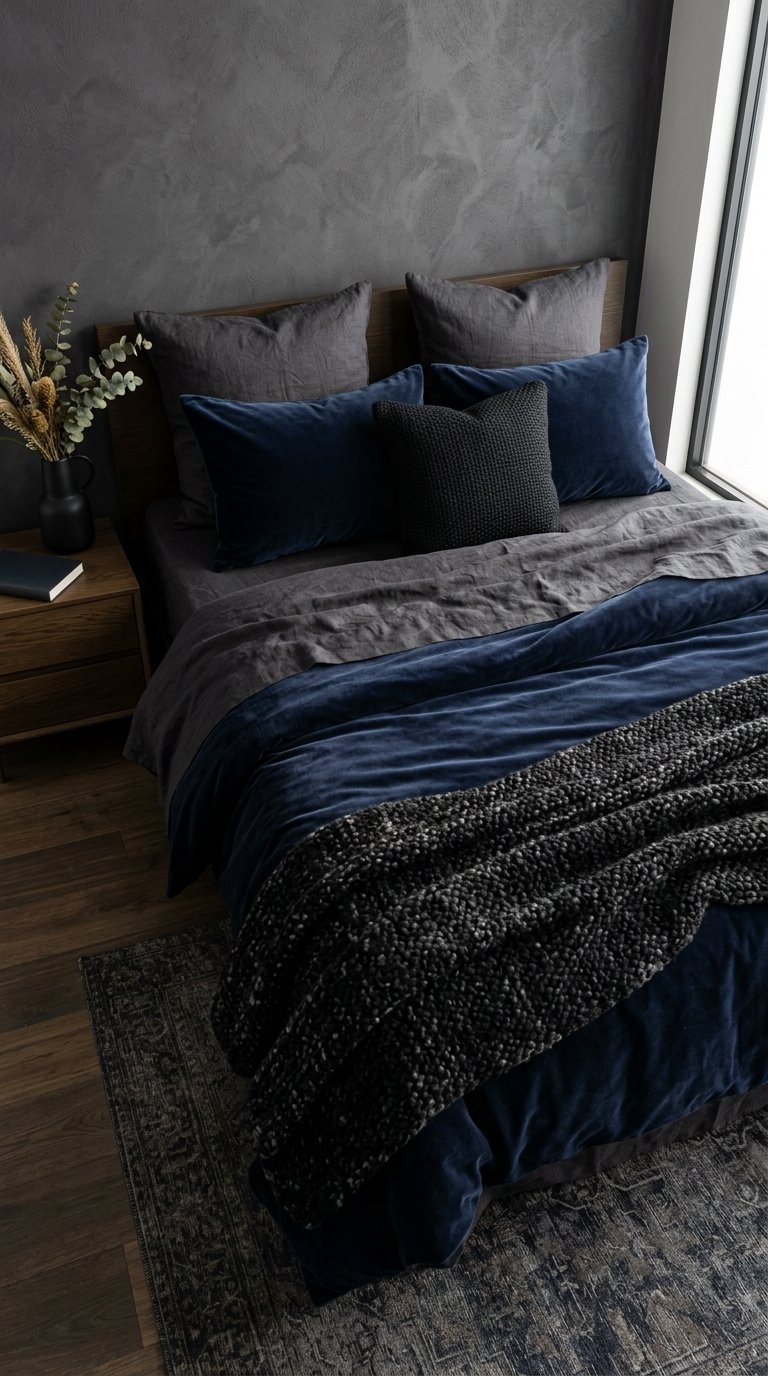
Dark bedding layers replace the standard white duvet approach with a tonal composition in charcoal, deep navy, forest green, or oxblood. The layering of dark textiles creates visual depth and warmth that white bedding on dark walls cannot achieve.
Start with dark linen sheets. Add a dark velvet or boucle duvet cover. Layer a charcoal or black knit throw across the foot. Add cushions in varying dark tones with different textures. The variety of dark materials, smooth linen against rough knit against soft velvet, creates a bed that looks deeply considered and genuinely inviting. IMO, dark bedding in a moody bedroom is braver than dark walls and more impactful.
11. Dark Timber Feature Wall
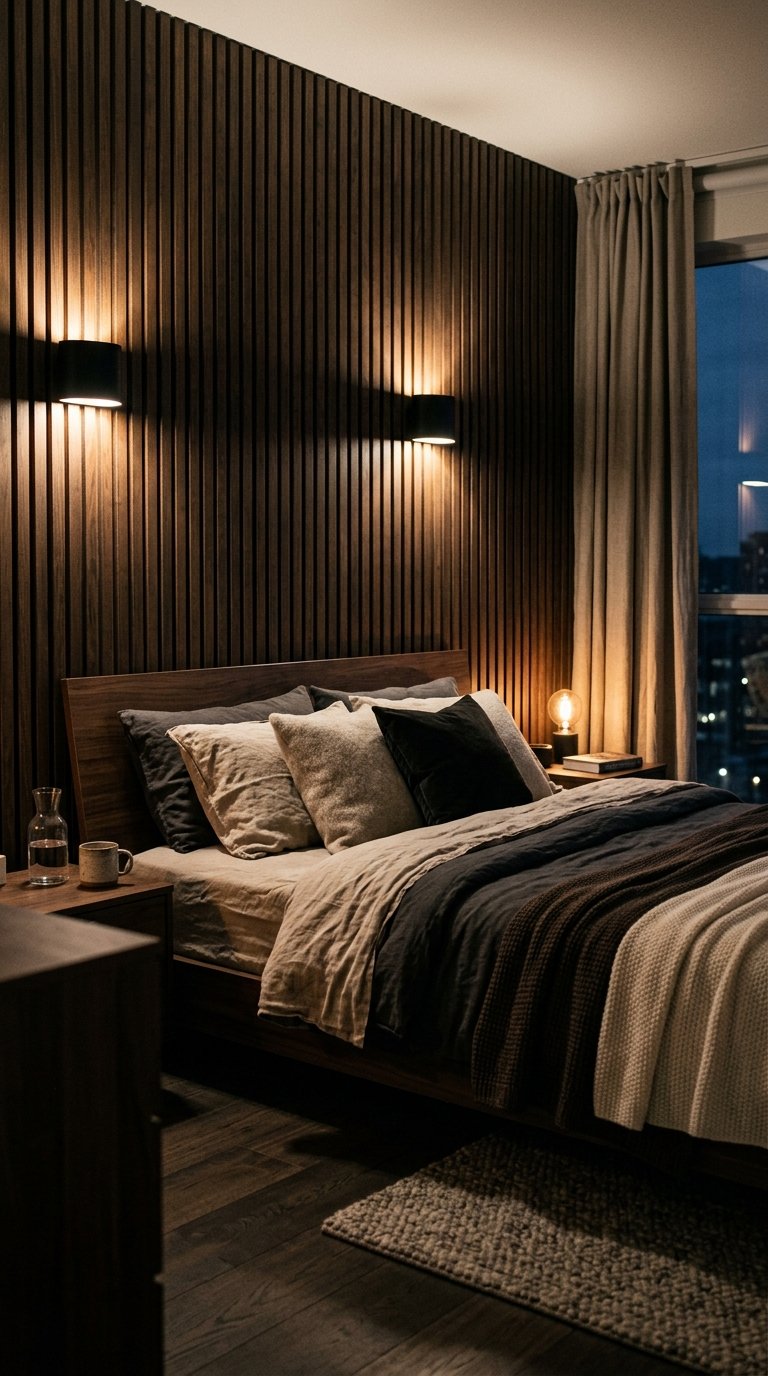
A dark timber feature wall behind the bed adds natural material texture to a moody bedroom. Dark stained wood paneling, shiplap boards in a dark tone, or raw timber slats in a deep ebony or walnut stain all create surfaces with grain and texture variation that flat paint cannot replicate.
The wood grain remains visible under a dark stain, which adds organic complexity to the wall surface. In warm light the grain becomes more pronounced, creating a wall that looks different at different times of day. Pair with warm brass wall sconces mounted directly onto the timber panels.
12. Midnight Blue Everything
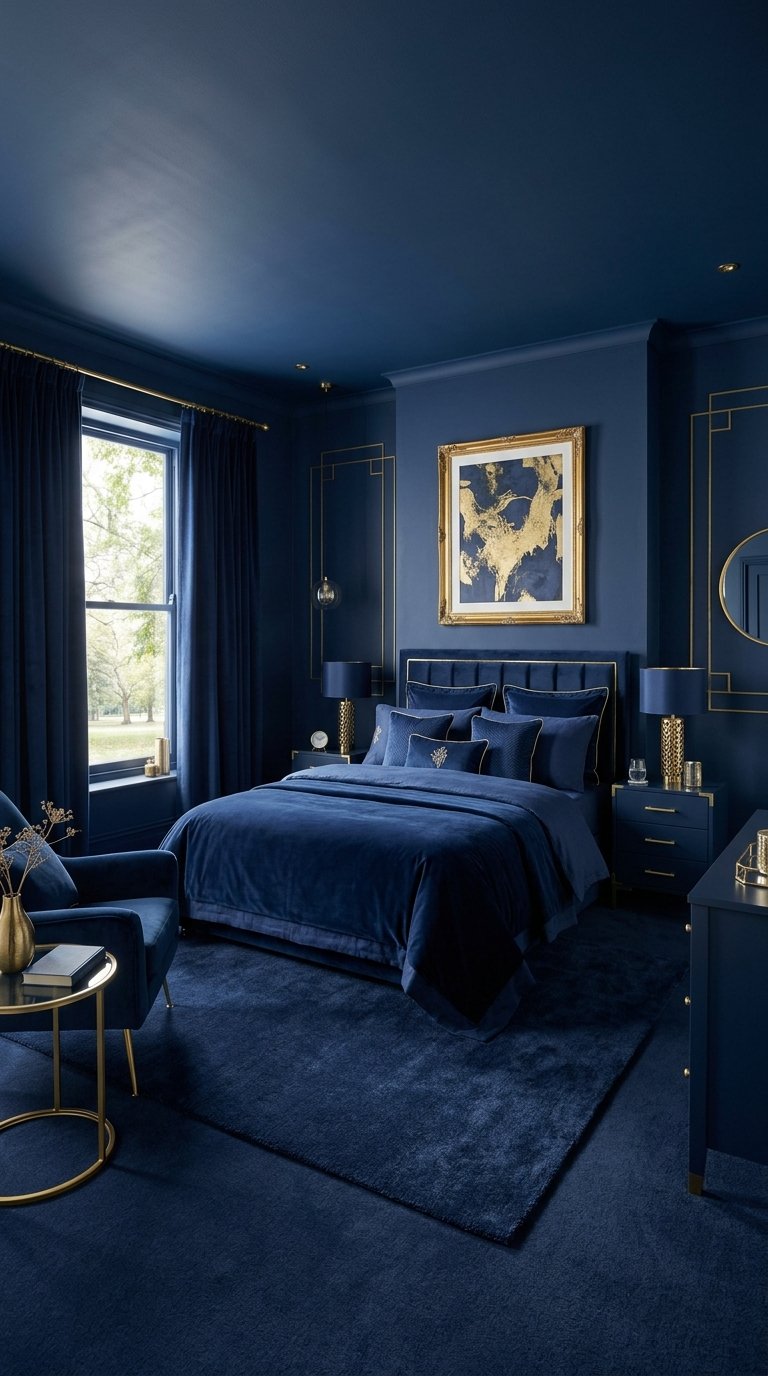
A midnight blue bedroom takes one deep navy tone and applies it across walls, bedding, curtains, and upholstery in a near-monochromatic composition. The result is an immersive, sky-like atmosphere that reads as calm, sophisticated, and deeply moody simultaneously.
Midnight blue suits gold, brass, and warm wood accents better than any other dark color. The navy-brass combination has a long design history in luxury interiors for good reason. The warmth of brass prevents midnight blue from reading as cold, which is its only significant risk in a bedroom context.
13. Dark Curtains Floor to Ceiling
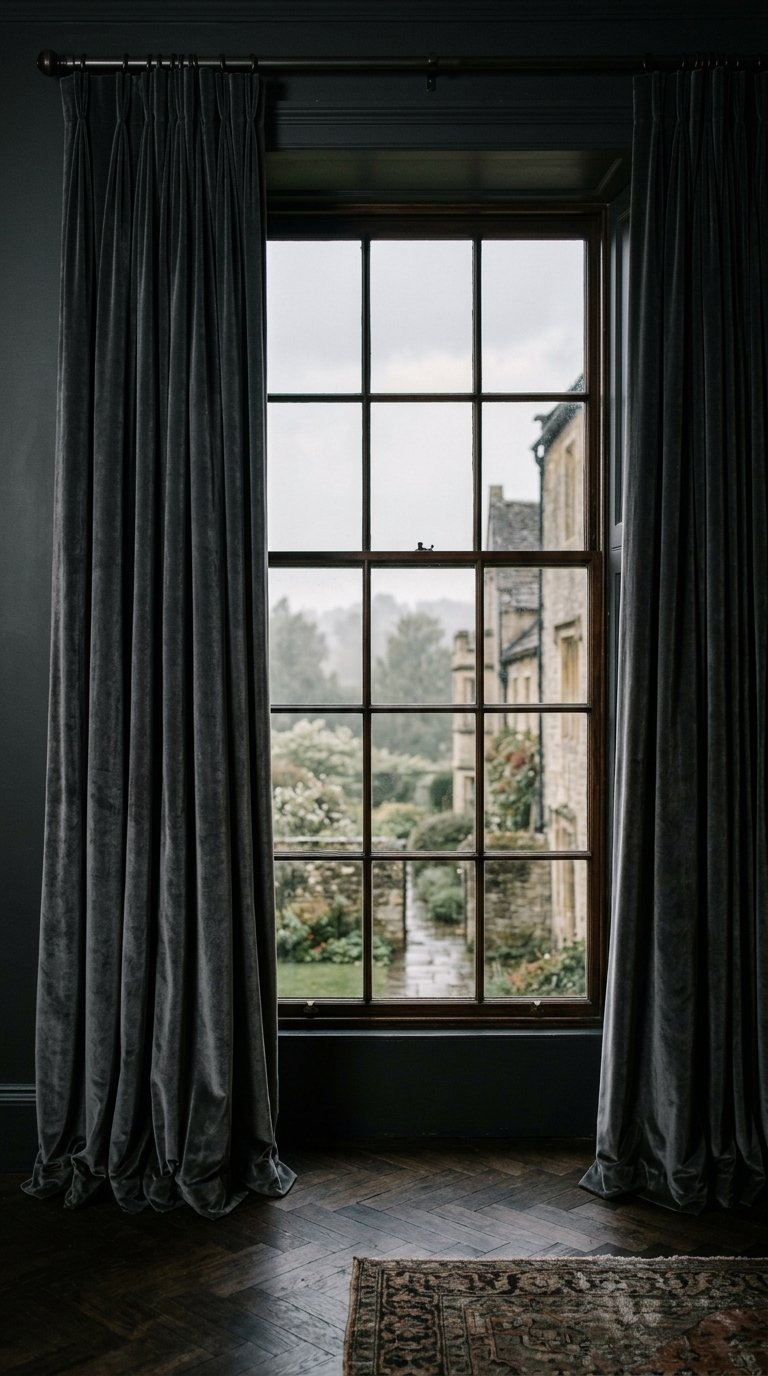
Floor-to-ceiling dark curtains hung from ceiling height create a dramatic, theatrical frame for the bedroom window. In a dark moody bedroom, blackout curtains in charcoal, deep navy, or forest green velvet serve two functions: they complete the dark atmosphere of the room and they block external light for uninterrupted sleep.
Hang the curtain rod at ceiling height and run the curtains to the floor with a slight puddle or break. The fabric length emphasizes ceiling height. In a room with low ceilings, this is one of the most effective visual tricks available. The curtains make the ceiling feel higher than it is.
14. Exposed Brick Painted Dark
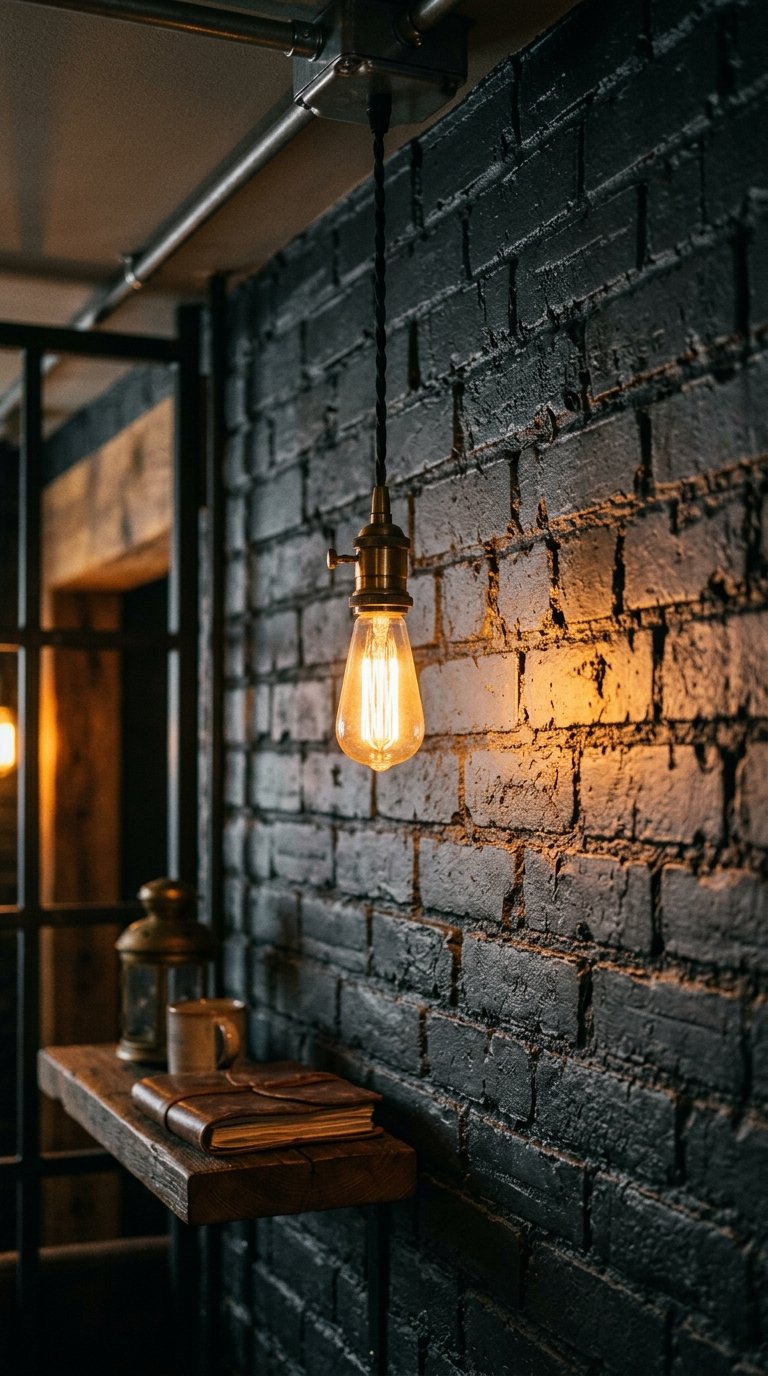
Dark painted exposed brick creates a textural wall surface in a moody bedroom that flat plaster walls cannot match. The mortar lines remain visible under the dark paint, adding a grid of subtle shadow lines that enhance the depth and complexity of the wall.
Paint raw brick in a matte dark color rather than gloss. Matte finishes on brick create a more atmospheric, less decorative result. The texture of the brick shows through matte paint with more character and depth than it does under a reflective finish. Pair with warm pendant lighting that rakes across the brick surface to maximize the texture effect.
15. Jewel Toned Accent Chair
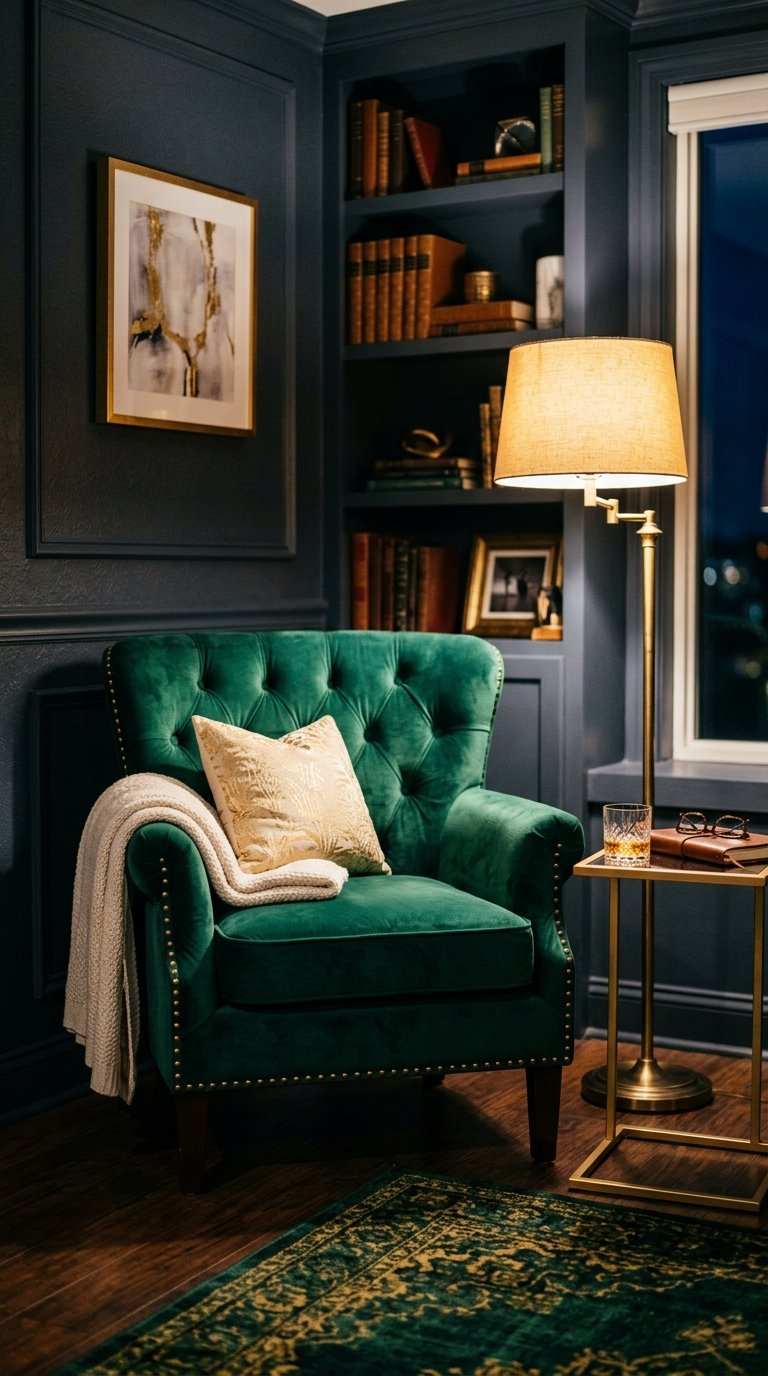
A jewel-toned accent chair in a moody bedroom adds a secondary seating zone, a contrasting material accent, and a deliberate color statement all at once. Deep emerald velvet, sapphire blue linen, or burnt amber leather all work as accent chair choices against dark bedroom walls.
Position the chair in a corner with a floor lamp beside it to create a reading nook within the bedroom. The lamp creates a focused warm light zone that contrasts with the broader ambient darkness of the room. The reading nook becomes the most used spot in the bedroom within a week.
16. Dark Ceiling with Lighter Walls
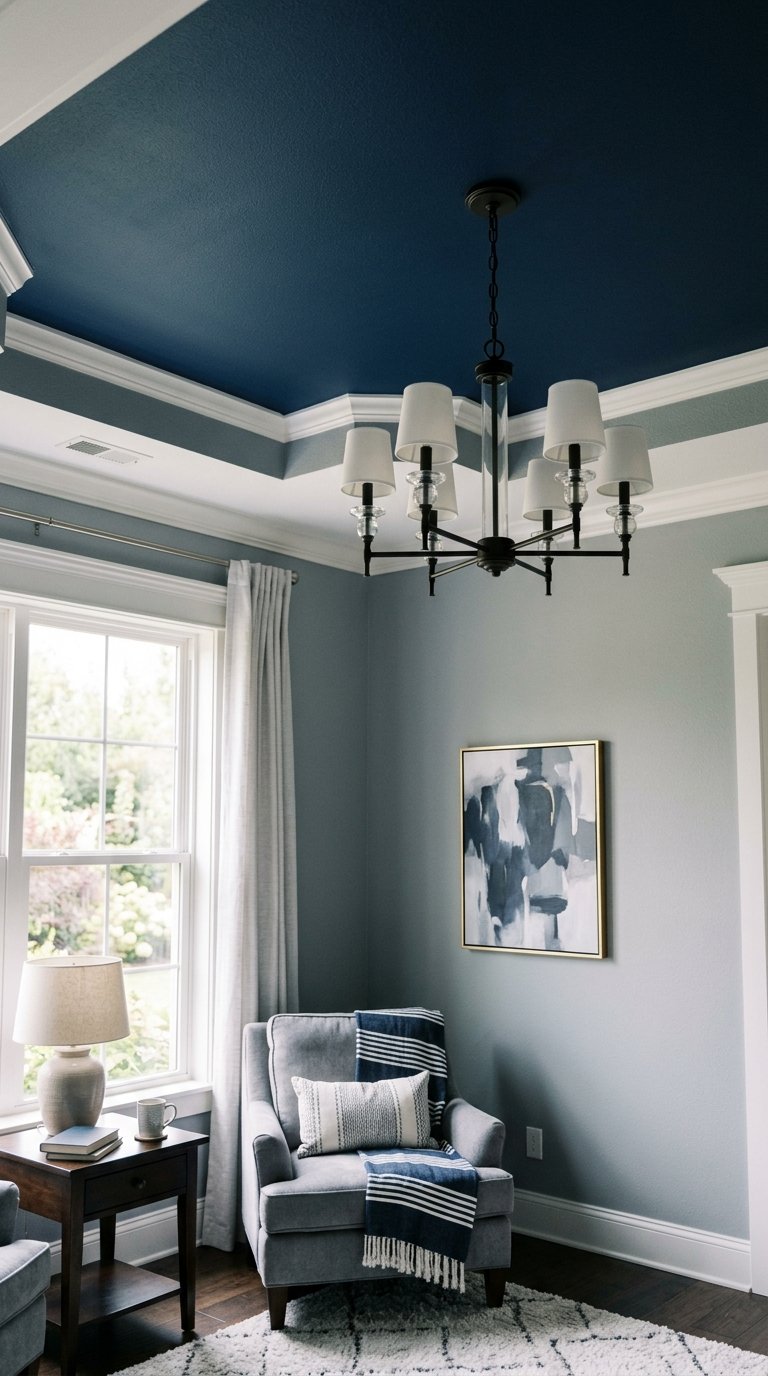
A dark ceiling above lighter walls creates a specific atmospheric effect: the ceiling feels lower, the room feels more enclosed, and the overall mood is more intimate without the full commitment of painting all four walls dark. This is the halfway point between a standard bedroom and a fully moody one.
Paint the ceiling two to three shades darker than the walls. Use the same color family rather than a contrasting color. Dark navy ceiling above mid-gray walls. Deep forest green ceiling above sage green walls. Charcoal ceiling above warm gray walls. The tonal relationship between ceiling and walls creates a gradient effect that reads as sophisticated.
17. Gallery Wall in Dark Frames
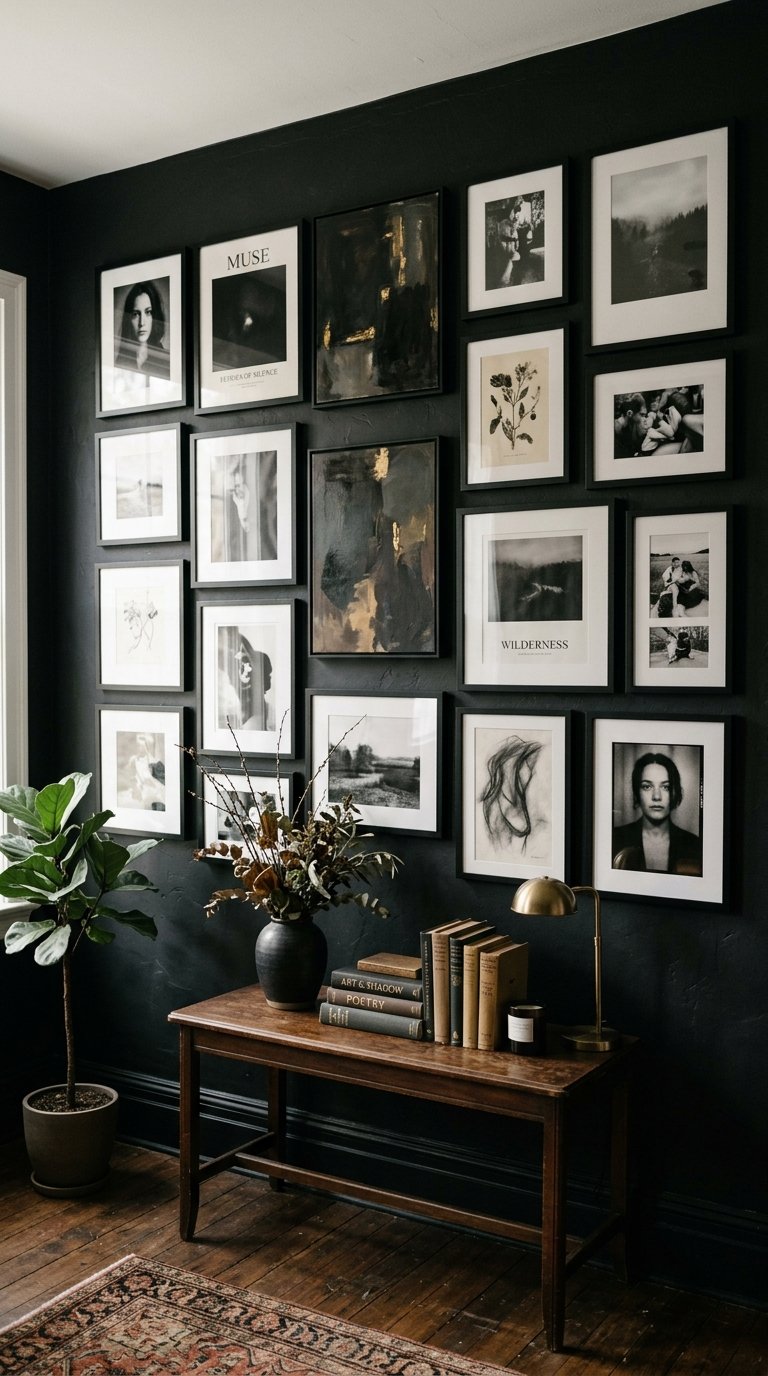
A gallery wall of dark-framed artworks on a moody bedroom wall creates a personal, layered surface that adds personality without breaking the dark atmospheric tone. Black or very dark wood frames hold the artworks within the room’s dark aesthetic while still creating visual interest through the images themselves.
Choose artworks with dark or moody color palettes: botanical prints in dark green and black, abstract works in jewel tones, black and white photography, and oil painting reproductions in rich dark colors. The gallery wall becomes a curated collection of objects that reinforces the bedroom’s atmosphere rather than disrupting it.
18. Maximalist Dark Decor
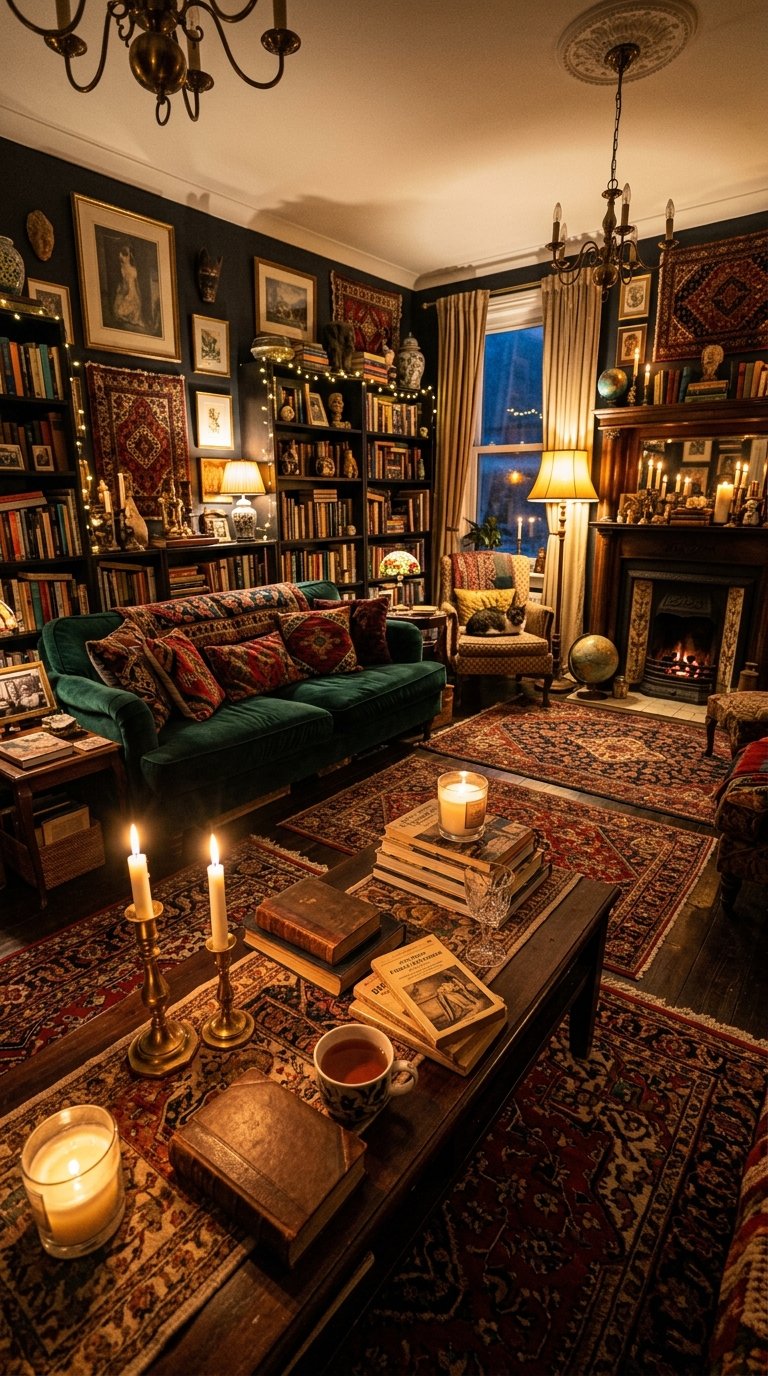
A maximalist approach to a moody bedroom fills every surface with considered objects: books stacked on the bedside table, multiple candleholders grouped on the dresser, layered rugs on the floor, plants on every available surface, artwork covering significant wall area, and textiles in abundance.
The maximalist moody bedroom is the opposite of the minimalist dark room. Both work. The maximalist version suits collectors, readers, travelers, and people who find visual richness comforting rather than overwhelming. The minimal version suits people who find calm in absence. Know which you are before designing. 🙂
19. Limewash or Textured Dark Walls
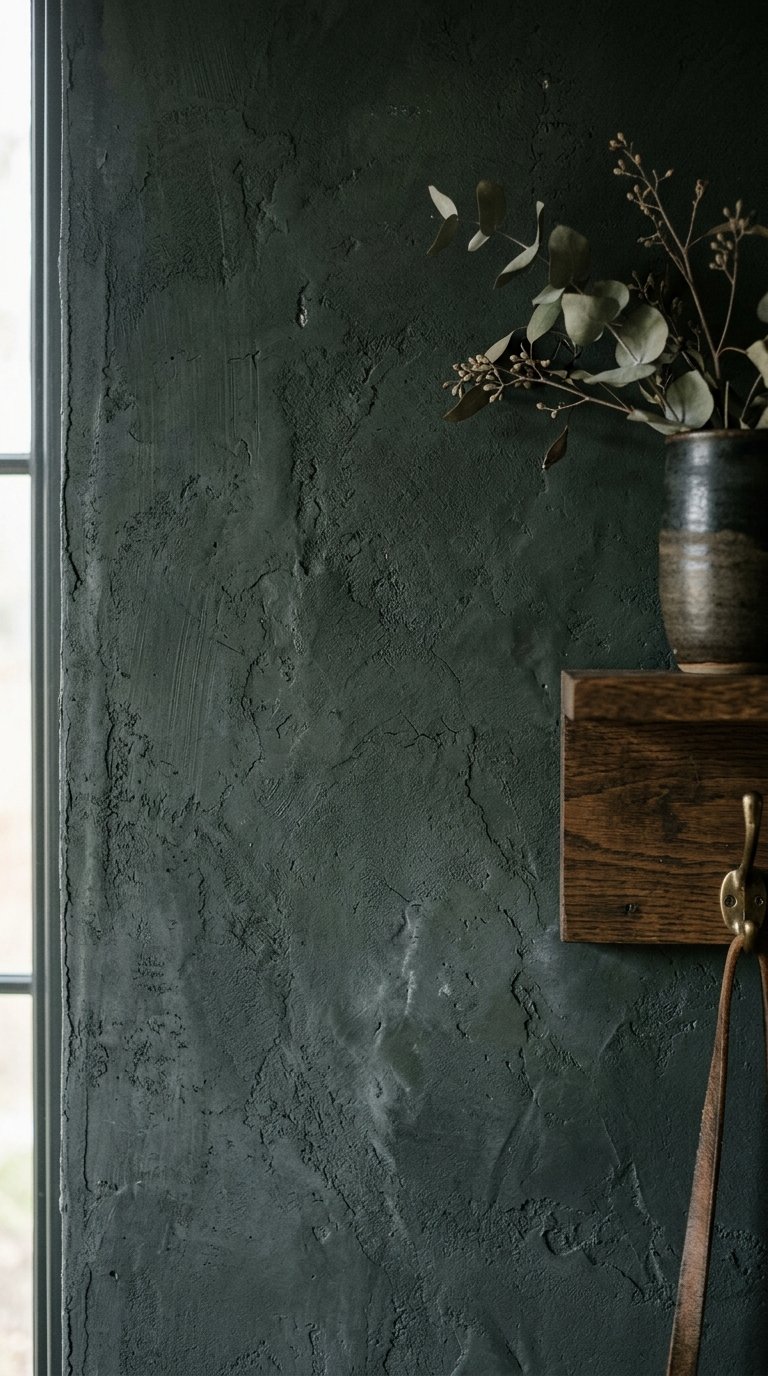
Limewash paint on a bedroom wall creates a mottled, aged surface where the color varies across the wall from lighter to darker tones within the same color family. In a dark tone, forest green, deep terracotta, or charcoal, the variation creates a wall that looks centuries old and genuinely atmospheric.
Limewash is a breathable, naturally anti-mold paint finish that suits period homes particularly well. It applies with a large brush in irregular strokes and creates a different result on every wall. No two limewash walls look the same. In a moody bedroom, the unique, uneven surface adds character that no standard paint finish achieves.
20. Antique and Vintage Furniture
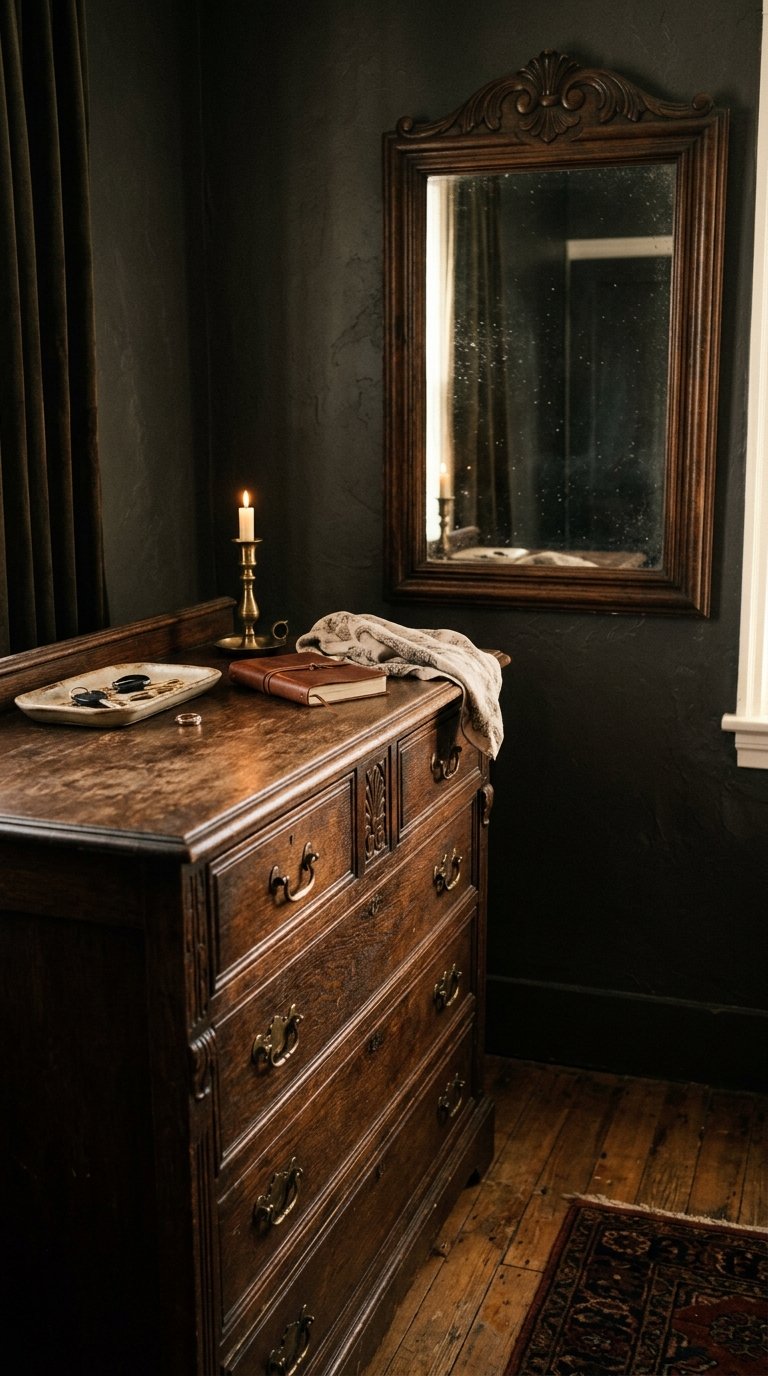
Antique and vintage furniture suits moody bedrooms better than new furniture in almost every case. The patina on aged wood, the wear on leather upholstery, the tarnish on brass hardware, all contribute to the atmospheric quality that moody bedrooms depend on.
A Victorian chest of drawers in dark mahogany against a deep green wall. An Edwardian dressing table with a tarnished mirror on a charcoal wall. A mid-century walnut bedside table against navy painted walls. Vintage furniture brings history into the room. History creates an atmosphere. New flat-pack furniture does neither.
21. Dark Floorboards or Rugs
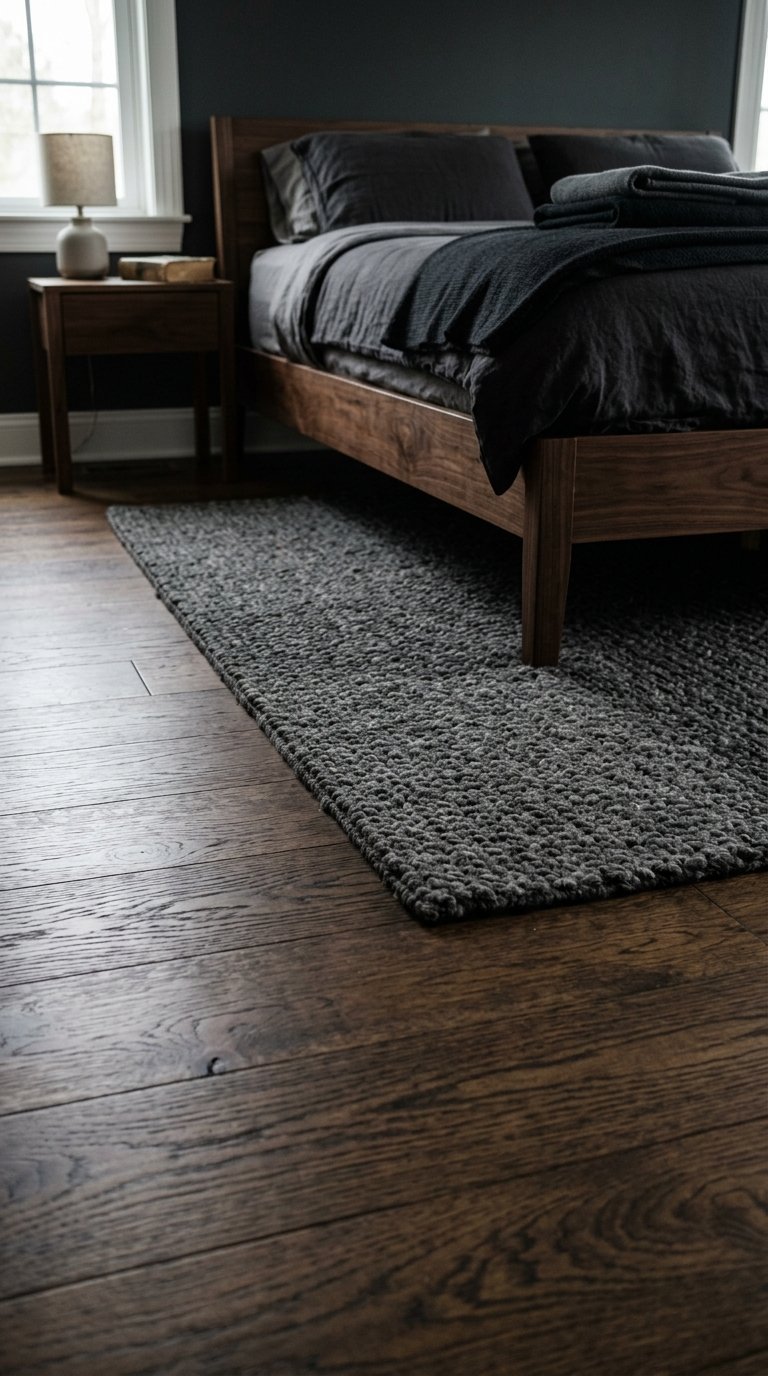
Dark-stained floorboards complete the moody bedroom from floor to ceiling. Light floors in a dark room create a jarring contrast that breaks the atmospheric immersion. Dark floors maintain it. Ebony or dark walnut stain on hardwood floors suits moody bedrooms better than any other floor finish.
If dark floorboards aren’t an option, a large dark area rug achieves a similar effect. A charcoal or deep navy wool rug covering most of the floor area creates a dark floor plane that connects visually with the dark walls. The rug must be large, extending well beyond the bed perimeter on all sides.
22. Scented Atmosphere
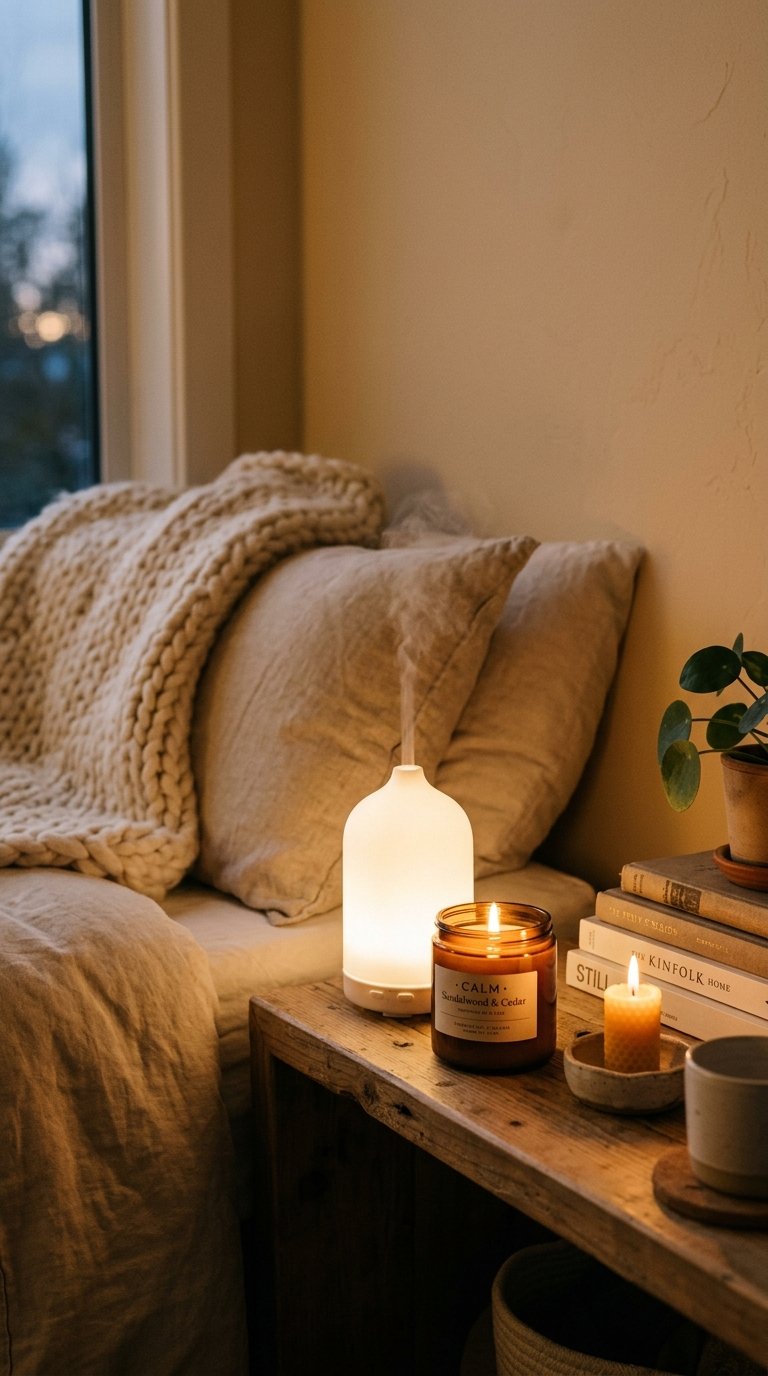
A moody bedroom engages more than just sight. Scent creates atmosphere in a way that paint and furniture alone cannot. A signature scent associated with your bedroom signals to your brain that the space is for rest. It becomes part of the bedroom’s identity.
Dark, complex scents suit moody bedrooms: oud, amber, sandalwood, patchouli, cedar, and vetiver all work. Avoid fresh, citrus, or floral scents which feel tonally wrong against dark walls and heavy textiles. A reed diffuser for constant low-level scent, supplemented by candles for stronger atmospheric moments, creates the most layered olfactory result.
23. Hidden or Recessed Lighting Behind Panels
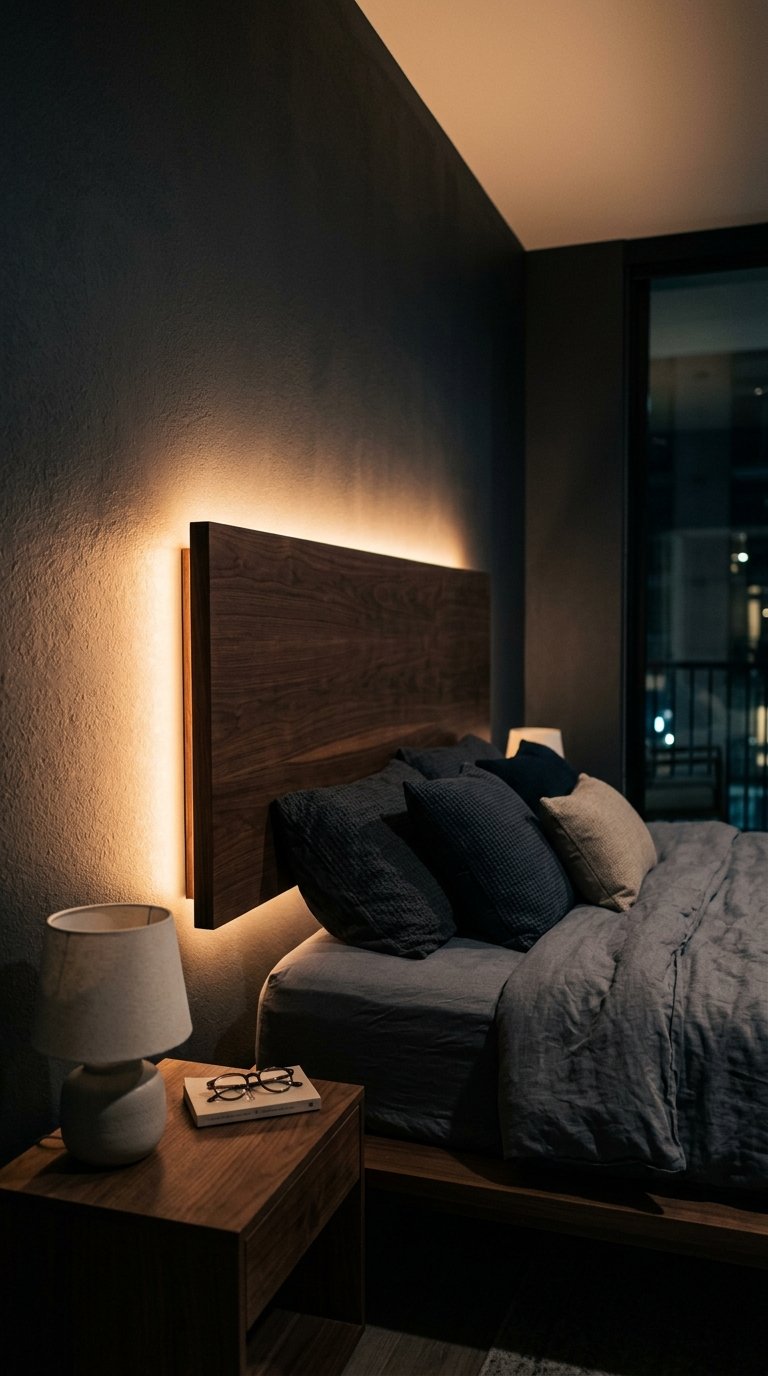
Concealed LED lighting behind headboard panels, floating shelves, or ceiling coves creates indirect light that illuminates surfaces without revealing the light source. In a moody bedroom, this creates the most sophisticated and atmospheric lighting result available.
The light appears to emanate from the wall or ceiling itself rather than from a visible fixture. It creates a soft glow that adds depth to dark surfaces without creating the harsh shadows that direct lighting produces in dark rooms. Install warm LED strips at 2700K behind every panel and shelf edge throughout the room. The result repays the effort every evening.
Concealed LED placement options:
- Behind a floating headboard panel, light glows forward and upward
- Beneath floating bedside shelves, light washes downward onto the nightstand surface
- Inside ceiling coves, light washes upward onto the dark ceiling
- Behind a floating wardrobe panel, creates a backlit silhouette effect
- Inside open shelving niches, highlights displayed objects from within
Final Thoughts
A moody bedroom rewards commitment. The more fully you apply the dark, atmospheric aesthetic, the more powerfully the room works as a sleep environment and personal retreat. The 23 ideas above cover every element from wall color to scent, from lighting to furniture, from fabric to floor.
Start with the walls and the lighting. Get those two right and every other decision becomes clearer. A dark wall with warm layered lighting transforms a bedroom faster than any other single change.
Most people spend a third of their lives in their bedroom. It deserves more than beige walls and a ceiling fan. FYI, you deserve a bedroom that actually feels like yours.