23 Green Bathroom Ideas That Actually Work Long Term
Green is having a moment in bathrooms. It also had moments in the 1970s, the 1990s, and every decade before that. The difference now is that people are executing it well.
A green bathroom done right looks calm, grounded, and timeless. Done wrong, it looks like a decision you’ll be apologizing for in three years. The difference comes down to shade selection, material pairing, and knowing how much green the room can actually absorb before it tips from considered to overwhelming.
I’ve looked at a lot of green bathrooms. Here are 23 ideas that hold their value.
1. Start With Sage Green Walls
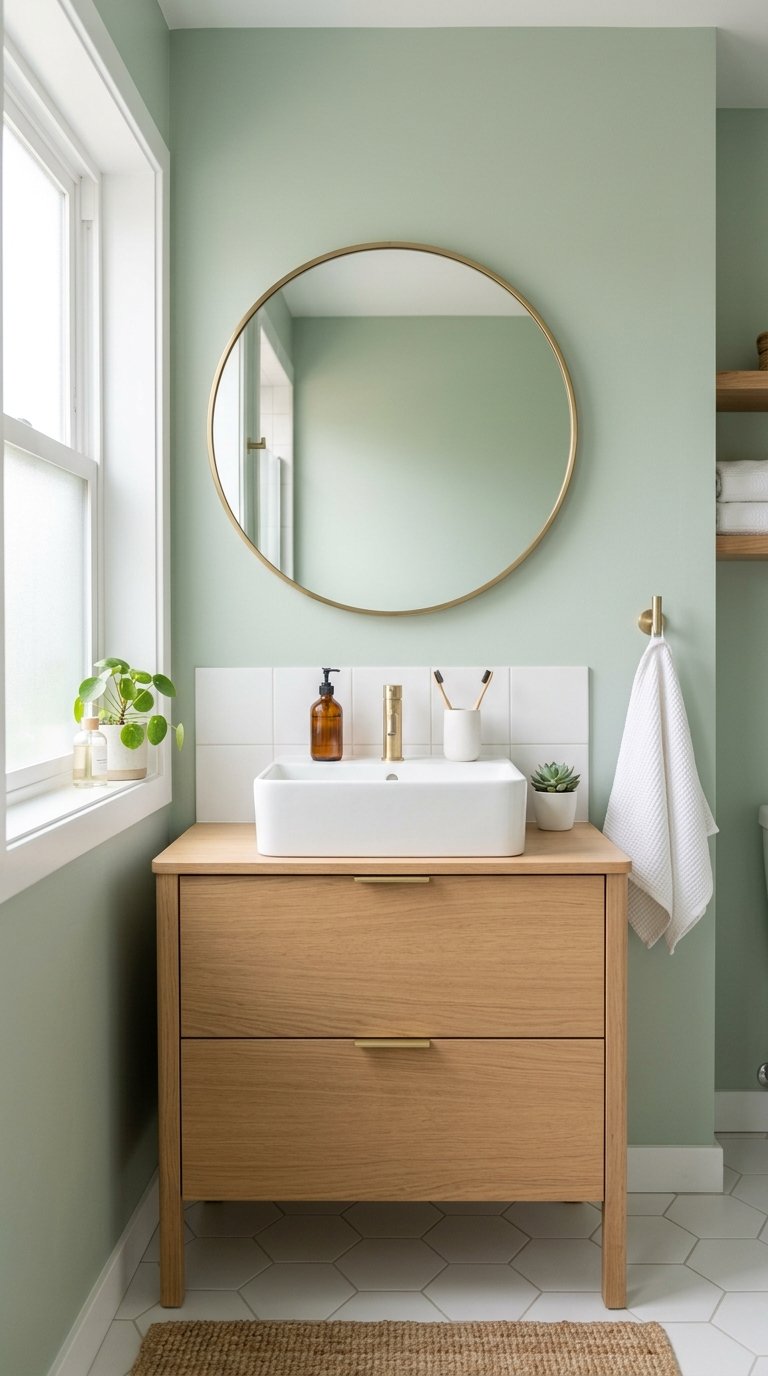
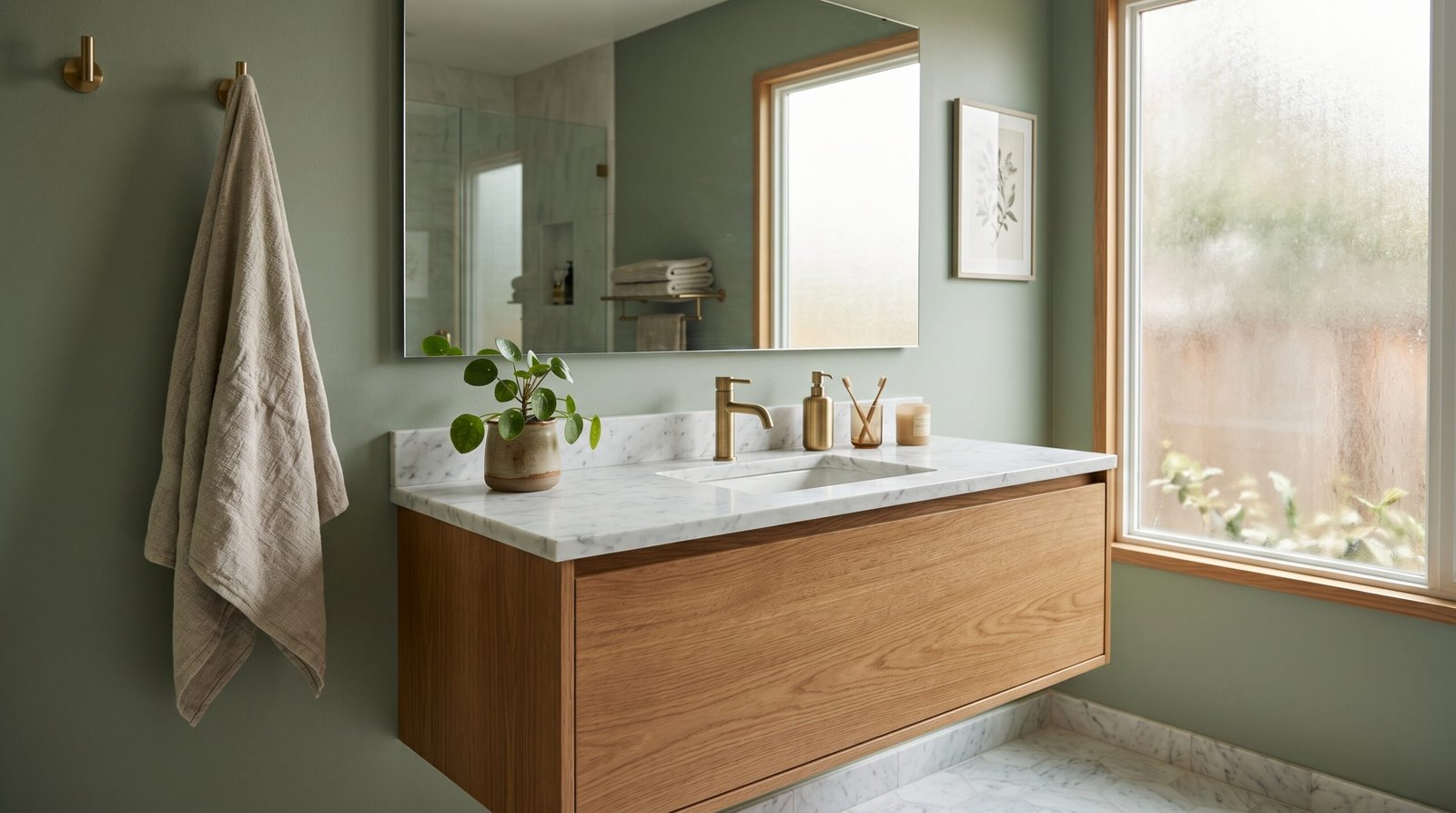
Sage green is the most forgiving green for a bathroom. It sits comfortably between warm and cool, pairs with almost every material finish, and reads as calm rather than aggressive in a small space.
Unlike forest green or emerald, sage doesn’t demand attention. It provides a backdrop that makes everything placed against it look better: white fixtures, warm wood, brushed brass, and natural stone all perform well against sage.
Sage green paint options worth testing:
- Farrow and Ball Mizzle: a warm, complex sage with gray undertones.
- Dulux Overtly Olive: a soft muted sage that works in low-light bathrooms.
- Benjamin Moore Saybrook Sage: a clean, balanced sage with minimal yellow undertone.
- Sherwin-Williams Clary Sage: a slightly grayer sage that works in cool-light rooms.
Test your shortlisted sage on a large wall patch. View it in morning, midday, and evening light before committing. Sage shifts significantly depending on light quality and direction.
2. Use Deep Forest Green for a Bold Statement
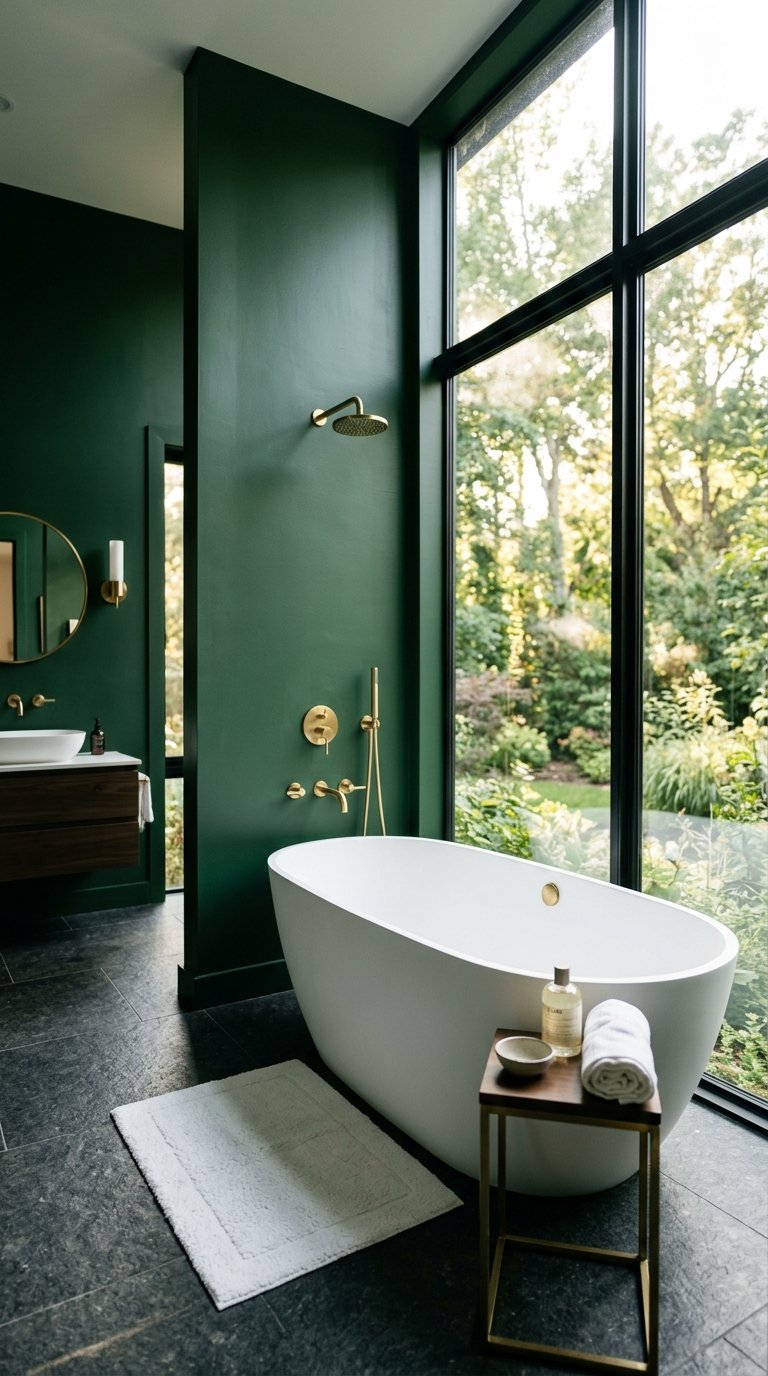
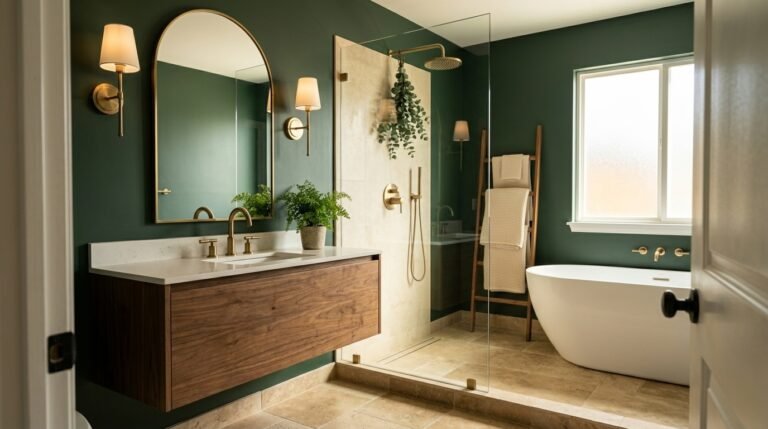
Forest green in a bathroom creates an enveloping, dramatic effect that no lighter green tone delivers. It works best when the bathroom has adequate natural light or good artificial lighting, because forest green in a dark bathroom becomes oppressive rather than moody.
A forest green bathroom with white fixtures, unlacquered brass taps, and warm wood accents hits a level of considered boldness that most bathrooms never achieve. It photographs exceptionally well and ages better than you’d expect because deep greens tend to look richer rather than dated as they settle into a space.
Where forest green works best:
- Bathrooms with large windows or skylights.
- Powder rooms where the dramatic effect reads across a small space.
- Feature walls behind a freestanding bath or vanity.
- Full room applications with high-quality lighting to compensate for light absorption.
FYI, a small bathroom in forest green often looks better than the same room in a lighter color because the darkness removes the awareness of the room’s limited size.
3. Try Emerald Green Tiles as a Feature Wall
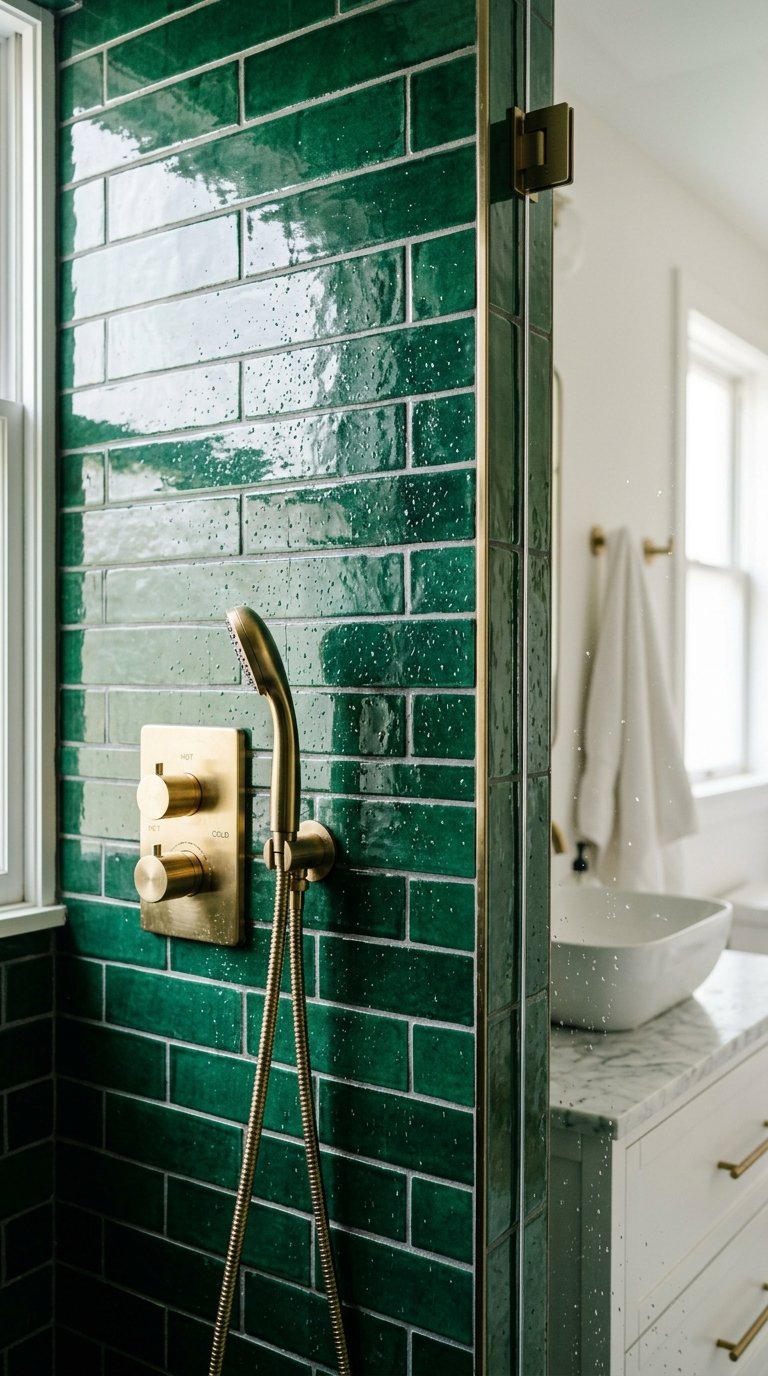
Emerald green tile on a single feature wall, behind the bath, behind the vanity, or on the shower back wall, delivers color impact without the commitment of a full green bathroom.
Emerald zellige tile in particular creates a shower or bath wall that shifts between deep jewel green and lighter teal depending on the light hitting each irregular tile surface. The effect is genuinely beautiful and one of the better uses of the color in bathroom design.
Emerald tile materials that work:
- Zellige: handmade Moroccan tile with irregular surface and shifting reflectivity.
- Glazed ceramic subway: affordable, consistent, and bold in emerald.
- Large format porcelain in emerald: lower grout line count, more seamless color impact.
- Glass mosaic: reflective, rich color depth, works well in wet areas.
Keep the opposing walls and ceiling neutral when using emerald tile as a feature. The tile does all the work. Everything else supports it.
4. Combine Green With Warm Brass Fixtures
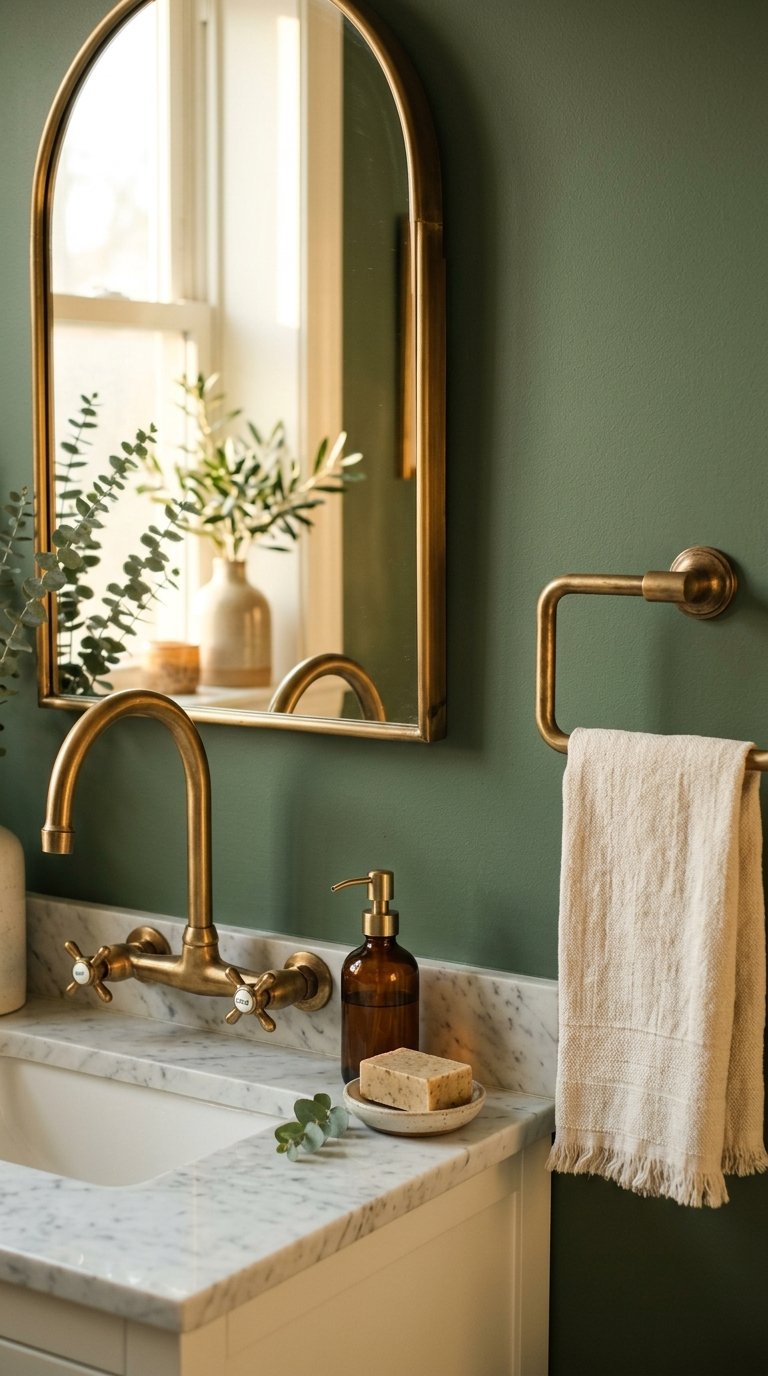
Green and brass is one of the most reliable color and material combinations in bathroom design. The warm gold of brass draws out the warmth in almost every green shade, from sage to forest to olive, and prevents the bathroom from reading as cold or clinical.
A sage green wall with brushed brass taps, a brass towel bar, and a brass mirror frame is a combination that will still look good in fifteen years. The pairing has enough design heritage behind it to resist trend cycles.
Brass finish options for green bathrooms:
- Brushed brass: warm, contemporary, resistant to fingerprints and water spots.
- Unlacquered brass: develops a natural patina over time, adds character and warmth.
- Antique brass: darker, more traditional, works with deeper forest and olive greens.
- Polished brass: brightest and most formal; use with restraint in contemporary green bathrooms.
Match all brass elements in the room to the same finish. Mixed brass finishes in a small bathroom look unresolved.
5. Use Olive Green for a Warm, Earthy Bathroom
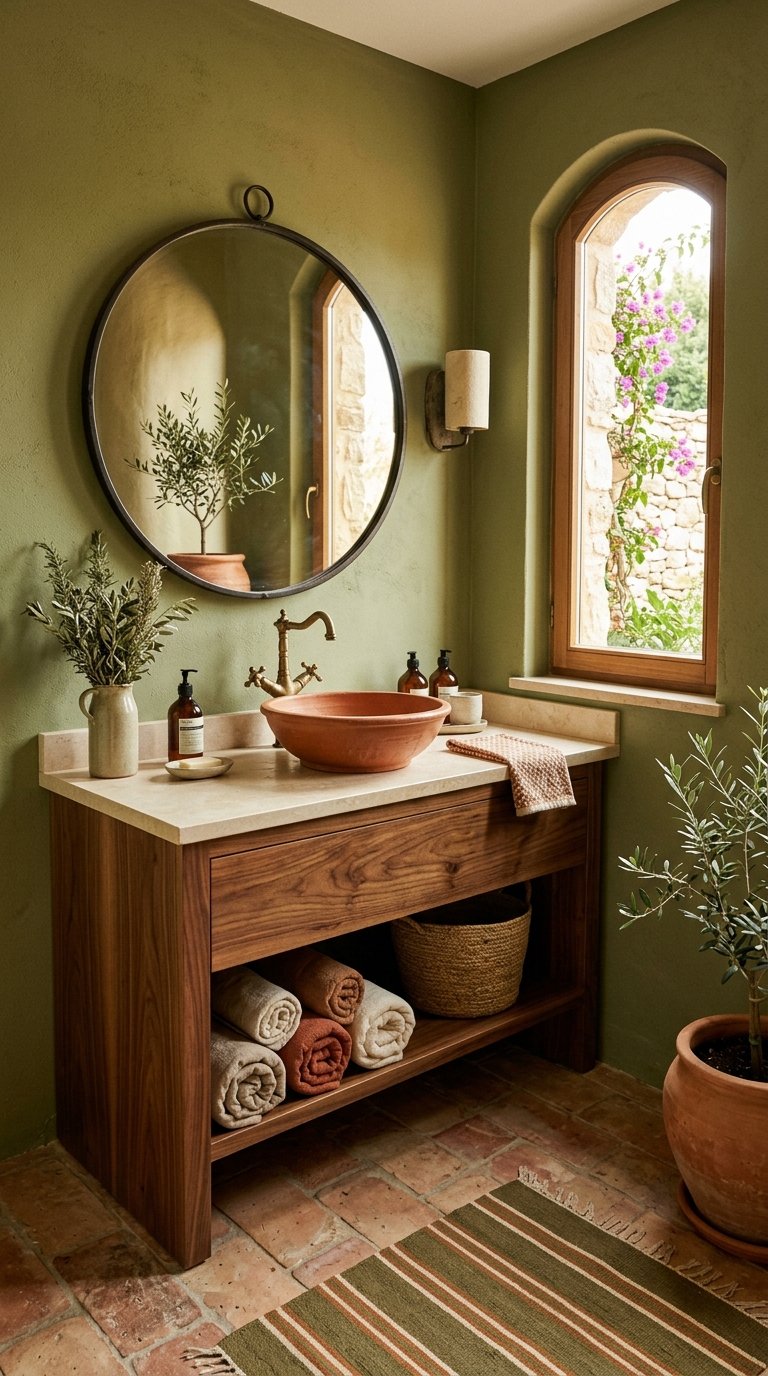
Olive green sits at the warm end of the green spectrum, leaning toward yellow and brown rather than blue. It creates a bathroom that feels earthy, Mediterranean, and organically warm rather than cool and botanical.
Olive green pairs naturally with terracotta, warm wood, aged brass, and raw linen. The combination feels Mediterranean or Tuscan in character, which is a distinct aesthetic from the cooler, more contemporary sage or forest green bathroom.
Materials that pair well with olive green:
- Terracotta floor tile for warmth underfoot.
- Natural oak or walnut vanity for rich wood tone contrast.
- Aged or unlacquered brass for warmth and patina.
- Raw linen or cotton textiles in cream and warm white.
- Handmade ceramic accessories in earthy tones.
Olive green bathrooms look better with warm lighting (2700K to 3000K bulbs) than with cool white light, which flattens the warmth out of the color.
6. Paint Just the Vanity Green
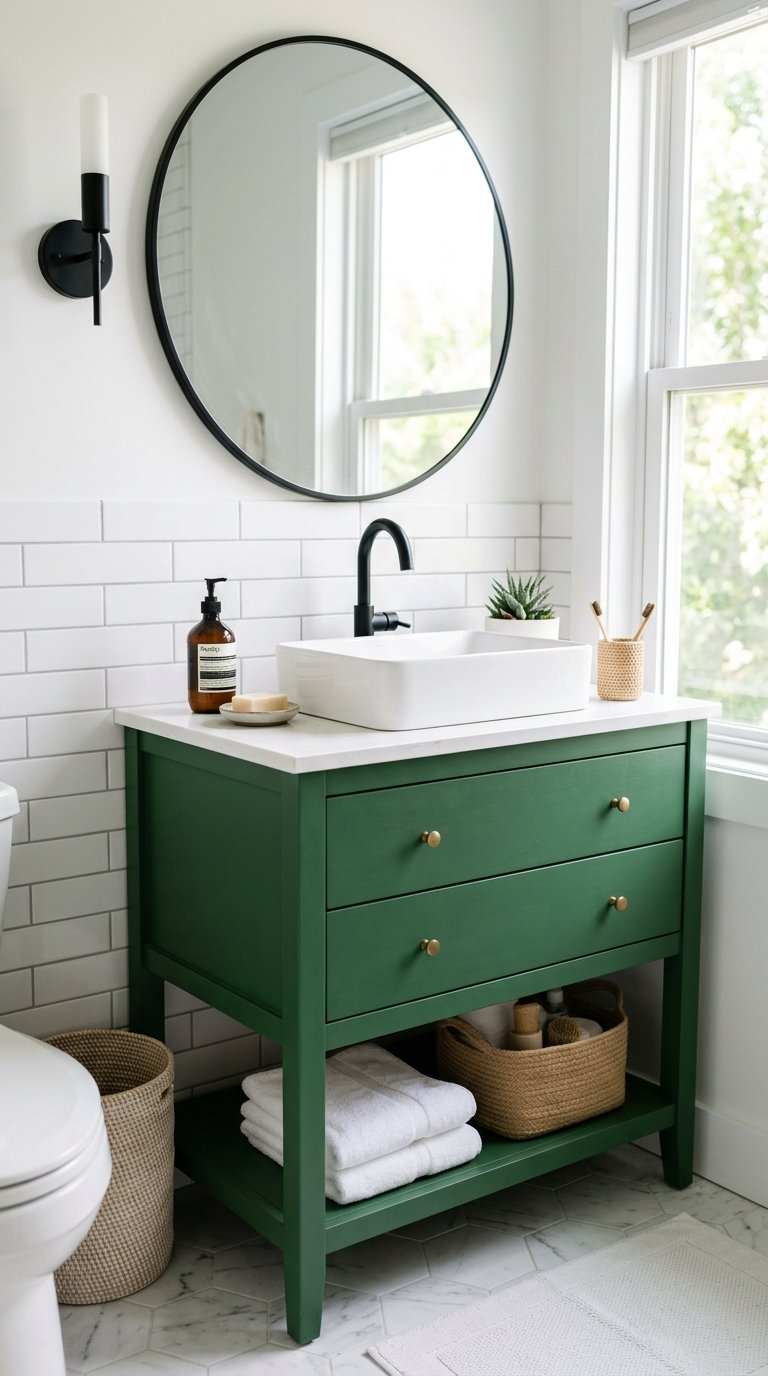
If a full green bathroom feels like too much commitment, painting only the vanity cabinet green delivers a significant color impact at minimal risk.
A sage, forest, or navy-adjacent green vanity against white walls and white tile reads as a deliberate design decision without requiring you to live with green on every surface. If you change your mind in five years, you repaint the vanity. Not the whole room.
Vanity green paint options by style:
- Sage green vanity: works in natural, Scandinavian, and transitional bathrooms.
- Forest green vanity: works in bold contemporary and traditional bathrooms.
- Dusty hunter green vanity: works in vintage, cottage, and eclectic bathrooms.
- Olive green vanity: works in Mediterranean, warm contemporary, and earthy bathrooms.
Pair the green vanity with a contrasting countertop material: white marble, warm quartz, or a dark stone all create clear contrast against the green cabinet below.
7. Introduce Green Through Plants Alone
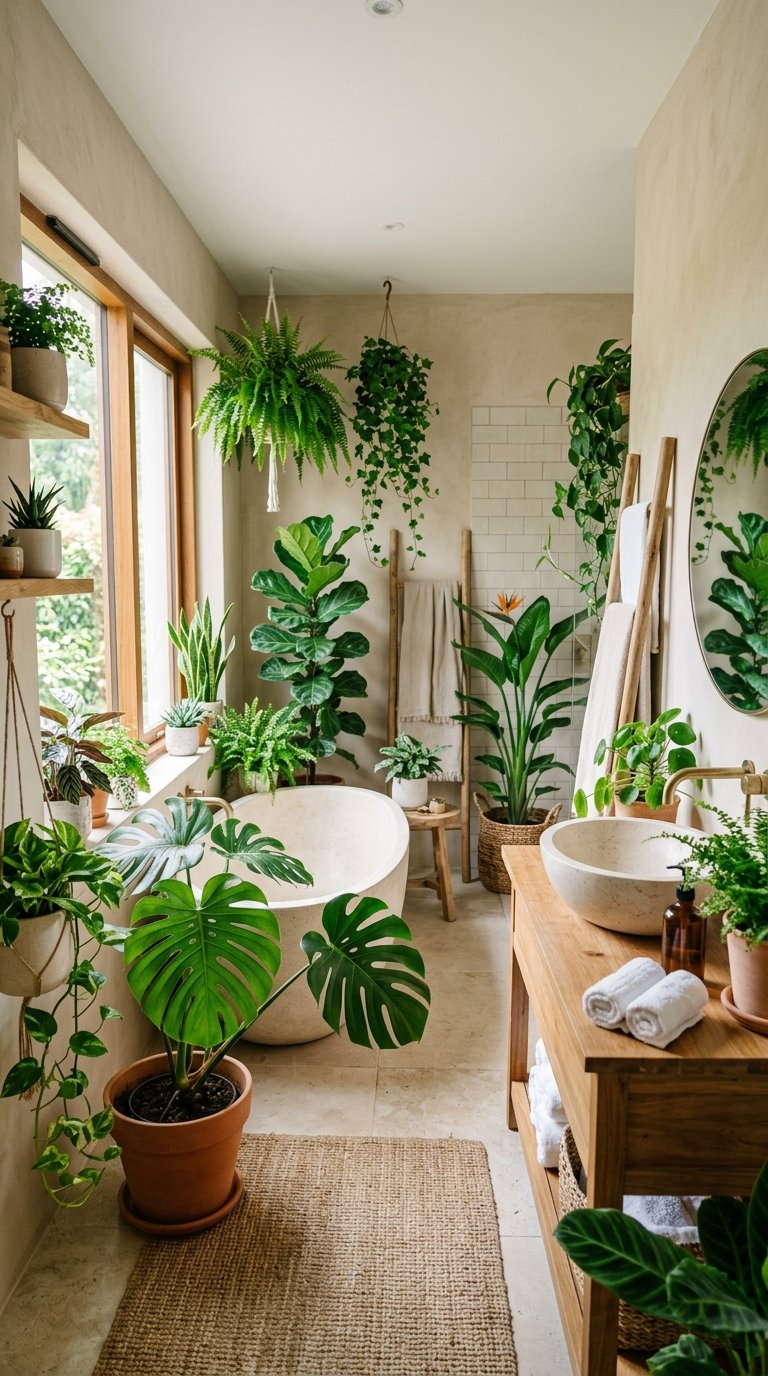
A bathroom that uses green through living plants rather than paint or tile delivers a different quality of green entirely. Plants add organic, irregular, breathing green that no painted surface replicates.
Multiple plants at different heights, a trailing pothos on a high shelf, a fern on the vanity counter, a snake plant in the corner, create a bathroom that feels like a greenhouse annexe without requiring any structural changes to the room.
Plants that thrive in bathroom conditions:
- Pothos: trailing, low-light tolerant, thrives in humidity.
- Boston fern: loves moisture, adds fine texture and softness.
- Peace lily: handles low light, flowers occasionally, visually elegant.
- Monstera: bold leaf shape, tropical character, handles humidity well.
- Snake plant: nearly indestructible, architectural form, tolerates neglect.
The combination of a neutral bathroom palette and generous plant density creates a spa-like quality that costs less than a single tile renovation.
8. Use Green and White as a Classic Combination
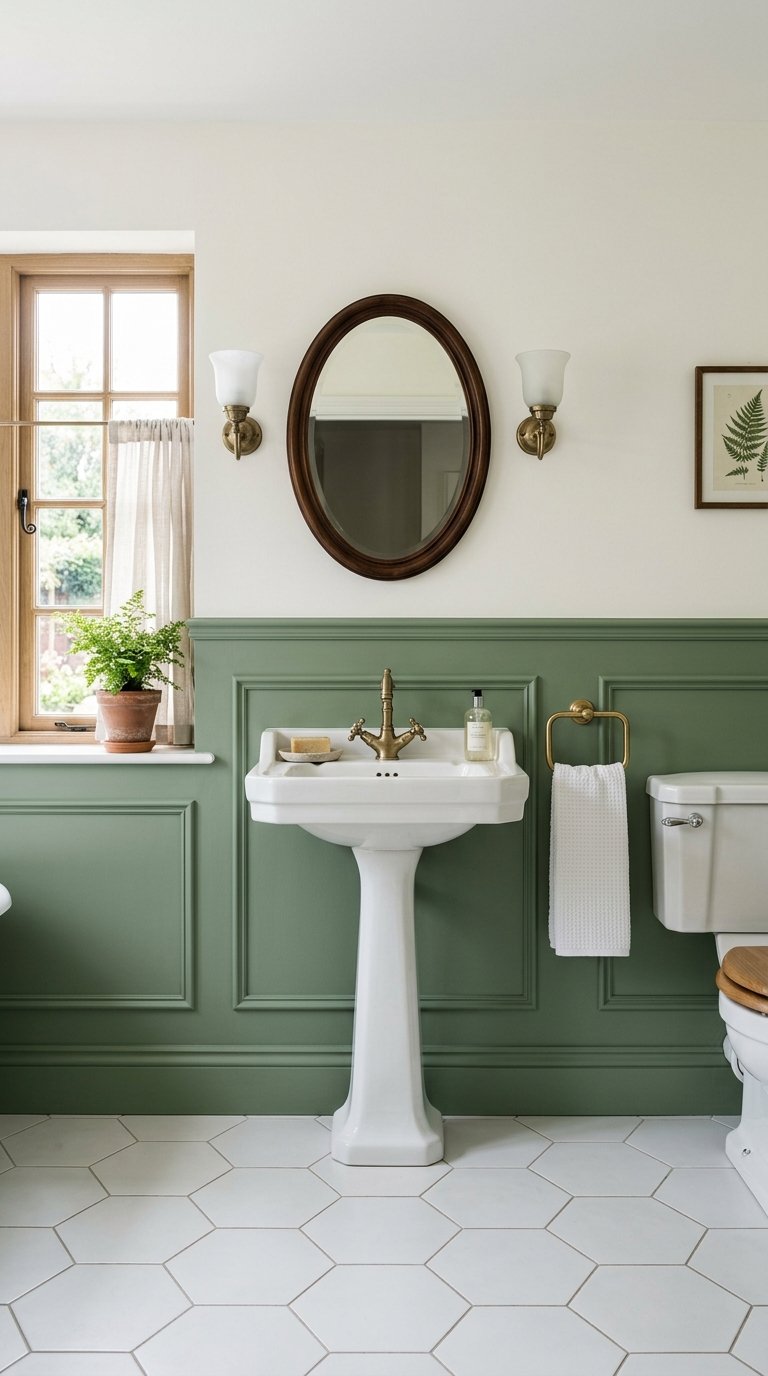
Green and white is a combination with centuries of design history behind it. It works because white provides the clarity and brightness that amplifies green’s natural quality rather than competing with it.
A green and white bathroom can read as traditional (think Victorian green and white tile), contemporary (large format sage tile with white grout), or Scandinavian (sage green walls with white furniture and white fixtures). The combination adapts to every design direction.
Green and white bathroom approaches:
- White walls with a green freestanding bath as the statement piece.
- Green lower wall with white upper wall divided by a chair rail.
- Green and white checkerboard floor with white walls and green accents.
- Full green walls with all-white fixtures for maximum contrast.
The ratio of green to white determines the room’s character. More green creates warmth and enclosure. More white creates openness and light.
9. Install Green Zellige Tile in the Shower
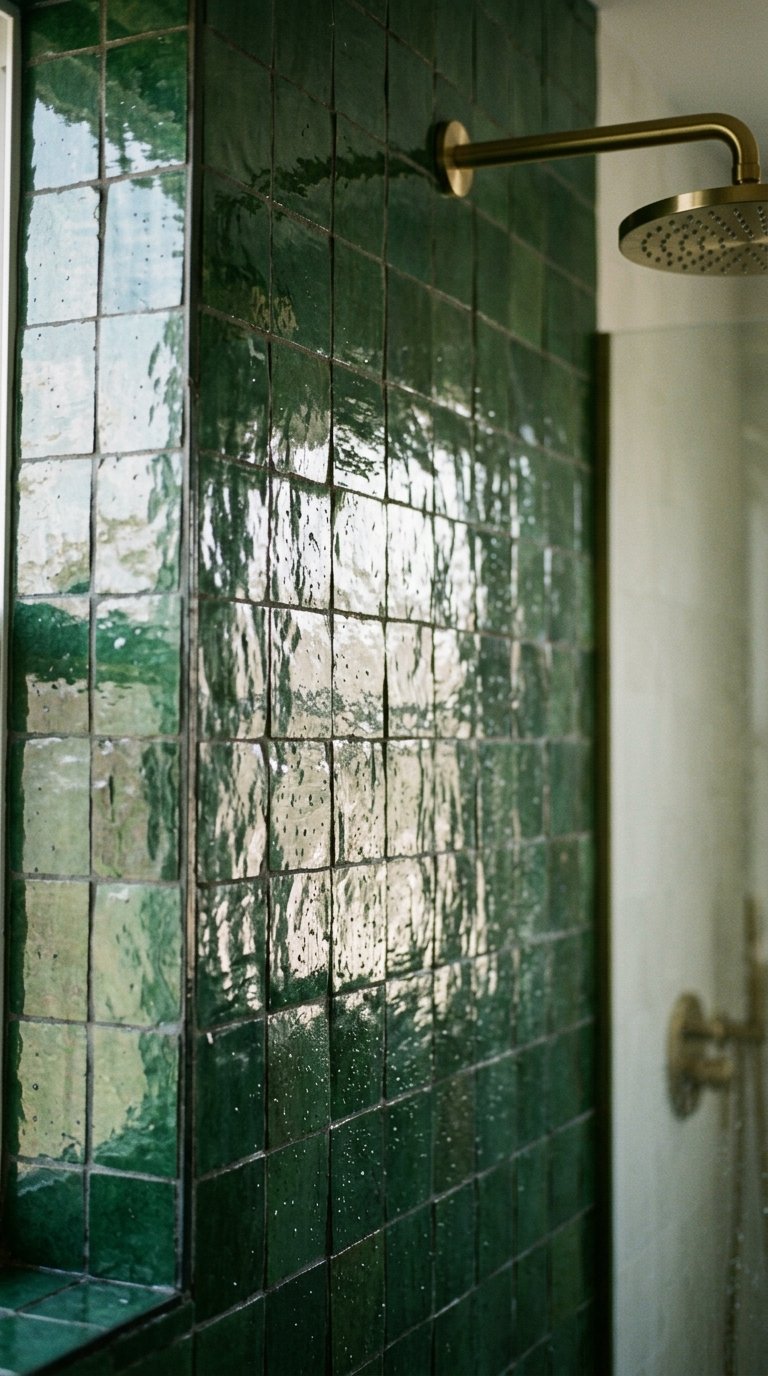
Zellige tile in green shades creates a shower wall that the rest of the bathroom cannot compete with for visual richness. Each handmade tile catches light differently, creating a surface that shifts between deep and light green tones as the light changes throughout the day.
A zellige shower wall in deep teal-green or sage green with a simple white vanity and white floor tile creates a bathroom where the shower becomes the clear architectural feature of the room.
Green zellige installation requirements:
- An experienced tiler familiar with irregular tile thickness variation.
- Unsanded grout to avoid scratching the handmade tile surface.
- Sealing before and after grouting to protect the porous surface.
- A grout color that complements the tile: warm gray or white works across most green zellige tones.
Zellige is expensive. Used on one shower wall rather than the full bathroom, the cost becomes manageable and the impact remains full.
10. Add a Green Freestanding Bath
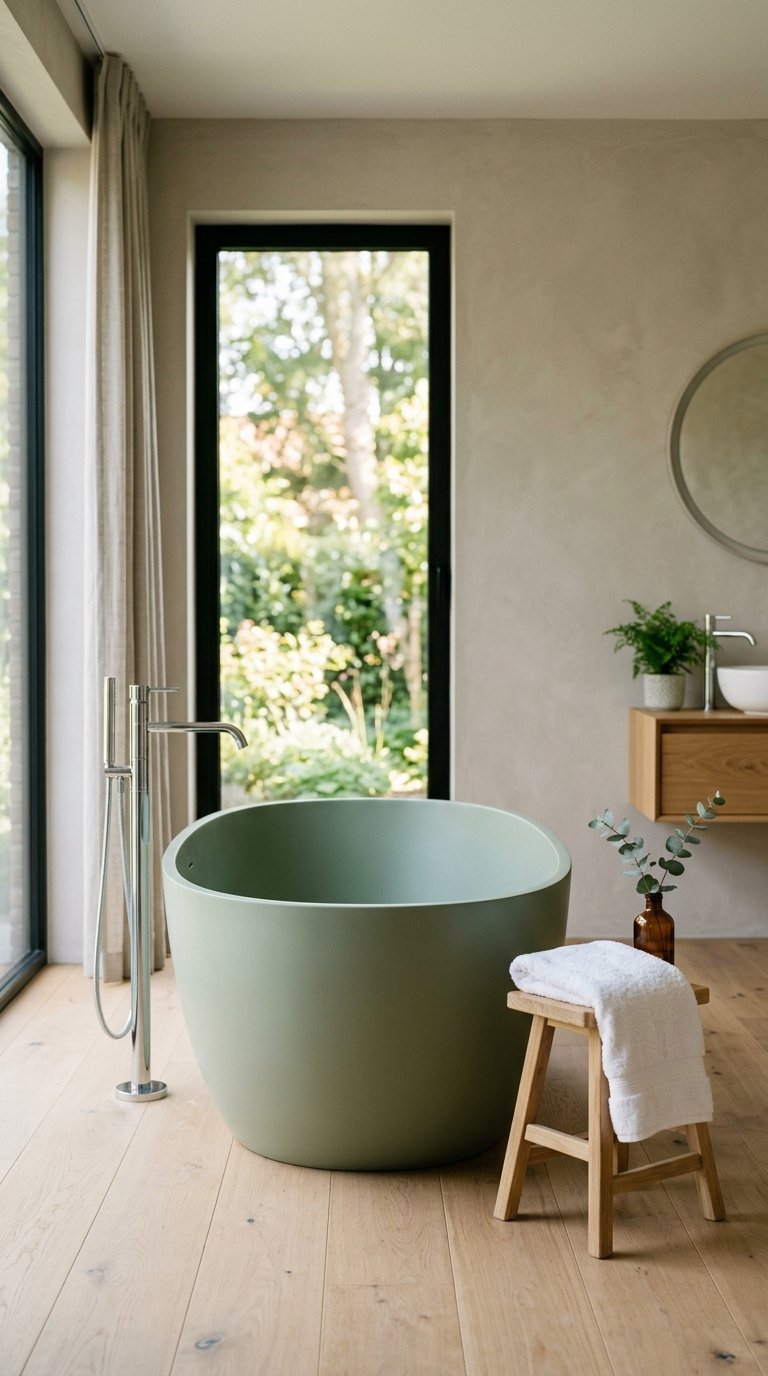
A colored freestanding bath in a neutral bathroom creates a single dramatic focal point that requires no other color commitment in the room. A sage, forest, or deep teal freestanding bath against white walls and a white or stone floor turns the bath into a sculptural statement.
Most quality bath manufacturers offer exterior color options on freestanding models. The interior of the bath typically stays white for functional reasons, but the exterior carries the color as a visual object in the room.
Green freestanding bath considerations:
- Choose a matte exterior finish rather than gloss for a more sophisticated result.
- Match the bath exterior color to at least one other element in the room: a plant, a towel, a small accessory, to prevent it reading as isolated.
- Pair with unlacquered or brushed brass freestanding taps for warmth.
- Keep the surrounding floor and walls neutral to let the bath color hold the room’s visual attention.
IMO, a sage green freestanding bath in a white bathroom is one of the most elegant single-purchase upgrades available in bathroom design.
11. Use Green Mosaic Tile on the Shower Floor
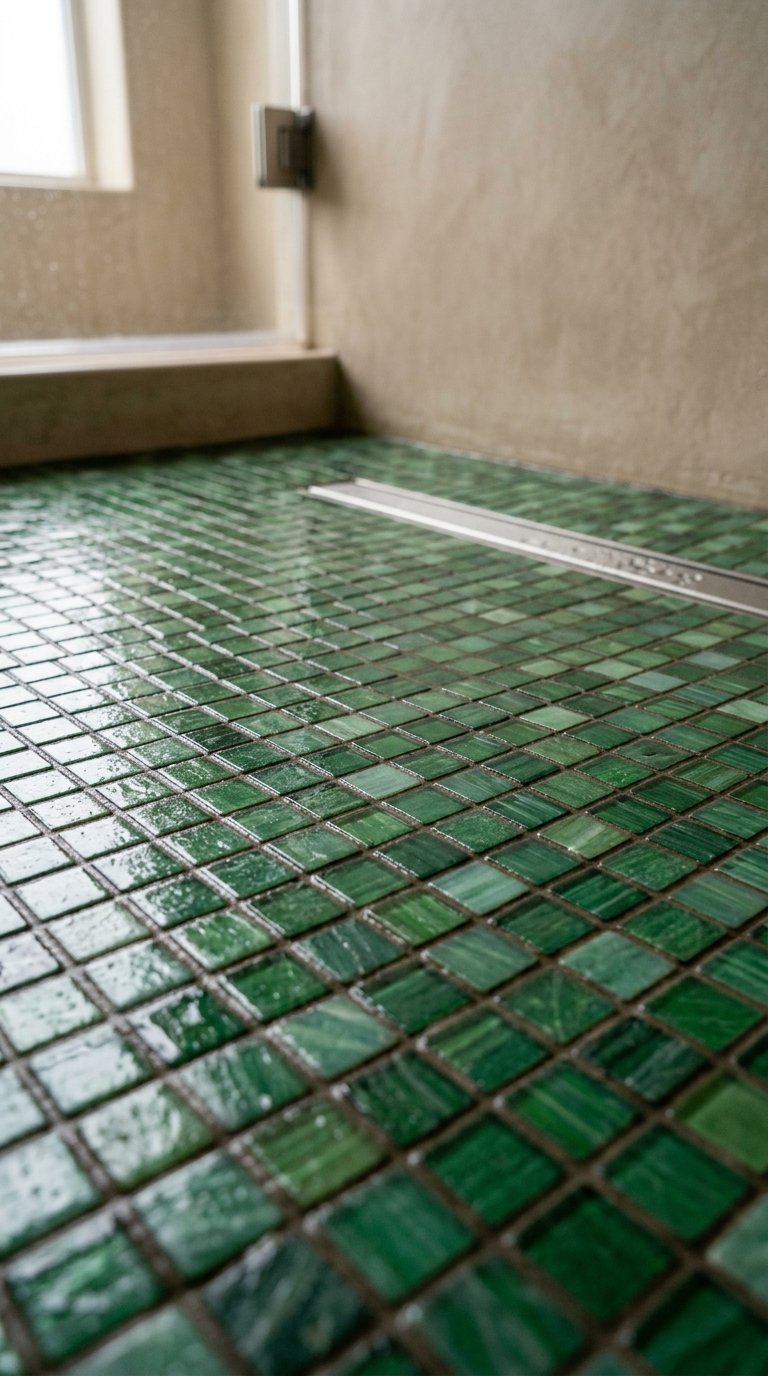
A green mosaic tile on the shower floor introduces color at foot level, where it provides texture, grip, and visual interest without dominating the eye-level surfaces of the shower.
Small green glass or ceramic mosaic tiles in a shower floor add color depth and a spa-like quality while the grout lines between the small tiles provide adequate slip resistance for a wet area.
Green mosaic tile options for shower floors:
- Small green glass mosaic: reflective, rich color, works in both natural and artificial light.
- Sage ceramic penny tile: softer, more matte, works with a wider range of shower tile styles.
- Mixed green and white mosaic: adds pattern while maintaining a lighter overall tone.
- Pebble tile in green-gray tones: organic, natural, and provides excellent grip.
Match the mosaic tile grout color to the tile’s dominant tone for a seamless color result.
12. Pair Green With Natural Wood for a Spa Aesthetic
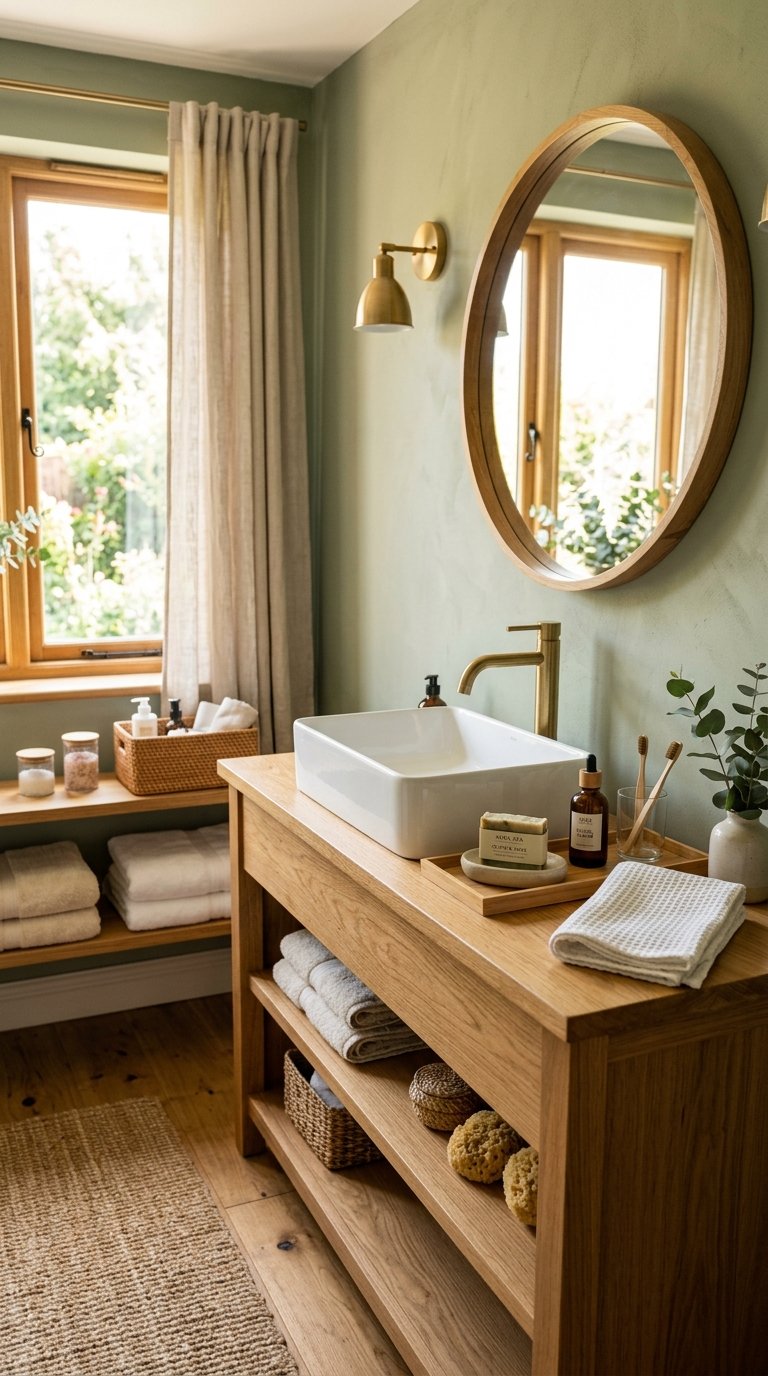
The combination of green walls or tiles with natural wood elements creates a bathroom that feels connected to the natural world in a way that mineral or manufactured materials alone cannot achieve.
A sage or forest green bathroom with a solid oak vanity, a teak shower bench, a wooden mirror frame, and wood-handled accessories creates a layered natural material palette that reads as genuinely spa-like.
Natural wood elements in a green bathroom:
- Oak vanity cabinet: warm grain that contrasts cleanly with any green tone.
- Teak shower bench: moisture-resistant and naturally suited to wet environments.
- Wooden framed mirror: adds warmth at eye level where it has maximum visual impact.
- Bamboo accessories: lighter in weight and color than oak, works with sage and olive greens.
Use one dominant wood tone throughout the bathroom. Multiple competing wood tones in a green bathroom read as accumulated rather than designed.
13. Create a Dark Green and Marble Combination
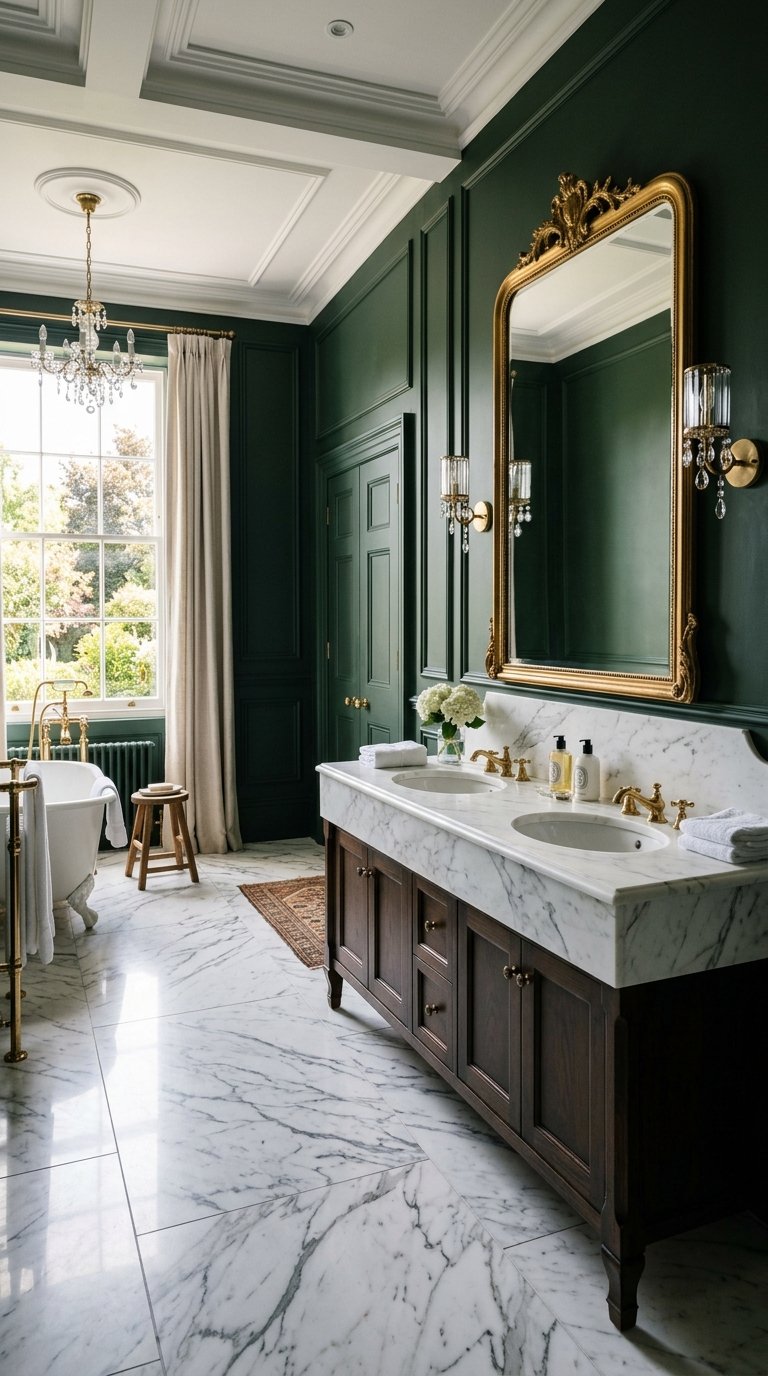
Dark green walls or tiles combined with white or gray-veined marble create one of the most luxurious bathroom combinations available at any price point. The richness of dark green against the natural movement of marble veining creates a material contrast that reads as genuinely high-end.
A forest green wall behind a white marble vanity with a white marble countertop and floor creates a bathroom that looks significantly more expensive than its actual material cost.
Dark green and marble pairings:
- Forest green walls with white Carrara marble floor and vanity top.
- Deep hunter green tile with gray-veined Calacatta marble countertop.
- Olive green walls with warm Emperador marble in dark brown and cream tones.
- Emerald tile feature wall with white honed marble on the remaining walls and floor.
Honed marble works better than polished marble in a green bathroom. Polished marble competes for visual attention; honed marble defers to the green as the room’s primary character.
14. Use Green Grout With White Tile
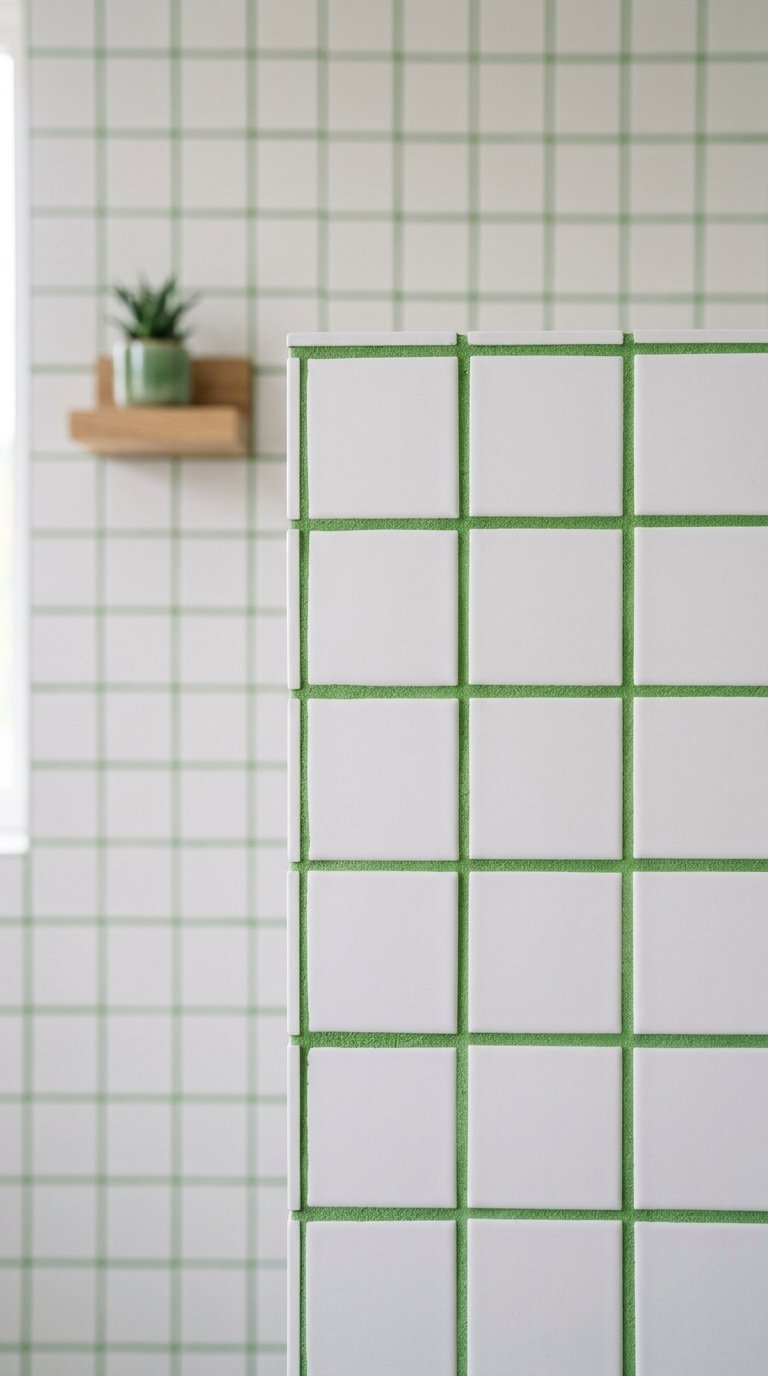
White tile with green grout creates a green bathroom effect through the grout lines rather than through the tile itself. The result is subtle on a wall and more pronounced on a floor where the grout lines create a visible pattern across the full surface.
This approach works particularly well with hexagon tiles, where the green grout traces the honeycomb pattern clearly. The effect gives you a green bathroom that reads as light and airy rather than enveloping.
Green grout with white tile combinations:
- White hexagon floor tile with sage green grout.
- White subway wall tile with forest green grout.
- White penny tile floor with deep olive green grout.
- White large format floor tile with muted sage grout for a subtle effect.
Test the grout color in a small patch before committing. Grout color shifts between wet and dry states and between different lighting conditions.
15. Install a Green Vanity With Gold Hardware
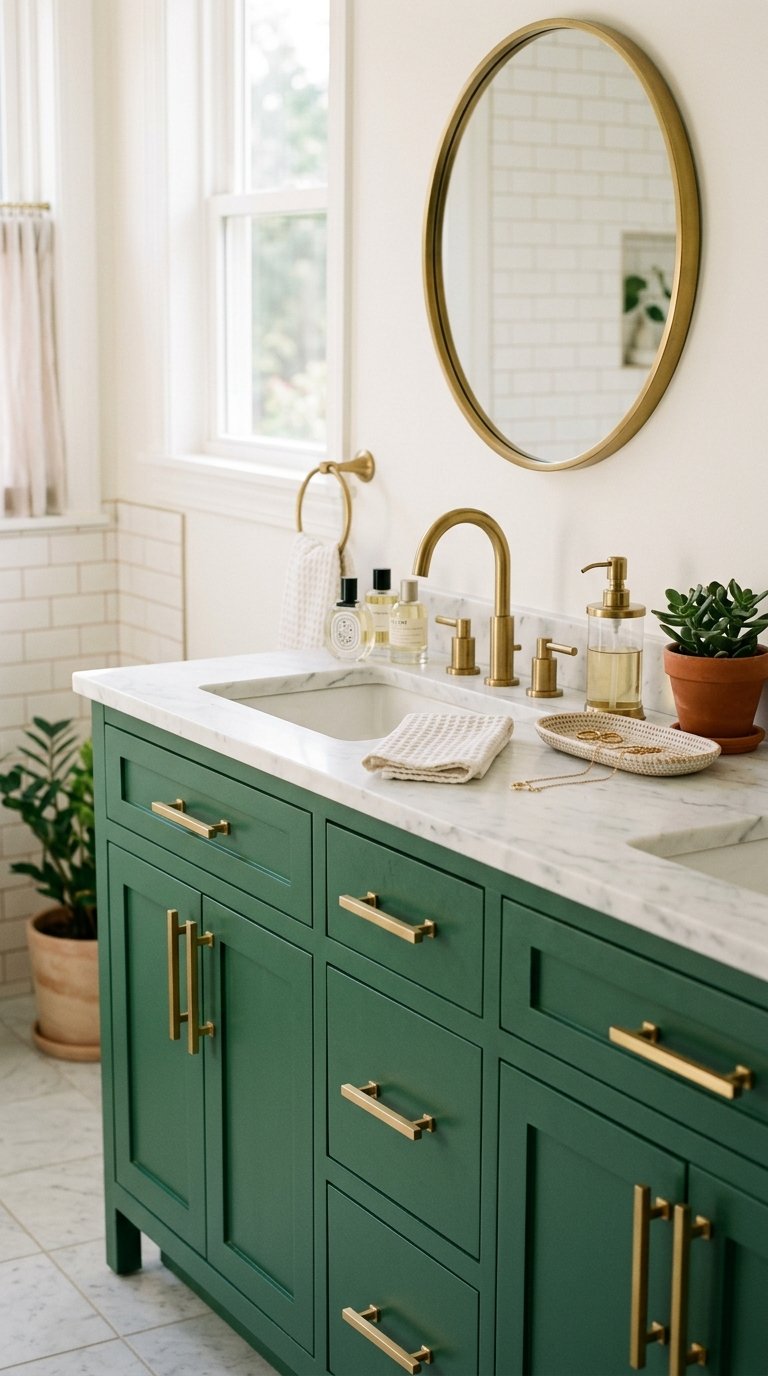
A green painted vanity cabinet with gold or brass hardware is one of the most popular bathroom upgrades for good reason. It delivers a high-impact color and material combination at the cost of paint and hardware replacement only.
The hardware finish is critical. Gold or brass hardware against green creates warmth and luxury. Chrome hardware against green reads as colder and more clinical. Matte black hardware against green works in a more contemporary, graphic direction.
Green vanity and hardware combinations:
- Sage green vanity + brushed brass pulls + white marble top.
- Forest green vanity + antique brass knobs + dark stone countertop.
- Olive green vanity + unlacquered brass pulls + warm wood countertop.
- Deep teal vanity + polished gold hardware + white quartz countertop.
Replace all hardware at once. Mixing old and new hardware on the same vanity looks inconsistent.
16. Add Green Towels and Textiles for a No-Commitment Approach
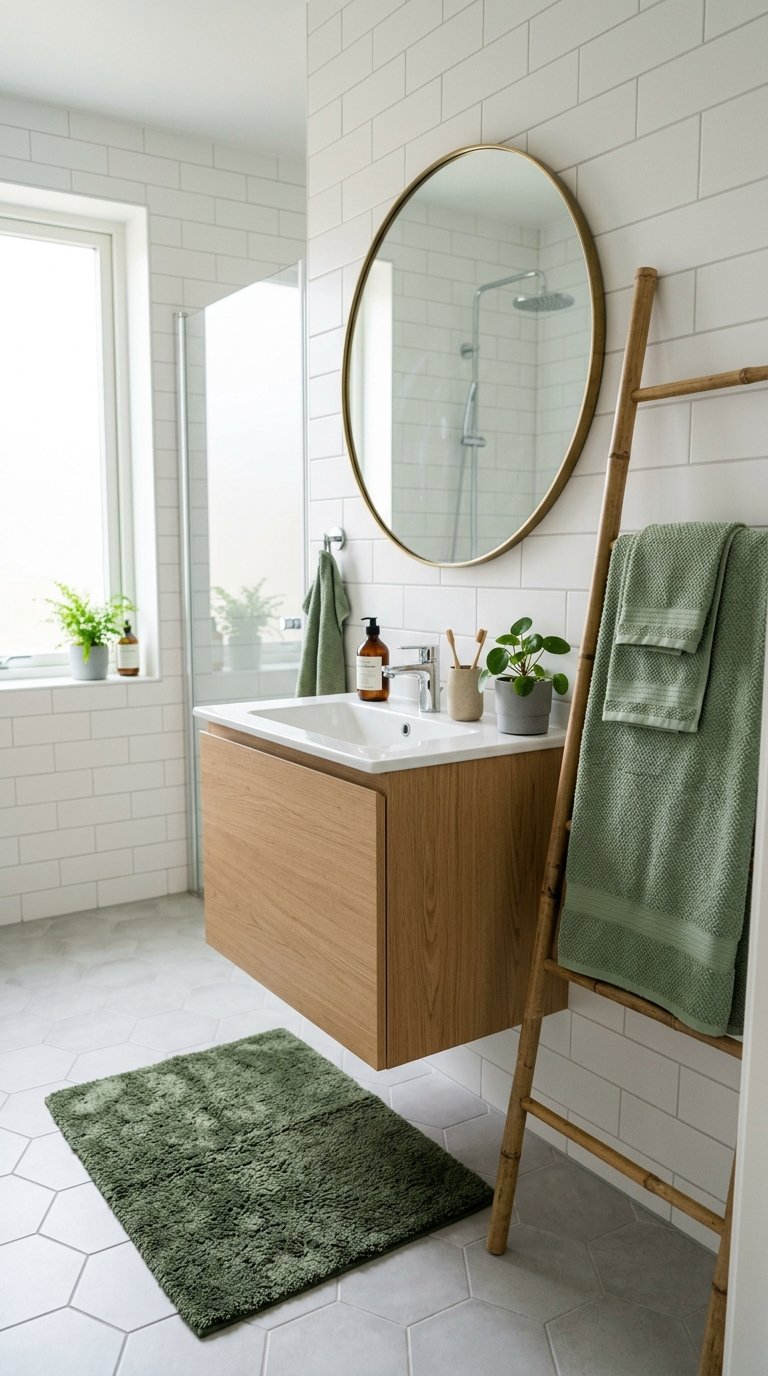
Before committing to green paint or tile, test green in the bathroom through textiles. A set of sage or forest green towels, a green bath mat, and a green shower curtain introduce the color at near-zero commitment and zero construction cost.
If the green textiles feel right in the space, they confirm that a deeper green investment in tile or paint will work. If they feel wrong, you’ve spent $80 rather than $8,000 to discover that.
Green textile testing approach:
- Buy one set of towels in your target green tone first.
- Add a bath mat in the same or complementary green tone.
- Hang the towels and mat for two weeks in different lighting conditions before deciding.
- If the green feels right after two weeks of daily exposure, commit to a more permanent green addition.
This sounds obvious. Most people skip it and go straight to paint. Don’t skip it.
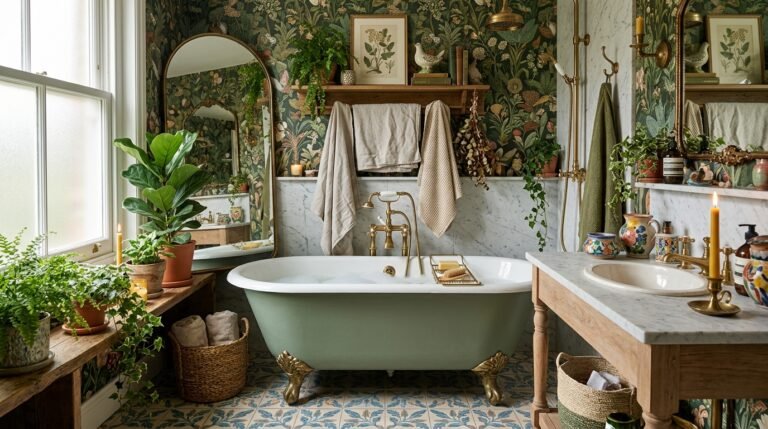
17. Use Bottle Green for a Vintage-Inspired Bathroom
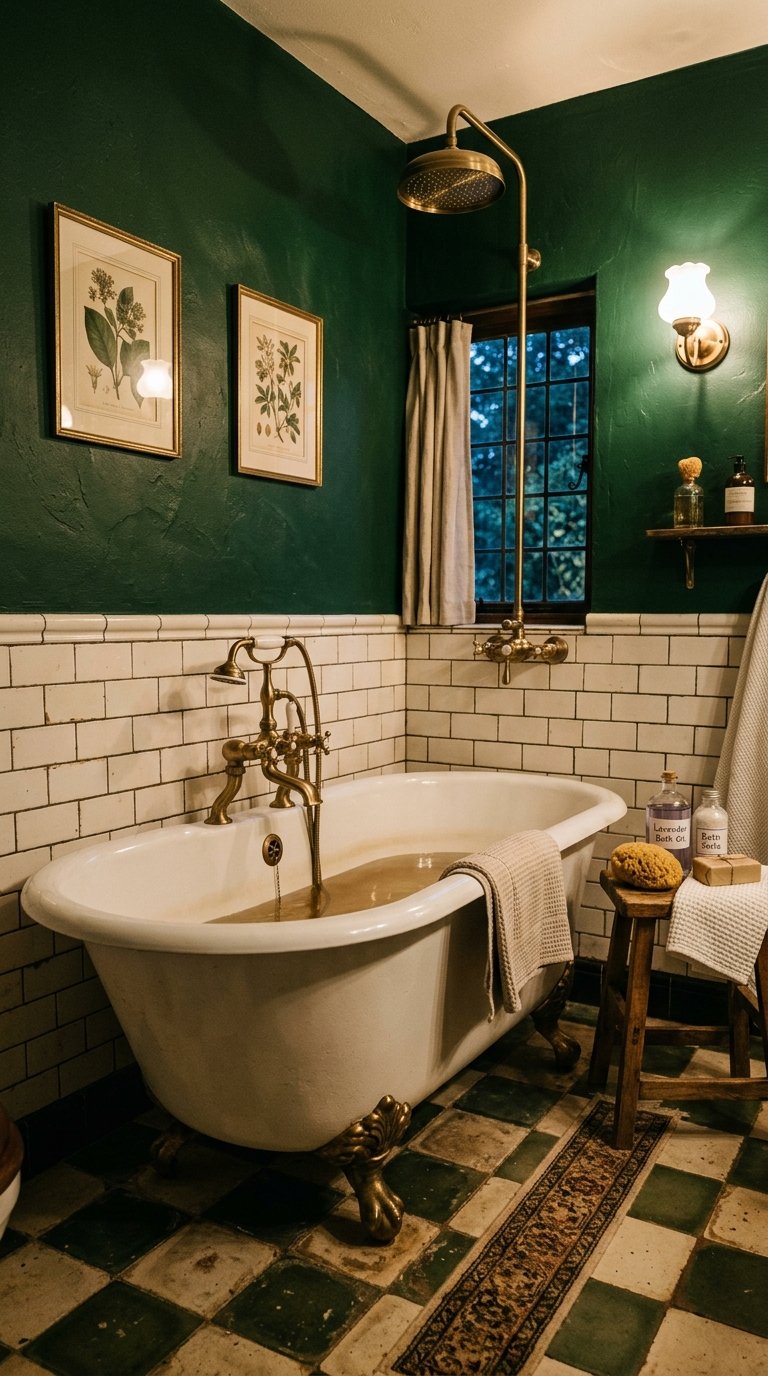
Bottle green, a deep, slightly blue-tinged dark green, creates a bathroom with a strong vintage or Victorian character. Combined with white metro tile, black hardware, and period-inspired fixtures, bottle green produces a bathroom that feels deliberately historical without being a pastiche.
The key is matching the associated elements to the era the color references. Bottle green with chrome fixtures and modern sanitaryware looks mismatched. Bottle green with aged brass, metro tile, and a roll-top bath looks entirely coherent.
Period-appropriate elements for a bottle green bathroom:
- White beveled metro tile on walls.
- A roll-top or claw-foot freestanding bath.
- Aged brass or antique brass taps and fittings.
- Black and white hexagon floor tile.
- A pedestal sink with exposed chrome plumbing.
This is a complete aesthetic direction, not just a color choice. Commit to the era or the bottle green reads as disconnected from everything around it.
18. Create a Green Accent Wall Behind the Vanity
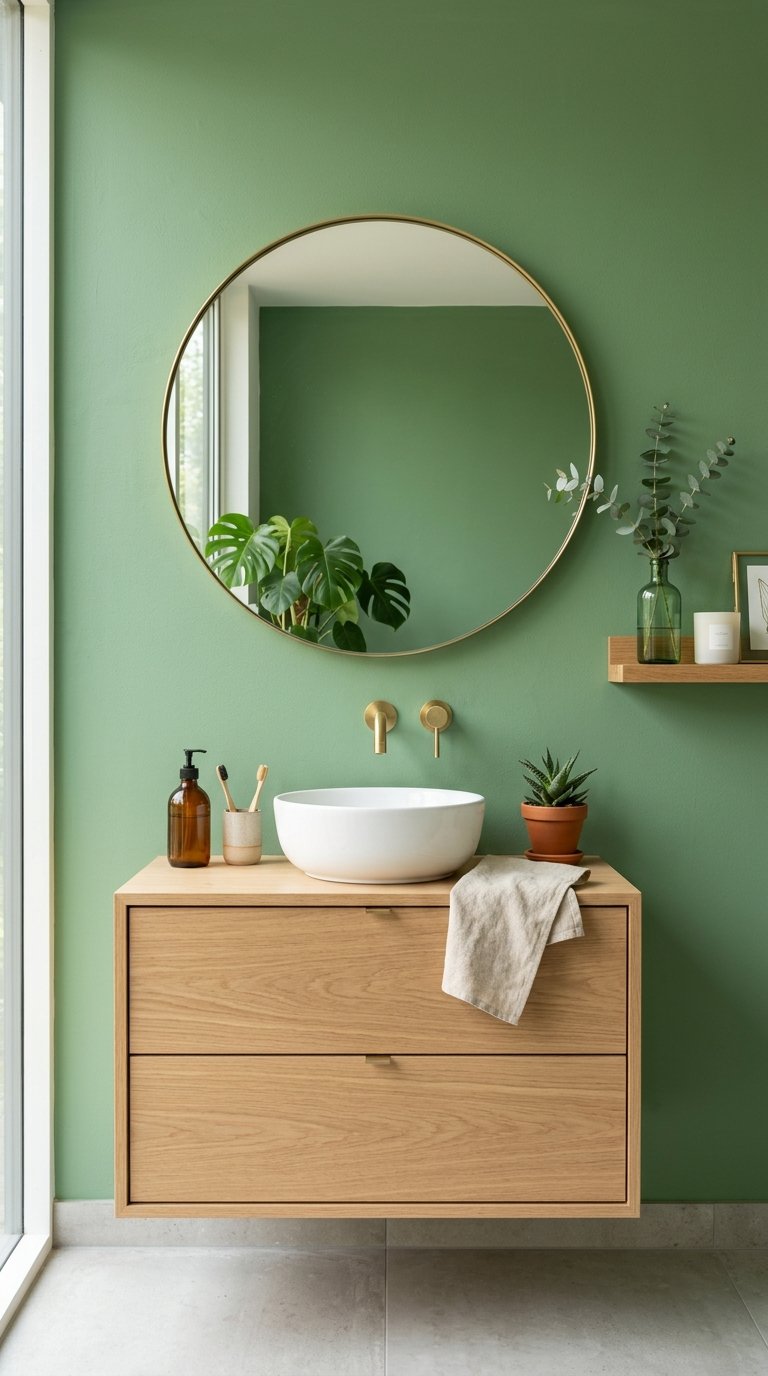
A single green accent wall behind the vanity mirror creates focused color impact without painting every surface. The vanity wall receives the most visual attention in any bathroom because it reflects in the mirror and doubles its visual presence.
A painted green accent wall behind the vanity, combined with white walls on the remaining three sides, gives the bathroom a clear color zone without the full commitment of a green room.
Accent wall green application options:
- Paint in a flat or eggshell finish for a matte, soft result.
- Apply green wallpaper for pattern and texture alongside color.
- Use green tile as the vanity backsplash and run it from counter to ceiling.
- Apply limewash in a muted green for an organic, textured effect.
The mirror above the vanity reflects the green wall back into the room, amplifying the color impact beyond the single wall surface. A large mirror on a green accent wall doubles the visual presence of the color.
19. Use Muted Green for a Calm, Spa-Inspired Bathroom
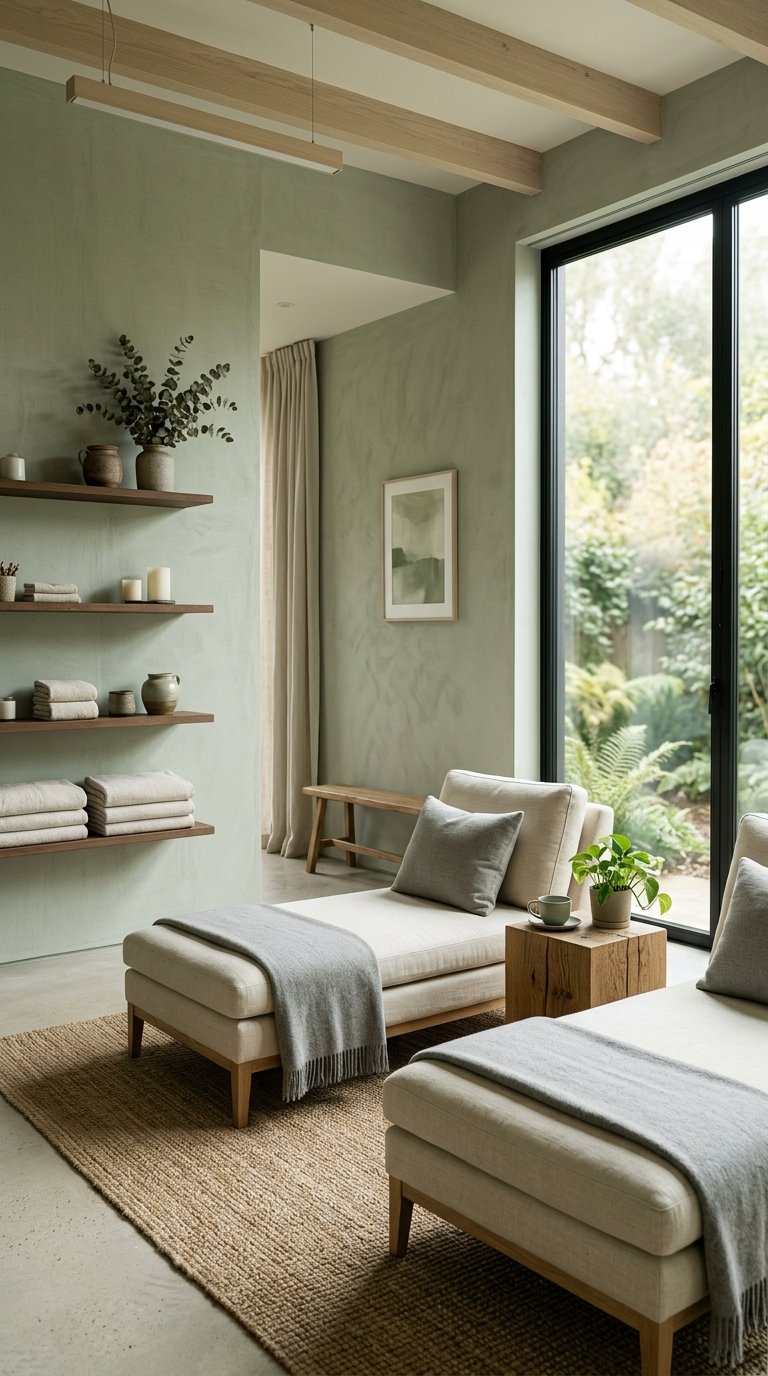
Muted greens, those desaturated, gray-adjacent tones that sit between green and gray, create the calmest, most spa-like bathroom atmosphere of any green shade. They don’t demand attention. They provide a quiet, restorative backdrop that makes everything in the bathroom feel deliberately unhurried.
Farrow and Ball Mizzle, Sulking Room Pink (which reads as a muted green-gray in certain lights), and Pigeon all sit in this muted green territory. They work best in bathrooms with good natural light where the complexity of the muted tone reads fully.
Muted green bathroom elements:
- Warm white fixtures for a clean contrast.
- Natural stone in warm gray or cream tones for material depth.
- Brushed brass or aged brass for warmth against the cool-muted green.
- Soft linen textiles in warm white or cream.
- One or two plants to reference the green’s organic origin.
Muted greens require quality paint and quality lighting to perform. A cheap paint in a muted tone looks muddy rather than complex. Invest in the paint.
20. Combine Green With Black for a Bold Contemporary Bathroom
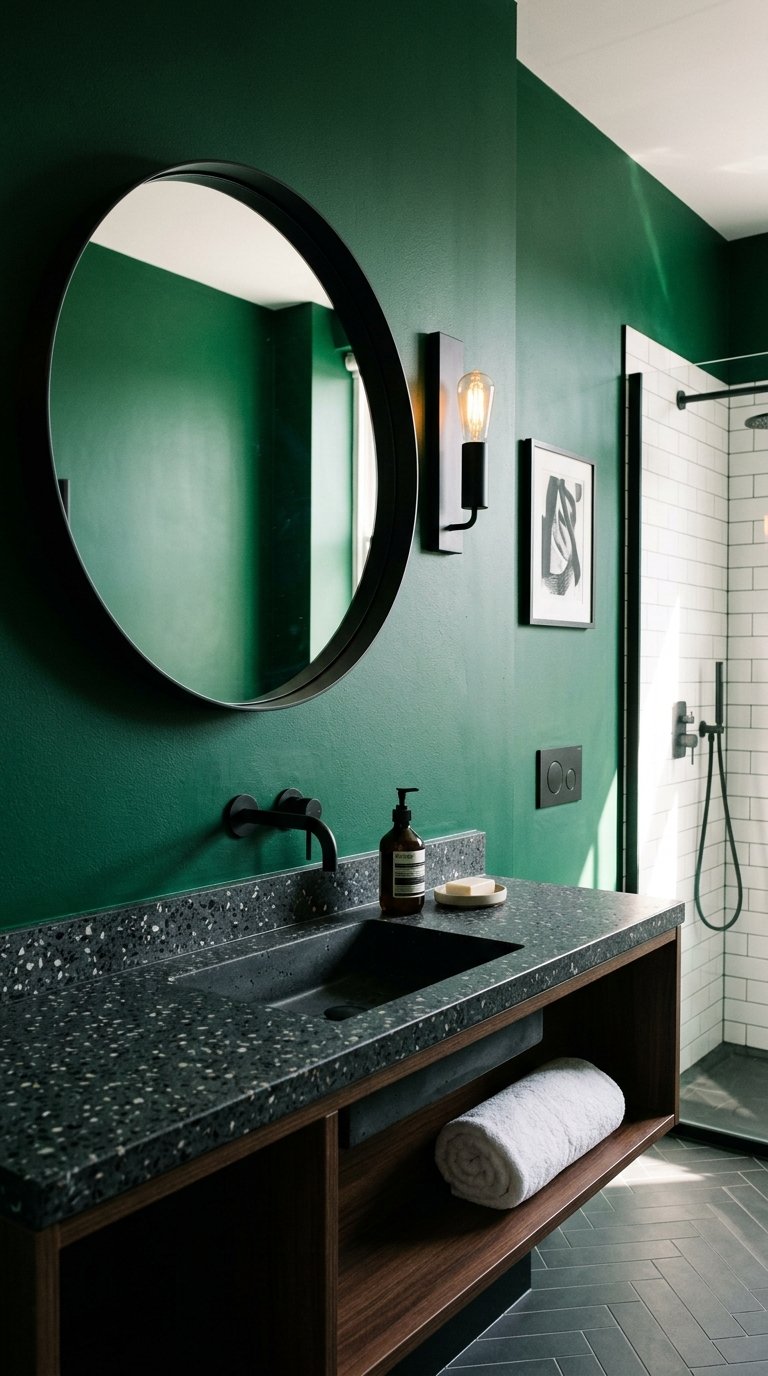
Green and black is a high-contrast, bold combination that suits contemporary, industrial, and eclectic bathroom styles. The black anchors the green and prevents it from reading as soft or botanical when the design direction calls for something more assertive.
A sage green wall with matte black fixtures, a black frame mirror, black hardware, and black-framed shower glass creates a bathroom with graphic confidence. A forest green tile with black grout and matte black fixtures pushes the same combination into darker, more dramatic territory.
Green and black bathroom combinations:
- Sage green walls + matte black fixtures + black frame mirror.
- Forest green tile + black grout + matte black hardware.
- Olive green vanity + matte black pulls + black stone countertop.
- Emerald tile feature wall + matte black shower hardware + black framed glass.
Keep other materials neutral when using green and black together. Adding warm wood or brass into a green and black bathroom softens the contrast and reduces the graphic impact. 🙂
21. Apply Green Limewash Paint for Texture and Depth
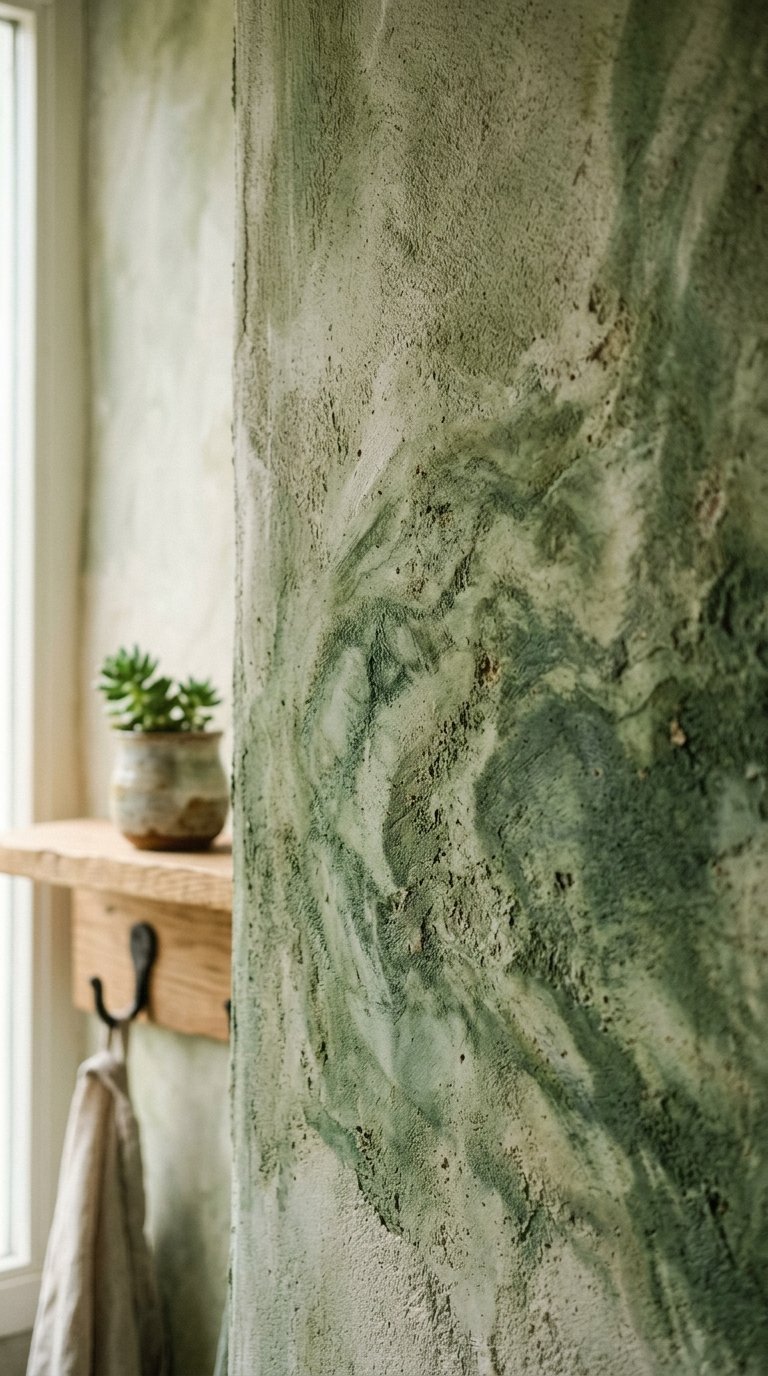
Limewash paint in a muted or sage green creates a bathroom wall surface with organic depth that flat paint cannot replicate. The layered application technique produces areas of slightly darker and lighter green across the same wall, making the surface look alive and complex.
Green limewash has a particular quality in bathrooms because the slight variation in tone mimics the organic color variation of natural stone and plant material. The wall feels like it belongs in nature rather than in a paint tin.
Green limewash application tips:
- Apply in thin, irregular layers with a large brush.
- Vary pressure and direction between coats for the most authentic result.
- Let each coat dry fully before applying the next.
- The final result looks more complex than a sample board suggests; trust the process.
Limewash in green tones works best with warm natural light and warm artificial light. Cool or blue-tinted light flattens the tonal variation that makes limewash interesting.
22. Use Green and Terracotta as a Complementary Palette
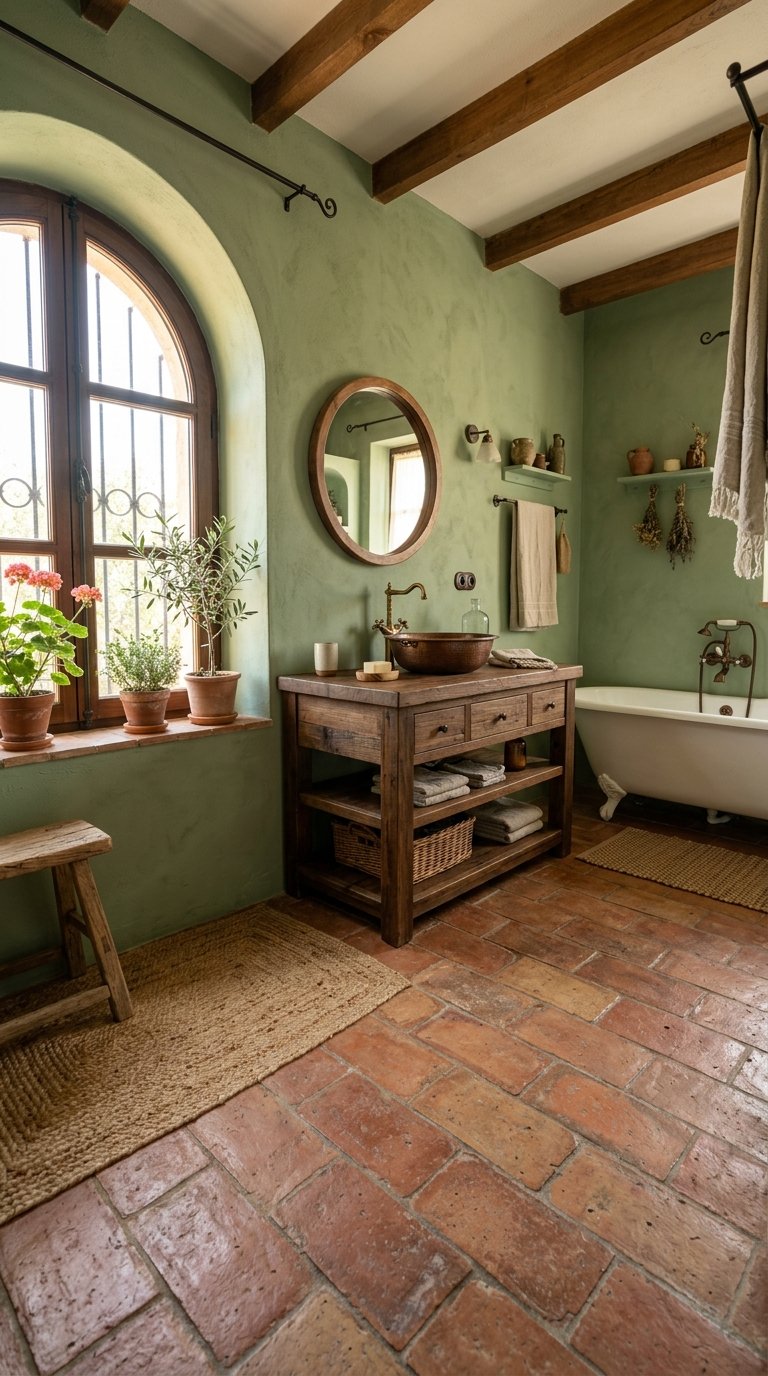
Green and terracotta sit opposite each other on the color wheel, which makes them complementary in the technical sense. They also carry strong associations with the natural world: plant and earth, leaf and clay. The combination feels grounded and organic.
A sage or olive green bathroom with terracotta floor tiles, a warm wood vanity, and unlacquered brass fixtures creates a bathroom with a Mediterranean, earthy warmth that few other color combinations deliver.
Green and terracotta bathroom elements:
- Terracotta floor tiles in a warm reddish-orange tone.
- Sage or olive green walls or vanity.
- Warm oak or walnut wood accents.
- Unlacquered or aged brass fixtures for additional warmth.
- Linen or cotton textiles in warm cream and natural tones.
The terracotta floor grounds the green above it and prevents the green from reading as cool or clinical. The warmth travels from floor to wall and makes the whole room feel cohesive.
23. Edit the Green Elements You Use
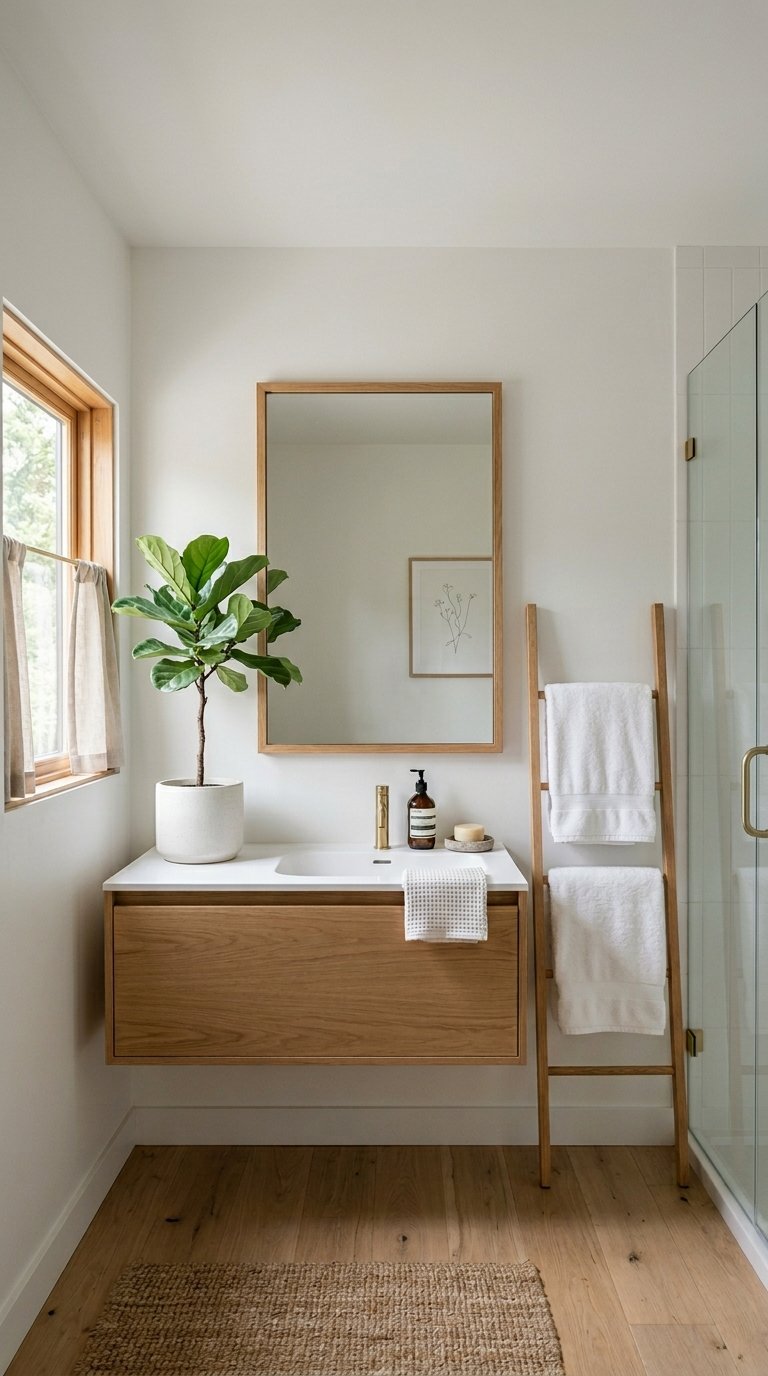
The final green bathroom idea is about restraint. Too much green in a bathroom, especially a small one, stops reading as a design decision and starts reading as an overwhelming single-color space.
Know when you’ve added enough green. A sage green wall, a green plant, and green towels provide ample color for a small bathroom. Adding a green vanity, green tile, and a green bath on top of that tips the room into saturation.
Green bathroom editing guidelines:
- Choose one primary green application: walls, vanity, tile, or bath.
- Support it with one secondary green element: textiles or plants.
- Keep everything else neutral: white, natural wood, stone, brass.
- If you feel the urge to add more green, wait two weeks. If it still feels necessary after two weeks of living with the room, add it.
A green bathroom with the right amount of green looks designed. The same bathroom with too much green looks like a statement that got away from itself. Edit before you add.
Final Thoughts
Green is one of the most versatile and rewarding colors in bathroom design. The range from sage to forest to olive to emerald covers a spectrum wide enough to suit almost every bathroom size, light condition, and design direction.
Start with shade selection and get that right before anything else. Sage for versatility and calm. Forest for boldness and drama. Olive for warmth and earthiness. Emerald for impact and luxury.
Then pair your green with materials that bring out its best quality: brass for warmth, marble for luxury, wood for natural grounding, white for clarity. The green does the color work. The materials do the character work.
A green bathroom built on the right shade with the right material pairings will look better in ten years than it does today. That’s the standard worth building toward.