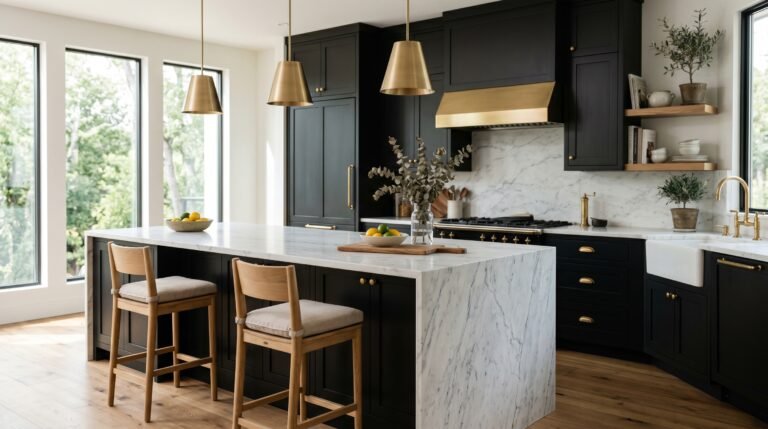
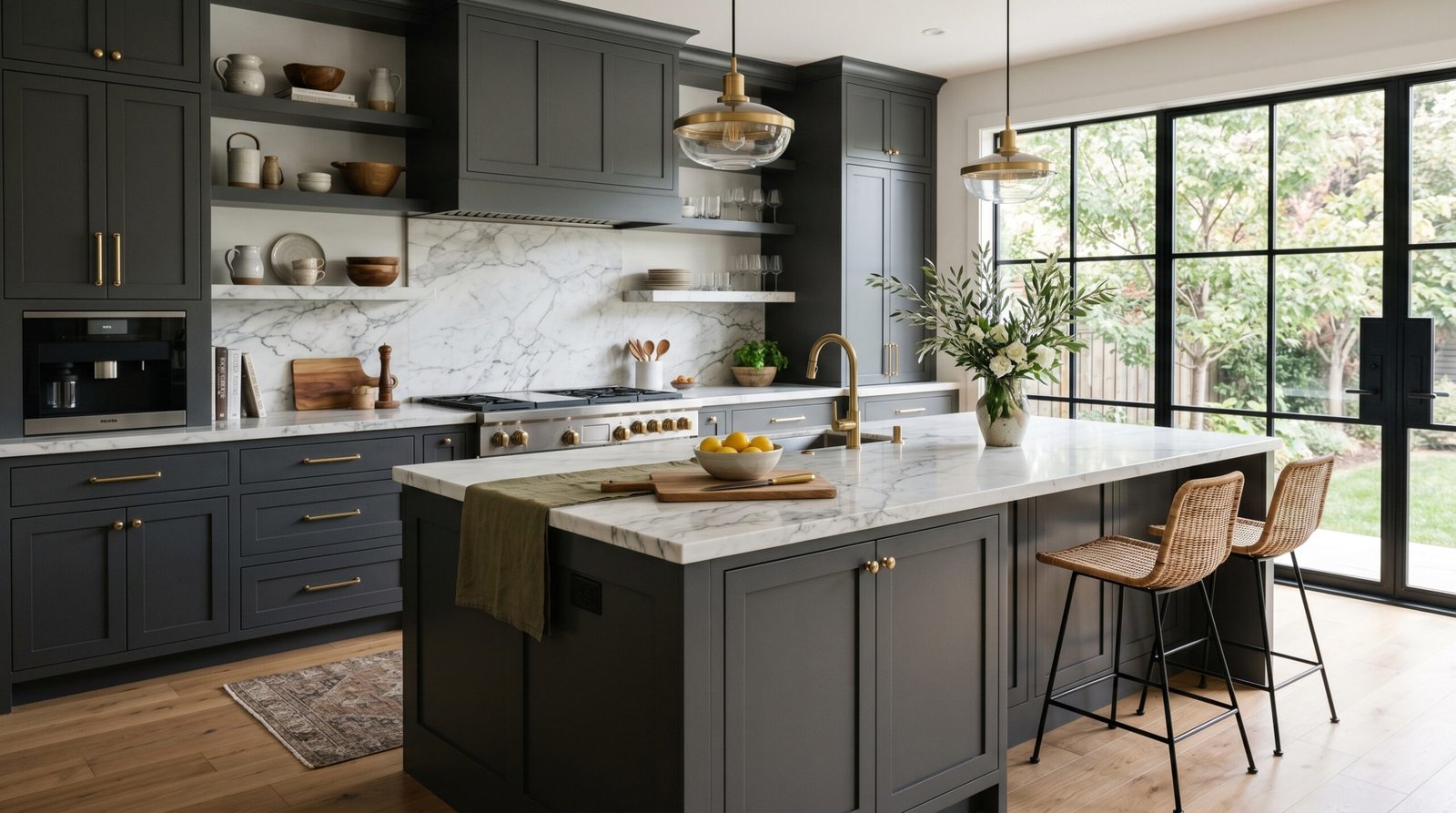
23 Charcoal Gray Kitchen Cabinet Ideas for Timeless Style
White kitchen cabinets peaked. Then they peaked again. Then everyone got them and realized that white cabinets in a working kitchen require a level of maintenance commitment that most households simply don’t sustain past the first month.
Charcoal gray kitchen cabinets solve that problem while delivering something white cabinets never quite manage: depth, drama, and a visual sophistication that makes the kitchen feel like a room someone actually designed rather than a room someone selected from the first page of the contractor’s catalog.
These 23 charcoal gray kitchen cabinet ideas cover color combinations, hardware choices, countertop pairings, and full kitchen design directions. Whether you’re planning a full renovation or just repainting existing cabinets, these ideas give you a clear picture of what charcoal gray cabinets actually accomplish in a real kitchen.
1. Pair Charcoal Cabinets With White Marble Countertops
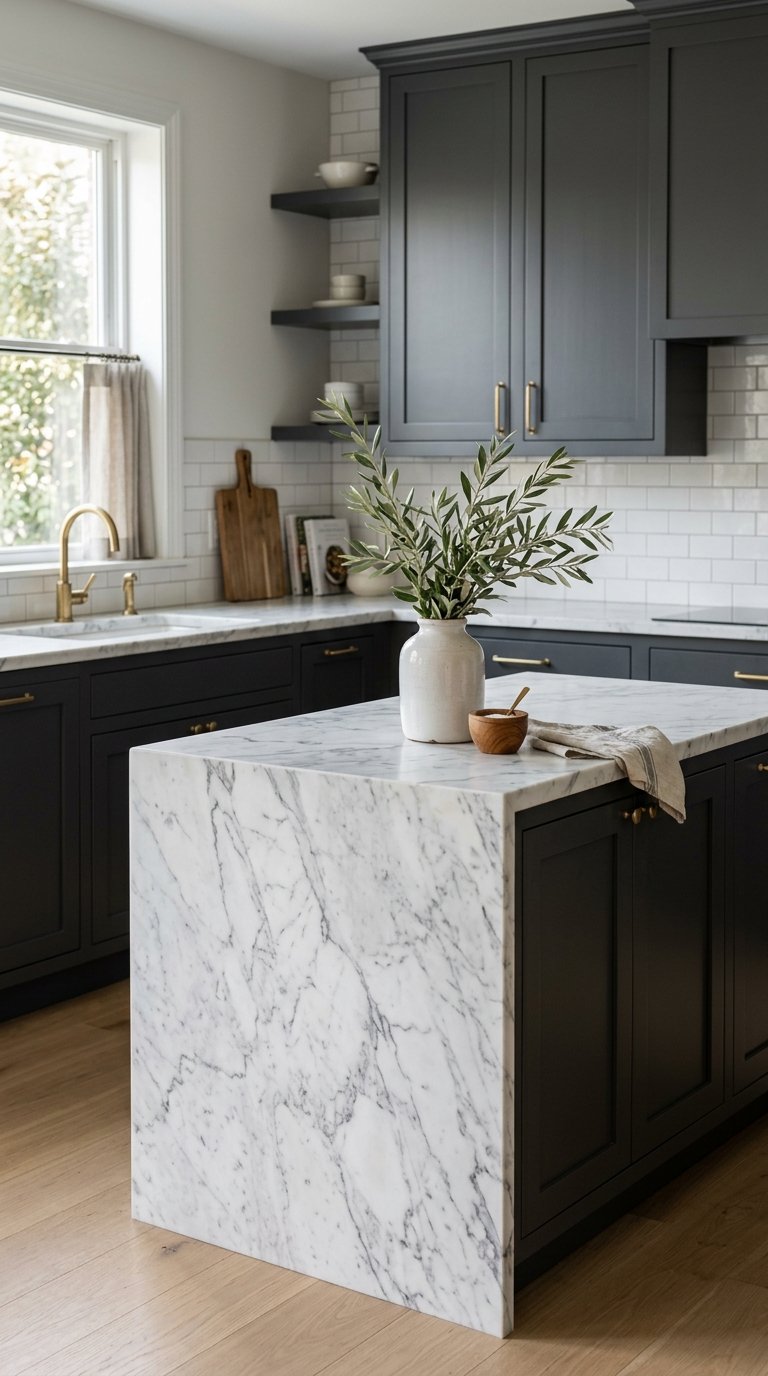
Charcoal gray cabinets with white marble countertops is the kitchen combination that appears on every design mood board for a reason. The dark cabinets make the white marble look brighter. The marble veining adds movement to a potentially heavy cabinet color.
What makes this combination work:
- The contrast is dramatic but not harsh. Charcoal is softer than black, which means the shift from dark cabinets to white countertops reads as elegant rather than stark.
- Grey veining in the marble connects to the charcoal cabinet color, creating a visual thread between surfaces
- White subway tile backsplash completes the trio most effectively at a lower cost than continuing the marble up the wall
Choose marble with warm grey veining rather than cool blue-grey veining for the most cohesive result with charcoal cabinets. Carrara marble sits in the warm grey range. Calacatta marble runs cooler and bluer, which creates a slightly less unified look.
2. Try Charcoal Lowers With White Upper Cabinets
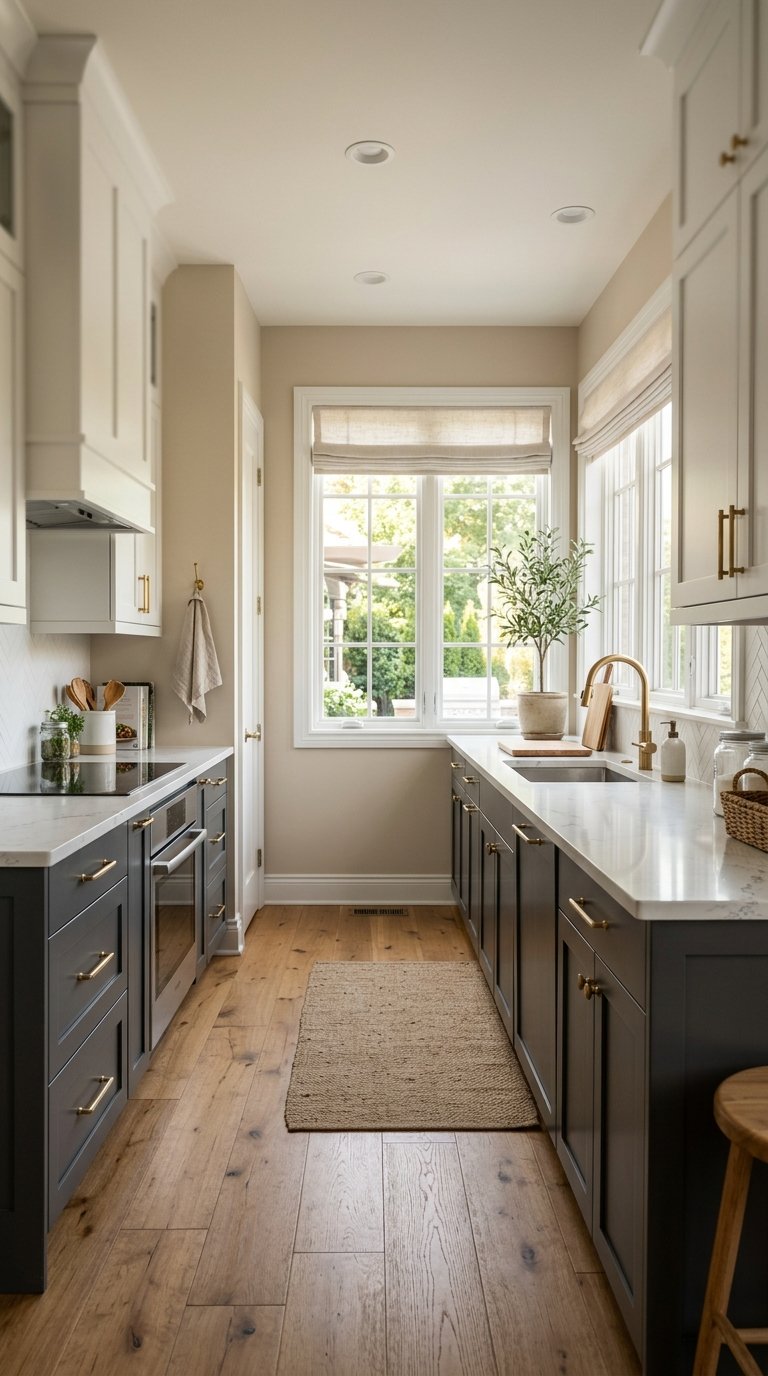
Two-tone kitchen cabinets with charcoal gray on the lower cabinets and white on the uppers create visual balance that all-charcoal kitchens sometimes lack. The white uppers keep the room feeling bright. The charcoal lowers add grounding weight at eye level.
Why this combination works practically:
- The lower cabinets hide wear better than white lowers in a heavily used kitchen
- The white uppers reflect light back into the room, preventing the charcoal from making the kitchen feel dark
- The transition line between the two colors at counter height or mid-wall creates a natural visual division
Use the same hardware finish on both cabinet colors. Mismatched hardware between upper and lower cabinets looks like two different kitchens sharing a room. Brushed brass or matte black hardware works equally well on both white and charcoal cabinet faces.
3. Combine Charcoal Cabinets With Butcher Block Countertops
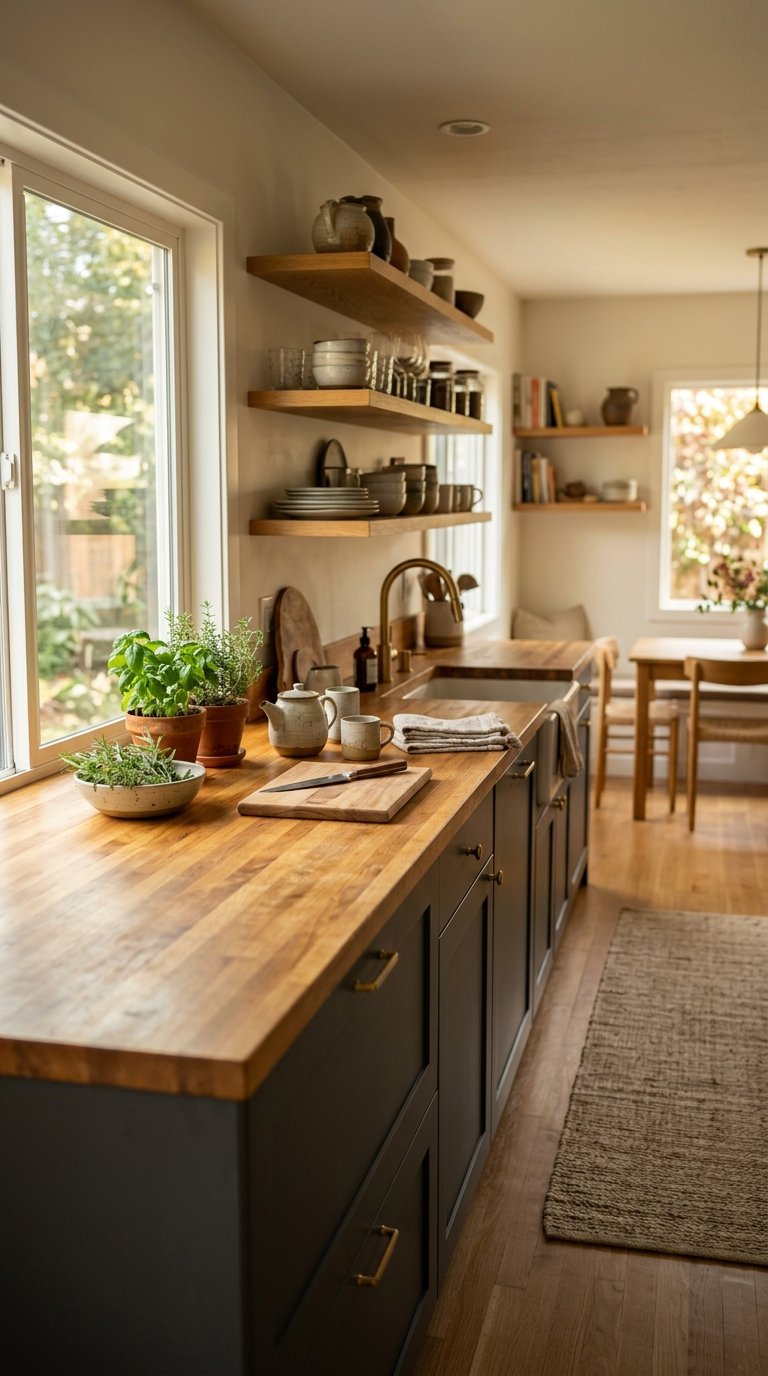
Charcoal gray cabinets with butcher block countertops create a warm, unexpected combination that avoids the cool, slightly clinical feeling that charcoal cabinets with stone countertops sometimes produce.
The warmth works because:
- Wood is the natural opposite of a dark, cool-toned cabinet color. The contrast is dramatic without being harsh.
- Butcher block reads as homey and practical rather than precious, which balances the sophistication of charcoal cabinets
- Maintenance is honest. Butcher block develops character over time rather than showing damage. Scratches become patina.
Seal butcher block properly and reseal annually in kitchen environments. Unsealed wood countertops in a cooking kitchen develop water staining and warping at the sink area within months. The maintenance requirement is real but manageable.
4. Use Brass Hardware for Warmth
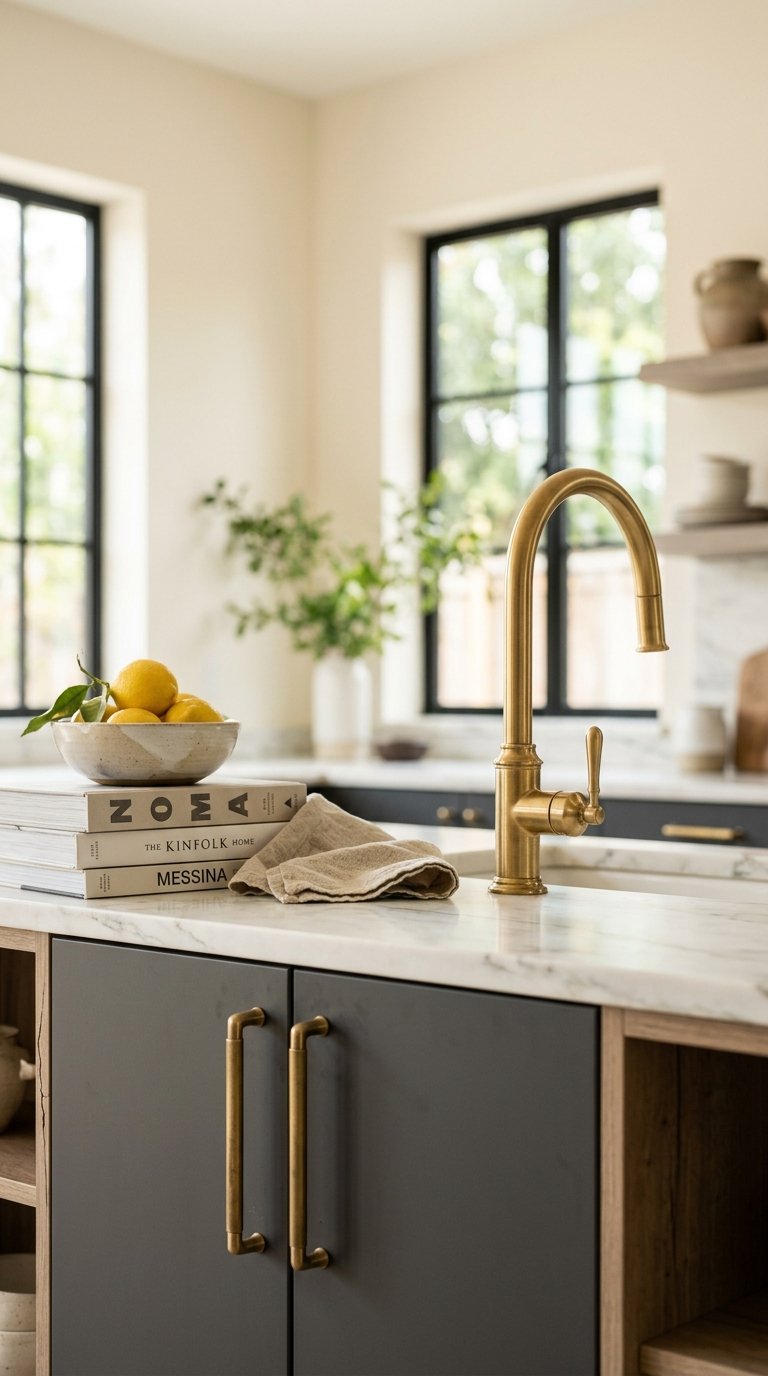
Charcoal gray cabinets with brass hardware is one of the most consistently successful material combinations in contemporary kitchen design. The warm gold of brass against the cool depth of charcoal creates a contrast that reads as sophisticated and considered.
Brass hardware options for charcoal cabinets:
- Brushed brass: Matte warm gold, most current option, shows fingerprints less than polished
- Polished brass: High shine, more traditional, creates a stronger contrast with matte cabinets
- Unlacquered brass: Develops a natural patina over time, very distinctive and personal
- Antique brass: Darker warm gold with age character, more traditional aesthetic
FYI, brushed brass hardware on flat-panel charcoal cabinets is the combination that appears most frequently in high-end kitchen design publications right now, and for good reason. It delivers maximum impact at relatively modest hardware cost.
5. Install Charcoal Cabinets With Concrete Countertops
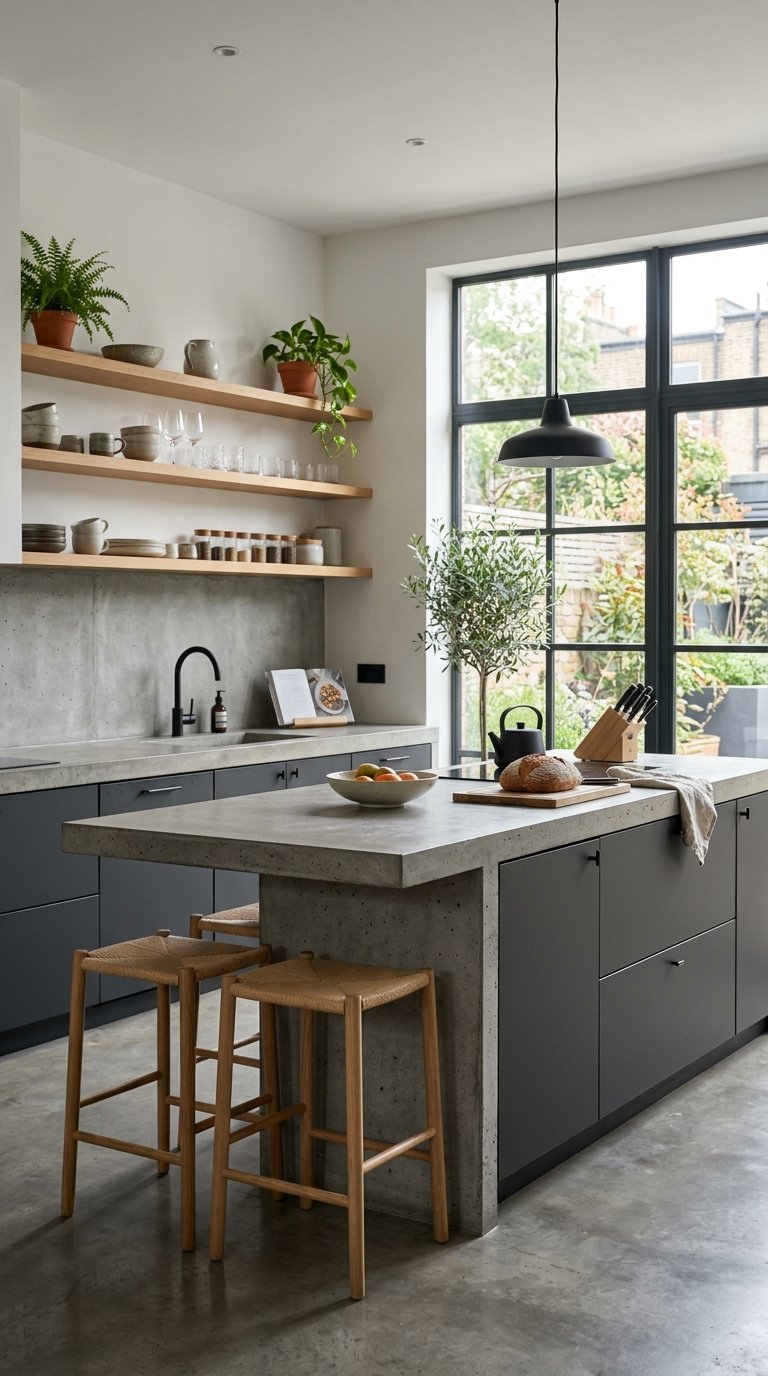
Charcoal gray cabinets with concrete countertops create a kitchen with consistent industrial character throughout. Both materials sit in the same cool-toned, raw material family, which means they work together rather than competing.
Concrete countertop realities:
- Sealing is mandatory: Unsealed concrete in a kitchen environment stains within weeks
- Weight: Concrete countertops are heavy and require structural support
- Cost: $65 to $135 per square foot installed, comparable to mid-range stone
- Repairs: Chips and cracks in concrete can be repaired, unlike stone which often requires full replacement
Add warmth through wood accents when using charcoal cabinets and concrete countertops together. Open shelving in white oak, a wooden bar cart, or a butcher block kitchen island insert prevents the kitchen from feeling like a garage.
6. Create an All-Charcoal Kitchen
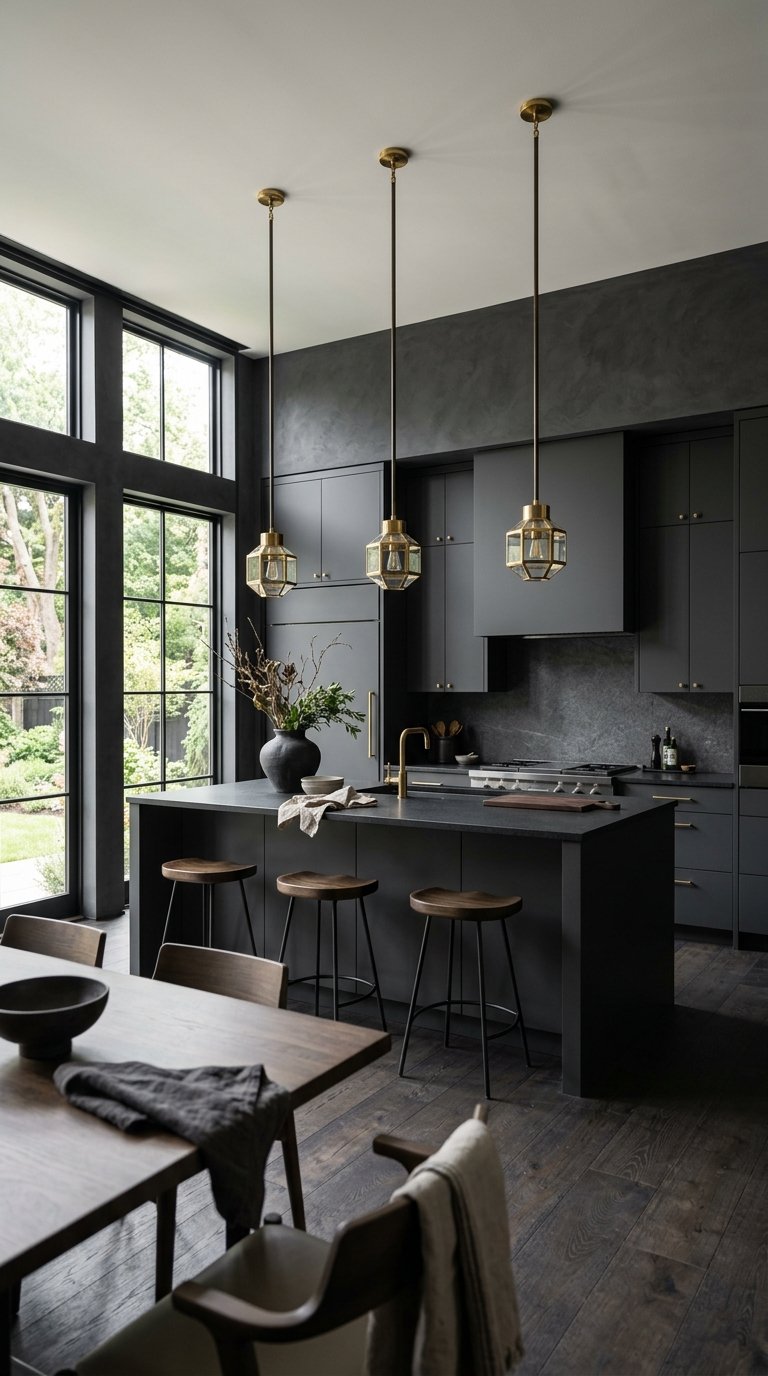
An all-charcoal kitchen wraps the cabinets, island, and sometimes the walls in the same dark tone. This is the boldest interpretation of charcoal kitchen cabinets and the one that requires the most confidence to execute well.
What makes an all-charcoal kitchen succeed:
- Natural light is essential. An all-charcoal kitchen in a room with minimal windows feels oppressive. The same kitchen with large windows and strong natural light feels dramatic and intentional.
- Vary the finish within the charcoal palette. Matte charcoal cabinets with a slightly glossy charcoal island or different tile texture on the backsplash prevents the room from reading as flat.
- Introduce strong metallic accents: Polished brass or bright stainless appliances against all-charcoal surfaces create the contrast that prevents the room from feeling like a cave.
An all-charcoal kitchen photographs exceptionally well but requires more lighting investment than a lighter kitchen to function comfortably during daily use.
7. Pair Charcoal With Sage Green Accents
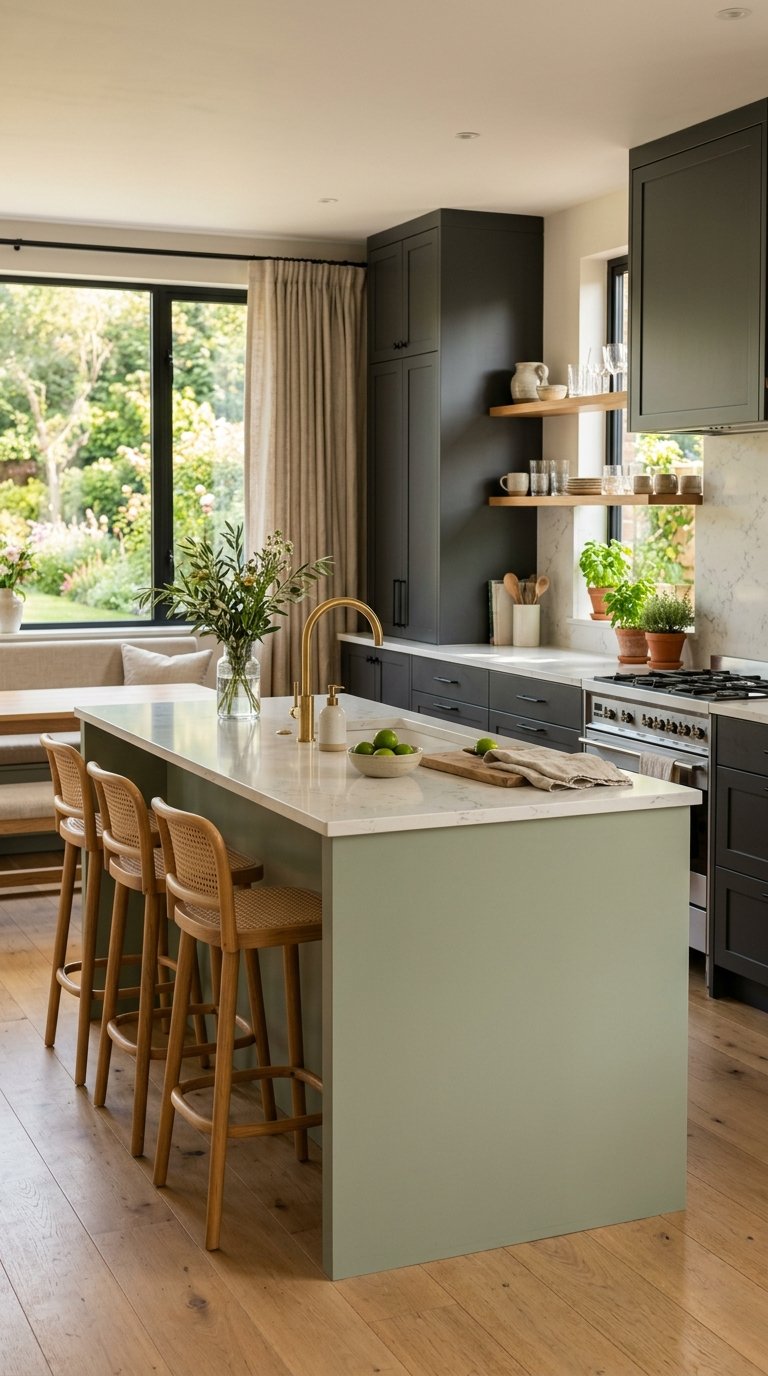
Charcoal gray and sage green share an earthy, muted quality that makes them natural complements in a kitchen. The combination produces a space that feels organic, calm, and contemporary without leaning into either color too aggressively.
Ways to introduce sage green alongside charcoal cabinets:
- Sage green kitchen island with charcoal perimeter cabinets
- Sage green tile backsplash against charcoal upper and lower cabinets
- Sage green walls with charcoal island cabinets as the only cabinetry
- Sage green painted lower cabinets with charcoal uppers (reversal of the standard two-tone approach)
The two colors share enough grey undertone that they read as a planned combination rather than two colors that happened to end up in the same room. The key is keeping both colors in their muted, desaturated versions rather than using a bright or saturated green.
8. Use Matte Black Hardware for a Modern Edge
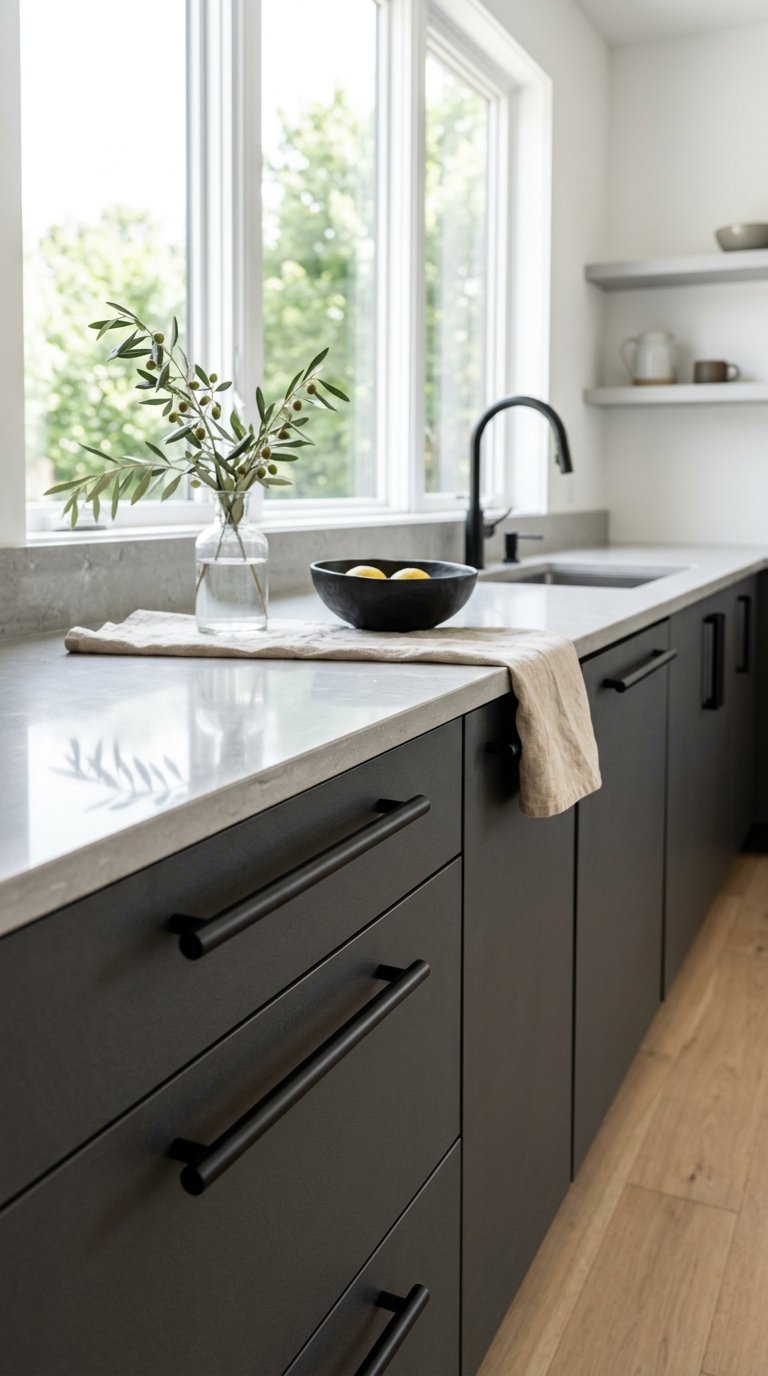
While brass hardware warms charcoal cabinets, matte black hardware pushes the kitchen into a sharper, more contemporary direction. The result is a kitchen that reads as graphic and precise rather than warm and inviting.
Matte black hardware types for charcoal kitchen cabinets:
- Long bar pulls: Clean and linear, works in flat-panel and shaker cabinets
- Cup pulls: Vintage reference in a matte black finish, works in transitional kitchens
- Edge pulls: Minimal and architectural, disappears almost completely against the cabinet
- Round knobs: The most affordable option, works for a quick hardware update
Pair matte black hardware with matte black faucets and appliance handles for a completely coordinated kitchen. The consistency of finish across all hardware in the kitchen creates a level of design cohesion that mixed finishes never achieve.
9. Add a Charcoal Island in a White Kitchen
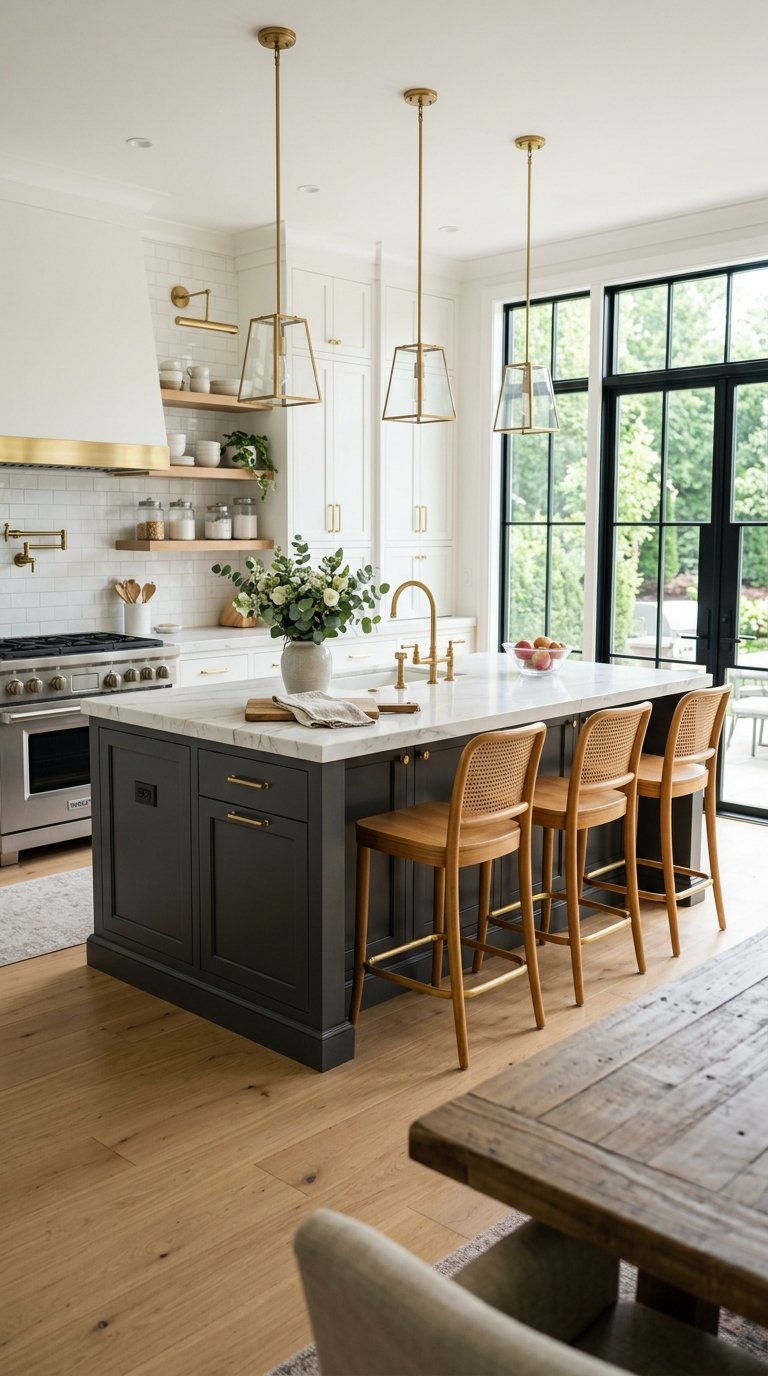
If full charcoal cabinets feel like too much commitment, a charcoal kitchen island in a white cabinet kitchen delivers much of the visual impact at a fraction of the scope. The island becomes the design anchor of the room while the white perimeter cabinets keep the space feeling bright.
Charcoal island design details:
- Contrasting countertop on the island: Butcher block, marble, or a different stone from the perimeter countertop creates visual distinction
- Different hardware on the island: Using a contrasting finish on island hardware (brass on charcoal island, nickel on white perimeter) reinforces the two-tone design intent
- Seating at the island: Bar stools in natural wood, leather, or woven rattan add warmth to the charcoal island base
The island size determines how much visual weight the charcoal color carries in the room. A small island with charcoal color reads as an accent. A large island takes up more visual real estate and creates a stronger focal point. Know which effect you want before committing.
10. Pair Charcoal Cabinets With Quartz Countertops
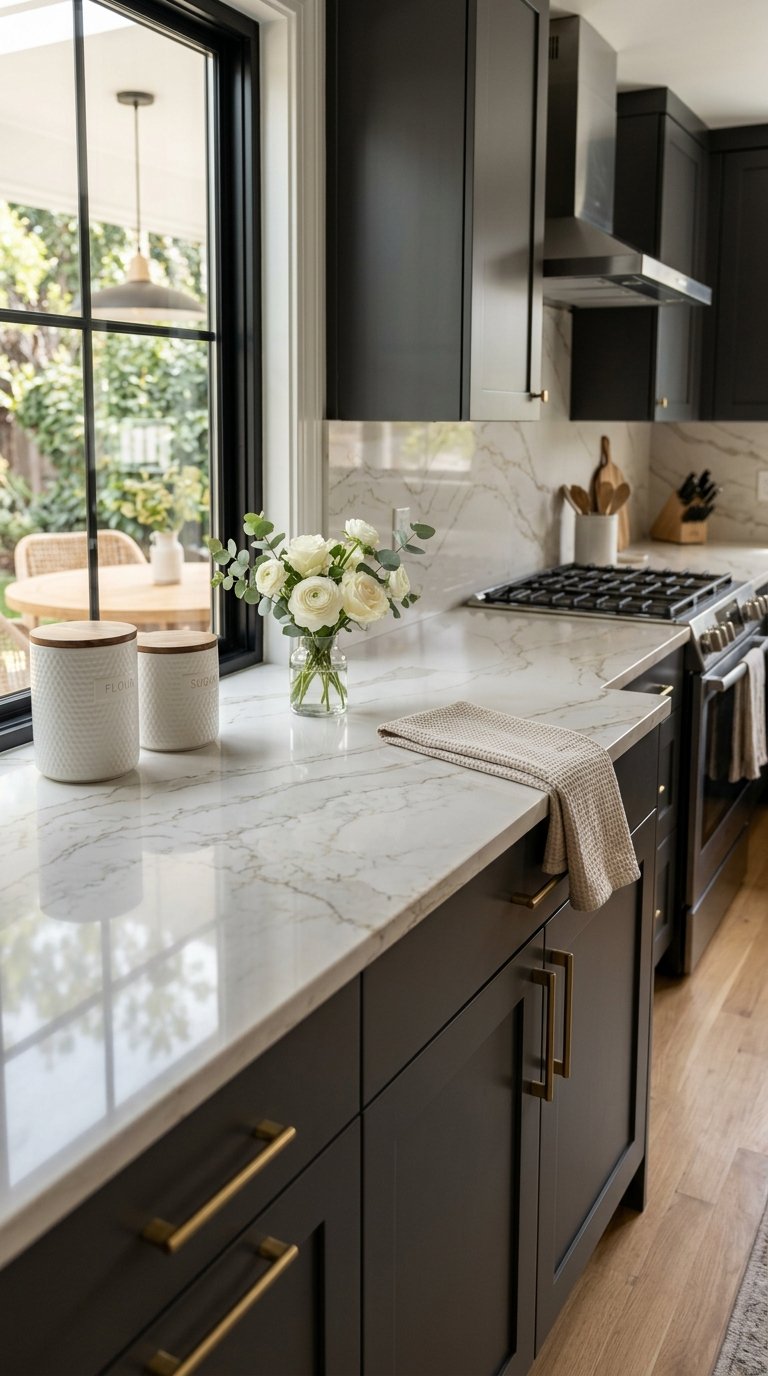
Quartz is the most practical countertop choice for charcoal gray cabinets because it requires no sealing, handles heat and impact well, and comes in a wide range of colors and patterns that complement charcoal effectively.
Quartz colors that work with charcoal cabinets:
- Calacatta-style white with gold veining: Warm and luxurious against charcoal
- Pure white: High contrast, very clean, dramatic
- Light grey: Tonal variation that reads as subtle and sophisticated
- Beige or warm cream: Adds warmth that white doesn’t deliver
Quartz with realistic stone veining performs better visually than solid-color quartz beside charcoal cabinets. The movement and variation in veined quartz adds visual interest that solid surfaces lack.
11. Install Open Shelving in White Oak Above Charcoal Cabinets
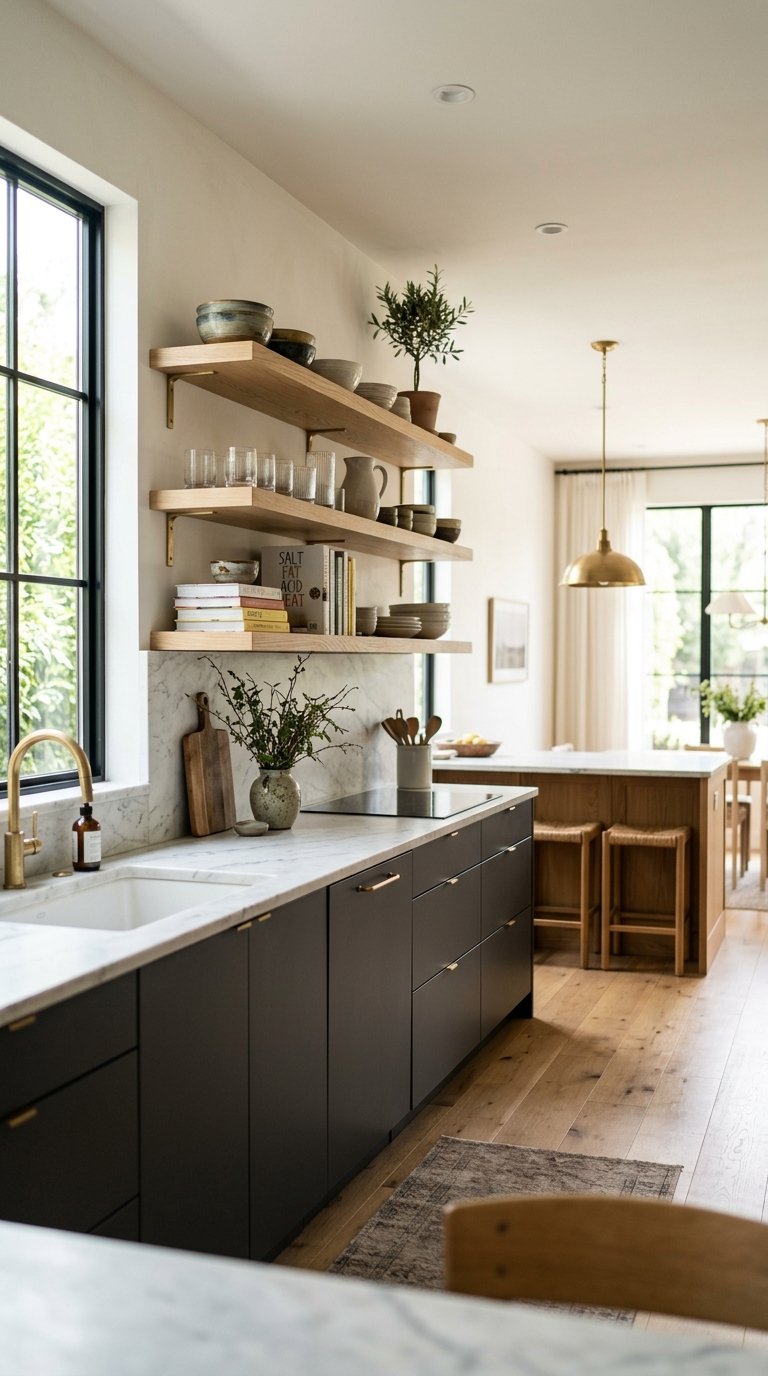
Replacing some or all upper cabinets with open white oak shelving above charcoal lower cabinets creates one of the strongest contemporary kitchen combinations available. The natural wood against the dark cabinets introduces warmth and organic texture that closed cabinetry on both levels never delivers.
Open shelving practical considerations:
- Dust and grease accumulate on open shelves in kitchen environments. Everything stored on open shelves requires more frequent cleaning than cabinet-stored items.
- Style the shelves with items you actually use. Open shelving that holds only decorative objects rather than functional kitchen items looks like a prop rather than a working kitchen.
- Bracket finish: Match the shelf bracket finish to the cabinet hardware finish for cohesion
Limit open shelving to one wall section rather than replacing all upper cabinets. The combination of some open shelving and some closed cabinetry delivers the aesthetic benefit of open shelves while maintaining the practical storage of closed cabinets.
12. Use Charcoal Shaker Cabinets for Classic Appeal
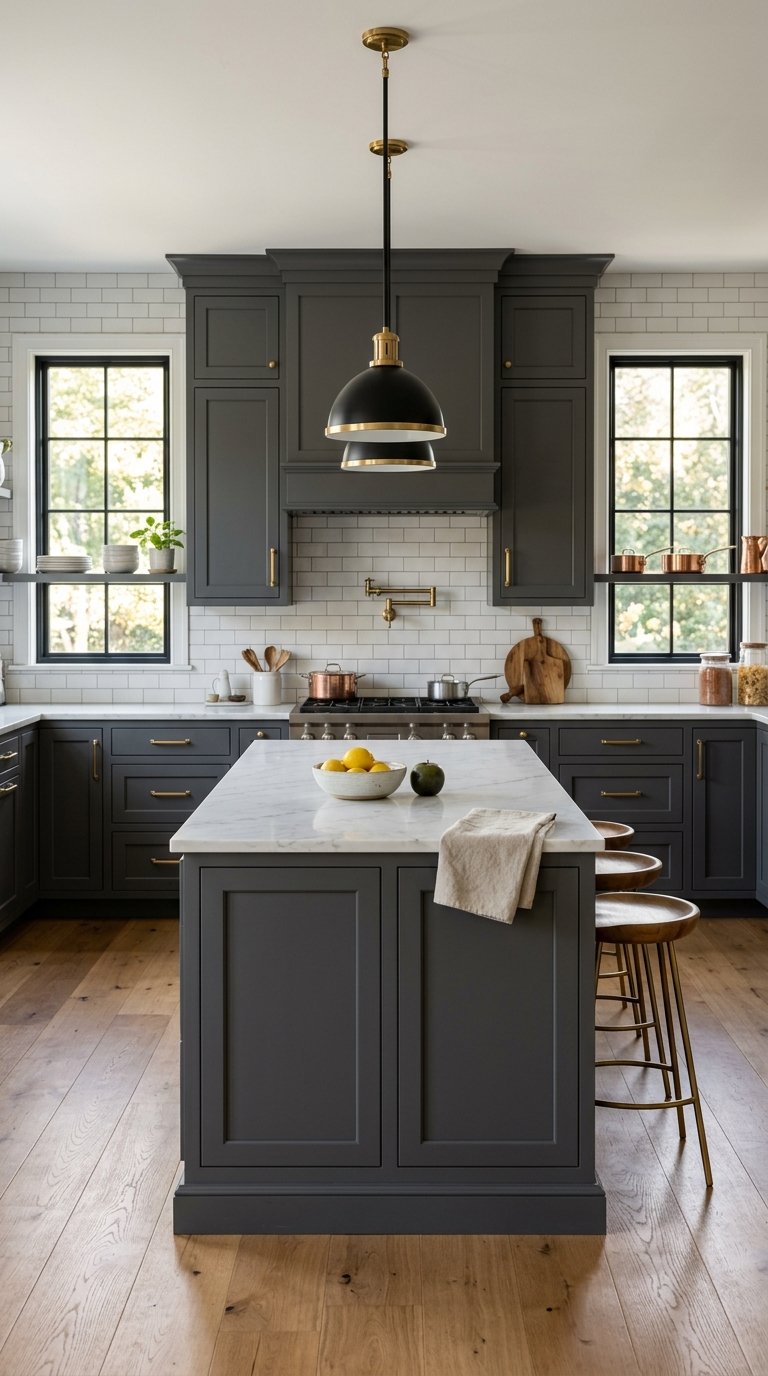
Shaker-style cabinet doors in charcoal gray combine a traditional door profile with a bold, contemporary color. The result sits comfortably in transitional kitchen design, working with both traditional and modern elements in the same room.
Shaker cabinet characteristics with charcoal finish:
- The recessed panel creates shadow lines that give the cabinet face dimension missing from flat-panel doors
- Shaker doors in charcoal look significantly less heavy than flat-panel doors in the same color because the raised frame creates visual breaks in the surface
- Works with brass, black, and nickel hardware equally well, giving more flexibility than some other door profiles
Charcoal shaker cabinets with brushed brass hardware and a white subway tile backsplash is a combination that has remained consistently popular for good reason. It delivers the right amount of each element without any single component dominating.
13. Pair Charcoal Cabinets With Terracotta Tile Backsplash
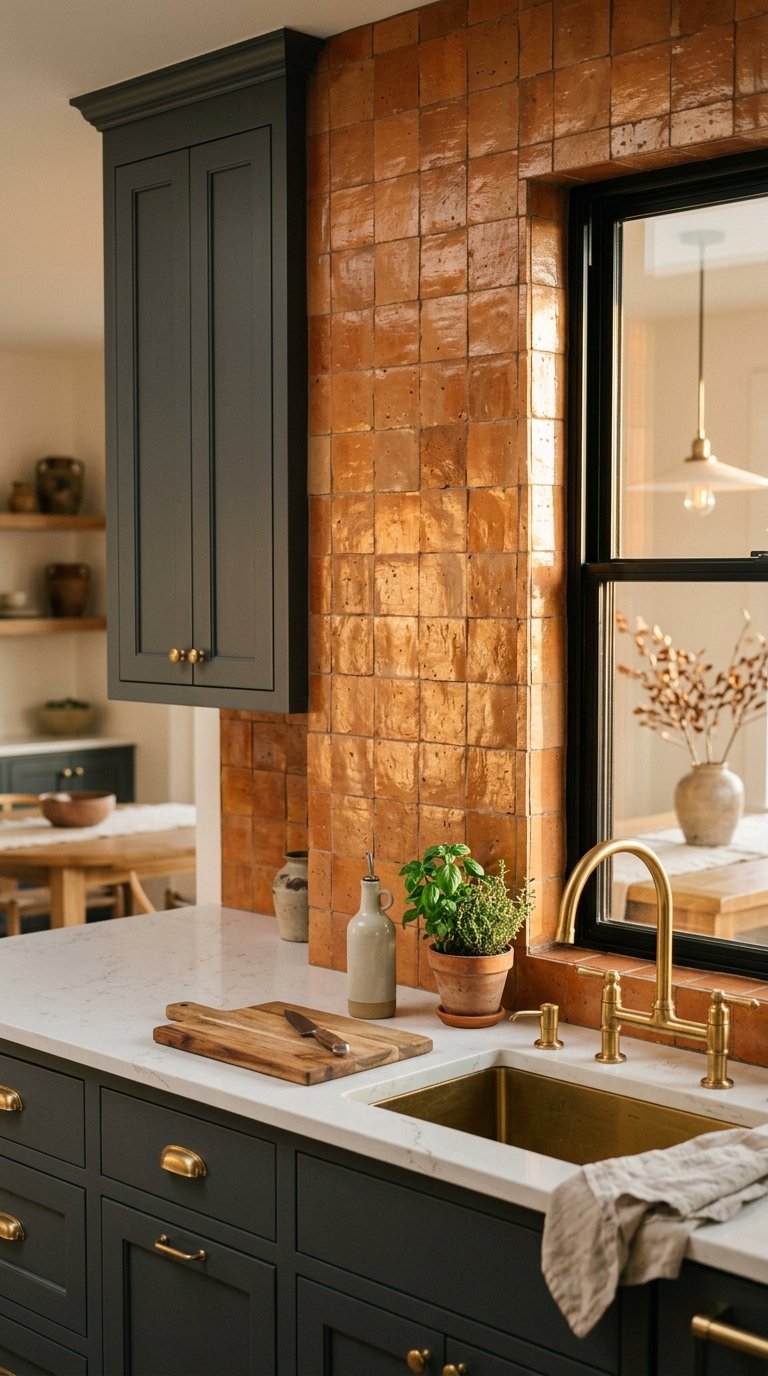
Charcoal gray cabinets with a terracotta tile backsplash create an unexpected combination that works beautifully because the warm clay tone of terracotta is exactly what the cool depth of charcoal needs to feel grounded rather than cold.
Why this combination succeeds:
- The warm-cool contrast is the most effective kind because it creates visual tension that neither all-warm nor all-cool kitchens achieve
- Terracotta references natural, earthy materials that soften what could otherwise be a harsh, industrial-leaning charcoal kitchen
- Handmade terracotta tile adds texture and variation that ceramic or porcelain tiles in the same color lack
Use unlacquered brass hardware to connect the warm terracotta backsplash with the cool charcoal cabinet color. The brass sits between the two in warmth and bridges the gap without effort.
14. Create a Charcoal and Black Kitchen
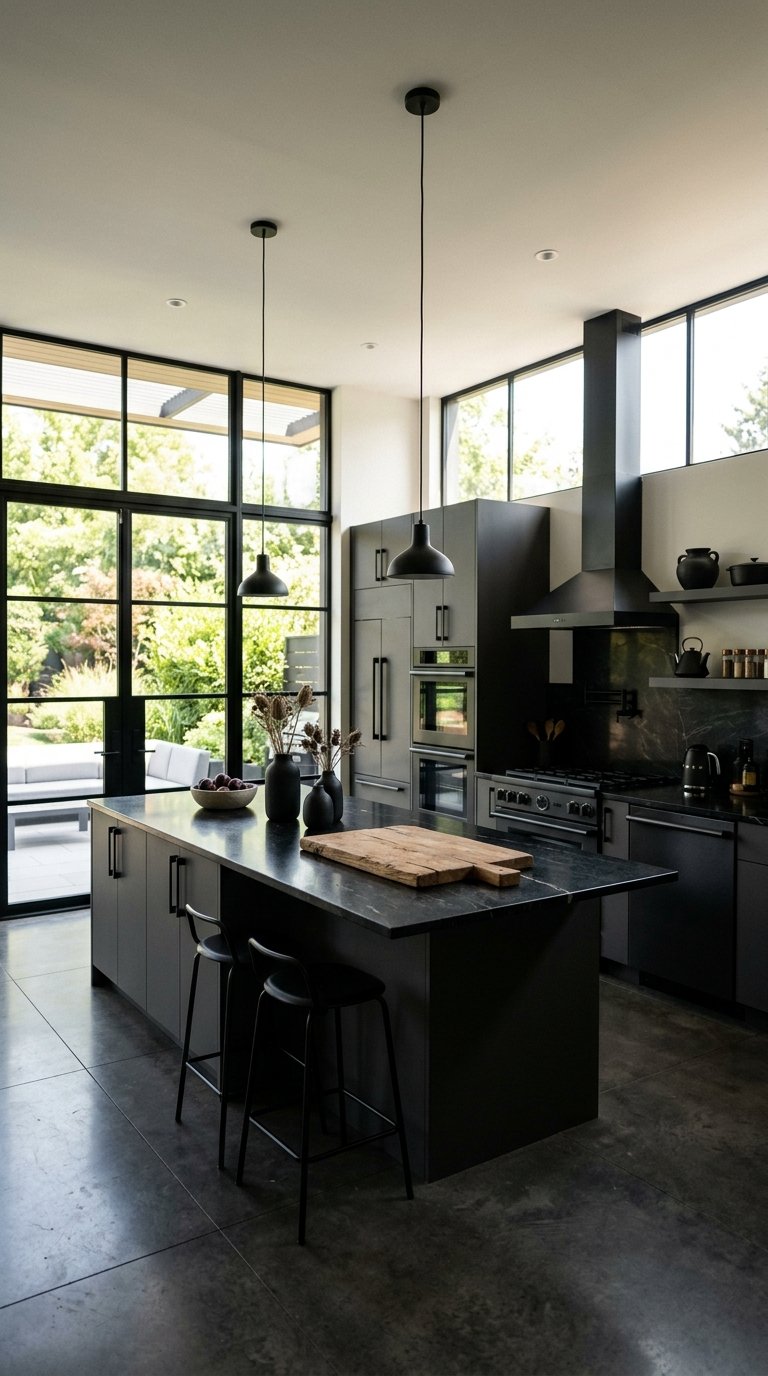
Charcoal gray cabinets with black accents create a high-contrast kitchen that reads as dramatic and intentional. The slight tonal difference between charcoal and true black adds depth that an all-black kitchen sometimes lacks.
Black accent elements that work with charcoal cabinets:
- Matte black appliances: The most impactful black element in the kitchen
- Black granite or soapstone countertops: Very dark countertops that read as near-black
- Black window frames: If the kitchen has windows, black frames reinforce the dark palette
- Black tile grout: Using black grout with white or light tile creates strong graphic pattern
This combination requires significant natural light to prevent the kitchen from feeling oppressive. A charcoal and black kitchen with minimal windows and artificial lighting only creates a room that people avoid rather than gather in.
15. Add Glass-Front Doors on Some Charcoal Cabinets
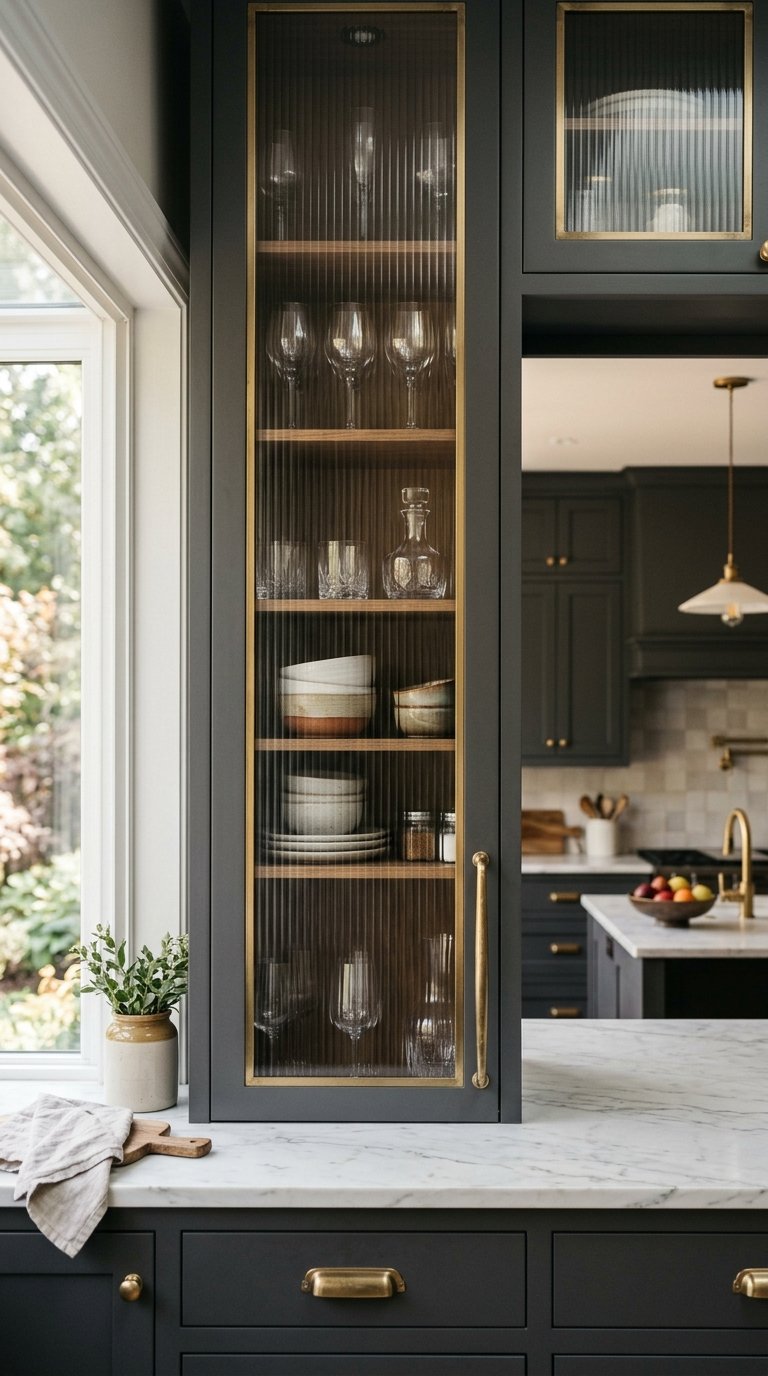
Glass-front cabinet doors on select charcoal gray cabinets break up the mass of a fully solid cabinet run and create display opportunities for glassware, ceramics, and styled kitchen items.
Glass-front door options for charcoal cabinets:
- Clear glass: Shows everything inside, requires styled interior organization
- Reeded or fluted glass: Obscures the interior while adding texture, very current aesthetic
- Wire mesh inserts: Industrial and vintage reference, works in farmhouse and eclectic kitchens
- Smoked glass: Partially obscures contents with a grey tone that complements charcoal
Reeded glass inserts on charcoal cabinets is one of the strongest current kitchen design combinations. The textural quality of the reeded glass and the depth of the charcoal frame create a cabinet door that reads as genuinely distinctive.
16. Use Charcoal Cabinets With Walnut Accents
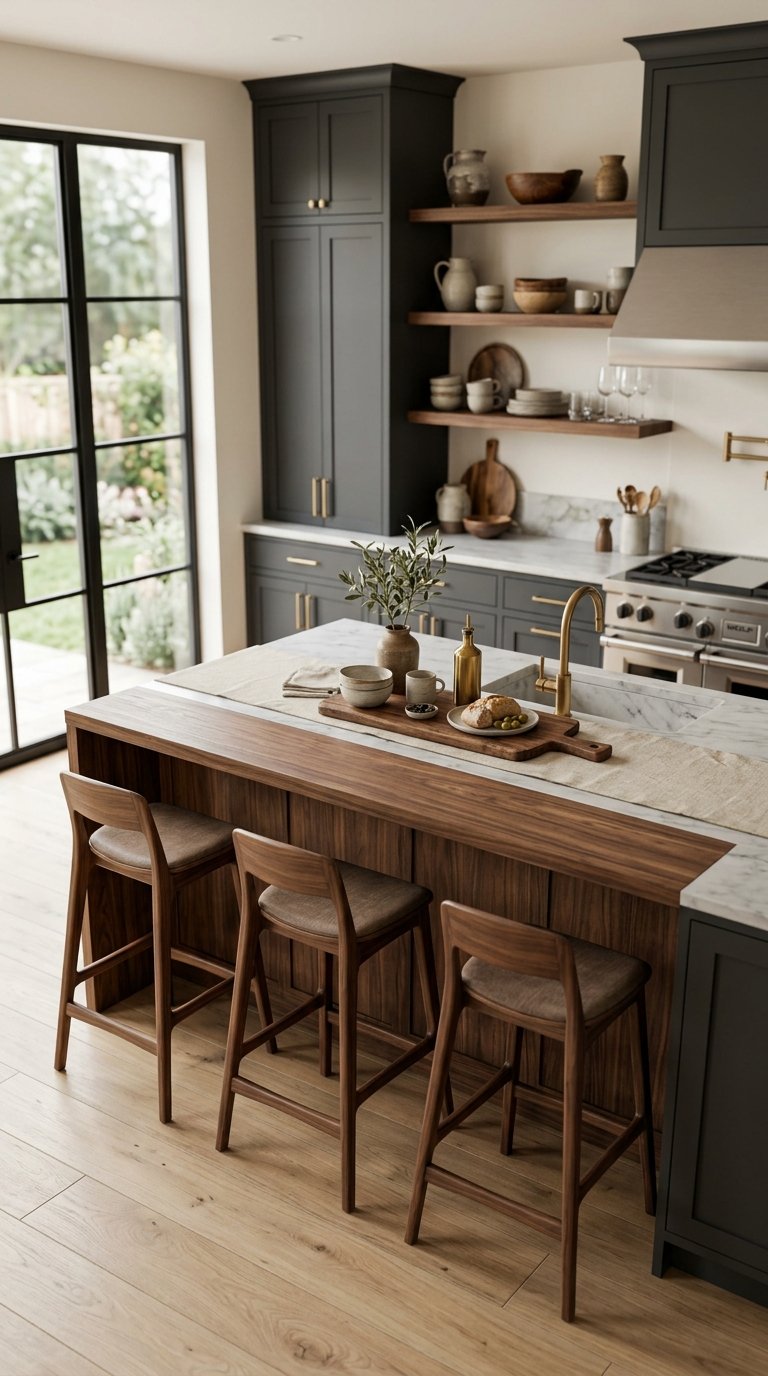
Charcoal gray and walnut create a kitchen combination with the kind of material quality that most kitchens at any price point fail to achieve. The dark chocolate warmth of walnut against the cool depth of charcoal works because both materials share a depth and richness that lighter alternatives lack.
Walnut accent applications in a charcoal kitchen:
- Walnut open shelving above charcoal lower cabinets
- Walnut kitchen island top on charcoal island base
- Walnut cutting board and utensil handles as countertop accessories
- Walnut bar stools at a charcoal island
- Walnut floating shelf above the range on a charcoal surround wall
The combination works best with warm white walls rather than cool white walls. The yellow undertone of warm white connects to the warmth of walnut and prevents the charcoal from pulling the whole kitchen too cool.
17. Install Charcoal Flat-Panel Cabinets for a Modern Look
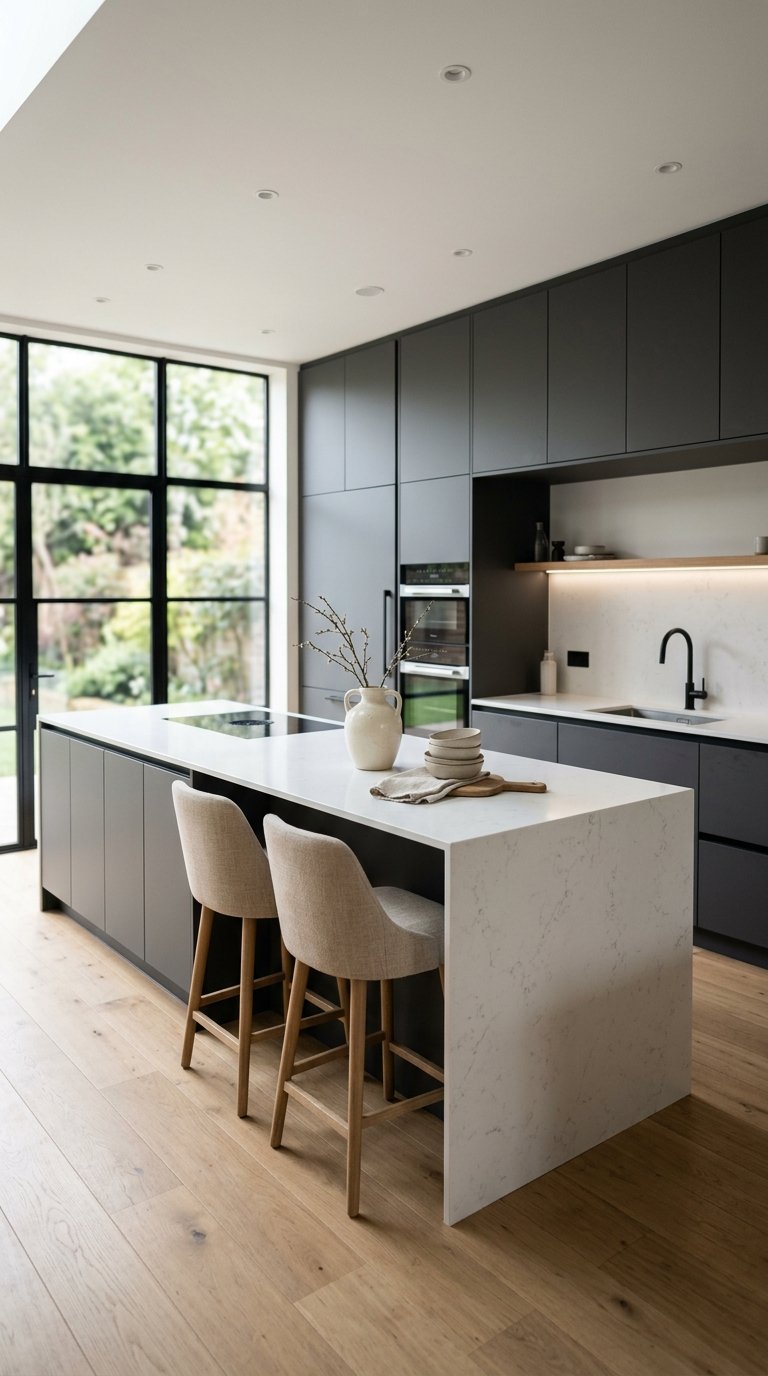
Flat-panel (slab) cabinet doors in charcoal gray create the most contemporary, European-influenced kitchen aesthetic available. There is no ornamental profile, no raised or recessed detail. Just a flat surface in a deep, sophisticated color.
Flat-panel charcoal cabinet considerations:
- Hardware selection matters more than with profiled doors because the flat surface has no shadow or detail to add visual interest. The hardware carries more visual weight.
- Door alignment must be precise. Flat-panel cabinet runs show any alignment inconsistency immediately because there is no profile detail to mask variations.
- Finish quality shows more on flat surfaces. Any drips, brush marks, or inconsistencies in the paint finish are visible on flat-panel doors in a way that profiled doors obscure.
Pair flat-panel charcoal cabinets with integrated appliances (panel-ready refrigerator and dishwasher) for the most fully realized contemporary kitchen aesthetic. The visual continuity of panels covering appliance faces creates a kitchen that reads as seamlessly designed.
18. Combine Charcoal Cabinets With Light Wood Floors
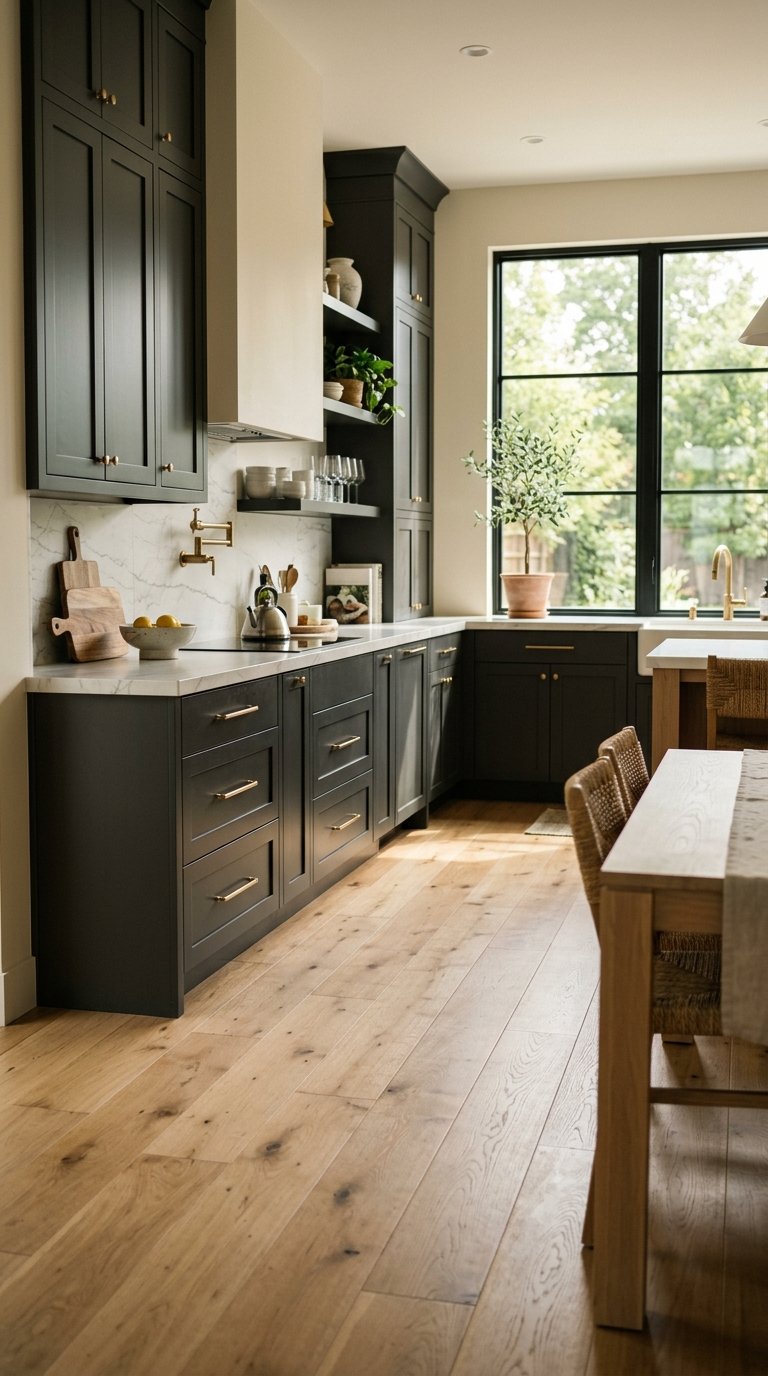
Charcoal gray kitchen cabinets with light wood floors create a strong vertical contrast: dark above, light below. The warm honey or blonde wood floor prevents the charcoal cabinets from making the kitchen feel heavy.
Light wood floor species that complement charcoal cabinets:
- White oak: The most popular current choice, warm tan with grain that adds texture
- Maple: Very light and consistent grain, creates the strongest contrast with charcoal
- Ash: Similar to oak but slightly lighter, very clean grain pattern
- Light pine: Warm yellow tone, more rustic character
Use wide-plank flooring rather than narrow strip flooring with charcoal cabinets. Wide planks show the wood grain more dramatically and create a stronger visual foundation for the dark cabinet color above.
19. Add a Charcoal Range Hood as a Statement
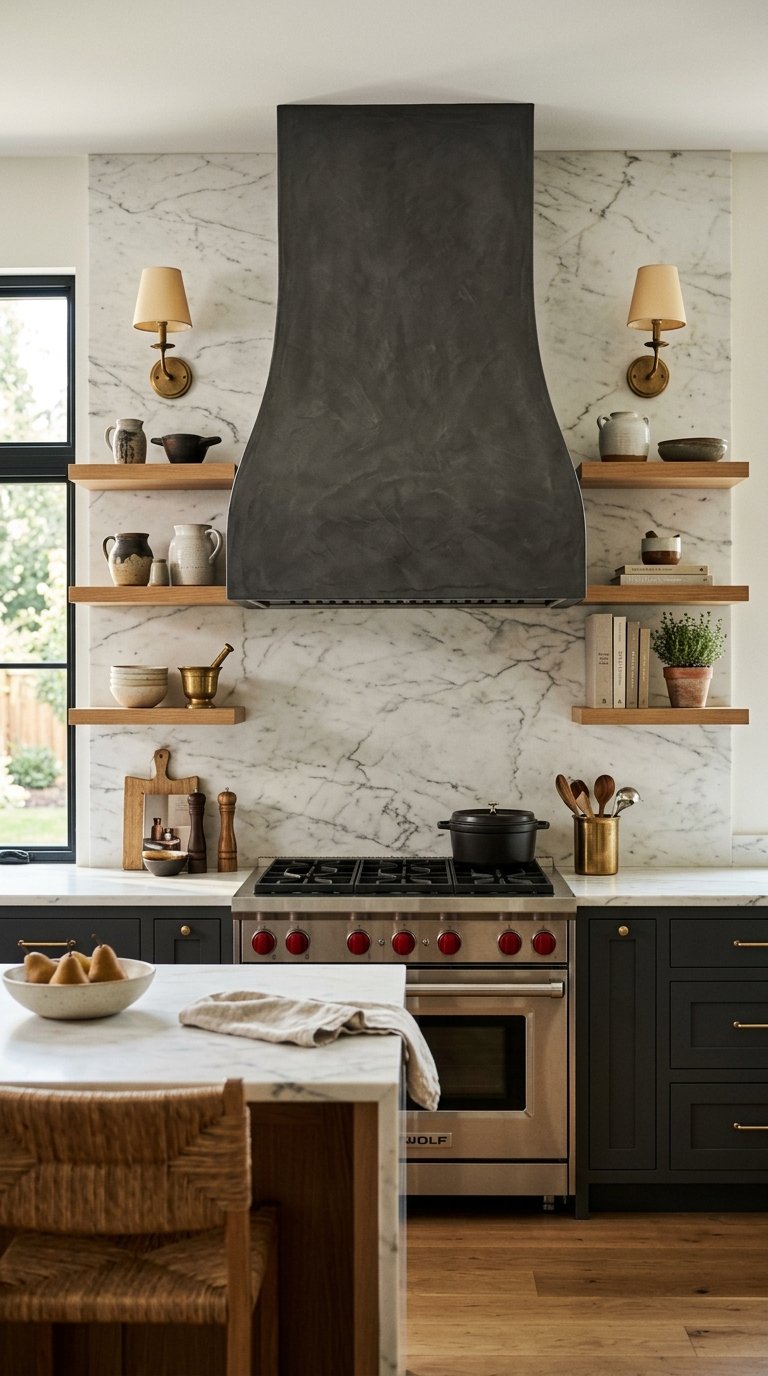
A charcoal range hood above a charcoal or white kitchen anchors the cooking zone visually and adds an architectural element that a standard stainless hood never delivers. The hood becomes a design feature rather than a ventilation afterthought.
Charcoal range hood styles:
- Shiplap or board-panel hood: Traditional and farmhouse-adjacent
- Plaster or smooth drywall hood: Contemporary and architectural
- Wood-clad hood: Adds natural texture at the cooking focal point
- Metal fabricated hood: Industrial and precise, works in modern kitchens
Size the hood proportionally to the range below. A hood significantly smaller than the range below it looks unconsidered. A hood that matches or slightly exceeds the range width looks designed.
20. Use Charcoal Cabinets With Dark Backsplash Tile
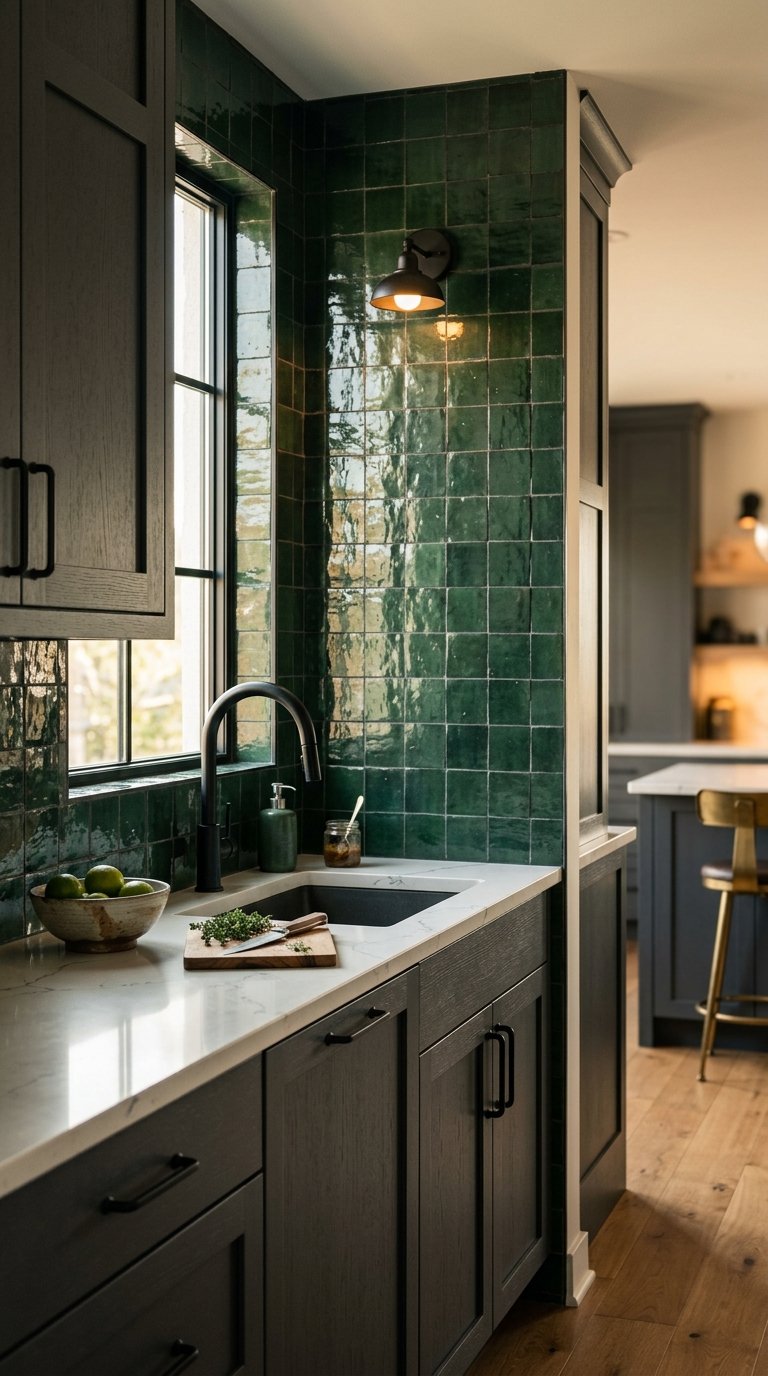
A dark backsplash tile with charcoal gray cabinets creates a kitchen with consistent depth that light backsplash alternatives don’t achieve. The effect is immersive and dramatic rather than contrasting and graphic.
Dark backsplash options for charcoal kitchens:
- Black subway tile: Classic format in a dramatic color, works in most kitchen styles
- Dark slate tile: Natural material with earthy variation, reinforces depth
- Dark green zellige tile: Handmade, earthy, very distinctive against charcoal
- Charcoal hexagon tile: Tonal matching that creates texture without color contrast
- Smoked mirror tile: Reflective dark surface, adds glamour to a charcoal kitchen
Use light-colored grout with dark tile for pattern visibility, or dark grout for a more seamless, immersive surface. Each approach delivers a distinctly different result from the same tile.
21. Install Charcoal Cabinets With Unlacquered Brass Faucets
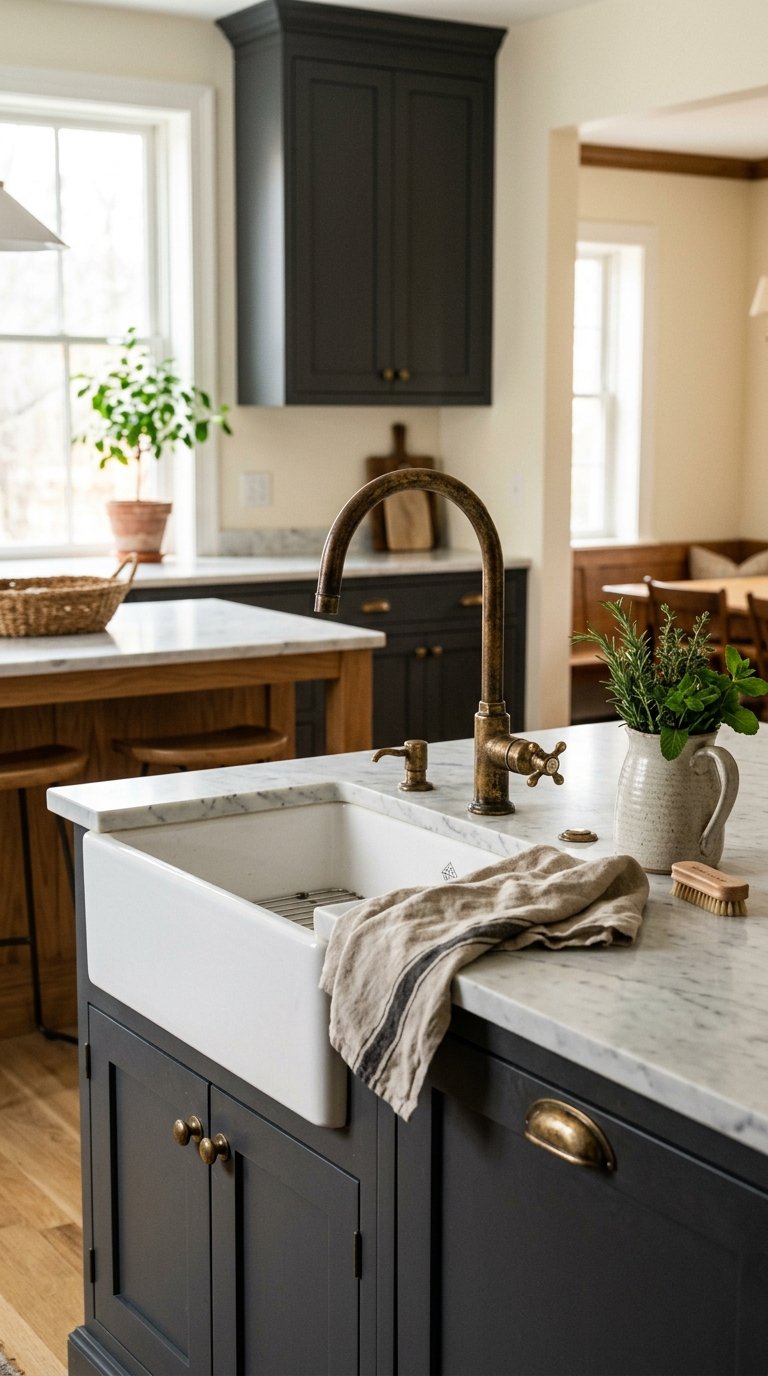
Unlacquered brass faucets in a charcoal gray kitchen age naturally over time, developing a warm patina that no pre-finished hardware replicates. The combination of deep charcoal cabinets and living brass hardware creates a kitchen that looks better after five years than it does on day one.
Unlacquered brass in a kitchen context:
- Develops natural patina at points of heaviest contact: the handle and spout base
- Varies in appearance based on water mineral content and usage frequency
- Requires minimal maintenance: Occasional cleaning with mild soap, no polishing required
- Costs more initially than lacquered brass but lasts indefinitely without the replating that lacquered brass eventually needs
Pair unlacquered brass faucets with unlacquered brass cabinet hardware for full consistency. The patina development across all brass elements stays synchronized over time, creating a cohesive aged quality throughout the kitchen. IMO this is the most genuinely distinctive hardware combination for a charcoal kitchen.
22. Create a Charcoal Kitchen With White Appliances
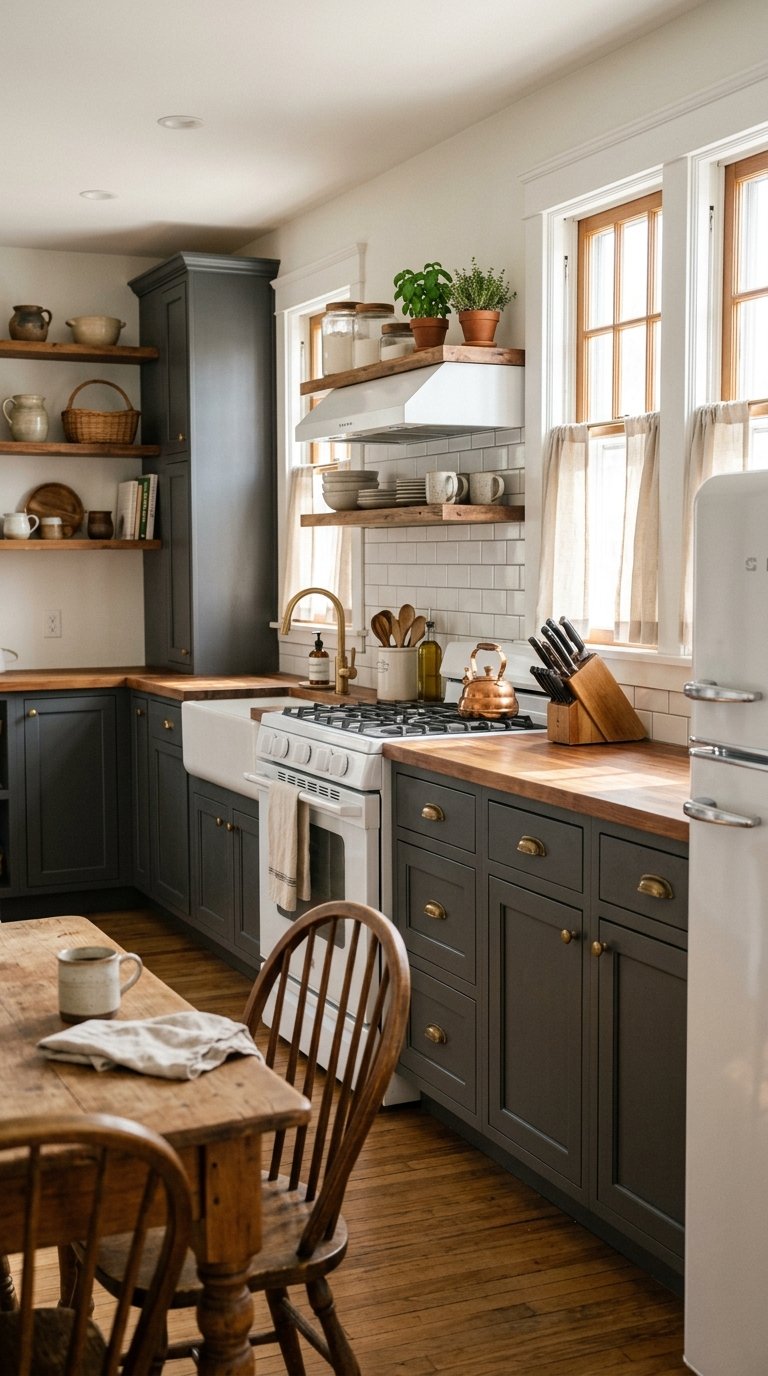
White appliances against charcoal gray cabinets create a vintage, unexpected combination that reads as fresh precisely because most people default to stainless or black appliances with dark cabinets.
Why white appliances work with charcoal:
- The contrast references midcentury kitchen design in a way that feels current rather than dated
- White appliances cost less than stainless or matte black alternatives
- The combination works particularly well in kitchens with other vintage or retro design references: open shelving, subway tile, simple hardware
Choose white appliances with clean lines rather than decorative details for the most effective result with charcoal cabinets. Ornate white appliances look costume-y rather than considered.
23. Use Charcoal Cabinets in a Small Kitchen
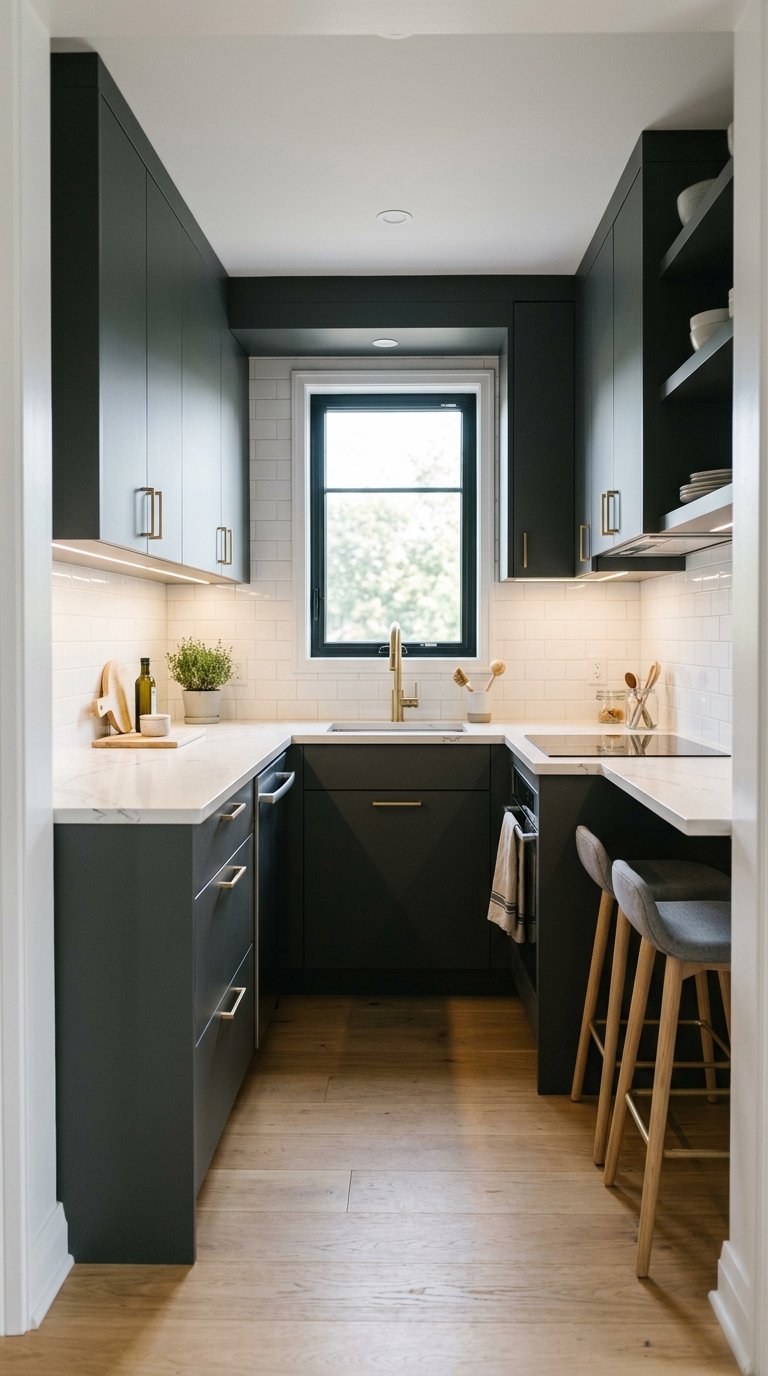
The most common objection to charcoal kitchen cabinets is that they’ll make a small kitchen feel dark and claustrophobic. This objection has merit in kitchens with poor natural light. In small kitchens with adequate light, charcoal cabinets create depth that makes the space feel more considered, not smaller.
Making charcoal cabinets work in a small kitchen:
- Maximize natural light with clean windows and no heavy window treatments
- Use light countertops: White or very light grey countertops prevent the small kitchen from going too dark
- Install under-cabinet lighting: Illuminates the countertop surface and prevents the dark cabinets from absorbing all available light
- Choose simple hardware: Fewer and smaller hardware pieces reduce visual complexity in a tight space
- Keep the backsplash light: A white or very light backsplash reflects light back into the room
A small charcoal kitchen with adequate natural light and white countertops often photographs better than its larger all-white counterpart. The depth of the charcoal creates visual interest that white kitchens only achieve through styling and accessorizing.
Final Thoughts
Charcoal gray kitchen cabinets are not a trend waiting to expire. They’re a design choice with enough versatility, depth, and genuine visual impact to justify the investment in almost any kitchen.
The 23 ideas on this list cover the full range from classic combinations like charcoal and marble to unexpected pairings like charcoal and terracotta. The best choice for your kitchen depends on your light levels, your existing material palette, and honestly, which combination you’d still want to look at in five years.
Pick the idea that immediately made you think “that’s it.” Trust that instinct. Your kitchen should feel like a room you chose, not a room that chose you by default.
And if someone tells you gray is boring, show them a well-done charcoal kitchen. They’ll stop talking immediately.