23 Kitchen Backsplash Ideas That Instantly Transform Space
Your kitchen backsplash is doing one of two things right now: elevating the entire room or blending into the background like it never made a decision in its life. A great backsplash protects your walls and defines your kitchen’s personality at the same time.
The good news is that backsplash upgrades are one of the most accessible kitchen improvements available, with options starting at $15 per square foot and results that make the whole kitchen look renovated. These 23 ideas cover every style, every budget, and every skill level so you find the one that works for your specific kitchen.
1. Install Classic White Subway Tile for Timeless Appeal
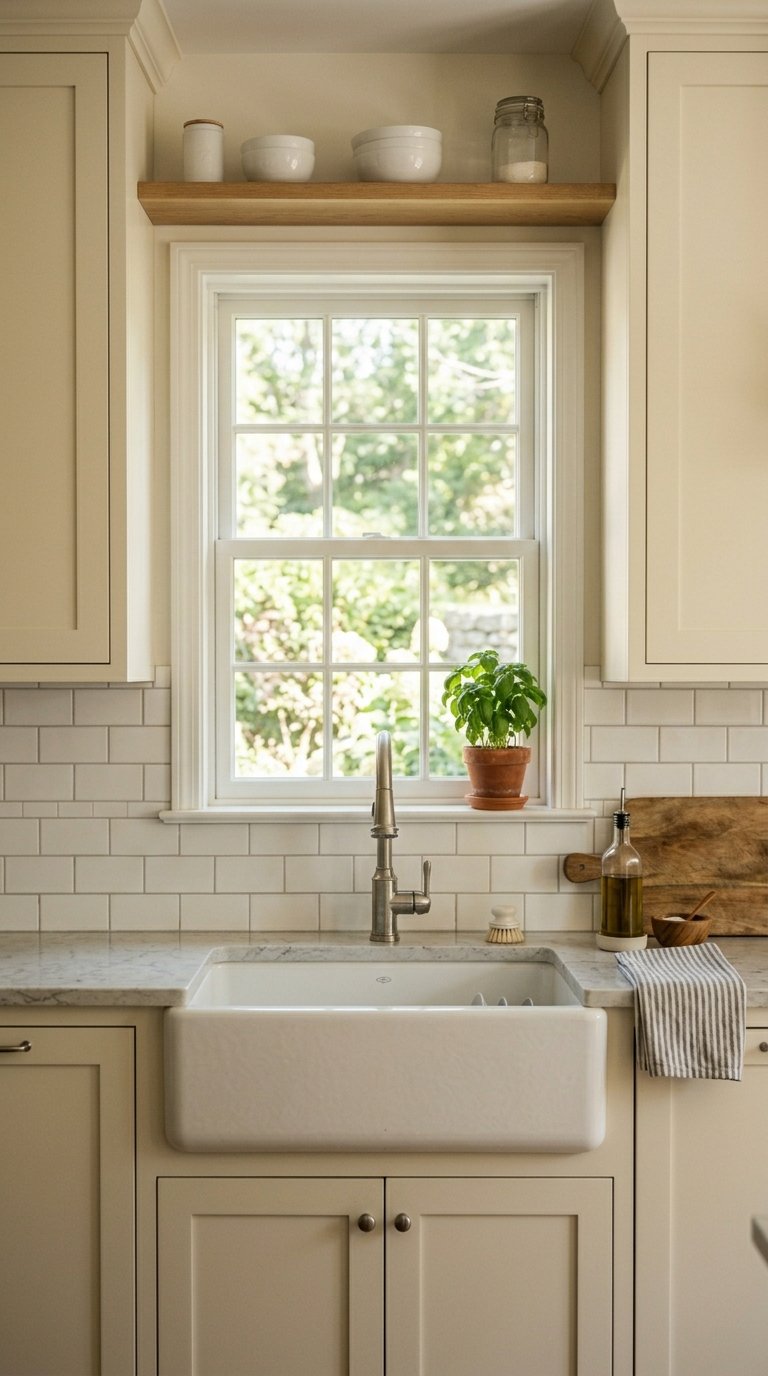
White subway tile is the backsplash that works in every kitchen, in every decade, without ever looking dated. The standard 3 x 6 inch ceramic subway tile costs $3 to $8 per square foot and installed with standard tile adhesive and grout.
The grout colour determines the personality: white grout creates a seamless surface, grey grout adds definition, and black grout creates a bold graphic contrast. Change the grout colour and you change the entire character of the same white tile, which makes subway tile the most versatile backsplash on this list.
2. Use Zellige Tile for Handmade Moroccan Character
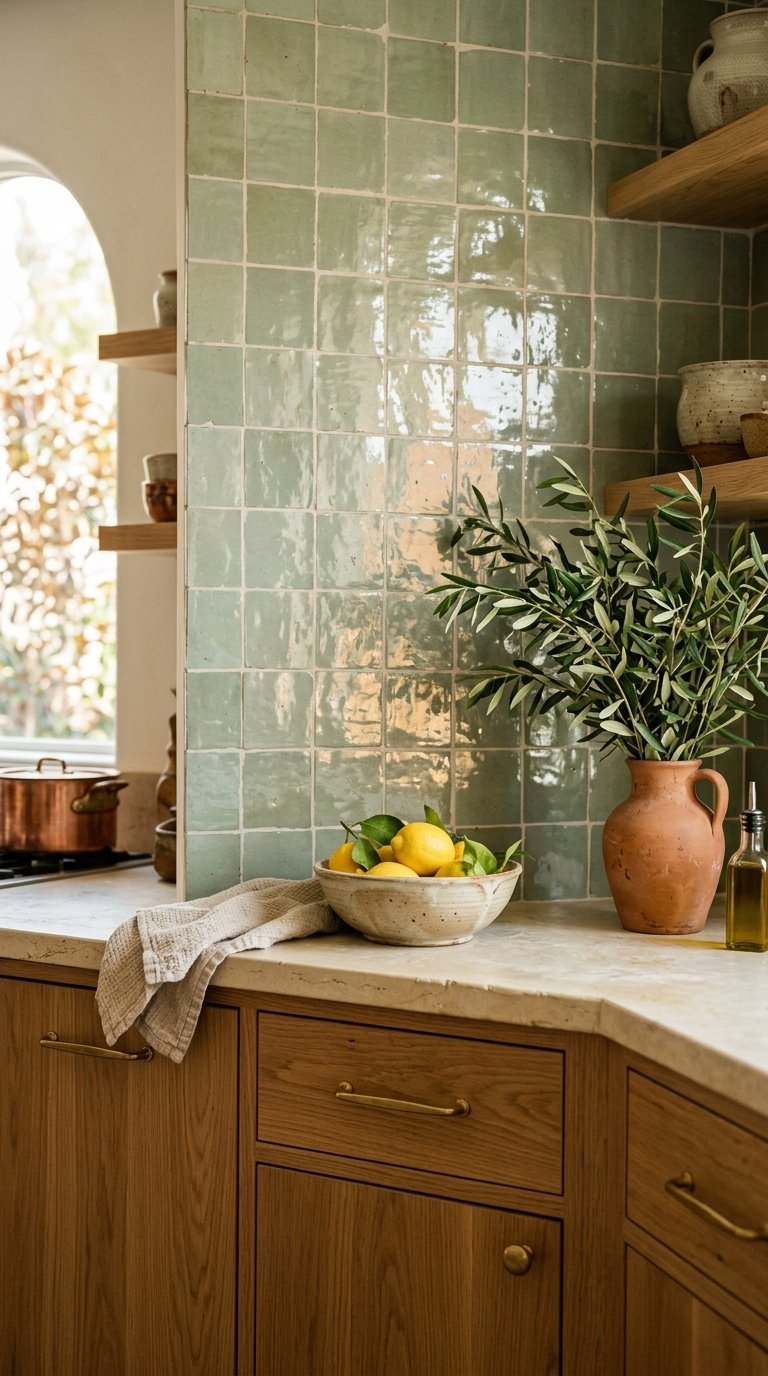
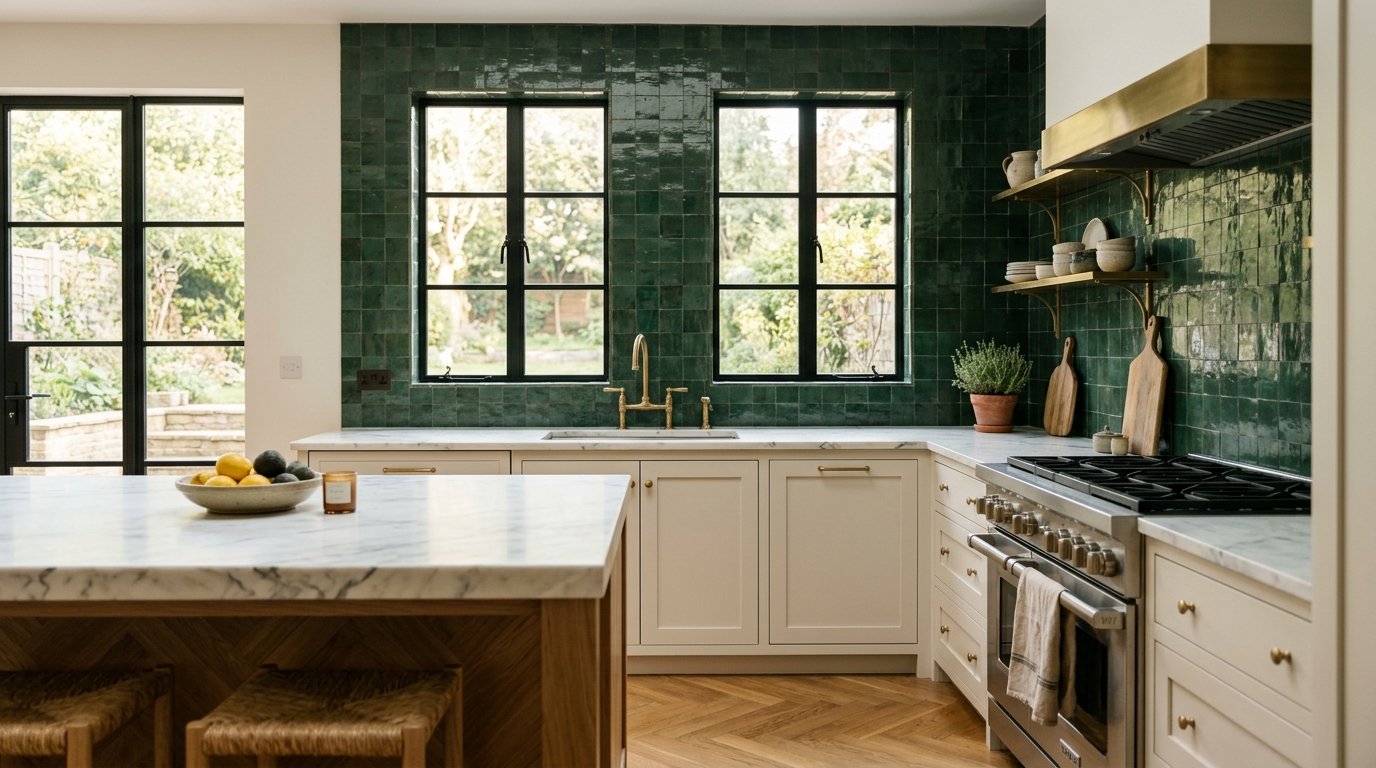
Zellige tiles are hand-cut Moroccan clay tiles with an irregular glaze that catches light differently across every surface. No two tiles look identical, which means a zellige backsplash has more visual depth and texture than any machine-made tile.
Zellige tile costs $15 to $50 per square foot depending on colour and supplier, with warm whites, terracotta, deep teal, and sage green being the most popular kitchen colours. The surface imperfections and glaze variation are features, not flaws. Install with unsanded grout in a matching tone to let the tile surface carry all the visual work.
3. Choose a Full-Height Marble Slab Backsplash
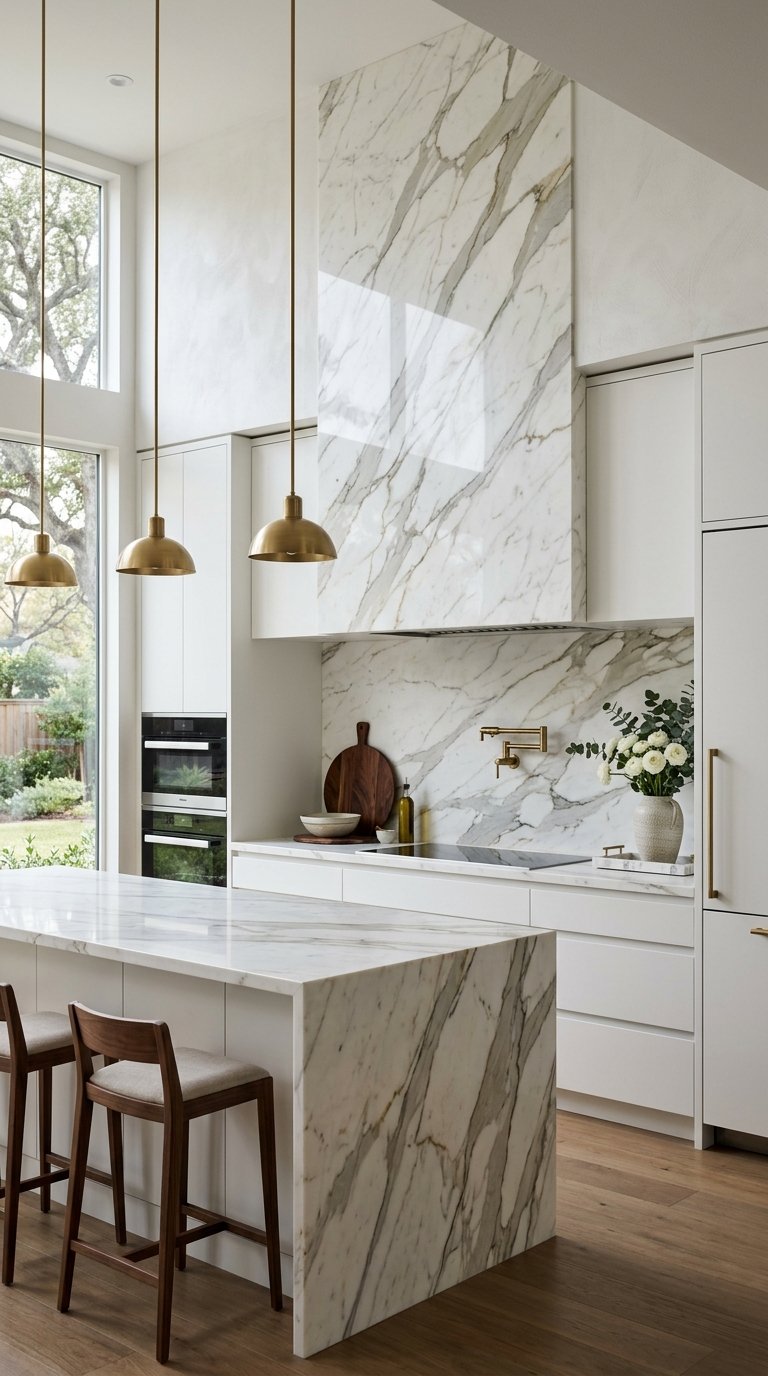
A full-height marble slab backsplash from counter to ceiling creates a seamless, luxurious surface that no tile installation replicates. The continuous stone face eliminates grout lines entirely, making the backsplash easier to clean and more visually impactful.
A marble slab backsplash costs $60 to $150 per square foot installed, with Calacatta and Carrara being the most-used marble types in kitchen applications. For the look at lower cost, large-format porcelain slabs with marble veining (from brands like Atlas Concorde or Dekton) cost $30 to $80 per square foot and require no sealing.
4. Install Terracotta Tile for Warm, Earthy Character
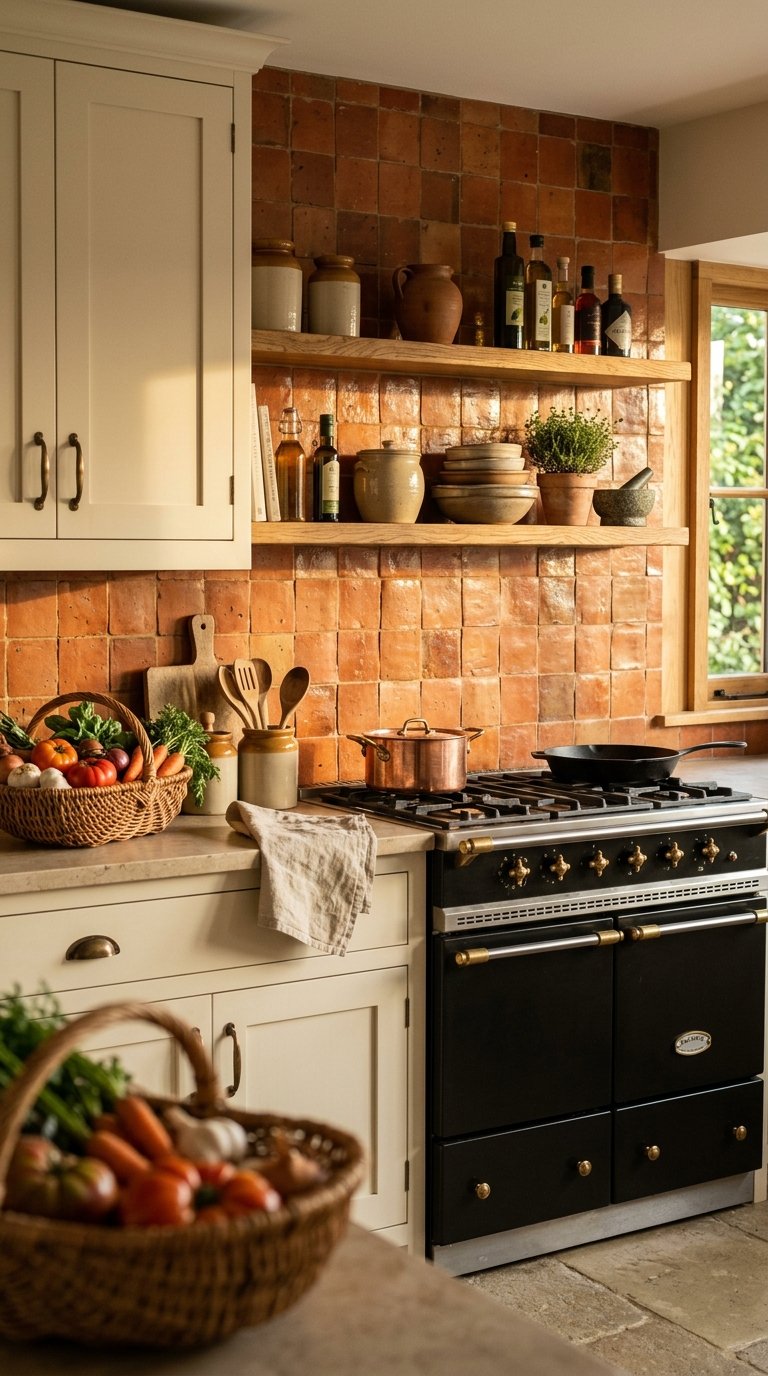
Terracotta tiles bring a warm, Mediterranean quality to kitchen walls that no other material matches at the same price point. Handmade terracotta tiles cost $8 to $25 per square foot and suit kitchens with warm wood cabinetry, cream walls, and natural stone countertops.
Seal terracotta tiles with a penetrating food-safe sealer before grouting and annually thereafter to prevent oil and water absorption. The warm orange-red tone of natural terracotta deepens over time with use and sealing, making the backsplash more beautiful as the kitchen ages. IMO, terracotta is the most underused kitchen backsplash material available.
5. Use Peel-and-Stick Backsplash Tiles for Renters
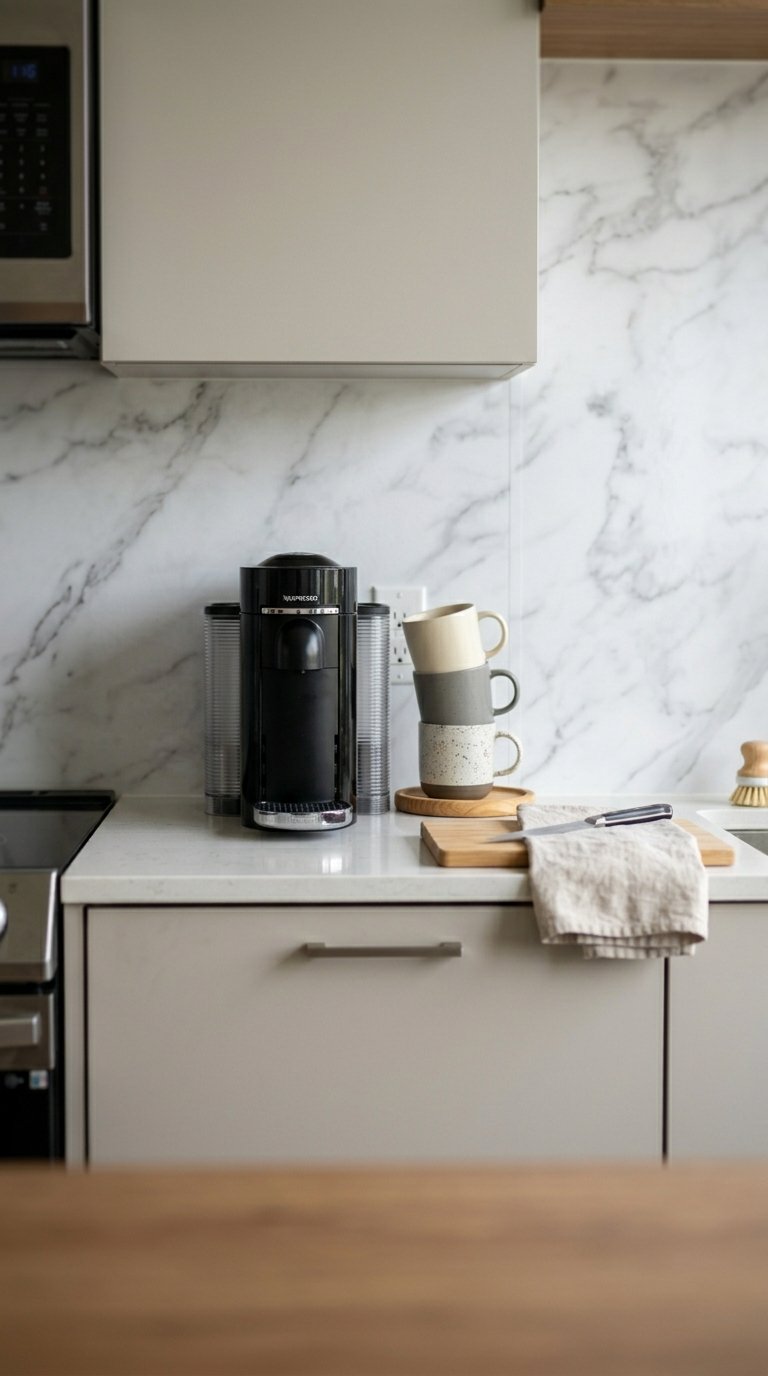
Peel-and-stick backsplash panels cost $15 to $40 per square foot and apply directly over existing tile, painted drywall, or smooth surfaces without adhesive or grout. They remove cleanly with a heat gun or hairdryer, making them the only fully reversible backsplash solution on this list.
Quality brands like Smart Tiles, Aspect, and Stickgoo produce peel-and-stick panels in subway, mosaic, and stone finishes that photograph nearly identically to real tile. The surface is waterproof and heat-resistant up to approximately 200°F, which suits backsplash positions behind cooktops.
6. Install a Herringbone Pattern Mosaic Backsplash
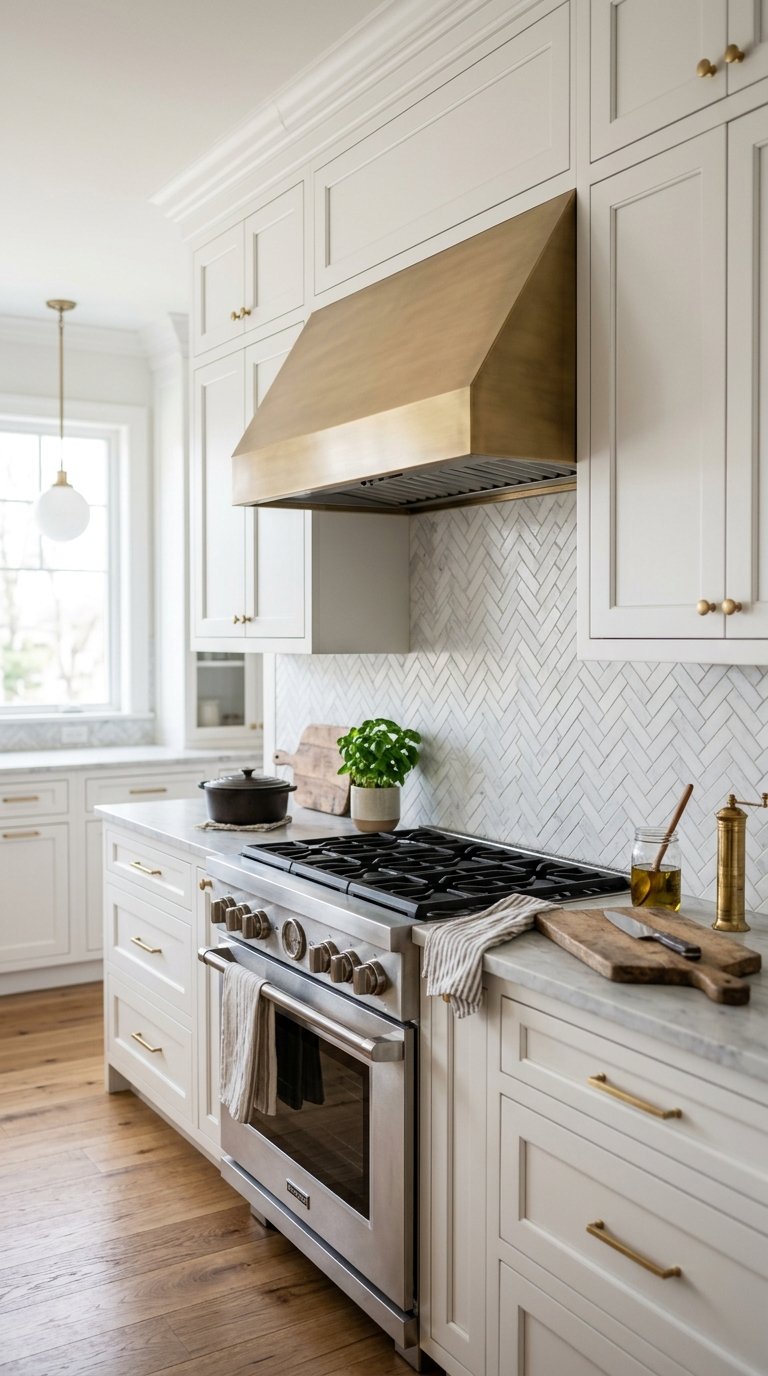
A herringbone pattern backsplash uses the same tile as a standard installation but rotates the orientation to create a V-shaped diagonal pattern that adds movement and visual interest to the wall. White marble or glass mosaic sheets in herringbone patterns cost $10 to $30 per square foot.
The herringbone pattern draws the eye horizontally across the backsplash, which makes narrow kitchens appear wider. It also adds a crafted, artisanal quality to a backsplash that standard horizontal or vertical tile layouts never achieve with the same materials.
7. Choose Stacked Stone Veneer for a Textural Feature
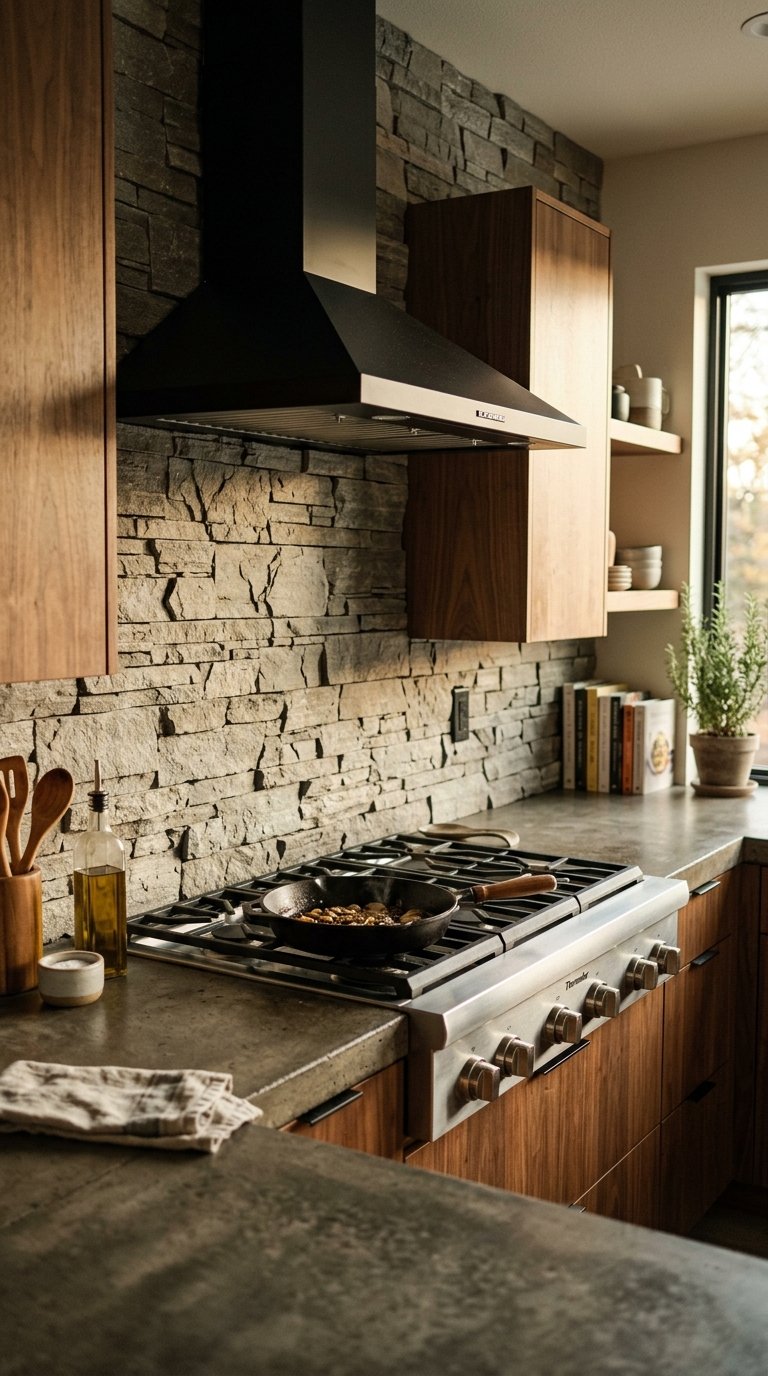
Natural stone veneer panels (thin-cut slices of natural stone mounted on a mesh backing) create a dramatic textural backsplash that adds the depth and character of full stone at a fraction of the weight and cost. Stone veneer panels cost $10 to $30 per square foot and install like standard tile.
Slate, quartzite, and sandstone in neutral grey, warm brown, and charcoal suit kitchen applications best. Position a stone veneer backsplash specifically on the cooktop wall (typically the most visible section from the kitchen entrance) for maximum impact without covering every wall.
8. Install Dark Grout with White Tile for Bold Contrast
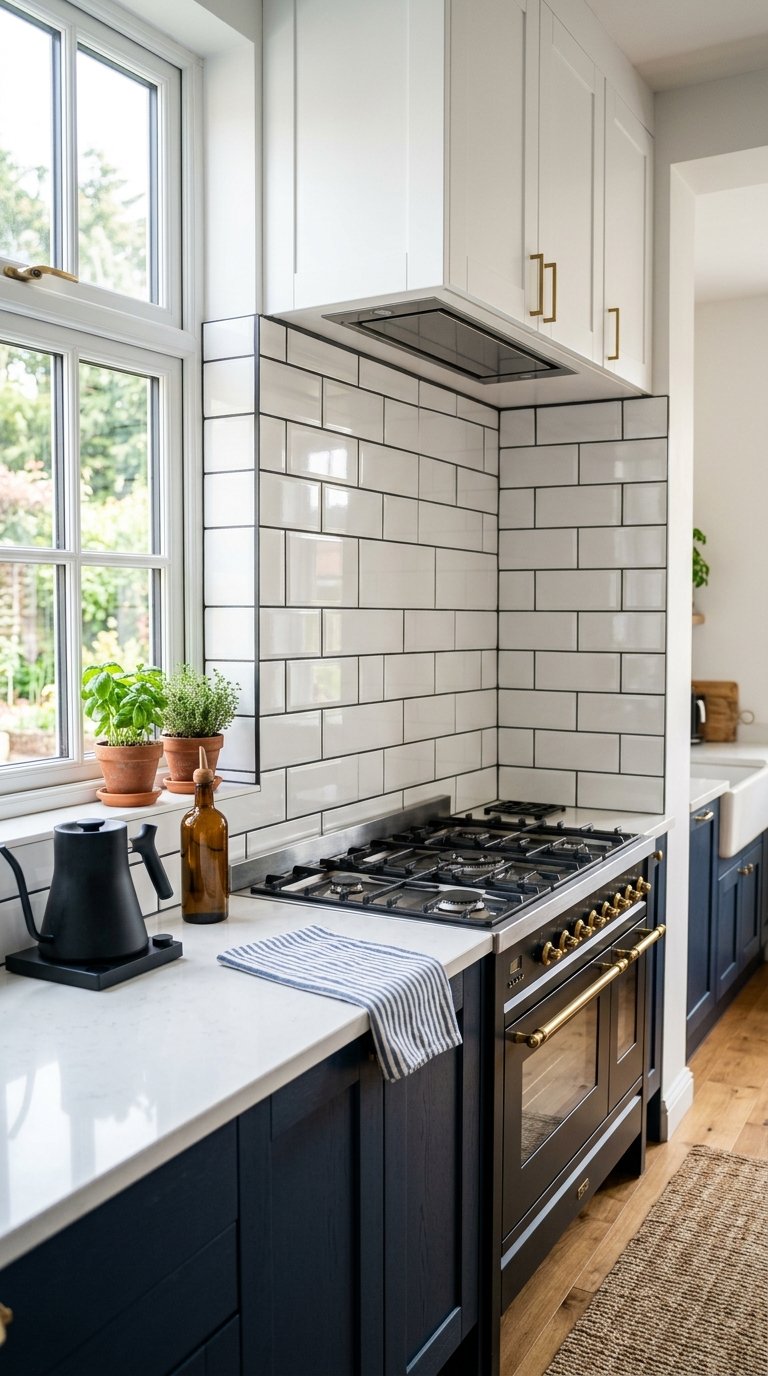
White tile with charcoal or black grout creates a graphic, high-contrast backsplash that makes the tile pattern the design feature. The dark grout lines emphasise the tile grid and give the backsplash a visual intensity that white-on-white grout combinations never achieve.
Dark grout also solves a practical problem: it hides discolouration and food splashes far better than white or light grey grout. In a busy cooking kitchen, this is the maintenance-conscious choice that also happens to look the most designed. The combination works with subway, square, and hex tile shapes equally well.
9. Use Glass Tile for a Light-Reflective Backsplash
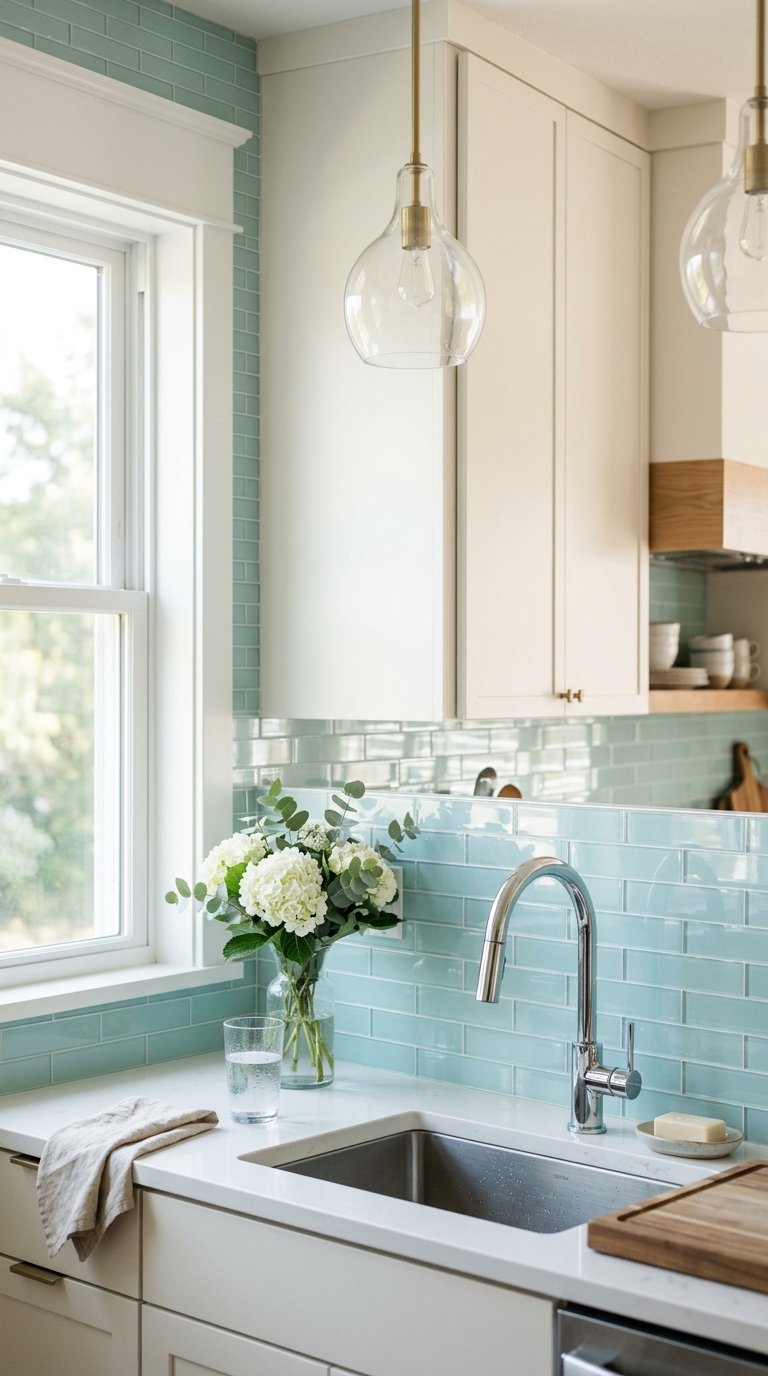
Glass tile reflects light rather than absorbing it, which makes a glass tile backsplash visually enlarge a kitchen by bouncing natural and artificial light back into the room. Clear, frosted, and iridescent glass tiles cost $10 to $40 per square foot and suit modern, coastal, and contemporary kitchen styles.
The light-reflective quality works especially well in north-facing kitchens or basement kitchens where natural light is limited. Install with white tile adhesive rather than grey (the colour shows through glass tile) and use non-sanded grout in a matching glass colour for a seamless finish.
10. Choose Cement Encaustic Tiles for Bold Pattern
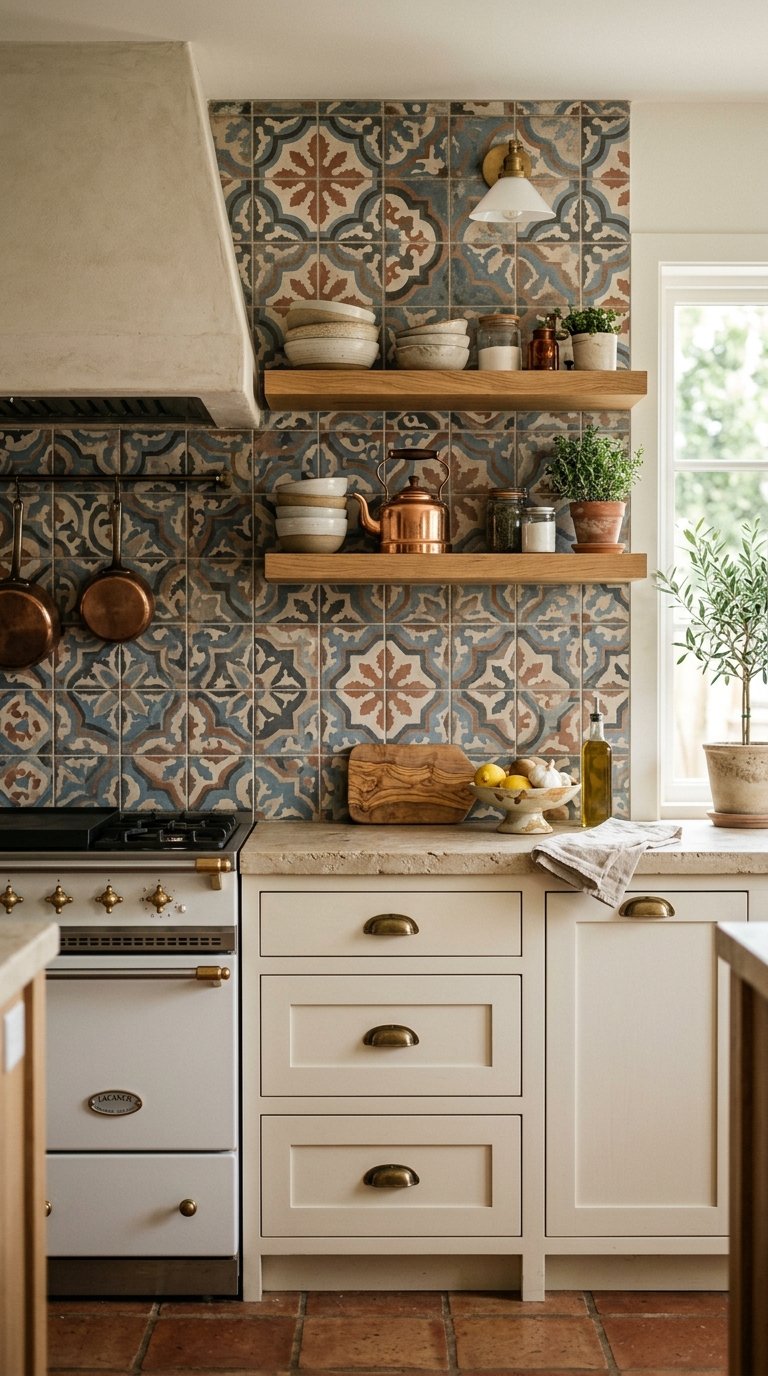
Cement encaustic tiles carry bold geometric, floral, or Moroccan patterns in multiple colours baked into the cement surface. The pattern runs through the tile body rather than sitting on the surface, which means it never chips or fades with cleaning.
Cement tiles cost $8 to $30 per square foot and suit Bohemian, eclectic, Mediterranean, and maximalist kitchen styles. The bold pattern makes the backsplash the room’s primary design statement, which means surrounding cabinets and countertops work best in neutral tones that don’t compete.
11. Install a Mirrored Backsplash for Visual Depth
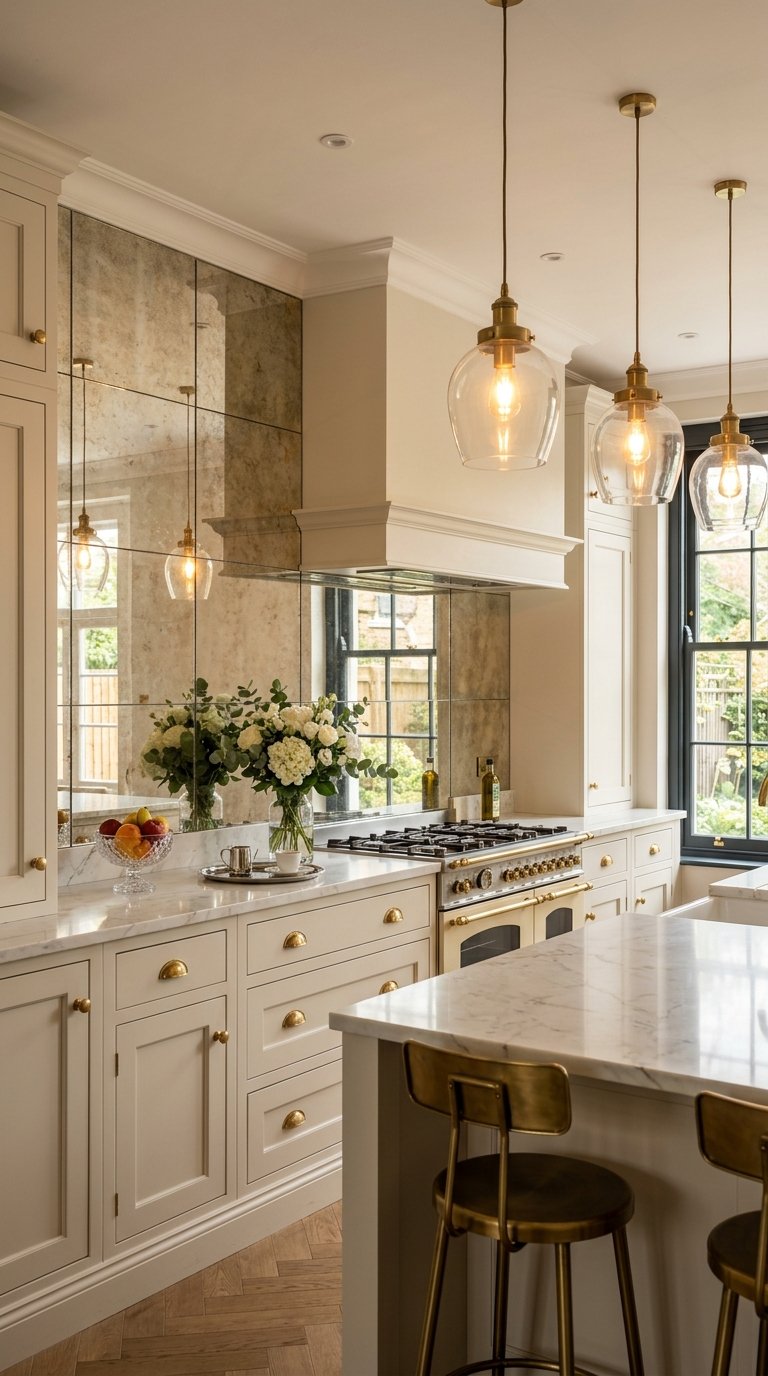
A mirrored backsplash visually doubles the kitchen by reflecting the opposite wall, the countertop objects, and the overhead pendant lights back into the space. Mirrored tile sheets cost $10 to $25 per square foot and suit glamorous, Art Deco, and small kitchen applications where reflection solves the space perception problem.
Use smoked mirror or antiqued mirror tile rather than clear mirror for a warmer, less clinical result. The antiqued mirror has a warm patina that suits traditional and transitional kitchens, while the clear mirror suits more contemporary schemes.
12. Use a Single Large-Format Porcelain Slab as the Backsplash
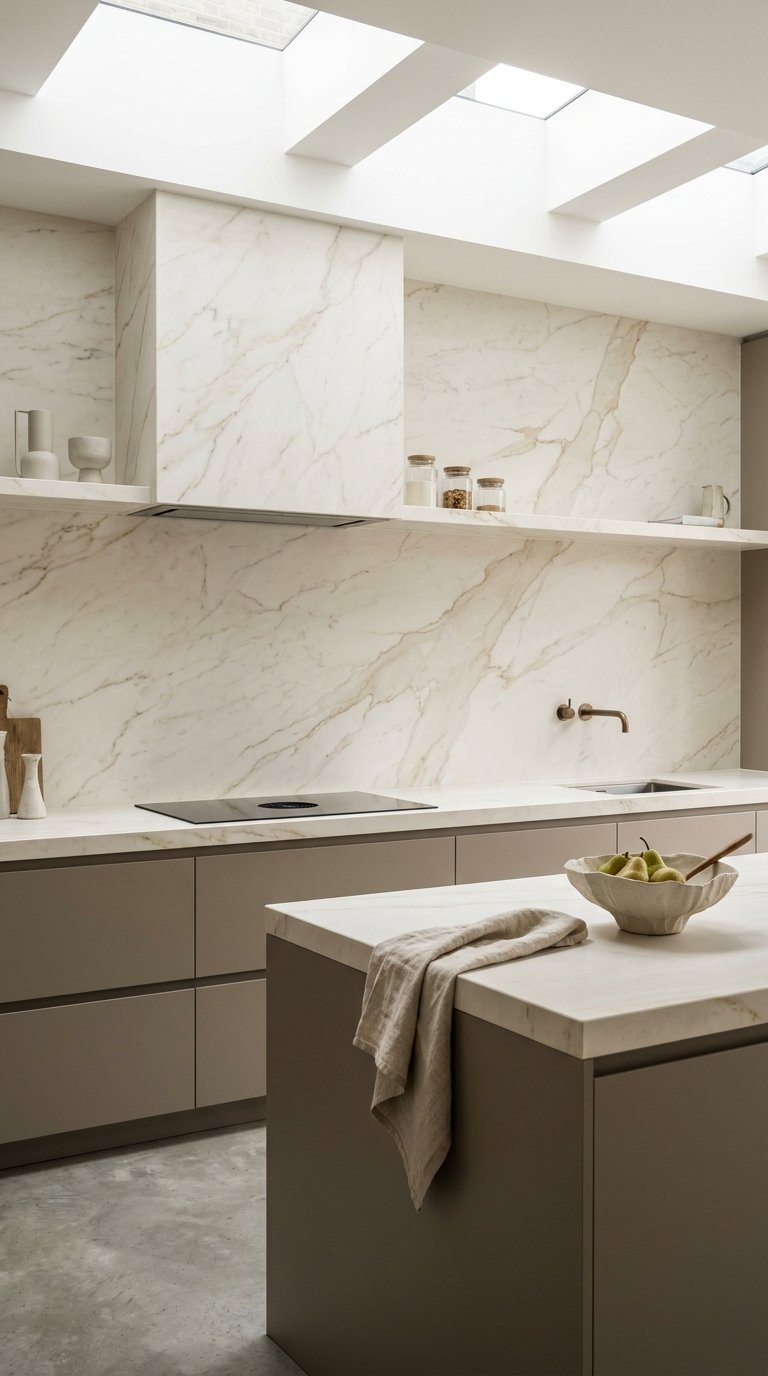
A single large-format porcelain slab (900 x 1800mm or larger) behind the cooktop creates a seamless, grout-free feature wall that reads as a single surface rather than a tiled area. Large-format porcelain slabs in marble, concrete, and stone finishes cost $30 to $100 per square foot.
The absence of grout lines makes this the easiest backsplash surface to clean in a high-cooking kitchen. One large slab also creates a visual focal point that a grid of smaller tiles never achieves, particularly in kitchens where the cooktop wall is the first thing visible from the entrance.
13. Choose Coloured Grout with Neutral Tile to Add Personality
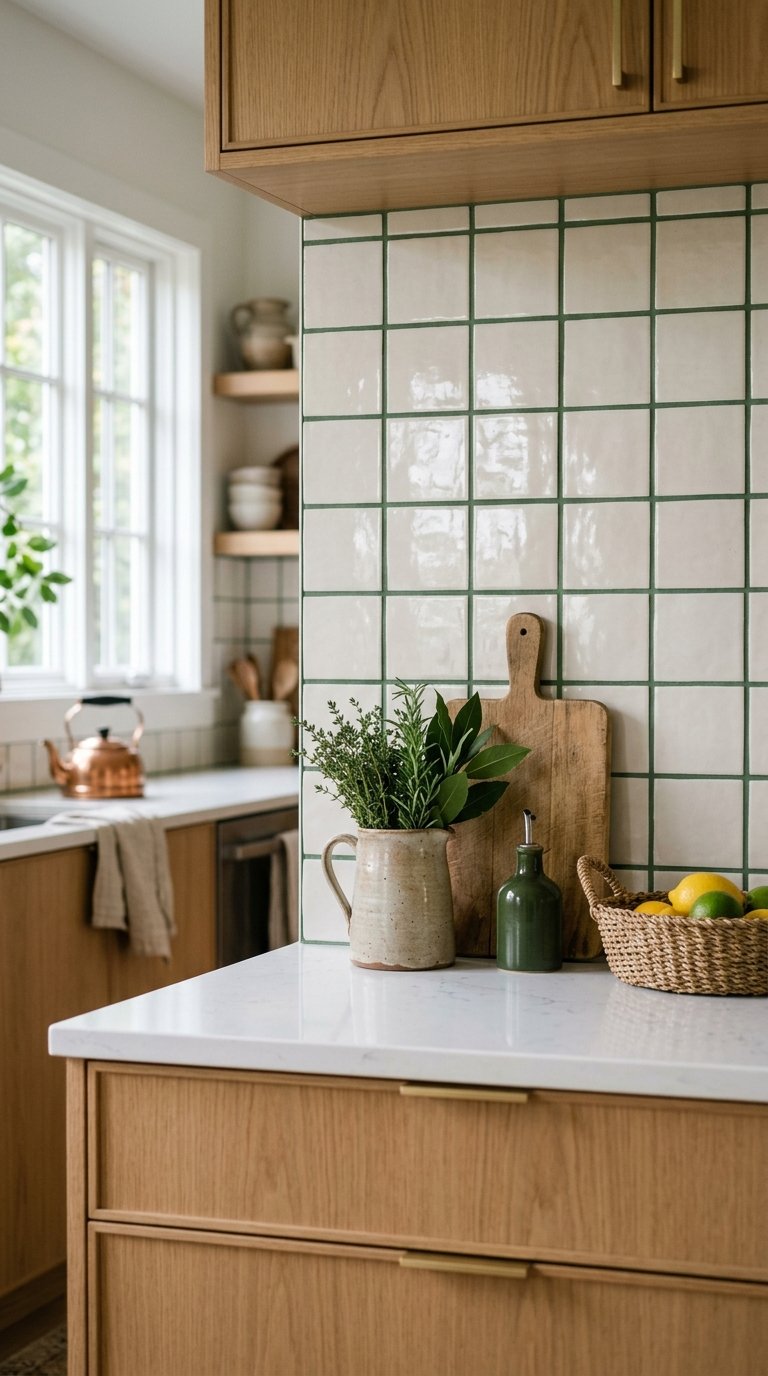
Standard white or cream tile with a coloured grout (terracotta, sage green, navy blue, or deep red) creates a backsplash personality that the tile alone never delivers. The grout colour becomes the design element rather than the tile, which means you achieve a strong result from the most basic and affordable tile.
Coloured grout costs $10 to $25 per bag (covering approximately 50 square feet at standard tile spacing) and applies like standard grout. Seal coloured grout with a penetrating sealer after application to prevent discolouration from cooking oils and food splashes.
14. Install a Brick Backsplash for Rustic Warmth
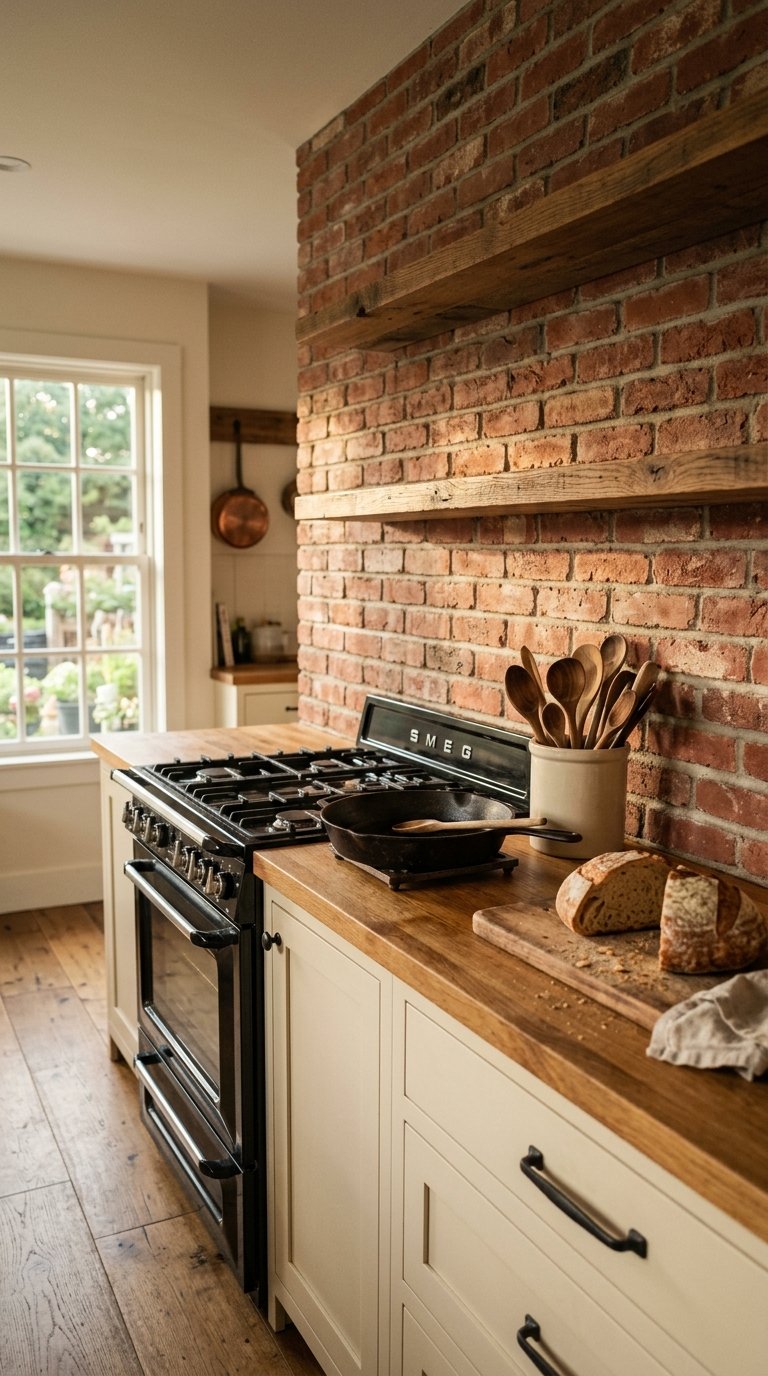
Real brick or brick-effect ceramic tile on a kitchen backsplash adds rustic, warm character that suits farmhouse, industrial, and traditional kitchen styles. Thin brick veneer tile costs $8 to $20 per square foot and installs like standard tile.
The rough texture of brick adds a tactile quality that smooth tile surfaces lack, but it does require more thorough sealing and cleaning in high-grease cooking zones. Use a penetrating sealer on natural brick and position the brick backsplash away from the cooktop if possible, where grease splatter is most intense.
15. Use a Penny Round Mosaic for a Retro Kitchen Look
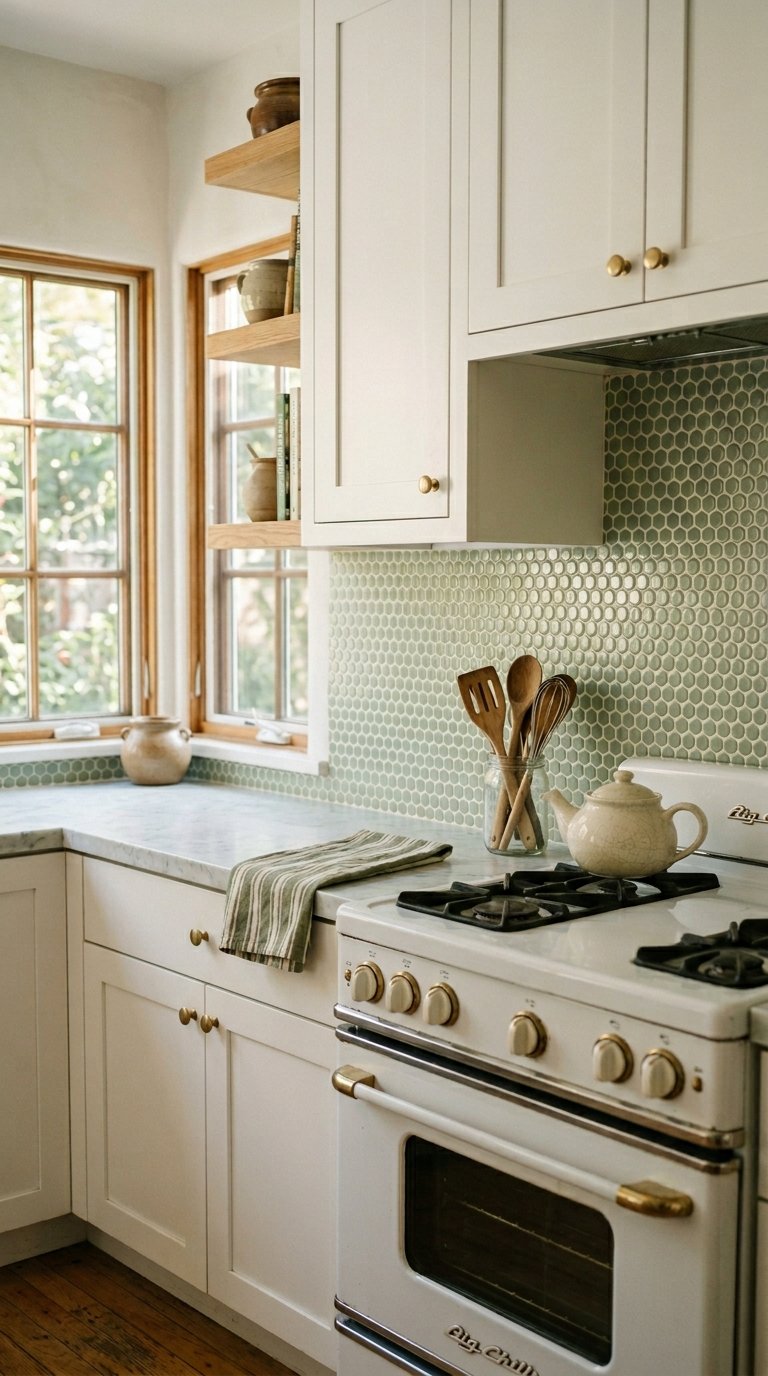
Penny round mosaic tiles (1-inch circular tiles on mesh backing) create a charming, retro backsplash with a distinctive pattern that reads as crafted and detailed from across the room. Penny round mosaics in white, black, sage green, and navy cost $8 to $25 per square foot.
The circular tile creates many more grout lines than rectangular tile, which requires more careful cleaning. Use an epoxy grout rather than standard cement grout in a penny round installation: epoxy grout is non-porous, stain-resistant, and doesn’t require sealing. FYI, the extra grout line cleaning effort is genuinely worth it for the visual result.
16. Choose a Full-Height Kitchen Backsplash from Counter to Ceiling
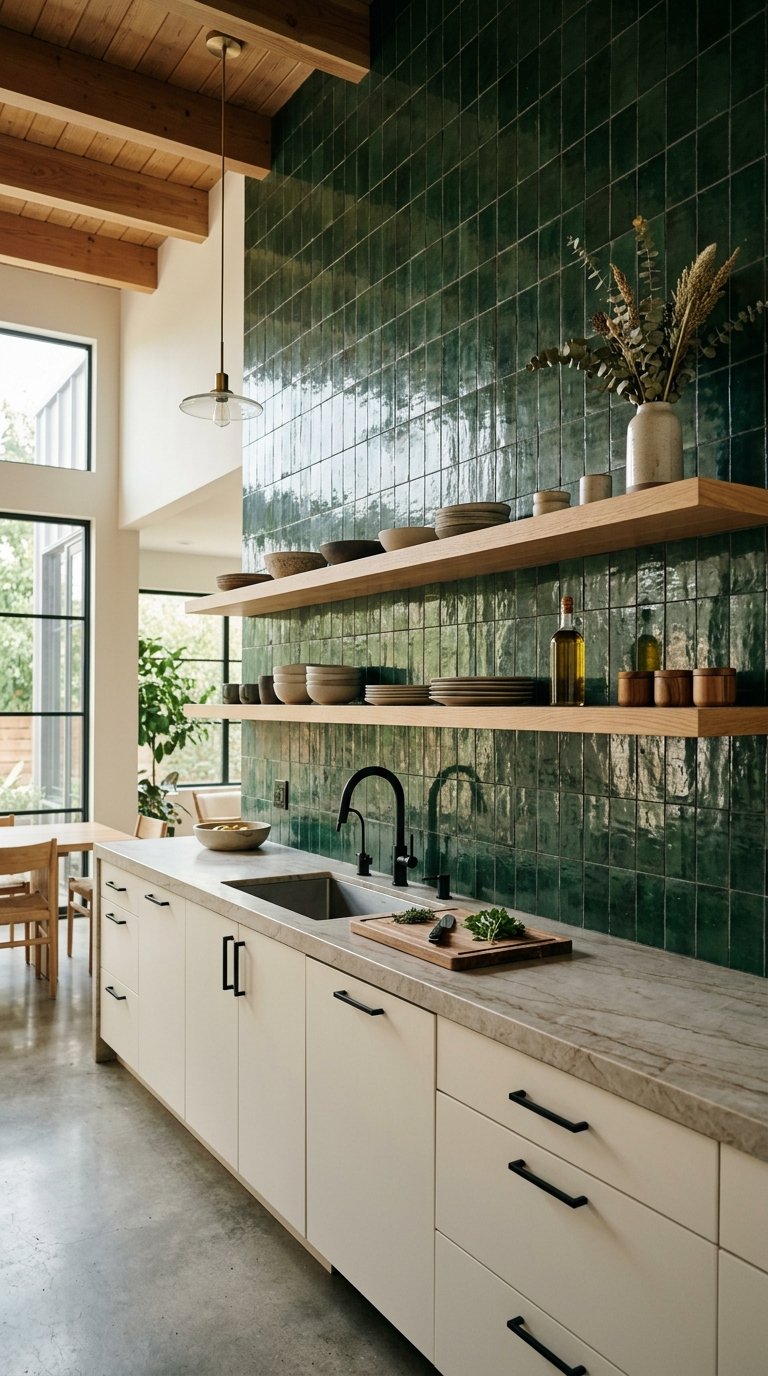
A backsplash that runs from the counter surface all the way to the ceiling (rather than stopping at the bottom of the upper cabinets) creates a dramatic, full-wall tile surface that makes the kitchen feel taller and more considered. The tile area roughly doubles compared to a standard backsplash height.
This approach costs more in materials but eliminates the need for a separate painted wall treatment above the standard backsplash line. Full-height backsplashes suit kitchens with floating shelves instead of upper cabinets, where the uninterrupted tile surface has nothing to compete with.
17. Use a Decorative Border Tile to Frame the Backsplash
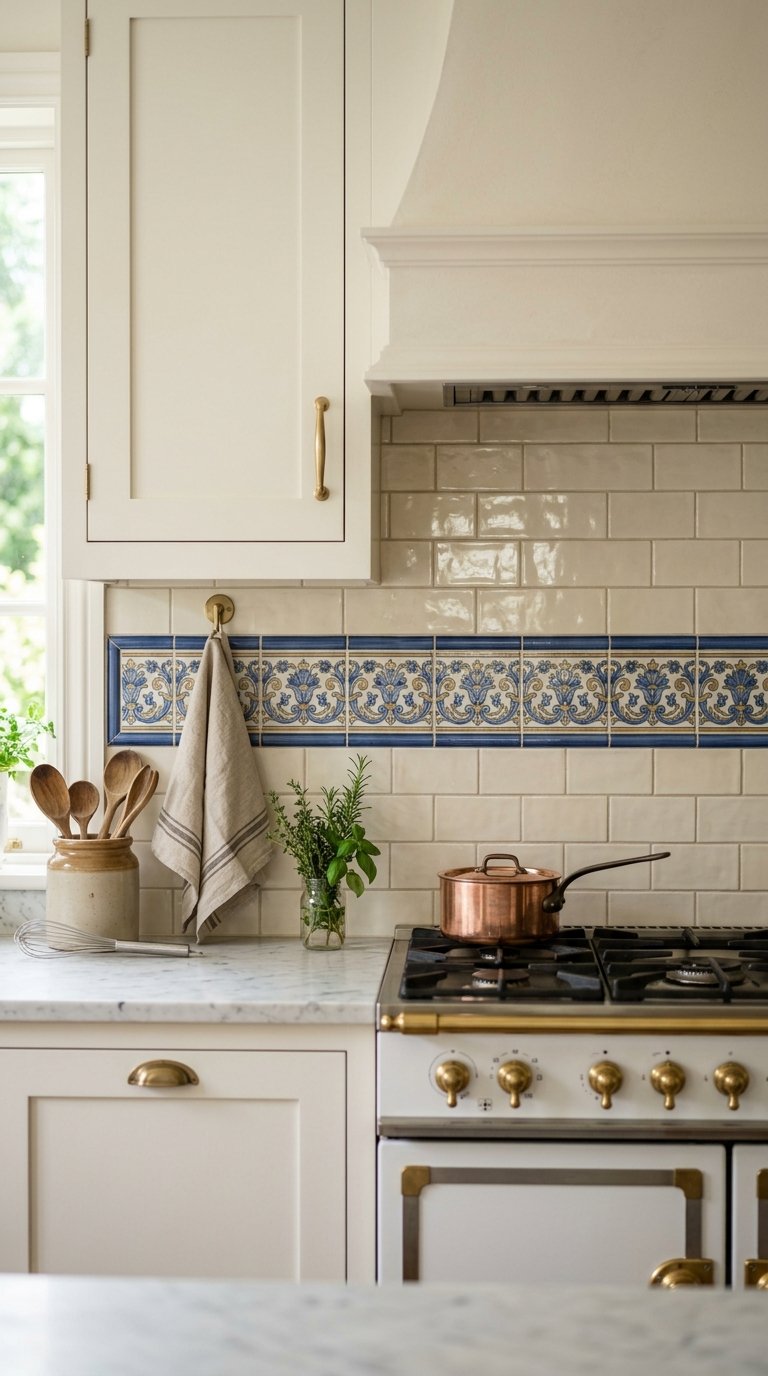
A decorative border tile strip (typically 2 to 4 inches wide) running along the top edge or perimeter of a standard backsplash adds a finished, custom-built detail that simple tile alone never achieves. Border tiles in hand-painted ceramic, glass mosaic, or metallic finish cost $5 to $20 per linear foot.
The border tile technique suits traditional and transitional kitchens where a purely flat tile surface reads as slightly unfinished without additional architectural detail. It also allows you to use a plain, affordable field tile for the main backsplash area while adding design interest through the border alone.
18. Install a Reclaimed Wood Backsplash for a Warm, Organic Look
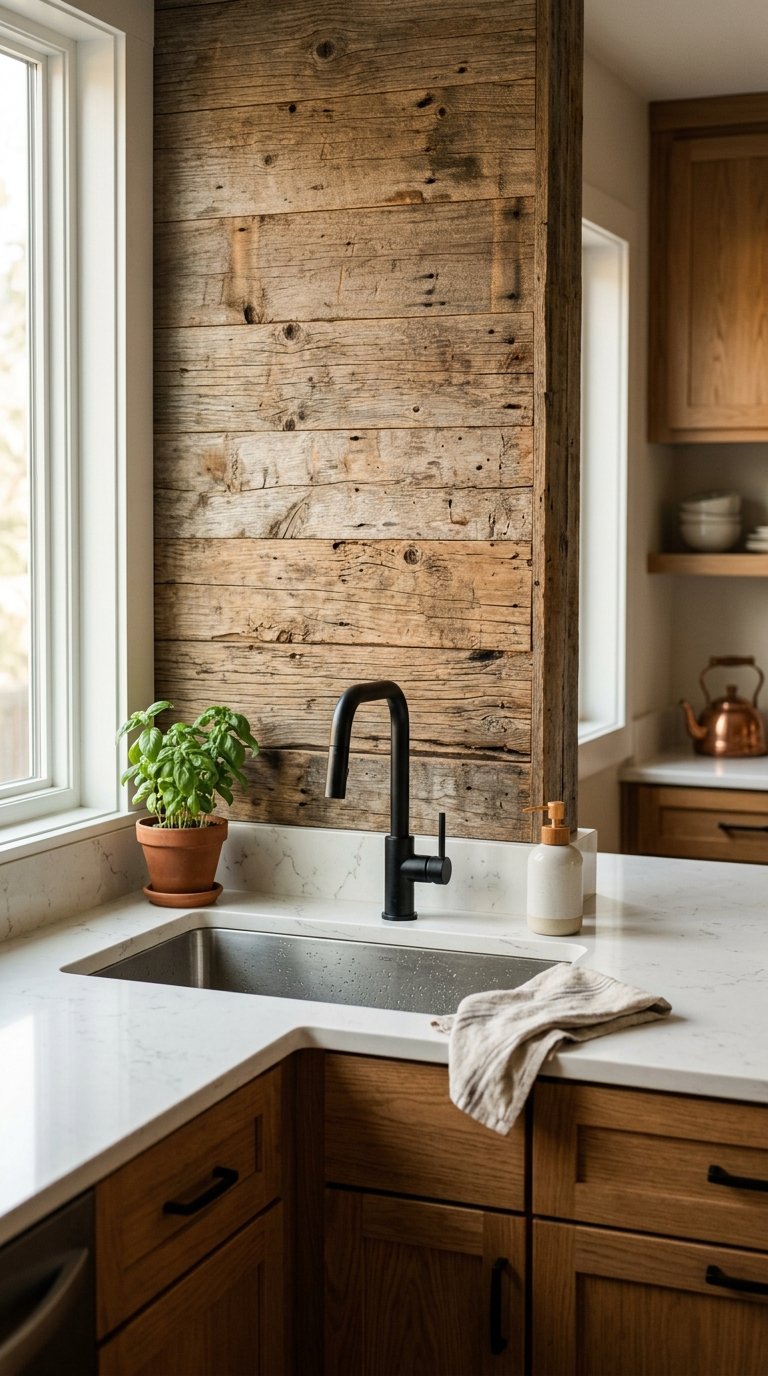
Reclaimed timber planks used as a kitchen backsplash add warmth and organic texture that no tile material replicates. Install reclaimed wood away from the cooktop (position it specifically on the sink wall or counter backsplash sections) and seal with a polyurethane or epoxy finish rated for kitchen moisture.
Reclaimed timber planks cost $5 to $20 per square foot depending on species and condition. The wood grain, nail holes, and age marks in reclaimed timber create a surface with more visual character than new timber cut to look old. Position reclaimed wood backsplash sections where grease splatter is minimal and moisture is manageable.
19. Choose a Metallic Tile Backsplash for a Modern Kitchen
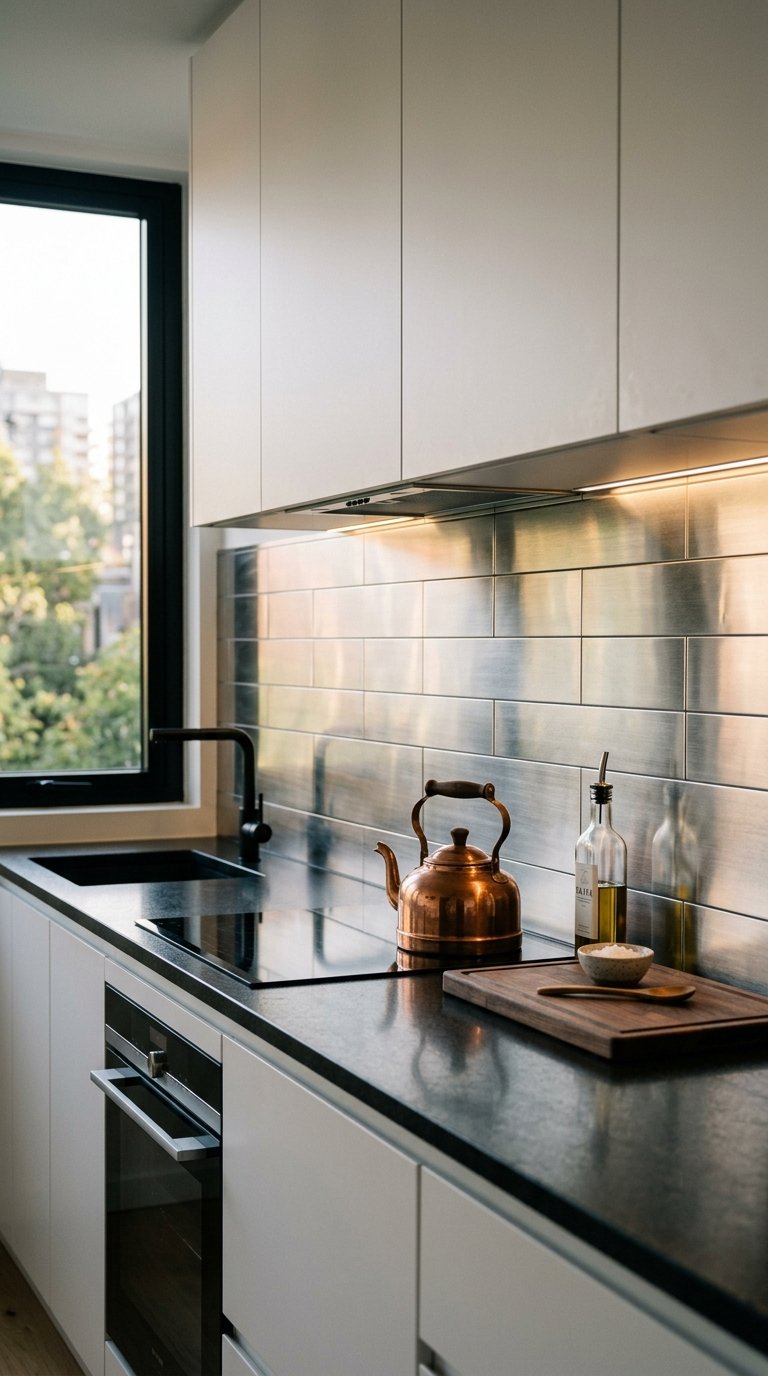
Stainless steel, brushed brass, copper, and metallic-glaze ceramic tiles create a reflective, contemporary backsplash that suits industrial, modern, and glam kitchen styles. Stainless steel tile sheets cost $15 to $40 per square foot; brushed brass tiles cost $20 to $60 per square foot.
The metallic surface reflects both warm lamp light and cooler natural daylight differently, making the backsplash appear to change character across the day. Clean metallic tile with a soft cloth and a non-abrasive cleaner to prevent surface scratching, which shows more clearly on metallic surfaces than on ceramic or stone.
20. Use a Painted Backsplash as a Budget Solution
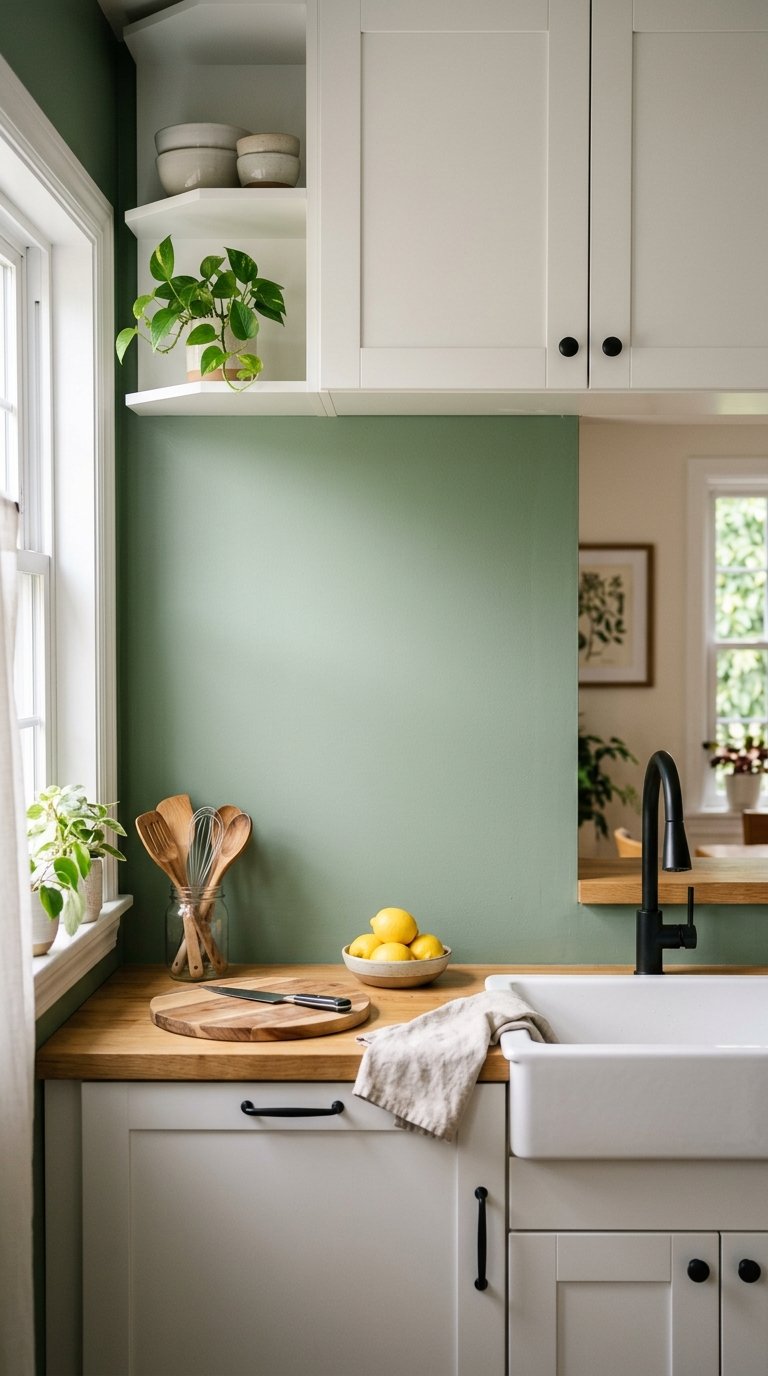
A painted kitchen backsplash costs $20 to $60 in materials (a kitchen-grade washable paint and a quality roller) and delivers a clean, uniform colour update in one day. Semi-gloss or satin finish paints clean more easily than flat finishes in a kitchen environment and resist moisture better.
Choose a bold colour for the backsplash (deep green, navy, terracotta, or mustard) against white or neutral cabinetry for a strong visual result that reads as intentional rather than budget-constrained. A painted backsplash is the only option that’s completely reversible in an afternoon and costs under $100 total.
21. Install a Pattern-Inset Backsplash with Patterned Tile Sections
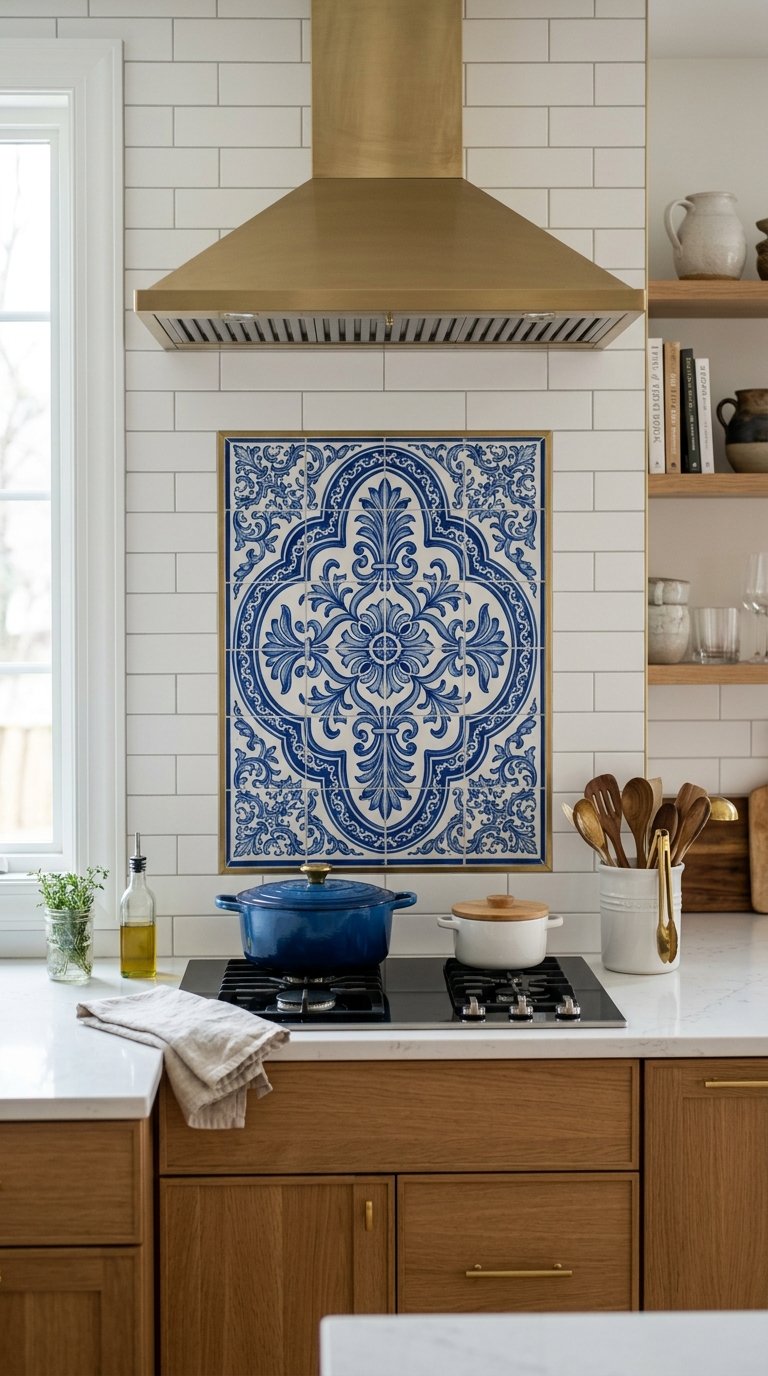
A backsplash that uses plain field tile for the majority of the surface with a central section of patterned or decorative tile directly behind the cooktop creates a focal-point inset without covering the entire backsplash area in expensive decorative tile. The patterned inset typically spans 24 to 36 inches wide and sits centred on the cooktop.
This approach costs significantly less than a full patterned backsplash while delivering the same visual impact. The plain field tile around the inset frames the patterned section and prevents the pattern from reading as repetitive across a large surface.
22. Choose a Fluted or Ribbed Ceramic Tile for Texture
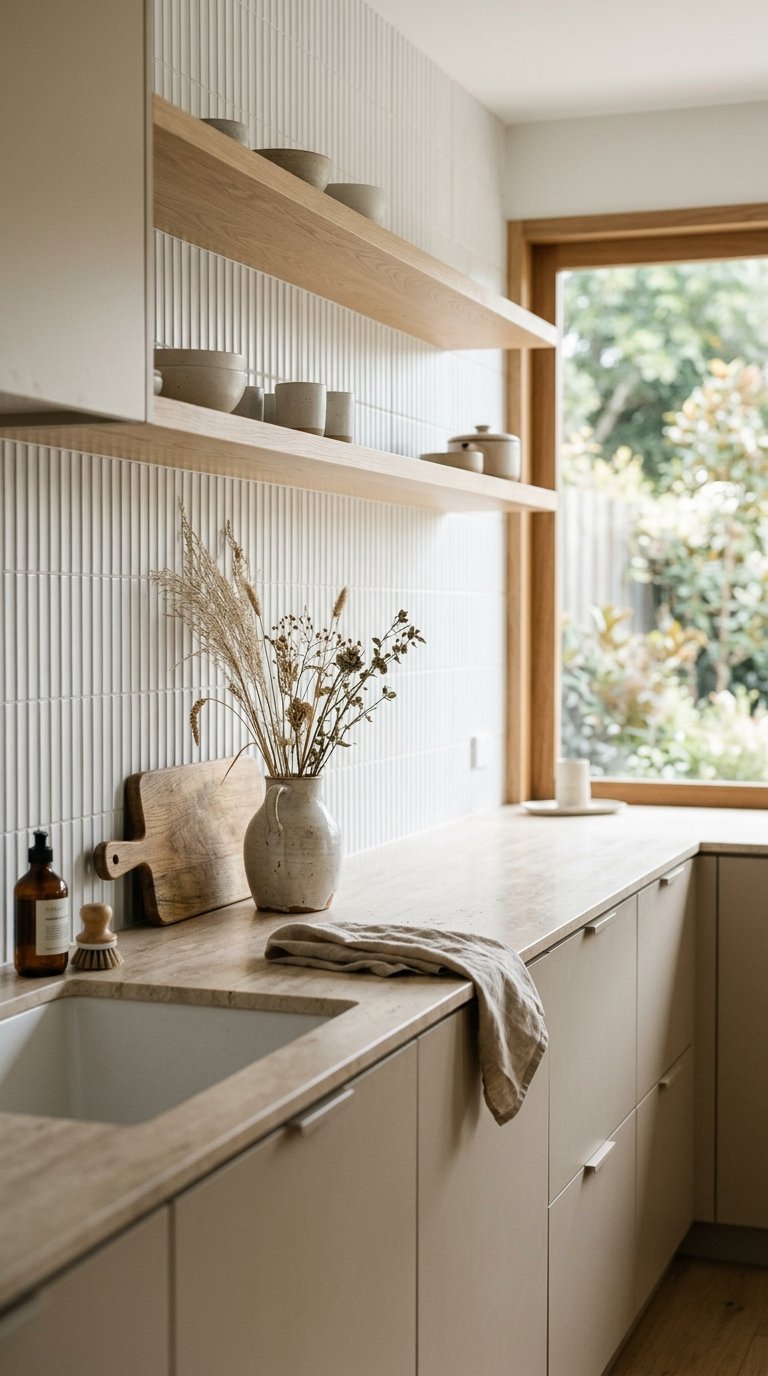
Fluted or ribbed ceramic tiles with a three-dimensional channel surface add shadow and texture to a backsplash wall that flat tile surfaces never achieve. The fluted surface catches directional light from pendant lights or under-cabinet LEDs and creates dynamic shadow lines across the wall throughout the day.
Fluted ceramic tiles cost $12 to $35 per square foot and suit contemporary, Japandi, and modern transitional kitchens. Install vertically for a column effect that heightens the room, or horizontally for a linear effect that widens it. The direction of installation changes the entire character of the same tile.
23. Use a Bold Colour Tile Backsplash as the Kitchen’s Statement Piece
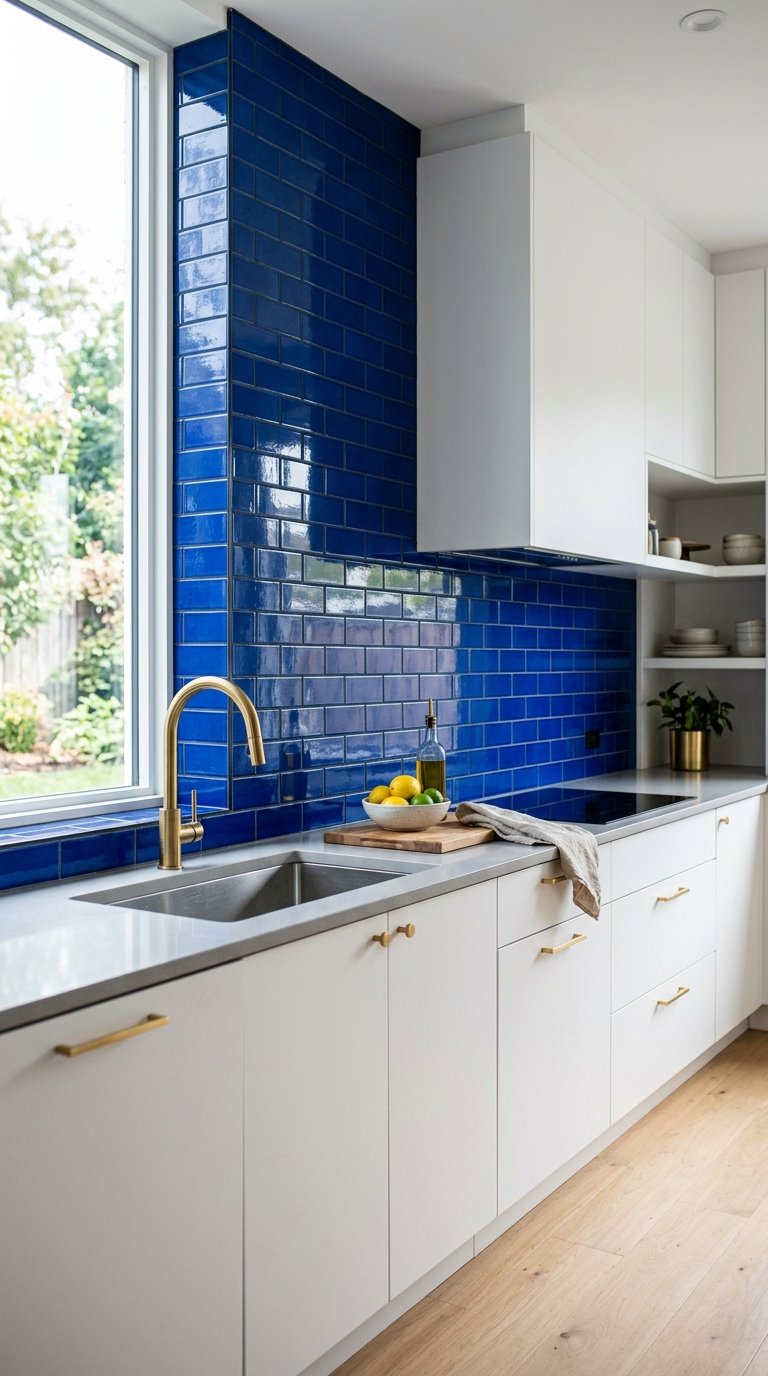
A backsplash in a strong, deliberate colour (cobalt blue, forest green, deep burgundy, or burnt orange) makes the entire kitchen feel designed around a single confident decision. The backsplash colour becomes the room’s palette anchor, and every other material (cabinetry, countertop, hardware) references it.
Bold colour backsplash tile costs the same as neutral tile ($5 to $30 per square foot) and delivers dramatically more personality per dollar. Keep cabinetry in white, cream, or natural wood and countertops in neutral stone or quartz so the backsplash colour reads clearly without competition. 🙂 The boldest backsplash decision in this list is also the most rewarding one to live with every day.
Final Thoughts
Your kitchen backsplash is the easiest surface in the kitchen to change and the one that delivers the most visible result per dollar spent. Whether you’re sealing a deal with zellige tiles or committing the most decisive act of your home ownership career by painting it cobalt blue, the right backsplash makes everything around it look better.
Start with your kitchen’s existing palette. Match your countertop material and cabinet colour first, then choose the backsplash that complements both while adding something new. Texture, pattern, colour, or material contrast: pick one and commit. A backsplash that tries to do all four at once ends up doing none of them well.