21 Mediterranean Kitchen Ideas to Transform Your Home Style
You walk into a Mediterranean kitchen and something shifts. The air feels warmer. The light feels richer. The whole room feels like somewhere people actually want to spend time.
That is not an accident. Mediterranean kitchen design is built on specific materials, specific colours, and a specific philosophy about how a kitchen should feel and function. It prioritises warmth, texture, natural materials, and the kind of lived-in quality that no amount of flat-pack cabinetry achieves.
These 21 Mediterranean kitchen ideas translate that philosophy into practical decisions you make in your actual kitchen. Every idea here works in a real home, not just a Tuscan farmhouse.
1. Use Warm Terracotta Floor Tiles
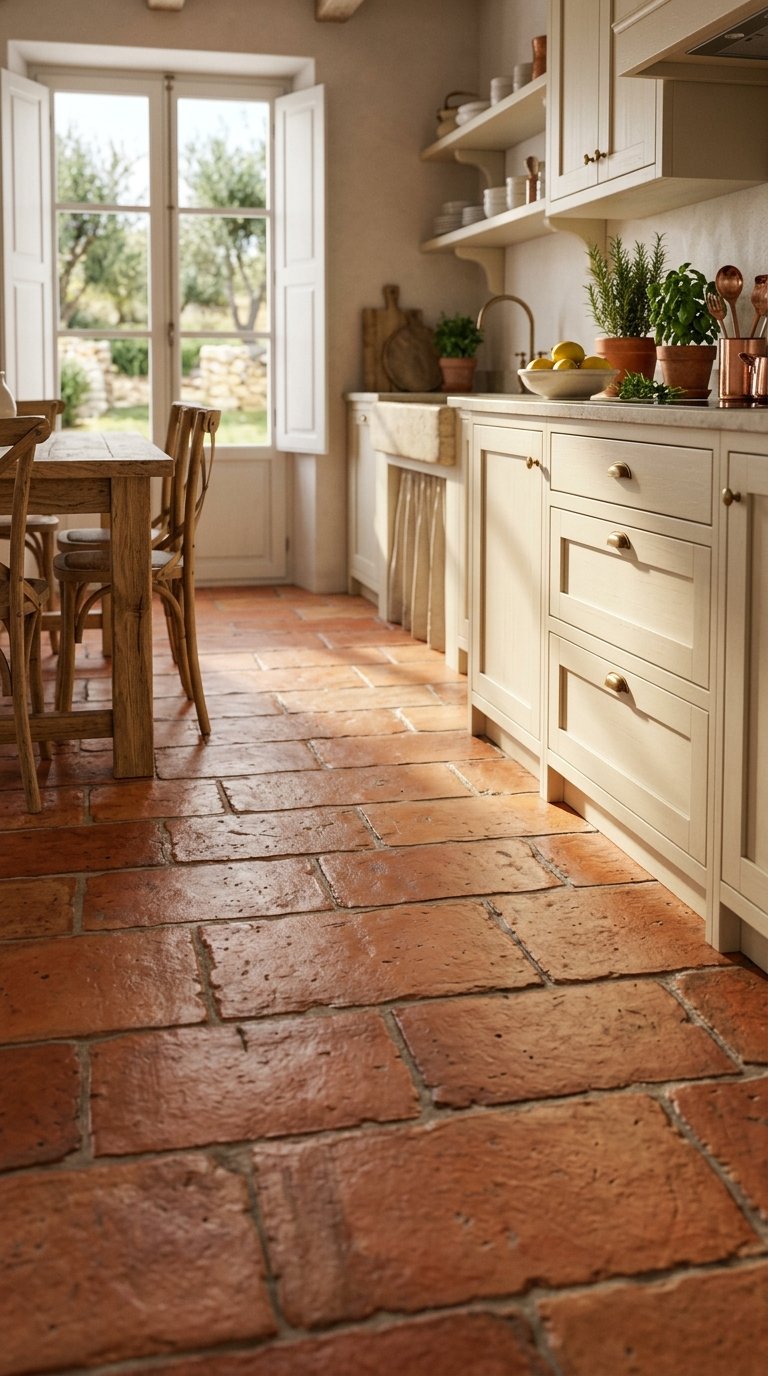
The floor sets the tone for every Mediterranean kitchen. Terracotta tiles set it correctly.
Handmade terracotta floor tiles in warm burnt orange and earth tones create the foundation that every other Mediterranean kitchen element builds on. Their slight irregularity in size, colour, and surface texture gives the floor an authentic, aged quality that machine-made tiles never replicate.
Terracotta tiles require sealing before use and periodic resealing to prevent staining and moisture penetration. This maintenance commitment is real but manageable. A properly sealed terracotta floor handles a kitchen environment well and develops a beautiful patina over decades of use.
Pair terracotta floor tiles with cream or white cabinets, stone countertops, and warm wooden accents. The earthy warmth of the terracotta connects naturally with all of these materials and creates a cohesive Mediterranean palette from the floor up.
2. Install a Hand-Plastered Range Hood
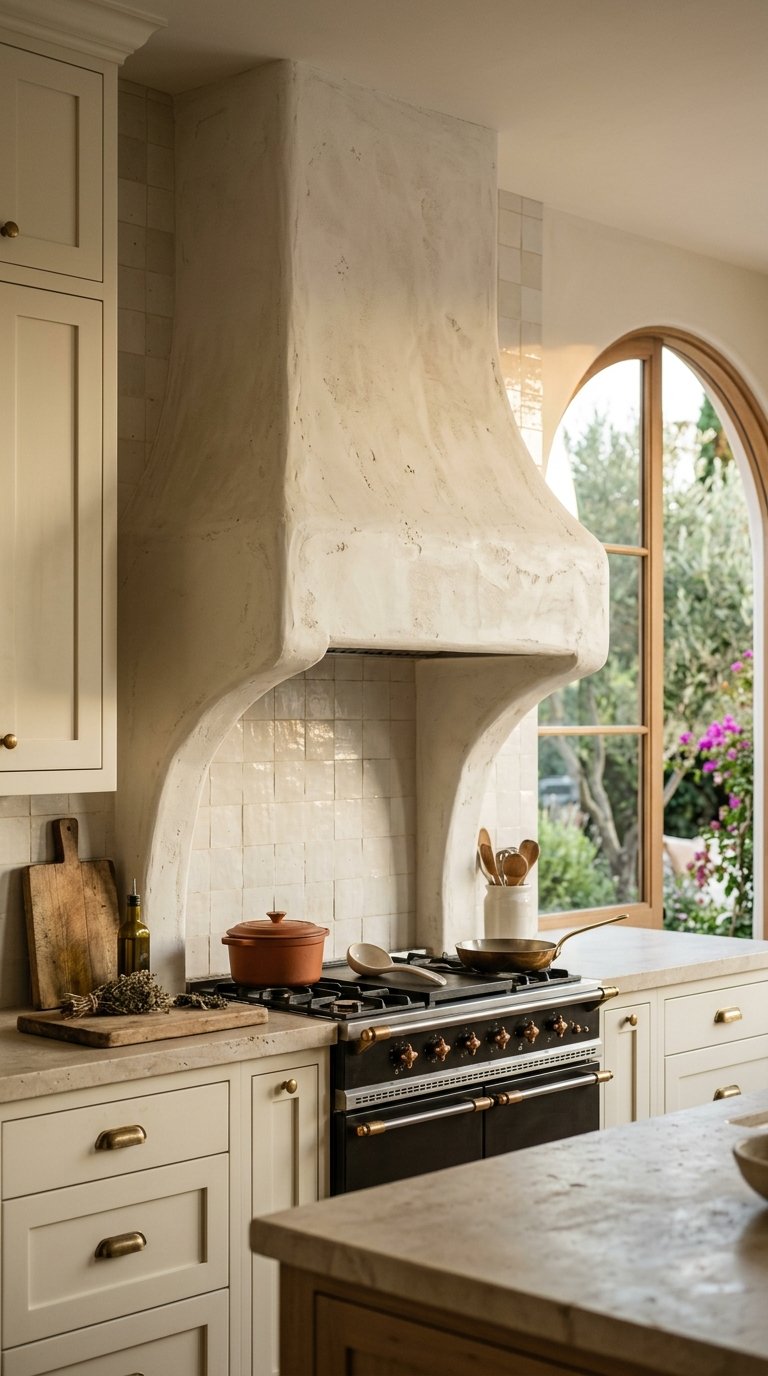
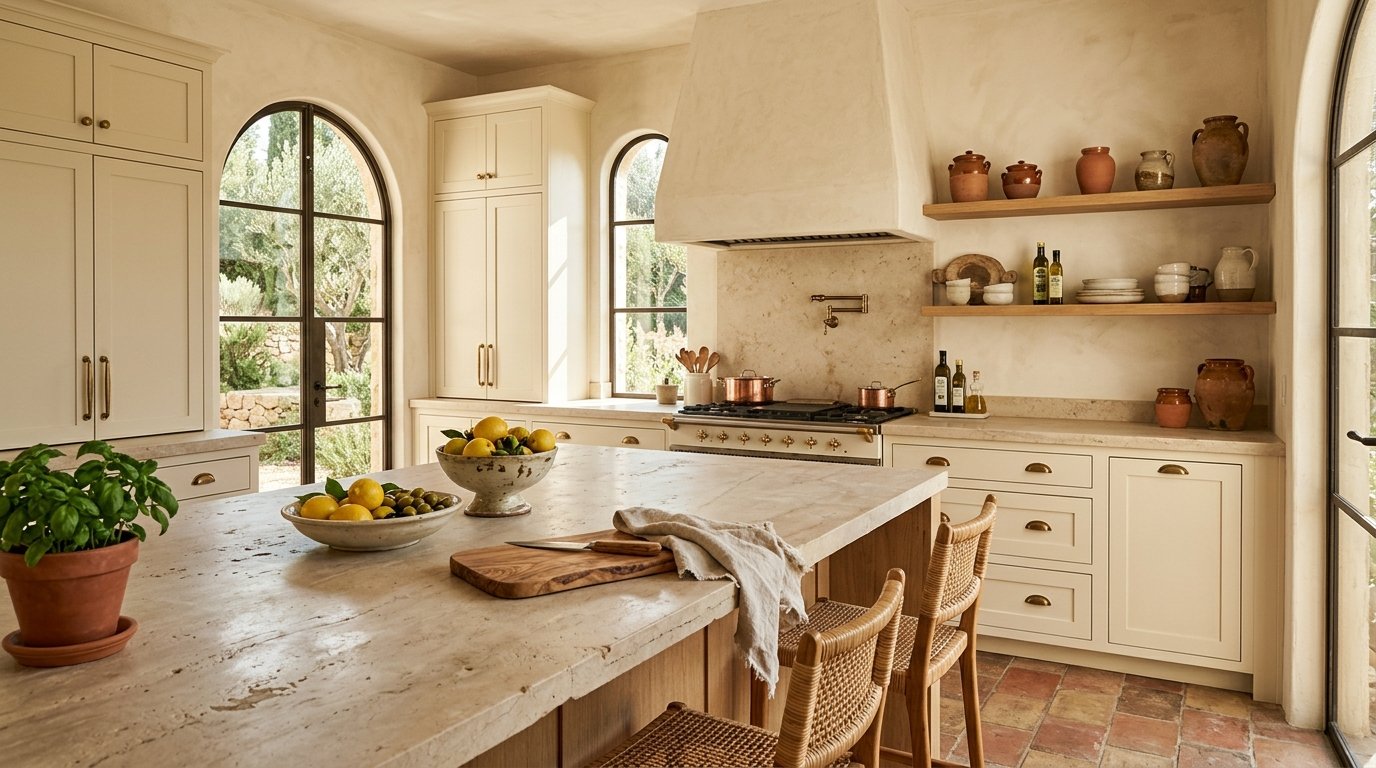
Nothing signals Mediterranean kitchen design more clearly than a hand-plastered range hood above the cooktop.
A sculptural plaster range hood with gently curved sides, a wide skirt, and a hand-applied finish creates an architectural focal point that anchors the entire kitchen around the cooking zone. It looks like it has been in the house for generations, which is precisely the effect a Mediterranean kitchen aims for.
The application process uses multiple coats of lime plaster or gypsum plaster applied with a brush or trowel in overlapping, irregular strokes. No two plastered hoods look identical. The slight variation in surface texture and tone across the finished surface is the entire point.
Finish the plaster in a warm white, soft ochre, or pale terracotta tone. These tones suit the Mediterranean colour palette and work with the warm kitchen lighting conditions that the style requires.
3. Choose Cream or Off-White Cabinets
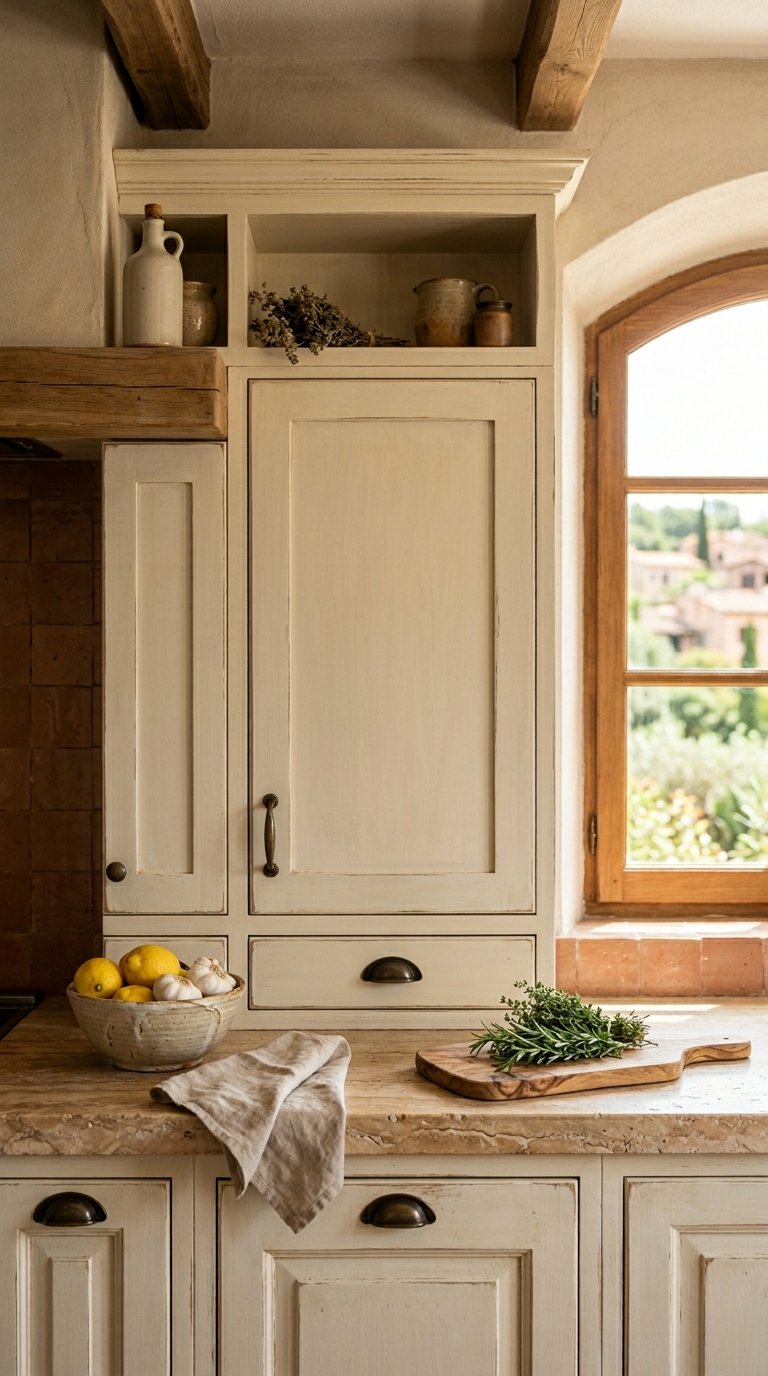
Mediterranean kitchen cabinets are rarely bright white. They are warm. They are aged. They feel like they have lived a life.
Cream or warm off-white cabinet colours with a slightly aged or distressed finish suit the Mediterranean aesthetic far better than clean contemporary white. The warmth of the colour connects with the terracotta floor, the stone countertops, and the warm lighting that define the style.
Shaker-style cabinet doors work particularly well in a Mediterranean kitchen. The simple recessed panel detail adds dimension without the ornate carving of more traditional styles. Paint them in a warm cream with a lightly distressed edge finish for an authentic aged quality.
Pair cream cabinets with aged bronze or hand-forged iron hardware. Both finishes suit the Mediterranean palette better than polished chrome or brushed nickel, which read as too contemporary and too cold for the warm, earthy quality the style requires.
4. Add Open Shelving for Ceramic Display
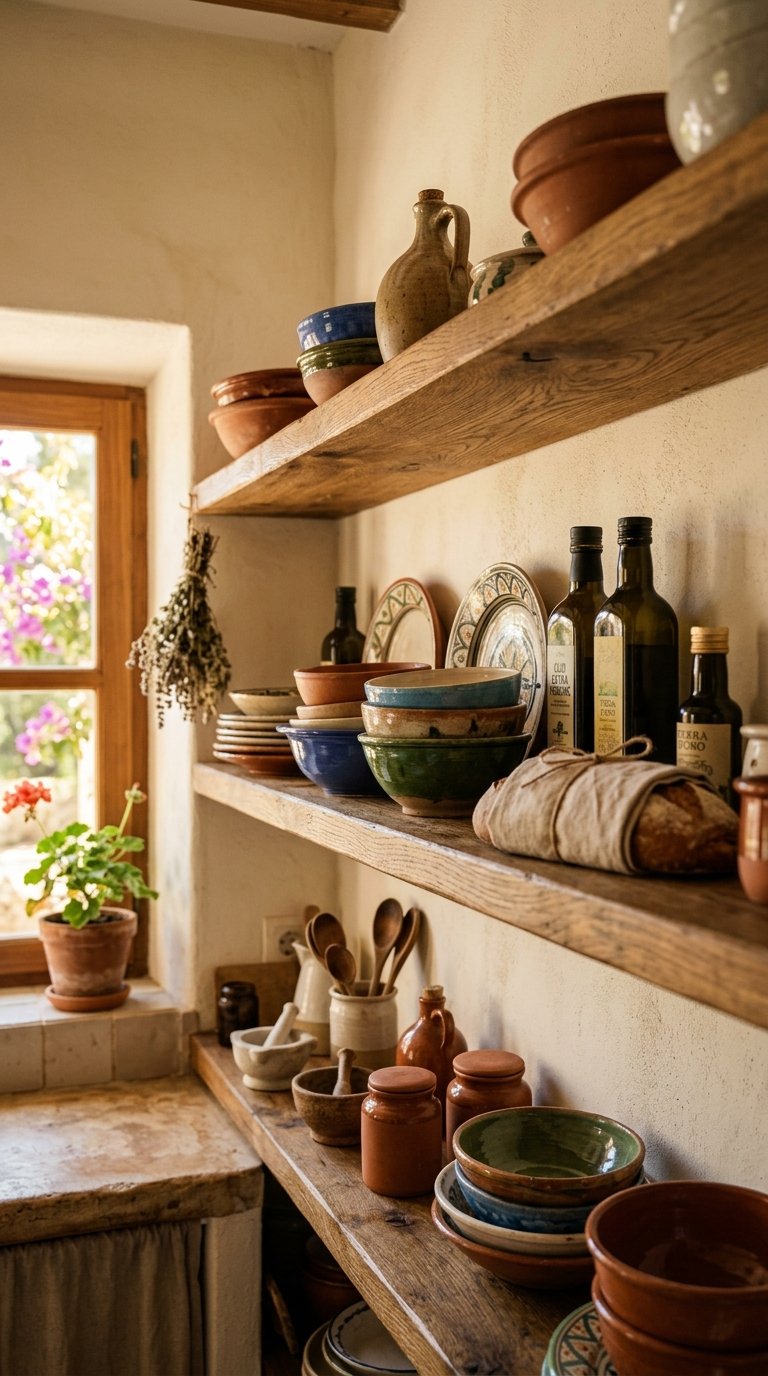
Mediterranean kitchens display their ceramics. They do not hide them behind cabinet doors.
Open wooden shelves holding a curated collection of hand-painted ceramic plates, olive oil bottles, clay pots, and artisan bowls create a living display that builds the Mediterranean character of the kitchen with every object added.
The shelves themselves should be in solid timber rather than painted MDF. Natural wood in warm oak, olive wood, or chestnut suits the Mediterranean material palette. The shelf edges should be simple and unadorned.
Style the shelves with restraint. Three rows of displayed ceramics and food staples looks considered and authentic. Every inch stuffed with objects looks like a market stall. Leave deliberate space between groupings and let the wall behind the shelf breathe.
5. Use a Natural Stone Countertop
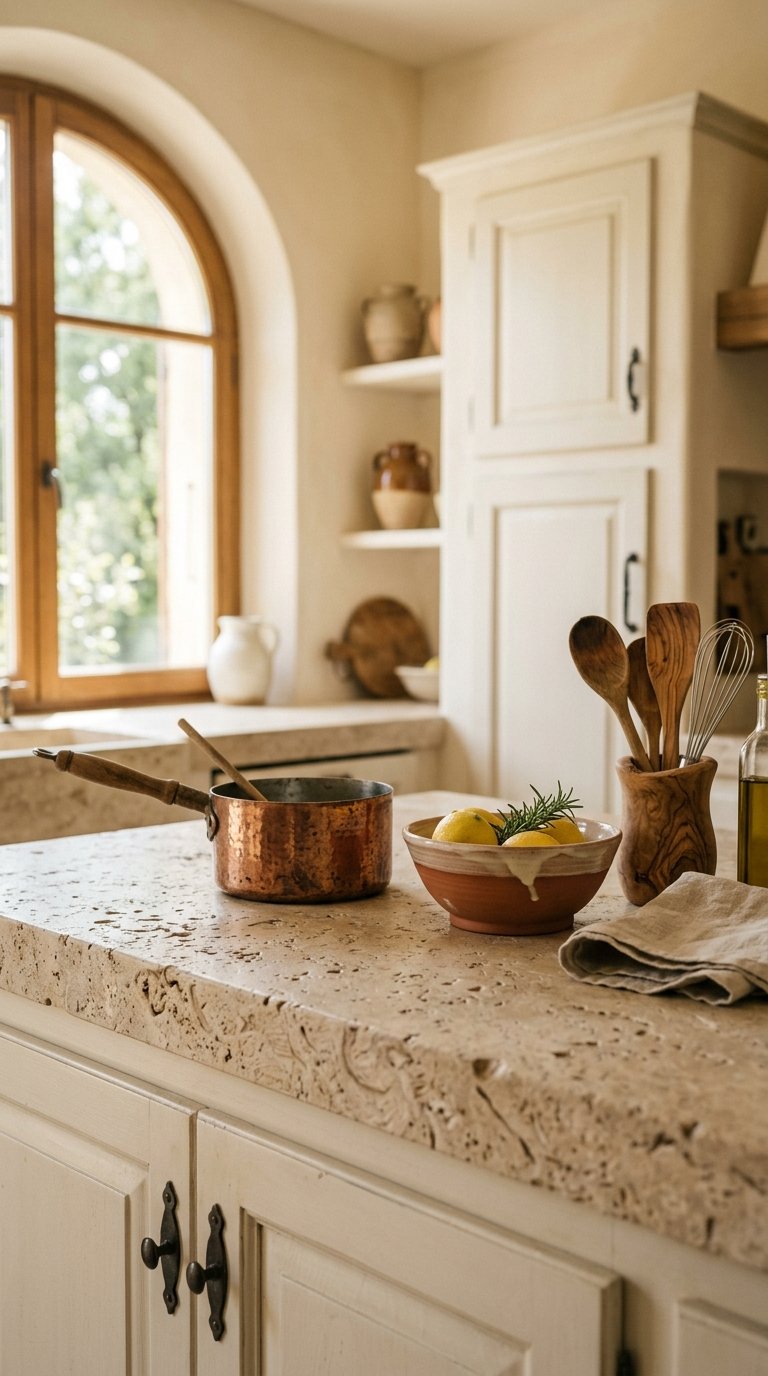
Stone countertops are non-negotiable in a genuine Mediterranean kitchen. The natural variation, the weight, and the aged quality of stone connects the kitchen to the landscape and building traditions the style draws from.
Honed marble, rough-hewn limestone, and aged travertine all suit the Mediterranean kitchen palette better than polished engineered surfaces. The honed or rough finish rather than the polished surface is important. A highly polished stone countertop reads as contemporary. A honed or textured stone reads as historic and organic.
Honed marble requires more maintenance than polished marble because the unsealed surface absorbs stains more readily. Limestone and travertine require sealing but develop a beautiful patina with use. For a working kitchen, limestone is often the more practical choice between these options.
The countertop edge profile matters in a Mediterranean kitchen. A thick, slightly rounded edge in natural stone reads as hand-crafted. A thin, sharp machined edge reads as contemporary and works against the style.
6. Install a Decorative Tile Backsplash
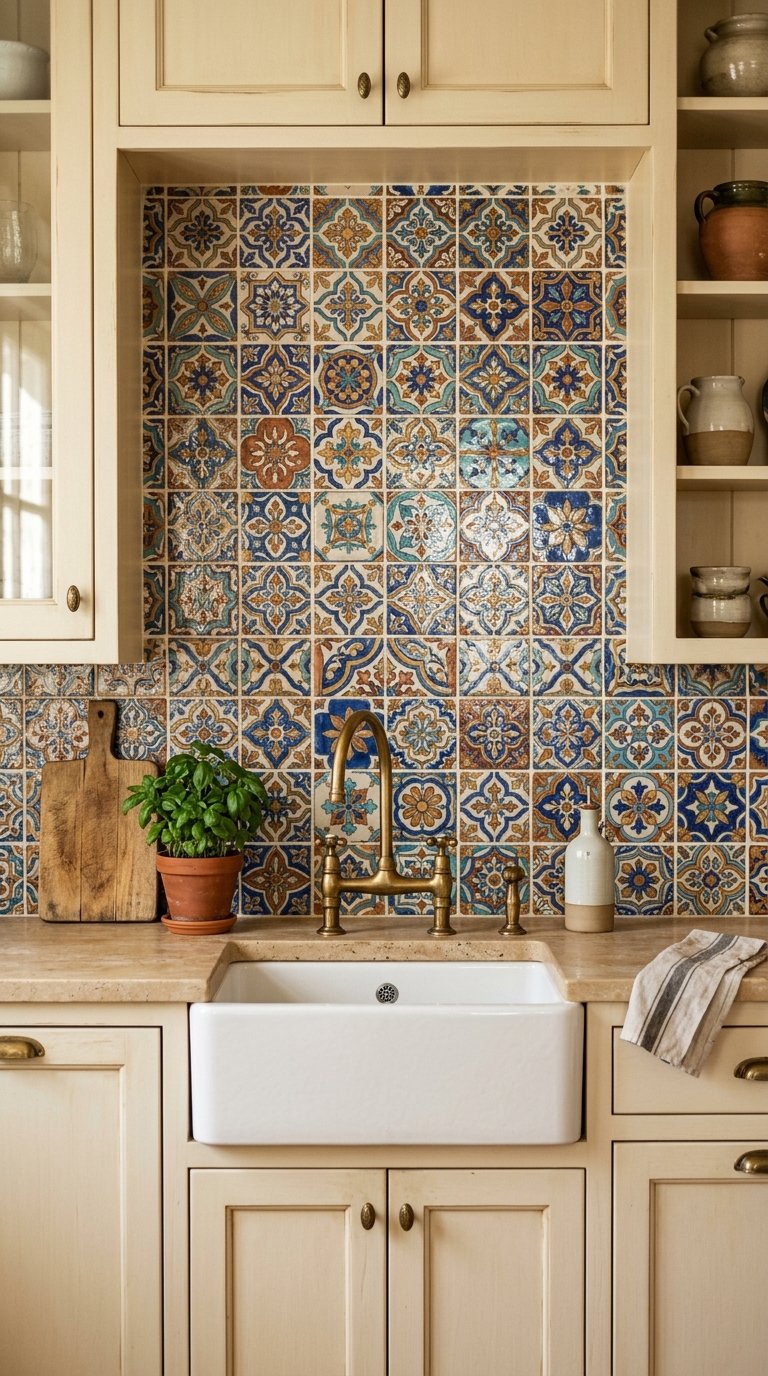
The backsplash in a Mediterranean kitchen is one of its most expressive surfaces. It carries colour, pattern, and handmade quality in a single zone.
Hand-painted Talavera tiles, Moroccan zellige tiles, Spanish encaustic tiles, and Italian majolica tiles all create the kind of backsplash that people walk into a kitchen and immediately notice. The pattern and colour variation across the tile surface tells a story about craft and tradition that plain subway tiles never achieve.
A fully tiled backsplash running from countertop to underside of upper cabinets creates the most dramatic effect. A partial backsplash behind the cooktop only creates a focal point behind the cooking zone while leaving the rest of the kitchen backsplash in a plainer material.
IMO, this is the single Mediterranean kitchen idea that delivers the most visual impact per square metre of any idea on this list. Even in an otherwise neutral kitchen, a hand-painted tile backsplash shifts the entire character of the room toward the Mediterranean.
7. Add Exposed Wooden Ceiling Beams
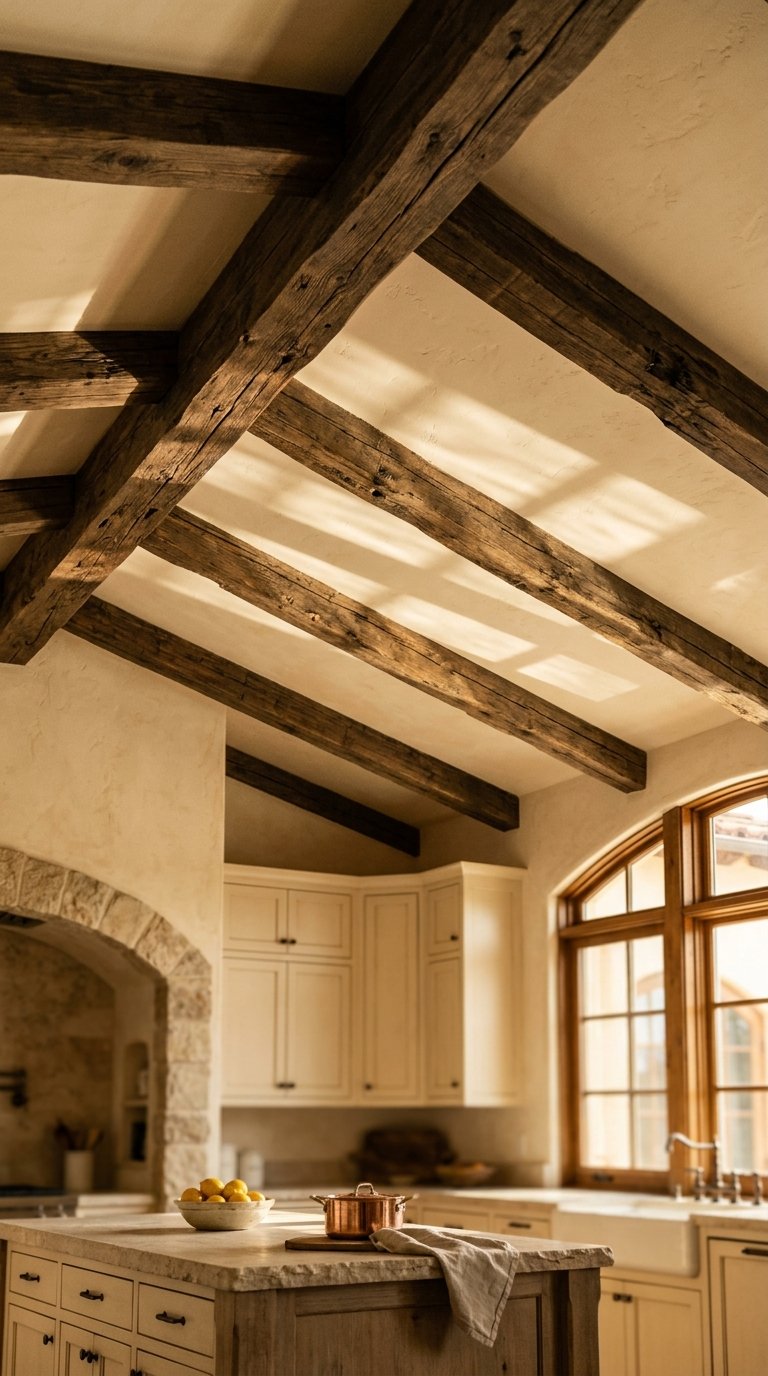
Exposed ceiling beams in a Mediterranean kitchen add architectural scale, warmth, and a sense of age that no other ceiling treatment achieves.
Dark walnut, olive, or reclaimed oak beams running across the kitchen ceiling create a visual weight above that grounds the room and makes the ceiling feel intentional rather than just the surface above the cabinets.
Real structural timber beams are the premium option. Decorative beam casings in real wood veneer over a hollow box frame are a practical alternative that delivers the same visual result at a fraction of the installation cost and structural complexity.
Space the beams at regular intervals across the ceiling width rather than clustering them. Even spacing creates a rhythm that reads as considered. Irregular spacing looks like the beams were installed where the structure happened to require them rather than where the design intended them.
8. Choose Aged Bronze or Wrought Iron Hardware
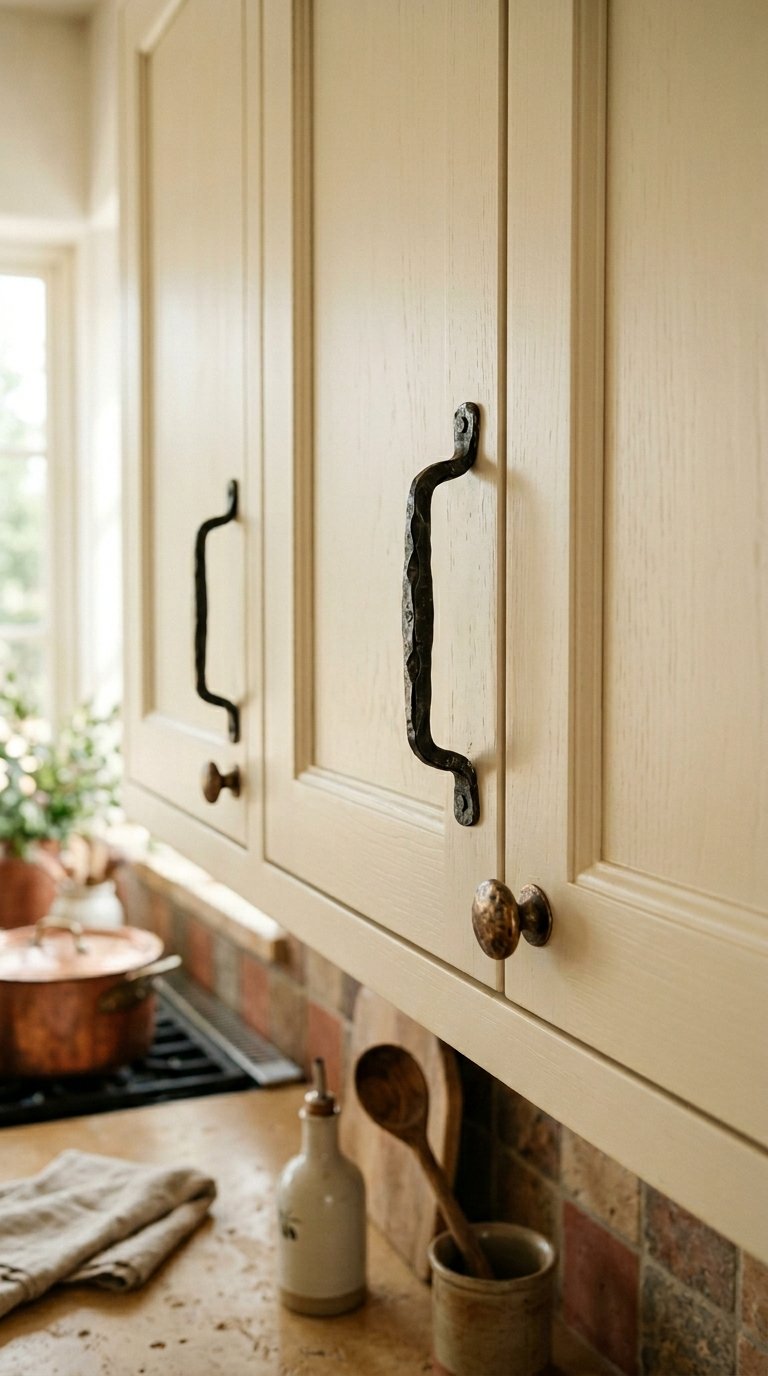
Hardware is a small decision with an outsized impact on the overall character of a Mediterranean kitchen.
Aged bronze, unlacquered brass, and hand-forged wrought iron hardware all suit the Mediterranean aesthetic in a way that contemporary polished or brushed metal finishes do not. The warm, slightly irregular quality of these finishes connects with the handmade character of the other Mediterranean kitchen elements.
Hand-forged iron hardware in particular has a visual quality that mass-produced hardware cannot replicate. The slight irregularities in the forging process mean each piece is genuinely unique. Mounted on cream Shaker cabinet doors, hand-forged iron pulls create a combination that reads as authentically Mediterranean.
Consistency across all hardware in the kitchen matters. Choose one finish and apply it to every handle, knob, tap fitting, and light fixture. A Mediterranean kitchen with mixed hardware finishes loses the coherence that makes the style work.
9. Use a Farmhouse or Belfast Sink
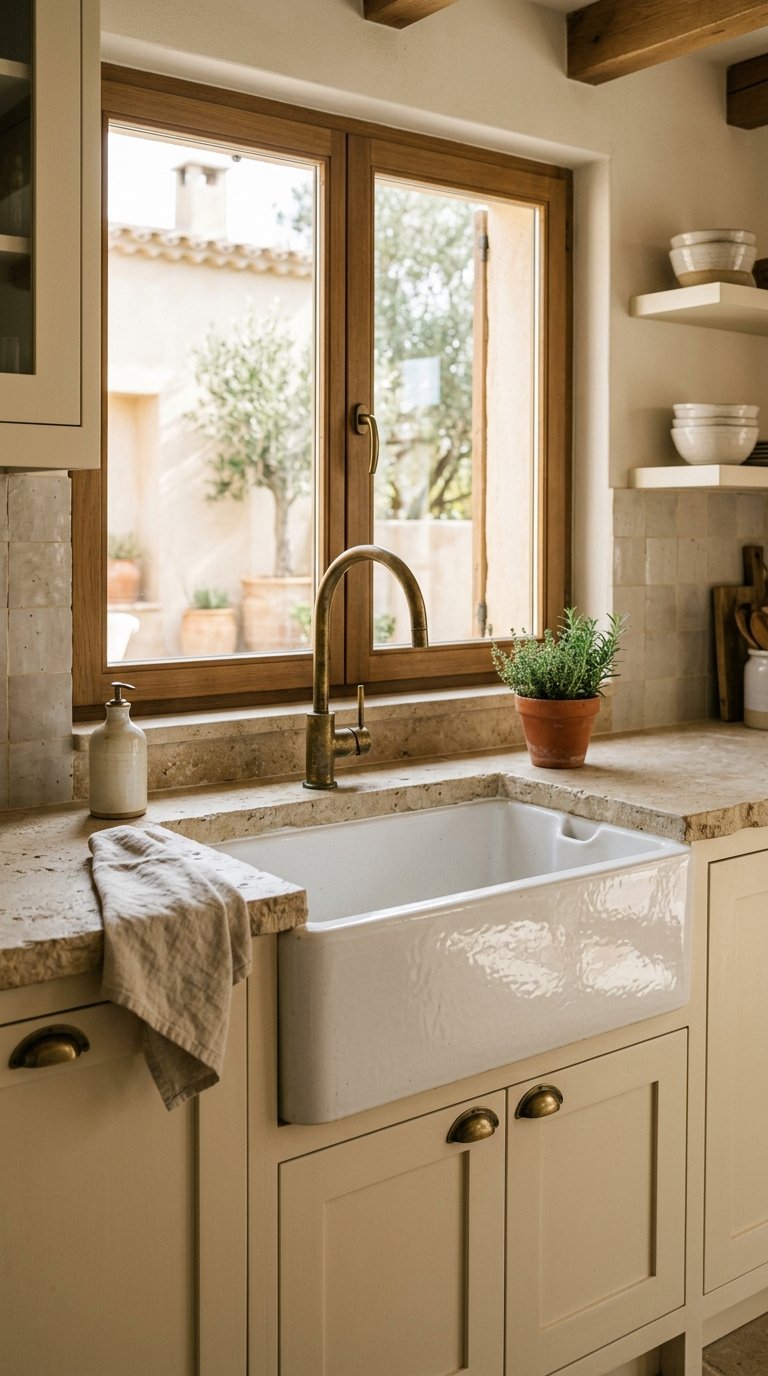
The sink in a Mediterranean kitchen is a piece of furniture as much as a functional fitting.
A deep farmhouse sink in white ceramic, aged stone, or hand-painted majolica creates a focal point at the kitchen basin that contributes to the Mediterranean character of the room rather than just serving a functional purpose. The exposed apron front of a farmhouse sink gives it a visual presence that undermount and top-mount sinks do not have.
White ceramic farmhouse sinks are the most practical and most widely available option. They suit cream and off-white cabinet colours naturally and handle daily kitchen use reliably without special maintenance.
Stone farmhouse sinks in limestone or granite create a more premium, more distinctly Mediterranean effect. Their weight requires proper cabinet support and their surface requires regular sealing, but the visual quality justifies the additional consideration for a kitchen where the Mediterranean aesthetic is the priority.
10. Incorporate Hanging Pot Rails
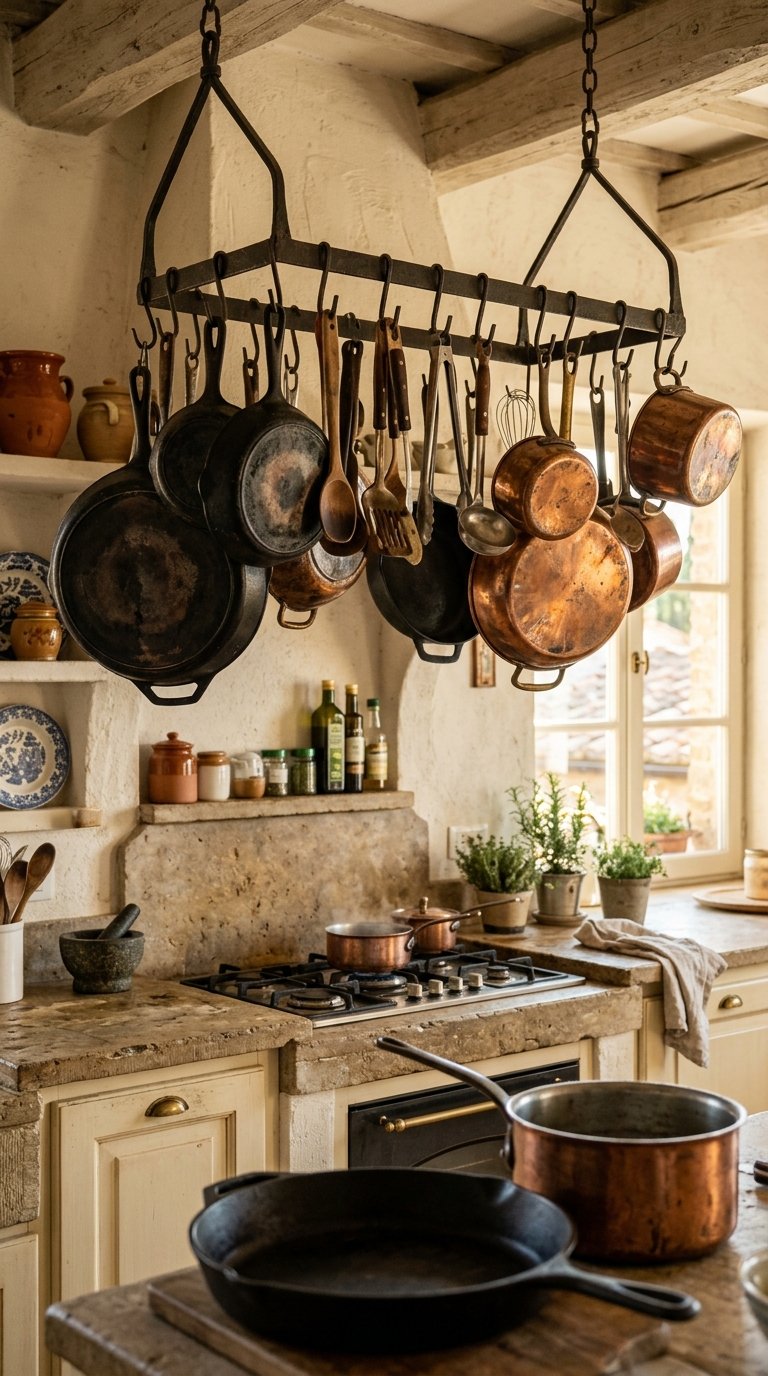
A pot rail above the kitchen island or cooktop zone keeps frequently used cookware accessible and adds a layer of lived-in authenticity to the Mediterranean kitchen.
A wrought iron or solid brass pot rail mounted to the ceiling or to the range hood surround holds cast iron pans, copper pots, and colanders in a way that turns the cookware into part of the kitchen’s visual display rather than hiding it behind cabinet doors.
The cookware matters as much as the rail. Cast iron, copper, and terracotta cooking vessels suit the Mediterranean kitchen perfectly. Stainless steel pans on a wrought iron pot rail create a material conflict that undermines the authenticity of the display.
Mount the rail at a height that keeps the hanging pots accessible from a standing position without requiring you to reach or strain. The practical function of the pot rail matters as much as its visual contribution.
11. Add a Kitchen Nook or Banquette Dining Area
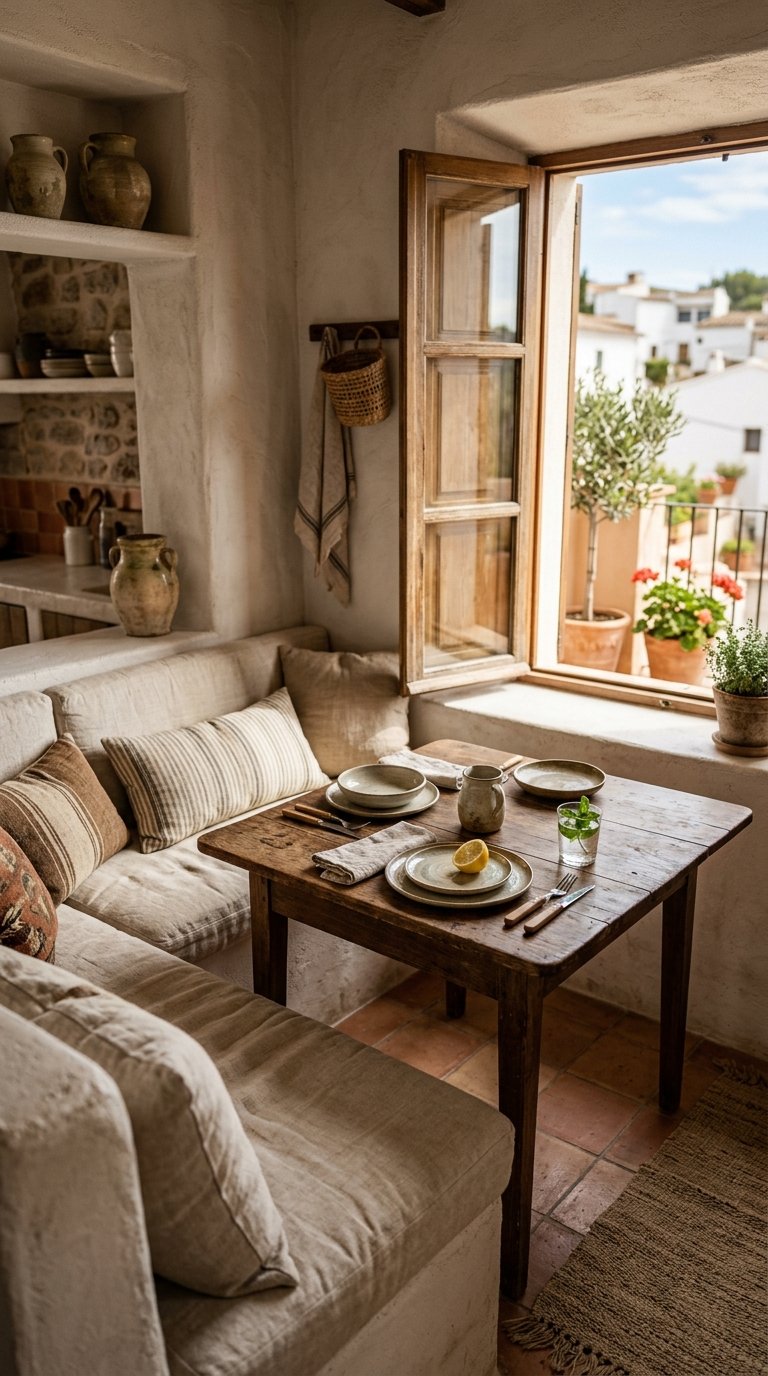
Mediterranean kitchens are not just cooking spaces. They are gathering spaces. A built-in kitchen nook or banquette dining area reinforces that philosophy in the most practical way.
A built-in corner banquette with a thick cushion in natural linen or leather, a simple wooden table, and mismatched chairs creates a dining area that feels completely embedded in the kitchen rather than adjacent to it.
The banquette cushion fabric matters in a Mediterranean kitchen. Natural linen, aged leather, and cotton in warm earthy tones all suit the style. Bright synthetic fabrics fight the organic quality that the Mediterranean aesthetic requires.
Add a window above the banquette if the layout allows. Natural light over a kitchen dining nook creates the warm, sun-drenched quality that lies at the heart of Mediterranean interior design.
12. Use Limewash or Textured Paint on the Walls
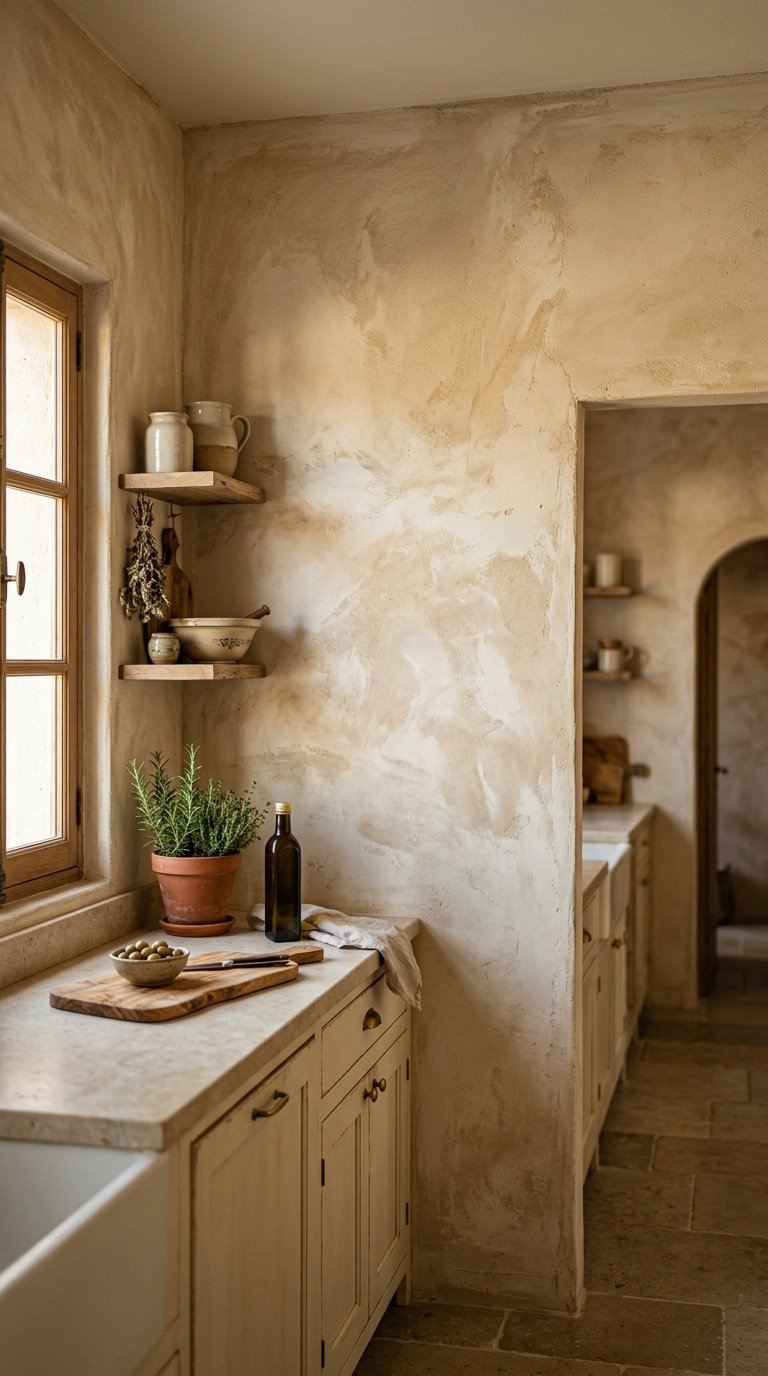
Mediterranean kitchen walls are rarely smooth and flat. They carry texture, variation, and the kind of imperfection that reads as age and character.
Limewash paint applied with a brush in overlapping irregular strokes creates a layered, aged wall finish that adds genuine depth to a kitchen wall surface. The variation in tone across a limewashed wall shifts with the light throughout the day, giving the room a quality that flat paint never achieves.
Lime plaster or Venetian plaster creates an even more textured effect. Applied by hand with a trowel, these finishes build up in layers with natural variation in depth and tone across the wall surface.
Warm whites, soft ochres, sandy creams, and pale terracottas all work as limewash or plaster tones in a Mediterranean kitchen. The colour should read as warm and earthy rather than cool and contemporary.
13. Install an Arched Alcove or Doorway
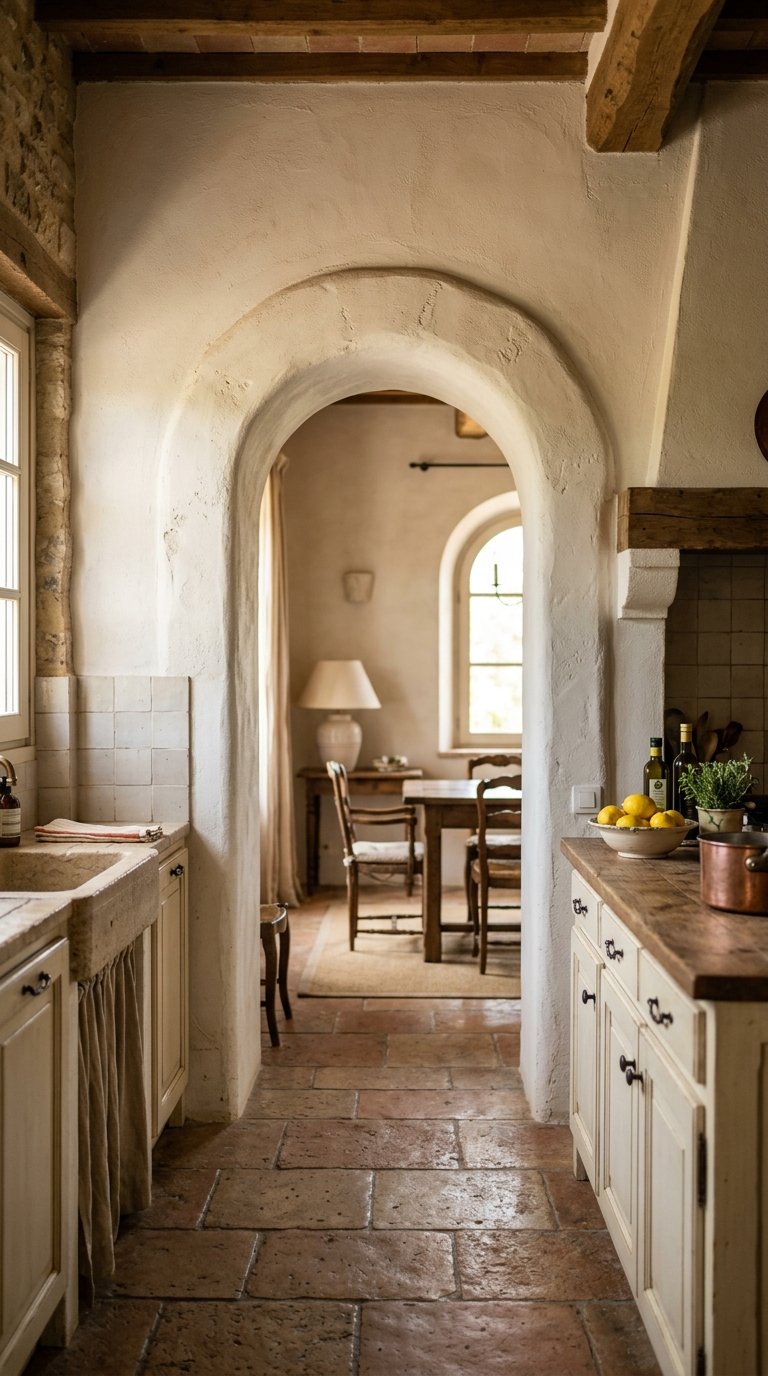
Arched architecture is one of the most distinctive features of Mediterranean design and one of the most effective ways to bring the style into a kitchen.
A plastered arch over a kitchen doorway, above a range cooker alcove, or framing a pantry opening immediately signals Mediterranean architecture in a way that no amount of accessories or textiles achieves. The arch is structural communication that tells anyone who walks through it what design tradition this kitchen belongs to.
Creating an arch in an existing rectangular doorway or alcove opening requires basic construction work but no structural changes in most cases. A simple timber or MDF arch former, plastered over and painted to match the surrounding walls, creates an authentic effect at relatively modest cost.
The arch surround thickness matters. A thin arch looks like an afterthought. A thick arch with 20 to 30cm of depth creates the substantial, architectural quality that genuine Mediterranean arches have.
14. Add a Large Ceramic or Terracotta Olive Oil Jar
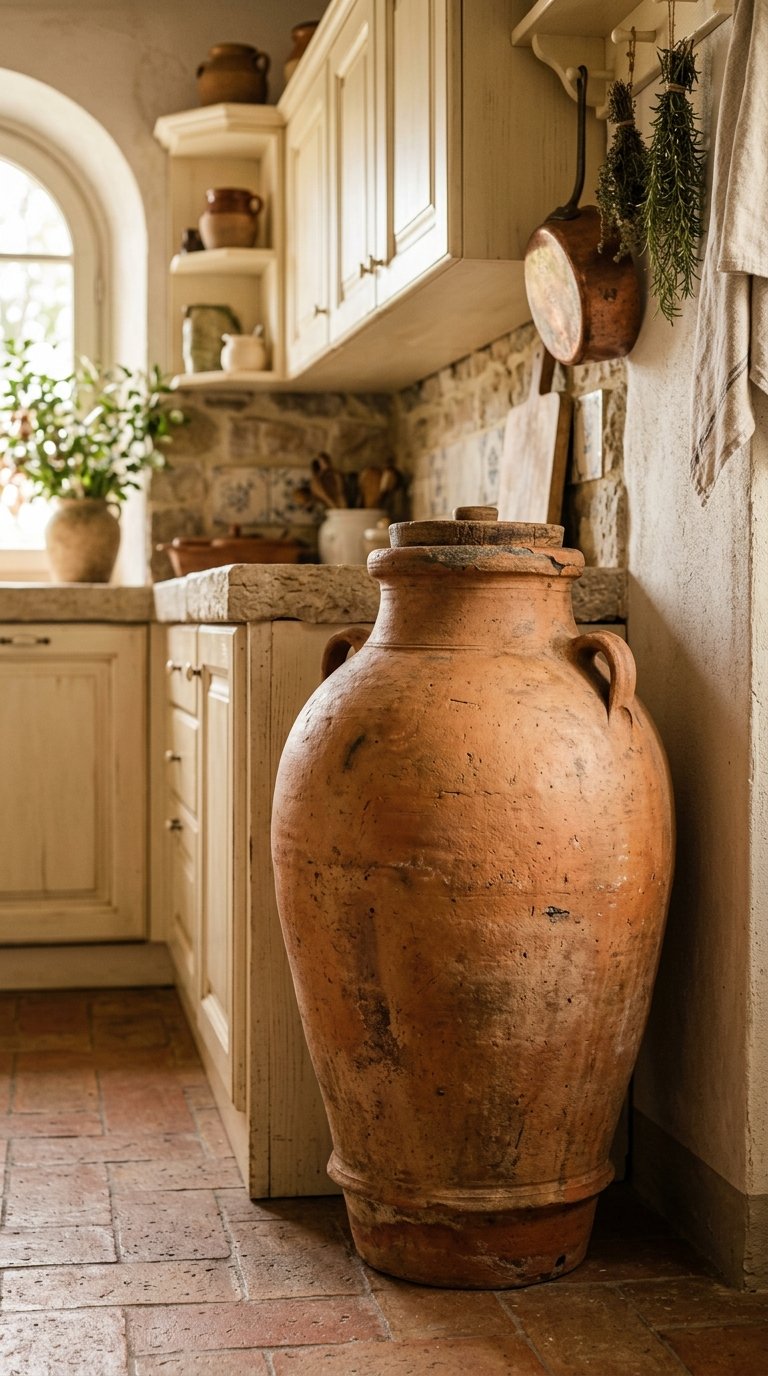
The large ceramic or terracotta storage jar is one of the most recognizable objects in Mediterranean kitchen design. It reads as authentic immediately and asks no questions about which design tradition it belongs to.
A tall terracotta or hand-painted ceramic jar in a kitchen corner, beside the range, or at the end of a cabinet run creates an anchor object that reinforces the Mediterranean character of the space with a single placement.
Size matters with this object. A small ceramic jar looks like a decorative afterthought. A large terracotta jar, 50cm or taller, reads as a genuine storage vessel with a purpose and a presence.
These jars work as actual storage for dry goods, as umbrella stands, or purely as decorative objects. The function matters less than the scale and the material quality of the piece itself.
15. Use Wooden Open Shelves With Brackets
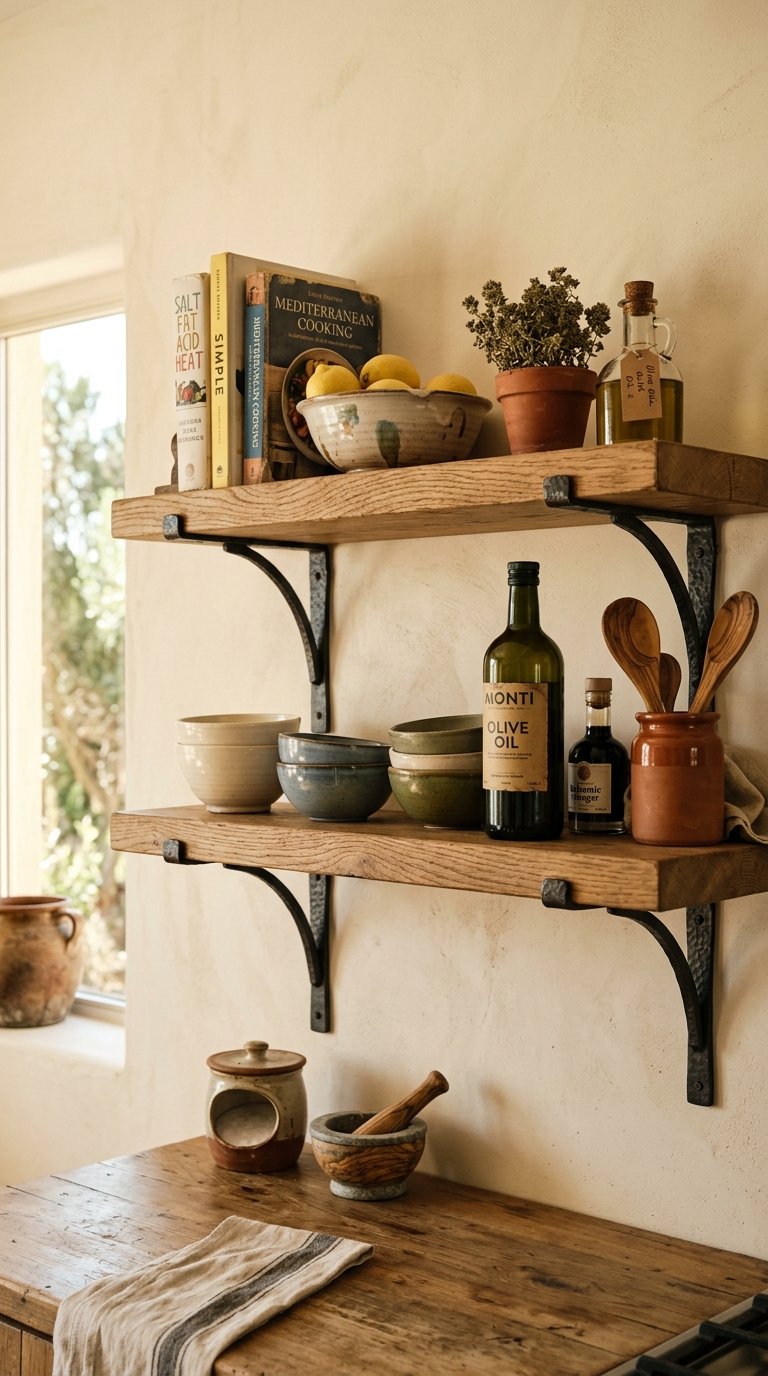
Wooden shelves with visible brackets in a Mediterranean kitchen add structural honesty and warmth that concealed floating shelves do not have.
Hand-forged iron or solid timber corbel brackets supporting thick wooden shelves create a shelf arrangement that looks built rather than manufactured. The visible support structure adds to the handmade, artisan quality of the Mediterranean kitchen aesthetic.
The shelf material should be solid timber rather than veneered MDF. The exposed edge of a solid timber shelf shows the natural grain and slightly irregular surface that a veneered shelf does not. In a Mediterranean kitchen, this material honesty matters.
Style the shelves with a mix of functional and decorative objects. A row of olive oil bottles, a stack of ceramic bowls, a small terracotta herb pot, and a few cookbooks creates the kind of organic, working-kitchen display that suits the Mediterranean style.
16. Install a Traditional Range Cooker
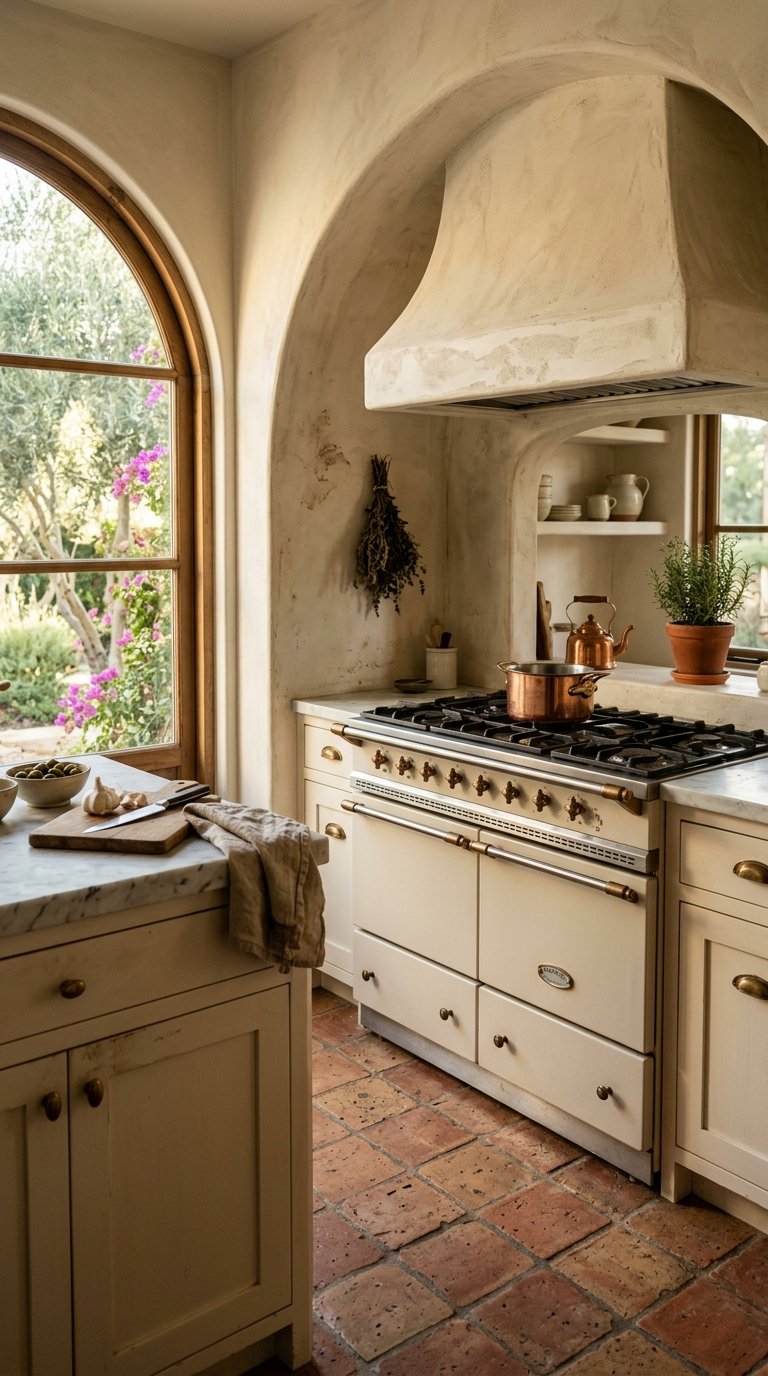
A range cooker in a Mediterranean kitchen is both a functional appliance and a design statement.
A traditional range cooker in cream, duck egg blue, or forest green with cast iron burners and oven doors creates a focal point at the cooking zone that no standard built-in oven achieves. The visual weight and material quality of a range cooker anchors the kitchen in a way that integrated appliances do not.
Brands like AGA, La Cornue, and Smeg produce range cookers that suit the Mediterranean kitchen aesthetic particularly well. Each offers colour options, material quality, and design details that work with the warm, artisan character of the style.
Frame the range cooker within a plaster or stone alcove with the hand-plastered range hood above. This creates the dedicated cooking alcove that is one of the signature architectural features of a traditional Mediterranean kitchen.
17. Choose a Warm Colour Palette Throughout
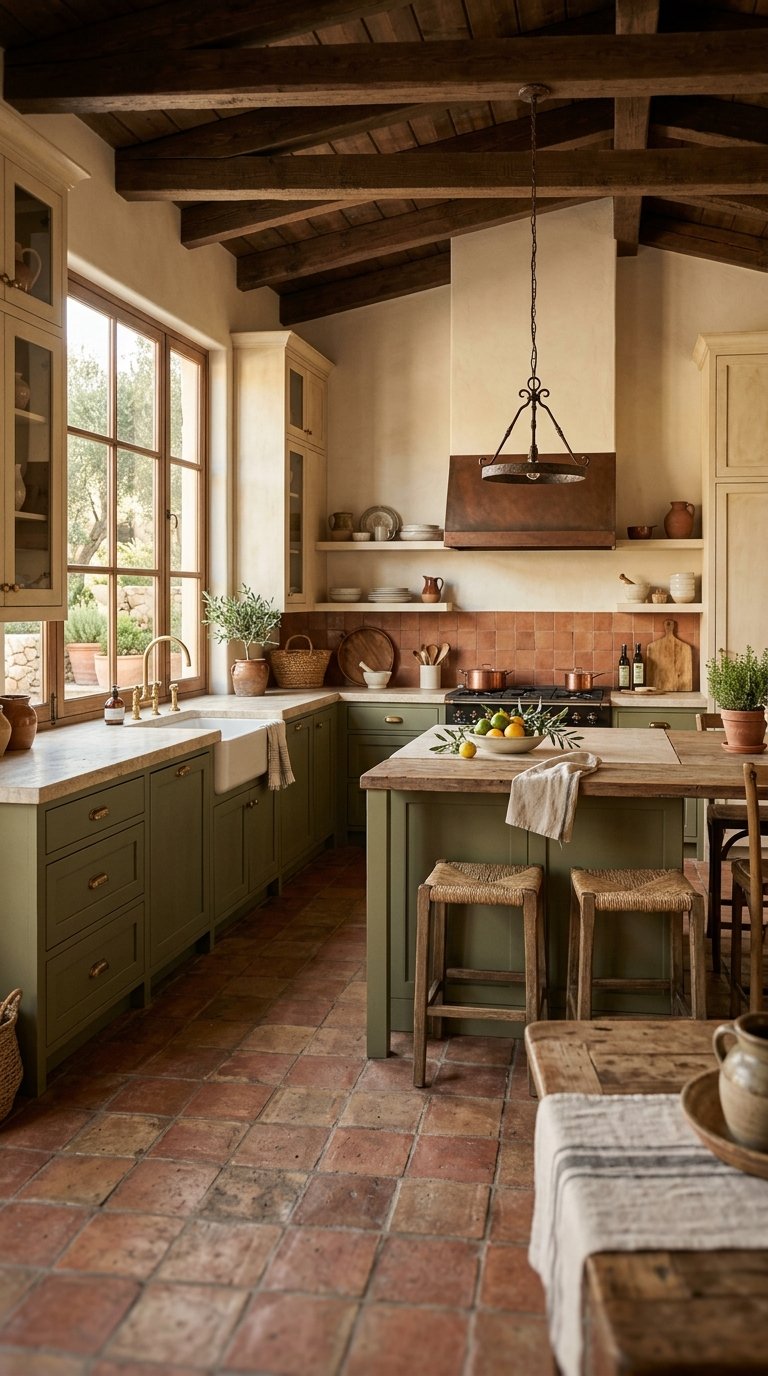
Mediterranean kitchen colour is not a single decision. It is a palette of warm, earthy tones that work together across every surface in the room.
The core Mediterranean kitchen colour palette includes:
- Terracotta and burnt sienna
- Warm ochre and golden yellow
- Olive and sage green
- Sandy cream and warm white
- Deep rust and burnt orange
- Aged wood tones in walnut and olive
These colours belong to the same earthy, warm family. They do not compete. They reinforce each other across the floor, the walls, the cabinets, the textiles, and the accessories.
Avoid cool tones in a Mediterranean kitchen. Cool grey, stark white, ice blue, and contemporary neutrals fight the warmth that defines the style. Every colour decision should answer the question: does this feel warm and earthy? If the answer is no, find an alternative.
18. Add Fresh Herbs in Terracotta Pots
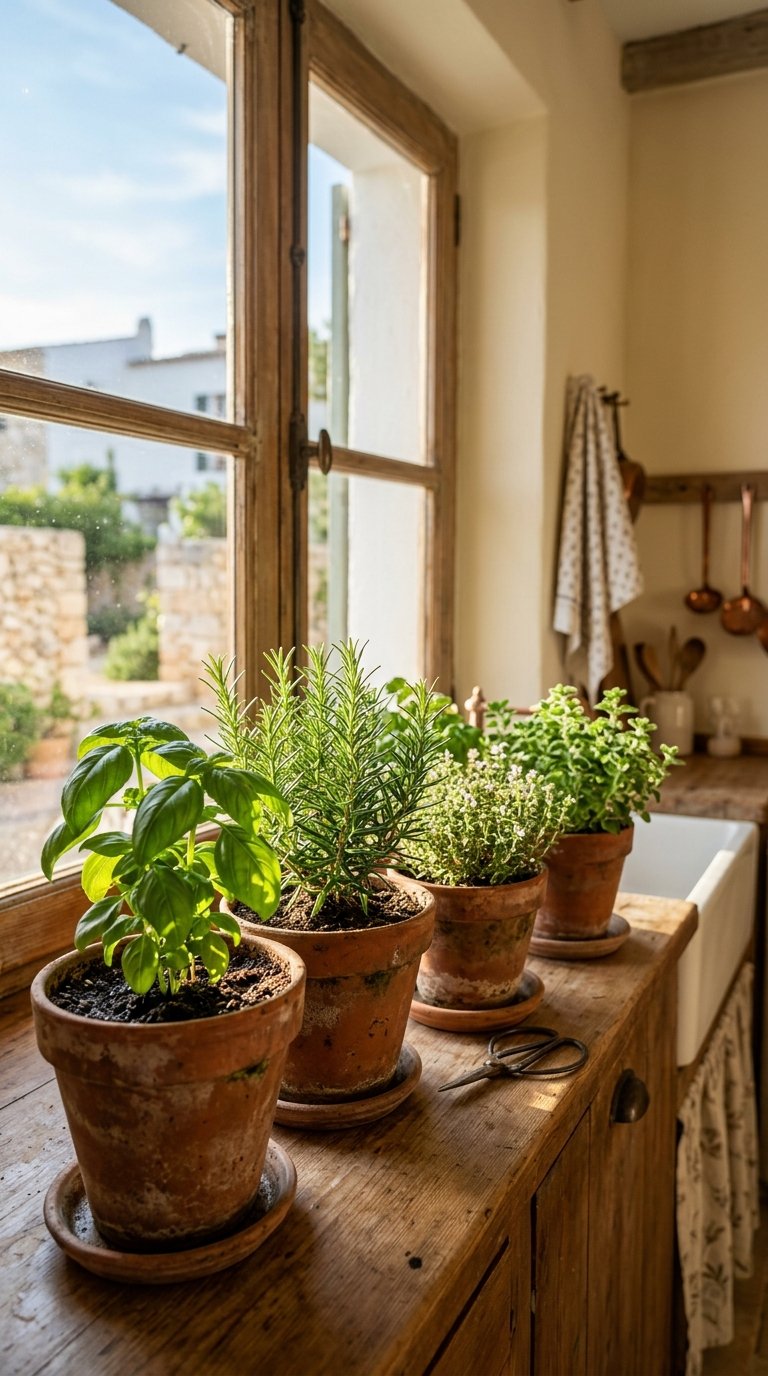
A Mediterranean kitchen without growing herbs is like a Mediterranean kitchen without a window. The herbs are part of the design as much as the function. 🙂
A row of terracotta herb pots on a windowsill, a shelf, or a kitchen ledge holding basil, rosemary, thyme, oregano, and flat-leaf parsley adds living colour, natural fragrance, and an authentically functional quality to the kitchen display.
Terracotta pots suit the Mediterranean material palette naturally. Their warm orange-red colour connects with the terracotta floor tiles, the warm plaster walls, and the earthy colour palette of the kitchen as a whole.
Group the pots in odd numbers. Three herb pots looks considered. Four looks like a purchase. Five looks like a kitchen garden beginning. Keep the pots in consistent terracotta and resist the urge to mix in glazed or coloured ceramic pots, which disrupt the material coherence of the arrangement.
19. Install a Wooden Kitchen Island With Stone Top
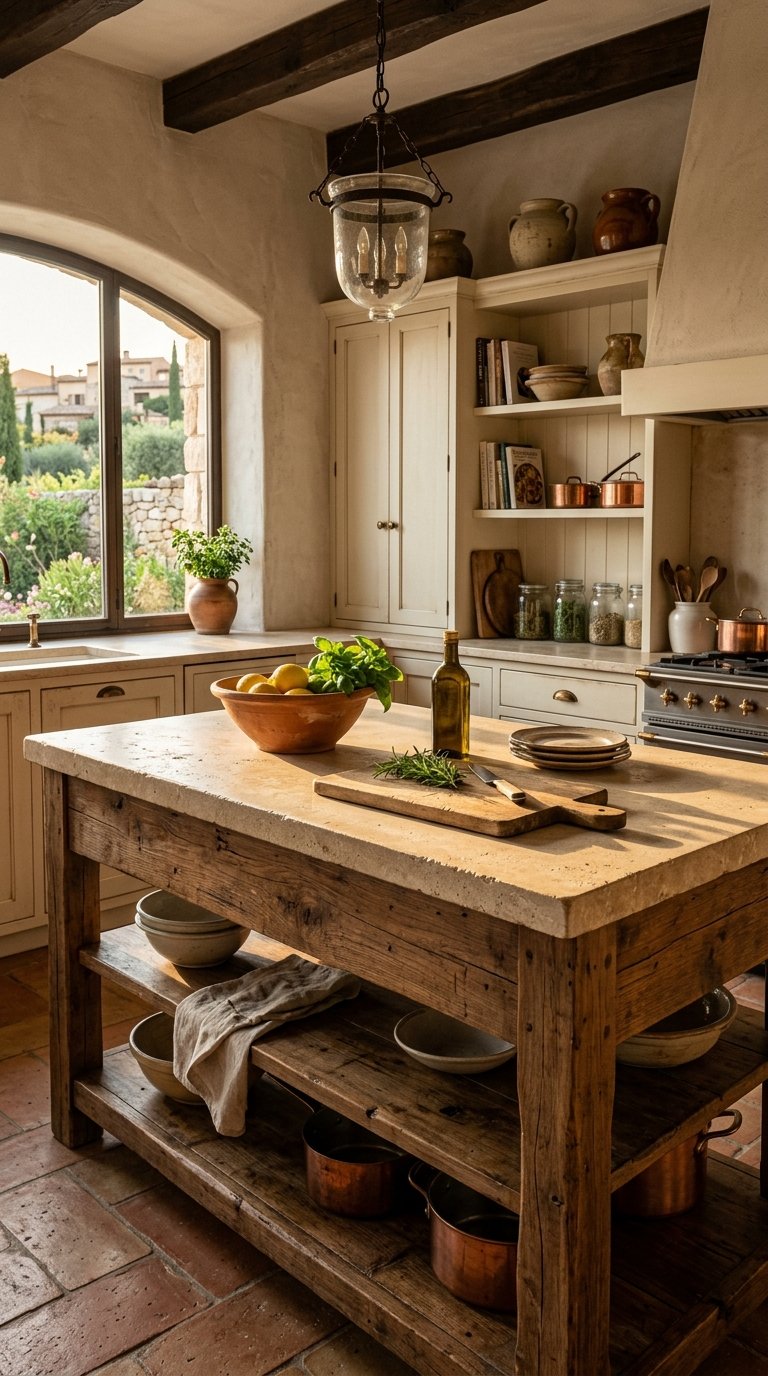
A Mediterranean kitchen island combines two materials that define the style: warm natural wood and natural stone.
A solid timber island base in dark walnut, olive wood, or aged oak with a thick honed limestone or travertine countertop creates an island that reads as a piece of furniture rather than a built-in unit. The combination of warm wood and cool natural stone creates a material contrast that suits the Mediterranean aesthetic perfectly.
The island base should show the natural grain and character of the timber rather than being painted or lacquered to a smooth finish. An oil or wax finish on the timber preserves the natural quality of the wood while protecting it from kitchen moisture.
Add wrought iron or aged bronze hardware to the island drawers and doors. Hanging a small pot rail from the ceiling above the island extends the Mediterranean character of the space vertically as well as horizontally.
20. Use Copper or Terracotta Accessories Throughout
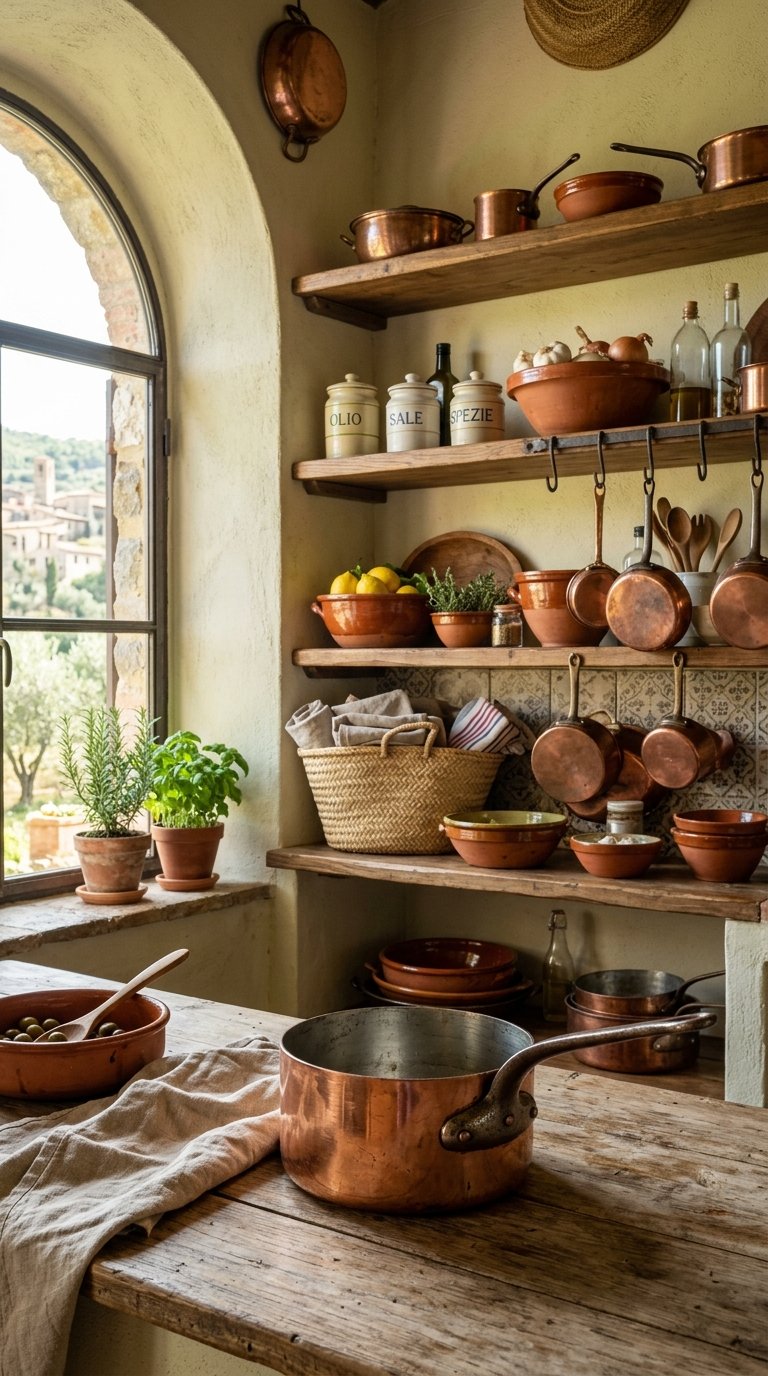
The accessories in a Mediterranean kitchen build the character that the architecture and cabinetry establish.
Copper pots and pans, terracotta serving dishes, hand-painted ceramic tiles used as trivets, woven baskets for bread storage, and linen dish towels in warm earthy tones all contribute to an accessory layer that reads as authentically Mediterranean.
Copper deserves particular mention. Copper cookware hung from a pot rail or displayed on open shelving adds a warm metallic quality that no other material provides in a kitchen context. Copper reflects the warm kitchen lighting and creates a living surface that develops a patina with use.
Edit the accessories regularly. A Mediterranean kitchen feels warm and lived-in because of carefully chosen objects, not because of a large quantity of objects. Remove anything that does not belong to the earthy, warm, artisan quality of the style.
21. Bring in Natural Light Through Large Windows
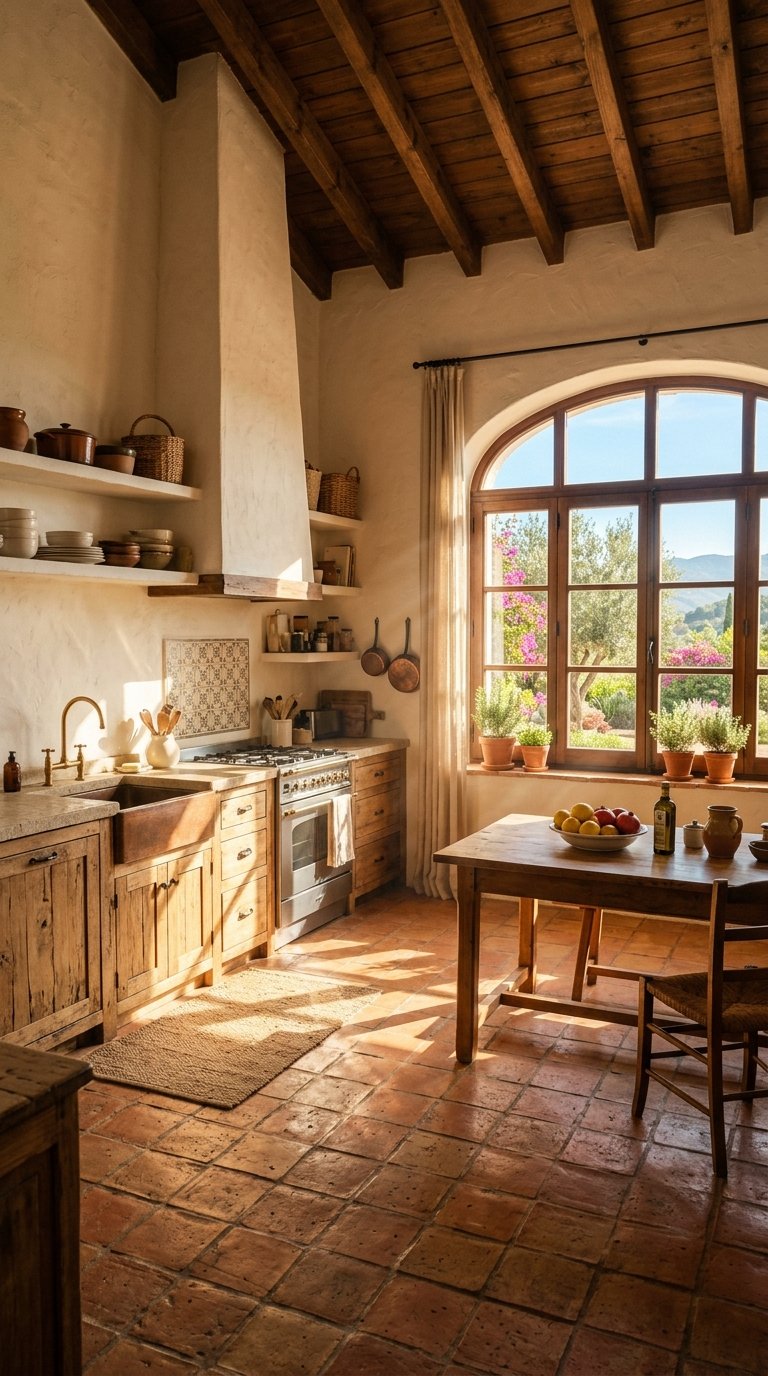
Natural light is not just a practical requirement in a Mediterranean kitchen. It is a design material.
Large windows, preferably facing south or west to capture afternoon sun, flood a Mediterranean kitchen with the warm, golden light that makes terracotta floors glow, plaster walls shift in tone, and warm wood surfaces come alive in a way that artificial light never fully replicates.
If the existing window openings are small, enlarging them is one of the highest-impact investments in a Mediterranean kitchen renovation. The quality of natural light in the space fundamentally changes how every other design decision reads.
Where enlarging windows is not possible, use sheer linen curtains rather than blinds to filter the existing natural light. Sheer linen diffuses direct sunlight into a warm, even glow that suits the Mediterranean aesthetic better than the sharp, direct light of an uncovered window.
Final Thoughts
A Mediterranean kitchen is built from warm materials, honest craftsmanship, and a consistent earthy colour palette. Every decision reinforces the same fundamental quality: warmth, texture, and the sense that this kitchen has been here for a long time and intends to stay.
Start with the foundational decisions. Terracotta or stone floor. Warm cream or off-white cabinets. Natural stone countertop. Hand-plastered range hood. Get those four right and every subsequent decision has a clear context to work within.
Then build the character layer by layer. Decorative tile backsplash. Open ceramic display shelving. Hanging pot rail. Wrought iron hardware. Fresh herbs in terracotta pots. Each element adds to a room that feels increasingly genuine and increasingly lived-in.
You do not need all 21 ideas. You need the eight or ten that suit your specific kitchen layout, your specific budget, and how you actually cook and live. Pick those, execute them with proper materials rather than cheap substitutes, and the result will be a kitchen that feels genuinely Mediterranean rather than just thematically decorated.
A Mediterranean kitchen done properly is one of the most welcoming rooms in any home. And once you have cooked in one, going back to flat white cabinets and chrome taps feels like a culinary crime.