21 Marble Bathroom Ideas That Look Expensive on a Budget
Marble bathrooms stop people in their tracks. You walk in, and the room just feels different. The veining, the sheen, the way light bounces off the surface, it signals luxury before you even turn on the tap.
But here’s the thing: you don’t need a $50,000 renovation budget to get that look. With the right ideas, marble (real or convincing alternatives) works in small apartments, rental bathrooms, and dated homes alike. These 21 ideas solve real problems and give you a clear path forward.
1. Use a Marble Accent Wall Instead of Tiling the Whole Room
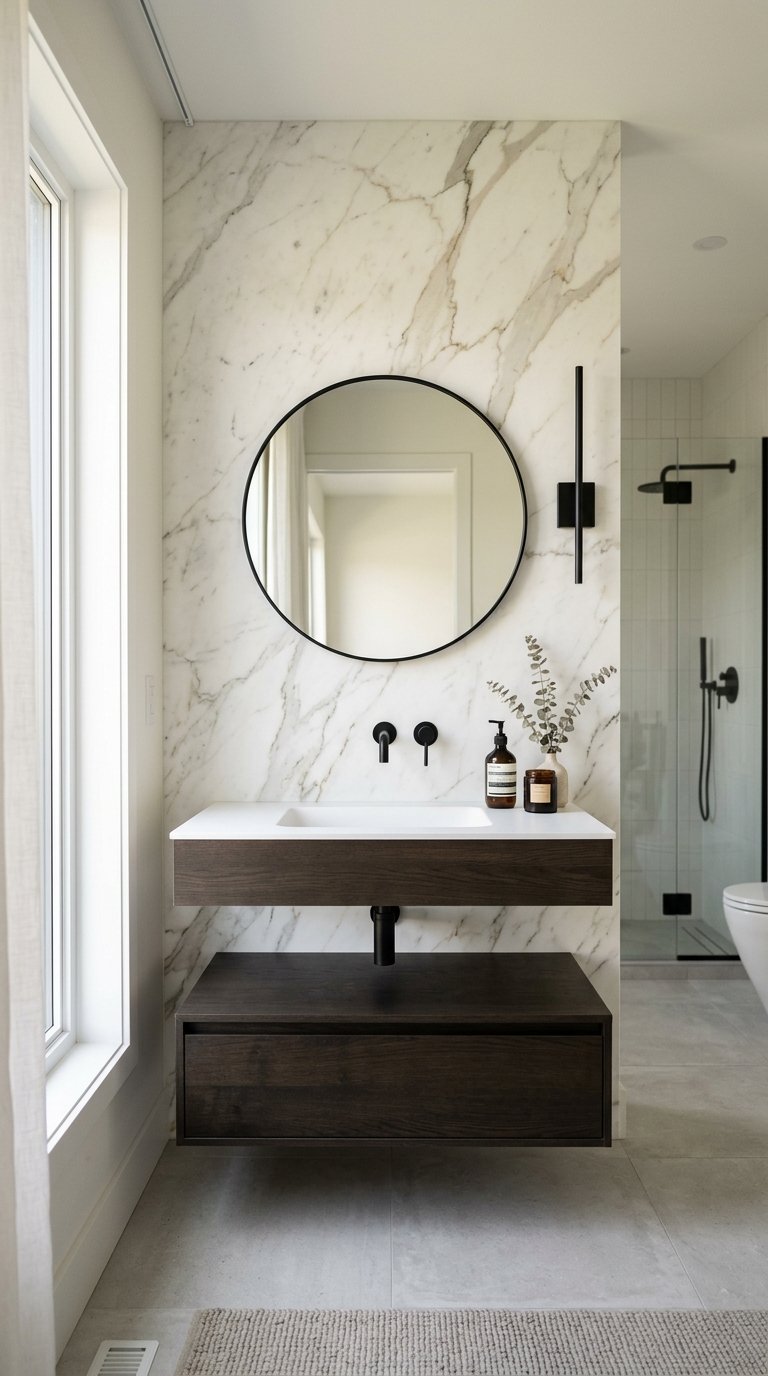
Full marble walls cost a fortune. One accent wall behind your vanity or bathtub does the same visual work at a fraction of the price.
A single feature wall draws the eye and becomes the room’s focal point. Everything else in the bathroom reads as intentional, not incomplete.
2. Swap Your Vanity Top for Carrara Marble
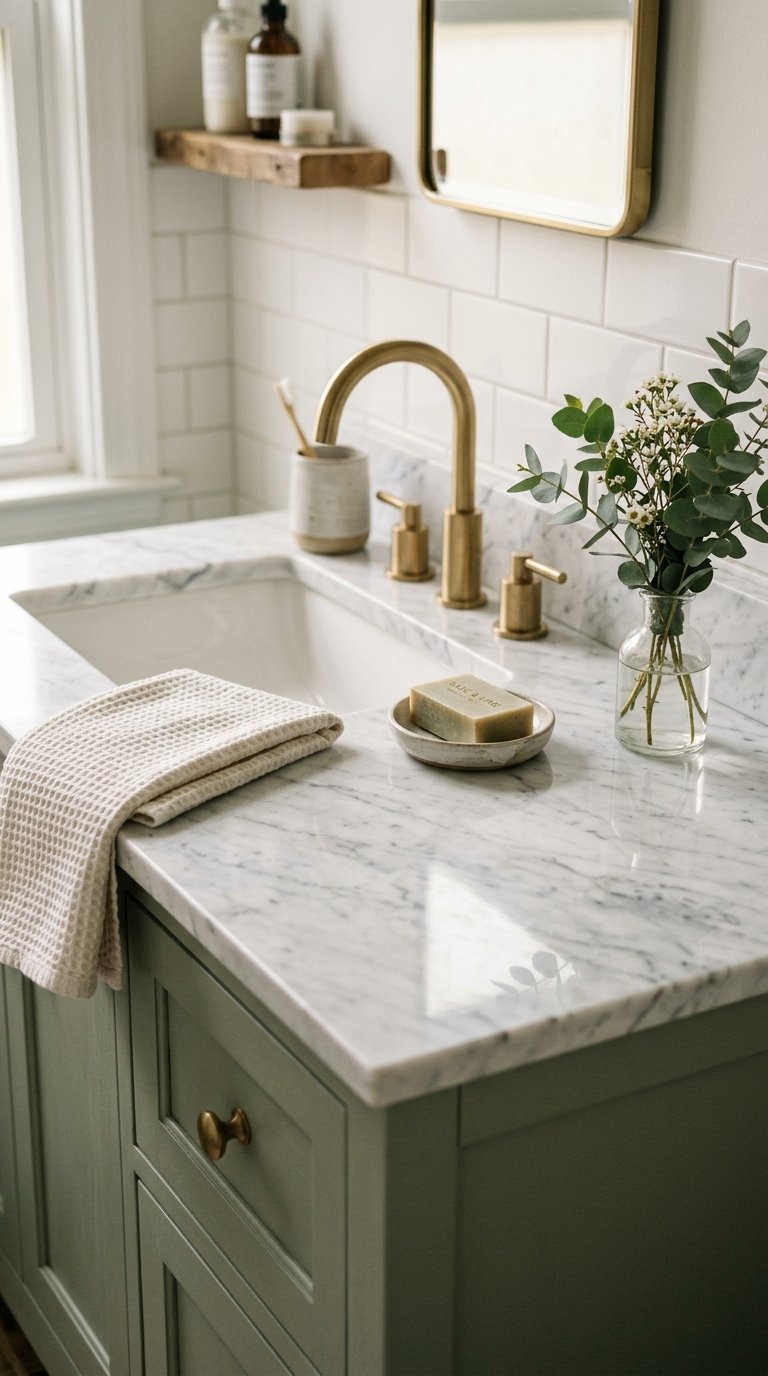
Carrara marble countertops run $40 to $100 per square foot installed, which is far more accessible than a full marble bathroom overhaul. The vanity is the first surface your eye lands on, so upgrading it delivers the highest visual return per dollar.
Even a 24-inch vanity top swap transforms the entire feel of the room. Pair it with white or grey grout to keep the look cohesive.
3. Go for Marble-Look Porcelain Tiles
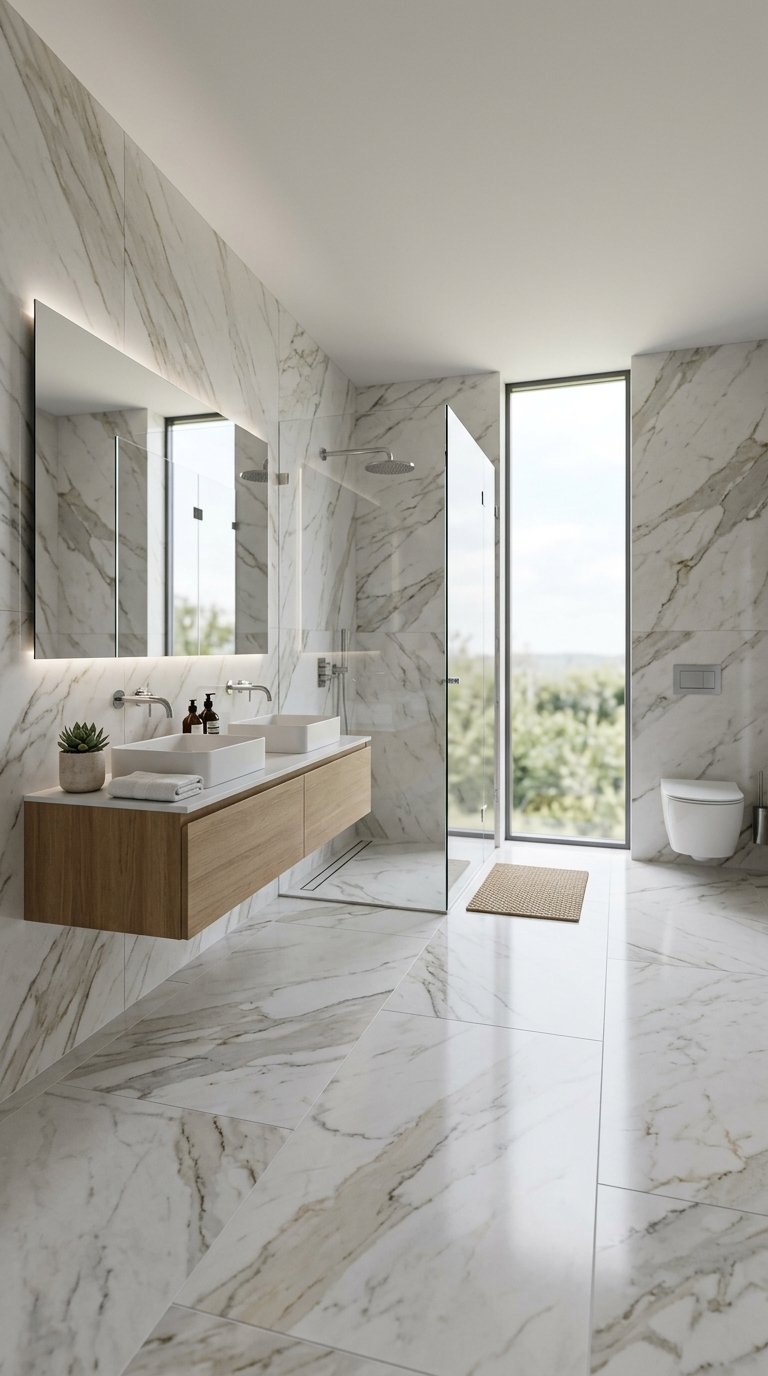
Porcelain tiles that replicate marble cost 60 to 80 percent less than natural stone. Brands like Marazzi and Florim produce large-format porcelain slabs (up to 120 x 240 cm) that are nearly indistinguishable from real marble in photos and in person.
This is the move for rental homes or high-moisture bathrooms where natural marble sealing becomes a maintenance headache. You get the aesthetic, skip the upkeep.
4. Install Marble Hex Tiles on the Floor
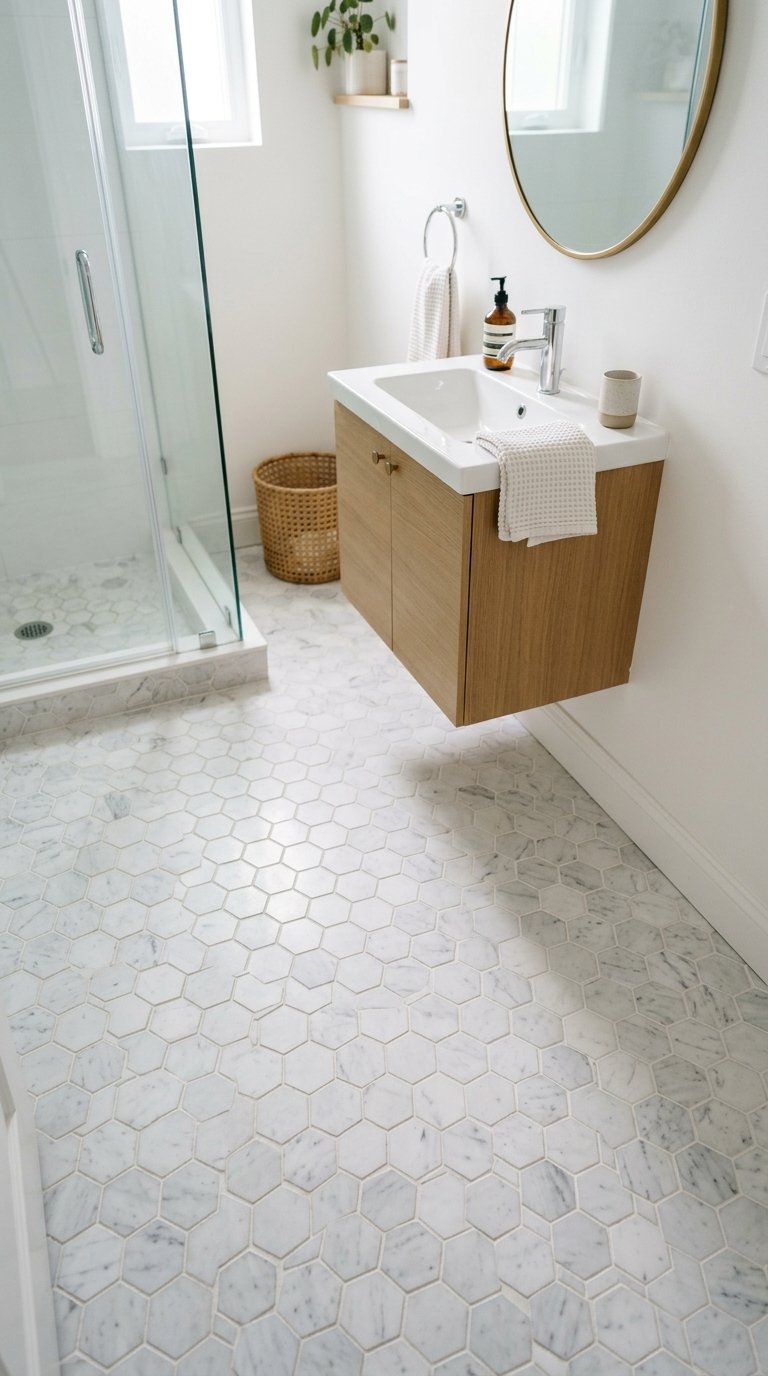
Marble hexagon mosaic tiles on the bathroom floor add texture and visual interest without overwhelming a small space. A 5 x 8 foot bathroom floor uses roughly 40 square feet of tile, and marble hex mosaic sheets run $8 to $20 per square foot.
The pattern breaks up flat surfaces and makes the room feel designed, not default. White marble hex on a white floor also makes narrow bathrooms appear wider.
5. Add a Marble Threshold at the Bathroom Entrance
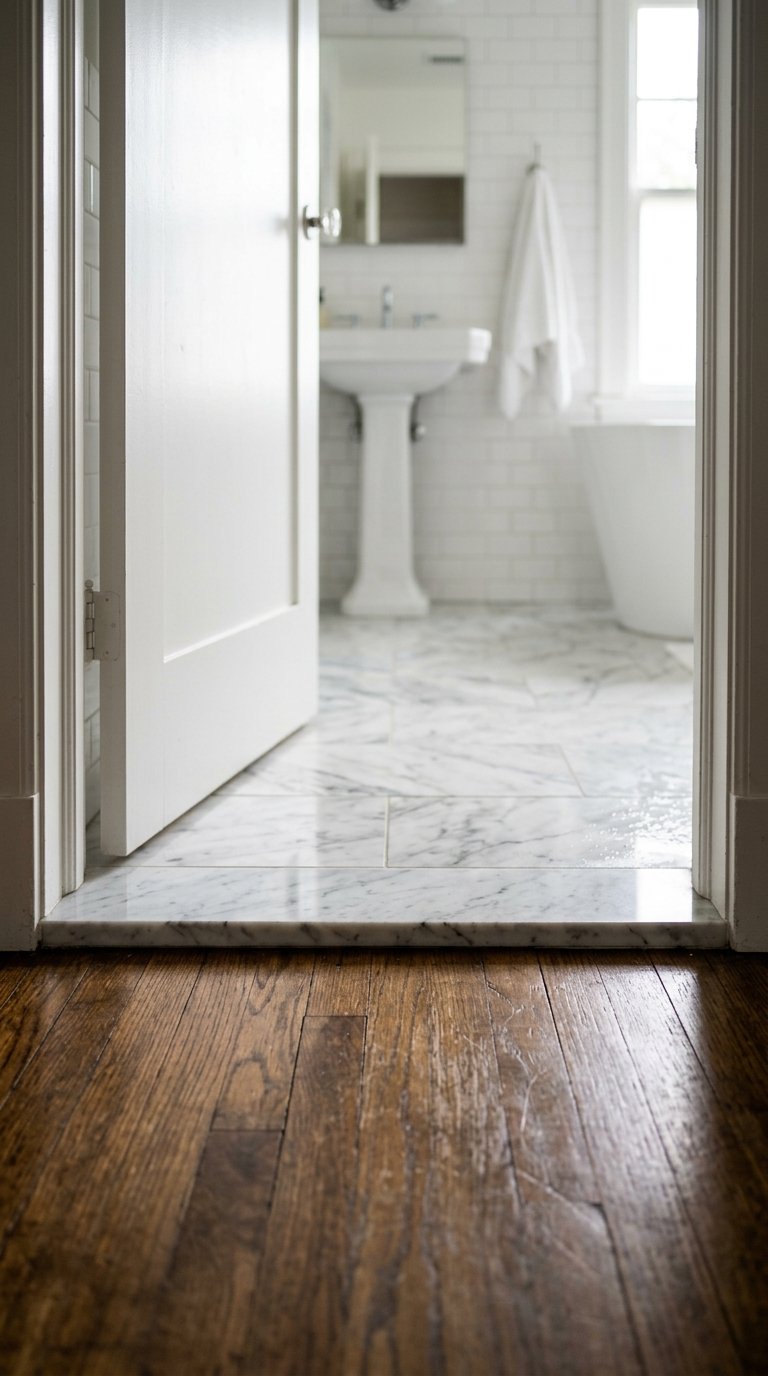
This one costs under $50 and takes two hours to install. A marble saddle threshold between your hallway and bathroom signals a transition into a more refined space.
It’s a detail most people overlook, which is exactly why it works. Visitors notice it without knowing why the bathroom feels pulled together.
6. Frame Your Mirror with a Marble Surround
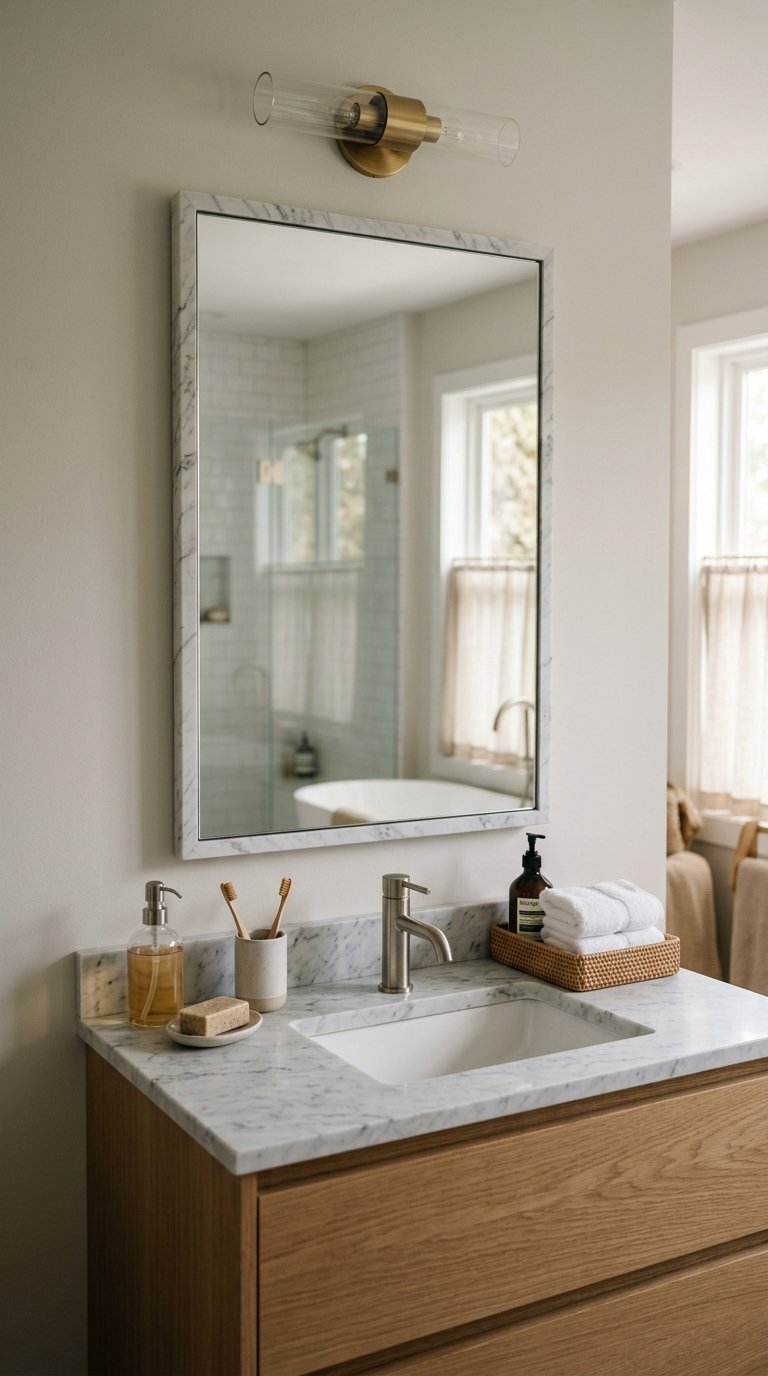
A framed marble mirror costs $150 to $400 at stores like West Elm or CB2. It anchors the vanity wall and gives the bathroom a built-in, custom look without any construction.
If your current mirror is glued to the wall, add a marble shelf below it instead. The effect is similar and much easier to execute.
7. Use Marble Contact Paper for a Zero-Commitment Look
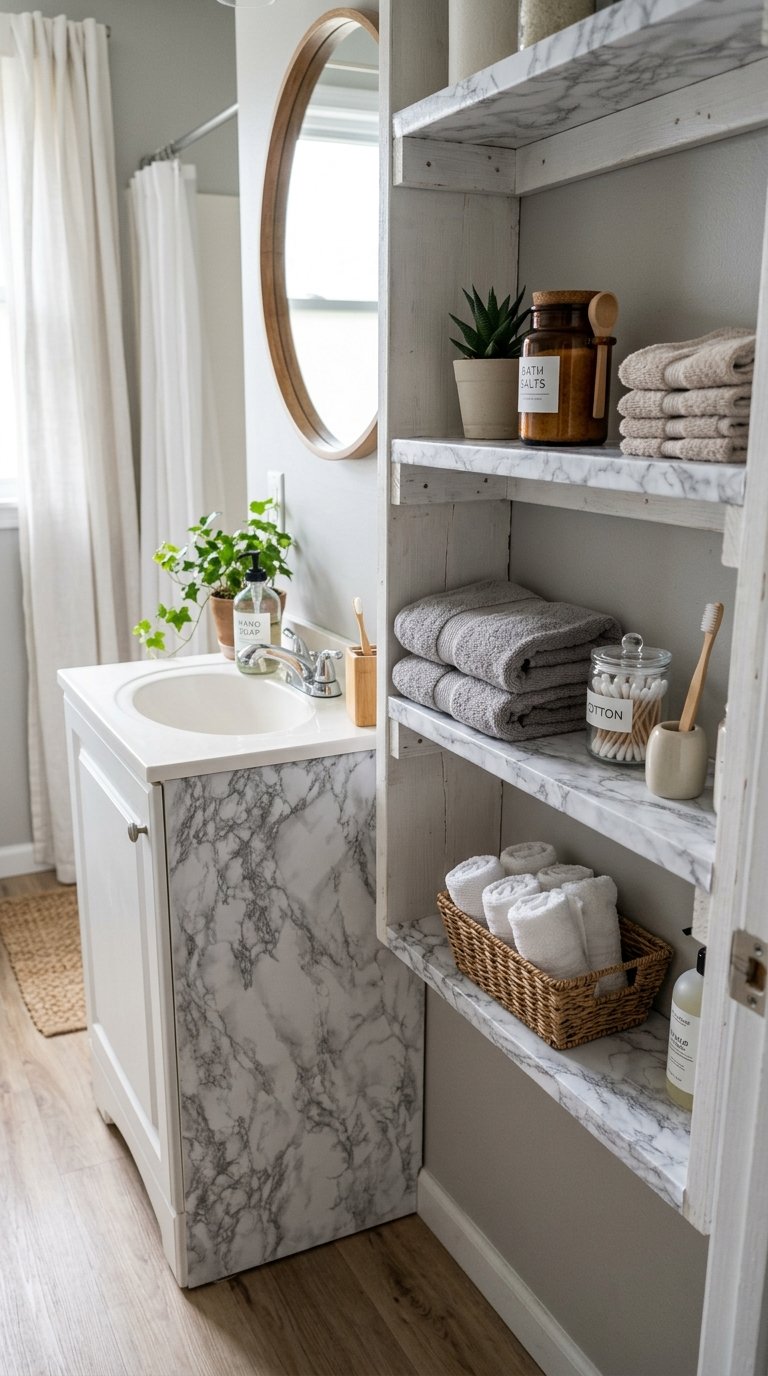
Marble peel-and-stick contact paper costs $15 to $30 per roll. Apply it to your vanity side panels, the inside of open shelving, or the back wall of a niche for an instant upgrade.
This is the top choice for renters who need a reversible solution. The finish has improved dramatically over the past five years and holds up well in low-moisture areas.
8. Install a Marble Shower Niche
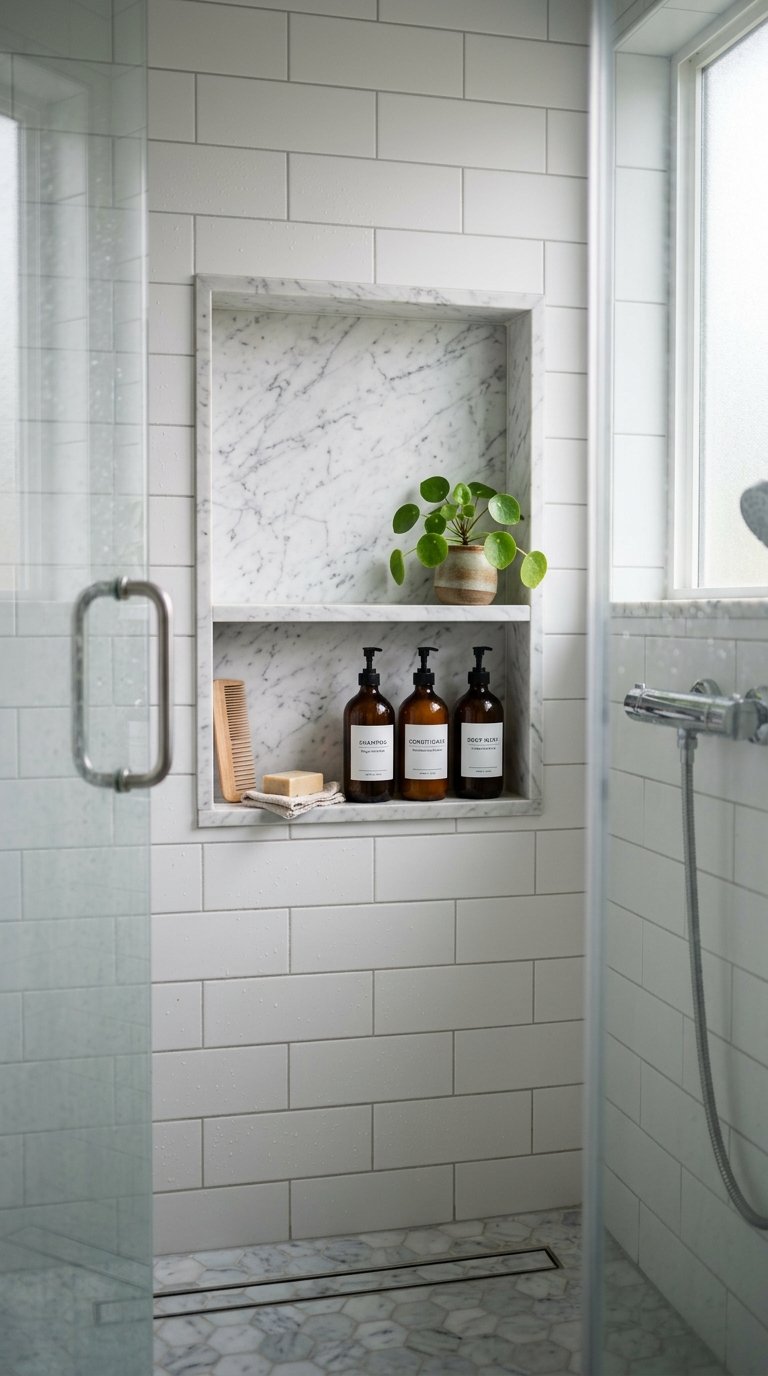
A shower niche tiled in marble keeps your shampoo bottles off the floor and adds a spa-level detail to a basic shower. Pre-made marble niche inserts sell for $80 to $200 and install without custom tiling.
The recessed shelf draws the eye upward, which visually heightens low ceilings. In a builder-grade shower, it’s the single fastest way to shift the entire vibe.
9. Choose a Marble Freestanding Bathtub Surround
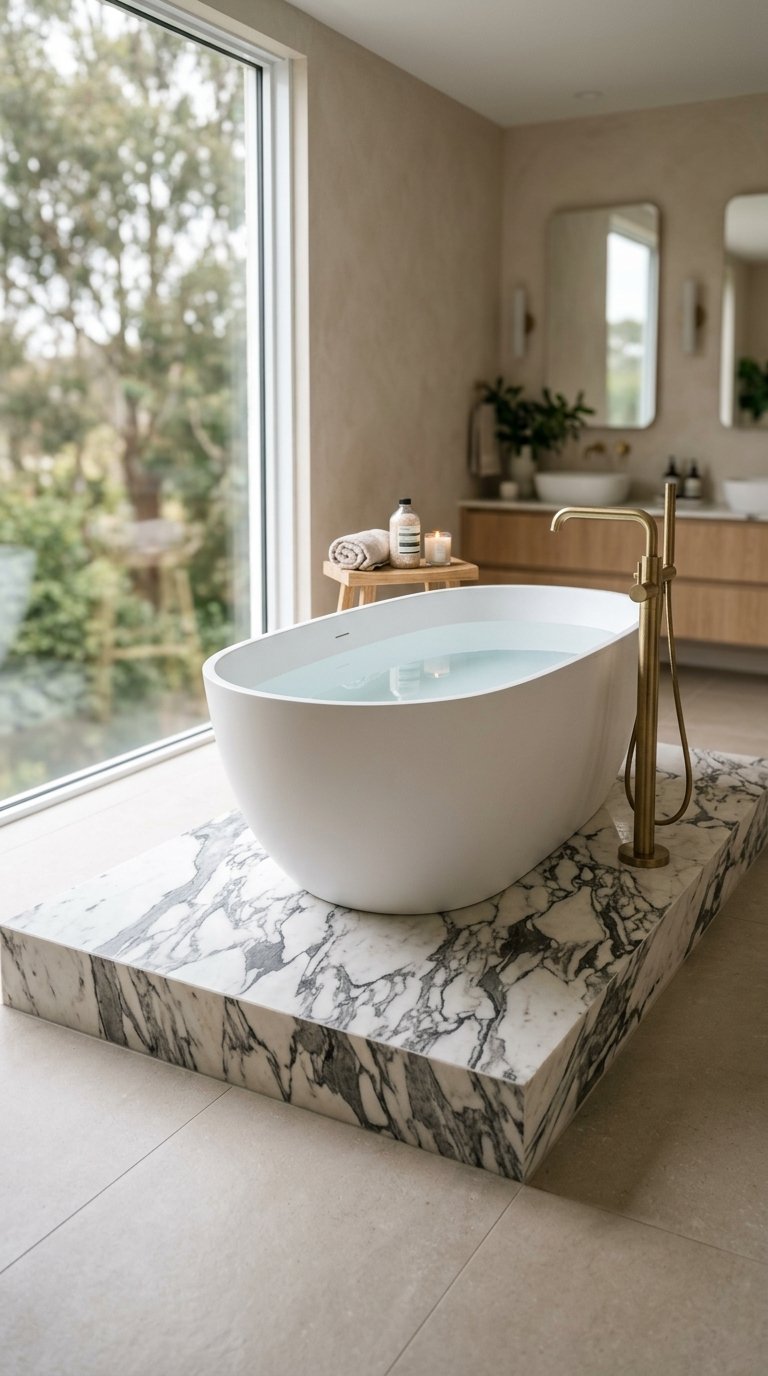
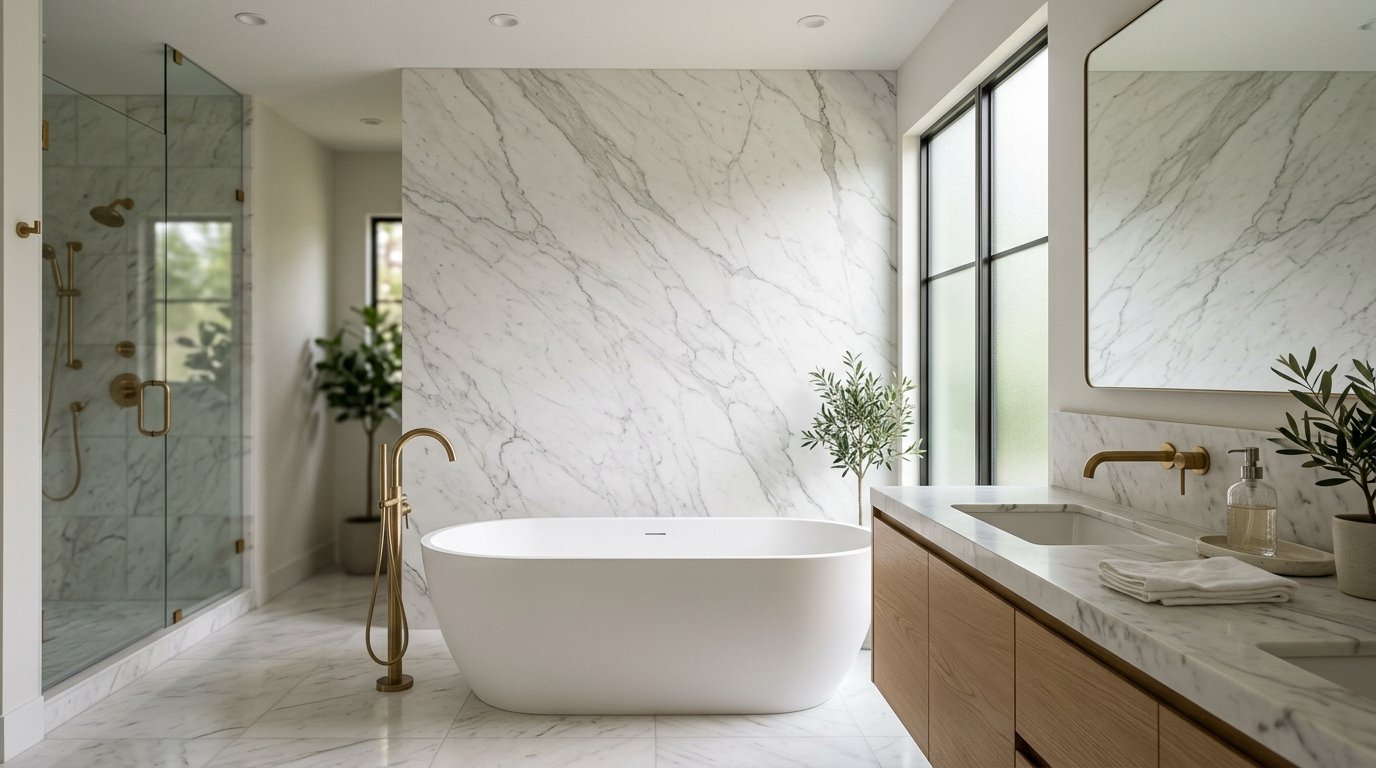
If you have a freestanding tub, place it on a marble tile platform or surround it with a marble floor inlay. The contrast between a white soaking tub and Calacatta marble flooring is the look you see in every high-end hotel bathroom.
The platform also solves a practical problem: freestanding tubs on standard tile can slide slightly over time. A marble platform with a slight lip keeps the tub anchored and adds structure.
10. Run Marble Baseboards Instead of Standard Trim
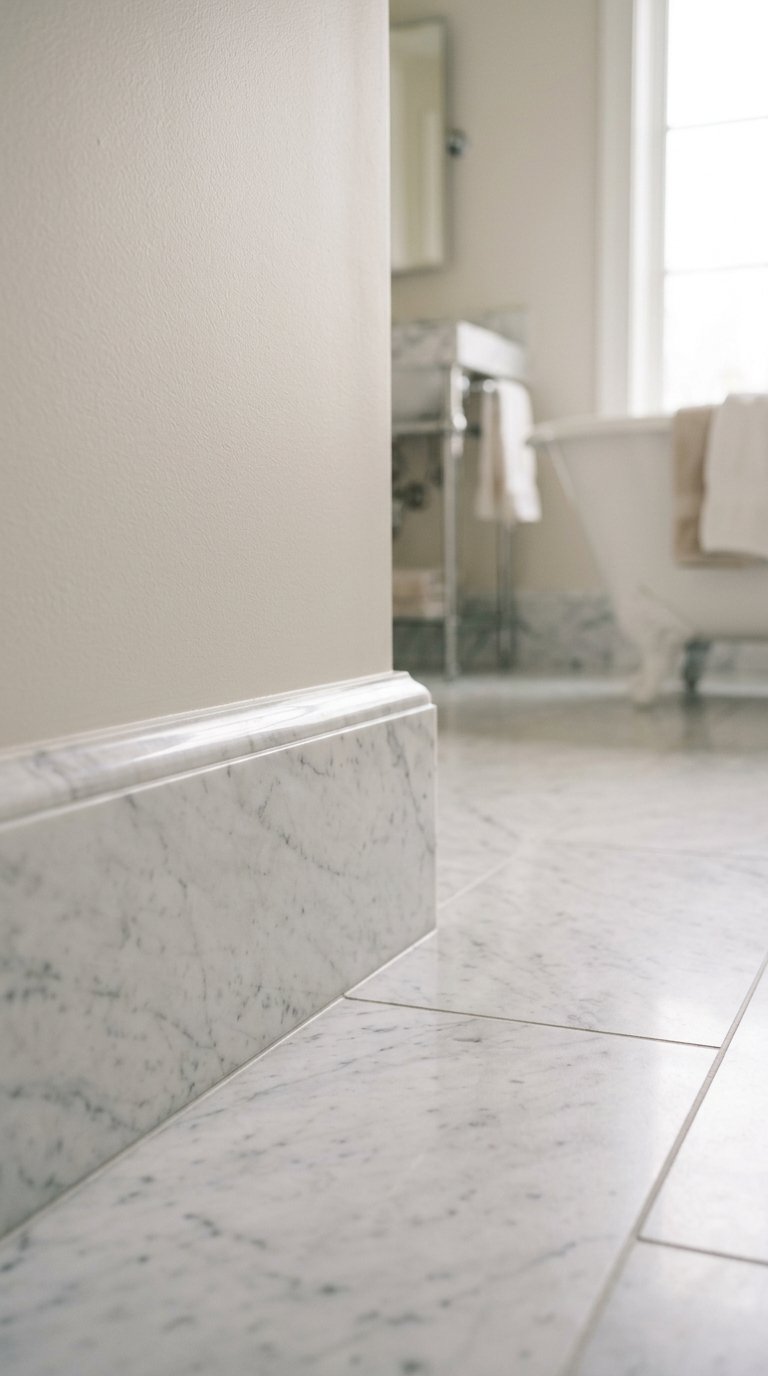
White marble baseboard trim costs $3 to $8 per linear foot and replaces standard painted wood trim. It’s waterproof, doesn’t chip, and adds a continuous stone element that ties together marble accents elsewhere in the room.
Most people never think to do this, which is why it reads as high-end. It’s a background detail that elevates everything around it.
11. Use Marble on One Shower Wall Only
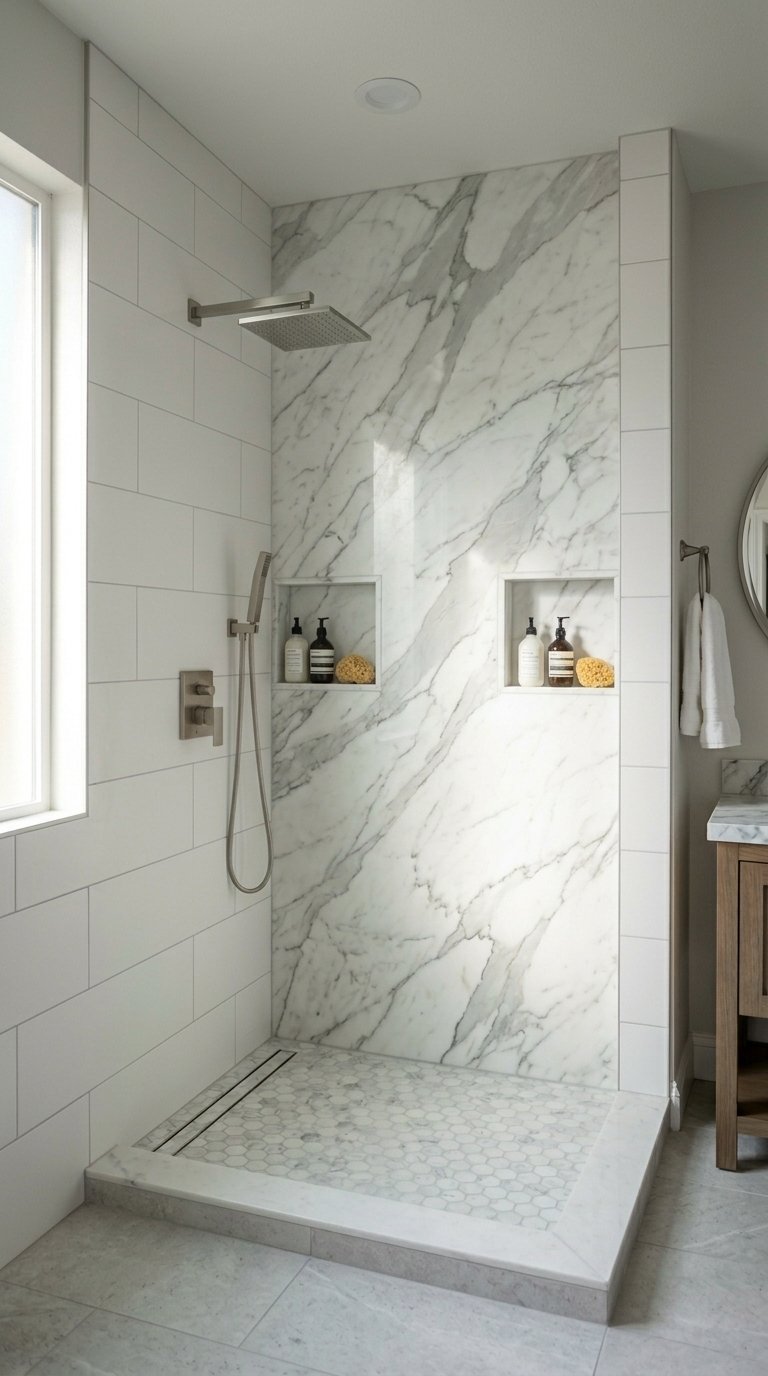
Full marble showers require meticulous sealing and regular maintenance. One marble wall inside the shower, typically the one facing you when you enter, gives you the luxury look with half the upkeep.
Pair the marble wall with large-format white subway tile on the remaining walls. The contrast makes the marble pop and keeps cleaning straightforward.
12. Add a Marble Soap Dish and Accessories Set
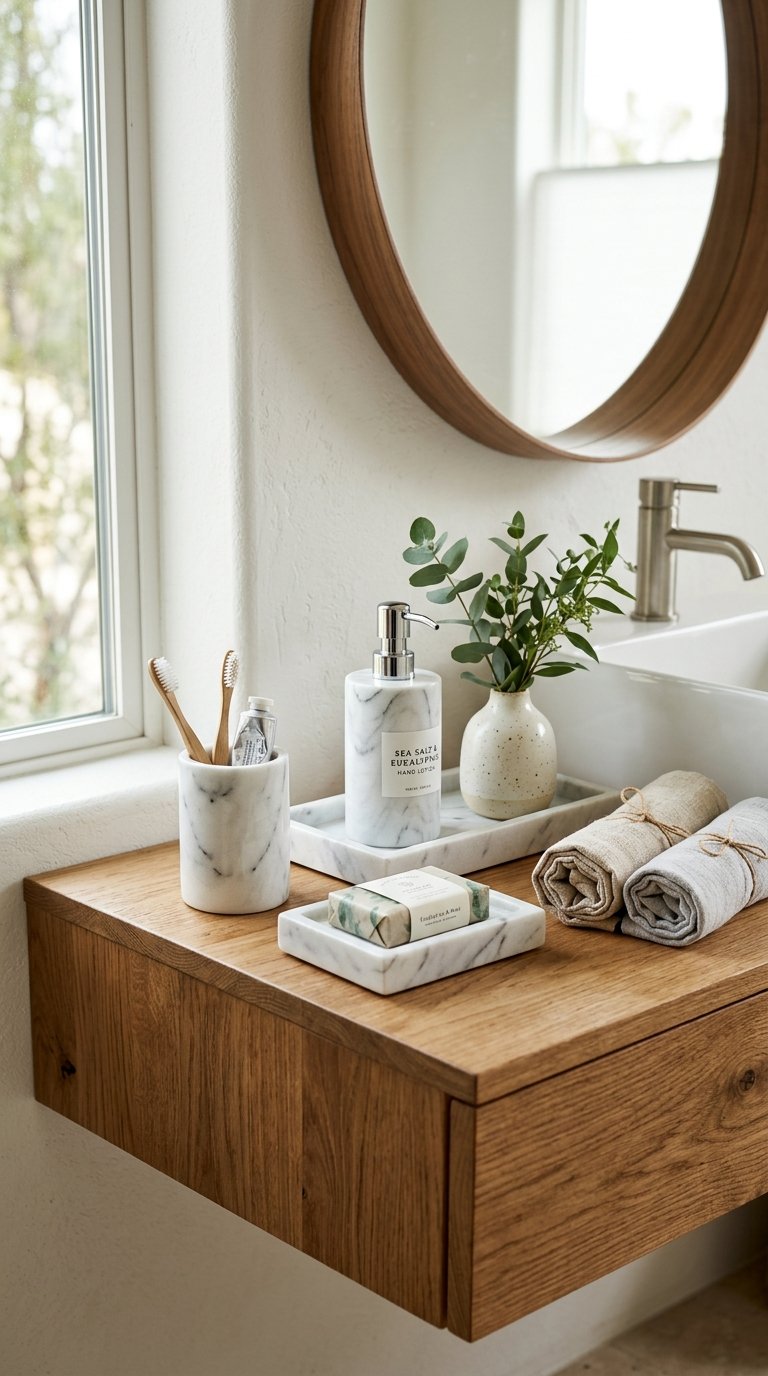
A marble soap dish, toothbrush holder, and tray set costs $30 to $80 total. These surface-level swaps take five minutes to execute and immediately shift how the bathroom reads.
Research from the National Kitchen and Bath Association shows accessories contribute to 15 percent of a bathroom’s perceived quality. Small objects carry more weight than most homeowners expect.
13. Install a Marble Herringbone Backsplash Behind the Vanity
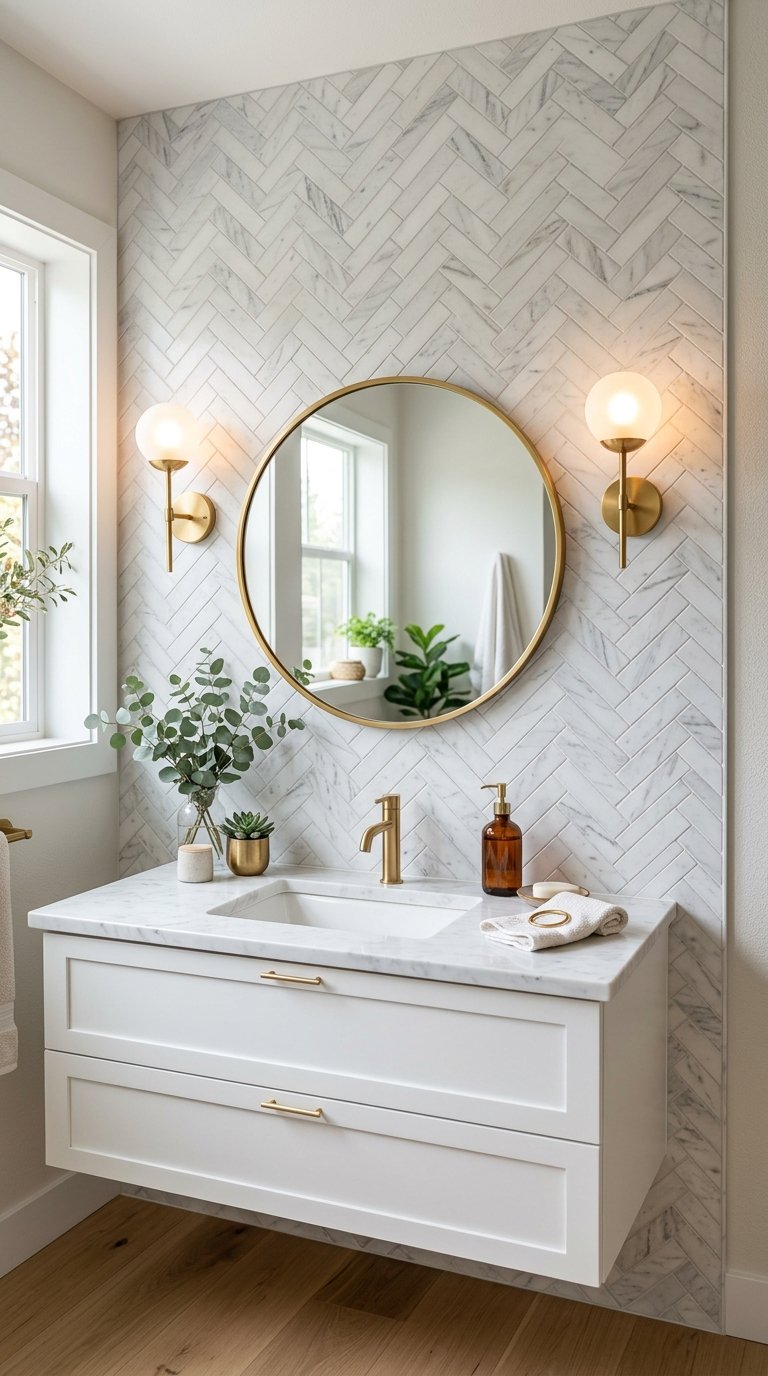
Marble herringbone tile behind the vanity adds pattern without the cost of a full wall. A standard backsplash area above a 36-inch vanity uses roughly 6 to 8 square feet of tile.
At $10 to $30 per square foot for marble mosaic, you’re spending $60 to $240 for a detail that looks custom and expensive. The herringbone pattern also draws the eye horizontally, making narrow bathrooms feel wider.
14. Pair Dark Grout with White Marble for a Bold Contrast
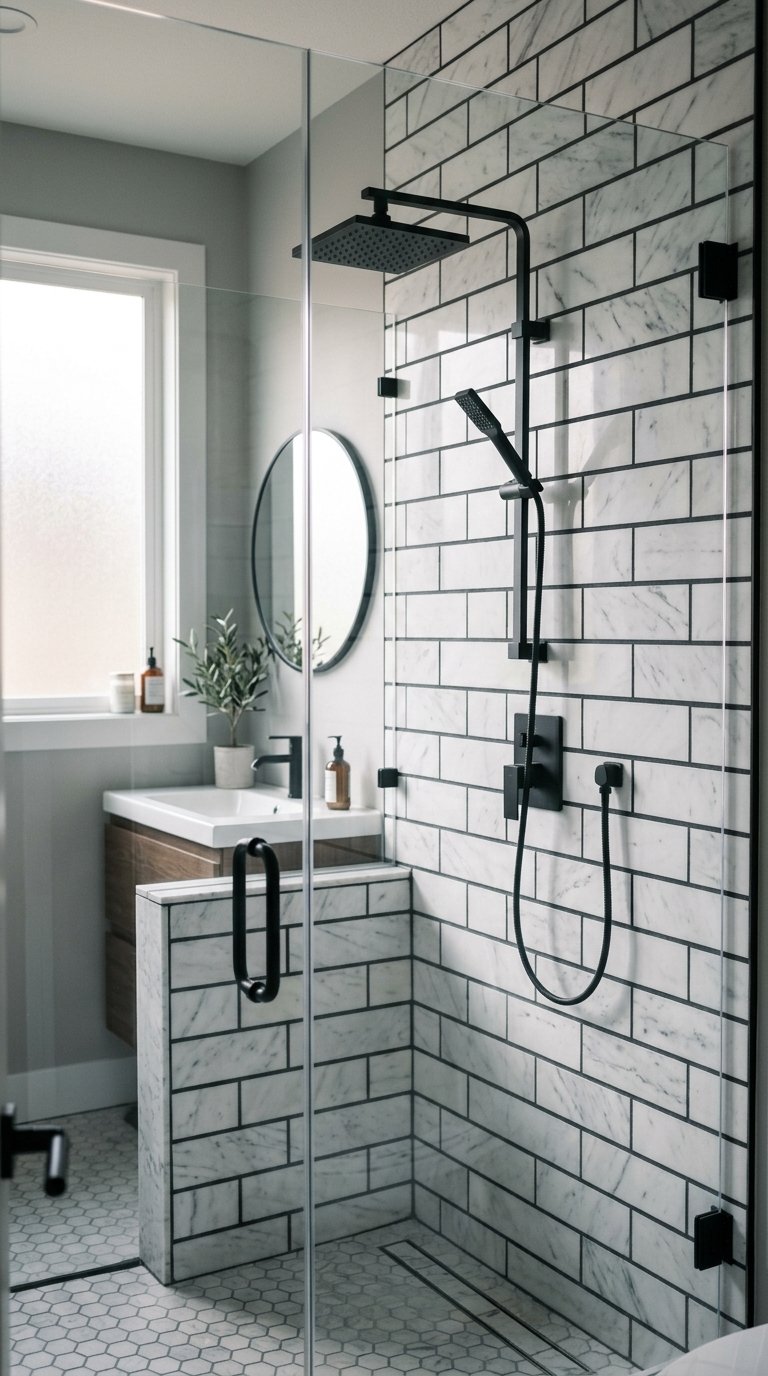
White marble with white grout looks clean. White marble with charcoal or dark grey grout looks intentional and editorial.
The dark grout also hides soap scum and mineral deposits better, which solves a real maintenance problem in hard water areas. This combination works especially well in master bathrooms where you want a more dramatic aesthetic.
15. Use Marble on the Ceiling of a Shower Enclosure
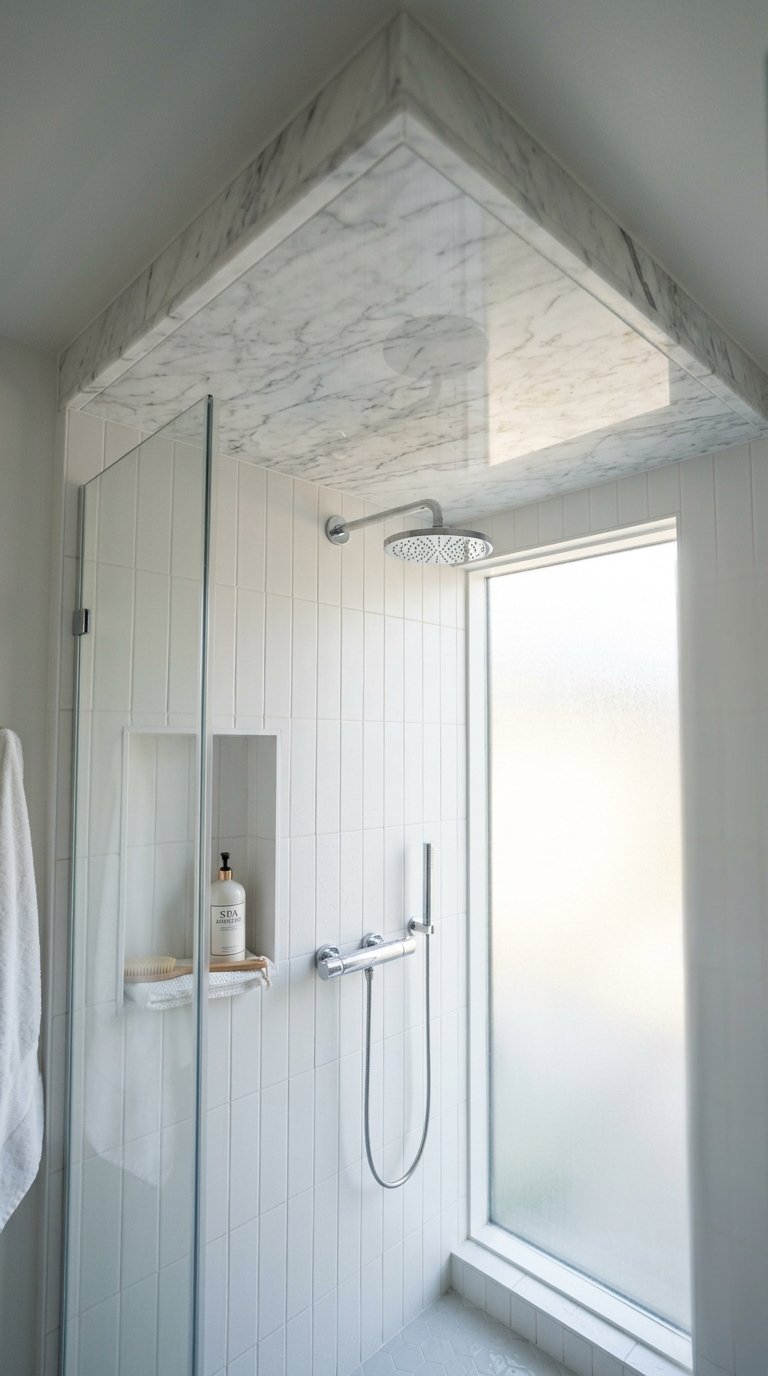
Marble on a shower ceiling is a niche-level luxury move that costs the same as floor tiling but delivers triple the impact. Most people never look up in a shower, which means they’ve never experienced the effect.
Lighter marbles like Bianco Dolomite work best overhead as they reflect light downward. In a small shower enclosure (3 x 3 feet), the ceiling requires only 9 square feet of material.
16. Install a Honed Marble Floor Instead of Polished
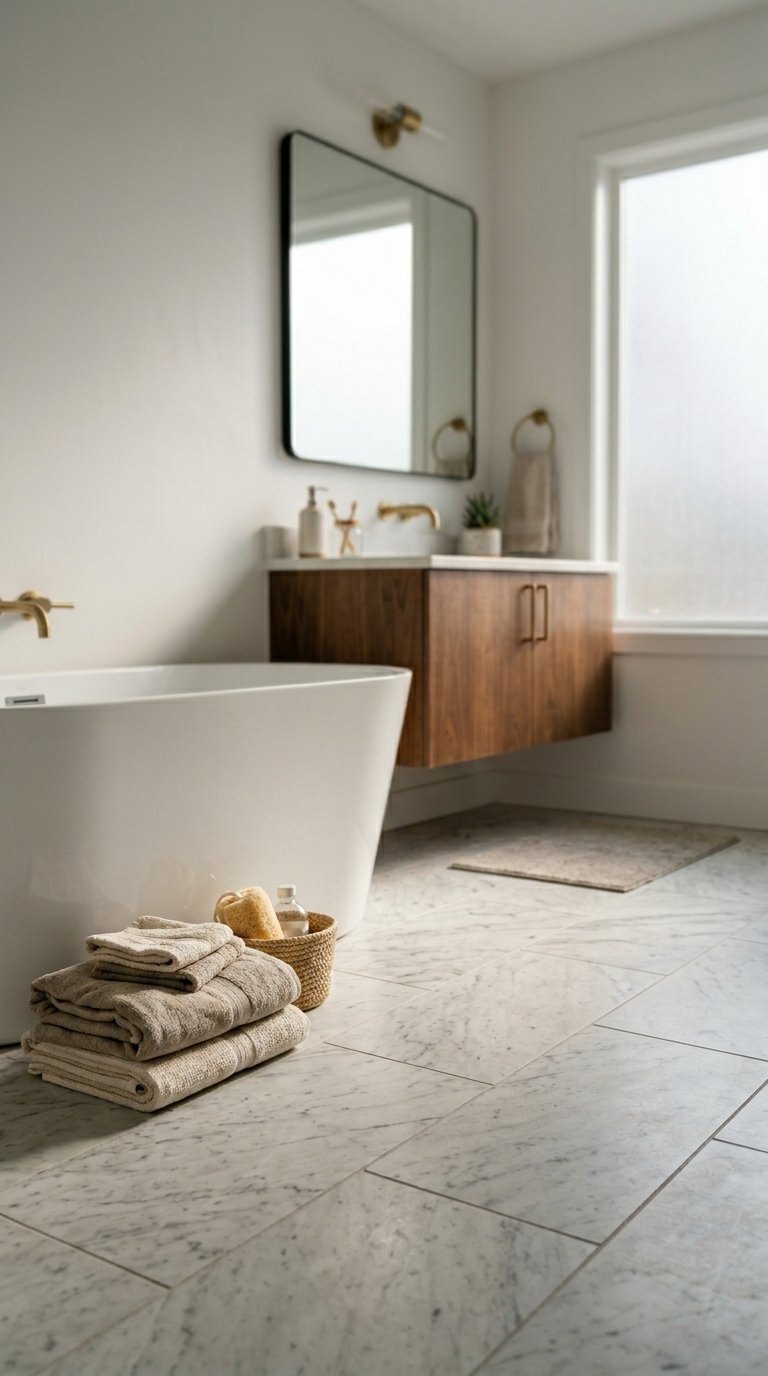
Polished marble floors are beautiful but dangerously slippery when wet. Honed marble has a matte finish that provides more grip and hides scratches better over time.
For bathroom floors specifically, honed is the smarter choice. It still reads as luxurious but performs better in a high-traffic, wet environment.
17. Create a Double Vanity with Continuous Marble Slab
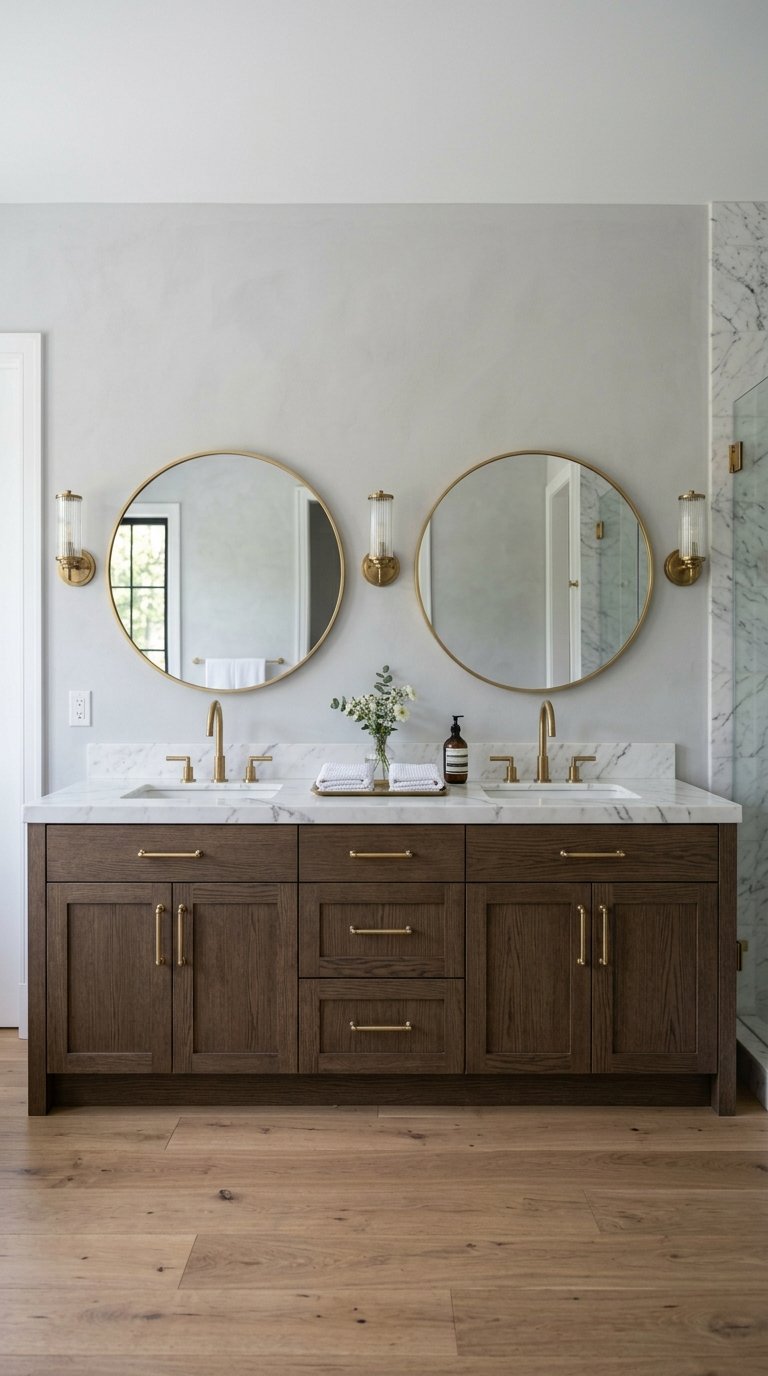
A continuous marble slab across a double vanity eliminates the seam between two separate tops. It creates a furniture-grade look that feels custom-built even in a standard-sized bathroom.
Expect to pay $200 to $600 for a 60-inch continuous slab installed, which is significantly less than a custom cabinetry project. The slab also makes cleaning faster since there are no edge seams to scrub.
18. Add Marble Wainscoting to the Lower Half of the Wall
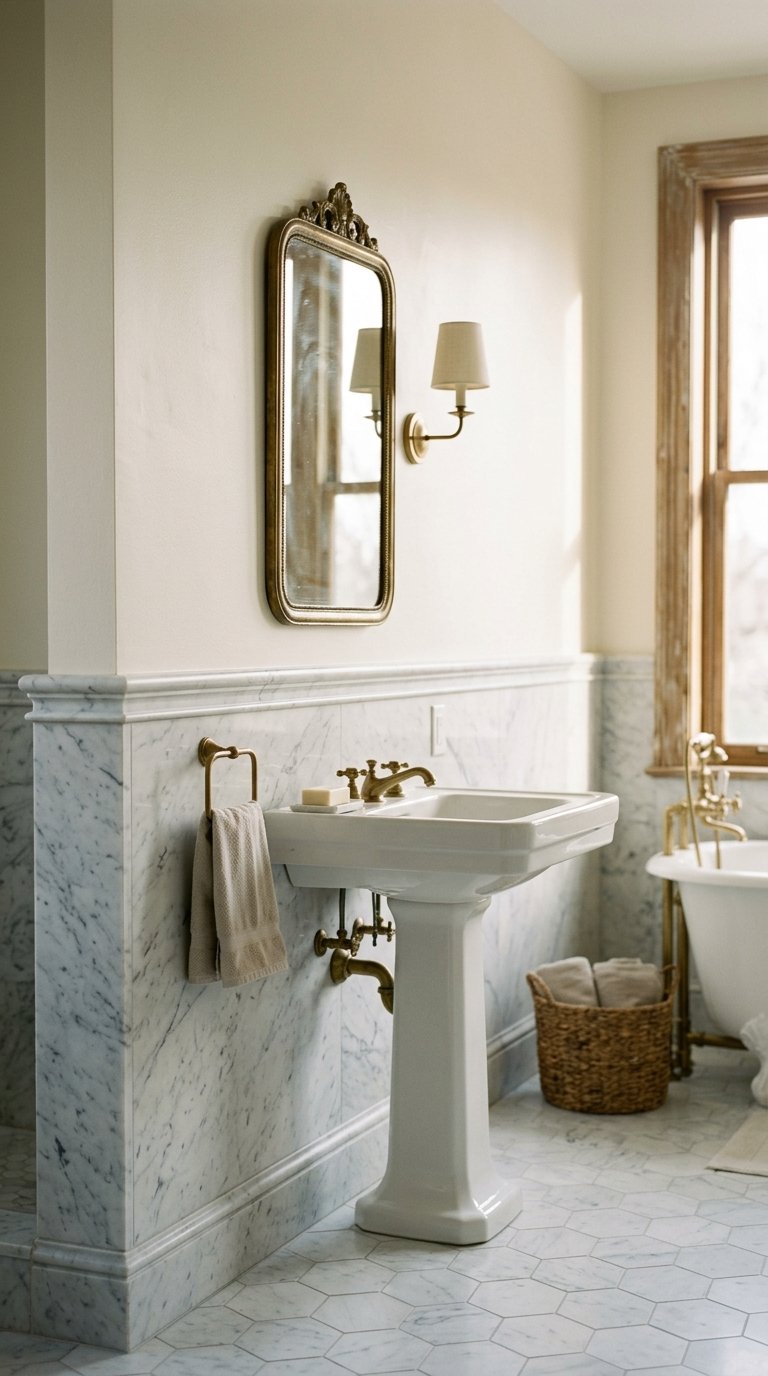
Marble wainscoting runs 36 to 48 inches up the wall, leaving the upper portion painted or wallpapered. This approach cuts your material cost in half compared to full-height tiling.
It also solves the problem of moisture damage on lower walls near the tub or toilet. Marble wainscoting is waterproof, wipeable, and dramatically more durable than painted drywall in wet zones.
19. Use Green or Black Marble for a Non-Traditional Look
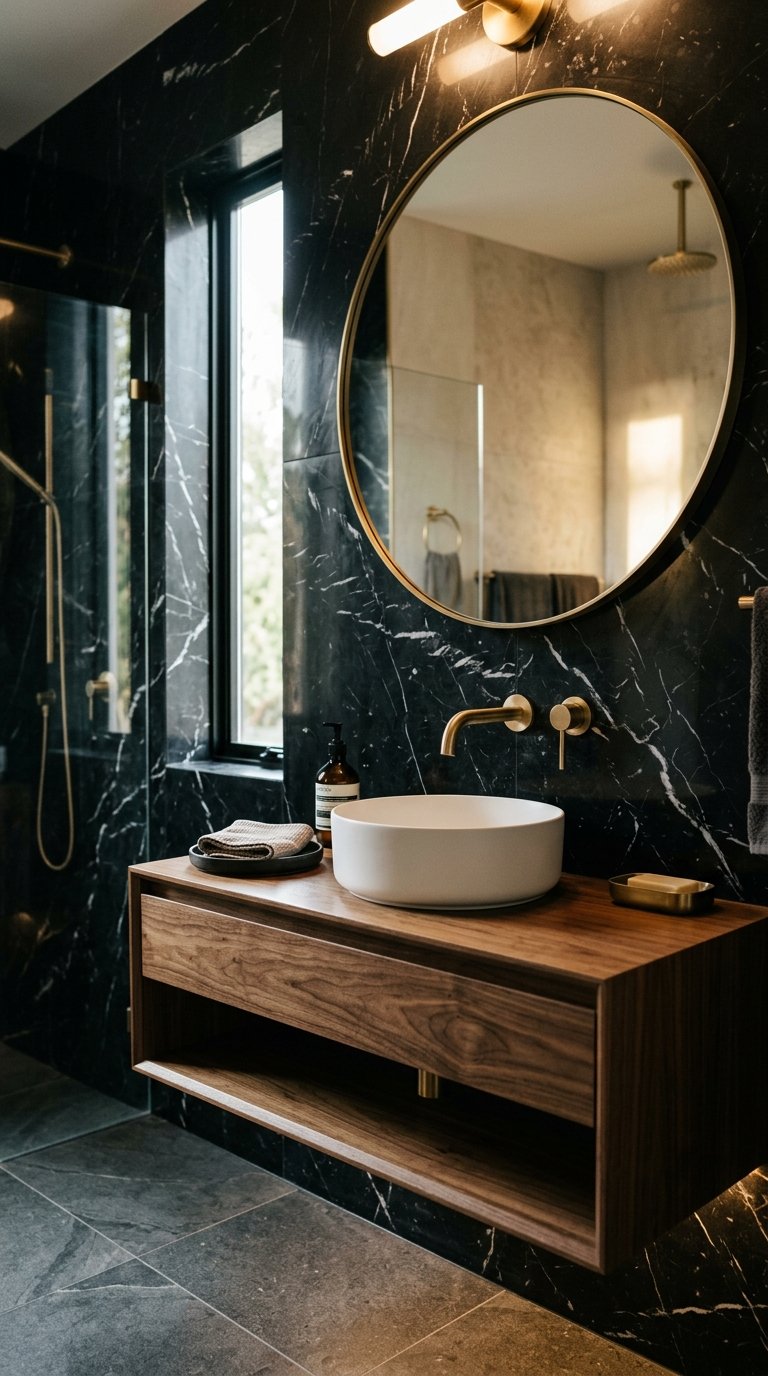
White and grey marble dominate bathroom design, which means green or black marble instantly makes your bathroom memorable. Verde Guatemala (green) and Nero Marquina (black) marble are widely available and cost similar to Carrara.
Black marble with brass fixtures is the combination designers used throughout 2023 and 2024 at a premium price point. You get the same result by sourcing Nero Marquina tiles from distributors like Tilebar or Floor and Decor.
20. Tile a Built-In Bench in the Shower with Marble
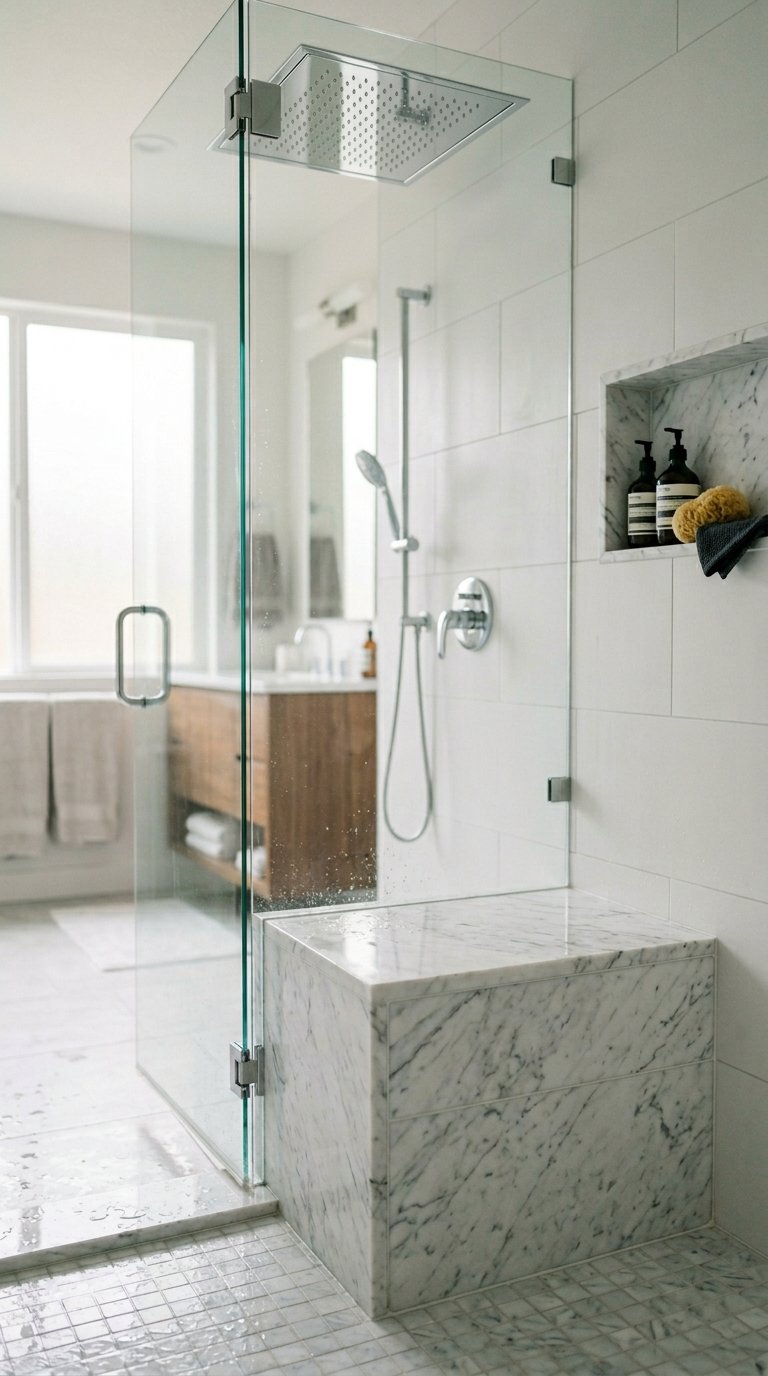
A shower bench tiled in marble serves two functions: seating and visual anchoring. It gives the shower a defined structure and makes the space feel planned rather than bare.
Marble bench surfaces stay cooler than porcelain, which is a comfort advantage in warm climates. A standard bench uses 4 to 6 square feet of tile, making this one of the most cost-effective marble additions in the room.
21. Mix Two Marble Varieties for a Layered Look
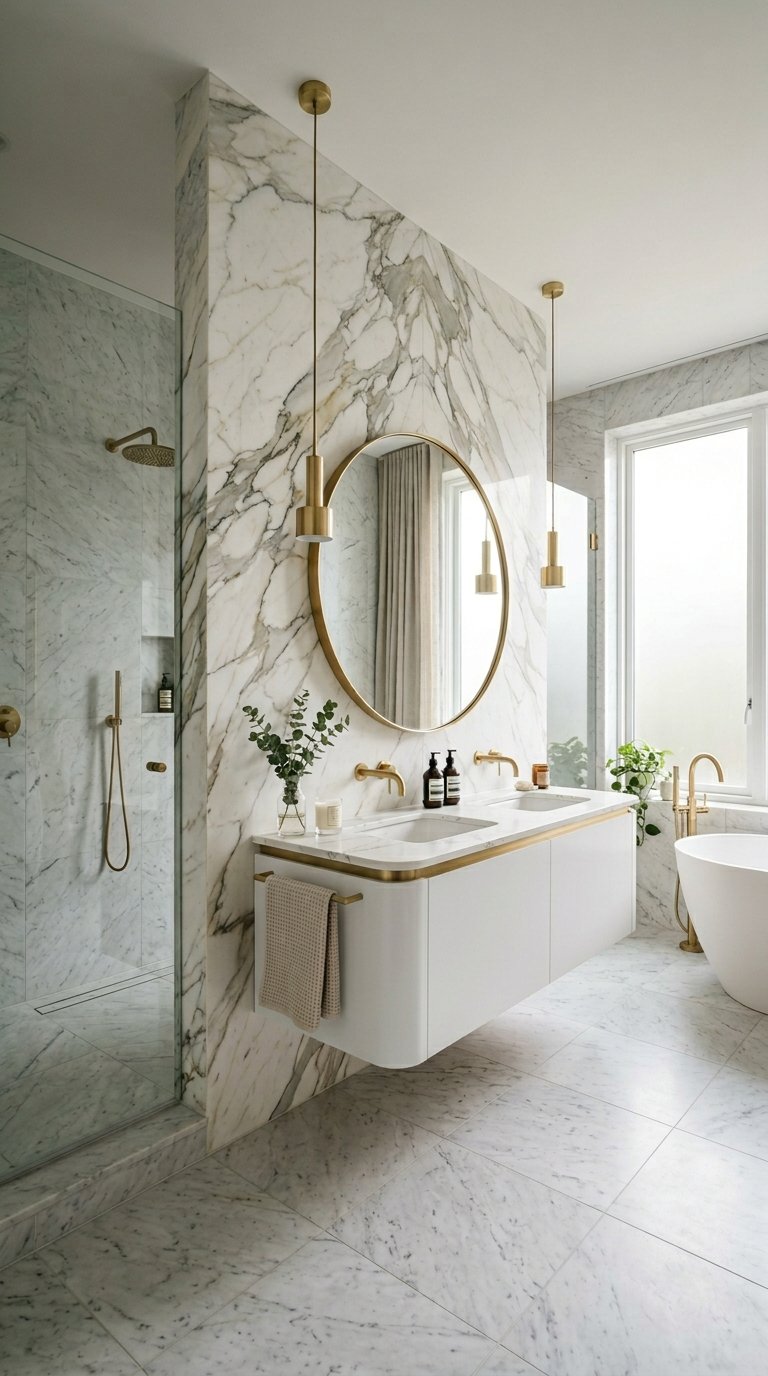
Pairing Calacatta (bold, dramatic veining) with Carrara (softer, grey veining) in the same bathroom creates depth without pattern overload. Use Calacatta on the focal wall and Carrara on the floor or secondary surfaces.
Interior designers use this technique in high-end residential projects because it makes a bathroom feel collected, not decorated. The key is keeping both marbles in the same warm or cool tone family so they complement rather than compete.
Final Thoughts
Marble bathrooms work because the material signals quality through texture, weight, and light reflection in a way painted walls and standard tile never do. You don’t need to redo your entire bathroom to get that effect.
Pick one or two ideas from this list that solve your specific problem, whether that’s a slippery floor, a bland vanity wall, or a shower that looks like every other builder-grade bathroom on the block. Start there, execute it well, and the room will tell the rest of the story. FYI, the best marble bathrooms aren’t the ones with the most marble. They’re the ones where every piece of it is in exactly the right place. 🙂