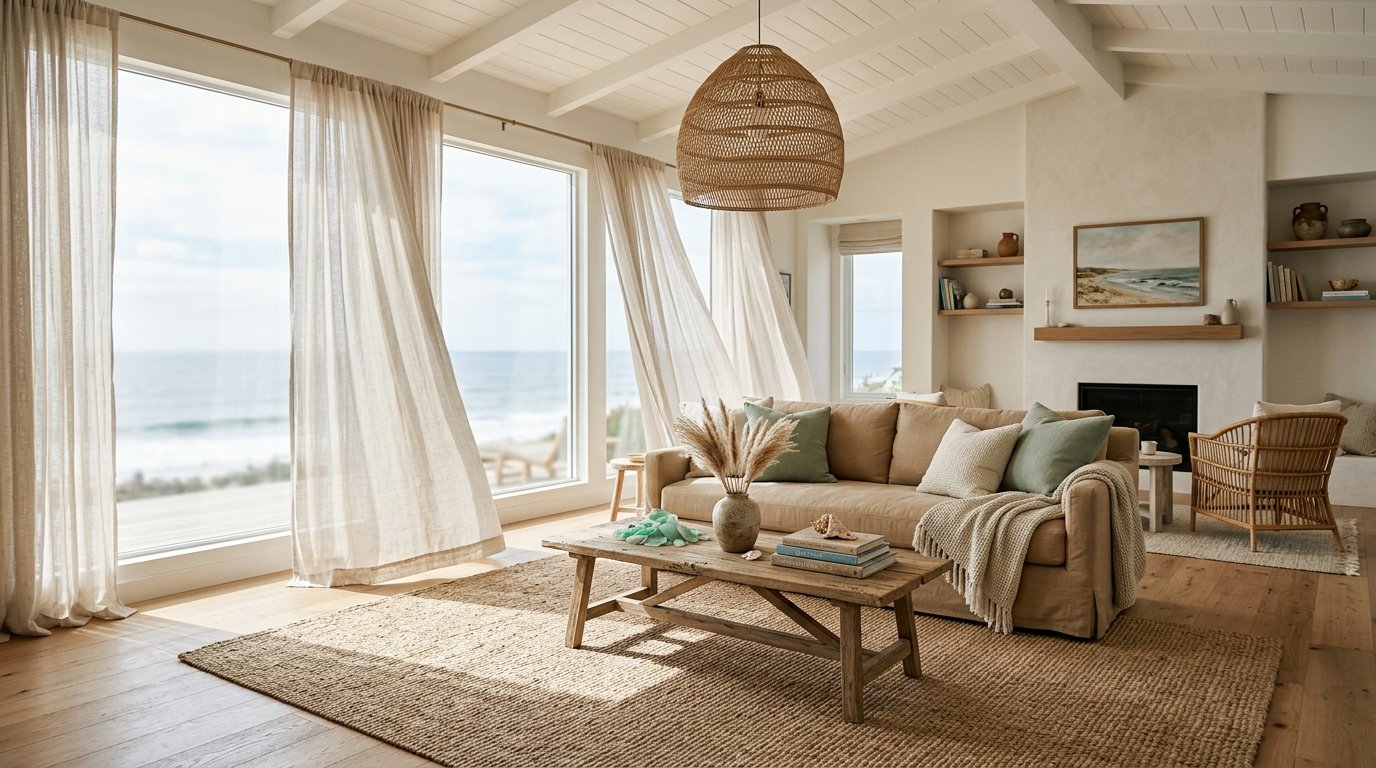
25 Beach House Decor Ideas to Transform Your Home Today
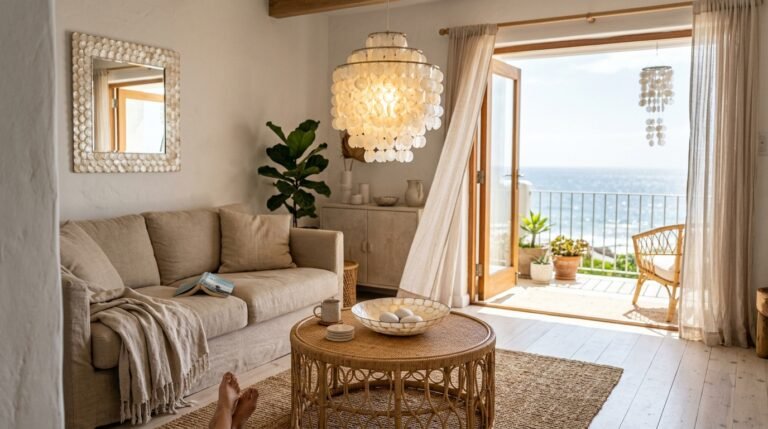
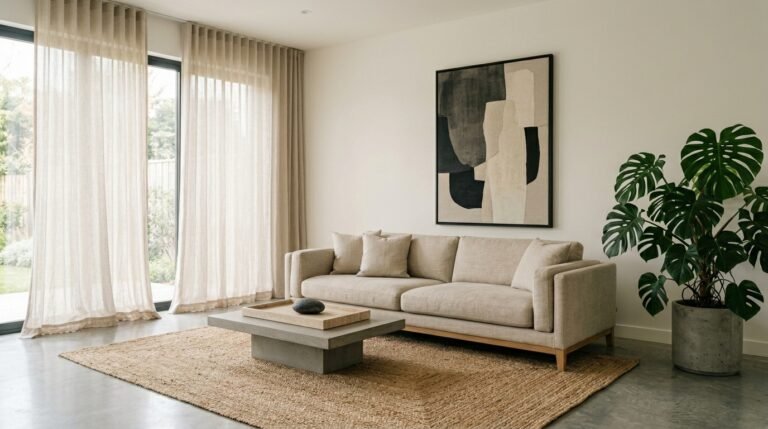
1. Swap Heavy Curtains for Sheer Linen Panels
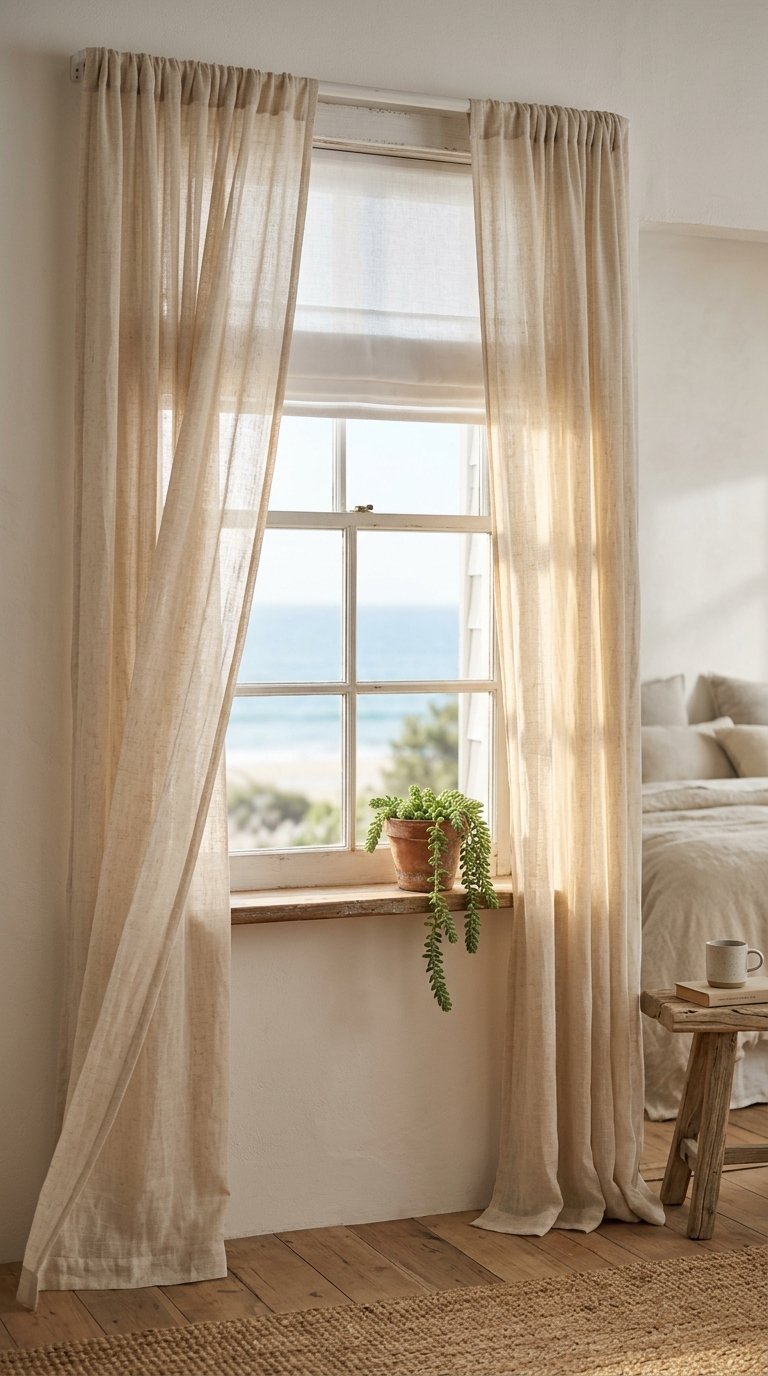
Sheer linen panels filter light without blocking the view, which is exactly what a coastal room needs to feel open and airy. A single pair from IKEA runs under $40, and studies on natural light exposure show that rooms with diffused sunlight feel up to 30% more spacious than those with blocked windows. If you have a small living room that feels like a cave, this swap costs less than a dinner out and transforms the entire mood of the space.
Go with white or undyed linen, not nautical navy stripes, because neutral sheers let your other coastal accents carry the theme without the room looking like a souvenir shop. Layer them over existing blinds if you rent, since tension rods require no wall damage. The breeze movement alone adds life to a static room.
2. Use Rope or Jute Accents to Add Texture Without Clutter
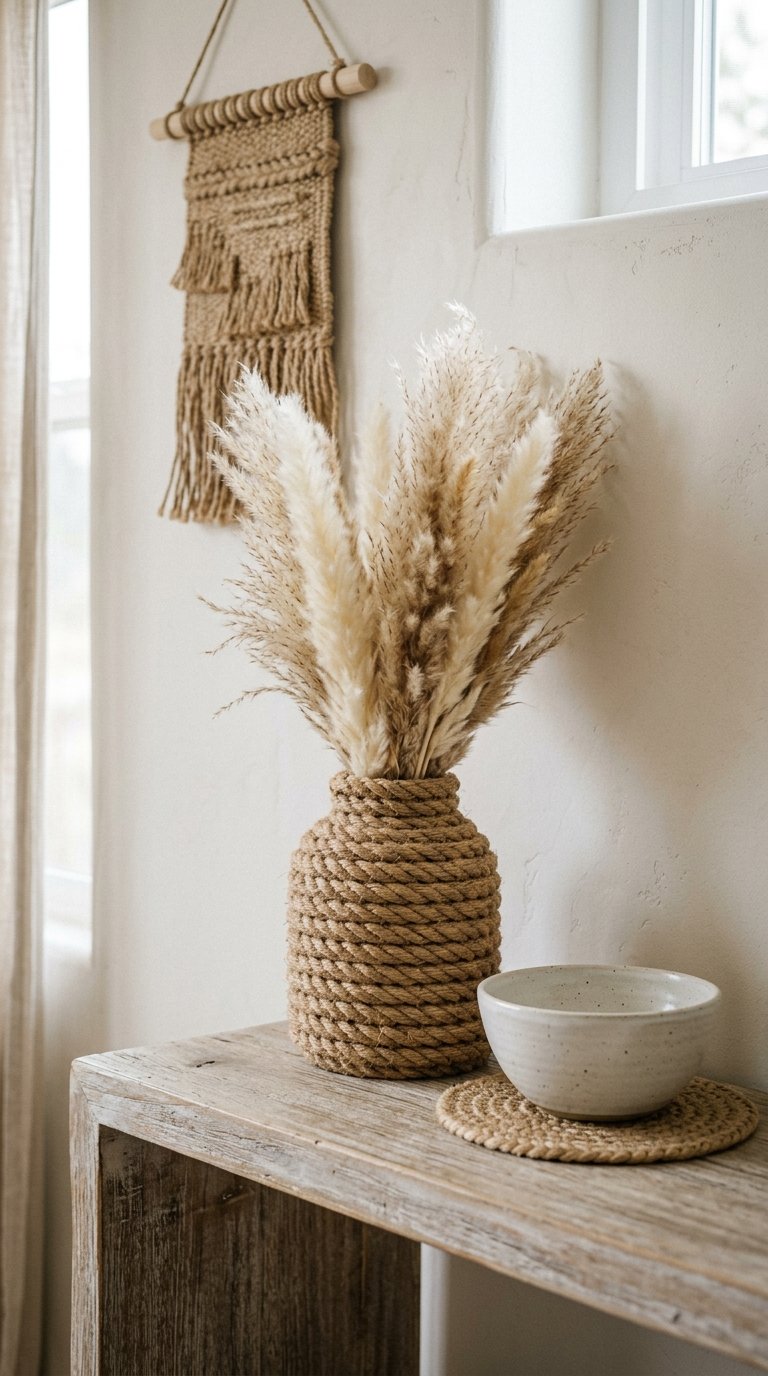
Texture is what separates a flat, forgettable room from one that feels curated, and jute is the most budget-efficient way to get there fast. A jute area rug in an 8×10 size averages $60 to $120 on Amazon, compared to $400+ for a wool alternative, and it grounds furniture groupings the same way. Interior designers consistently rank texture layering as the single highest-impact, lowest-cost refresh available to homeowners working with existing furniture.
Wrap a plain $10 vase in coiled rope using craft glue, hang a jute wall hanging above a sofa, or swap plastic drawer pulls for rope loops. Each of these costs under $15 and signals “intentional coastal” rather than “grabbed from a discount bin.” The key is repetition in material, not in pattern, so three jute pieces scattered across a room read as a design choice rather than an accident.
3. Paint an Accent Wall in a Warm Greige or Driftwood Tone
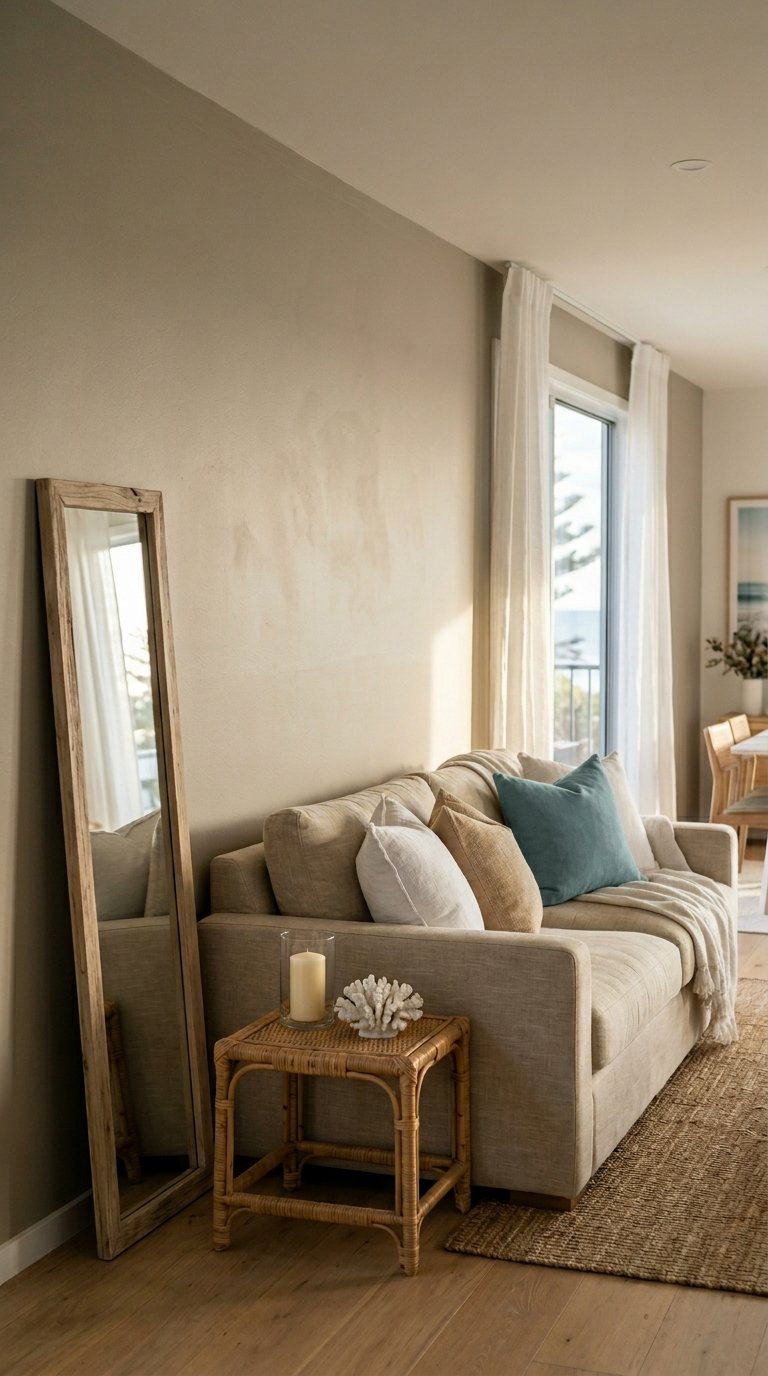
Bright white and turquoise scream “beach themed” in the worst way. Warm greige tones like Benjamin Moore’s “Pale Oak” or Sherwin-Williams’ “Accessible Beige” evoke the actual palette of a shoreline without the cartoonish result. A single accent wall costs around $30 to $50 in paint and three hours of your Sunday afternoon, and it immediately anchors a room that lacks architectural interest.
The reason warm neutrals outperform cool blues in coastal interiors is that they reflect warm-spectrum light, which makes a room feel sunlit even on overcast days. Paint the wall behind your sofa or bed for maximum visual impact, since that wall acts as the room’s natural focal point. Skip the feature wall in rental spaces if painting isn’t allowed and use a large removable wallpaper panel instead.
4. Bring in Weathered Wood Furniture or Faux Finishes
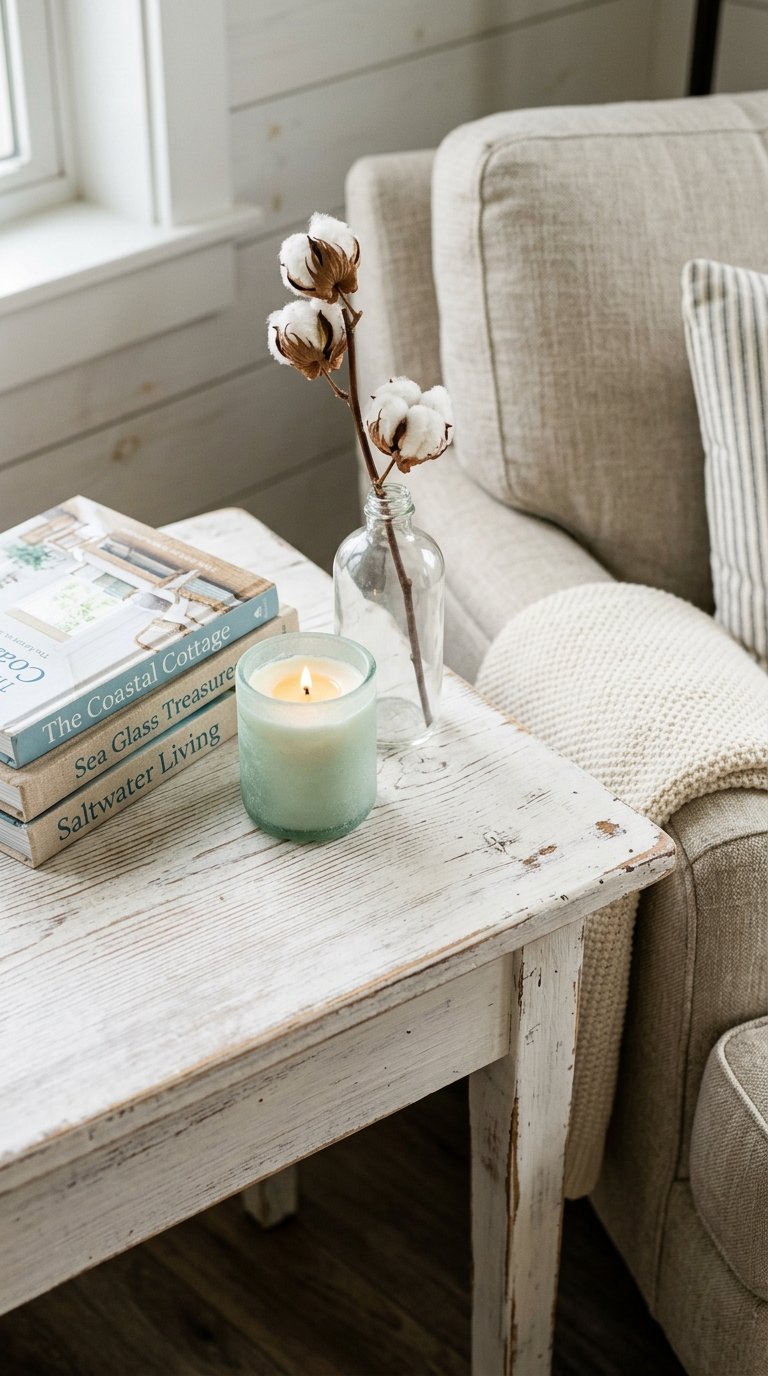
Real driftwood furniture runs expensive, but a $20 can of whitewash paint turns any secondhand wood piece into a convincing coastal find. Whitewashing works by thinning white latex paint 1:1 with water, brushing it on, then wiping it back immediately with a rag. The result mimics the UV-bleached finish of wood left near salt water, and no one at your next dinner party will know you spent a Saturday afternoon on it.
Thrift stores and Facebook Marketplace regularly list solid wood side tables and dressers for $15 to $50. A whitewash finish adds perceived value and pulls the piece into a coastal scheme without a furniture budget overhaul. If your current furniture is particleboard, focus on wood accessories like trays, frames, and bowls instead, since the finish works best on real wood grain.
5. Display Collected Shells, Coral, and Sea Glass Intentionally
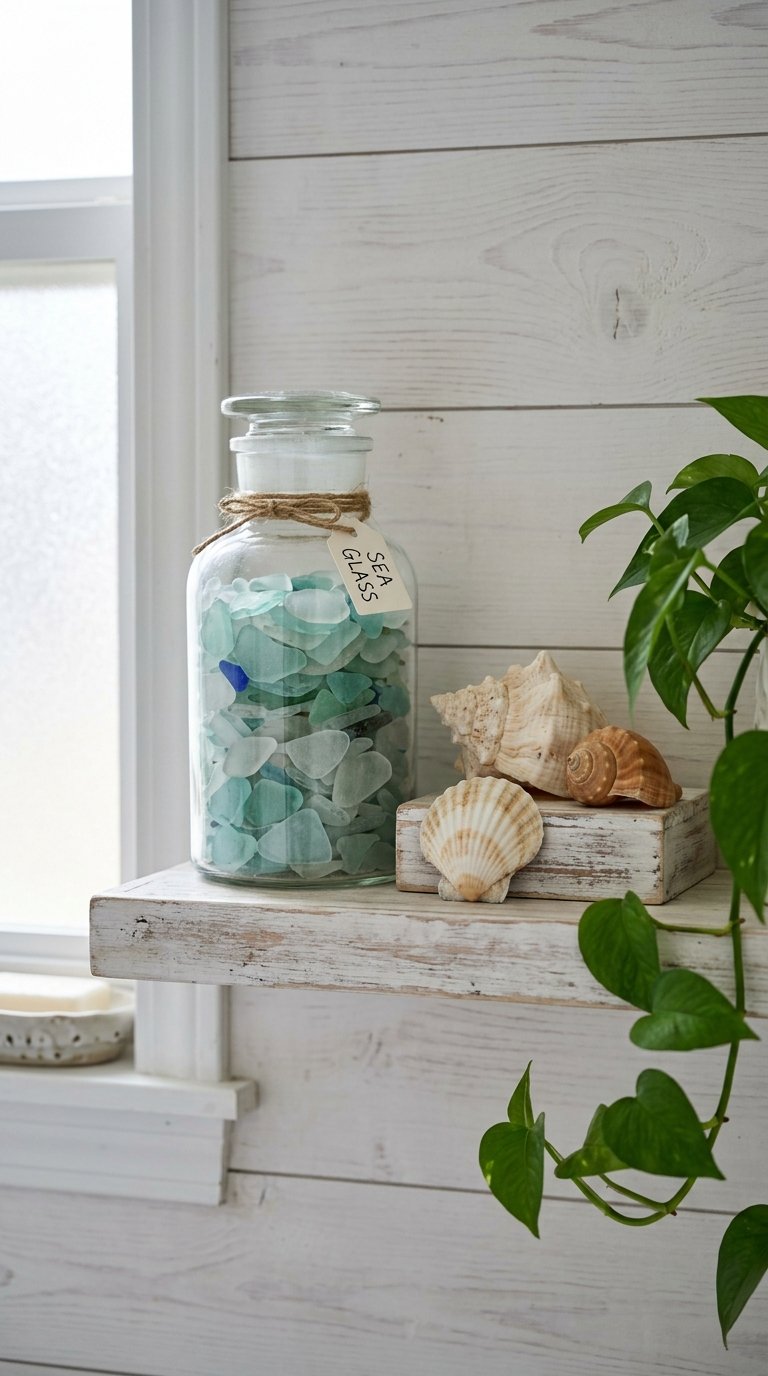
The problem with shell decor is not the shells — it’s the random bowl of them sitting on every surface like a garage sale reject pile. Group natural objects in odd numbers (3 or 5), vary the height using small risers or stacked books, and limit displays to two or three spots in a room. Visual merchandising research shows that odd-number groupings draw the eye more effectively than even arrangements, which is why retail stores use this rule religiously.
A glass apothecary jar filled with layered sea glass costs nothing if you collect it yourself and looks identical to $80 versions sold in coastal boutiques. Place one on a bathroom shelf, one on a kitchen windowsill, and leave the rest of your surfaces clear. Restraint is what makes natural collections look expensive rather than hoarded.
6. Install Beadboard Paneling on a Feature Wall for Under $100
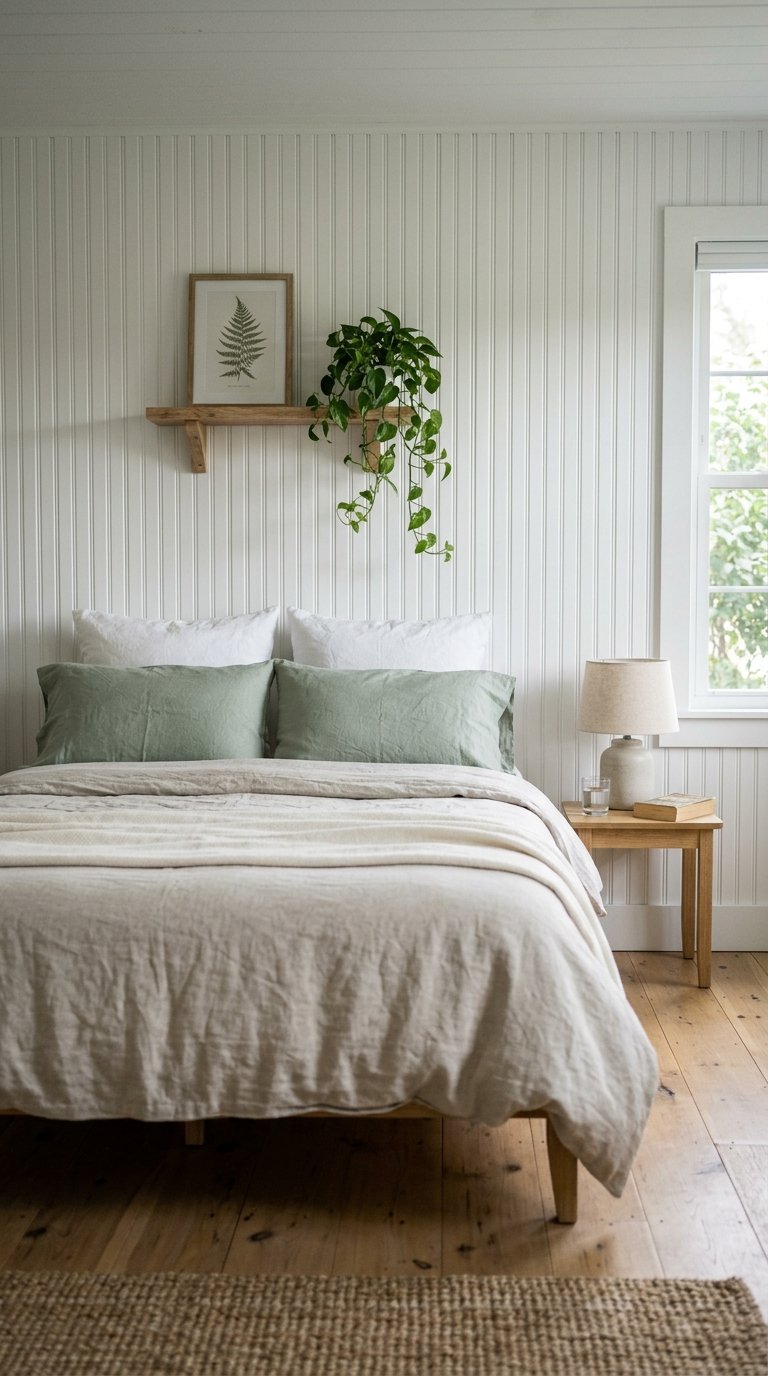
Beadboard is the fastest way to add architectural character to a flat, boring wall, and it reads immediately as coastal cottage without requiring a renovation budget. Home Depot sells beadboard panels for roughly $25 per 4×8 sheet, and most living room accent walls take three to four panels. Paint it crisp white or soft cream and the transformation looks like a $2,000 wallpaper job.
Renters who cannot install permanent panels have a workaround: peel-and-stick beadboard wallpaper runs about $30 for a standard wall and removes cleanly. The visual payoff is identical. Pair it with a simple floating shelf at picture-rail height to complete the built-in look without any actual built-in cost.
7. Use Woven Baskets as Storage and Wall Art Simultaneously
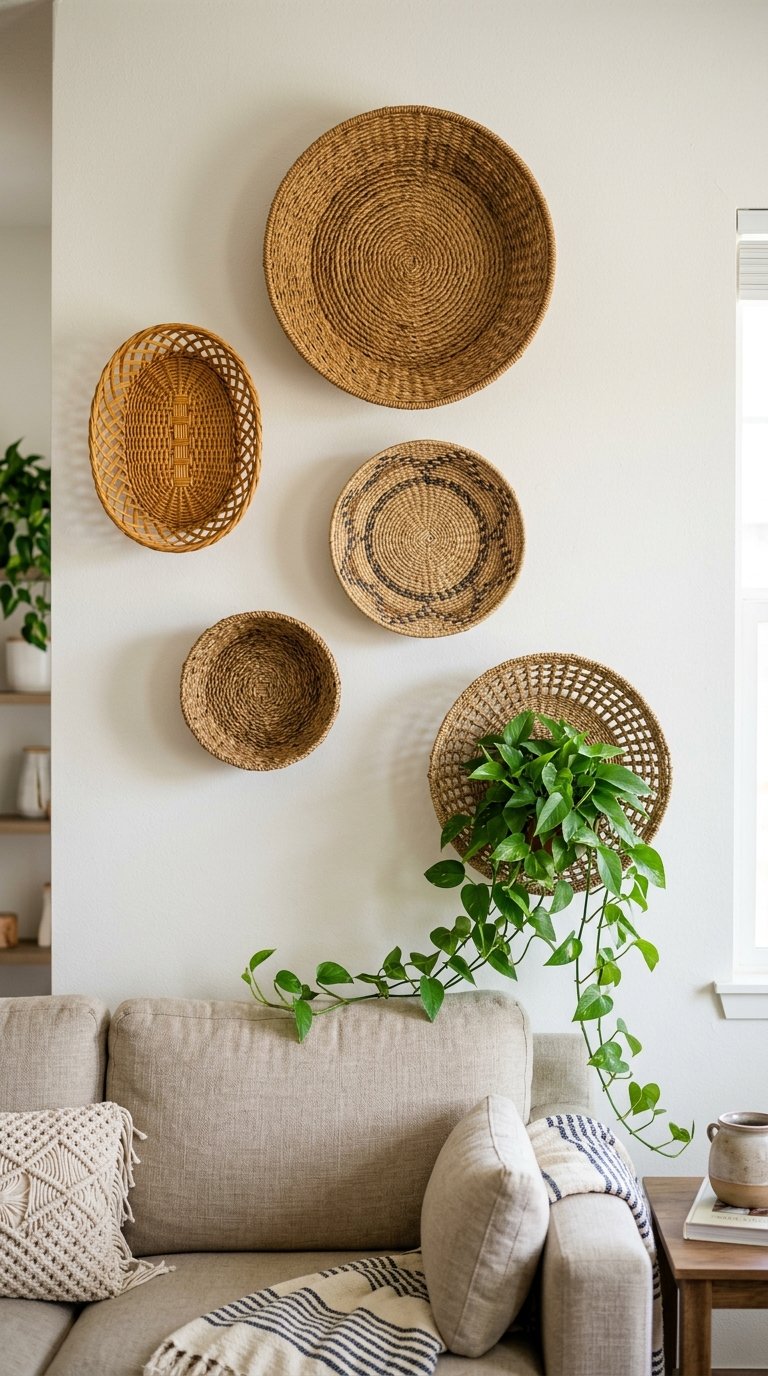
Woven baskets solve two problems at once — you get hidden storage and a gallery wall that requires zero frames, zero art budget, and zero holes beyond a single nail per basket. A grouping of three to five varied-size baskets arranged asymmetrically on a wall replicates the look seen in coastal homes featured in Architectural Digest, and the total cost runs $30 to $80 depending on where you shop.
World Market and TJ Maxx consistently stock seagrass and rattan baskets in the $8 to $25 range per piece. Hang the largest basket highest and cluster smaller ones around it at varying distances. Use them as wall art in hallways, bedrooms, or above a sofa — anywhere a traditional gallery wall feels too formal for the vibe you’re building.
8. Layer Blue and White Textiles Without Going Full Nautical
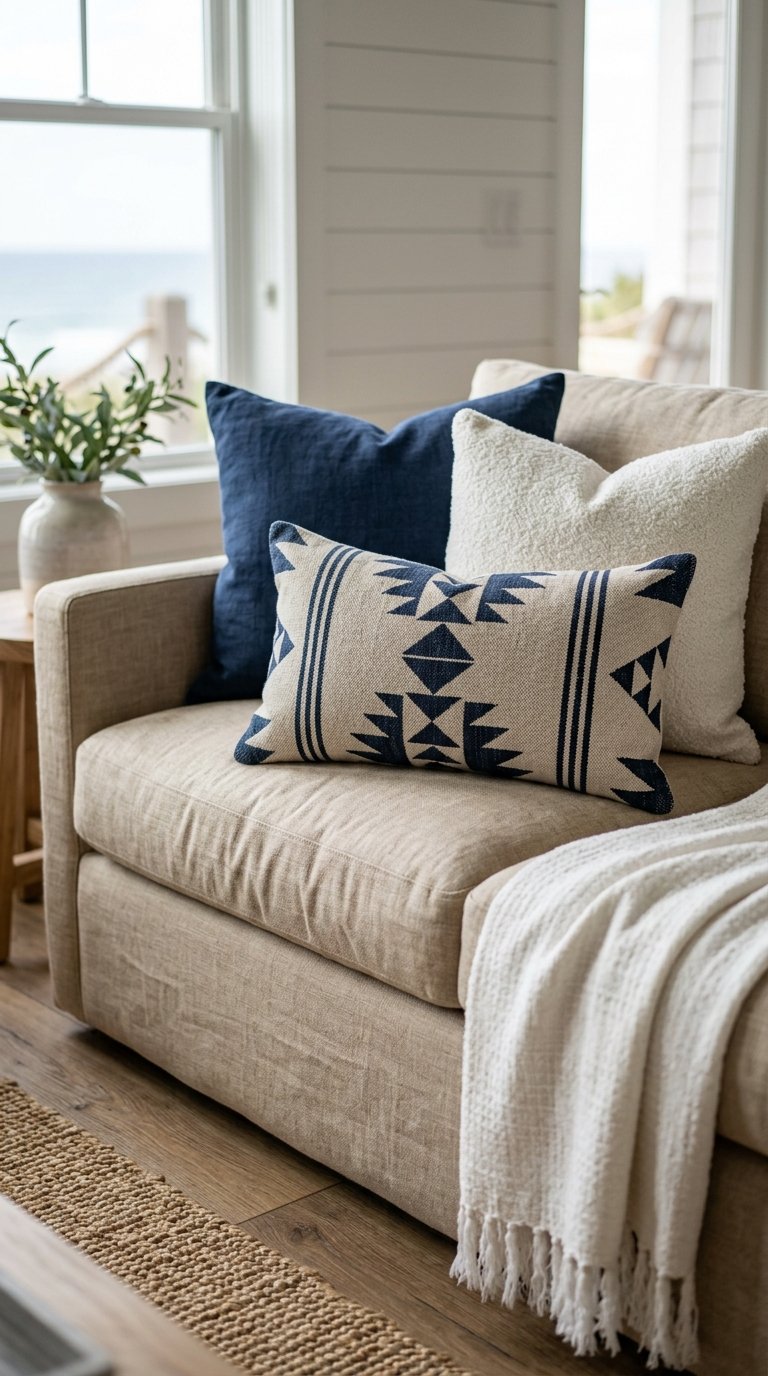
Blue and white is the most enduring coastal color combination because it mirrors the actual horizon line your brain associates with open water and calm. The mistake most people make is choosing textiles with anchors, stripes, and sailboat prints all at once. Pick one pattern per layer: a solid blue throw, a white textured pillow, a geometric-print lumbar cushion. Three different patterns in the same color family read as sophisticated; three nautical prints read as a theme park gift shop. FYI, even one anchor pillow is one too many unless you own an actual boat.
Linen and cotton blends work best for coastal textiles because they wrinkle naturally and that relaxed texture reinforces the informal beach-house mood. Swap out your current throw pillows for $12 to $20 IKEA or H&M Home options in the right palette and the room shifts immediately. Wash them before you use them so they soften and lose that stiff, freshly-purchased look.
9. Add a Hanging Rattan or Wicker Light Fixture
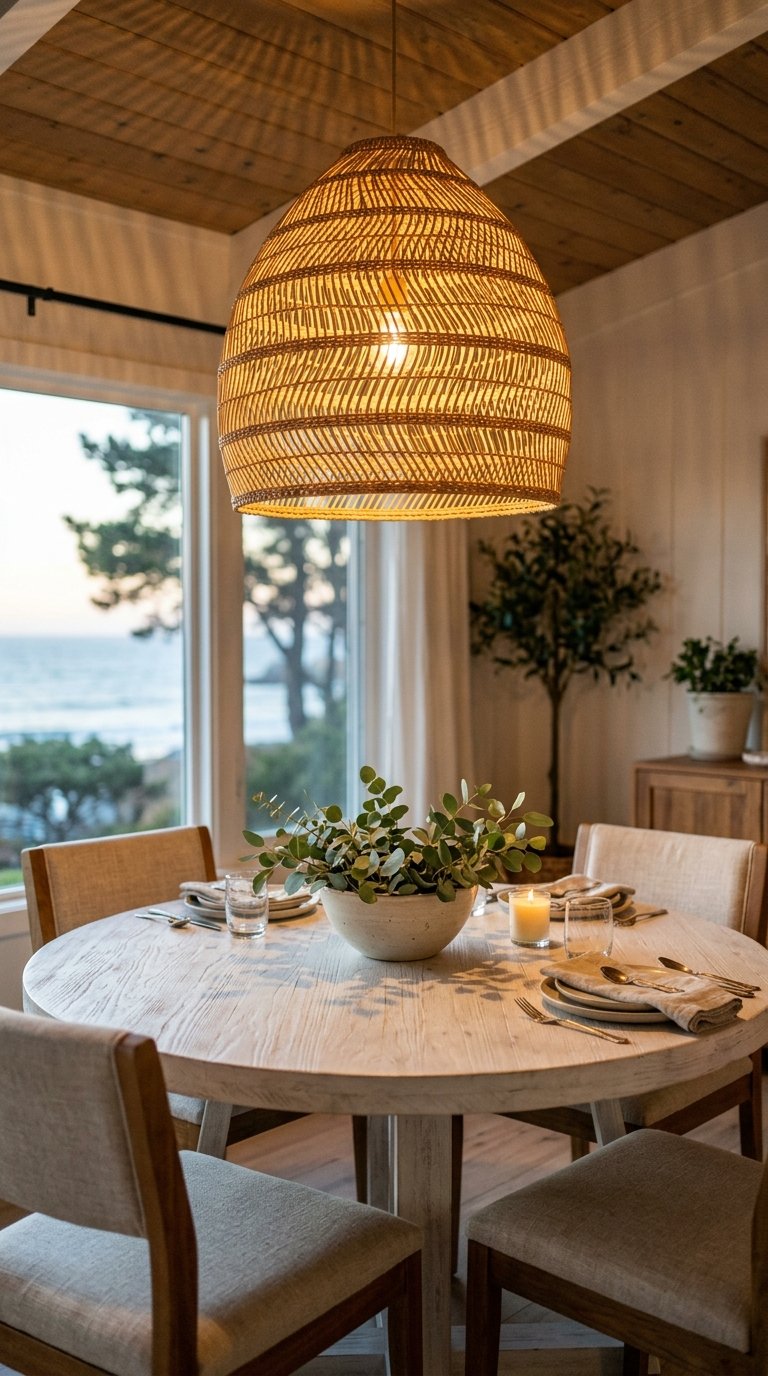
Overhead lighting is the most overlooked element in a room refresh, and a pendant swap is faster than repainting a wall. A woven rattan pendant from Amazon or Wayfair runs $35 to $80, requires a standard light fixture swap that takes 20 minutes, and immediately changes the warmth and character of a dining area or bedroom. The organic material filters light in a way that glass or metal fixtures don’t, casting a warm, dappled pattern across the ceiling.
Renting? Plug-in pendant lights with fabric cords hang from a ceiling hook (no wiring required) and cost $25 to $50. String the cord along the ceiling with adhesive hooks for a clean look. This one swap photographs better than almost any other room change, which matters if you’re trying to make a space feel intentional rather than assembled from whatever was on sale.
10. Frame Vintage Coastal Maps or Botanical Prints
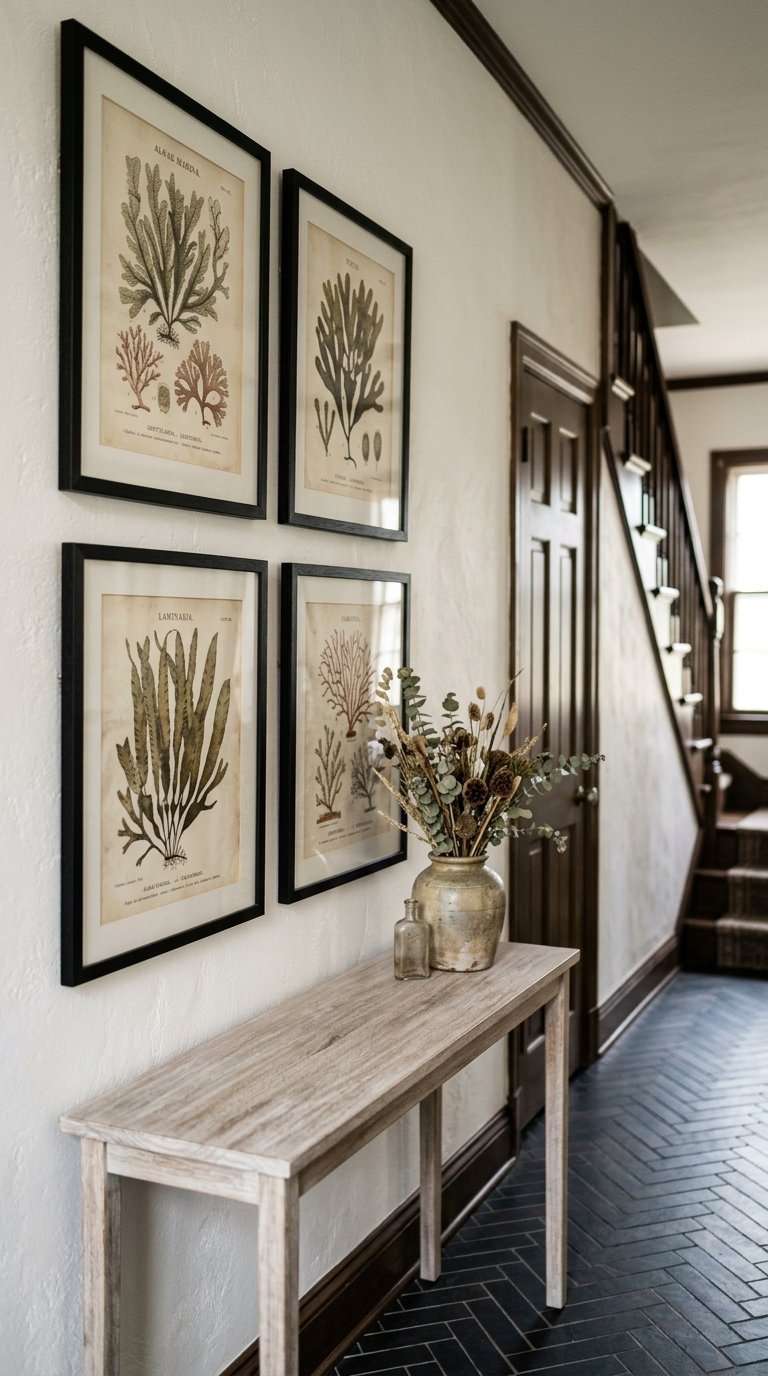
Art is the single most common place people overspend in a home refresh, and the coastal category is no exception. You do not need to spend $200 on a canvas photograph of Malibu. The Library of Congress and NOAA both offer free high-resolution downloads of vintage nautical charts and coastal maps that print beautifully at an office supply store for $5 to $15. Frame them in simple black, natural wood, or white frames and hang in a grid or staggered arrangement.
Botanicals — particularly vintage seaweed and coral prints from 18th and 19th century naturalist publications — are also in the public domain and freely downloadable. A set of four matching frames with botanical prints costs under $40 total and looks like a curated gallery in any room. The fact that these images are historically accurate also gives you something to talk about at a dinner party, which is an underrated bonus.
11. Use Mirrors Strategically to Amplify Natural Light
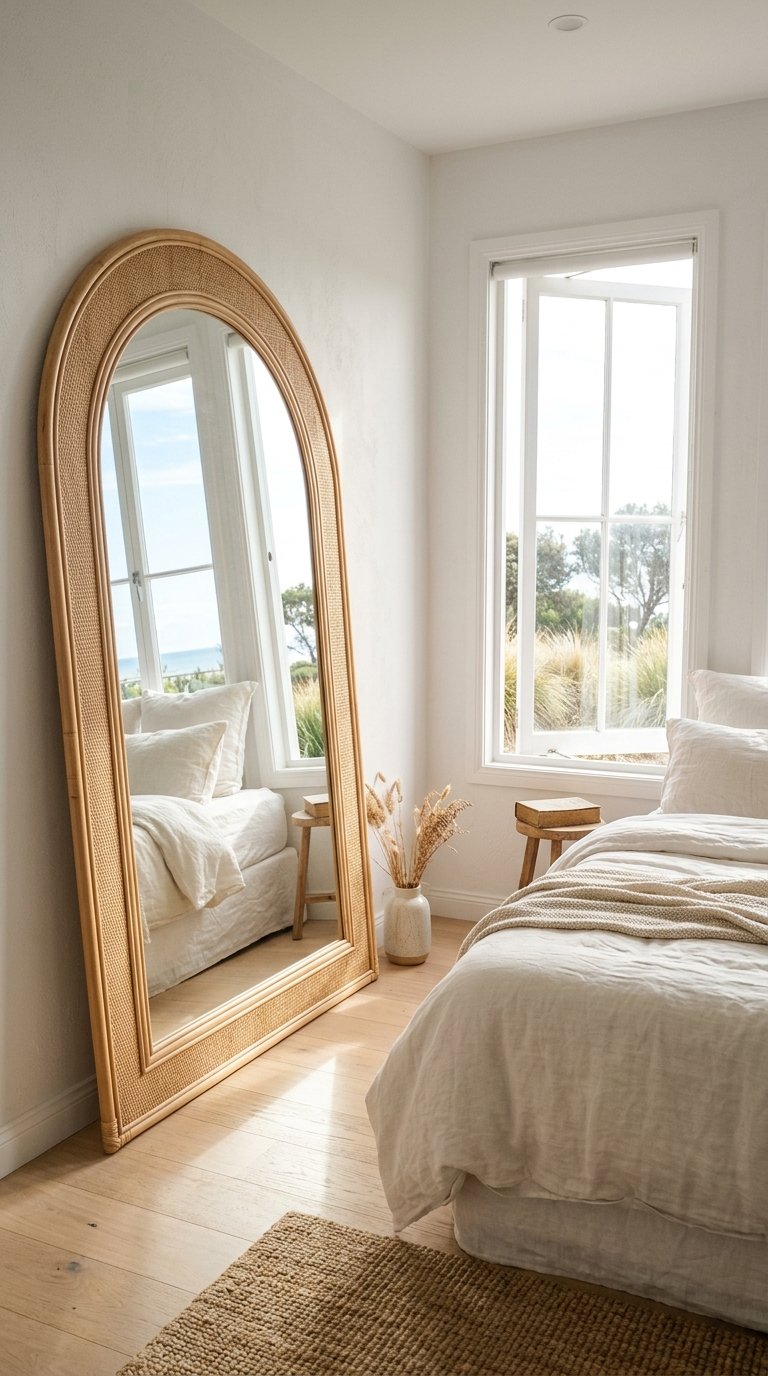
A mirror placed directly across from a window doubles the perceived light in a room — this is physics, not a decorating myth. In a small beach cottage or apartment, a large mirror on the wall opposite your primary light source makes the room feel twice as bright and open without any structural changes. Sunlight bouncing off a mirror increases the lux level in a room measurably, and brighter rooms consistently test higher for perceived spaciousness in environmental psychology research.
Driftwood-framed mirrors, arch mirrors, and round mirrors with rattan edges all reinforce a coastal aesthetic while doing functional work. IKEA’s KNAPPER floor mirror runs $150 and leans without wall anchoring, which makes it rental-friendly. Avoid mirrored walls — one well-placed mirror reads as intentional design; a full mirrored wall reads as a 1970s fitness studio.
12. Paint Your Front Door a Coastal Accent Color
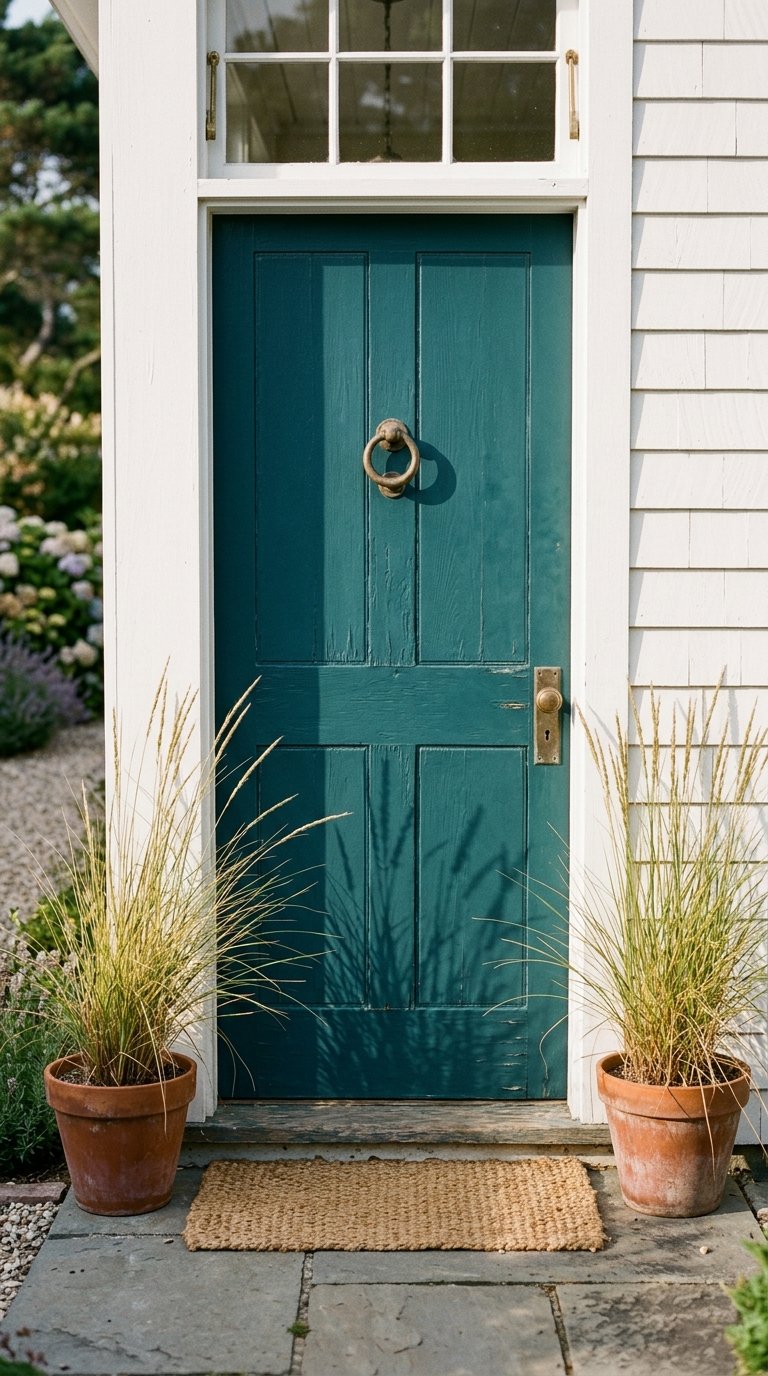
Your front door is the first thing visitors see, and in a rental or budget-constrained situation it’s one of the few exterior elements you control. Coastal doors work best in colors pulled from the shoreline: deep navy, sea-glass green, sun-faded teal, or warm terracotta. A quart of exterior paint costs $15 to $25 and covers a standard door in two coats. Real estate data from Zillow found that homes with black front doors sold for $6,000 more on average — bold door colors demonstrably affect perceived value.
Teal and navy doors specifically photograph well against white or sand-colored exteriors, which is why you see them on nearly every featured beach house in home design publications. Clean the door, sand lightly, prime if you’re going from a dark to a light color, and apply two coats. The whole project takes an afternoon and changes the exterior personality of your home entirely.
13. Bring Outdoor Furniture Inside for a Casual, Coastal Feel
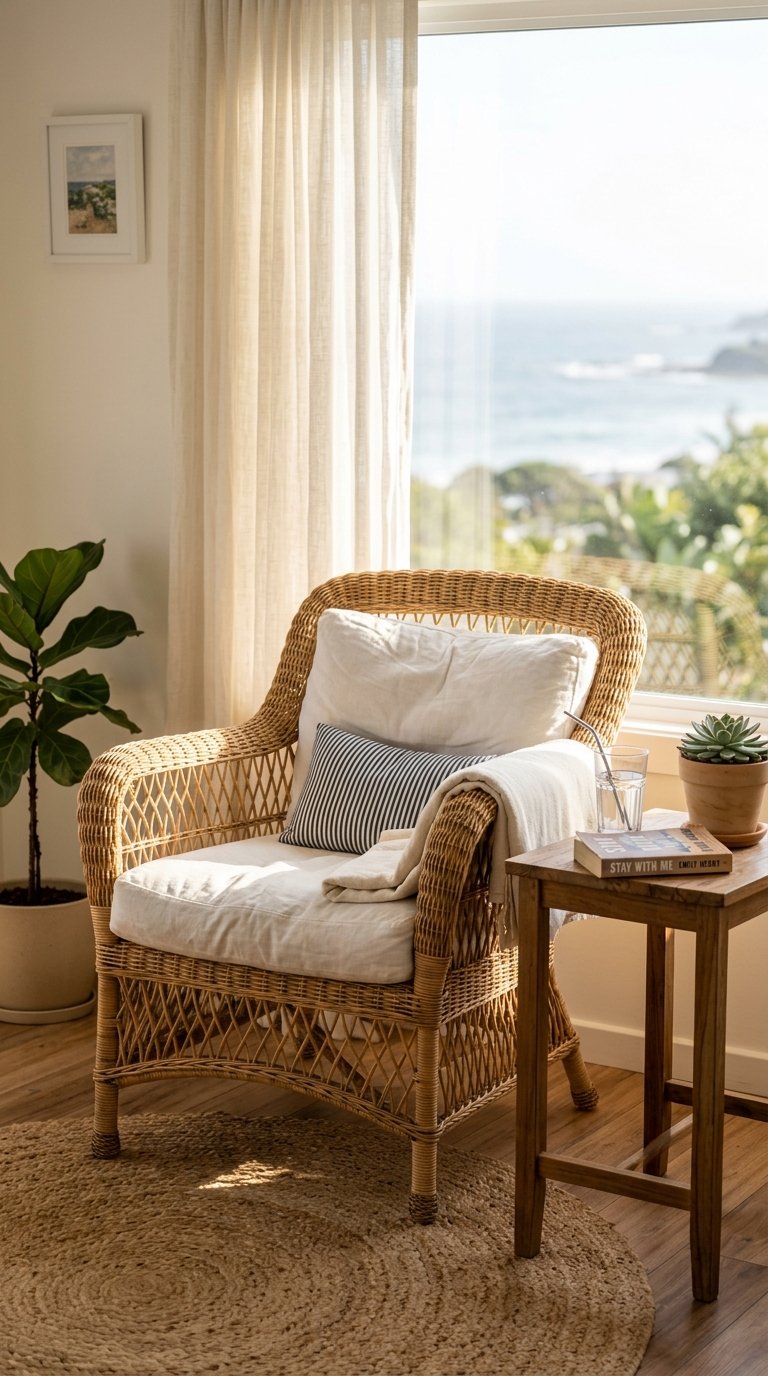
Outdoor-grade wicker, teak, and aluminum furniture works indoors in coastal rooms and costs significantly less than indoor equivalents with the same aesthetic. A wicker chair that retails as patio furniture at $80 sits identically to an “indoor rattan accent chair” listed at $250 in a furniture boutique. The materials are often identical; the price difference is purely category-based marketing.
Use outdoor side tables as nightstands, outdoor benches as entryway seating, and wicker ottomans as coffee tables. The weathered, relaxed quality of outdoor furniture reads as intentionally casual in a beach-themed space — and if you have kids or pets, the durability is a genuine practical advantage. Spray with a clear protectant if you want to prevent any moisture-related wear from indoor humidity.
14. Create a Coastal Gallery Wall Using Only Natural Materials
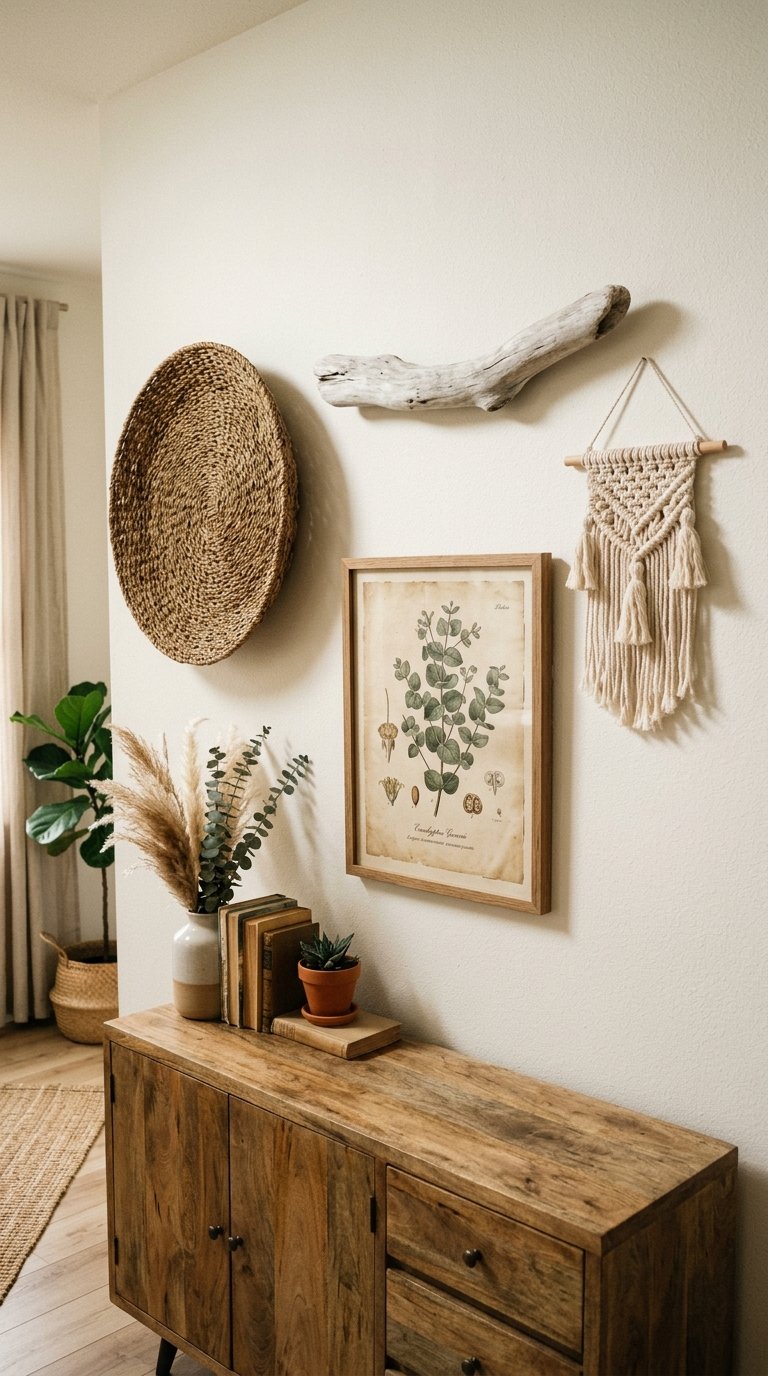
Skip printed photographs and canvas art entirely. Build a gallery wall using woven baskets, driftwood pieces, macramé hangings, and a single framed print as an anchor. This approach costs $40 to $80 total, requires no art-buying decisions you’ll second-guess in six months, and creates a textured, dimensional wall display that photographs in three dimensions instead of flat.
The key to making this work is varying the depth and size of objects rather than keeping everything in the same plane. A shallow basket, a thick macramé knot, and a piece of flat driftwood mounted horizontally create visual rhythm without symmetry. Keep the palette consistent — natural fiber tones, white, and one accent color — and the wall reads as designed rather than random.
15. Incorporate Living Plants for a Fresh, Organic Coastal Atmosphere
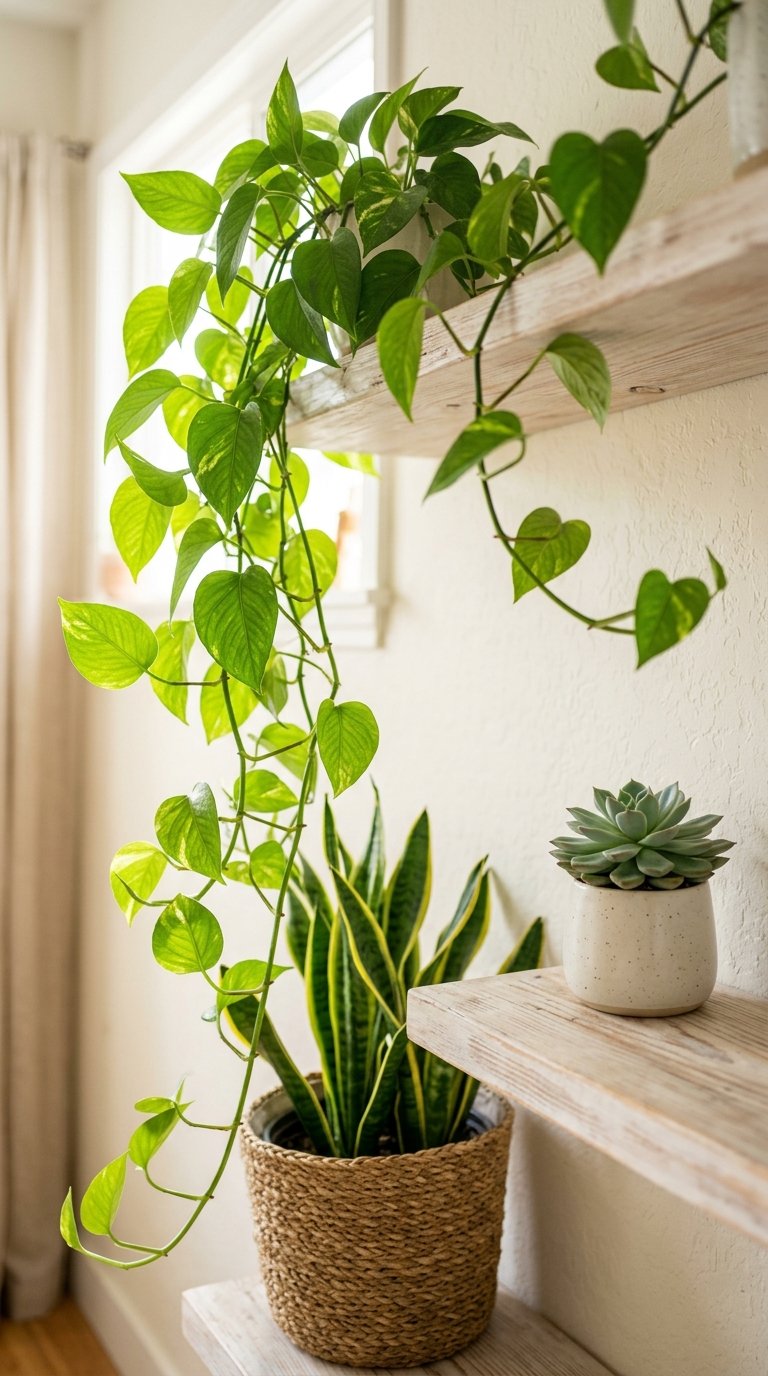
Coastal interiors rely on organic elements, and plants are the fastest way to add life to a room that feels staged. Snake plants and pothos thrive in the indirect light typical of beach-adjacent homes, require watering only every one to two weeks, and retail for $8 to $20 at most garden centers. A 2015 NASA study on indoor air quality found that several common houseplants reduce benzene and formaldehyde levels in enclosed spaces, which adds a functional argument to the aesthetic one.
Place plants in natural containers: terra cotta pots, woven baskets lined with plastic, or concrete planters. Avoid ceramic pots with nautical imagery — the plant itself carries the coastal connection without the redundancy. A trailing pothos on a shelf above a sofa does more for the room’s atmosphere than a $50 printed throw pillow ever will.
16. Add a Hammock Chair to a Corner or Outdoor Space
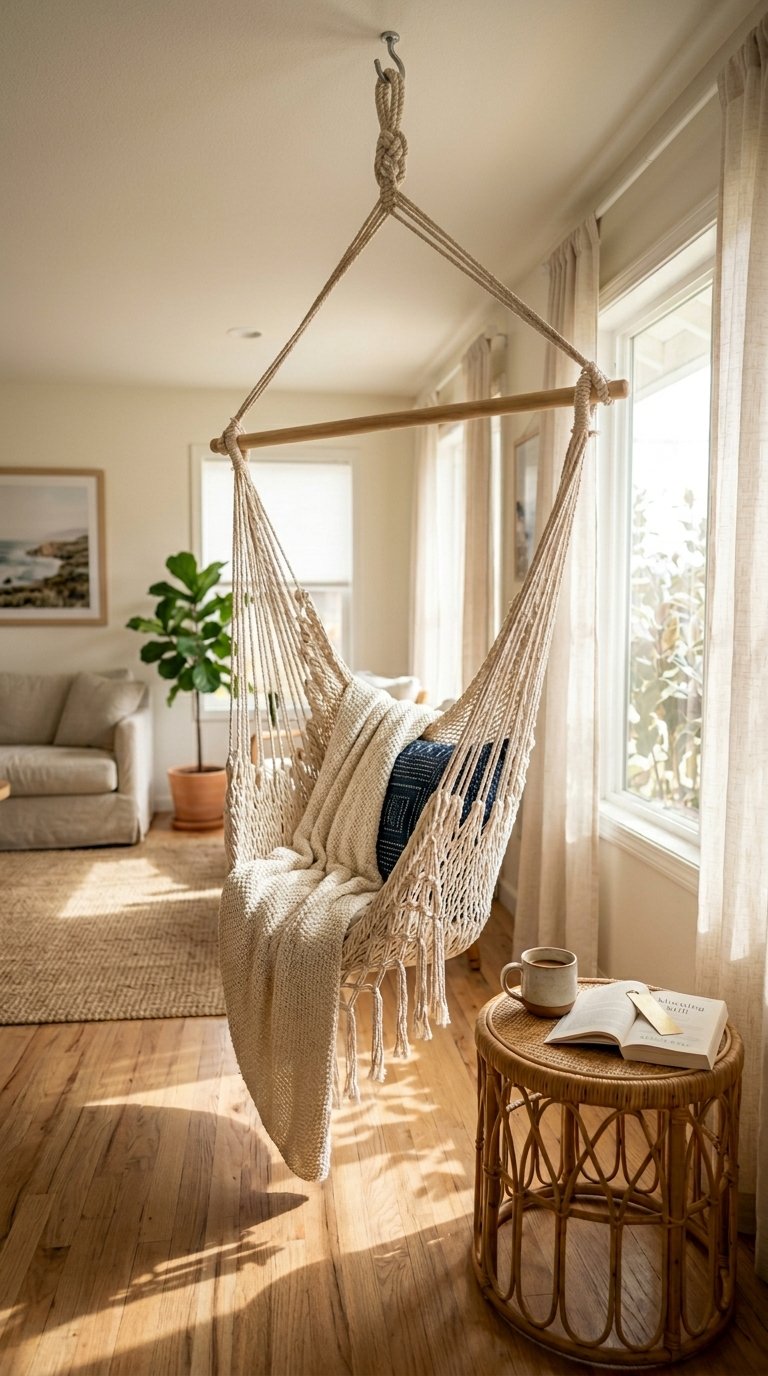
A hanging hammock chair does two things simultaneously: it solves the “awkward corner” problem every living room has, and it signals a relaxed coastal lifestyle in a way no furniture piece at that price point replicates. Cotton rope hammock chairs run $50 to $90 on Amazon, require a single ceiling hook rated for 250 lbs, and install in under 30 minutes. In a rental, a freestanding hammock chair stand ($40 to $60 more) eliminates the ceiling commitment entirely.
IMO, this is the highest-impact-per-dollar coastal furniture purchase available. Guests gravitate toward it immediately, it photographs well, and it functions as actual seating rather than decorative filler. Place it near a window or in a reading corner with a small side table and you’ve built a destination spot in your home without a renovation budget.
17. Use Ocean-Inspired Scents to Reinforce the Sensory Experience
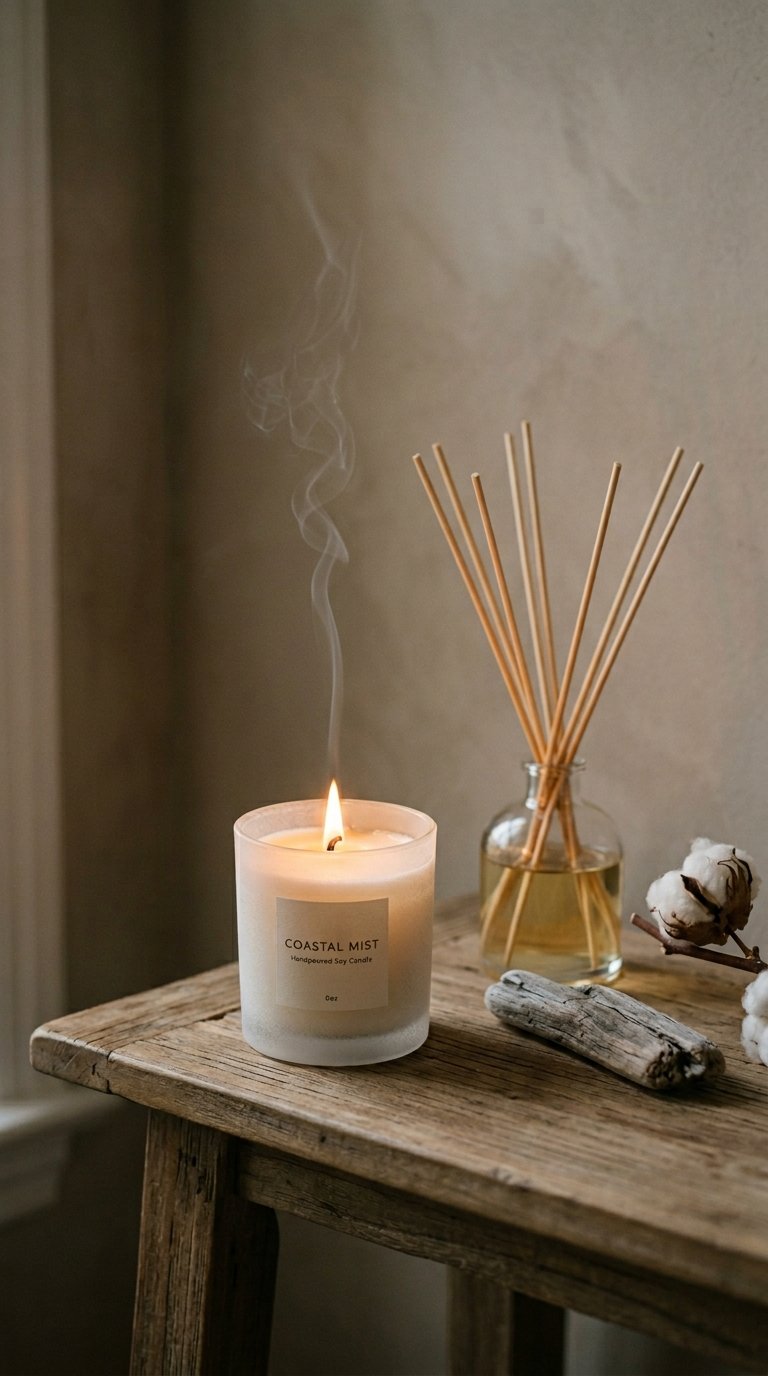
Decor is visual, but scent locks in an atmosphere faster than any visual element. Research on multisensory marketing from the Monell Chemical Senses Center shows that ambient scent increases perceived quality of a space and extends the time people spend in it. A $12 soy candle or $8 reed diffuser in a scent like sea salt, driftwood, or coastal linen completes the beach house experience in a way that no amount of rattan furniture achieves on its own.
Avoid heavy, synthetic ocean scents that smell like cologne — look for brands like P.F. Candle Co. or Otherland that formulate clean, nuanced coastal scents. Place the scent source near the room’s primary entry point so the moment someone walks in, the atmosphere registers before they’ve even looked around. Scent is the one sensory layer most home decorators completely ignore, which means it’s the one where you gain the most advantage with the least effort.
18. Repurpose Mason Jars and Glass Bottles as Coastal Vases
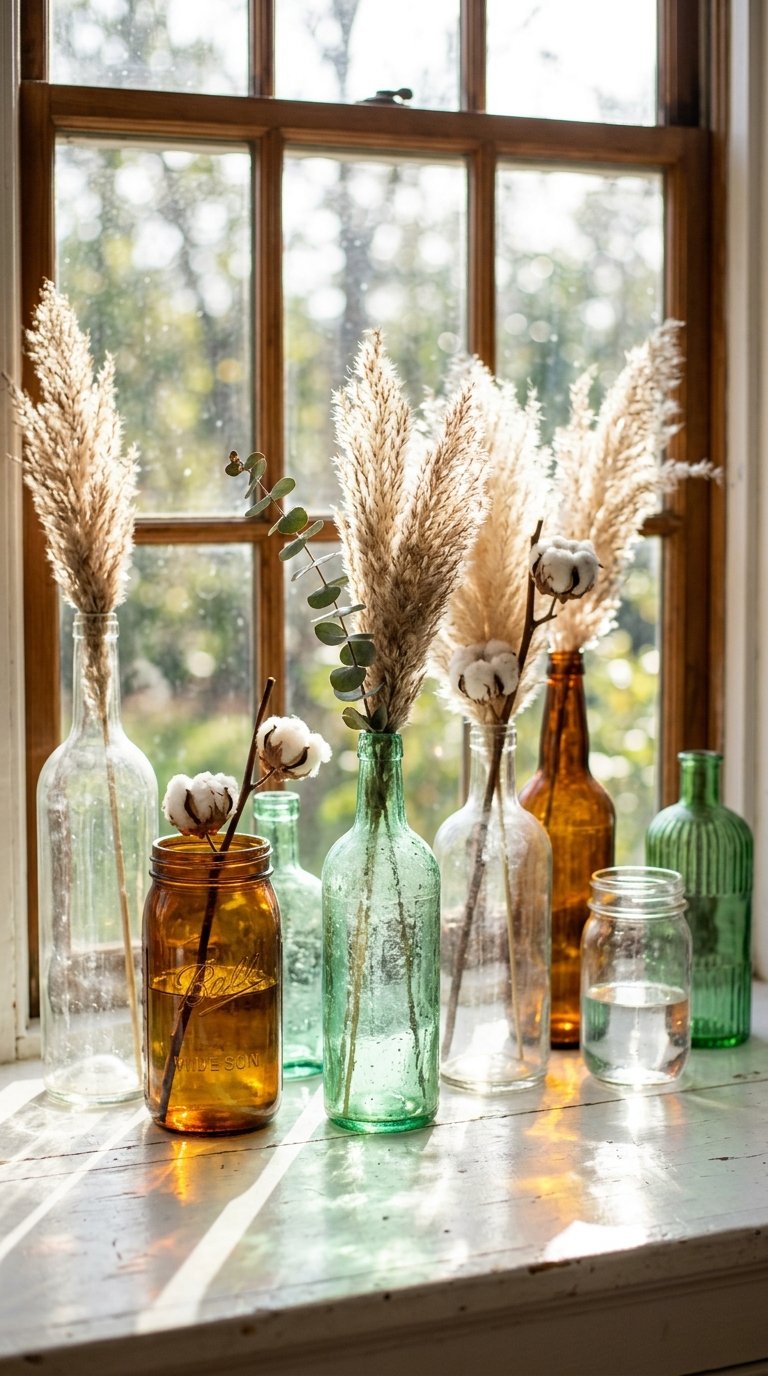
Clear and sea-glass-tinted glass bottles grouped on a windowsill create a genuine coastal look for essentially zero cost. Collect wine bottles, pasta sauce jars, and old apothecary bottles, remove the labels with cooking oil and a scrub sponge, and fill with dried pampas grass, cotton stems, or fresh eucalyptus. The light passing through glass bottles on a windowsill replicates the look of sea glass collected from a shoreline, and the total cost is whatever you were going to spend on dinner anyway.
Spray paint select bottles in matte white or dusty sage to vary the color palette without buying new vessels. A grouping of five to seven bottles in varying heights, clustered on a kitchen windowsill or bathroom shelf, reads as curated rather than improvised. The height variation is critical flat groupings of same-size bottles look accidental, while varied heights look arranged.
19. Lean Into Open Shelving for a Breezy, Accessible Display
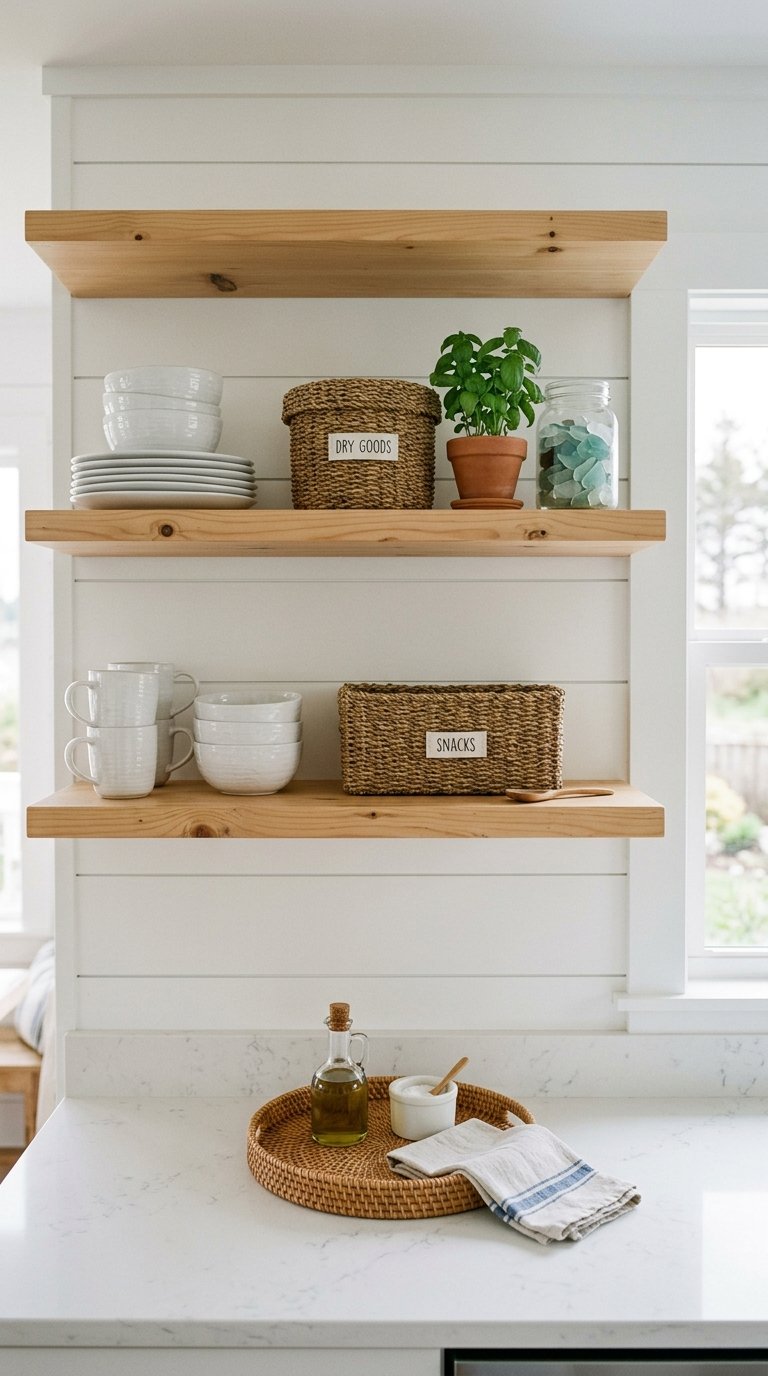
Closed cabinets feel heavy and formal; open shelves feel light and accessible, which matches the coastal aesthetic perfectly. If you replace one set of upper kitchen cabinets with open shelving, the room immediately gains depth and air. Home renovation data consistently shows that open shelving costs 30 to 50% less than custom cabinetry because you eliminate the door hardware, hinges, and extra material. A simple pine shelf with iron brackets runs $30 to $60 installed.
Style open shelves with a mix of functional items (stacked white dishes, woven storage baskets) and coastal accents (a jar of sea glass, a potted succulent). The rule of thumb used by interior stylists is one-third functional, one-third decorative, one-third negative space. That negative space — the empty spots where nothing sits — is what prevents a shelf from looking overcrowded and gives the eye somewhere to rest.
20. Use Oversized Floor Cushions for Casual, Flexible Seating
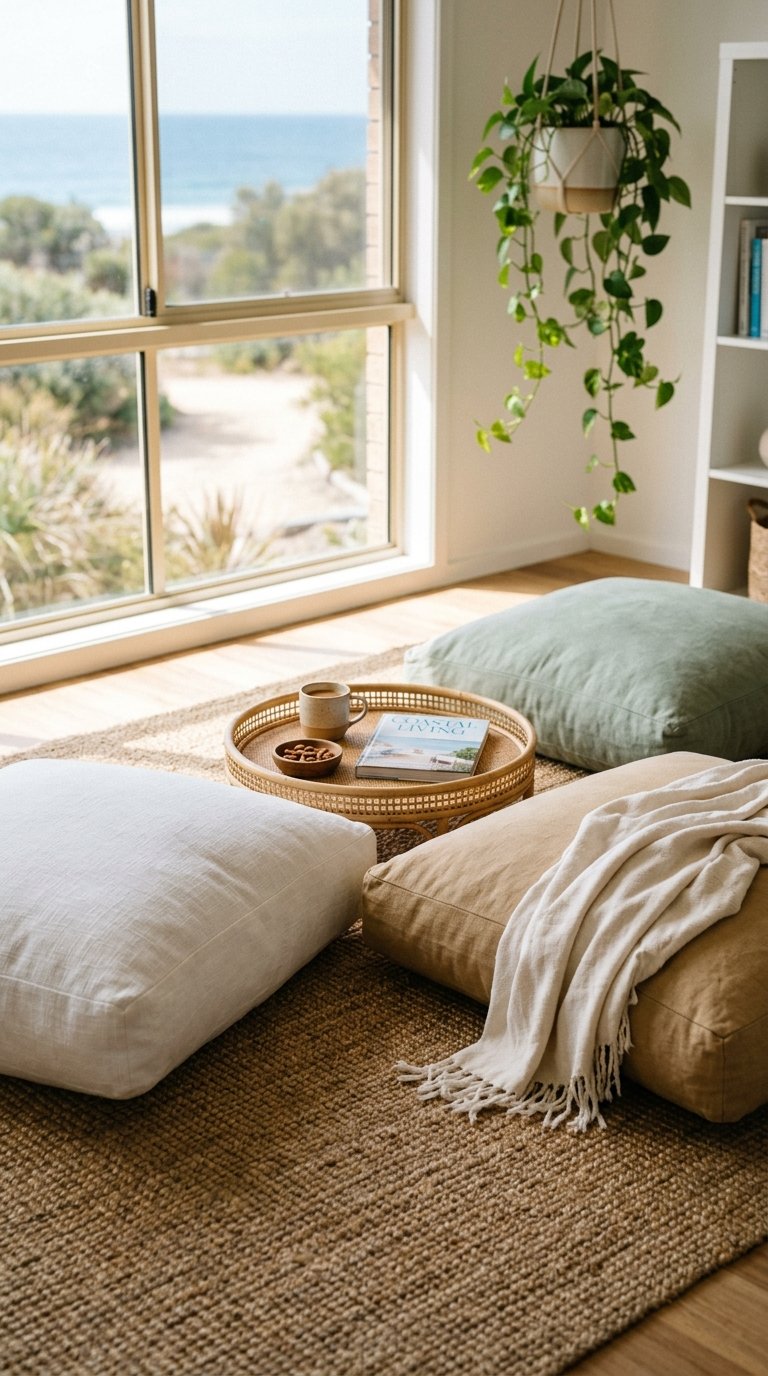
Floor cushions solve the “not enough seating” problem without adding permanent furniture to a small space. Oversized floor cushions in natural linen or cotton canvas stack in a corner when not in use and pull out for casual gatherings on a moment’s notice. A set of two 24-inch floor cushions runs $30 to $60 and stores flat under a bed or in a closet, unlike actual furniture. The floor-seating culture is also directly associated with coastal and bohemian interiors, so these pieces reinforce the aesthetic while solving a functional problem.
Choose removable, washable covers so the cushions stay clean through actual use rather than becoming decorative objects you’re afraid to sit on. IKEA’s GURLI pillow covers work on standard pillow inserts and cost $8 each, making this one of the most affordable flexible-seating options on the market. Layer two to three on a jute rug near a low coffee table and you’ve built a casual floor-seating area that reads immediately as relaxed and coastal.
21. Install Wooden Shutter Panels for a Plantation-Style Look
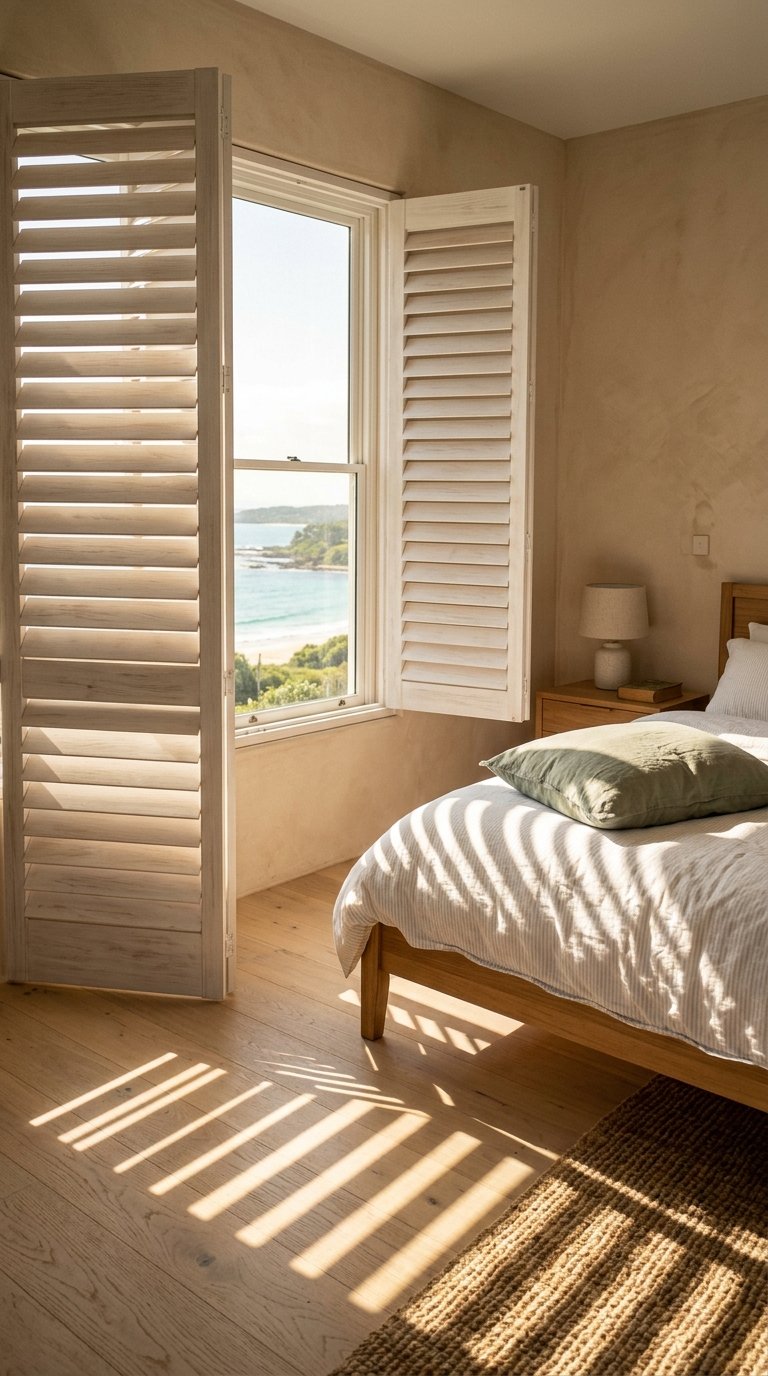
Louvered wooden shutters on interior windows or as decorative panels flanking a bed frame add instant architectural character to a flat room. In coastal homes from the Carolinas to Hawaii, louvered shutters are the default window treatment because they allow air circulation while controlling light — which is both functional and historically accurate to beach house design. A set of decorative shutter panels from Home Depot runs $40 to $80 per pair and requires only a standard drill for installation.
Paint them white, whitewash them, or leave them in natural wood depending on your palette. They work as wall art flanking a large mirror, as headboard alternatives in a bedroom, or as actual window treatments in a sun-drenched room where you need light diffusion without fabric. The coastal cottage aesthetic is rooted in this type of practical-turned-beautiful design choice.
22. Stick to a Three-Color Palette and Repeat It Everywhere
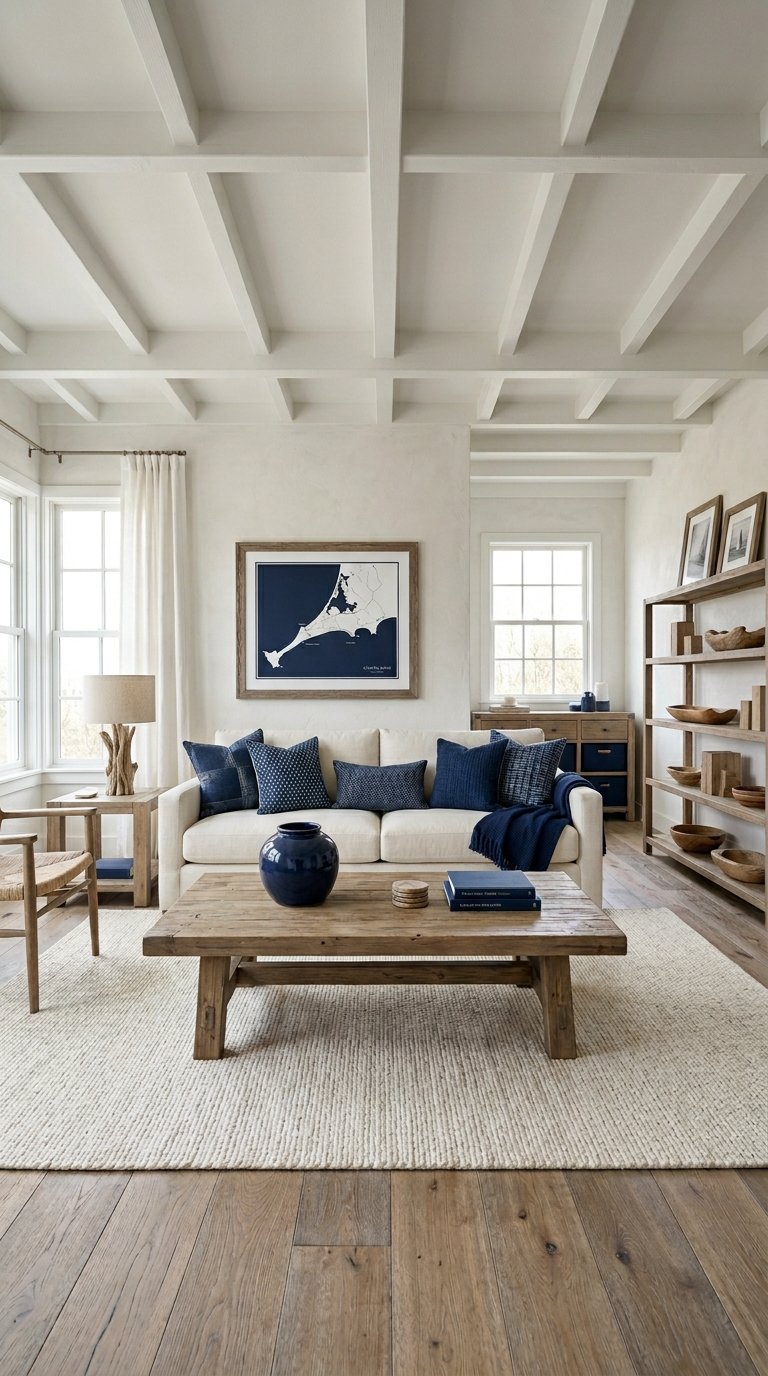
The most common reason a coastal room fails is too many competing colors fighting for attention. Professional interior designers work from a three-color rule: one dominant neutral (white, sand, greige), one secondary color (navy, teal, sage), and one accent (coral, terracotta, natural wood tone). Every textile, accessory, and paint choice gets filtered through this palette. The result feels cohesive because the eye encounters the same colors repeatedly and reads repetition as intentionality.
Pull your palette from a single anchor piece — a rug, a piece of art, or a throw pillow you already own and love. Every other purchase decision flows from those three colors. This approach also makes shopping faster and cheaper because you stop browsing and start filtering, which means fewer impulse buys that don’t belong in the room.
23. Add a Vintage or Antique Compass, Map, or Navigation Piece
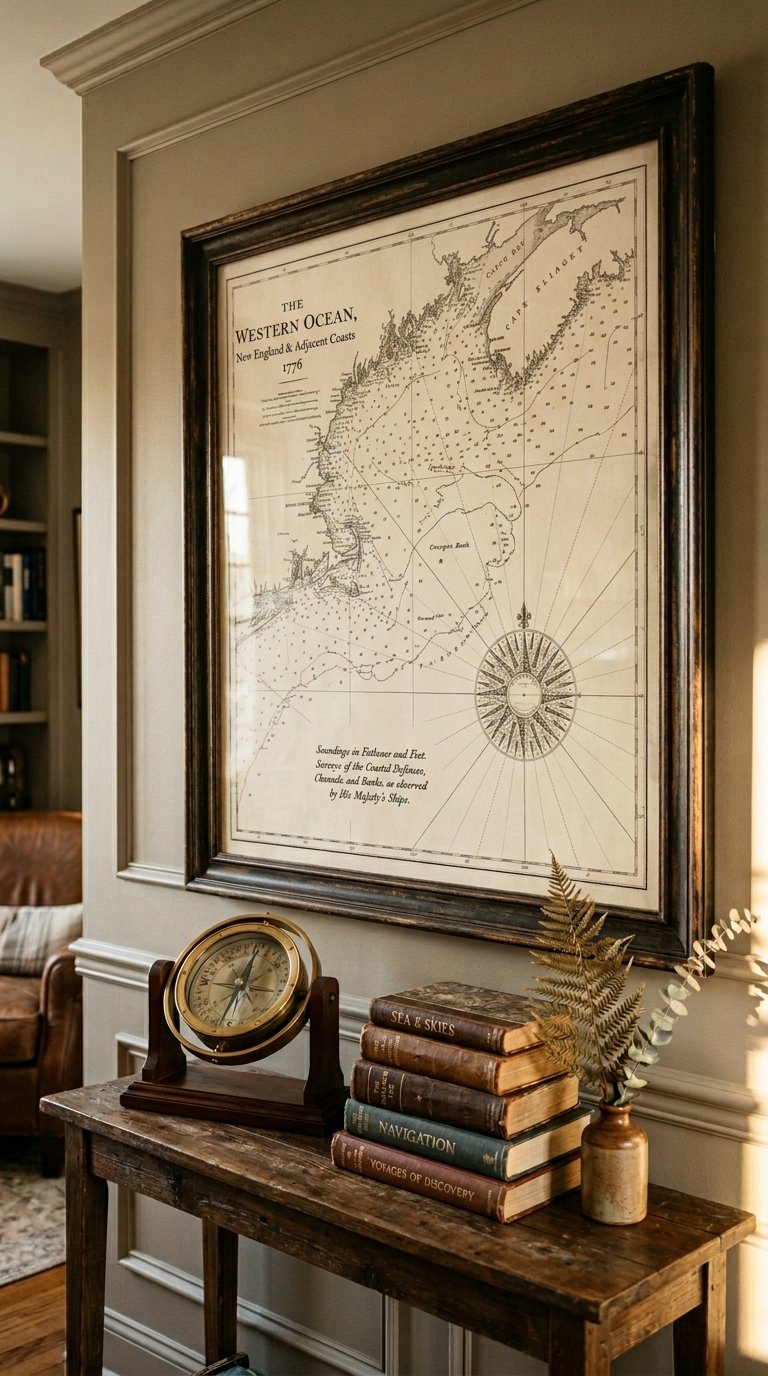
Coastal decor with genuine historical objects carries a weight that reproduction anchors and faux driftwood signs never achieve. A vintage compass, a framed antique nautical chart, or a brass porthole mirror tells a story and gives a room depth that mass-produced coastal decor actively undermines. Estate sales, eBay, and Etsy regularly list authentic vintage navigation pieces for $20 to $80, which sits in the same price range as the reproduction versions at HomeGoods.
Hang a large antique map as the room’s anchor piece and build the rest of the decor around it. Buyers at estate sales consistently undervalue maps and navigation tools because most people don’t know how to use them, which works entirely in your favor. One genuine historical piece in a room of budget accents elevates the entire space because authenticity reads differently than replica.
24. Paint Old Furniture in Weathered White or Chalk Finish
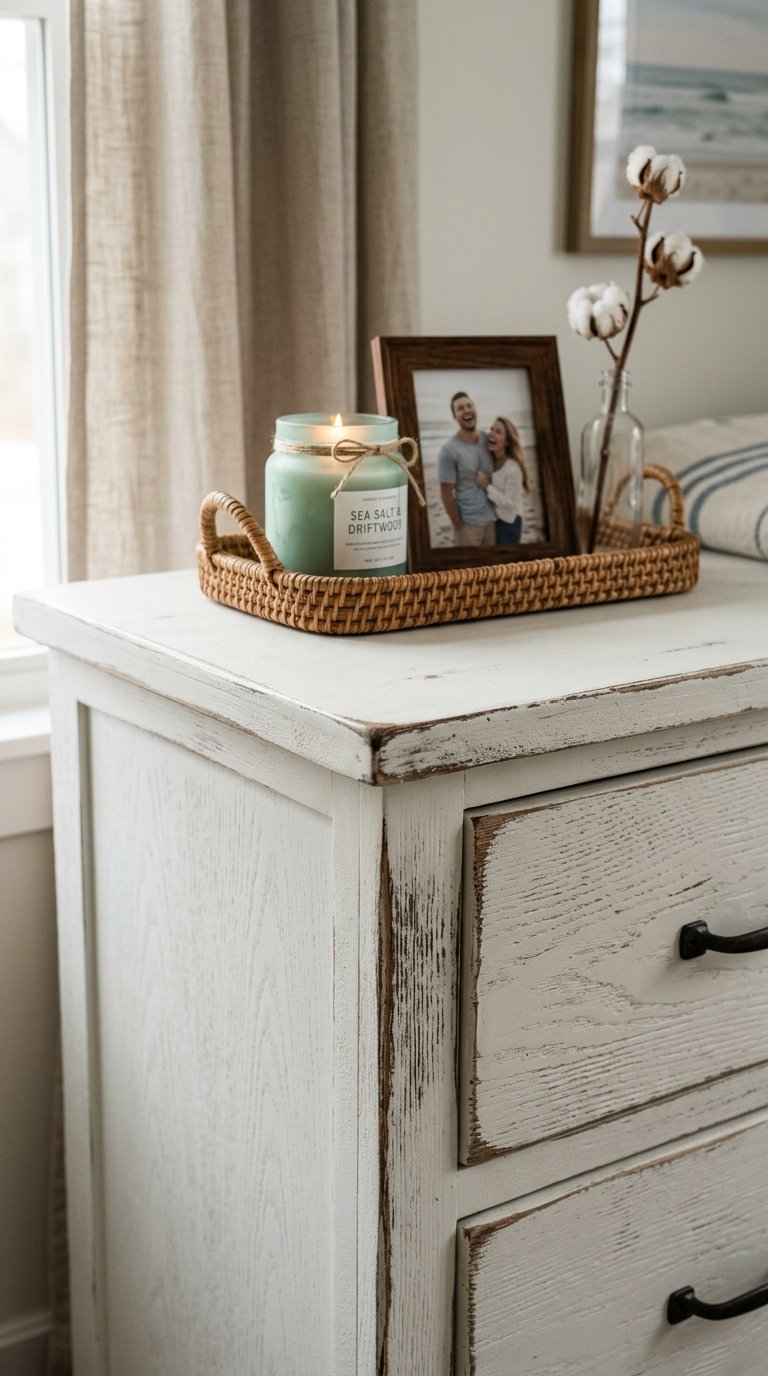
You do not need to replace outdated furniture to refresh a coastal room — you need a $20 can of chalk paint and a weekend. Chalk paint adheres to almost any surface without priming, dries in under an hour, and creates a matte, weathered finish that suits coastal aesthetics better than glossy lacquer. Annie Sloan’s “Old White” and Rust-Oleum’s Chalked range in “Aged Linen” are the two most consistent performers for this application.
Apply one coat, let it dry, then lightly sand edges and corners with 120-grit sandpaper to expose the wood beneath. That distressing at the wear points mimics genuine age and makes a $30 thrift store dresser look like a family heirloom from a coastal cottage. Seal with a clear matte wax to protect the finish and you have a piece that holds up to daily use. The total investment for transforming a large furniture piece runs $25 to $45.
25. Build a Coastal Entryway That Sets the Tone Immediately
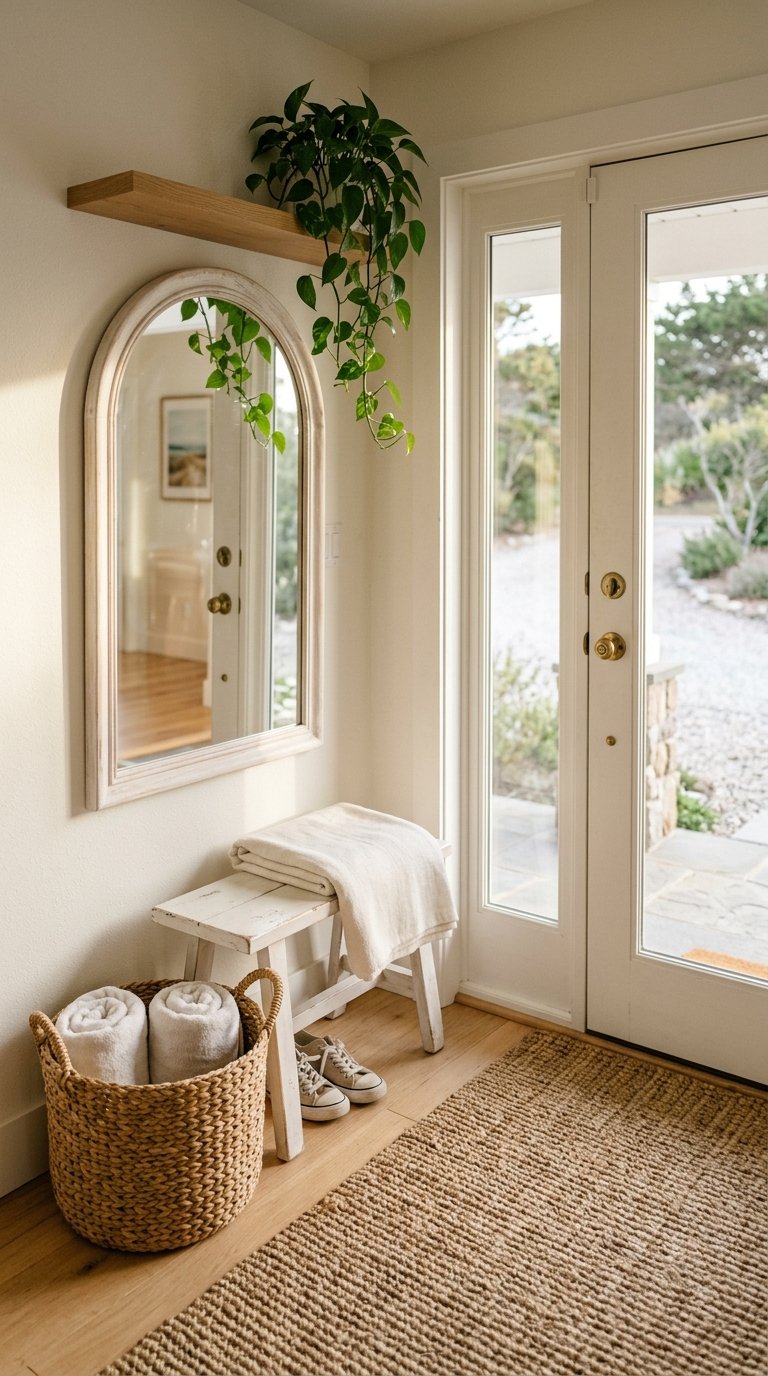
The entryway is the first and last thing you experience in your home, and in coastal decor it sets the entire expectation for the space beyond it. A simple setup requires only four elements: a woven basket for shoe storage, a driftwood or whitewashed mirror, a small bench or stool, and one plant or natural object on a shelf above. This four-piece configuration takes under two hours to assemble, costs $60 to $120 total sourced from thrift stores and discount retailers, and communicates the design language of the whole house before a guest steps into a single room.
Hang the mirror low enough to use practically — eye level for an average adult is 57 to 60 inches from the floor to the center of the mirror. Position the basket at the door so it solves a real organizational problem rather than sitting decoratively at the back of the space. An entryway that works functionally and looks intentional is the one design decision that pays dividends every single day you live in your home. 🙂