21 Elegant Apartment Decor Ideas to Elevate Your Space
Your apartment doesn’t look cheap because you spent less money. It looks cheap because the wrong things are competing for attention in a small space. Elegant apartment decor isn’t about spending more, it’s about editing what you have, choosing the right focal points, and adding a few well-placed details that read as intentional rather than collected by accident. I’ve lived in four different apartments over the years, and the difference between a space that felt like a hotel suite and one that felt like a storage unit always came down to the same handful of decisions. These 21 ideas fix the most common apartment decor mistakes and replace them with choices that actually work.
1. Invest in One Statement Sofa
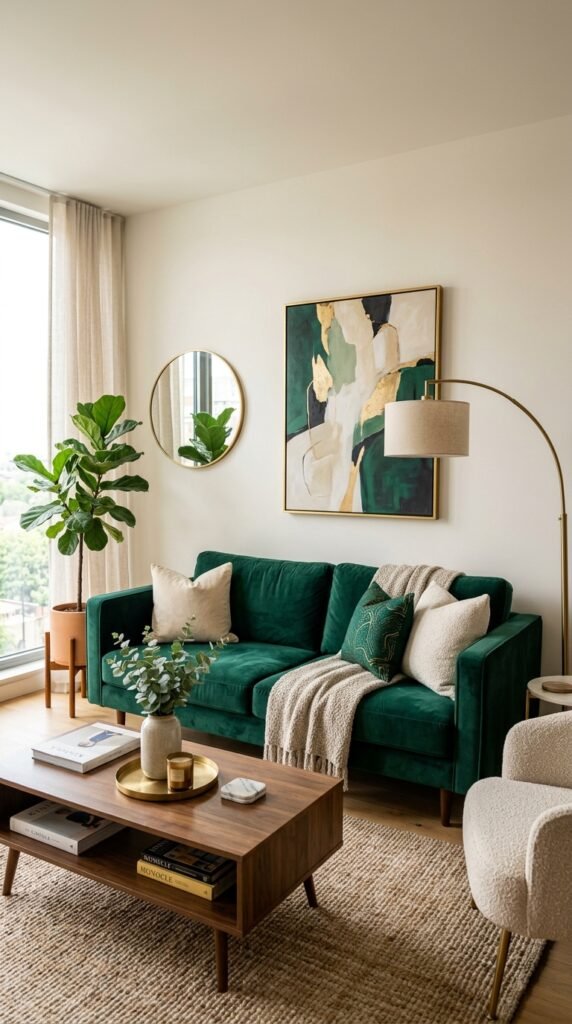
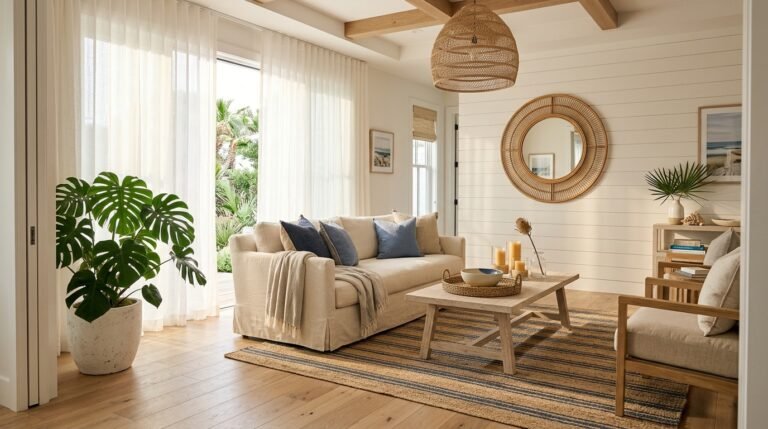
Your sofa takes up more visual space than any other piece of furniture in your apartment, which means it does the most damage when it’s wrong and the most good when it’s right. A sofa in a solid, rich tone, deep green velvet, warm camel leather, or oatmeal boucle, anchors the entire room around one strong decision and makes everything else easier to coordinate around it.
What Makes a Sofa Read as Elegant
- Tight, structured cushions over loose, saggy ones
- Low-profile legs (4 to 6 inches) in wood or brass rather than plastic or no legs at all
- Solid fabric over busy patterns for a timeless foundation
A quality sofa in the $600 to $1,200 range from Article, Joybird, or Albany Park holds its shape and color far longer than a budget sofa at half the price. The per-year cost works out in your favor within two seasons. Think of it as your one non-negotiable splurge, because nothing else in the room saves a bad sofa.
2. Layer Lighting With Multiple Sources
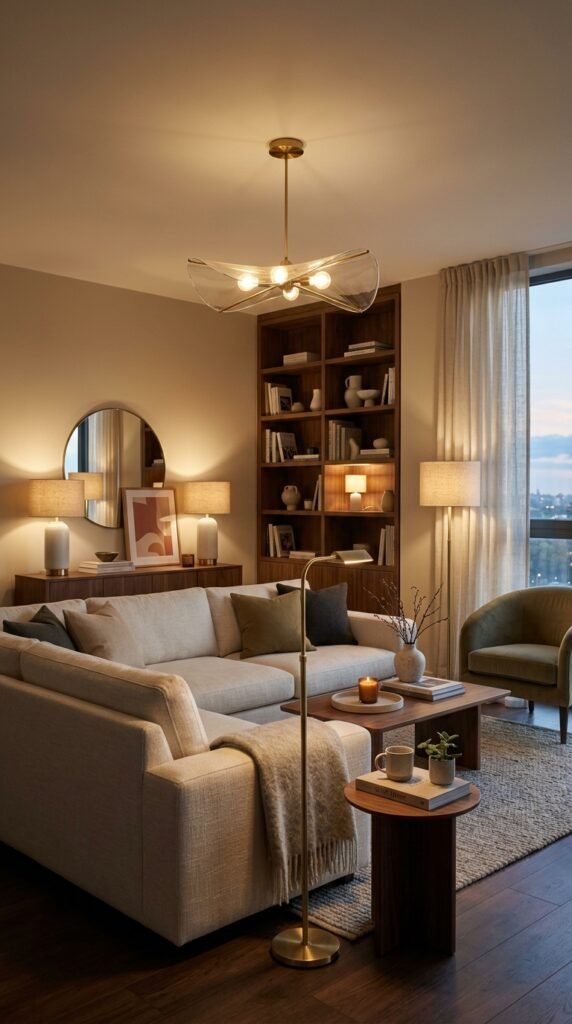
A single overhead light is the fastest way to make an apartment look unfinished, since flat, overhead lighting flattens everything beneath it and removes the shadows and contrast that make a room feel dimensional. Elegant spaces use at least three light sources at different heights: overhead, table height, and floor level.
A Simple Layered Lighting Formula
- One floor lamp beside the sofa or reading chair for warm ambient light
- Two table lamps on console or side tables for mid-level warmth
- One accent source: string lights, a small lamp on a shelf, or a backlit wall panel
Replace every bulb in the apartment with warm white bulbs at 2700K, since cool white light (4000K and above) makes even expensive furniture look clinical. The entire swap costs $20 to $40 and changes the room more dramatically than a new piece of furniture at ten times the price. IMO, lighting is the single most underinvested area in apartment decor, and it shows.
3. Use Mirrors to Maximize Light and Space
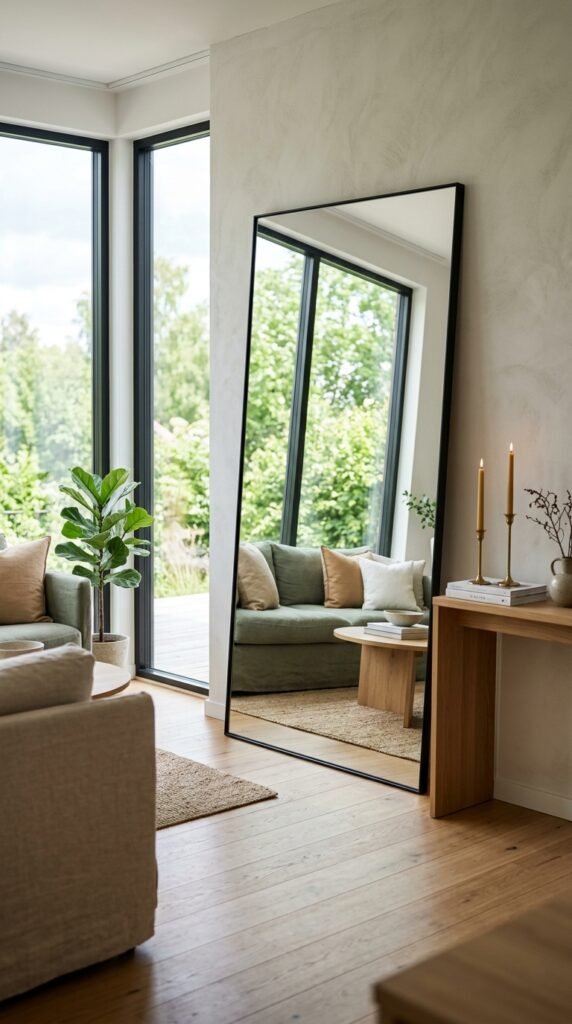
Mirrors double the visual size of a room by reflecting both light and the space itself, which matters enormously in apartments where square footage is fixed. A large mirror (24 inches or wider) on the wall opposite a window reflects natural light back into the room and creates the illusion of a second window.
Lean a large floor mirror against a wall rather than mounting it, since leaned mirrors look more relaxed and don’t require patching holes when you move. A 64-inch leaning mirror costs $80 to $200 at retailers like Target, IKEA, or West Elm. Position it to reflect something interesting, a plant, a lamp, a piece of art, rather than a blank wall, since mirrors double whatever they face.
4. Add a Gallery Wall With Consistent Framing
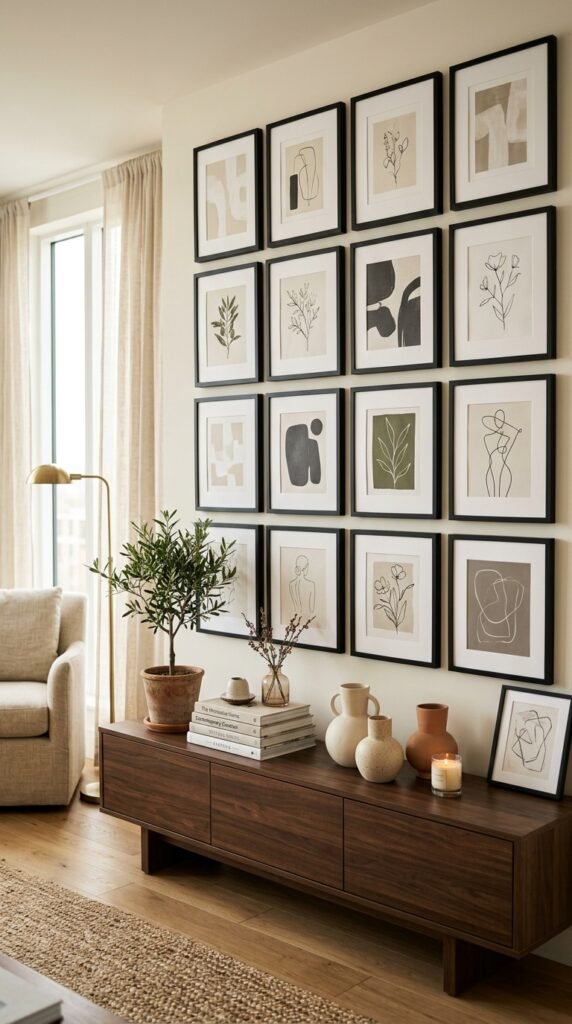
A gallery wall with mismatched frames looks busy; one with consistent frames looks curated, and that difference costs nothing beyond a few trips to a thrift store with a specific frame style in mind. Choose one frame finish, black, natural wood, or antique gold, and buy every piece in that finish regardless of art style.
Print art at home using free public domain sources like the Rijksmuseum or the Art Institute of Chicago’s digital collection, both of which offer high-resolution downloads at no cost. Frame a set of 6 to 8 prints in matching frames, and you have a gallery wall for under $60 that reads as a deliberate design choice. Size matters here too: one 16×20 print surrounded by 5×7 prints creates visual hierarchy that a wall of identical sizes never achieves.
5. Choose Curtains That Reach the Ceiling
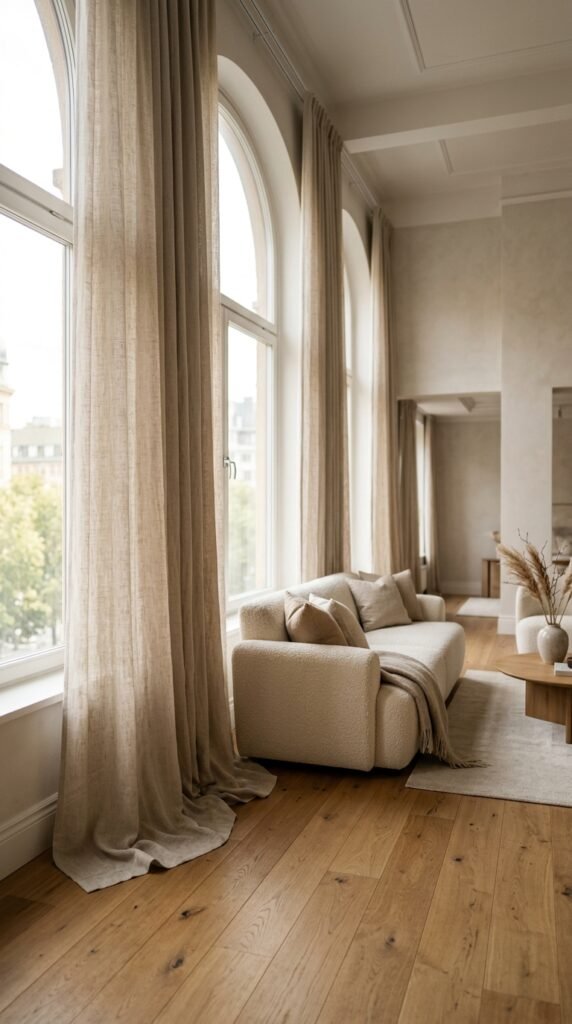
Curtains hung at ceiling height instead of just above the window frame make ceilings feel taller by drawing the eye upward and creating an unbroken vertical line from floor to ceiling. This trick works in any room regardless of actual ceiling height, and it costs the same as hanging curtains the wrong way.
Install curtain rods 2 to 4 inches below the ceiling (not above the window frame) and use panels long enough to reach the floor, ideally with a 1-inch puddle. Linen curtain panels in warm white or natural tones cost $30 to $60 per panel at IKEA or H&M Home, and two panels per window transform the room’s proportions. Short curtains that hover above the floor are the number one curtain mistake in apartment decor and the easiest one to fix.
6. Incorporate Velvet Accents
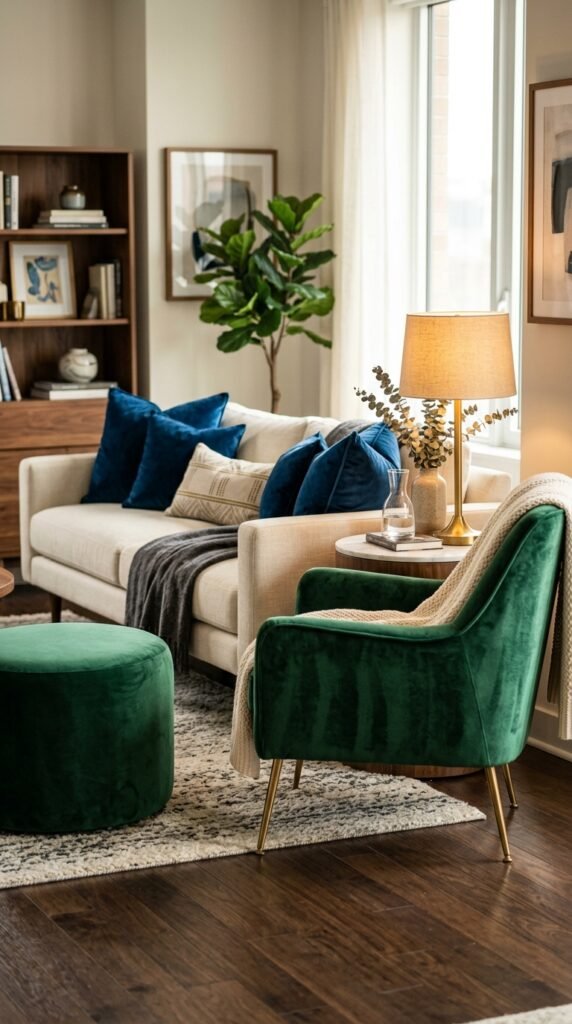
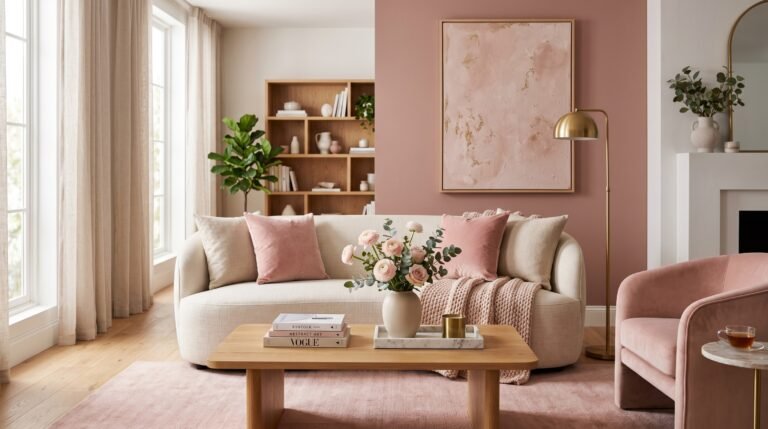
Velvet adds a richness and depth to a room that no other fabric replicates because its pile reflects light differently depending on the angle, creating subtle color variation that reads as expensive even when it isn’t. A velvet throw pillow, an accent chair, or a velvet headboard all deliver this effect.
Velvet throw pillow covers cost $15 to $30 each and work as the lowest-commitment way to test the fabric in your space. Deep jewel tones, emerald, sapphire, burgundy, and deep teal, read as the most elegant, while neutral velvet in oatmeal or charcoal works as a base tone. Combine velvet with linen or cotton for texture contrast, since an all-velvet arrangement loses the visual interest the fabric contrast creates.
7. Add a Statement Rug
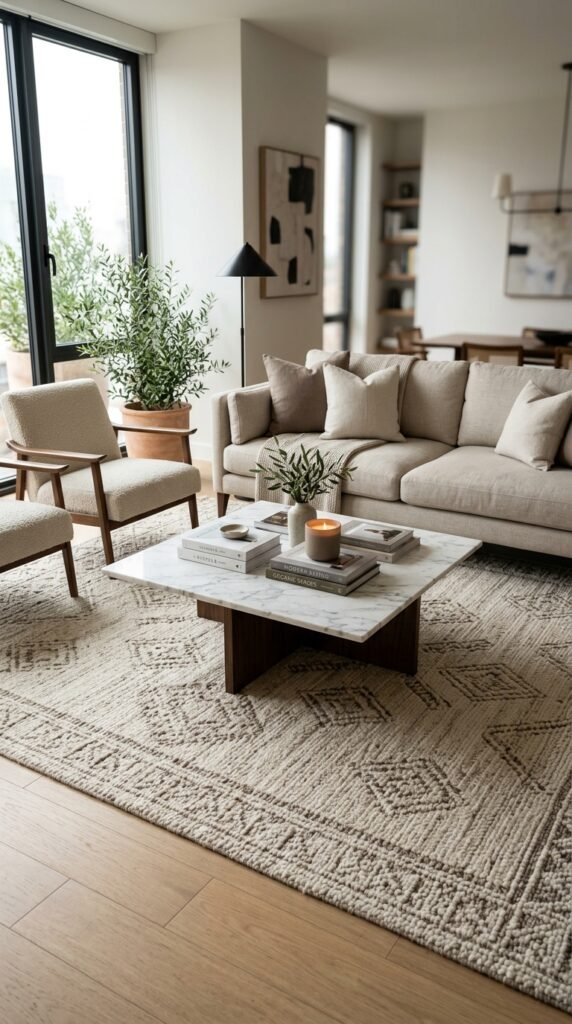
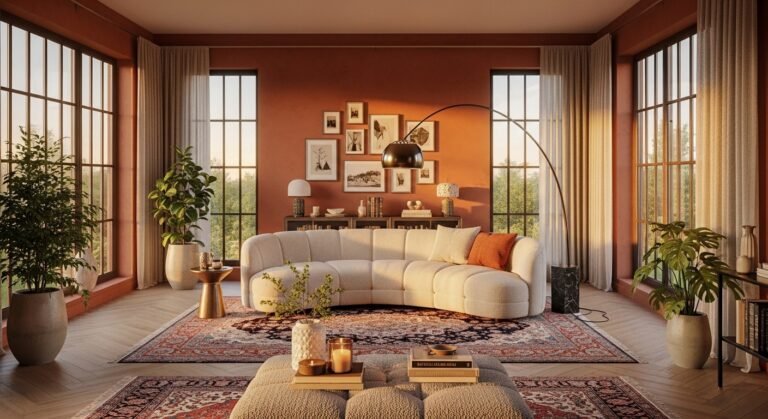
A rug in the wrong size flattens a room and makes furniture look like it’s floating in space, while the right-sized rug ties the seating area together into one cohesive zone. The minimum size for a living room rug is 8×10, with all front legs of furniture on the rug.
Rug Sizing Rules for Apartments
- Living room: 8×10 minimum, 9×12 for larger spaces
- Bedroom: large enough to extend 18 to 24 inches past each side of the bed
- Dining area: large enough that chairs stay on the rug when pulled out
A quality wool rug in a 8×10 size runs $300 to $600 from brands like Ruggable (washable), Loloi, or Boutique Rugs, and outlasts cheaper polypropylene versions by years. Avoid rugs under $150 in large sizes, since thin piles and poor dye quality show within one season.
8. Use Floating Shelves for Display and Storage
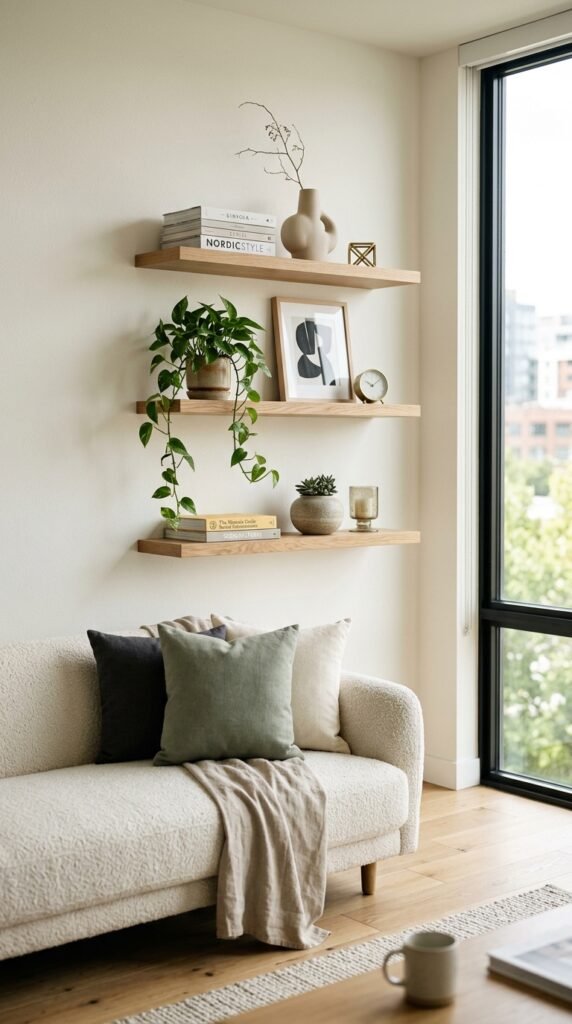
Floating shelves solve the apartment problem of needing storage without the bulk of a bookcase, and styled correctly, they become a feature rather than a functional afterthought. The key is negative space: fill shelves to 60 to 70 percent capacity and let the remaining space breathe.
A shelf vignette works best with a mix of object types, one tall vertical element (a vase or tall plant), one horizontal element (a stack of books), one round or organic shape (a bowl or small sculpture), and one personal item (a photo or meaningful object). IKEA LACK shelves in floating white cost $15 to $25 each and install in under 30 minutes per shelf, making them the most budget-efficient apartment storage upgrade on this list.
9. Bring in Metallic Accents
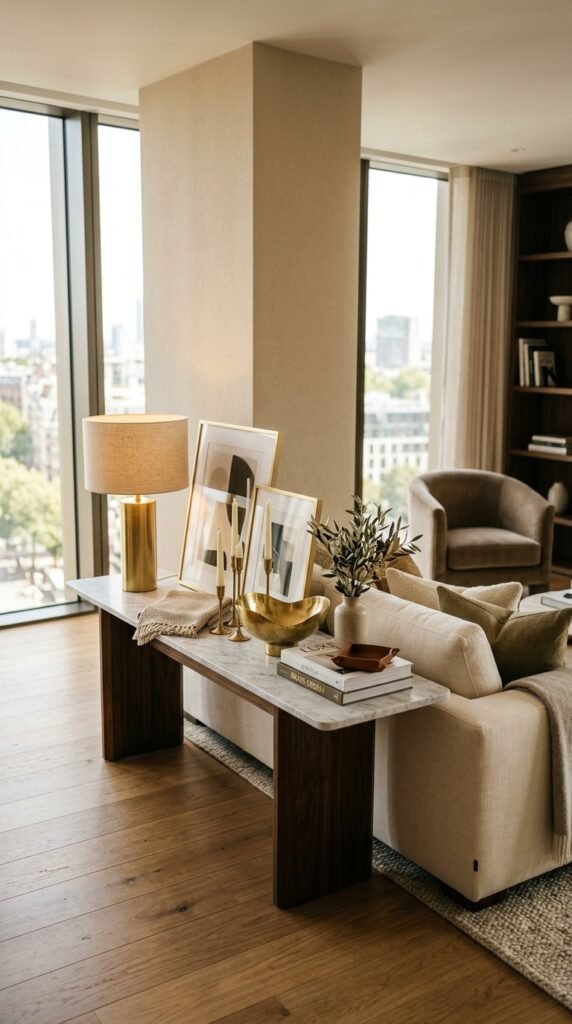
Metallic accents add light-catching detail that makes a room feel more finished at every hour of the day, since they pick up natural light in the morning and lamp glow in the evening. Choose one metal tone and repeat it across at least three objects in the same room.
Brass works best with warm color palettes (terracotta, cream, olive), while brushed silver or chrome pairs better with cooler tones (white, grey, navy). A brass lamp base, brass picture frames, and brass cabinet hardware in the same room create a cohesive metallic thread for under $100 total. Mixing warm and cool metals in the same room looks accidental; sticking to one reads as considered.
10. Style a Bar Cart
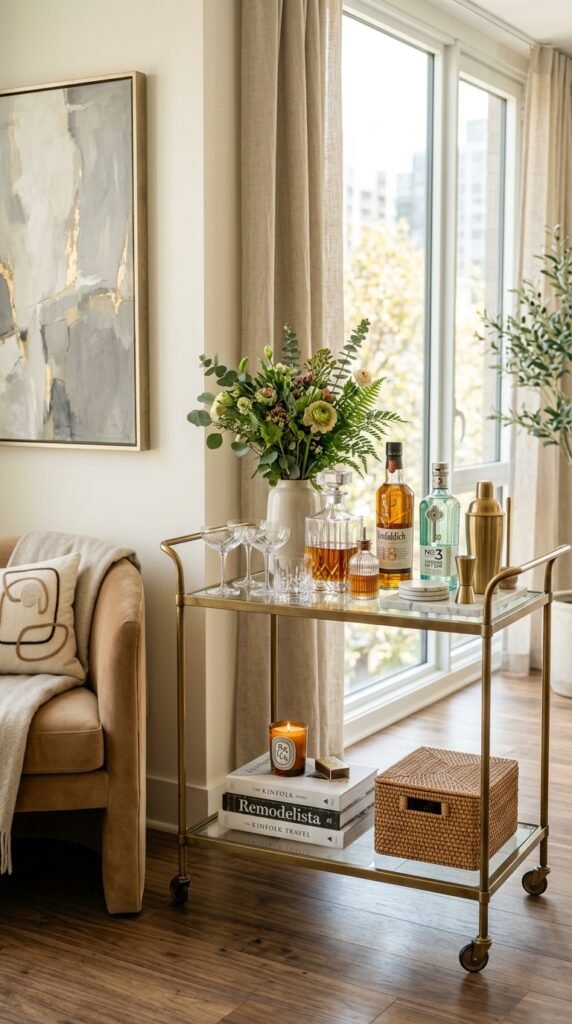
A bar cart is one of the few pieces of furniture that works purely as decor even if you never drink, because what it actually does is create a styled vignette with height, glass, and metallic surfaces that anchor a corner of the room. Position it in an otherwise empty corner or against a blank wall.
Style the top shelf with glassware, a decanter, and one or two bottles. Use the lower shelf for books, a small plant, or a candle cluster. Bar carts cost $80 to $200 new, but thrifted versions at $20 to $50 work just as well with a coat of spray paint in brass or matte black. The mobility is a bonus since you roll it wherever the party (or the light) is.
11. Add Indoor Plants in Decorative Pots
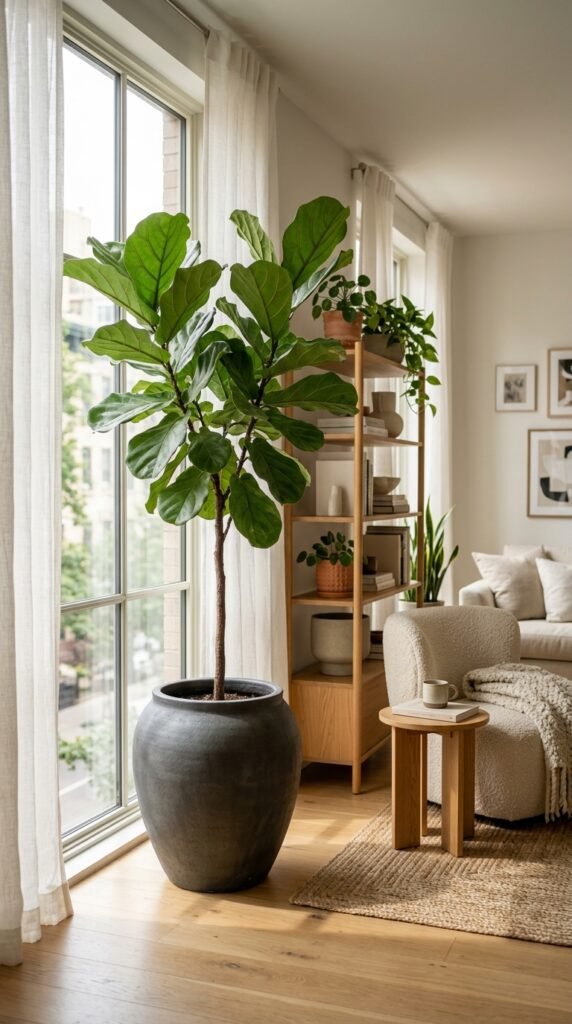
A plant in a decorative pot does two jobs at once: it adds color and texture, and the pot itself becomes a sculptural object. The plant is the living element; the pot is the decor choice. An ugly nursery pot inside a beautiful ceramic planter is all you need.
Large floor plants like fiddle leaf figs, monsteras, or snake plants cost $30 to $80 and fill vertical space in corners that furniture doesn’t reach. Pair them with dark-glazed ceramic or terracotta pots for the most elegant result. A single large plant in a beautiful pot costs less than most decorative objects and lasts for years with basic watering.
12. Use a Neutral Color Palette as Your Base
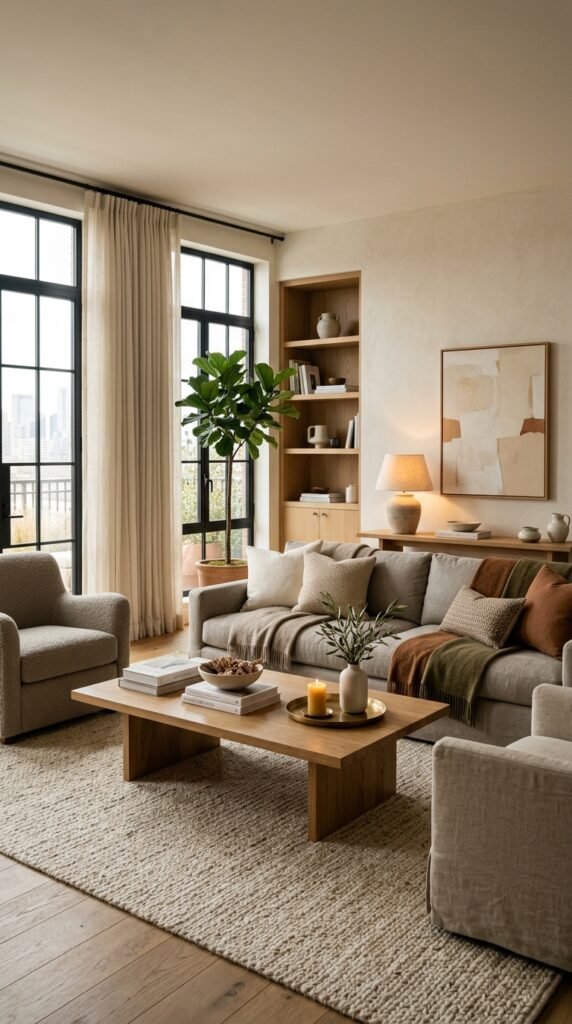
Neutral doesn’t mean beige, and this is where most apartment decor goes wrong. A warm neutral palette builds from cream, warm white, sand, and soft greige, with deeper earth tones like rust, olive, or warm charcoal added as accents. The result is a room that feels calm and collected without looking like it forgot to choose a color.
Paint is the biggest impact per dollar in apartment decor, at $30 to $50 per gallon, and warm white walls (not cool, stark white) make furniture look richer against them. If your landlord prohibits painting, swap to warm-toned textiles, rugs, and window treatments to shift the room’s temperature visually. Warm neutrals photograph better and feel better to live in than the cool grey-and-white combination most rental apartments default to.
13. Upgrade Your Throw Pillows
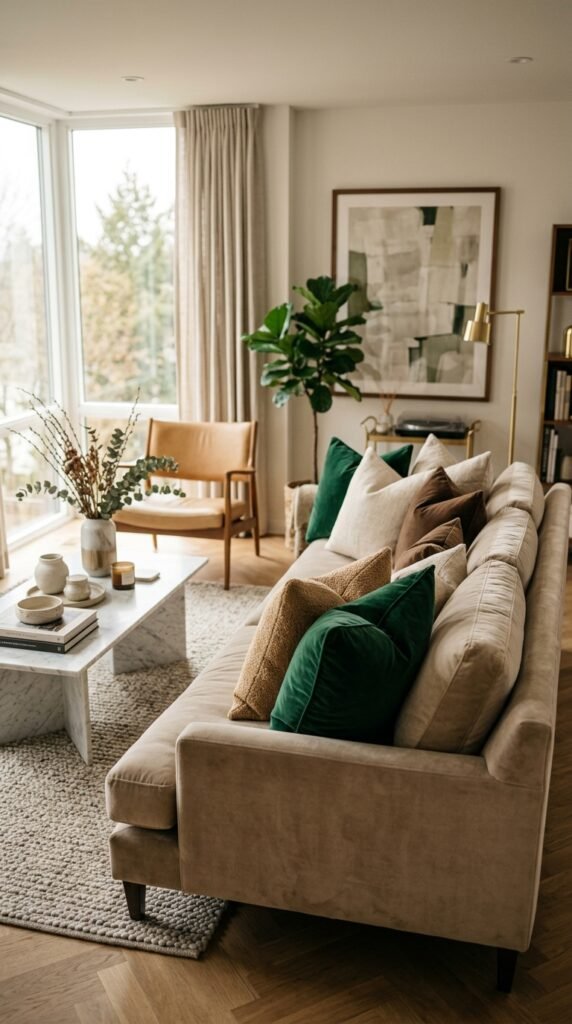
The throw pillows on a sofa are the first thing the eye lands on when entering a room, which makes them a disproportionately powerful decor tool for their size. Cheap, flat pillows in bright patterns compete with everything around them; good pillows in textured, coordinated tones make a sofa look like it cost twice as much.
Use the 18×18 and 20×20 sizes rather than 12×12 or 14×14, since small pillows on a standard sofa look undersized and awkward. Fill each pillow to capacity with an insert one size larger than the cover for a full, luxurious look. A set of four to five pillows mixing linen, boucle, and velvet textures in two to three coordinating tones costs $75 to $150 and immediately upgrades the whole room.
14. Add Architectural Interest With Molding
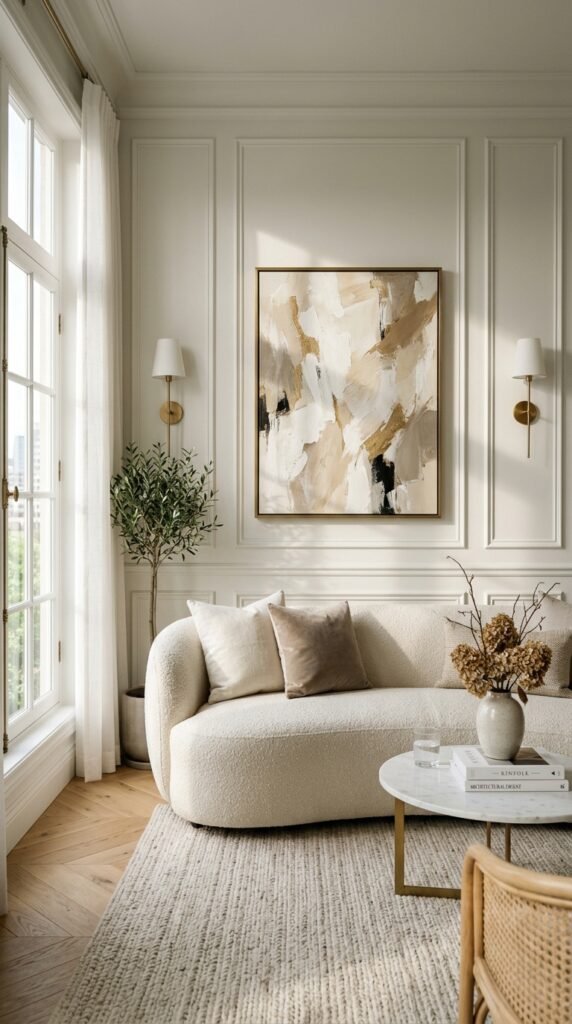
Peel-and-stick wall molding panels transform flat rental walls into rooms that look like they belong in a pre-war building with original architectural detail, and they remove cleanly when you move. A simple rectangular molding grid on one wall behind a sofa or bed creates a panel effect that adds depth and period character.
Peel-and-stick chair rail molding costs $15 to $30 for a 15-foot roll and cuts with scissors. Plan a simple rectangular grid pattern (three panels across, two panels tall) on the wall, press the molding, and paint the wall and molding the same color for maximum impact. This project takes one afternoon and $40 to $80 in materials, and the result looks like an architect included it in the original floor plan.
15. Create a Dedicated Reading Nook
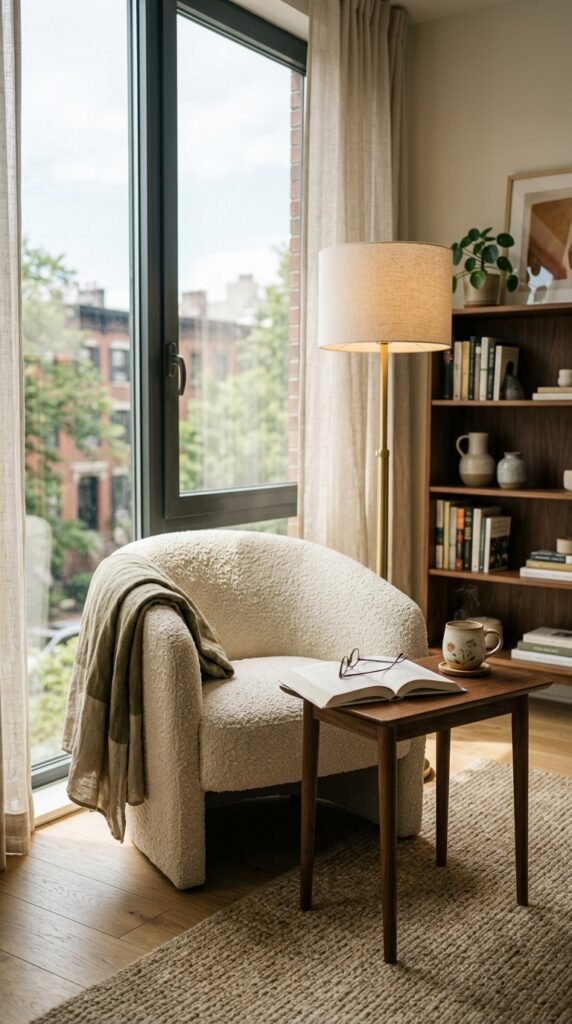
A reading nook requires only a chair, a floor lamp, and a side table, but the effect of a clearly defined “zone” within an open apartment plan makes the whole space feel larger because it now has rooms within a room. The zone signals purpose, which signals design intention.
Position the chair at a slight angle rather than flush against the wall, since an angled chair creates a corner conversation piece rather than looking like overflow seating. A floor lamp positioned behind and slightly above the chair’s shoulder height provides the best reading light and the most elegant lamp silhouette. This setup costs $100 to $250 total if you source thrifted pieces and adds a room to your apartment without touching a wall.
16. Use Art as a Focal Point
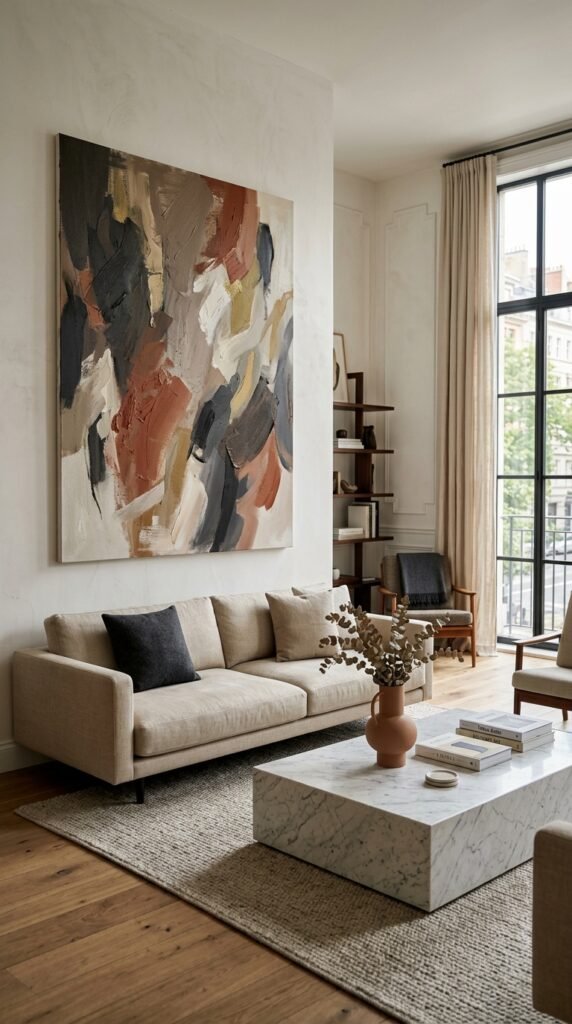
One large piece of art does more for a room than twelve small ones, because scale creates impact and a single statement piece signals confidence in the same way a small cluster of unrelated prints signals indecision. A canvas or print in the 24×36 inch range or larger reads as a focal point; anything smaller reads as filler.
Art Sources at Different Price Points
- Free: Public domain prints from Art Institute of Chicago or Rijksmuseum online collections
- Under $50: Society6, Redbubble, or Desenio for quality prints
- $50 to $200: Etsy original artists for one-of-a-kind work
Hang art so the center of the piece sits at 57 inches from the floor, which is standard gallery height and the point at which most people’s eyes naturally rest. Art hung too high (above 65 inches) is the single most common hanging mistake in apartments.
17. Add a Console Table Behind Your Sofa
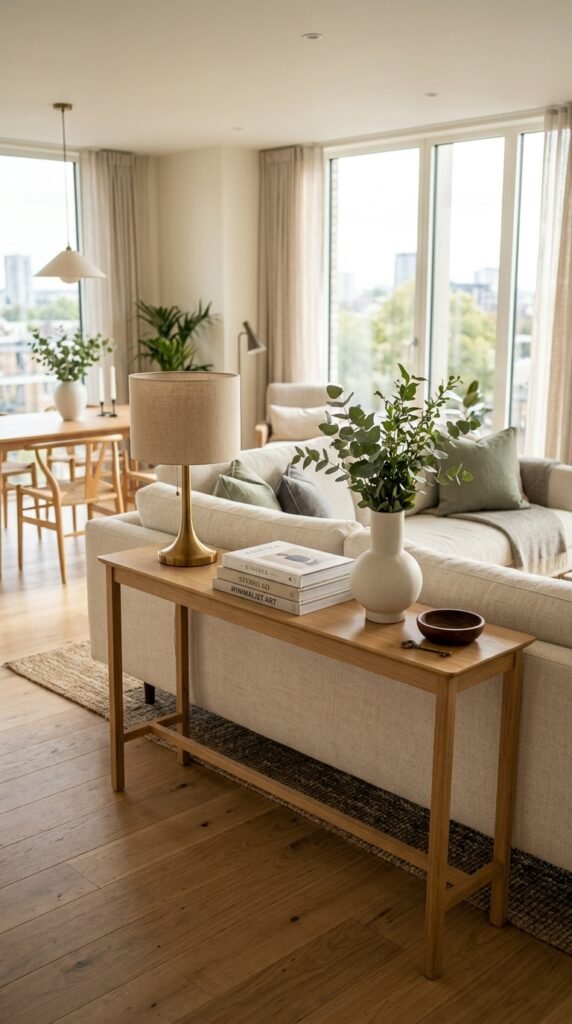
A console table positioned directly behind a floating sofa fills dead space that floating seating arrangements always create, and it gives you a surface for a lamp, plants, and books that keeps the room from looking unfinished at the back. The table should sit 1 to 2 inches below the sofa’s back cushion height.
Console tables cost $80 to $250 depending on material, with slim, low-profile designs working best in apartments where every inch counts. Style the surface with a table lamp (for layered lighting), a stack of books, and one or two small objects at varying heights. This one piece solves two problems simultaneously: dead space behind a floating sofa and the lack of a surface for a lamp in the middle of the room.
18. Invest in Quality Window Treatments
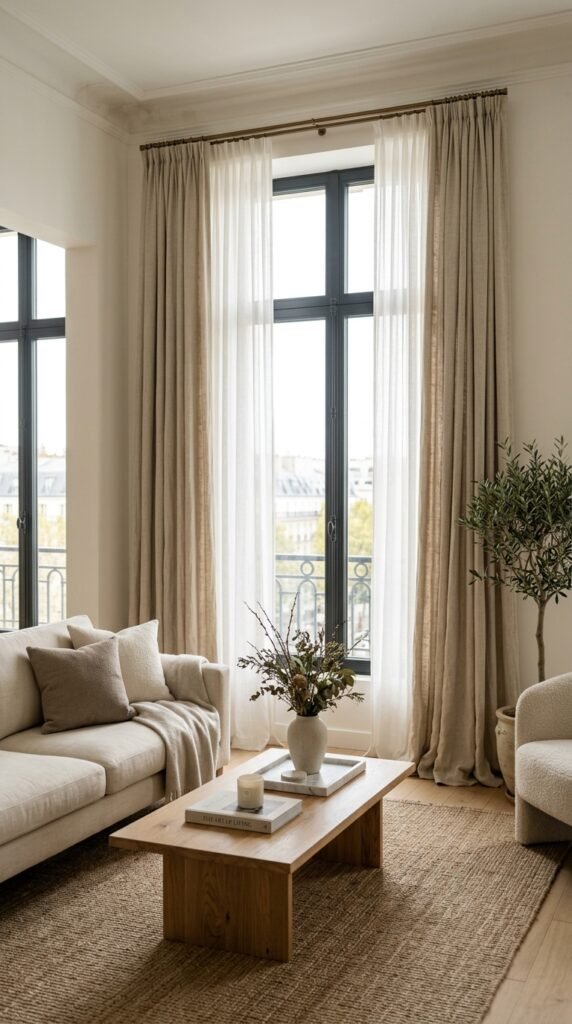
Generic white blinds are the default in most apartments, and swapping them for actual curtain panels is one of the highest-return decor upgrades available. Custom-look curtains from IKEA’s SANELA or DYTÅG lines cost $30 to $60 per panel and look far more considered than any blind option at the same price.
Line your curtains with a blackout liner panel behind the decorative fabric for light control without sacrificing aesthetics. This combination costs $40 to $80 per window and solves both the “it looks like I don’t have window treatments” problem and the “my bedroom is lit like a stadium at 6am” problem simultaneously. Curtains also add insulation, reducing heating and cooling costs by up to 25 percent according to the U.S. Department of Energy, which makes them a practical investment beyond the visual upgrade.
19. Style a Coffee Table Vignette
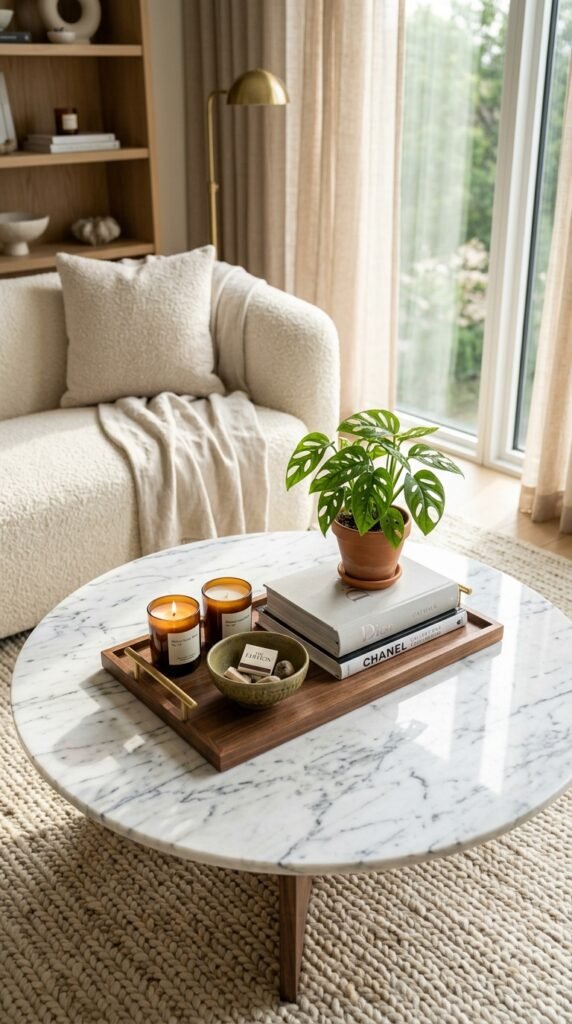
A bare coffee table wastes the most visible horizontal surface in your living room, and a styled vignette turns it into a design element rather than just a place to set drinks. The formula for an elegant coffee table works every time: one tray, one stack of books, one organic element (a plant or bowl of stones), and one candle.
The tray contains the vignette and prevents it from looking scattered, since objects within a defined border read as intentional arrangement rather than clutter. Keep the total height of the vignette under 10 inches so it doesn’t block sightlines across the room. A tray costs $15 to $40, and everything else on the table likely already exists somewhere in your apartment.
20. Use Scent as a Decor Tool
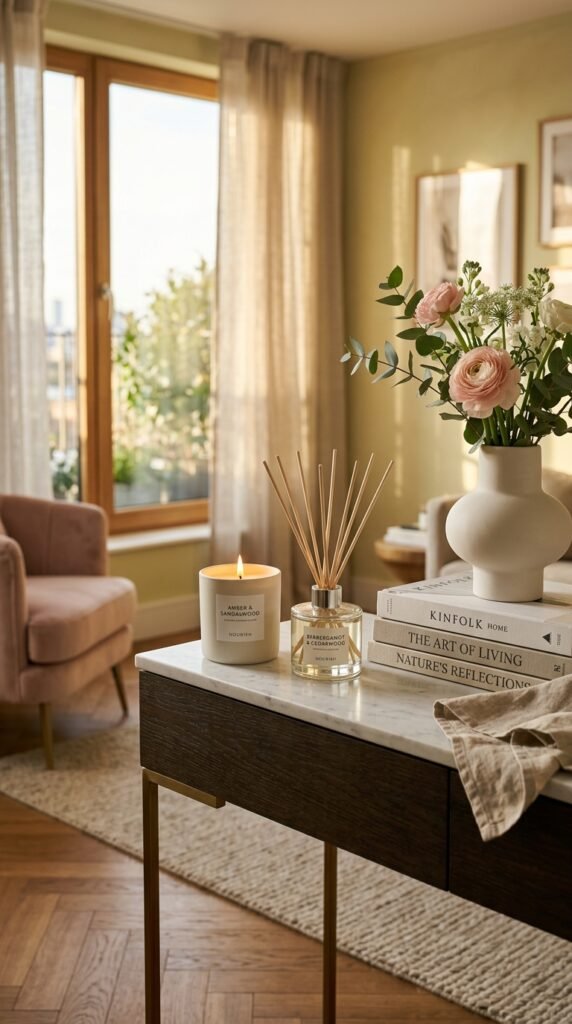
Scent shapes how a space feels before the eye registers a single design choice, which makes it one of the most underused tools in apartment decor. A quality candle or diffuser in a room communicates care, cleanliness, and intention the moment someone walks through the door.
A soy wax candle in a ceramic or glass vessel from brands like Otherland, Homesick, or Boy Smells costs $20 to $45 and burns for 40 to 60 hours. Position candles as decorative objects on the coffee table, bookshelf, or bathroom counter, since a good-looking vessel does double duty as decor. Avoid synthetic air fresheners, which signal “covering something up” rather than “this space is well maintained.”
21. Declutter Before You Decorate
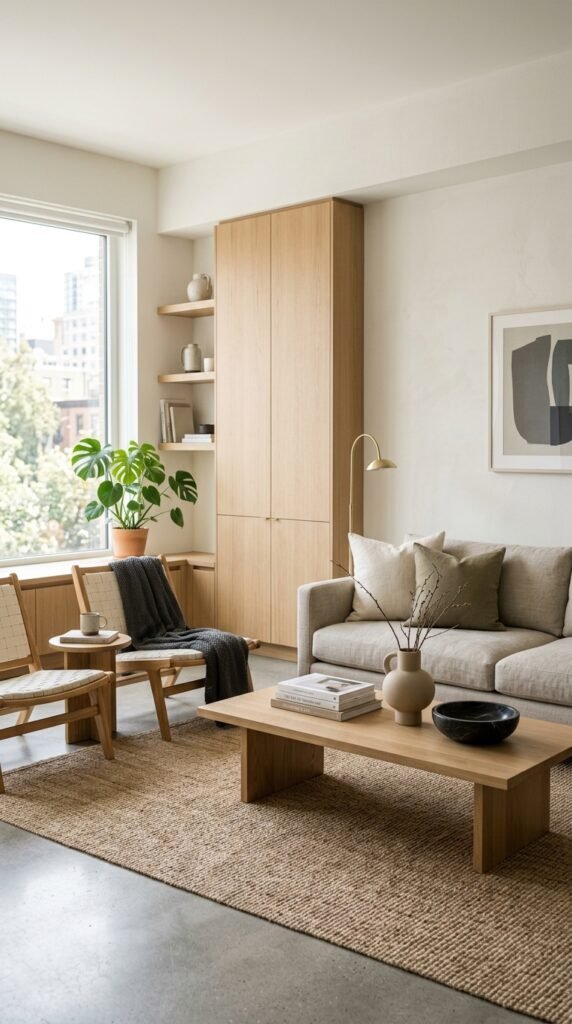
Every decorating decision you make loses half its impact when it competes with visual noise, and apartments accumulate clutter faster than houses because the ratio of stuff to square footage is much higher. Elegant spaces look elegant partly because of what isn’t there.
Apply the one-surface rule: every horizontal surface (coffee table, dining table, console, countertop) keeps a maximum of three to five intentional objects and nothing else. Everything without a designated surface gets a drawer, a cabinet, or a basket. This costs nothing but time and delivers more immediate visual impact than any purchase on this entire list. IMO, editing what you own is the most elegant decor move of all.
Final Thoughts
Elegant apartment decor comes down to three things: quality in the pieces that get the most visual attention, restraint in how many things compete for that attention, and details like lighting, curtains, and scent that change how a room feels before anyone notices what’s in it. Start with your sofa, your lighting, and your curtains since those three decisions shape every other choice in the room. Work through this list one idea at a time and your apartment will look and feel like a completely different space by the time you reach number 21.