23 Modern Farmhouse Kitchen Ideas to Transform Your Home
A modern farmhouse kitchen hits the sweet spot between the warmth of a traditional country kitchen and the clean lines of contemporary design, and when it works, it works better than either style alone. I renovated my own kitchen three years ago with this aesthetic in mind and spent more time on hardware decisions than most people spend on entire room redesigns. Worth it. Every single time someone walks into that kitchen for the first time, they stop in the doorway. These 23 modern farmhouse kitchen ideas give you the specific decisions that create that response in your own space.
1. Install a Farmhouse Apron-Front Sink
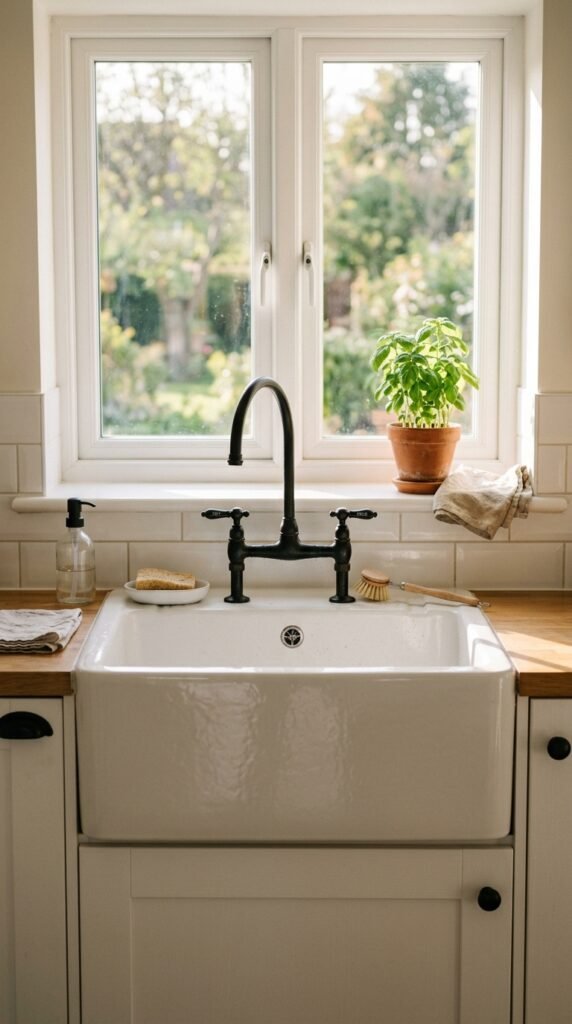
An apron-front farmhouse sink is the single element that most immediately identifies a modern farmhouse kitchen, and no other single fixture change delivers the same visual impact per dollar spent. The exposed front panel of the sink extends beyond the cabinet face and creates the deep, functional basin that farmhouse kitchens originally used for washing produce, large pots, and everything else that came in from the fields. IKEA’s HAVSEN apron-front sink costs $209 and requires an IKEA base cabinet. Kohler’s Whitehaven farmhouse sink runs $850 to $1,200 and fits standard cabinet openings.
Choose white fireclay for the most authentic farmhouse aesthetic. Fireclay handles heat, staining, and daily abuse better than porcelain enamel and develops minimal scratching over its lifetime. A stainless steel apron-front sink costs $300 to $600 and works in more modern interpretations of the style. Both materials deliver the silhouette that makes the sink the room’s focal point before anyone notices anything else.
2. Choose Shaker Cabinet Doors Throughout
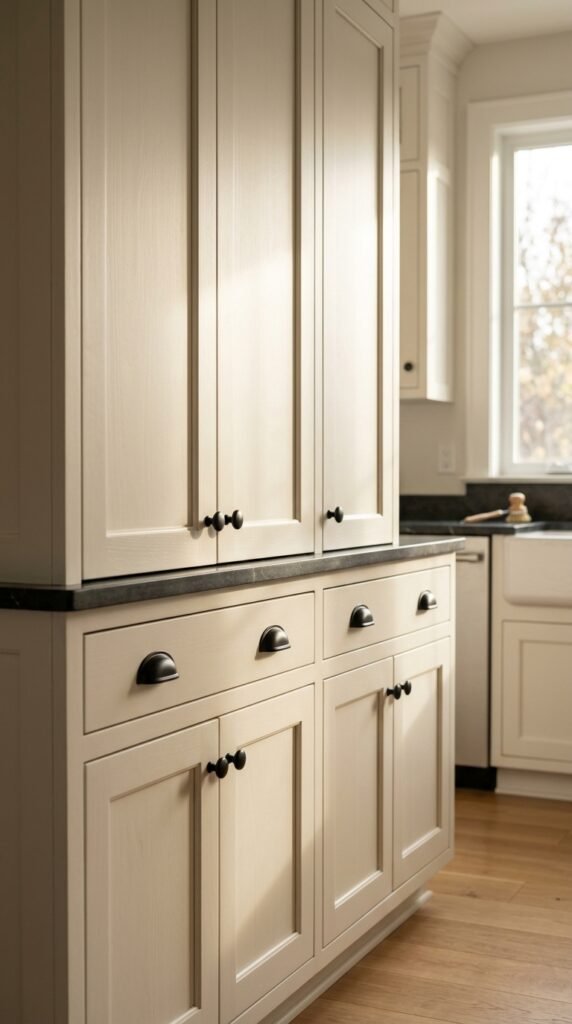
Shaker cabinet doors are the foundational cabinet style of the modern farmhouse kitchen because their flat center panel and clean rail-and-stile frame reads as both traditional and contemporary simultaneously. The style originated in 18th-century Shaker communities where furniture prioritized function over ornamentation, which makes it perfectly aligned with the modern farmhouse philosophy of beautiful utility. IKEA’s AXSTAD and BODBYN doors fit the Shaker profile and cost $15 to $40 per door. Custom Shaker cabinet doors from online companies like Semihandmade cost $50 to $150 per door.
Paint existing flat-panel cabinet doors with Shaker-style router trim applied directly to the surface for a budget-friendly conversion. A router trim kit costs $15 to $25 and transforms a flat IKEA cabinet door into a Shaker-profile door in 30 minutes per door. The painted result is indistinguishable from a purpose-built Shaker door at a fraction of the cost.
3. Paint Cabinets in a Warm White or Soft Sage
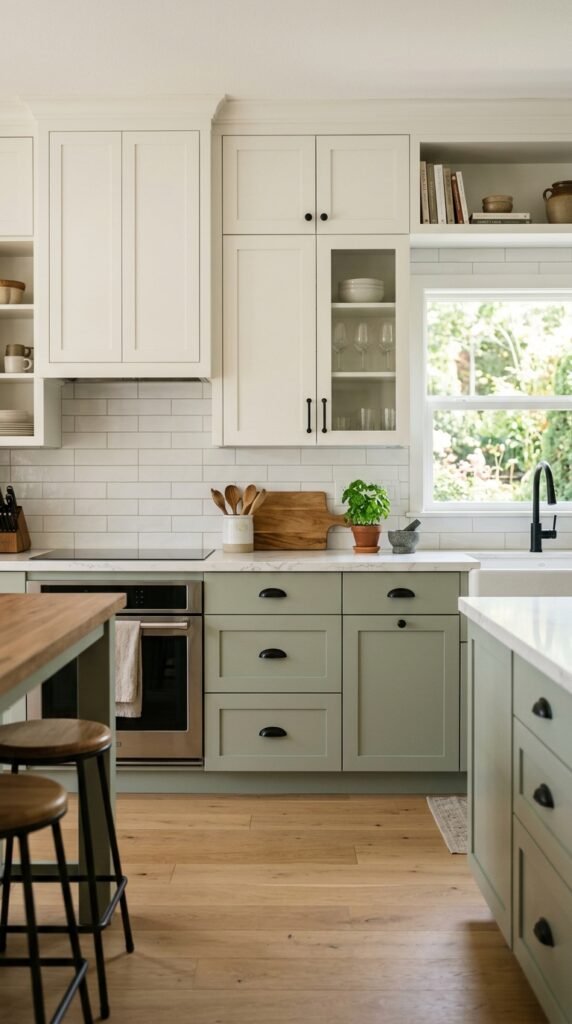
The modern farmhouse kitchen palette centers on warm white, soft sage, warm greige, and navy blue as primary cabinet colors, with warm white remaining the most versatile and timeless choice across all kitchen sizes and light conditions. Benjamin Moore Simply White OC-17 and Sherwin-Williams Pure White SW 7005 both deliver the warm undertone that prevents the kitchen from reading as clinical or cold. Sage green cabinets in a muted, dusty tone (Sherwin-Williams Clary Sage SW 6178 or Benjamin Moore Saybrook Sage HC-114) add organic warmth that white alone doesn’t achieve.
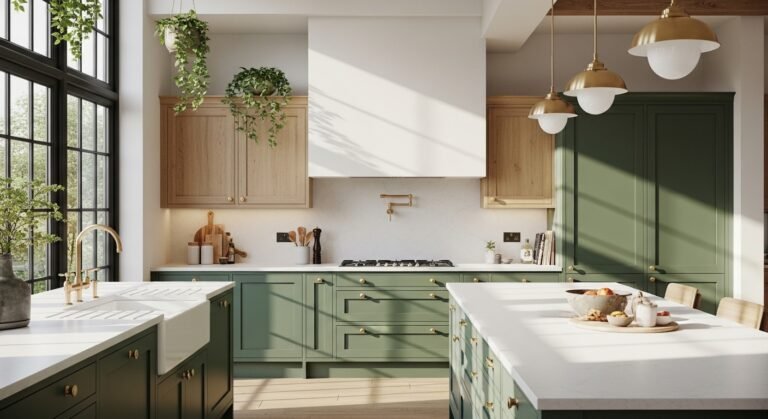
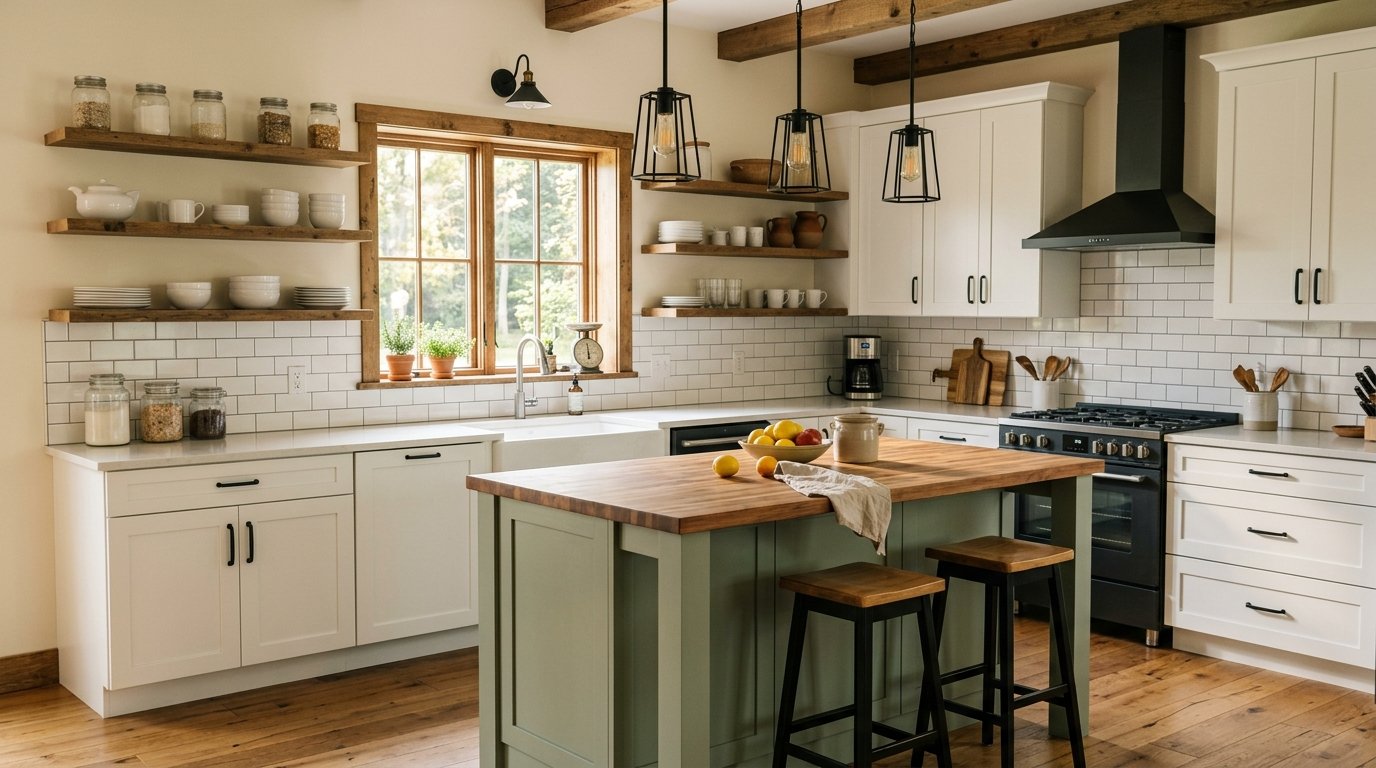
Two-tone cabinets with white uppers and a deeper color on the lower cabinets (sage, navy, or warm charcoal) give the modern farmhouse kitchen visual depth and a designed quality that single-color cabinet treatments approach but never quite match. The two-tone approach uses the floor cabinets as the color statement while keeping the upper cabinets visually light. This makes the ceiling appear higher and the kitchen appear larger simultaneously.
4. Add Open Shelving on One Wall
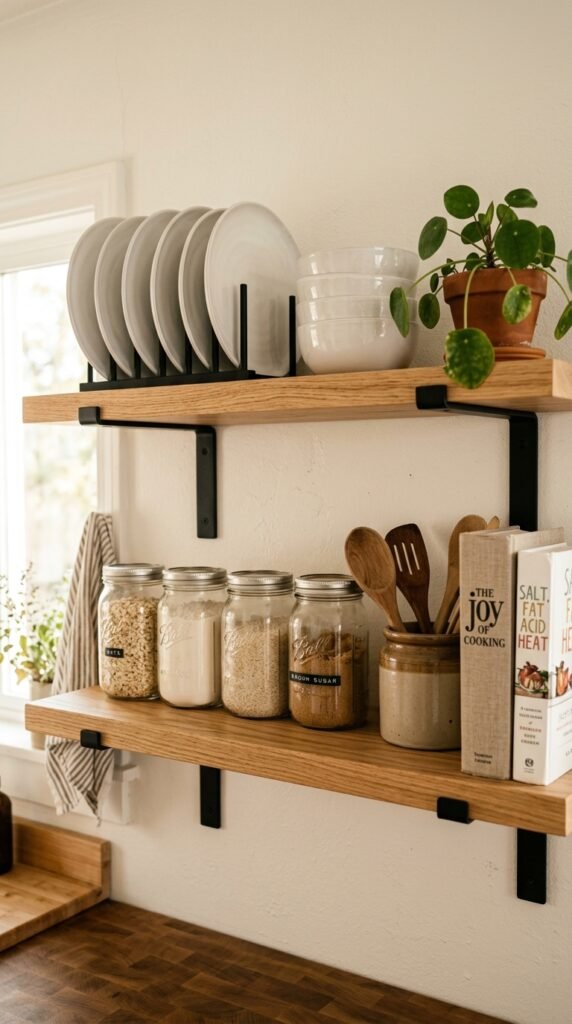
Open shelving in a modern farmhouse kitchen adds the displayed-collection quality that closed cabinets eliminate, giving the kitchen a lived-in, personal character that pure cabinet configurations never achieve. One wall of floating wood shelves holding white ceramic dishware, glass jars, cast iron pieces, and fresh herbs creates a visual richness that makes the kitchen feel like somewhere meals have been happening for generations. This is the Instagram kitchen look and it works in real life too, not just for the photo.
Open Shelf Material Options
- Reclaimed wood: most authentic farmhouse feel, warm tone variation, each shelf unique
- Solid oak or pine: clean and consistent, stains to any tone, most affordable new option
- White oak: modern farmhouse standard, light grain, ages beautifully over time
- Black walnut: elevated farmhouse aesthetic, dark warmth, premium price point
Floating shelf brackets in matte black or aged brass cost $8 to $20 each and support up to 50 pounds per bracket pair. Two brackets per 36-inch shelf handles the weight of any realistic shelf styling load.
5. Install Shiplap or Beadboard as a Backsplash
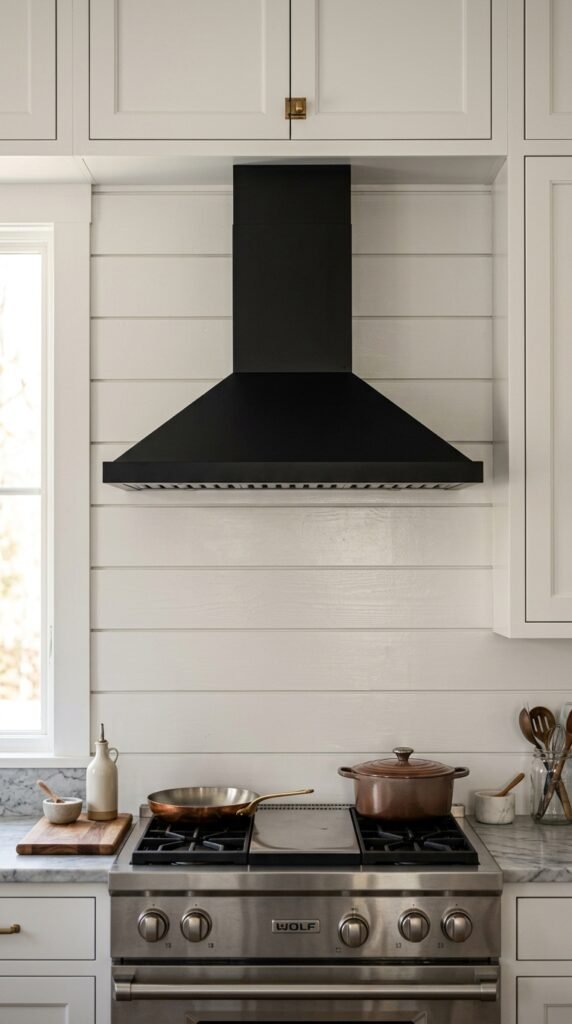
Painted shiplap or beadboard as a kitchen backsplash adds the architectural texture that tile backsplashes provide at a fraction of the cost and with a distinctly farmhouse character. White-painted shiplap behind the range and extending to the underside of upper cabinets creates a clean, textured backdrop that photographs beautifully and costs $2 to $4 per square foot in materials versus $10 to $30 per square foot for ceramic tile. The key is using moisture-resistant MDF or solid wood planks sealed with semi-gloss paint that wipes clean.
Beadboard in the same white as the cabinet paint reads as a continuous design element rather than a separate material choice. The vertical groove pattern adds visual height to the backsplash area, which draws the eye upward and makes the kitchen feel taller. Apply two coats of semi-gloss paint after priming for a wipeable surface that handles everyday kitchen splashes without absorbing moisture into the wood.
6. Choose Butcher Block or Honed Stone Countertops
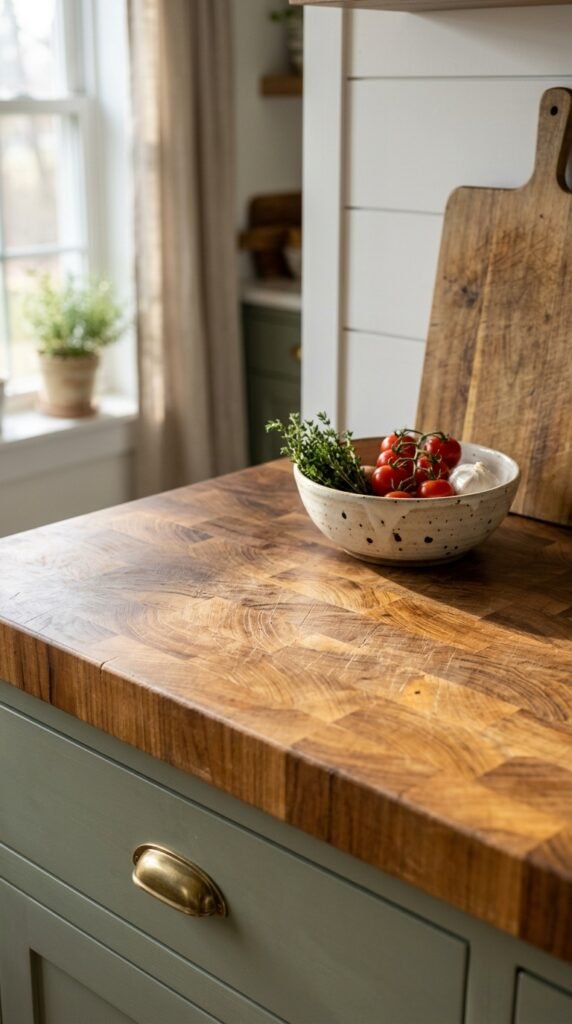
Modern farmhouse kitchens use countertop materials that communicate natural authenticity: butcher block wood, honed (matte) marble, leathered granite, or quartz in a natural stone appearance. The common thread is texture and visual warmth rather than the high-gloss polished surfaces that contemporary kitchens favor. Butcher block countertops from IKEA’s BADELUNDA line cost $150 to $300 for a standard run and install with basic woodworking skills. Honed Carrara marble costs $60 to $100 per square foot installed.
Countertop Comparison for Modern Farmhouse
- Butcher block: warmest aesthetic, requires annual oiling, $10 to $50 per square foot
- Honed marble: classic farmhouse luxury, stains if unsealed, $40 to $100 per square foot
- Leathered granite: high durability, fingerprint-resistant texture, $50 to $80 per square foot
- White quartz with veining: zero maintenance, looks like marble, $50 to $90 per square foot
Quartz in a honed Carrara-look finish from MSI or Cambria delivers the marble aesthetic without the sealing and staining concerns that natural marble introduces in a working kitchen.
7. Use Matte Black Hardware Throughout
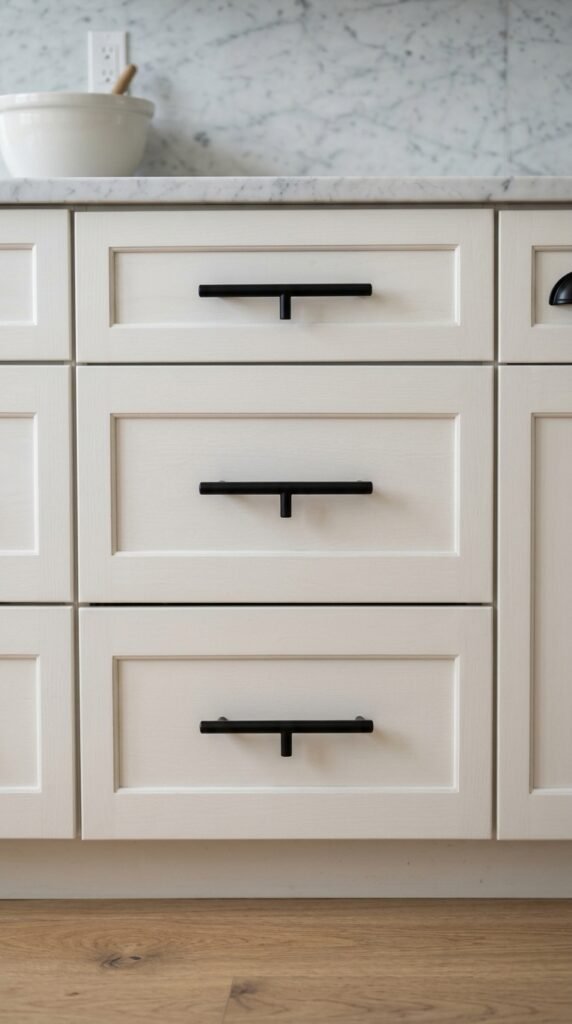
Matte black cabinet hardware unifies every cabinet and drawer in the kitchen under one consistent metal finish that reads as both contemporary and traditionally farmhouse simultaneously. The flat, non-reflective quality of matte black contrasts beautifully with white or sage painted cabinets and adds a visual crispness that brass or chrome hardware in the same kitchen never quite achieves. Replacing existing hardware with matte black alternatives costs $3 to $12 per pull or knob from Amazon, IKEA, or Rejuvenation.
Choose T-bar pulls in a 6-inch or 8-inch span for drawer fronts and cup pulls or bin pulls for cabinet doors. The farmhouse-specific pull shapes (cup, bin, and T-bar) communicate the aesthetic more directly than generic round knobs. A kitchen with 20 to 30 hardware pieces costs $60 to $360 total to update depending on brand quality. Budget hardware from Amazon performs adequately for five to seven years. Quality hardware from Rejuvenation or House of Antique Hardware lasts the lifetime of the cabinet.
8. Add a Kitchen Island With Contrasting Color
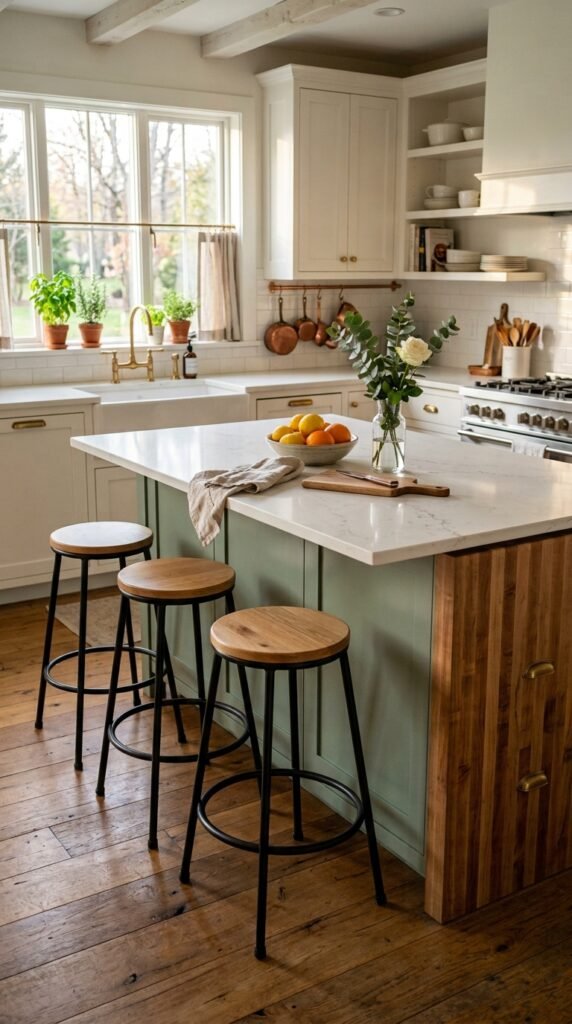
A kitchen island in a contrasting color to the perimeter cabinets creates the design focal point that a single-color kitchen lacks, and it gives the modern farmhouse kitchen the visual separation between cooking zone and gathering zone that the aesthetic specifically requires. A white perimeter kitchen with a sage green or deep navy island. A sage green kitchen with a warm white island. The contrast makes the island read as a distinct piece of furniture rather than a cabinet extension, which is exactly the farmhouse quality that distinguishes this style from standard contemporary kitchen design.
An island in a contrasting color also provides the opportunity to use a different countertop material as the top surface. A white quartz perimeter kitchen with a butcher block island top introduces natural wood warmth at the gathering surface while keeping the cooking counters low-maintenance. This material differentiation between perimeter and island countertops is a standard move in high-end modern farmhouse kitchen design.
9. Install a Pot Rack or Hanging Storage Above the Island
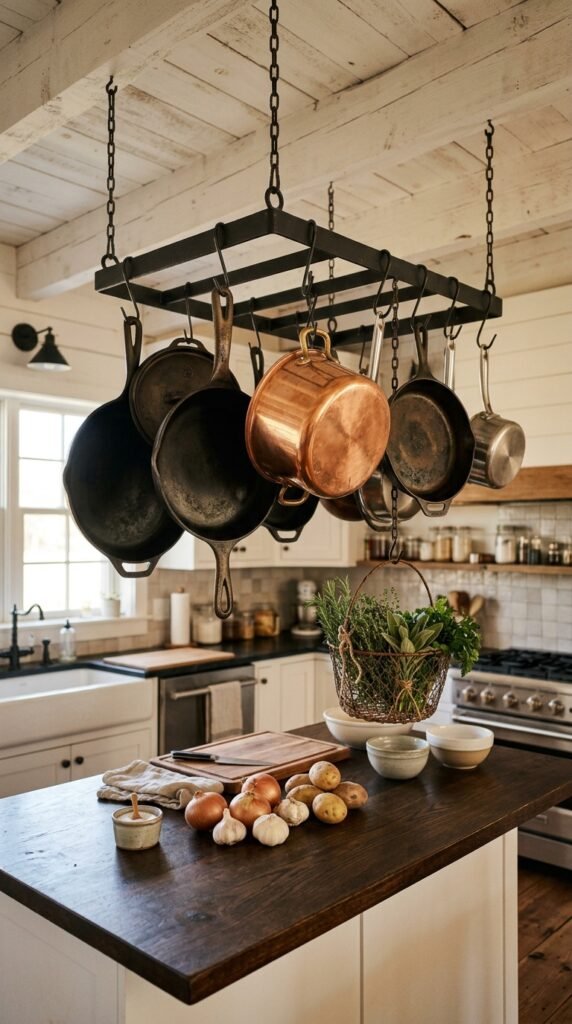
A ceiling-mounted pot rack above the kitchen island does three things simultaneously: it stores your most-used cookware within immediate reach, it fills the vertical space above the island that a pendant light alone leaves empty, and it adds the working kitchen quality that makes a modern farmhouse kitchen feel genuinely used rather than staged. Cast iron pans, copper pots, and stainless cookware hanging at varying heights create the functional display that farmhouse kitchens have always used to signal serious cooking intent.
A wrought iron ceiling pot rack costs $80 to $200 depending on size and mounts to ceiling joists with four lag bolts. Size the rack at 60 to 70 percent of the island length below it. Overcrowding the rack with every pot you own looks chaotic. Eight to twelve pieces at varying heights, mixing different sizes and materials, achieves the curated-yet-functional aesthetic the farmhouse kitchen requires.
10. Choose a Vintage-Style Range or Range Hood
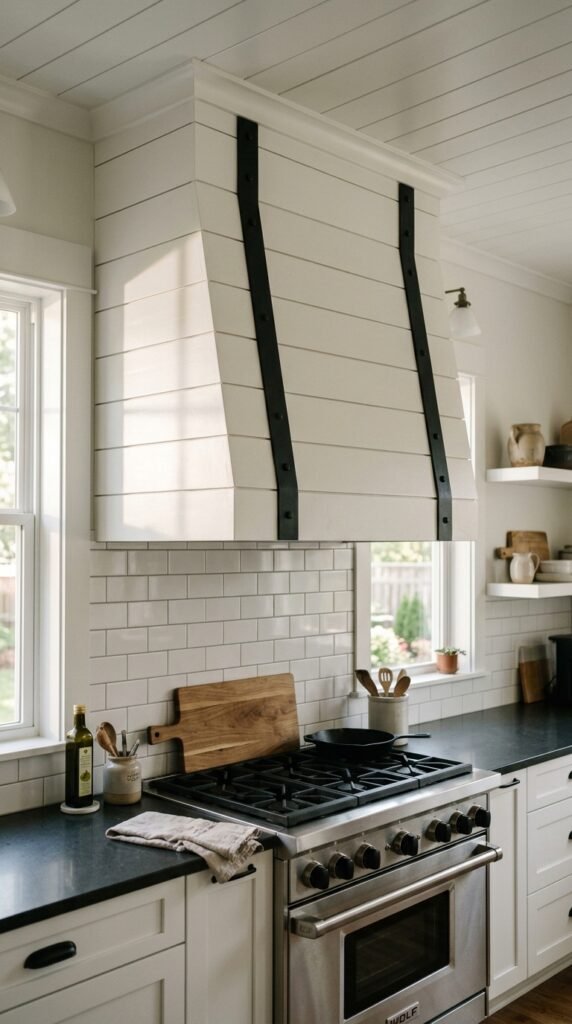
The range and range hood together form the most visually dominant wall in most kitchens, and choosing pieces that communicate farmhouse character in their form makes every other decision easier because they set the room’s aesthetic direction from the start. A professional-style range in matte white or matte black from brands like ILVE, Lacanche, or Bertazzoni starts at $2,500 and reads as the kitchen’s centerpiece. A more budget-friendly approach uses a standard range paired with a statement range hood in shiplap, painted wood, or hammered copper.
A custom shiplap range hood built over a standard stainless insert costs $200 to $400 in materials for a DIY build and completely transforms the kitchen’s character. The wooden hood box built from planks and finished in the same white as the cabinets reads as an architectural kitchen feature worth significantly more than its material cost. This is the single highest-visual-return DIY project in a modern farmhouse kitchen renovation.
11. Install a Subway Tile Backsplash in a Classic Pattern
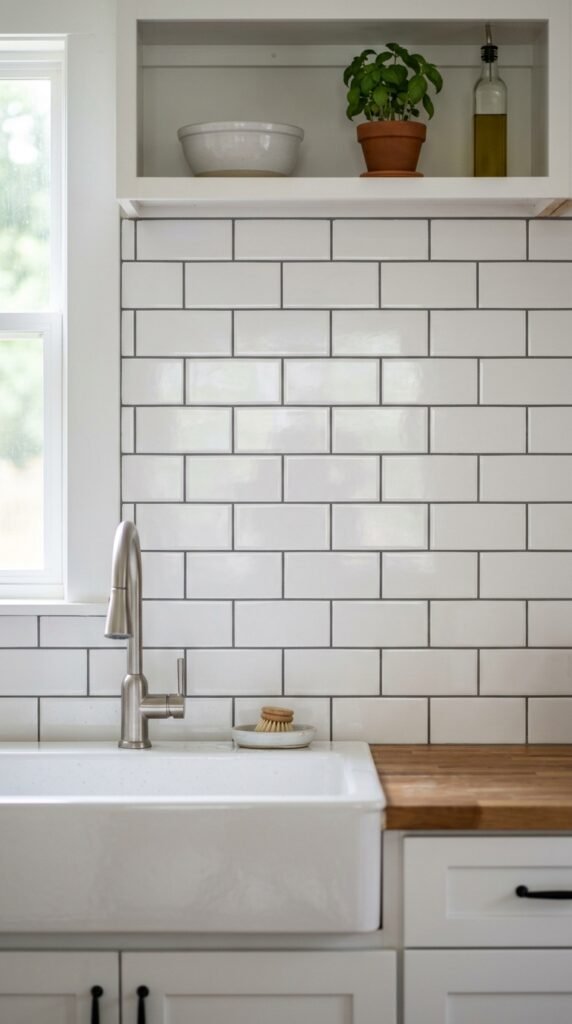
Classic 3×6 subway tile in bright white with grey grout is the most universally applicable modern farmhouse kitchen backsplash, combining the clean, simple geometry of traditional subway tile with the contrast grout that adds visual definition and prevents the backsplash from disappearing into the wall. Home Depot and Lowe’s carry white ceramic subway tile from $0.50 to $2 per tile, making a standard kitchen backsplash cost $100 to $400 in tile materials. The grey grout line does 40 percent of the visual work by providing the grid definition that white-on-white grout eliminates.
Lay the subway tile in a traditional running bond pattern (each tile centered over the joint below) for the most authentic farmhouse look. A vertical stack bond pattern reads as more contemporary. A herringbone pattern works in a modern farmhouse kitchen but requires significantly more cuts and installation time. The running bond pattern balances authenticity and installation simplicity better than either alternative for most kitchens and budgets.
12. Add a Farmhouse-Style Kitchen Table and Chairs
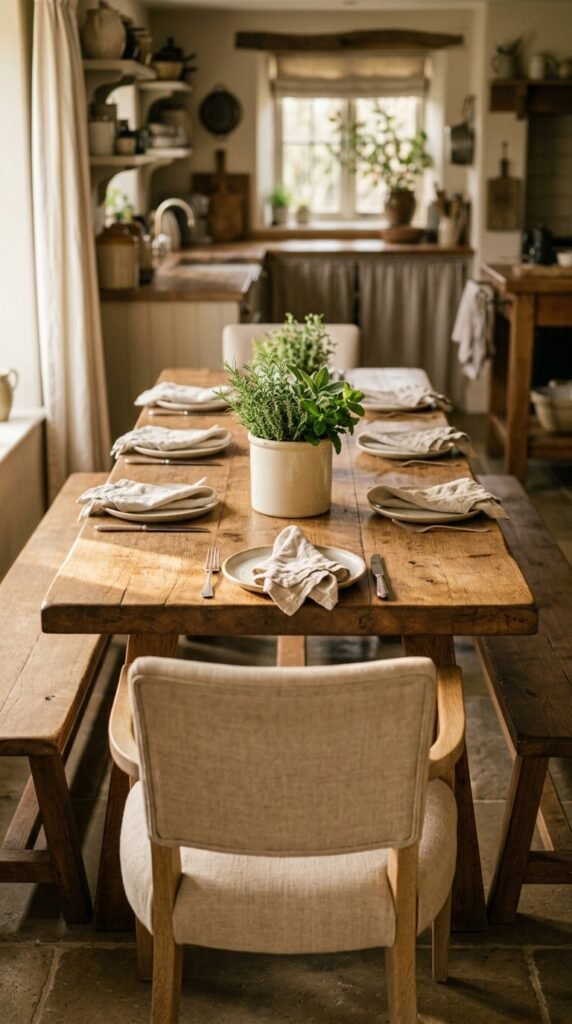
A farmhouse dining table within or adjacent to the kitchen is one of the defining elements of the modern farmhouse aesthetic because it signals that the kitchen is a gathering space rather than a purely functional cooking zone. A solid wood trestle table in oak, pine, or reclaimed wood seats six to eight and anchors the kitchen eating area with the material warmth and visual weight that metal or glass tables never achieve. Pottery Barn’s Benchwright table costs $1,000 to $1,400. A solid pine trestle table from Amazon runs $300 to $500 and delivers the same farmhouse silhouette at a fraction of the price.
Mix seating styles at the farmhouse table for the collected, lived-in quality that matching dining chair sets lack. Use benches on the long sides (which seat more people per linear foot than chairs) and two armchairs at the table ends. The mixed configuration looks curated over time rather than purchased all at once, which is exactly the farmhouse quality the aesthetic aims for.
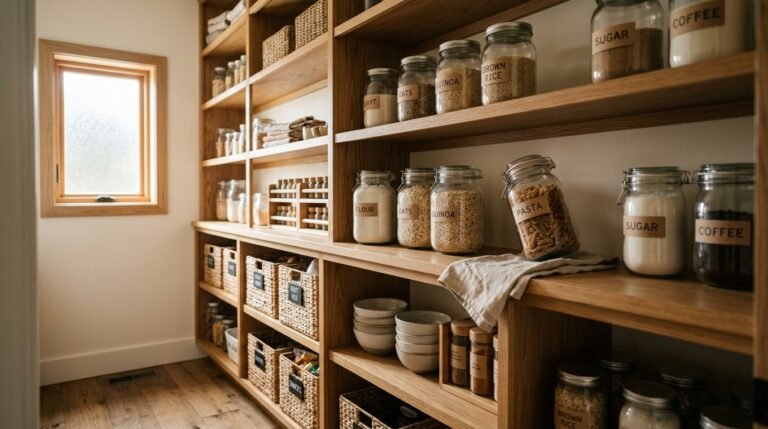
13. Use Open Jar Storage for Dry Goods
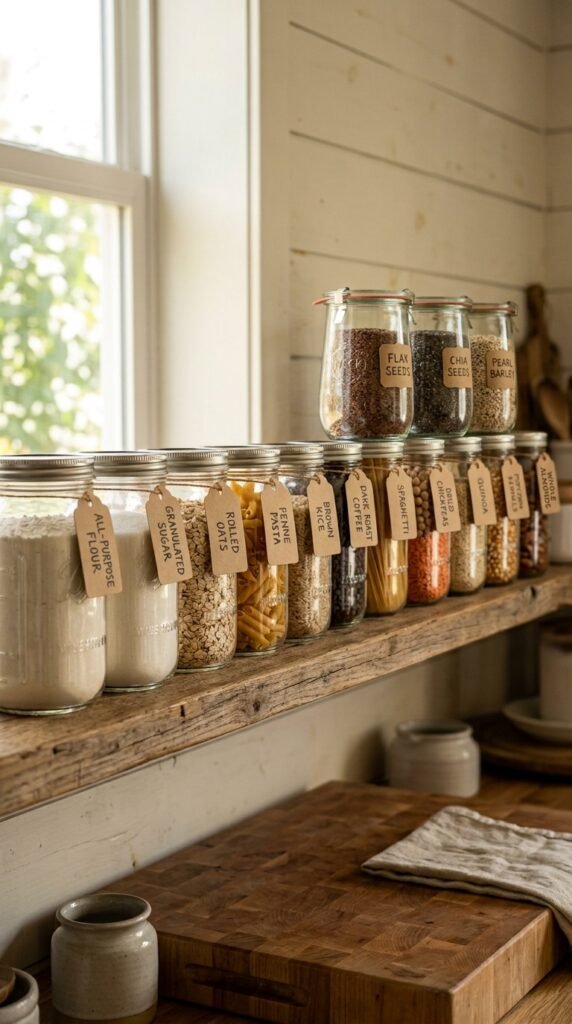
Glass mason jars filled with flour, sugar, oats, pasta, and coffee beans and displayed on open shelves or countertop surfaces add the functional-display quality that modern farmhouse kitchens require from every visible storage element. The uniform glass jar format turns pantry items into a visual collection rather than a clutter of mismatched packaging. Ball Mason jars in wide-mouth quart size cost $8 to $12 for a twelve-pack. Weck jars with glass lids cost $2 to $4 each and photograph more elegantly than standard Mason jars.
Label each jar with a kraft paper tag or a chalkboard label for the complete farmhouse pantry look. IMO, the labeled glass jar pantry display is the most high-impact, low-cost kitchen styling move available and it functions perfectly as daily-use storage rather than just a visual prop. A full set of 15 to 20 labeled jars costs under $40 and transforms a section of open shelving from a storage problem into a design feature.
14. Install Vintage-Style Pendant Lights Above the Island
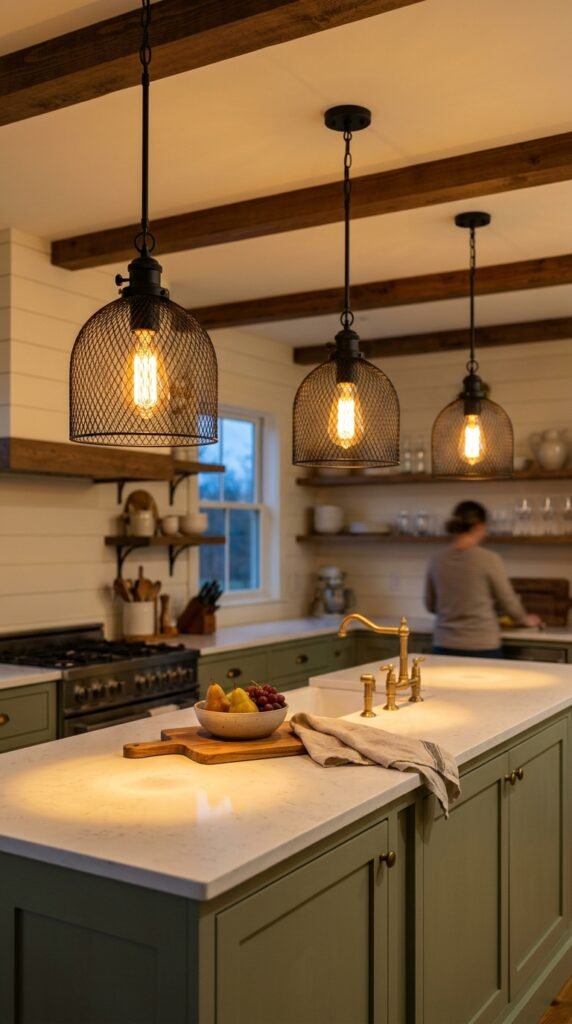
Industrial or vintage-style pendant lights above the kitchen island add the finishing overhead lighting element that pulls the modern farmhouse kitchen’s aesthetic together. Cage pendants in matte black, schoolhouse pendants in white enamel, and Edison bulb pendants on aged brass fittings all sit within the farmhouse lighting vocabulary. Hang three pendants in a row above a 48-inch or longer island, spaced evenly, at 30 to 36 inches above the island surface for correct proportion and task lighting coverage.
Pendant Styles for Modern Farmhouse Kitchens
- Black cage pendant: industrial farmhouse, matte black, $30 to $80 each
- White schoolhouse pendant: clean farmhouse classic, white enamel, $60 to $150 each
- Rattan globe pendant: organic farmhouse warmth, natural fiber, $40 to $100 each
- Aged brass dome pendant: elevated farmhouse aesthetic, $80 to $200 each
- Edison exposed bulb: raw industrial farmhouse, minimal design, $20 to $50 each
All pendant options use a standard medium base bulb socket. Choose a warm 2200K to 2700K Edison-style LED bulb for the most authentic farmhouse glow regardless of the pendant style.
15. Add a Chalkboard Wall or Panel
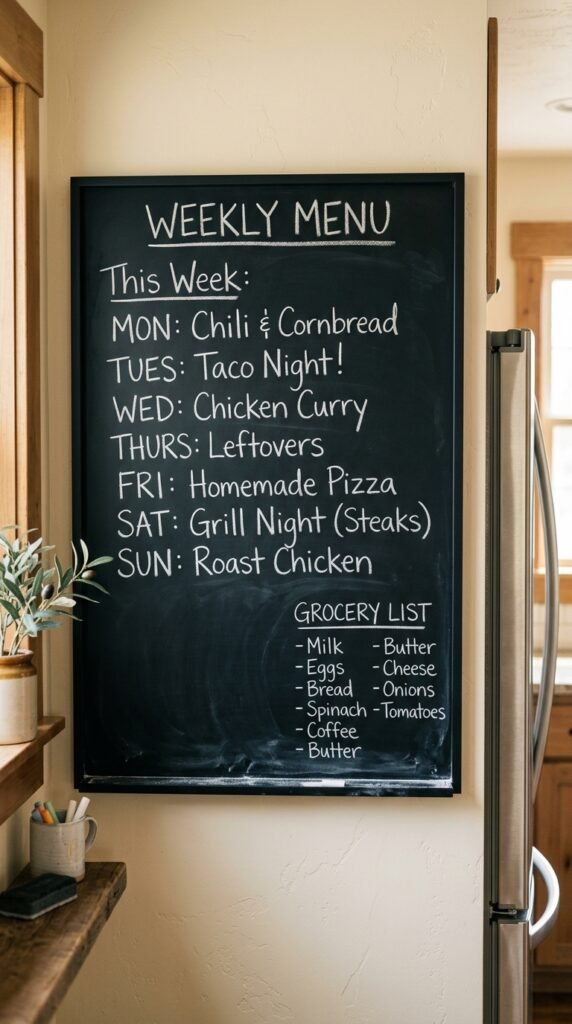
A chalkboard wall or large framed chalkboard panel in a modern farmhouse kitchen adds the functional, handwritten character that digital displays and printed notepads never deliver. A weekly menu, a shopping list, a child’s artwork, and a recipe in progress all contribute to the kitchen’s story in real time when they’re written on a chalkboard where everyone sees them. Chalkboard paint costs $15 to $25 per quart and covers a standard 4×6 foot panel or a full wall section. A framed chalkboard from Amazon or IKEA costs $30 to $80 in useful sizes.
Apply chalkboard paint to the inside of a pantry door, a section of wall beside the refrigerator, or a dedicated panel between the upper and lower cabinets. Season the surface by rubbing the side of a chalk piece across the entire surface before first use, then erasing it. This seasoning step prevents ghost images from the first writing from permanently marking the surface when you erase them later.
16. Choose Vintage or Antique Inspired Light Fixtures
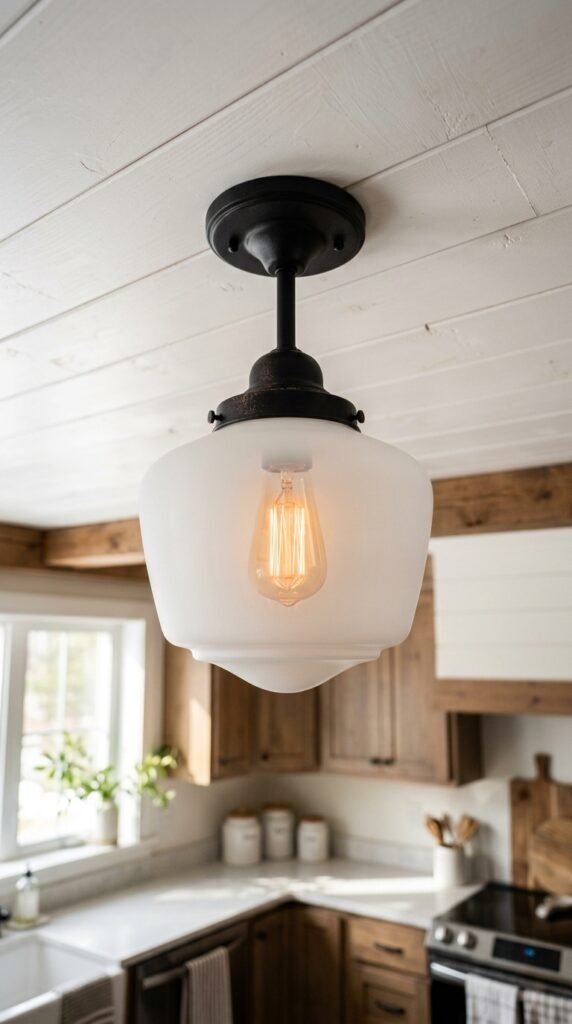
Every light fixture in a modern farmhouse kitchen earns its visual role as both a functional light source and a design object visible at eye level throughout the kitchen. A schoolhouse globe ceiling fixture over the sink, an aged brass or matte black flush mount in the ceiling center, and the island pendants together tell a cohesive lighting story that builder-grade fixtures never approach. Rejuvenation and Schoolhouse Electric both produce American-made farmhouse fixtures from $80 to $400 that elevate any kitchen instantly.
Replace the ceiling flush mount fixture first because it sits at the visual center of the kitchen ceiling where it either earns its position or undermines everything around it. A matte black cage flush mount costs $40 to $80 at most home improvement stores and replaces the average builder-grade globe fixture in 20 minutes with a screwdriver. That single fixture swap changes the kitchen’s character more than any other single $40 to $80 purchase available.
17. Install Shaker-Style Open Display Cabinets With Glass Doors
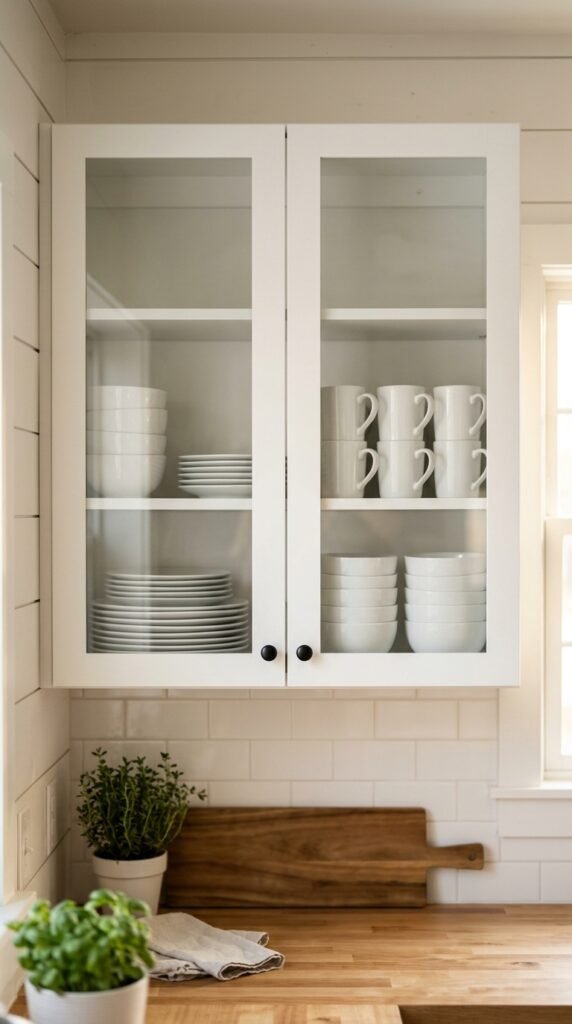
Glass-front Shaker cabinet doors on upper cabinets create a transitional display zone between fully open shelving and fully closed cabinet storage. The glass front lets you show your best dishware and glassware while keeping it dust-free and organized, which solves the main practical problem of fully open shelving without sacrificing the displayed-collection quality that the modern farmhouse kitchen requires. IKEA glass-front doors for SEKTION cabinets cost $30 to $60 per door. Custom glass-front Shaker doors from online suppliers cost $80 to $150 per door.
Display white ceramic pieces, ironstone dishware, or glass jars within the glass-front cabinets for the most visually cohesive result. Mixing colorful dishware inside glass-front farmhouse cabinets creates visual chaos that defeats the purpose of the curated display. One material family per cabinet: all white ceramics, or all clear glass, or all ironstone, but never a mixture of competing colors and materials.
18. Use a Farmhouse Style Kitchen Faucet
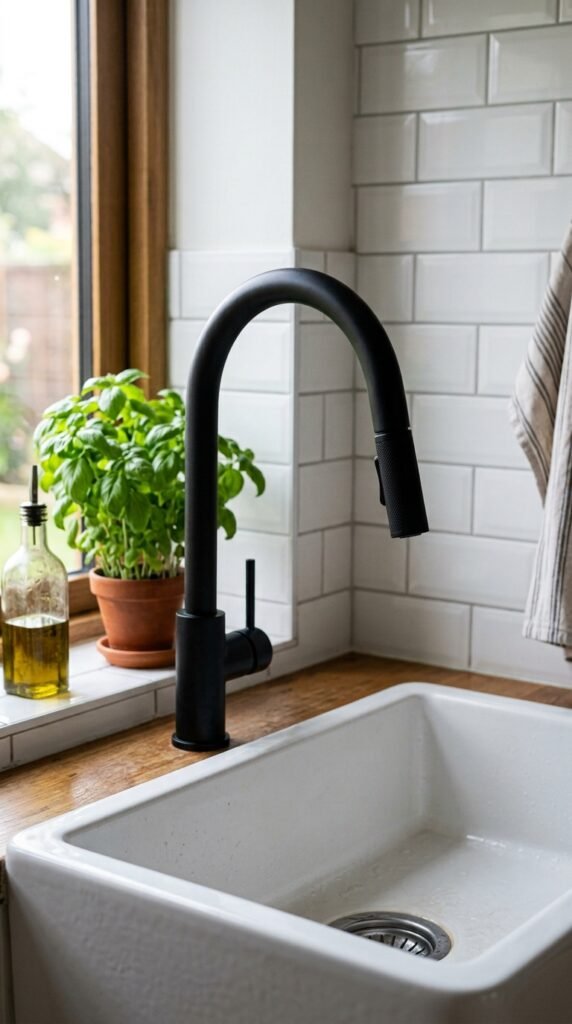
A bridge faucet or high-arc gooseneck faucet in matte black or unlacquered brass completes the farmhouse sink installation and communicates period-appropriate hardware design that standard contemporary faucets conflict with directly. The bridge faucet (with separate hot and cold handles connected by a bridge between them) is the most distinctly farmhouse-specific faucet form and reads as authentically period-inspired regardless of the kitchen’s overall modernity level. Rohl and Kingston Brass both make bridge faucets from $200 to $600.
A high-arc gooseneck faucet in matte black from brands like Moen, Delta, or Kraus costs $80 to $200 and delivers strong farmhouse character at a more accessible price point than a bridge faucet. The matte black finish matches the matte black cabinet hardware throughout the kitchen, which creates the consistent metal finish story that every well-designed kitchen requires.
19. Add a Barn Door to the Pantry or Mudroom Entry
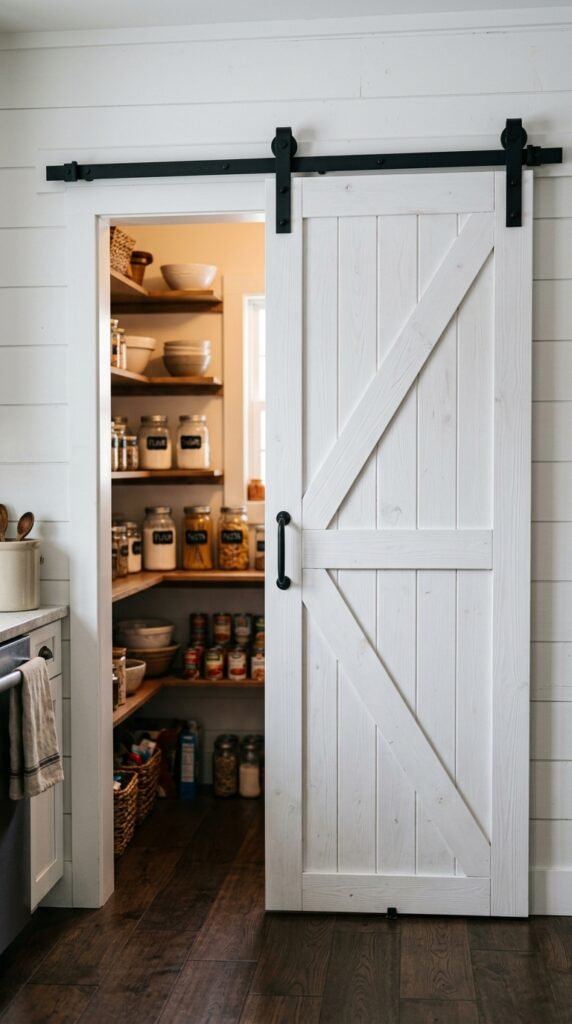
A sliding barn door on a steel track system adds the most distinctly farmhouse architectural element available in a kitchen without structural work, and it solves the swing-door space problem in tight kitchen layouts simultaneously. A solid wood barn door that slides rather than swings requires zero clearance arc in front of the doorway, which is genuinely useful in galley kitchens and tight kitchen-pantry transitions. A pre-built barn door from Home Depot or Wayfair costs $150 to $400. The sliding hardware track system costs an additional $50 to $150.
Choose a simple flat-panel or Z-brace barn door design for the most authentic farmhouse look. Elaborate carved or decorative panel doors read as decorative rather than functional, which conflicts with the modern farmhouse philosophy of beauty through utility. A simple white-painted flat panel with a Z-brace overlay and a matte black handle communicates the aesthetic clearly and costs under $50 to build from scratch with basic lumber.
20. Install Reclaimed Wood Accents Throughout
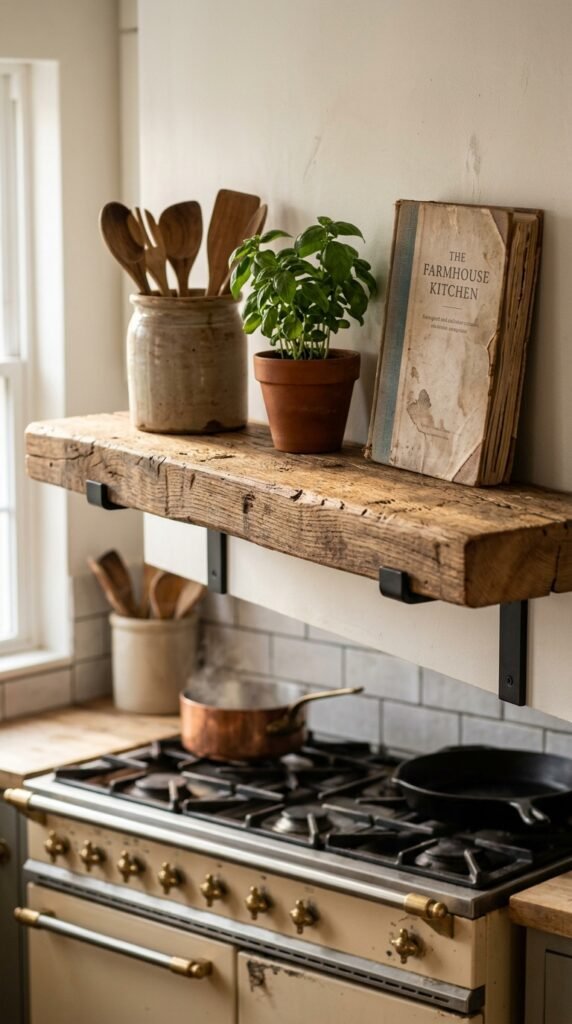
Reclaimed wood in a modern farmhouse kitchen communicates history, authenticity, and warmth that new wood products simply can’t replicate regardless of how well they’re finished. A reclaimed wood floating shelf above the range, reclaimed beam details on the kitchen island end panel, or a reclaimed wood ceiling element all introduce the aged character that makes a modern farmhouse kitchen feel genuinely rooted rather than trend-following. Reclaimed wood from local salvage yards costs $2 to $8 per linear foot. Online suppliers like Reclaimed Wood Exchange ship nationally.
Even one reclaimed element in the kitchen shifts how the entire space reads because reclaimed wood carries a visual weight and authenticity that new materials lack regardless of their quality. A single 6-foot reclaimed oak shelf above the range costs $30 to $80 in material and adds more character to the kitchen than $300 worth of new painted shelving in the same position.
21. Incorporate Vintage Accessories and Crocks on Open Shelves
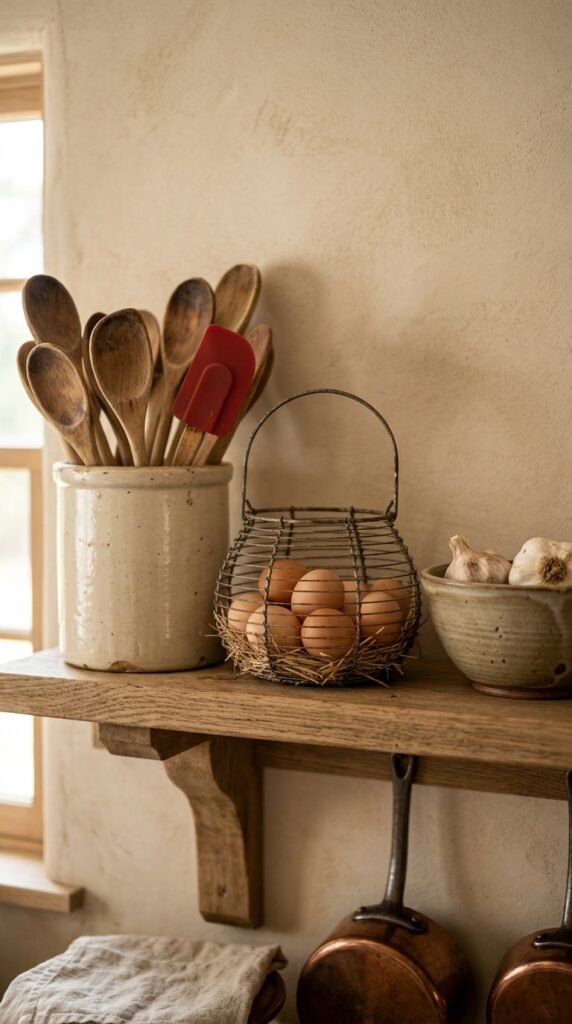
Vintage or vintage-style accessories on open shelves complete the modern farmhouse kitchen aesthetic by adding the collected, over-time quality that newly purchased matching sets of decor never achieve. A vintage cream-colored crock holding wooden spoons beside the range. A hand-thrown ceramic bowl holding fresh eggs or garlic on the counter. A wire egg basket hanging from an open shelf bracket. These objects communicate kitchen function through their form in a way that purely decorative objects never do.
Source vintage crocks, ironstone platters, and ceramic bowls from thrift stores, estate sales, and antique markets for $2 to $20 per piece rather than paying boutique retail prices for new vintage-look reproductions. Authentic aged pieces always outperform reproductions in farmhouse settings because the genuine wear patterns and material age read as honest rather than manufactured. One authentic vintage crock reads as more farmhouse than 10 new reproduction pieces from an online home store.
22. Use a Fireclay or Ceramic Farm-Style Tile
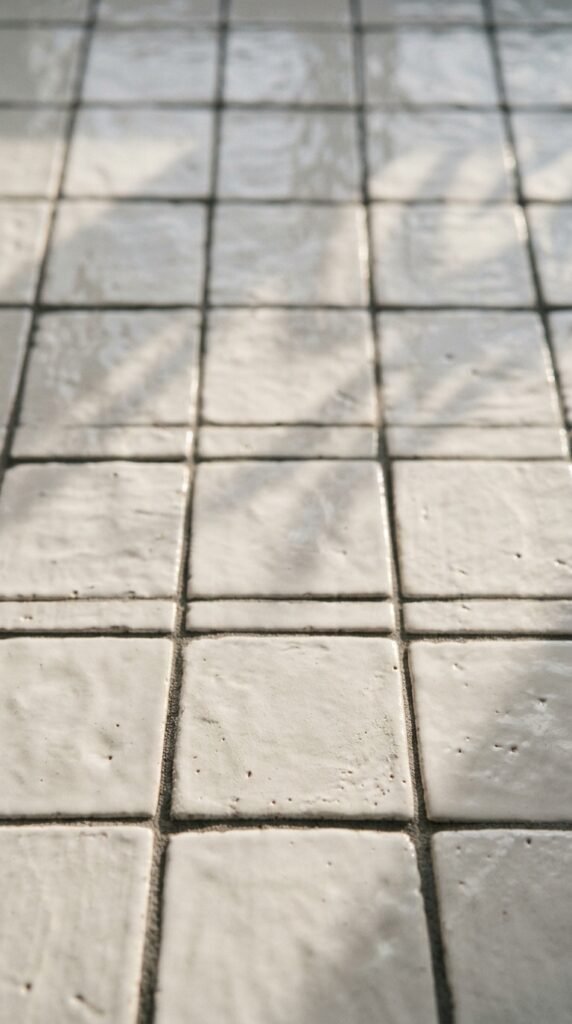
Handmade-look fireclay or ceramic tile in the backsplash, floor, or range surround introduces the artisan quality that machine-made tile lacks and that farmhouse kitchens specifically require to feel authentic. The slight size variation, surface texture, and glaze irregularity of handmade-look tile communicates craftsmanship in the same way that reclaimed wood and vintage crocks communicate age and authenticity. Heath Ceramics produces genuinely handmade tile from $25 to $50 per square foot. Cloe Studio and Fireclay Tile offer handmade-look options from $8 to $20 per square foot.
A handmade-look tile range surround (the vertical surfaces immediately around and above the range) covers approximately 15 to 25 square feet, which keeps the premium tile cost manageable while placing the artisan material in the kitchen’s most visually prominent cooking zone. The range surround tile reads at eye level from across the kitchen and communicates the design quality of the entire room from that single vantage point.
23. Style the Kitchen Counter With Purposeful Display
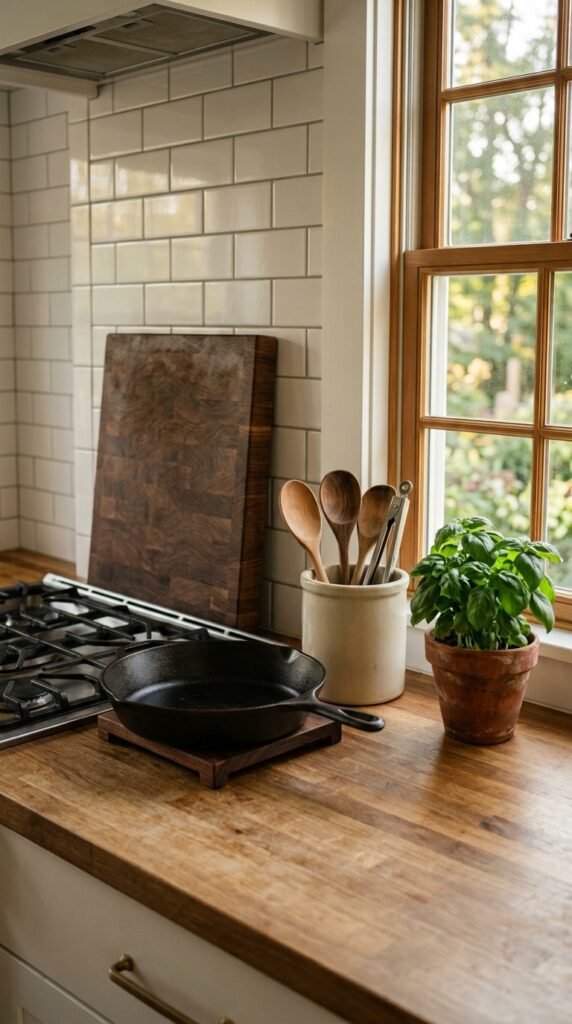
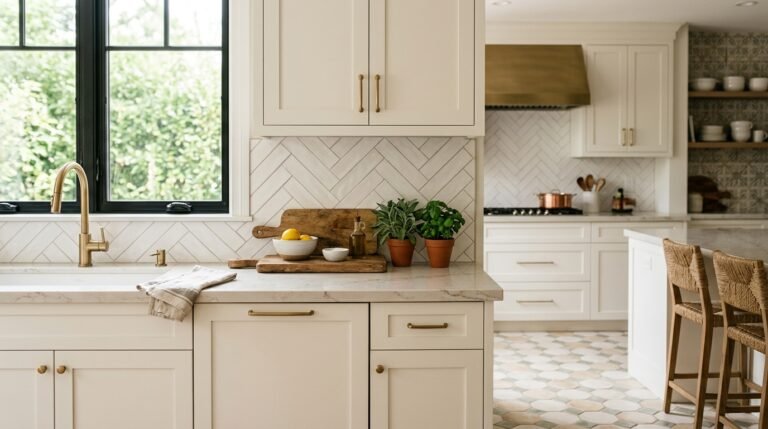
A modern farmhouse kitchen counter holds only objects that earn their permanent place through beauty, function, or both simultaneously. A wooden cutting board leaning against the backsplash. A cast iron skillet on a small trivet beside the range. A ceramic crock of wooden spoons. A fresh herb plant in a terracotta pot at the window. These four objects cost $30 to $80 total and create a complete farmhouse counter vignette that communicates the kitchen’s identity more clearly than any cabinet choice or hardware decision.
Counter Styling Objects for a Farmhouse Kitchen
- Wooden cutting boards: butcher block or end-grain, leaning against backsplash, $20 to $60
- Cast iron skillet: Lodge 12-inch, displayed rather than stored, $30 to $45
- Ceramic or stoneware crock: holds utensils, communicates craft, $15 to $40
- Fresh herb plant in terracotta: functional, fragrant, living counter element, $3 to $8
- Glass jar collection: oil, vinegar, and condiments in matching vessels, $15 to $30 total
FYI, the styling discipline matters as much as the object selection. Every non-functional object leaves the counter. Every functional object earns its counter position through visual contribution as well as daily use.
Final Thoughts
A modern farmhouse kitchen works when every decision reinforces the same philosophy: beautiful utility in honest materials with warm, personal character. You don’t need to renovate everything at once. Start with the three changes that deliver the highest visual impact per dollar: replace your cabinet hardware with matte black alternatives, paint the cabinets in a warm white or soft sage, and add open wood shelving on one wall styled with white ceramics and glass jars. Those three moves transform a standard kitchen into a recognizable modern farmhouse space for under $500 in most cases. Every other idea on this list is the next layer, added one decision at a time, until the kitchen becomes the room in your house that people walk into and immediately want to stay.