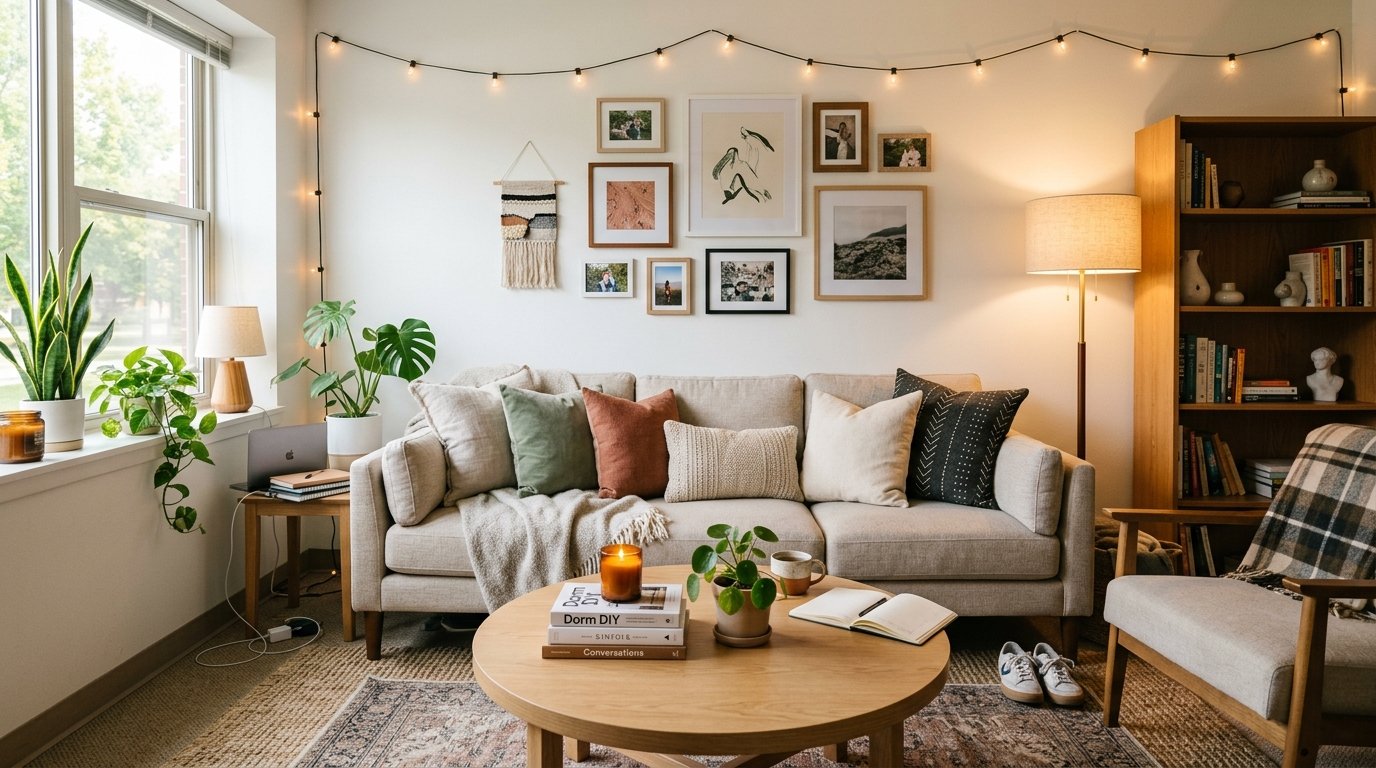
15 Dorm Living Room Ideas to Make Your Space Feel Cozy
Your dorm’s common area arrives as a rectangle with fluorescent lighting, a carpet that’s seen things, and furniture that looks like it was selected by someone who genuinely dislikes comfort. You spend more time in that space than your actual bedroom studying, socializing, eating, avoiding homework and how it looks and feels directly affects your stress levels and your willingness to invite people over. A University of Michigan study found that students in aesthetically personalized common spaces reported stronger social bonds with roommates and higher overall satisfaction with dorm life. These 15 ideas work within the constraints every dorm living room shares: rental restrictions, limited budgets, shared decision-making with roommates, and furniture you cannot remove or replace.
1. Layer a Large Area Rug Over the Existing Carpet
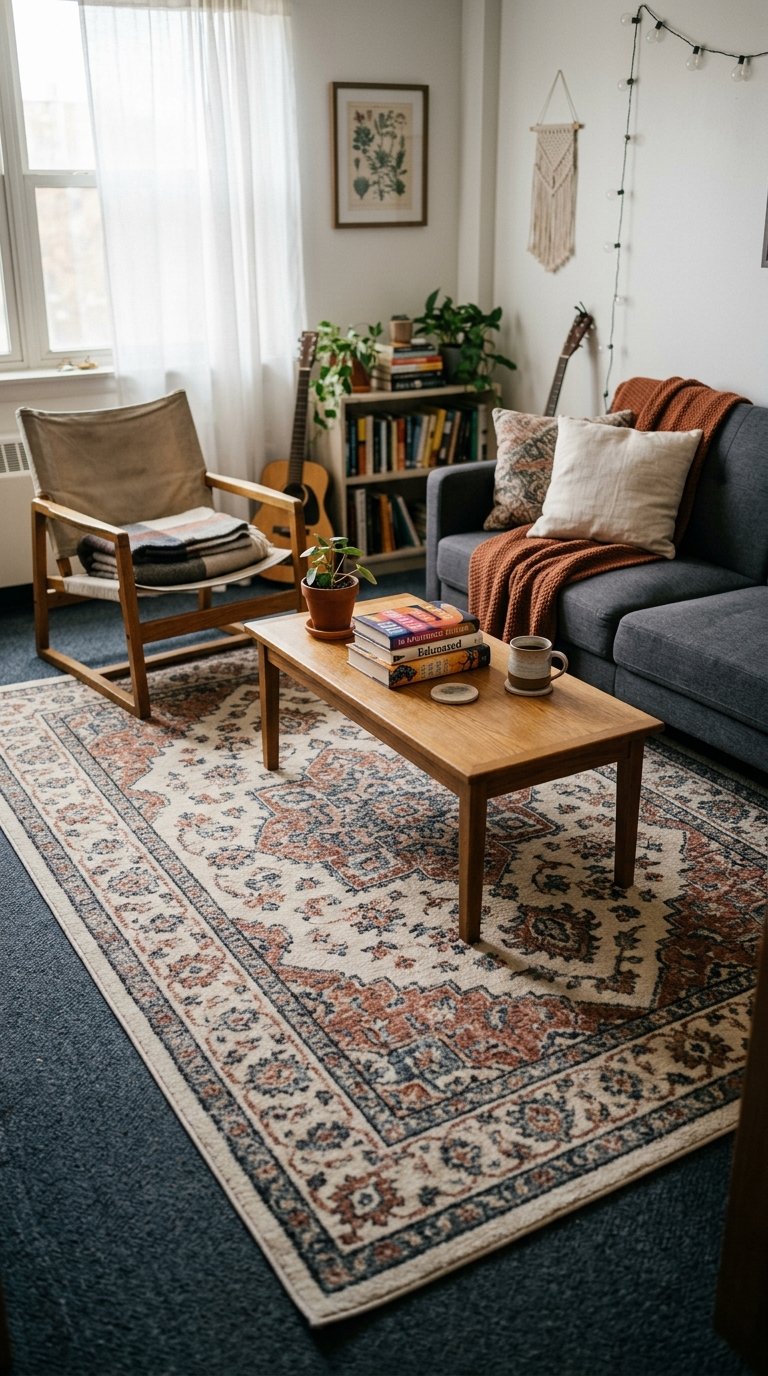
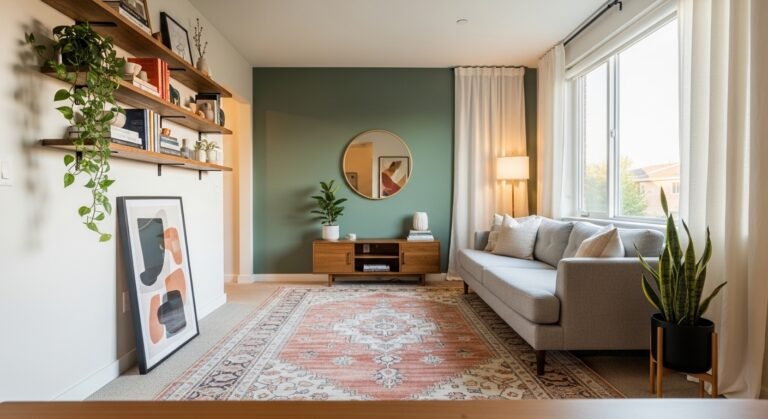
Placing a large area rug directly on top of the existing dorm carpet defines the living space, covers whatever the carpet has been through, and instantly makes the room feel intentionally designed rather than institutionally furnished. A 5×8 or 8×10 rug in a bold pattern or solid color costs $45 to $120 at IKEA, Ruggable, or Target, and it works on top of low-pile commercial carpet without bunching or creating a tripping hazard. The rug anchors the seating area visually without it, furniture placed on bare carpet floats in the room with no visual relationship to each other; with it, the sofa, chairs, and coffee table read as a cohesive grouping.
Ruggable’s washable system works especially well in shared dorm spaces where spills are guaranteed and laundry access is limited the cover removes and washes in any standard machine, which matters enormously in a space where multiple people eat, drink, and occasionally spill every day of the week.
2. Replace Overhead Lighting With Floor and Table Lamps
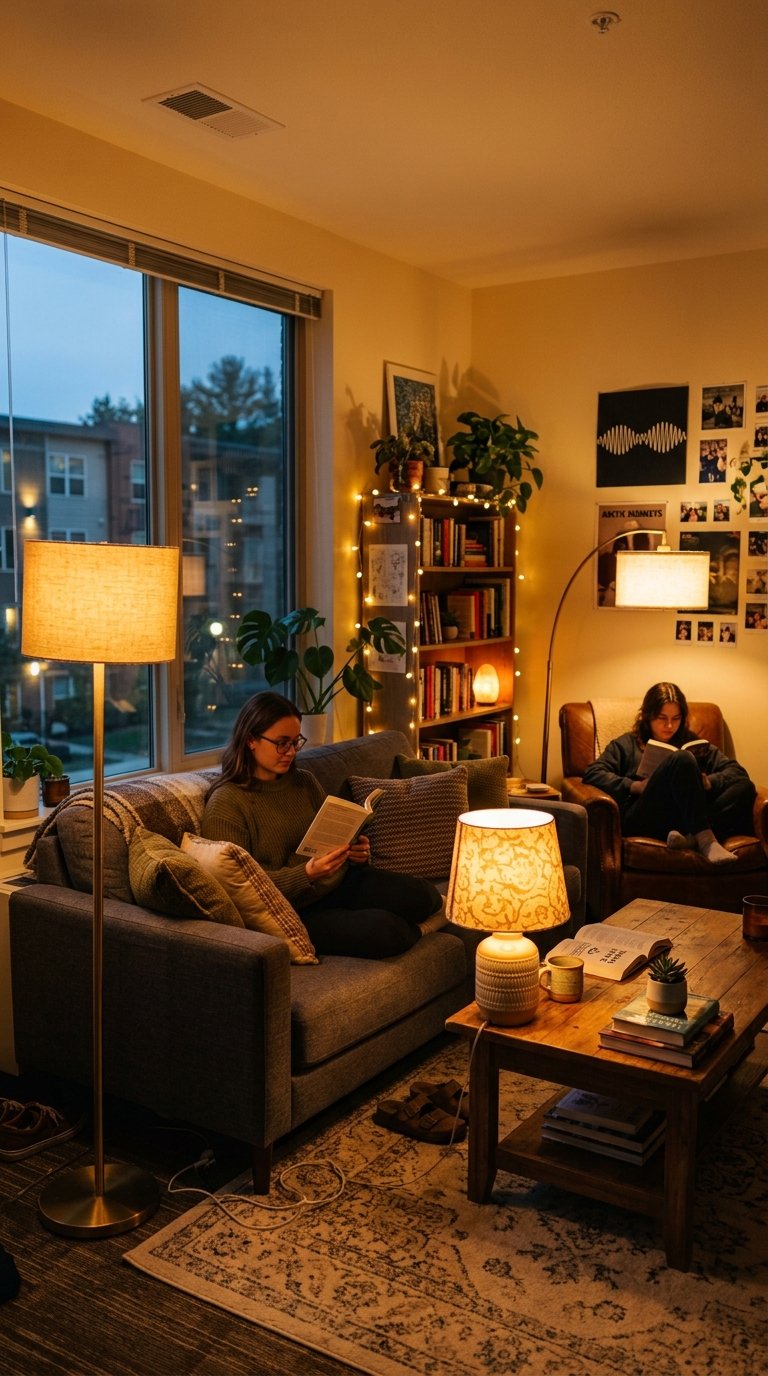
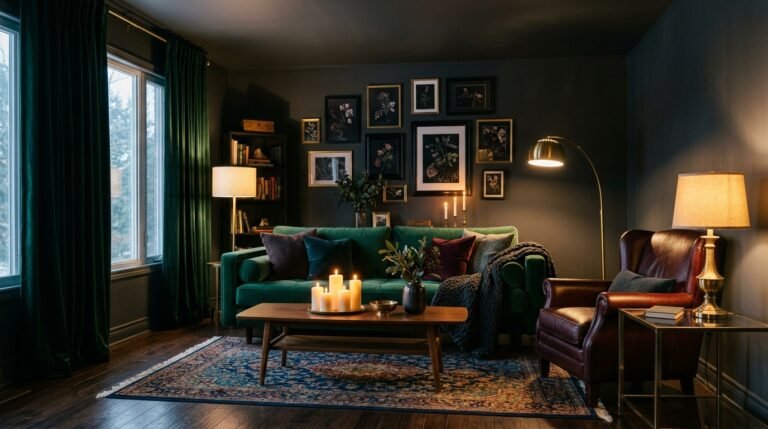
The single most impactful change you make to a dorm common area costs nothing to the ceiling and $30 to $80 total: plug-in floor lamps and table lamps placed strategically around the room, used instead of the overhead fluorescent, transform the space from institutional to genuinely habitable. Fluorescent overhead lighting flattens everything and makes people look tired — warm LED bulbs at 2700K in lamps placed at seated eye level create the kind of lighting that makes people want to stay in a room rather than leave it. Research from the Lighting Research Center at Rensselaer Polytechnic Institute consistently shows that warm, indirect lighting reduces perceived stress in shared living environments compared to overhead fluorescent sources.
Position one floor lamp beside the sofa, one table lamp on any side table or shelf, and let those two sources replace the overhead entirely for evening hours. Two sources create dimension; one overhead source creates flatness. That’s the entire principle.
3. Create a Gallery Wall on the Largest Blank Wall
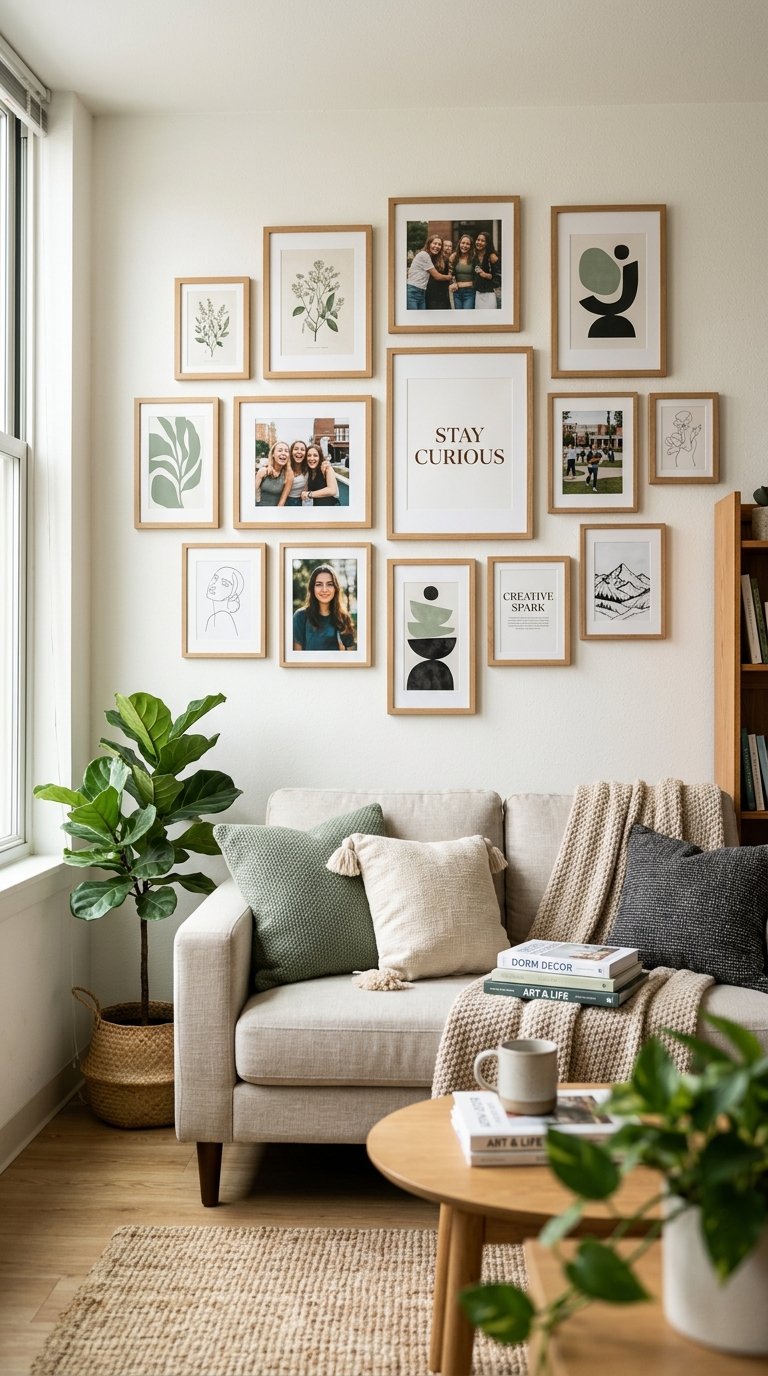
The largest blank wall in your dorm common area is either the room’s biggest asset or its most obvious problem, depending on what you do with it. A gallery wall of framed prints, photos, and small objects in a defined rectangular cluster transforms that wall into the room’s focal point and makes the space feel personal rather than temporary. Command strips rated for the frame weights allow installation without damaging the wall, and matching frame colors all black, all white, or all natural wood create cohesion across different print subjects and sizes.
Print photos at Walgreens for $0.09 to $0.29 each in 4×6 and 5×7 sizes, buy matching dollar store frames, and you build a full gallery wall for $15 to $20 split between roommates. That’s the cost of one takeout order for a wall that makes every person who walks in the room feel like actual humans live there.
4. Add Floor Cushions and Poufs for Extra Seating
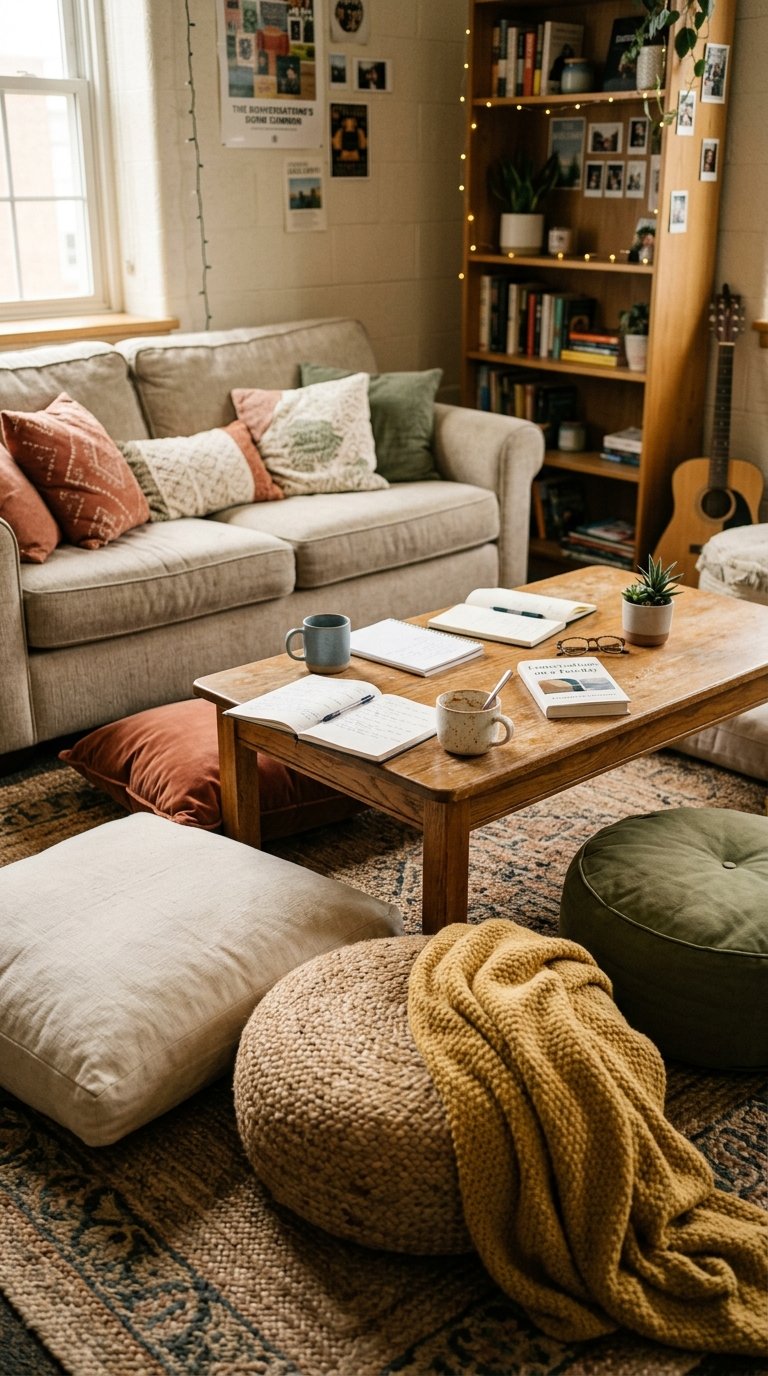
A dorm common area typically seats three people on standard furniture, which means anyone beyond that sits on the floor anyway so providing intentional floor seating in the form of large floor cushions and poufs makes the room genuinely work for the group sizes that actually use it. Large floor cushions cost $15 to $35 each at IKEA or Amazon, and a round pouf runs $25 to $50 and functions as both seating and a footrest. Stack floor cushions against the wall when not in use and they read as decor; pull them out when you have five people watching a movie and the room suddenly seats everyone comfortably.
Round jute or velvet poufs work best in shared spaces because they don’t have a front or back orientation anyone can sit on any side, which eliminates the spatial awkwardness of seating that requires positioning. That detail sounds minor until you’re trying to fit six people around a coffee table.
5. Use String Lights to Create Ambient Lighting
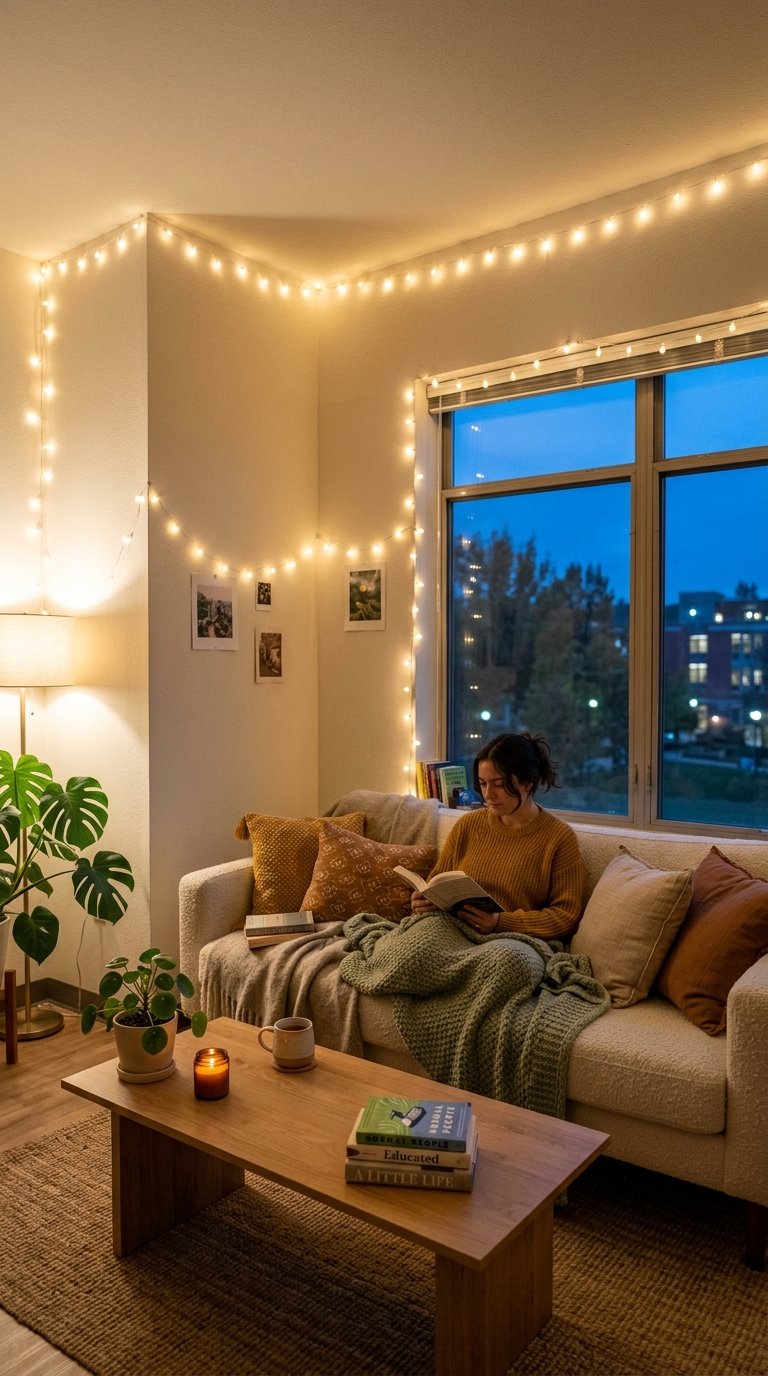
Warm white LED string lights draped along the ceiling perimeter, framed around a window, or hung in a loose canopy above the seating area cost $8 to $20 for a 33-foot strand and create a warm ambient glow that makes any room feel significantly more inviting after dark. The key is using warm white (2700K) rather than cool white or multicolor warm white reads as cozy and residential; cool white reads as an office; multicolor reads as a holiday display, which is fine in December and confusing in March. Attach them with small adhesive clips designed for string lights $4 for a 100-pack on Amazon rather than tape, which pulls paint on removal.
Run the strand along the ceiling perimeter at the wall junction rather than drooping it across the ceiling’s center. Perimeter placement creates a defined warm border that makes the ceiling feel lower and the room feel more intimate; center drooping looks like a fire hazard and a decorating decision nobody committed to.
6. Bring in a Bookshelf as a Room Divider and Storage Piece
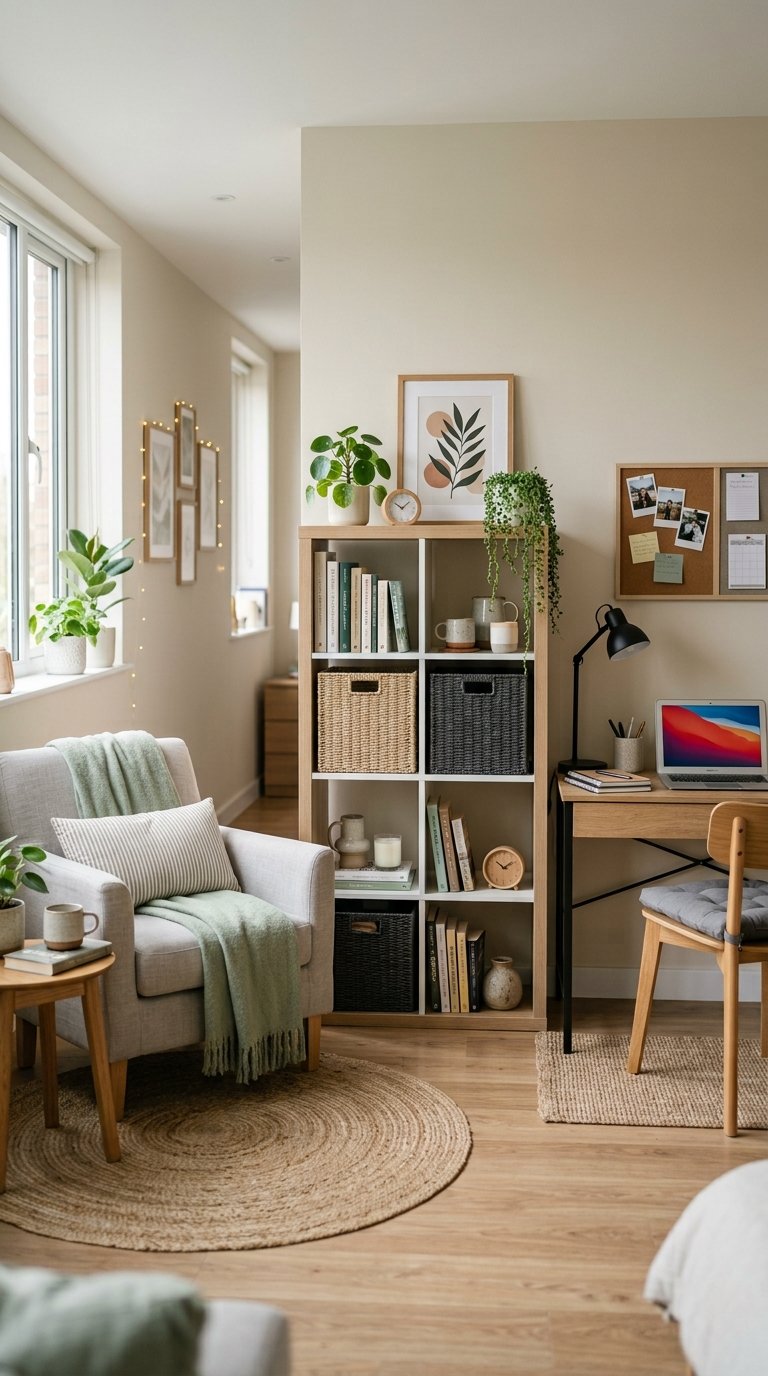
A freestanding bookshelf placed perpendicular to the wall rather than against it divides a large open dorm common area into defined zones (study side, lounge side) while adding storage for books, decorative objects, and shared supplies. IKEA’s KALLAX 4×2 unit costs $90 to $120 and functions as both a room divider and a shelving system, with cube inserts that hold fabric bins, books, plants, and display objects simultaneously. The perpendicular placement creates two functional zones from one rectangular room without permanent construction, which is the rental-restriction workaround that interior designers use in open-plan apartments.
Style the shelf with a mix of books, one small plant, one decorative object per cube, and one fabric bin per cube the 50/50 split between visible items and concealed storage keeps the shelf looking curated rather than cluttered. Full shelves with zero concealed storage look chaotic; all closed bins look like filing cabinets. The mix is what reads as intentional.
7. Add a Coffee Table as the Room’s Social Anchor
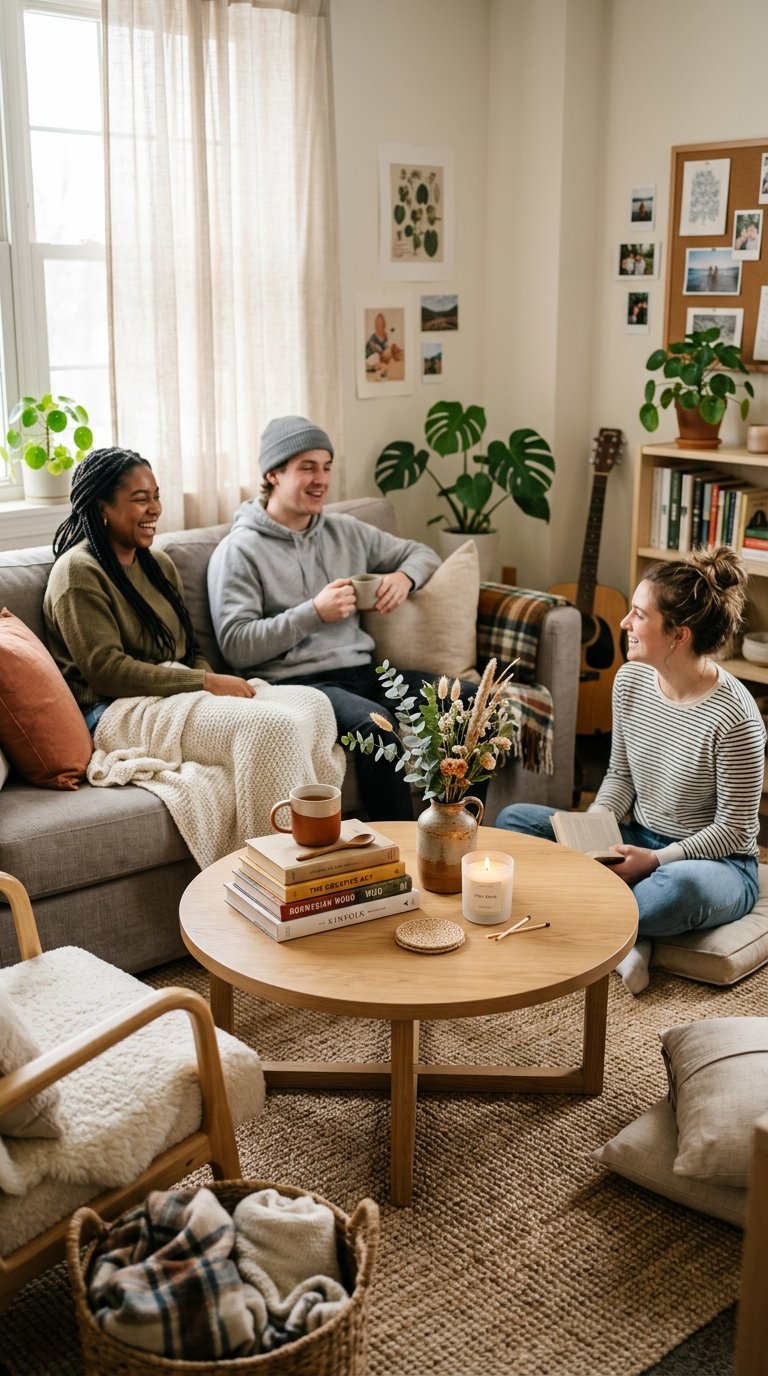
A dorm common area without a coffee table has furniture pointing at each other with nothing between them which creates a social dynamic that feels like a waiting room rather than a living space. A coffee table at the right height (16 to 18 inches for standard sofa seat heights) gives the seating group a shared surface for drinks, snacks, textbooks, and game nights, and makes the grouping of furniture read as a cohesive social space. IKEA’s LACK table costs $30 and ships flat, or Amazon stocks round rattan options for $35 to $55 that add organic material warmth to a room full of upholstered and metal institutional furniture.
IMO, a round coffee table works better in shared dorm spaces than a rectangular one because it leaves walking paths on all sides and allows more people to sit around it without anyone getting a corner in their knee. Small spatial decisions like table shape affect how comfortable people feel in a shared space more than most people realize.
8. Hang Curtains to Soften the Windows and Add Height
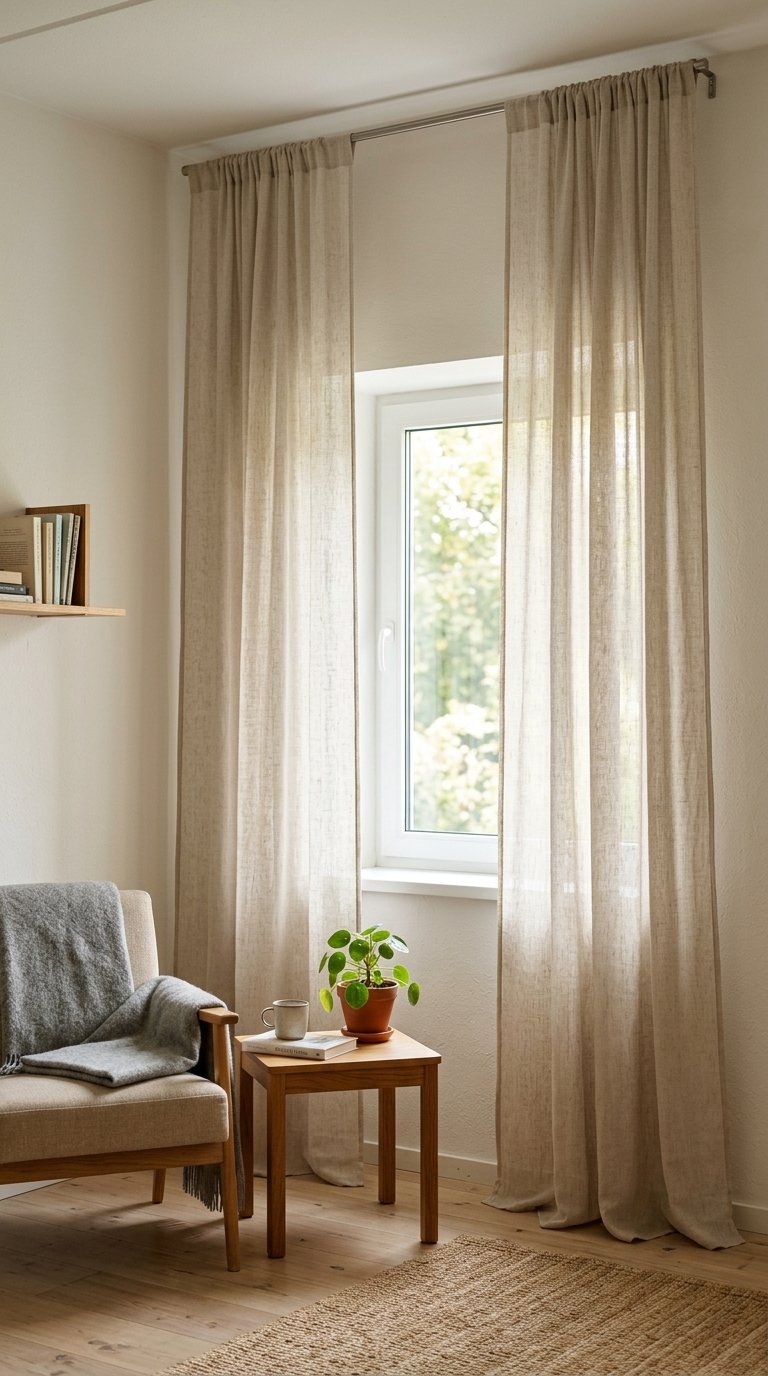
Standard dorm windows have either institutional blinds or nothing, and both options make the window look like an afterthought rather than an architectural feature. Hanging sheer or light-filtering curtain panels on a tension rod (no drilling required) immediately softens the window, adds vertical fabric texture to the room, and if you hang the rod at ceiling height rather than window height makes the ceiling appear significantly taller than it actually is. This ceiling-height hanging trick is one of the most universally used tools in interior design for small spaces: a 2019 Architectural Digest survey of designers found that hanging curtains at ceiling height was the single most frequently recommended small-space tip across all respondents.
Tension rods for dorm windows run $6 to $12 at Target and extend to fit standard window widths without any wall contact. Buy curtain panels at least twice the width of your window so they gather properly when open curtains that barely cover the window width look skimpy and read as undersized, which makes the window look smaller rather than larger.
9. Create a Dedicated Study Corner Separate From the Lounge Zone
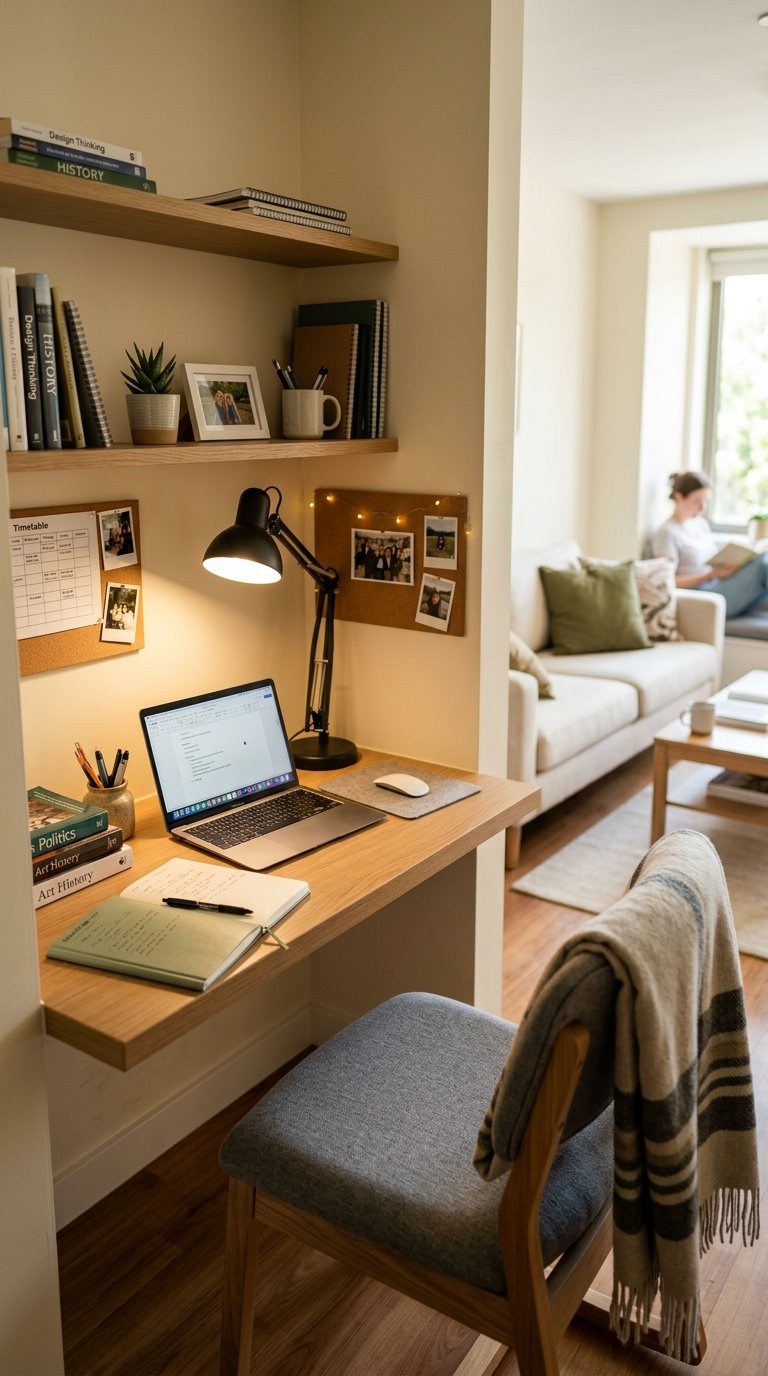
A dorm common area that mixes studying and lounging in the same undifferentiated space trains your brain to do neither effectively because the same visual environment that signals relaxation also signals studying, and your brain gets confused about which mode to enter. Designating a specific corner as the study zone with a small desk or table, a task lamp, and a chair that faces away from the TV creates a physical separation that supports focus without requiring a separate room. Research on environmental psychology consistently shows that dedicated study zones even small, corner-based ones improve attention and reduce procrastination compared to studying in a multi-use space with no defined boundaries.
A small folding table ($25 at Walmart) and a clip-on task lamp ($12 on Amazon) create a functional study corner for under $40. Face the study chair toward the wall rather than toward the room so the sitter’s back is to the social area that physical orientation reduces distraction more effectively than any app or browser extension.
10. Use Plants to Add Life and Reduce Stress
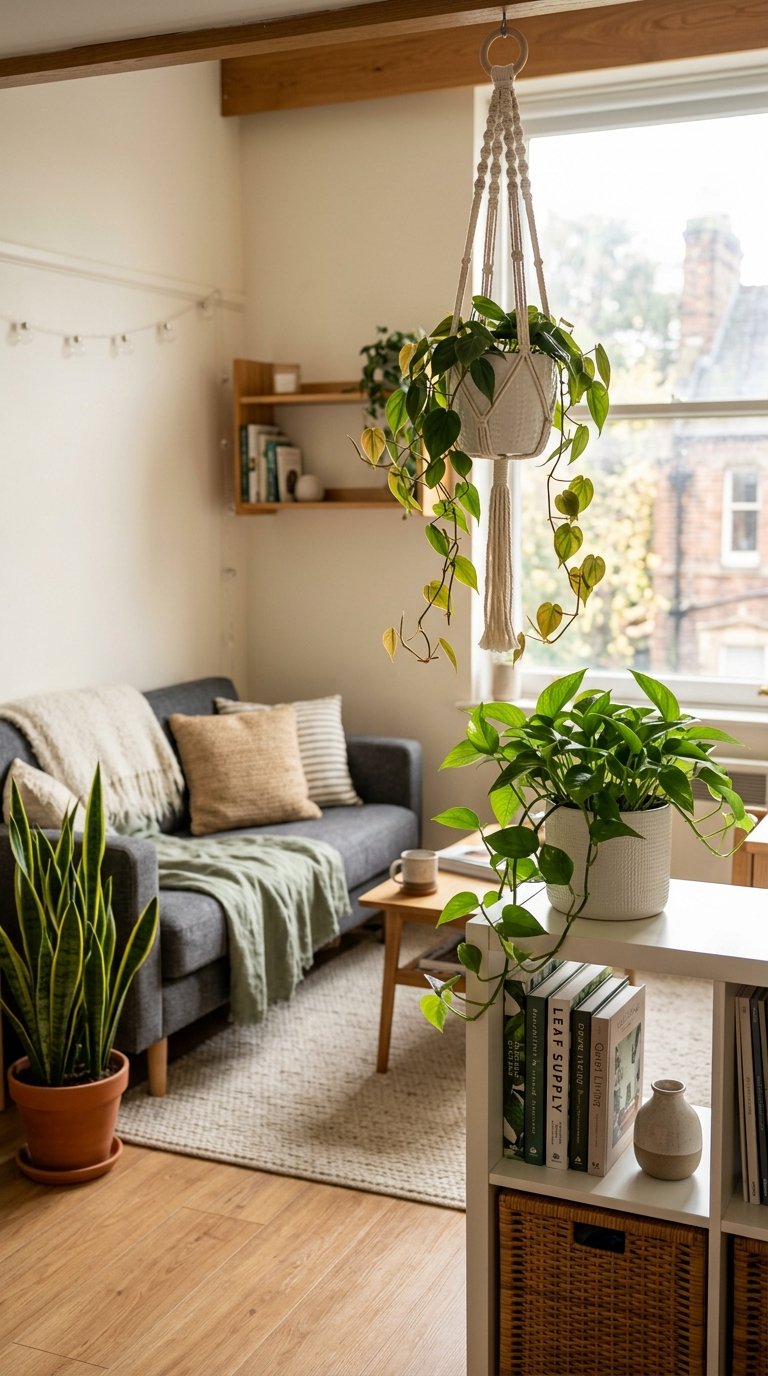
Three well-placed plants in a dorm common area do more for the room’s atmosphere than most decorative purchases at three times the cost. A 2015 study in the Journal of Physiological Anthropology found measurable reductions in psychological and physiological stress markers among participants who interacted with indoor plants versus those who completed a computer task and a dorm common area is a high-stress environment by definition. Choose low-maintenance varieties suited to dorm light conditions: pothos for low-light spaces, snake plants for rooms with inconsistent watering, or a trailing heartleaf philodendron for a shelf or bookcase edge where it can drape naturally.
Position one plant at floor level (a snake plant in a pot works), one on a shelf at mid-height, and one trailing from a high shelf or macramé hanger near the window. Three levels of plant placement create vertical interest and make the room feel lived-in by people who care about their space which is the specific impression a shared dorm space needs to make on everyone who uses it. 🙂
11. Add Throw Pillows and Blankets to Existing Furniture
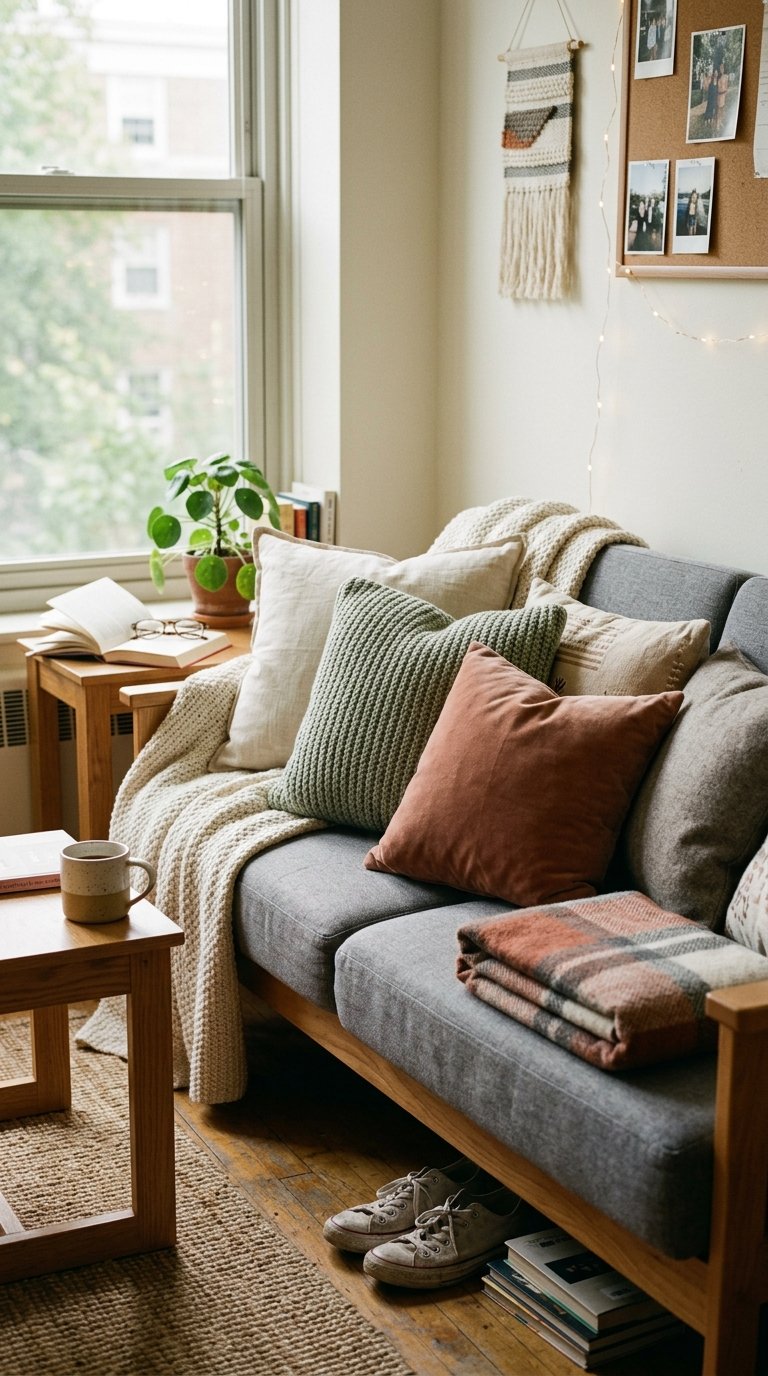
The institutional furniture in your dorm common area looks the way it does because it was selected for durability, not comfort or aesthetics which means five throw pillows and two blankets do more visual work per dollar than almost any other purchase on this list. Throw pillows in coordinating colors and varying textures (velvet, cotton, knit) cost $8 to $20 each at Target, H&M Home, and HomeGoods, and three to four pillows on a sofa and two on a chair transform the seating from waiting-room furniture to something that invites you to sit down and stay. FYI, the coordination principle matters here: choose two to three colors maximum across all pillows so the variety reads as curated rather than random.
Throw blankets draped over the back or arm of the sofa add warmth visually even when nobody’s cold and they’re functional when the building’s HVAC decides it’s refrigerator temperature in October, which every dorm resident has experienced at least once.
12. Mount a Full-Length Mirror on the Wall or Door
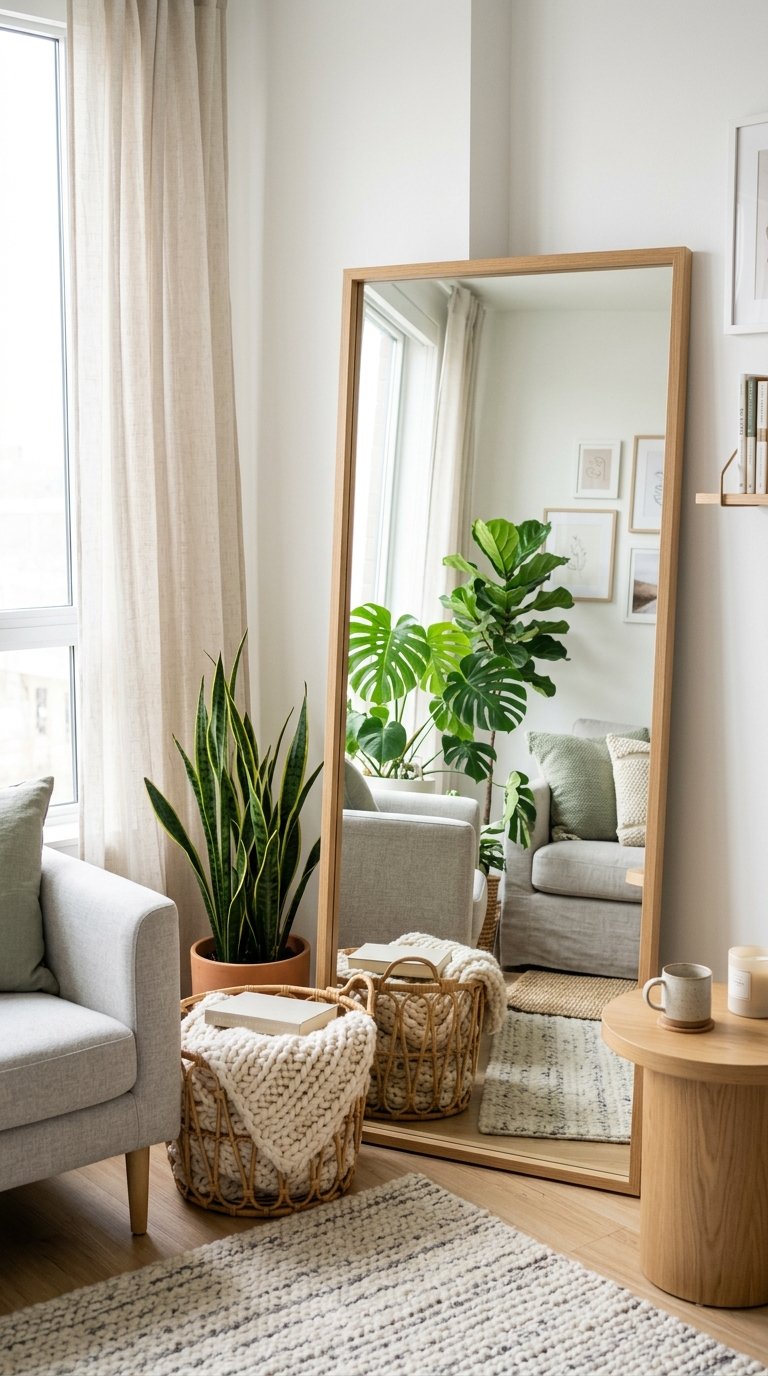
A full-length mirror in a dorm common area serves two decorating functions simultaneously: it reflects light from windows and lamps, making the room feel larger and brighter, and it adds a vertical element that draws the eye upward and makes the ceiling feel taller. A 14×48 inch leaner mirror from Target or IKEA costs $20 to $40 and leans against the wall without mounting hardware, making it fully renter-safe and movable. Position it on a wall that reflects a window or a lamp rather than a blank wall a mirror reflecting another blank wall just doubles the blank wall, which solves nothing and makes the room feel twice as empty.
The doorback mirror option works if floor space is genuinely tight an over-the-door full-length mirror ($15 to $25) mounts on any standard door without tools and frees the floor for furniture rather than mirror stand space.
13. Build a DIY Ottoman From a Storage Cube
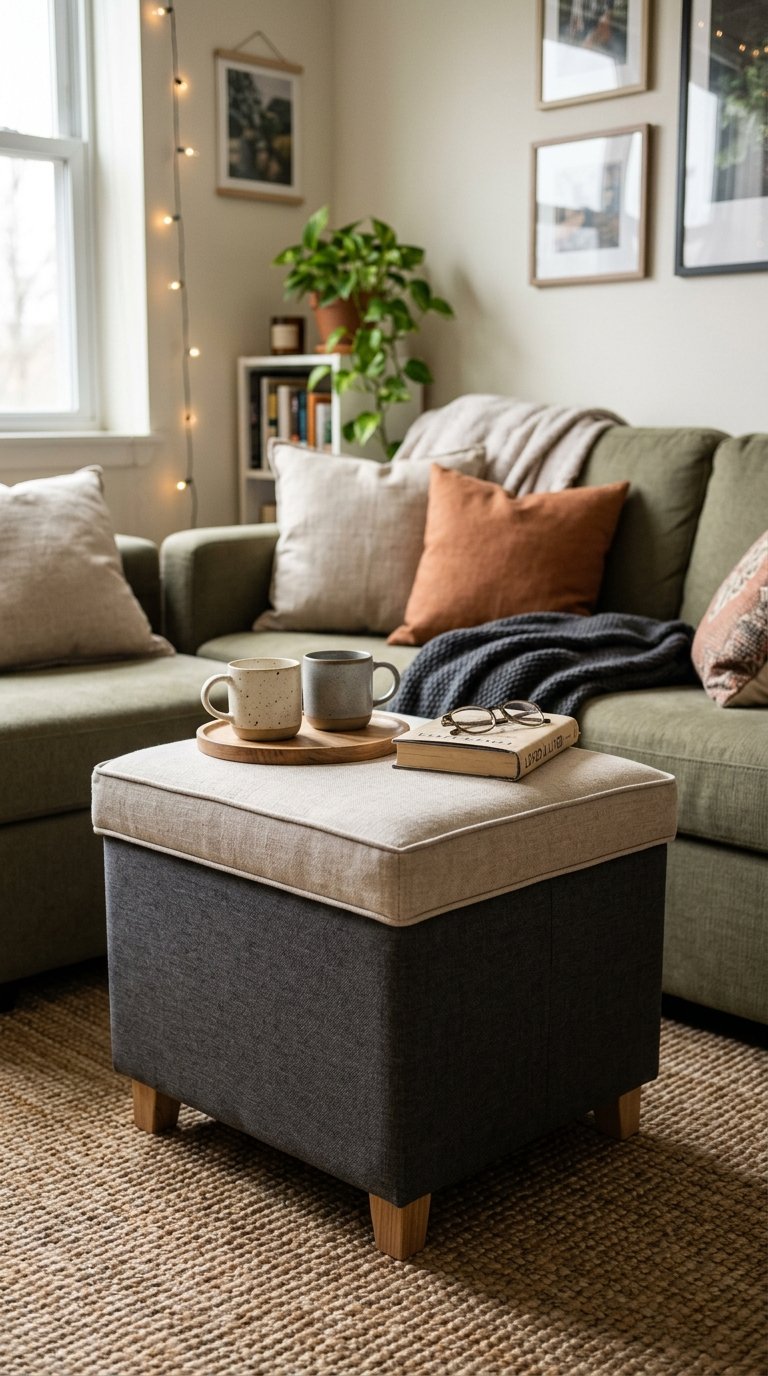
A fabric storage cube from IKEA ($15 to $20) topped with a foam cushion cut to size ($8 to $12 at a craft store) and covered with fabric of your choice ($5 to $10 per yard) creates a functional ottoman that provides both seating and hidden storage for $35 to $45 total. The storage cube interior holds board games, extra blankets, charging cables, and anything else the common area accumulates that has no designated home. The upholstered top makes the cube look intentional rather than like a storage bin sitting in the middle of the room, which is the difference between decor and clutter sharing the same object.
Use a non-slip furniture pad between the cube and the floor to prevent it from sliding when someone sits on it. Without this, the cube shifts every time someone uses it as a seat and creates a genuinely annoying piece of furniture that everyone stops using within a week.
14. Create a Snack and Drink Station in One Corner
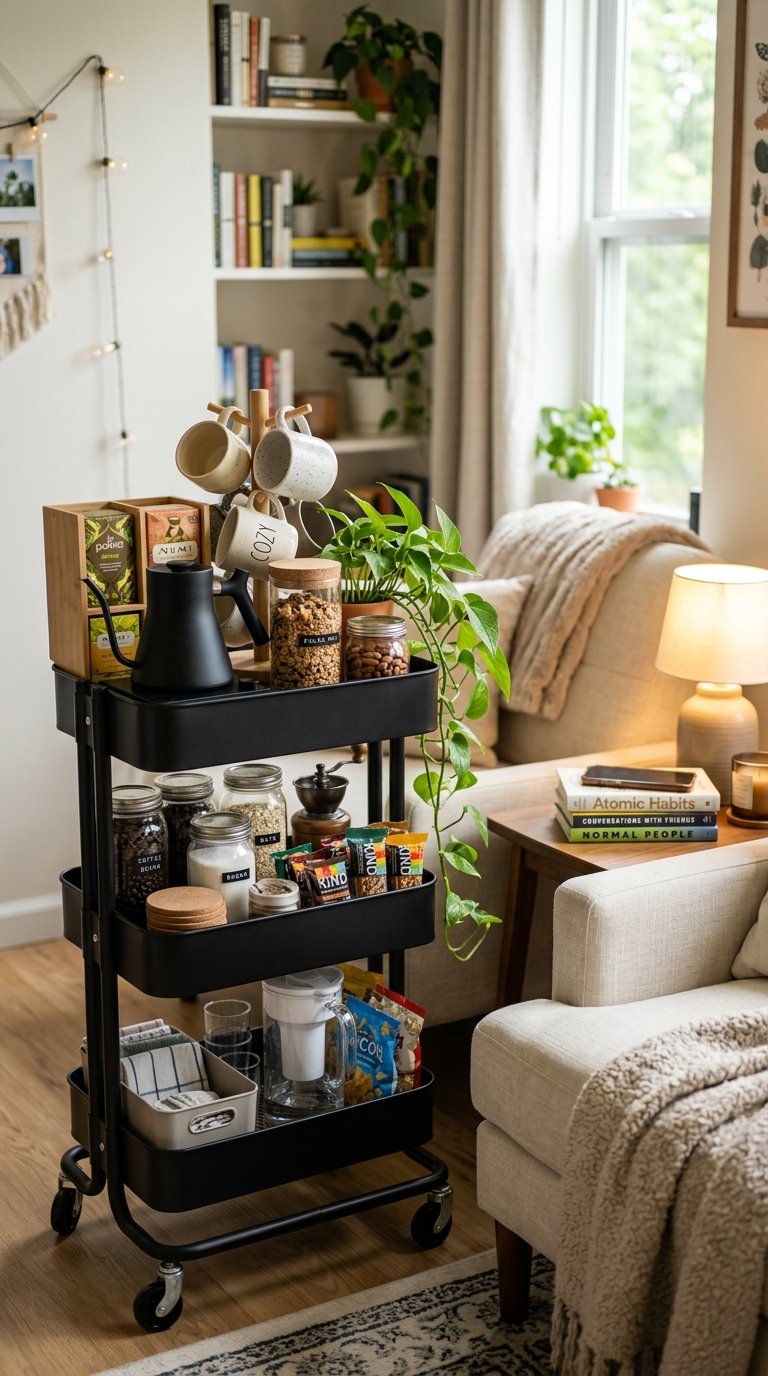
A dedicated snack and drink station a small rolling cart or a tiered shelf holding a kettle, mugs, snacks, and a small plant transforms one corner of the dorm common area into a functional hospitality zone that makes the space feel genuinely welcoming rather than just a place to sit. IKEA’s RÅSKOG rolling cart costs $30 and holds three tiers of items that roll to wherever the group is gathering rather than requiring everyone to go to the kitchen. A snack station also creates a social ritual around the space people gather at it when they arrive, which makes the common area the natural starting point for hanging out rather than everyone disappearing to their individual rooms.
Keep the cart stocked with items that don’t require refrigeration: tea bags, instant coffee, granola bars, crackers. Refrigerated items require trips to the communal fridge that break the social momentum the cart is designed to create and maintain.
15. Use Washi Tape to Create an Accent Wall Feature
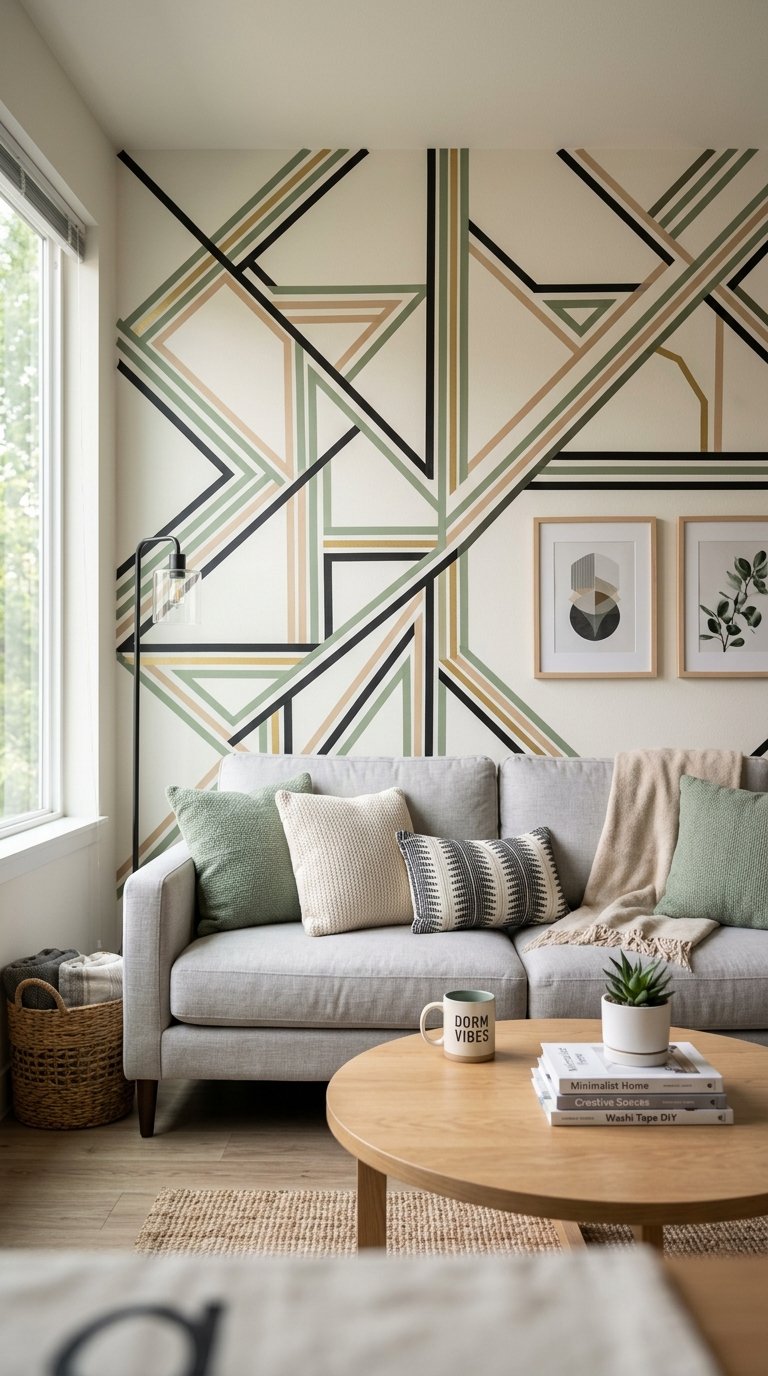
Washi tape applied directly to the dorm wall in a geometric pattern, a grid, or a large-scale shape creates an accent wall feature that costs $15 to $25 in tape and removes completely cleanly without damaging the wall paint. A simple grid pattern using two coordinating tape colors behind the sofa creates a wallpaper-like headboard effect for the seating area that makes that wall the room’s visual focus which directs attention away from the institutional furniture and toward the one surface you actually controlled. Standard grid spacing of six to eight inches creates the right scale for a wall viewed from seating distance; anything tighter reads as fussy, anything wider reads as incomplete.
Measure and mark lightly with pencil before applying tape eyeballing straight lines across a full wall produces results that look crooked from the sofa, which is the exact vantage point from which everyone in the room sees it every day. A level and a tape measure take 10 extra minutes and produce a result worth the effort.
Final Thoughts
Start with lighting and a rug those two changes alone shift a dorm common area from institutional to livable before you buy anything else. Add seating with floor cushions, anchor the social zone with a coffee table, and bring in plants and textiles to finish the warmth. Every idea on this list respects rental restrictions, stays within a student budget when split between roommates, and makes a measurable difference in how much time you and your friends actually want to spend in the space. A dorm common area should feel like somewhere you choose to be somewhere you end up by default because your room is smaller. Make it worth choosing.