16 Dorm Bed Ideas to Make Your Room Feel Bigger & Cozier
Your dorm bed is the centerpiece of the entire room whether you want it to be or not. It takes up roughly 60 percent of the floor space and sits directly in the sightline of everyone who walks through the door, which means the way you style it determines how the whole room reads. I visited my friend’s dorm room during her first semester and couldn’t figure out why it felt so much better than mine until I realized she’d actually thought about her bed setup and I’d just thrown a duvet on a mattress and called it done. These 16 dorm bed ideas give you the specific styling decisions that turn an assigned twin into a space that feels genuinely yours.
1. Layer Your Bedding With Multiple Textures
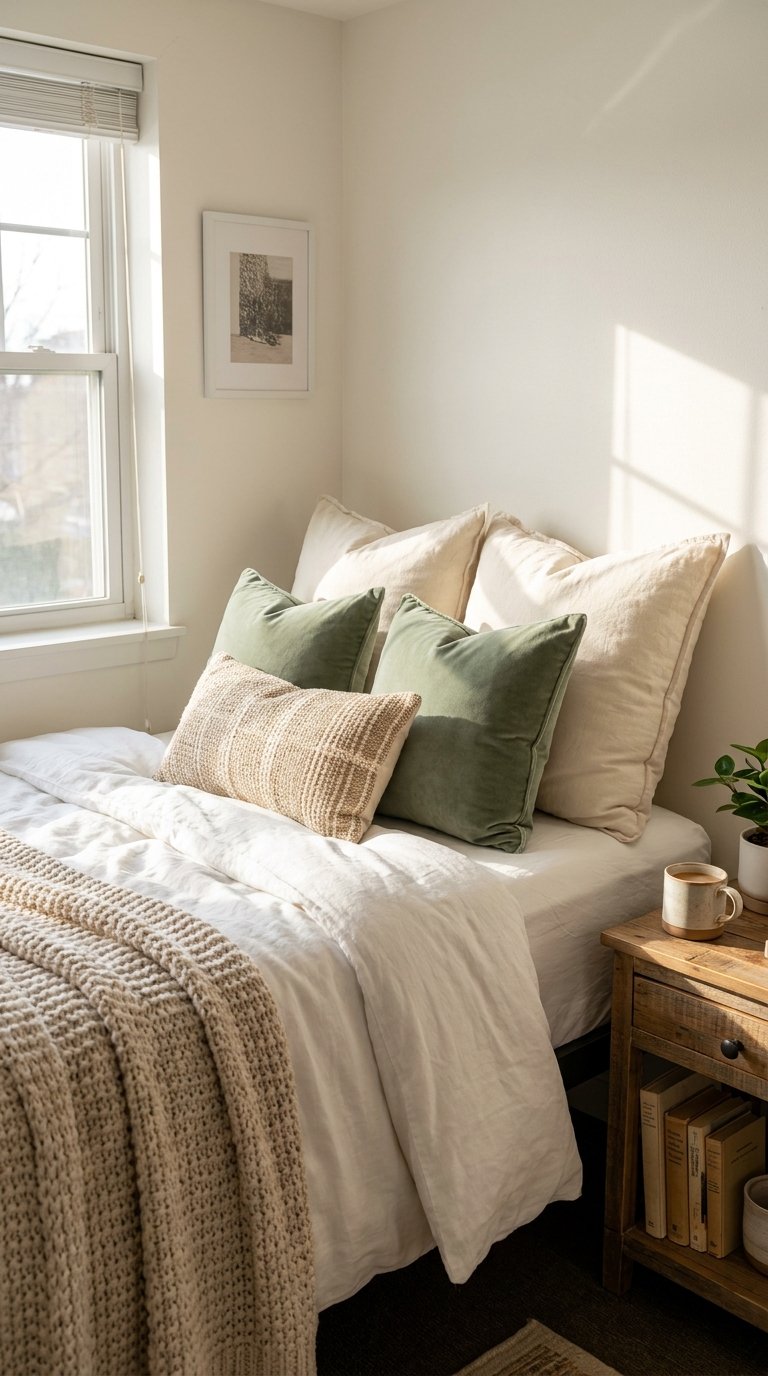
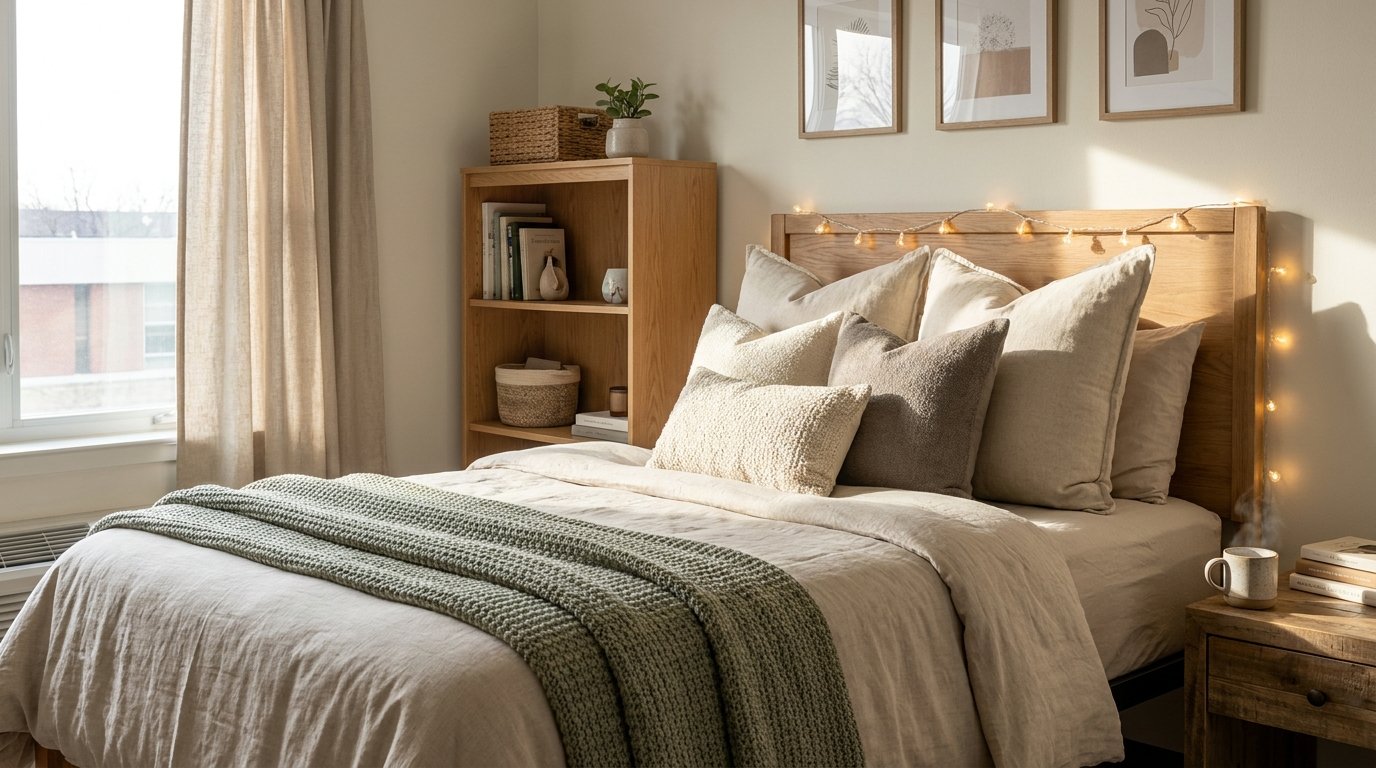
A dorm bed styled with one duvet and two matching pillows looks exactly like what it is: a bed someone made quickly before class. A layered bed with three to four distinct textures reads as intentionally designed and makes the entire room feel more considered from the moment you walk in. The layering approach costs almost nothing extra if you buy individual pieces rather than a matching set, and it works with any color palette from neutral to bold.
The Four-Layer Dorm Bed Formula
- Base duvet: your primary color, linen or cotton sateen, the room’s color anchor
- Euro shams: two large square pillows behind the sleeping pillows for height and depth
- Throw blanket: draped across the lower third, contrasting texture to the duvet
- Scatter cushions: two small decorative pillows at the front, varying textures
IKEA’s ULLVIDE fitted sheets and DVALA flat sheets at $8 to $20 each provide the clean base layer. Building the four-layer formula on top costs $60 to $120 total from a combination of Target’s Threshold line, H&M Home, and Amazon.
2. Add a Headboard to a Headboard-Free Bed
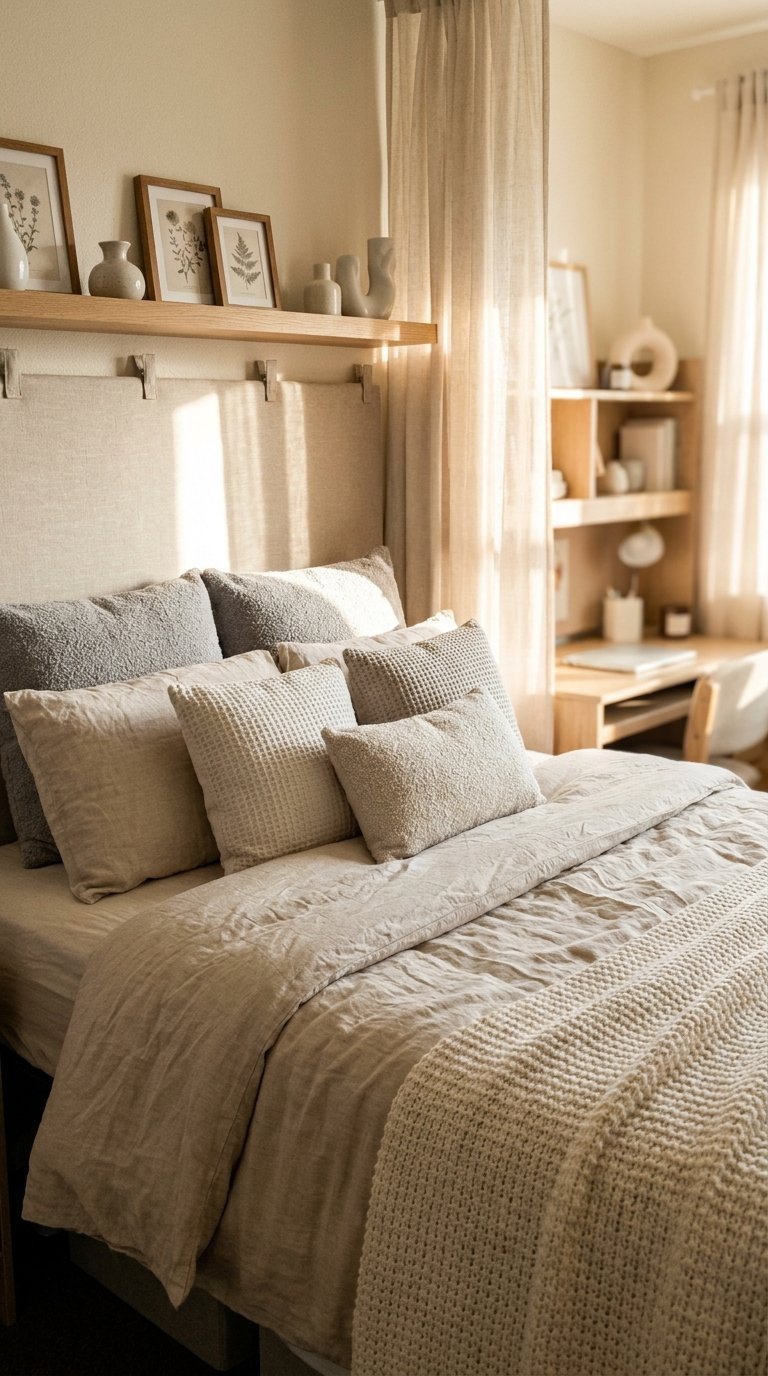
Most dorm beds arrive with no headboard, which leaves the wall behind the bed as a plain expanse of institutional paint that undermines every other styling decision you make. Adding a visual headboard doesn’t require drilling, buying furniture, or getting permission from housing. A large piece of peel-and-stick wallpaper in a headboard-width panel behind the bed creates the impression of a designed headboard for $50 to $80 in material.
Alternatively, a large tapestry or fabric panel hung with command strips at headboard height covers the same visual function as a physical headboard for $20 to $60. The fabric version adds texture that wallpaper doesn’t provide. A washi tape headboard arch at $10 to $20 in tape cost creates the same framing effect at the lowest possible price point. All three options remove completely without wall damage at move-out.
3. Use a Bed Canopy for Privacy and Coziness
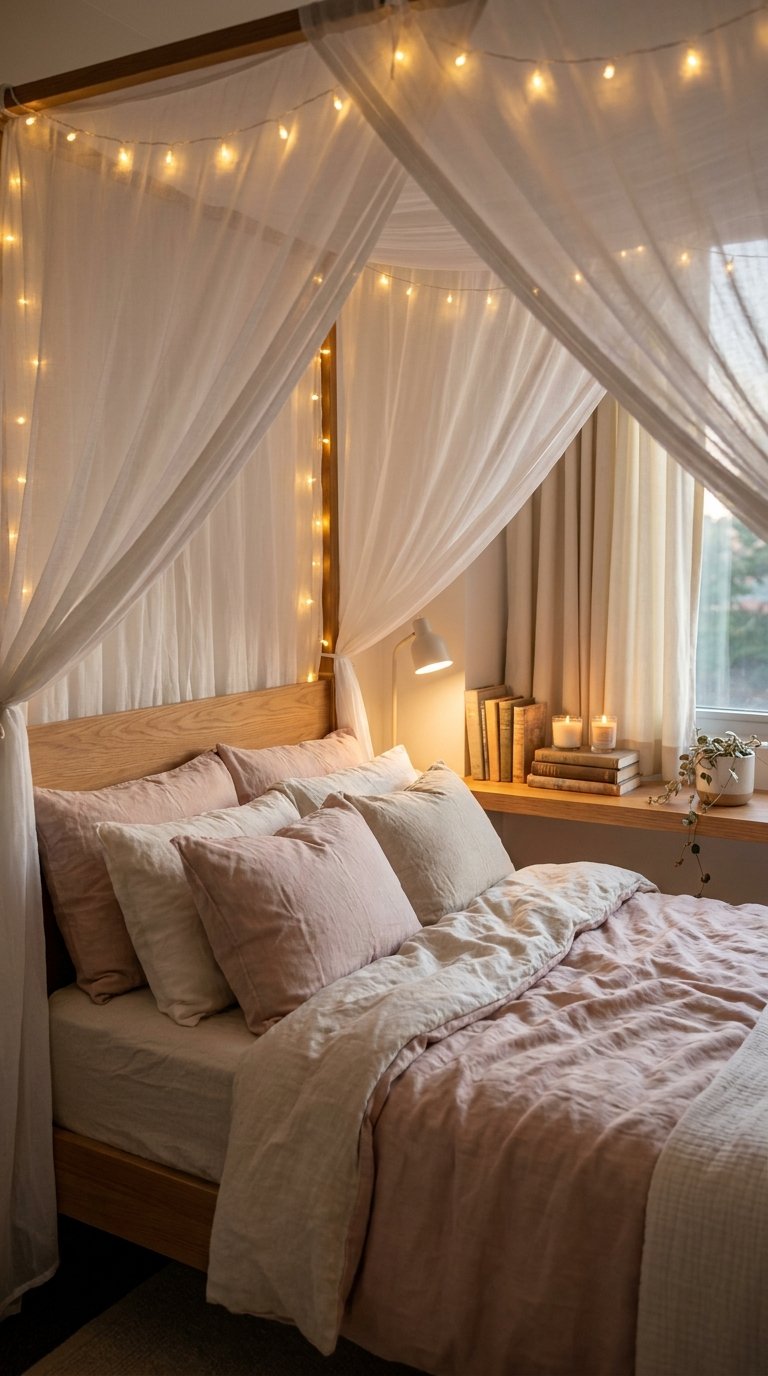
A sheer fabric canopy above a dorm bed creates the enclosed, private sanctuary quality that shared dorm rooms almost never provide through architecture. The canopy drapes from a ceiling-mounted ring or a tension rod system and falls around the bed on two to four sides, creating a visual boundary between your sleeping area and the rest of the room. This matters specifically in double occupancy rooms where having your own defined zone within a shared space produces measurable wellbeing benefits.
A sheer white or blush canopy panel set from Amazon costs $20 to $40 for a complete ceiling-ring style installation. The ceiling ring mounts with a single command hook rated for 5 pounds on smooth ceilings. The canopy fabric falls naturally from the ring and doesn’t require any additional anchoring. Add a string of warm fairy lights along the inside of the canopy frame and the enclosed space becomes the most private, comfortable spot in the dorm room.
4. Loft the Bed to Create Space Underneath
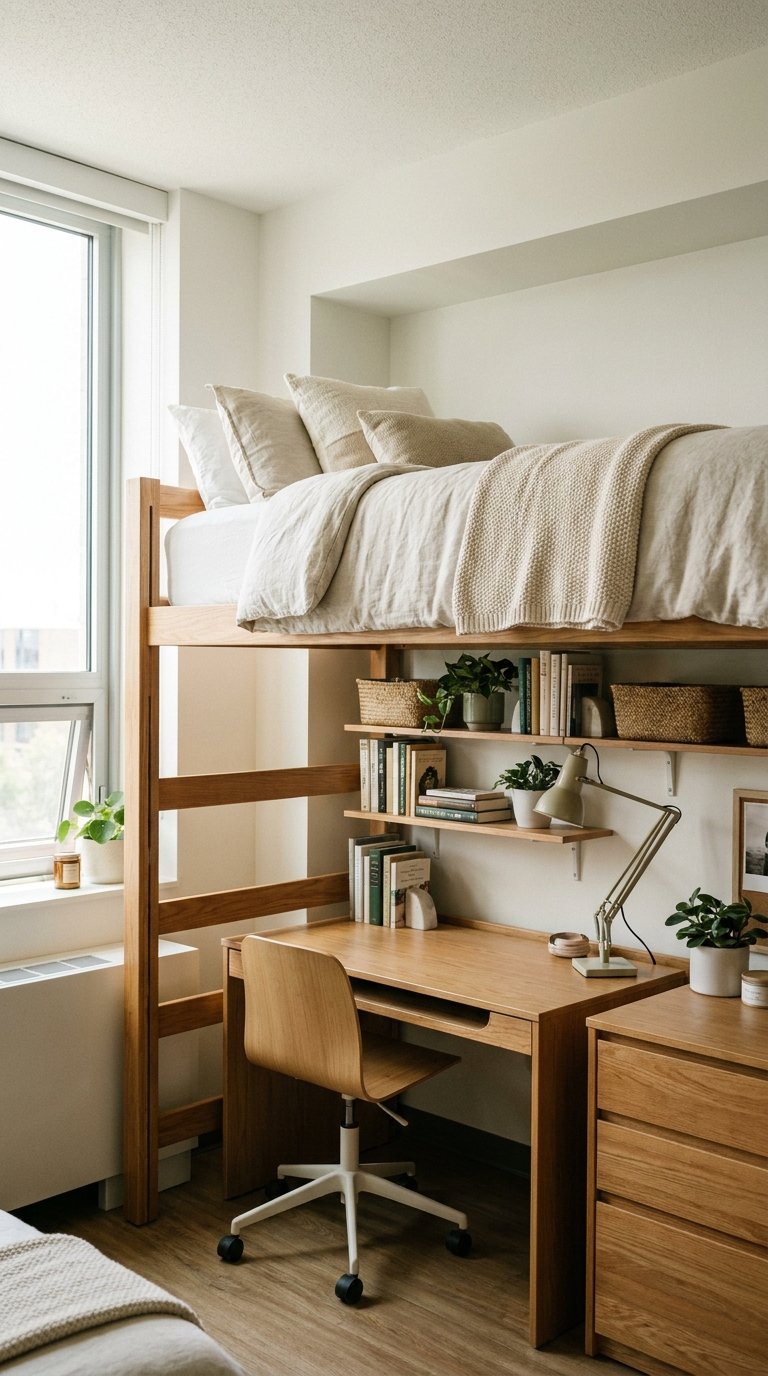
Lofting the dorm bed raises it 5 to 6 feet from the floor and frees the entire floor space beneath it for a desk, a seating area, storage, or a small wardrobe that wouldn’t fit in the room at standard furniture arrangement. Most dorms provide lofting kits or allow personal bed risers up to a specified height as part of their room policy. A lofted dorm bed in a standard 10×12 room creates a functional study or lounge zone underneath that effectively doubles the room’s usable floor area.
Check your dorm’s specific lofting policy before purchasing risers or requesting an official loft kit. Some institutions provide official metal loft kits for free or minimal cost. Third-party bed risers rated for 2,000 pounds per set cost $20 to $40 on Amazon and raise any bed frame by 5 to 8 inches for a low-loft configuration. Full loft height (55 to 65 inches) typically requires the institution’s official loft hardware rather than commercial risers.
5. Create a Cozy Sleeping Nook With Curtains
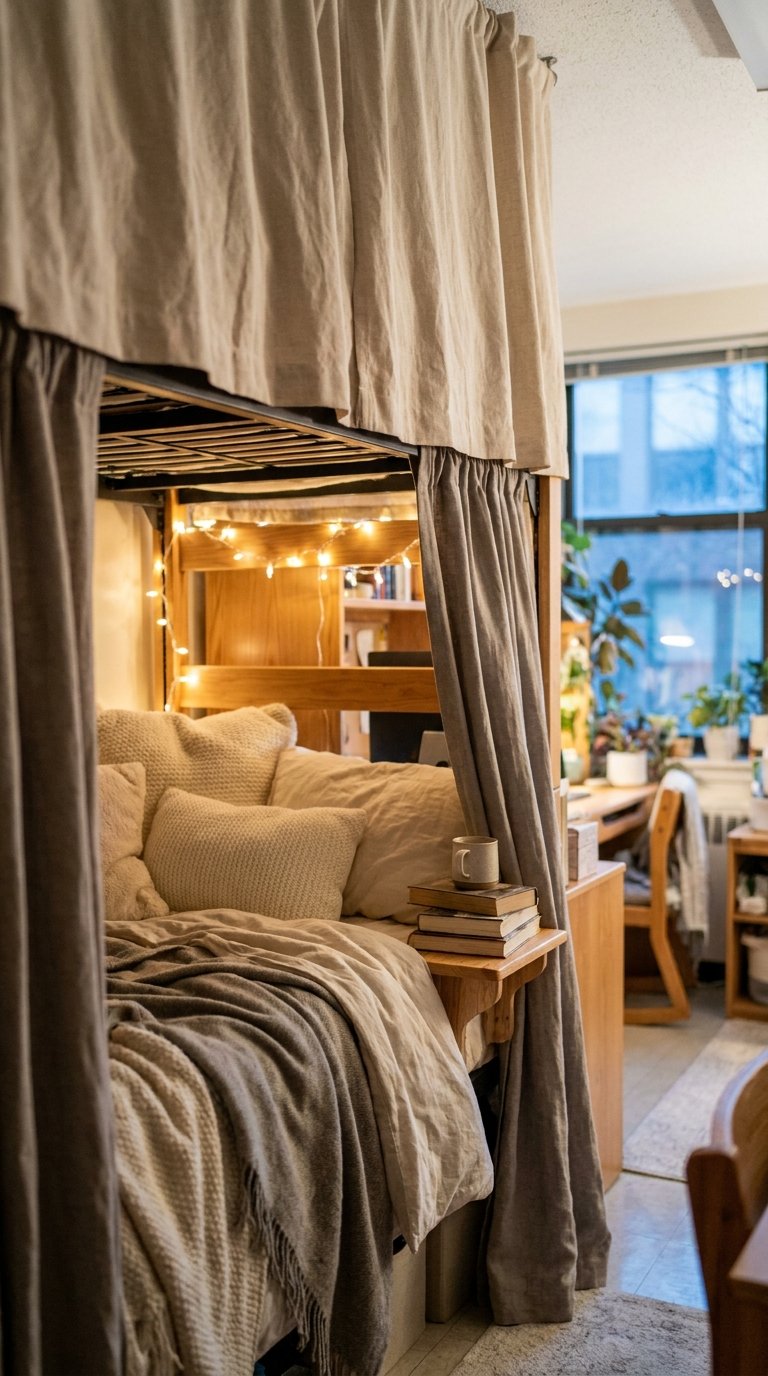
Hanging curtains along the sides of a lofted dorm bed creates a sleeping nook that combines the privacy of a canopy with the practical light-blocking function of blackout fabric. The curtains mount on tension rods between the loft bed posts or on ceiling-mounted curtain track systems that install with adhesive strips. The enclosed sleeping nook blocks morning light, provides visual privacy from a roommate, and creates the specific enclosed coziness that many students find produces significantly better sleep quality.
Blackout curtain panels in a twin-bed-appropriate width cost $15 to $30 per panel. Two to three panels on each long side of the lofted bed create a full enclosure. The curtains pull open during the day and are closed for sleeping, which gives you full control over the nook’s openness without any permanent installation. IMO, the curtained sleeping nook is the single most impactful dorm room comfort upgrade available to lofted bed users.
6. Style the Bed With a Cohesive Color Theme
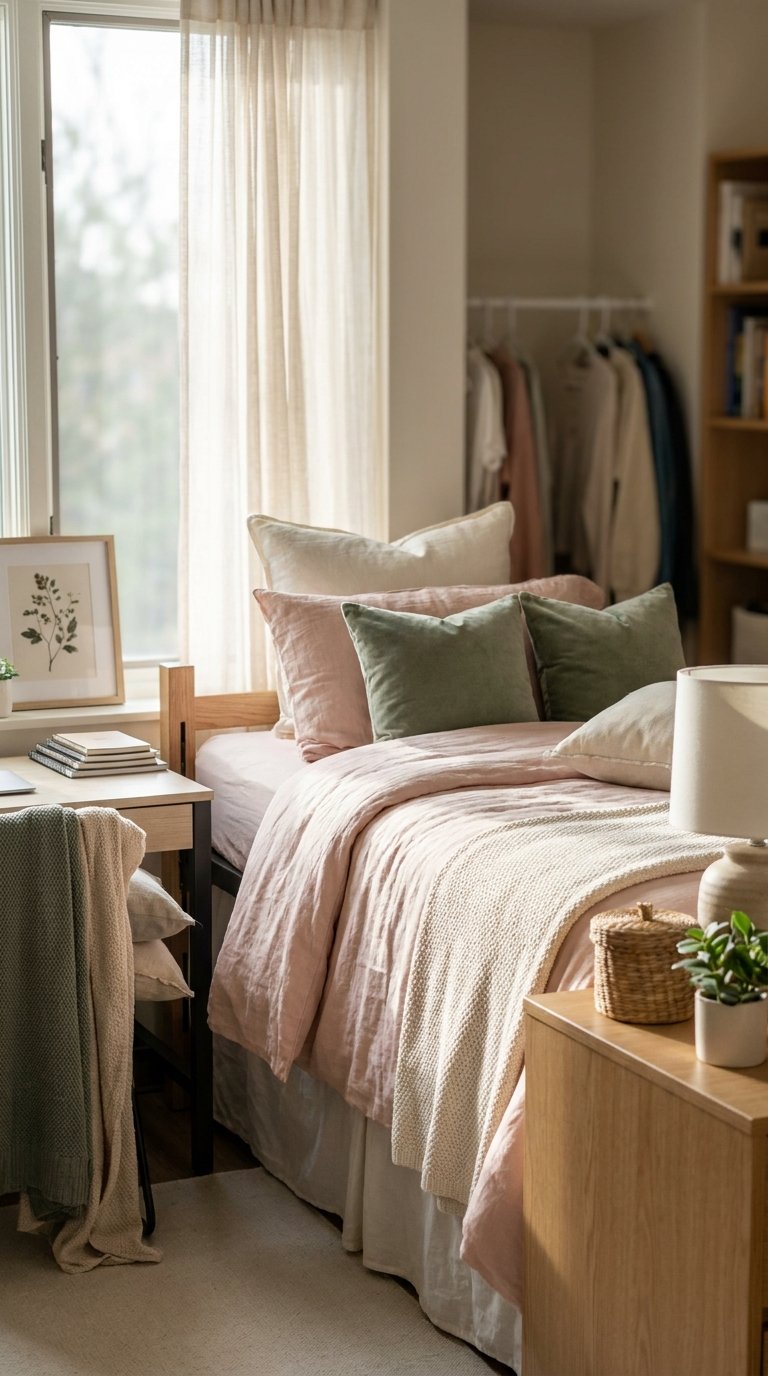
A dorm bed styled in a cohesive two or three-color theme reads as designed rather than assembled, which changes how the whole room reads even when nothing else changes. A blush pink, white, and sage green bed. A navy, cream, and warm gold bed. A dusty purple, grey, and white bed. Each combination creates a clear visual identity for the room’s central piece and establishes a palette that every other purchase decision in the room builds from.
Choose your palette before buying any bedding and stick to it for every textile in the bed area. The restraint of staying within three colors costs nothing extra and delivers the cohesive result that mixing whatever was on sale at the time never achieves. Write the three colors on a note in your phone and check every potential purchase against them before adding them to cart.
7. Add Under-Bed Storage With Decorative Bins
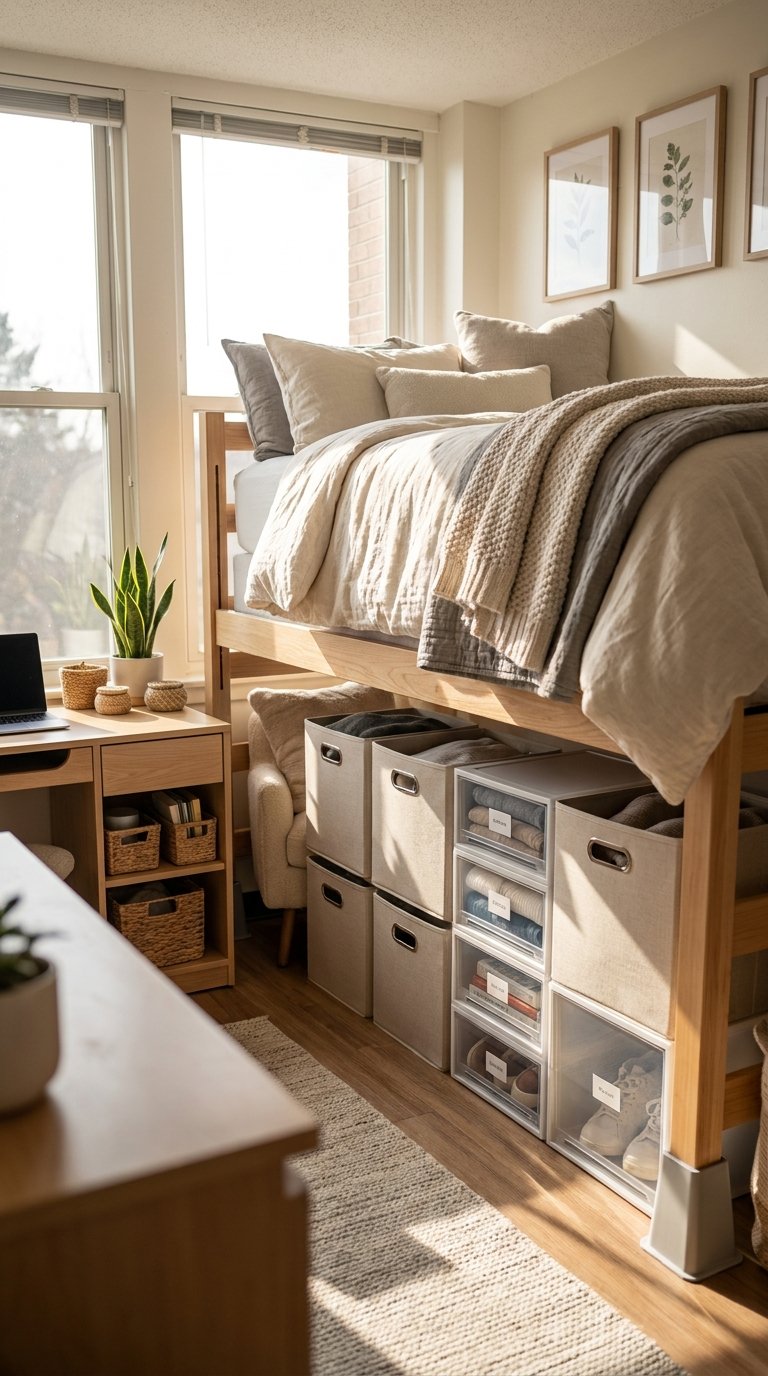
The space under a standard dorm bed holds enormous untapped storage capacity that most students ignore while their floor and desk overflow with the displaced items that storage would contain. Flat storage containers with lids at 4 to 6 inches height slide under most dorm bed frames without requiring a loft or risers. IKEA’s SKUBB storage box set costs $15 to $20 for six compartments. SONGMICS fabric storage cubes at $25 to $40 for a six-pack provide the same capacity in coordinating colors that suit a styled room.
Under-Bed Storage Organization System
- Seasonal clothing: items you won’t need for months store flat and out of sight
- Extra bedding: spare sheets and blankets slide under without consuming closet space
- Shoes: a shoe organizer rated for under-bed storage holds 12 to 20 pairs
- Textbooks and supplies: academic materials for the current semester in accessible bins
- Snacks and kitchen supplies: a separate sealed bin prevents crumbs and pests
Label every storage container on the side facing out so you locate what you need without pulling everything out to find one item.
8. Hang Fairy Lights Above and Around the Bed
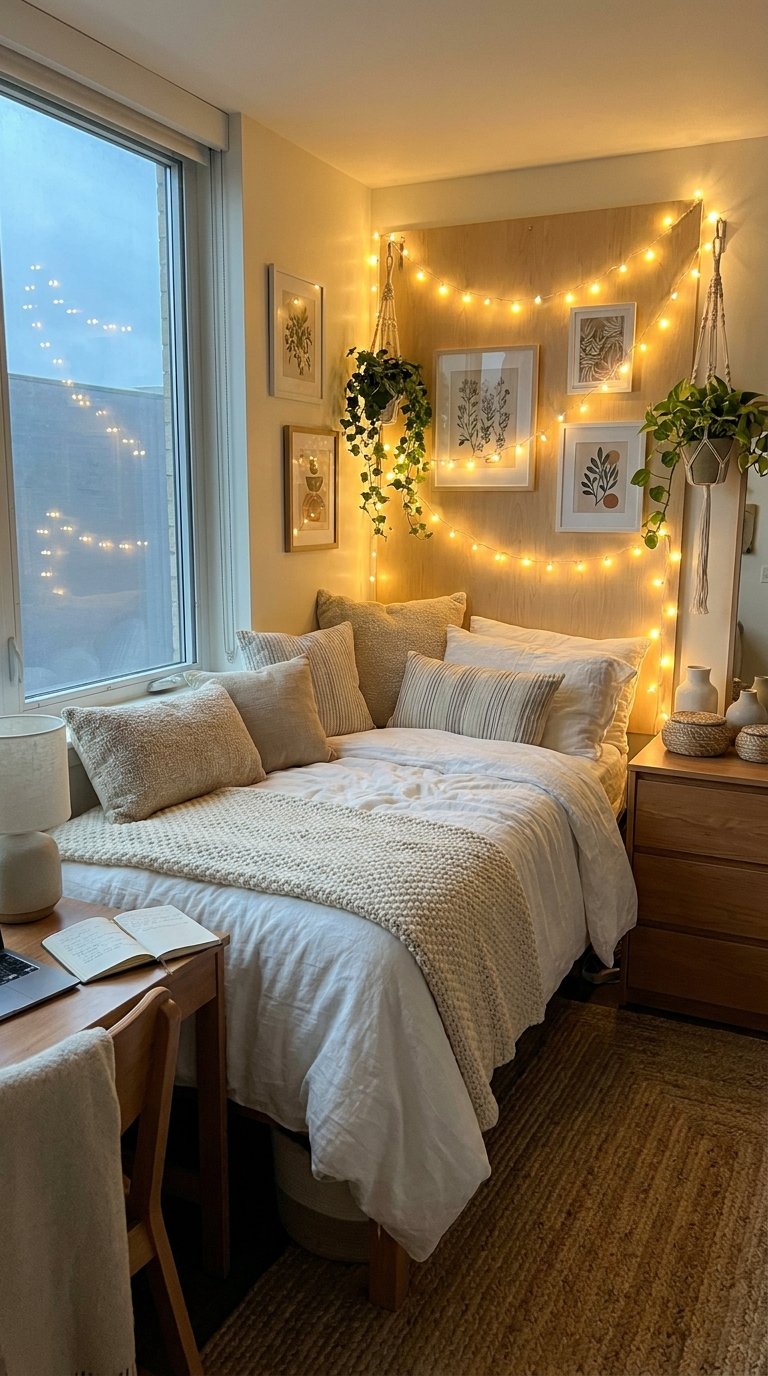
Warm white fairy lights draped along the headboard wall, around a canopy frame, or in a curtain formation on the wall behind the bed create the ambient glow that transforms a dorm bed from a sleeping surface into the room’s cozy focal point. The warm 2700K tone of quality fairy lights makes the bed area feel significantly warmer and more inviting than the overhead fluorescent ceiling fixture that dominates most dorm rooms after dark.
A 33-foot copper wire micro LED strand costs $12 to $20 on Amazon and covers the headboard wall in a loose draping pattern from two command hooks. A smart plug timer at $10 to $15 turns the lights on at sunset and off at midnight automatically, which creates consistent ambient lighting without daily adjustment. The combination costs under $35 and changes how the room feels at night more dramatically than any other single investment at the same price.
9. Use a Bed Skirt to Hide Under-Bed Storage
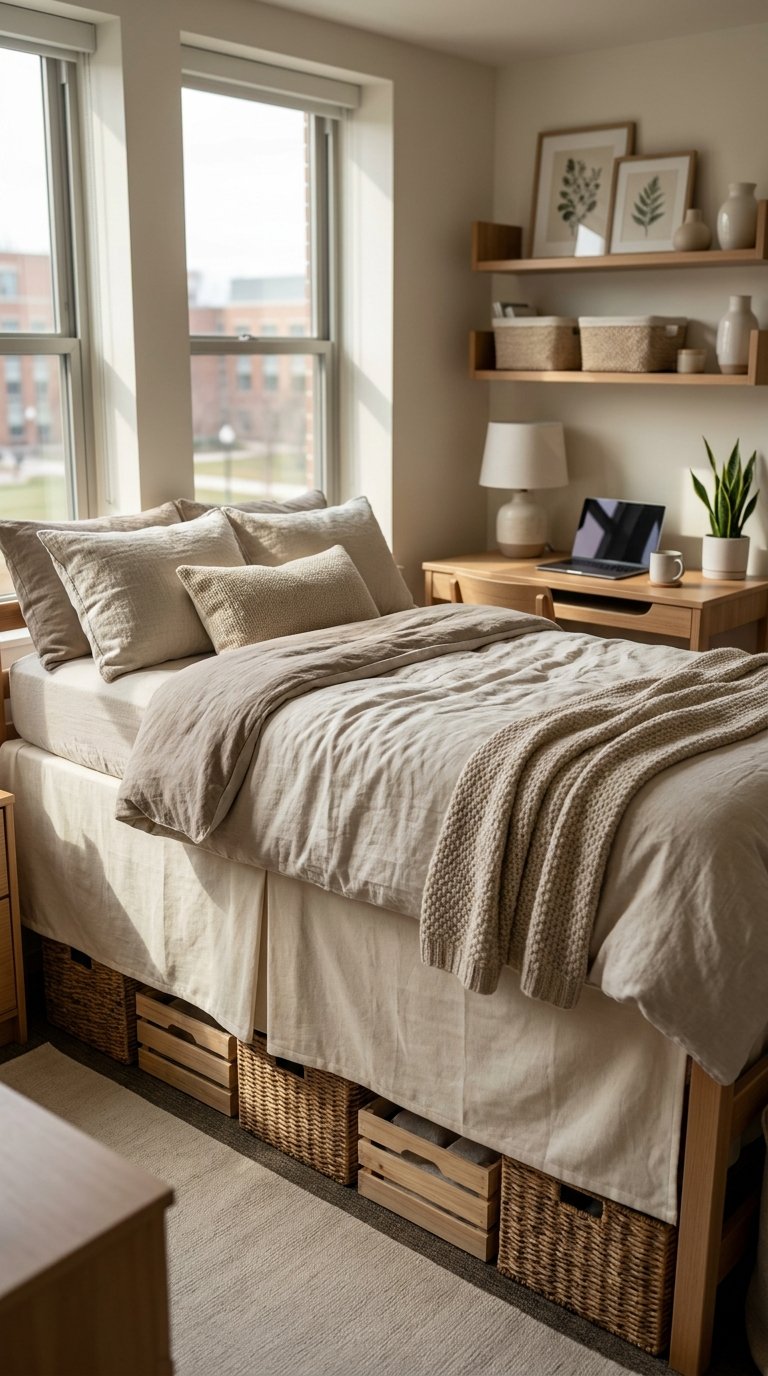
A bed skirt on a dorm bed serves two functions simultaneously: it creates the finished, furniture-quality look that a bare metal bed frame never achieves, and it conceals the storage containers underneath from visible view while keeping them accessible. A styled dorm bed with storage underneath reads as designed and organized when a bed skirt hides the storage zone. The same setup without a bed skirt reads as a bed above a pile of boxes regardless of how neatly the boxes stack.
Tailored bed skirts in a twin XL size cost $15 to $30 from Amazon or Target. Choose a skirt in a neutral tone that coordinates with the bedding without exactly matching it for the most sophisticated result. A white or cream bed skirt works with virtually every bedding color and reads as a clean architectural detail rather than a decorative afterthought.
10. Invest in a Quality Mattress Topper
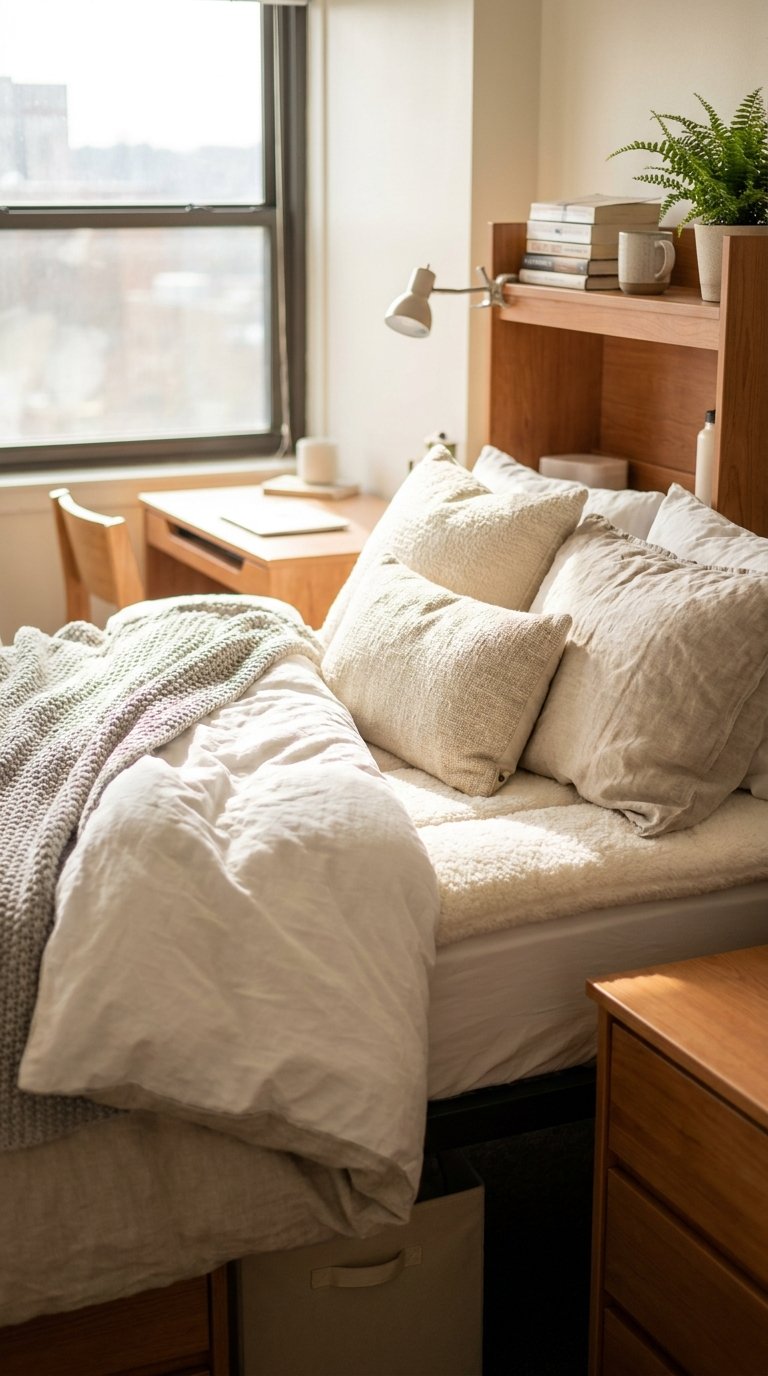
The institutional mattress that comes with most dorm beds is designed for durability rather than comfort, which means it provides adequate support without the cushioning layer that most people require for genuinely restful sleep. A quality mattress topper at 2 to 4 inches thickness transforms the sleep surface from adequate to genuinely comfortable in the same way that a quality pillow changes the neck support experience completely.
Mattress Topper Comparison for Dorm Beds
- Memory foam (2 inches): body-contouring, pressure relief, $30 to $60, warm sleeping temperature
- Memory foam (4 inches): significant upgrade in cushioning, $50 to $100, warmer
- Latex foam: cooler than memory foam, responsive, $80 to $150 for quality versions
- Featherbed topper:** softest feel, warmest, requires occasional fluffing, $40 to $80
- Cooling gel foam: ideal for warm dorms, gel layer dissipates heat, $50 to $90
The twin XL mattress topper fits most standard dorm beds. Confirm your dorm bed dimensions before purchasing as some institutions use non-standard twin sizes.
11. Create a Gallery Wall Above the Bed
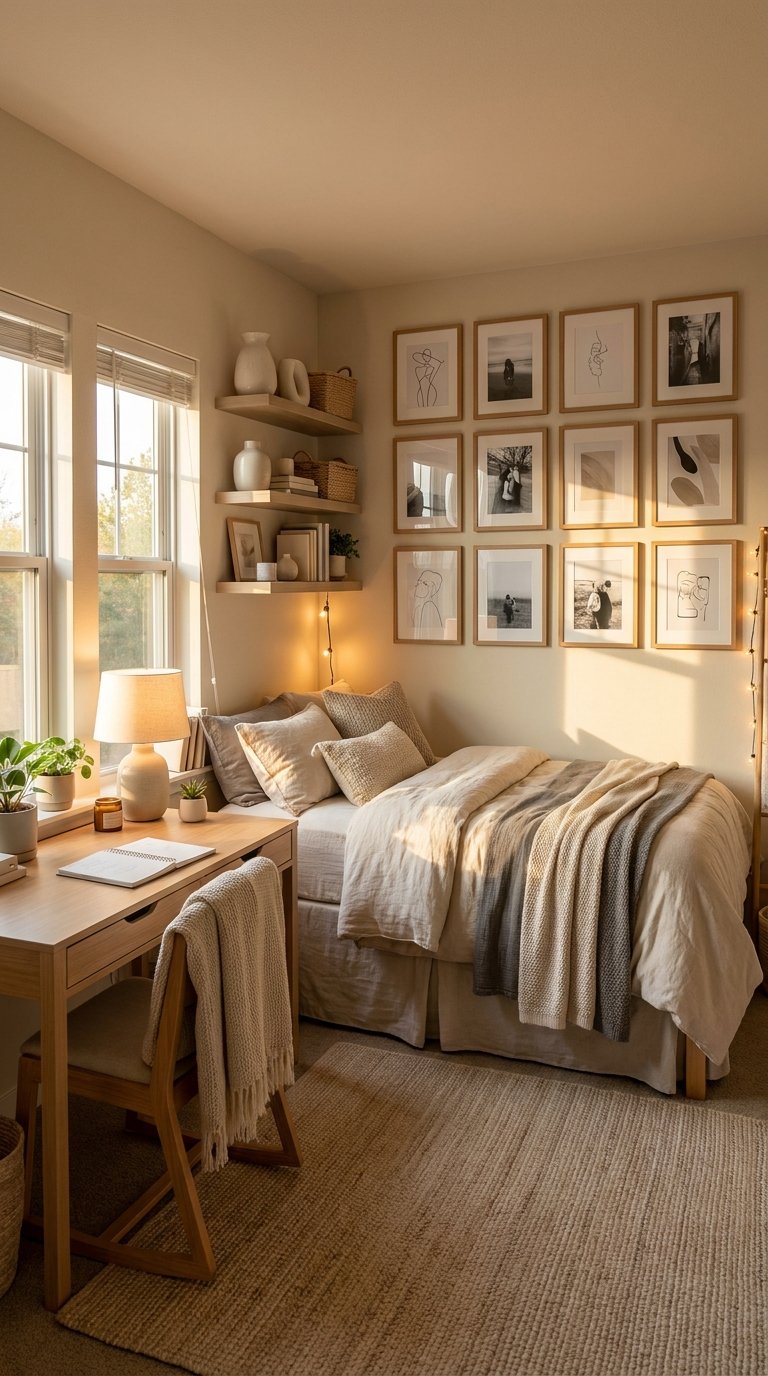
A gallery wall of coordinating prints, photographs, and art pieces above the dorm bed personalizes the room’s most prominent wall surface and gives visitors an immediate visual impression of who lives in the room. The gallery wall communicates personal identity in a way that institutional walls cannot: every piece communicates a preference, a memory, or an aesthetic choice that makes the room unambiguously yours rather than generically occupied.
Arrange six to eight pieces in a horizontal cluster arrangement centered above the bed. Use matching thin-profile frames in one consistent metal color for cohesion. Prints from Society6, Desenio, and Redbubble cost $10 to $30 each. IKEA RIBBA frames at $4 to $8 each keep the complete gallery budget under $100. Command picture-hanging strips rated for the frame weight mount every piece without wall damage.
12. Add Throw Pillows That Reflect Your Personality
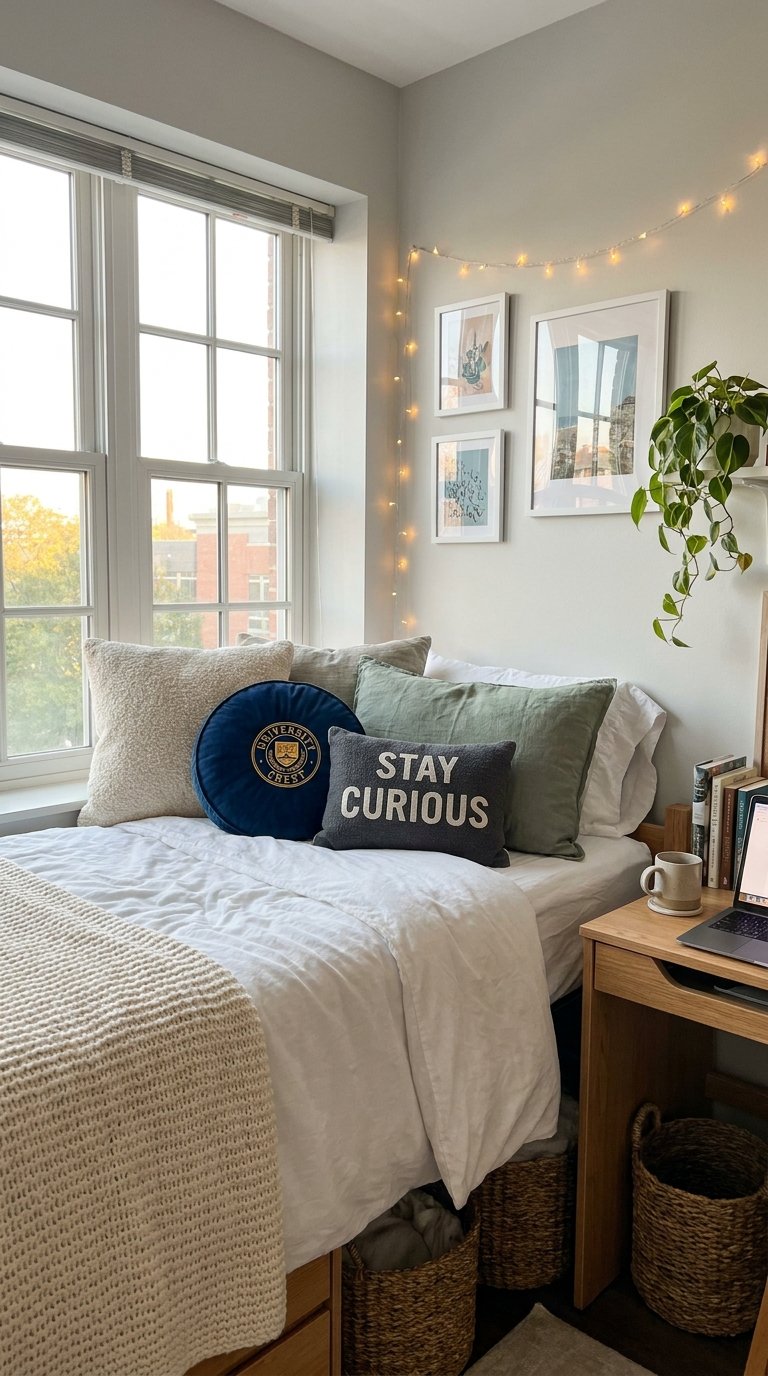
Throw pillows on a dorm bed earn their place through personality expression as much as through aesthetic contribution. A sports team logo cushion, a novelty print cushion, an embroidered phrase cushion, or a color-block cushion in your school colors all communicate something specific about who you are in a way that neutral decorative cushions deliberately avoid. The dorm bed is the one space where personality expression through textiles is completely appropriate regardless of your usual design preferences.
Keep the personality expression to one or two statement pieces paired with one or two solid texture cushions so the overall arrangement reads as styled rather than collected from a tourist gift shop. A novelty cushion beside two solid bouclé cushions in coordinating colors creates the balance between personal expression and visual cohesion that makes a dorm bed look both fun and considered.
13. Use a Tapestry as a Bed Backdrop and Wall Art Combined
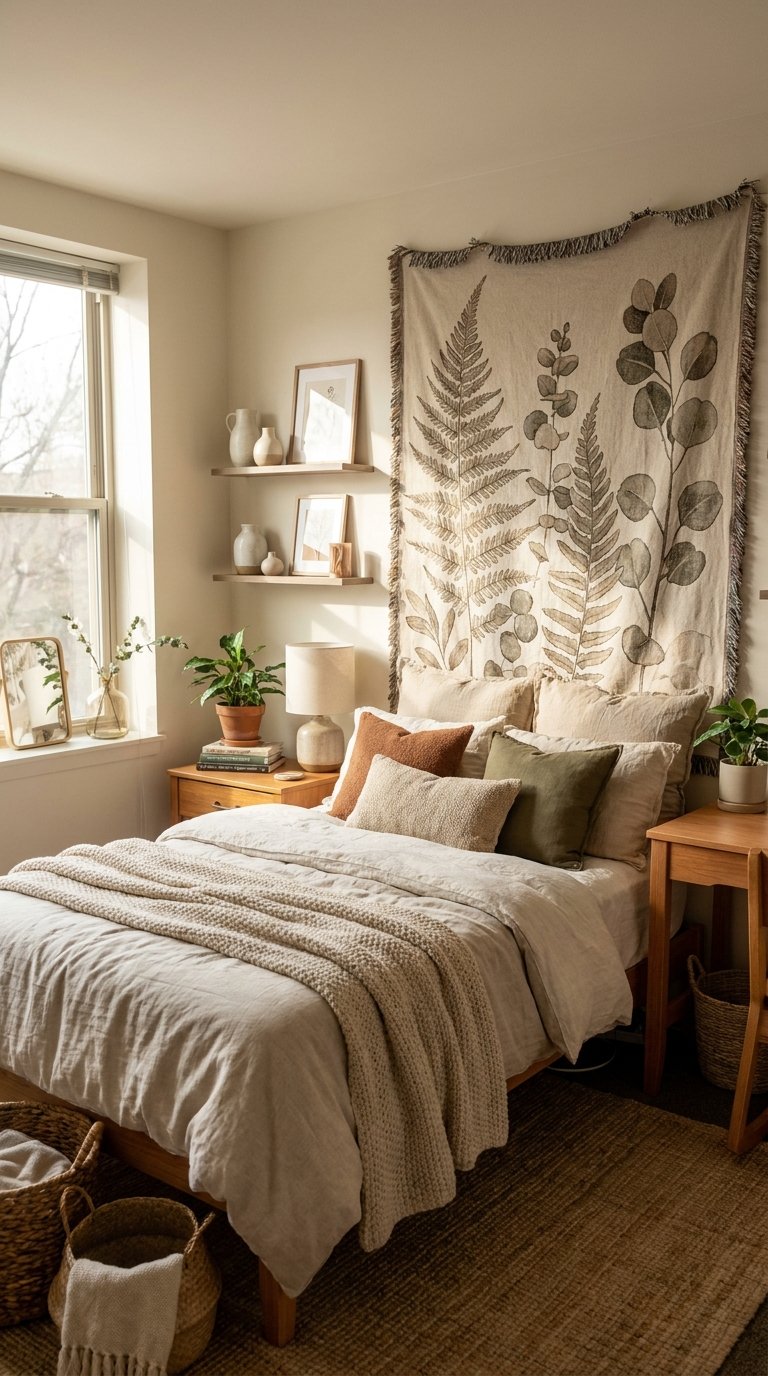
A large tapestry hung above and behind the dorm bed serves as wall art, visual headboard, and room-defining backdrop simultaneously in a single purchase that covers more wall surface per dollar than any other wall treatment option. A twin-bed-appropriate tapestry measures 60×80 inches or larger and covers the full wall above the bed from headboard height to ceiling, which gives the room an immediately distinctive visual identity.
Tapestries from Society6, Redbubble, and Amazon cover every aesthetic from botanical to geometric too abstract to pop culture in sizes appropriate for dorm bed walls from $20 to $60. Command strips hold most tapestry weights on smooth painted walls without damage. Choose a tapestry that incorporates both the primary color of your bedding and a contrasting accent so the tapestry and bed read as a composed arrangement rather than two separate styling decisions sharing a wall.
14. Build a Cozy Reading Corner at the Bed Head
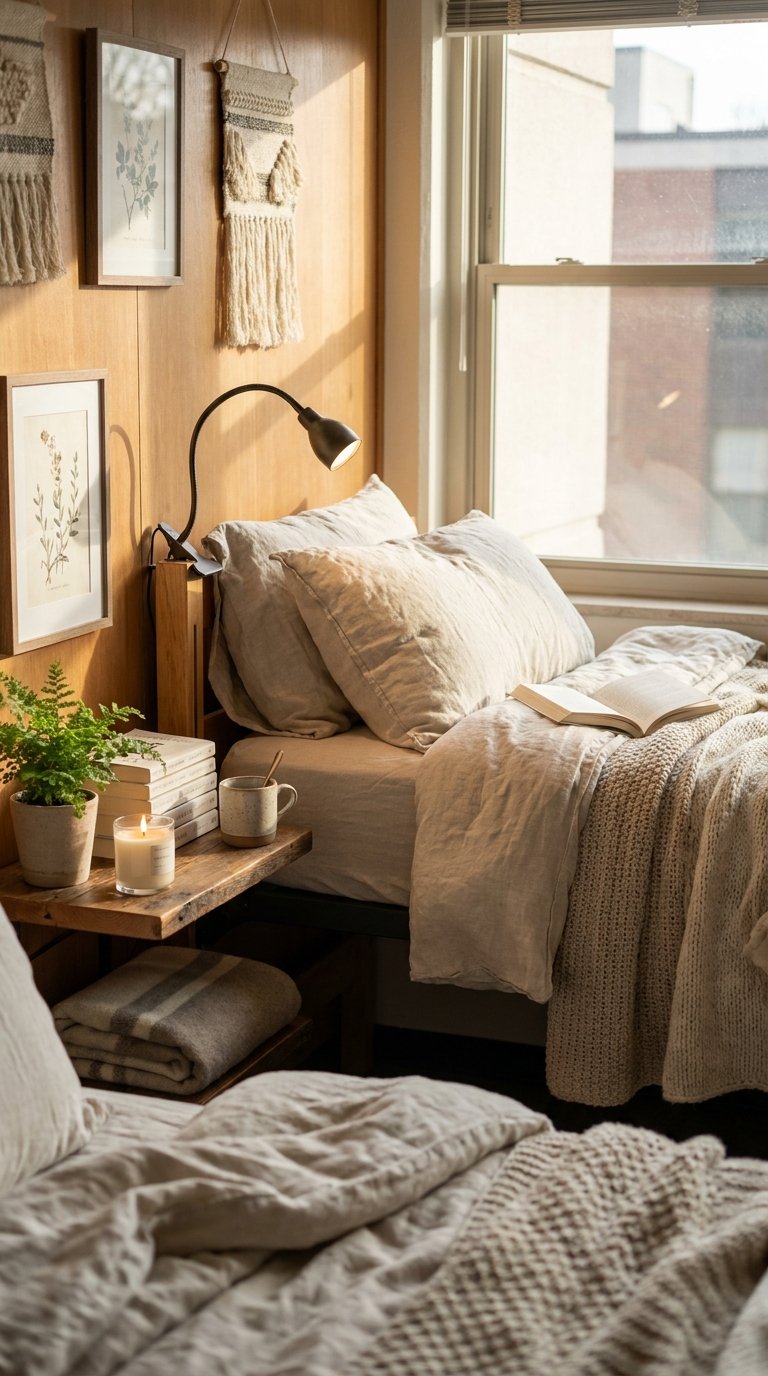
A reading corner at the head of a dorm bed combines the sleeping area with a dedicated leisure zone by adding a reading light, a book display, and a personal object arrangement that makes the space functional beyond sleeping. A clip-on reading light at $15 to $25 attaches to the headboard or bed frame and provides directed light for nighttime reading without requiring a bedside table or floor lamp. A floating shelf mounted with command strips at arm reach holds a current book stack, a water bottle, and a candle.
The reading corner transforms the dorm bed from a one-function sleeping surface into a multi-function personal zone that you use throughout the day rather than just at bedtime. This multi-function quality is particularly valuable in single occupancy dorms where the bed area serves as the room’s primary leisure and relaxation destination.
15. Style the Bed for Each Season
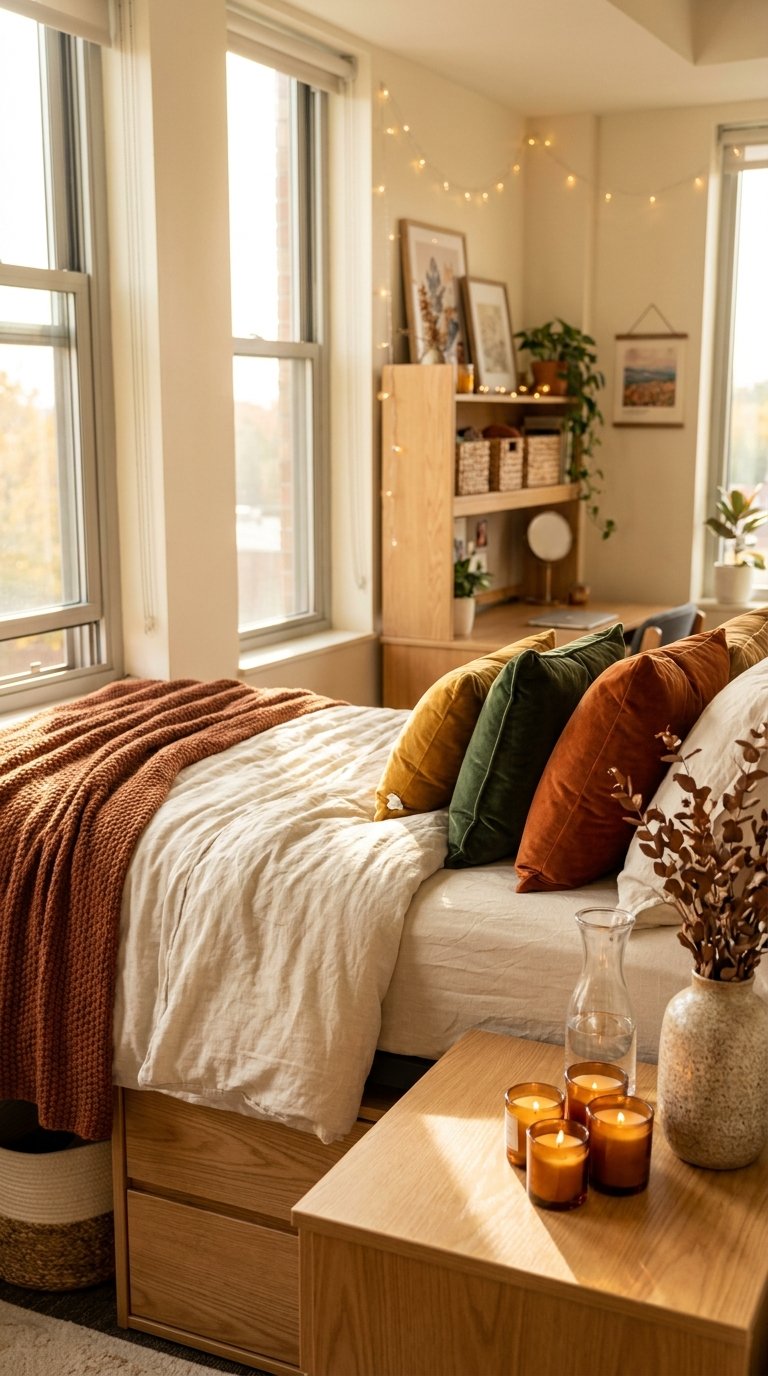
A dorm bed styled to reflect the current season creates a room that feels alive and current rather than frozen in the aesthetic you chose during move-in week in August. Swap the duvet cover for a lighter linen version in spring. Add a chunky knit throw in autumn. Switch throw pillow covers from bright summer colors to deep jewel tones in winter. Each seasonal swap costs $20 to $50 in new textiles and refreshes the entire room’s feel without buying new furniture or replacing core pieces.
FYI, most dorm rooms look exactly the same in April as they did in September, which is fine but represents a missed opportunity to make the space feel fresh throughout a long academic year. A spring green throw and lighter pillow covers in March cost $30 total and make the room feel deliberately refreshed rather than statically maintained.
16. Use the Bed as the Room’s Styling Foundation
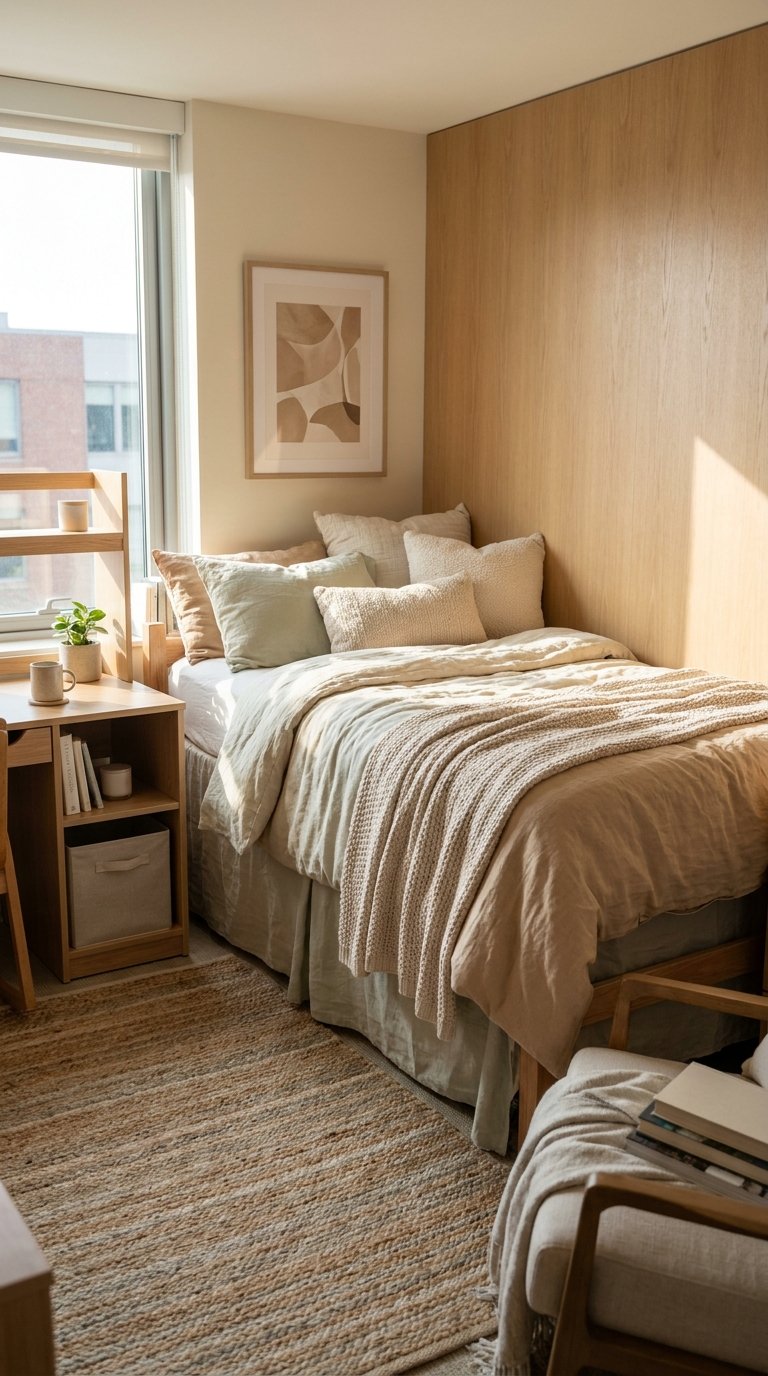
Every other decorating decision in a dorm room should build from the bed outward rather than treating the bed as one element among many. The wall art, the rug, the desk accessories, the storage bins, and the lighting all look better when they share a consistent color palette with the bed because the bed’s visual mass anchors the room’s palette in a way that any other single element fails to achieve. Start with the bed, establish the palette, and let every subsequent purchase reinforce rather than compete with the central statement.
This approach simplifies shopping decisions considerably: you evaluate every potential purchase against whether it reinforces the bed’s established palette rather than scanning everything available and choosing what catches your eye. The resulting room reads as cohesive and intentionally designed because it starts from one anchor and builds outward consistently rather than accumulating attractive individual pieces that happen to share a floor plan.
Final Thoughts
A dorm bed that works as the room’s styled centerpiece changes the entire experience of living in what is, objectively, a very small institutional space. You don’t need a renovation budget, a professional decorator, or even a large time investment. You need the right bedding layered correctly, a visual headboard solution on the wall behind it, ambient lighting that makes the area feel warm at night, and a consistent color palette that ties every textile and accessory to the same visual story.
Start with three changes this weekend: layer the bed with one new texture you don’t already have, add fairy lights along the headboard wall, and hang two coordinating prints above the bed on command strips. Those three moves cost under $60 combined and change how the room reads by Sunday evening. Your dorm room deserves to feel like somewhere you chose rather than somewhere you ended up.