25 Kitchen Floor Tile Ideas for Every Style and Budget
Your kitchen floor takes more abuse than any other surface in the house. It handles dropped pans, spilled grease, wet shoes, chair scrapes, and foot traffic every single day. If you pick the wrong tile, you notice it every time you walk in. If you pick the right one, it sets the tone for the entire room without you ever having to think about it again.
These 25 ideas give you specific tile types, real brand options, accurate price ranges, and the honest reasons each one works. No vague inspiration. No showroom fantasy. Just floor tile ideas built for real kitchens and real budgets.
1. Classic White Subway Tile Floor in a Running Bond Pattern
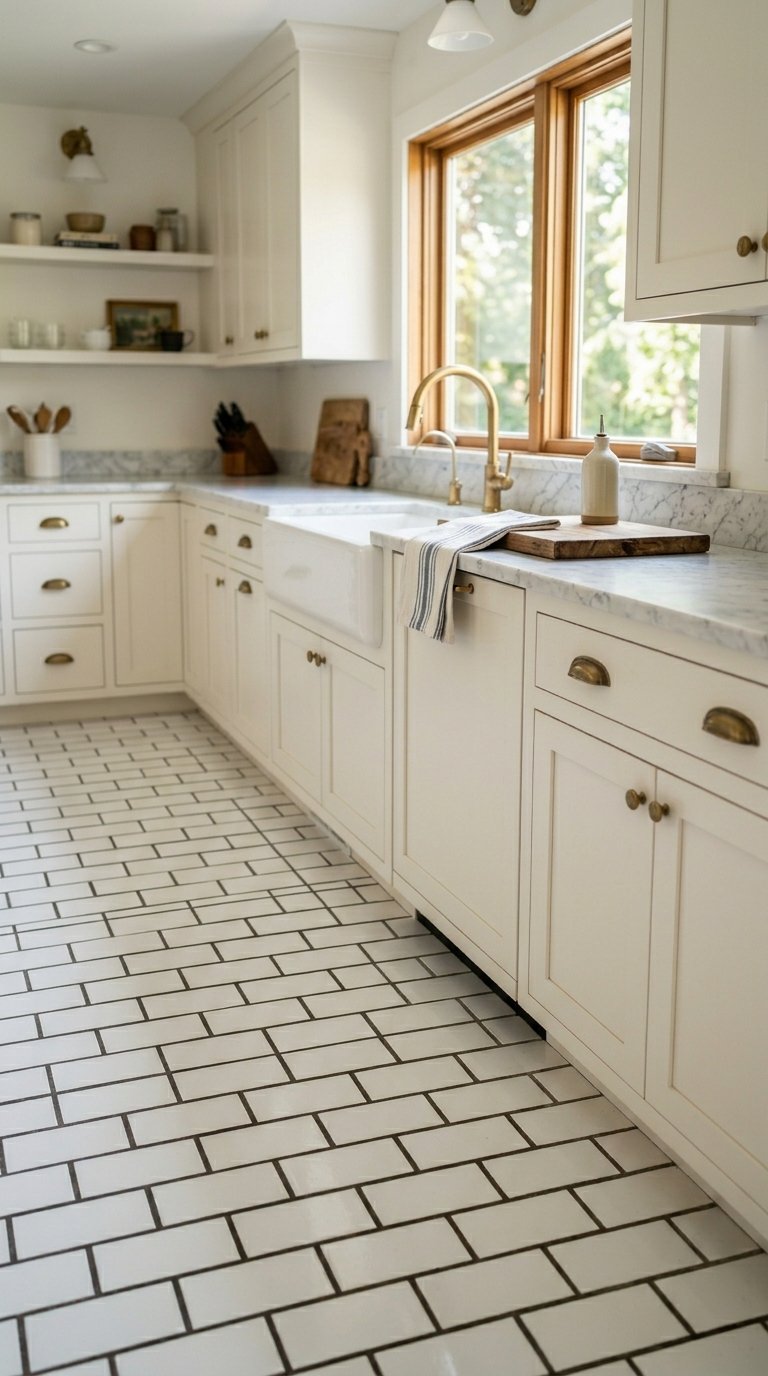
White subway tile on a kitchen floor in a running bond pattern costs between $2 and $6 per square foot for materials and delivers a clean, timeless base that works under every cabinet color. The offset joint of the running bond pattern breaks up the flatness of a white floor and adds visual movement without introducing color or pattern.
American Olean’s Bright White glazed ceramic subway tile in a 3×6-inch format runs $1.89 per square foot at Home Depot. For a 150-square-foot kitchen floor, your total material cost stays under $300. Pair it with a dark grout such as Mapei’s Charcoal or Pewter to define each tile and prevent the floor from reading as one flat white sheet.
2. Black and White Hexagon Tile
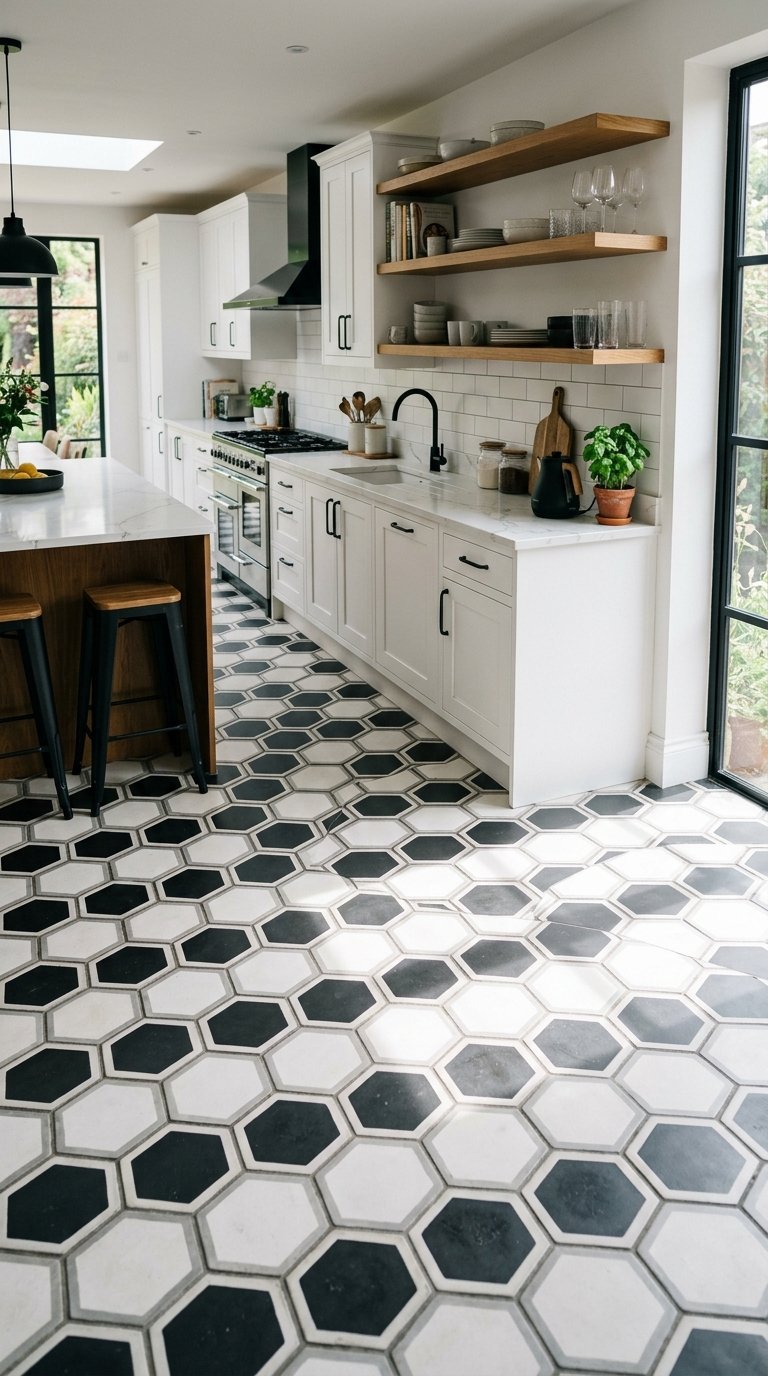
Black and white hexagon tile is the floor choice that photographs well at every budget level and ages better than almost any other pattern in kitchen design. The geometric repeat keeps the eye moving across the floor, which makes small kitchens read as larger than they are.
TileBar’s 2-inch black and white porcelain hexagon mosaic tile costs $8.99 per square foot. A 120-square-foot kitchen floor runs roughly $1,080 in tile materials before installation. The pattern works under white shaker cabinets, navy blue lowers, and raw wood uppers without competing with any of them.
3. Large Format Porcelain Tile in a Light Gray Tone
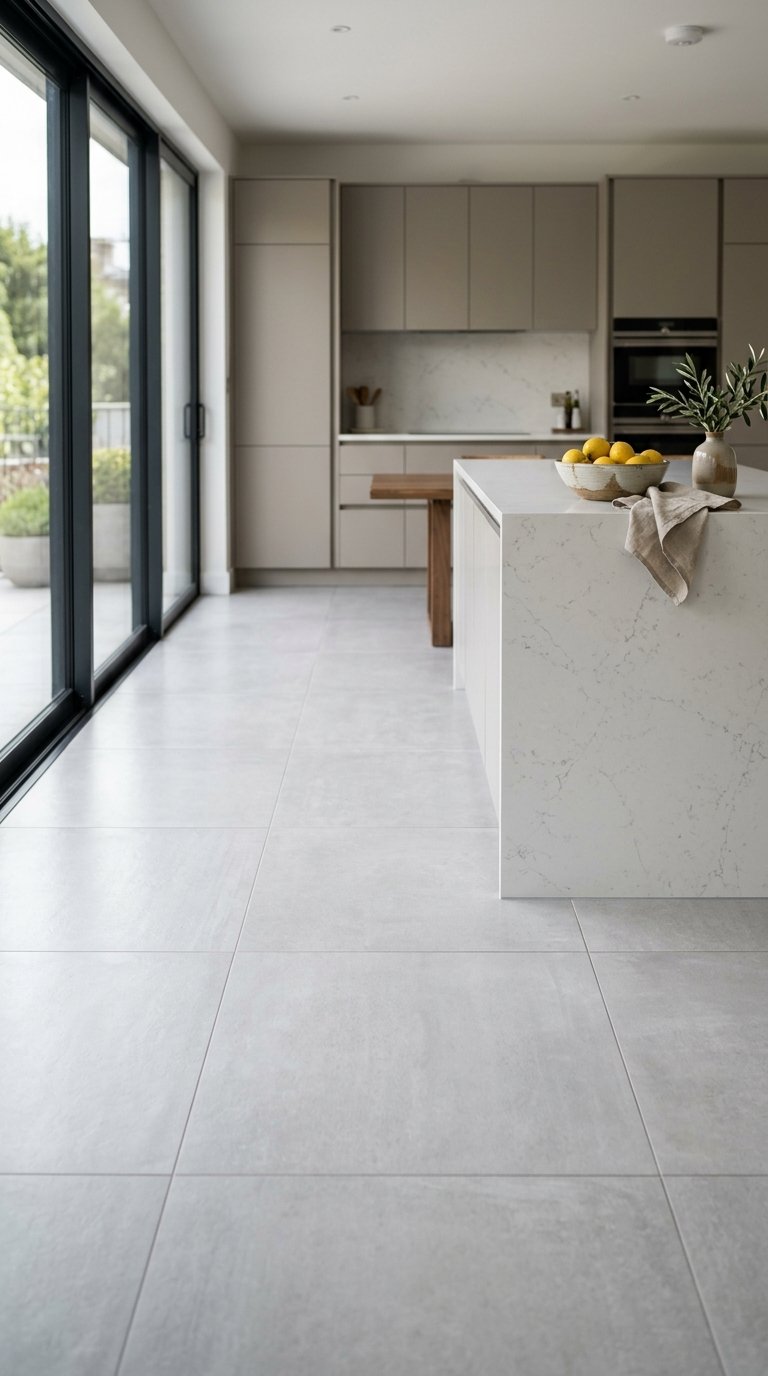
Large format porcelain tile in a 24×24-inch or 24×48-inch size reduces grout lines dramatically and makes any kitchen floor feel more open and continuous. Fewer grout lines also mean less maintenance, which is a practical win in a high-traffic room.
Emser Tile’s Perspectives series in a 24×24 light gray porcelain costs $3.49 per square foot. The low-maintenance surface resists staining without sealing, unlike natural stone. Lay it in a staggered offset pattern rather than a grid to prevent the floor from looking like a commercial space.
4. Encaustic Cement Tile in a Geometric Pattern
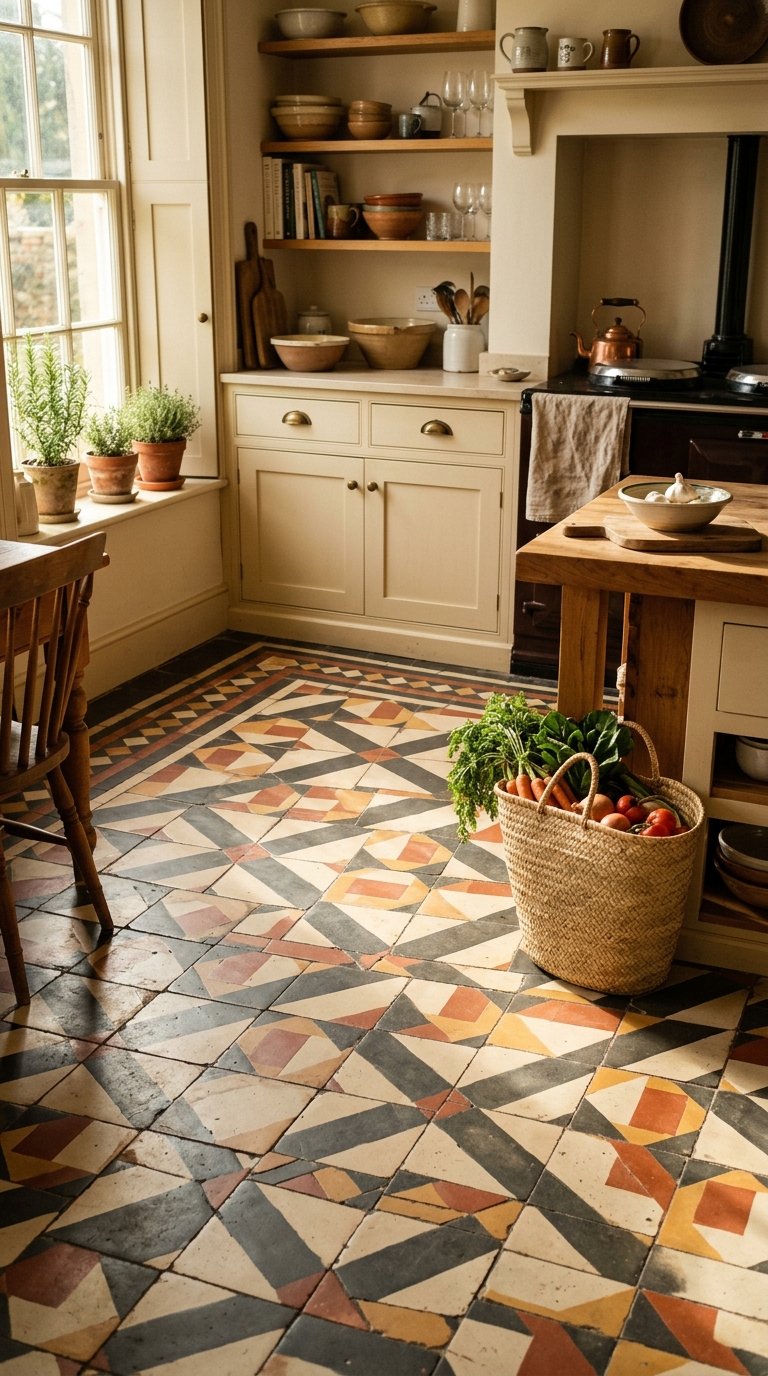
Encaustic cement tile brings hand-made character and bold geometry to a kitchen floor in a way no mass-produced product replicates. Each tile shows slight color variation and surface texture that accumulates into a floor with genuine visual depth.
Cement tile from Cement Tile Shop starts at $12 per square foot for stock geometric patterns. A 100-square-foot kitchen floor runs $1,200 in tile materials, which puts it at the higher end of the budget range but well below custom stone pricing. Seal the surface with an impregnating sealer from Miracle Sealants before grouting and again after installation to prevent staining from cooking oils and water.
5. Terracotta Tile in a Diagonal Layout
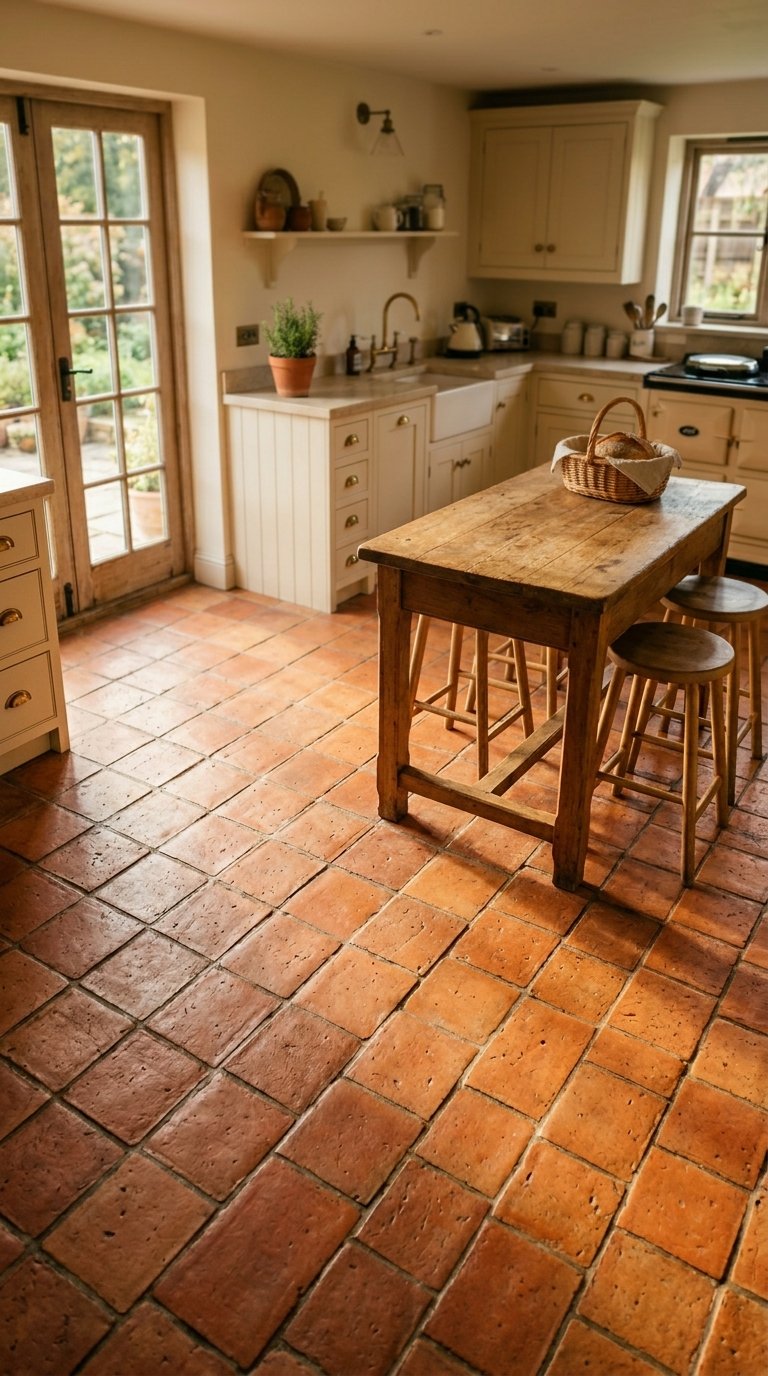
Terracotta tile laid on a 45-degree diagonal makes a kitchen floor feel significantly wider than the same tile laid square to the walls. The warm orange-red tone of terracotta brings immediate warmth to kitchens with white or cream cabinetry that would otherwise feel cold.
Saltillo terracotta tile from Mexican Tile and Stone runs $2.50 to $5 per square foot depending on size. Seal it with a penetrating terracotta sealer before grouting and apply a topcoat sealer such as Aqua Mix Sealer’s Choice Gold every two years. The surface darkens slightly with each seal application, developing a patina that looks better at ten years than at installation.
6. Penny Round Tile in White or Matte Black
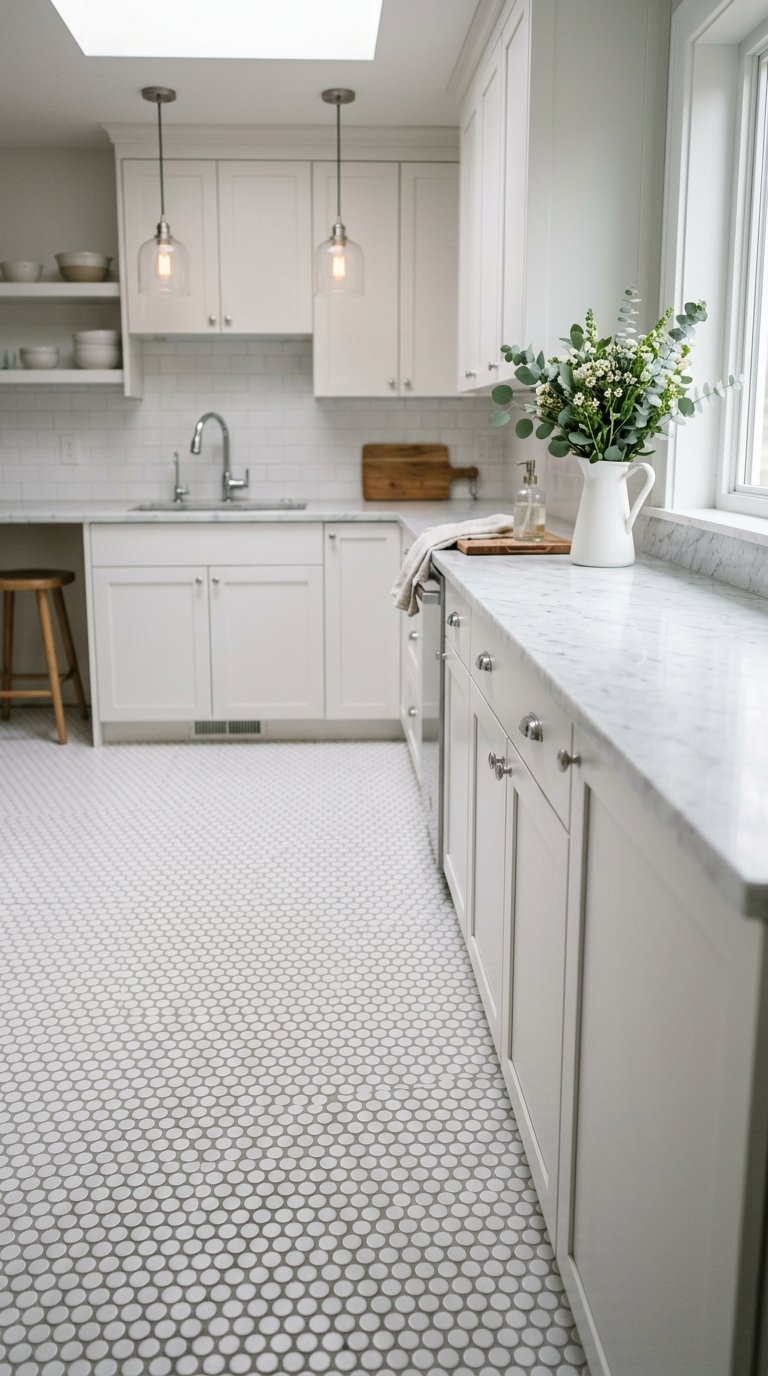
Penny round tile covers a kitchen floor in a dense, textured mosaic that provides more slip resistance than large format tile due to the high grout-to-tile ratio. In a kitchen where water and grease hit the floor regularly, that extra grip matters.
Wayfair stocks 1-inch penny round porcelain mosaic sheets in matte white and matte black at $7 to $11 per square foot. The sheets install like standard mosaic tile on a mesh backing, which keeps the layout manageable for a DIY installation. Use unsanded grout in a matching tone to keep the surface smooth and easy to wipe clean.
7. Wood-Look Porcelain Plank Tile
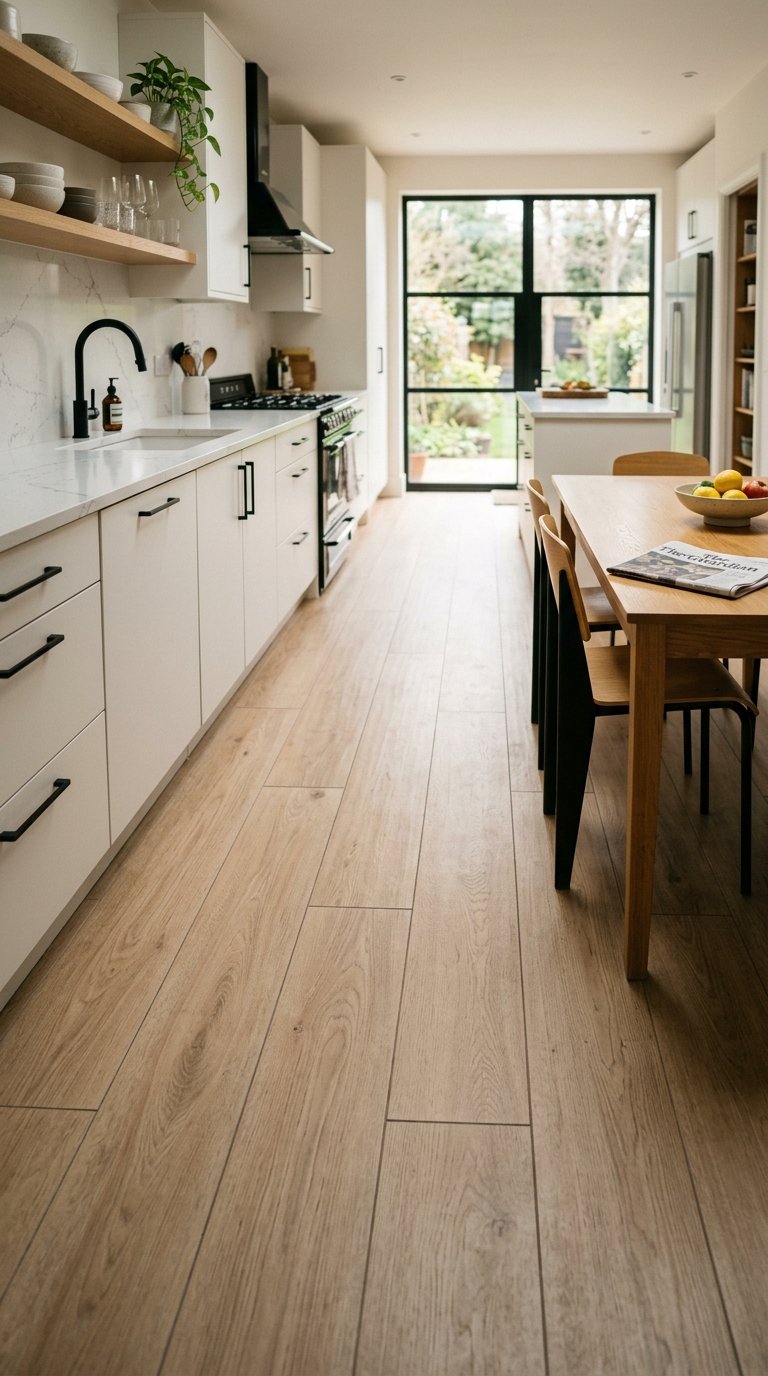
Wood-look porcelain plank tile gives you the visual warmth of hardwood flooring with none of the maintenance vulnerability. Real hardwood in a kitchen swells, scratches, and warps with moisture over time. Porcelain does none of those things.
Florida Tile’s Home Collection in a 6×36 plank format mimics white oak grain with a matte finish at $3.29 per square foot. Lay the planks in a staggered pattern with a minimum one-third offset to prevent the floor from developing an unnatural, repetitive look. Use a rectified tile with tight joints of 1/16 inch to reinforce the hardwood illusion.
8. Slate Tile in a Natural Cleft Finish
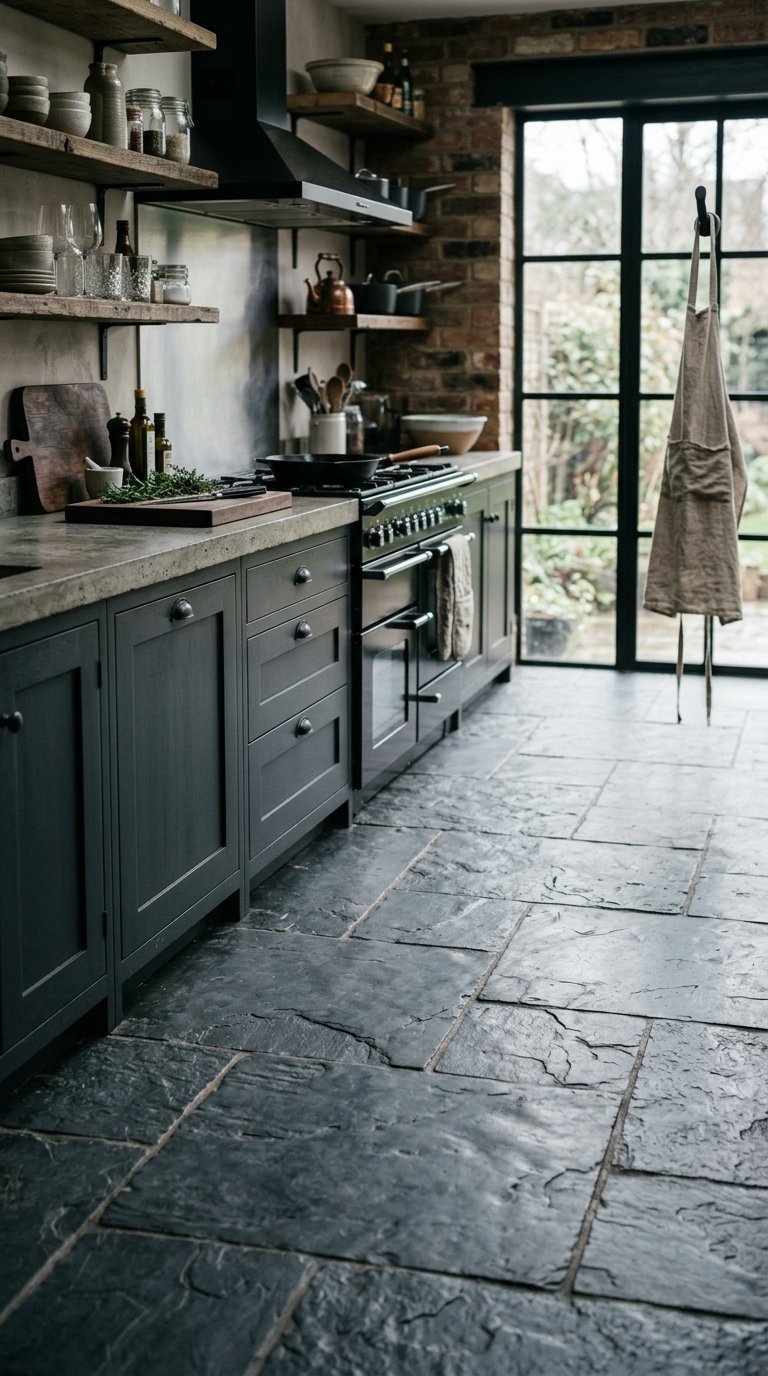
Natural slate tile in a cleft finish brings a rough, layered surface to a kitchen floor that no manufactured tile replicates. The surface variation across each tile means the floor reads as a natural material, not a product, which suits farmhouse, rustic, and industrial kitchens specifically.
Brazilian slate from Floor and Decor runs $2.49 per square foot in a 12×12 format. The irregular surface requires a polymer-modified thinset to fill any lippage between tiles during installation. Seal it annually with a color-enhancing stone sealer such as StoneTech Bulletproof to deepen the natural color and prevent water absorption.
9. Zellige Tile in an Earthy Tone
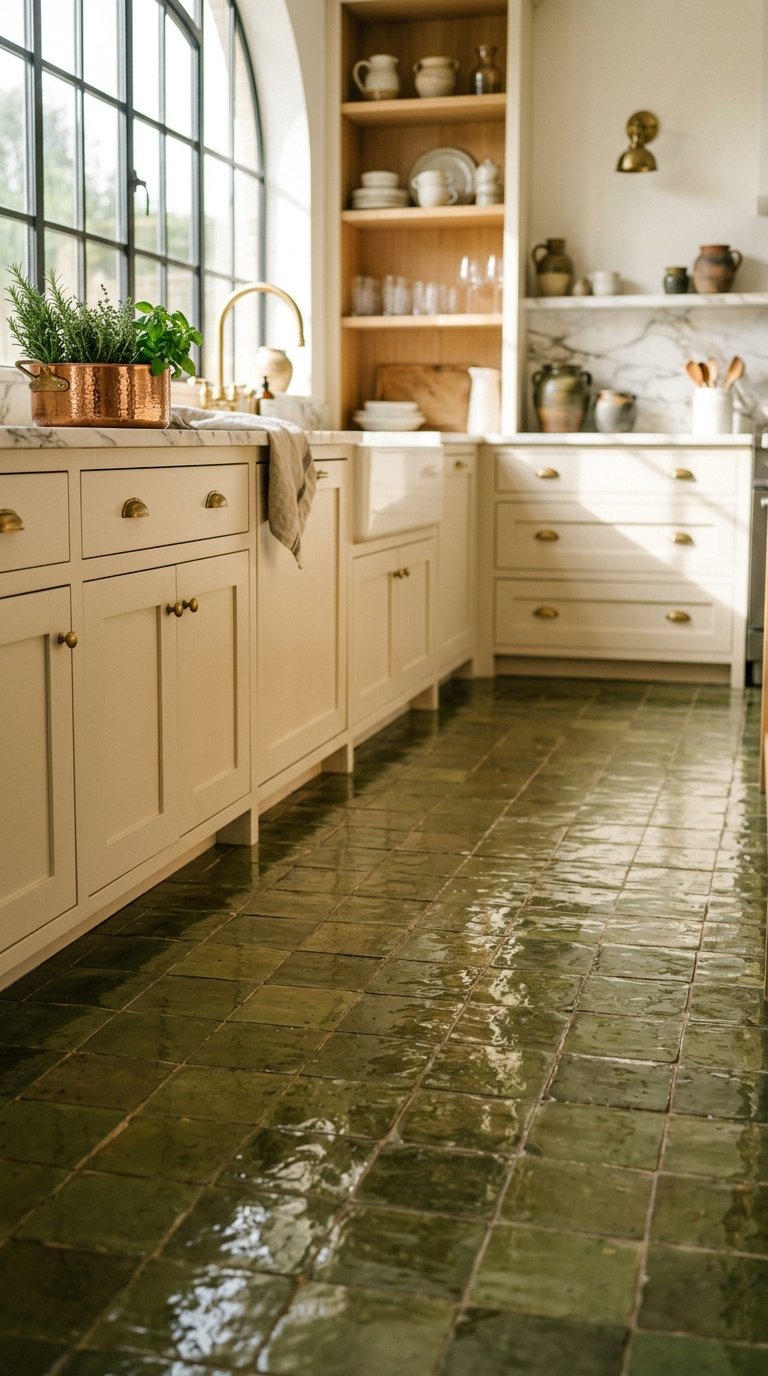
Zellige tile is hand-cut Moroccan glazed terracotta with an irregular surface and a reflective glaze that catches light differently at every angle. A zellige kitchen floor in an earthy tone such as ochre, dusty rose, or olive creates a surface with more visual energy than any flat, uniform tile.
Clé Tile stocks zellige in multiple colorways starting at $22 per square foot. The high price reflects the hand-production process and the material authenticity. Use it in a smaller kitchen or as a tile inset zone within a larger floor to keep costs manageable while still achieving the full visual impact.
10. Checkerboard Floor Tile in Black and White
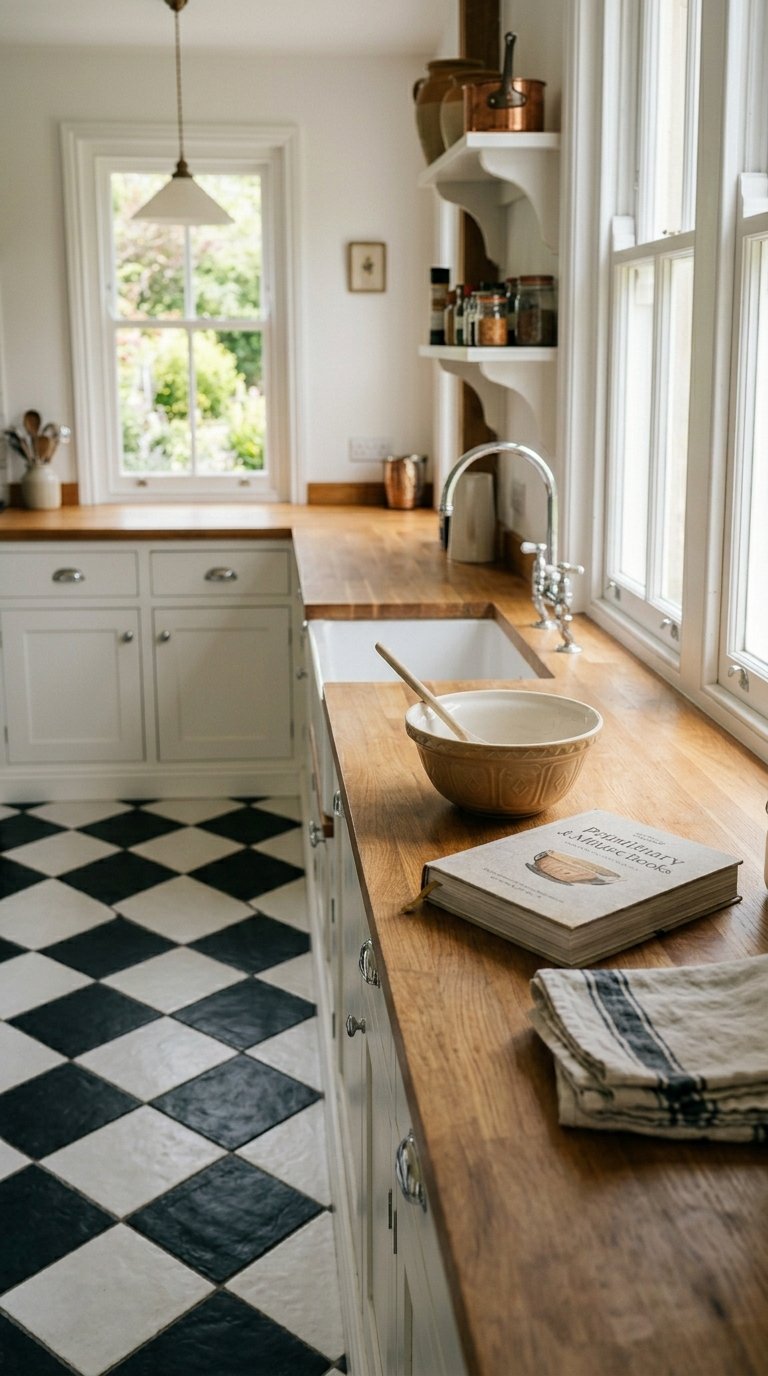
A black and white checkerboard floor tile pattern is the most historically accurate choice for a kitchen that references mid-century, Victorian, or traditional farmhouse design. The bold graphic contrast makes the floor the dominant design element in the room.
Dal-Tile’s 12×12 porcelain in Matte Black and Bright White costs $1.49 to $2.99 per square foot per color. A 120-square-foot floor uses 60 tiles of each color, keeping material costs under $500. Keep the rest of the kitchen simple, white cabinets, simple hardware, plain walls, because the checkerboard floor carries enough visual weight on its own.
11. Moroccan Star and Cross Tile
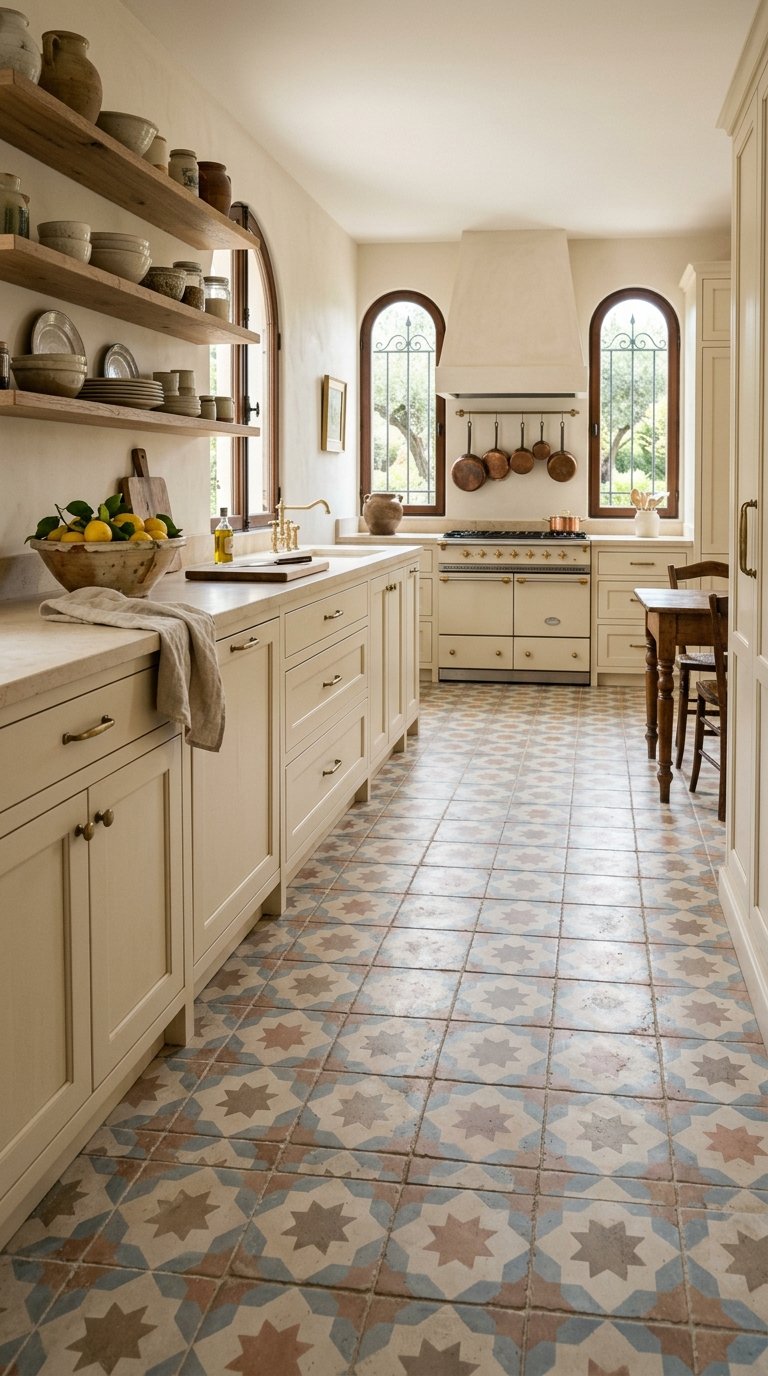
The Moroccan star and cross tile pattern creates a floor with layered geometric complexity that reads as intentional and artisan at any budget level. The interlocking star and cross shapes cover the floor in a continuous pattern with no visible repetition point, which gives large kitchens a floor that holds visual interest across the full surface.
Overstock and TileBar both carry porcelain Moroccan pattern tiles starting at $6 per square foot. The pattern requires precise layout planning before installation. Start from the center of the floor and work outward so the cut tiles at the perimeter are symmetrical on all four walls.
12. Herringbone Tile in a Neutral Tone
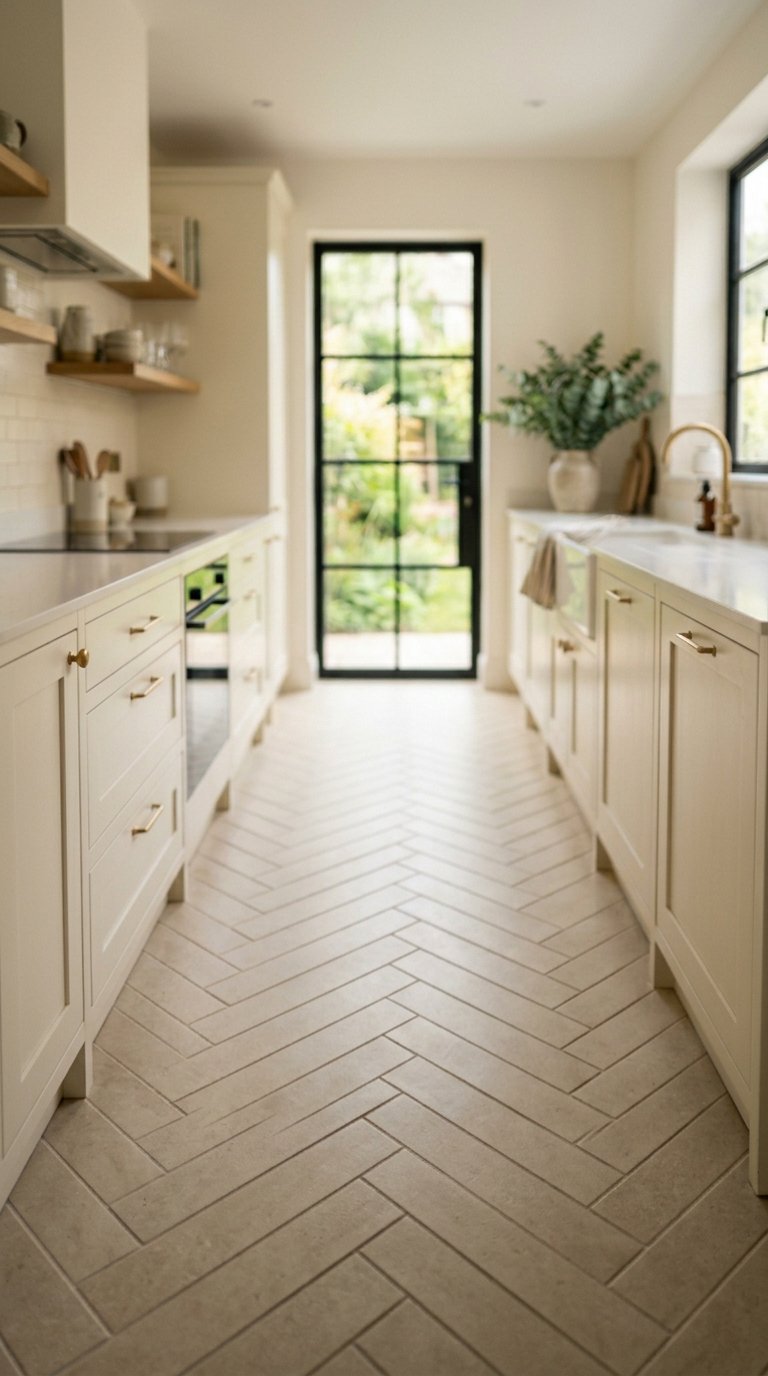
A herringbone tile layout in a neutral gray, warm beige, or off-white tone adds directional movement to a kitchen floor without introducing color. The V-shaped pattern draws the eye down the length of the kitchen, which makes narrow kitchens feel longer and more open.
Use a 3×12 porcelain plank tile from MSI’s Dimensions series in Ash Gray at $2.89 per square foot for the herringbone layout. The longer plank format emphasizes the chevron angle more than a square tile does. Budget an extra 15 percent in tile materials for the increased waste from the angled cuts at the perimeter.
13. Travertine Tile With a Filled and Honed Finish
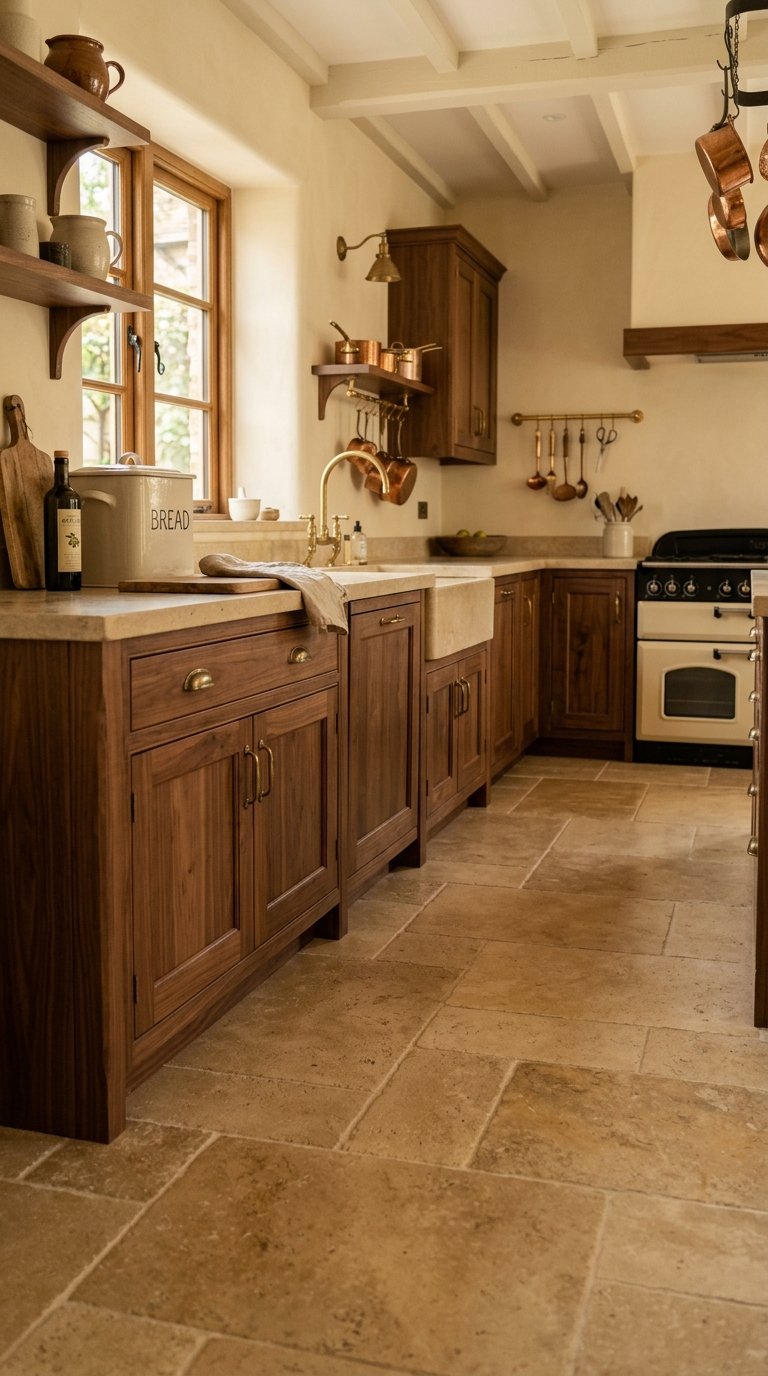
Travertine in a filled and honed finish brings the warmth and variation of natural stone to a kitchen floor without the high gloss that shows every footprint. The filled surface closes the natural voids in the stone, creating a smooth, flat floor that functions well in a kitchen environment.
Noce or Classic Beige travertine from Stone Center Online runs $3 to $7 per square foot for 18×18 tiles. Seal it with a penetrating impregnator sealer before grouting and reapply annually. The warm tan and walnut tones in travertine pair naturally with wood cabinets, brass hardware, and cream wall colors without requiring any deliberate coordination.
14. Terrazzo Tile in a Pastel or Neutral Mix
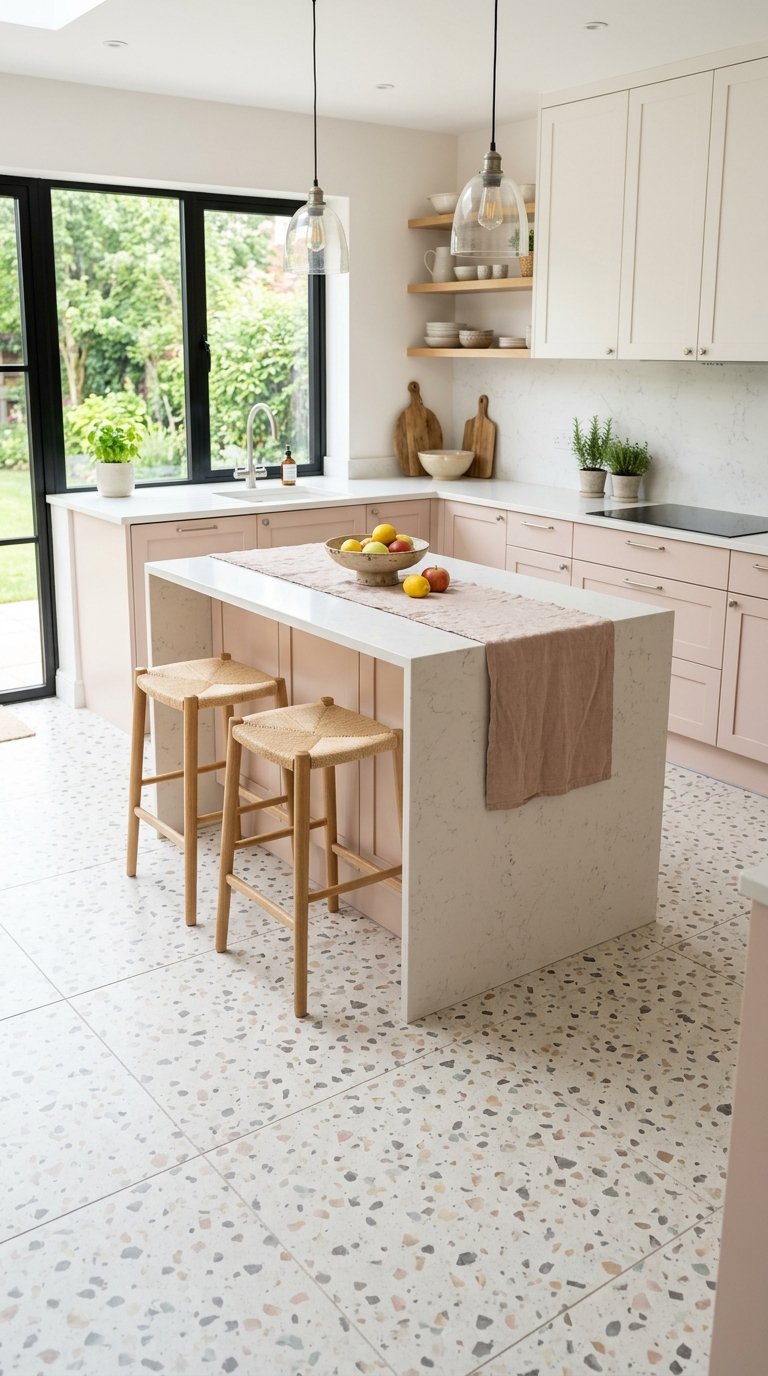
Terrazzo tile brings a mid-century material back into the kitchen in a format that works at a fraction of poured terrazzo pricing. The random chip pattern in each tile means no two tiles are identical, which gives the floor a hand-made quality at a manufactured price.
Bedrosians Tile and Stone carries 24×24 terrazzo-look porcelain tiles starting at $8.99 per square foot. True cement terrazzo tiles with marble and glass chips from Concreate start at $18 per square foot but deliver a denser, more authentic surface. Either option works well under white or natural wood cabinetry where the floor needs to provide visual interest without competing with other surfaces.
15. Brick Pavers as Kitchen Floor Tile
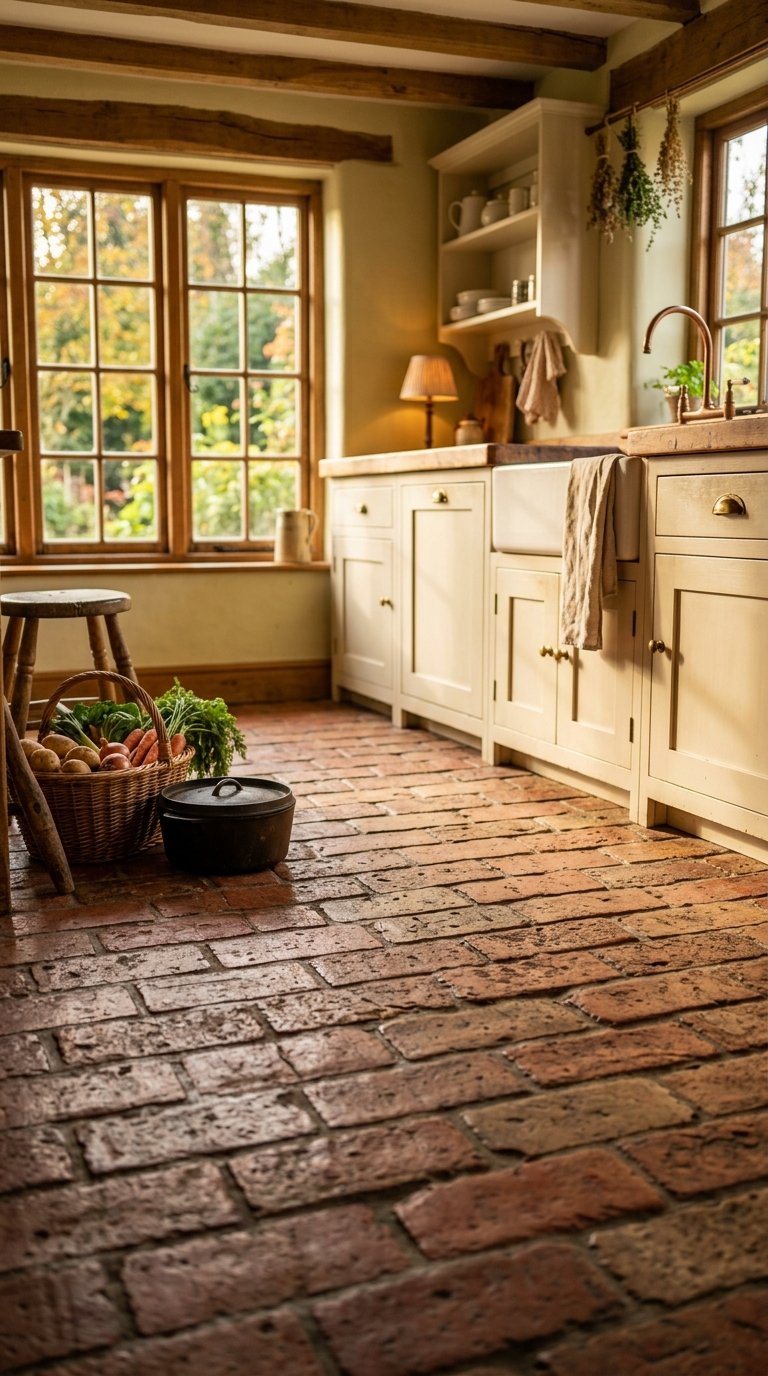
Reclaimed or new brick pavers on a kitchen floor bring a raw, structural quality that no ceramic or porcelain tile replicates. The rough texture, color variation, and familiar scale of a brick module make the floor read as part of the building rather than a surface applied over it.
Reclaimed thin brick from Inglenook Tile runs $6 to $10 per square foot. New thin brick pavers from Fireclay Tile start at $14 per square foot in a wider range of colors. Both options require a penetrating sealer applied before grouting to prevent the porous brick surface from absorbing grout haze during installation.
16. Patterned Cement Tile Border With a Plain Field
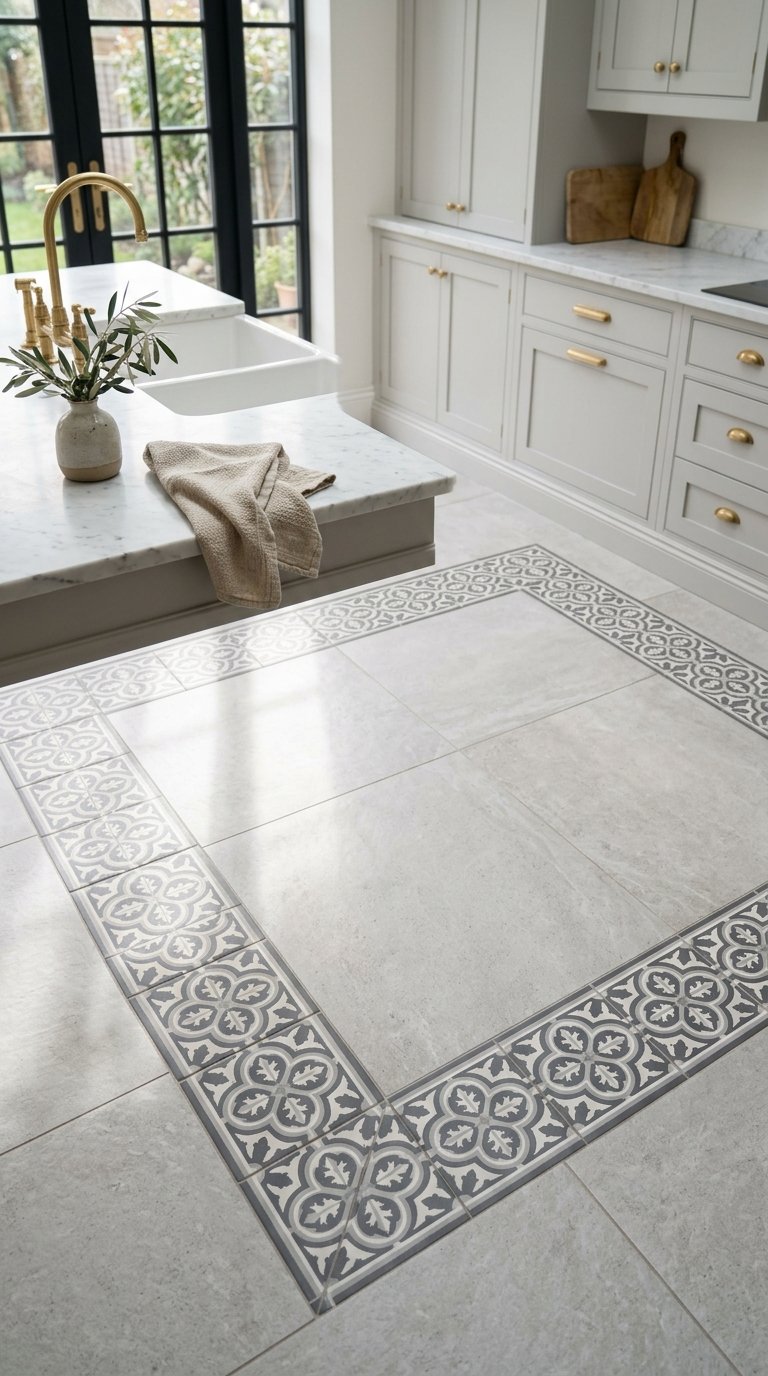
A patterned cement tile border around the perimeter of a plain field tile floor adds decorative detail without covering the entire floor in a complex pattern. This approach keeps material costs lower than a full patterned floor while delivering a custom, finished look that a plain floor never achieves.
Use a 4×4 or 6×6 patterned cement tile from Cement Tile Shop at $12 to $18 per square foot for the border band only. Fill the field with a complementary plain cement or porcelain tile at $3 to $5 per square foot. The total cost stays manageable and the result looks like a floor designed by someone who knows what they are doing.
17. Polished Marble Tile in a Classic White
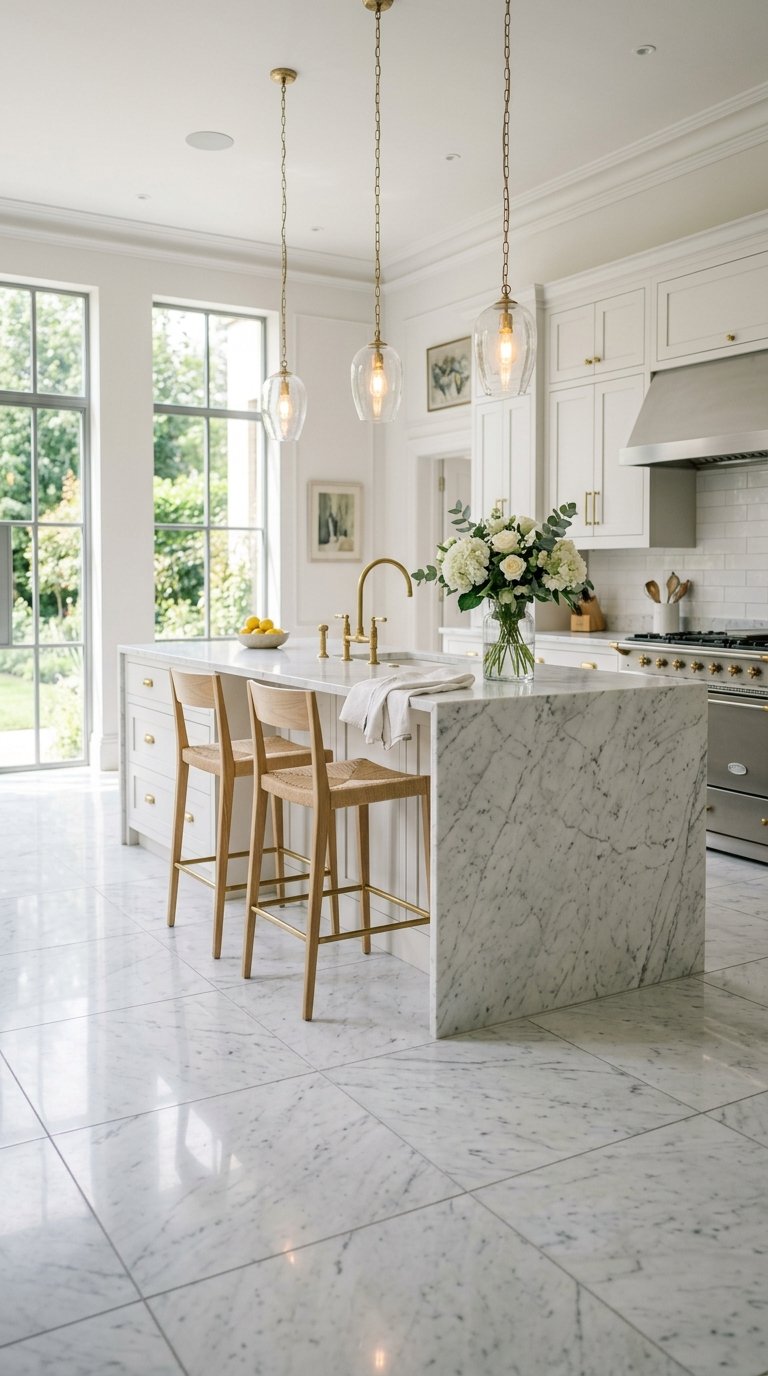
Polished white marble tile on a kitchen floor is the highest-maintenance option on this list and also the highest-reward. Carrara or Calacatta marble reflects light, amplifies natural brightness, and creates a surface that no engineered product fully replicates.
Carrara marble in a 12×12 polished format from BuildDirect runs $7 to $14 per square foot. Seal it with a penetrating marble sealer before installation and reapply every six months in a kitchen environment. Pair it with a 1/8-inch white grout joint and a matching white grout from Mapei’s Ultracolor Plus line to keep the floor reading as a continuous surface.
18. Encaustic-Look Porcelain Tile for a Budget-Friendly Pattern
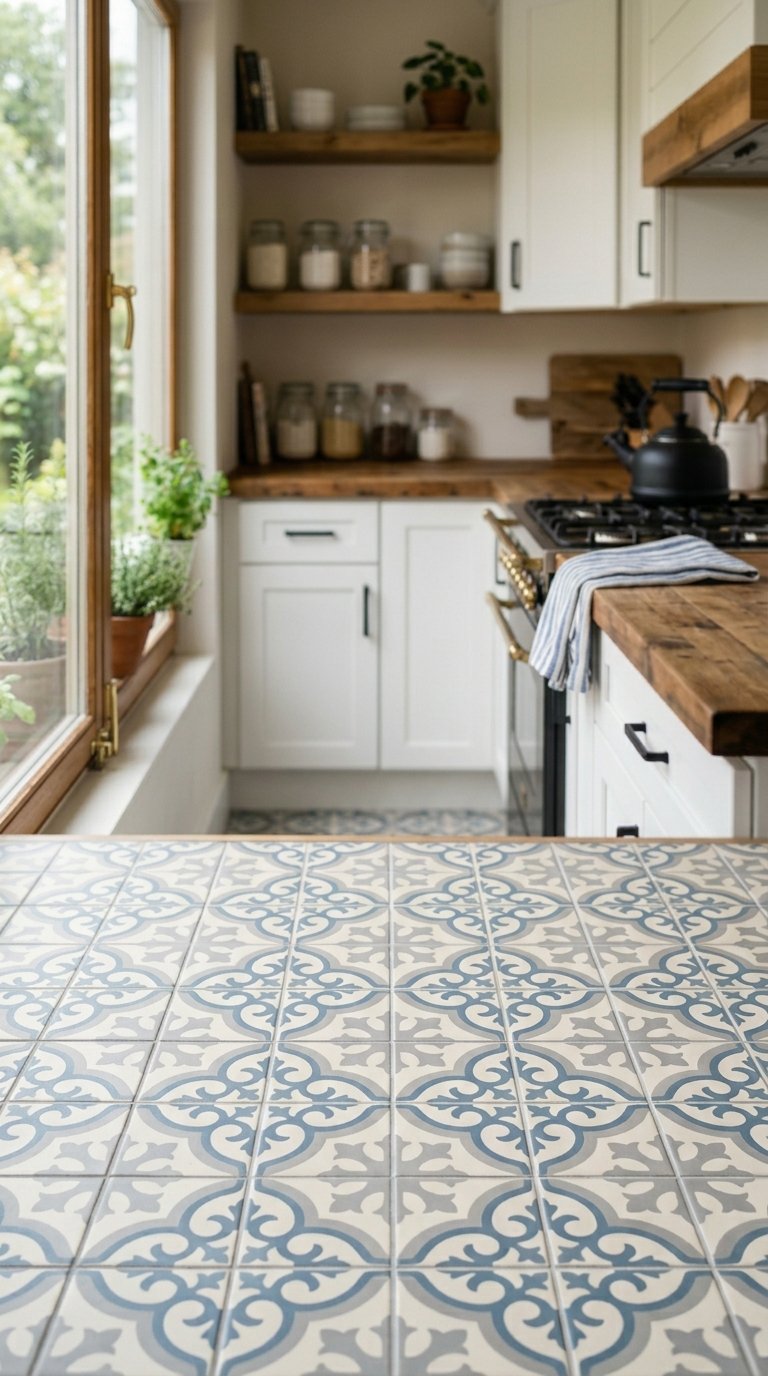
Encaustic-look porcelain tile delivers the visual complexity of hand-made cement tile at a fraction of the cost and with a fraction of the maintenance. The glazed porcelain surface resists staining without sealing, which makes it the practical choice for busy kitchens.
Marazzi’s Painted Desert series and MSI’s Cinque Terre series both offer encaustic-pattern porcelain tiles in the $4 to $7 per square foot range. The pattern options cover Moorish, geometric, and botanical motifs, which suit Mediterranean, farmhouse, and eclectic kitchen styles. Budget-conscious homeowners get a floor that looks expensive without the cement tile upkeep.
19. Dark Charcoal or Anthracite Tile for a Bold Floor
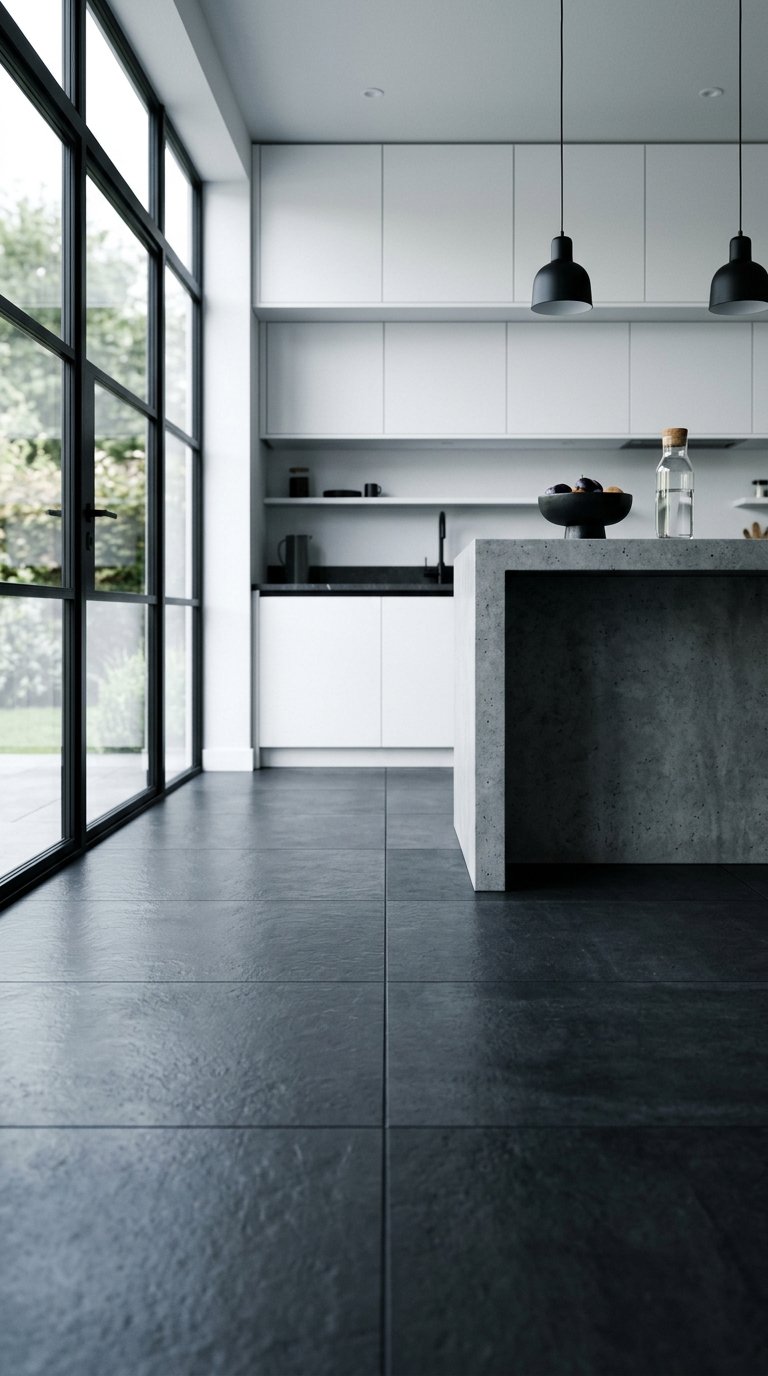
A dark charcoal or anthracite tile floor grounds a kitchen visually in a way no light floor does. It hides dirt between cleanings, which is a practical advantage in a room that sees daily cooking, and it makes white or light cabinetry pop with maximum contrast.
Porcelanosa’s Venis Ferroker Grafito in a 23×47 format costs $11 per square foot and delivers a matte, large-format dark tile with a raw concrete aesthetic. Use a matching dark grout from Custom Building Products’ Polyblend Plus in Charcoal to keep the floor reading as a unified dark surface without visible joint lines.
20. Limestone Tile With a Brushed Finish
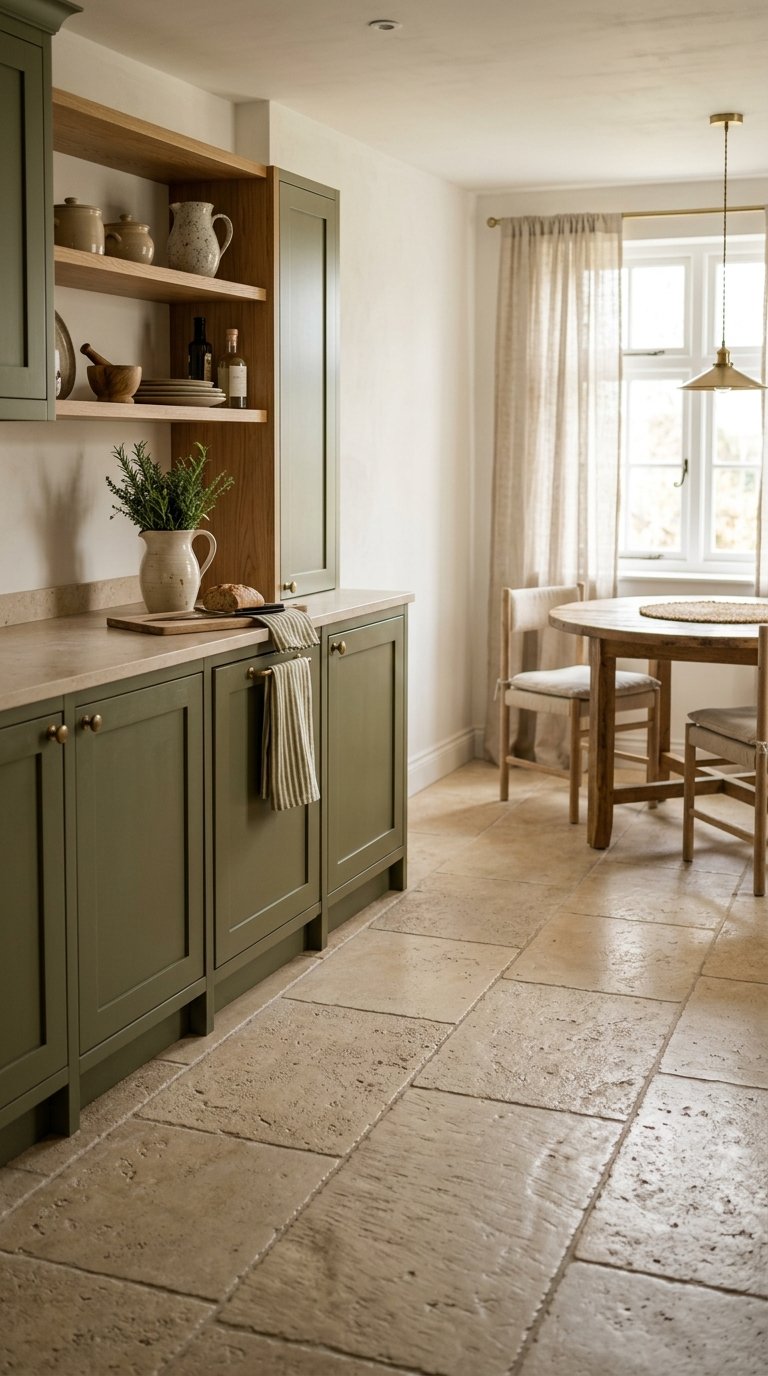
Brushed limestone tile brings a soft, sandy texture to a kitchen floor that sits between raw stone and polished marble in both look and maintenance. The brushed surface mutes the reflectivity of the stone without eliminating the natural variation of the material.
Jerusalem Gold or Classic Beige limestone in a 16×16 brushed format from Stone Tile Depot runs $4 to $9 per square foot. The warm beige and honey tones pair naturally with wood cabinets, olive green uppers, and brass hardware. Seal with a neutral-cure impregnating sealer and avoid acidic cleaners, including vinegar, which etch the calcium-based stone surface.
21. Cobalt Blue or Deep Green Patterned Tile as an Accent Zone
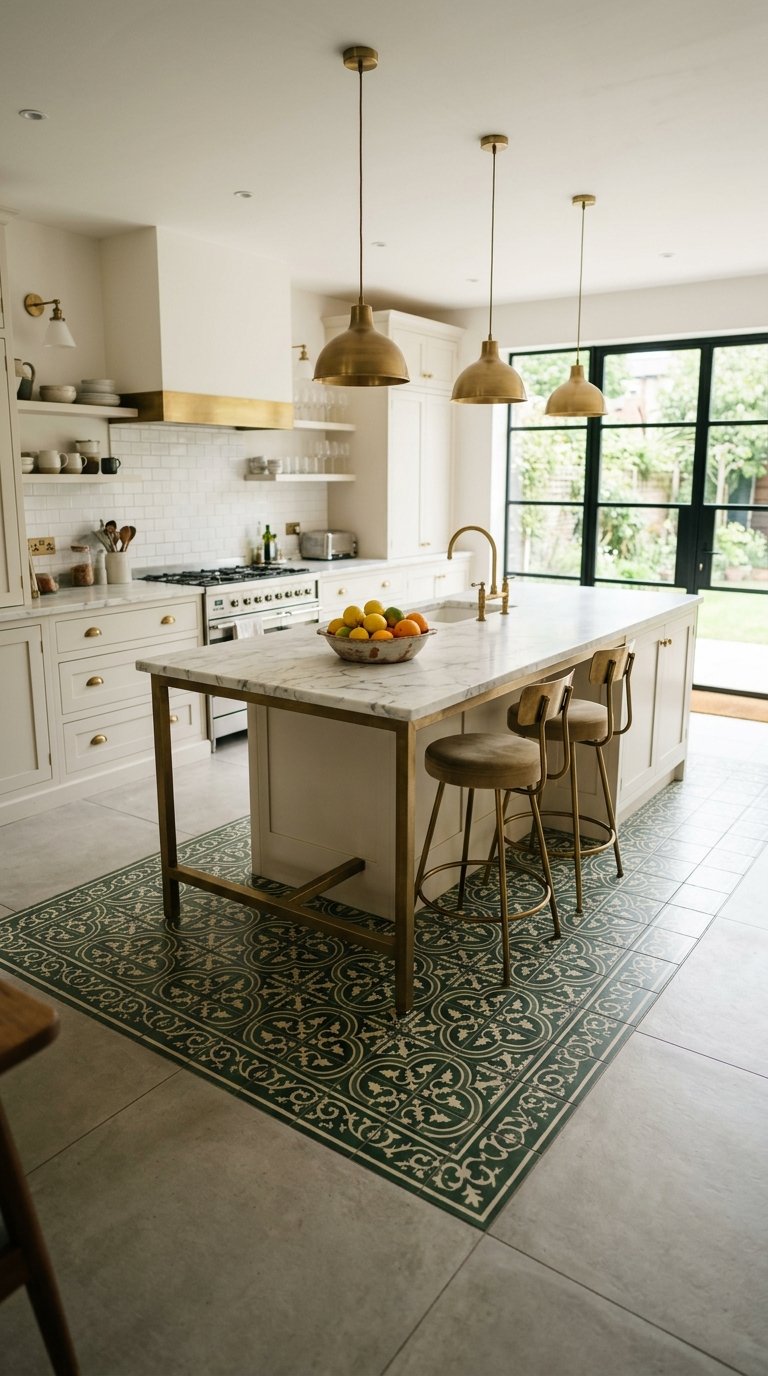
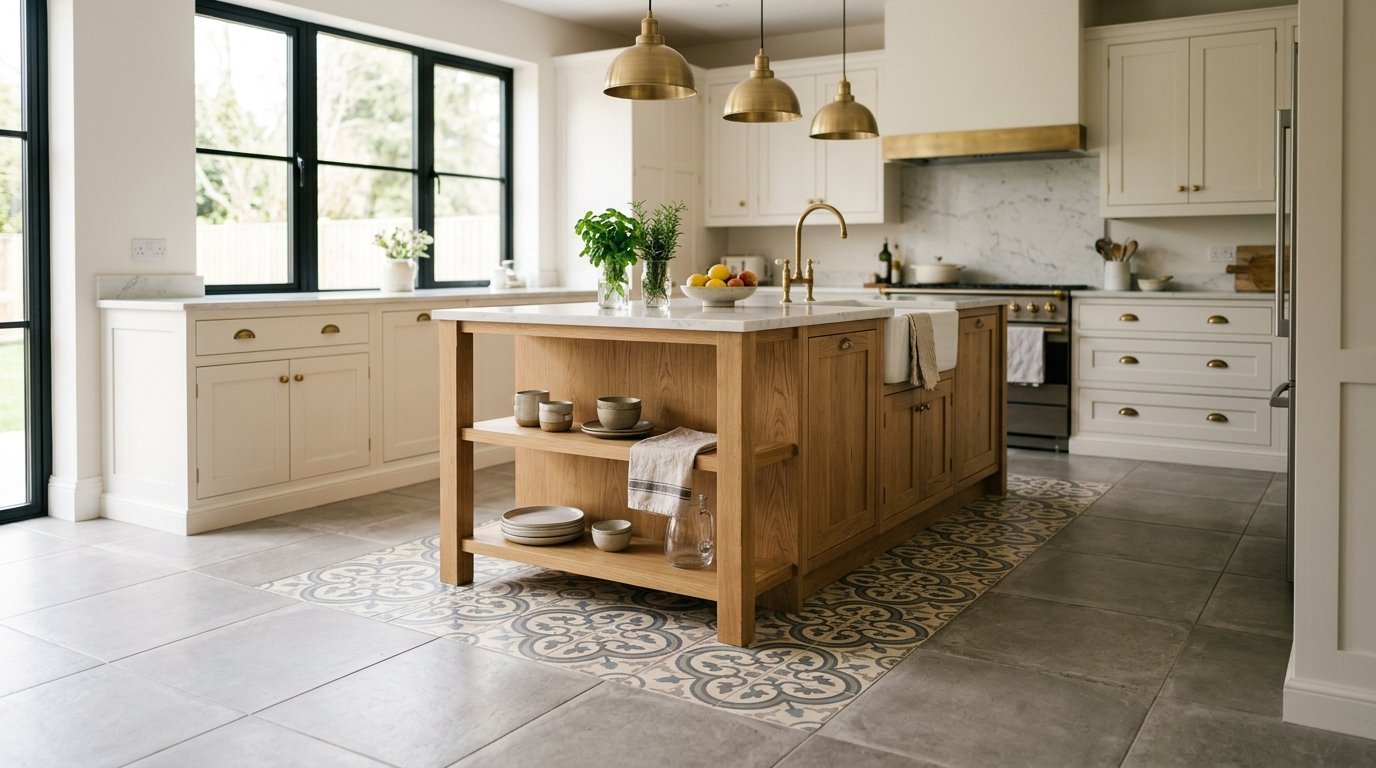
A zone of cobalt blue or deep green patterned tile under a kitchen island or in front of a range creates a defined focal point on the floor without tiling the entire kitchen in a bold color. This approach treats the floor like a rug, anchoring a specific zone within a larger neutral field.
Use a 4×4 or 8×8 hand-painted Spanish tile from Rustico Tile and Stone at $9 to $15 per square foot for the accent zone. Keep the surrounding field in a plain large-format porcelain in white or pale gray. The contrast between the patterned zone and the plain field reads as deliberate and designed rather than accidental.
22. Stacked Vertical Subway Tile on the Floor
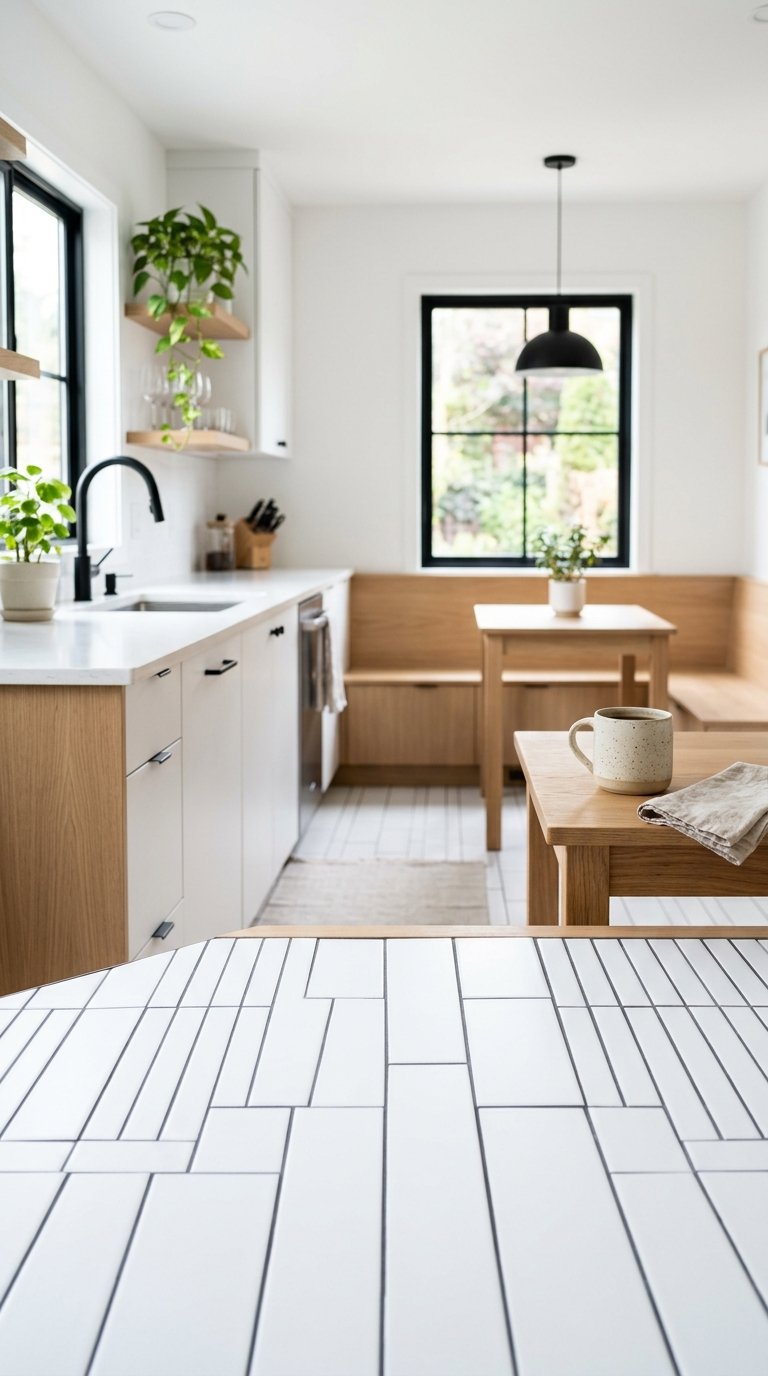
A subway tile laid in a stacked vertical pattern rather than the standard running bond creates a more modern, graphic floor with the same budget-friendly material. The vertical alignment of the joints creates a striped effect that draws the eye upward, adding perceived ceiling height in kitchens with low ceilings.
Use a 2×8 or 3×12 porcelain subway tile from Daltile’s Restore collection in Bright White at $2.49 per square foot. The taller tile format emphasizes the vertical stack pattern more than a standard 3×6 size. Grout in a contrasting charcoal or medium gray to make each vertical line read clearly against the white tile.
23. Vintage-Inspired Floral or Botanical Tile
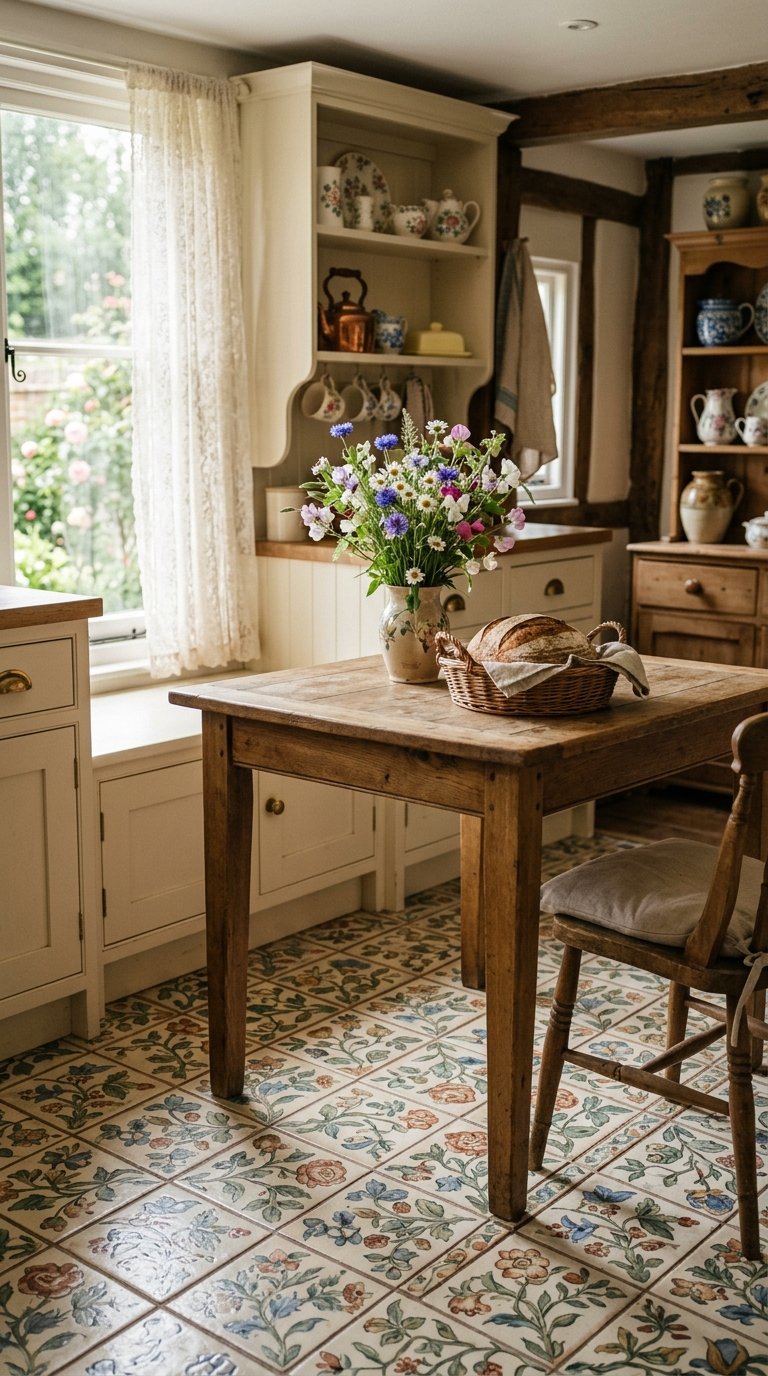
Vintage-inspired floral or botanical tile on a kitchen floor brings personality and color into the room at the floor level, where it feels grounded rather than overwhelming. This works specifically well in cottage, traditional, and farmhouse kitchens where the floor is meant to contribute to the overall warmth of the room.
Fired Earth and Topps Tiles both carry hand-painted botanical floor tiles starting at $15 per square foot. Use them across the full kitchen floor in a smaller space or as a border and threshold detail in a larger kitchen to manage cost. Seal with a color-enhancing stone sealer to intensify the glaze colors and protect the surface from foot traffic.
24. Industrial Concrete-Look Porcelain Tile
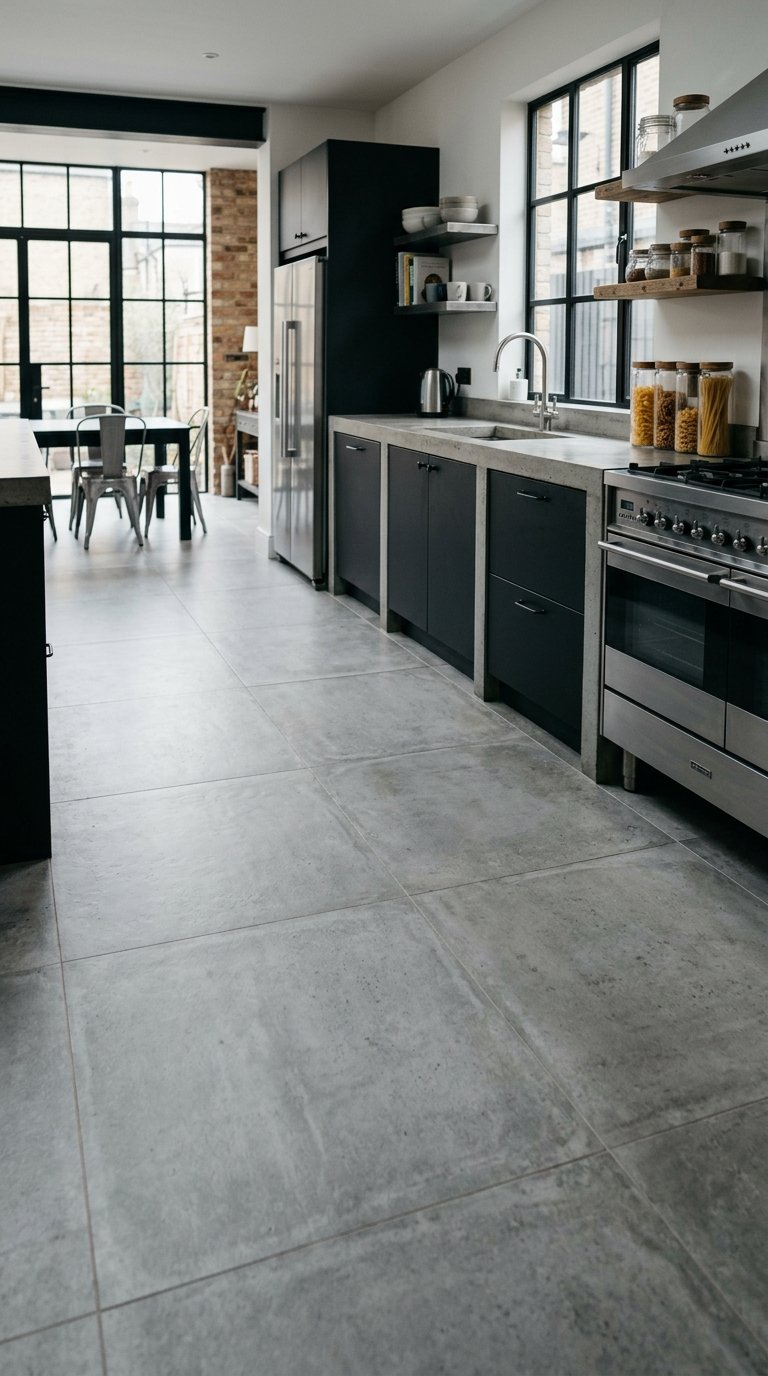
Concrete-look porcelain tile delivers the raw, utilitarian aesthetic of poured concrete without the cracking, staining, or sealing demands of actual concrete. It suits industrial, Scandinavian, and modern farmhouse kitchens where the floor needs to feel structural rather than decorative.
Emser Tile’s Lucida series in a 24×48 concrete-look matte porcelain costs $4.49 per square foot. The large format and minimal surface variation keep the floor reading as one continuous plane. Use a matching gray epoxy grout from Laticrete’s SpectraLOCK line to prevent grout staining in a floor that reads best when the joints disappear.
25. Mixed Material Floor With Stone and Wood-Look Tile
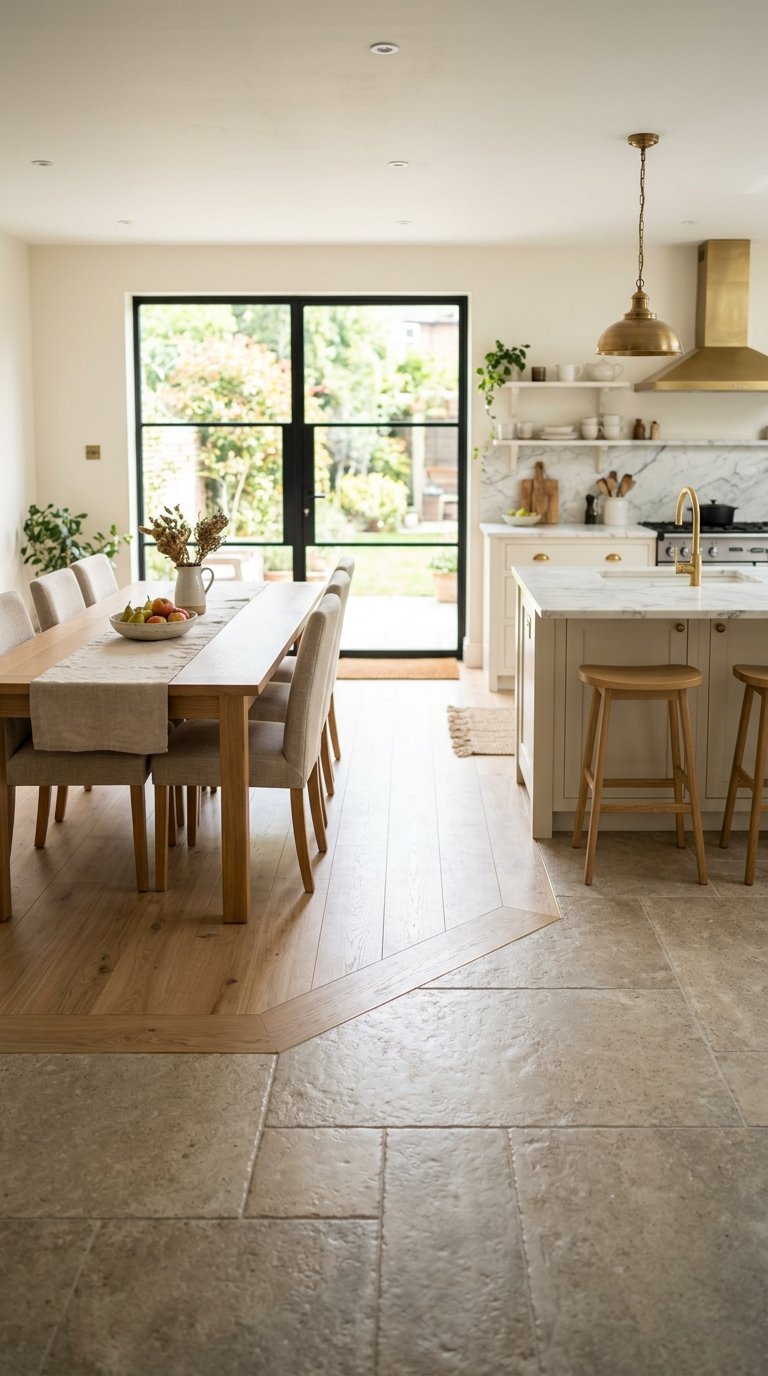
A mixed material floor that combines a stone-look tile field with wood-look porcelain plank inserts creates a floor with the visual complexity of a custom installation at a manageable cost. The stone zones define the main traffic paths while the wood-look inserts add warmth in the dining or seating area of an open-plan kitchen.
Use MSI’s Montagna Rustic Bay wood-look plank tile at $2.19 per square foot alongside their Pietra Serena stone-look tile at $3.49 per square foot. Plan the layout on paper first and keep the two materials in aligned grid lines so the floor reads as intentional rather than random. This combination works best in open-plan kitchens where the floor needs to cover multiple functional zones without a transition strip.
Final Thoughts
The right kitchen floor tile solves a specific problem first. Small kitchen? Go large format or herringbone to expand the visual space. High traffic with kids? Choose matte porcelain over polished stone. Renting and want personality without permanent changes? Peel-and-stick encaustic-look tiles from Aspect Tile at $4 per square foot give you a removable patterned floor with no damage to the subfloor.
Every idea on this list includes real pricing because budget shapes every decision. You now have 25 options across every price range, from $1.49 per square foot porcelain to $22 per square foot zellige, and every style from industrial concrete to hand-painted botanical. Pick the one that fixes your floor’s specific problem and the rest of the kitchen follows.