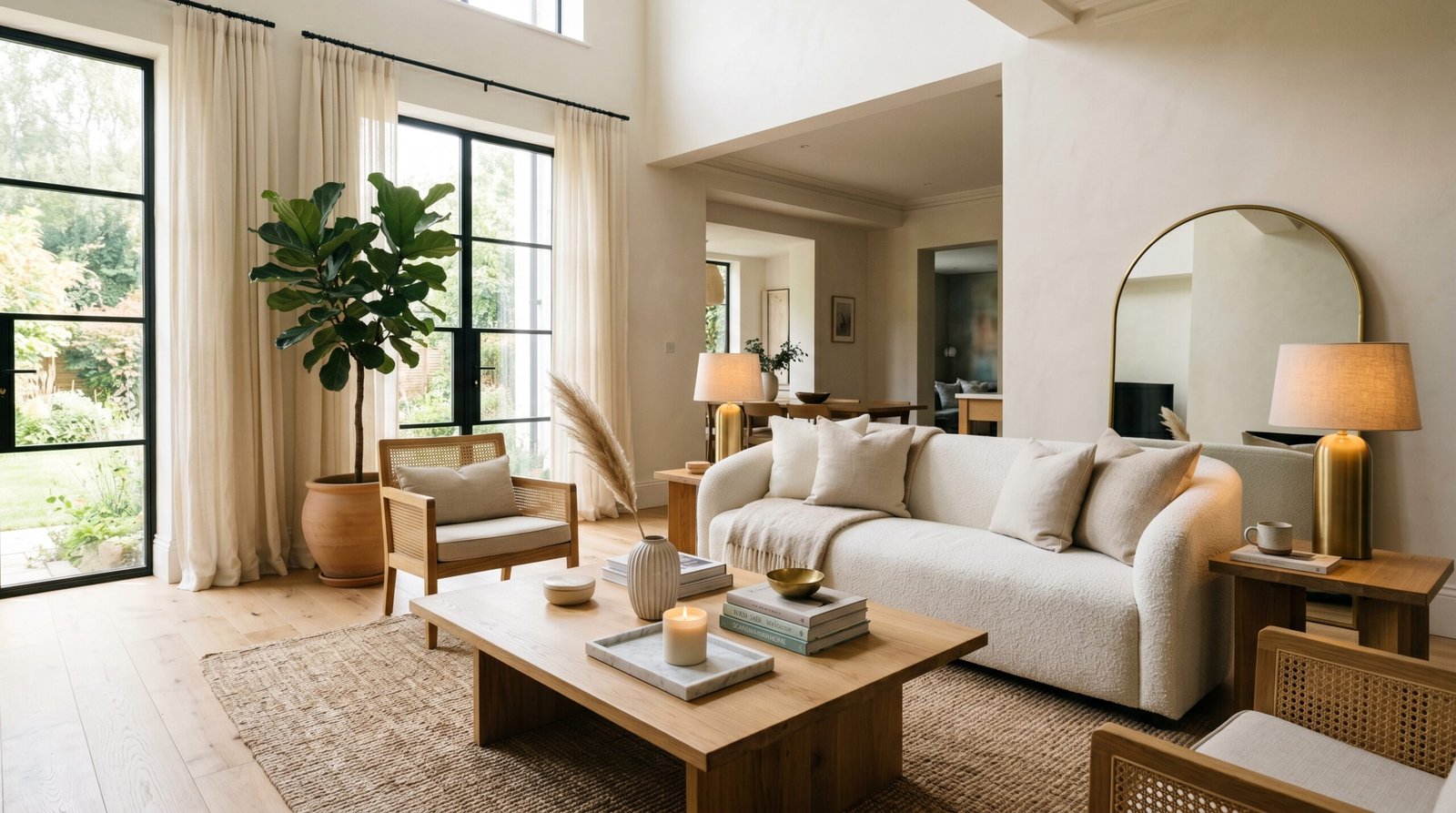
23 White Living Room Ideas That Actually Work in Real Homes
A white living room sounds like a terrible idea until you see one done properly. Then it looks like the only idea.
The fear is understandable. White shows dirt. White shows wear. White requires maintenance. All true. But a well-executed white living room also does something no other color scheme quite manages: it makes a space feel open, calm, and consistently livable regardless of what else changes around it.
I’ve spent considerable time studying white living rooms that actually work in real homes, not just in staged photography. Here are 23 ideas worth stealing.
1. Choose the Right White Paint First
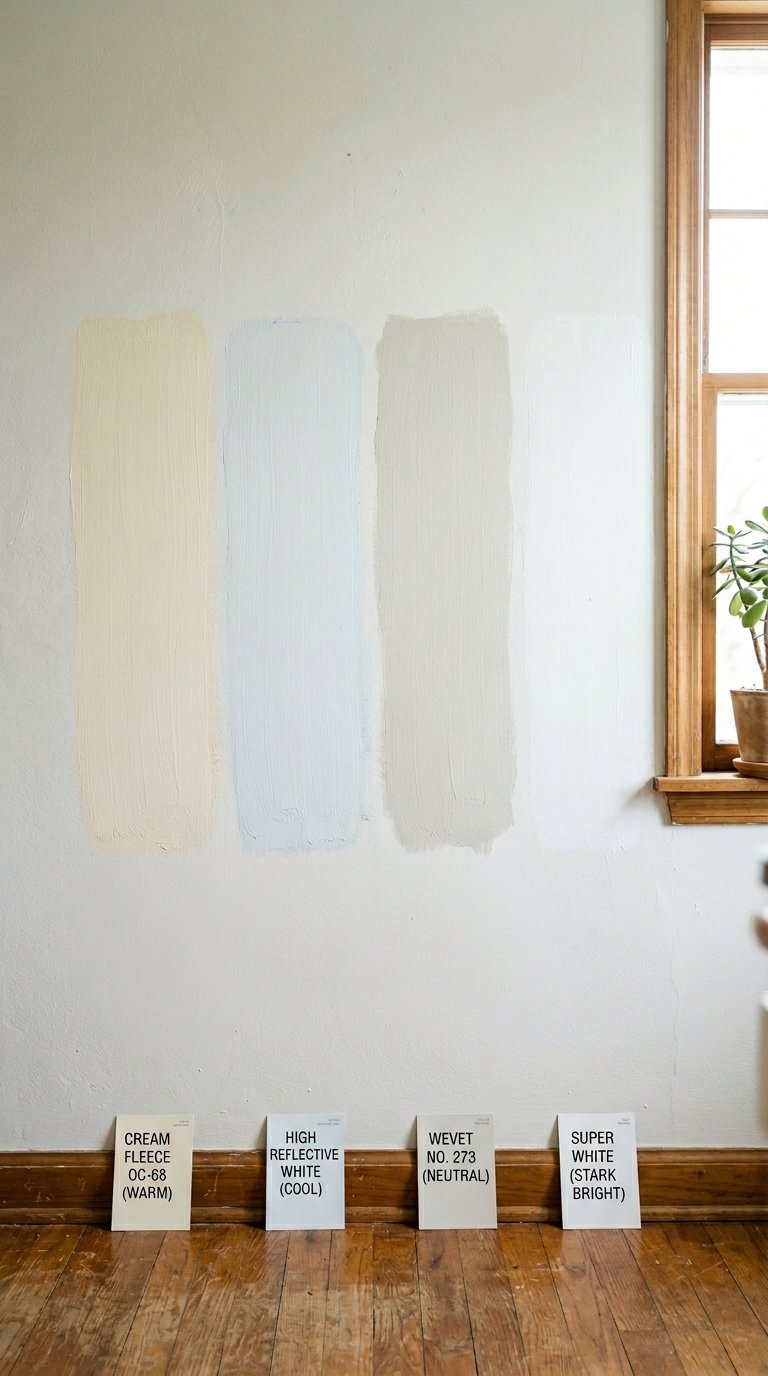
Not all white paint looks the same on a wall. This is the single most important decision in a white living room and the one most people underestimate.
White paint has undertones: warm (yellow, pink, red), cool (blue, green, gray), or neutral. The undertone interacts with your natural light, your floor color, and your furniture. Get it wrong and the room looks yellow, purple, or dingy depending on the light.
White paint undertones by room condition:
- Warm whites (Dulux Natural White, Farrow and Ball Steps): work in rooms with cool natural light or north-facing rooms.
- Cool whites (Dulux Vivid White, Benjamin Moore Chantilly Lace): work in rooms with warm natural light or south-facing rooms.
- Neutral whites (Sherwin-Williams Alabaster, Farrow and Ball Wimborne White): work in most rooms and most light conditions.
Test your shortlisted whites on a large patch of wall. View them at different times of day before committing. A small paint sample card tells you almost nothing useful.
2. Use Texture to Stop the Room Looking Sterile
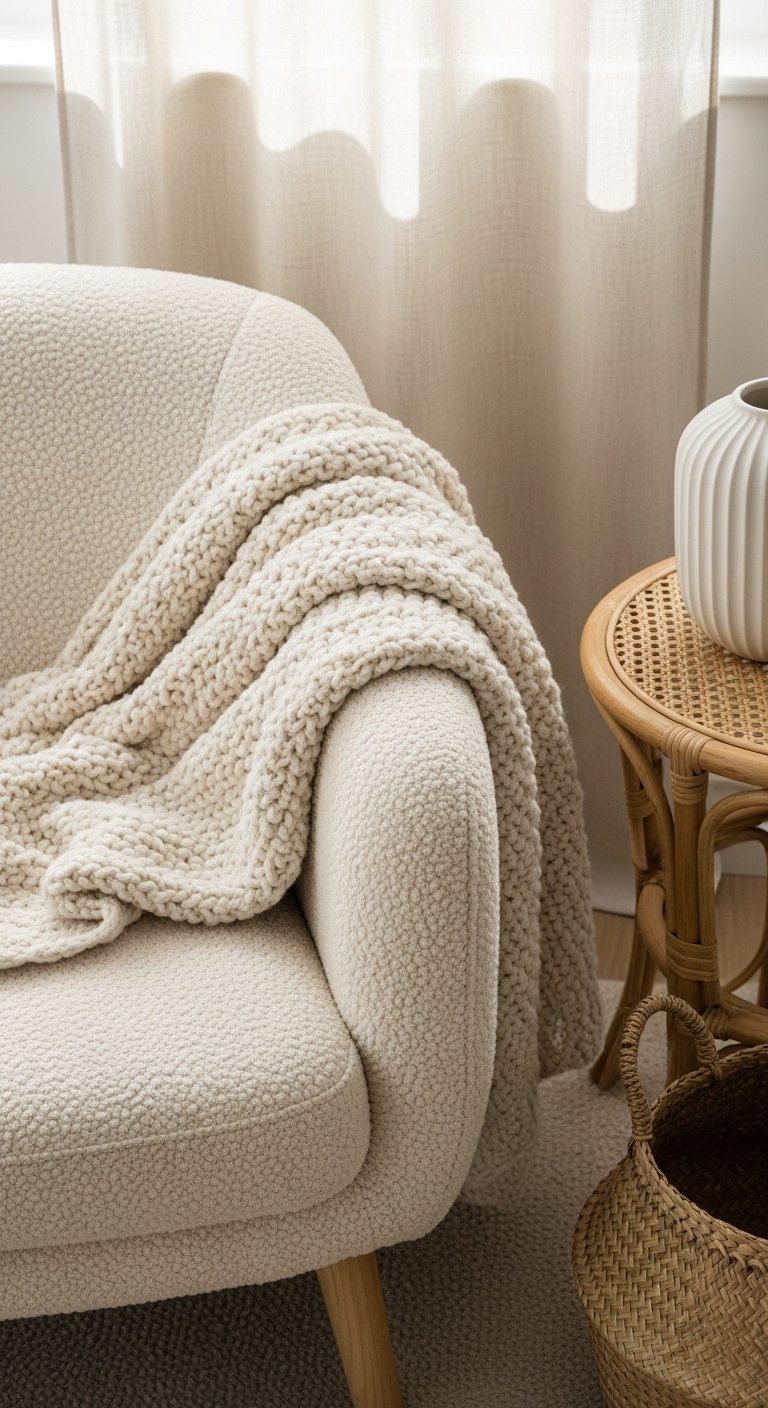
A white room with no texture looks like a hospital waiting room. The cure is texture, and there is no shortage of options.
Texture in a white living room does the job that color does in other rooms: it creates visual interest, depth, and warmth. The difference is that texture does it quietly, without competing with the white palette.
Texture sources that work in a white living room:
- Bouclé or boucle-look upholstery on sofas and chairs.
- Linen curtains with a visible weave and natural drape.
- Chunky knit or woven throw blankets over sofas and chairs.
- Ribbed or fluted ceramic vases on shelving and coffee tables.
- Rattan, cane, or wicker in furniture, baskets, or light fixtures.
- Exposed plaster or limewash walls for an organic, textural surface.
You want a room that rewards close inspection. Texture delivers that without any color.
3. Layer Multiple Shades of White
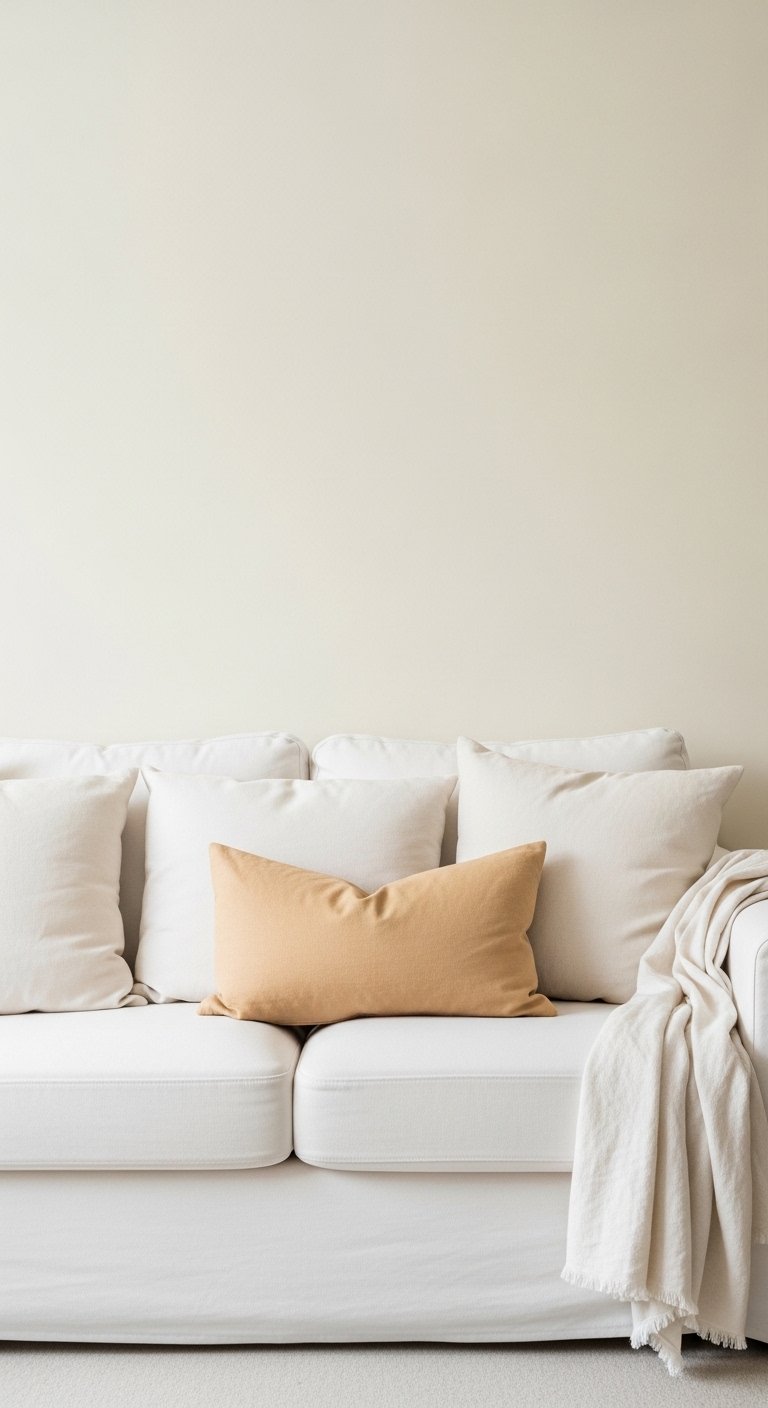
A white living room that uses only one white tone looks flat. Using two or three whites in different tones creates depth and dimension without introducing a different color.
Warm white walls, a slightly cooler white sofa, and cream linen curtains all read as white from a distance. Up close, the tonal variation between them creates a sophisticated, layered result.
How to layer white tones effectively:
- Keep the warmest white on the walls and the coolest white on the largest furniture piece.
- Use cream or off-white textiles to bridge the gap between wall and furniture tones.
- Introduce one slightly darker white or very light greige as an accent element.
The layers make the room look designed. A single flat white makes it look unfinished.
4. Anchor the Room With a Statement Sofa
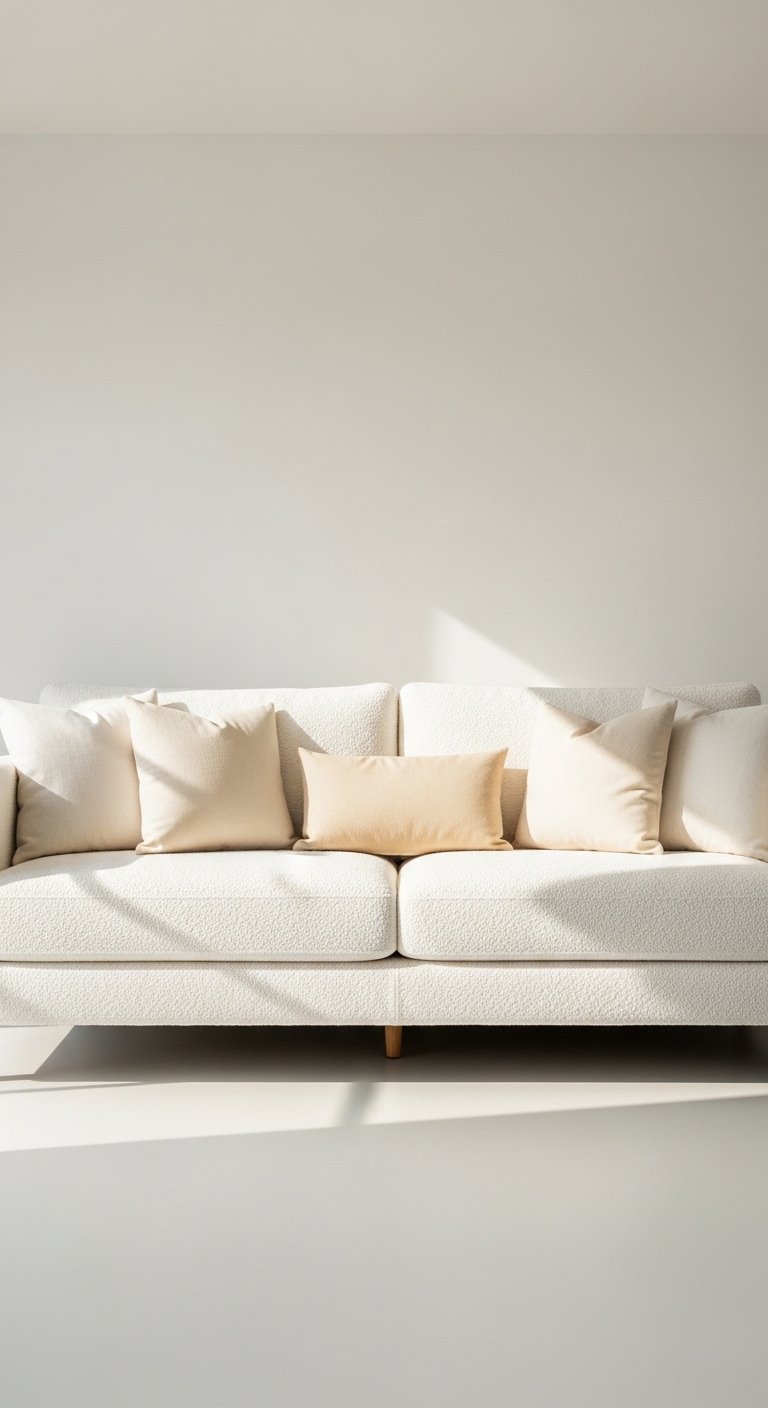
In a white living room, the sofa is the visual anchor. Everything else responds to it.
A white or cream sofa is the obvious choice and it works well when the fabric is high-quality and the form is strong. A sofa with interesting proportions, a visible leg, and quality upholstery in a textured white fabric reads as a design decision, not a default.
White sofa considerations:
- Performance fabric or treated upholstery resists stains and cleans more easily.
- Slipcover sofas offer the ability to wash the cover, which makes white genuinely practical.
- Bouclé sofas add texture that disguises minor surface marks better than flat fabrics.
- White linen sofas look stunning but require more maintenance than performance fabrics.
A sofa cover or throw strategically placed on the most-used seat area extends the life of white upholstery significantly.
5. Use Natural Wood to Warm the Space
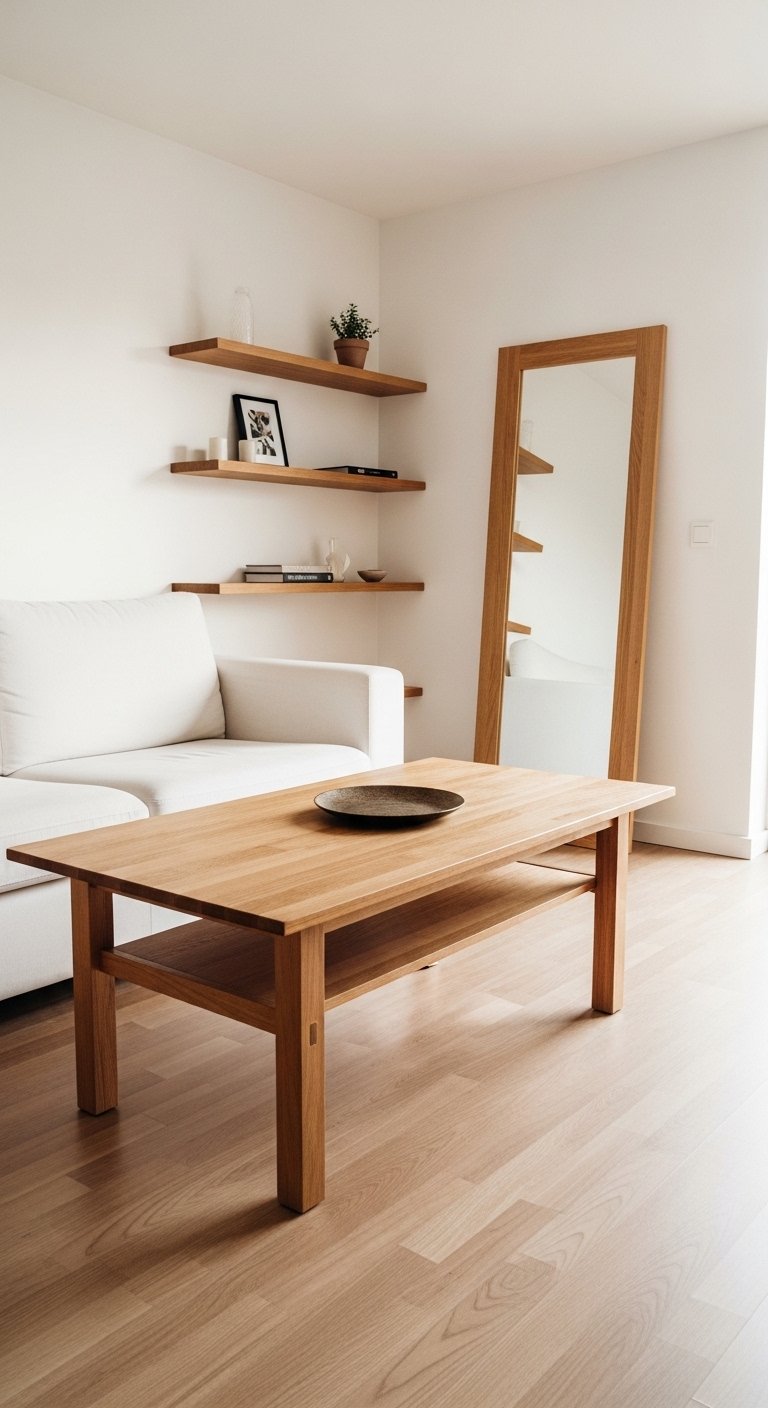
Natural wood in a white living room prevents the space from reading as cold. The warmth of wood grain against white walls creates a contrast that feels organic and balanced rather than stark.
A natural oak coffee table, a wood-framed sofa, wooden shelving, or a hardwood floor all introduce warmth without introducing color in a way that competes with the white palette.
Wood tones by white living room style:
- Light ash or blonde oak for a Scandinavian, minimal white room.
- Warm medium oak for an organic, natural white room.
- Walnut for a more contemporary, sophisticated white room.
- Driftwood or whitewashed wood for a coastal white room.
One consistent wood tone across the main furniture pieces reads as designed. Multiple competing wood tones in the same room look accidental.
6. Add Plants for Color and Life
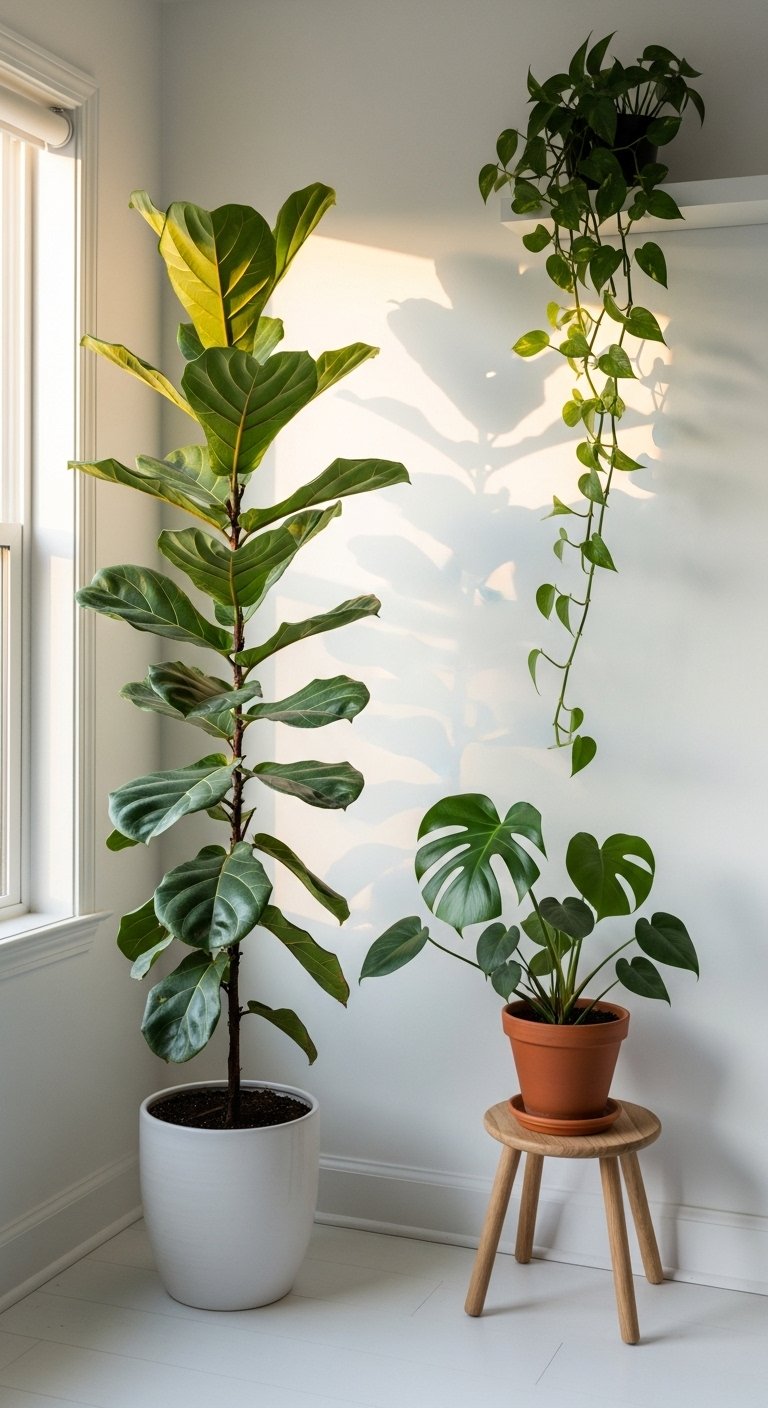
A white living room with no plants looks cold and uninhabited. Plants add color, organic shape, and life to a space that, without them, risks becoming too perfect and too still.
You don’t need many. Two or three well-chosen plants in the right spots, a tall floor plant in a corner, a medium plant on a shelf or coffee table, and a trailing plant on a high surface, make a significant difference.
Plants that photograph well in white rooms:
- Fiddle-leaf fig for structural height and large, dark green leaves.
- Monstera deliciosa for bold leaf shapes and tropical character.
- Olive tree for soft, silver-green leaves and a Mediterranean feel.
- Trailing pothos or string of pearls for cascading organic shape.
- Snake plant for graphic, architectural form with minimal care.
The pot matters as much as the plant. Use ceramic, terracotta, or woven basket pots in neutral tones that sit within the white palette.
7. Go All-White With Contrasting Black Accents
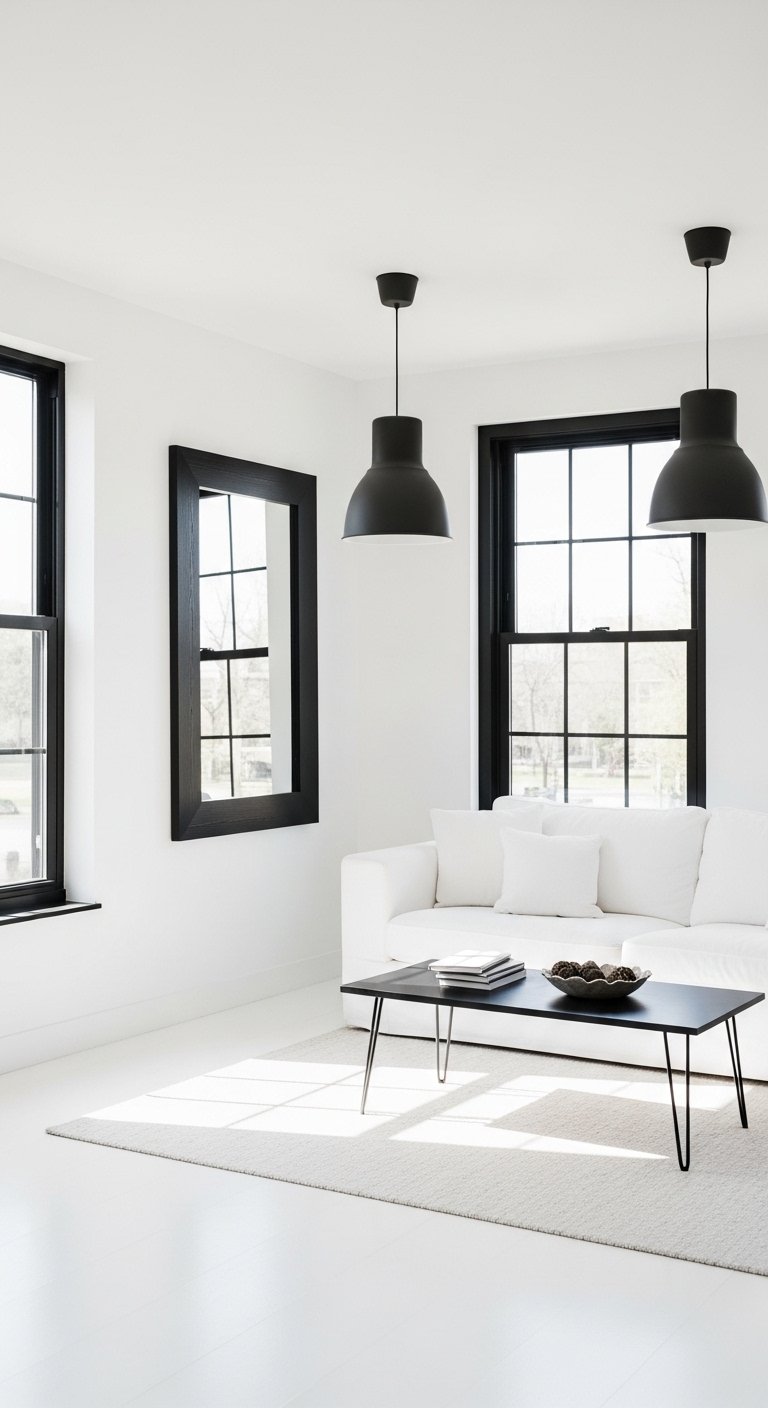
An all-white living room with deliberate black accents creates a graphic, high-contrast result that feels bold and considered rather than stark.
Black window frames, black light fixtures, black hardware on furniture, a black-framed mirror, and black picture frames all create visual anchoring points within the white room. The black accents give the eye somewhere to land.
Black accent elements that work:
- Matte black window frames or steel-framed windows.
- Black-framed mirrors and picture frames.
- Black pendant lights or floor lamps.
- Black metal furniture legs and hardware.
- Black throw cushions or a dark charcoal rug.
Keep the black accents consistent in finish: all matte, all gloss, or all metal. Mixed black finishes look unresolved.
8. Use a Large Area Rug to Define the Space
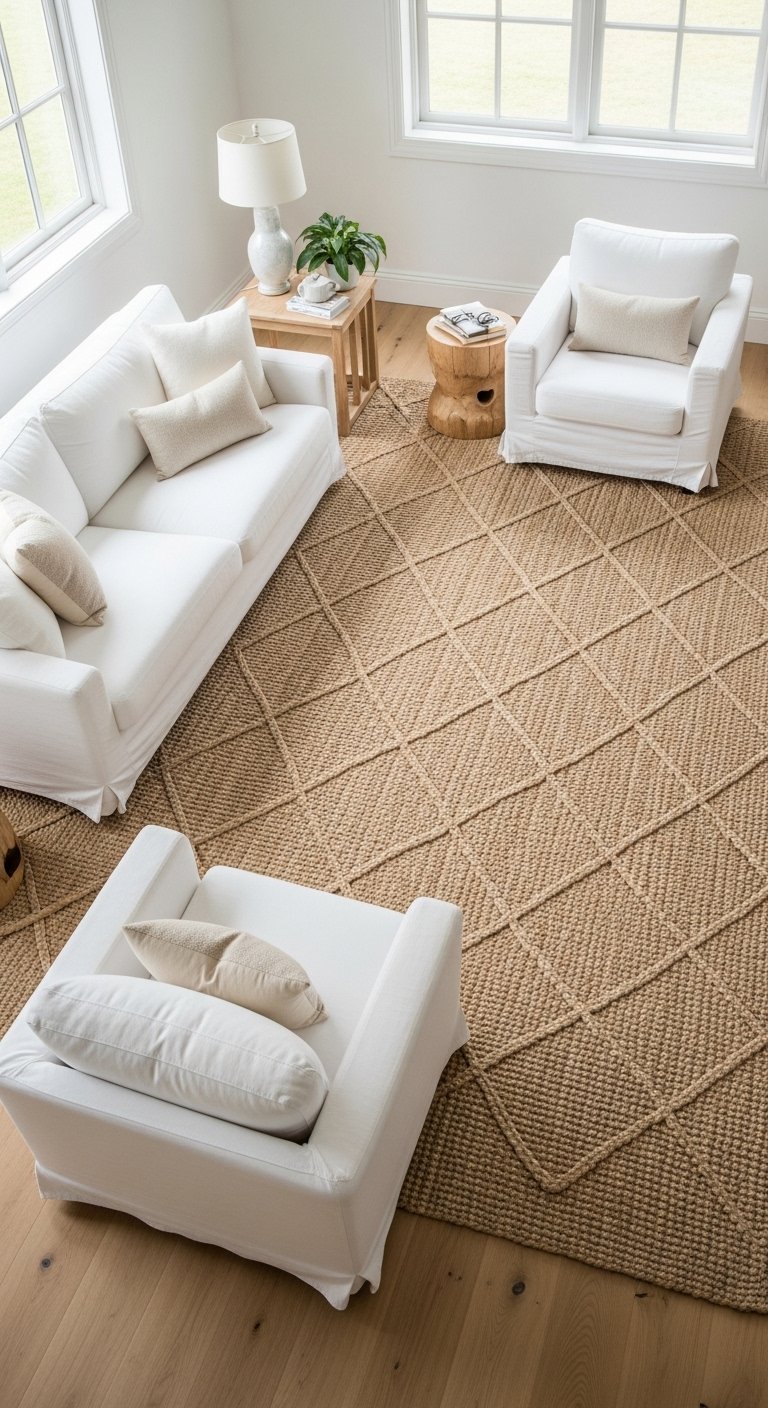
A white living room without a rug looks ungrounded. The rug anchors the seating arrangement, defines the conversation zone, and introduces texture and warmth at floor level.
The rug size matters enormously. In a white room especially, an undersized rug looks like a postage stamp on the floor. The front legs of all main seating pieces should sit on the rug.
Rug choices for a white living room:
- Natural fiber rugs (jute, sisal, seagrass) for organic warmth and texture.
- Wool pile rugs in cream or ivory for softness and depth.
- Flatweave cotton rugs with a subtle pattern for a lighter visual footprint.
- Moroccan-style rugs in cream and white for pattern without color aggression.
- Sheepskin or flokati rugs for high texture and a cozy, layered feel.
Avoid rugs that are too bright or too patterned. In a white room, the rug supports the palette rather than competing with it.
9. Maximize Natural Light
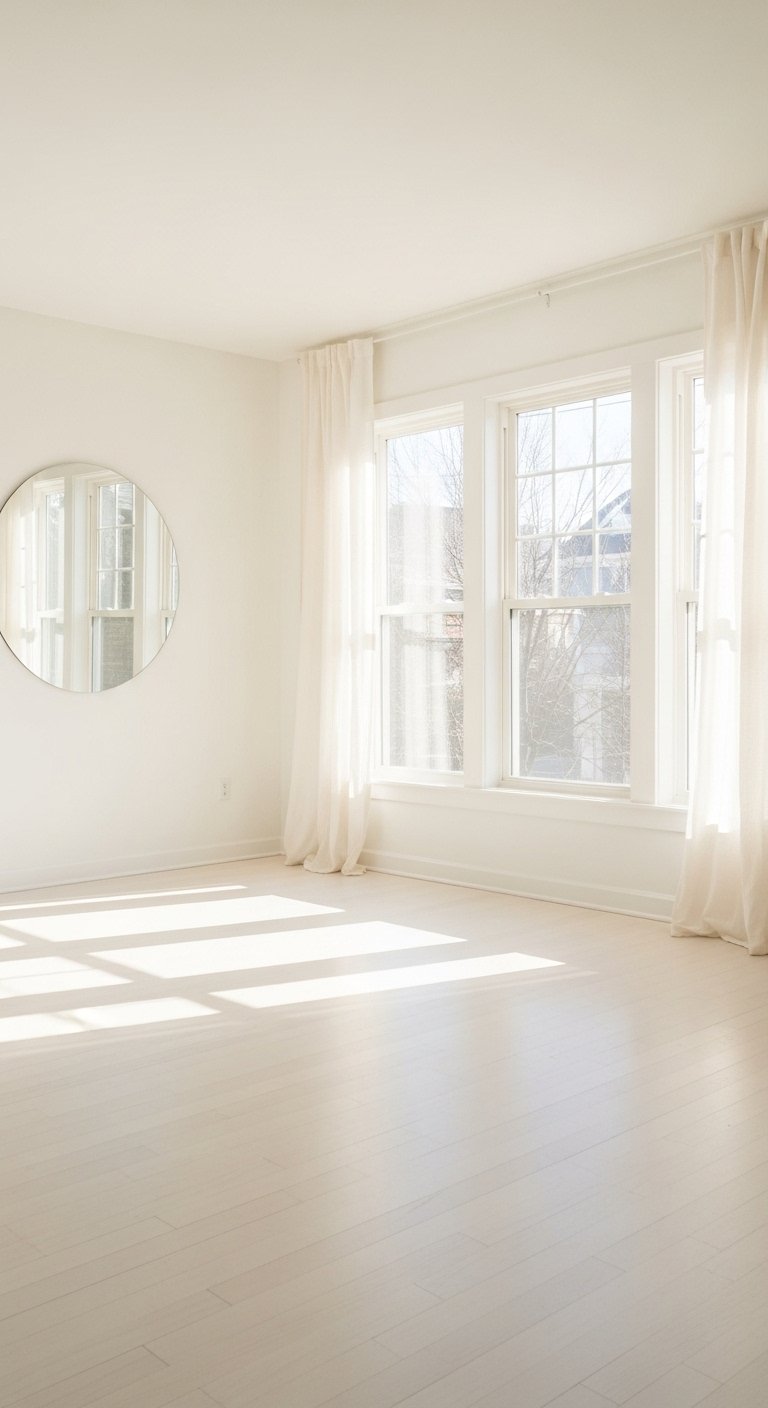
Natural light is the foundation of a great white living room. It activates the white surfaces, creates shadow and depth throughout the day, and makes the space feel alive and changing from morning to evening.
Maximize every source of natural light you have. Remove heavy window treatments that block light. Trim external plants that shade windows. Use mirrors to reflect and distribute light further into the room.
Practical ways to increase natural light:
- Replace heavy curtains with sheer linen panels that filter rather than block.
- Position mirrors to face windows and reflect light into darker corners.
- Paint window frames and sills the same white as the walls to extend the light zone visually.
- Keep window sills completely clear.
- Use glass or lucite furniture near windows to minimize light-blocking.
A white room with limited natural light looks gray and flat. Before committing to a white scheme, assess your natural light honestly.
10. Add Warmth With Brass or Gold Accents
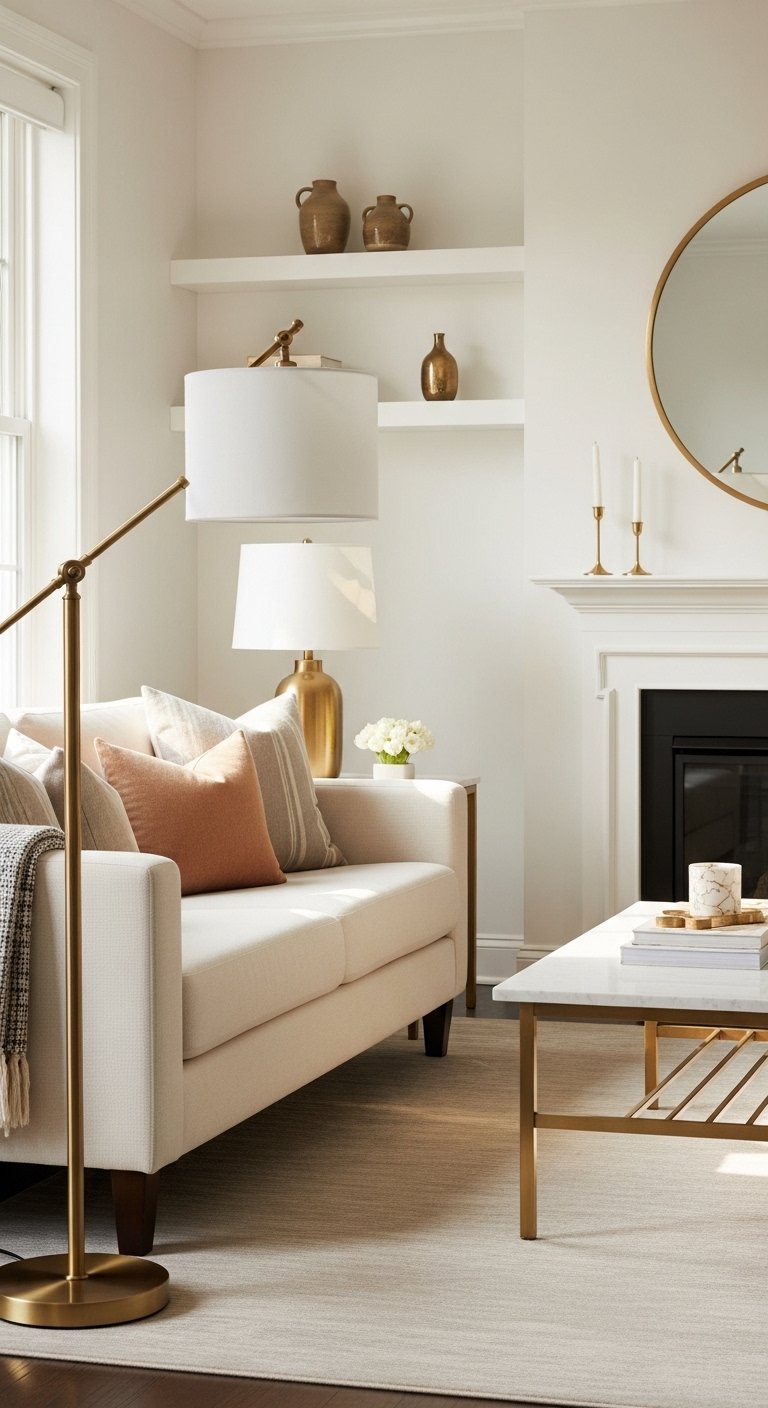
Brass and gold accents in a white living room add warmth, richness, and a touch of luxury without introducing a competing color. They work as a metallic thread that ties the room together.
A brass floor lamp, gold-framed mirror, brass coffee table legs, and gold hardware on shelving all contribute to the same warm metallic note running through the space.
Where brass and gold work best:
- Light fixtures as the most visible brass element in the room.
- Mirror frames for reflected warmth throughout the space.
- Decorative objects and vases on shelving and coffee tables.
- Furniture leg finishes on coffee tables, side tables, and chairs.
- Hardware on storage pieces and built-ins.
Brushed brass ages better and reads as more contemporary than polished gold, which tends to look brighter and harder in a white room. IMO, brushed brass is the better choice in almost every white living room situation.
11. Create a Feature Wall With Limewash Paint
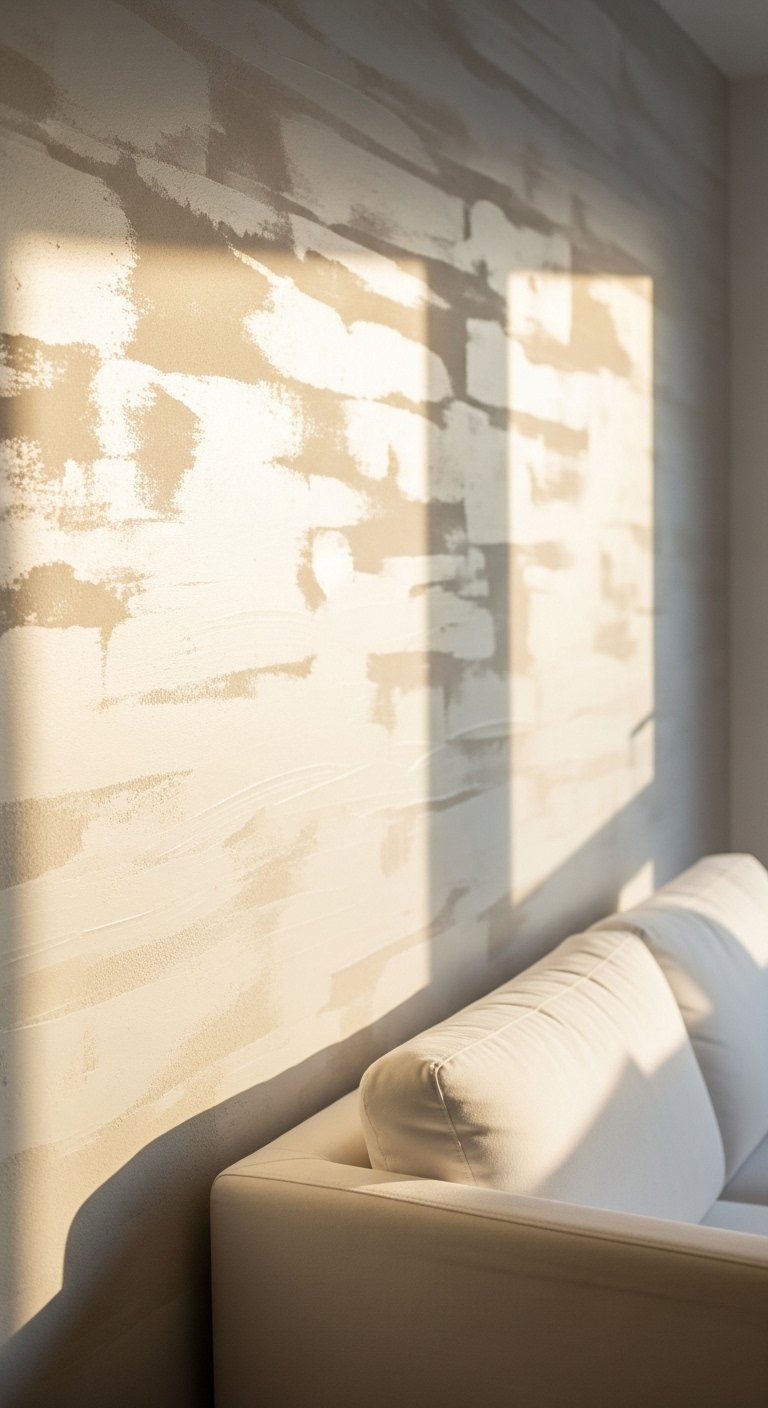
A limewash painted feature wall adds depth, texture, and organic variation to a white living room without introducing a new color. Limewash in white or very pale tones creates a surface that catches light differently throughout the day, making the wall feel alive.
The layered, slightly uneven quality of limewash paint is intentional. Each wall looks unique because no two limewash applications are identical.
Limewash application tips:
- Apply in thin, overlapping layers with a large brush using irregular strokes.
- Vary the pressure and direction between coats for the most authentic result.
- Test on a sample board before committing to a full wall.
- Use a slightly different tone of limewash than the surrounding walls for maximum depth.
This is one of the most effective texture additions available in a white living room at relatively low cost.
12. Use White Built-Ins to Add Storage and Architecture
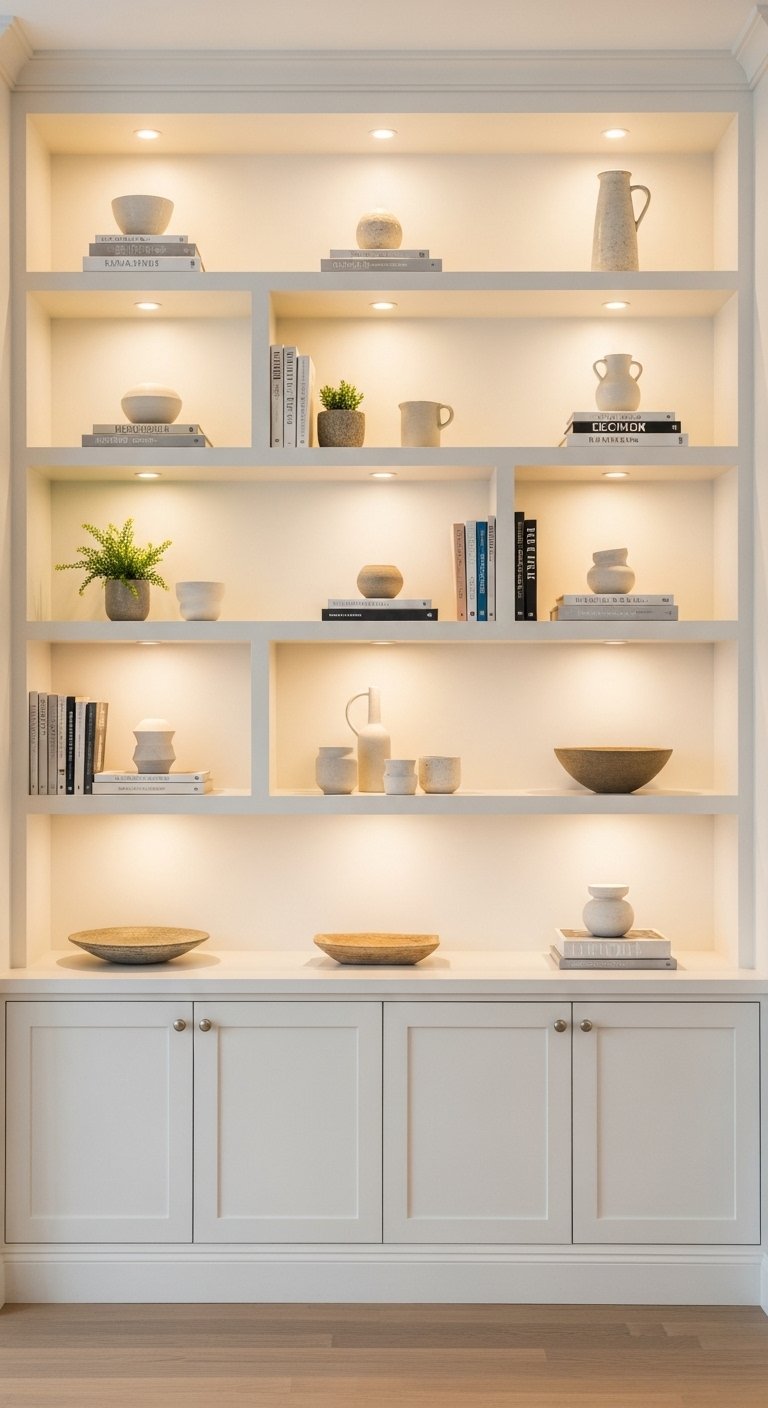
White built-in shelving and cabinets painted the same color as the walls create a seamless architectural quality that freestanding furniture cannot replicate. The built-ins disappear into the walls visually, making the room feel larger while adding significant storage.
A full wall of built-in white shelving on either side of a fireplace or TV is one of the highest-impact upgrades in a white living room. It turns a flat surface into a designed architectural feature.
Built-in styling in a white room:
- Paint the interior back panel of shelves a slightly deeper tone for depth.
- Mix open shelves with closed cabinet sections to balance display and hidden storage.
- Use consistent object heights and limited color on open shelves to maintain the white room palette.
- Add interior shelf lighting for warmth and to highlight displayed objects.
Built-ins cost more than freestanding shelving but deliver a result that transforms the room permanently.
13. Style Your Coffee Table With Intention
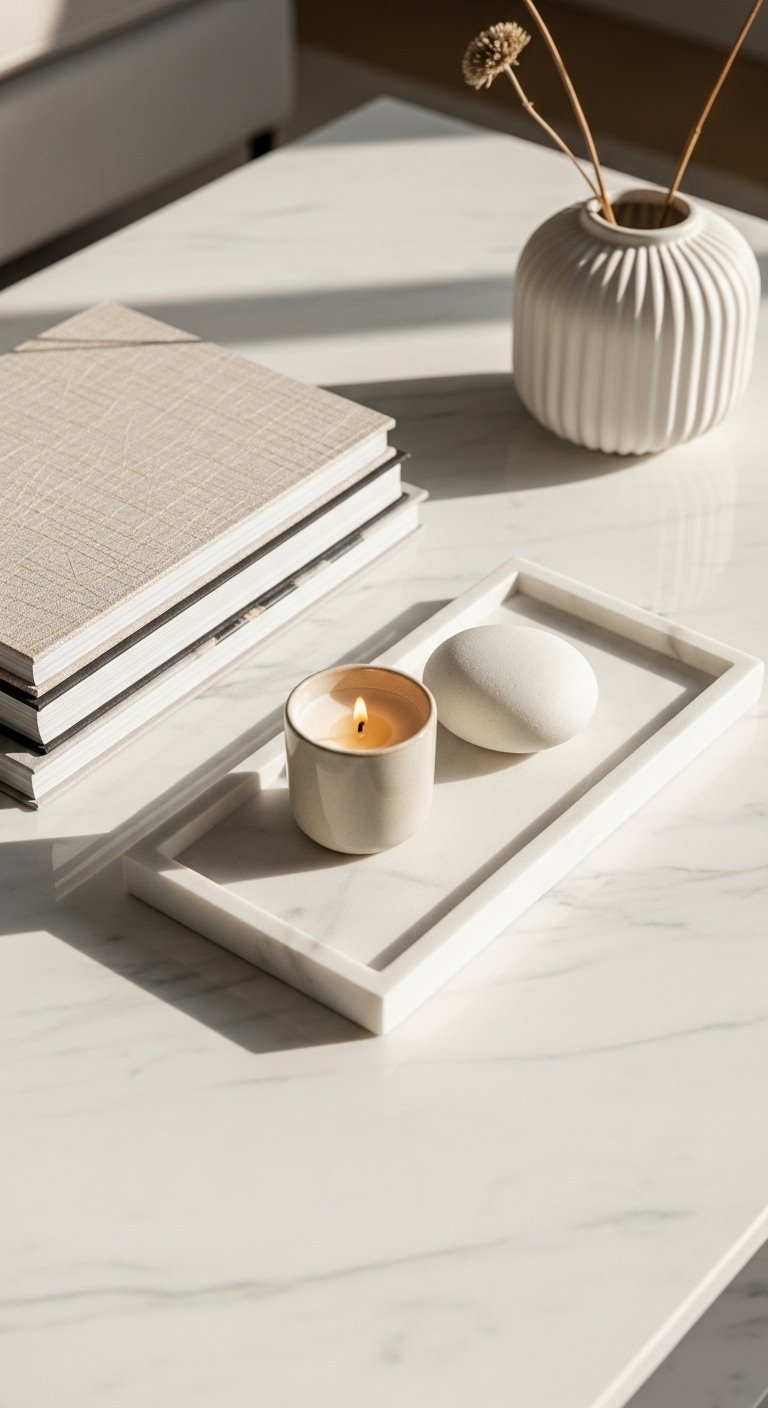
The coffee table in a white living room sits at the center of the seating arrangement and receives constant visual attention. A cluttered or unstyled coffee table undermines the room. A well-styled one completes it.
The standard coffee table styling formula: one tray containing smaller objects, one stack of books, one plant or vase, and one decorative object with height variation. Four categories. Resist adding more.
Coffee table objects for a white living room:
- A white or marble tray holding a candle and a small ceramic object.
- Two or three coffee table books with beautiful spines or covers.
- A low ceramic vase with one or two stems.
- A single sculptural object in stone, ceramic, or natural material.
Keep the coffee table surface at least 40 percent clear for actual use. A styled coffee table that can’t hold a glass of water has missed the point.
14. Introduce Soft Blue as an Accent Color
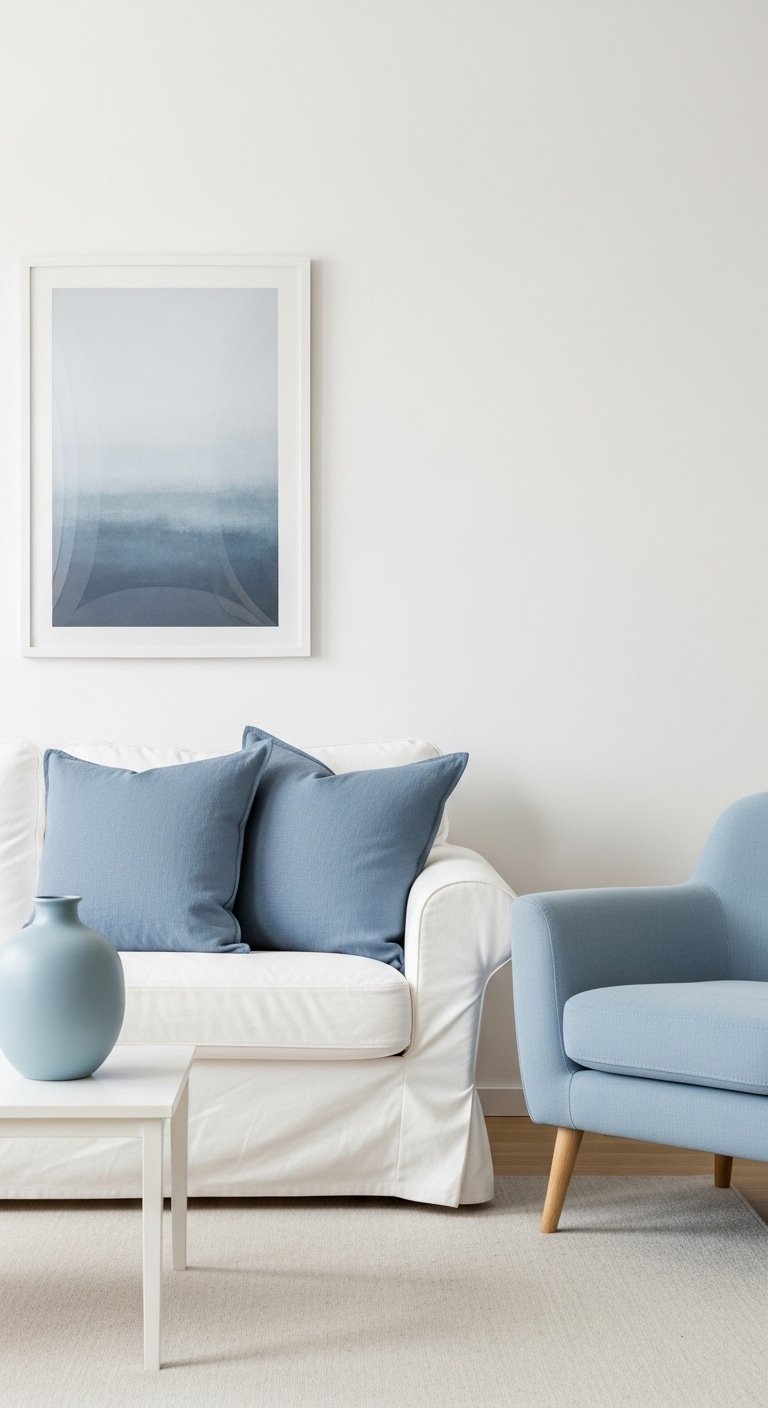
Soft blue is the most natural accent color pairing for a white living room. The two colors exist together in almost every natural environment: sky against cloud, sea against foam, water against stone.
A dusty blue, soft powder blue, or muted French blue accent in cushions, a single armchair, or a piece of art introduces color to the white room without disrupting its calm character.
Blue accents that work in white living rooms:
- Two dusty blue cushions on a white sofa.
- A single blue armchair in a corner of the room.
- A blue and white abstract print in a white frame.
- A soft blue ceramic vase on the coffee table or shelving.
- A muted blue-gray rug as the room’s grounding element.
Avoid bright or saturated blues. Soft, muted, or dusty blue tones sit within the white palette. Bright blue sits outside it and creates a different, louder result.
15. Use Mirrors to Add Depth and Light
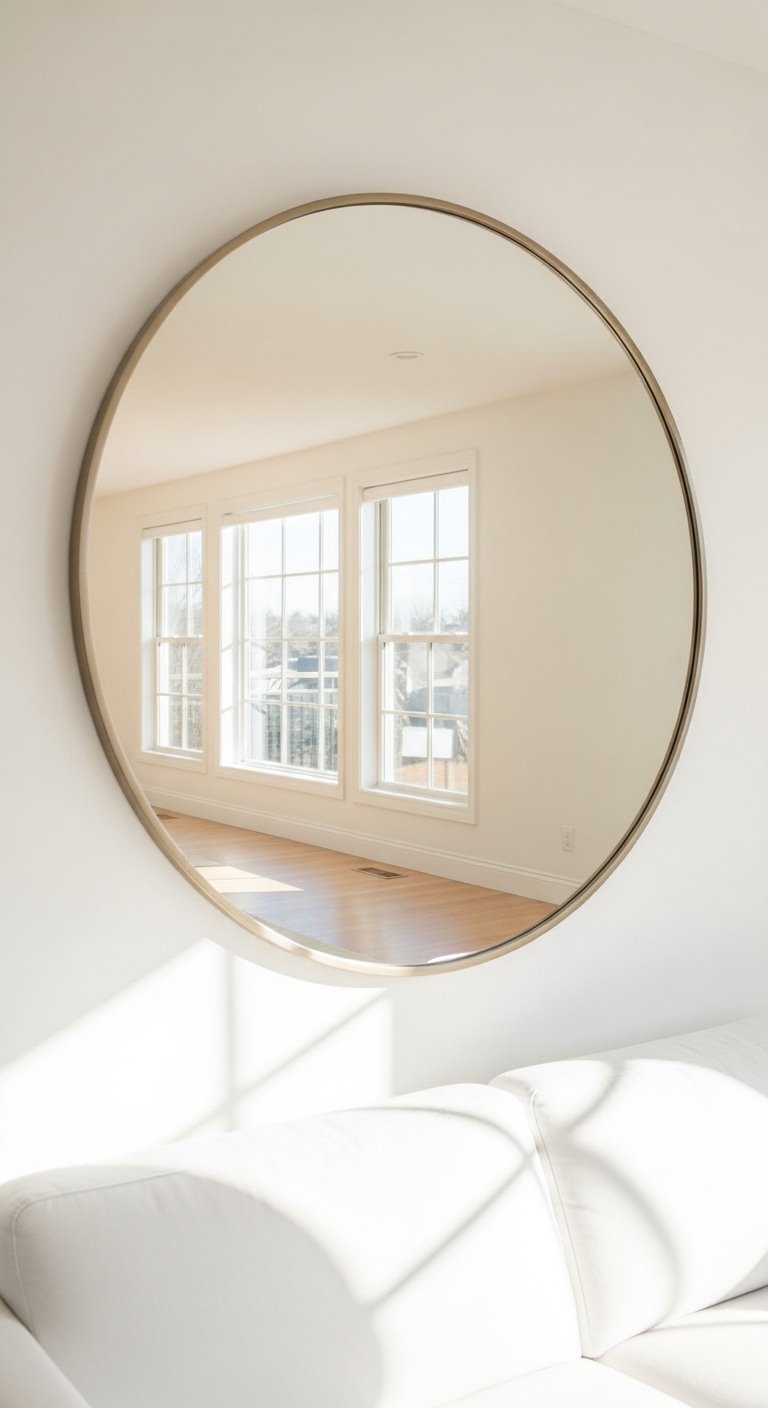
Mirrors in a white living room multiply the effect of natural light and create the impression of additional space beyond the actual walls of the room.
A large mirror on a wall opposite a window doubles the window’s contribution to the room. A mirror behind a lamp doubles the lamp’s light output. Both effects are measurable and significant in a white room where light quality determines everything.
Mirror placement strategies:
- Opposite the main window for maximum light reflection.
- Above the fireplace as the room’s focal point.
- Leaning against a wall for a casual, residential quality.
- As part of a gallery wall arrangement for a more decorative function.
In a white room, a mirror with a warm brass or natural wood frame adds material warmth to what is otherwise a functional object. Choose the frame as carefully as the mirror itself. 🙂
16. Add a Fireplace as the Room’s Anchor
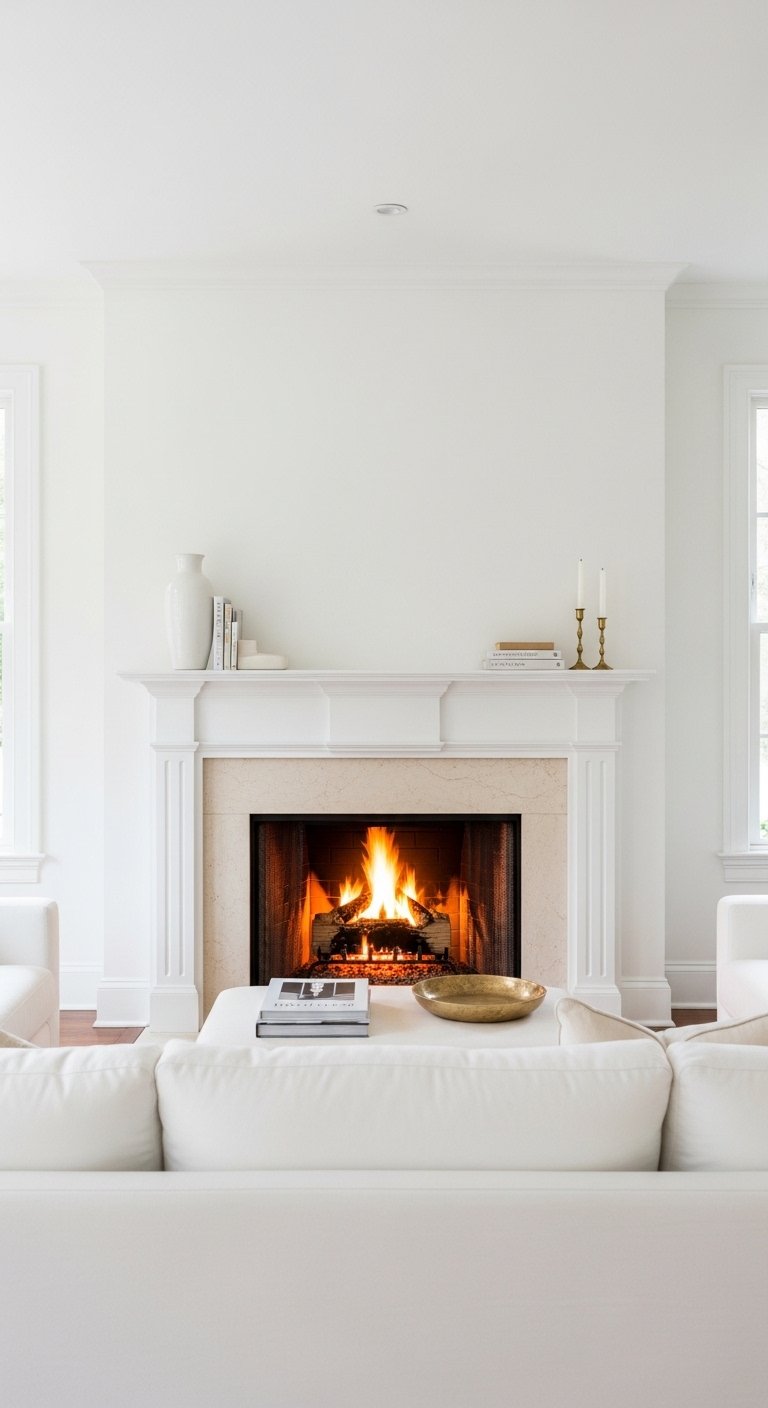
A fireplace in a white living room becomes the natural focal point and anchor for the entire seating arrangement. Whether it burns wood, gas, or uses an electric insert, the fireplace gives the room a center.
A white-painted fireplace surround in a white room creates a subtle, architectural focal point. A marble or stone fireplace in a white room creates a stronger material contrast while staying within the neutral palette.
Fireplace surround options for a white room:
- White-painted timber surrounds for a classic, traditional look.
- Marble or stone surround for material richness and natural variation.
- Limewash or plaster surround for an organic, European feel.
- Simple flush plasterboard surround for a minimal, contemporary statement.
The mantelpiece above the fireplace is a prime display surface. Keep it edited: one to three objects maximum, with intentional height variation.
17. Choose Curtains That Go Floor to Ceiling
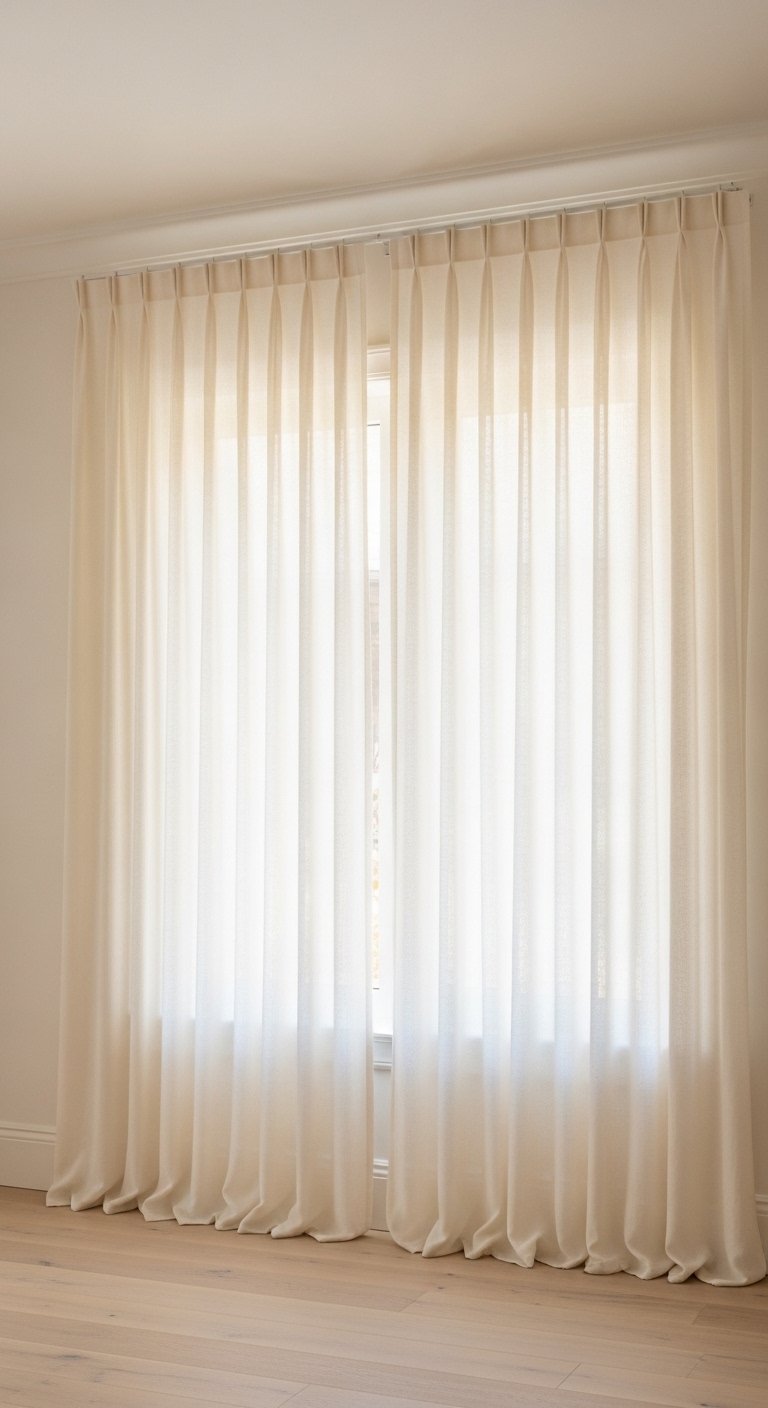
Floor-to-ceiling curtains in a white living room do two jobs: they add softness and texture to the room, and they make the ceiling feel higher than it actually is.
White, cream, or natural linen curtains that hang from a rod mounted close to the ceiling and fall in soft folds to the floor create a sense of height and luxury that shorter curtains cannot deliver.
Floor-to-ceiling curtain guidelines:
- Mount the rod 4 to 6 inches below the ceiling or at the ceiling line.
- Allow curtain panels to extend 4 to 6 inches past the window frame on each side.
- Choose a fabric with enough body to hang well: linen, velvet, cotton canvas.
- Let the curtain panels just touch the floor or pool very slightly for a relaxed look.
Sheer linen panels diffuse light beautifully while maintaining privacy. Layer them with a blackout blind behind for full light control without sacrificing the soft curtain aesthetic.
18. Use Art as the Room’s Color Source
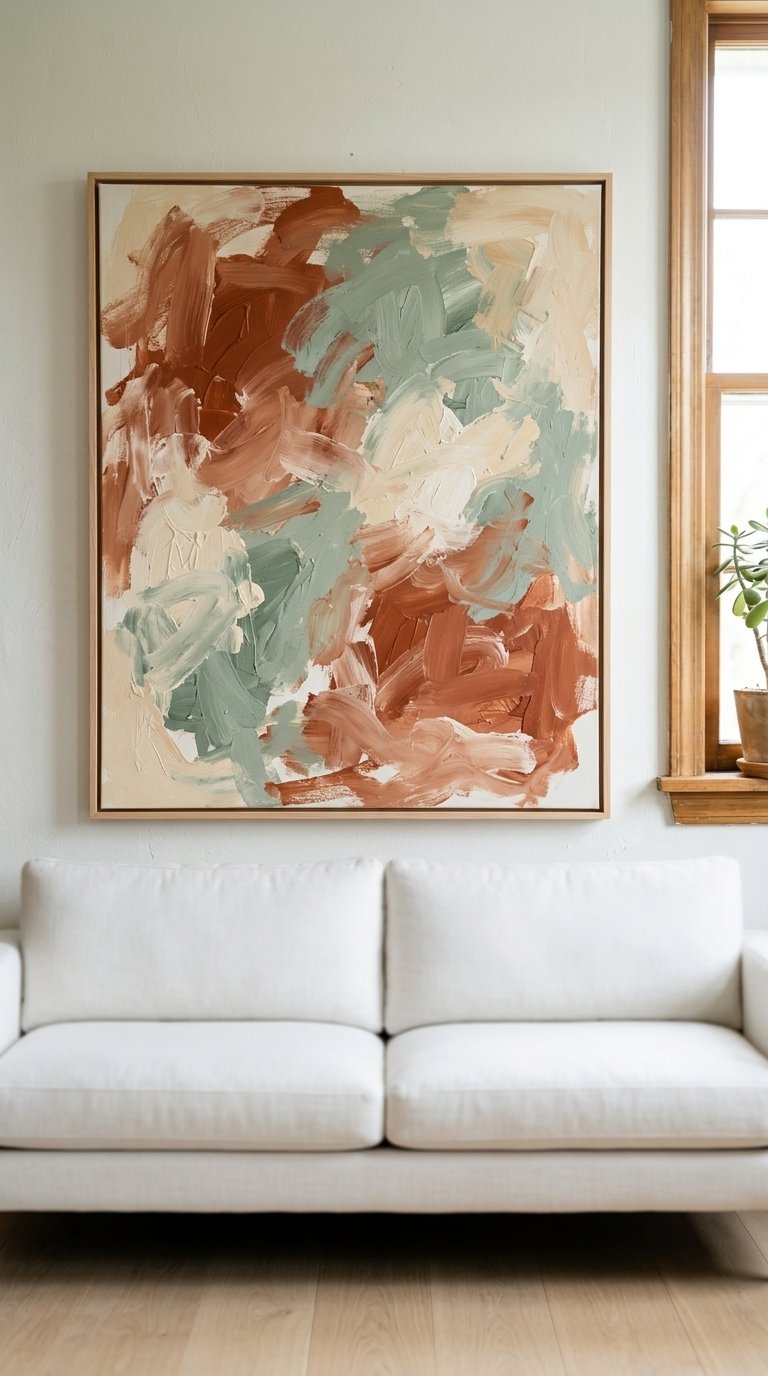
A white living room gives art more prominence than any other wall color because the white provides a neutral backdrop that lets every piece speak at full volume.
Use art deliberately as the room’s primary source of color and personality. One large statement piece, or a curated gallery wall in consistent frames, turns the white room’s blank canvas quality into an asset rather than a limitation.
Art considerations for a white living room:
- Large-scale abstract art in warm tones adds color without a specific subject.
- Black and white photography maintains the monochromatic palette.
- Botanical or landscape prints add organic references that suit the natural materials in the room.
- Sculptural wall art in ceramic or plaster adds three-dimensional texture to the wall.
Frame choice matters in a white room. White frames disappear into white walls. Natural wood, brass, or black frames make the art visible as a distinct element.
19. Add a Statement Light Fixture
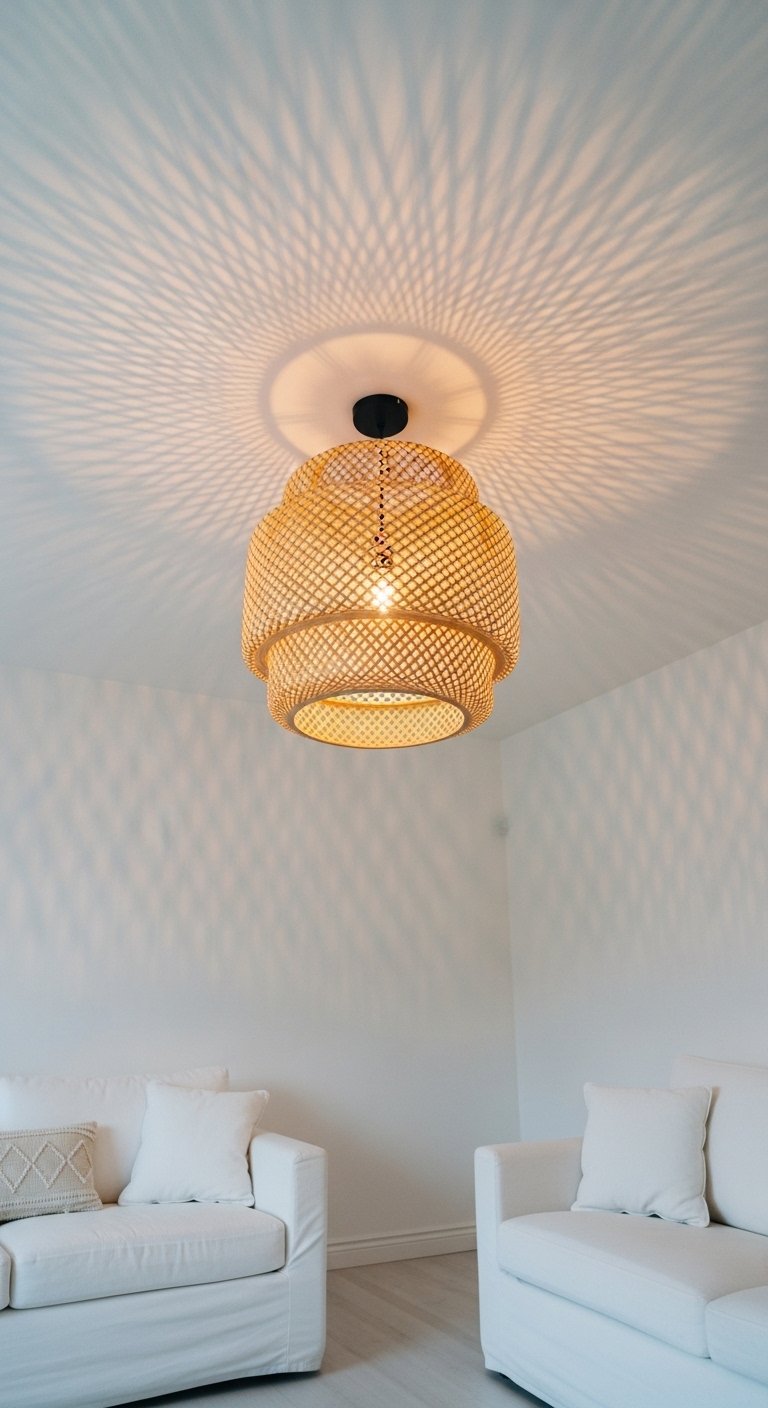
The light fixture in a white living room is a visible design element from every seat in the room. A standard builder pendant or a basic recessed grid looks like a missed opportunity in a white room where every design decision is visible.
A statement pendant, a sculptural chandelier, or a cluster of globe lights becomes a ceiling-level focal point that adds personality and design intention to the room.
Statement light fixture options:
- Rattan or woven pendant for organic warmth in a natural white room.
- Brass chandelier for warmth and a touch of formality.
- Industrial metal pendant for an urban, contemporary white room.
- Oversized paper or fabric pendant for softness and sculptural form.
- Globe cluster pendant for modern, playful visual interest.
Size the fixture to the room. A pendant that is too small for the ceiling height and room footprint looks like an afterthought.
20. Layer Your Lighting at Multiple Levels
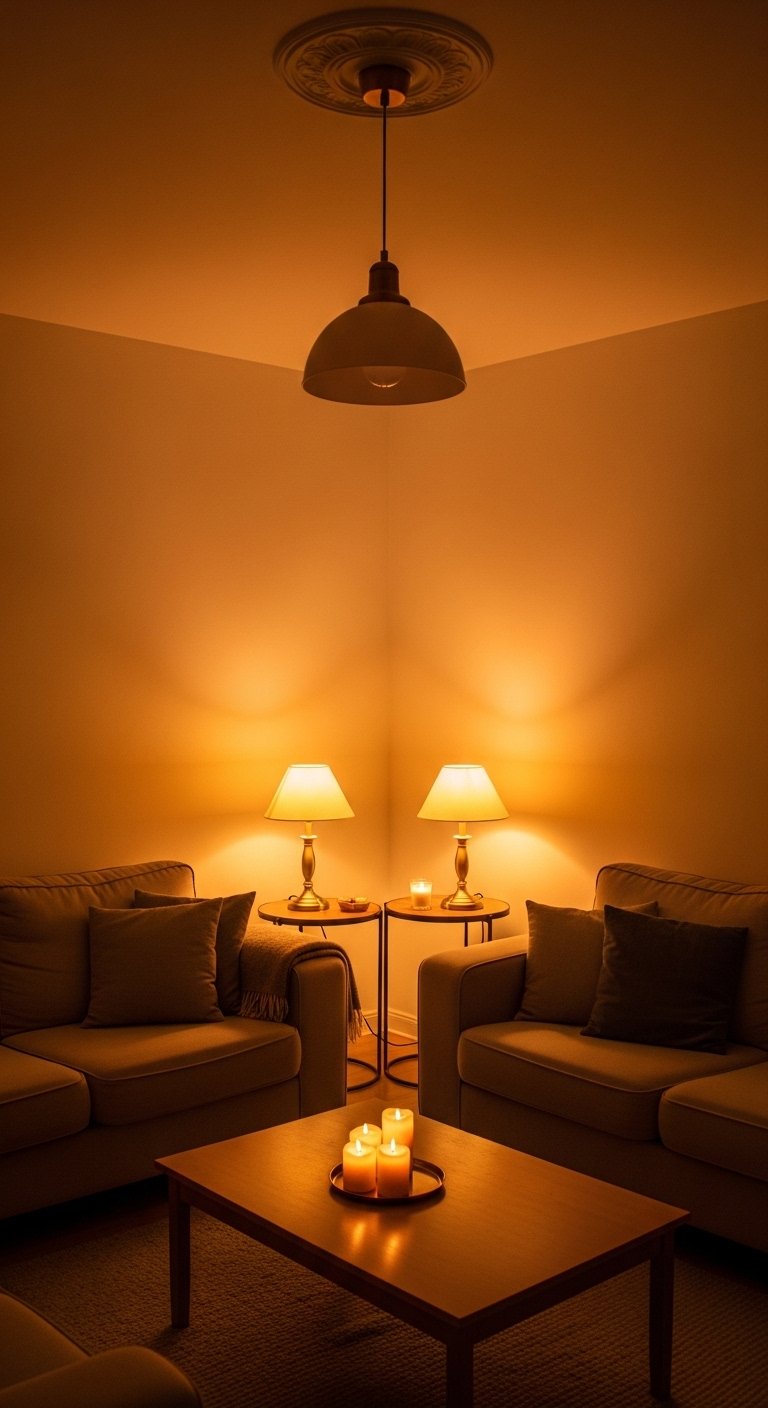
A white living room with only ceiling lighting looks flat and uninviting after dark. The natural light that activates the white surfaces during the day needs to be replaced with warm, layered artificial light in the evening.
Lighting at three levels, ambient ceiling light, task and accent table and floor lamps, and candles or low accent lights, creates warmth and dimension in a white room at night.
A layered lighting plan for a white living room:
- One overhead pendant or chandelier for ambient light, used at low intensity in the evening.
- Two table lamps on side tables flanking the sofa.
- One or two floor lamps in corners for additional ambient fill.
- Candles on the coffee table and shelving for warm, intimate accent light.
- Shelf lighting inside built-ins to highlight displayed objects.
All warm bulbs, 2700K to 3000K, in a white room. Cool white bulbs make a white room look clinical and cold after dark.
21. Keep Decorative Objects Edited and Meaningful
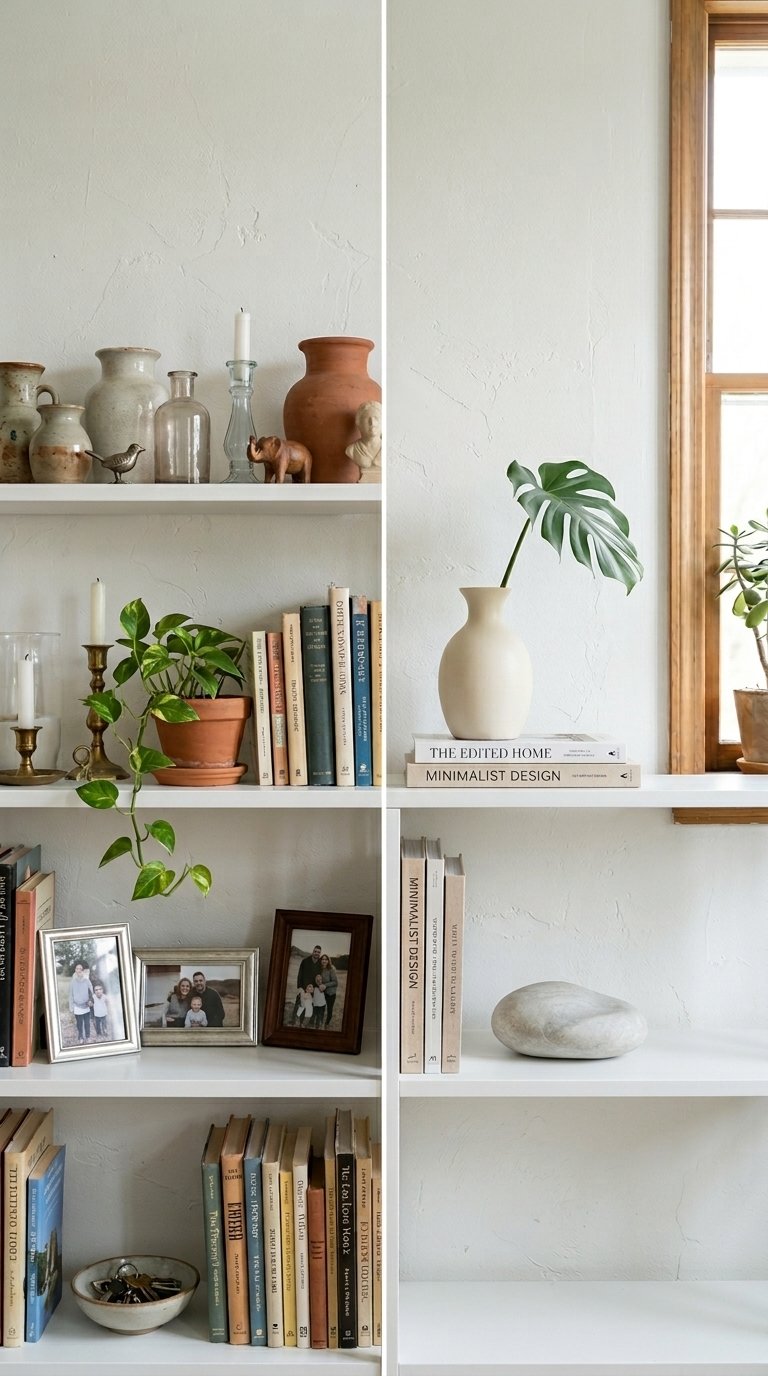
A white living room with too many decorative objects looks cluttered in a way that the same number of objects in a darker room does not. White amplifies everything. Objects that would be invisible in a busier room stand out sharply in a white one.
Edit ruthlessly. Every object on display in a white living room either contributes to the palette, the texture, or the personality of the room, or it should be somewhere else.
A practical editing test for white living room objects:
- Does it contribute to the white, cream, natural, or warm neutral palette?
- Does it add a texture or material not already present in the room?
- Does it hold personal meaning or visual interest that justifies its presence?
If an object fails all three tests, it belongs in a different room or a drawer. Three well-chosen objects on a shelf beat twelve random ones in any room, but especially a white one.
22. Use Slipcovers for Practical White Upholstery
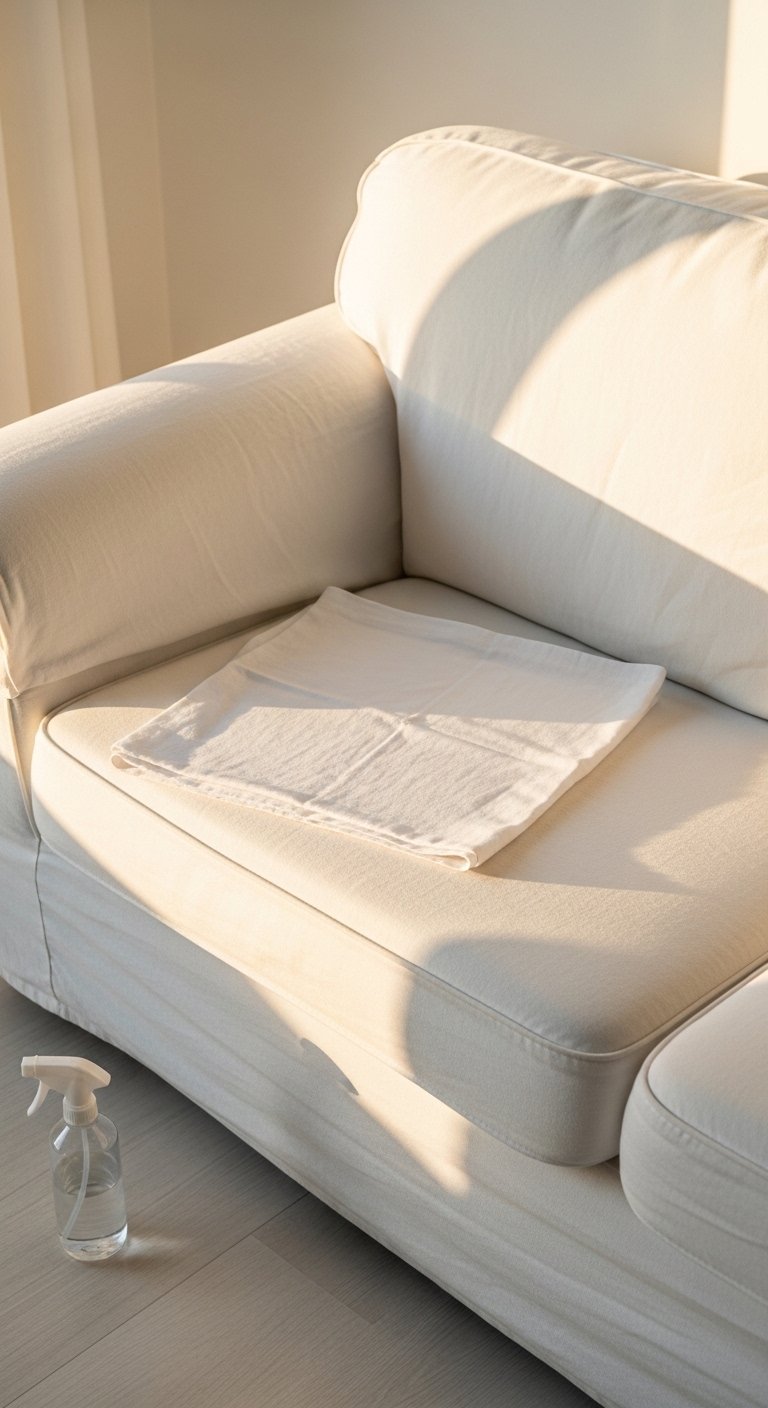
White upholstered furniture is more practical than most people assume, but only with the right approach. Slipcovers are that approach.
A sofa or armchair with a washable linen or cotton slipcover gives you white upholstery that you can maintain. The slipcover goes in the washing machine when it needs it. The furniture underneath is protected. The white living room stays white.
Slipcover practicalities:
- Pre-wash slipcovers before installation to prevent future shrinkage.
- Iron or steam slipcovers after washing to maintain a clean, unfussy look.
- Buy a spare slipcover for the most-used pieces so one is always available while the other washes.
- Choose a fabric with enough weight to drape well and resist wrinkling quickly.
This is the single most practical solution to the “white living room is impractical” objection. It makes white upholstery a genuine long-term option rather than a short-term aesthetic decision.
23. Edit the Room Seasonally
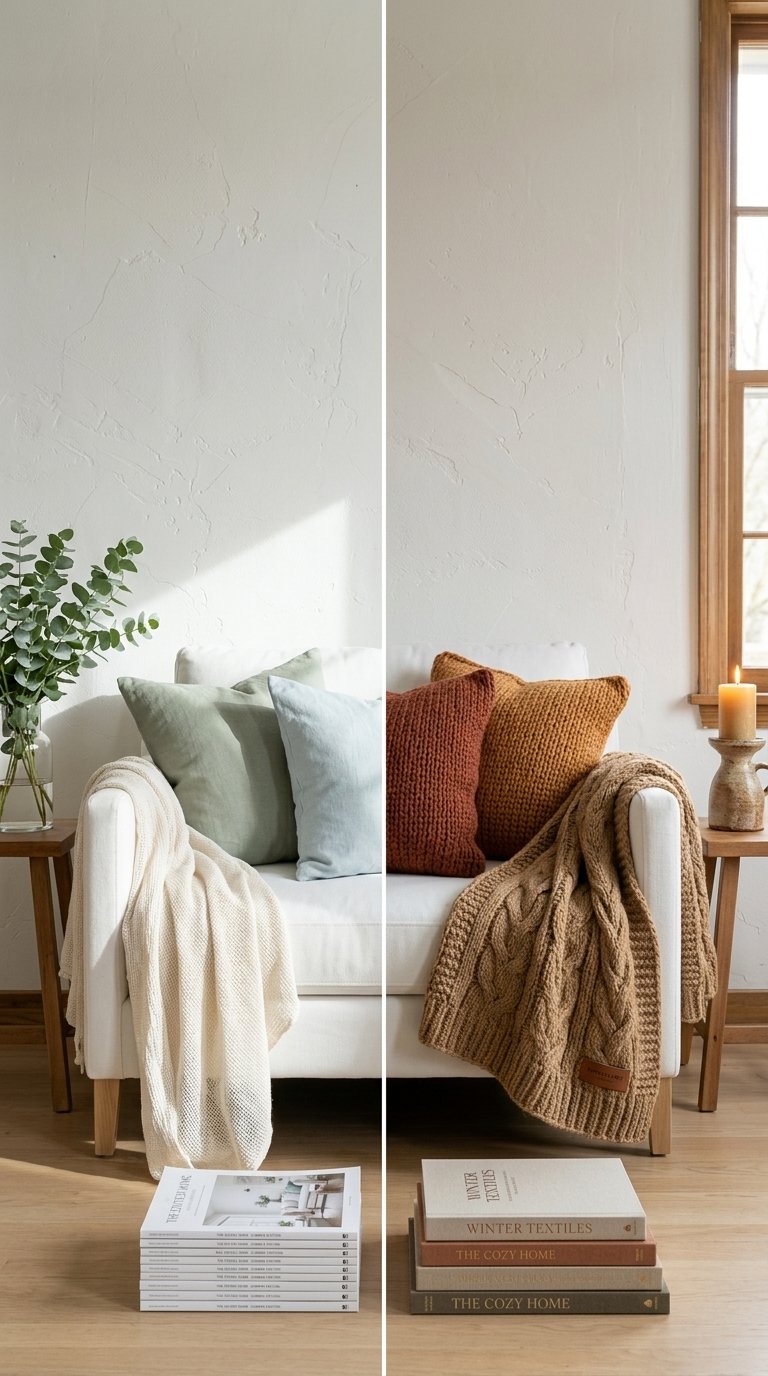
A white living room is the easiest room in the home to refresh seasonally because the white base works with almost any color accent layered onto it.
In spring and summer: introduce soft greens, pale blues, and natural fiber textiles. In autumn and winter: bring in warm terracotta, amber, deep sage, and heavier knit textures. The white base never changes. The seasonal layer on top gives the room a completely different character twice a year with minimal cost or effort.
Seasonal swap items:
- Cushion covers in seasonal tones.
- Throw blankets in seasonal weights and textures.
- Fresh or dried flowers in seasonal varieties.
- Candle scents that shift from light citrus in summer to warm amber in winter.
- Swapping a jute rug for a wool rug in cooler months for warmth underfoot.
This approach keeps a white living room feeling current, personal, and appropriate for the time of year without requiring any permanent changes to the room itself.
Final Thoughts
A white living room is not a design risk. It is a design commitment. The commitment is to quality materials, thoughtful editing, and an ongoing relationship with the space that keeps it from becoming sterile or cluttered.
Start with the right white paint. Build texture through every material you introduce. Use light, warmth, and natural elements to give the room life. Edit what goes on display as rigorously as you would choose what goes on a wall.
The reward is a room that feels consistently calm, consistently spacious, and consistently worth walking into. Few other design choices deliver that particular combination as reliably as white done well.