21 Laundry Room Remodel Ideas for a Functional, Clean Space
The laundry room is the most used and least loved room in most homes. You walk in, do the work, and leave as fast as possible. That pattern exists because most laundry rooms are poorly designed, poorly lit, and offer no reason to spend a single extra second in them.
A well-designed laundry room changes that. It makes the work faster, the space more functional, and the room tolerable to be in. These 21 ideas cover every element of a laundry room remodel worth doing.
1. Stack Your Washer and Dryer
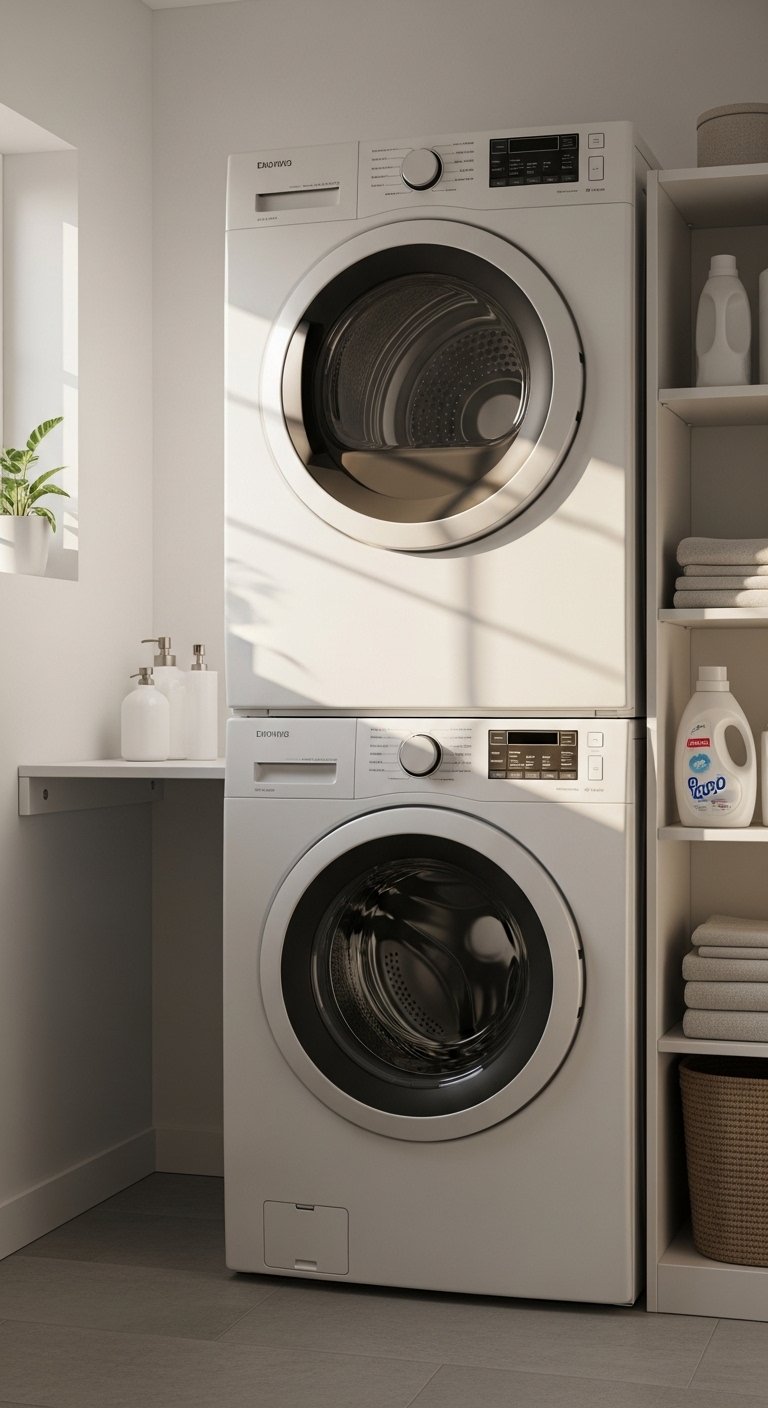
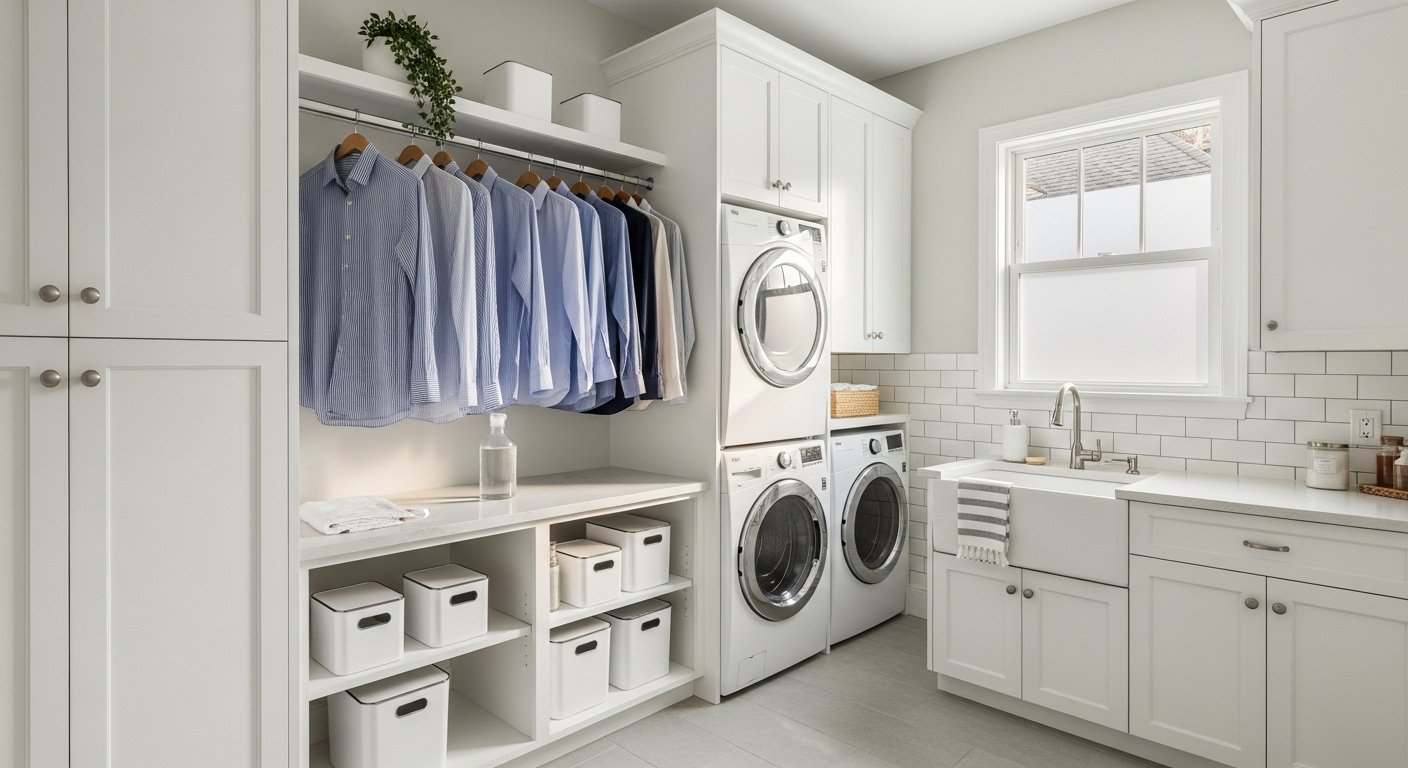
Stacking your washer and dryer frees up significant floor space in a small laundry room. A stacked pair occupies roughly 28 inches of floor width instead of 56 inches side by side. That recovered space holds shelving, a folding station, or a utility sink.
Front-load washers and dryers stack. Top-load washers do not. If you currently own a top-load washer and space is your primary problem, replacing it with a front-load unit is the single most impactful change you make in a small laundry room remodel.
Best for: Laundry rooms under 50 square feet, closet conversions, and hallway laundry setups.
2. Add a Folding Counter Above the Machines
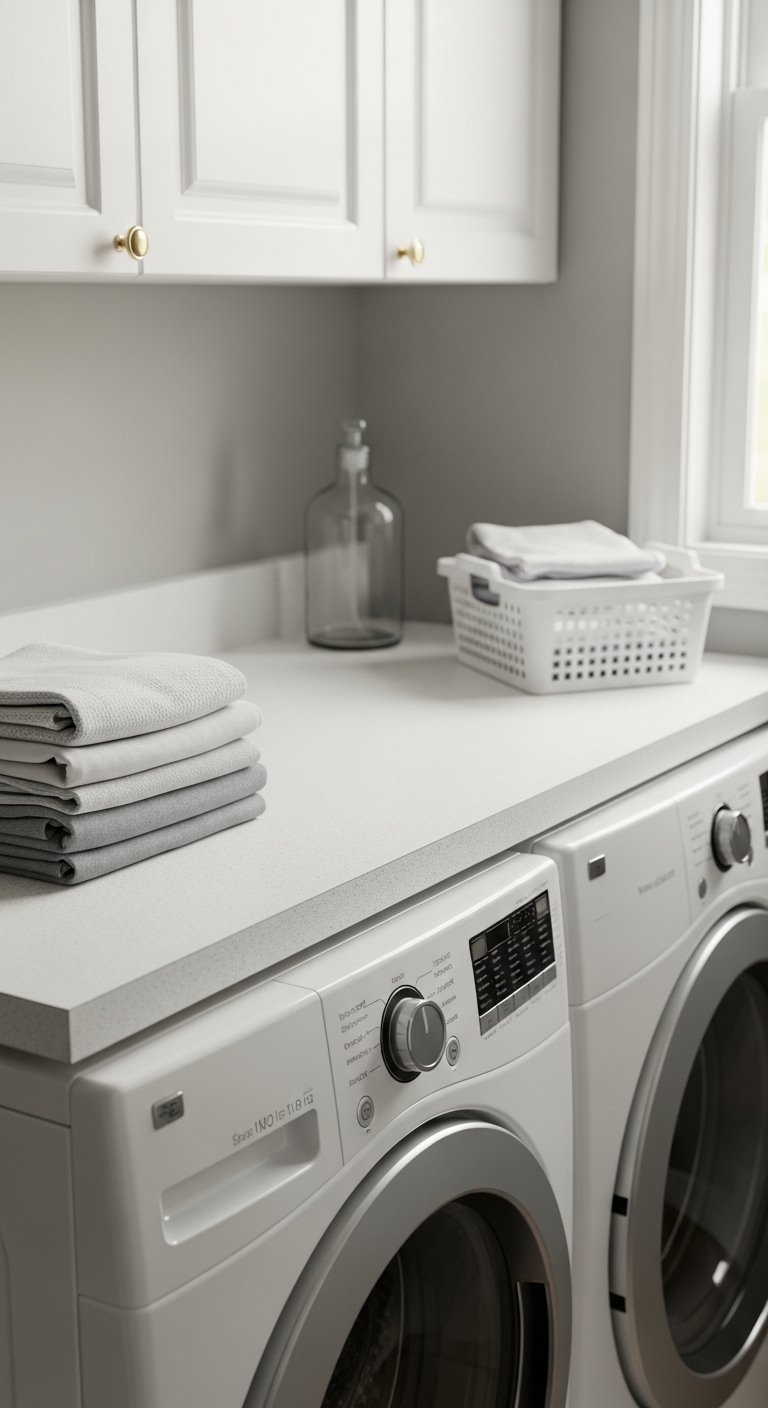
A countertop installed directly above a side-by-side washer and dryer pair creates a folding surface without consuming any additional floor space. Most standard countertop depths fit perfectly over front-load machines.
Use a laminate countertop for durability and easy cleaning. Quartz works if budget allows. Avoid wood countertops in laundry rooms where moisture and detergent spills are a daily reality. Wood warps and stains in that environment within a year.
Counter height: Standard washer and dryer height sits at 36 inches. Match your countertop to kitchen counter height for a consistent feel.
3. Install Floor-to-Ceiling Cabinets
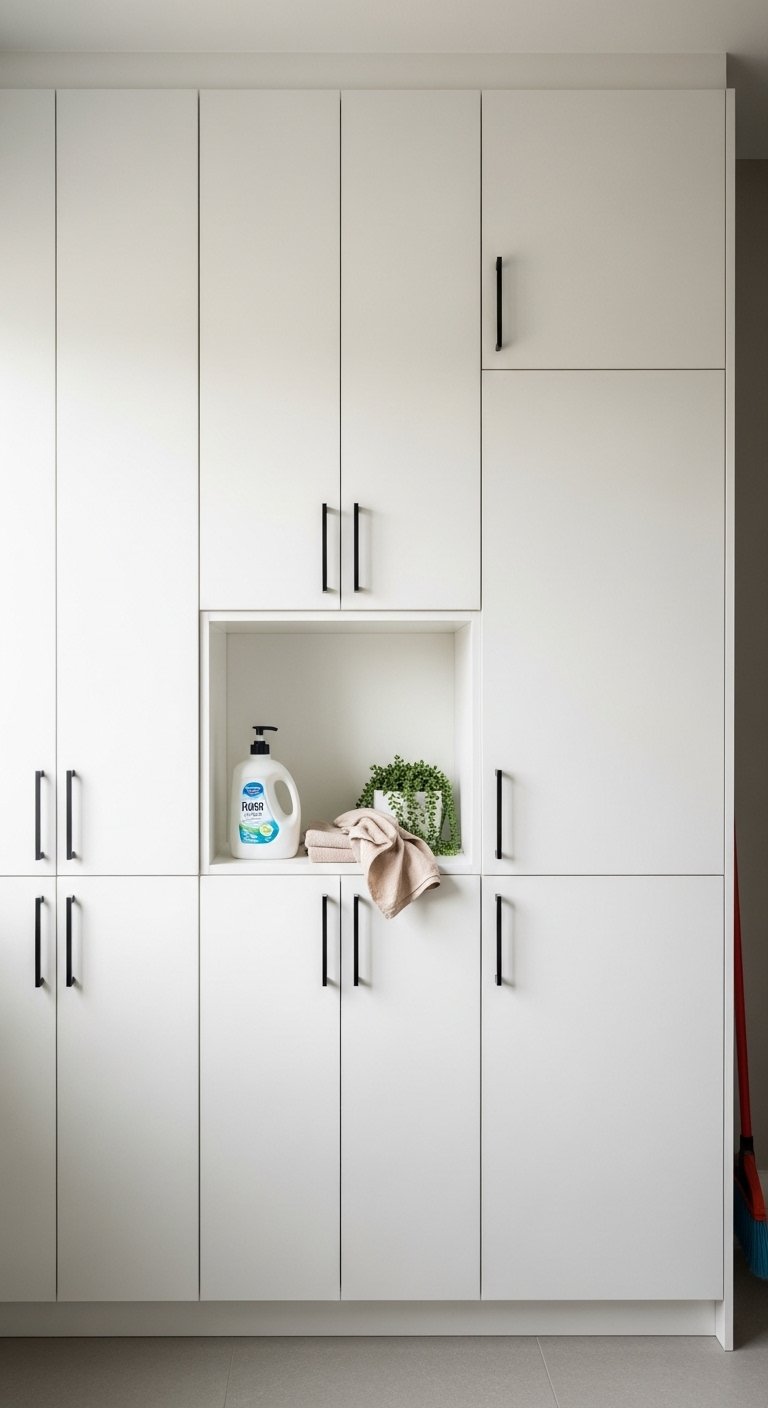
Floor-to-ceiling cabinets in a laundry room maximize every inch of vertical space. Upper cabinets hold detergent, fabric softener, and cleaning supplies. Lower cabinets store larger items like mops, brooms, and bulk supplies.
Keep the cabinet faces simple. Flat-front or shaker style in white or a light neutral color keeps the room feeling open. Avoid dark cabinet colors in small laundry rooms. They absorb the limited light and make the space feel smaller.
Cabinet configuration that works:
- Upper cabinets with doors for cleaning supplies
- Open shelving section at mid-height for frequently used items
- Lower cabinets with doors for bulk storage
- One tall cabinet section for broom and mop storage
4. Add a Utility Sink
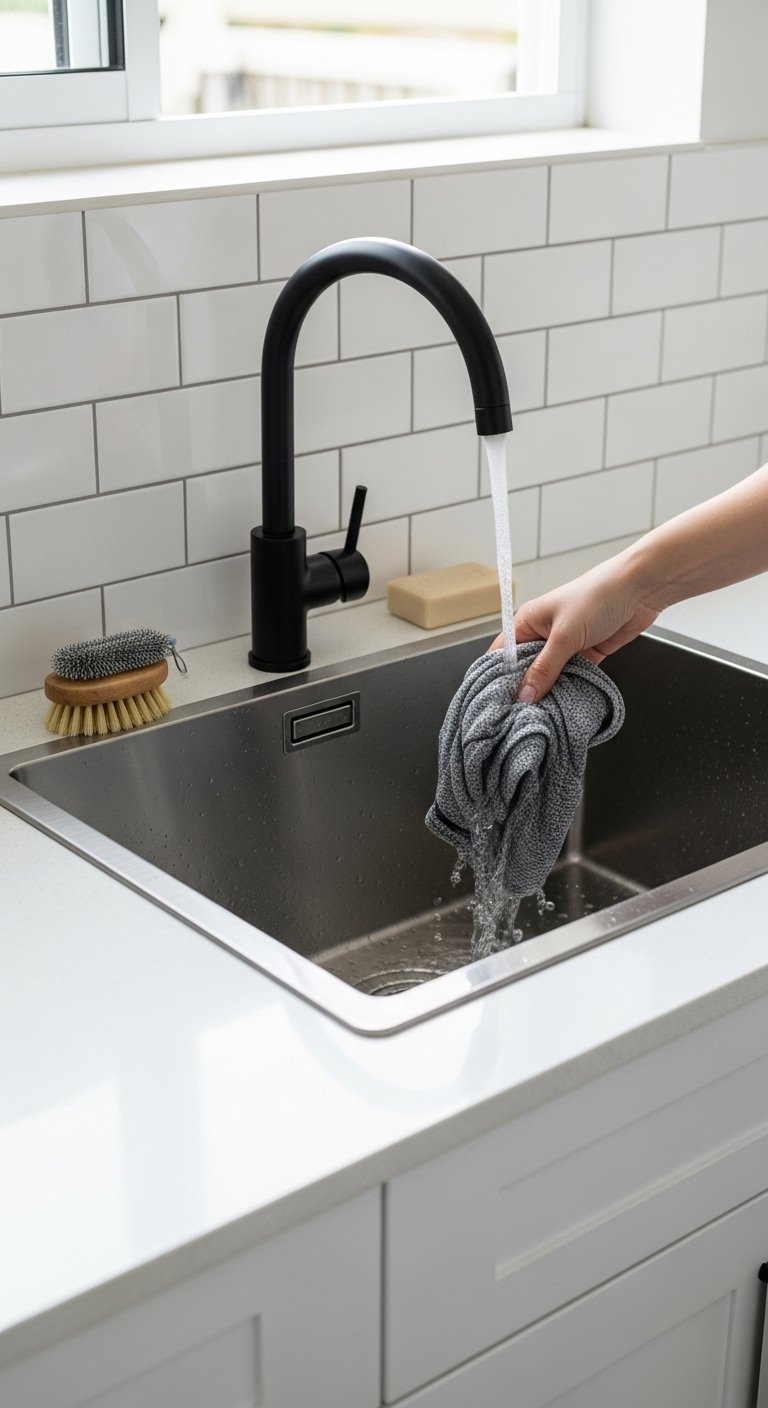
A utility sink in the laundry room handles hand-washing delicate items, pre-soaking stained clothes, cleaning muddy shoes, and rinsing mop heads. Once you have one, you wonder how you managed without it.
Choose a deep basin over a shallow one. A 12-inch deep basin handles bulky items that a standard kitchen sink cannot. Freestanding utility sinks work in rooms with floor space. Wall-mounted versions suit tight rooms where every inch of floor matters.
Best sink materials:
- Stainless steel: durable, easy to clean, resists staining
- Acrylic: lighter, warmer to the touch, lower cost
- Fireclay: heavy, durable, looks premium, higher cost
5. Install a Hanging Rod for Air-Drying
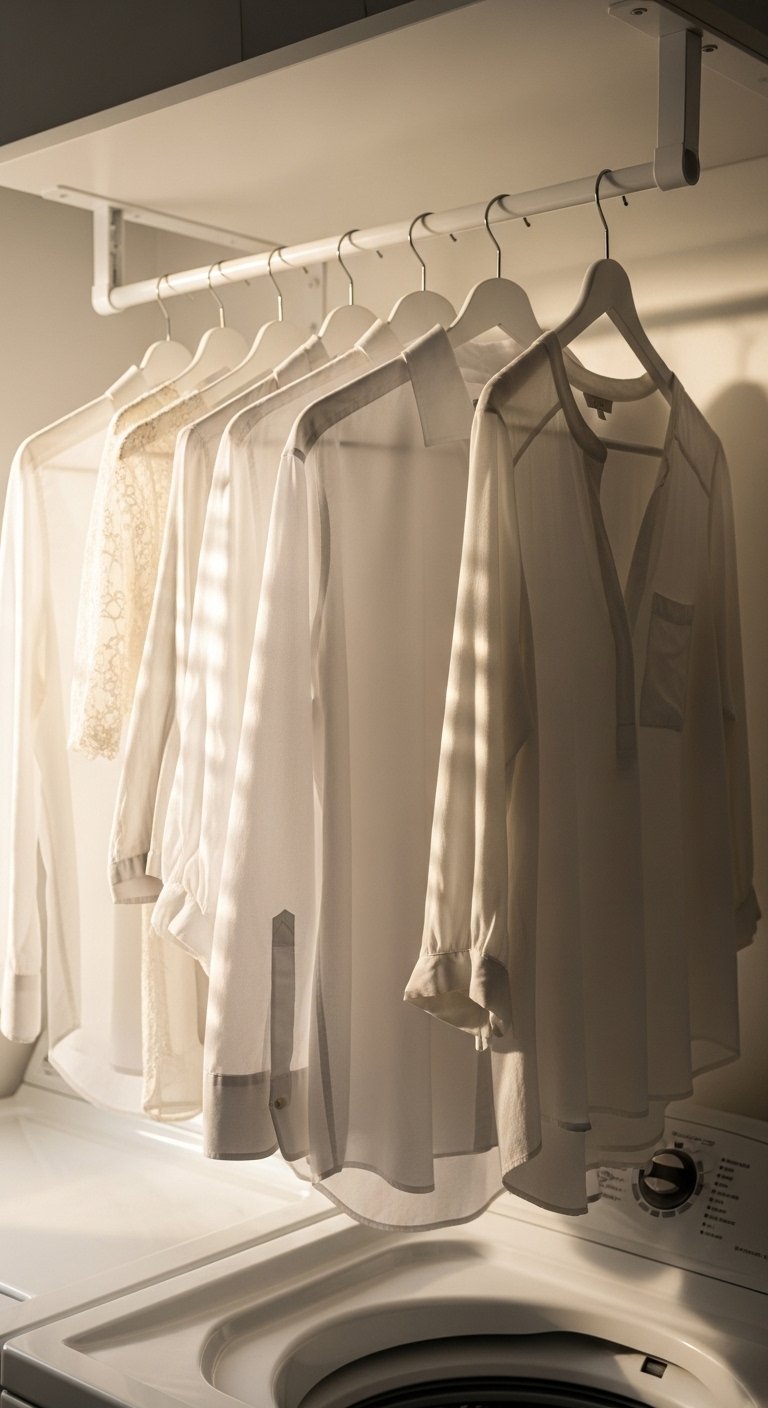
A wall-mounted or ceiling-mounted hanging rod above or beside the machines gives you a place to hang items straight from the washer. Shirts, delicates, and dress clothes hang immediately and arrive wrinkle-free without extra ironing.
Mount the rod high enough to clear the machine tops with room for long garments. A ceiling-mounted rod on a pulley system lowers for loading and raises to keep garments out of the way. FYI, this is one of the cheapest and most useful additions to any laundry room remodel.
Rod options:
- Fixed wall-mounted rod: simple, low cost, permanent
- Retractable rod: extends when needed, retracts flat against the wall
- Ceiling pulley system: raises and lowers, suits rooms with high ceilings
6. Use Open Shelving for Daily Supplies
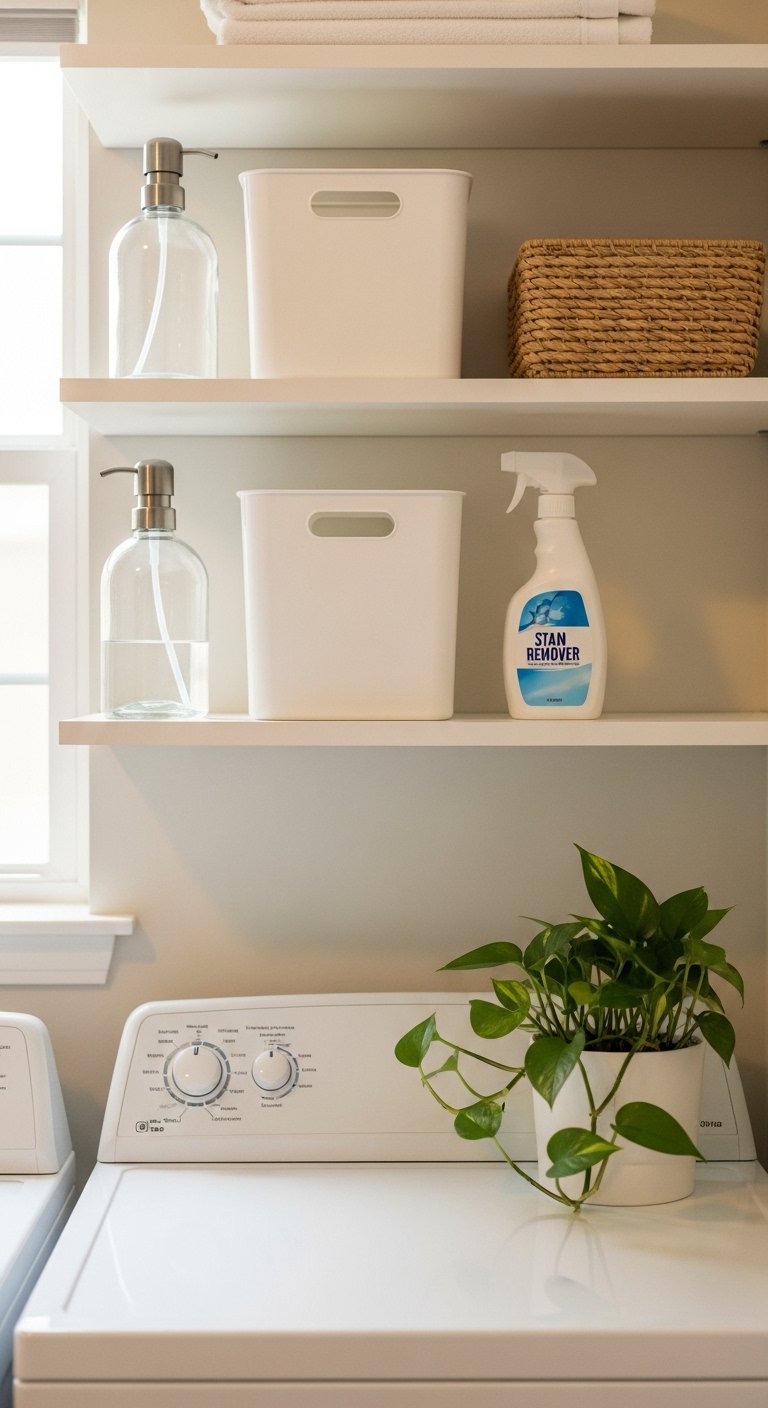
Open shelving above the machines keeps detergent, dryer sheets, stain remover, and other daily supplies within reach without requiring cabinet doors. It reduces friction in the laundry process and keeps the most-used items visible and accessible.
Use matching containers and dispensers on open shelves. Decanted detergent in a clear glass or acrylic dispenser looks clean and lets you see when supplies run low. Matching baskets for smaller items keep the shelving looking organized rather than cluttered.
What to store on open shelves:
- Detergent dispenser
- Dryer sheet holder
- Stain remover spray
- A small basket for loose items like coins and receipts
- One decorative element: a small plant or candle
7. Add a Sorting Station
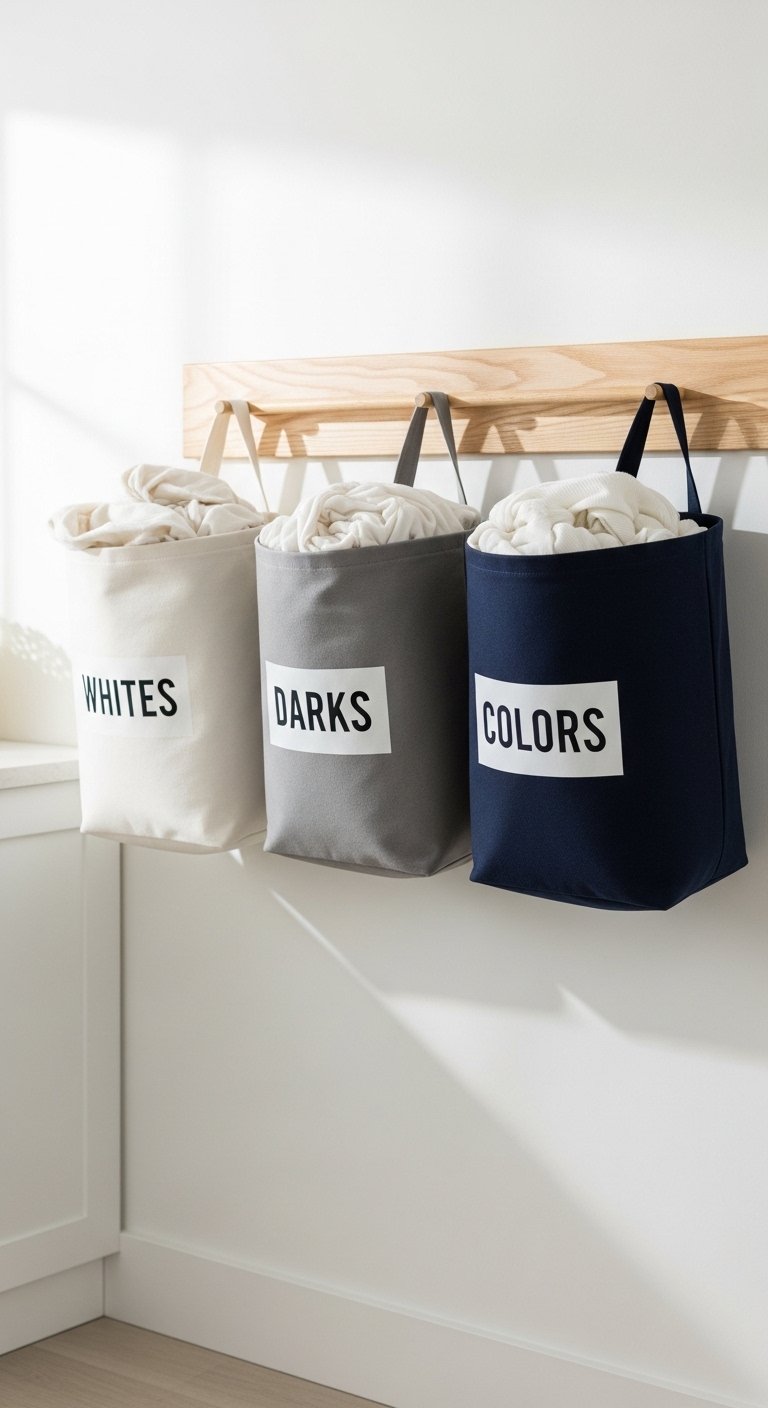
A sorting station with three to four labeled bins or baskets eliminates the pile of unsorted laundry that accumulates on every laundry room floor. Each bin holds a separate category: whites, darks, colors, and delicates.
Wall-mounted sorting frames with canvas bags use vertical space and keep the floor clear. Freestanding rolling sorters work in rooms with more floor space. Either system reduces the time you spend sorting before each load.
Sorting station options:
- Wall-mounted frame with canvas bags
- Rolling three-bag sorter on wheels
- Built-in cabinet with pull-out bins behind closed doors
8. Tile the Floor in a Durable Material
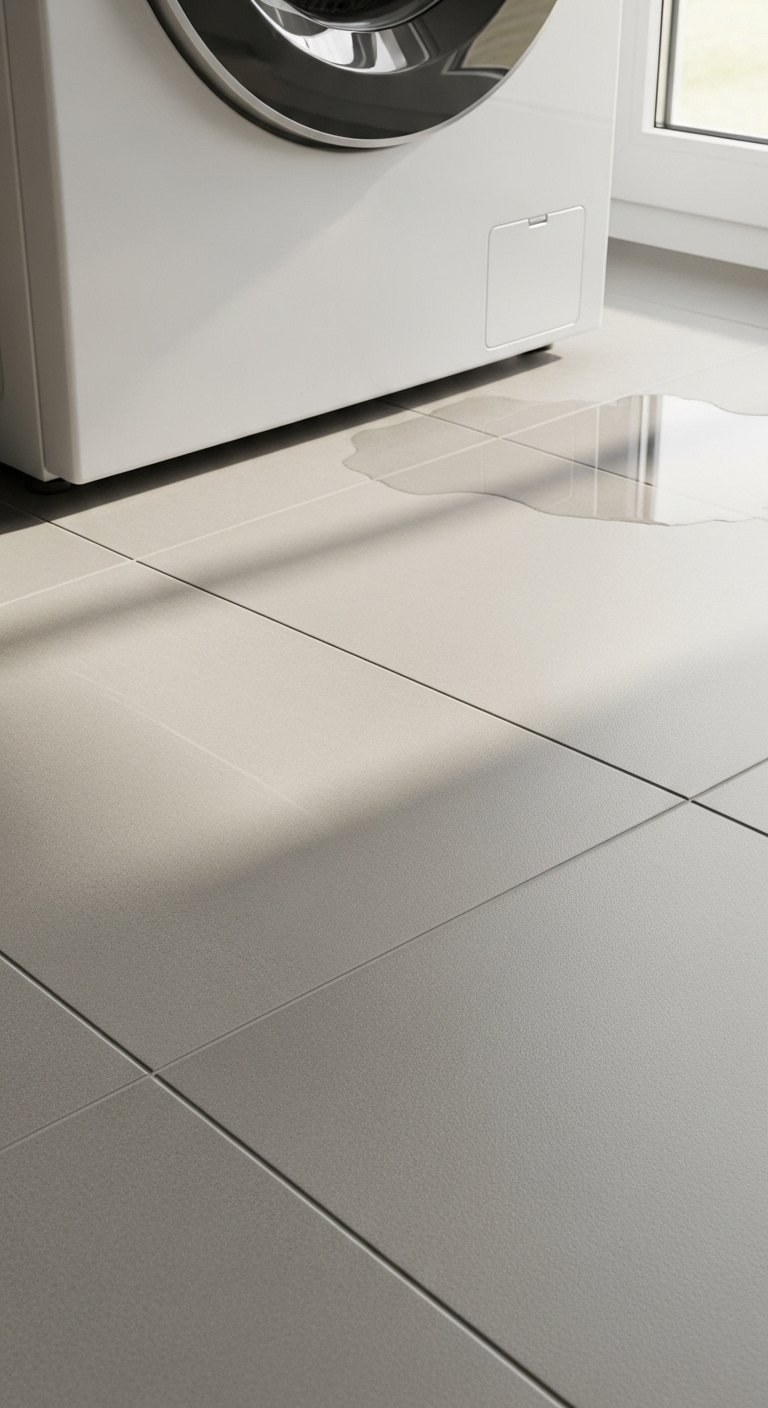
Laundry room floors handle water spills, detergent drips, and heavy foot traffic daily. Carpet is an obvious mistake. Hardwood warps with moisture. The correct flooring choices for a laundry room are ceramic tile, porcelain tile, or luxury vinyl plank.
Large format tiles in 12×24 or 24×24 inch sizes minimize grout lines and make the floor easier to clean. Choose a textured or matte finish for slip resistance when the floor gets wet.
Best laundry room flooring:
- Porcelain tile: waterproof, durable, easy to clean, long lifespan
- Luxury vinyl plank: waterproof, softer underfoot, lower cost, DIY-friendly
- Ceramic tile: affordable, durable, wide range of sizes and styles
9. Paint the Walls in a Light, Wipeable Finish
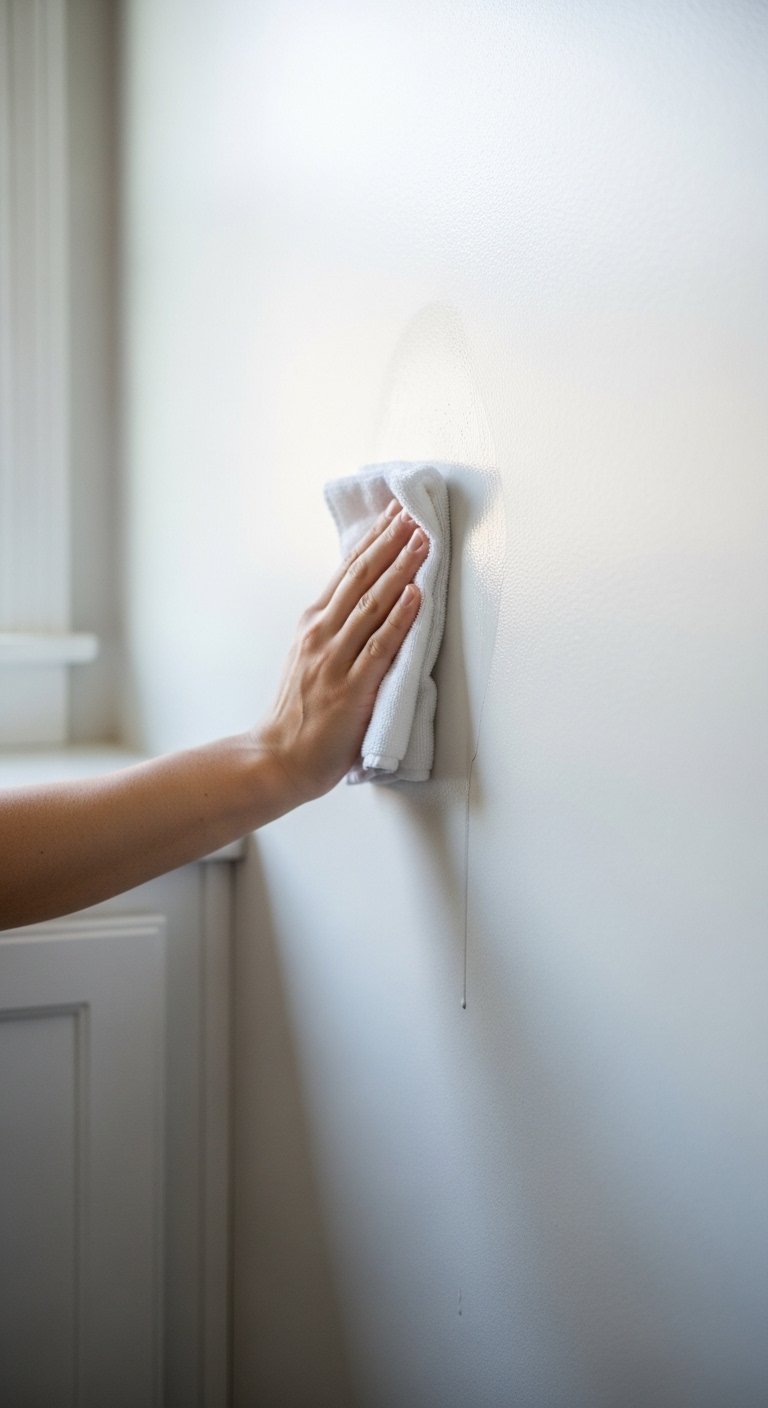
Laundry rooms accumulate humidity, detergent overspray, and general grime on the walls. Flat paint absorbs all of it permanently. Use an eggshell or satin finish in a light color on every wall surface.
White and soft grey are the most practical choices. They reflect light in a room that often has limited natural light, and they show stains early enough to wipe them before they set. Satin finish cleans with a damp cloth without removing the paint layer.
Best wall colors for laundry rooms: Bright white, warm white, soft grey, pale sage green.
10. Install Proper Task Lighting
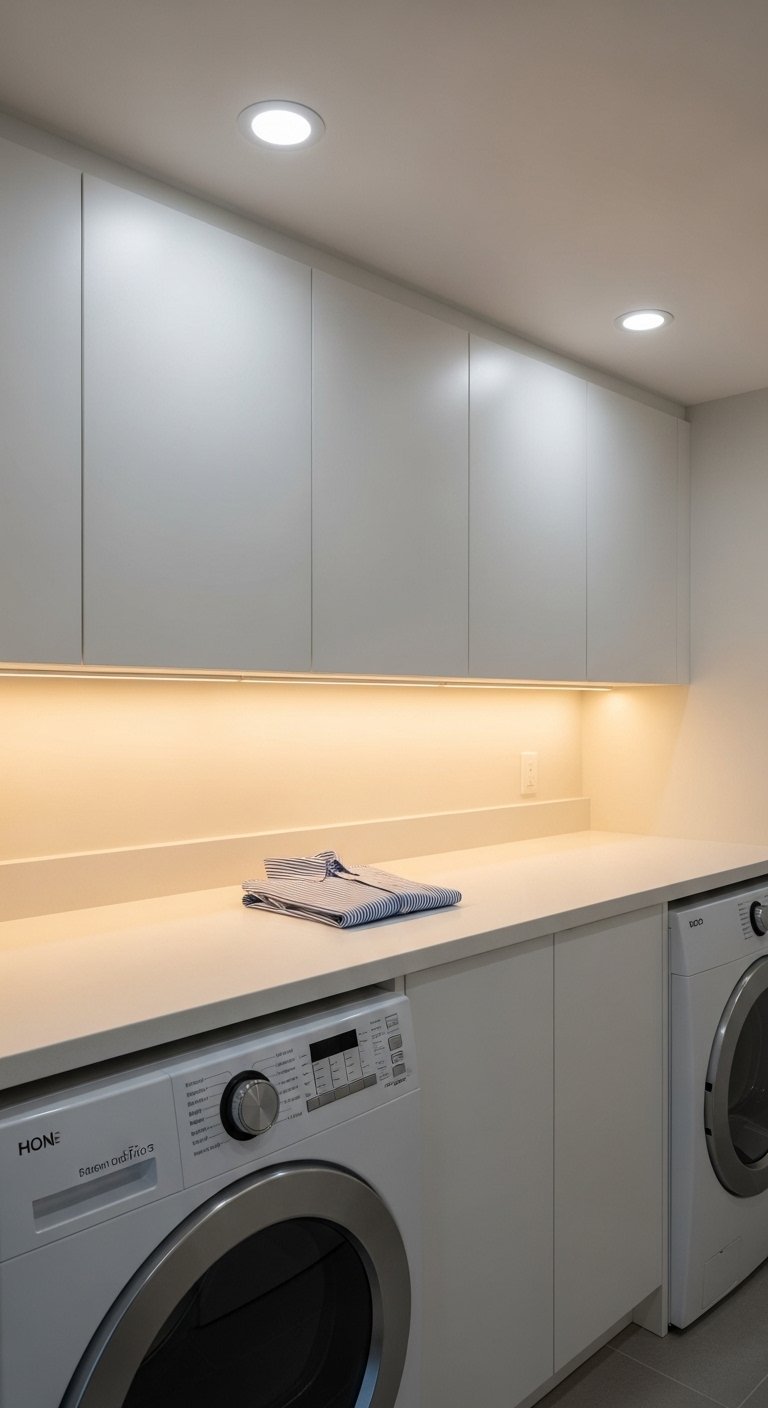
Most laundry rooms run on a single overhead bulb that casts uneven light and creates shadows directly over the work surfaces. Replace it with recessed lighting positioned above the folding counter and machines, supplemented by under-cabinet lighting below upper cabinets.
Choose bulbs in the 4000K to 5000K color temperature range for a laundry room. This cooler daylight tone makes it easier to identify stains and sort colors accurately. Warm bulbs in the 2700K range make everything look the same tone.
Lighting setup:
- Recessed lights above folding counter and machines
- Under-cabinet LED strips below upper cabinets
- Color temperature: 4000K to 5000K for task accuracy
11. Add a Folding Drying Rack
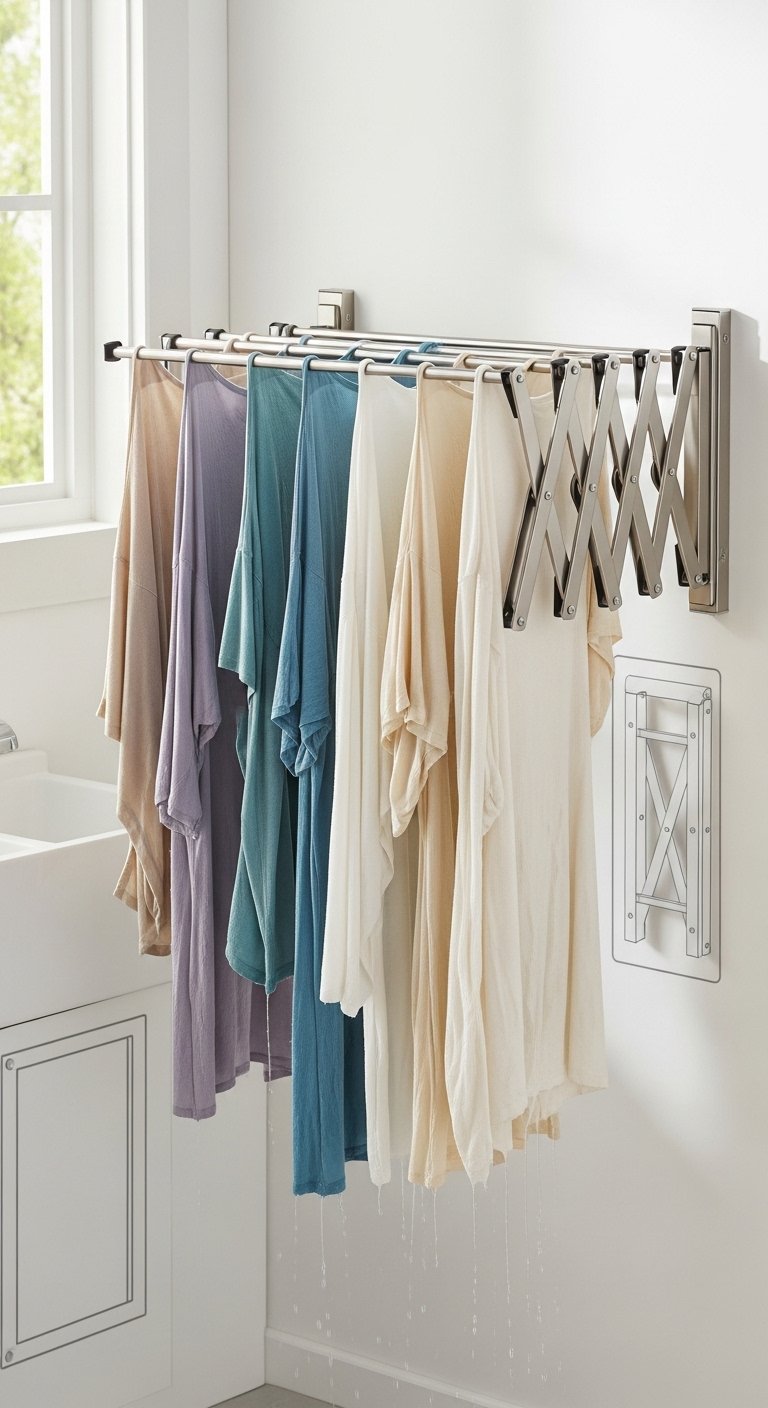
A wall-mounted folding drying rack extends when in use and folds flat against the wall when not needed. It holds sweaters, delicates, and items that cannot go in the dryer without consuming permanent floor or counter space.
Mount it on the wall above the utility sink or beside the machines. Choose a stainless steel rack over a plastic one. Plastic racks crack under the weight of wet heavy items. Stainless holds the load and lasts indefinitely.
Best wall-mounted rack brands: Brabantia, Schulte, and Rev-A-Shelf all produce durable wall-mounted options across different price points.
12. Use a Barn Door to Save Space
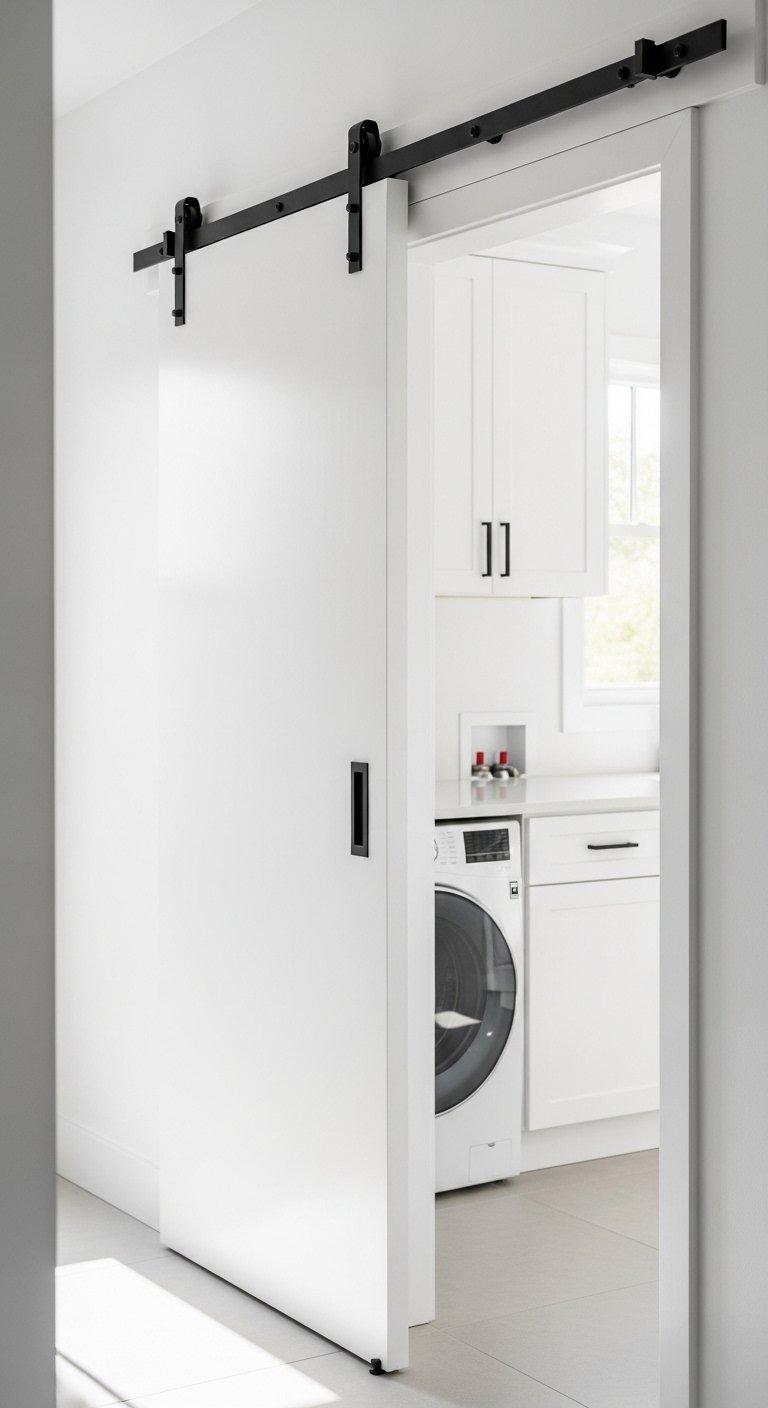
A standard swing door in a small laundry room consumes usable floor space every time it opens. A barn door slides along the wall on a track and uses zero floor space. In a laundry room where every inch matters, this is a practical change with a strong visual impact.
Barn doors suit laundry rooms that open to a hallway or adjacent space with wall room for the door to slide. Measure the wall beside the door opening before committing. You need clear wall space equal to the full door width on the slide side.
Barn door styles that work in laundry rooms: Simple flat panel in white, shaker panel in painted wood, or a glass-panel version for rooms that need borrowed light.
13. Add a Countertop with a Built-In Ironing Board
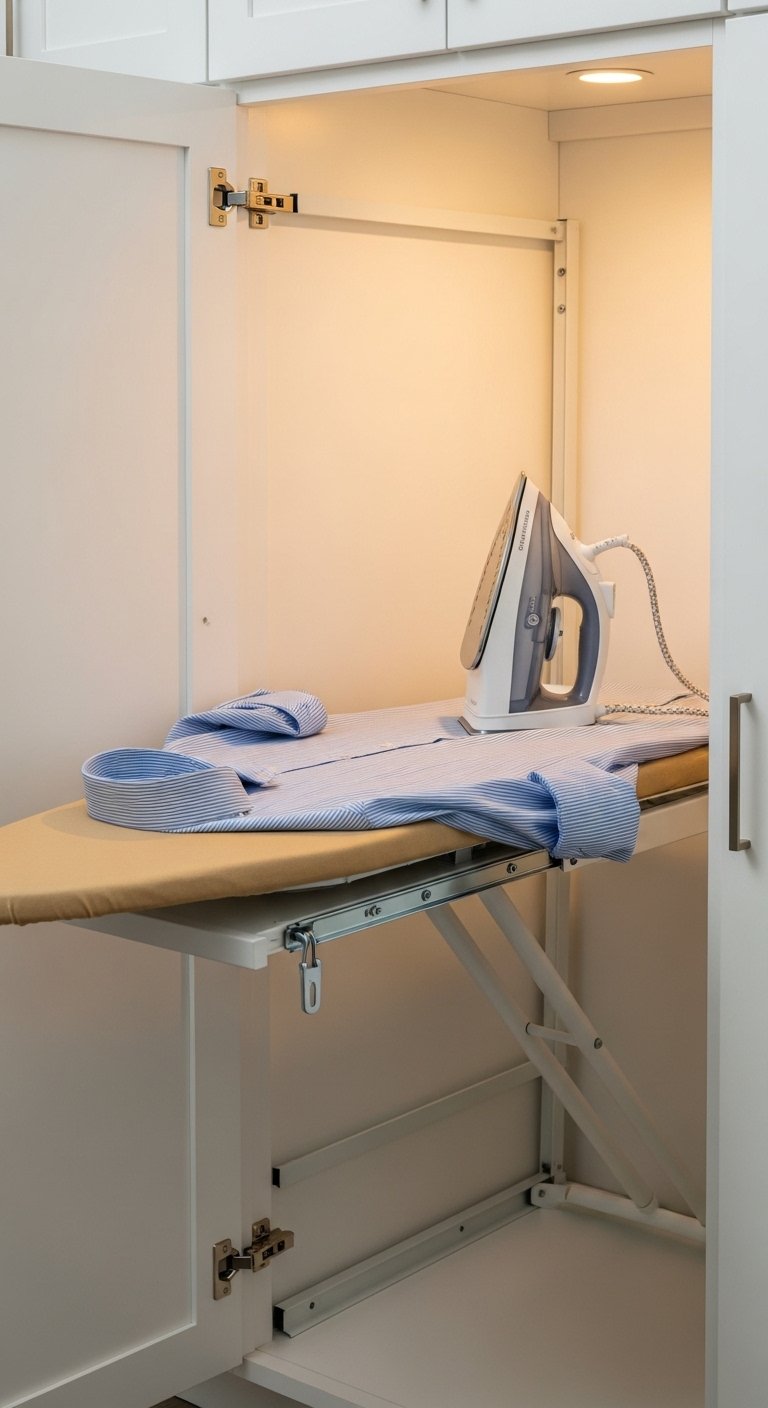
A pull-out ironing board built into a cabinet or countertop section folds away completely when not in use. It eliminates the freestanding ironing board that takes up floor space and falls over every time you reach past it. IMO, this is one of the most satisfying upgrades in a laundry room remodel.
Built-in ironing boards mount inside a standard cabinet opening. The board pulls out, unfolds to working height, and locks in place. When finished, it folds back and the cabinet door closes. The floor stays clear.
What to look for:
- Board surface at least 42 inches long
- Heat-resistant cover included
- Locks securely in open position during use
- Fits standard 24-inch cabinet opening
14. Install a Backsplash Behind the Sink
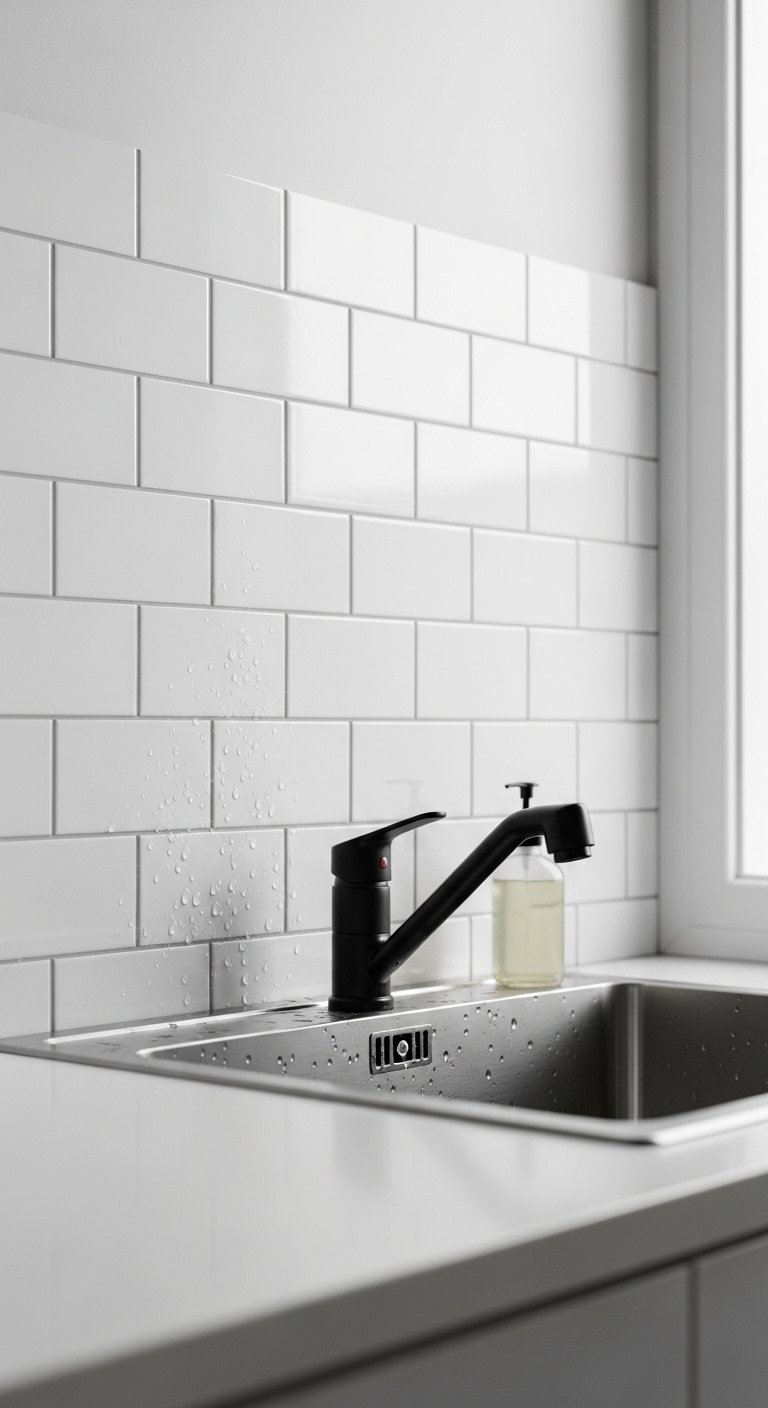
A tiled backsplash behind the utility sink protects the wall from water splashes and detergent drips. It also adds a finished, intentional look to a room that often feels unfinished at the wall level.
White subway tile is the most practical and versatile choice. It cleans easily, suits any cabinet color, and costs less than most tile options. Use white or grey grout. Dark grout in a laundry room shows detergent residue and requires more frequent cleaning.
Backsplash tile options:
- White 3×6 subway tile with white grout: clean, classic, easy to maintain
- Large format 4×8 white tile: fewer grout lines, more modern
- Zellige tile in white or cream: adds texture, higher cost
15. Add a Pet Washing Station
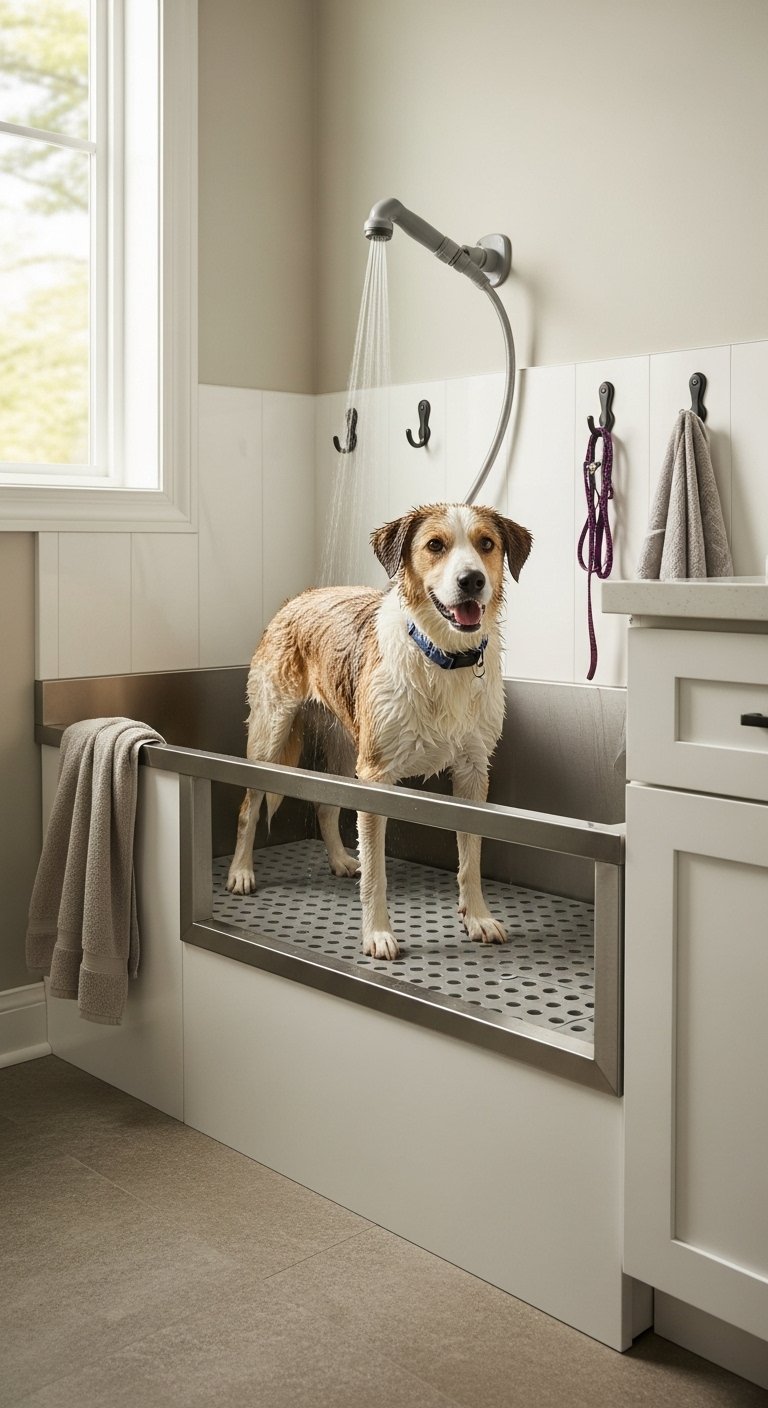
If you own a dog, a built-in pet washing station in the laundry room saves significant time and effort. A low basin with a handheld sprayer, non-slip mat, and wall hooks for towels and leashes turns the laundry room into a complete utility space.
Position the basin at a height that suits your dog’s size without requiring you to bend fully. Small dogs suit a counter-height basin. Large dogs need a floor-level or step-access basin. Include a handheld sprayer on a long flexible hose for full coverage.
Pet station essentials:
- Deep basin with non-slip mat
- Handheld sprayer on flexible hose
- Wall hooks for leash, towels, and grooming tools
- Drain positioned at the lowest point of the basin
16. Use Wall Space for a Cleaning Supply Organizer
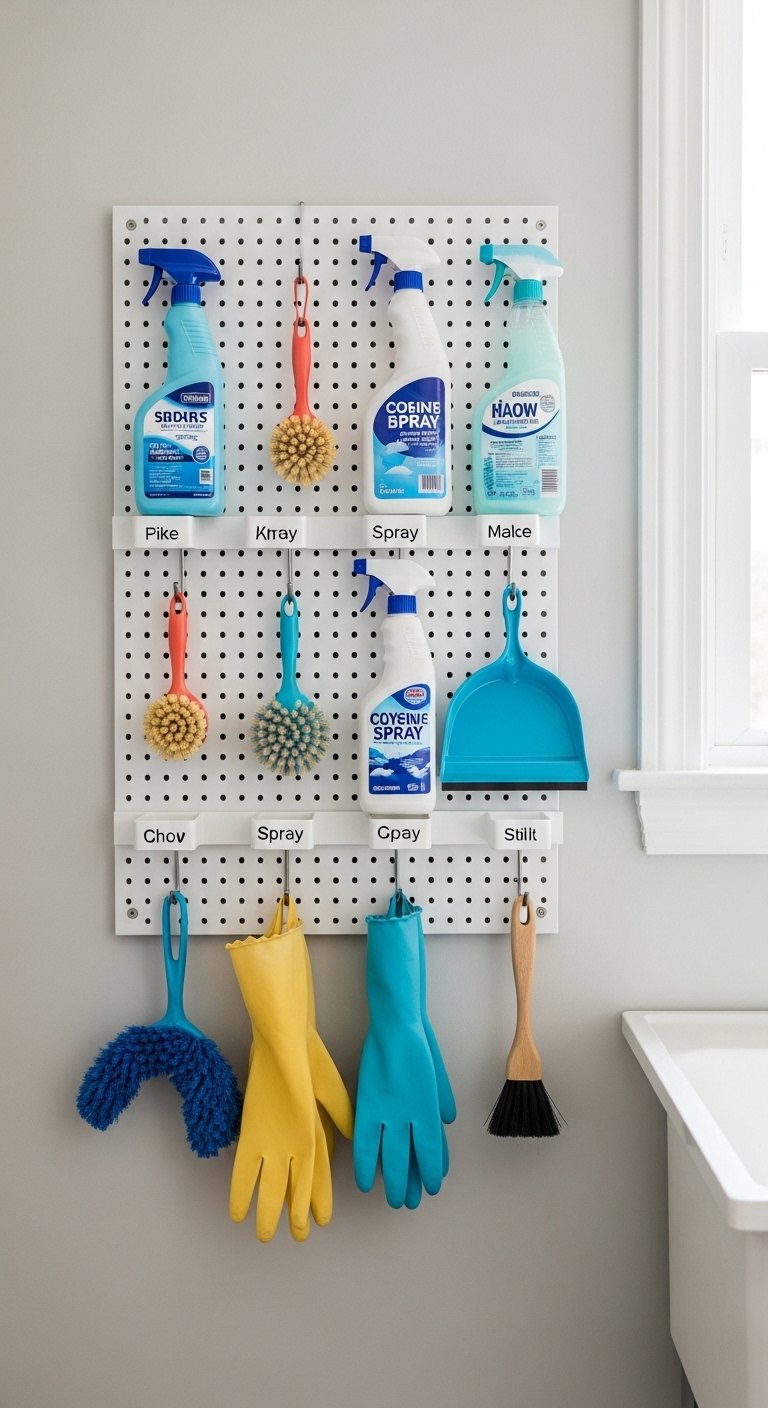
A wall-mounted cleaning supply organizer holds spray bottles, brushes, and small tools on the wall instead of on the floor or in a cabinet. It keeps supplies visible, accessible, and off every other surface in the room.
Choose a pegboard system or a purpose-built wall organizer with hooks and clips. Mount it on the wall beside or above the utility sink where cleaning supplies get used most. Label each hook or section to maintain the system over time.
What to hang:
- Spray bottles on S-hooks
- Scrub brushes on pegboard clips
- Rubber gloves on a dedicated hook
- Small dustpan and brush on side hooks
17. Add a Window for Natural Light
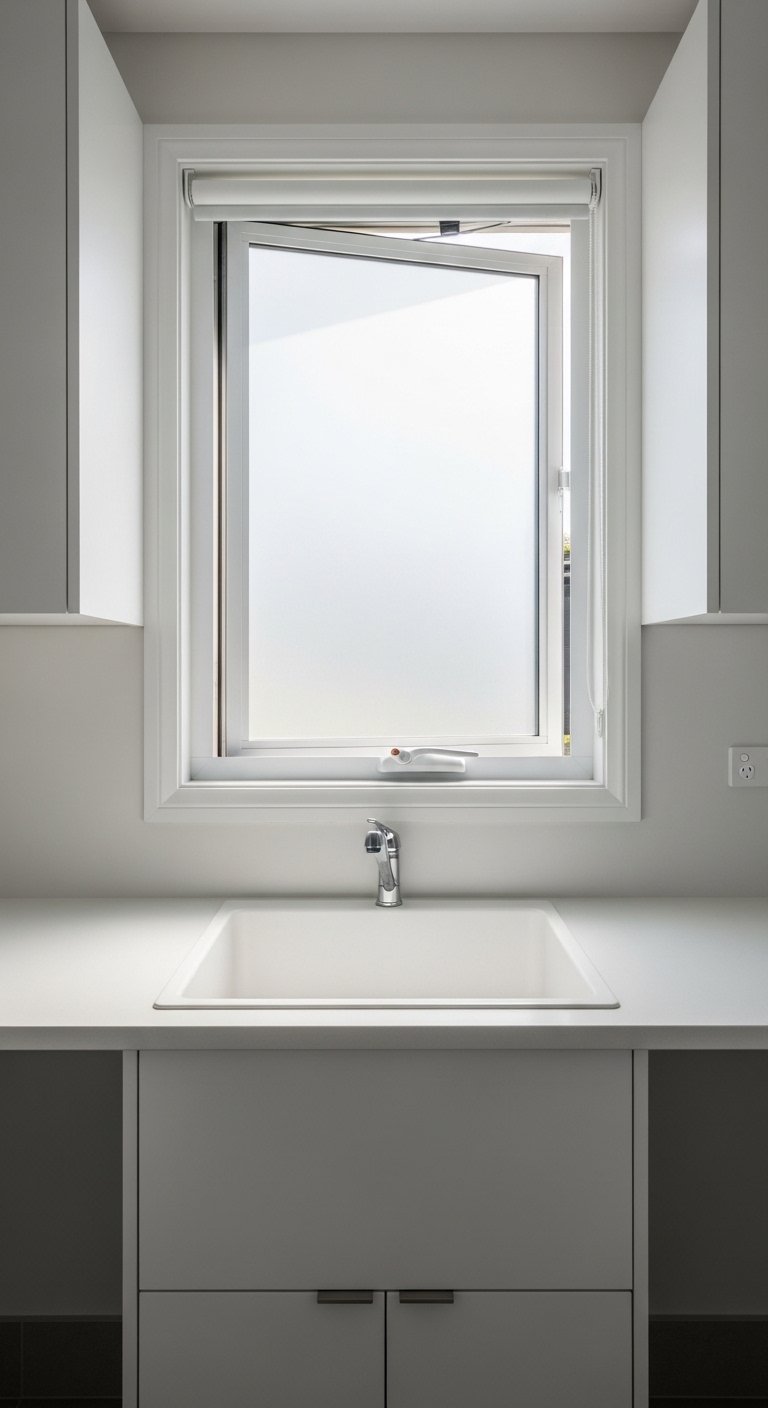
A window in a laundry room changes the entire character of the space. Natural light makes the room feel larger, reduces the clinical feeling of artificial-only lighting, and improves ventilation when opened.
If your laundry room sits on an exterior wall, adding a window is a realistic renovation option. A frosted or obscure glass window provides light without a direct view into the room from outside. Position it above the machines or above the utility sink where it delivers light directly onto the work surface.
Window options for laundry rooms:
- Frosted casement window: opens for ventilation, provides privacy
- Fixed frosted window: light only, no ventilation, lower cost
- Glass block: maximum privacy, good light diffusion, no ventilation
18. Install a Retractable Clothesline Outdoors
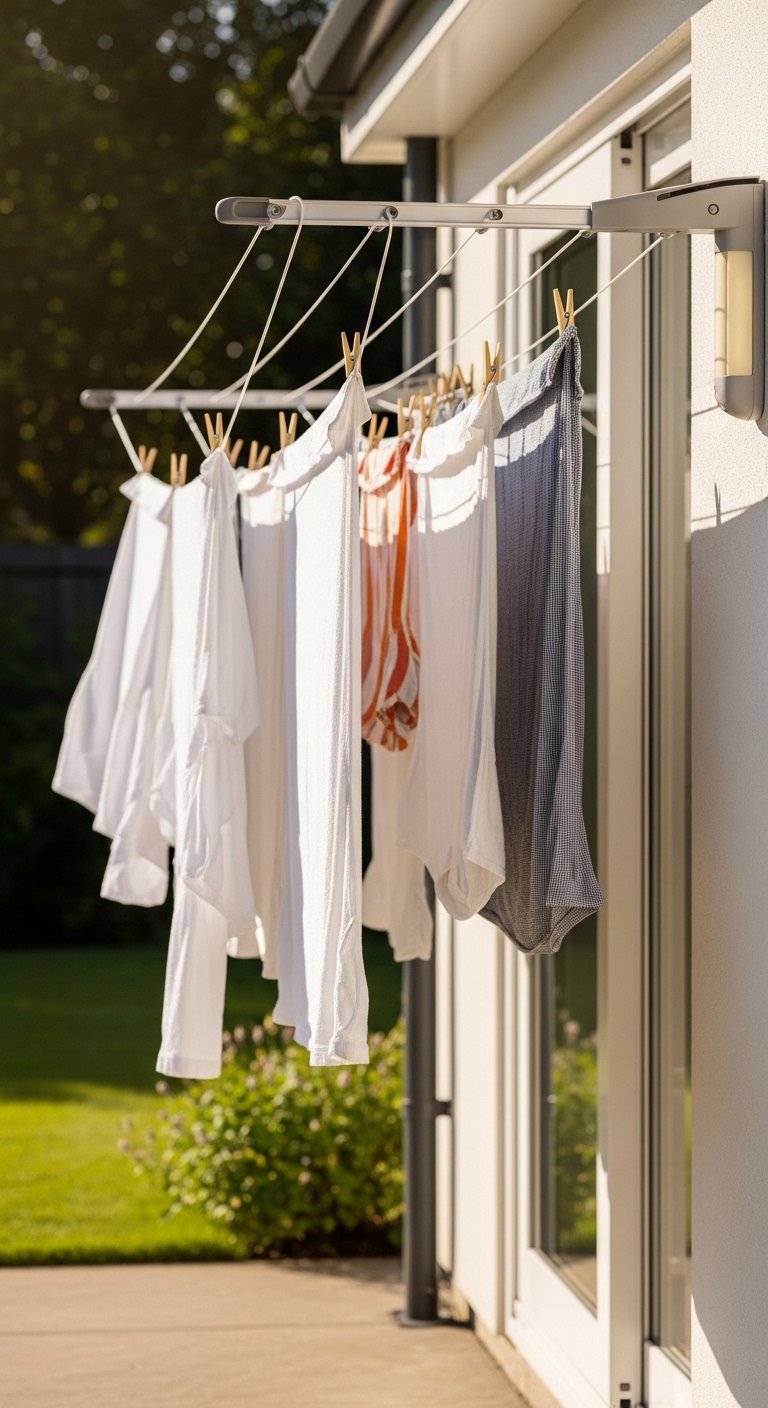
If your laundry room connects to an outdoor area, a retractable clothesline mounted outside the door gives you an air-drying option that uses no indoor space at all. Sun-dried clothes last longer and smell better than dryer-dried items.
Retractable versions extend across a yard or patio when in use and retract into a wall-mounted casing when not needed. A twin or triple line version holds a full load of washing at once.
Best retractable clothesline options: Hills, Brabantia, and Versaline all produce durable wall-mounted retractable lines rated for outdoor use.
19. Add Decorative Elements
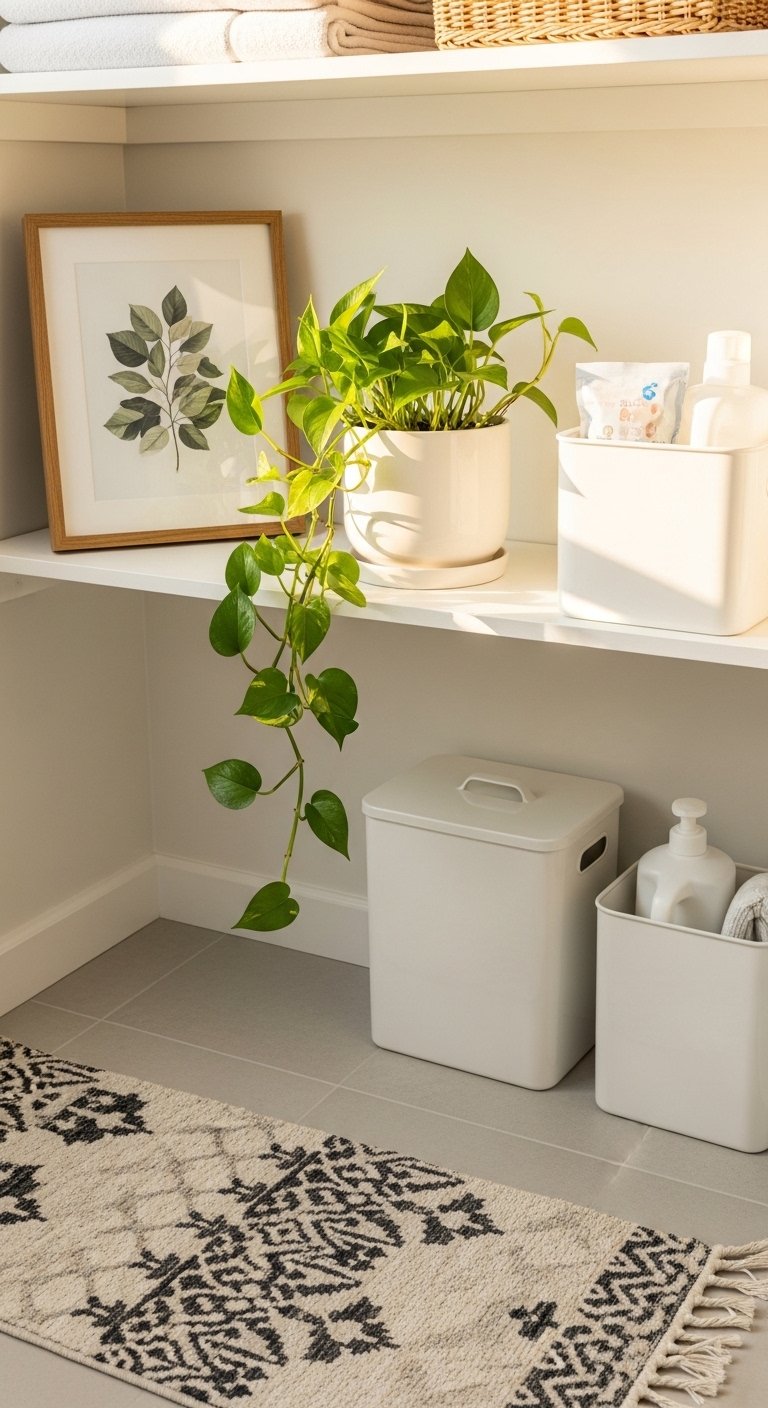
A laundry room does not need to look industrial to function well. A framed print on the wall, a small plant on the shelf, a patterned rug runner on the floor, and matching containers on the open shelving transform a purely functional space into one you do not mind spending time in.
Keep decorative elements washable or moisture-resistant. Fabric items in a laundry room absorb humidity. Choose a low-maintenance plant like a pothos or snake plant that tolerates the warm, humid environment without constant attention.
Simple decorative additions:
- One framed print with a laundry or botanical theme
- A small pothos or snake plant on the upper shelf
- A patterned washable runner rug on the floor
- Matching white or clear containers for all open shelf supplies
20. Build a Mudroom Transition Zone
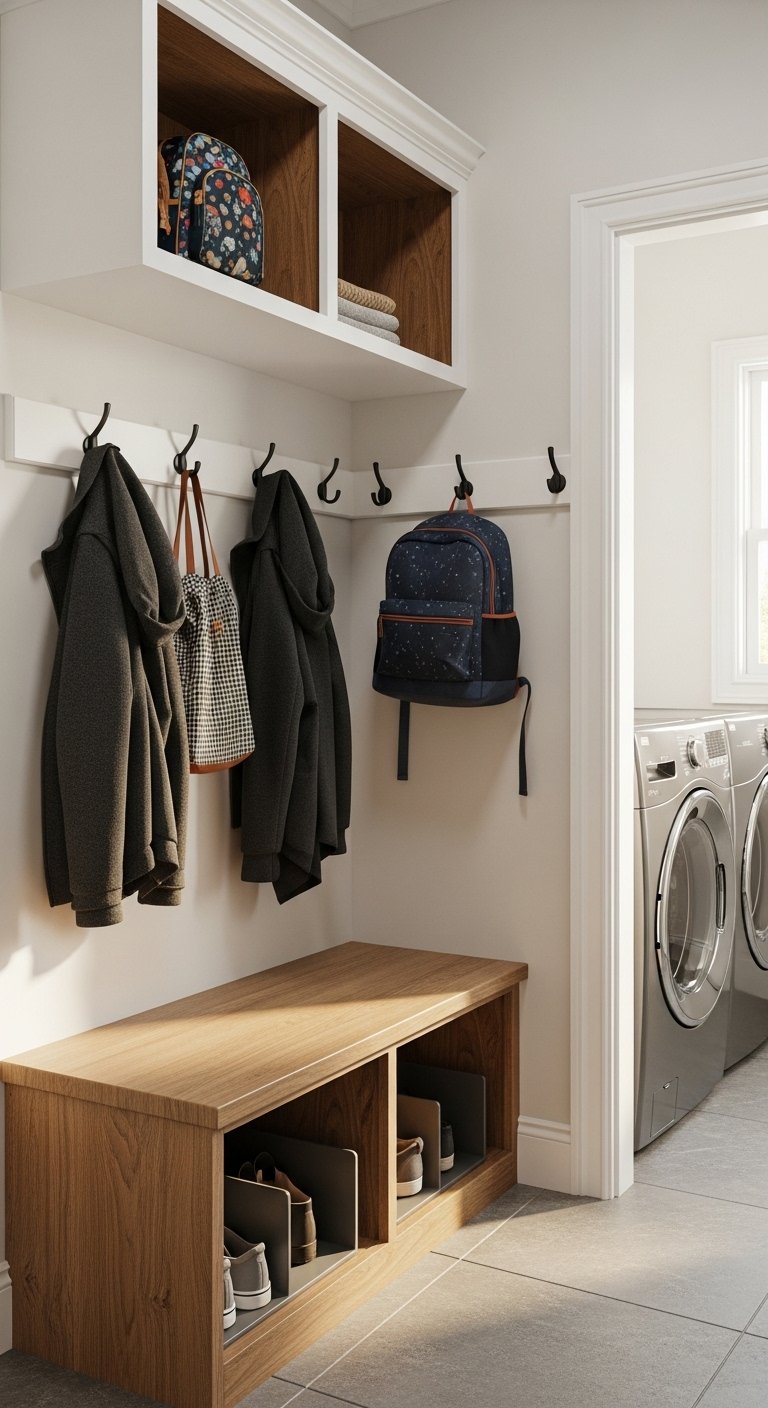
If your laundry room connects to a back door or garage entry, extending the remodel to include a mudroom transition zone adds significant function. Hooks for coats and bags, a bench for removing shoes, and cubbies for each family member’s outdoor gear all fit in a 4 to 6 foot wall section beside the laundry area.
This combination makes the laundry room the functional hub of the home’s daily entry and exit routine. Wet coats, muddy shoes, and school bags go directly into their designated spots instead of landing on the nearest floor or surface.
Mudroom transition zone essentials:
- Wall hooks at adult and child height
- Bench with storage below for shoe bins
- One cubby or locker section per family member
- Durable washable flooring extending through both zones
21. Upgrade the Hardware and Fixtures
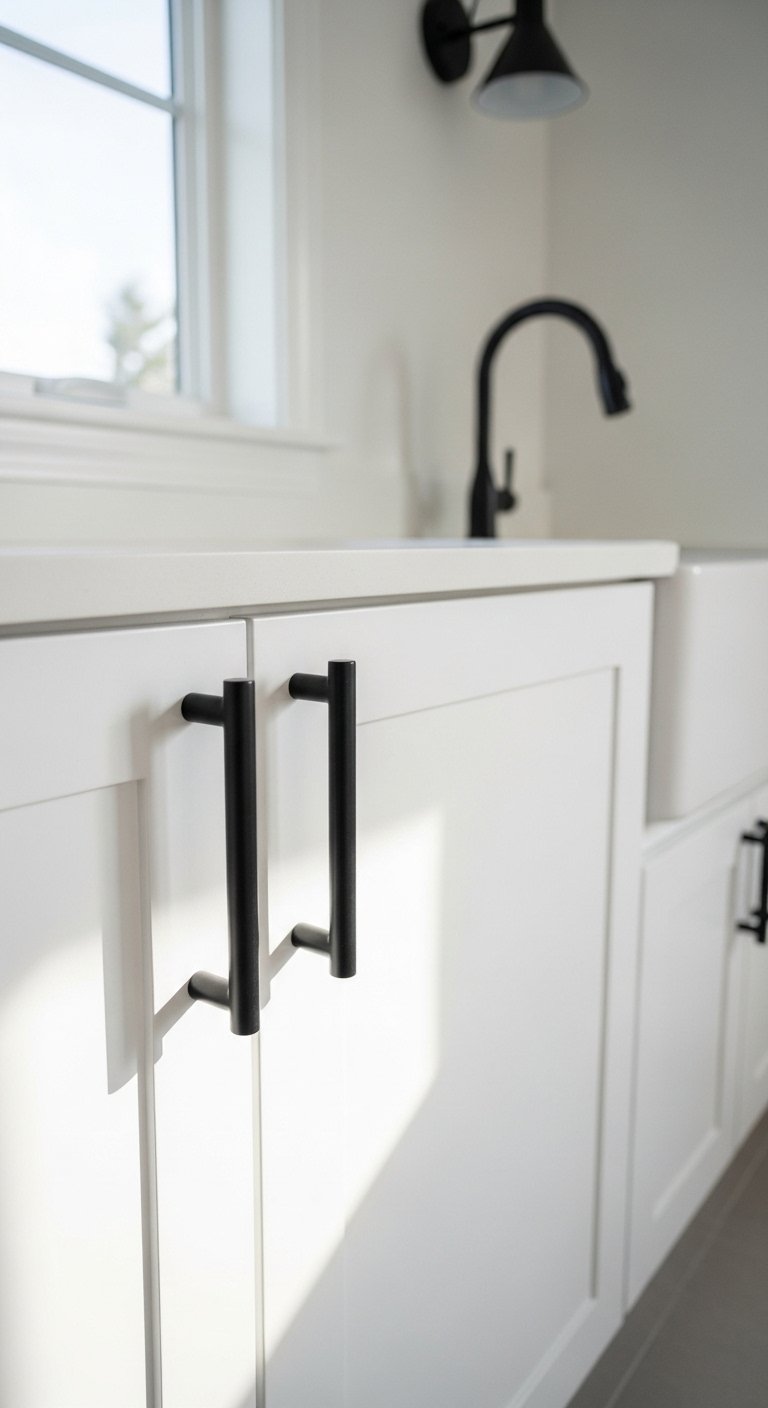
New cabinet hardware, a new faucet on the utility sink, and updated light fixtures change the visual quality of a laundry room without requiring any structural work. These are finish-level changes that take one afternoon and cost a few hundred dollars total.
Choose a consistent metal finish across all hardware elements. Matte black, brushed nickel, and brass all work. Mixing finishes in a small room reads as unfinished rather than eclectic. Pick one and apply it to every hardware element in the space.
Hardware upgrade checklist:
- Cabinet pulls and knobs in a consistent finish
- Utility sink faucet in matching metal finish
- Light fixture in matching metal finish
- Towel bar or hook beside the sink in matching finish
Final Thoughts
A laundry room remodel does not require a large budget or a complete gut renovation. The ideas on this list range from a weekend afternoon project to a full room rebuild. Every one of them solves a real problem that makes laundry harder than it needs to be.
Identify the three things that frustrate you most about your current laundry room. Start with those. A folding counter, proper lighting, and a sorting station will change how the room functions within a single weekend.
The goal is a room that makes the work faster and easier every time you walk in. Nothing more, nothing less.