25 Wall Decor Ideas for Living Rooms That Look Expensive
Your living room walls are either working for you or against you. A blank wall doesn’t feel minimal. It feels unfinished. And a wall covered in random objects with no coherent plan feels worse than blank.
I’ve looked at a lot of living rooms. The ones that feel genuinely good share one thing: every wall decision was made with intention. Not necessarily expensive. Just deliberate intention.
These 25 wall decor ideas for living rooms give you that intention. Pick what fits your space, your style, and your budget. Then commit to it properly.
1. Build a Gallery Wall Around Your Sofa
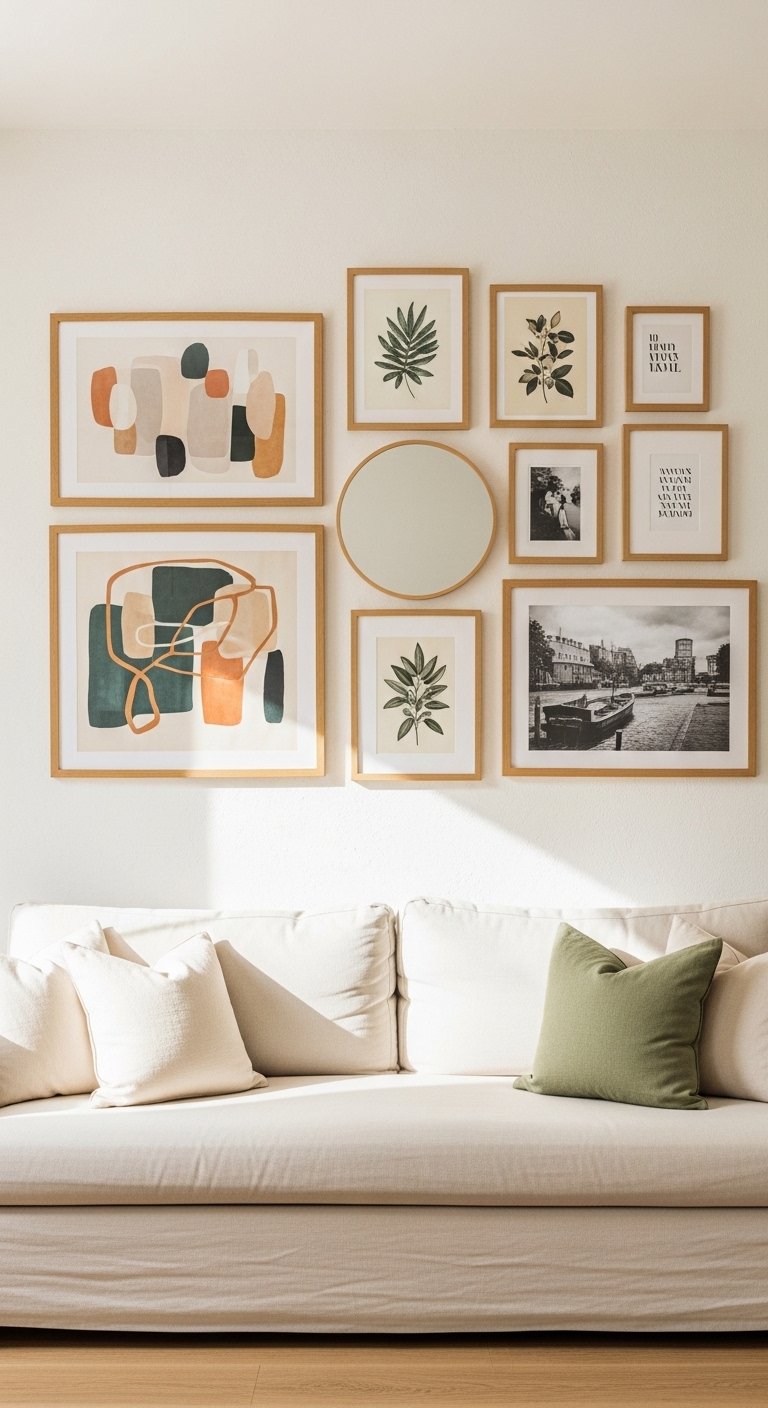
The wall above and around your sofa is the most important wall in your living room. Treat it accordingly.
A gallery wall above the sofa creates a curated, personal backdrop that makes the entire seating area feel designed rather than assembled. The key is treating it as one composition rather than a collection of individual objects.
Choose a consistent frame finish before you start: all black, all natural wood, or all white. Mixed frame finishes across a gallery wall almost always look accidental unless you’re extremely experienced at composition.
Start with your largest piece at center, then build outward. Lay the full arrangement on the floor before hanging anything. Adjust until the composition feels balanced, then transfer it to the wall.
2. Hang One Oversized Art Print
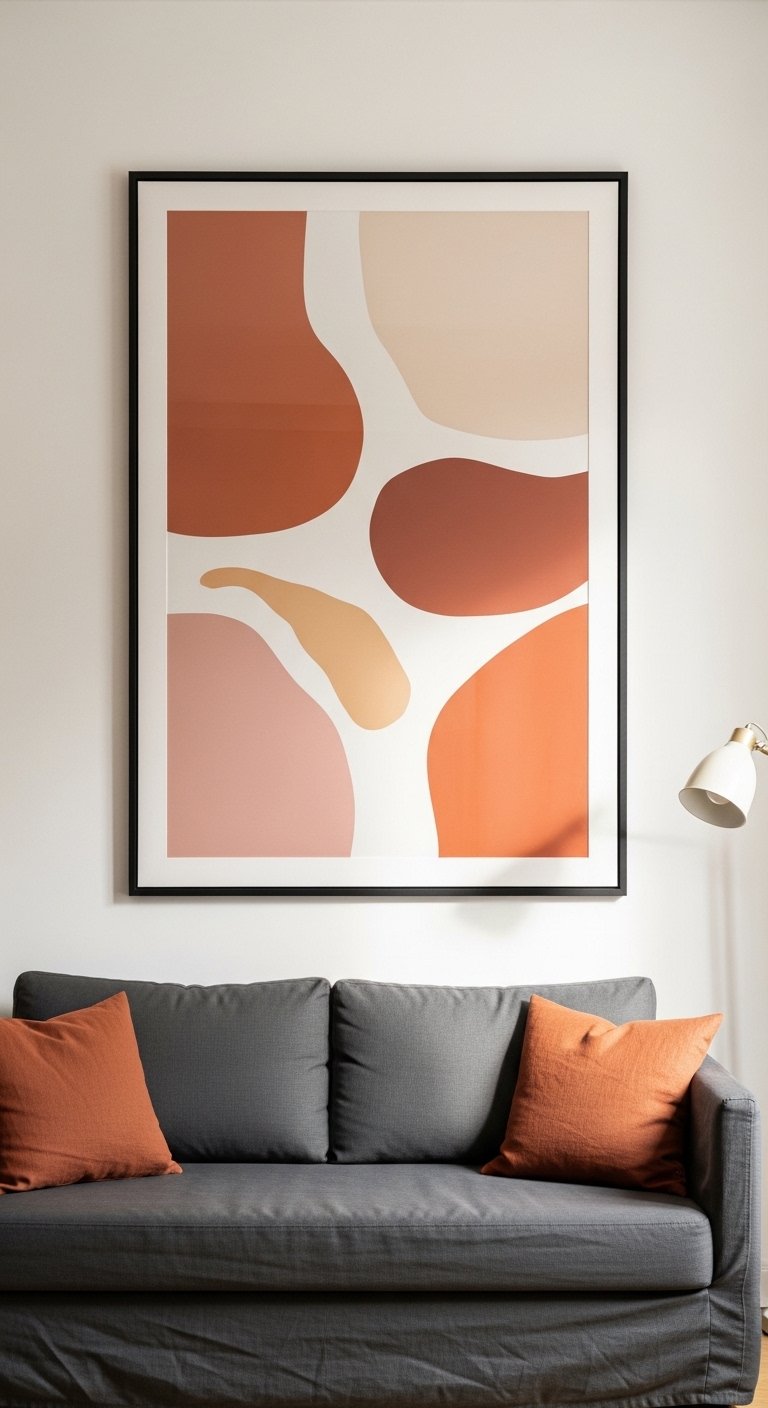
If gallery walls feel like too much effort, one large piece of art does more work than five small ones.
An oversized art print, 100cm wide or larger, commands a wall without requiring any arrangement decisions. It’s the single most impactful change you can make to a living room wall.
The mistake most people make: hanging it too small. A 50cm print on a large living room wall looks like a postage stamp. Scale up significantly from whatever you think looks right when you’re standing in the room.
Abstract prints, botanical illustrations, landscape photography, and typographic works all perform well as oversized single pieces. Choose based on your existing color palette, not based on what’s trending.
3. Install Floating Shelves as a Display System
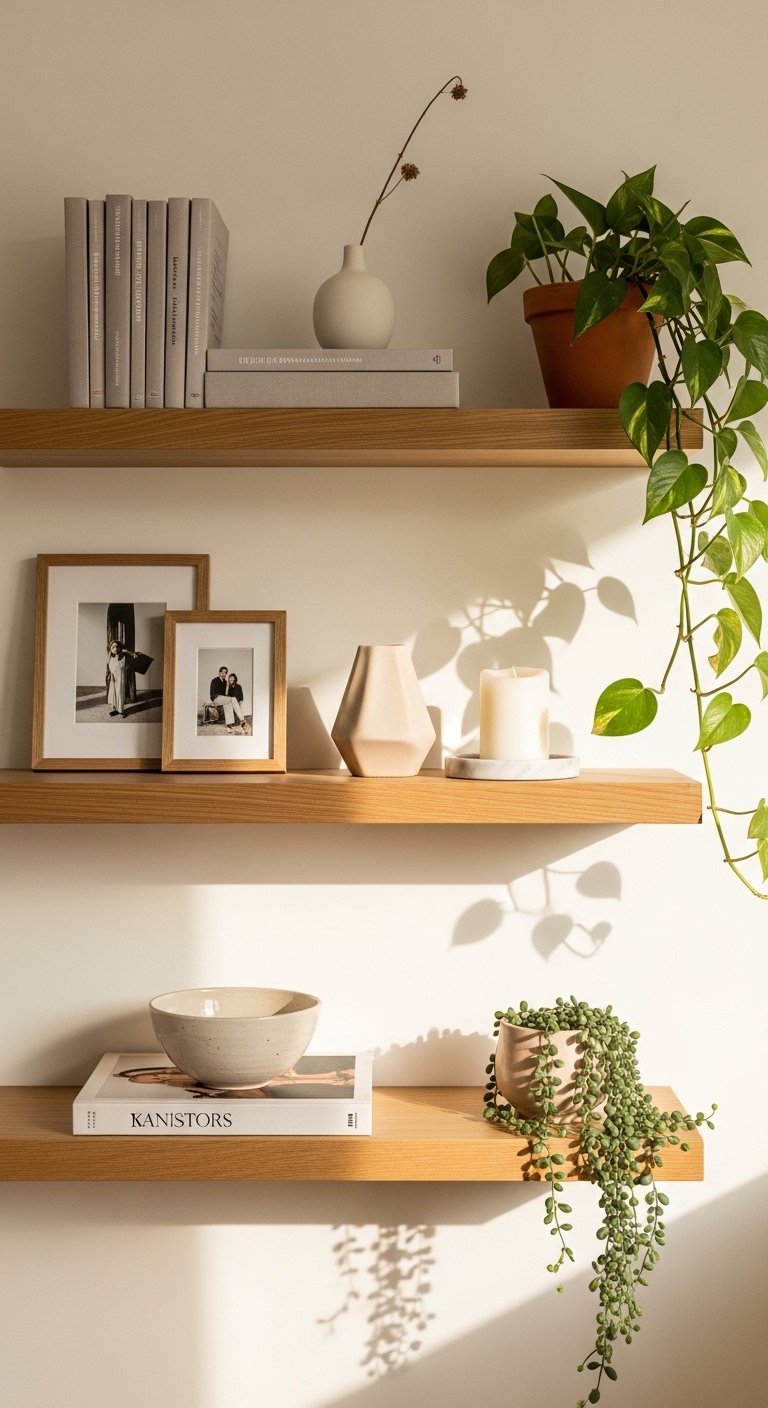
Floating shelves on a living room wall serve two purposes simultaneously: storage and display.
A row of floating shelves, whether three evenly spaced horizontal shelves or a more varied asymmetric arrangement, gives you a flexible wall system you can restyle as your taste evolves.
Style them with a deliberate mix: books spine-out, one or two small framed photos, a trailing plant, a ceramic object, and one candle. That’s the formula. Restraint on shelves always reads better than abundance.
Match the shelf color to your wall for a built-in look that feels architectural. Contrast the shelf color against the wall for a bolder, more furniture-like statement.
4. Use a Large Statement Mirror
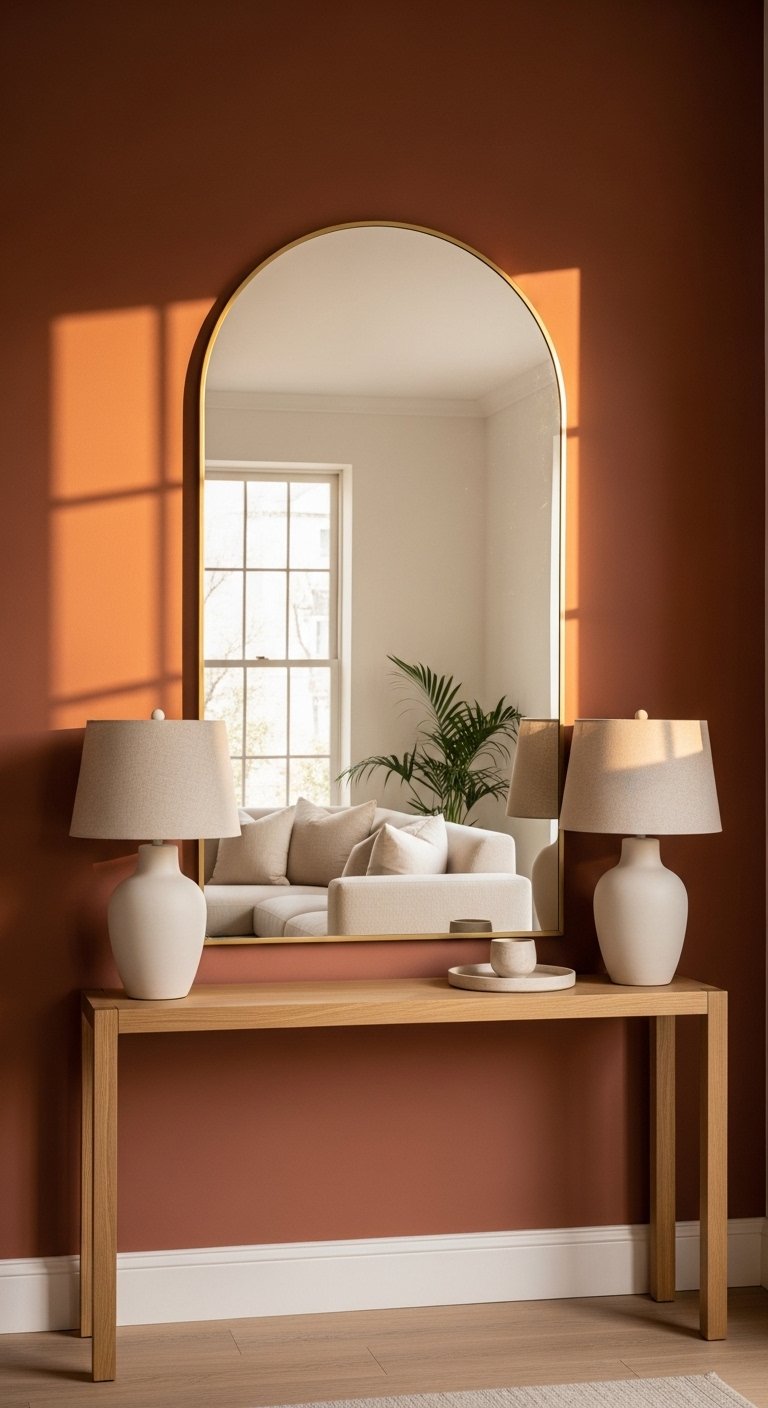
A large mirror on a living room wall does three things: reflects light, adds perceived depth, and functions as a design element in its own right.
An arched mirror, an oversized rectangular mirror, or a sunburst mirror above a console table or fireplace transforms that wall from functional to designed.
Position it opposite or adjacent to your primary light source, whether a window or lamp. A mirror that reflects nothing interesting just gives you more walls. A mirror that reflects light or a view doubles the room’s best feature.
IMO the arched mirror has become the dominant living room mirror shape for good reason. It adds vertical interest, softens rectangular rooms, and works across styles from minimal to maximalist.
5. Create a Bookshelf Wall
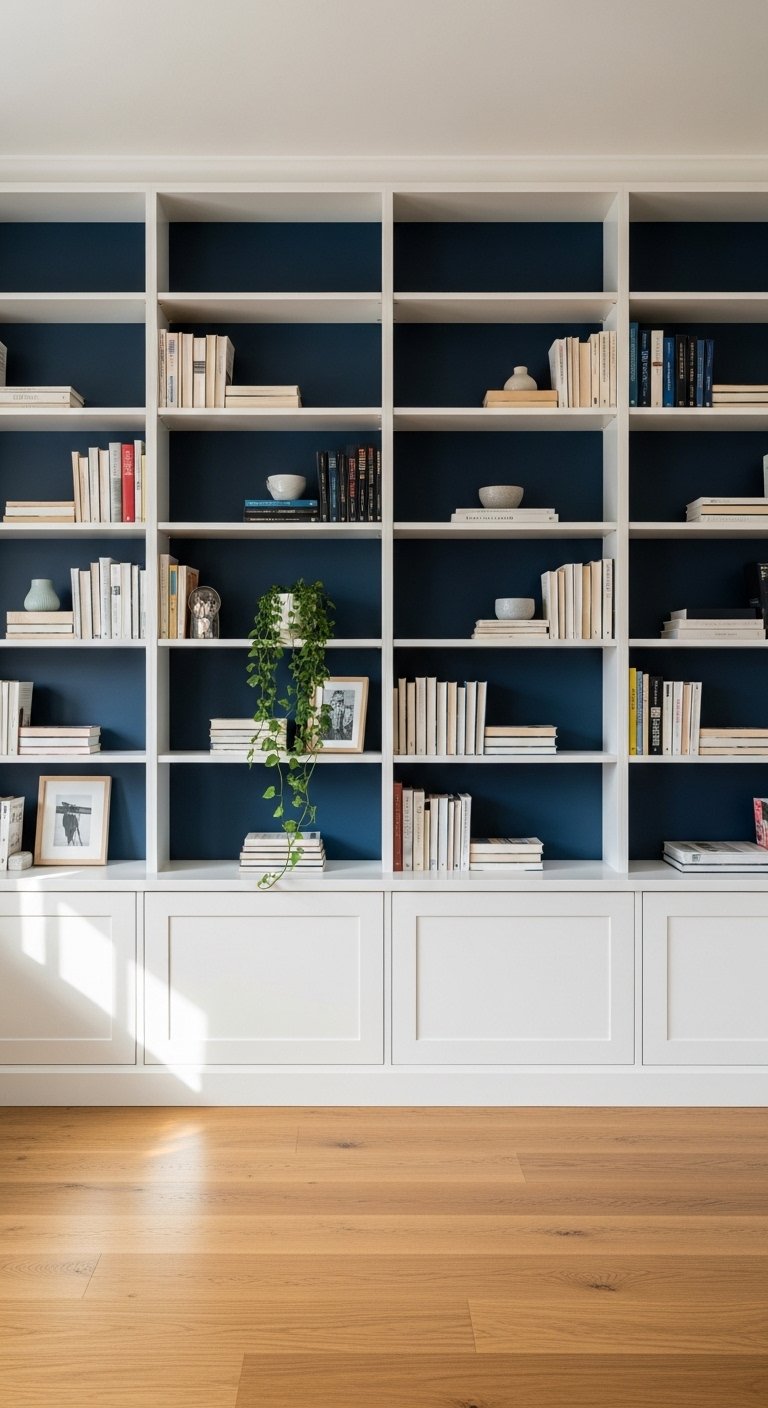
A full wall of built-in or freestanding bookshelves is the closest thing to a permanent, living piece of wall art.
Floor-to-ceiling bookshelves covering an entire living room wall add architectural weight, personal character, and practical storage in one decision.
Style the shelves with a mix of books and objects. All books, spine-out, create a dense library effect. Books mixed with ceramics, plants, and framed photos creates a more editorial look.
Paint the inside back of built-in shelves a contrasting color to the room. This makes the shelving feel intentional and designed rather than purely functional.
6. Mount a Large Television Thoughtfully
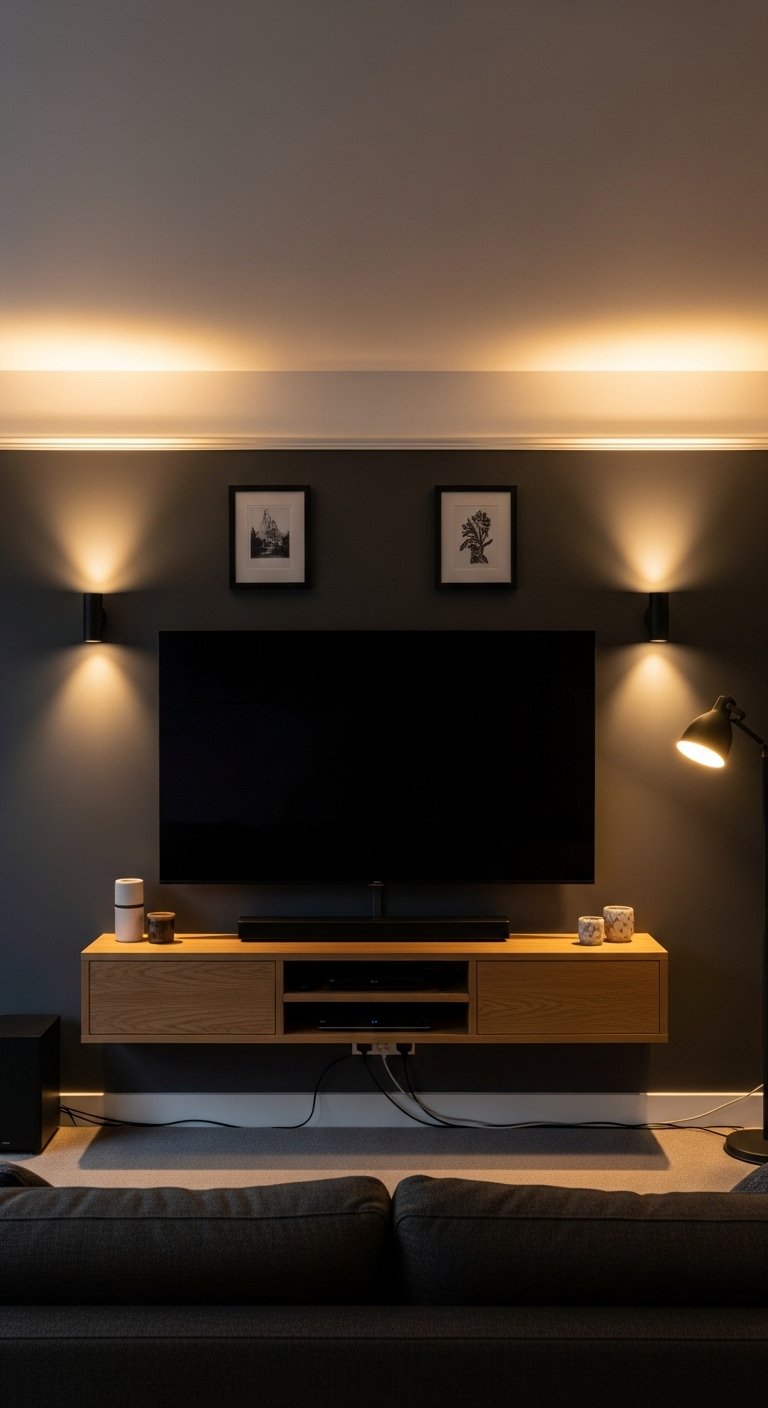
Most people mount their television and stop there. The television then dominates the wall it occupies without any design consideration.
Framing your mounted television with symmetrical sconces on either side, a floating shelf below it, or incorporating it into a built-in media unit transforms it from an appliance into part of the room’s design.
A television mounted on a bare wall with wires visible is not a design feature. Conceal the cables with an in-wall cable management kit or a slim cable cover painted to match the wall.
Consider a television frame product that displays art when the screen is off. The cost is significant but it solves the blank black rectangle problem that affects every television in every living room.
7. Add Architectural Wall Moulding
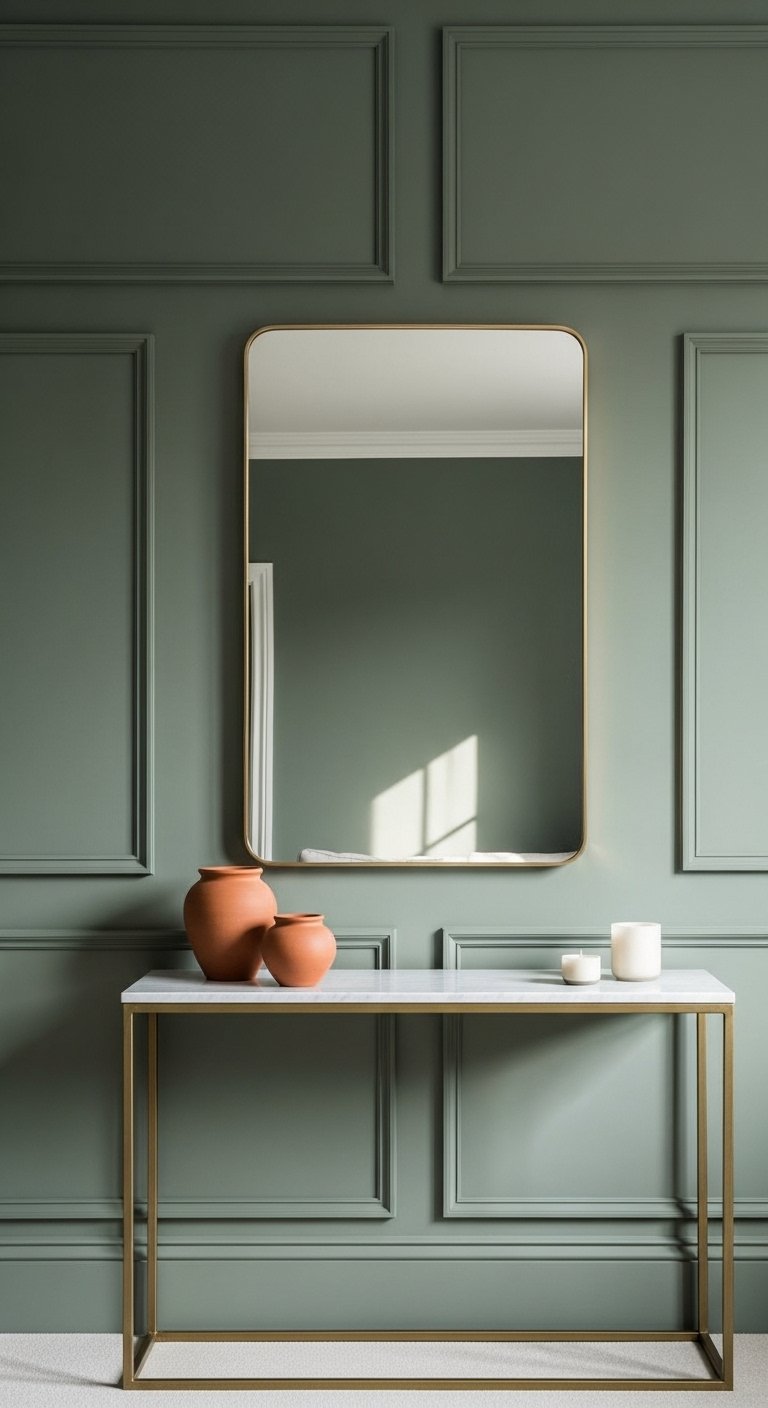
Wall moulding is one of the oldest interior design techniques. It’s popular in 2026 for the same reason it was popular in the 1800s: it makes walls feel expensive and considered.
Panel moulding, picture rail moulding, or board and batten applied to a living room wall adds dimensional detail that paint alone cannot replicate. The shadow lines created by the moulding profile give the wall depth and architectural character.
MDF moulding kits are now widely available and designed for DIY installation. You apply them directly to the existing wall surface with adhesive and finishing nails, then fill, sand, and paint the whole wall in one color.
Paint the moulding the same color as the wall for a subtle, tonal effect. Paint it a contrasting color for a more traditional, formal look.
8. Hang Woven or Textile Wall Art
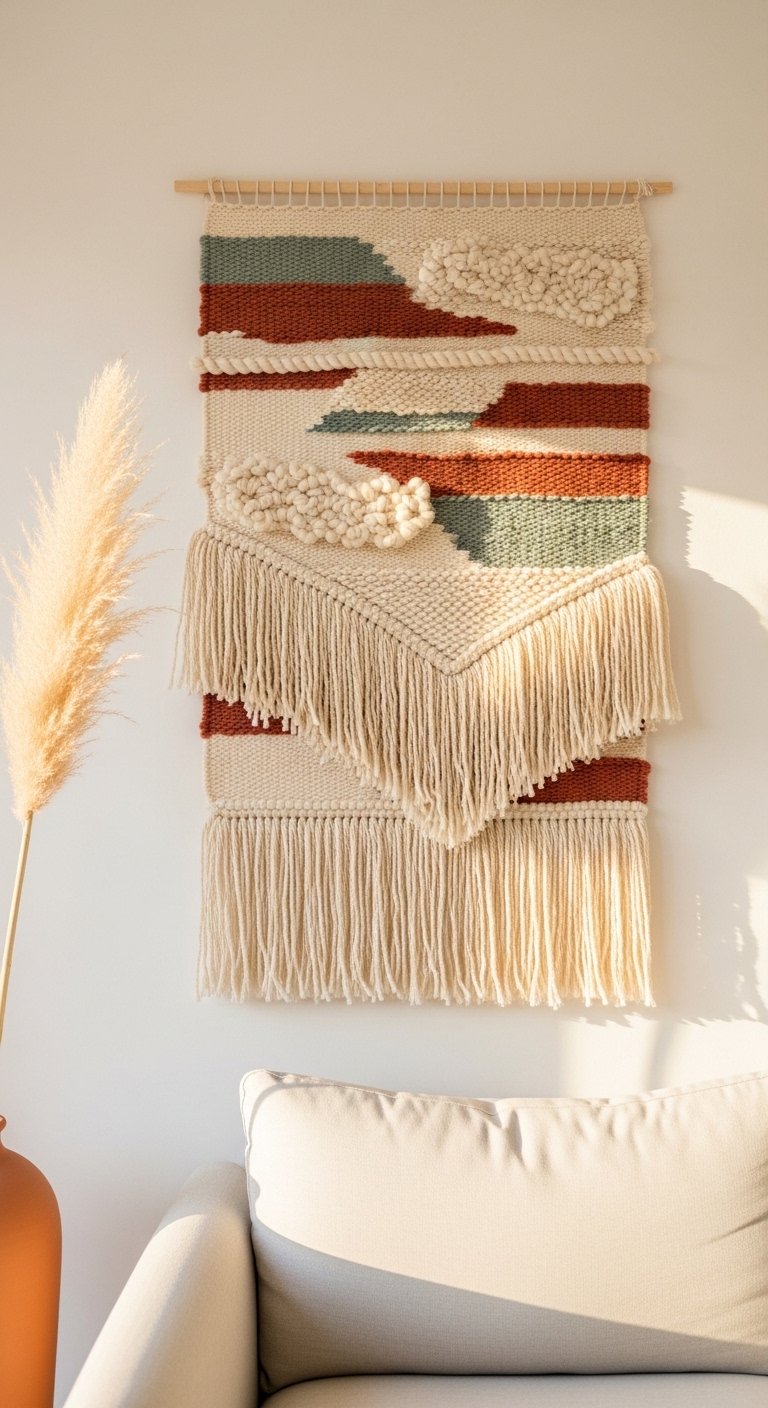
Not every piece of living room wall decor needs a frame. Textile art brings texture and warmth that framed prints can’t.
Woven wall hangings, macrame pieces, tapestries, and fabric panels add softness and acoustic absorption to a living room wall. They work particularly well in rooms that feel hard, echo-prone, or cold.
Scale matters with textile art. A small macrame piece on a large wall looks like a dreamcatcher you bought at a market in 2015. A large, well-made woven piece commands the wall properly.
Natural fibers in cream, warm beige, terracotta, and sage green work across most living room color palettes. Avoid overly trendy motifs if you want the piece to last beyond the next design cycle.
9. Install a Picture Rail and Rotate Art Freely
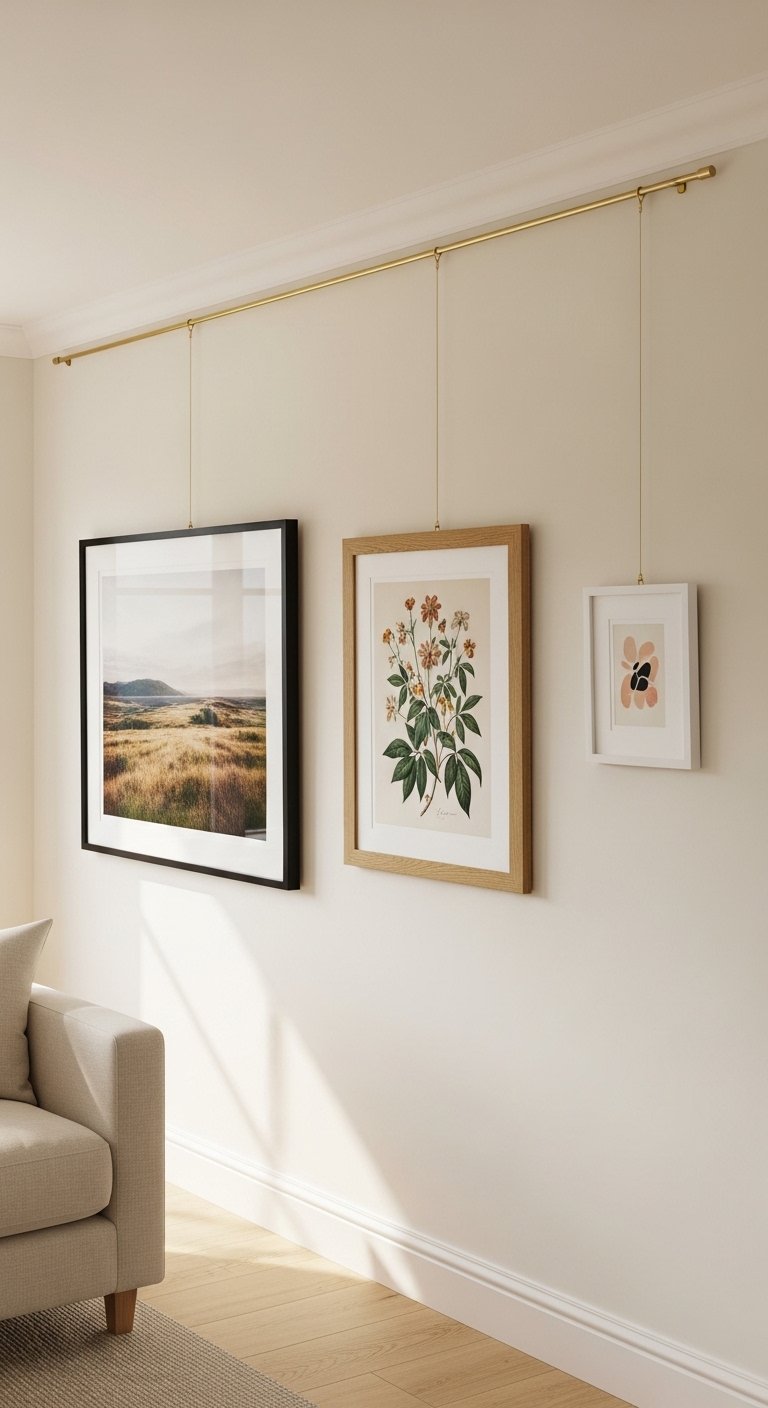
Picture rails give you the ability to hang and rehang art without putting a single new nail in your walls.
A picture rail mounted close to the ceiling with thin hanging rods dropping down to picture hooks lets you move art around freely. Change the arrangement seasonally. Test new pieces before committing to a permanent position.
This is particularly valuable in rented properties where wall damage restrictions apply. One picture rail installation, done correctly, gives you unlimited flexibility afterward.
The aesthetic is also genuinely appealing. Art hanging from visible rods and a rail has a gallery or studio quality that standard wall-mounted frames don’t replicate.
10. Use Limewash or Textured Paint as the Decor
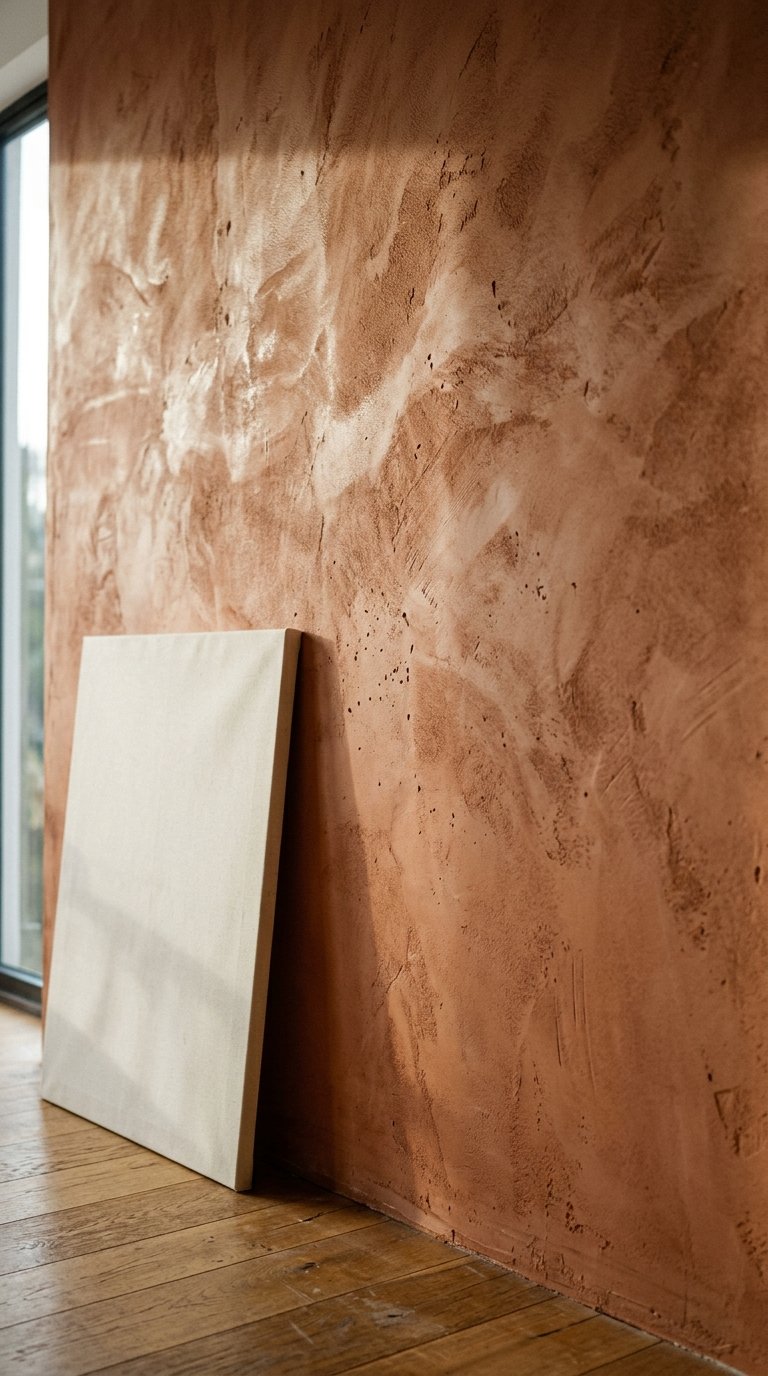
Sometimes the wall finish itself is the wall decor. This is the most minimal approach on this list and one of the most effective.
Limewash paint, textured mineral paint, or Venetian plaster applied to a living room feature wall creates a surface with so much inherent depth and visual interest that additional decoration becomes unnecessary.
Limewash in particular shifts in appearance as the light changes throughout the day. Morning light reads differently from afternoon light on the same limewash surface. The wall is always doing something.
This approach works best on one wall only, typically behind the sofa or fireplace. It creates a feature without the commitment of pattern or color that can date a room.
11. Create a Symmetrical Console Table Vignette
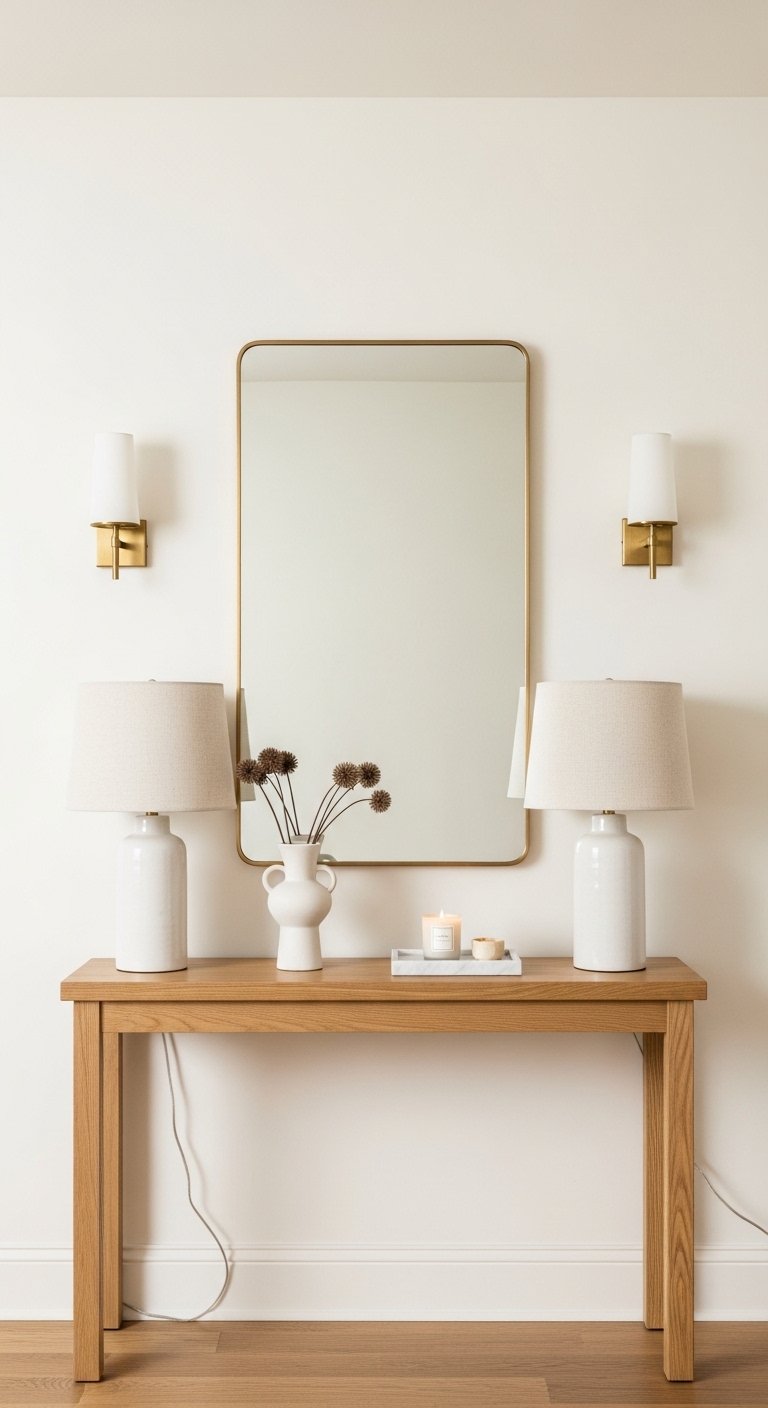
A console table against a living room wall gives you a surface and a wall area to work with simultaneously.
A console table with a mirror above, flanked by two matching lamps or sconces, creates the most reliable symmetrical wall vignette in interior design. It works in almost every living room style.
The lamp height matters. The lampshade bottom should sit roughly at eye level when you’re standing. Too low and the lamps look dwarfed by the wall above. Too high and the light source is uncomfortable.
Style the console surface with three to five objects maximum. A vase with a stem, a small stack of books, one ceramic object, and one tray to corral the smaller items. That’s the complete picture.
12. Hang Framed Botanical Prints in a Grid
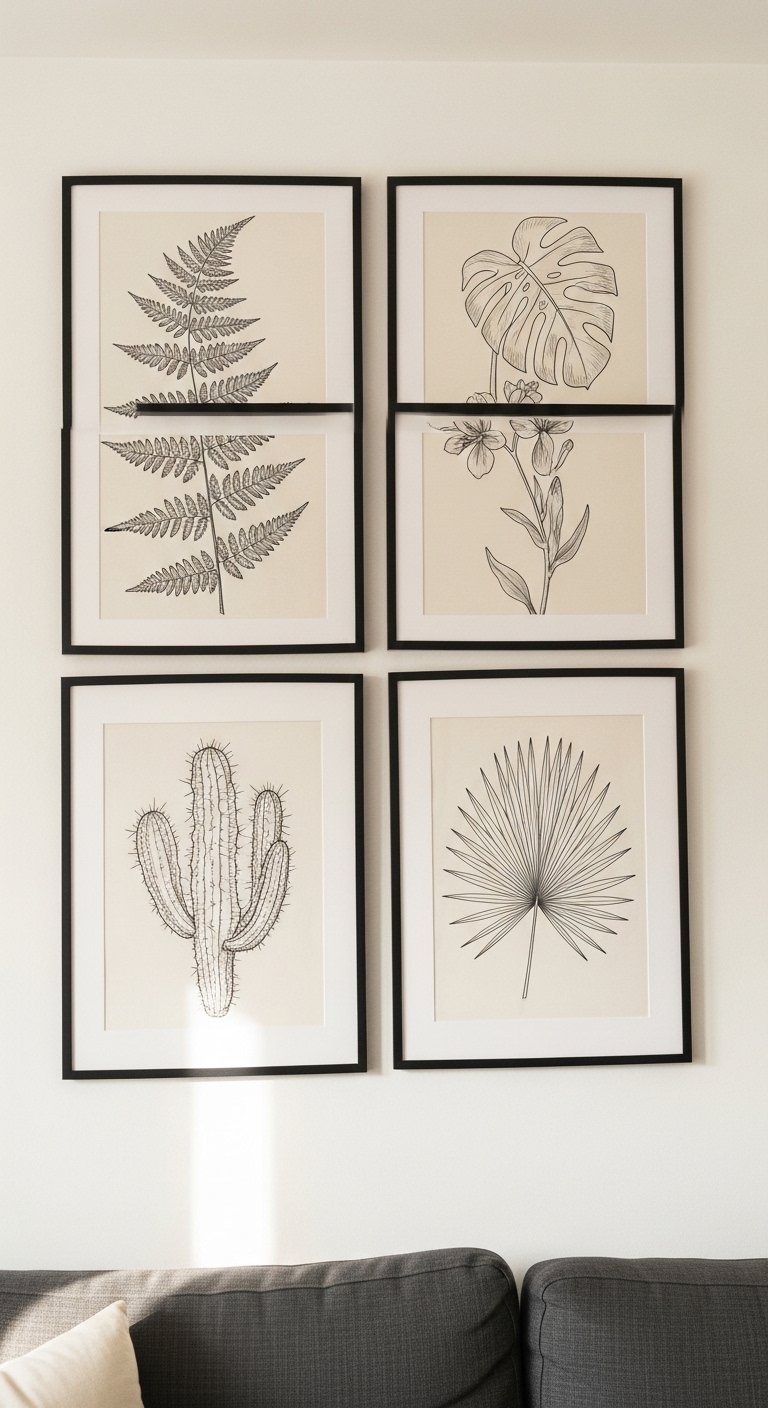
A grid arrangement of matching framed prints is one of the most ordered and satisfying wall compositions available.
Four, six, or nine botanical prints in identical frames, arranged in a perfect grid with equal spacing between each frame, creates a wall installation that reads as one composed piece rather than individual items.
The spacing between frames determines the grid’s character. Tight spacing, around 3-4cm, makes the grid read as one dense composition. Wider spacing, 8-10cm, makes it feel more relaxed and airy.
Botanical illustrations, architectural drawings, vintage maps, and black and white photography all work well in a grid format. The subject matter matters less than the consistency of the framing.
13. Install Wall Sconces for Decorative Lighting
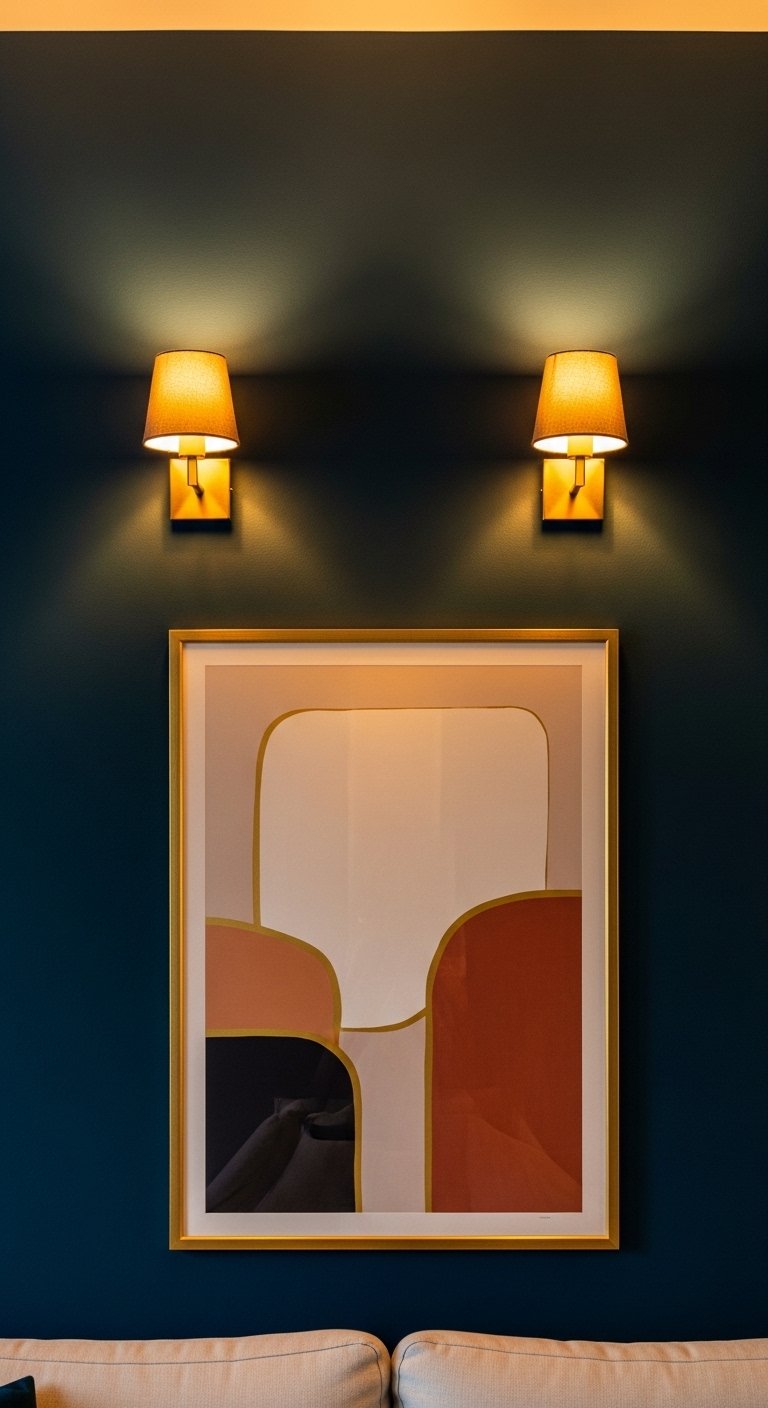
Wall sconces do what floor lamps and ceiling lights cannot: they put light exactly where the wall needs it while functioning as wall decor simultaneously.
Decorative wall sconces in brushed brass, matte black, or ceramic mounted symmetrically on either side of a mirror, fireplace, or piece of art add both ambient light and visual punctuation to a living room wall.
Plug-in wall sconces are a practical alternative to hardwired ones if you’re renting or don’t want the expense of electrical work. The cord runs down the wall to a socket. Paint the wall plate the same color as the wall and the cord becomes almost invisible.
Choose a sconce shade style that matches the room’s overall aesthetic: drum shades for modern rooms, empire shades for traditional rooms, exposed bulb caged sconces for industrial spaces.
14. Hang a Large World Map or City Print
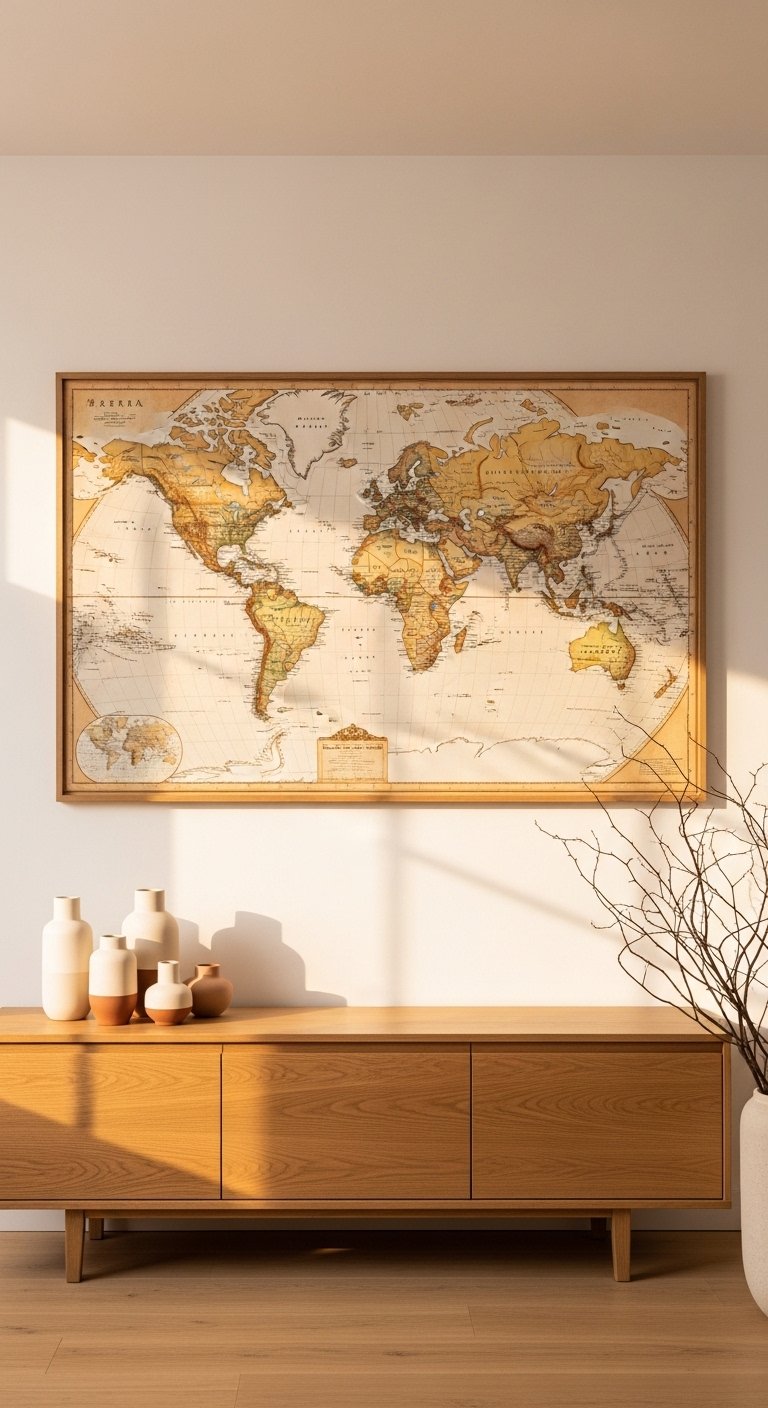
A large format map print occupies significant wall space with genuine visual interest and a personal story.
A large world map, city street map, or topographic map print in a simple frame above a sofa or console tells the viewer something specific about the person who hung it. It’s personal without being private.
Choose a color palette for the map that works with the room. Antique sepia tones work in warm, traditional living rooms. Clean black and white works in minimal modern rooms. Colored political maps work in rooms that can handle more visual energy.
Scale this idea up from what feels comfortable. A map print that fills 80% of the wall above your sofa makes a genuine statement. A map print that fills 40% looks like a geography classroom.
15. Use Pegboard as a Functional Wall System
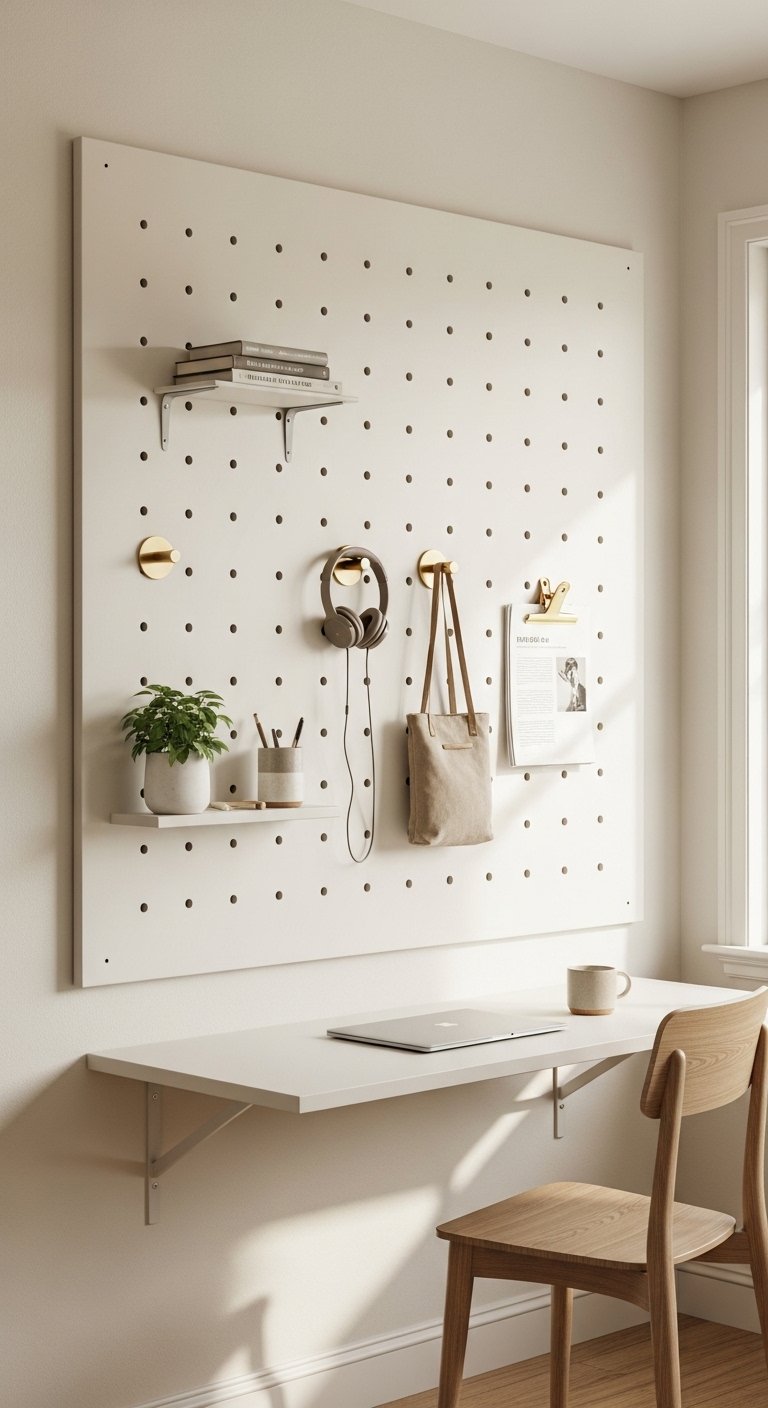
Pegboard is not just for garages and craft rooms. A well-styled pegboard in a living room works as both storage and wall art.
A large pegboard panel painted to match the wall color disappears visually while its hooks, shelves, and accessories create an organized, functional display system. Paint it a contrasting color and it becomes a deliberate design feature.
Use pegboard in a home office corner of the living room to organize cables, stationery, and tech accessories. Use it in a reading corner to hold books, a lamp, and reading glasses.
The key to a living room pegboard looking intentional rather than utilitarian is editing. Remove anything that doesn’t need to be on the board and style what remains with the same care you’d give an open shelf.
16. Create a Photo Wall of Personal Memories
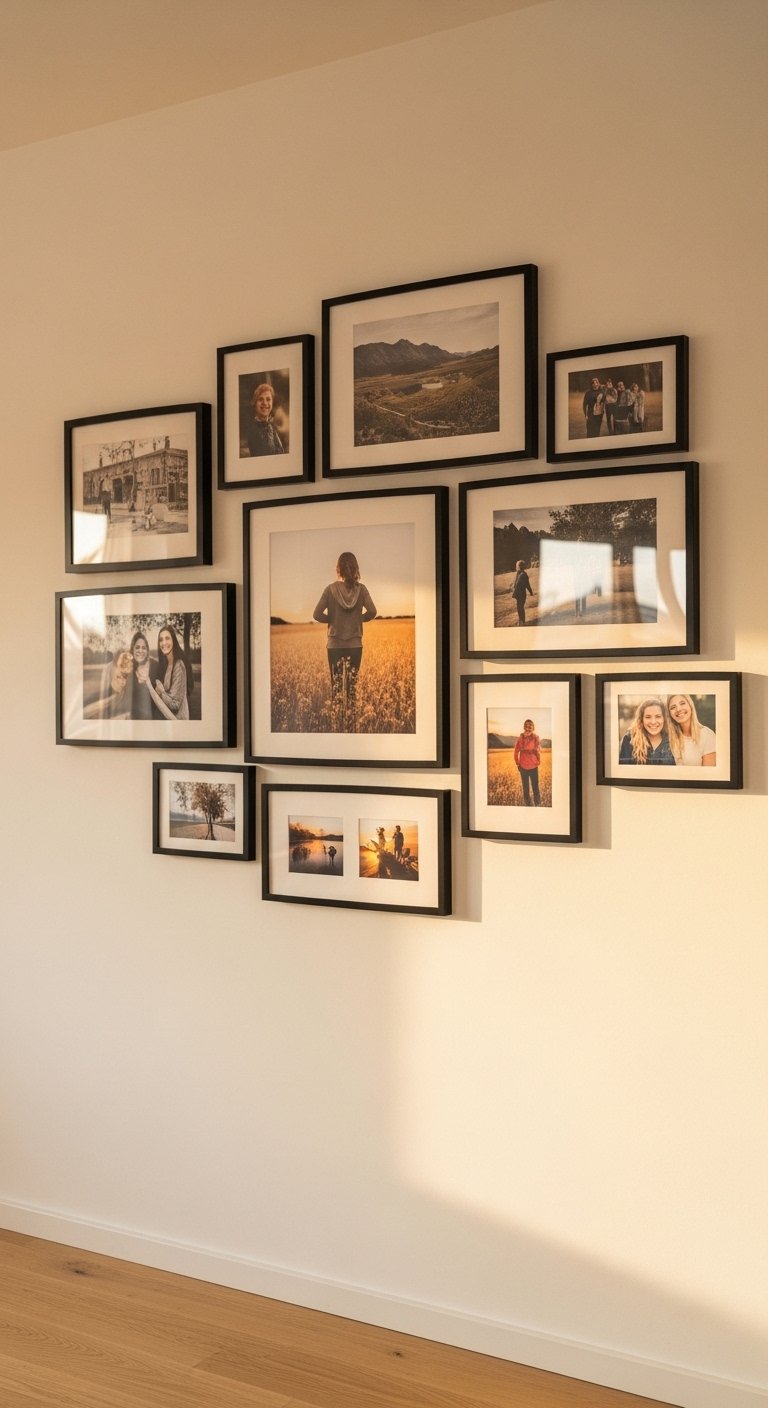
Personal photography on a living room wall tells the story of the people who live there. No other wall decor does this.
A curated personal photo wall using printed photographs in consistent frames creates a living room feature that no interior design shop can replicate for you. It is entirely specific to your life.
Print photographs at a larger size than feels natural. A 20x25cm print has genuine presence. A 10x15cm print disappears. Size up across the board.
Edit the selection ruthlessly. Ten great photographs make a strong wall. Forty photographs of varying quality make a chaotic one. Quality and curation over quantity, always.
17. Mount a Chalkboard or Whiteboard Panel
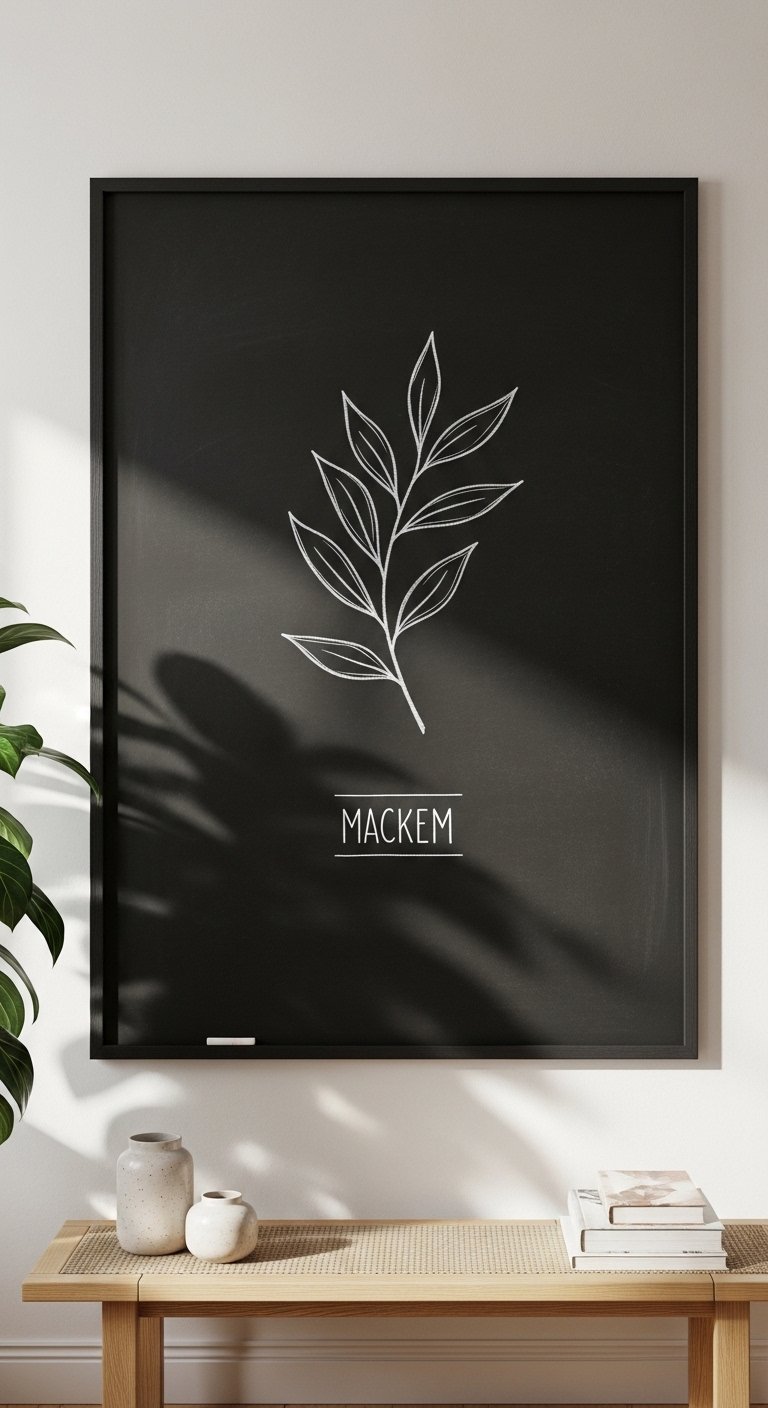
A large framed chalkboard or whiteboard panel in a living room sounds like a children’s classroom decision. Done correctly, it’s neither.
A large chalkboard panel in a slim black frame on a living room wall functions as a constantly changing piece of art. Write a quote, draw a simple botanical illustration, list the week’s plans, or leave it blank.
The blank chalkboard is the minimal version: a large matte black rectangle that absorbs light and creates visual weight on a wall without pattern or imagery.
This works best in casual, relaxed living rooms. A formal, traditional living room and a chalkboard panel are a difficult combination. Know your room’s register before committing.
18. Install Vertical Shiplap or Batten Wall Panels
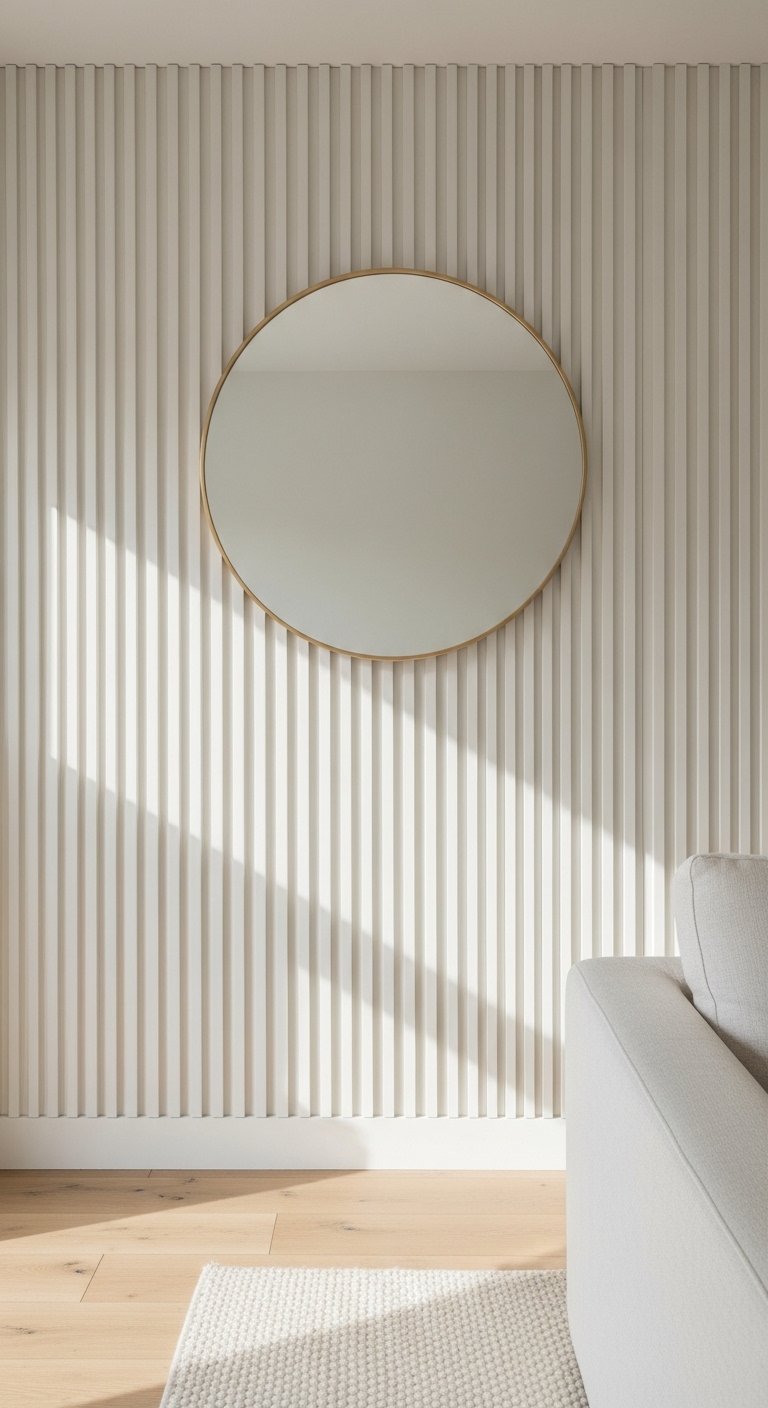
Horizontal shiplap has been in bathrooms and kitchens for years. Vertical batten panels are doing something more interesting in living rooms right now.
Vertical timber battens or MDF strips mounted directly to the living room wall at regular intervals create a rhythmic, textured surface that photographs well and adds genuine architectural interest.
Paint the battens and the wall behind them the same color for a tonal, almost three-dimensional effect. The shadow between each batten creates the visual interest without color contrast doing the work.
This treatment works on one wall only in most living rooms. A full-room vertical batten treatment can feel overwhelming unless the room is very large and the battens are widely spaced.
19. Hang a Series of Framed Mirrors
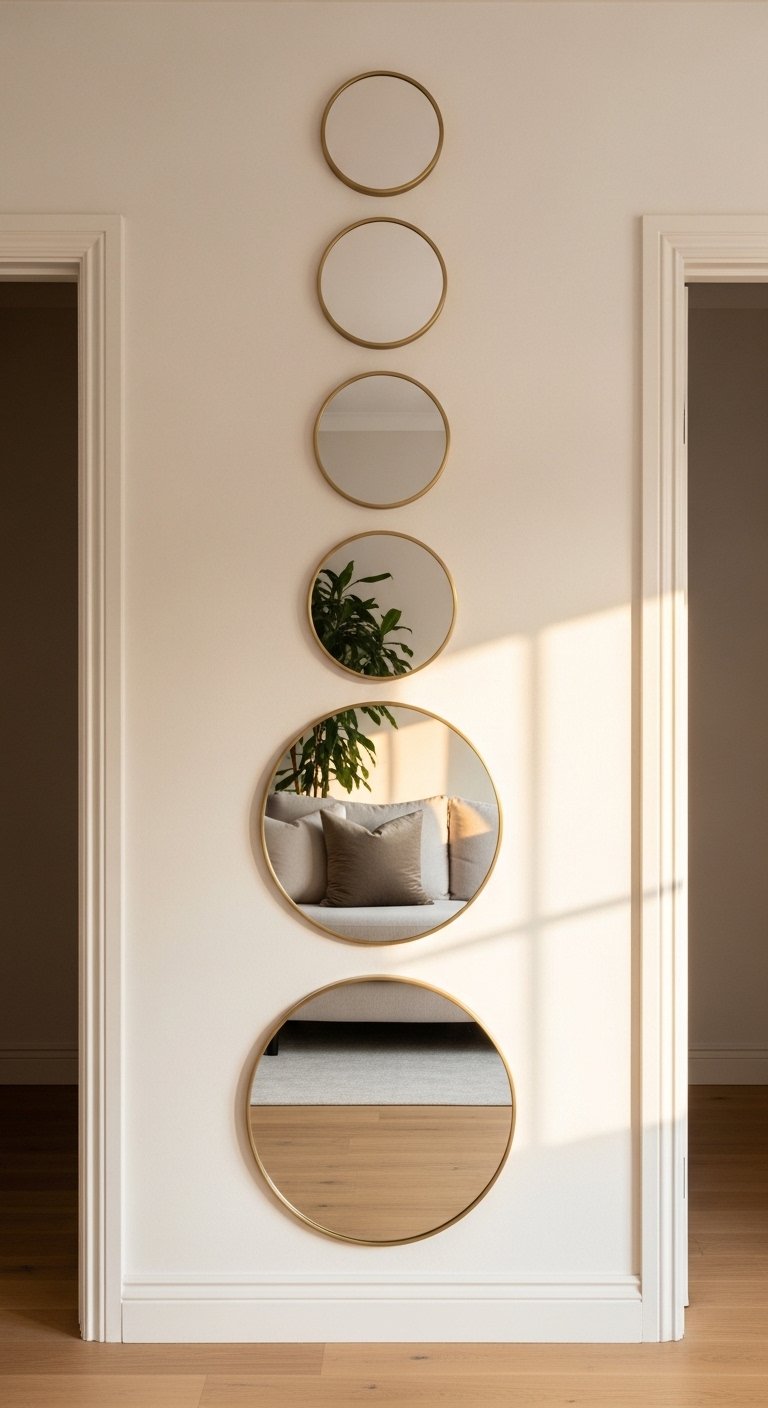
One mirror does one job. A series of mirrors does something more interesting.
Three or five matching framed mirrors arranged in a vertical column or horizontal row creates a wall installation that multiplies light reflection and adds graphic interest simultaneously.
Round mirrors in matching thin brass frames arranged in a vertical column of three on a narrow wall between two doorways is one of the more elegant solutions to an awkward wall space.
Odd numbers work better than even numbers in mirror arrangements. Three and five are the most reliable groupings. Two mirrors side by side almost always looks like a mistake.
20. Use Dark Paint on One Wall
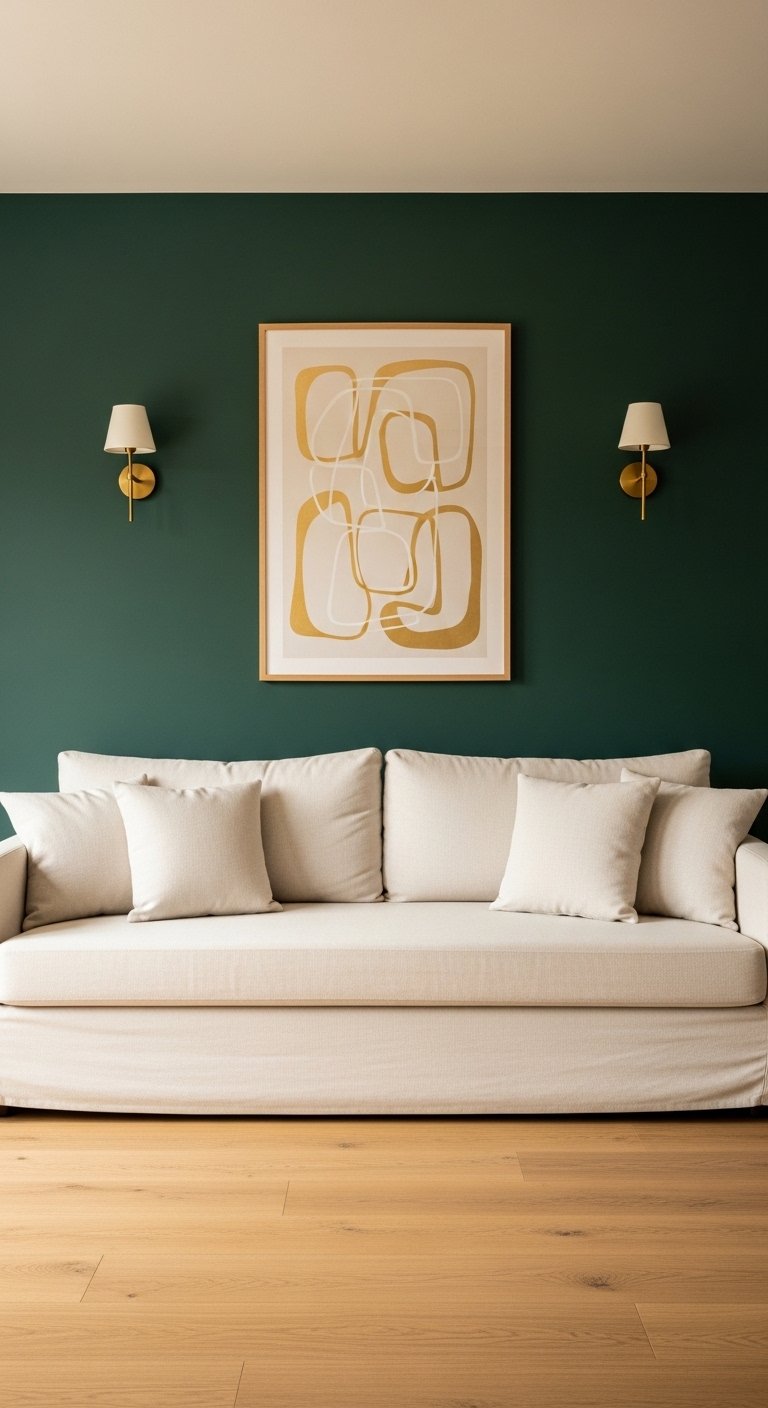
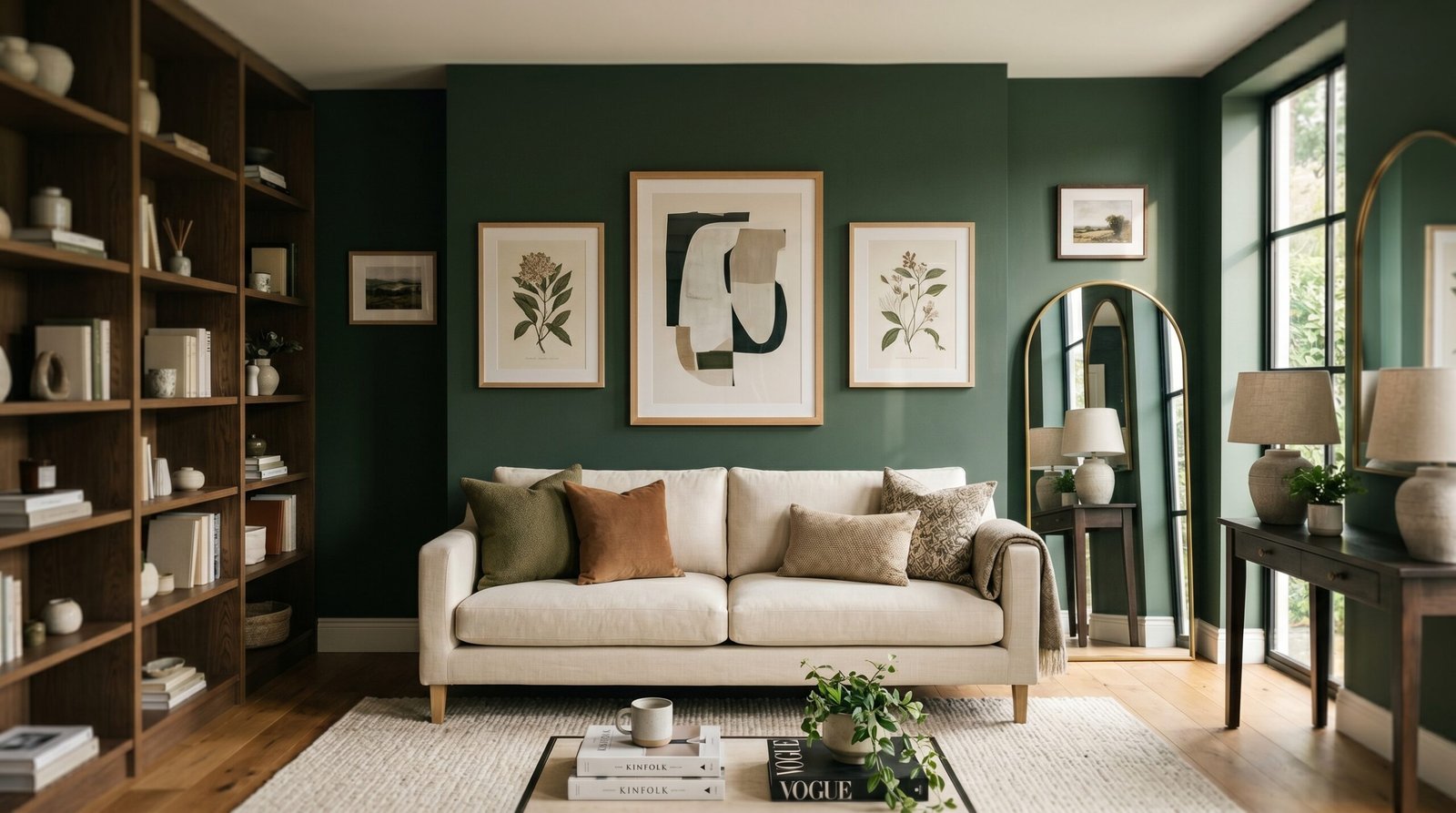
A dark feature wall in a living room changes the room’s entire spatial character. It’s one of the most impactful changes you can make with paint alone.
Deep charcoal, forest green, navy blue, or terracotta on the wall behind the sofa creates a backdrop that makes furniture, art, and accessories in front of it pop with contrast.
Art hangs better against a dark wall than a light one. The dark background makes frames and images advance toward the viewer while a white wall makes them recede.
FYI, dark walls make rooms feel smaller in floor plan but larger in atmosphere. A small living room with one dark wall feels more dramatic and considerate than the same room with four white walls.
21. Add a Floating Media Unit With Wall-Mounted Storage
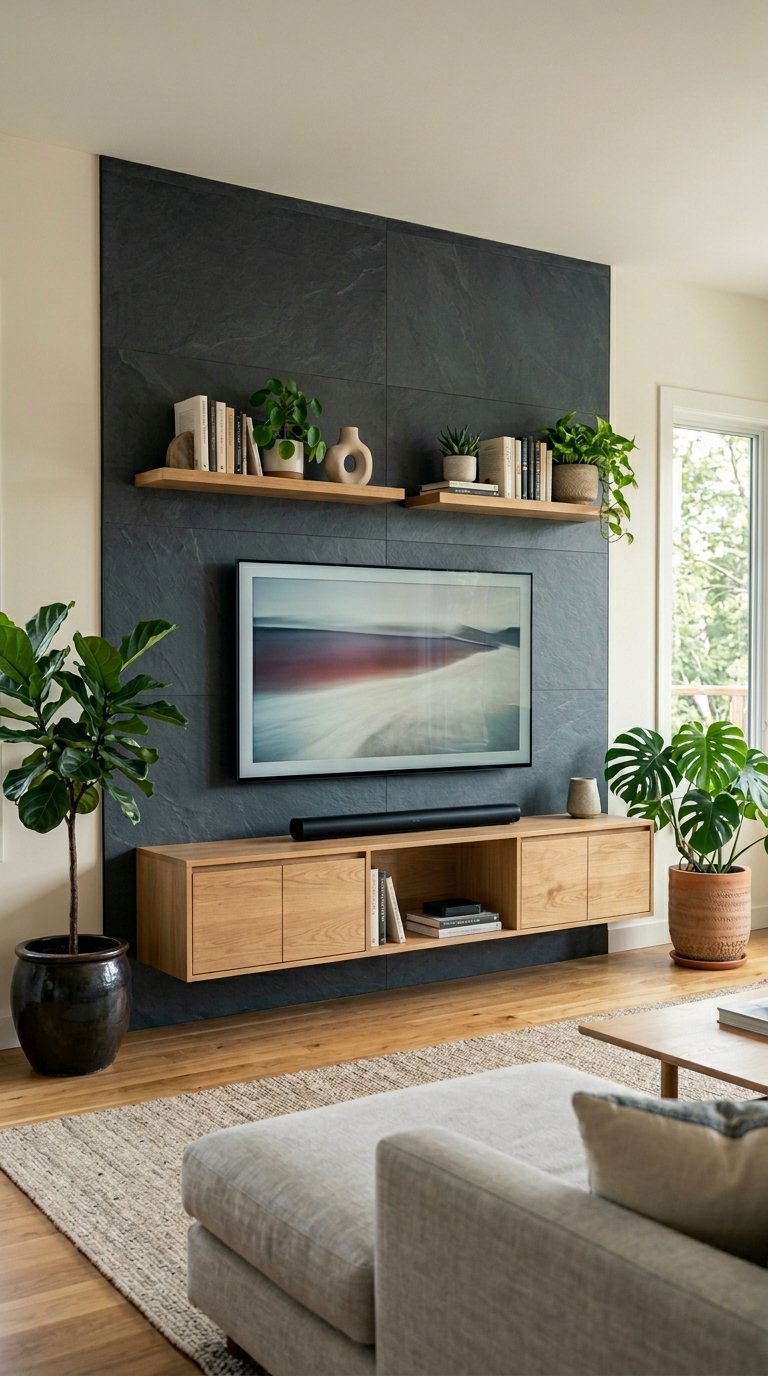
A floating media unit on the television wall does more than hold your equipment. It creates a full wall composition that incorporates the television into a designed system.
A wall-mounted media unit with floating shelves above, closed cabinet sections below, and the television integrated centrally creates a furniture wall that fills the space intentionally.
The television no longer floats alone on the wall. It becomes part of a wider composition that includes display space, storage, and architectural structure.
Paint the wall behind the media unit a different color or apply a different material, dark timber, stone-look tile, or limewash, to differentiate the television wall from the rest of the room.
22. Hang Vintage Posters or Retro Prints
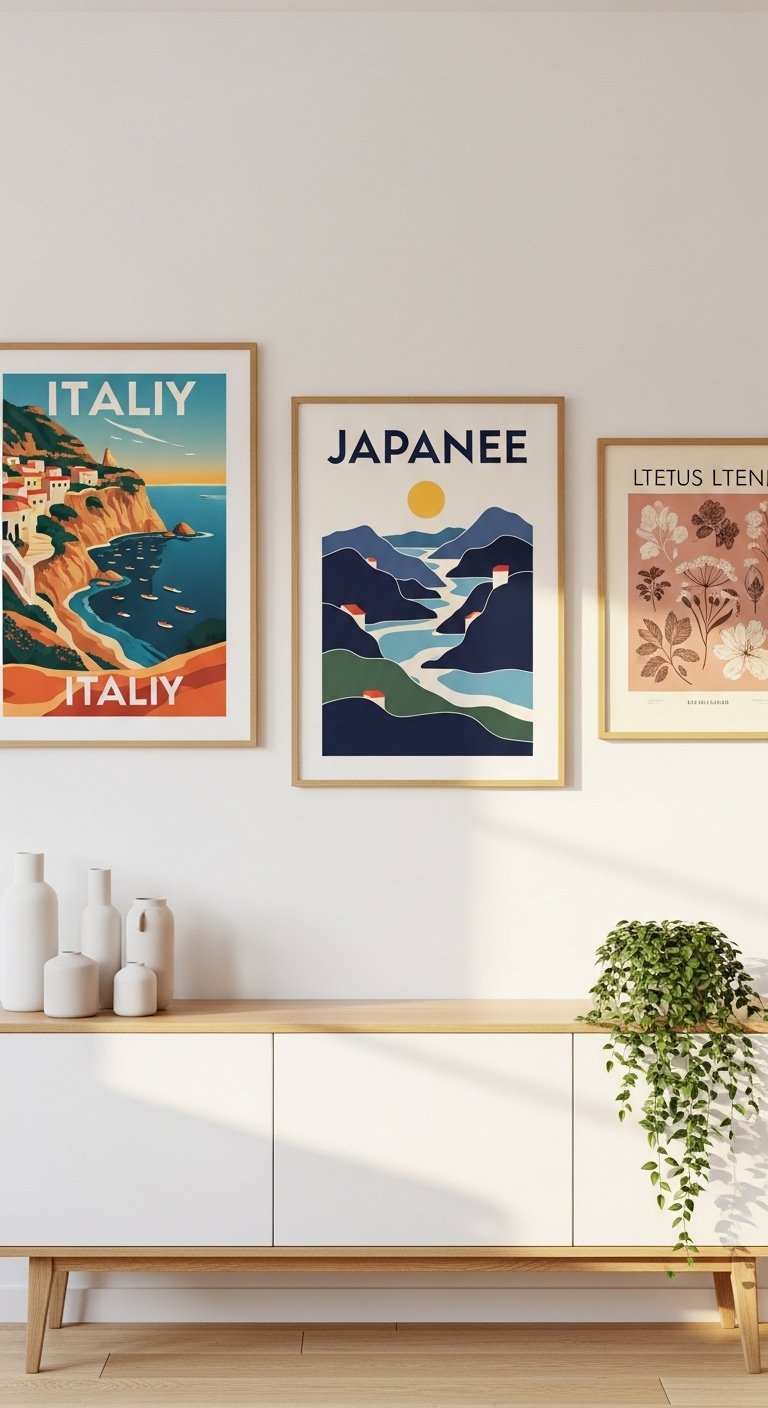
Vintage posters bring a completely different energy to a living room wall than contemporary art prints.
Original or reproduction vintage travel posters, film posters, botanical lithographs, or advertising prints from the early to mid-twentieth century add color, character, and a sense of history that new prints rarely replicate.
Frame them properly. A vintage poster in a cheap plastic clip frame looks neglected. The same poster in a simple slim frame with a white mount looks intentional and considered.
Mix two or three vintage posters with contemporary prints rather than covering a wall entirely in vintage material. The contrast between old and new makes both feel more interesting.
23. Create a Plant Wall or Living Wall Panel
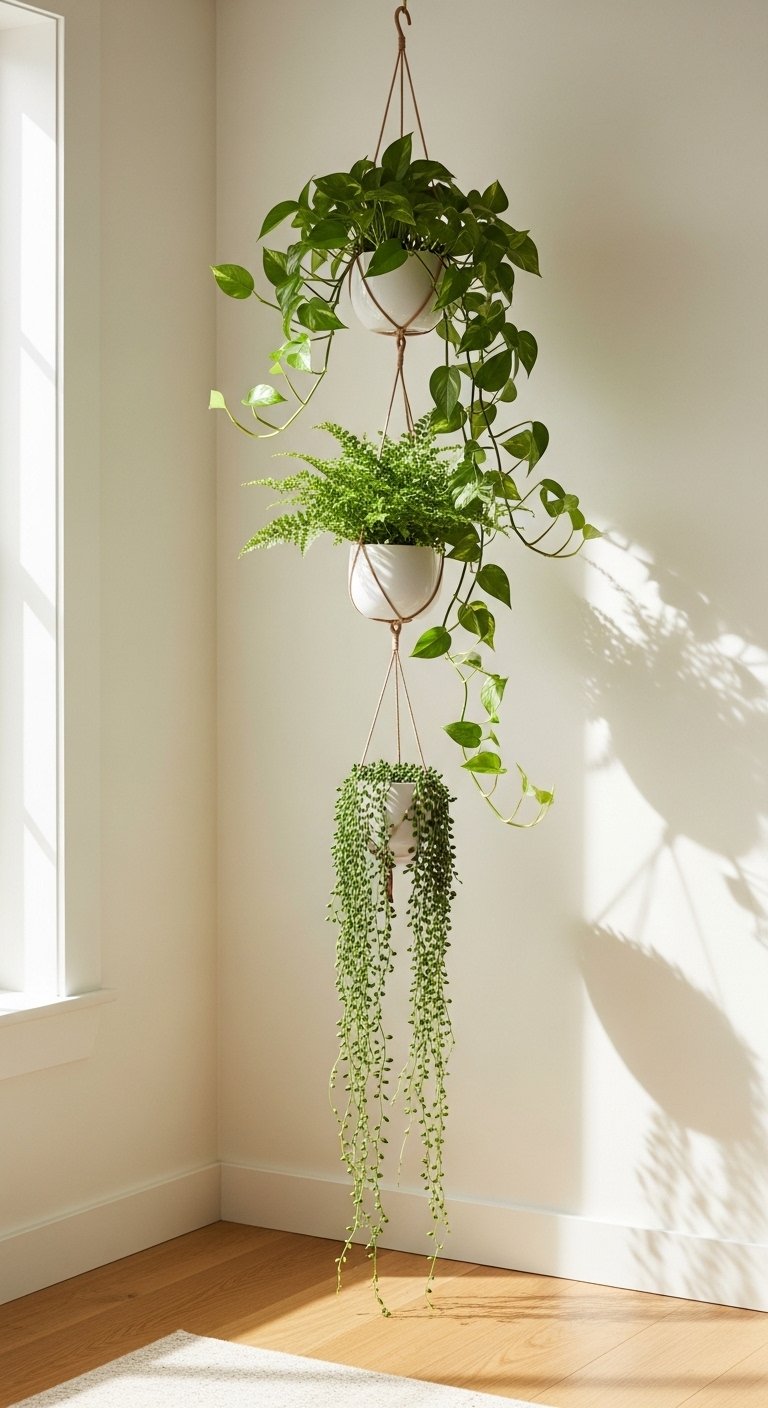
A living plant wall is the most dramatic organic statement possible on a living room wall.
A modular living wall panel system with pockets for individual plants creates a vertical garden on your living room wall. The result is genuinely unlike any other wall decor option on this list.
The maintenance requirement is real. Living walls need regular watering, fertilizing, and plant replacement when individual plants fail. This is not a set-and-forget installation.
For a lower-maintenance alternative, a curated arrangement of hanging planters at different heights on a single wall section creates a similar organic, layered effect with far less upkeep than a full living wall system.
24. Install Cove or Indirect Wall Lighting
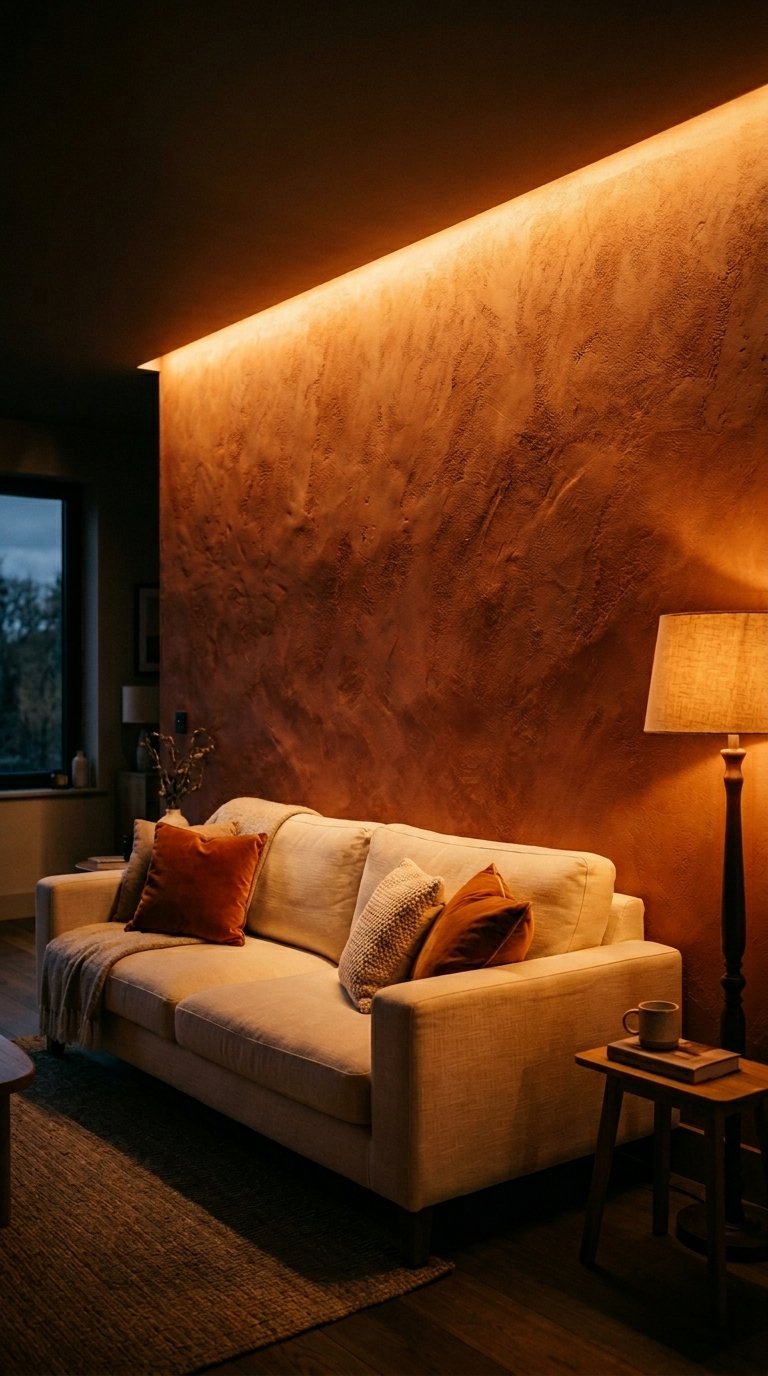
Wall decor does not have to be an object mounted to a wall. Light applied to a wall surface is one of the most sophisticated forms of wall decoration available.
Cove lighting installed in a recessed channel at ceiling height washes the wall below in soft, even upward light that highlights the wall’s texture, color, and any objects mounted on it.
LED strip lighting in a simple timber or plaster cove creates this effect at a relatively modest cost. The light itself is invisible. Only the wash of light on the wall surface is seen.
This works best on a wall with inherent texture or color. Cove lighting on a plain white wall is pleasant but unexciting. Cove lighting on a limewash wall, a dark painted wall, or a textured plaster wall is extraordinary.
25. Commission or Create a Custom Mural
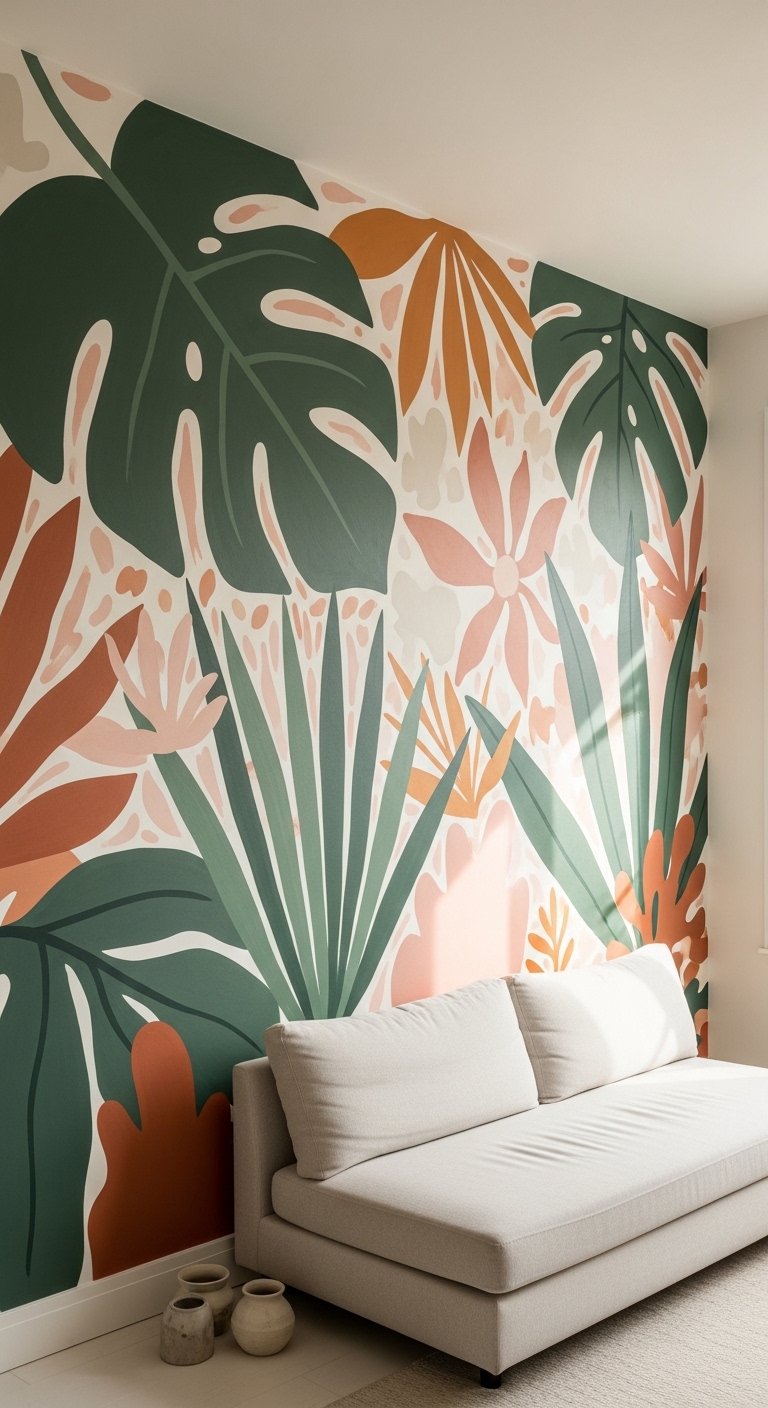
The most personal and most permanent living room wall decor option: a custom mural painted directly onto the wall.
A hand-painted mural by a local artist is unique to your home. No other living room in the world has the same wall. This is the ultimate expression of personal style and the ultimate commitment to a design decision.
Commission an artist whose work you already admire rather than asking an artist to replicate a style they don’t naturally work in. The best murals come from artists working in their own visual language.
If commissioning feels expensive or intimidating, a DIY approach using chalk paint, a projector to trace a design, and basic artistic confidence produces results that surprise most people. The imperfection of a hand-painted wall is part of its appeal 🙂
Final Thoughts
Living room walls are the largest canvas in your home. Most people either ignore them or overcrowd them. Neither approach works.
The ideas above range from a single afternoon project to a full architectural intervention. Start with what your room needs most: if the walls feel bare and cold, add texture and warmth first. If they feel cluttered and random, edit down to fewer, stronger pieces.
Every wall decision should serve the room. Not the trend. Not the algorithm. The actual room you live in, in the actual light it receives, with the actual furniture already in it.
Pick three ideas from this list. Execute them deliberately. Your living room walls will do the rest.