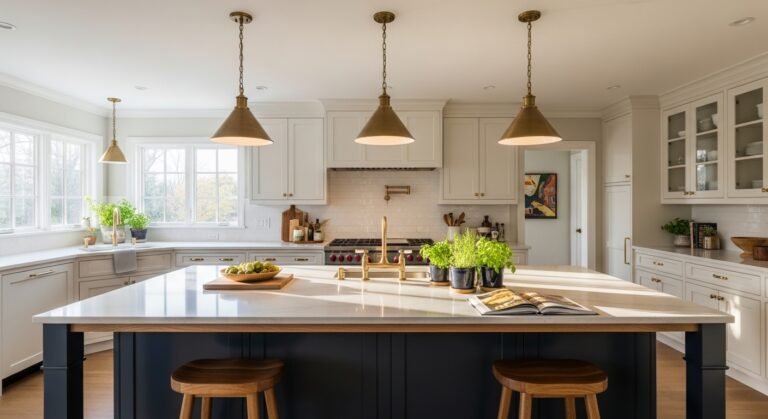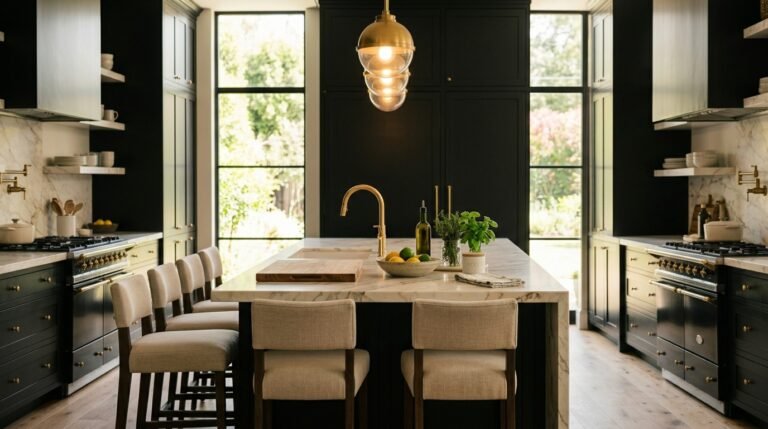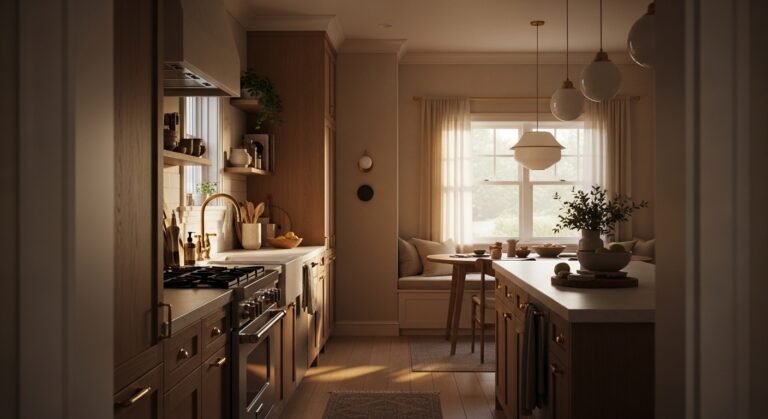
23 Best Summer Kitchen Ideas to Refresh Your Home in 2026
Your kitchen looks the same in July as it did in January. Same cabinets, same countertop clutter, same tired energy. Meanwhile, summer is knocking at the door with longer days, fresh produce, outdoor gatherings, and every reason to actually enjoy the space where you cook. So why does your kitchen still feel like it is stuck in February?
You do not need a renovation. You do not need a contractor. You need 23 specific, budget-smart ideas that pull summer directly into your kitchen, whether you own your home, rent it, or are working with the most outdated 1990s tile you have ever seen. IMO, a summer kitchen refresh is the highest-return home project you do all year. Let us get into it.
1. Swap Your Cabinet Hardware for Brass or Matte Black Pulls
Your cabinet hardware is the easiest, fastest change in this entire list. According to Yelp’s 2025 Summer Home and Outdoor Trends study, hardware replacement searches rose 91% compared to the previous year, making it one of the most popular renter-friendly kitchen upgrades of the season.
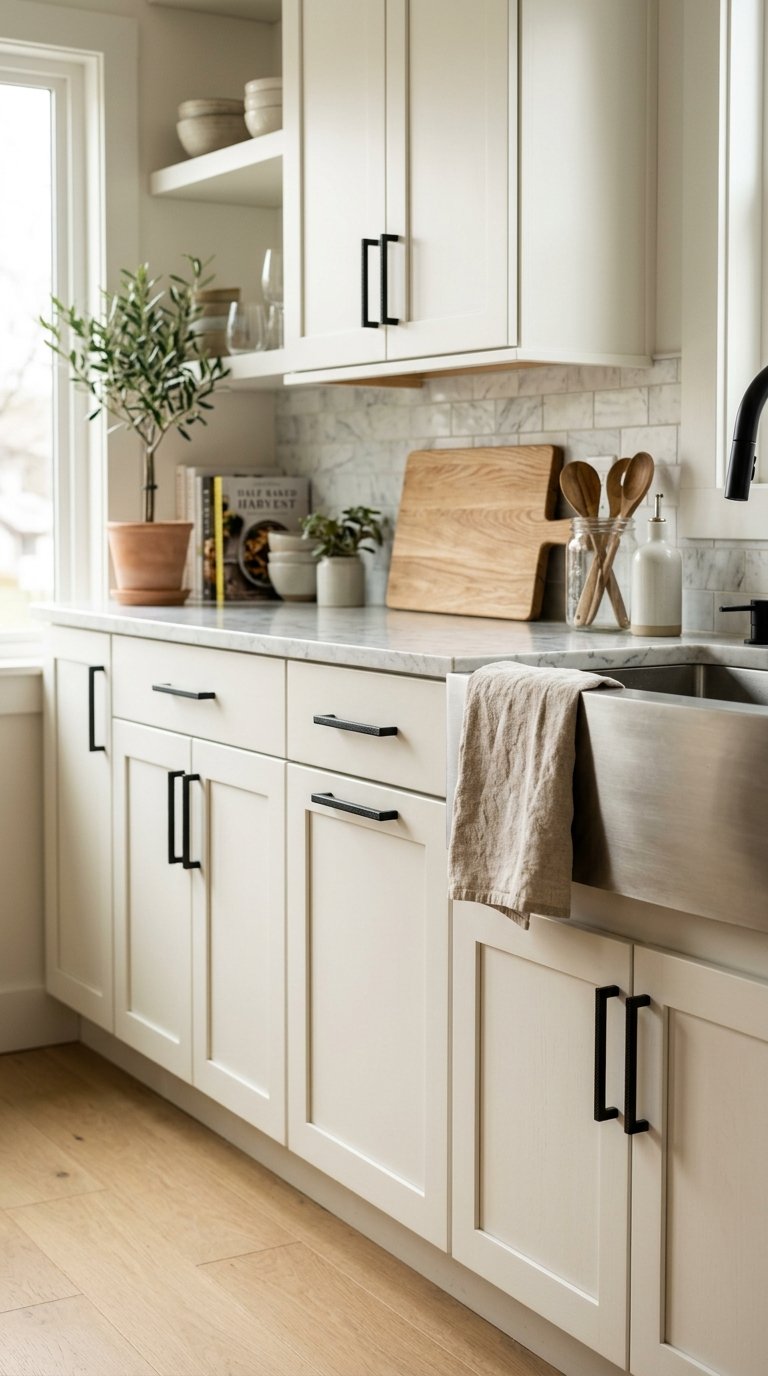
That number exists because it works. A set of 10 brass bar pulls from Amazon or Home Depot costs $25 to $45 total and takes 20 minutes to install with a screwdriver. Pull out your old chrome knobs, drop in warm brass or matte black replacements, and the entire cabinet line reads as intentionally designed rather than builder-grade default.
Choose 4 to 5-inch bar pulls in solid brass or matte black for a contemporary kitchen, or cup pulls in antique brass for a farmhouse or vintage aesthetic. The bar pull format suits flat-front cabinets. The cup pull format suits shaker-style doors. Do not mix metals across the same cabinet run or the result reads as unfinished rather than eclectic.
2. Install a Peel-and-Stick Backsplash in a Fresh Pattern
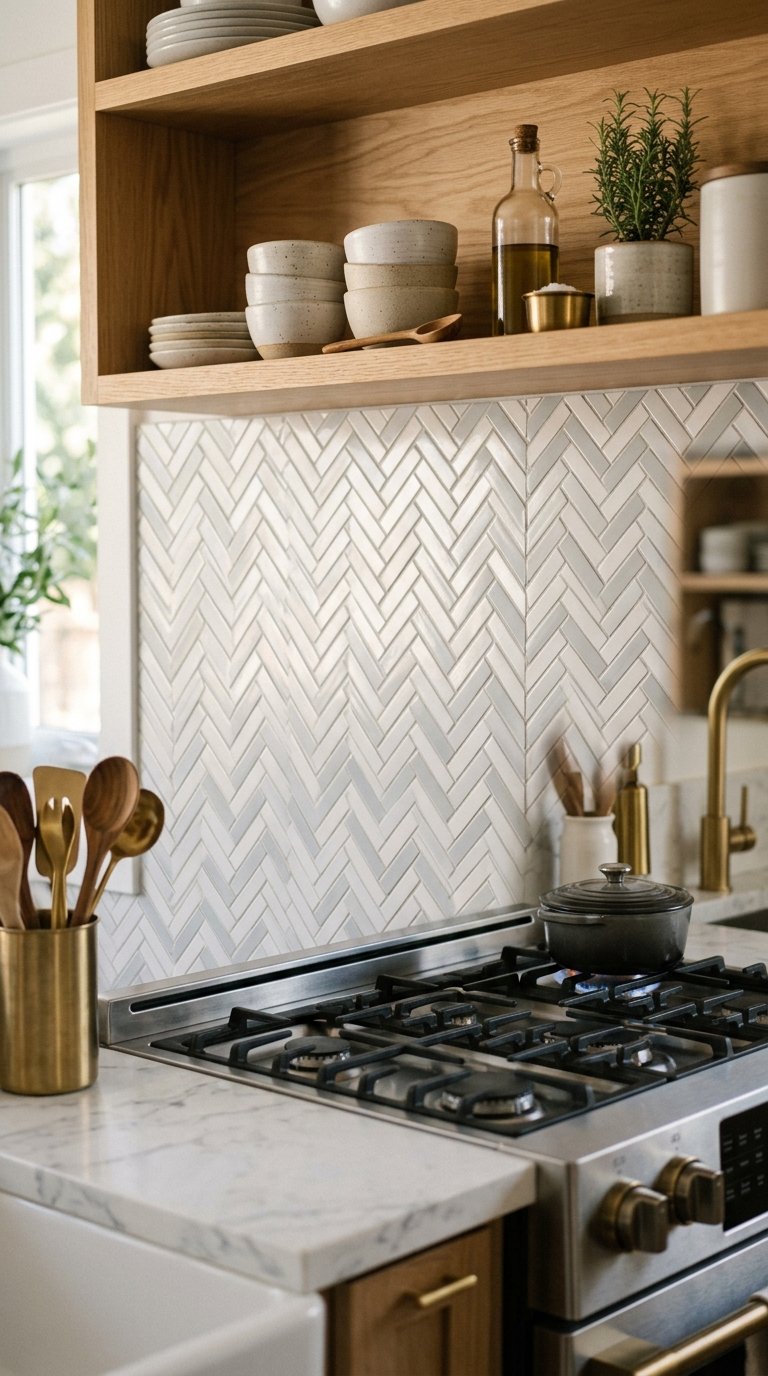
A blank or dated backsplash area pulls the entire kitchen backward visually. A peel-and-stick tile panel fixes it in one afternoon without grout, adhesive, or a tile saw. Peel-and-stick backsplash options run from $1 to $3 per square foot for budget DIY formats, with subway tile at $2 to $5 per square foot and glass mosaic at $5 to $15 per square foot.
VANCORE’s 3D peel-and-stick backsplash tiles on Walmart cost $9.99 for a 10-pack covering 10×10.6 inches each. A standard 24×36-inch backsplash area behind a stove uses eight to ten panels at under $15 in materials. Herringbone peel-and-stick backsplashes add depth and dimension to the wall surface and are water and heat resistant, making them suitable for placement directly behind stoves and sinks.
Apply on a clean, dry wall surface. Use a plastic smoothing tool at $5 from any hardware store to eliminate air bubbles as you work across each tile. The result photographs as a fully tiled backsplash from across the room and peels cleanly on move-out day with zero wall damage.
3. Add a Windowsill Herb Garden for Fresh Scent and Color
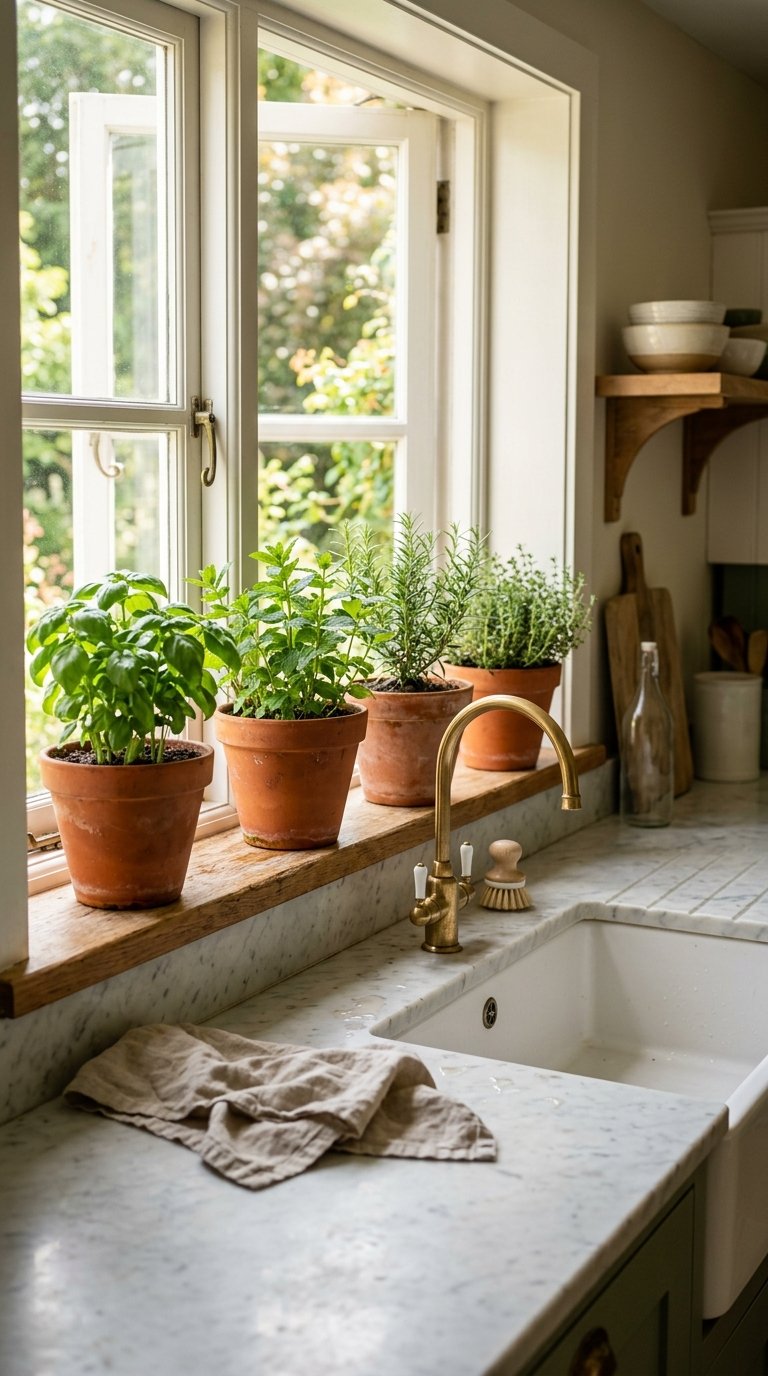
A kitchen windowsill herb garden solves two problems at once. It brings green organic life into a space that typically has none, and it gives you fresh basil, mint, and rosemary within arm’s reach while you cook. Building a windowsill herb garden gives you fresh herbs readily available for cooking while also developing a garden-to-kitchen mindset that makes the space feel more connected to the season.
Three 4-inch terracotta pots from Home Depot cost $1.49 each. Fill them with basil, mint, and thyme starts at $3 to $5 per plant from any garden center. Arrange the three pots in a row on the windowsill above the sink or along the kitchen counter nearest the window. Total setup cost: under $25 for a living, fragrant, seasonal counter display that no artificial plant replicates.
Choose a south or east-facing window for basil and thyme, which need at least six hours of direct light. Mint tolerates partial shade and grows aggressively, so keep it in its own pot rather than mixing it with other herbs in a shared planter. Replace any plant that gets leggy or stops producing after six to eight weeks.
4. Bring in Seasonal Flowers on the Counter or Island
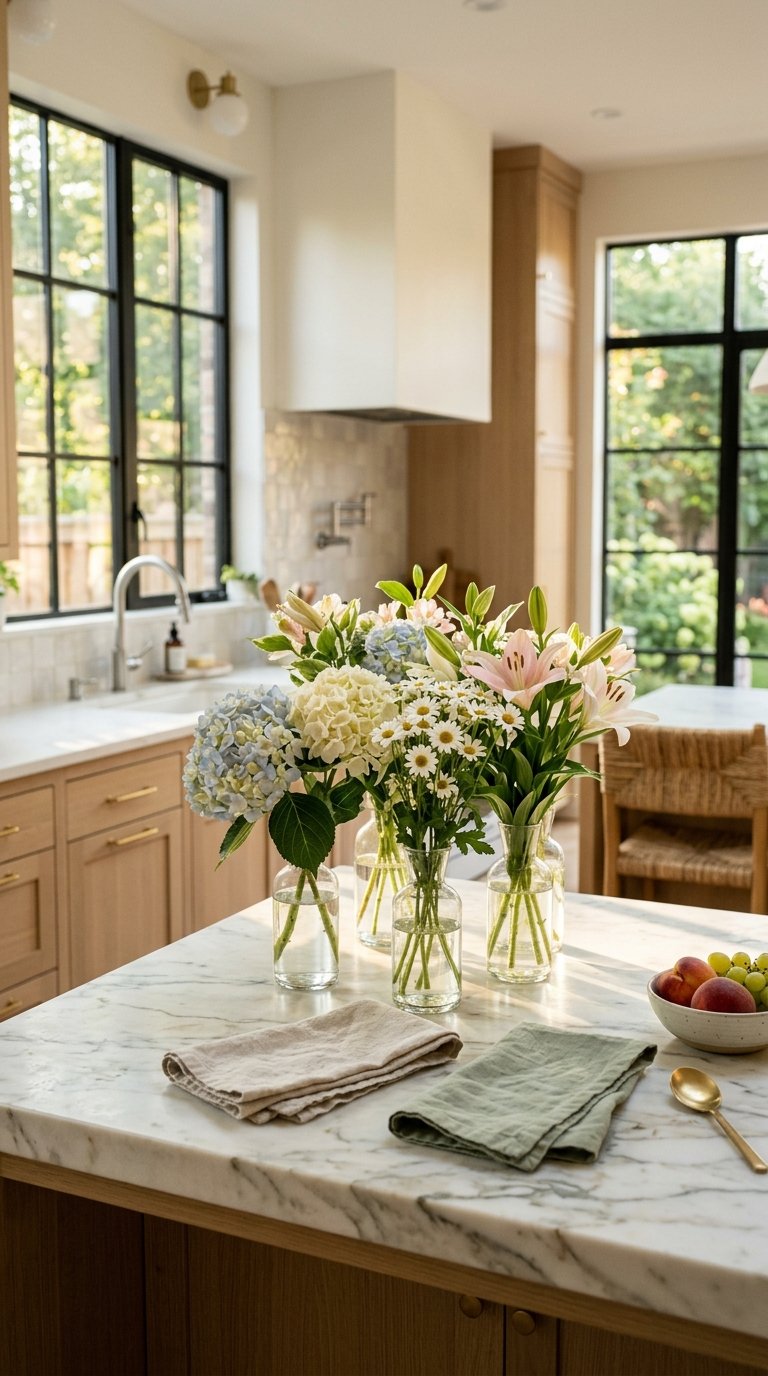
Summer flowers like lilies, daisies, and hydrangeas last well in the heat and bring natural color to the kitchen. A simple vase on the island or a few bud vases grouped on the table immediately makes the space feel more styled.
IKEA’s SMYCKA artificial flower stems cost $2.99 each if you want zero maintenance, but a real seasonal bunch from Trader Joe’s or your local farmers market costs $5 to $12 and lasts 7 to 10 days. Group three bud vases of different heights on the kitchen island in the same flower variety for a cohesive, intentional display rather than a single lonely vase. The grouping of odd numbers reads as designed.
Change the water every two days and trim the stems at a 45-degree angle each time to extend the life of fresh flowers. A simple clear glass bud vase from IKEA’s BEGÄRLIG collection costs $1.99 each. Three together on the island costs under $6 in vessels and $12 in flowers for a total summer counter moment that refreshes every week.
5. Paint One Kitchen Wall in a Bold Summer Color
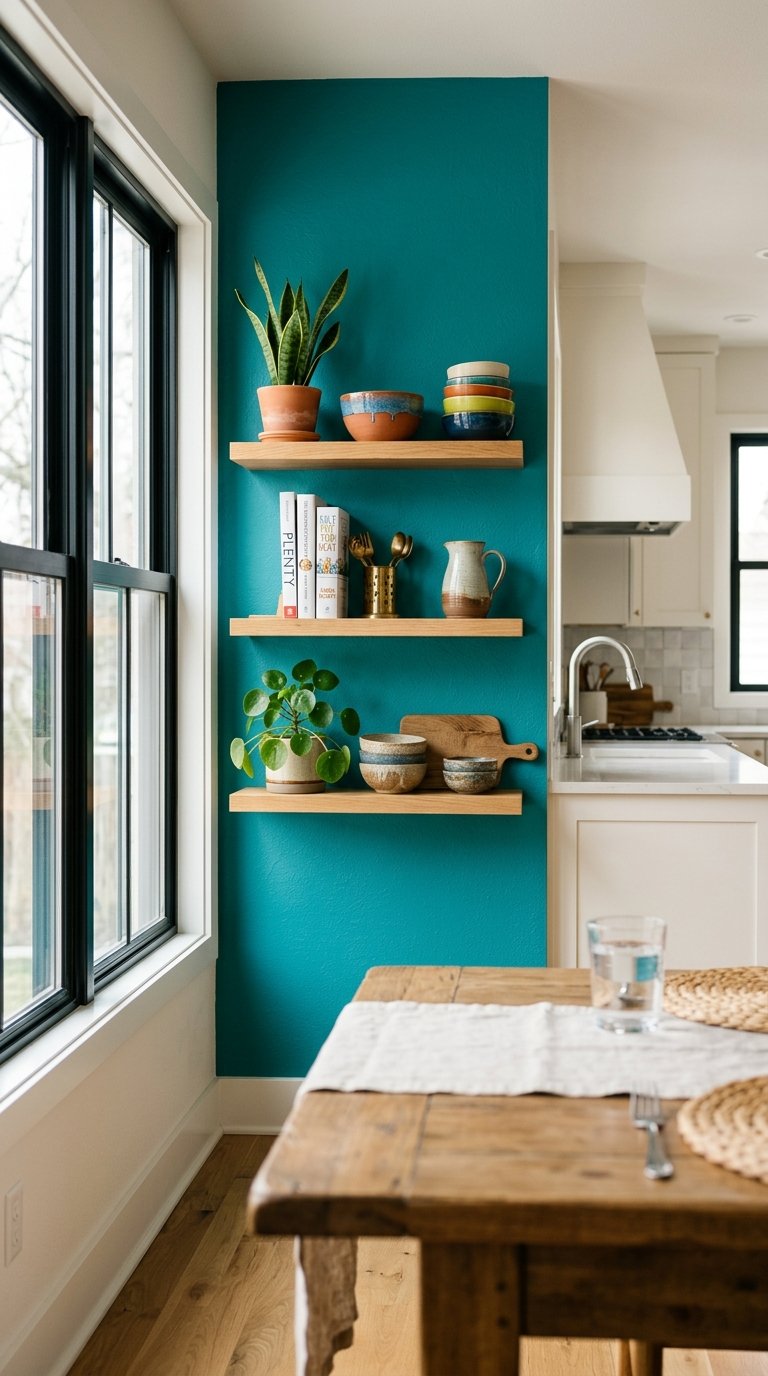
A single accent wall in a warm, saturated color transforms the kitchen’s entire mood without a full repaint. Interior designers confirm that warm woods and warm color palettes are surging in popularity in 2025, with natural, earthy tones making a strong case in kitchen design specifically.
Benjamin Moore’s Tropical Teal 2044-30, Sunflower 2155-10, or Coral Gables 2010-40 all read as summer-specific without feeling trendy in two years. A Benjamin Moore paint sample pot at $5 to $7 tests the color on your wall before you commit to a full gallon at $74.99. Paint the wall behind open shelving or the wall opposite the window for maximum color impact in the space.
Use painter’s tape at $8 per roll from Home Depot to protect the ceiling line and adjacent walls. Roll two coats in the accent color and keep the three remaining walls in a warm white like Benjamin Moore’s White Dove OC-17 for the sharpest contrast. The full project costs under $90 and reads as a designer decision rather than a DIY weekend project.
6. Replace Your Kitchen Textiles with Linen or Cotton in Fresh Colors
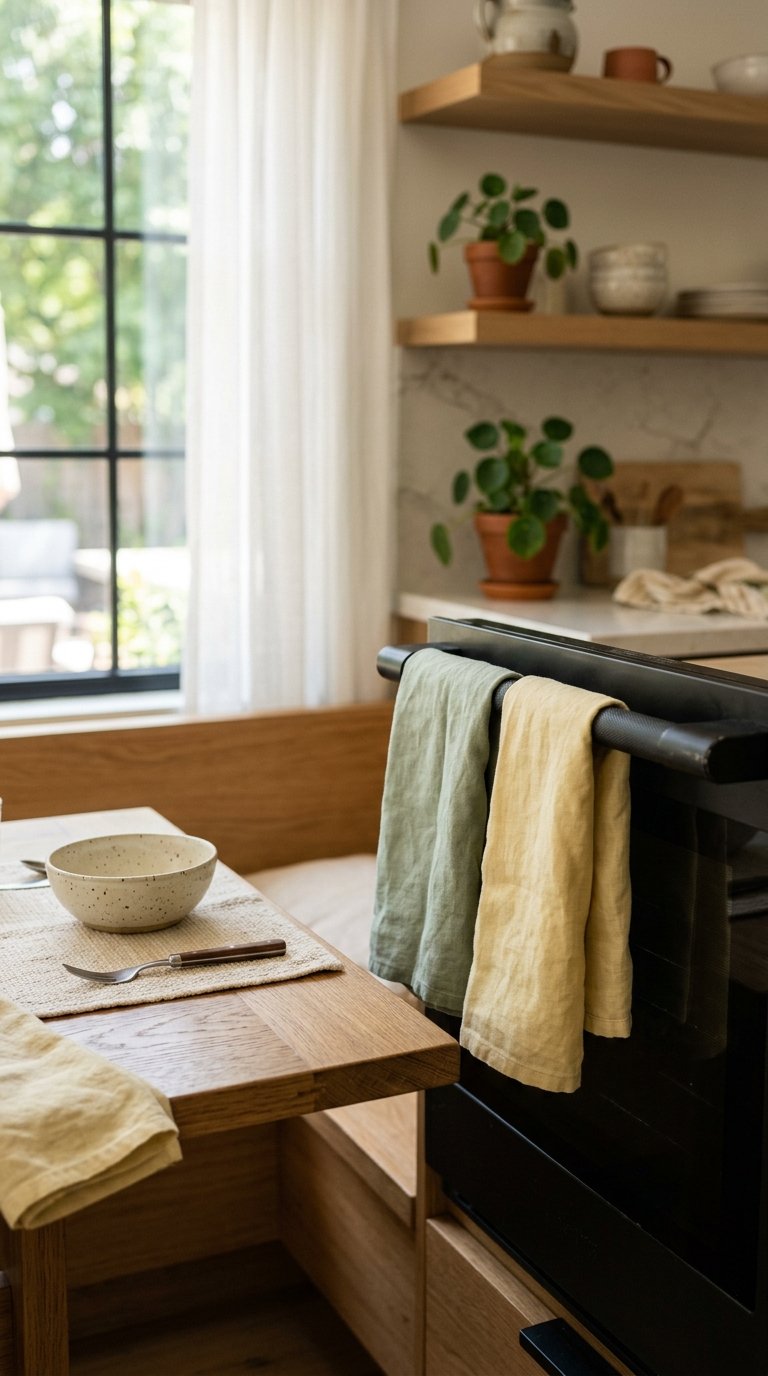
Your dish towels, oven mitts, and placemats are textiles you see every single day. Swapping them out for summer-specific colors and natural materials costs under $40 and changes the kitchen’s entire sensory feel in five minutes. This is the lowest-effort idea on this list and most people skip it completely, which is honestly baffling.
IKEA’s ELLY dish towels in cotton stripe patterns cost $4.99 for two. Their RINNIG set of four placemats in natural linen costs $7.99. A summer kitchen textile swap in soft blues, warm yellows, and sage greens across dish towels, oven mitts, and placemats costs $30 to $45 total. Fold the dish towels neatly over the oven handle and stack two placemats visibly on the counter for a styled, seasonal display.
Choose natural cotton or linen over polyester blends because they photograph better, feel cooler in the hand during summer heat, and age more gracefully through repeated washing. Amazon’s Utopia Kitchen flour sack dish towels in white at $9.99 for six make the cleanest summer kitchen backdrop when folded over the oven handle in a triple stack.
7. Set Up a Dedicated Drink Station on the Counter
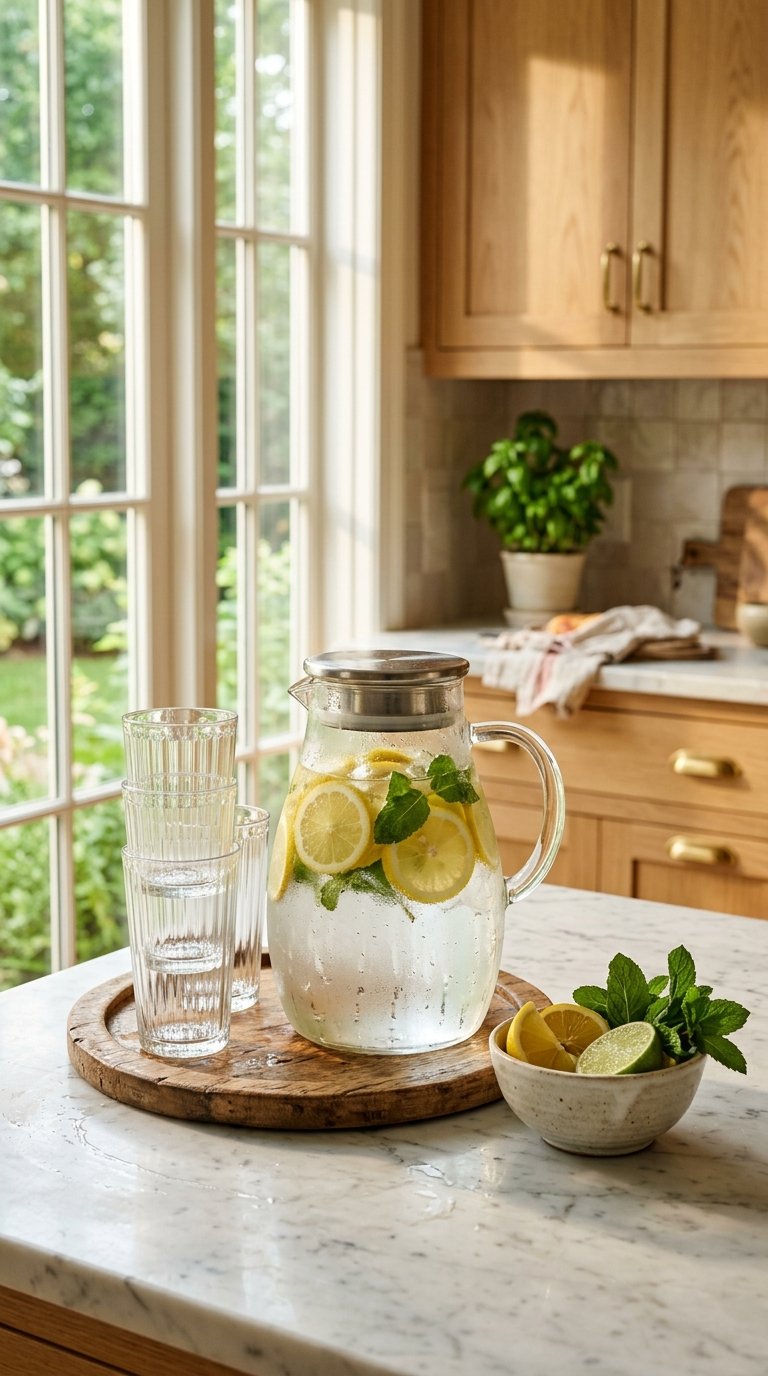
Long summer days mean more water, iced tea, lemonade, and other refreshing drinks. A glass pitcher filled with water on the counter alongside a stack of clear glasses or tall tumblers, with a tray holding citrus slices or mint sprigs for garnishing, looks thoughtful and keeps the space feeling fresh and styled.
Dedicate one 18-inch section of your counter to a drink station. Use a round or rectangular serving tray at $12 to $20 from Target to contain the display. Place a 2-liter glass pitcher at $15 to $25, four to six matching tall tumblers, and a small bowl of lemons or limes on the tray. The tray keeps the station from reading as counter clutter and signals that the space is intentionally organized.
Amazon’s Bormioli Rocco Rock Bar drinking glasses in 14-ounce format cost $24.99 for six and add a clean, contemporary glass profile to the station. A glass pitcher from the same Bormioli Rocco line costs $18.99 and creates a matched set that reads as cohesive. The total drink station setup costs $55 to $65 and serves both a functional and decorative purpose simultaneously.
8. Install Open Floating Shelves to Display Summer Dishware
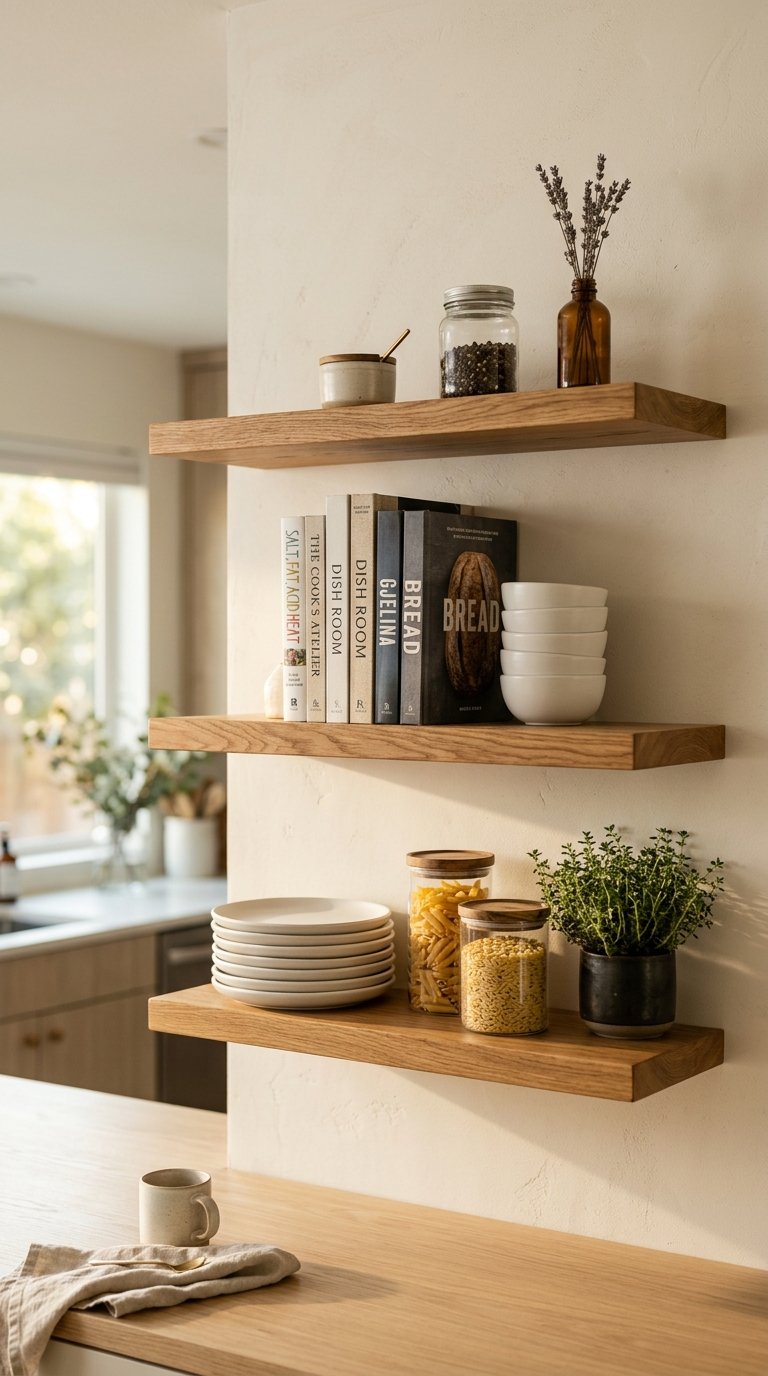
Open shelving solves the constant back-and-forth movement of summer kitchen use while showcasing decorative dishware and adding a touch of style. Both metals and woods work for open shelving, depending on whether your kitchen design is more modern or traditional.
IKEA’s LACK floating shelves in white or natural wood cost $7.99 to $14.99 each. Mount two 30-inch shelves on the kitchen wall above the counter in a vertical pair, spaced 12 inches apart, using the included hardware and wall anchors. Display white ceramic plates, a few glass jars filled with dried pasta or grains, a small potted herb, and two or three cookbook spines for a restrained, editorial open-shelf display.
Keep a maximum of eight to ten objects per shelf. More than that and the shelf reads as cluttered rather than styled. Group objects in threes and use height variation across the shelf line so no two adjacent items share the same height. A tall jar next to a short bowl next to a medium plant creates more visual interest than three objects at the same height.
9. Hang a Large Piece of Art or a Print Above the Dining Area
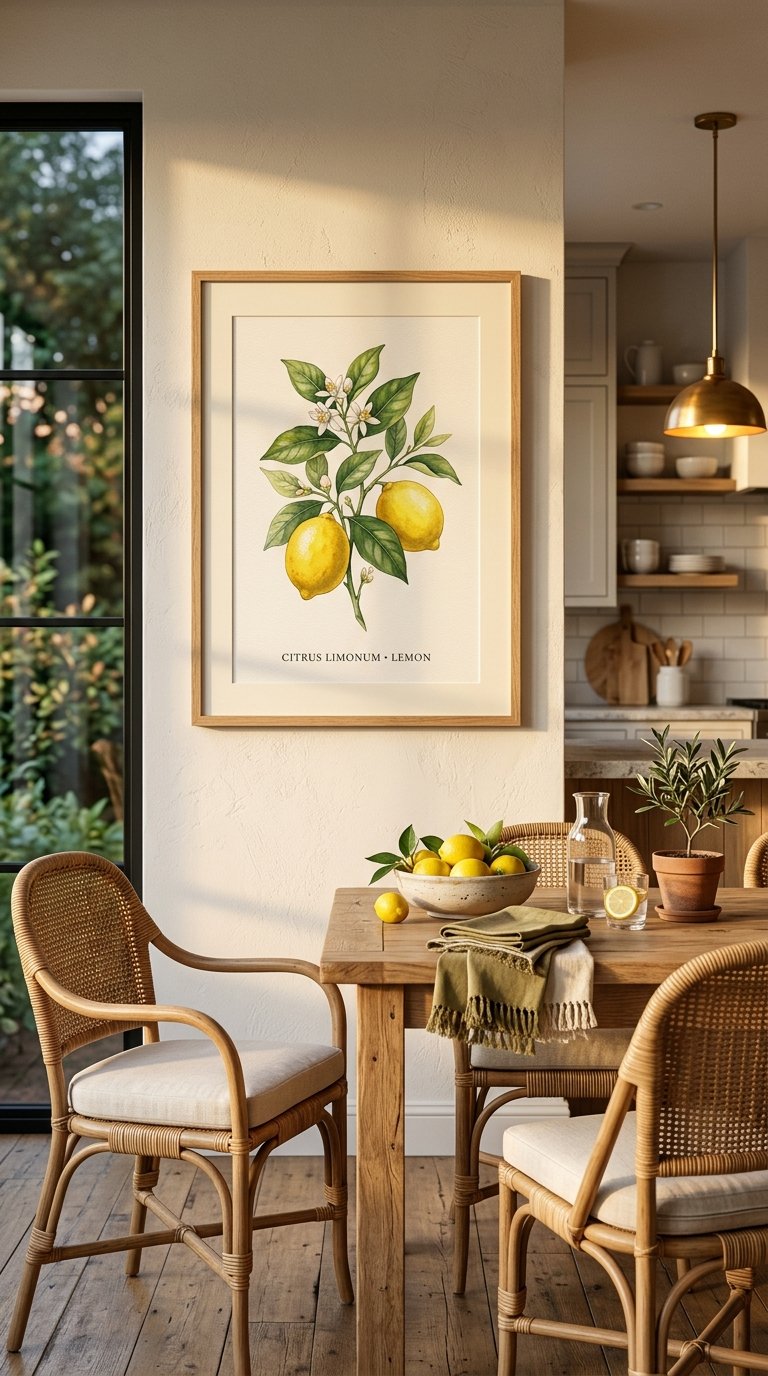
Most kitchen dining areas have blank walls above the table. That blank wall reads as unfinished, and it is one of the easiest fixes in the kitchen. One large canvas or framed art print centered above the dining table creates a focal point that anchors the eating area and ties the kitchen’s color palette together.
Society6 and Minted stock large botanical, citrus, and abstract summer prints from $35 in digital download format for self-printing or $80 to $200 fully framed and shipped. Choose a print at least 24×30 inches for a dining table that seats four. Smaller prints above a full dining table read as undersized and make the wall look more empty, not less. Command’s large picture-hanging strips at $10 per pack hold frames up to 16 pounds on painted walls with zero drilling.
A large citrus print in warm yellows and greens above a dining table creates a summer focal point that connects the food on the table to the art on the wall. Botanical prints in sage, terracotta, and white suit kitchens with neutral cabinetry. Abstract prints in bold color suit kitchens with white or gray cabinetry where the art becomes the room’s sole color source.
10. Add a Portable Kitchen Island for Extra Counter Space
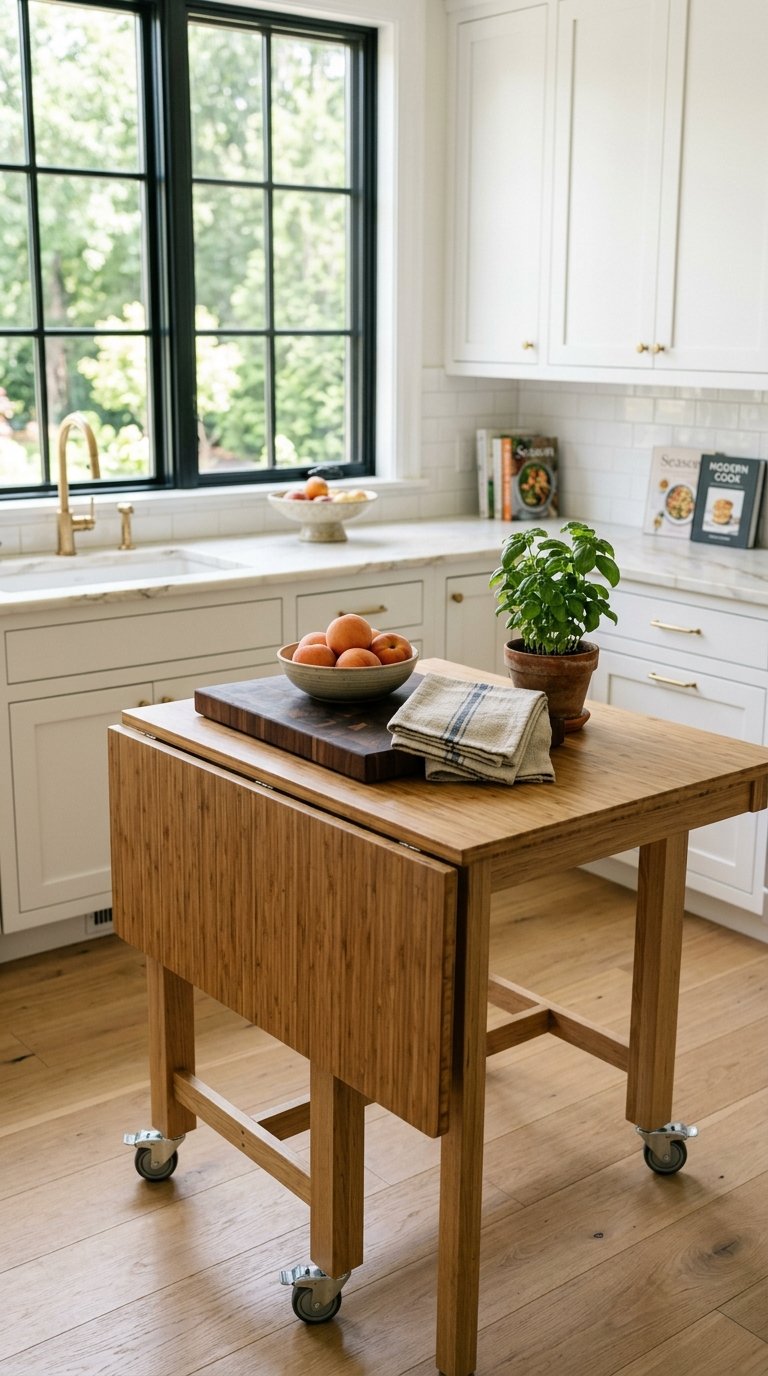
A portable kitchen island on wheels solves the counter space problem that hits hardest in summer when you are prepping large salads, cutting watermelon, or setting up a food spread for guests. Home Depot’s Runesay Farmhouse White Wood 53.7-inch Drop Leaf Kitchen Island costs $360.30, while the Homestyles Americana White Kitchen Island with Seating runs $756.15.
For a more budget-conscious option, Amazon’s Veikous bamboo rolling kitchen cart with two shelves and a drawer costs $89.99 in natural wood and adds 36 inches of counter surface and 18 inches of vertical storage. Roll it to wherever you need counter space and roll it away when guests arrive. The mobile format suits small kitchens and renters who need function without permanence.
Style the top surface of the island with a cutting board, a small potted plant, and a bowl of seasonal fruit to keep the surface looking intentional between prep sessions. Do not leave the island bare. A bare portable island looks like a piece of furniture waiting to be returned. Dress it like a counter and it reads as a designed kitchen feature.
11. Use a Fruit Bowl as a Counter Centerpiece
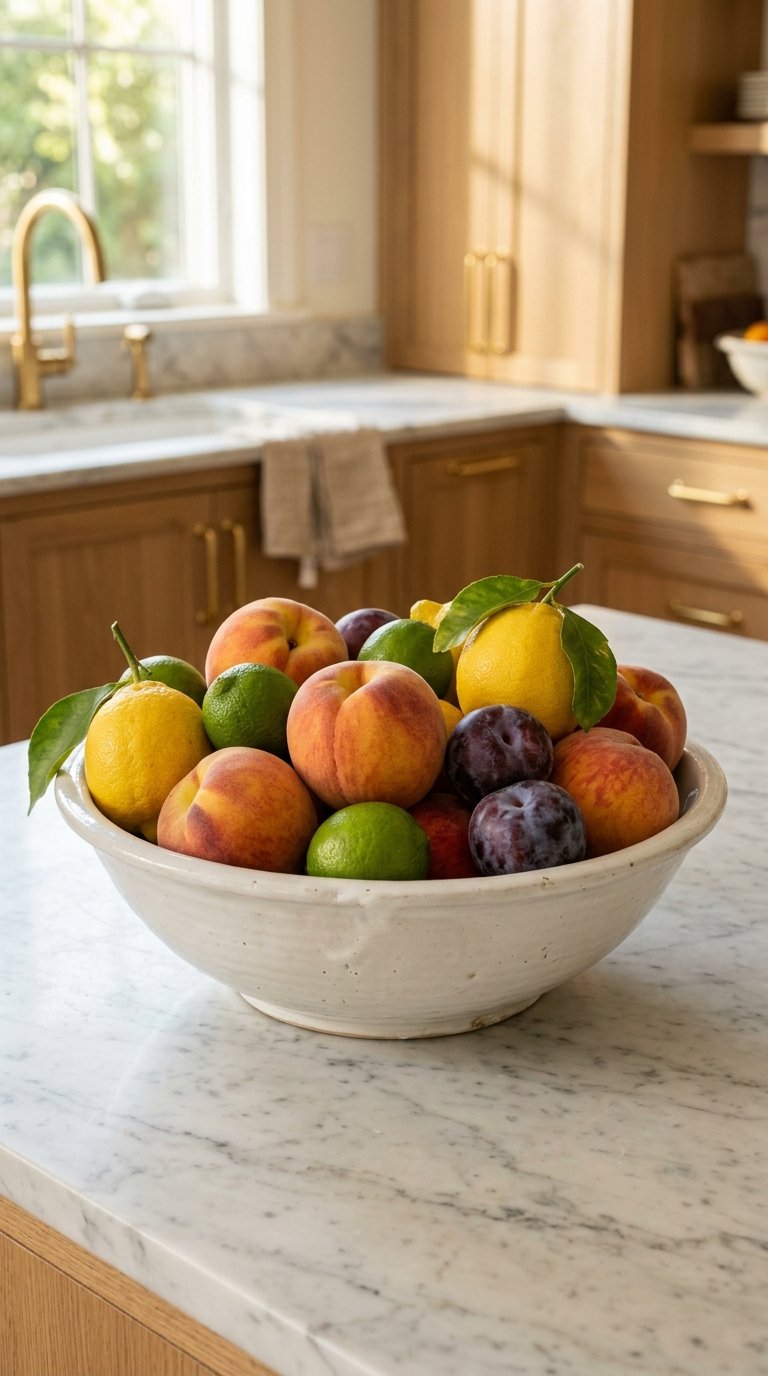
A fruit bowl filled with seasonal summer produce serves as a counter centerpiece that costs nothing beyond your weekly grocery shop. A large white ceramic bowl or a woven rattan basket on the kitchen island or main counter, filled with lemons, limes, peaches, or plums, reads as styled, seasonal, and fresh from three feet away.
CB2’s Marin white ceramic bowl in 12-inch format costs $29.95. Amazon’s Earlywood woven seagrass basket in natural at 11 inches costs $18.99. Both formats work as summer produce display vessels. Fill them with whatever fruit is in season, which changes week to week through summer and gives the counter display organic variety without any effort.
The visual key is filling the bowl fully rather than half-filling it with two sad bananas. A full bowl reads as abundant and generous. A half-full bowl reads as a bowl that needs to be restocked. Choose one fruit variety or one color family per bowl for a cohesive display rather than a grocery-aisle mix of every fruit simultaneously.
12. Swap Overhead Lighting for a Warmer Bulb Temperature
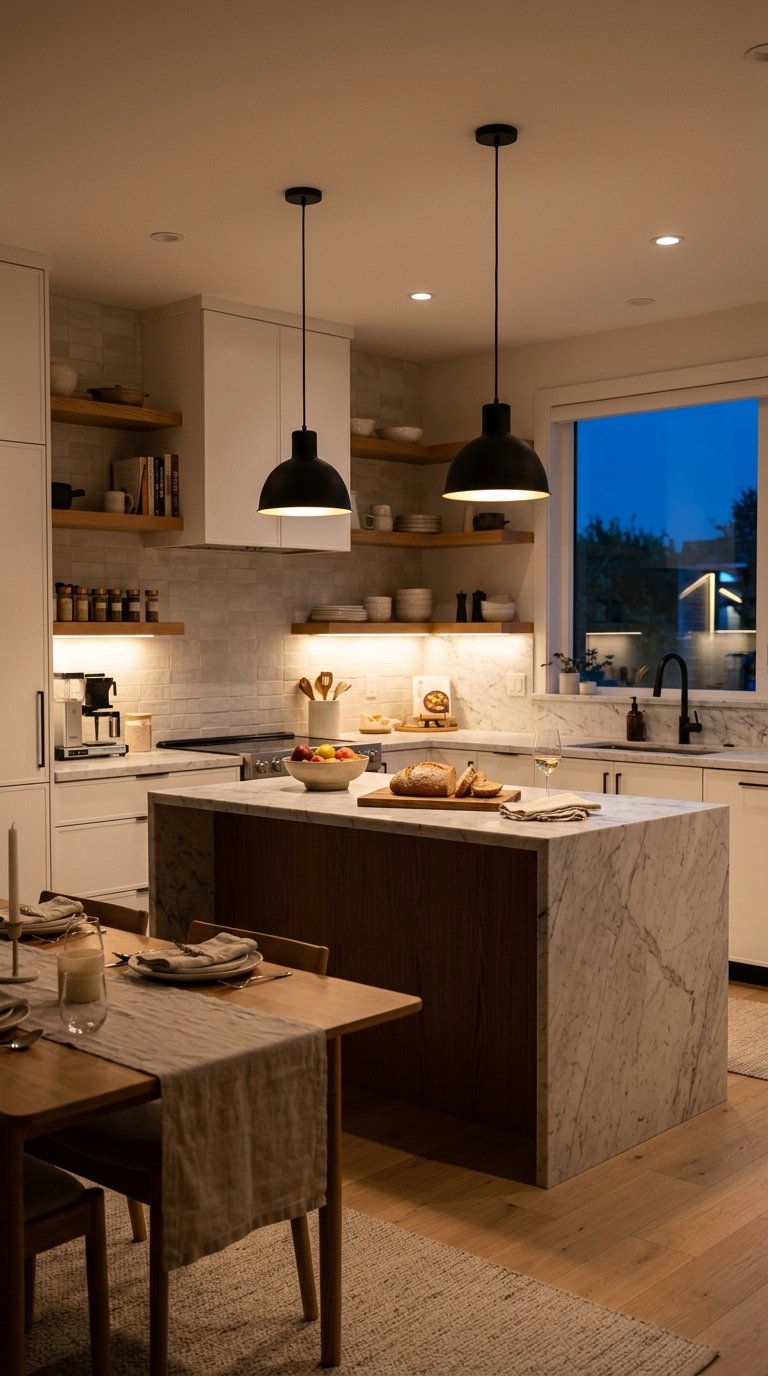
Your kitchen overhead light is probably set at 4000K or 5000K, which is the color temperature of a hospital corridor. Swapping to 2700K warm white LED bulbs costs $8 to $15 per pack and changes the entire mood of the kitchen from clinical to warm in under three minutes. FYI, this is the fastest and cheapest transformation on this list.
Philips Warm Glow LED bulbs in 2700K at $12.99 for a four-pack from Amazon dim to an even warmer tone as you lower the brightness, unlike standard LED bulbs that stay at a fixed color temperature regardless of dimmer position. For a kitchen with overhead recessed lighting, replace all bulbs in the same session so no fixture reads warmer or cooler than its neighbor.
Pair warmer overhead bulbs with under-cabinet LED strip lights in the same 2700K temperature for a layered kitchen lighting setup. Amazon’s Govee under-cabinet LED strip in warm white costs $18.99 for a 9.8-foot reel with adhesive backing. The under-cabinet strip creates a work surface glow that separates the counter zone from the overhead zone and makes the kitchen read as designed and intentional after dark.
13. Line the Inside of Glass Cabinet Doors with Wallpaper or Fabric
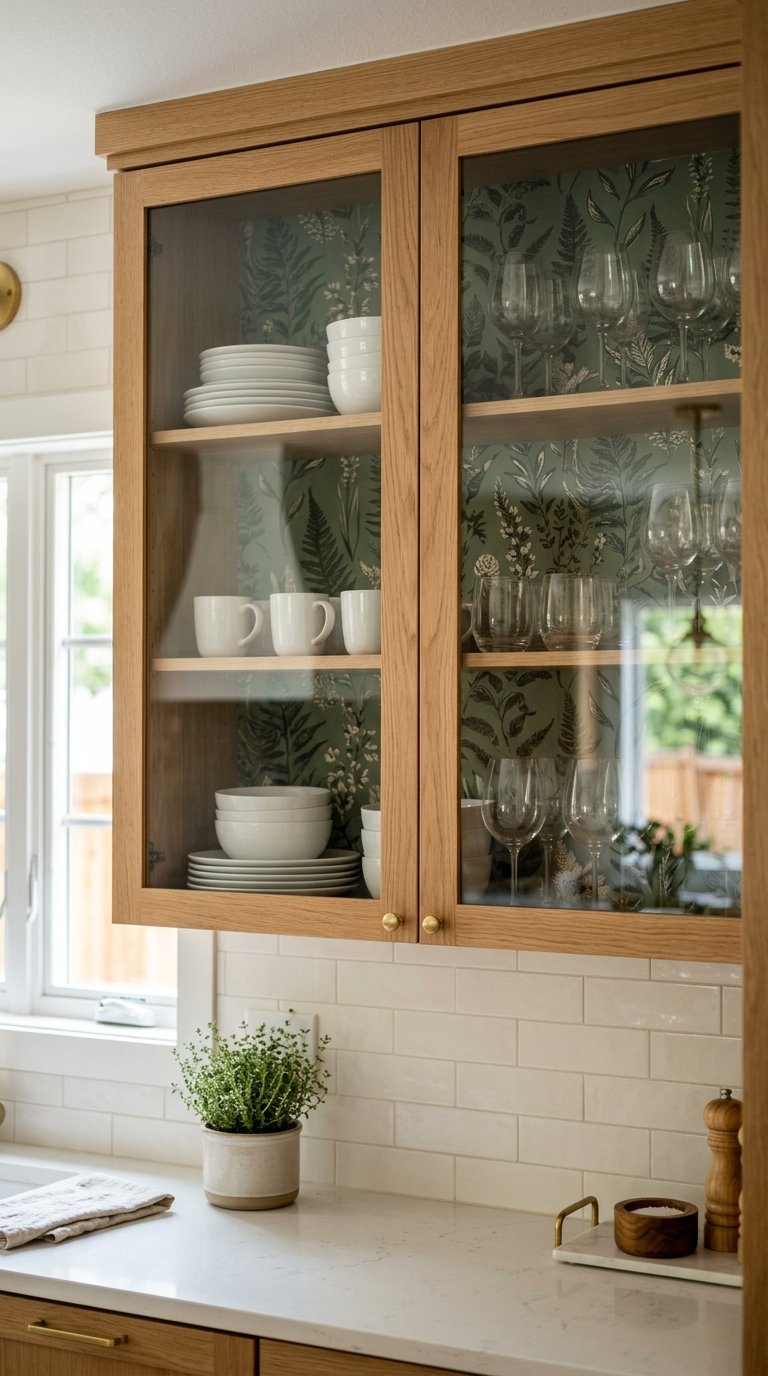
Glass-front cabinet doors expose whatever is stored inside them. If your cabinet interiors are a chaos of mismatched mugs and random boxes, line the inside back panel with peel-and-stick wallpaper in a solid color or subtle pattern. The wallpaper panel becomes the backdrop for the cabinet display and makes even a mismatched collection of dishes read as curated.
Tempaper’s peel-and-stick wallpaper in a solid linen texture or a botanical print costs $2.50 to $5 per square foot. A standard 12×24-inch cabinet interior back panel uses approximately 2 square feet at $5 to $10 per cabinet in materials. Apply the paper to the back interior wall of the cabinet only, leaving the sides bare, for a clean, framed effect that reads as intentional from the outside.
Choose a paper color that contrasts with your dishes. A deep sage green or navy wallpaper behind white ceramic dishes creates the strongest visual contrast. A neutral linen texture behind colorful dishware lets the dishes read as the display rather than the wallpaper. Remove the paper cleanly when you redecorate with zero damage to the cabinet interior.
14. Add a Chalkboard or Magnetic Wall Panel for Kitchen Organization
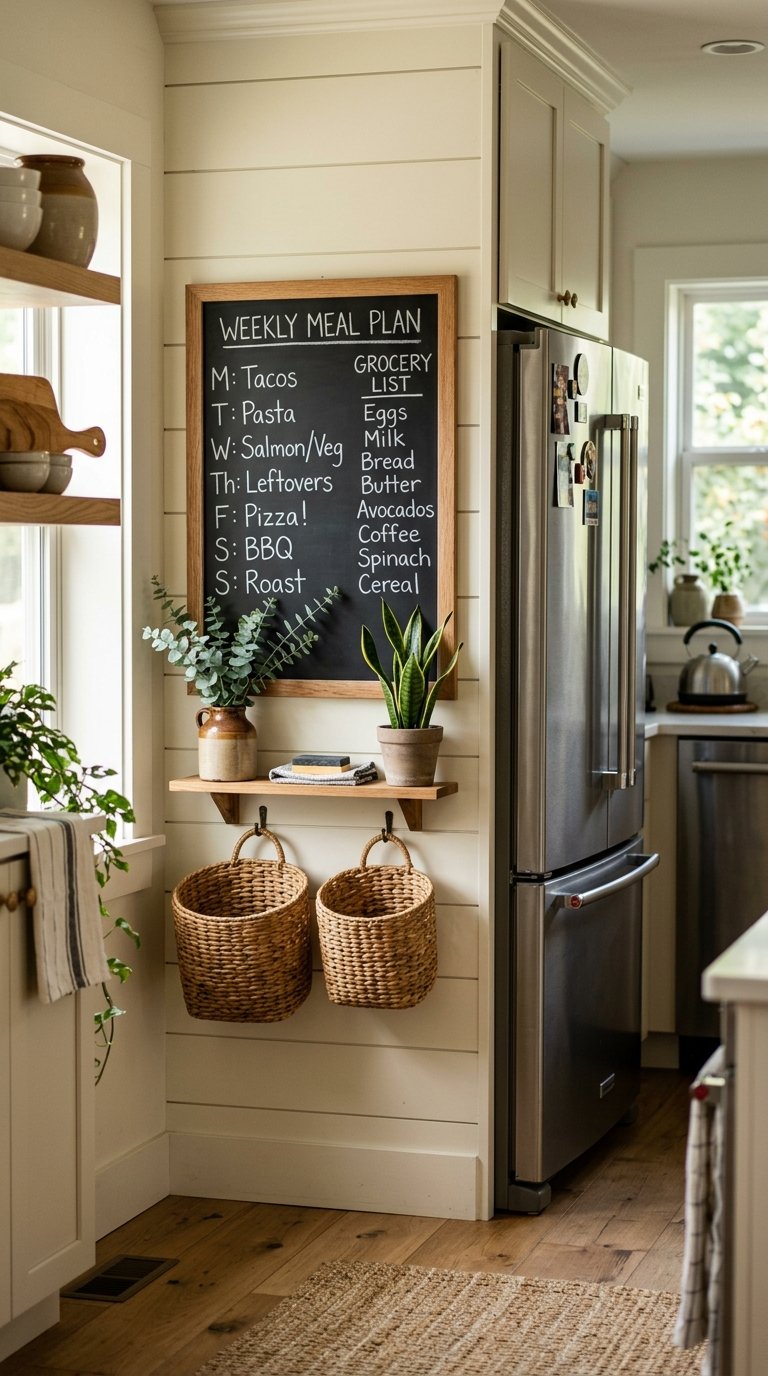
A small chalkboard panel on the kitchen wall near the refrigerator gives you a writable surface for grocery lists, weekly menus, and quick notes that would otherwise end up on random scraps of paper across the counter. The chalkboard format suits farmhouse, eclectic, and transitional kitchen styles where a hard surface writing area adds personality rather than visual noise.
Amazon’s Quartet black chalkboard in 17×23-inch format costs $22.99 and mounts directly to the wall with included hardware. Use it with Crayola white chalk markers at $8.99 for six for a clean, erasable writing surface that does not produce dust like traditional chalk. Write the weekly dinner menu across the board for a kitchen feature that is both functional and personal.
For a magnetic wall panel, Amazon’s Umbra Trigem magnetic board in 16×20-inch format costs $29.99 and holds notes, grocery lists, and small recipe cards with included magnets. Mount it at eye level on the kitchen wall nearest the counter prep zone so it serves a real organizational function rather than decorating an empty wall too far from the cooking area to use.
15. DIY Concrete Countertop Over Existing Surfaces
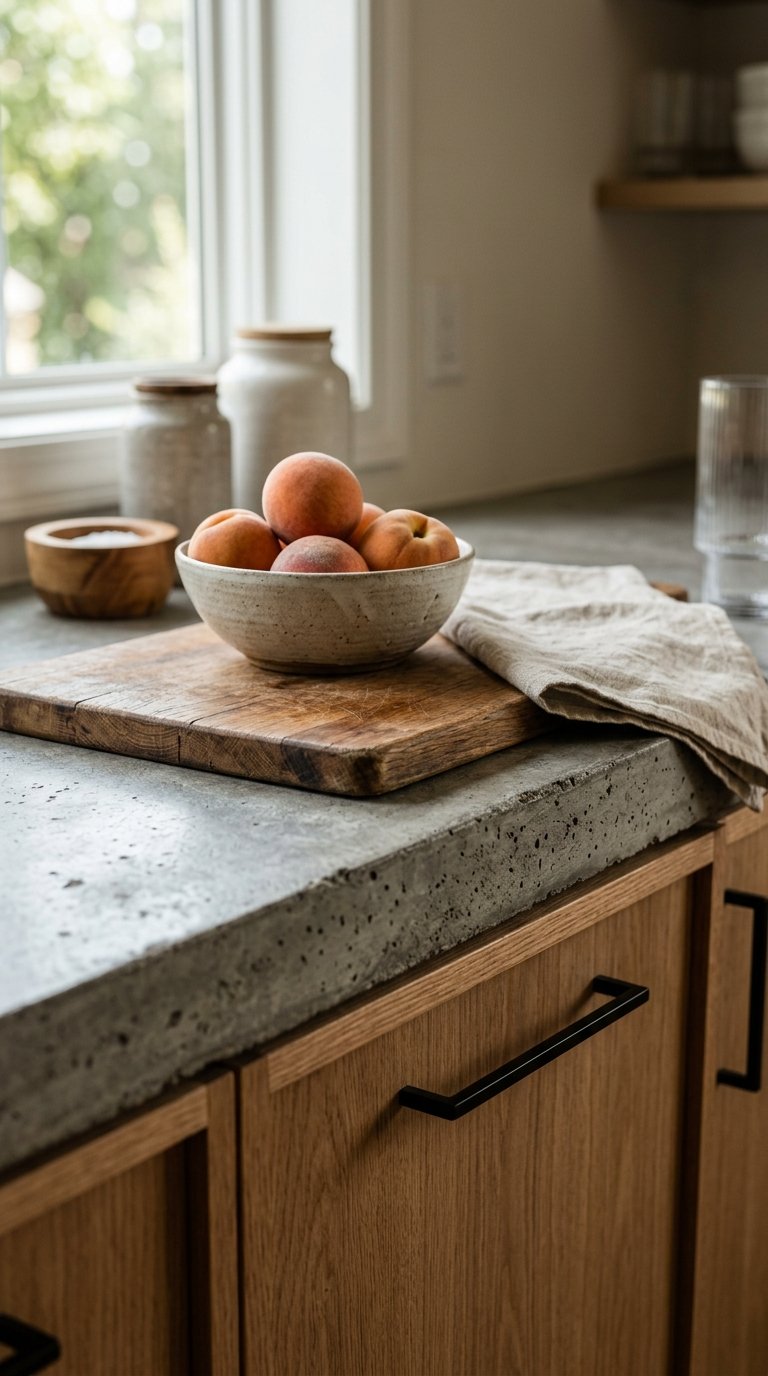
Pouring concrete countertops over existing surfaces is a budget-friendly alternative to granite, quartz, and stone, which cost significantly more per square foot. Outdoor granite runs up to $140 per square foot, tile costs about $45 per square foot, and concrete costs $50 to $140 per square foot installed by a professional, though a DIY countertop overlay runs far less.
Ardex Feather Finish concrete overlay at $25 per 10-pound bag from Amazon covers approximately 40 to 50 square feet at a skim coat thickness. Apply with a wide trowel over any existing laminate, tile, or butcher block surface that has been cleaned and lightly sanded. Two or three skim coats, sanded between each application, produce an organic, matte concrete surface for under $80 in materials for a standard kitchen counter run.
Seal the finished surface with Ardex WPM waterproofing membrane at $18.99 per quart or a food-safe concrete sealer from Home Depot at $22.99 per quart. The sealed concrete countertop surface is heat resistant to 300 degrees, water resistant, and stain resistant with proper sealing. Reseal once per year to maintain the surface integrity.
16. Style the Refrigerator Exterior as a Design Feature
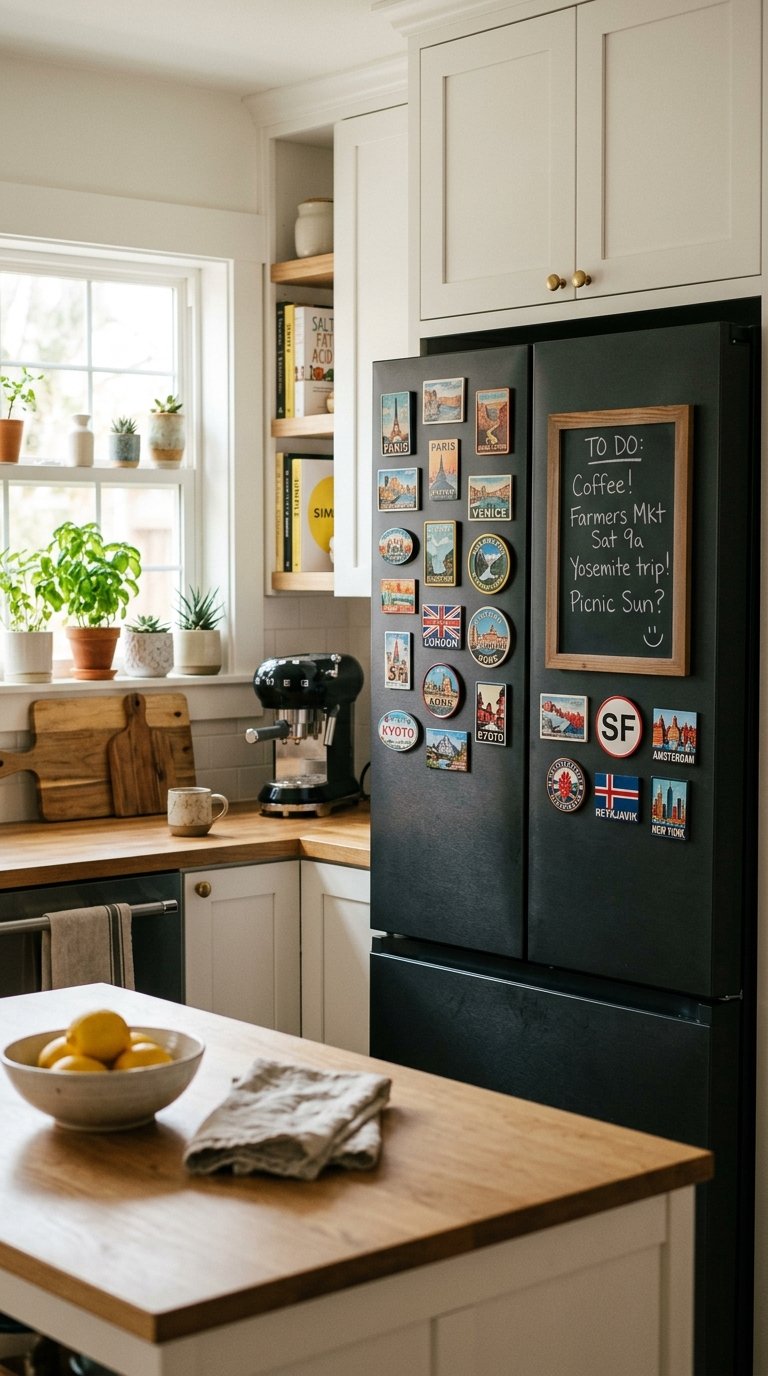
Most refrigerators are stainless steel or white and read as appliances. A set of removable refrigerator magnets, a magnetic chalkboard sheet, or adhesive contact paper on the refrigerator door panel transforms the appliance from a neutral box into a kitchen design element. Con-Tact Brand’s adhesive shelf liner in marble, wood grain, or solid matte colors at $12 to $18 per roll on Amazon adheres directly to the refrigerator door surface and peels cleanly.
Choose a contact paper color that contrasts or coordinates with your cabinet color. White cabinets suit a matte black or deep navy refrigerator panel. Wood-tone cabinets suit a marble or concrete-look contact paper wrap. Apply the paper using a flat plastic squeegee to eliminate air bubbles and trim the edges with a sharp craft knife for a clean finish that reads as a designed panel rather than a DIY experiment.
Alternatively, display a curated set of ceramic or metal refrigerator magnets in a single color family or theme. A set of ten vintage travel poster magnets at $12 to $18 from Society6 or Etsy creates a gallery display on the refrigerator door that adds personal character to the kitchen without any tools or installation.
17. Install Under-Cabinet Rope Lights or LED Strips
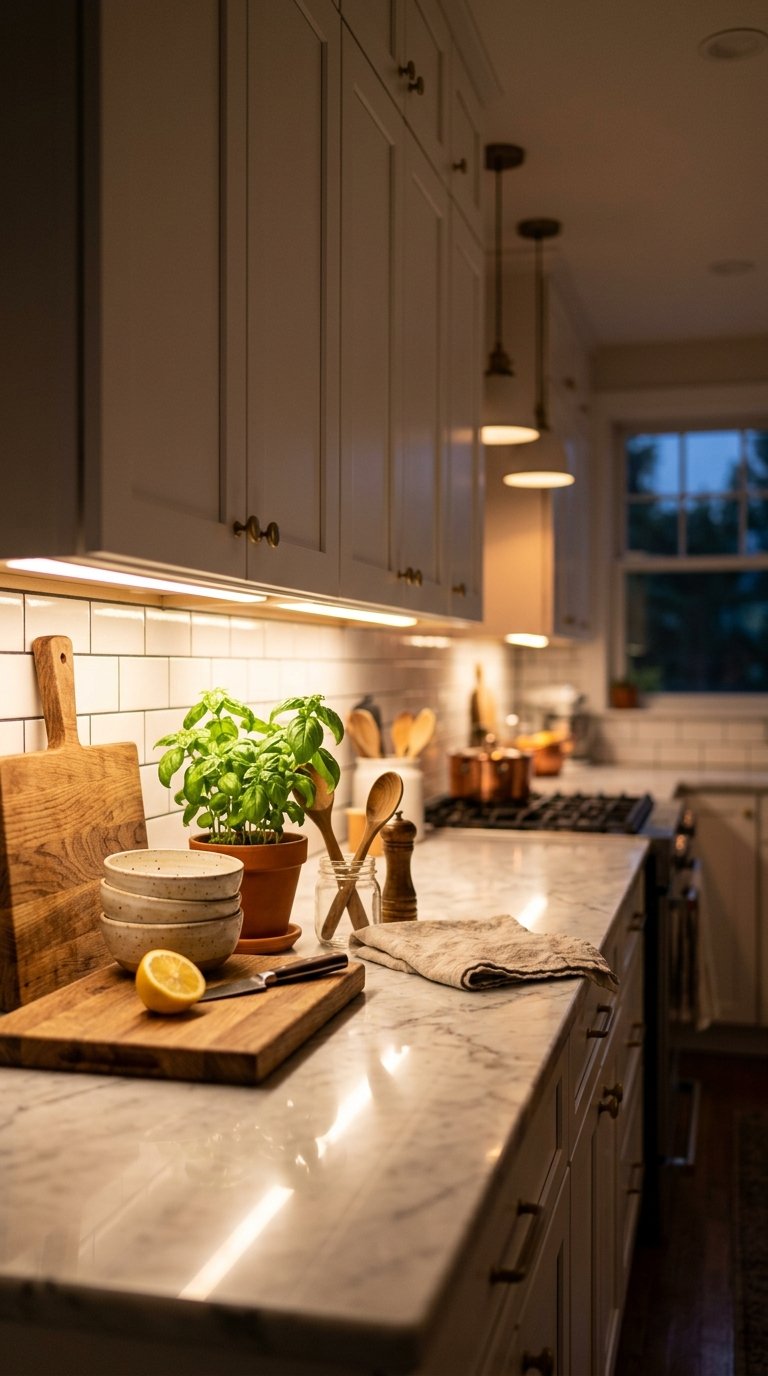
Under-cabinet lighting changes the kitchen’s nighttime atmosphere completely. Without it, your kitchen counter sits in shadow after dark even with overhead lighting on. With it, every counter surface gets a warm, direct work light that makes evening cooking and late-night snack runs feel intentional rather than fumbled.
Amazon’s Govee warm white under-cabinet LED strip in 2700K costs $18.99 for a 9.8-foot reel with adhesive backing and a remote dimmer. Cut the strip to fit each cabinet run and press the adhesive backing onto the underside of the cabinet frame 2 inches from the front edge. The light angle at 2 inches back from the edge prevents the LED strip itself from being visible from the front of the counter while still illuminating the full counter surface below.
Plug the strip into the nearest outlet under the cabinet. Use a cord clip at $3.99 for a ten-pack from Amazon to route the power cord along the underside of the cabinet to the outlet without the cord hanging freely. The total under-cabinet lighting setup costs under $25 and creates a kitchen counter atmosphere that no overhead light achieves alone.
18. Use Contact Paper to Refresh Laminate Cabinet Doors
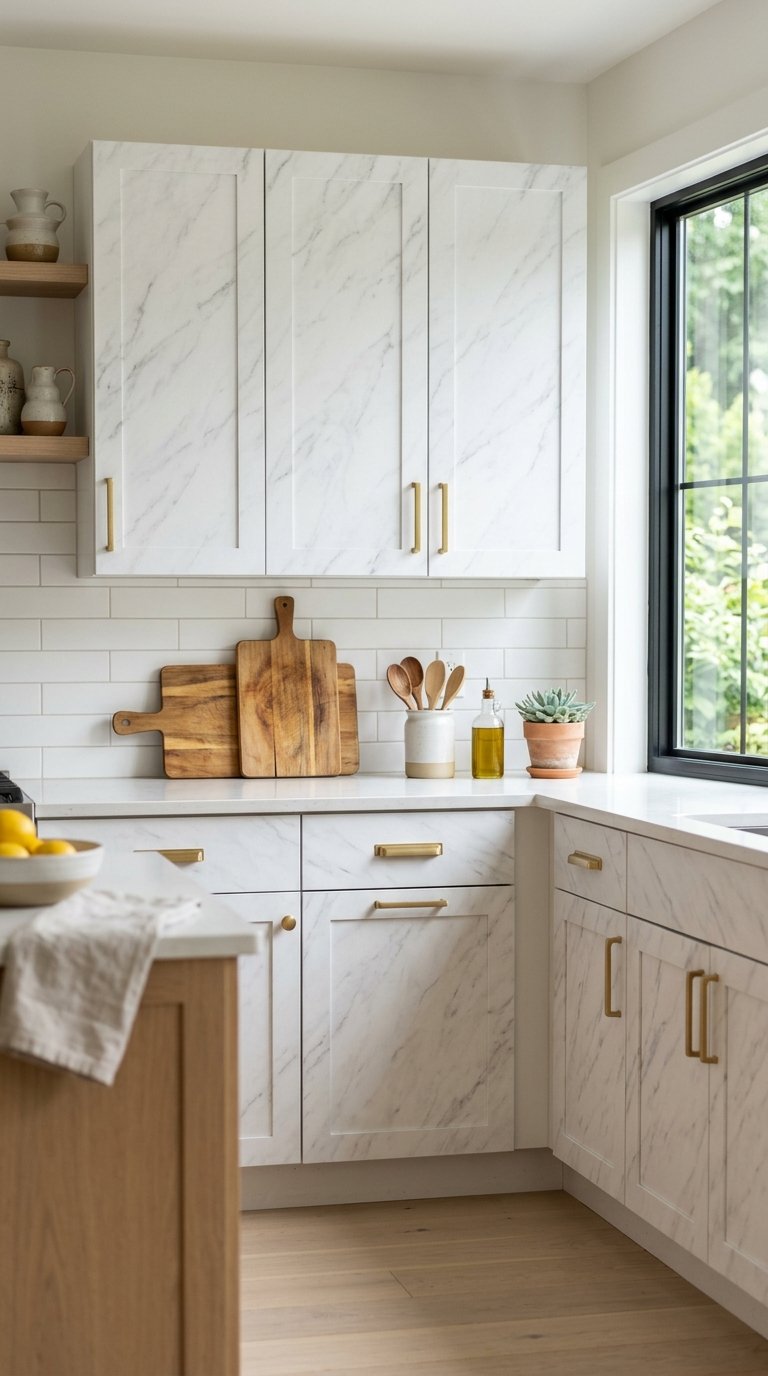
Laminate cabinet doors in dated woodgrain, oak veneer, or builder-white finishes age poorly and drag the entire kitchen backward visually. Contact paper applied directly to the cabinet door face refreshes the surface in a single afternoon without painting, sanding, or replacing the doors. Contact paper is an affordable way to update a rental space, and the key to a clean result is smooth application that minimizes visible imperfections.
Con-Tact Brand’s white marble or solid matte white contact paper at $12 to $18 per roll from Amazon covers approximately 18 square feet per roll. A standard upper cabinet door measures 12×30 inches, using less than 3 square feet of paper per door. Ten cabinet doors use two rolls at $24 to $36 in total materials for a fully refreshed cabinet face that reads as a painted finish from across the room.
Clean the cabinet door surface thoroughly with a degreaser before application. Apply the paper slowly from top to bottom, smoothing out air bubbles with a flat plastic card as you work downward. Trim excess paper at the door edges with a sharp craft knife and a metal ruler for the cleanest possible edge. The result holds on flat laminate surfaces for two to three years before it begins to lift at the edges.
19. Bring in Natural Wood Cutting Boards as Counter Decor
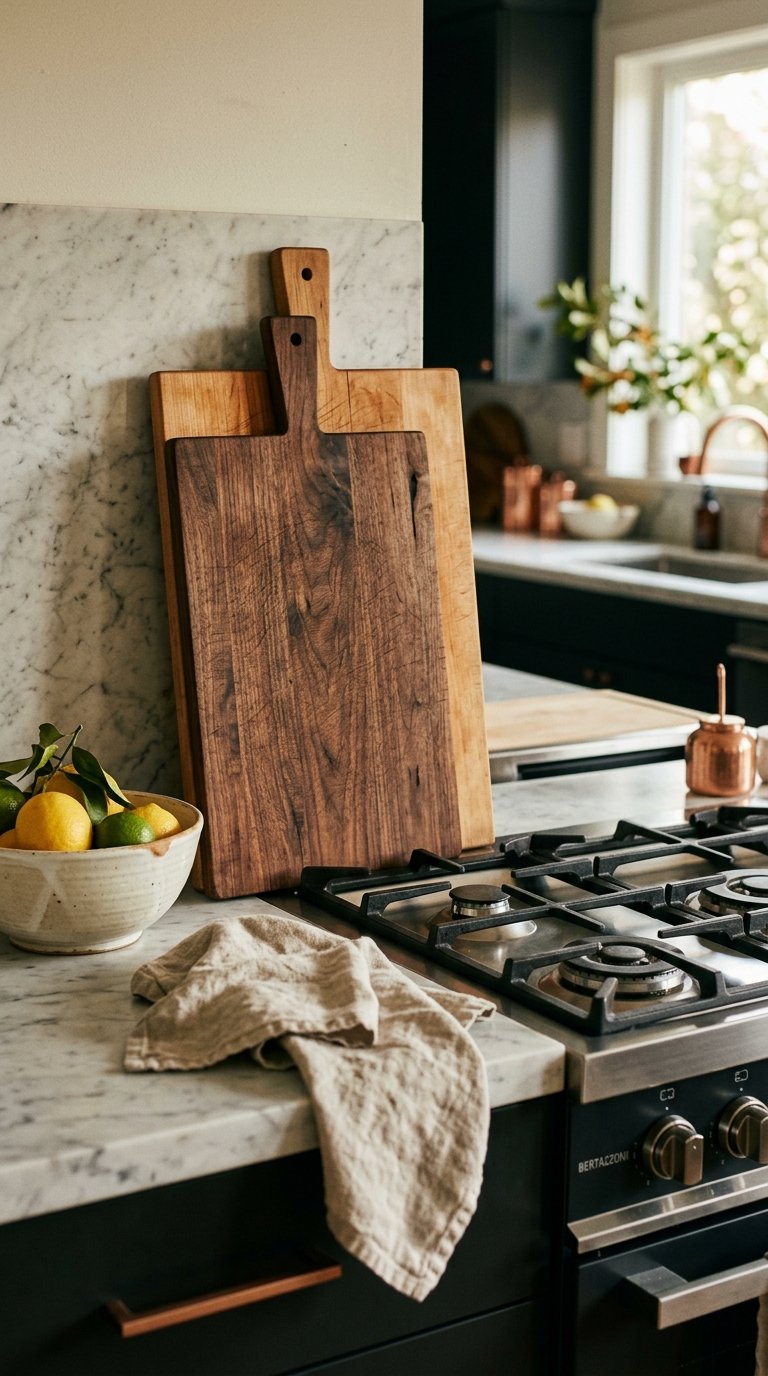
A large end-grain or edge-grain cutting board leaned against the kitchen backsplash or displayed on the counter adds immediate warmth, organic texture, and practical function to a kitchen that feels cold or sterile. Interior designers confirm that warm woods like white oak, walnut, and pecan are among the most popular 2025 kitchen trends, with natural wood tones bringing warmth to spaces dominated by hard surfaces.
Boos Blocks’ 12×18-inch maple end-grain cutting board costs $89.99 from Amazon. For a more budget-conscious option, IKEA’s APTITLIG bamboo cutting board in 18×10-inch format costs $8.99. Display two cutting boards of different sizes leaned against the backsplash to the left or right of the stove. The layered display of two boards at different heights reads as styled rather than utilitarian.
Oil the cutting board surface once per month with food-safe mineral oil at $6.99 per bottle from Amazon to keep the wood grain from drying, cracking, or graying. A well-oiled cutting board surface reads as rich, warm, and maintained. A dry, gray cutting board reads as neglected. The difference between the two costs one bottle of oil and ten minutes of attention per month.
20. Set Up a Coffee and Tea Station as a Styled Counter Moment
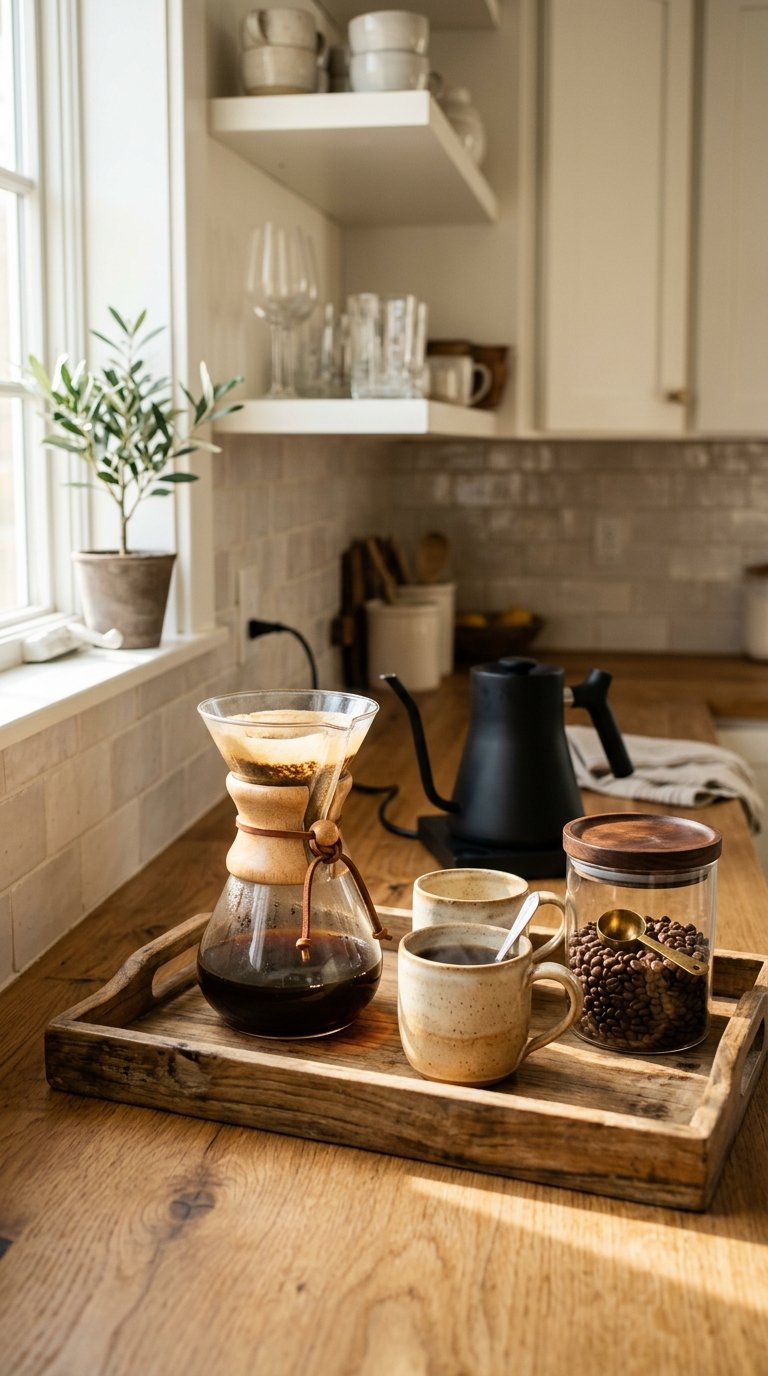
A dedicated coffee and tea station on a kitchen counter tray creates a single, contained, beautifully styled zone that makes the kitchen feel like a place you want to spend time in rather than a pass-through. The tray format is the critical element. Without it, a coffee maker, a kettle, and a mug collection reads as counter clutter. With it, the same objects read as an intentional station. 🙂
Amazon’s Bloomingville round teak wood tray at 12 inches costs $24.99. Use it to hold a Chemex coffee maker at $44.95, a small ceramic sugar bowl, a glass canister of coffee beans, and two to three mugs in a matched color family. Keep every object on the tray. Nothing on the tray lives anywhere else on that section of counter.
Choose one mug style and display two or three of the same design rather than a random collection of every mug you own. HAY’s ceramic mug in the Column series costs $18 each. Three of the same mug stacked or lined in a row on the tray reads as a curated object display. Three completely different mugs read as a kitchen-drawer dump. The difference is discipline, not budget.
21. Add a Pass-Through Window or Bar Shelf Between Kitchen and Outdoor Space
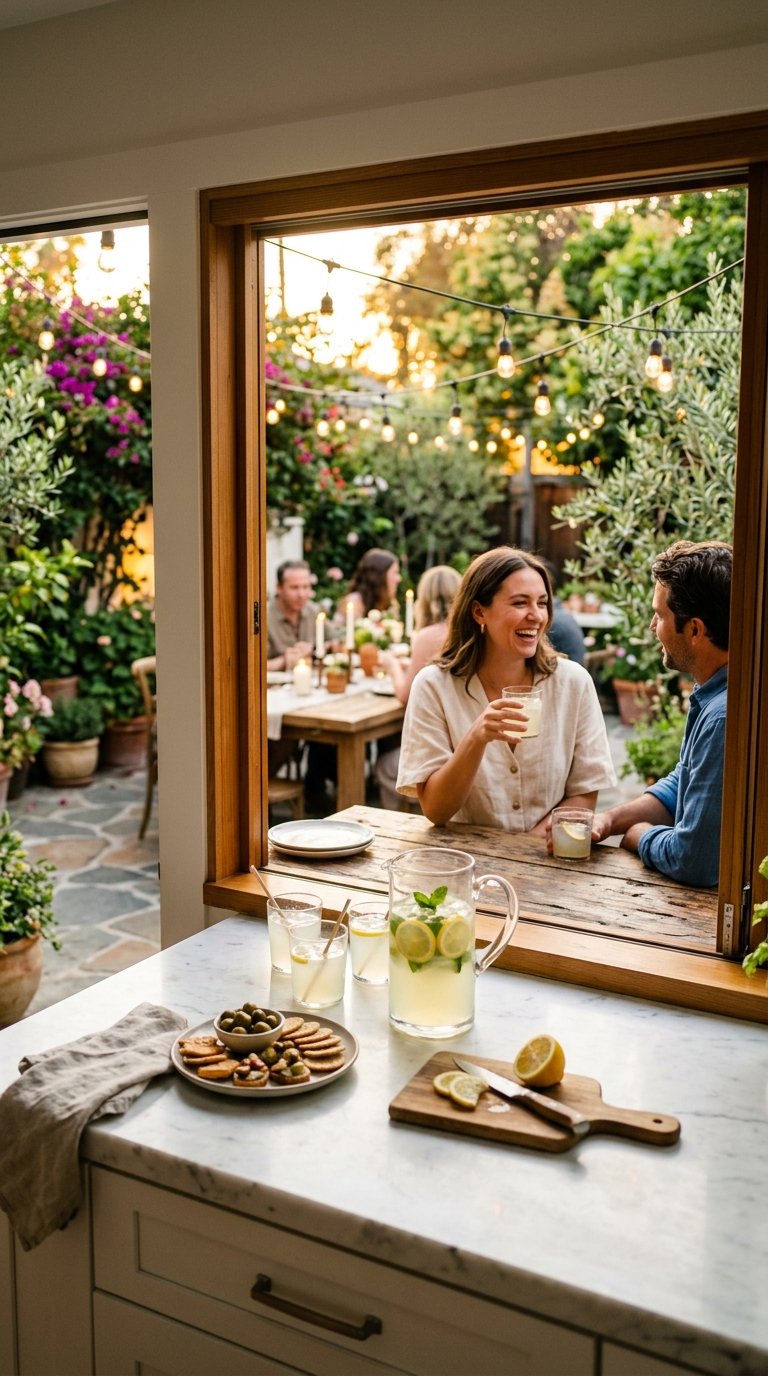
Summer is the perfect season to blur the boundary between indoors and outdoors. Pass-through windows between the kitchen and a patio or deck enhance the sense of openness and allow the kitchen to flow naturally into the outdoor entertaining area. If you own your home, a pass-through window cut into an exterior kitchen wall costs $800 to $1,500 installed, depending on the wall construction and window size.
For renters and those without the budget for a structural opening, a folding table positioned directly outside the kitchen door with a matching bar shelf mounted to the exterior wall at $22 to $35 from Home Depot creates a functional outdoor serving pass-through without any structural work. Set up the outdoor shelf at the same height as your interior counter so food moves directly from the counter through the door to the outdoor shelf without any height change.
String a strand of warm white outdoor string lights from Amazon at $14.99 for a 48-foot reel along the exterior wall above the pass-through shelf. The string lights at 2700K define the outdoor cooking zone visually after dark and make the transition from indoor kitchen to outdoor dining feel designed and continuous rather than improvised.
22. Display a Vintage or Ceramic Canister Set on the Counter
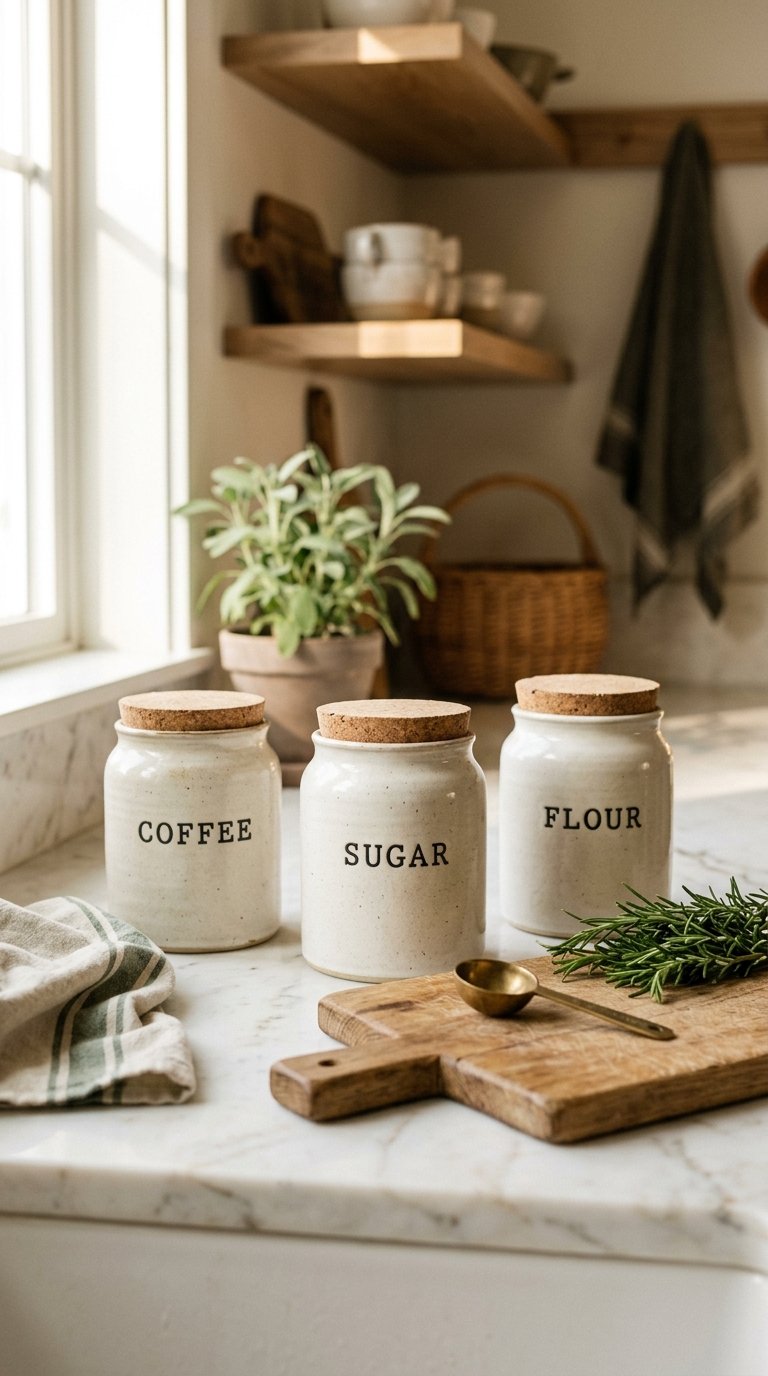
A matched canister set on the kitchen counter performs double duty as both storage and decor. Three ceramic canisters in coordinating sizes labeled for coffee, sugar, and flour replace a scattering of bags and boxes on the counter with a single organized, visually clean display that reads as intentional and styled.
Le Creuset’s stoneware canister in cherry red at $40 per piece creates a bold, permanent color accent on a white or neutral kitchen counter. For a more budget-aware option, World Market’s hand-painted ceramic canisters in white with a hand-lettered label cost $12.99 to $18.99 each in three sizes. A three-piece canister set from World Market at $40 to $55 total replaces counter clutter with a matched, seasonal display that suits any kitchen aesthetic.
Choose a canister color that references one other color already present in the kitchen. If your dish towels are sage green, choose sage green or white canisters. If your mixer is matte black, choose matte black or cream canisters. The canister set reads as designed when it connects to at least one other object in the kitchen. It reads as random when it shares no color relationship with anything else on the counter.
23. Hang a Large Outdoor-Grade Pendant Light Above the Island or Table
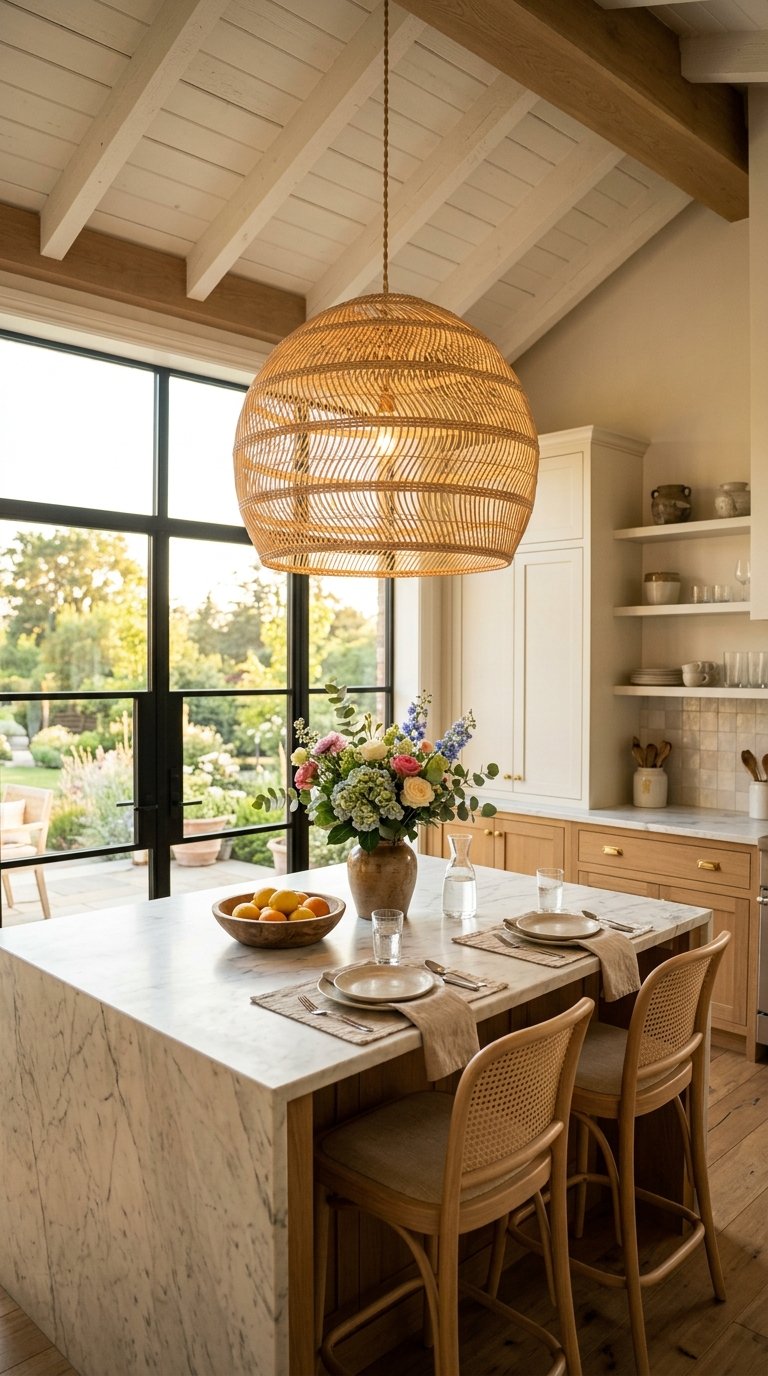
The pendant light above a kitchen island or dining table is the single most impactful lighting change in the kitchen. A new pendant fixture changes the room’s mood, scale, and material story in one installation. Home Depot stocks a wide range of pendant and semi-flush ceiling lights, including the Adsensty Four-Light Nickel Modern Semi-Flush Mount for $153.43 and the Mencolulu Modern Black Six-Light Chandelier for $110.40.
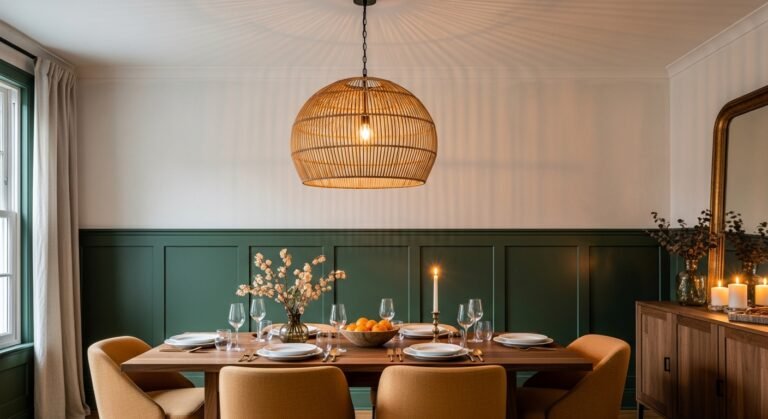
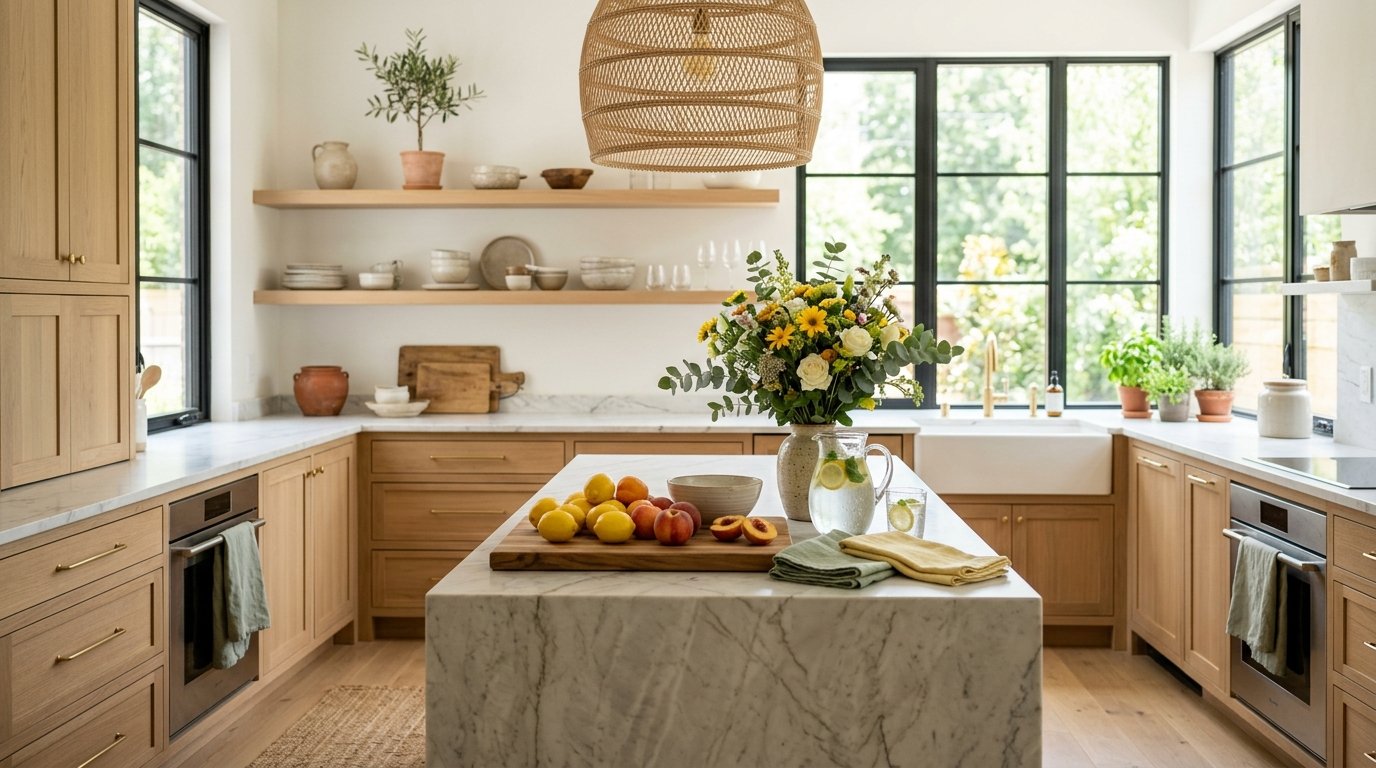
For a summer-specific pendant, a rattan or woven seagrass shade in a drum or bell format at $45 to $95 from Amazon adds organic, warm material texture to the kitchen ceiling zone that suits coastal, bohemian, organic modern, and farmhouse kitchen styles. The rattan shade at 14 to 18 inches in diameter suits a kitchen island up to 48 inches wide. A shade below 14 inches reads as undersized above a standard island.
Install using a hardwired pendant kit from Home Depot at $12 to $18 that connects to your existing ceiling junction box without any rewiring. Hang the shade at 30 to 36 inches above the island counter surface for correct visual clearance that keeps the light out of the sightline while casting a warm, direct pool of light on the counter below.
Final Thoughts
None of these 23 ideas require a contractor, a renovation budget, or a landlord’s permission beyond a few paint choices. The cheapest ideas on this list, the herb garden, the textile swap, the bulb temperature change, cost under $25 and take under an hour. The biggest ideas, the concrete countertop overlay, the pass-through bar setup, the pendant light installation, stay under $150 in materials with a weekend of work.
Budget trials confirm that $400 to $600 invested intentionally delivers comparable satisfaction to $4,000-plus renovations when the decisions are specific and purposeful. That is the entire philosophy behind this list. Pick the three ideas that solve your biggest kitchen problem right now. Start there. A summer kitchen does not need everything on this list. It needs the right three things executed well.