25 Lemon Centerpiece Ideas for a Fresh Stylish Table
A bowl of lemons sitting on a kitchen counter costs $4 at any grocery store and reads as one of the most effortlessly styled surfaces in a home. That is not an accident. Lemons work as a centerpiece material because they deliver bright, saturated color, organic irregular form, natural fragrance, and a tactile surface texture in a single ingredient that costs less than a candle. The problem most people face is not finding lemons. It is knowing what to do with them beyond dropping them in a bowl and hoping for the best. These 25 lemon centerpiece ideas give you exact containers, specific pairings, real price ranges, and the precise reason each arrangement reads as designed rather than accidental.
1. Lemons in a Clear Glass Cylinder Vase
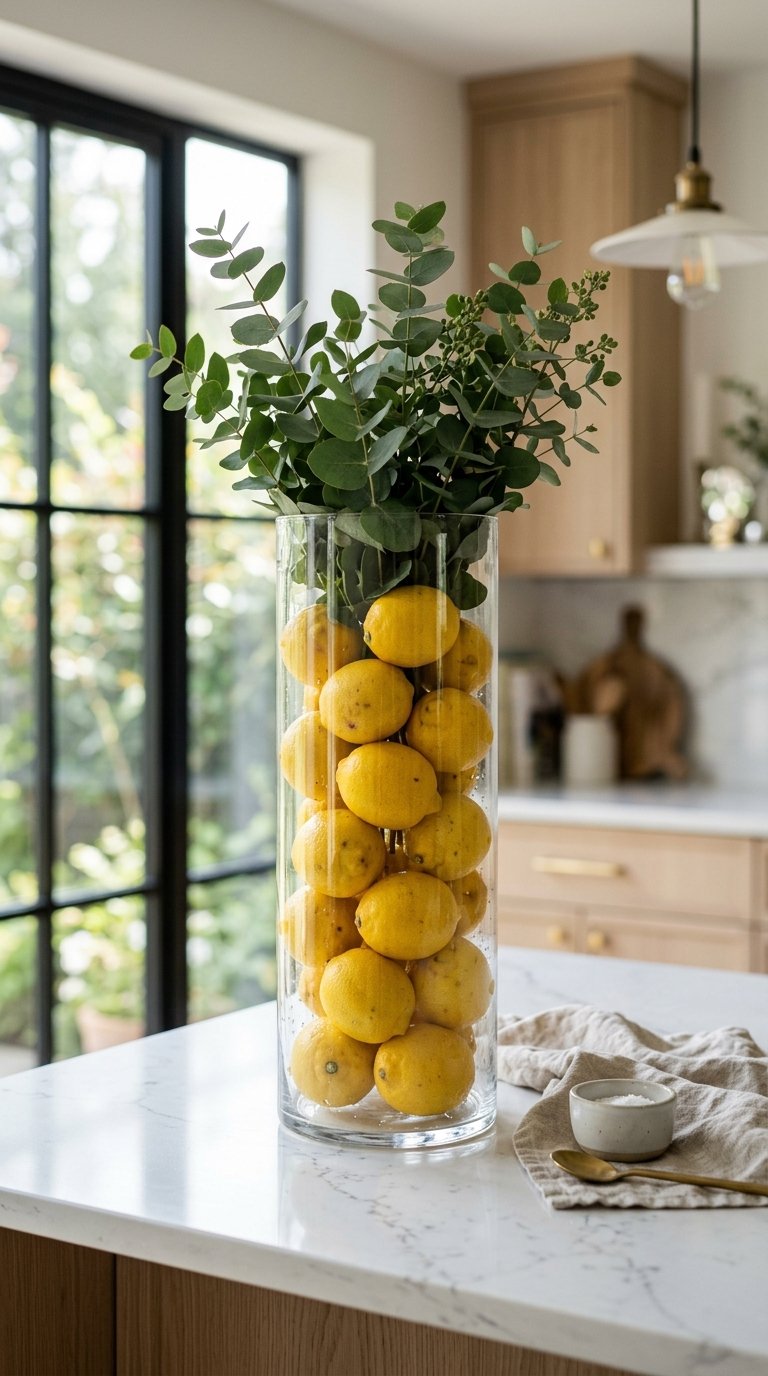
A clear glass cylinder vase filled with whole lemons creates a clean, graphic centerpiece that reads as intentional from across the room because the yellow color saturates the entire glass surface and the circular lemon forms stack visibly through the transparent wall. The glass format lets the lemons do all the visual work without any competing container color or texture.
IKEA’s CYLINDER clear glass vase at $3.99 in the 6-inch height and $5.99 in the 8-inch height holds eight to twelve lemons in a compact, tight arrangement that suits a dining table, kitchen island, or bathroom vanity. Fill the vase with lemons from the base up, pressing each lemon firmly against the glass wall so the yellow skin reads clearly through the exterior. Add three to four stems of fresh eucalyptus or rosemary inserted between the lemons at the top of the vase for a green contrast layer that adds height and fragrance to the arrangement.
This centerpiece costs under $12 in total including the vase and a grocery store lemon bag, making it the highest-impact, lowest-cost lemon centerpiece on this list. Replace the lemons every ten to fourteen days as they soften.
2. Lemons in a White Ceramic Bowl
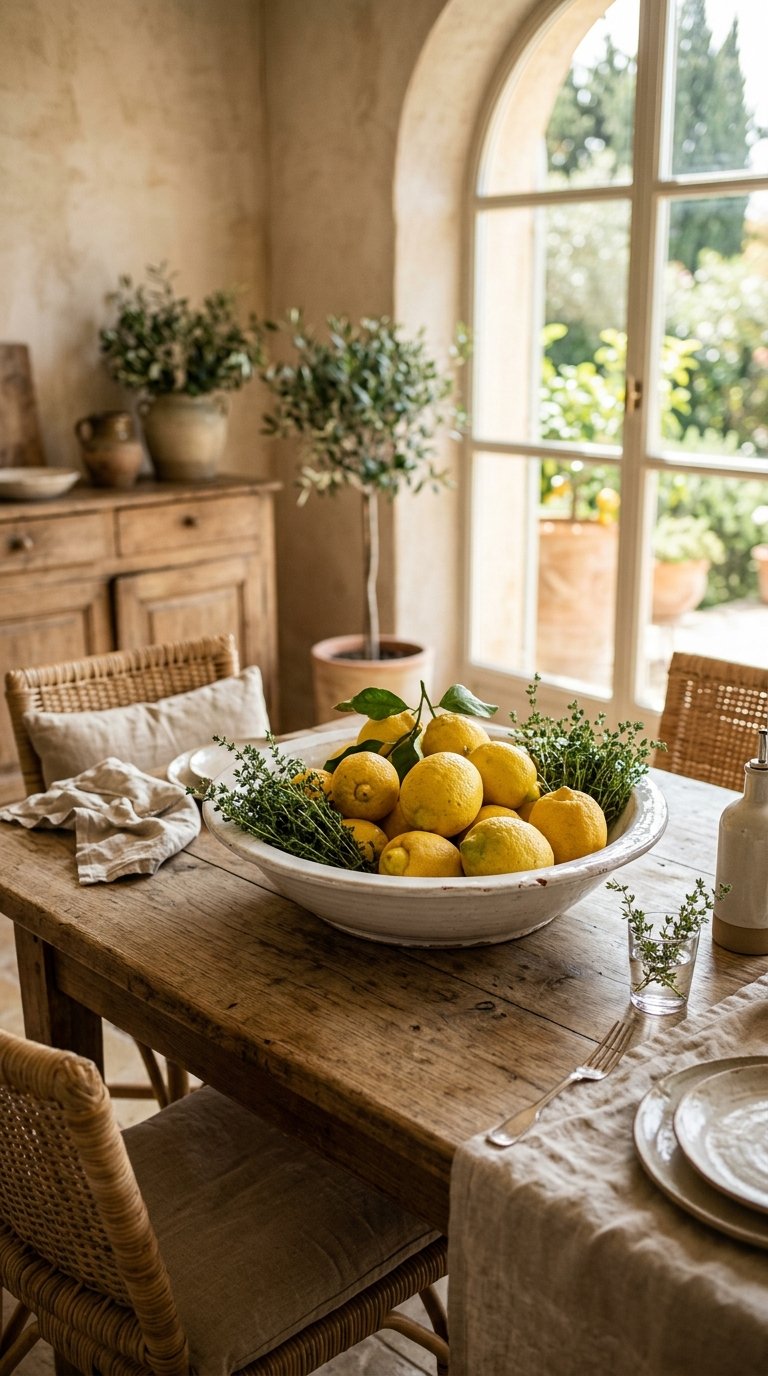
A shallow white ceramic bowl filled with a generous pile of lemons creates a casual, Mediterranean kitchen centerpiece that reads as lived-in and warm rather than styled and formal. The white ceramic surface contrasts directly with the bright yellow lemon skin and makes the color read more saturated than it does against a natural wood or terracotta background.
Target’s Threshold shallow ceramic serving bowl in white at $12.99 in the 10-inch diameter size holds ten to fourteen lemons in a relaxed, slightly overflowing pile. The slight overflow at the bowl rim signals abundance and reads more generously styled than a tightly contained arrangement. Add two sprigs of fresh thyme or a small bunch of dried lavender laid across the top lemon layer for a fragrant herbal accent that suits Mediterranean, Provencal, and farmhouse kitchen table styles.
Choose a bowl with a rim depth of 2 to 3 inches so the lemons stack above the rim edge and read as a full, generous display rather than a flat fruit dish.
3. Lemons and Greenery in a Terracotta Pot
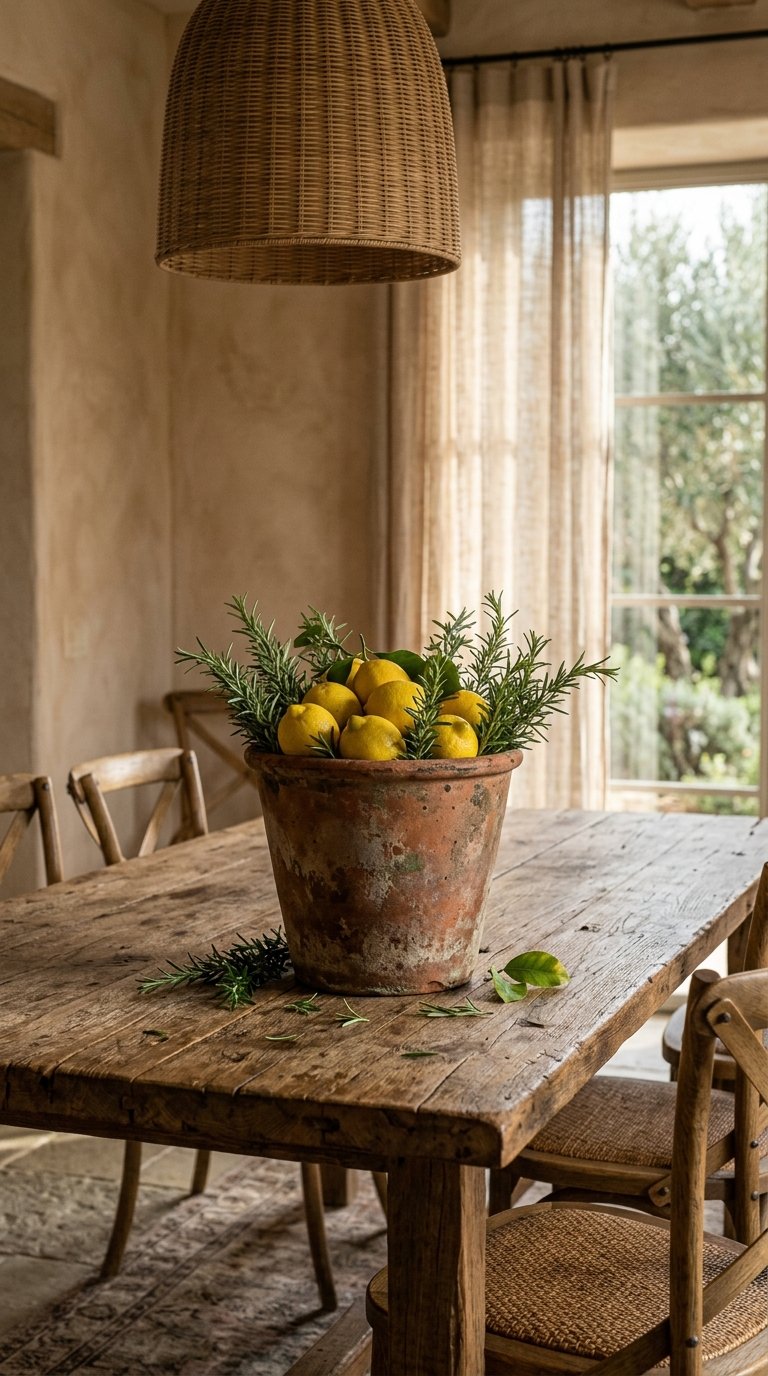
A terracotta pot filled with lemons and topped with fresh rosemary, olive branches, or eucalyptus stems creates a warm, earthy centerpiece that suits rustic, Mediterranean, and organic modern table settings. The warm orange-red terracotta surface and the bright yellow lemon skin sit in direct color contrast on the warm side of the color wheel, which makes both materials read more vibrantly together than either does alone.
Home Depot’s standard terracotta pots cost $2.99 to $6.99 in 6 and 8-inch sizes. Fill the pot with a single layer of lemons and tuck three to four fresh rosemary sprigs between them for an aromatic, herb-and-citrus centerpiece that perfumes the table during meals. Place a small piece of crumpled newspaper at the pot base to raise the lemon layer and reduce the number of lemons needed to fill the pot visibly. Total centerpiece cost runs under $15 including the pot, lemons, and fresh rosemary.
This arrangement suits outdoor dining tables, farm tables, and kitchen islands in homes with warm, natural material palettes in terracotta, linen, and aged wood.
4. Lemon Topiary in a Foam Cone Form
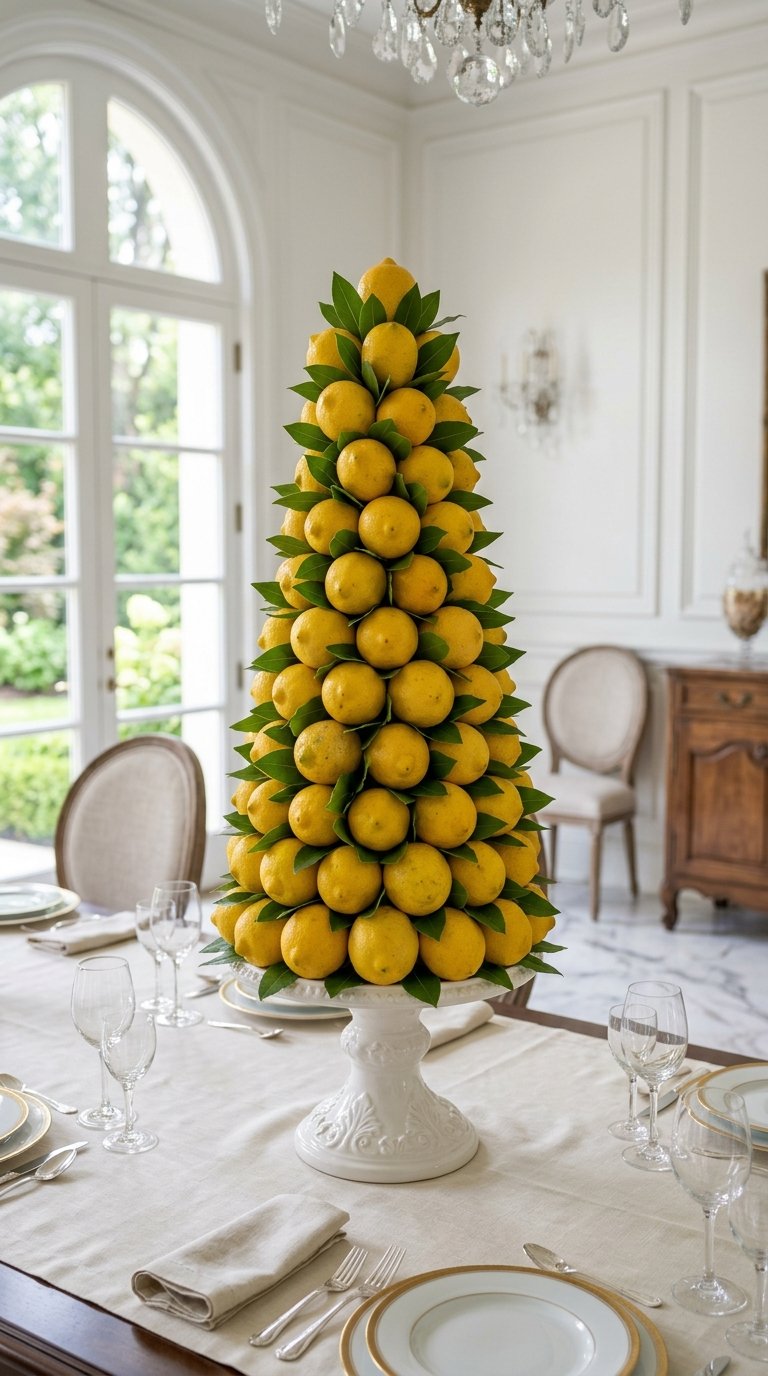
A lemon topiary built on a foam cone form creates the most formal and event-appropriate lemon centerpiece on this list. The cone silhouette reads as architecturally precise from any angle and suits wedding reception tables, holiday dinner centerpieces, and formal entertaining settings where a casual bowl arrangement would read as insufficiently considered.
Purchase a 12-inch styrofoam cone form from Michaels at $4.99 and cover the surface with whole lemons secured using wooden toothpicks pushed through the lemon base into the foam. Start at the base and work upward in horizontal rows, pressing each lemon flush against its neighbor so no foam shows between fruit. Fill any visible gaps with fresh bay leaves or boxwood sprigs from the garden. Place the completed topiary on a small cake stand from Target at $12.99 or in a white ceramic pot for a finished base presentation.
A 12-inch lemon topiary uses approximately 35 to 45 lemons depending on lemon size. Build it no more than 24 hours before the event so the lemons stay firm and the toothpick connections hold without the foam compressing under fruit weight.
5. Lemons Floating in a Glass Bowl of Water
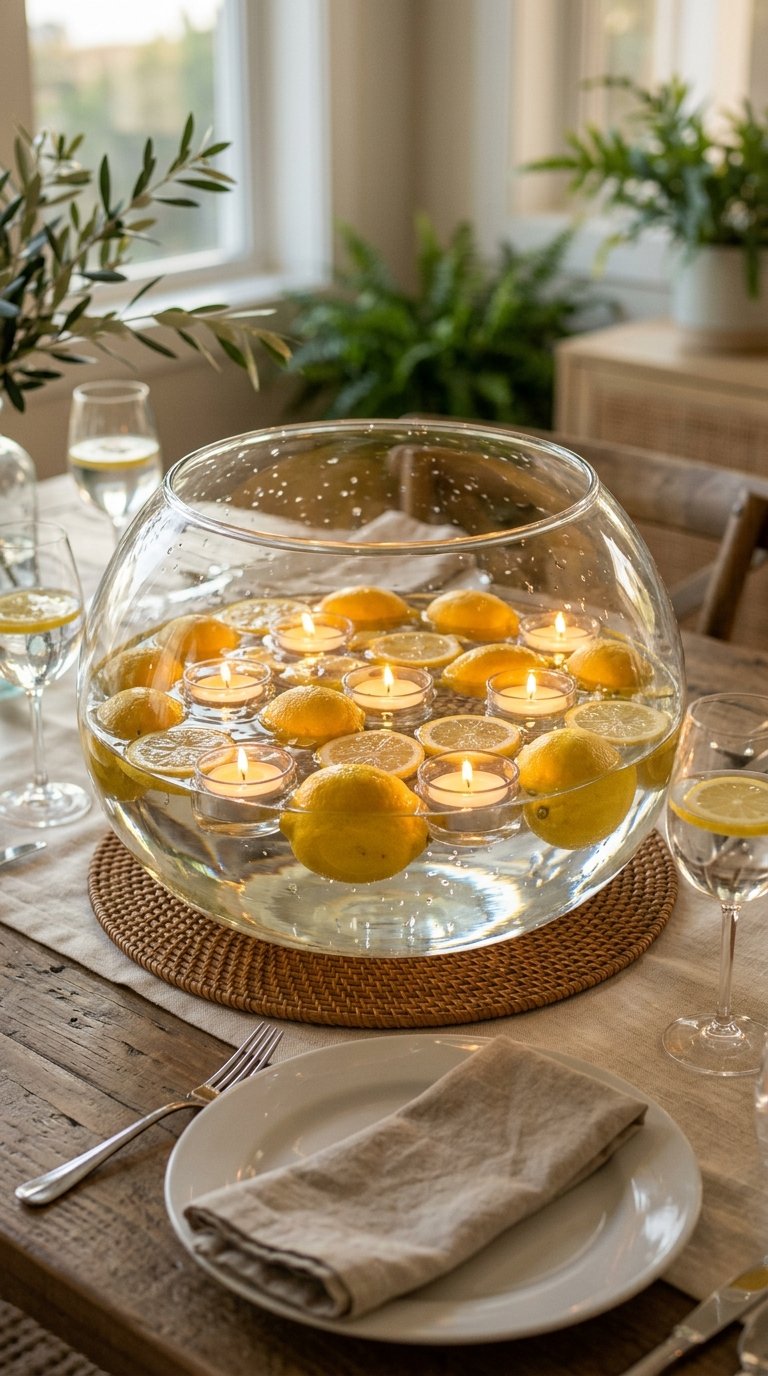
Whole lemons floating in a large clear glass bowl of water create a simple, elegant centerpiece that reads as both decorative and refreshing on a summer dining table. The water magnifies the lemon color slightly and creates a soft light-refracting quality at the base of the bowl that a dry arrangement never achieves.
A large 12-inch clear glass salad bowl from IKEA at $7.99 holds six to eight whole lemons floating in water with enough surface area for the lemons to spread naturally rather than crowd. Add three floating tea light candles from IKEA at $4.99 per pack of ten between the lemons for a candlelit lemon centerpiece that works for evening dining. Slice two lemons in half and float them cut-side up alongside the whole lemons for a color variation that exposes the lemon’s interior geometric pattern.
Change the water every two days to keep it clear. Add one tablespoon of white vinegar to the water to slow any surface cloudiness and keep the bowl reading clean and fresh through a week-long display.
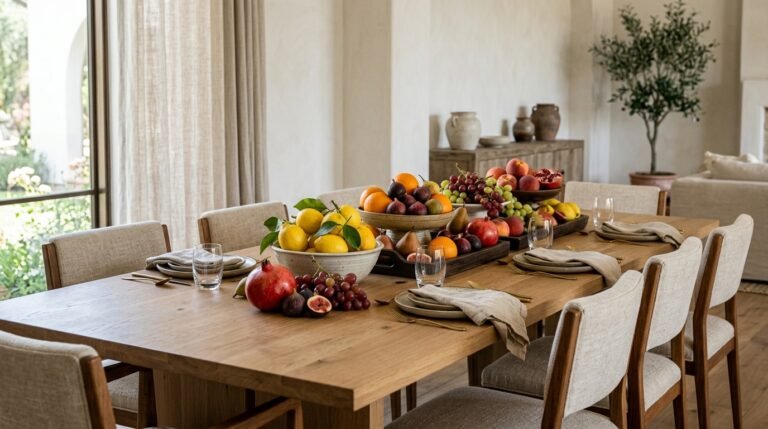
6. Lemon and Herb Wreath as a Table Centerpiece
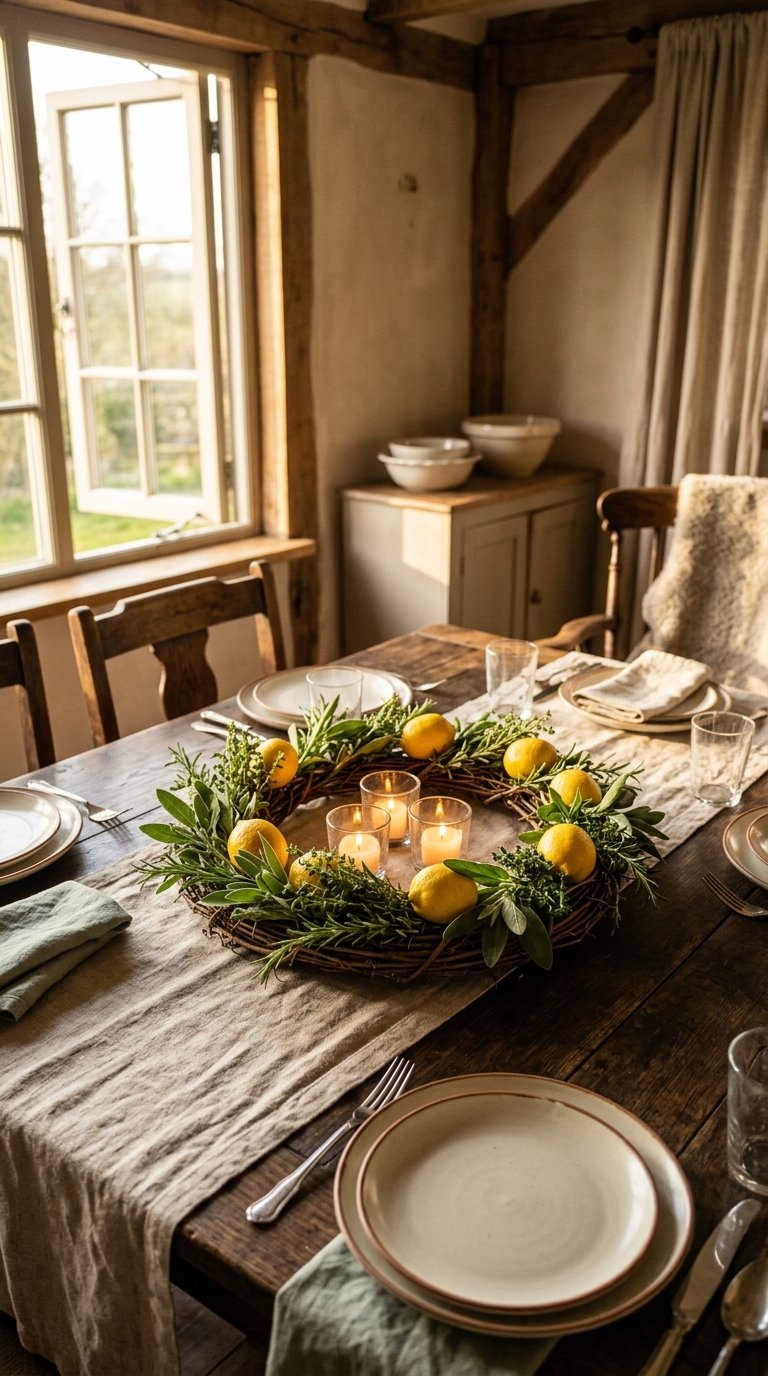
A lemon and herb wreath laid flat on the dining table as a horizontal centerpiece creates an aromatic, nature-referenced table display that suits garden party dinners, summer entertaining, and al fresco dining tables where a vertical centerpiece would block sightlines across the table. The flat wreath format uses the table surface itself as the display plane and keeps the centerpiece below eye level.
Purchase a 12-inch grapevine wreath base from Michaels at $3.99 and attach whole lemons using floral wire at $4.99 per roll, wrapping the wire around each lemon and twisting it onto the wreath structure. Fill gaps between lemons with fresh rosemary, thyme, and sage sprigs tucked into the grapevine base without wire. Place three to five votive candles in small glass holders inside the wreath center for a candlelit herb and lemon ring that perfumes the table with citrus and herb fragrance throughout dinner.
A 12-inch flat lemon wreath centerpiece costs $15 to $22 in total materials and serves as both a decorative centerpiece and a conversation piece at any summer dinner table.
7. Lemons in a Tall Glass Vase with Flowers
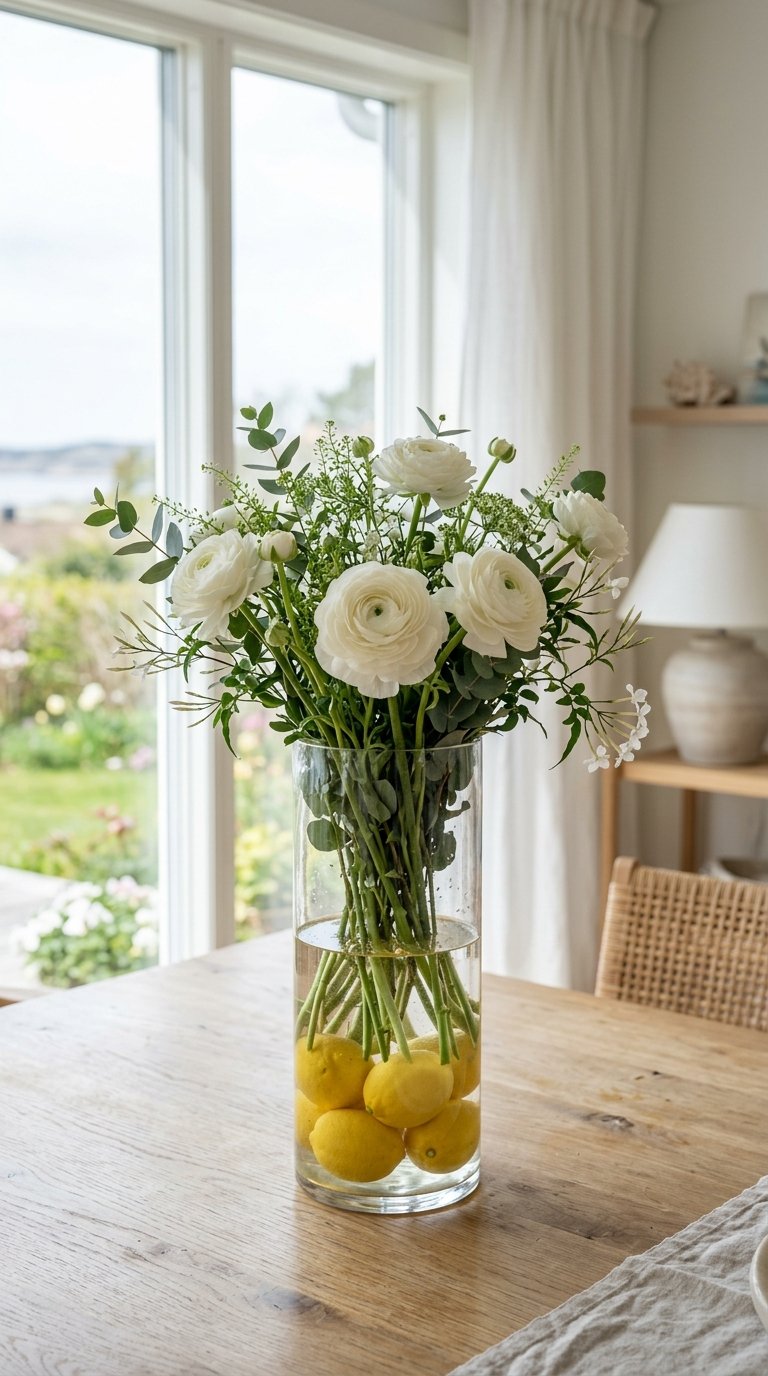
Whole lemons layered at the base of a tall glass vase with fresh flowers arranged above them create a two-layer centerpiece that anchors the floral arrangement in a visible, colorful base and eliminates the need for a floral frog or foam to hold the stems upright. The lemons wedge the flower stems into position and create a natural, firm stem-holding structure inside the vase.
Use a tall 12-inch clear glass cylinder vase from IKEA at $5.99 and fill the lower third with whole lemons pressed against the glass walls. Insert sunflower stems, white ranunculus, or yellow tulip stems through the gaps between the lemons, pushing them down until the stem base touches the vase floor. Fill with enough water to cover the lemon layer and reach the lower inch of each flower stem. The lemons hold the flower stems in a spread-out, natural arrangement without any additional mechanics.
This centerpiece costs $18 to $28 total using grocery store lemons and a $10 flower bunch from Trader Joe’s and reads as a professionally arranged floral centerpiece at a fraction of a florist’s price.
8. Lemons in a Wooden Dough Bowl
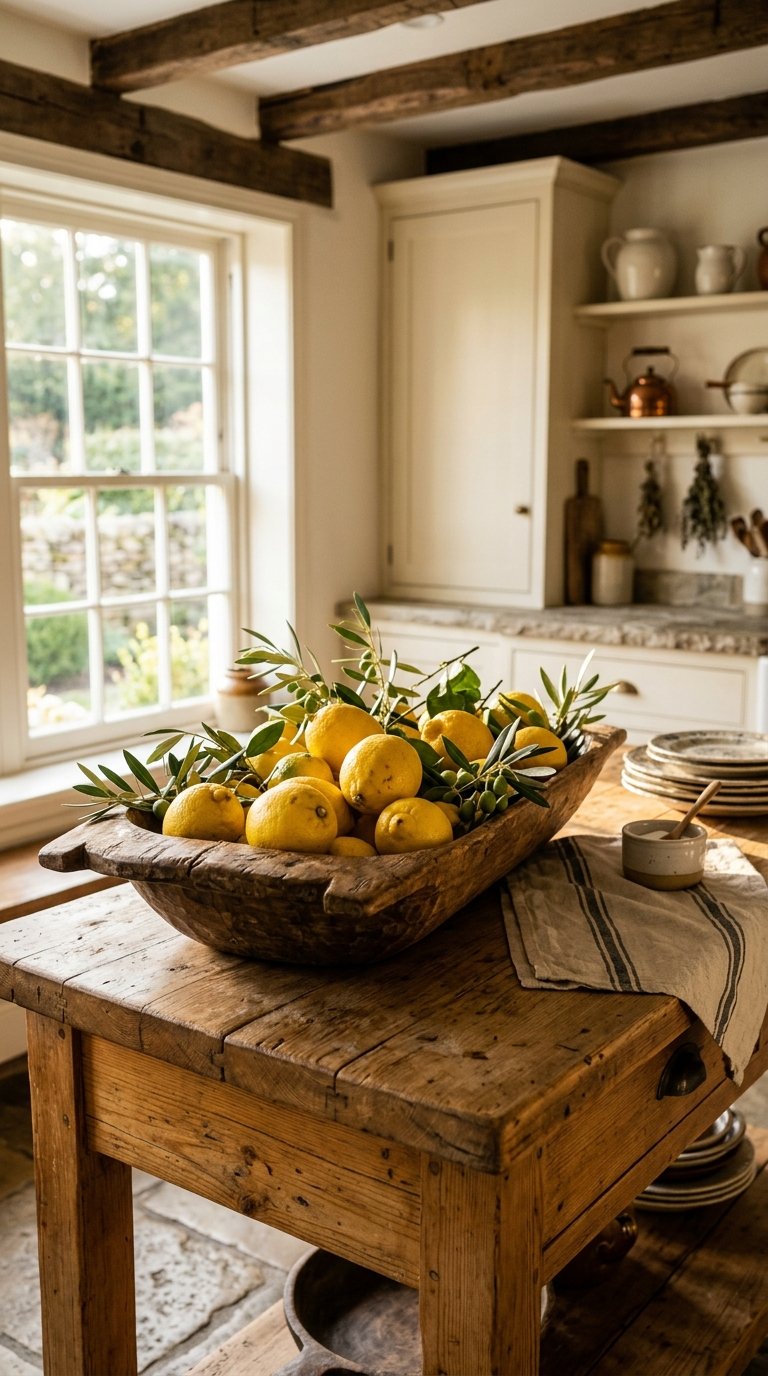
A rustic wooden dough bowl filled with lemons creates the warmest, most textural lemon centerpiece available for farmhouse, cottagecore, and rustic kitchen dining tables. The carved, organic form of a dough bowl and its aged wood surface contrast with the smooth, bright yellow lemon skin in a material pairing that reads as collected and authentic rather than purchased as a set.
Amazon and Etsy both stock hand-carved mango wood and acacia dough bowls from $35 to $85 in 12 to 18-inch lengths. Fill the bowl with a generous pile of lemons that rounds above the bowl rim edge and tuck three to four sprigs of fresh eucalyptus or olive branches at one end for a green accent that suits the organic, natural material palette of the bowl. A large 16-inch dough bowl holds fifteen to twenty lemons in a display that reads as abundantly generous rather than sparse and carefully arranged.
A wooden dough bowl with lemons works as a permanent kitchen centerpiece that you replenish with fresh lemons every two weeks. The bowl itself serves as a year-round decorative object when you swap the lemons for pomegranates in autumn or pinecones in winter.
9. Lemon Slices in a Lantern Centerpiece
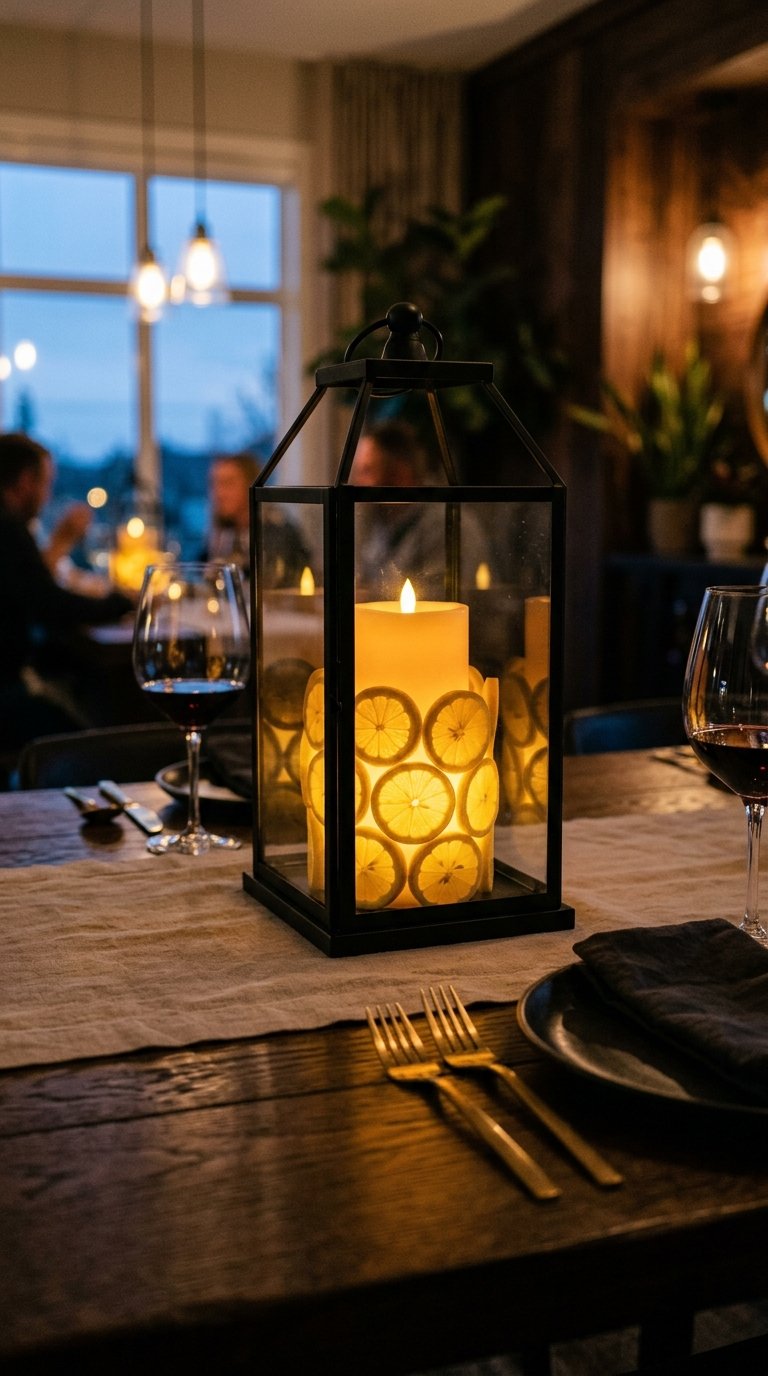
Sliced lemon rounds arranged inside a glass lantern around a pillar candle or LED candle create a backlit, glowing centerpiece that suits evening dining and candlelit table settings. The translucent lemon slice allows candlelight to pass through the fruit flesh and illuminate the lemon’s interior segment pattern in a warm amber glow that no whole-lemon arrangement replicates.
A standard 8-inch glass lantern from Home Depot at $24.99 or World Market at $19.99 holds a 3-inch pillar candle surrounded by six to eight lemon slice rounds arranged vertically against the glass interior walls. Press each lemon slice against the glass before inserting the candle so the slices stay in position during the display. Use a flameless LED pillar candle from Amazon at $8.99 for a heat-free version that keeps the lemon slices fresh longer and eliminates any fire risk at a dinner table setting.
Replace the lemon slices every three to four days as cut lemon dries and browns at the exposed flesh surface. A fresh set of lemon slices costs under $2 per lantern refresh at standard grocery store prices. IMO, this is the single most dramatic lemon centerpiece on this list for evening entertaining.
10. Lemon and Lavender Bundle in a Mason Jar
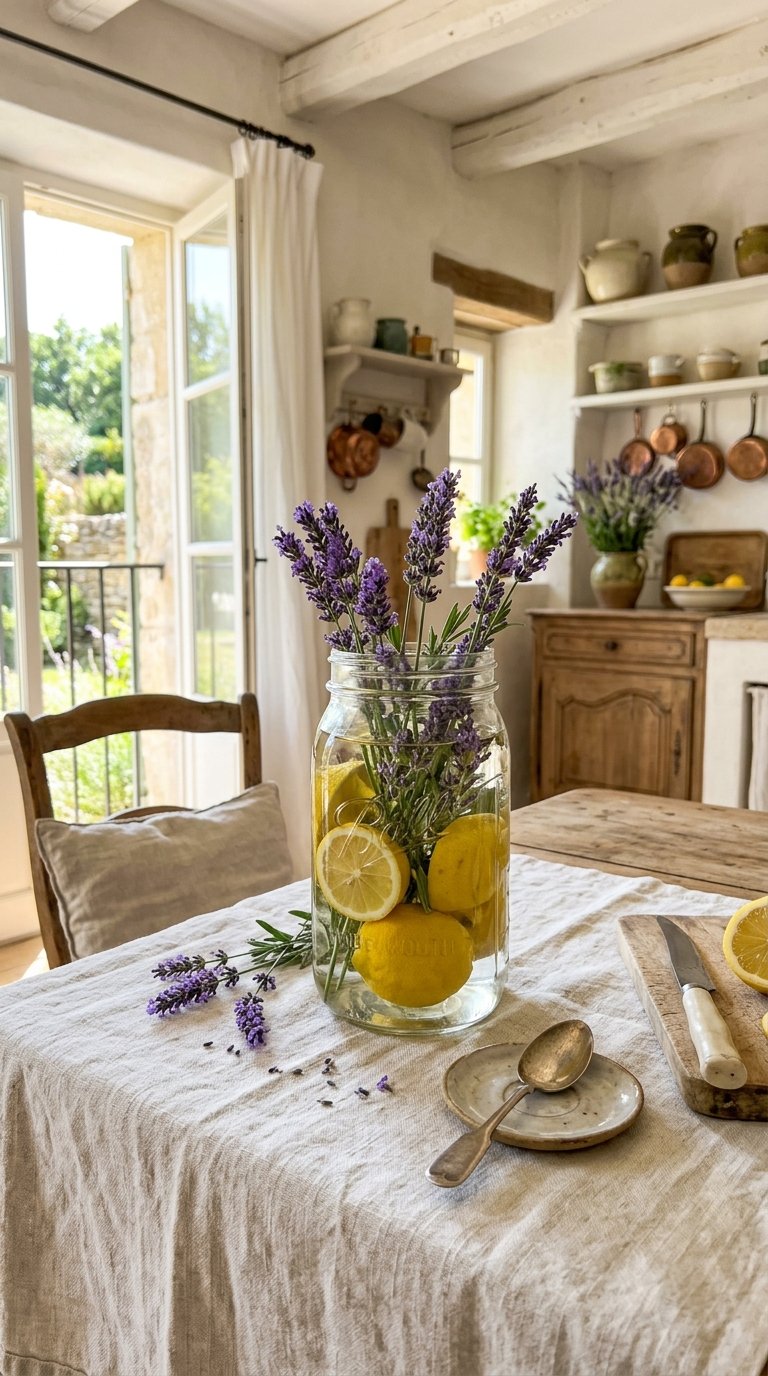
A mason jar arrangement of whole lemons at the base with fresh lavender stems inserted above them creates a Provencal-inspired centerpiece in the yellow and purple complementary color combination that reads as both fragrant and visually sophisticated on a summer table. Yellow and purple sit opposite each other on the color wheel, which makes the color contrast between lemon and lavender more visually energetic than any same-family color pairing delivers.
Use a wide-mouth quart mason jar from any grocery store at $1.99 or a Ball mason jar from Target at $12.99 for a four-pack. Place three whole lemons at the jar base and insert twelve to fifteen fresh lavender stems above them with the bloom ends extending 4 to 6 inches above the jar rim. The lemon mass holds the lavender stems upright without water or a floral frog. This centerpiece costs under $10 in total using grocery store lemons and a fresh lavender bunch from Trader Joe’s at $3.99.
Use three matching mason jars in graduated sizes along a long dining table for a lemon and lavender runner centerpiece that costs under $30 total and suits summer garden parties and outdoor dining tables equally.
11. Lemons in a Marble Bowl
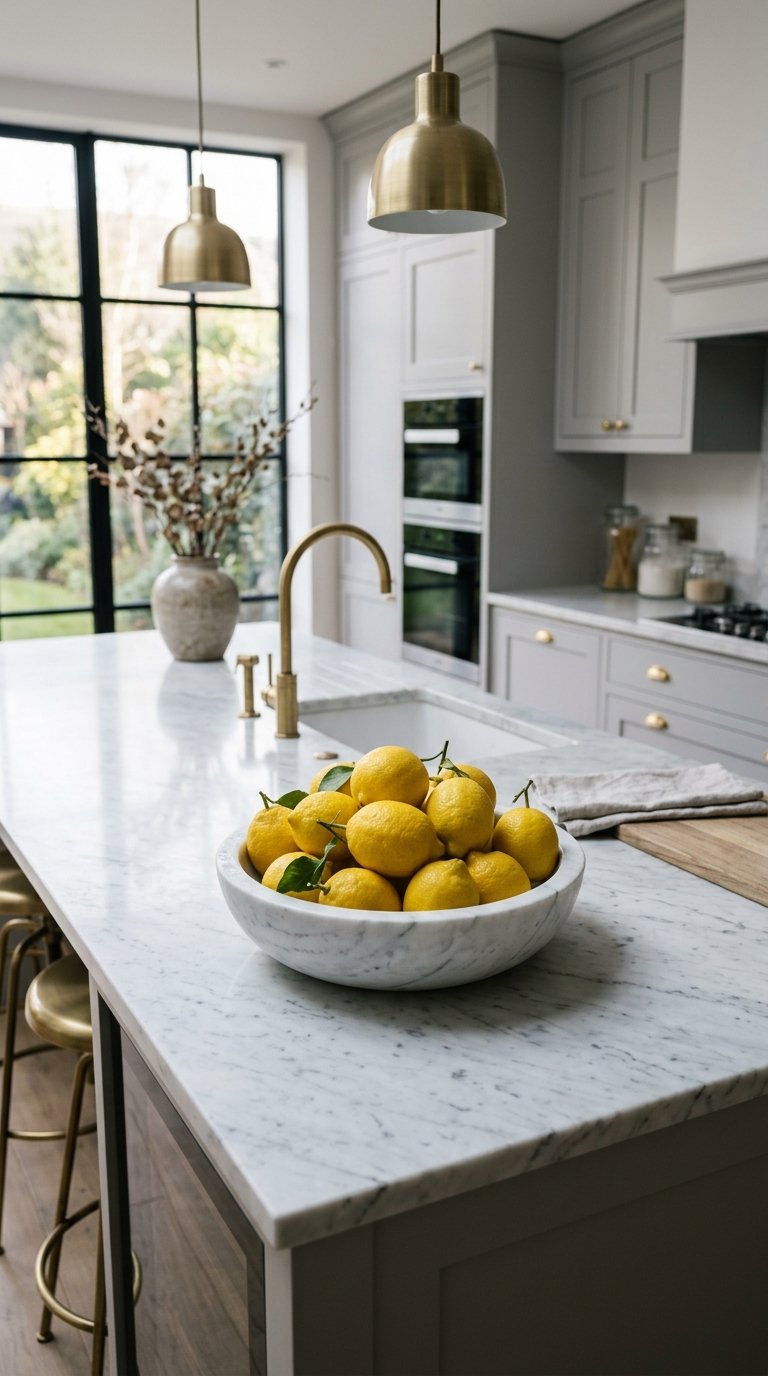
A white marble bowl filled with a curated arrangement of lemons creates the most elevated, contemporary lemon centerpiece on this list. The cool, polished white marble surface and the warm, matte yellow lemon skin create a material contrast that reads as intentionally sophisticated and suits minimalist, contemporary, and quiet luxury table settings where a rustic wooden or terracotta container would feel too casual.
CB2’s white marble bowl costs $49 to $79 in 10 and 12-inch diameters. West Elm’s marble serving bowl costs $39 to $59 in similar sizes. Fill the bowl with seven to nine lemons in a tightly arranged single layer that sits just above the bowl rim. Add no greenery or additional elements. Let the marble and lemon pairing read as a clean, two-material composition without decoration. The restraint of this arrangement is its strength.
This centerpiece suits kitchen islands in white, grey, and marble-dominant interiors where additional color or organic material would compete with the existing surface palette.
12. Lemon and Candle Cluster Centerpiece
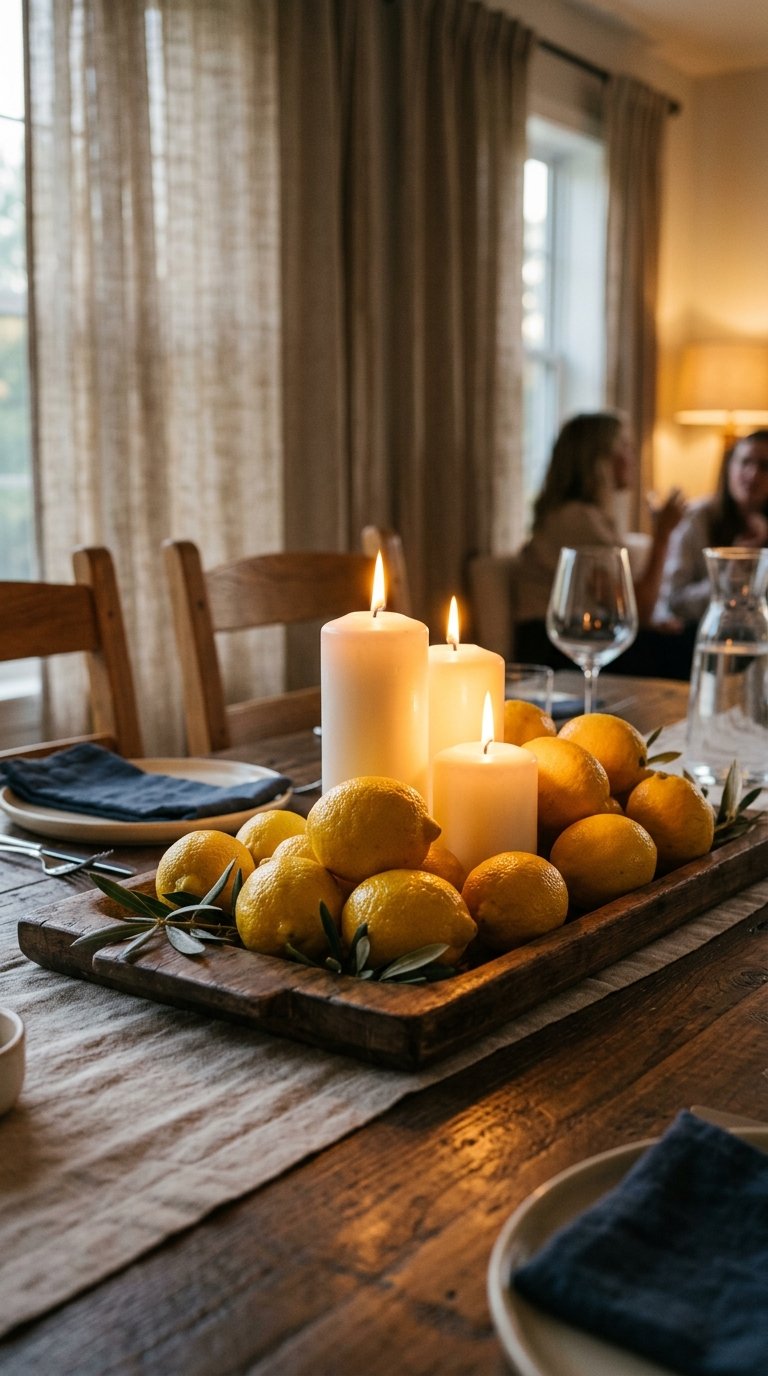
A cluster of pillar candles in varying heights surrounded by whole lemons on a wooden charger plate or tray creates a layered, multi-height centerpiece that suits both casual and formal dining tables. The candle heights create vertical variation that a single-layer lemon bowl arrangement never achieves and the warm candlelight plays off the yellow lemon skin to create a warm, glowing table atmosphere after dark.
Use three pillar candles from IKEA at $2.99 to $5.99 each in 3, 5, and 8-inch heights arranged in a triangle formation on a 14-inch round wooden charger from Target at $8.99. Surround the candle triangle with twelve to sixteen whole lemons pressed close together to fill the charger surface between and around the candle bases. Tuck three to four fresh bay leaves between the lemons for a dark green accent that keeps the composition from reading as monochromatic. Total centerpiece cost runs $20 to $30 and creates a dining table centerpiece that works for Sunday breakfast through Saturday dinner.
13. Lemons in a Wire Fruit Basket
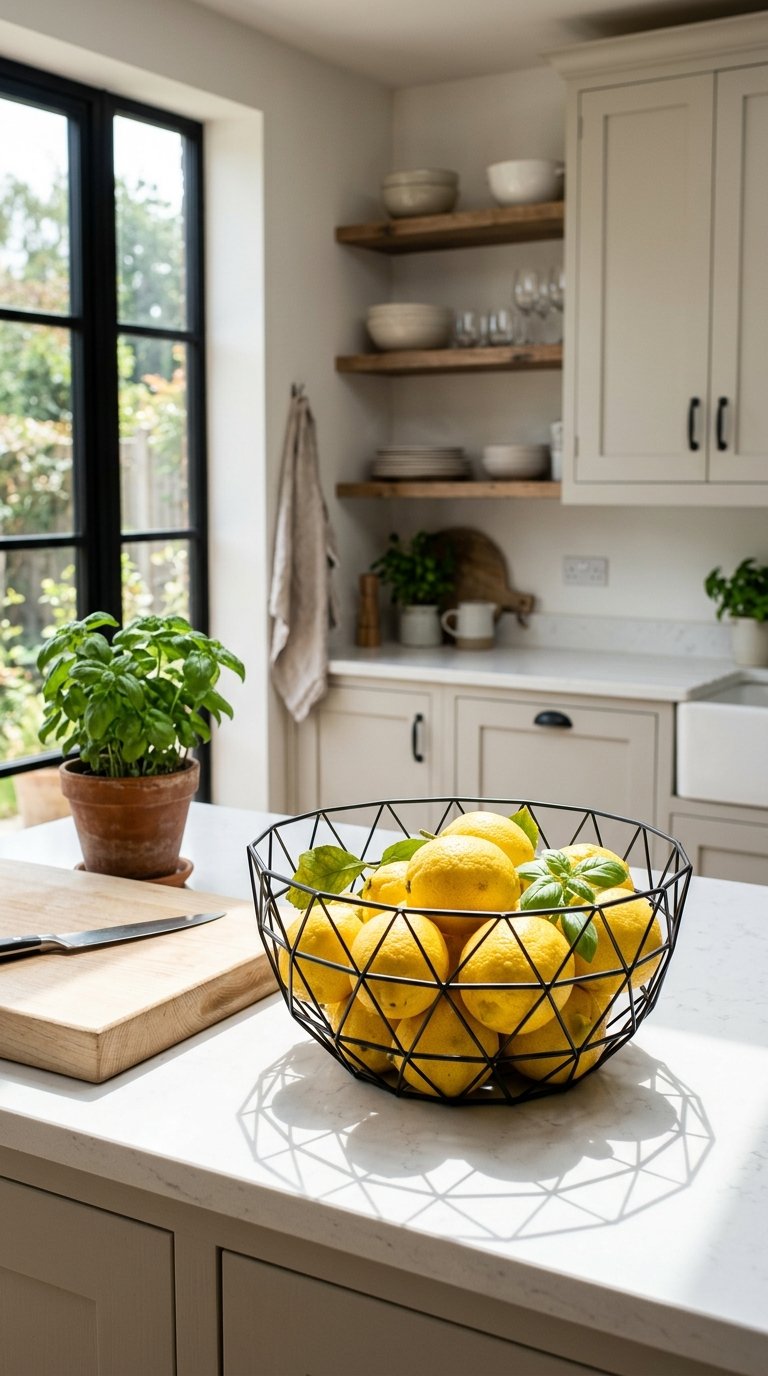
A classic wire fruit basket filled with lemons creates a kitchen-counter centerpiece that reads as functional and decorative simultaneously. The open wire structure of the basket lets the lemon color show fully through the frame and reads as airy and light rather than heavy and contained. The wire format suits industrial, farmhouse, and modern kitchen aesthetics where a ceramic or glass bowl would feel too precious.
Amazon’s Yamazaki home wire fruit basket in matte black costs $24.99 in a 9-inch diameter round format. Muji’s stainless steel wire basket costs $18 to $28 in similar sizes. Fill the basket with eight to twelve lemons and let two or three rest slightly above the wire rim for an overflowing effect that reads as generous. Place on a kitchen counter beside a cutting board, a potted herb, and a small olive oil bottle for a complete kitchen counter vignette that costs under $40 in total objects.
This arrangement suits kitchens with open shelving and visible counter styling where every surface object contributes to the room’s decorative identity as much as its functional one.
14. Lemon Topiary Pair in Matching Pots
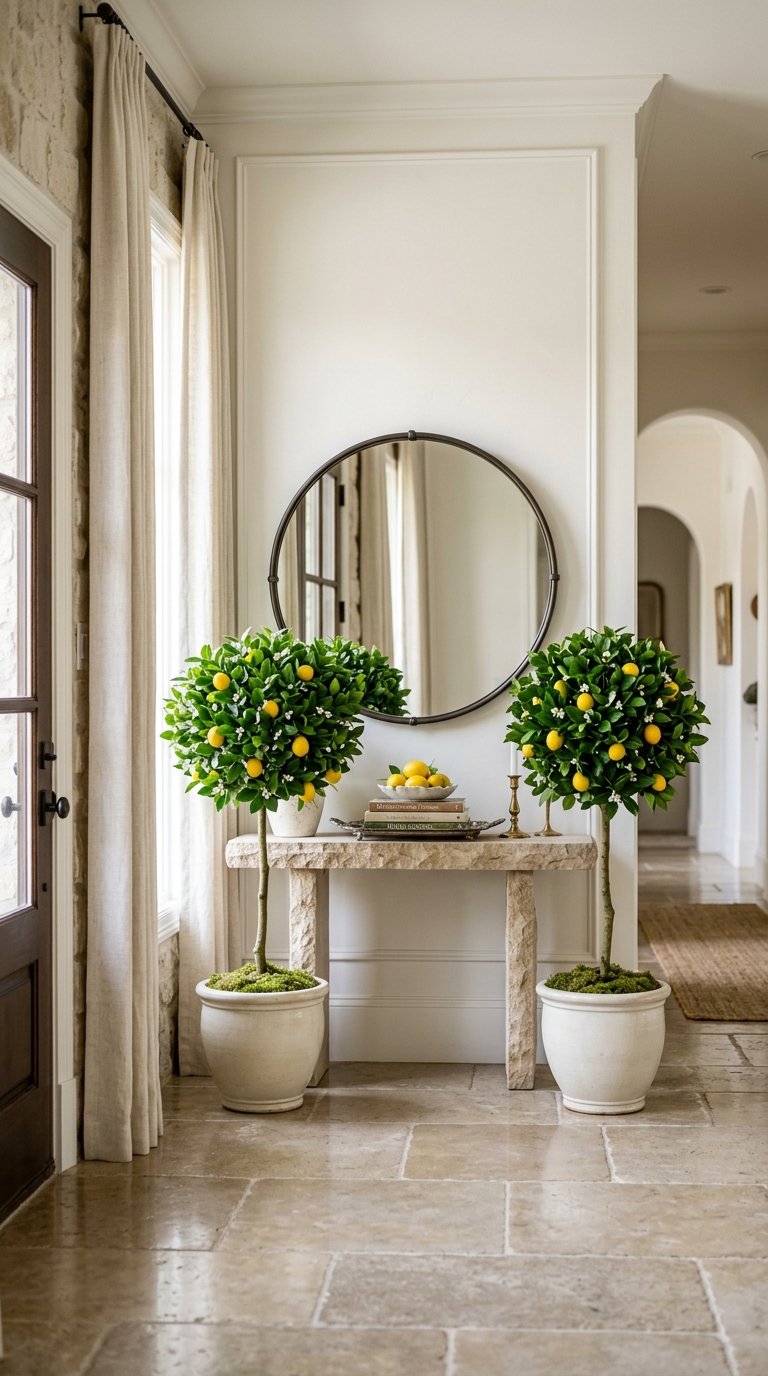
Two matching lemon topiaries in identical white ceramic pots placed symmetrically on either side of a dining table centerpiece object, a mantle, or a console table create a formal, architectural lemon display that reads as considered and event-appropriate without the construction complexity of a full foam topiary. The symmetrical pair format signals intentional placement rather than casual arrangement. FYI, this is the exact same technique used by restaurant table stylists for seasonal citrus displays.
Build each topiary on a 6-inch styrofoam ball from Michaels at $3.99, covering the surface with whole lemons on toothpicks and filling gaps with fresh bay leaves. Mount each completed ball on a 12-inch length of thick wooden dowel from Home Depot at $1.99 and insert the dowel base into a white ceramic pot filled with dried floral moss from Michaels at $6.99. Two completed topiaries in matching white pots cost $25 to $35 total in materials and read as a $150 florist centerpiece at any formal table setting.
15. Lemons and White Flowers in a Low Compote Vase
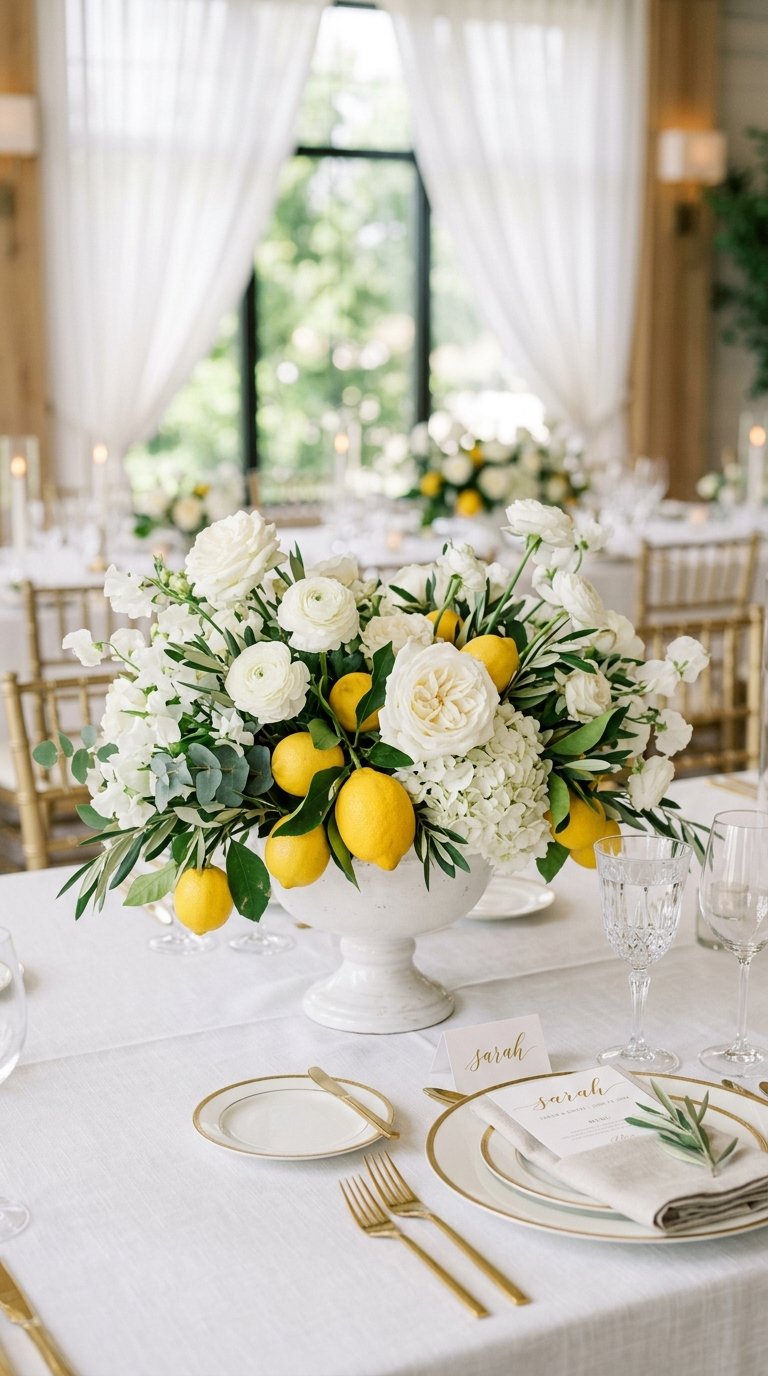
A low compote vase filled with lemons and white flowers creates a wedding-appropriate, bridal shower centerpiece that suits formal table settings where an overtly casual arrangement would read as underdressed for the occasion. The compote vase elevates the arrangement above the table surface and creates a pedestal display that reads as more ceremonial than a flat bowl.
Pier 1 and HomeGoods stock white ceramic compote vases at $14.99 to $29.99 in 6 to 8-inch pedestal heights. Fill the compote bowl with seven to nine lemons and insert twelve to fifteen stems of white ranunculus, white anemones, or white garden roses between them with the bloom heads sitting 3 to 4 inches above the lemon surface. The lemons hold the flower stems in position and create a yellow and white color composition that suits spring and summer formal table settings from bridal showers to anniversary dinners.
This centerpiece costs $25 to $40 in total using grocery store lemons and a $12 white flower bunch from Whole Foods and photographs as a professionally arranged table decoration in natural window light.
16. Lemon and Succulent Arrangement in a Tray
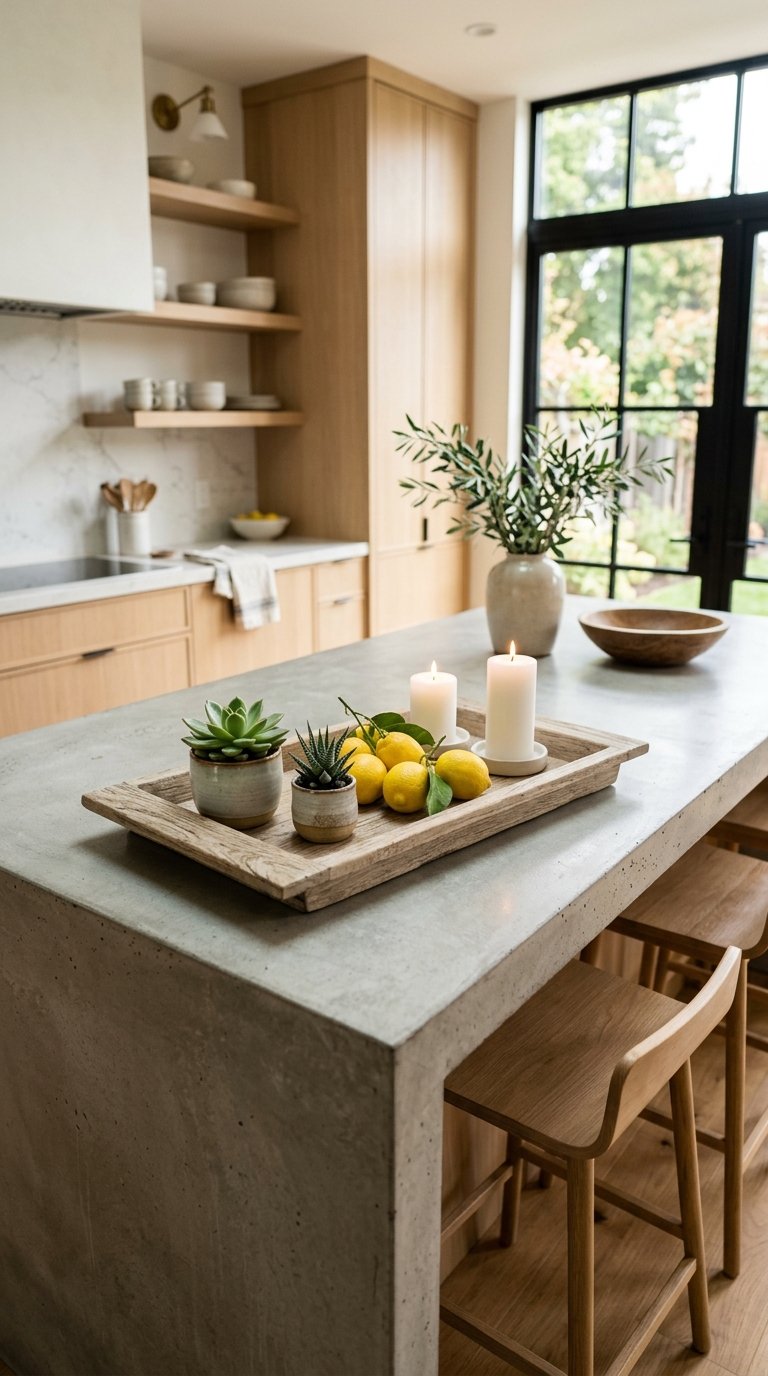
A rectangular tray styled with lemons, small potted succulents, and one or two decorative candles creates a modern, long-form centerpiece that suits rectangular dining tables and kitchen islands where a round bowl arrangement reads as undersized for the surface length. The tray contains the arrangement and gives the table a defined centerpiece zone without requiring a single specific container for all elements.
Use a bleached wood or white enamel rectangular tray from Target at $19.99 to $24.99 in a 14 to 18-inch length. Place three small 2-inch succulent pots from Home Depot at $2.99 each across the tray at irregular intervals. Fill the gaps between the succulents with whole lemons pressed close together and add two white pillar candles in varying heights at each end of the tray for height variation. Total tray centerpiece cost runs $30 to $40 and creates a long, styled surface display that reads as designed from both ends of the dining table.
The succulents in this arrangement last significantly longer than cut flowers and give the centerpiece a lifespan of four to six weeks between refreshes, making it the most cost-efficient long-term lemon centerpiece on this list.
17. Lemons in a Woven Seagrass Basket
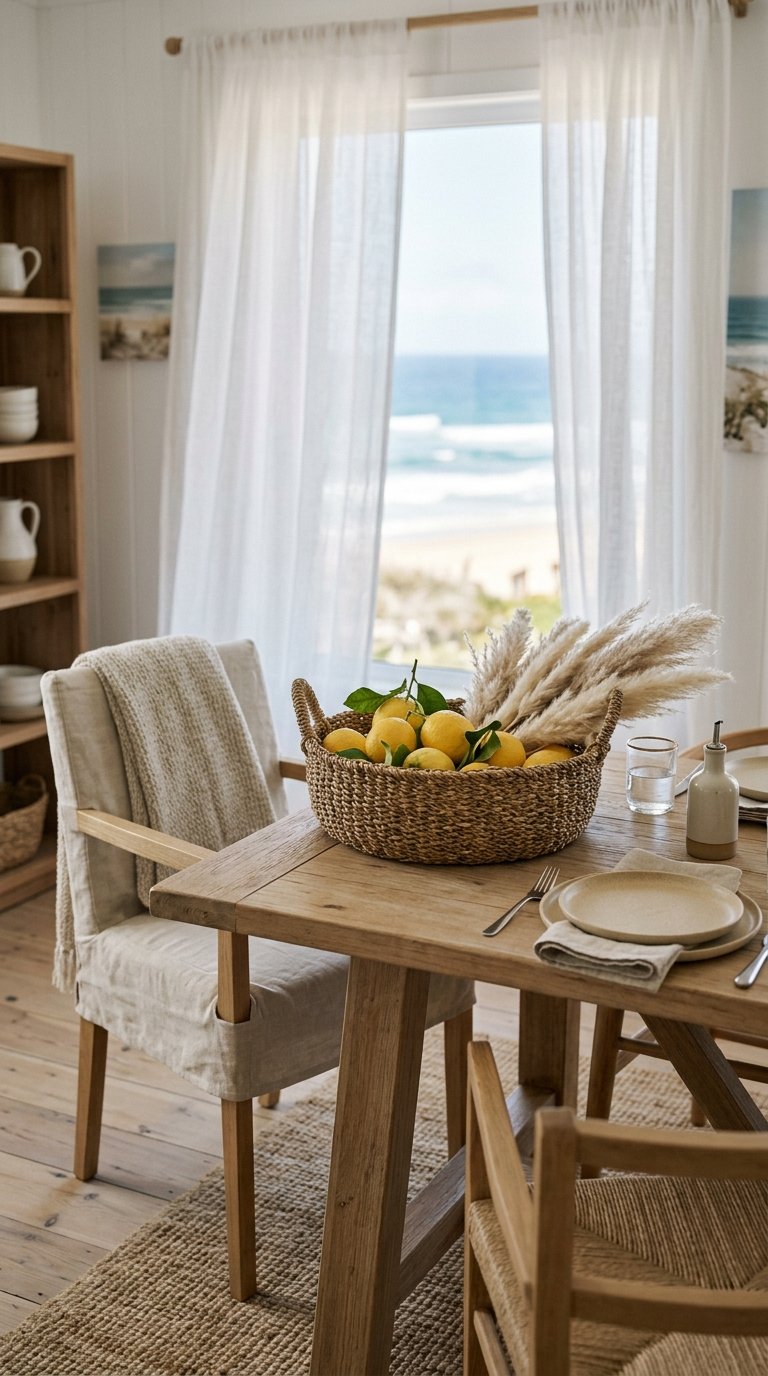
A low woven seagrass basket filled with lemons creates a coastal, bohemian centerpiece that suits natural material dining rooms and kitchen islands where a glass or ceramic container would feel too smooth and refined for the surrounding aesthetic. The coarse woven texture of seagrass contrasts with the smooth lemon skin in a material pairing that reads as globally influenced and organic.
World Market’s hand-woven seagrass baskets cost $9.99 to $19.99 in 10 and 12-inch round diameters with a 3 to 4-inch wall height. Line the basket interior with a single sheet of white tissue paper before filling to prevent lemon oils from staining the seagrass over time. Fill with ten to fourteen lemons in a slightly overflowing pile and tuck two sprigs of dried pampas grass or cotton stems at one side of the arrangement for a dried botanical accent that suits coastal and bohemian interiors. Total centerpiece cost runs $15 to $25 in materials.
18. Lemon and Olive Branch Arrangement
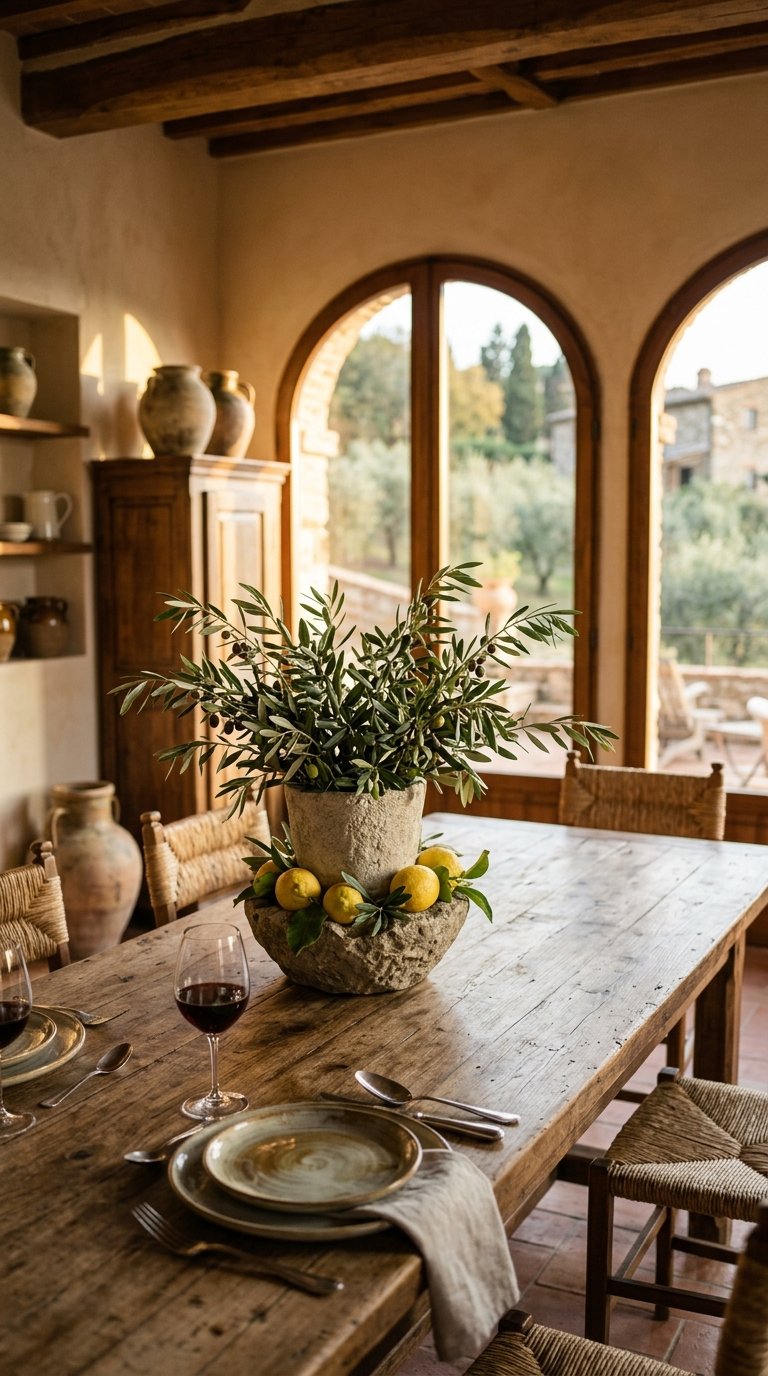
Whole lemons combined with fresh olive branch cuttings in a terracotta or stone vessel create the most authentically Mediterranean lemon centerpiece on this list. The silver-green olive leaf color and the bright lemon yellow sit in a warm-neutral contrast that reads as sophisticated and globally referenced without requiring any flower or additional decorative element.
Fresh olive branches from a florist or Trader Joe’s cost $8 to $15 per bunch in late summer through autumn when olive branches are most commonly available. For year-round availability, faux olive branches from Afloral at $12 to $18 per stem read accurately from a normal viewing distance and last indefinitely. Arrange three to five olive branch stems in a wide stone or concrete vessel from CB2 at $29 to $49 and fill the base with six to eight whole lemons wedged between the branch stems to anchor them in position without water or a floral frog.
This centerpiece suits dining rooms with linen tablecloths, aged wood furniture, and a warm Mediterranean or Tuscan interior palette where a more decorative or floral centerpiece would feel overworked.
19. Lemon Pyramid on a Cake Stand
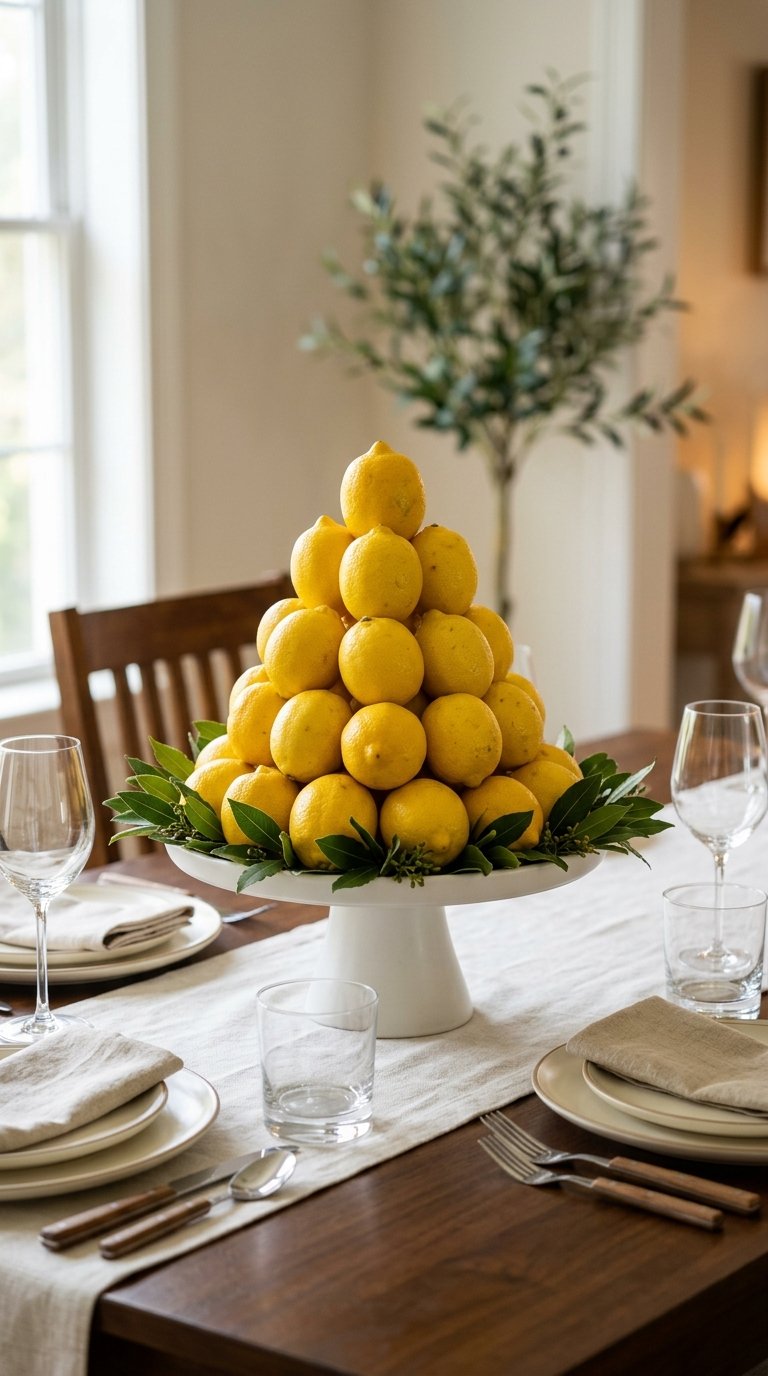
A pyramid of lemons stacked on a white cake stand creates the most graphic, architectural lemon centerpiece available without any construction tools or wire. The pyramid form reads as formal and considered from every seat at the dining table and suits citrus-themed entertaining, Italian-inspired dinner parties, and summer hosting occasions where the centerpiece needs to read as a design choice rather than a default fruit bowl.
Build the pyramid on a 10-inch white ceramic cake stand from Target at $19.99 by placing a base layer of seven to eight lemons in a tight circle, adding a second layer of five to six lemons centered on the gaps of the first layer, and continuing upward to a single lemon apex. The completed pyramid holds its structure through gravity and friction without adhesive or toothpicks on flat surfaces. Add a ring of fresh bay leaves around the base layer perimeter where it meets the cake stand surface for a finished, framed base detail.
A lemon pyramid centerpiece uses twenty to twenty-five lemons and costs under $25 in total including the cake stand and a two-pound lemon bag from any grocery store.
20. Lemon and Artichoke Mixed Centerpiece
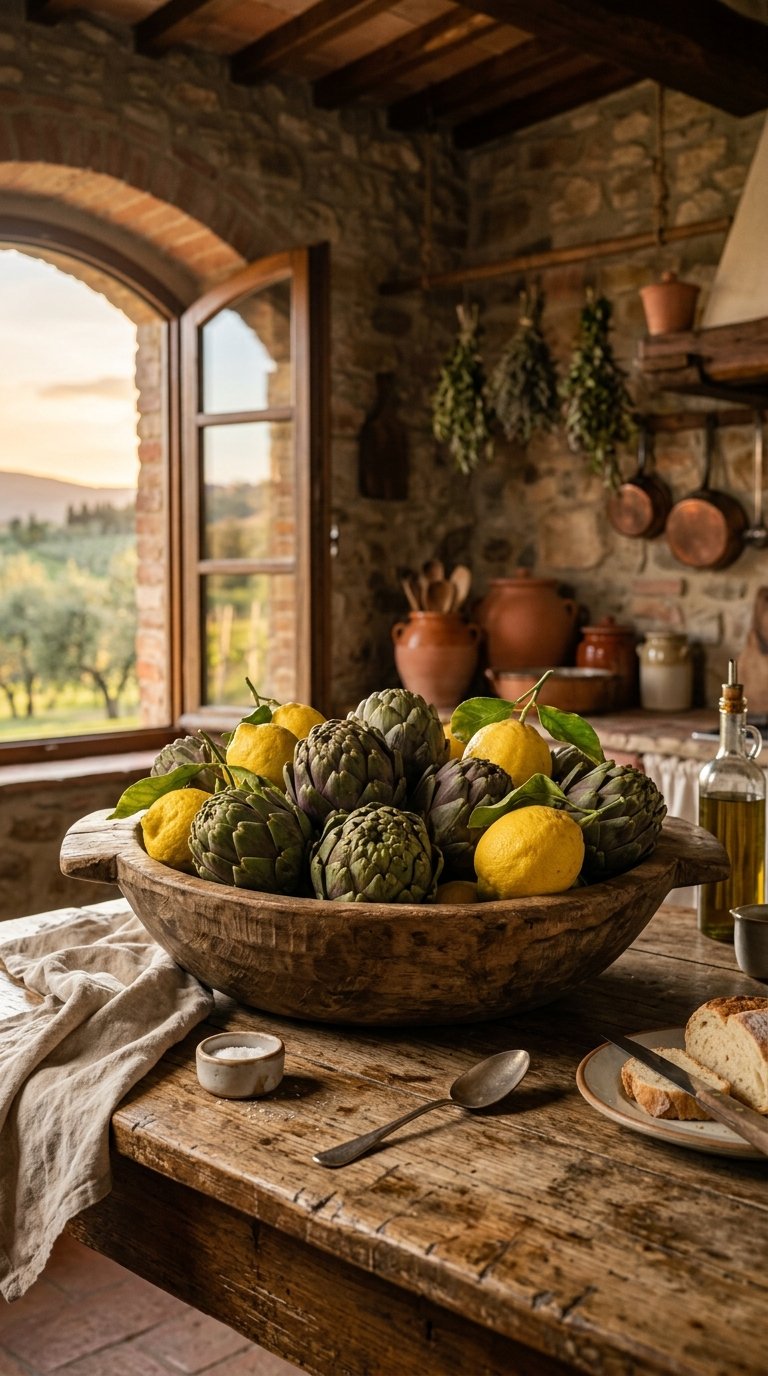
Whole lemons combined with globe artichokes in a large wooden bowl or stone mortar create an Italian market-inspired centerpiece that reads as abundantly food-styled and seasonally specific to late spring and summer when both ingredients peak in availability and visual quality. The deep green-purple artichoke form and the bright yellow lemon skin create a strong color and texture contrast that suits farmhouse and rustic dining tables.
Large globe artichokes from Trader Joe’s or Whole Foods cost $1.99 to $2.99 each in peak spring and summer season. Use three to five artichokes arranged at varying heights and angles in the center of the bowl and fill the surrounding space with twelve to sixteen lemons pressed tightly around them. The artichoke stems extend upward above the lemon mass and create natural height variation that makes the arrangement read as layered and dimensional rather than flat.
This centerpiece doubles as grocery shopping and costs $15 to $25 in total in peak season. Cook and eat the artichokes after the display run ends and replace with fresh ones for a zero-waste centerpiece that earns its keep twice.
21. Lemons in Bud Vases as a Table Runner Display
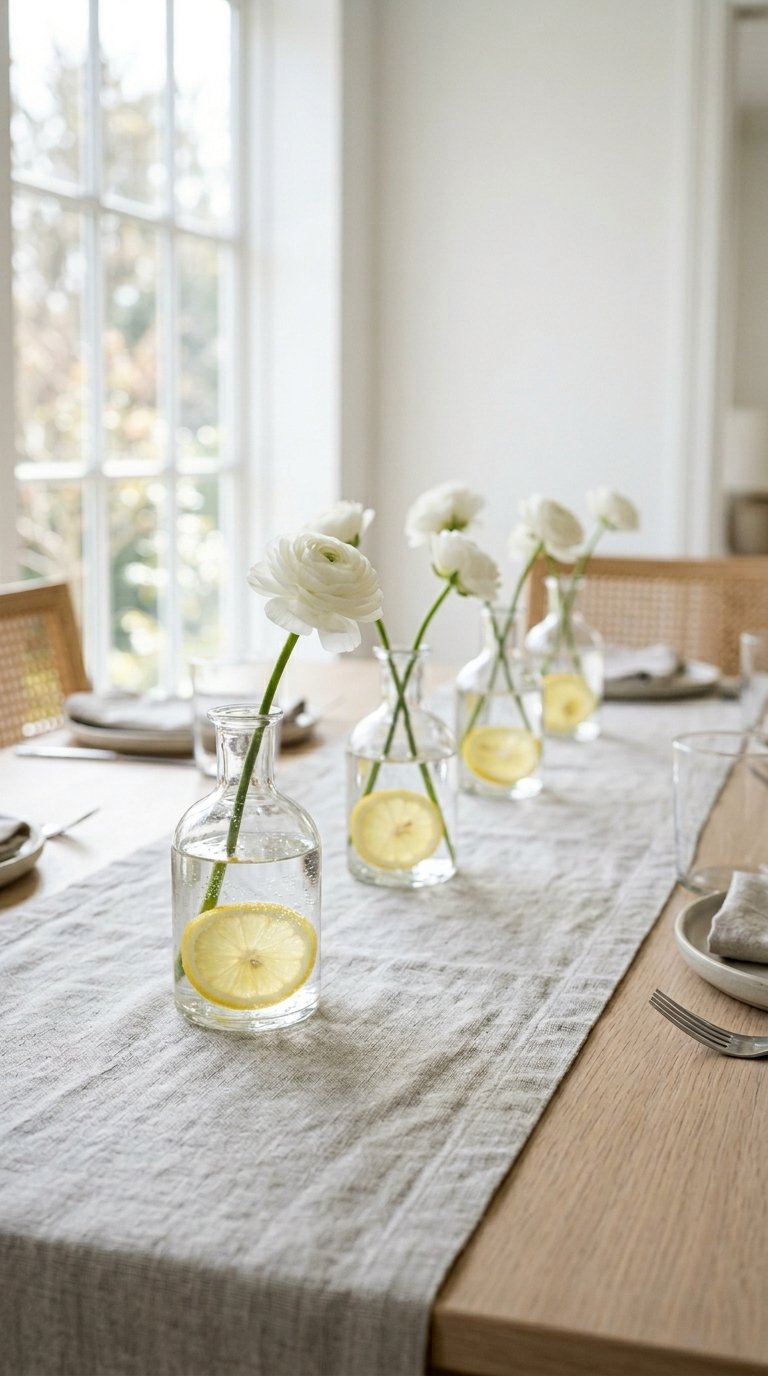
Three to five individual bud vases each holding one whole lemon or one lemon slice and one flower stem, arranged in a staggered line down the center of the dining table, create a lemon table runner centerpiece that works better than a single central arrangement for long tables seating eight or more guests. The distributed format keeps the centerpiece visible and low-profile from every seat rather than concentrating all the display interest at the center of the table.
IKEA’s SMYCKA artificial flower bud vases at $2.99 each or clear glass bud vases from the dollar store at $1 to $2 each work equally well in groups of five along a table runner. Place one lemon slice in each vase with water and insert one stem of white ranunculus, yellow tulip, or fresh rosemary above it. Space the bud vases 12 to 15 inches apart down the table center for an evenly distributed display. A five-vase lemon bud vase table runner costs under $20 in total including the vases, lemons, and a single $6 flower bunch split across all five vases.
22. Lemon and Fig Autumn Transition Centerpiece
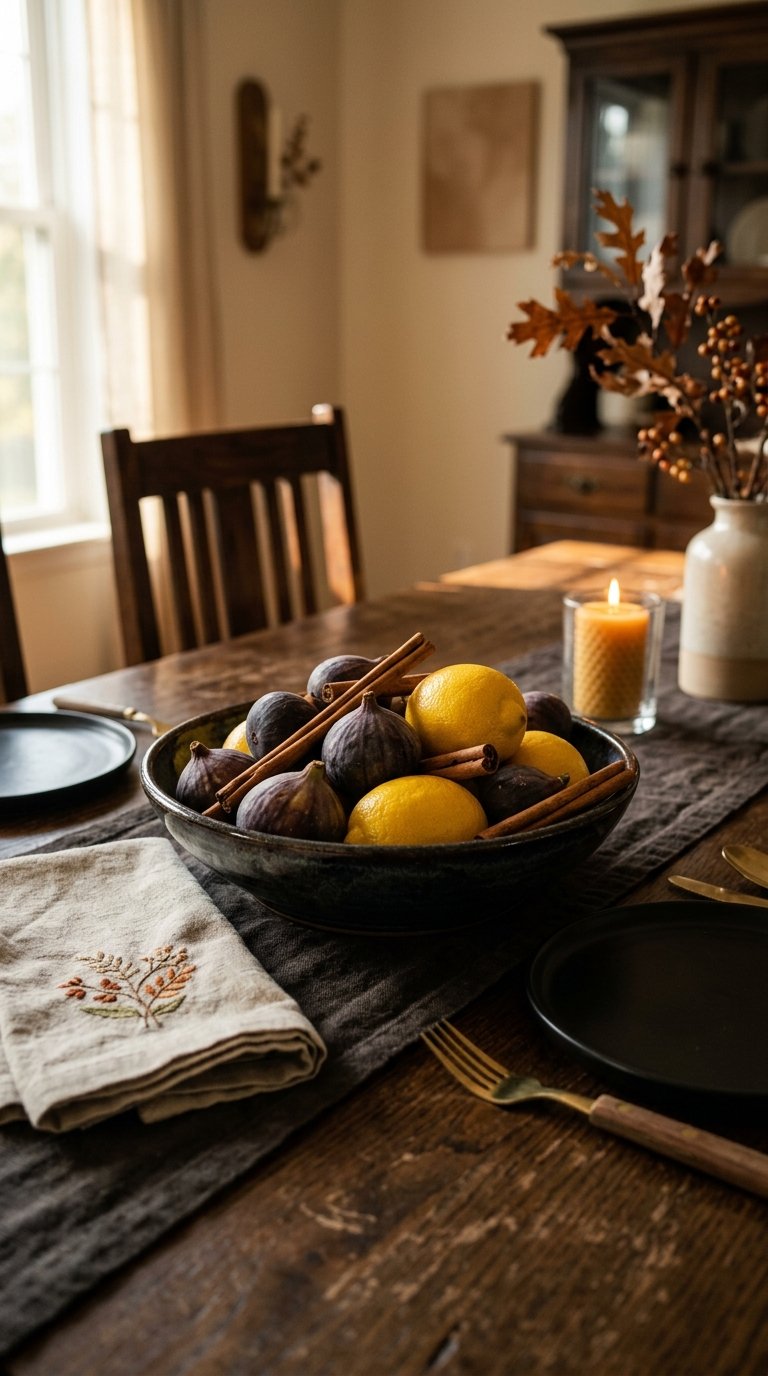
Whole lemons combined with fresh figs in a dark glazed ceramic bowl create a late summer to early autumn transition centerpiece that suits the period between peak citrus summer displays and the heavier autumn arrangements of pomegranates and gourds. The deep purple-brown fig skin and the bright yellow lemon skin create the strongest color contrast of any lemon pairing on this list.
Fresh figs from Trader Joe’s cost $3.99 to $5.99 per pack of six in late July through September. Use five to six figs arranged stem-up throughout a bed of twelve to fourteen lemons in a 12-inch dark glazed ceramic bowl from HomeGoods at $14.99 to $24.99. The dark bowl surface makes both the yellow and purple-brown tones read more saturated than they do in a white or natural wood container. Add three to four dried cinnamon sticks laid across the top of the arrangement for a warm spiced fragrance that bridges summer and autumn sensory atmospheres.
This centerpiece costs $25 to $35 in total and transitions the dining table from summer to autumn without requiring a full seasonal decor change.
23. Lemon Centerpiece with Candles in a Crate
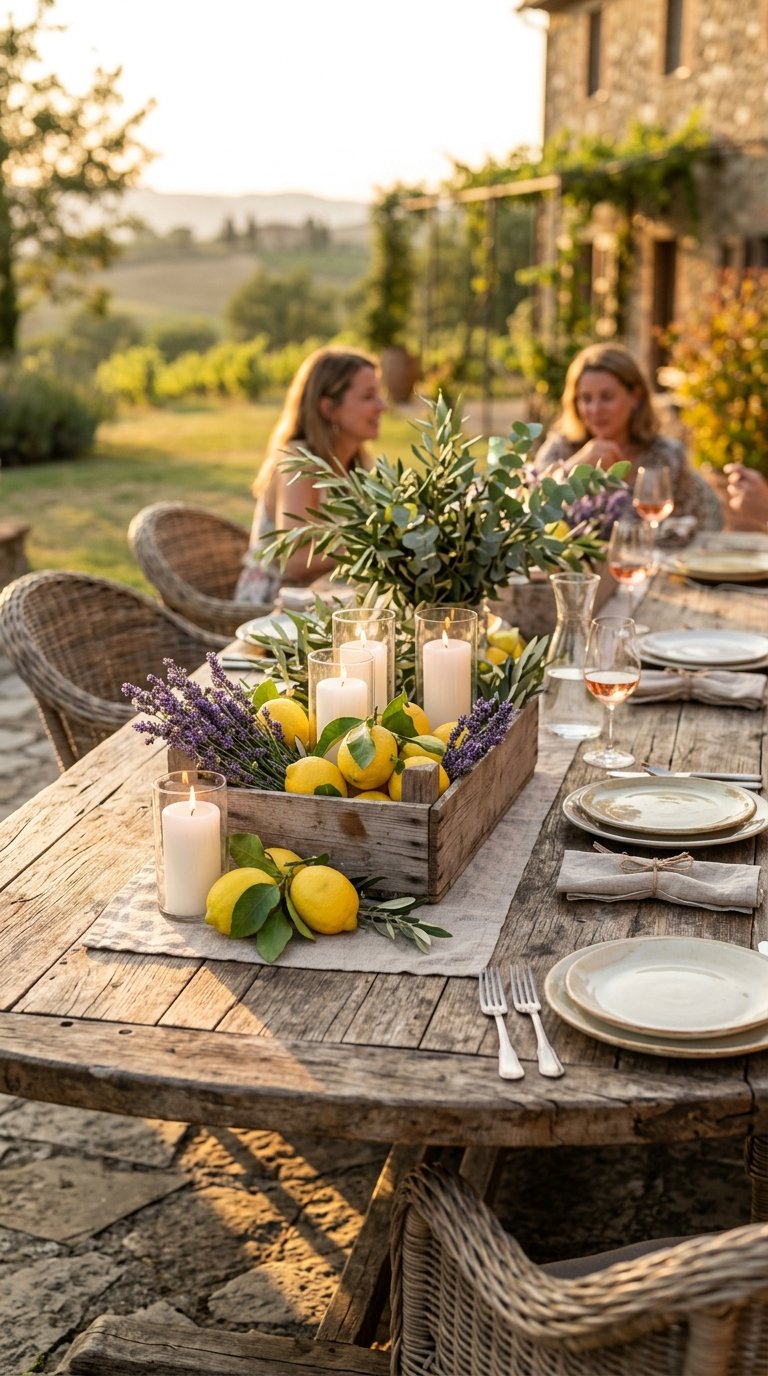
A wooden crate or wine box filled with lemons and pillar candles creates a rustic, farm-to-table centerpiece that suits barn wedding receptions, outdoor farmhouse dining, and casual summer entertaining where a more refined container would read as out of place. The raw wood slat construction of a crate introduces an unfinished, handmade material texture that suits the organic, imperfect form of whole lemons.
Unfinished pine wood crates from Michaels cost $8.99 to $14.99 in 12 and 14-inch lengths. Line the interior with a sheet of burlap fabric from the craft store at $4.99 per yard before filling. Arrange three pillar candles in the center of the crate at varied heights and fill the remaining interior space with lemons pressed tightly around the candle bases. Tuck sprigs of fresh or dried lavender into the gaps for fragrance and color accent. Total crate centerpiece cost runs $20 to $30 in materials and reads as a considered, rustic summer table display.
24. Single Statement Lemon Branch in a Tall Vase
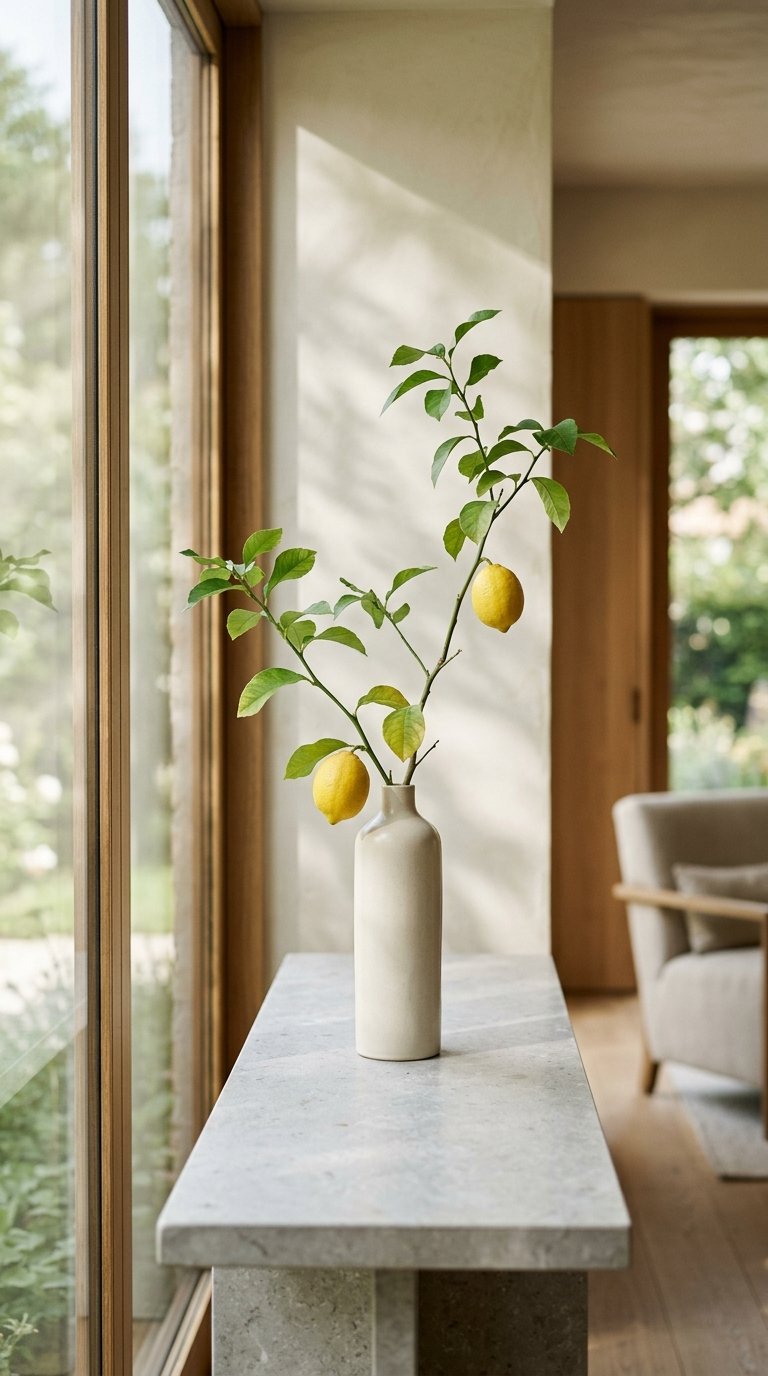
One lemon tree branch with attached fruit and leaves displayed in a tall narrow vase creates the most minimalist and architecturally graphic lemon centerpiece on this list. The branch format introduces the full lemon plant form rather than just the harvested fruit and reads as a living, nature-referenced display that suits minimalist, Japandi, and organic modern interiors where a bowl of loose lemons would read as too casual and collected.
Lemon tree branches with attached fruit from specialty florists or farmers markets cost $15 to $35 depending on branch size and fruit count. A faux lemon branch from Afloral at $22 to $38 replicates the look accurately and lasts indefinitely. Display in a tall 14 to 18-inch narrow ceramic vase from CB2 at $29 to $49 or in a simple glass bud vase from IKEA at $5.99 for a budget version. The branch needs no additional elements. Let the single branch and vase read as a complete, considered composition.
25. Lemon Centerpiece with Collected Personal Objects
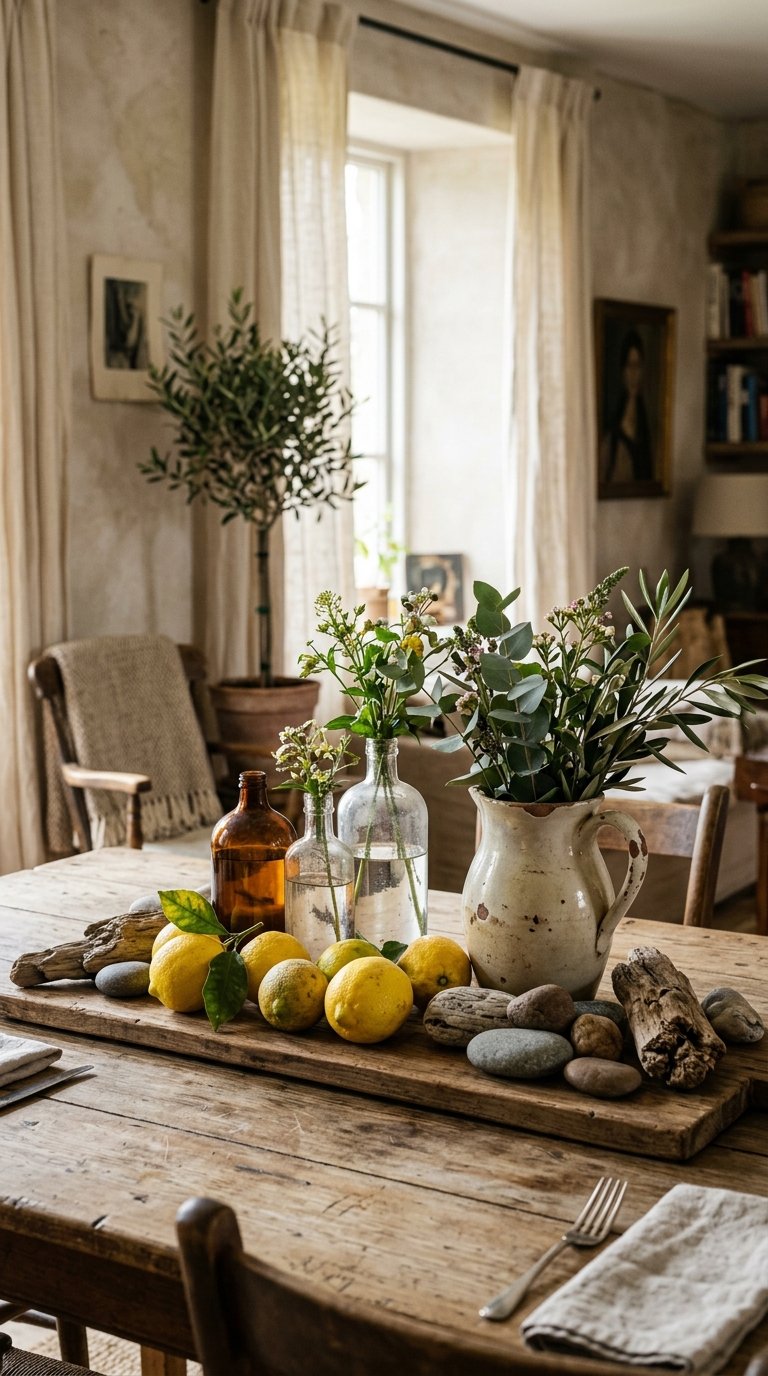
A centerpiece built around lemons combined with two to three personally collected objects from your home, such as a worn ceramic pitcher, a small vintage bottle, a river stone, or a piece of driftwood, creates a centerpiece that reads as genuinely personal rather than assembled from a store shelf. The lemons provide the color and organic form while the collected objects provide the narrative and personal identity that no retail object delivers.
Use whatever personal objects suit the material palette of your dining room. A small worn terracotta pitcher holding three lemon branches, a smooth river stone beside a pile of lemons on a wooden board, or a collection of vintage glass bottles each holding one lemon slice and one flower stem all work using this format. The total material cost covers only the lemons at $3 to $6 per bag. The personal objects are already in your home.
A centerpiece built from personal objects and lemons reads as more authentically designed than any purchased arrangement because it reflects the specific material story of the home it sits in rather than the seasonal display priorities of a retailer.
Final Thoughts
A lemon centerpiece works because it delivers color, texture, fragrance, and organic form in a single ingredient that costs $3 to $6 at any grocery store. The twenty-five ideas on this list range from a simple glass bowl at under $12 to a formal lemon topiary pair at $35, but every single one of them solves the same problem: a table surface that needs a visual anchor without a florist budget or a weekly flower subscription.
Start with the container you already own. A ceramic bowl, a mason jar, a wooden tray, or a glass vase all work as lemon centerpiece bases without any additional purchase. Add lemons, choose one secondary element from the pairings on this list, and you have a centerpiece that looks considered, costs almost nothing, and lasts two weeks before it needs refreshing. After two weeks, you make lemonade and start again. 🙂