21 Quiet Luxury Living Room Ideas You Need to Try Now
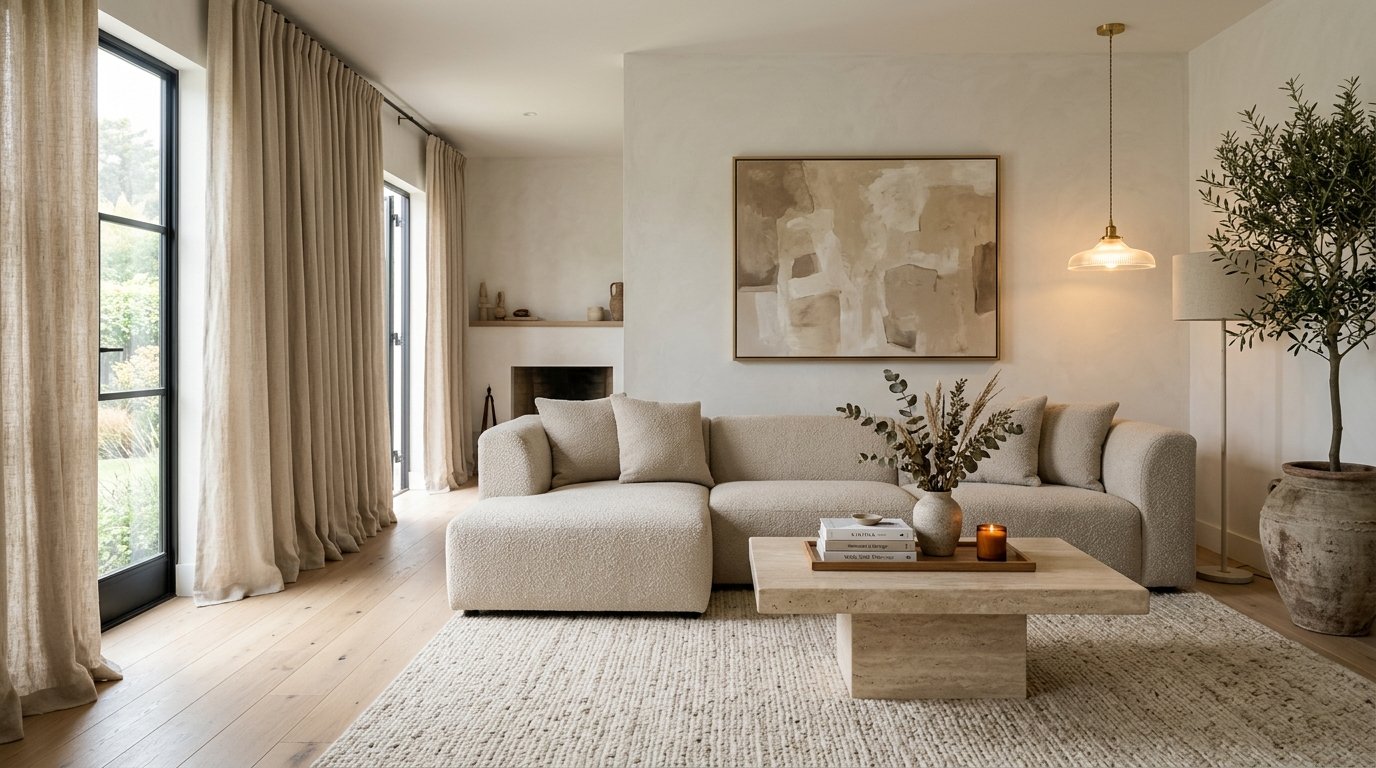
Quiet luxury isn’t about spending more. It’s about choosing better. The aesthetic dominates interior design right now because it solves a real problem: most people want a living room that feels calm, elevated, and genuinely comfortable without looking like a furniture showroom or a Pinterest board that aged badly in six months. I redesigned my own living room around these principles two years ago, spent under $800 total, and stopped wanting to redecorate every spring. These 21 quiet luxury living room ideas give you the specific moves that create that effortlessly expensive look, whether you rent, own, or work with furniture you already have.
1. Choose a Neutral Base Palette and Commit to It
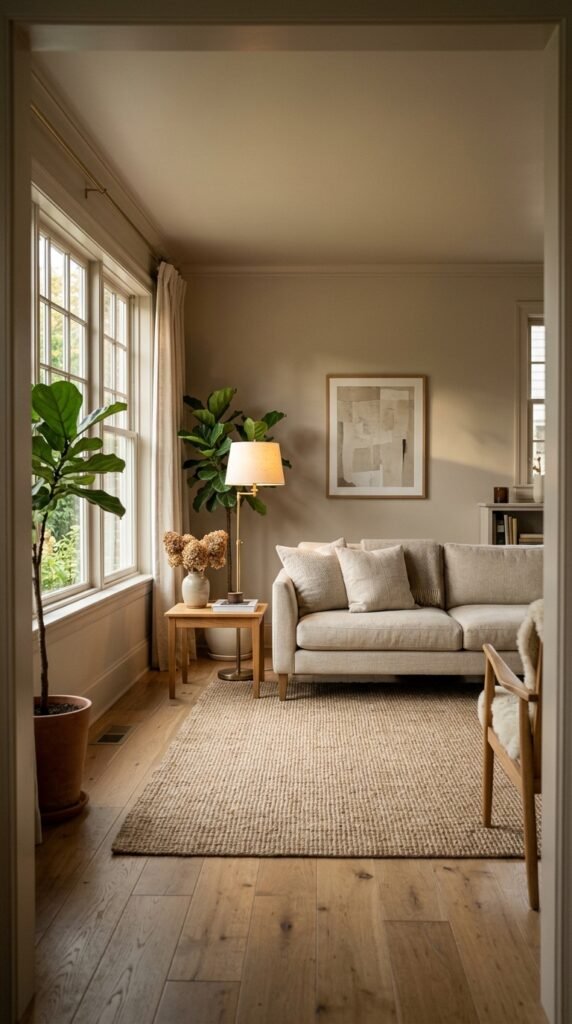
Your wall color sets the tone for every other decision in the room, and quiet luxury lives in the warm neutral zone: warm white, soft greige, oatmeal, and pale stone tones. Benjamin Moore’s Pale Oak or Sherwin-Williams Accessible Beige both deliver the warm, settled quality the aesthetic requires without reading as beige in the dated 1990s sense. The key is picking one neutral and building every other color in the room from within that same undertone family so the space reads as cohesive rather than assembled.
Paint the walls, woodwork, and ceiling in tonal variations of the same neutral rather than sharp contrasts and the room immediately gains 30 percent more perceived height and calm. One gallon of quality interior paint costs $35 to $55 and covers 400 square feet. That investment changes every other element in the room for the better because a cohesive backdrop makes even budget furniture look intentional.
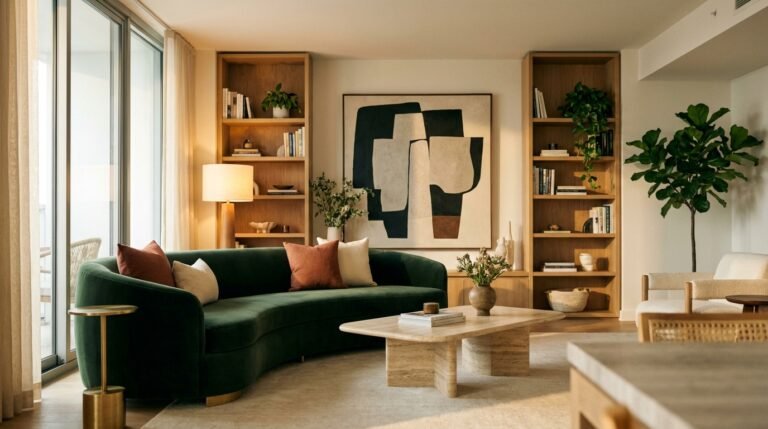
2. Invest in One Hero Sofa in a Timeless Fabric
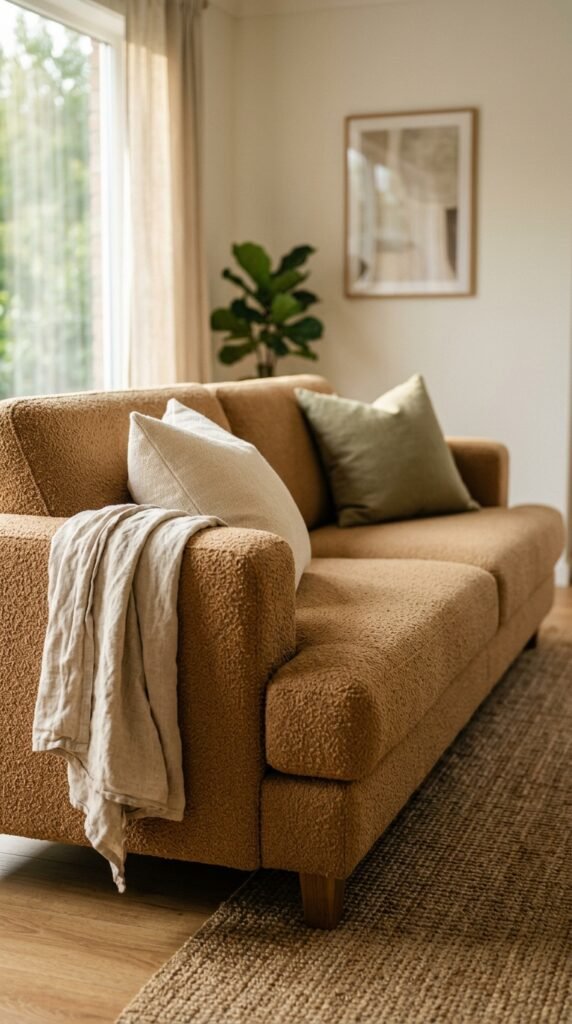
The sofa is the one piece worth spending real money on because it anchors every other decision in the room. A classic silhouette in a performance linen, bouclé, or velvet fabric in warm camel, oatmeal, or deep sage holds its visual relevance for 10 to 15 years while trend-driven shapes and colors date visibly within three. IKEA’s KIVIK in linen blend costs $600 to $900 and photographs are expensive. Article’s Timber sofa in performance fabric runs $1,200 to $1,500 and outperforms sofas twice the price in durability.
Avoid mid-century splayed legs and track arms if you want the quiet luxury look specifically. The aesthetic favors a low, clean profile with a slightly tight back and substantial seat depth. Look for a sofa where the cushions and base frame read as one unified form rather than a collection of separate elements stacked together.
3. Layer Texture Instead of Color
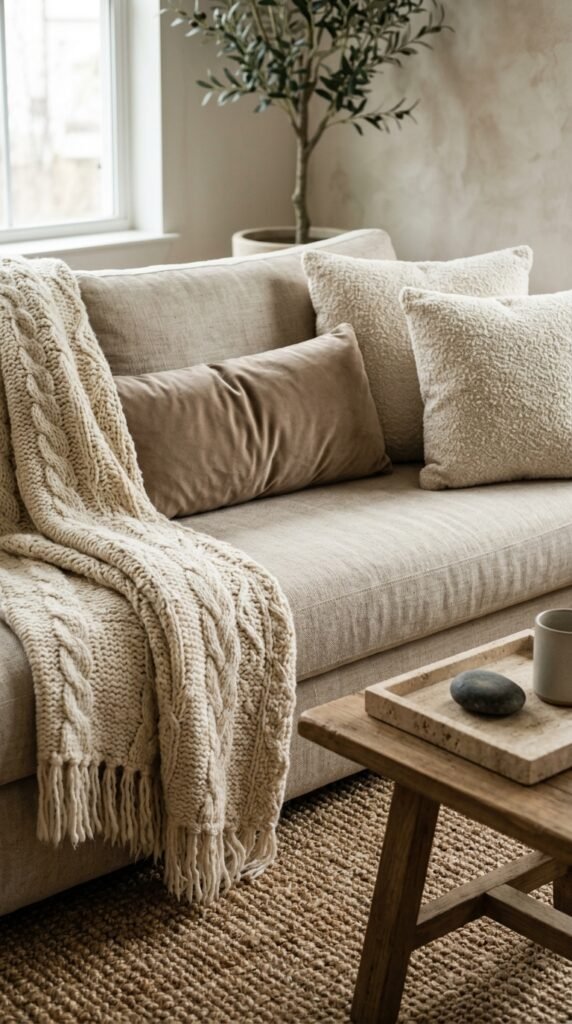
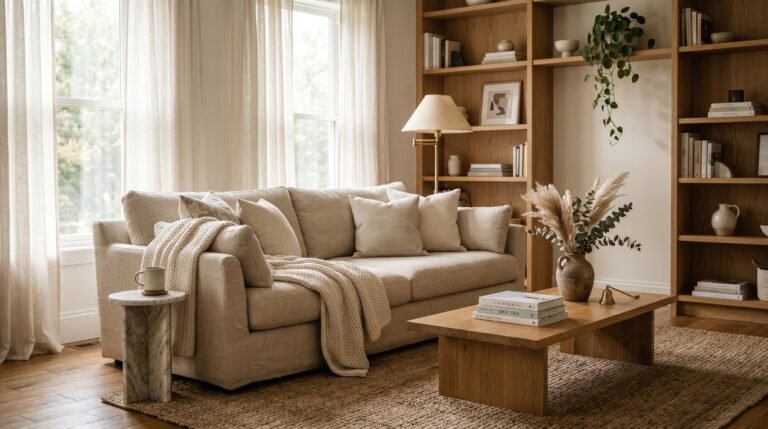
Quiet luxury rooms get their depth from texture variation rather than color contrast, which is why the palette stays narrow while the materials stay rich. Combine linen cushions, a chunky wool throw, a jute rug, a velvet bolster, and a marble or travertine tray on the coffee table and the room reads as complex and considered without a single bold color anywhere in it. This layering approach costs almost nothing to implement with existing furniture because it works with what you already own.
A wool throw from a brand like Pendleton or even a quality cashmere-blend option from H&M Home costs $40 to $120 and adds immediate tactile richness to any sofa. A jute rug in a 8×10 size from Rugs USA or Wayfair costs $80 to $200 and delivers the natural fiber quality the quiet luxury aesthetic depends on at a fraction of what a boutique version costs.
4. Add Architectural Interest With Limewash or Plaster Paint
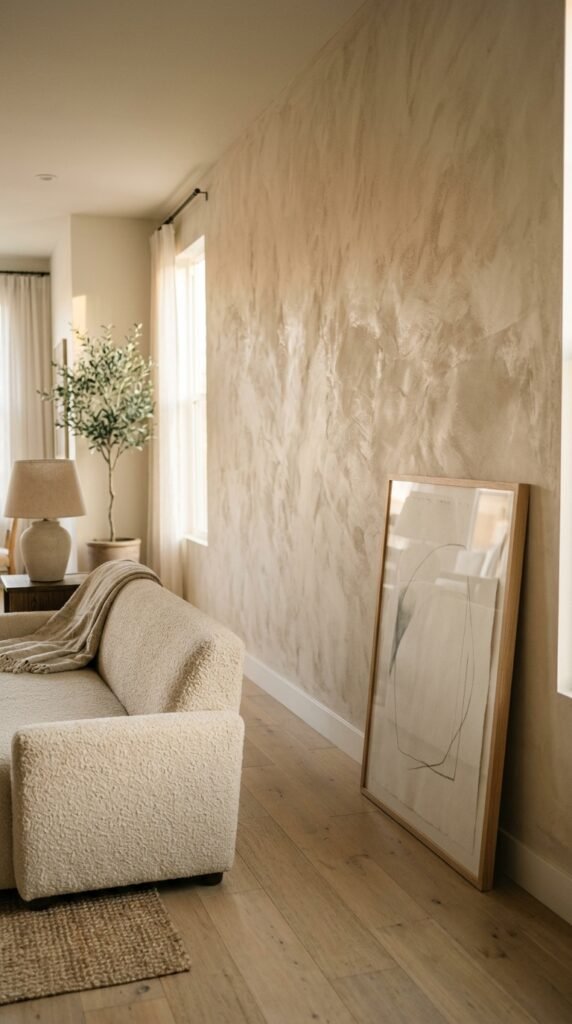
A flat-painted wall reads as finished. A limewash or Venetian plaster wall reads as designed. The depth, variation, and slight imperfection of a limewash finish creates the kind of architectural texture that previously required a professional plasterer but now costs $60 to $100 in product for a standard living room wall when applied as a DIY project. Portola Paints Classico Limewash applies directly over existing paint with a brush in two coats and produces an authentic texture in one afternoon.
Choose a limewash color within your existing neutral palette (warm white, raw linen, pale stone) and apply it to the wall that faces you as you enter the room. The textured focal wall changes how the entire room reads from flat and ordinary to layered and thoughtful. This single wall treatment costs under $80 and achieves a result that most guests assume required a professional finish.
5. Choose Furniture With Clean Lines and Substantial Weight
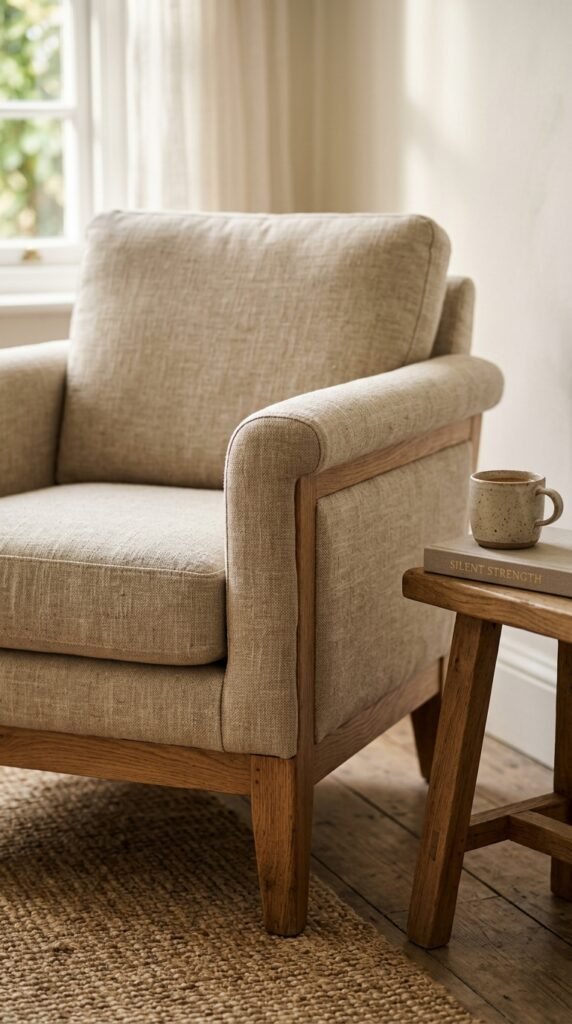
Quiet luxury furniture looks heavy even when it isn’t because the visual mass of the piece communicates quality. Thin, spindly legs, hollow-sounding frames, and visible seams signal budget regardless of the fabric covering them. Look for sofas and chairs where the arms are as thick as the seat depth and where the legs, if visible, read as solid rather than decorative.
Thrift stores and Facebook Marketplace consistently produce well-built older pieces with exactly the solid construction quality the aesthetic requires, often for $50 to $200 versus the $800 to $2,000 a new equivalent costs. Reupholstering a solid-frame thrift sofa in a performance linen or bouclé costs $400 to $800 at most local upholsterers and produces a piece that looks and feels more expensive than most new furniture at twice the price.
6. Use Warm Lighting Exclusively
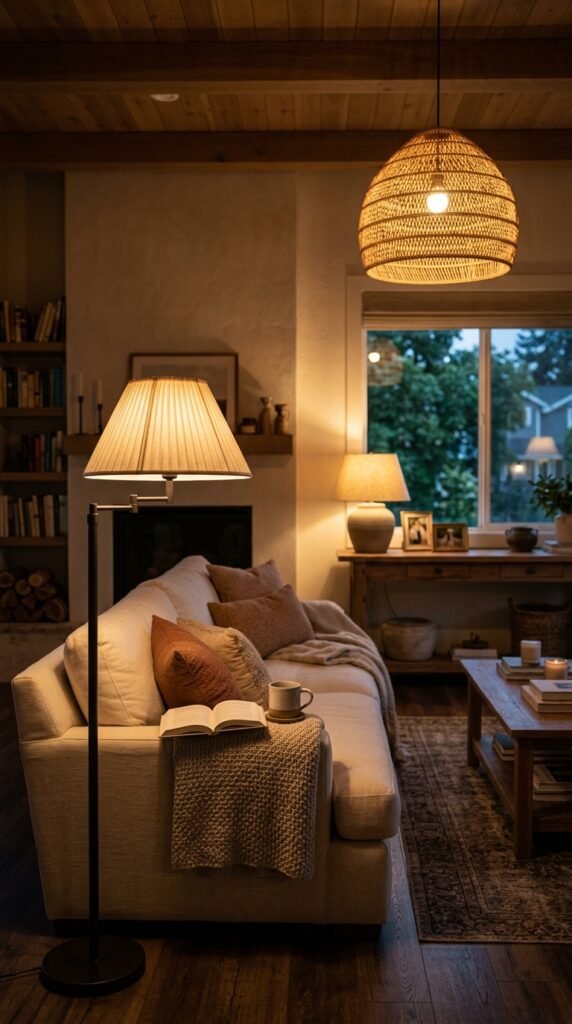
Every overhead fluorescent or cool-toned LED in your living room actively works against the quiet luxury aesthetic because cool light creates harshness and contrast that the warm, soft atmosphere of the look depends on eliminating. Replace every bulb in the living room with a warm white LED rated at 2700K to 2900K and the immediate shift in how the space feels will surprise you. Studies from the Lighting Research Center confirm that warm-toned lighting measurably increases perceived comfort and relaxation in residential spaces.
Layer three light sources: a floor lamp beside the sofa at seated eye level, a table lamp on a side console, and either a warm ceiling pendant or a dimmer on the overhead fixture. The three-source approach eliminates the flat, one-dimensional illumination of overhead-only lighting and creates the warm, layered atmosphere that every high-end interior photograph uses to make spaces look expensive.
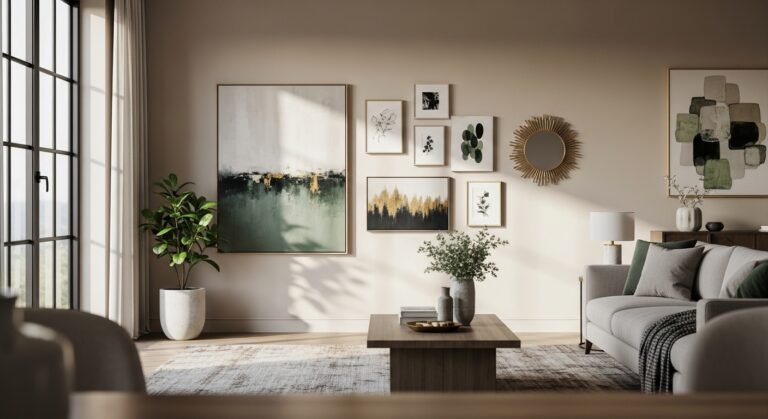
7. Place a Large-Scale Piece of Art as the Room’s Focal Point
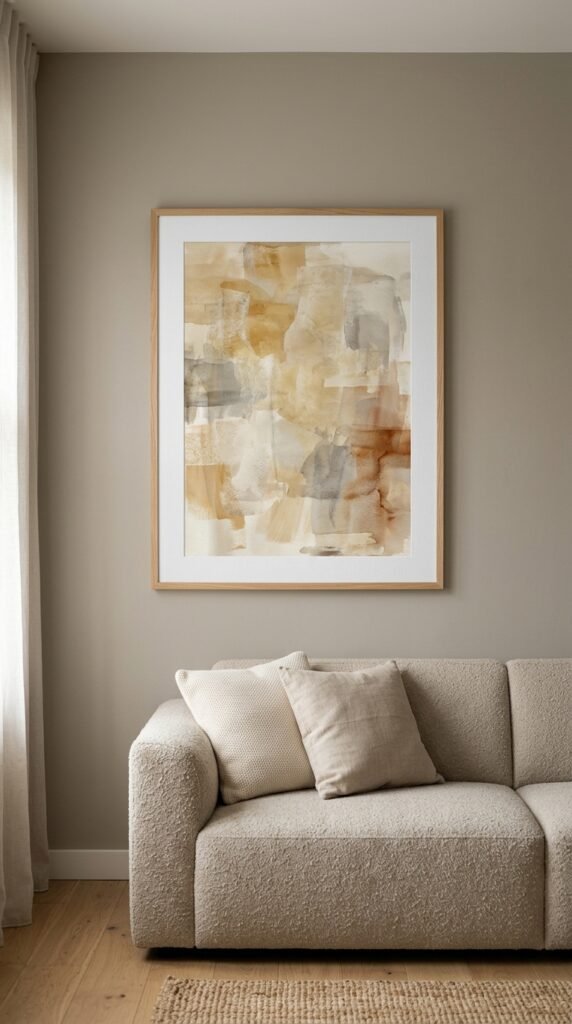
A single large artwork does more for a quiet luxury living room than ten small pieces scattered across the walls, and the reason is visual authority. One 40×50 inch framed print commands the wall and gives the eye a single place to land, which makes the room feel curated and intentional. Ten small pieces create visual fragmentation that makes the same wall feel busy and unresolved regardless of the quality of each individual piece.
Society6, Desenio, and Artifact Uprising all offer large-format prints from $40 to $150 that photograph as gallery-quality. Frame the print in a simple oak or black wood frame with a 4-inch white mat and hang it at seated eye level (center at 57 inches from the floor) rather than at standing height, which is the most common living room art mistake. The seated eye level placement makes the artwork feel connected to the room rather than floating above it.
8. Add a Statement Coffee Table in Natural Stone or Concrete
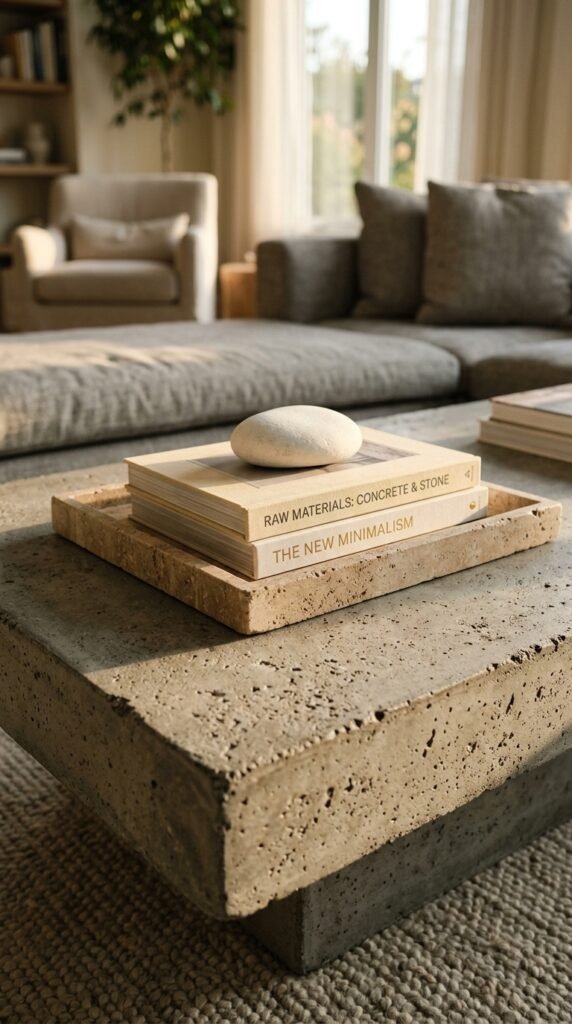
The coffee table is the visual center of the living room and the material you choose communicates more about the room’s quality level than any other horizontal surface. A travertine, marble, or concrete coffee table in a simple rectangular or round form signals quality through material authenticity in a way no wood-look laminate or glass-top alternative matches. CB2’s concrete coffee tables start at $350. A genuine marble slab table costs $400 to $800. Both hold visual relevance indefinitely because natural materials age better than manufactured alternatives.
If the budget doesn’t support a new coffee table, a large marble or travertine tile from a home improvement store costs $15 to $40 and lays flat on an existing table surface as a tray or display platform. The natural stone material reads as expensive regardless of how it arrives in the room.
9. Style the Coffee Table With Three Elements Maximum
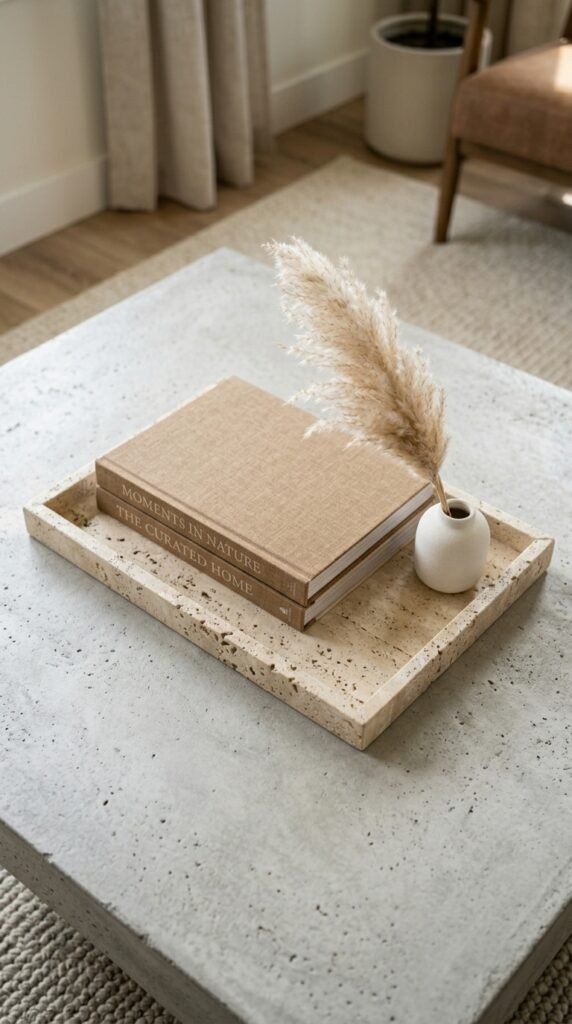
A styled coffee table in a quiet luxury living room holds three items at most: a stack of two to three large format books, one object of natural material (a stone, a sculptural vessel, a small plant), and one tray to contain the arrangement. More than three elements creates clutter. Fewer than two reads as unfinished. The tray is the key element because it creates a visual boundary that makes the objects within it read as a deliberate display rather than things left on a surface.
A 12×16 inch travertine or marble tray costs $30 to $80 at HomeGoods or TJ Maxx. Two large-format art or design books from a used bookstore cost $5 to $15 each. One dried pampas stem in a simple ceramic vessel completes the arrangement for under $20. The total coffee table styling investment runs $60 to $130 and delivers the visual payoff of a $500 boutique home decor purchase.
10. Install Floor-to-Ceiling Curtains in a Linen or Velvet Fabric
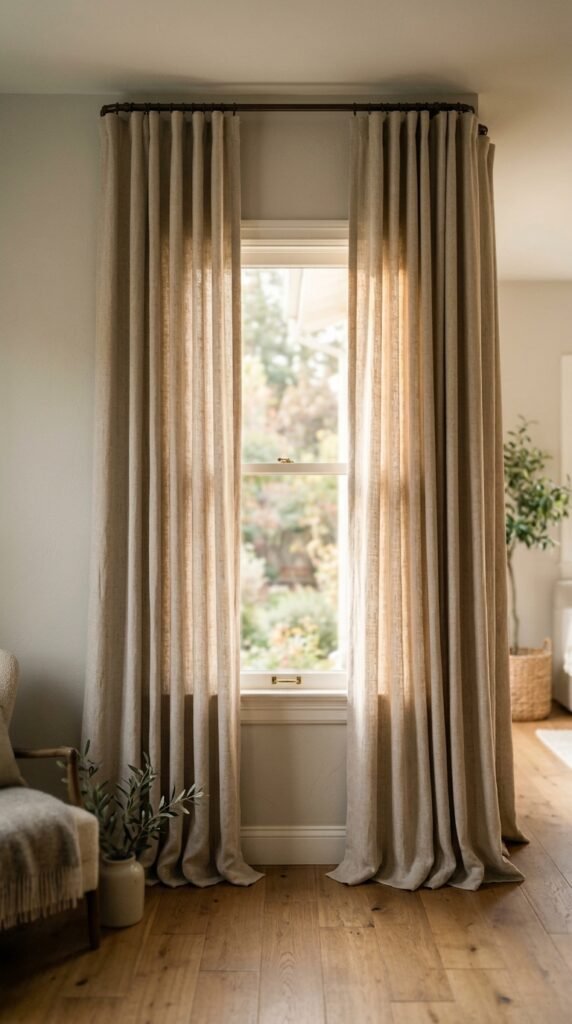
Curtains hung at ceiling height and dropped to the floor make every window in the room appear taller and every ceiling appear higher than its actual dimensions, which is the fastest architectural upgrade available without structural work. The 2021 Houzz Design Trends report found that floor-to-ceiling window treatments rank as the single most impactful living room upgrade for perceived room size and quality. Hang the rod 4 to 6 inches from the ceiling rather than directly above the window frame.
Linen curtain panels from IKEA (DYTAG) cost $40 to $60 per panel in a neutral natural linen color. Two panels per window at ceiling height cost $80 to $120 per window and create the visual effect that a custom window treatment costing $400 to $800 achieves. Choose a fabric weight heavy enough to hang with a slight drape rather than a limp fall, which is the difference between a quality and budget curtain read.
11. Bring in One Organic or Sculptural Element
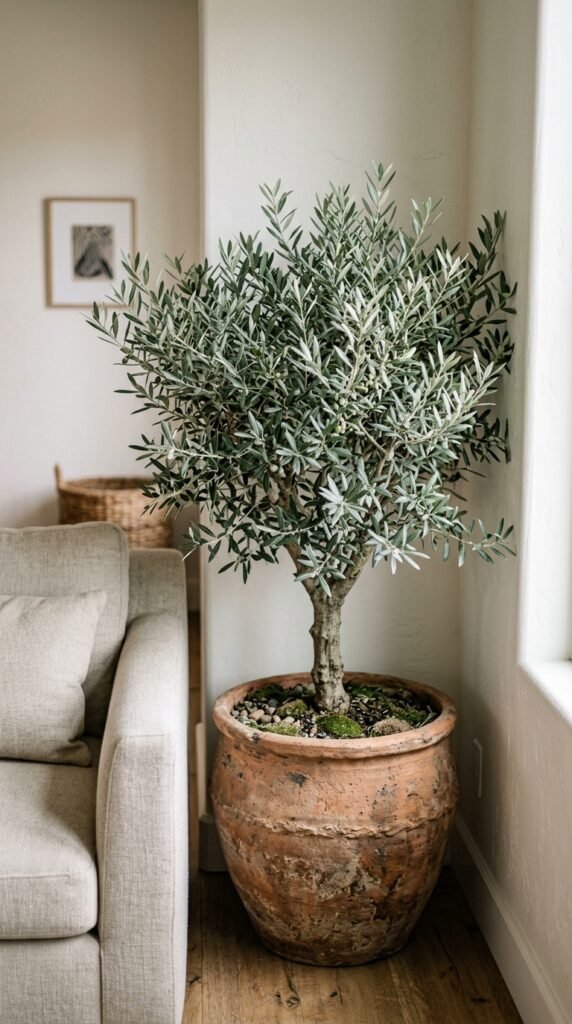
A quiet luxury living room never looks sterile because it always includes one element with natural irregularity: a large dried botanical arrangement, an olive tree in a textured planter, a sculptural piece of driftwood, or a ceramic vessel with an organic hand-formed quality. These elements introduce the slight imperfection that separates a lived-in, human space from a showroom display. They also photograph beautifully, which matters if you care how the room reads on social media or in listing photos.
A 4-foot olive tree in a large terracotta or textured ceramic pot costs $80 to $150 at most garden centers or nurseries and brings height, life, and natural texture simultaneously. Position it in the corner of the room where the sofa meets the wall to fill the dead corner space that most living rooms waste. A dried pampas arrangement in a tall ceramic vase costs $30 to $60 and delivers the same organic quality without any watering schedule.
12. Declutter to 60 Percent of Your Current Surface Display
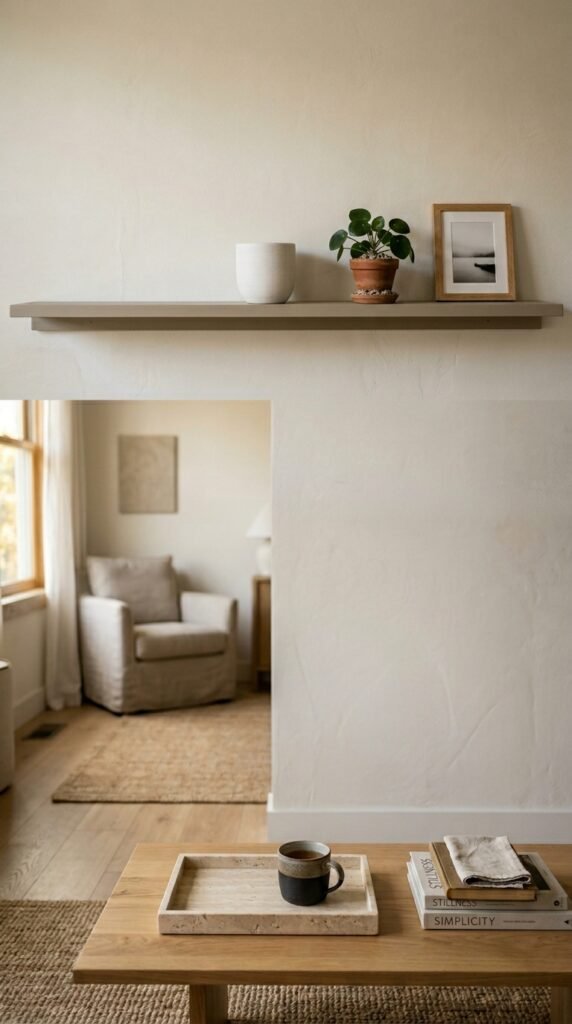
The quiet luxury aesthetic operates on negative space, and negative space costs nothing to create. Walk through your living room and remove 40 percent of what currently sits on surfaces, shelves, and walls. The objects you remove aren’t necessarily wrong for the room; there are simply too many of them for the aesthetic to breathe. Interior designers working in the quiet luxury style consistently recommend the 60-40 rule: 60 percent filled, 40 percent empty space on every surface and shelf.
Put the removed objects in a box for two weeks. If you don’t miss them visually, donate or sell them. The items that remain after that edit deserve better placement within the room rather than competing with 20 other objects for attention. This process costs nothing and delivers one of the highest visual returns of any action on this entire list. IMO, decluttering is the most underused luxury upgrade available to every homeowner at zero cost.
13. Use Boucle or Performance Linen for Accent Chairs
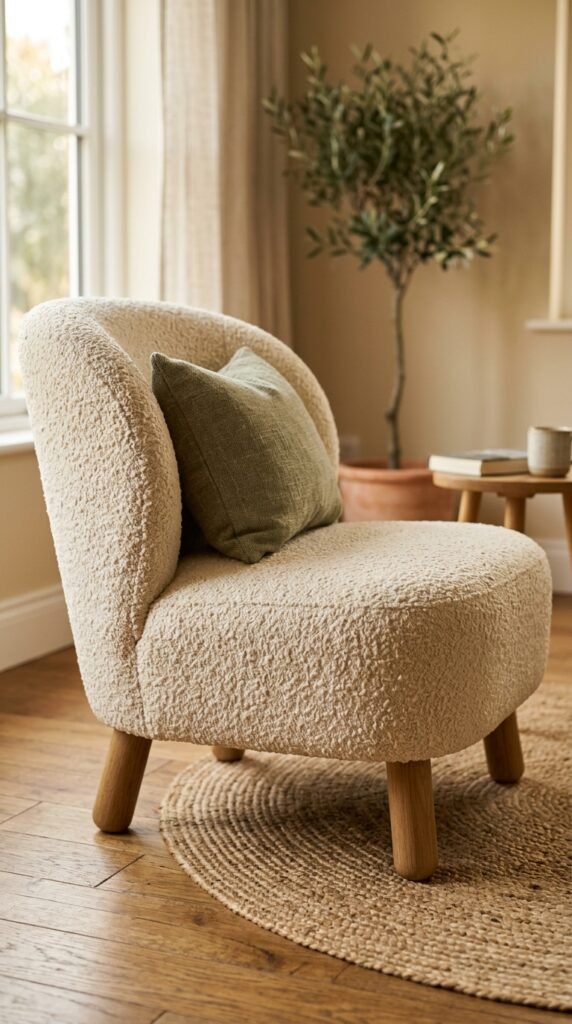
An accent chair in a bouclé, teddy, or performance linen fabric reads as expensive regardless of the chair’s actual price point because the texture communicates material quality in a way smooth, synthetic fabrics never do. The Safavieh Couture Javiar Chair in bouclé costs $350 to $450. The West Elm Cozy Chair in performance velvet runs $600 to $800. Both read identically expensive in a room photograph because the texture carries the quality signal.
Source bouclé accent chairs from CB2, Article, or West Elm during their seasonal sales when prices drop 30 to 40 percent from retail. A $600 bouclé chair at 40 percent off costs $360 and holds its design relevance for 8 to 10 years. Position it at a 45-degree angle to the sofa rather than parallel, which creates a more dynamic, conversational arrangement than the standard face-to-face configuration most living rooms default to.
14. Add a Console Table Behind the Sofa
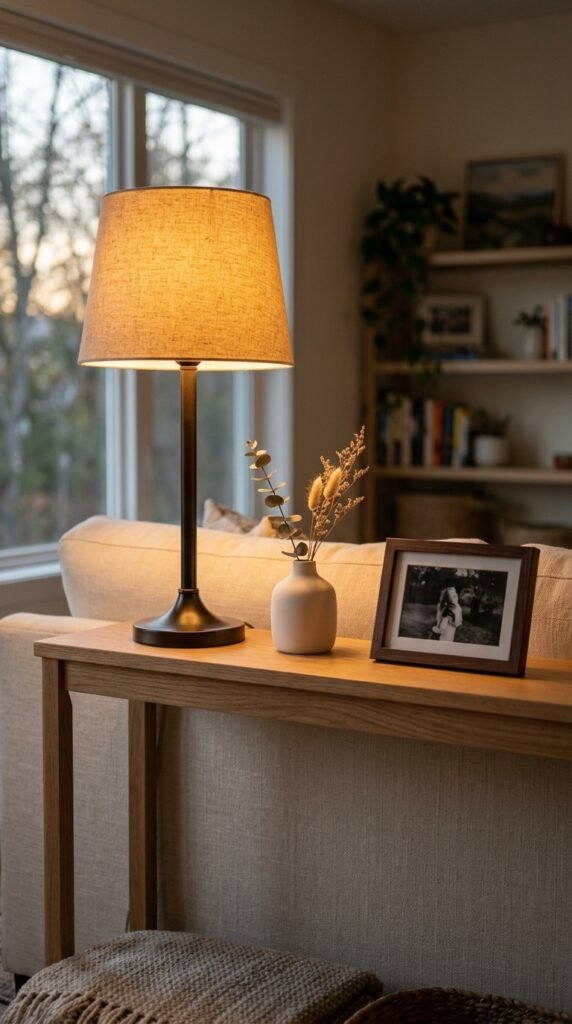
A console table behind the sofa creates a functional surface layer that most living rooms completely ignore, and it does two things simultaneously: it gives you a place for a lamp (which adds the seated eye-level light source the three-layer lighting approach requires) and it makes the sofa float in the room rather than pushing against a wall. The visual depth this creates makes the room feel larger and more deliberately arranged.
A slim console table costs $80 to $300 at West Elm, CB2, or IKEA. Choose one 12 to 14 inches deep so it sits flush behind the sofa back without extending into the walking space behind it. Style it with one tall table lamp, one small plant or vessel, and one framed photograph or small artwork. Three items on the console surface, nothing more.
15. Choose Hardware and Metal Finishes in Warm Tones
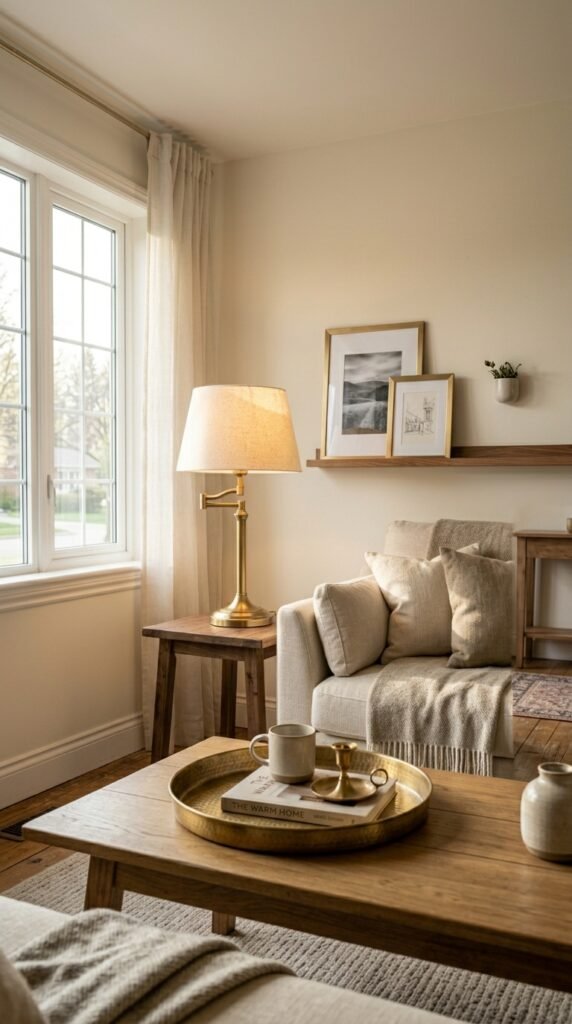
Every piece of hardware in a quiet luxury living room should share the same metal family: brushed brass, unlacquered brass, warm gold, or antique bronze. Mixing chrome, nickel, and brass across lamp bases, picture frames, side table legs, and decorative objects creates visual fragmentation that makes a room look assembled rather than designed. The consistency of metal tone across all objects is one of the details that separates rooms that photograph expensively from rooms that don’t.
Replace chrome or silver-toned lamp bases, picture frames, and decorative objects with warm brass or gold alternatives from HomeGoods, TJ Maxx, or Amazon. A brushed brass table lamp costs $40 to $80. A set of brass picture frames costs $15 to $30. These replacements cost under $150 total and unify the room’s material story in a way that reads as intentional design rather than incidental accumulation.
16. Use a Single Large Rug Rather Than Multiple Small Ones
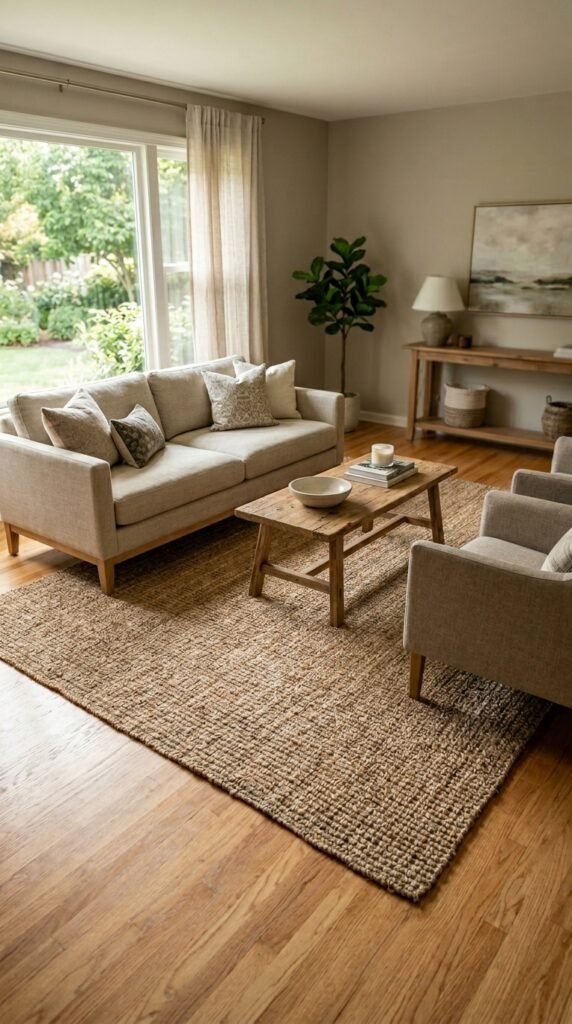
A rug sized too small for the seating group is the most common living room decorating mistake, and it actively makes the room look smaller and cheaper than its actual square footage. The correct rug size puts all front legs of every sofa and chair onto the rug surface, which visually connects the seating group and defines the living area as one unified zone. For a standard living room sofa group, an 8×10 rug is the minimum and a 9×12 works better.
A large-format jute or wool rug in a natural, neutral tone costs $100 to $300 from Rugs USA, Loloi, or Wayfair. Resist the urge to buy a 5×8 rug because it fits the budget more comfortably. A small rug costs $80 less and actively undermines everything else you do in the room. The correct rug size is worth the extra $80 to $150 every time.
17. Style Bookshelves With Objects, Not Just Books
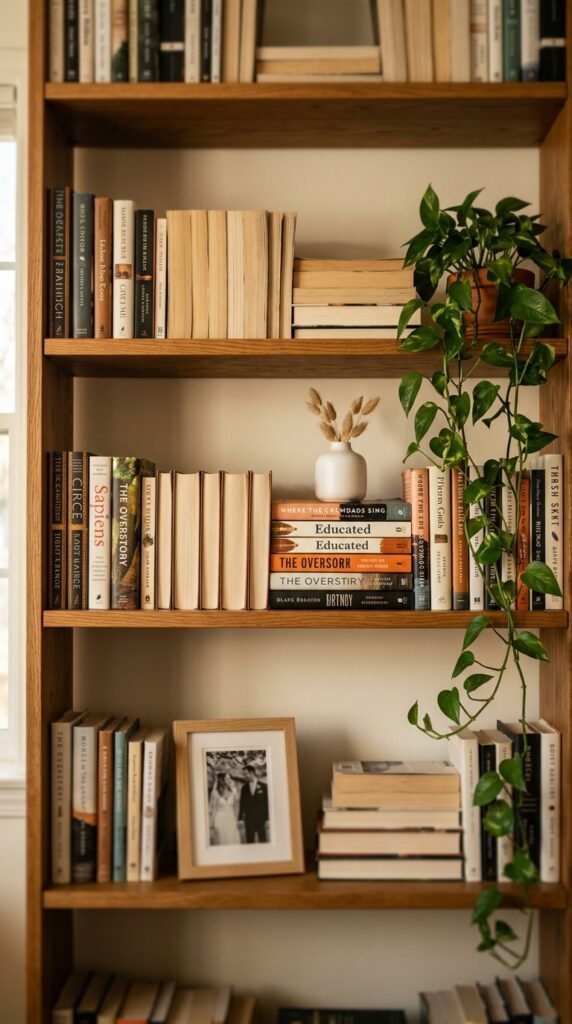
A bookshelf styled exclusively with books reads as utilitarian rather than designed, and the quiet luxury aesthetic requires the shelf to function as a curated display. Group books horizontally and vertically in alternating sections. Place one ceramic vessel, one small plant, one sculptural object, and one framed photograph within the book groupings at irregular intervals. The objects interrupt the uniform rhythm of the book spines and create visual interest that pulls the eye across the full shelf.
Remove books with garish covers or mismatched spine colors and turn them spine-in (pages outward) for a clean, tonal look that many quiet luxury interiors use specifically because it creates a warm, linen-like texture across the shelf without requiring new purchases. This technique costs nothing and transforms a chaotic bookshelf into a styled display in 20 minutes.
18. Hang Mirrors to Add Light and Depth
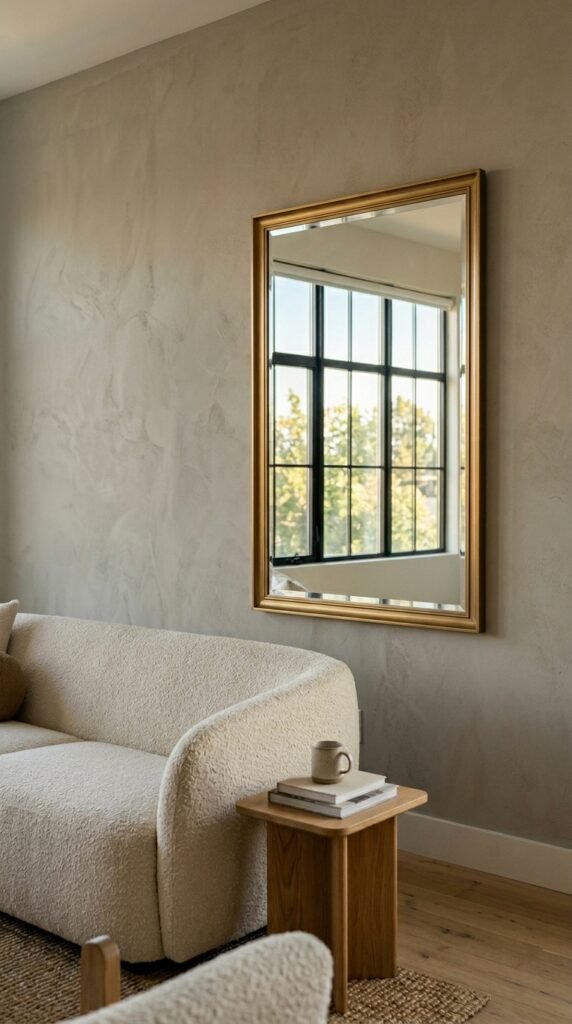
A large mirror on the wall opposite or adjacent to the primary window doubles the natural light in the room by reflecting the window source back into the space, which reduces the need for artificial lighting during the day and makes the room feel significantly larger than its actual square footage. Research from the Illuminating Engineering Society confirms that strategic mirror placement increases perceived room brightness by 30 to 40 percent without any additional fixtures.
A 24×36 inch or larger mirror in a simple warm wood or brushed brass frame costs $60 to $150 at IKEA, HomeGoods, or Amazon. Hang it at eye level (center at 57 to 60 inches from the floor) on the wall that receives the most bounce light from the windows. A full-length mirror leaned against the wall in a corner costs even less and adds the same depth and light benefit with zero wall damage for renters.
19. Add a Scented Candle or Reed Diffuser as the Room’s Sensory Layer
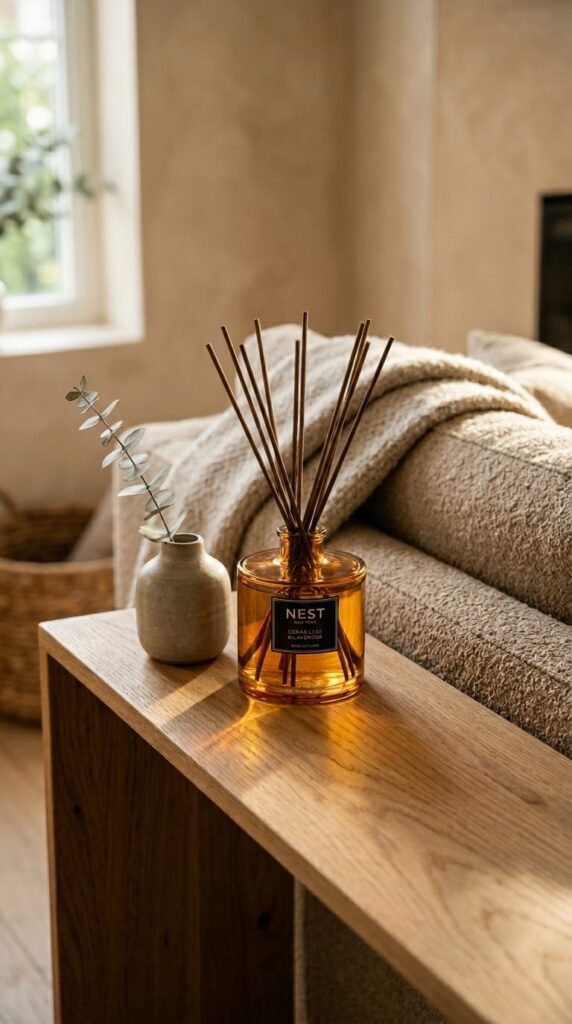
Quiet luxury is a full sensory experience, and scent is the layer most living room decorating advice ignores entirely. A room styled for quiet luxury but smelling of nothing feels incomplete in a way people sense without identifying. Scent signals care and attention to detail in the same way a fresh-cut flower arrangement does. Brands like Maison Margiela, Diptyque, and Boy Smells produce scents specifically associated with elevated interior design because their aesthetic communication is as deliberate as their fragrance.
A quality reed diffuser from brands like Nest or Voluspa costs $25 to $50 and scents a standard living room for three to four months. FYI, positioning the diffuser near an air vent or doorway where air moves distributes the fragrance more evenly than placing it on a static shelf. The scented room registers immediately with every visitor and creates a sensory memory of the space that no visual element alone achieves.
20. Replace Ceiling Lights With a Sculptural Pendant
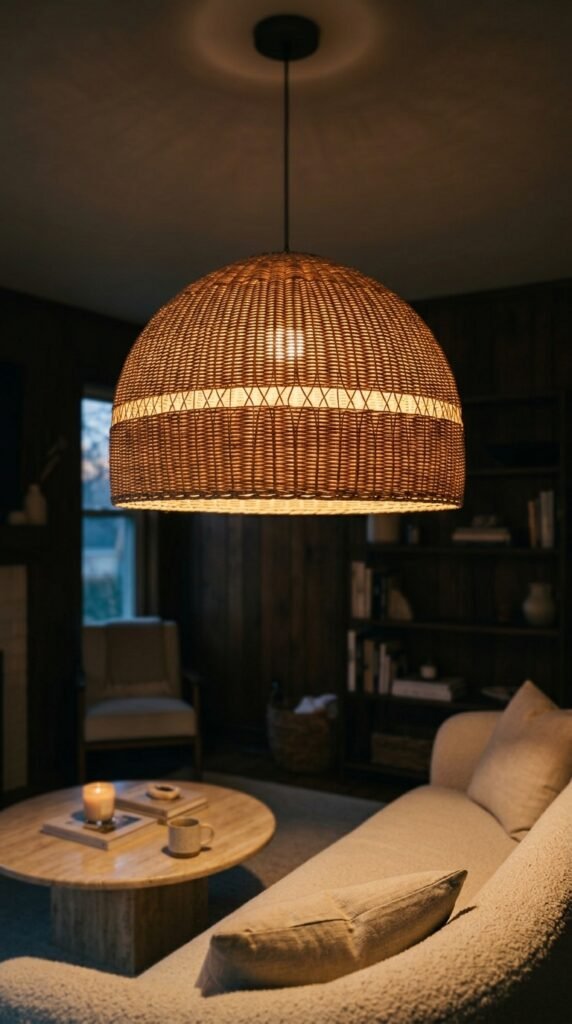
The standard builder-grade ceiling fixture is the one element that most immediately betrays the budget of a living room, regardless of how well everything else is styled. It sits at the center of the room’s ceiling, which makes it unavoidable, and its basic form communicates ordinary in a way that a quality pendant fixture completely eliminates. Swapping a flush-mount fixture for a rattan, linen shade, or textured ceramic pendant costs $80 to $200 for a quality option and requires only a screwdriver and 20 minutes.
Brands like Pottery Barn, CB2, and even Amazon’s Stone and Beam line offer pendant lights in rattan and linen that read as expensive from any angle for $80 to $180. Choose a shade diameter at least 18 inches wide for a standard living room ceiling height so it reads with visual authority rather than disappearing into the room. This single fixture change shifts the room’s quality signal more dramatically than almost any other single purchase on this list.
21. Add Fresh Flowers or a Living Plant Every Week
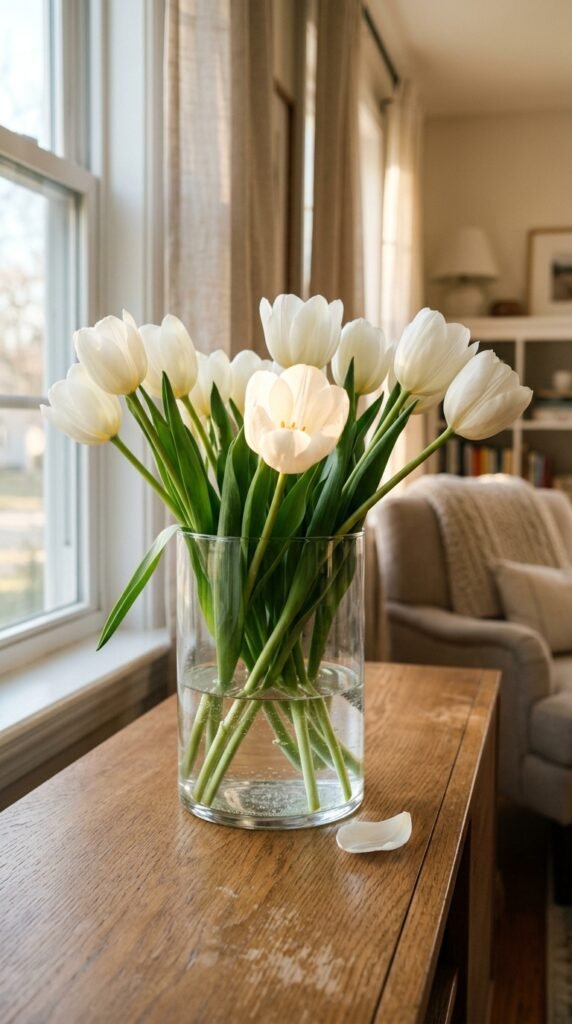
A living element in a quiet luxury living room tells every visitor the space is actively cared for, and active care is the quality signal no single purchase replicates. A weekly $8 to $12 bunch of white tulips, eucalyptus stems, or seasonal flowers from a grocery store in a simple ceramic or glass vessel communicates more effortless luxury than a $200 faux floral arrangement because it’s real, temporary, and renewed. The temperarity is the point.
Position the flowers in the spot that catches the most natural light, typically a side console or coffee table, where the light highlights the translucency of petals and the color of water in the vessel. A simple clear glass cylinder or a matte white ceramic vase costs $10 to $25 and serves as the permanent vessel for whatever seasonal flower works best that week. The weekly flower habit costs $40 to $50 per month and sustains the living quality that a quiet luxury room requires to feel genuinely inhabited rather than staged.
Final Thoughts
Quiet luxury works in real homes because it prioritizes quality over quantity and restraint over trend-chasing. Your living room doesn’t need a renovation budget or a designer on speed dial. It needs better decisions about what stays, what goes, and what material each permanent element is made from.
Start with the three ideas on this list with the highest visual impact for the lowest cost: declutter to 60 percent of current display, replace every bulb with a 2700K warm LED, and hang curtains at ceiling height. Execute those three this weekend and the room tells a completely different story by Sunday evening.