25 Organic Modern Bedroom Ideas for a Calming Retreat
Your bedroom carries more emotional weight than any other room in your house, and most bedrooms don’t earn it. They become storage for whatever didn’t have a home elsewhere. Organic modern design fixes that by stripping things back to natural materials, soft curves, and a palette that never fights with itself. I redid my own bedroom this way two years ago and it’s the only room in my house I haven’t wanted to change since. Here are 25 ways to get there.
1. Start With Walls in a Warm Plaster or Limewash Finish
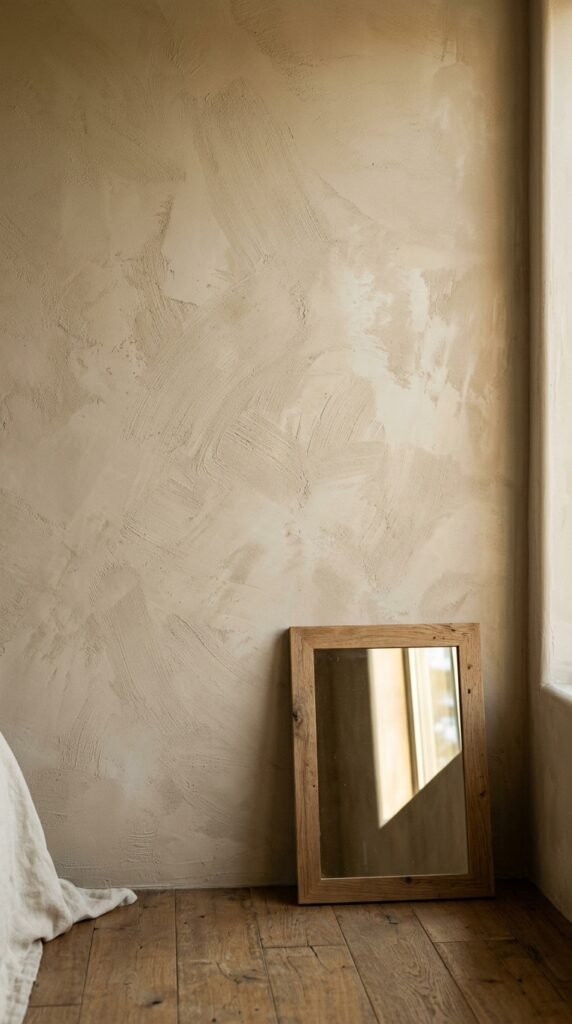
A flat painted wall does its job and nothing more. A limewash or plaster-effect finish in a warm white, putty, or soft clay tone adds subtle variation and depth to the largest surface in your room before you’ve added a single piece of furniture. The slight texture and tonal shift across a limewashed wall catches light differently throughout the day, which a flat paint finish simply can’t replicate.
Limewash paint kits run $60 to $120 for enough coverage for one accent wall, and the application technique, which involves deliberately uneven brush strokes, forgives imperfect technique better than almost any other paint method. This is the rare home improvement where trying too hard to be neat actually works against you.
2. Choose a Bed Frame in Unfinished or Lightly Oiled Wood
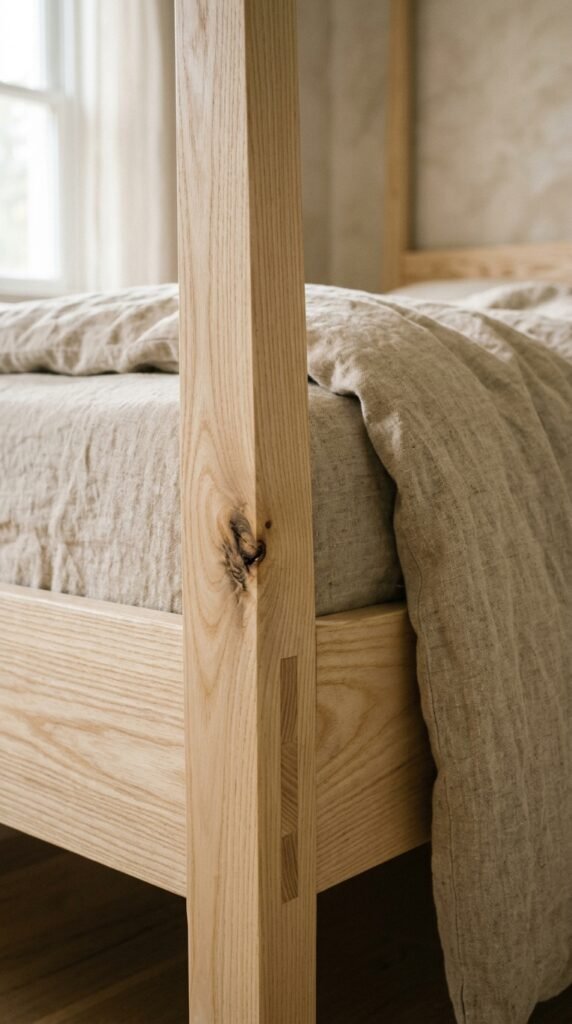
An unfinished or lightly oiled wood bed frame shows the actual grain, knots, and natural variation of the timber rather than hiding it under a heavy stain or lacquer. This honesty about material is the entire philosophy of organic modern design distilled into one piece of furniture: nothing pretends to be something it isn’t.
A solid ash or oak frame with a raw or oil-finished surface runs $500 to $1,400. Apply a food-safe oil finish like Danish oil every six months to maintain the wood’s natural color and protect it slightly, without building up the glossy layers that a polyurethane finish would.
3. Use a Woven Wool Throw as Your Color Anchor
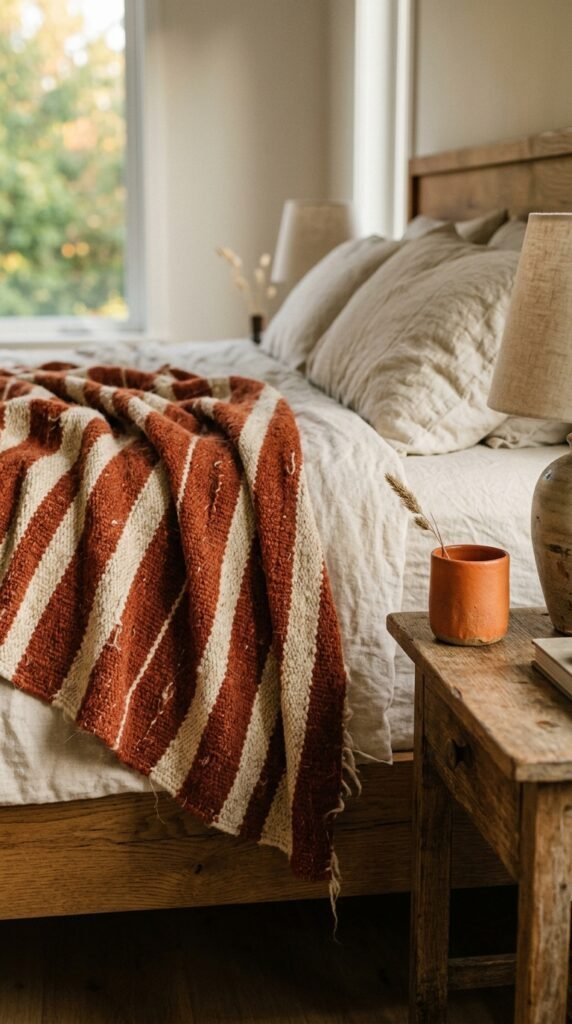
Rather than choosing wall color first, choose one woven wool throw in a color you genuinely love, and let that single object set the tone for everything else in the room. Working backward from one beloved object produces more cohesive rooms than starting with a blank palette and trying to fill it, because every other decision has something concrete to respond to.
A handwoven wool throw from a small studio or Etsy seller runs $80 to $200. Drape it across the foot of the bed or over a chair where it stays visible, and pull your wall tone, your secondary textiles, and even your ceramic glazes from somewhere within that one piece’s color range.
4. Add a Low Bench Made From a Single Slab of Wood
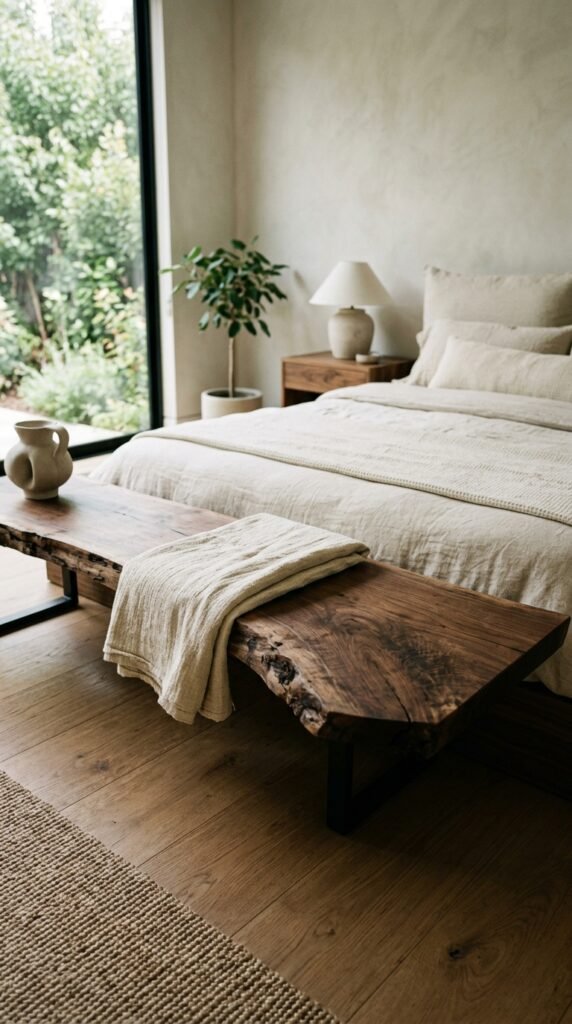
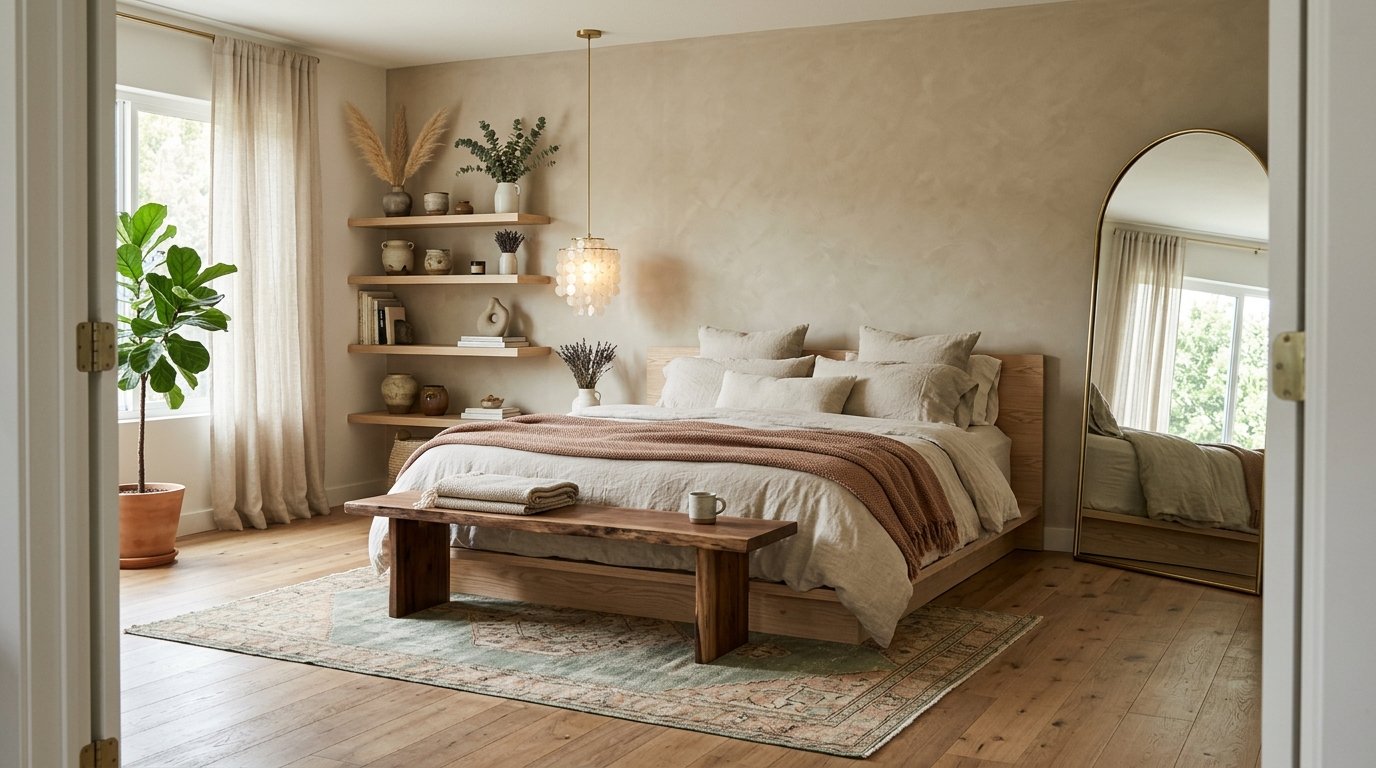
A bench made from one live-edge or slab piece of wood, rather than assembled from multiple boards, brings a sculptural quality to the foot of the bed that manufactured furniture rarely achieves. The natural edge of the wood, with its irregular curves and occasional knot, becomes the visual feature rather than something to be trimmed away.
Live-edge wood benches run $150 to $400 depending on wood species and size, with walnut and acacia being the most commonly available options. Position it with the natural edge facing outward into the room, where it catches light and reads as the deliberate, slightly raw element that organic modern rooms need at least one of.
5. Install a Skylight or Solar Tube if Your Layout Allows
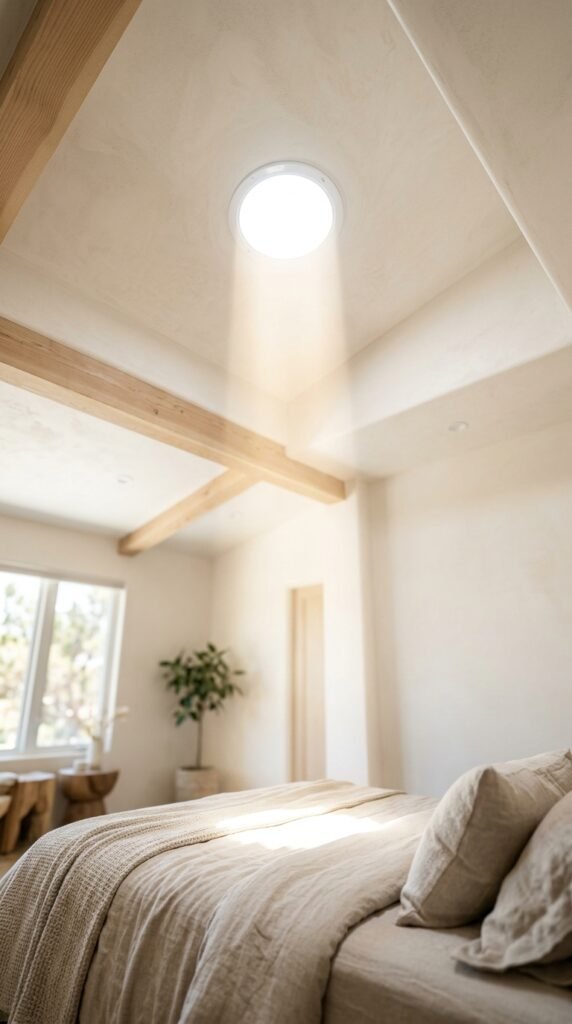
Natural light is the single ingredient that makes every other organic modern choice look better, and a skylight or solar tube brings daylight into rooms that windows alone can’t reach. Overhead natural light changes color temperature throughout the day in a way that artificial lighting, no matter how warm, cannot replicate.
A solar tube installation runs $500 to $1,000 including professional installation and works in rooms where a full skylight isn’t structurally practical. If this is outside your current budget or rental situation, prioritize maximizing whatever natural light your existing windows provide before considering this a future project.
6. Use a Capiz Shell or Paper Pendant for Soft Diffused Light
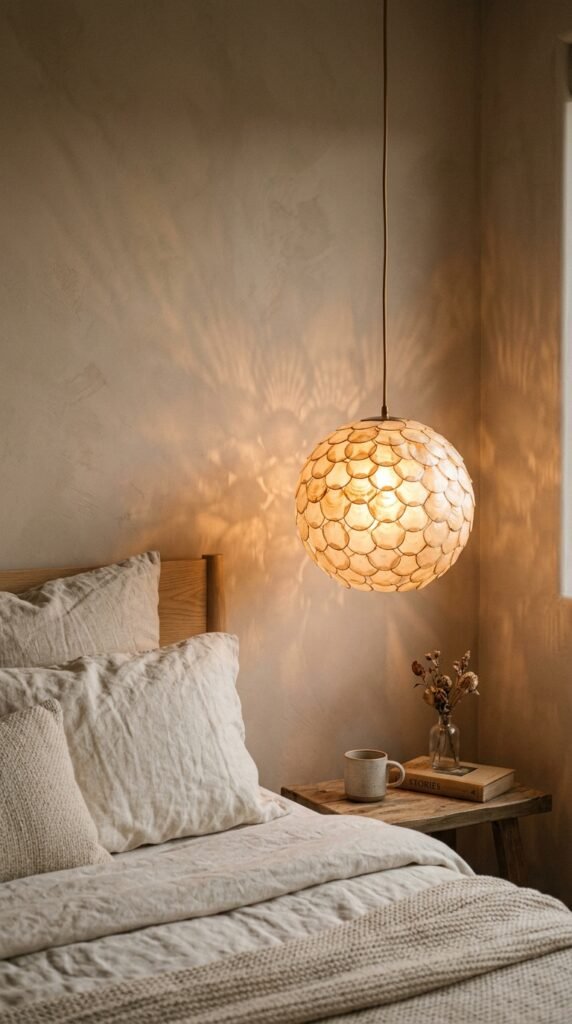
A pendant light made from capiz shell, rice paper, or thin alabaster diffuses light into a soft, glowing quality that feels nothing like a bare bulb under a standard shade. The material itself becomes the light source visually, glowing from within rather than simply housing a bulb.
A capiz shell pendant runs $80 to $250 depending on size, while paper pendants in the Noguchi style run $50 to $150. Hang it low enough to become a visual feature rather than just ceiling hardware, ideally at a height where it sits within your eyeline when seated on the bed.
7. Incorporate a Hand-Knotted Vintage Rug in Faded Tones
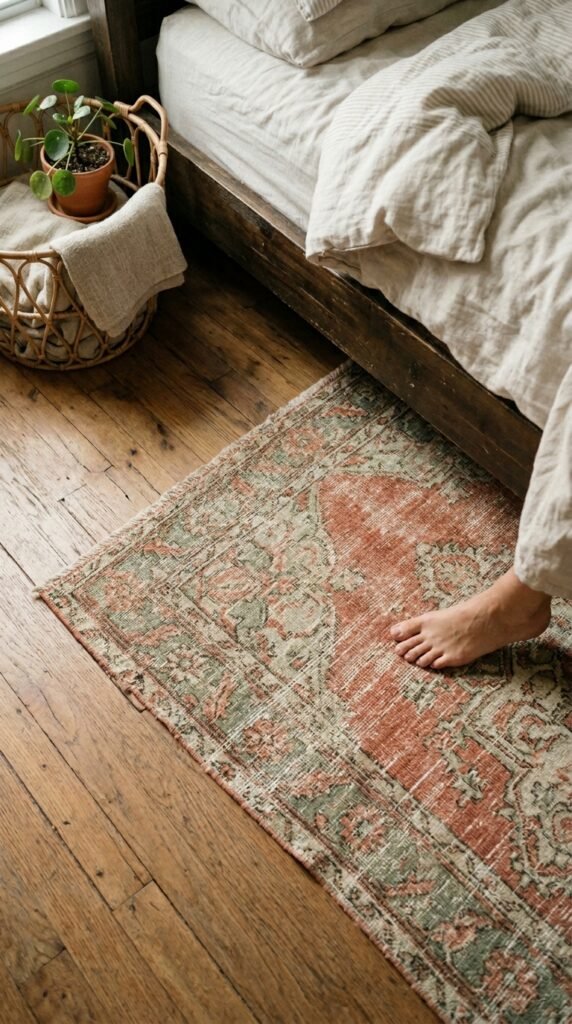
A hand-knotted vintage or vintage-style rug in faded, muted tones adds pattern and history to a room without introducing the visual noise that a brand-new, brightly colored rug would. Faded patterns read as collected rather than purchased, which is the quality every organic modern room aims for even when every item in it was, in fact, purchased recently.
Vintage-style Turkish or Persian rugs in faded terracotta, sage, or dusty blue run $200 to $600 depending on size, with overdyed or distressed-finish versions available at lower price points from retailers like Rugs USA. Place it at an angle slightly off from your bed’s alignment for a more relaxed, lived-in feel.
8. Add Floating Shelves With Curated Object Groupings
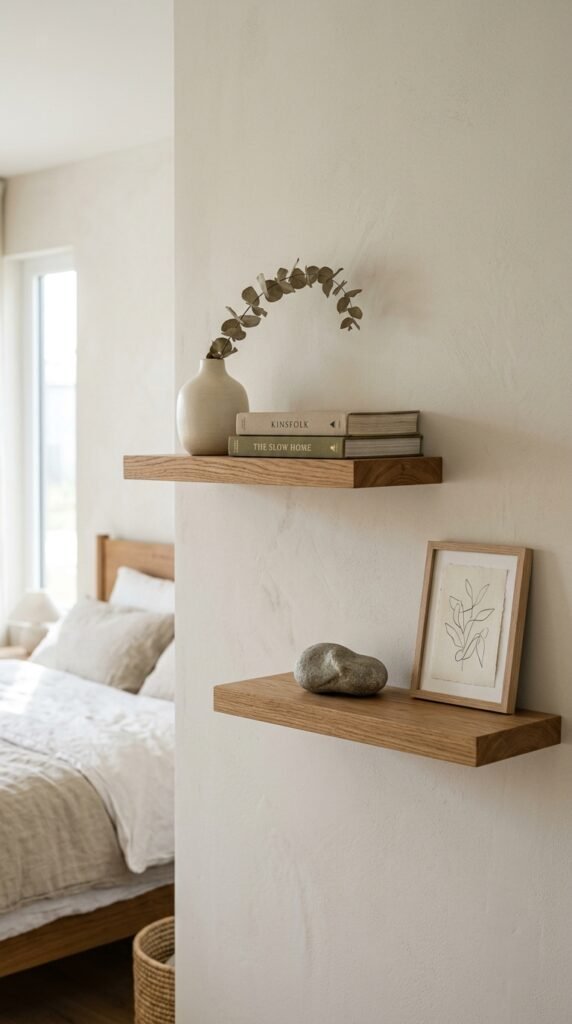
Floating wood shelves mounted at varying heights on one wall create a vertical display for small objects, books, and plants without the visual bulk of a bookshelf. Curate rather than fill: three or four objects per shelf with visible negative space between them looks intentional, while a fully packed shelf reads as storage rather than display.
Wood floating shelves run $20 to $50 each. Stagger two or three at different heights on one wall, and group objects by height variation, one tall item, one medium, one low, on each shelf rather than lining everything up at the same level.
9. Choose Bedding With a Subtle Stripe or Stitch Detail
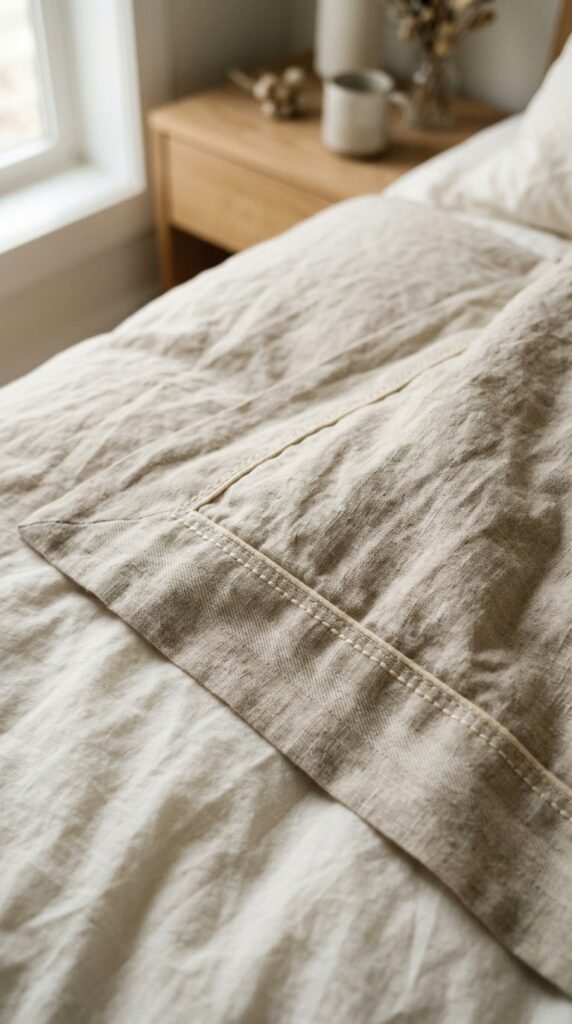
Solid bedding in a neutral tone is the organic modern default, but a subtle stripe, a contrast stitch line, or a slightly different weave at the hem adds detail that rewards a closer look without disrupting the room’s calm from a distance. Subtle detail works better than pattern in this style because it adds interest without adding visual noise.
Bedding with tonal stripes or contrast hem stitching runs $90 to $200 for a full set from retailers like Quince or Coyuchi. The detail should be close enough in tone to the base color that it reads as texture rather than pattern from across the room.
10. Use a Round or Organic-Shaped Area Rug Layered Over a Larger Rug
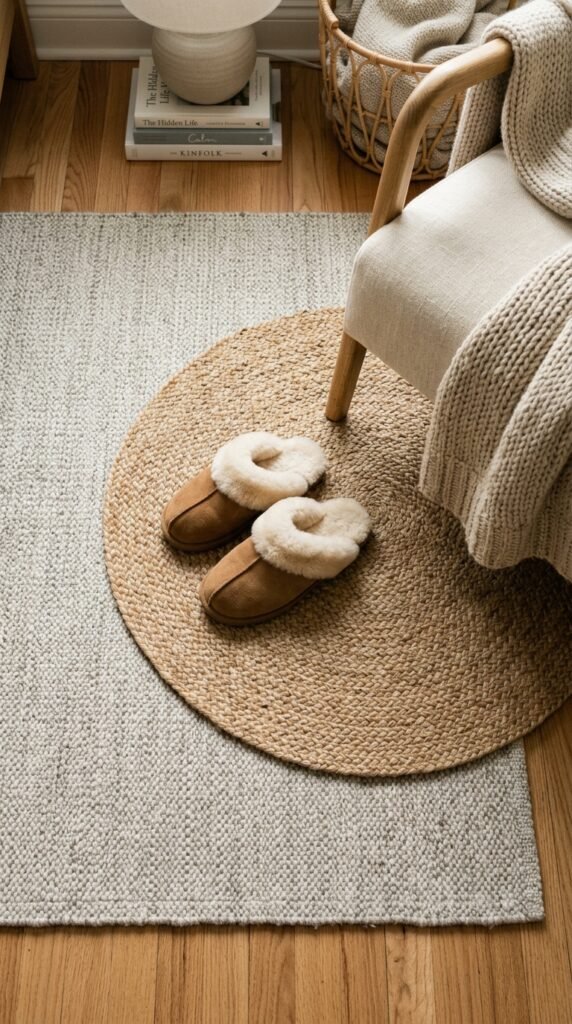
Layering a round or irregularly-shaped smaller rug over a larger rectangular base rug introduces an organic shape at floor level, which echoes other curved elements in the room and breaks up the rectangular dominance of most bedroom furniture and architecture. The layering itself adds depth even before you consider the shapes involved.
A small round jute or wool rug in the 4 to 5-foot diameter range runs $60 to $150 and works layered at an angle near a reading chair or beside the bed, on top of a larger neutral base rug that covers more of the floor.
11. Add a Ceramic or Stone Side Table With an Irregular Form
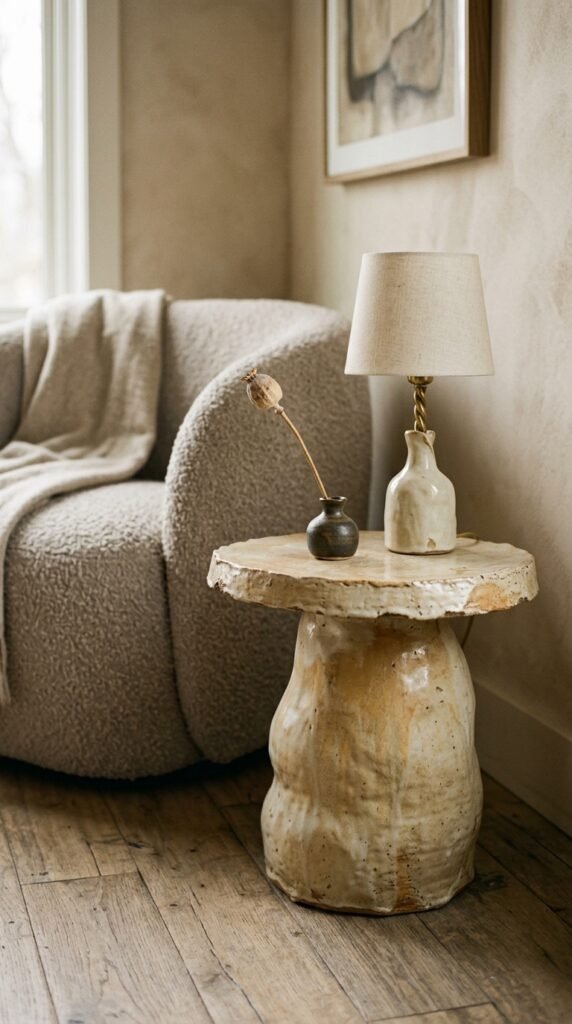
A side table made from a single piece of stone, or a ceramic table with a hand-built, slightly irregular form, brings sculptural presence to a small surface that a standard rectangular nightstand doesn’t provide. Irregularity at a small scale is easier to live with than irregularity in large furniture, making side tables a low-risk place to introduce more unusual forms.
Stone side tables in travertine or marble run $150 to $400, while hand-built ceramic side tables from independent makers run $100 to $300. Use one beside a reading chair rather than as your primary nightstand if you’re easing into more sculptural furniture choices.
12. Incorporate a Large Mirror Leaned Against the Wall
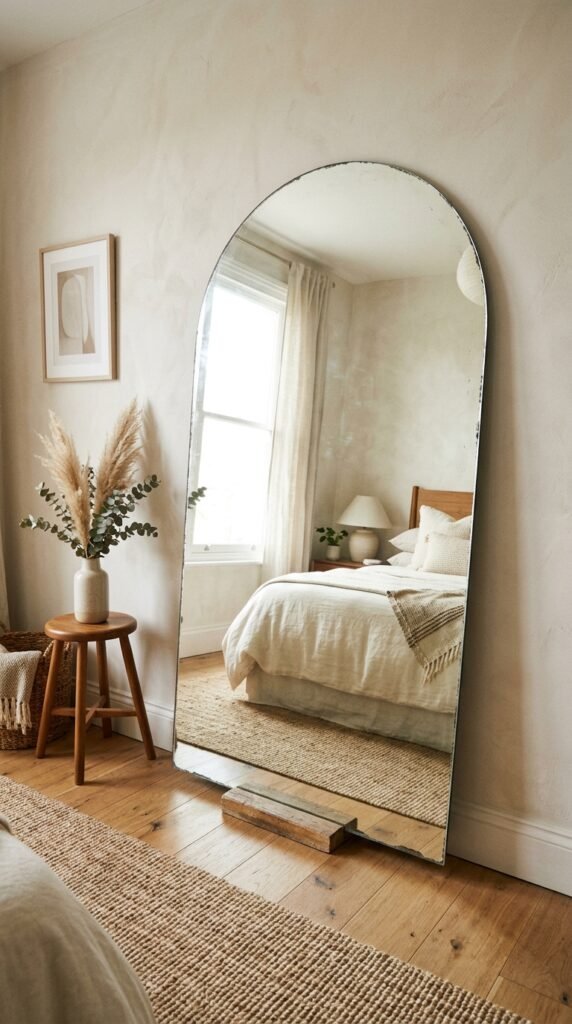
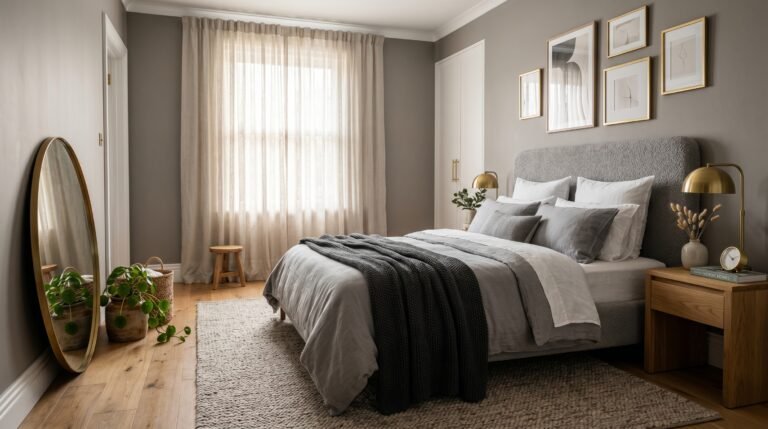
A large mirror leaned against a wall rather than hung creates a more casual, relaxed feeling than a mounted mirror, and it reflects both light and the room’s textures back into the space. Leaning reads as intentional and collected, the visual equivalent of a piece that arrived recently and hasn’t been permanently placed yet, even if it’s been there for years.
A large floor mirror with a simple wood or unframed edge runs $100 to $300. Lean it against the wall opposite a window so it reflects natural light back into the room, doubling the perceived brightness without adding any actual light fixtures.
13. Use Dried Botanicals Instead of Fresh or Faux Flowers
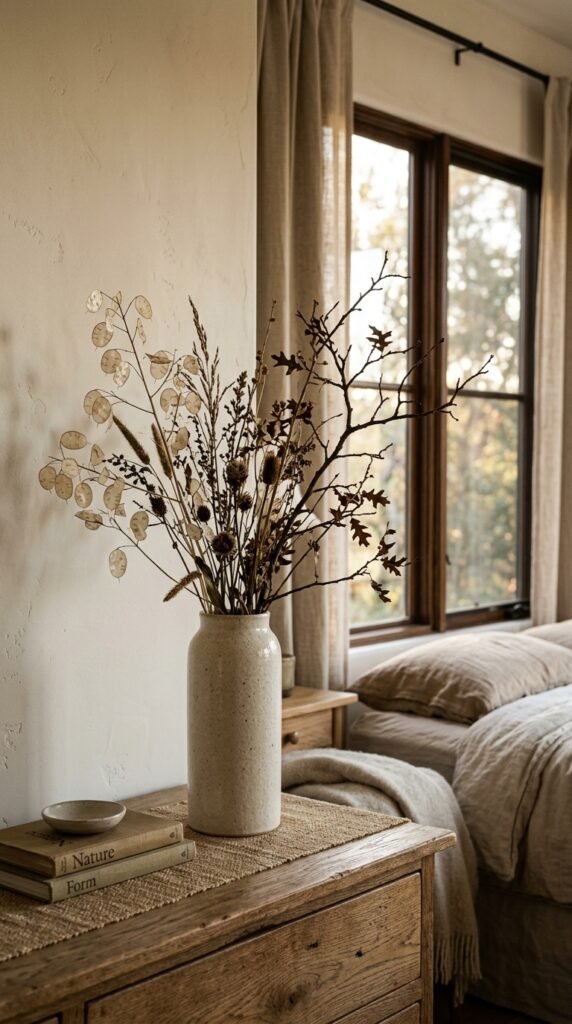
Dried branches, grasses, or seed pods in a ceramic vessel add height and organic texture without the maintenance of fresh flowers or the slightly uncanny quality that faux flowers can have up close. Dried botanicals age into the room rather than needing replacement, becoming more textural and interesting as they continue to dry and lighten over months.
A bundle of dried botanicals from a florist or craft store runs $10 to $30 and lasts one to two years before the color fades enough to refresh. Choose botanicals with interesting silhouettes, branches with visible structure, grasses with seed heads, rather than anything that was clearly a flower arrangement before it dried.
14. Add Architectural Interest With Exposed Beams or Painted Ceiling Lines
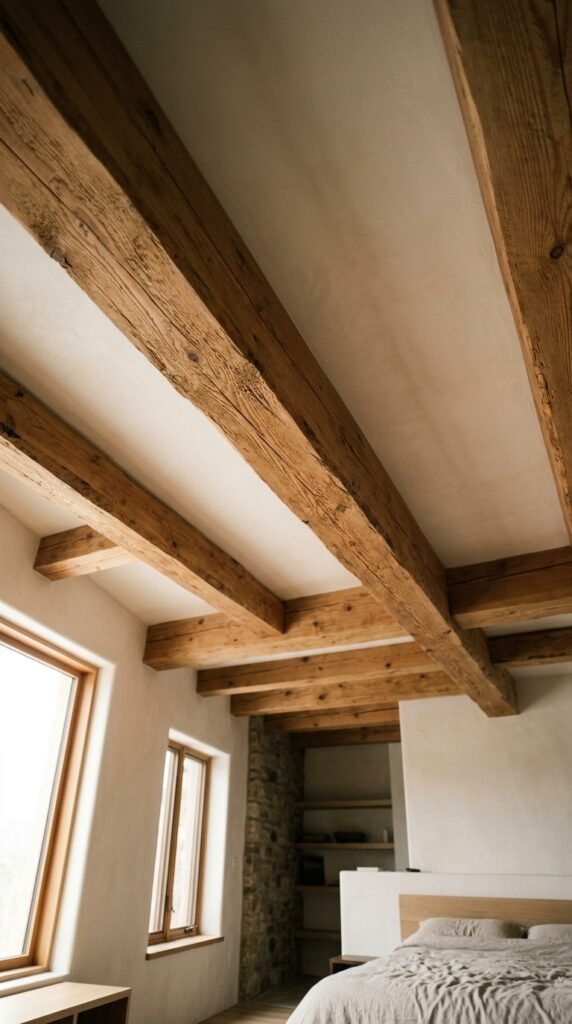
If your bedroom has exposed structural beams, leave them unpainted or in a natural wood tone rather than painting them to match the ceiling. Exposed structure is free architectural interest that organic modern design celebrates rather than hides, in direct contrast to design approaches that try to make every surface disappear into uniformity.
If you don’t have exposed beams, painting ceiling lines or a section of the ceiling in a tone slightly different from the walls, a technique sometimes called a “ceiling moment”, adds architectural definition for the cost of a can of paint, roughly $30 to $50.
15. Choose a Headboard Upholstered in Bouclé or Textured Linen
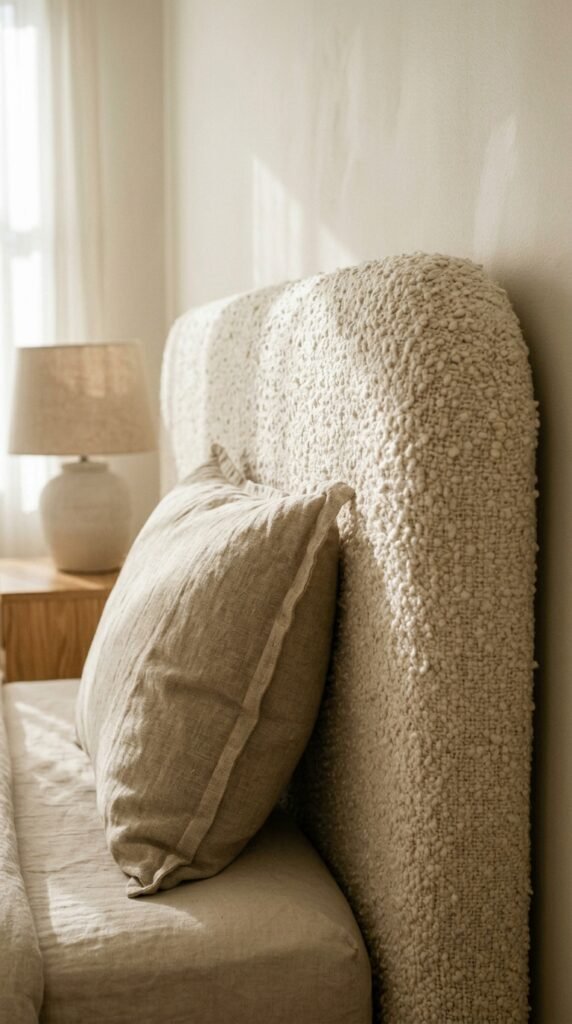
An upholstered headboard in bouclé or heavily textured linen brings softness to the room’s largest furniture piece without introducing pattern or strong color. Texture functions as the headboard’s “pattern” here: the visual interest comes from how light catches the looped or woven surface rather than from any printed design.
A bouclé or textured linen headboard panel runs $200 to $500 depending on size and whether it’s a standalone panel or part of a full bed frame. Choose a cream, oatmeal, or warm grey tone that sits within your established palette rather than treating the headboard as a place to introduce a new color.
16. Use Woven Cord or Rope Detailing on Furniture Edges
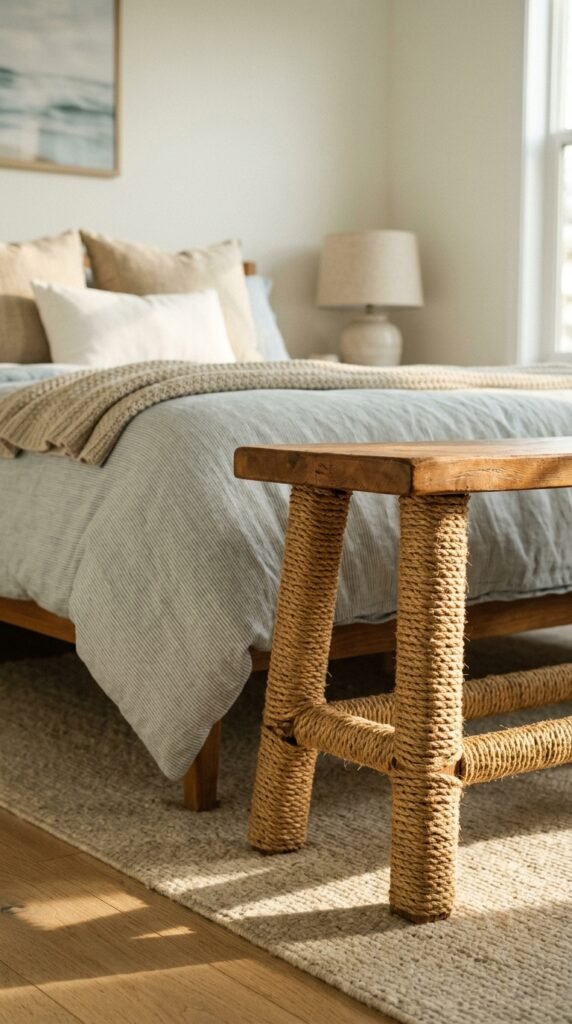
Furniture pieces with woven cord or rope wrapped around edges or legs, a technique common in coastal and Scandinavian design, add tactile texture and a handmade quality to otherwise simple furniture forms. The rope detail draws the eye to furniture edges and legs in a way that plain wood or metal doesn’t, adding a layer of craft visible at close range.
Rope-wrapped furniture, often chairs, stools, or small tables, runs $80 to $250 depending on the piece. A single rope-detailed stool or accent chair is usually enough; using this detail across multiple pieces in the same room starts to feel like a theme rather than a texture choice.
17. Add a Window Seat With a Built-In or Loose Cushion
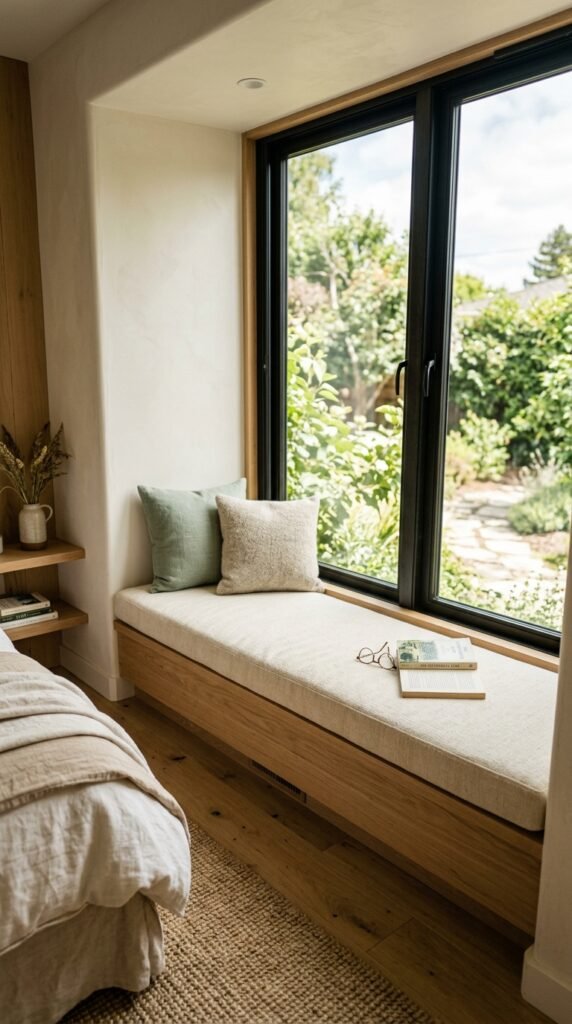
A window seat, whether built-in or created with a simple bench and a thick cushion, adds a secondary functional zone to a bedroom and makes use of often-wasted space below windows. A window seat becomes the room’s reading or morning-coffee spot, giving the bedroom a function beyond sleeping that organic modern design’s emphasis on calm, livable spaces benefits from.
A simple bench with a custom-cut foam cushion in linen costs $150 to $400 depending on window width and cushion thickness. Add two or three pillows in tones from your established palette, and the window seat becomes one of the most-used spots in the room within a week.
18. Incorporate a Woven Pendant or Floor Lamp Shade
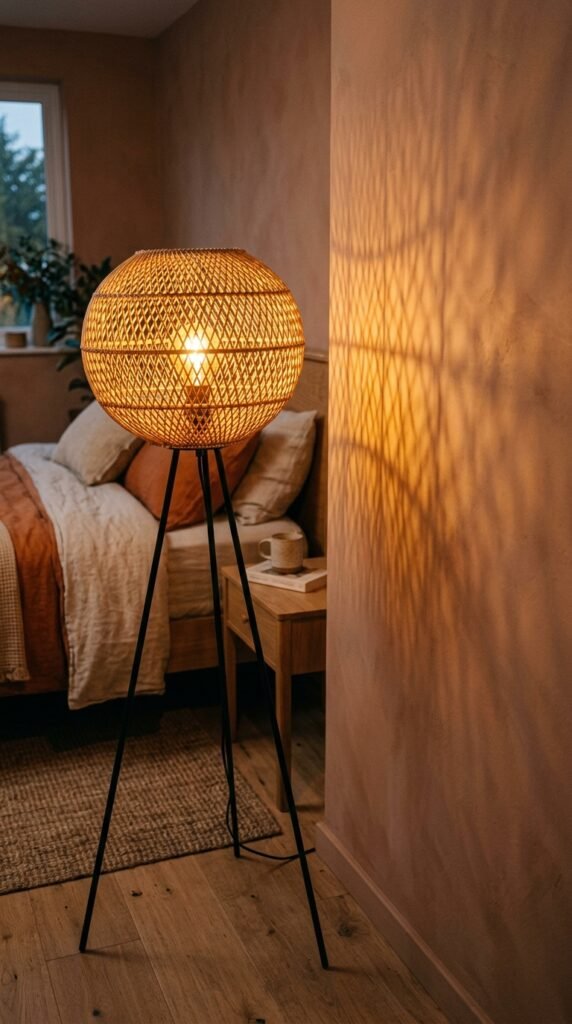
A lamp shade made from woven rattan, raffia, or seagrass, whether on a pendant or a floor lamp, filters light through its natural material and casts a subtle textured pattern on nearby walls and ceilings when lit. The shadow pattern itself becomes a decor element, especially in the evening when the lamp is the primary light source in the room.
Woven shade table or floor lamps run $50 to $150. Position them where the cast shadow pattern falls on a wall rather than into open space, so the textural effect actually contributes to the room’s atmosphere after dark.
19. Use a Low Stool as a Bedside Table Alternative
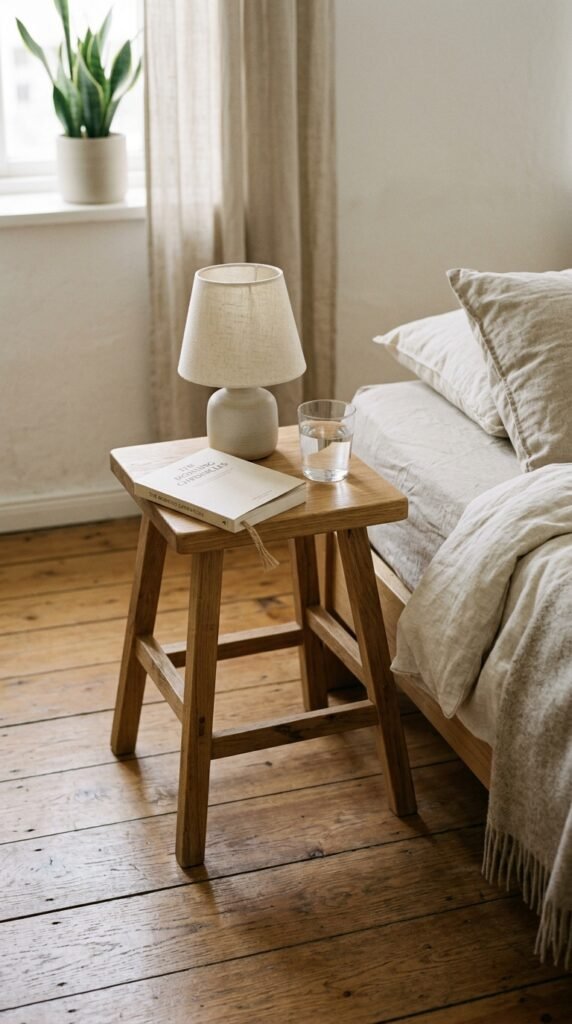
A simple wood or rattan stool used as a bedside table instead of a traditional nightstand introduces a different silhouette and frees up the under-surface area that a nightstand with drawers would otherwise enclose. The open base of a stool lets light and visual space pass underneath, which matters in smaller bedrooms where every piece of furniture’s visual weight counts.
A solid wood or rattan stool runs $40 to $120 and works particularly well in bedrooms already using floating shelves for storage, since the stool then only needs to hold a lamp, a book, and a glass of water rather than functioning as storage itself.
20. Add a Textile Wall Hanging With Natural Dye Tones
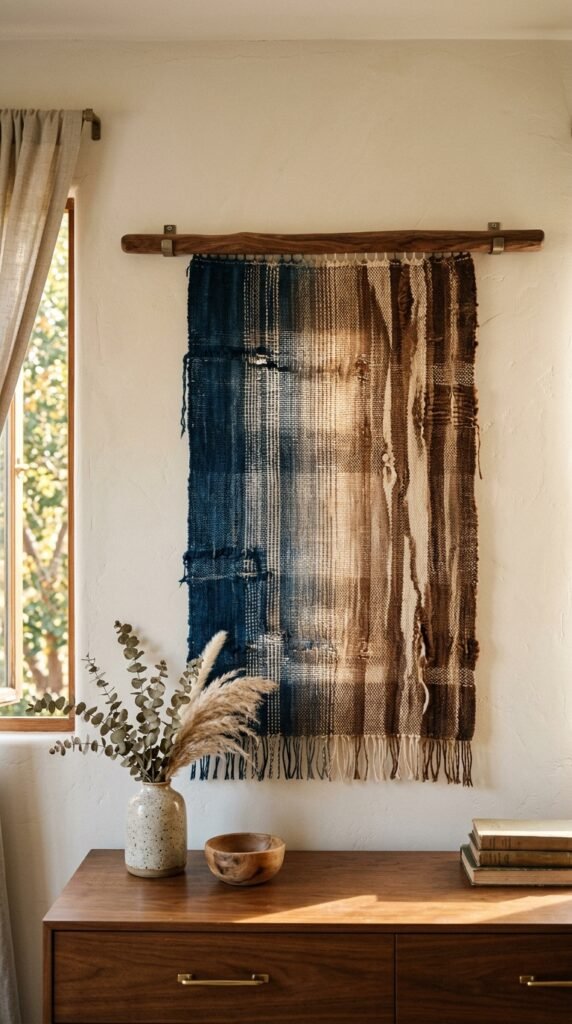
A wall hanging made with natural plant-based dyes, indigo, madder root, walnut husk, brings colors that have a depth and slight variation that synthetic dyes don’t replicate. Natural dye colors shift slightly across the surface of the fabric, creating subtle gradients that add visual interest even within a single piece.
Naturally-dyed textile wall hangings from independent makers on Etsy run $60 to $180 depending on size. Hang it where afternoon light hits it directly at least part of the day, since natural dyes often look most alive when light passes through or across the fabric.
21. Choose Furniture With Visible Joinery as a Design Feature
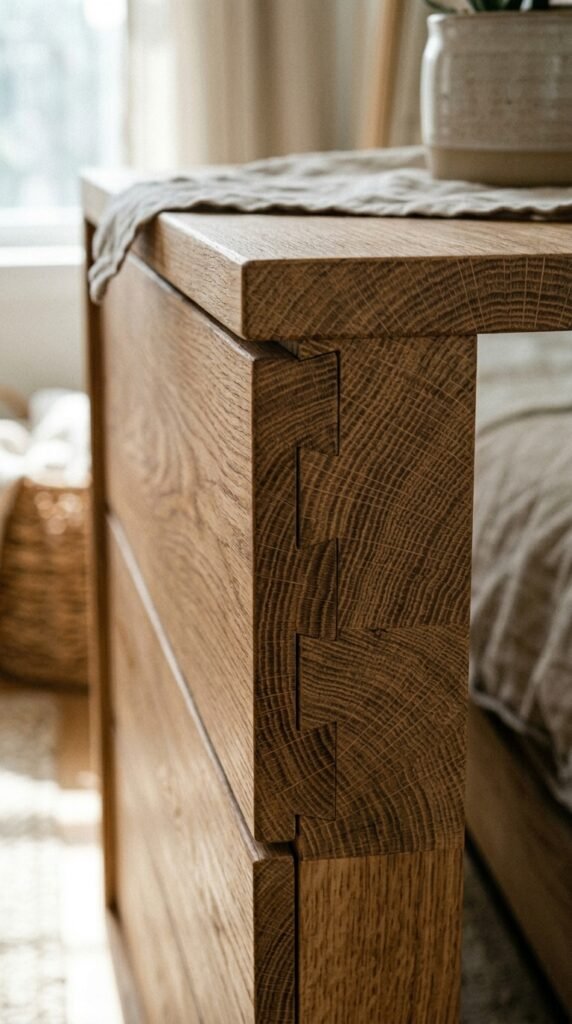
Furniture pieces where the joinery, dovetails, mortise and tenon joints, visible pegs, are exposed rather than hidden showcase the construction method as part of the design. Visible joinery signals quality and intention, the furniture equivalent of an open kitchen where you can see the cooking happen rather than food appearing from behind a closed door.
Furniture with visible joinery typically costs somewhat more than equivalent pieces with hidden construction, often by 15 to 30%, but a single dresser or bench with this detail can become a genuine focal point rather than just storage.
22. Use a Soft Gradient Paint Technique on One Wall
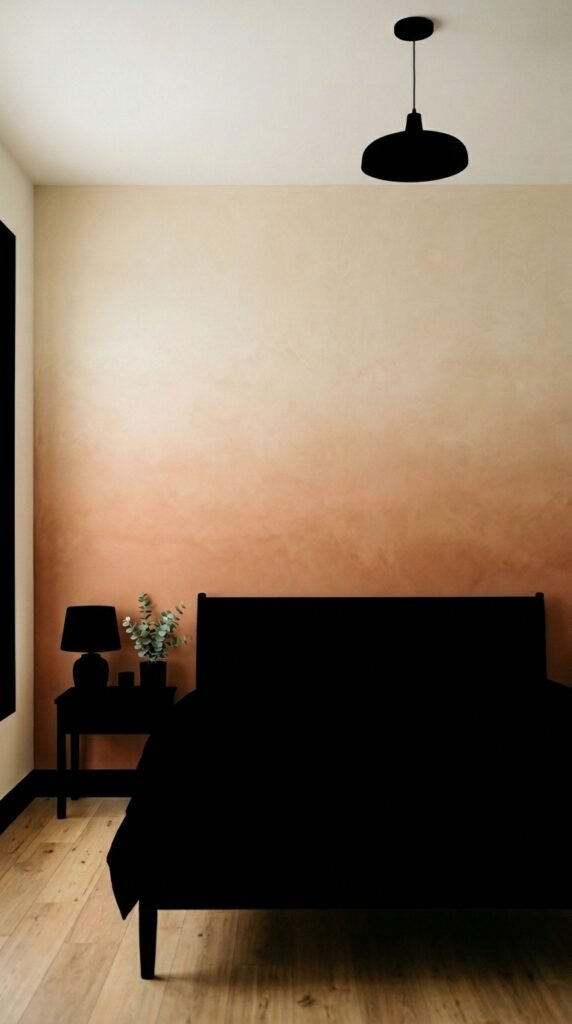
A subtle gradient paint effect, darker at the floor and gradually lightening toward the ceiling, or the reverse, adds depth and a sense of atmosphere to a single wall without requiring wallpaper or a mural. Gradients read as atmospheric rather than decorative, more like the quality of light at dusk than a pattern choice.
This technique requires patience rather than expensive materials: two or three paint colors in the same family, blended while wet along the transition zones, cost about $60 to $100 in paint for one wall. Practice the blending technique on a large piece of cardboard before committing to the wall itself.
23. Add a Canvas or Linen Room Divider for Flexible Zoning
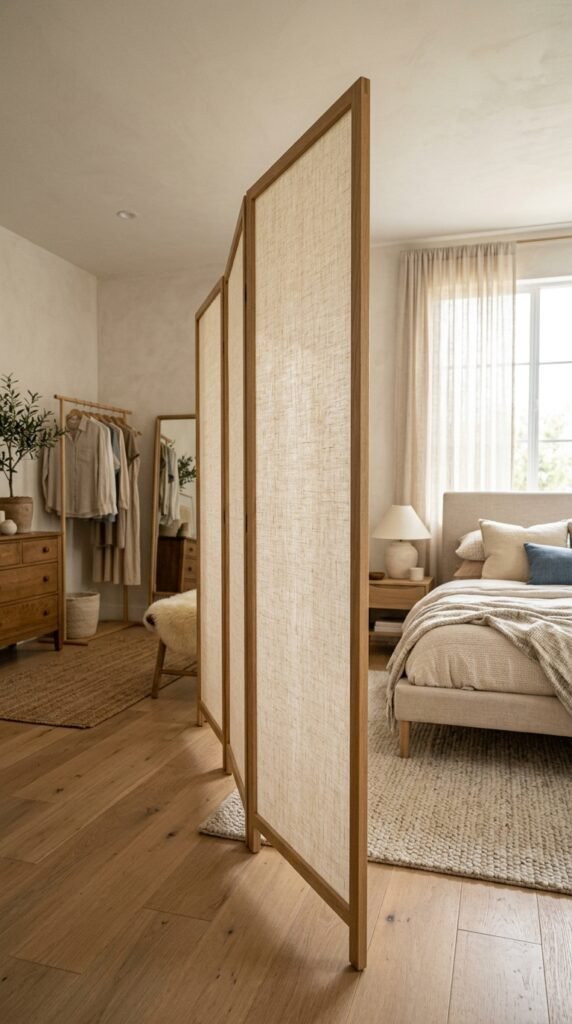
A freestanding canvas or linen room divider creates a soft visual boundary in larger bedrooms, separating a sleeping zone from a dressing or reading zone without the permanence of a wall. Fabric dividers diffuse light and sound rather than blocking them completely, maintaining the open, airy quality that hard partitions interrupt.
A canvas or linen folding screen runs $100 to $250 depending on the number of panels and fabric quality. Position it at an angle rather than flat against a wall, creating a sense of a separate zone behind it even in a room too small for an actual wall.
24. Incorporate a Small Indoor Water Feature for Ambient Sound
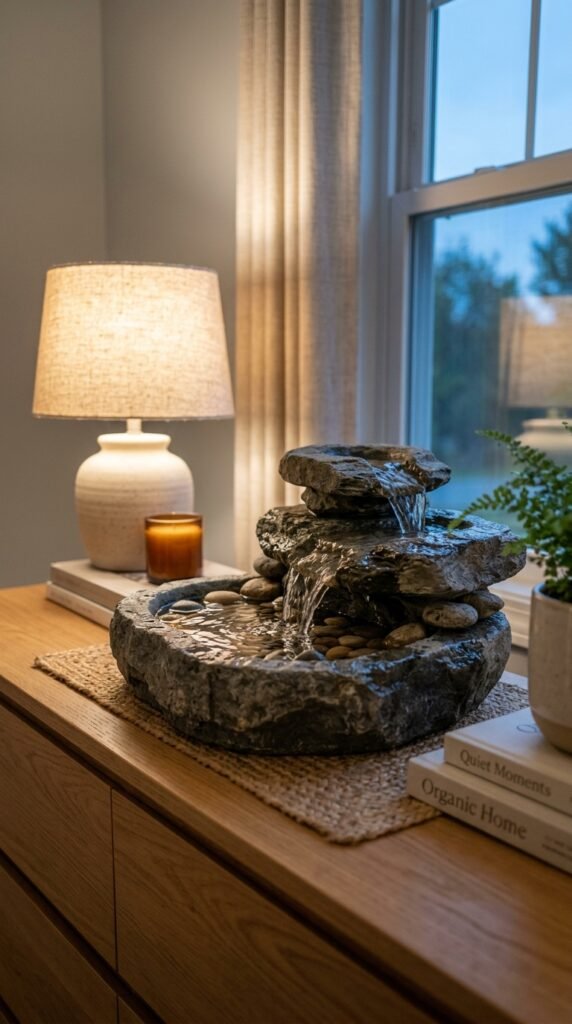
A small tabletop fountain with a natural stone or ceramic basin adds the sound of moving water to a bedroom, which research consistently links to improved sleep quality and reduced nighttime anxiety for many people. The sound itself does the work here, masking household noise and creating a consistent ambient backdrop that many people find easier to fall asleep against than silence.
A small tabletop fountain with a submersible pump costs $40 to $80 complete. Position it on a dresser or low shelf away from the bed itself, since the sound carries easily across a bedroom-sized space without needing to be close.
25. End With One Piece That Doesn’t “Match” Anything
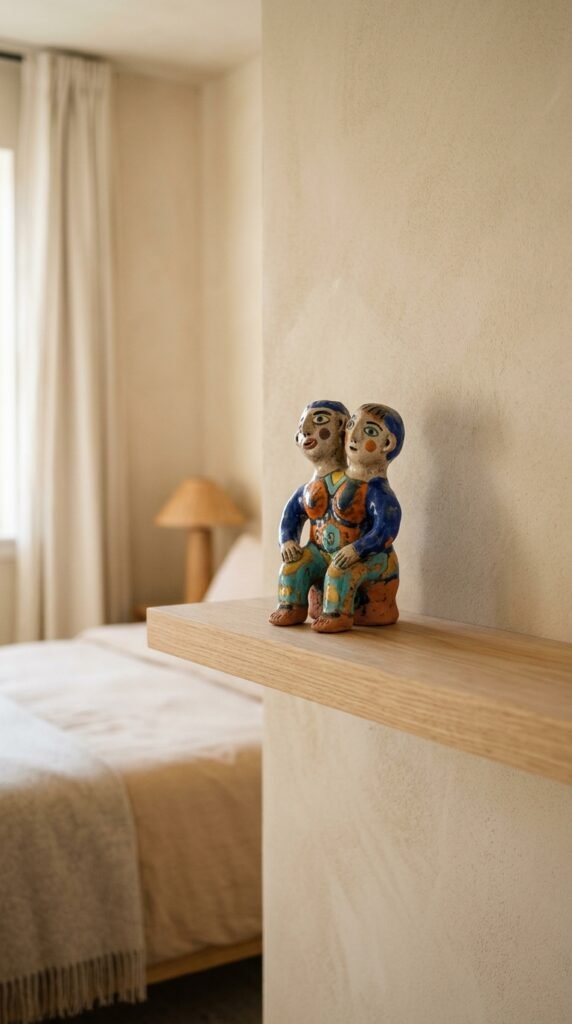
Every organic modern bedroom benefits from one object that doesn’t obviously belong with the rest: a piece of folk art, an inherited object, a strange little ceramic form picked up on a trip. This single unmatched piece prevents the room from feeling like it was assembled entirely from a single catalog, which is the trap that even well-executed organic modern rooms can fall into.
This costs nothing if the object already exists somewhere in your home, currently hidden in a drawer because it didn’t “go” with anything. Give it a spot on a shelf or nightstand where it can be the one thing in the room that has a story instead of a price tag.
Final Thoughts
Organic modern bedroom design isn’t about buying everything from the same three retailers and hoping it reads as curated. It’s about choosing materials that age honestly, textures that reward touch, and at least one object in the room that has nothing to do with a trend. Start with your walls and your bed frame, since those two elements set the material language for everything else. Add texture through rugs, throws, and lighting before you add color. And keep that one unmatched object somewhere visible. Your bedroom should feel like it grew slowly rather than arrived all at once, and that feeling is worth more than anything on this list individually.