25 Man Cave Ideas to Transform Any Room at Home
Every man deserves a room that’s entirely his. Not a shared living room where the remote control is a negotiation, not a bedroom corner with a gaming chair squeezed between the wardrobe and the wall. A proper dedicated space designed around exactly what you want to do in it.
Whether you have a basement, a garage, a spare bedroom, or a garden shed, these 25 man cave ideas give you the specific moves to turn that space into somewhere you genuinely want to spend time. No vague inspiration boards. No suggestions to “add some plants.” Just practical ideas that work.
1. Build a Home Theatre Setup as the Room’s Centrepiece
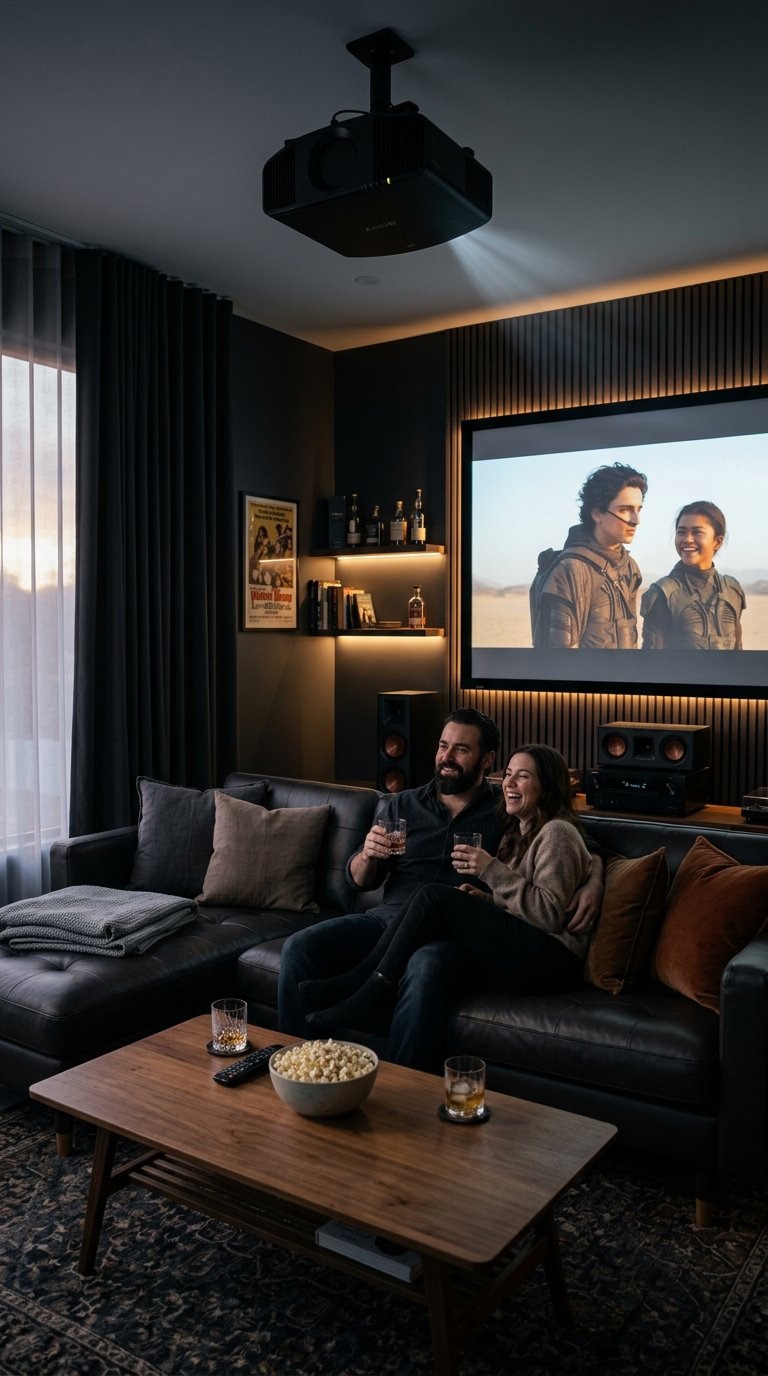
A dedicated home theatre is the man cave upgrade that delivers the most immediate and consistent return. A 100-inch projector screen with a 4K laser projector costs $800 to $3,000 and produces a cinema experience that no flat-screen TV replicates at any price point.
Pair the projector with a 5.1 surround sound system from brands like Sonos, Klipsch, or SVS and the room becomes the best movie venue within a 10-mile radius of your house. Add blackout curtains, acoustic foam panels on the back wall, and tiered seating (a standard sofa behind a lower coffee table and floor cushions in front) for the full experience.
2. Install a Wet Bar with a Dedicated Drinks Fridge
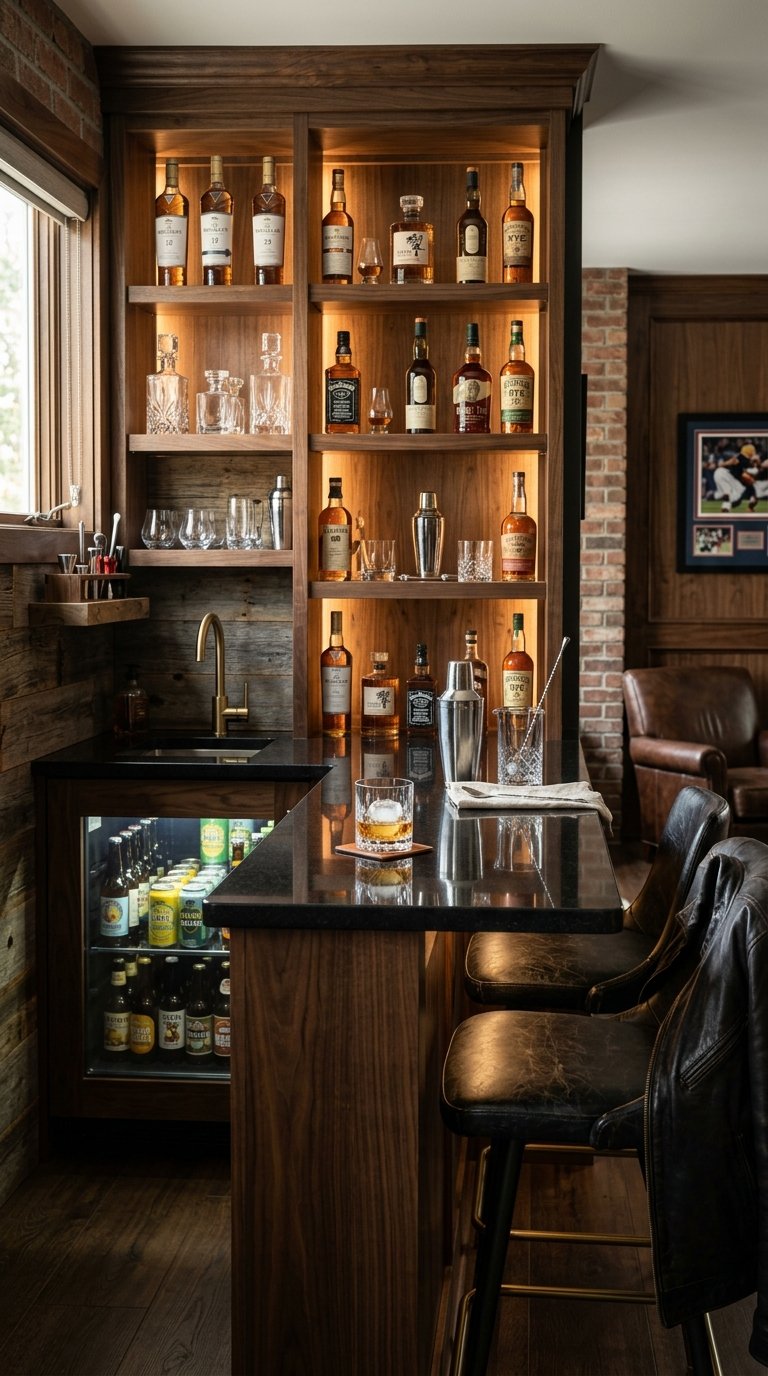
A wet bar transforms any man cave from a room with stuff in it to a room with a purpose. A bar counter built from reclaimed timber or dark-stained MDF with a stainless steel or granite top costs $500 to $2,000 to build depending on size and materials.
Add an undercounter drinks fridge ($200 to $600), a set of proper glassware, a speed rail for spirits, and backlit shelving for bottles and the bar becomes the room’s centrepiece. Every good man cave has one reason people want to be there. A well-stocked bar is that reason.
3. Create a Gaming Zone with Proper Setup and Sound
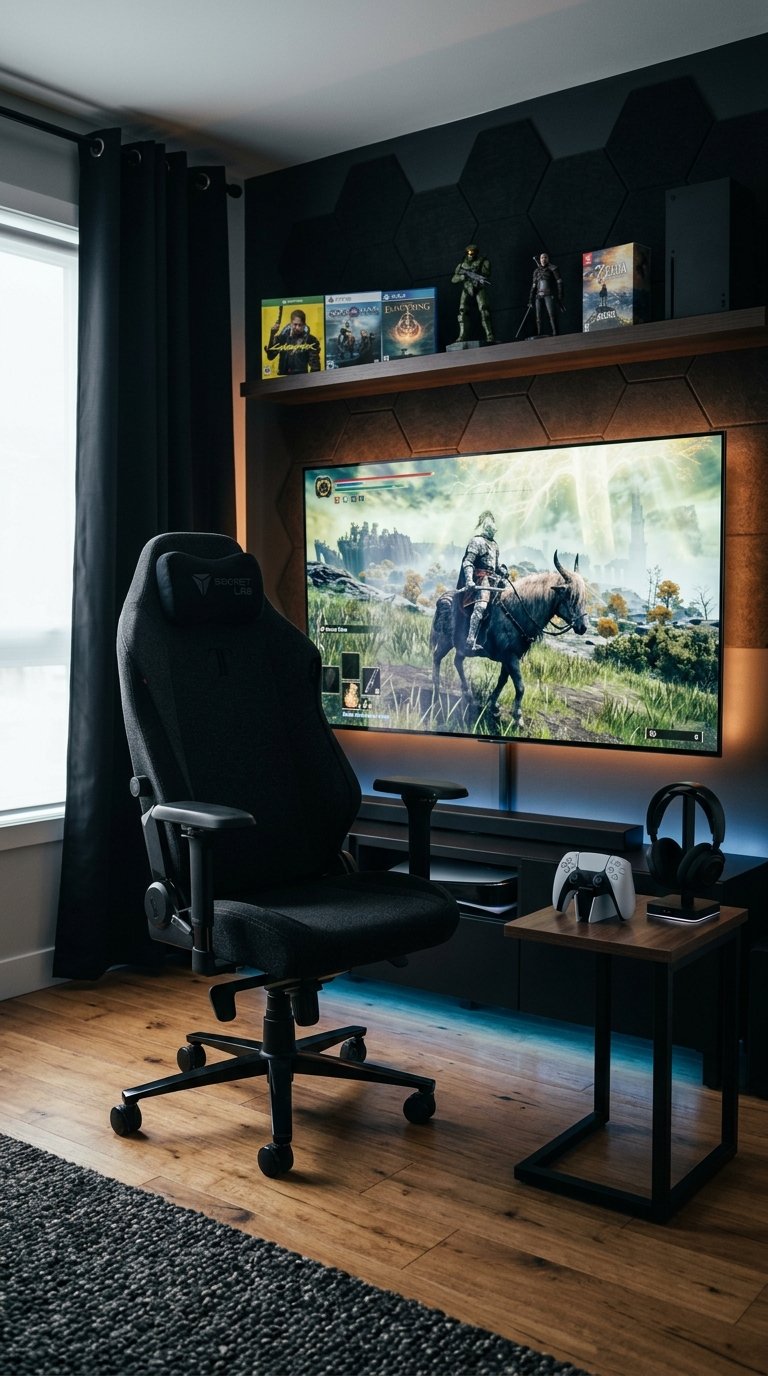
A gaming zone in a man cave needs three things done correctly: the display, the seating, and the sound. A 65-inch 4K OLED TV costs $1,200 to $2,500 and delivers gaming performance (response time, refresh rate, contrast) that standard TVs never match.
Pair it with a proper gaming chair ($200 to $600) positioned at the correct distance from the screen (approximately 8 to 10 feet for a 65-inch display) and a gaming headset or dedicated desk speakers for audio. The setup matters more than the game library.
4. Set Up a Billiards Table as the Room’s Social Anchor
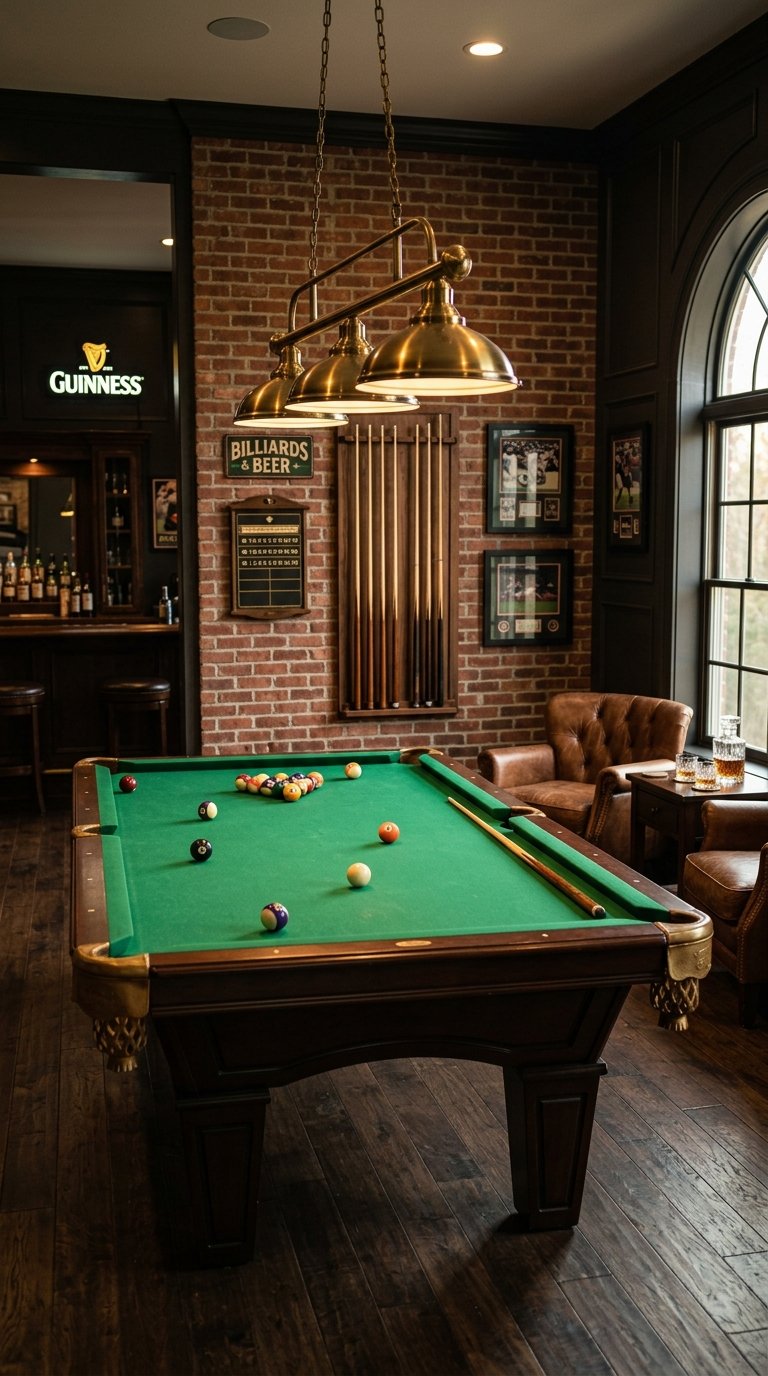
A pool table makes a man cave social in a way that no screen-based activity does. A standard 8-foot billiards table costs $800 to $3,000 and requires a room of at least 14 x 18 feet to accommodate comfortable cue clearance on all sides.
Install a low-hanging billiard light directly above the table (hanging 32 to 36 inches above the playing surface) for proper illumination and dramatic aesthetic. Add a wall-mounted cue rack and a scoreboard and the pool table becomes a room in itself. IMO, no man cave feature generates more genuine use and enjoyment per dollar than a pool table.
5. Build a Home Gym Corner with Quality Equipment
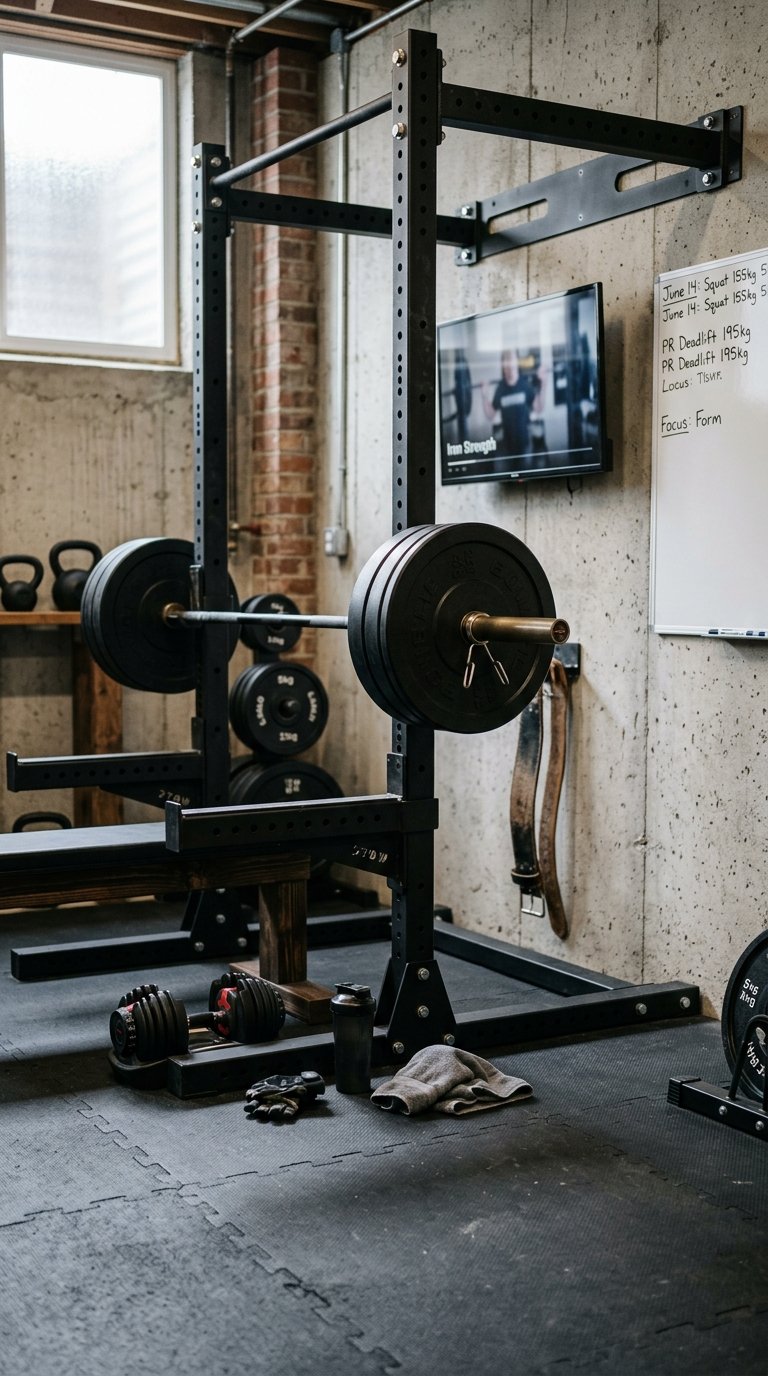
A man cave home gym section turns a basement or garage into a space you use every single day rather than only on weekends. The minimum effective setup: a power rack ($400 to $1,500), a barbell and weight plates ($300 to $800), and a set of rubber floor mats ($100 to $300).
Add a wall-mounted TV or speaker system for workout audio, a whiteboard for tracking lifts, and a pull-up bar mounted in the doorframe or power rack. The gym corner also justifies the man cave to anyone questioning why you need an entire room to yourself. Practical motivation.
6. Install a Dart Board Wall with Proper Lighting
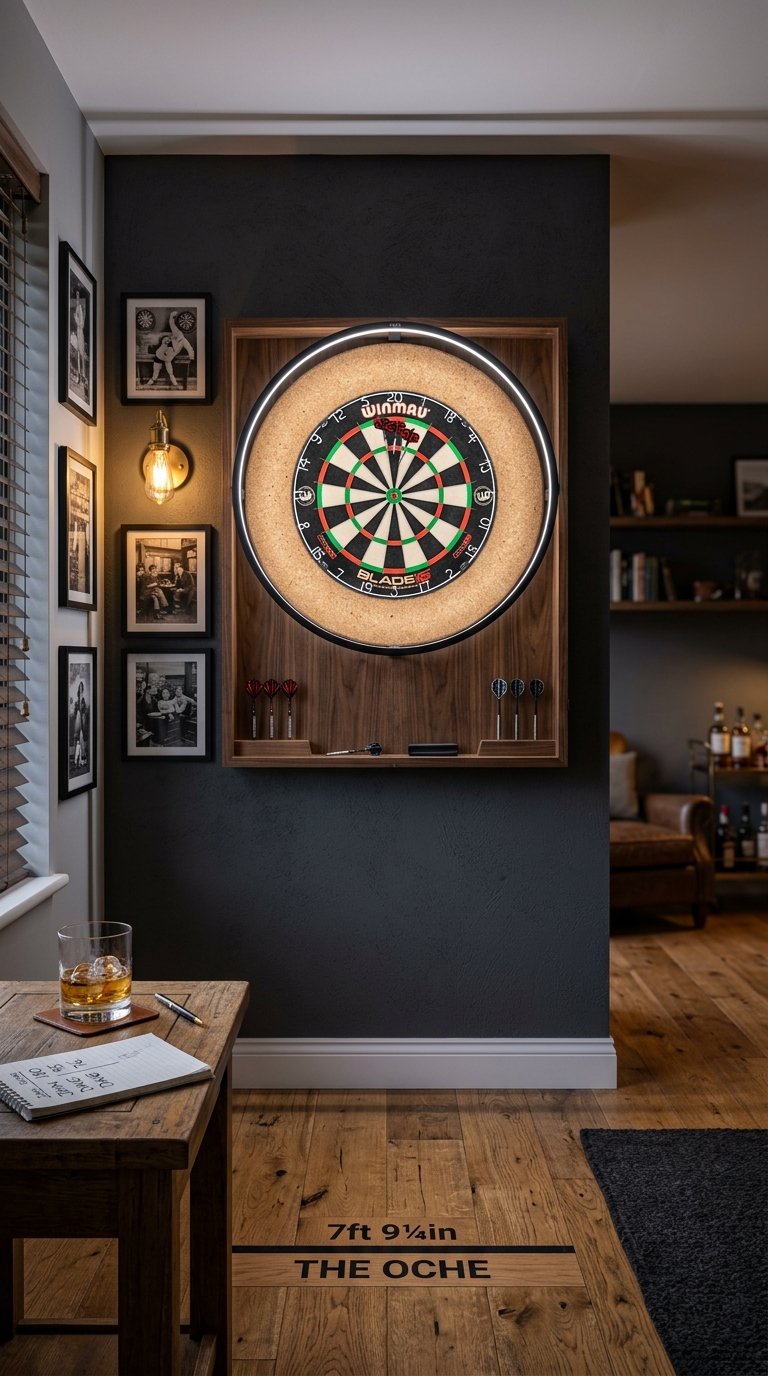
A dartboard mounted on a proper cabinet with a LED light ring above it costs $100 to $400 total and provides competitive entertainment for two to six people with no screen time required. Mount the board at 5 feet 8 inches to the bullseye from the floor and mark the throw line (oche) at 7 feet 9.25 inches for standard steel-tip darts.
Protect the surrounding wall with a dartboard surround or DIY cork panel (a 4 x 4 foot cork tile sheet costs $30 to $60) to catch errant throws. A dartboard wall takes one afternoon to set up and delivers years of competitive entertainment for almost no ongoing cost.
7. Design a Whisky or Craft Beer Tasting Corner
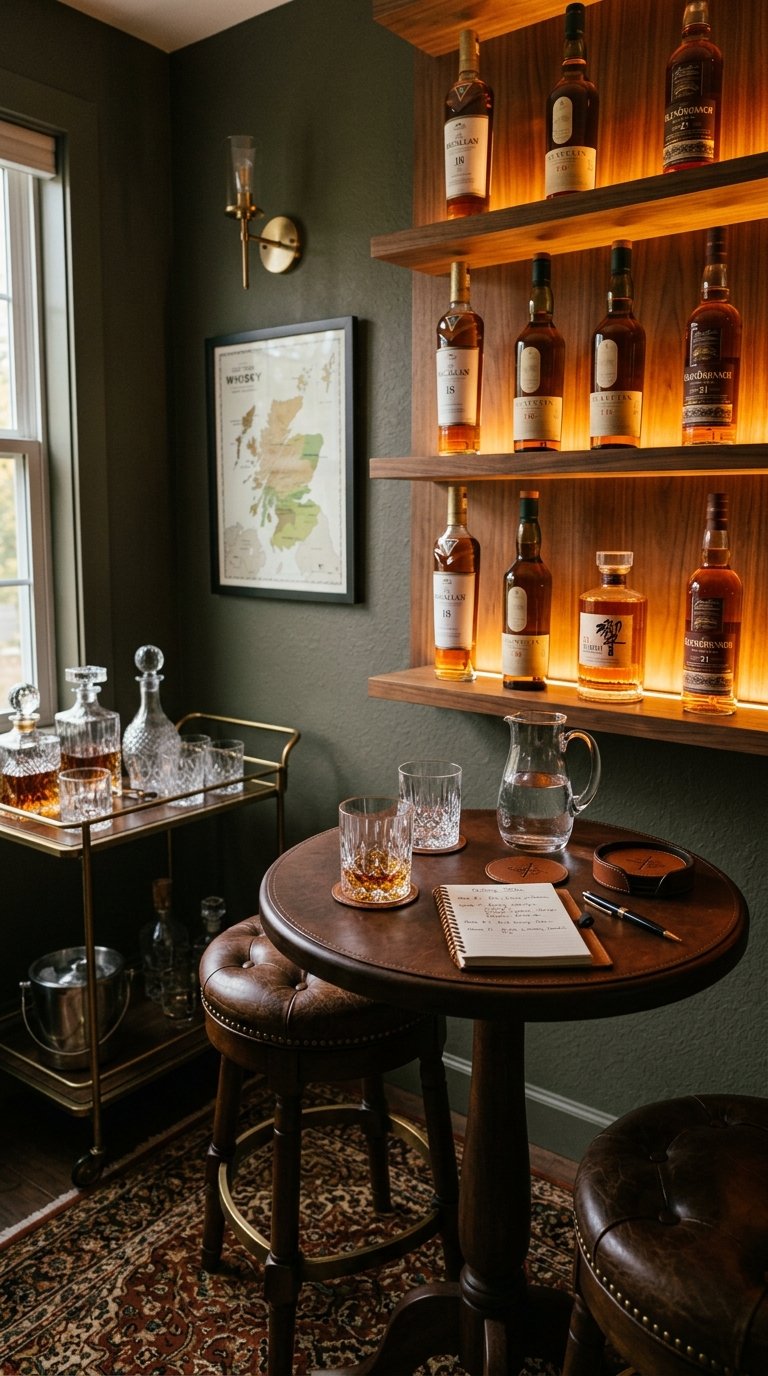
A dedicated tasting corner elevates the man cave bar from a drinks station to a genuine appreciation space. Install a floating shelf display for whisky bottles or a beer tap system ($200 to $800 for a kegerator) alongside a small tasting table with two to four stools.
Add tasting notes cards, a water pitcher for palate cleansing, and proper nosing glasses or branded pint glasses for the specific drinks you favour. The tasting corner distinguishes a man cave with genuine personality from one that’s just a room with a fridge in it.
8. Set Up a Vinyl Record Listening Station
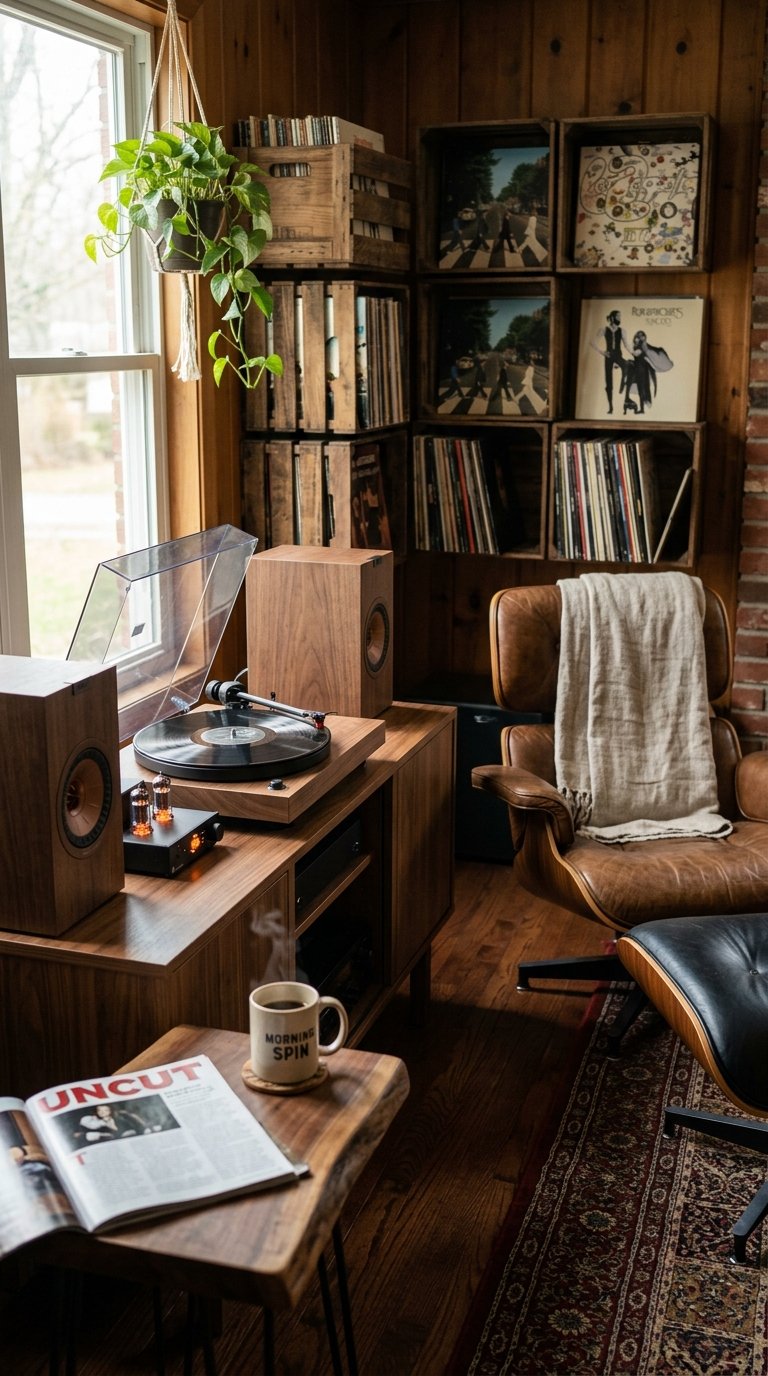
A vinyl setup in a man cave delivers audio quality and ritual that streaming never replicates. A quality turntable from brands like Audio-Technica (AT-LP120X, $299) or Pro-Ject (Debut Carbon Evo, $499) paired with bookshelf speakers from Klipsch or KEF costs $500 to $1,500 total.
Display your record collection on wall-mounted crates or a dedicated shelving unit where the spines are visible and accessible. The physical act of choosing, handling, and playing a record changes how you listen to music, and that experience belongs in a room designed for genuine enjoyment.
9. Add Neon Signs That Personalise the Space
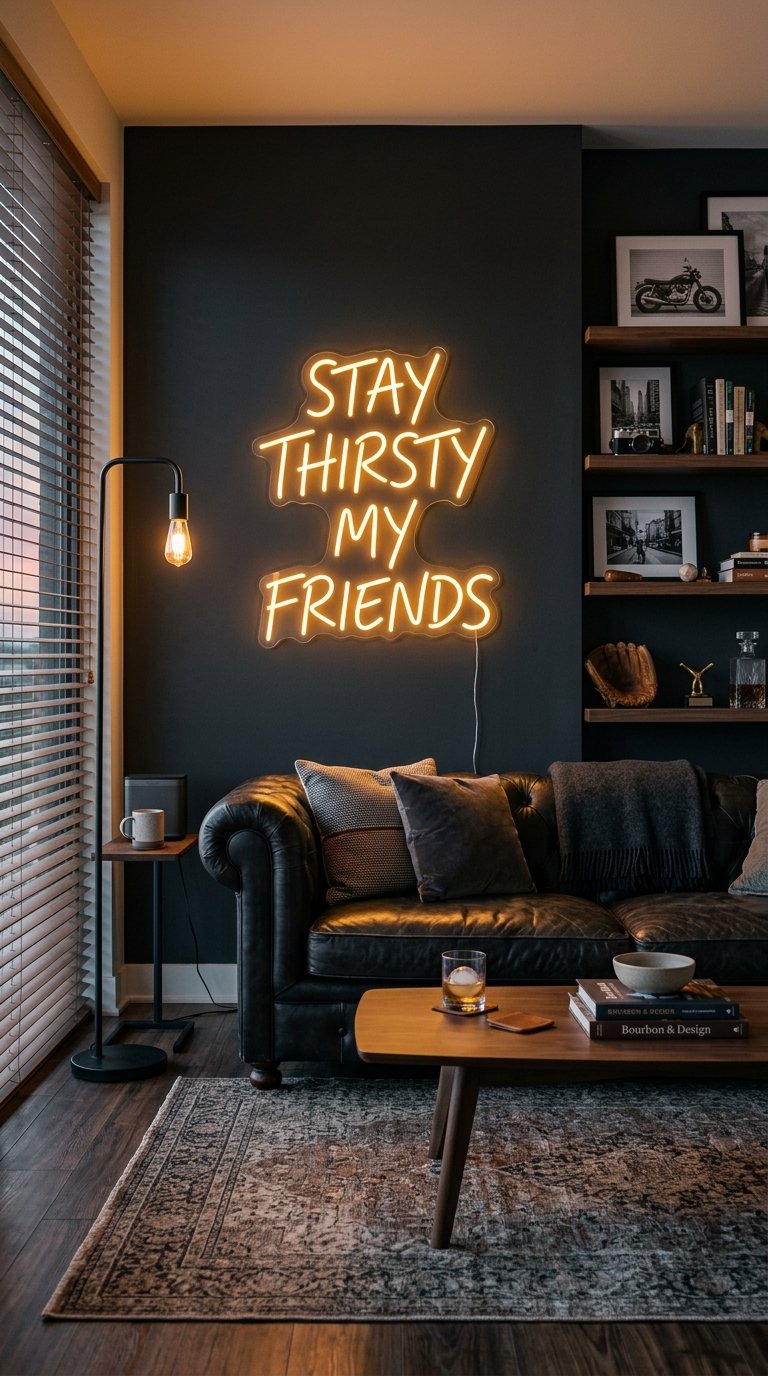
Custom neon signs cost $100 to $400 depending on size and design, and they personalise a man cave faster than any other single decorative element. Choose a phrase, a logo, a favourite team name, or a symbol that means something specific to you rather than a generic “This is my cave” sign. 🙂
LED neon flex signs consume 80 percent less power than glass neon and produce the same warm glow without the fragility. Mount them on a dark painted wall or above the bar for maximum visual impact. A neon sign makes every social gathering in the room more photogenic and more memorable.
10. Install Acoustic Panels for Better Sound Quality
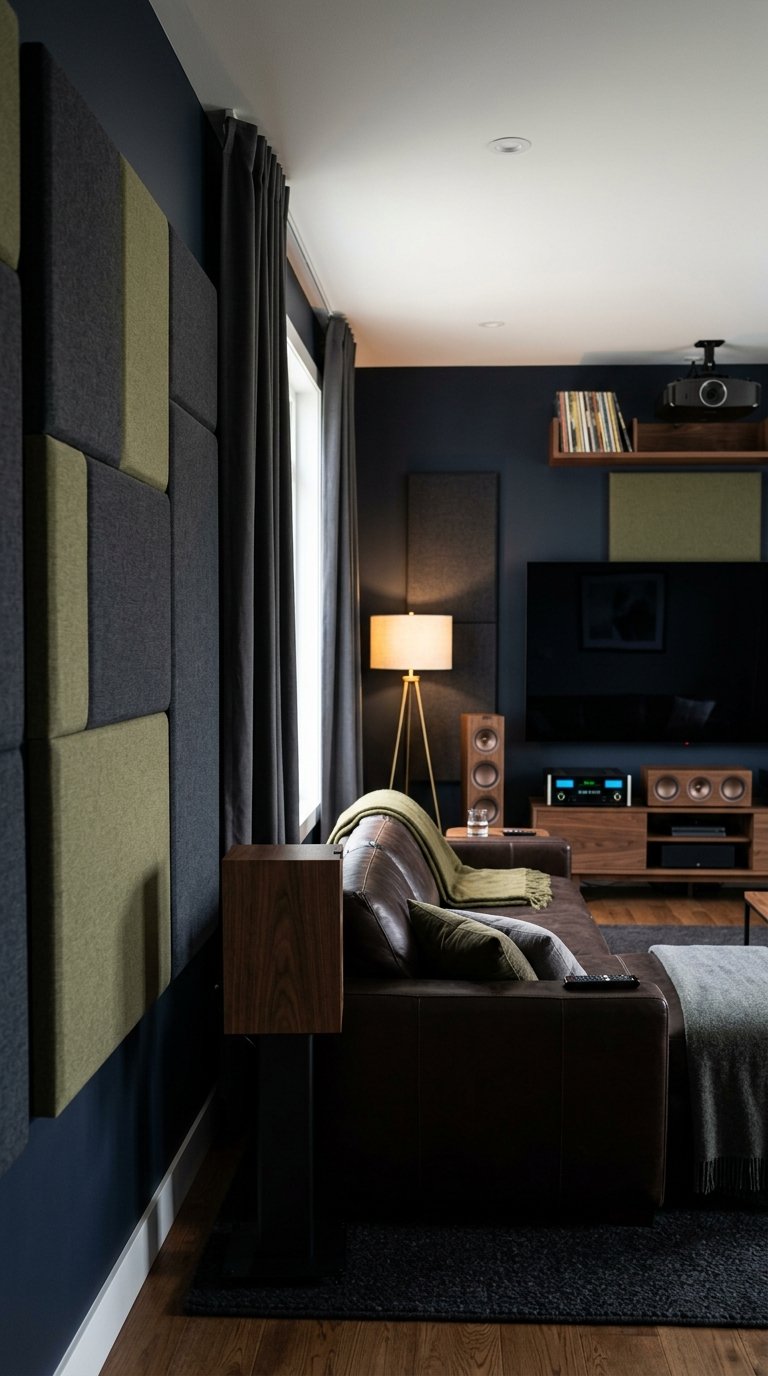
Acoustic foam panels on the walls of a man cave improve the sound quality of your home theatre, gaming setup, and music system simultaneously. Sound bouncing off hard walls creates echo and muddiness that the best speaker systems never overcome.
A set of 12 acoustic foam panels (2 x 2 feet each) costs $30 to $80 and reduces room echo by 40 to 60 percent. Mount them at primary reflection points (the wall directly behind the main listening position and the two side walls at ear level) for the most effective placement. The room doesn’t need to look like a recording studio: fabric-wrapped acoustic panels come in colours and patterns that suit any man cave aesthetic.
11. Build a Sports Memorabilia Wall
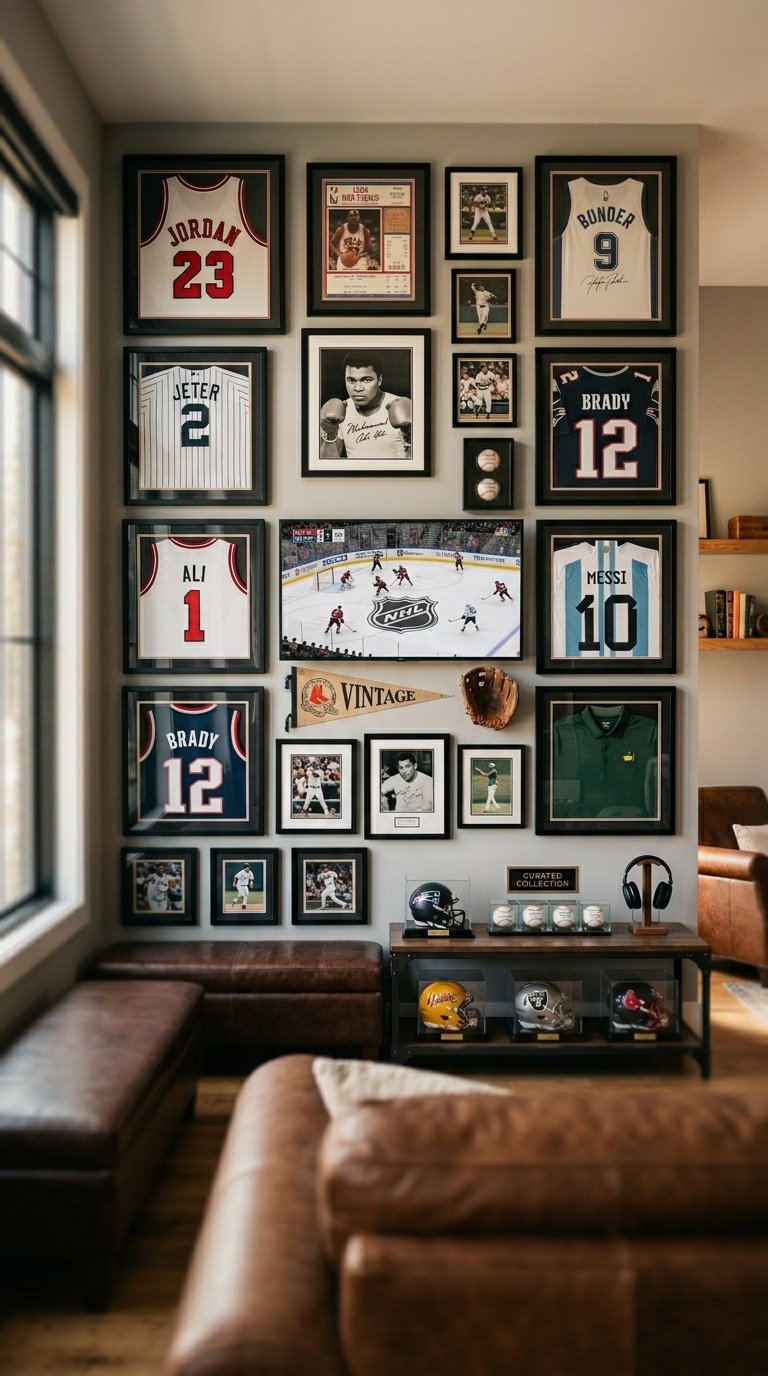
A dedicated wall of framed jerseys, signed photographs, match programmes, and display cases for caps, balls, and equipment turns personal sports fandom into the room’s primary design statement. A jersey framing kit costs $40 to $120 per frame and mounts like a standard picture frame.
Organise the wall by team, era, or sport for a collection that reads as curated rather than accumulated. A sports memorabilia wall also generates more conversation among guests than any other man cave feature because every object has a story attached to it.
12. Set Up a Poker Table for Regular Game Nights
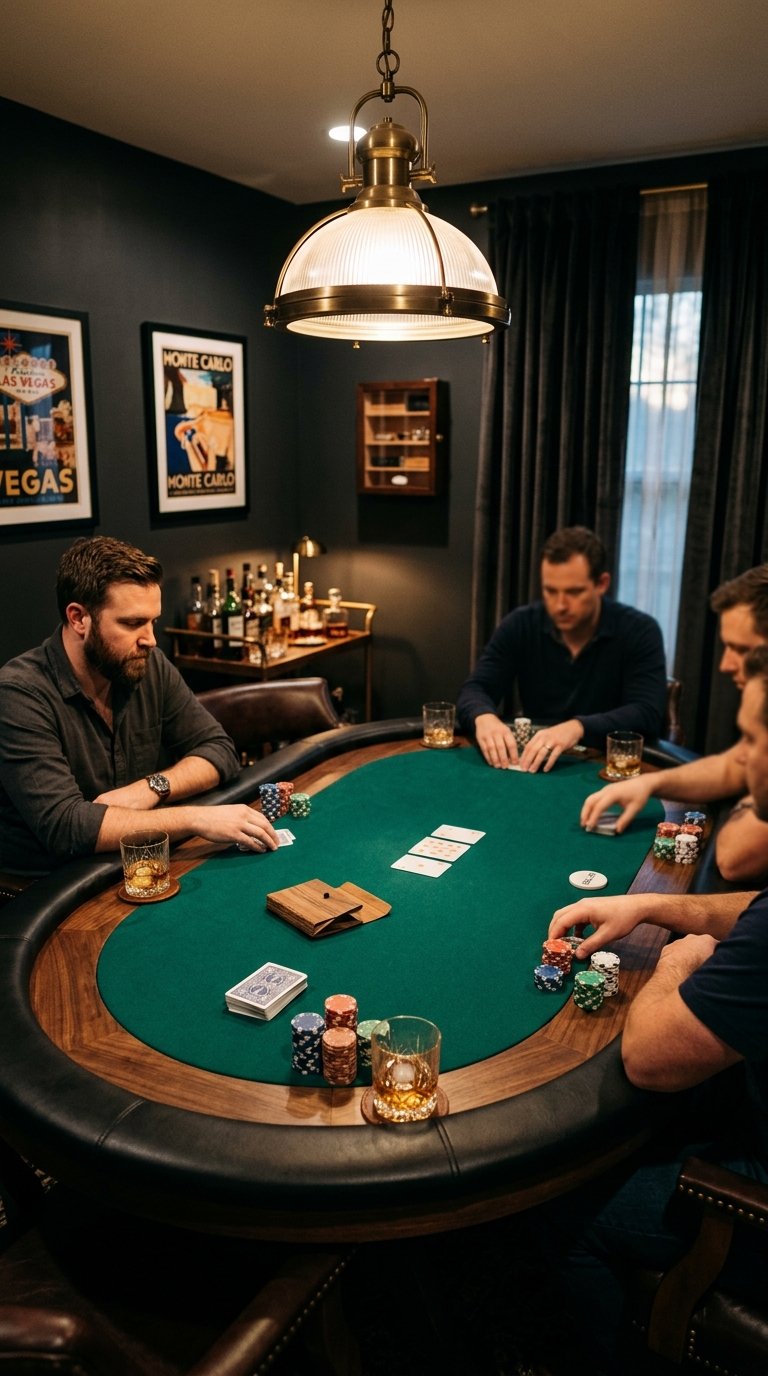
A folding poker table top costs $60 to $200 and converts any dining table into a felt-surface poker setup. A dedicated poker table (freestanding, with padded rail and chip wells) costs $300 to $1,500 and seats 6 to 10 players.
Add a professional poker chip set ($50 to $200), a card shuffler, and proper overhead lighting and you have the best poker night venue in your social circle. A regular game night gives the man cave a recurring social purpose that keeps the space in genuine use week after week.
13. Create a Home Recording Studio Corner
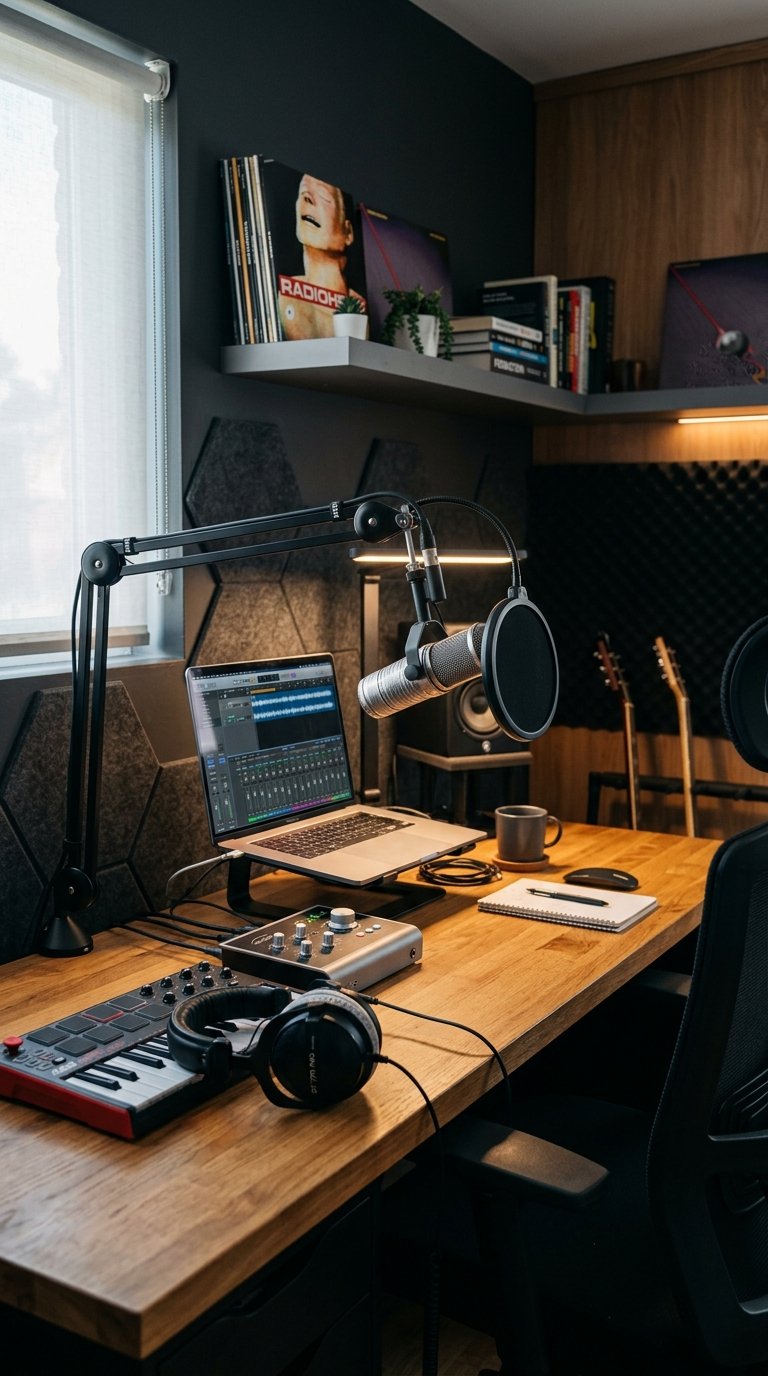
A home recording studio setup in a man cave requires three core components: a condenser microphone ($100 to $500), an audio interface ($100 to $400), and a DAW (Digital Audio Workstation) software on a laptop or desktop. Add studio monitor speakers ($200 to $800 per pair) and acoustic treatment on the surrounding walls.
The recording corner suits musicians, podcasters, voiceover artists, and anyone who wants to produce audio content at a quality level that consumer equipment never delivers. A proper mic, interface, and treated corner costs $500 to $1,500 total and produces broadcast-quality audio from day one.
14. Install a Multi-Screen Gaming and Trading Setup
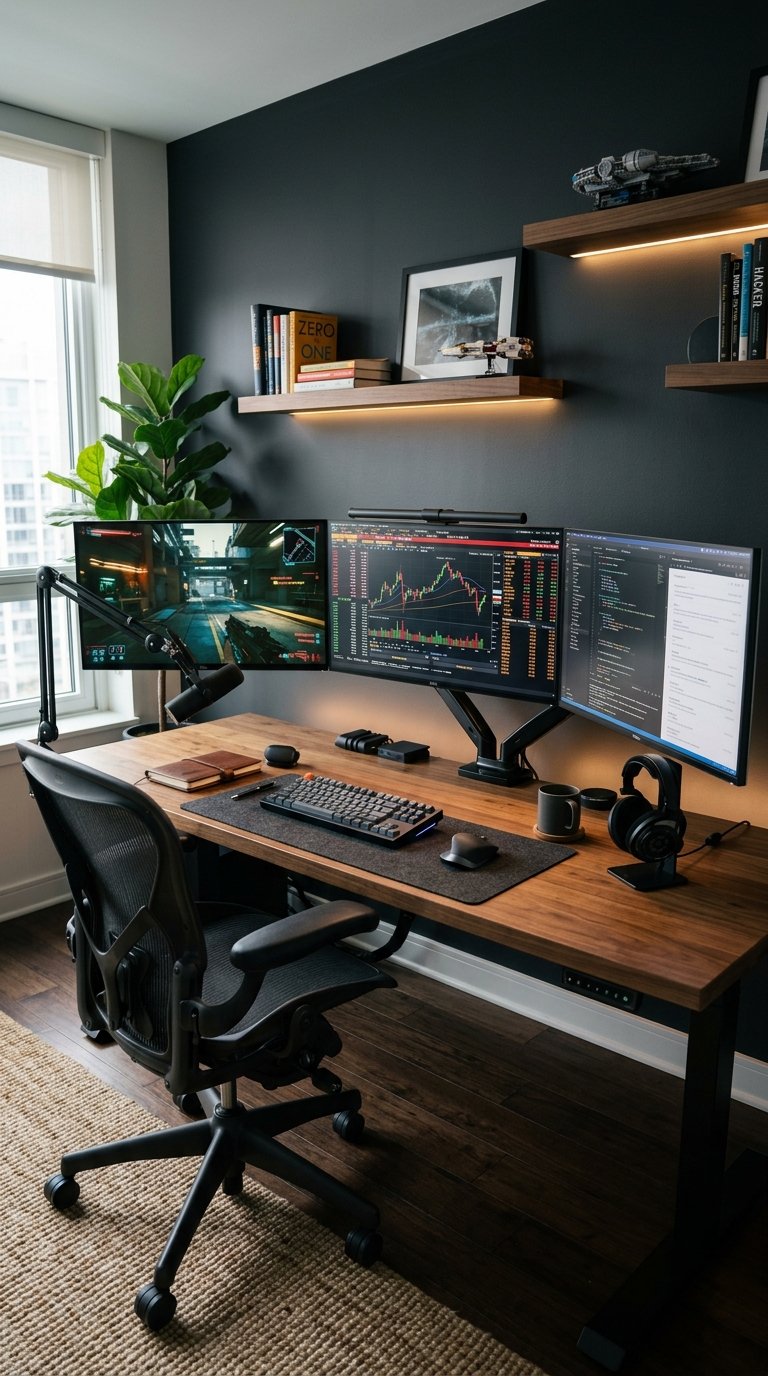
A three-monitor stand with three 27-inch monitors costs $600 to $1,500 total and creates a command centre that works for gaming, stock trading, content creation, and sports betting monitoring simultaneously. The multi-screen setup uses space vertically with a monitor arm rather than horizontally, which suits smaller man caves where desk width is limited.
A proper desk ($200 to $600), a quality office chair rated for long sessions ($300 to $800), and cable management (a cable tray under the desk costs $20 to $50) complete the setup. The multi-screen command centre makes the man cave a productive work environment as well as a leisure space, which justifies the room’s existence to everyone in the household. FYI, that last point is probably the most valuable thing on this list.
15. Add a Retro Arcade Cabinet
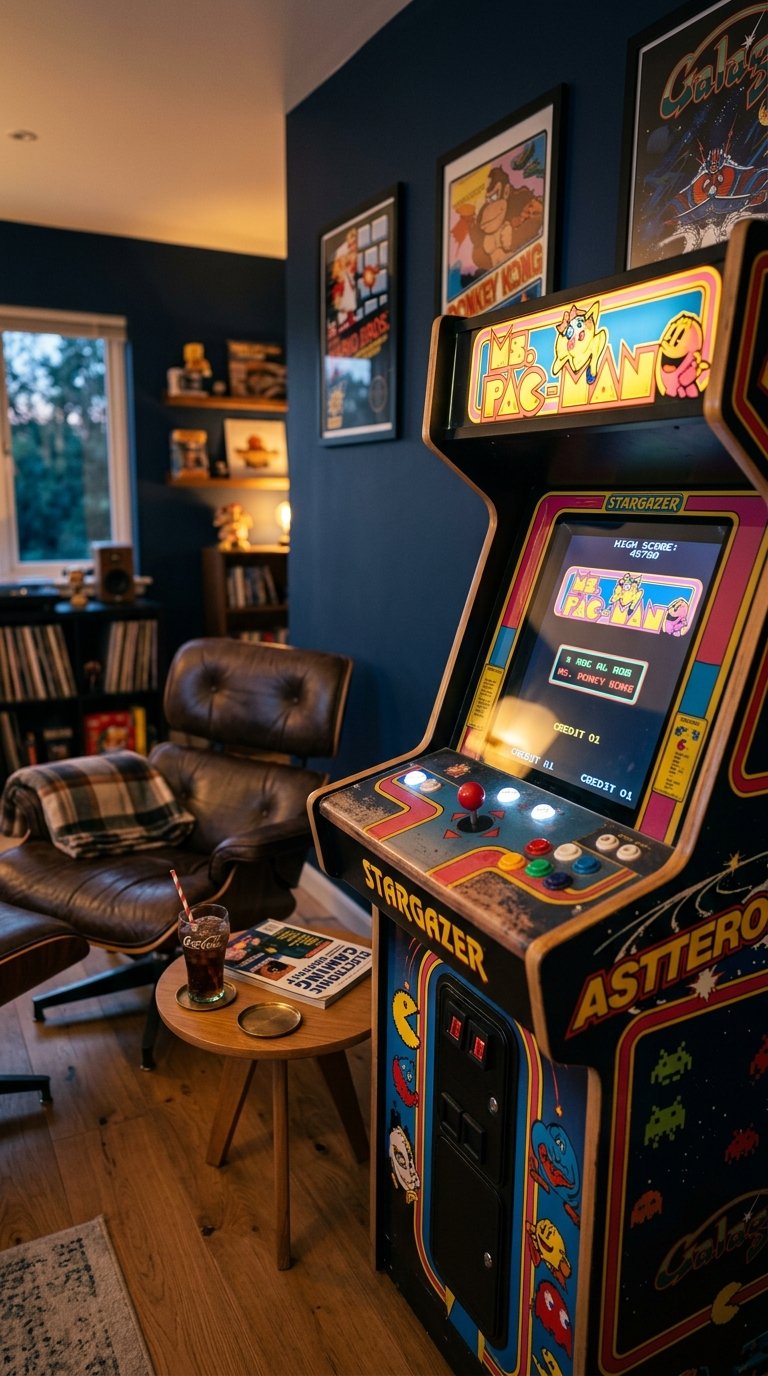
A full-size retro arcade cabinet preloaded with thousands of classic games costs $800 to $2,000 and becomes the most-played piece of equipment in any man cave within the first week of arrival. Brands like Arcade1Up sell licensed versions of specific cabinet designs (Street Fighter, Pac-Man, Mortal Kombat) for $400 to $700.
A custom-built or converted MAME arcade cabinet costs $300 to $800 in parts and runs thousands of games from the 1980s and 1990s. The physical cabinet format, the joystick and button controls, and the original artwork make retro gaming feel completely different from playing the same games on a modern console.
16. Build a Custom Bar with a Tap System
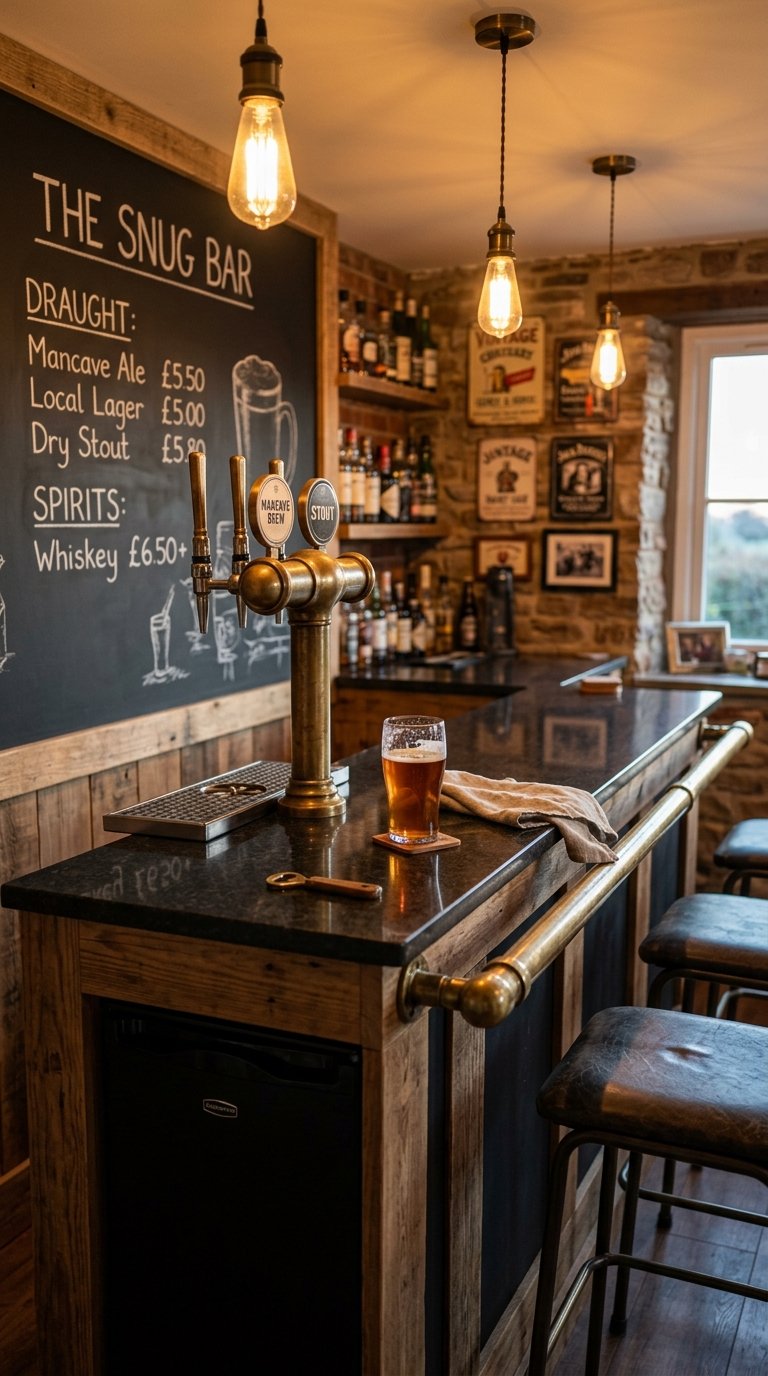
A kegerator (a refrigerator converted to dispense draught beer from a keg) costs $300 to $800 for a standard unit and supplies fresh draught beer at approximately 50 percent of the retail cost of bottled beer over time. Build a custom timber bar surround around the kegerator with a reclaimed wood counter, a footrail, and a chalkboard menu panel above.
The draught tap system makes the man cave bar feel like a proper pub and gives regular visitors a reason to prefer your space over going out. A 50-litre keg of a favourite lager costs $150 to $250 and serves approximately 140 half-pint glasses of fresh beer.
17. Create a Photography or Art Studio Space
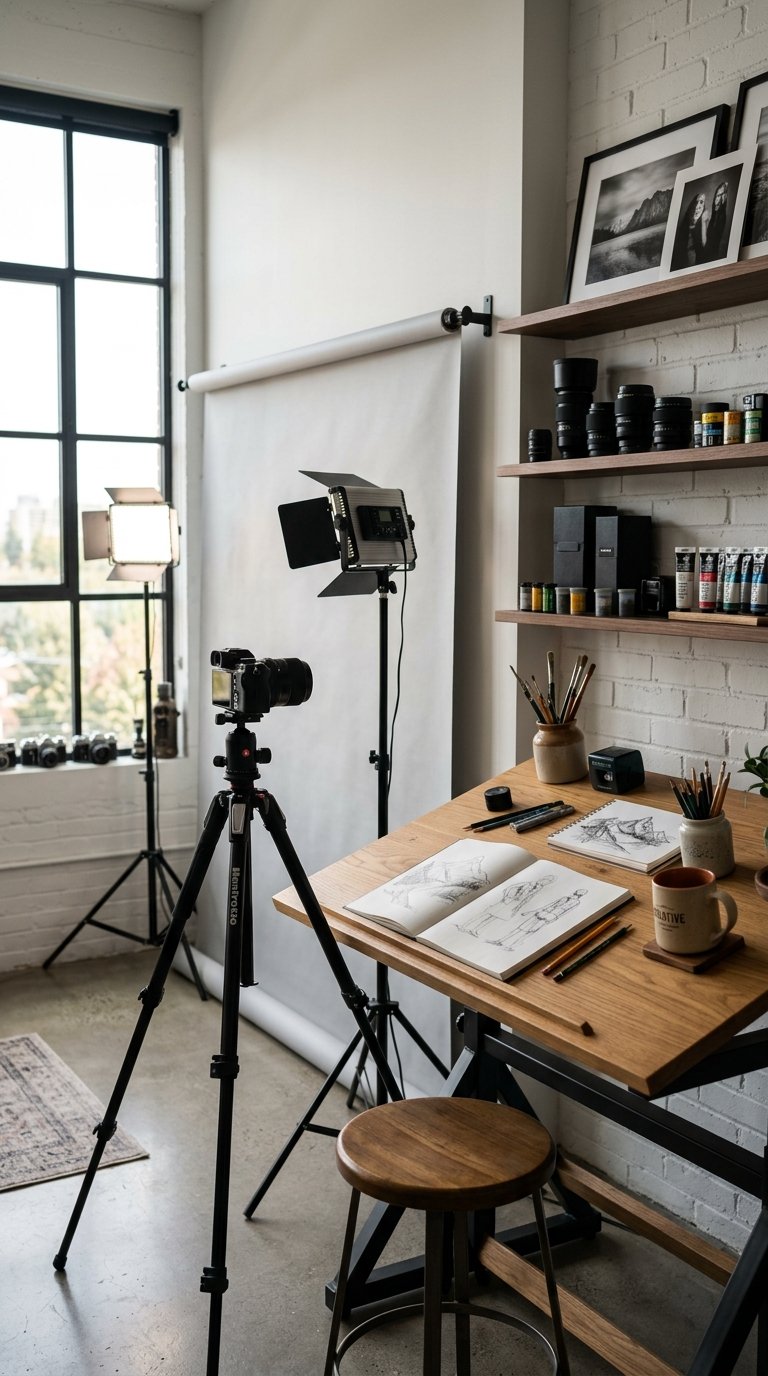
A photography studio corner in a man cave requires a backdrop system ($80 to $200 for a collapsible or wall-mounted frame), two continuous LED studio lights ($100 to $300 per light), and a clear 8 x 8 foot floor area for shooting. The corner suits portrait photography, product photography, and creative content creation.
An art studio section with a tilting drawing table ($100 to $400), a proper task lamp, and organised art supply storage creates a dedicated creative workspace that the rest of the house rarely accommodates. Both studio setups use the man cave for serious creative work rather than passive entertainment.
18. Install Smart Lighting with Scene Control
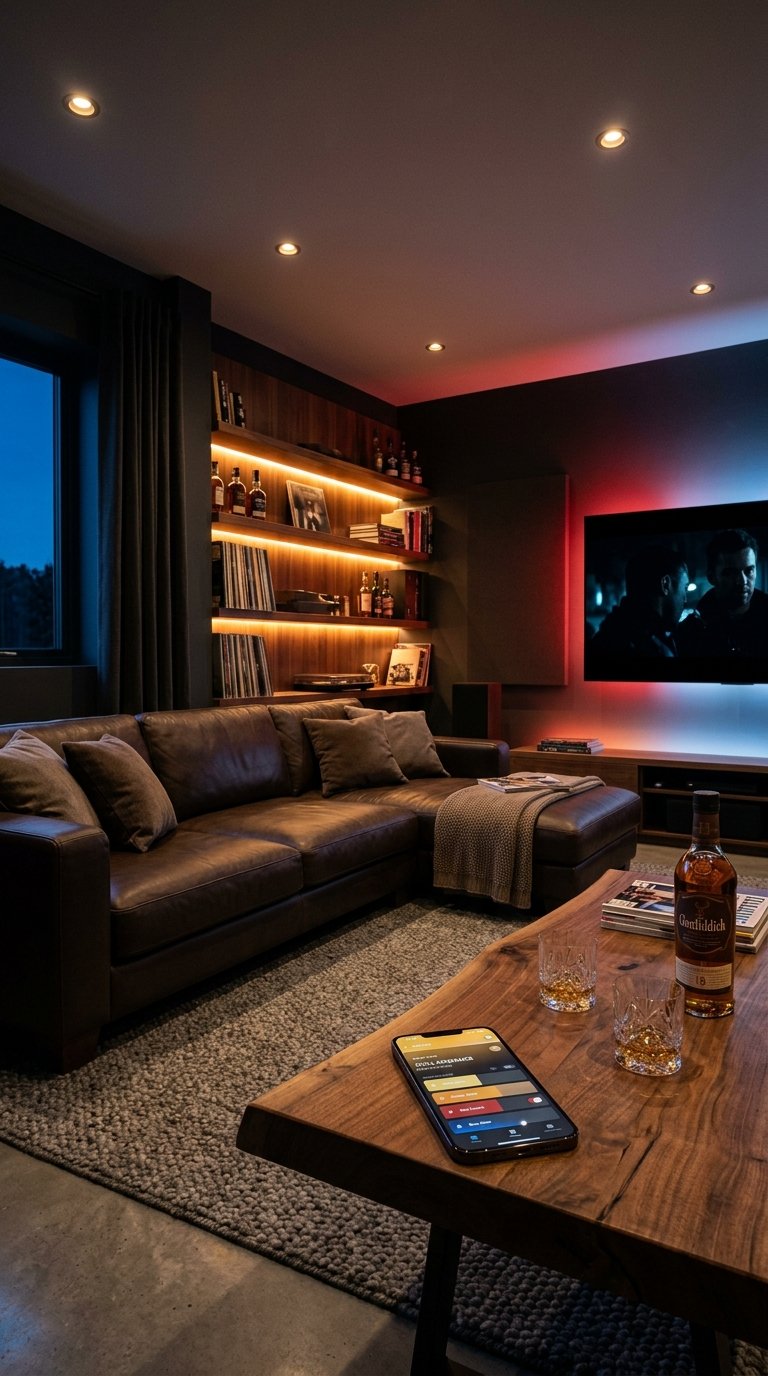
Smart LED lighting systems (Philips Hue, Govee, or LIFX) cost $100 to $400 for a full man cave setup and allow you to change the room’s atmosphere with a single voice command or phone tap. Set scenes for different activities: bright white for gaming, warm amber for drinks and conversation, deep red for movie watching, team colours for sports events.
The lighting scene control makes the man cave feel responsive and intentional rather than static. A man cave where the lighting changes with the activity in it feels like a space designed for genuine use, not just decorated for show.
19. Add a Coffee and Espresso Station
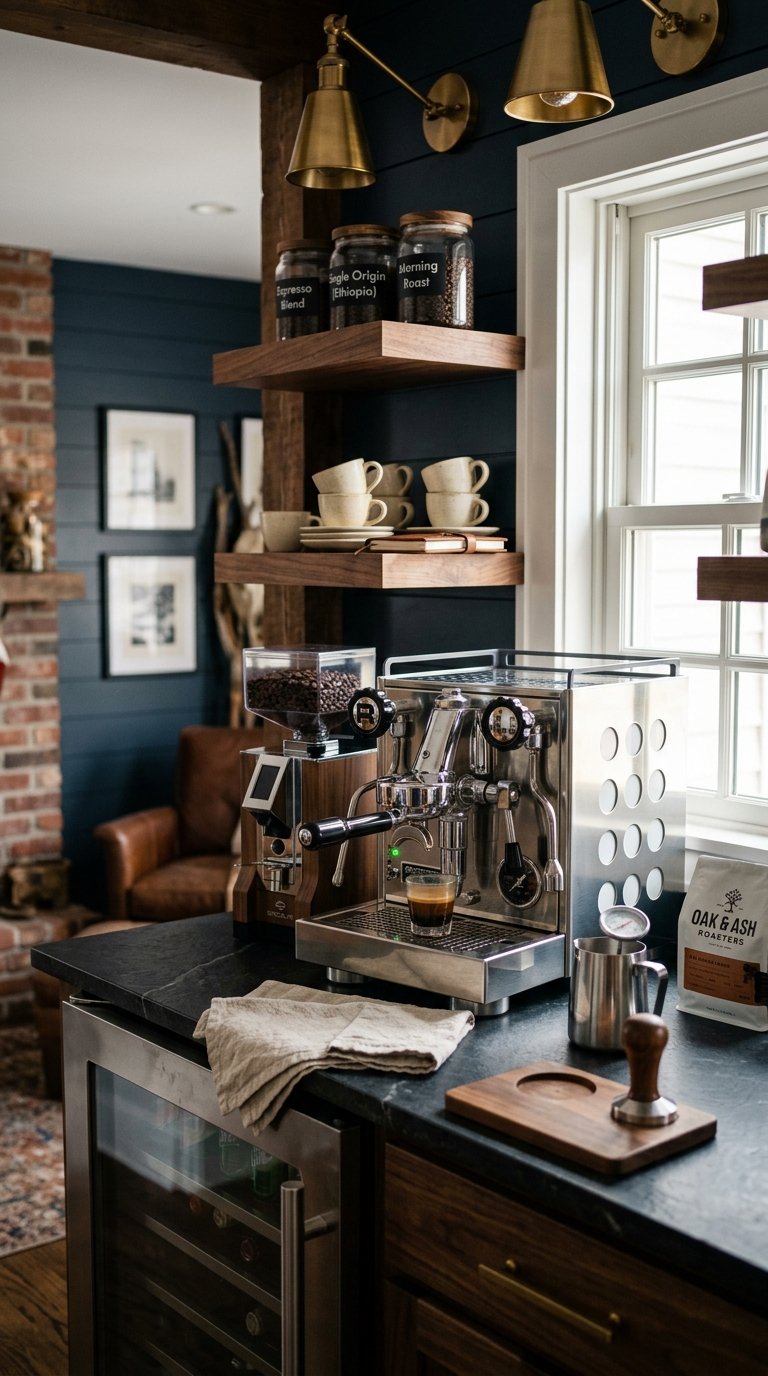
A dedicated espresso machine in a man cave keeps energy levels up during long gaming sessions, late-night film marathons, and early morning sports broadcasts without leaving the room. A quality semi-automatic espresso machine from Breville or De’Longhi costs $300 to $800 and produces coffee that outperforms any pod machine.
Pair it with a small under-counter fridge for milk ($80 to $200), a milk frother, and a dedicated shelf for coffee beans and equipment. The espresso station makes the man cave self-sufficient for hours without any need to visit the main kitchen, which is exactly the point.
20. Build a Wall-Mounted Display for Scale Models or Collectibles
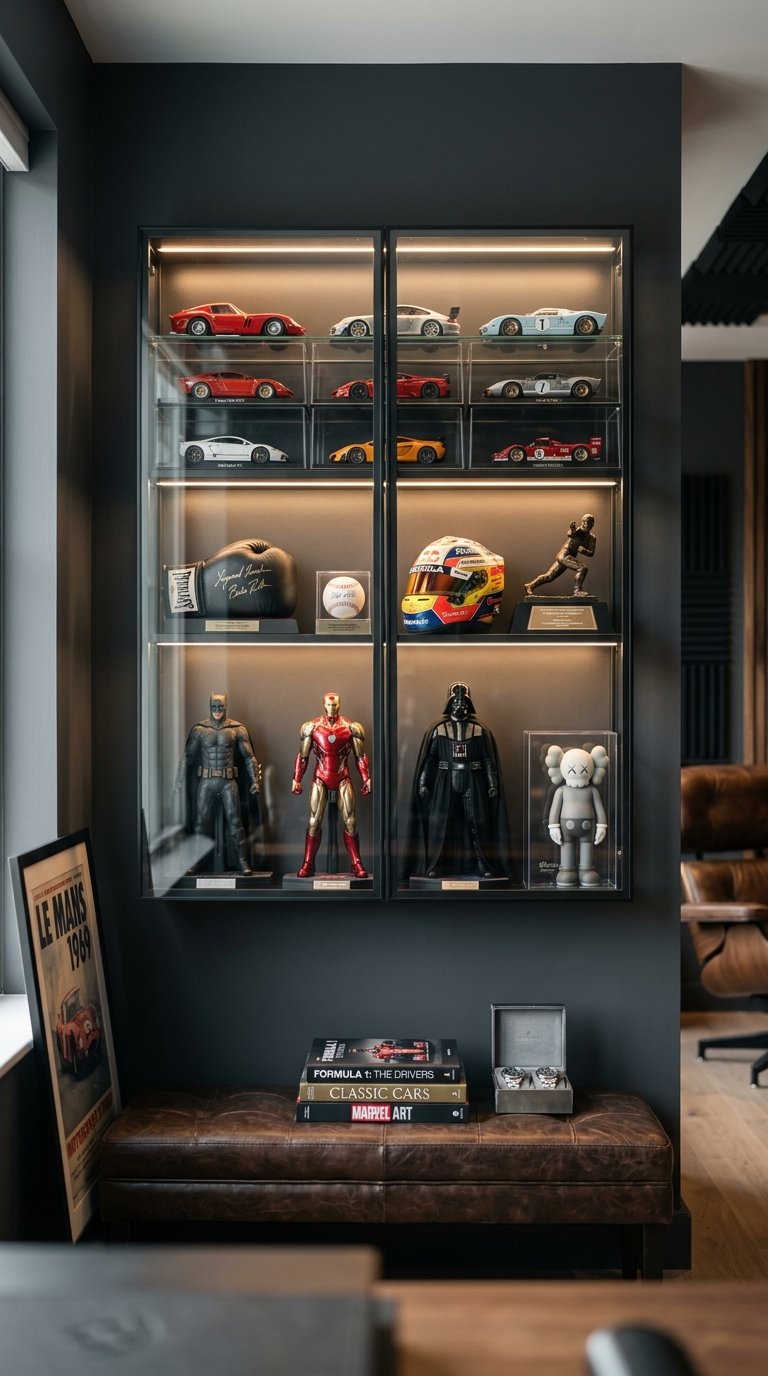
A wall-mounted display cabinet with LED interior lighting holds scale models, action figures, limited-edition collectibles, and sports memorabilia in a protected, illuminated case that shows the collection at its best. Custom display cases with acrylic fronts cost $200 to $800 depending on size.
IKEA’s DETOLF glass cabinet ($80 to $120) with an added LED strip light inside provides a budget-effective alternative for action figures and collectible display. The display wall tells visitors exactly who you are and what matters to you before you say a single word, which is what the best man cave design always achieves.
21. Set Up a Flight Simulator or Racing Rig
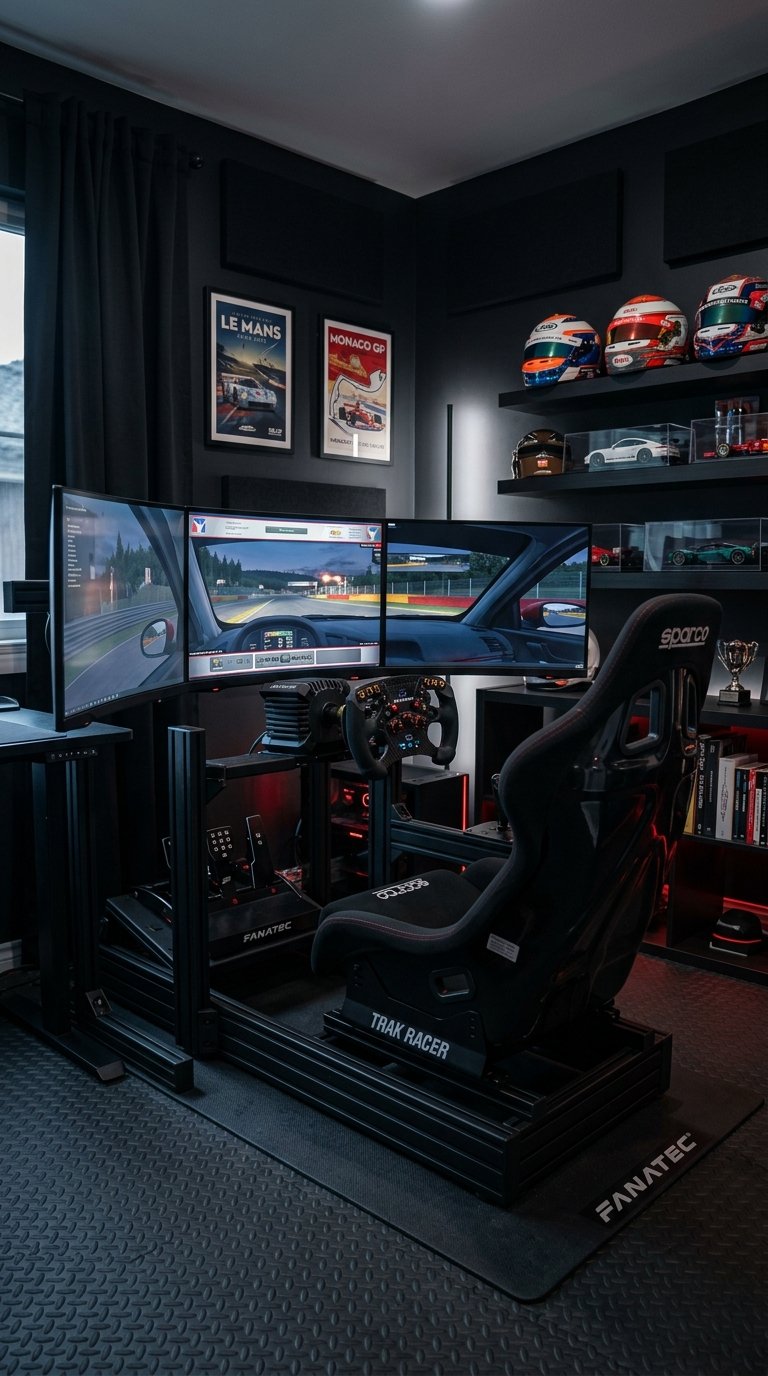
A full-motion flight simulator cockpit or racing rig takes the man cave from impressive to extraordinary. A racing sim rig with a wheel, pedals, seat, and triple screen setup costs $1,500 to $5,000 depending on component quality, and the driving experience it produces genuinely surprises people who try it for the first time.
A flight simulator setup using Microsoft Flight Simulator on a PC with a proper yoke ($200 to $600), rudder pedals ($150 to $400), and a throttle quadrant ($150 to $300) delivers a realistic aviation experience that pilots use for training. The sim rig is the man cave feature that guests queue to try.
22. Install a Foosball Table for Quick Social Play
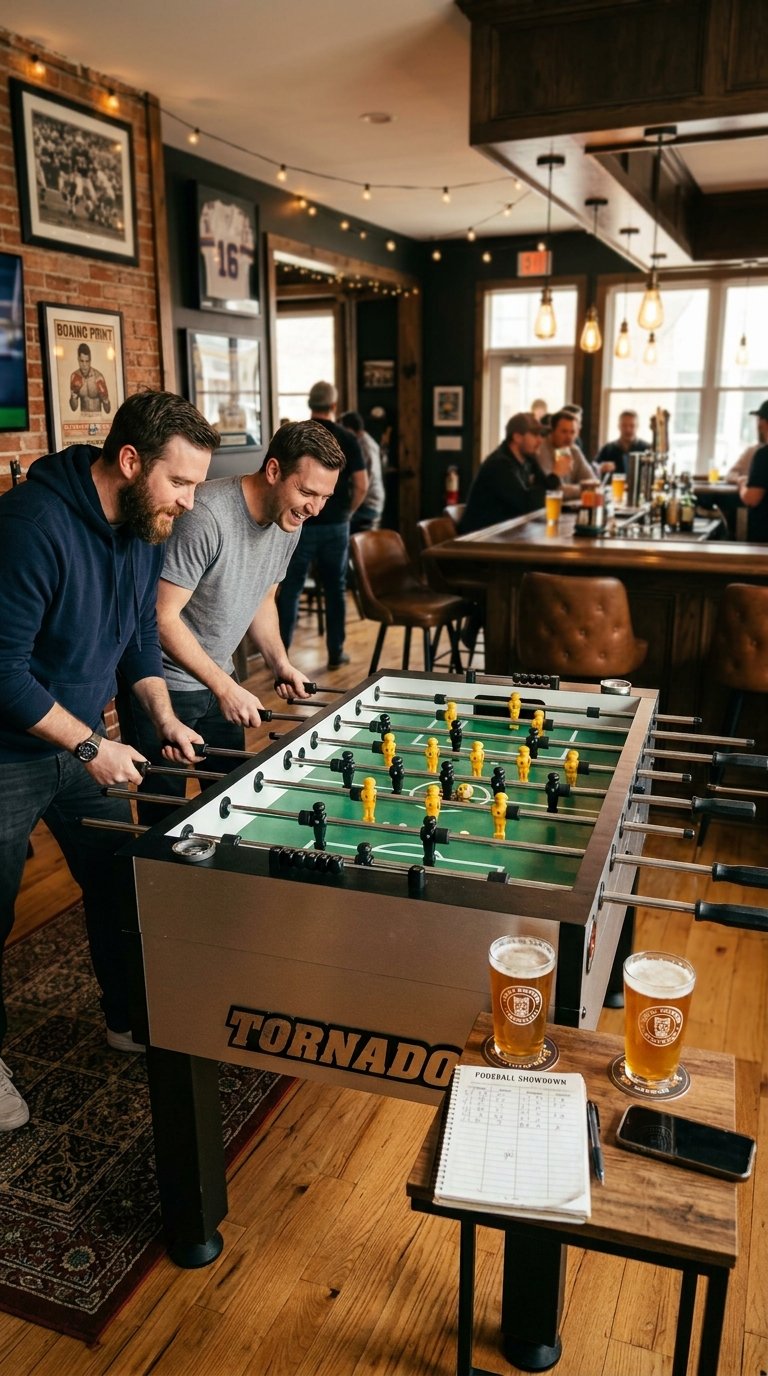
A foosball table costs $200 to $800 for a quality freestanding model and delivers competitive, instantly accessible entertainment for two to four players with no setup time. Unlike pool, poker, or gaming setups, foosball starts in five seconds and plays in five minutes, making it the perfect quick-break activity between longer sessions.
Position it near the bar area where drinks are close at hand and the competitive noise doesn’t interrupt the main viewing or gaming zone. Tornado, Rene Pierre, and Roberto Sport make the quality tables that survive serious play rather than collapsing after six months of use.
23. Create a Reading and Cigar Lounge Corner
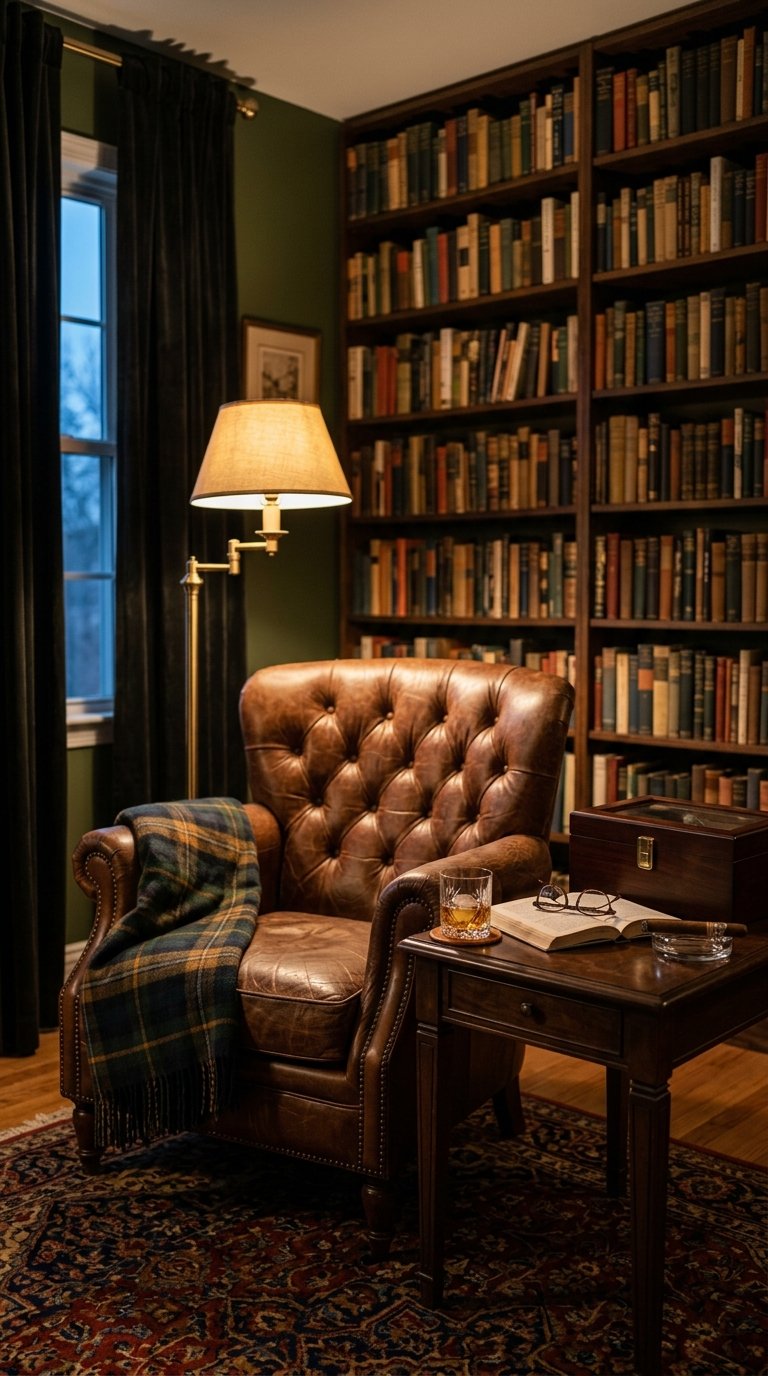
A leather armchair ($300 to $800), a floor lamp with warm directional light, a small side table, and a wall of bookshelves create a reading corner that transforms part of the man cave into a proper lounge. Add a desktop humidor ($100 to $300) and a portable ashtray if cigars are part of your leisure routine.
The lounge corner balances the more active, screen-heavy areas of the man cave with a quiet zone for solitary enjoyment. A man cave with only one activity type eventually feels limited; a room that accommodates both high-energy entertainment and quiet solo time remains genuinely useful across different moods and occasions.
24. Design a Garage Man Cave with Proper Flooring
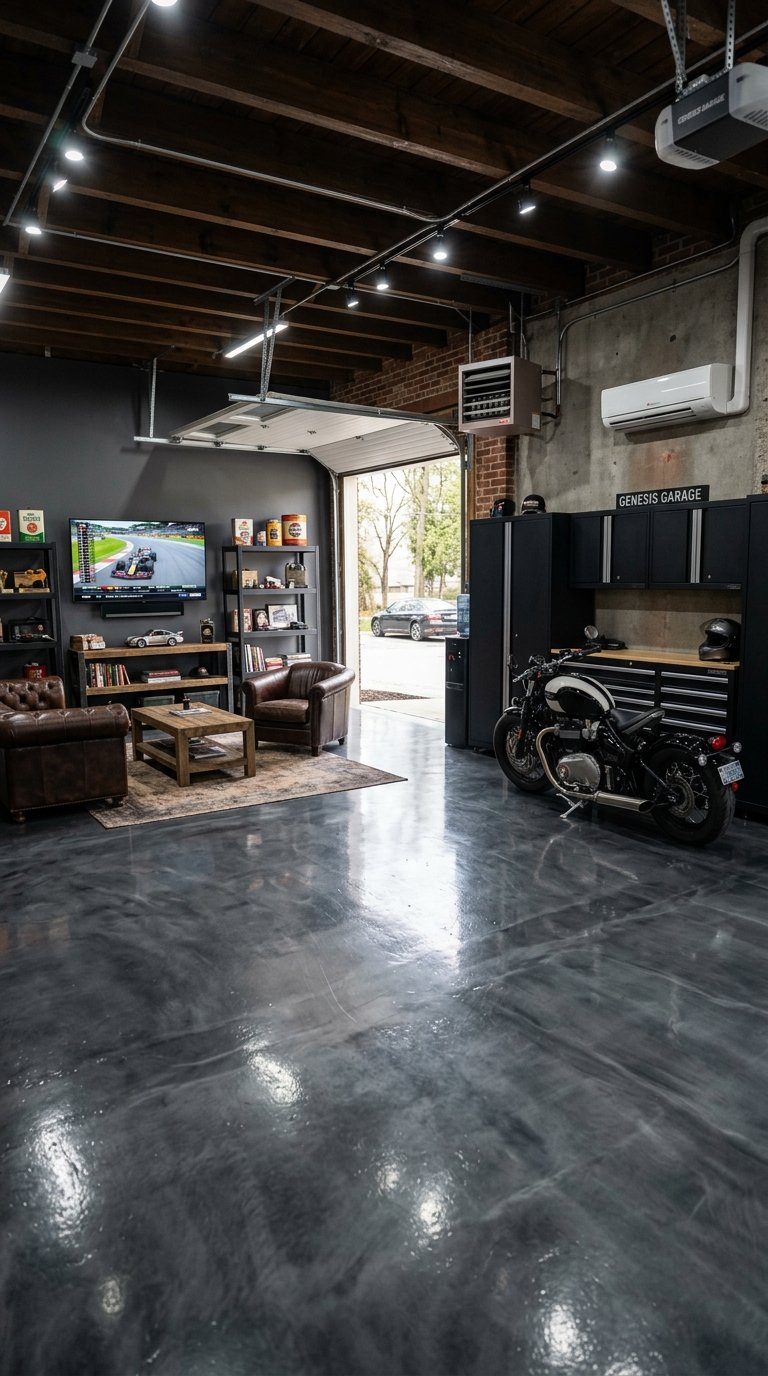
A garage man cave starts with the floor. Interlocking rubber tiles or epoxy floor coating transforms a bare concrete garage floor into a surface that looks finished and feels comfortable underfoot. Epoxy floor coating costs $300 to $800 for a standard two-car garage applied by a professional; interlocking rubber tiles cost $2 to $5 per square foot.
Add insulation to the garage walls ($500 to $2,000 depending on size and method), a wall-mounted heater ($150 to $400), and a mini-split air conditioner ($600 to $1,500 installed) for year-round comfort. A properly insulated and climate-controlled garage man cave functions as a full extra room regardless of outdoor temperature.
25. Add a Personalised Theme That Makes the Room Distinctly Yours
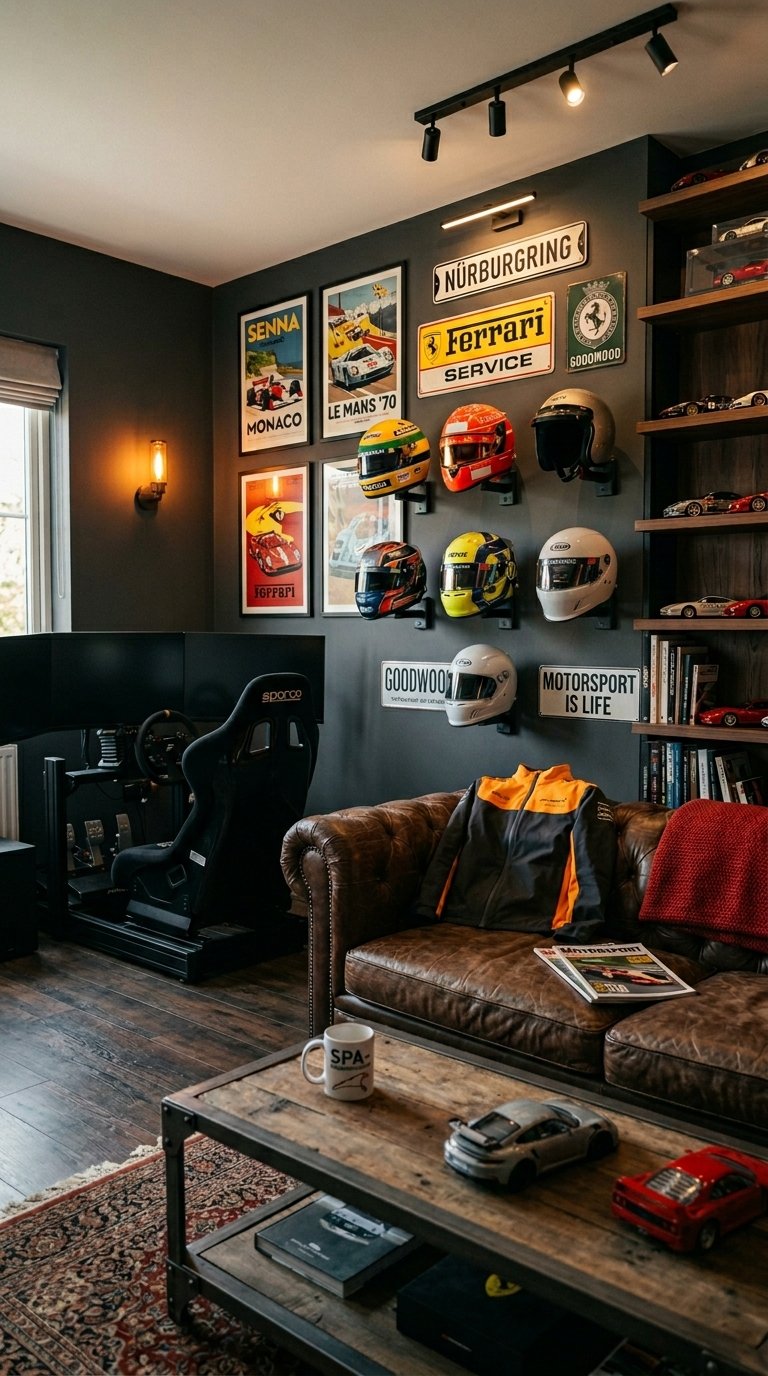
The difference between a well-equipped room and a proper man cave is theme and personality. A motorsport man cave has race posters, a helmet display, and a racing seat. A football man cave has shirt frames, matchday scarves, and a big screen positioned for live viewing. A music man cave has guitars on the wall, vinyl everywhere, and speakers at the centre of every decision.
Choose the one interest that defines how you want to spend time in the room and let it drive every decision from wall colour to furniture to what hangs on the walls. A themed man cave feels like a destination. A room full of generic man cave equipment feels like a showroom. :/ The theme is everything.
Final Thoughts
Your man cave works when it’s built around what you actually do rather than what looks good in a photo. A home theatre you use three times a week beats a bar setup you rarely touch. A gaming rig that gets daily use beats a pool table that collects dust.
Start with your primary activity and build the room around that first. Get the display, the seating, and the sound right for that one purpose. Then add secondary features (the bar, the dartboard, the record player) as the budget and space allow. The man cave earns its name when you genuinely prefer being in it to anywhere else in the house.