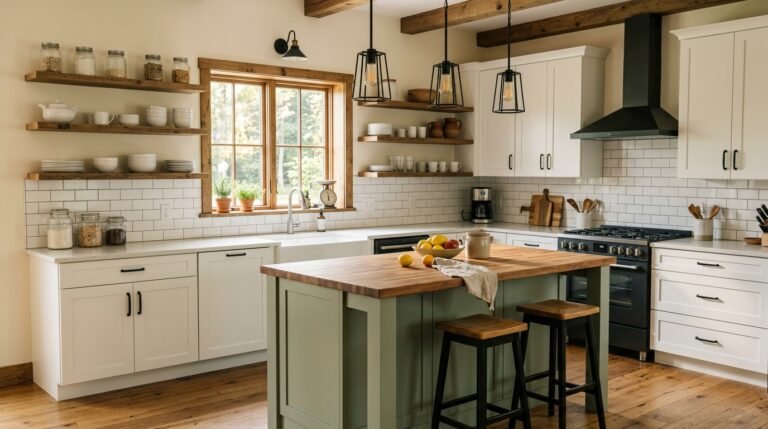
23 Kitchen Island Back Panel Ideas for a Stylish Upgrade
The back panel of your kitchen island is the most overlooked surface in the room. Most homeowners finish the island base, choose the countertop, select the hardware, and then leave the seating-side face as a plain painted rectangle that contributes nothing to the room. That flat, featureless panel face is where a good kitchen island becomes a great one. These 23 kitchen island back panel ideas give you specific materials, real product sources, accurate price ranges, and honest reasons each treatment works better than a plain painted surface.
Every idea below solves the same problem: a kitchen island that looks finished from above but unresolved from the side where your family and guests actually sit.
1. Horizontal Shiplap Back Panel in White or Off-White
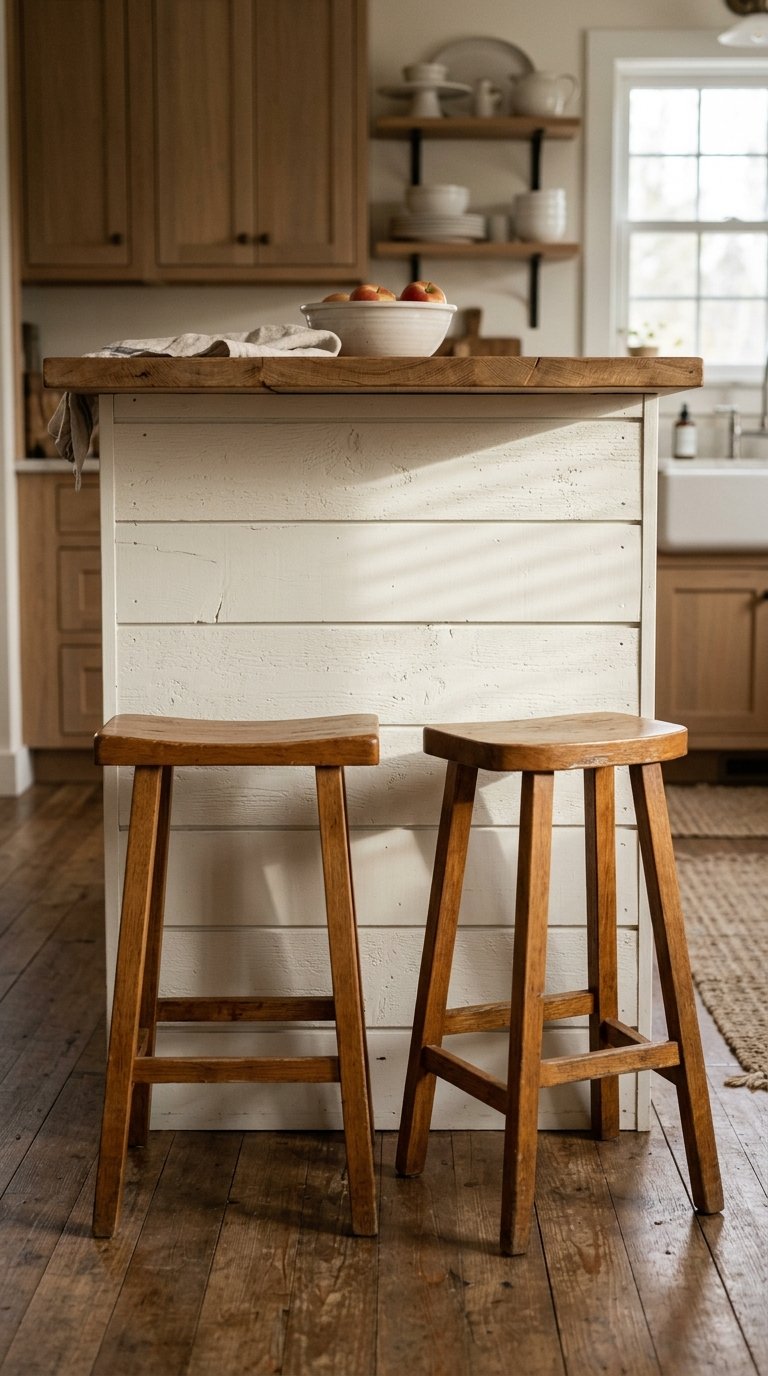
Horizontal shiplap on a kitchen island back panel is the single most cost-effective treatment that moves a standard island into farmhouse design territory. The horizontal board lines with a visible shadow gap between each course add texture, depth, and architectural character to an otherwise flat cabinet face for under $100 in materials on a standard island.
Primed pine shiplap from Home Depot costs $1.20 per linear foot. A standard 6-foot island back panel uses roughly 48 linear feet of board, putting the material cost at $58. Paint it in Sherwin-Williams Extra White SW 7006 or Benjamin Moore’s Simply White OC-17 and the result reads as a piece of built-in farmhouse furniture rather than a cabinet box sitting in the middle of the kitchen floor.
2. Vertical Shiplap Back Panel for a More Formal Look
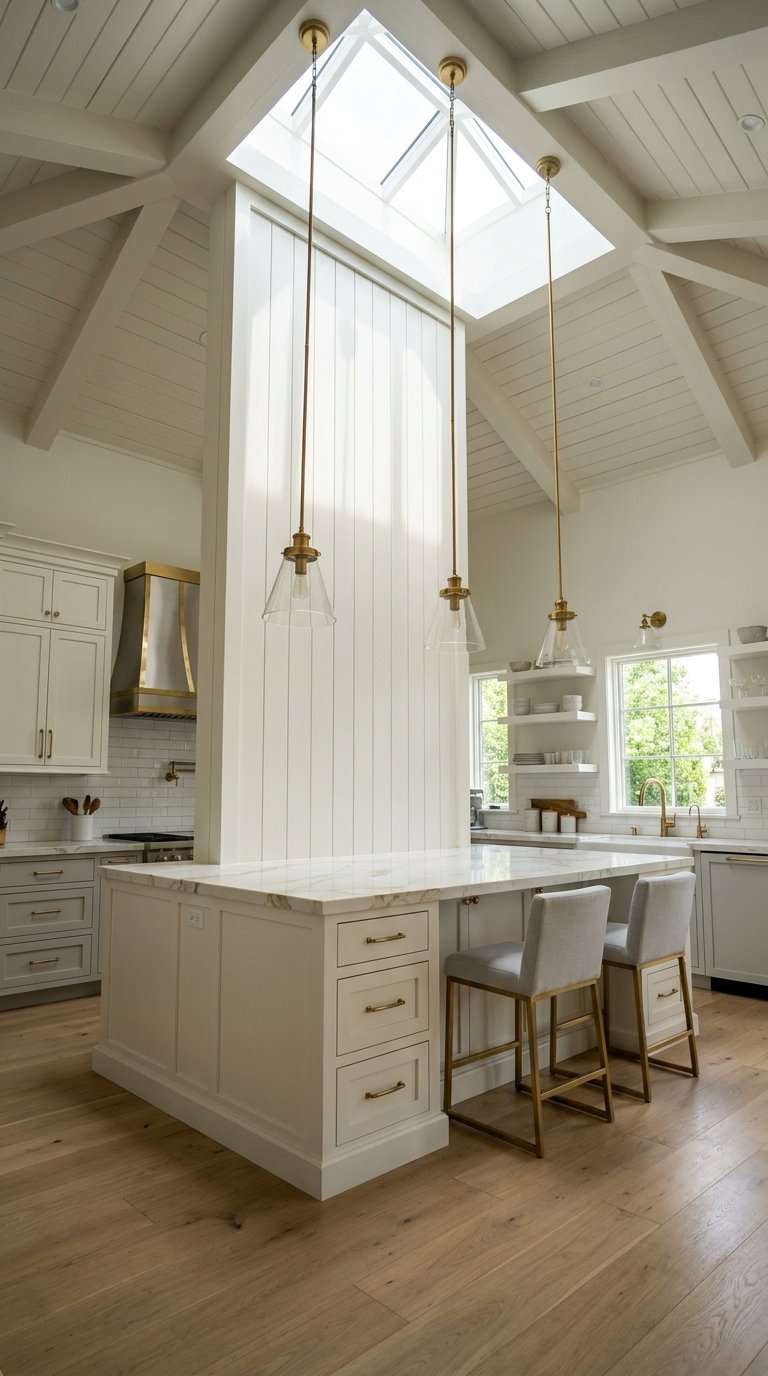
Vertical shiplap on the island back panel reads as more formal and architectural than horizontal shiplap and suits transitional, traditional, and contemporary kitchens where the horizontal farmhouse reference feels too casual. The vertical board lines draw the eye upward along the island face, which adds perceived height to the seating zone and makes the island read as a taller, more substantial piece.
Use the same primed pine shiplap from Home Depot at $1.20 per linear foot in a vertical orientation. Paint in Benjamin Moore’s White Dove OC-17 for a warm white result or in the same color as the island base for a tone-on-tone treatment that adds texture without color contrast. The vertical format works particularly well on islands with bar-height seating where the full 42-inch panel face benefits from the elongating effect of the vertical board lines.
3. Beadboard Back Panel
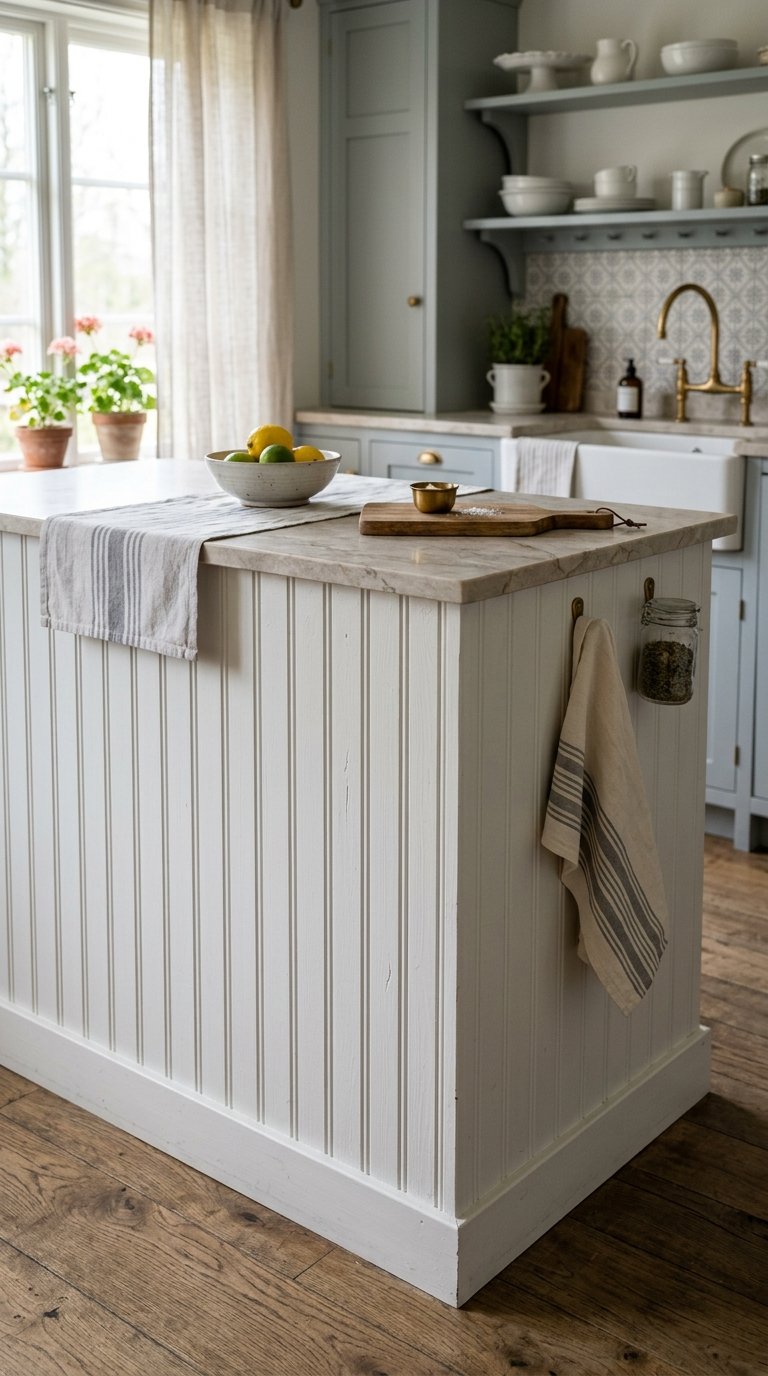
Beadboard on a kitchen island back panel delivers a dense, repetitive vertical groove pattern that reads as classic American cottage and craftsman design. The narrow groove spacing of standard beadboard, typically 1.5 to 2 inches between grooves, creates more visual texture per square foot than shiplap and suits kitchens with traditional cabinet profiles and period hardware.
Primed MDF beadboard panel sheets from Home Depot cost $28 to $42 for a 4×8-foot sheet, which covers a full standard island back panel in a single piece with minimal waste. Cut it to size with a circular saw and apply with construction adhesive and finish nails directly to the island cabinet face frame. Paint in Benjamin Moore’s Chantilly Lace OC-65 for a crisp white result or in a soft color to contrast with the island base.
4. Raised Panel Wainscoting on the Island Back Face
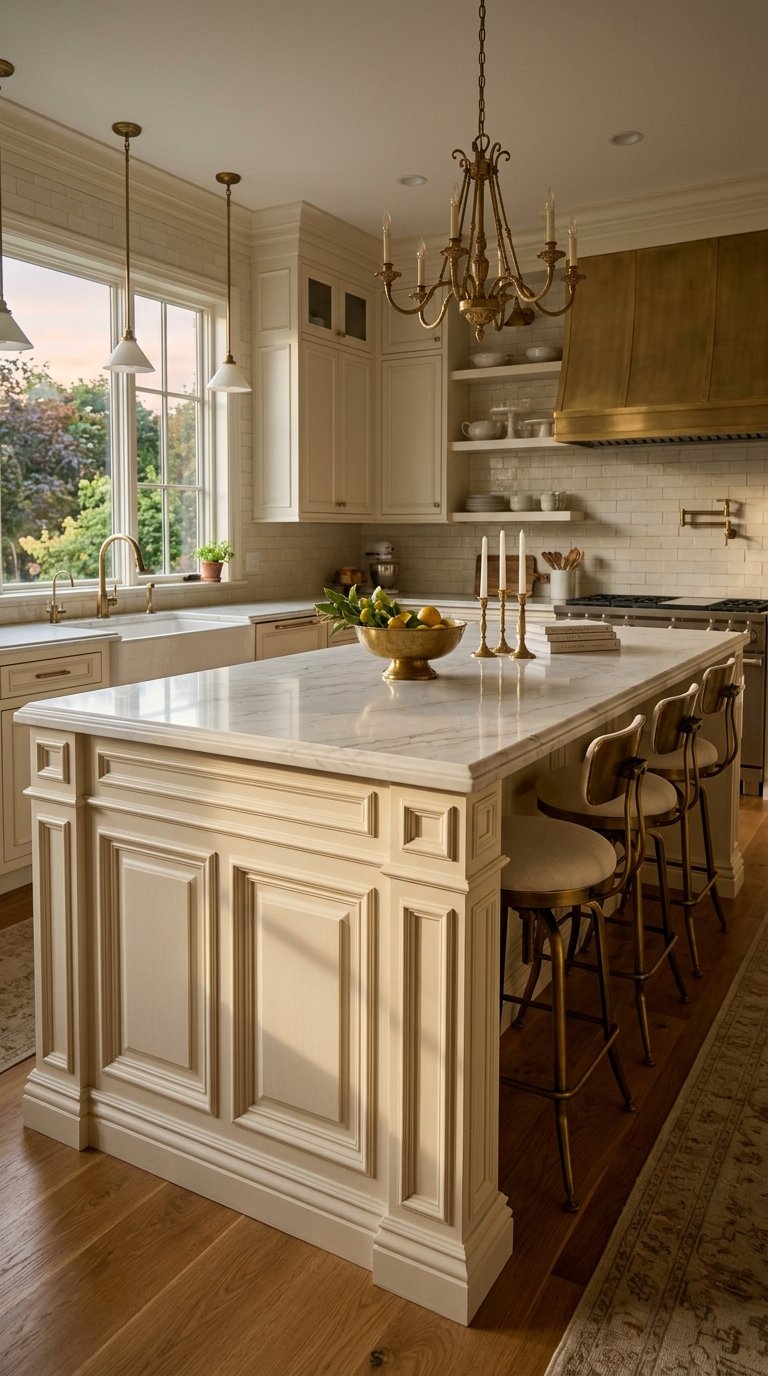
Raised panel wainscoting on a kitchen island back panel adds the most formal and architecturally detailed treatment on this list. The three-dimensional profile of raised panel millwork casts shadows that change throughout the day as the light source shifts, giving the island face genuine visual depth that no flat surface treatment replicates.
Pre-made raised panel wainscoting kits from Home Depot run $40 to $80 per panel section. A standard 6-foot island back panel requires two to three sections depending on width. Apply them with construction adhesive and finish nails, caulk all joints, and paint in Benjamin Moore’s Advance alkyd at $70 per gallon for a hard, smooth finish that holds the crisp panel shadow lines permanently. This treatment suits traditional, colonial, and formal farmhouse kitchens specifically.
5. Subway Tile Back Panel
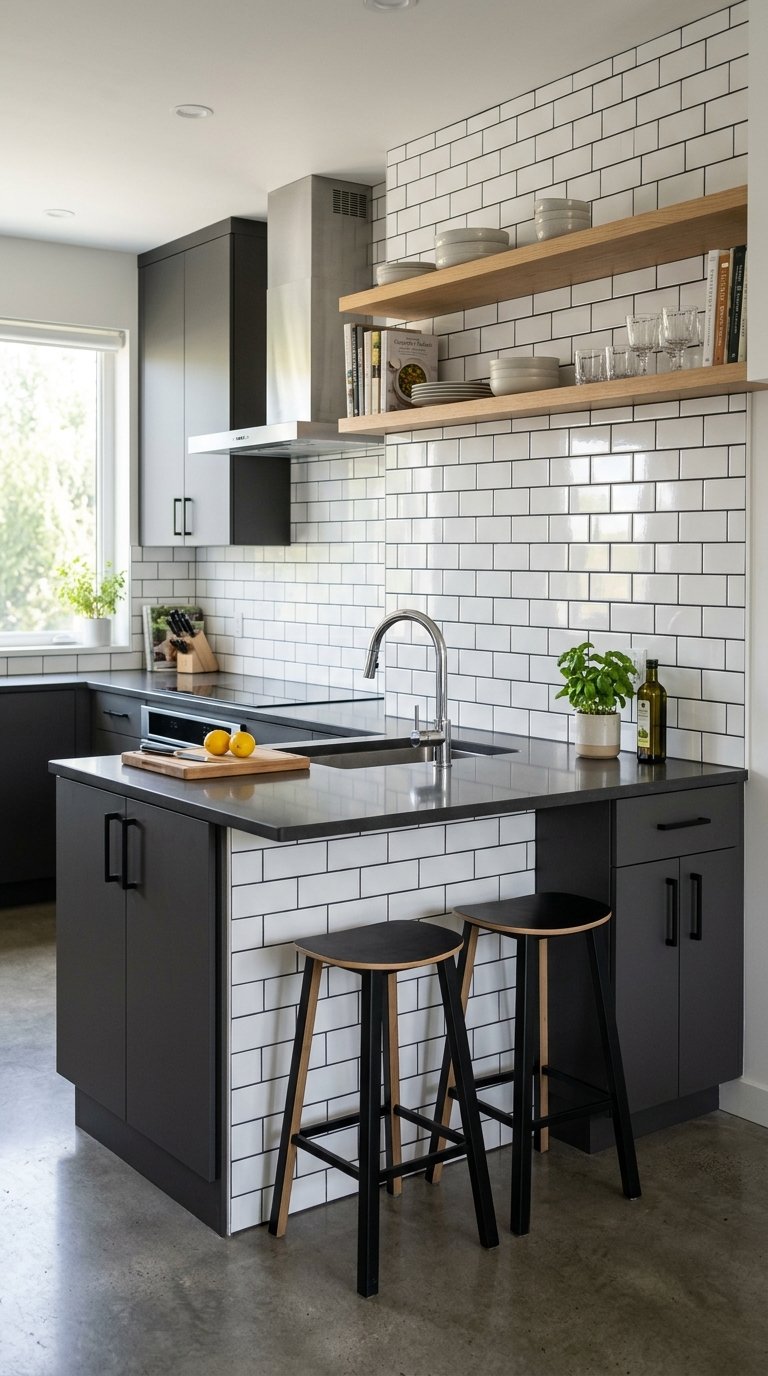
A subway tile treatment on the kitchen island back panel creates a visual connection between the island seating face and the kitchen backsplash wall when both surfaces use the same tile. The repeated ceramic or porcelain tile surface on the island face reads as intentional and designed in a way no painted panel achieves.
American Olean’s Bright White 3×6 glazed ceramic subway tile costs $1.89 per square foot at Home Depot. A standard island back panel of 6×3 feet uses 18 square feet of tile, putting the material cost at $34. Use Mapei’s Charcoal unsanded grout for dark joint lines that define each tile, or Mapei’s Bright White for a tone-on-tone result where the tile surface reads as a single continuous white plane.
6. Zellige or Hand-Made Ceramic Tile Back Panel
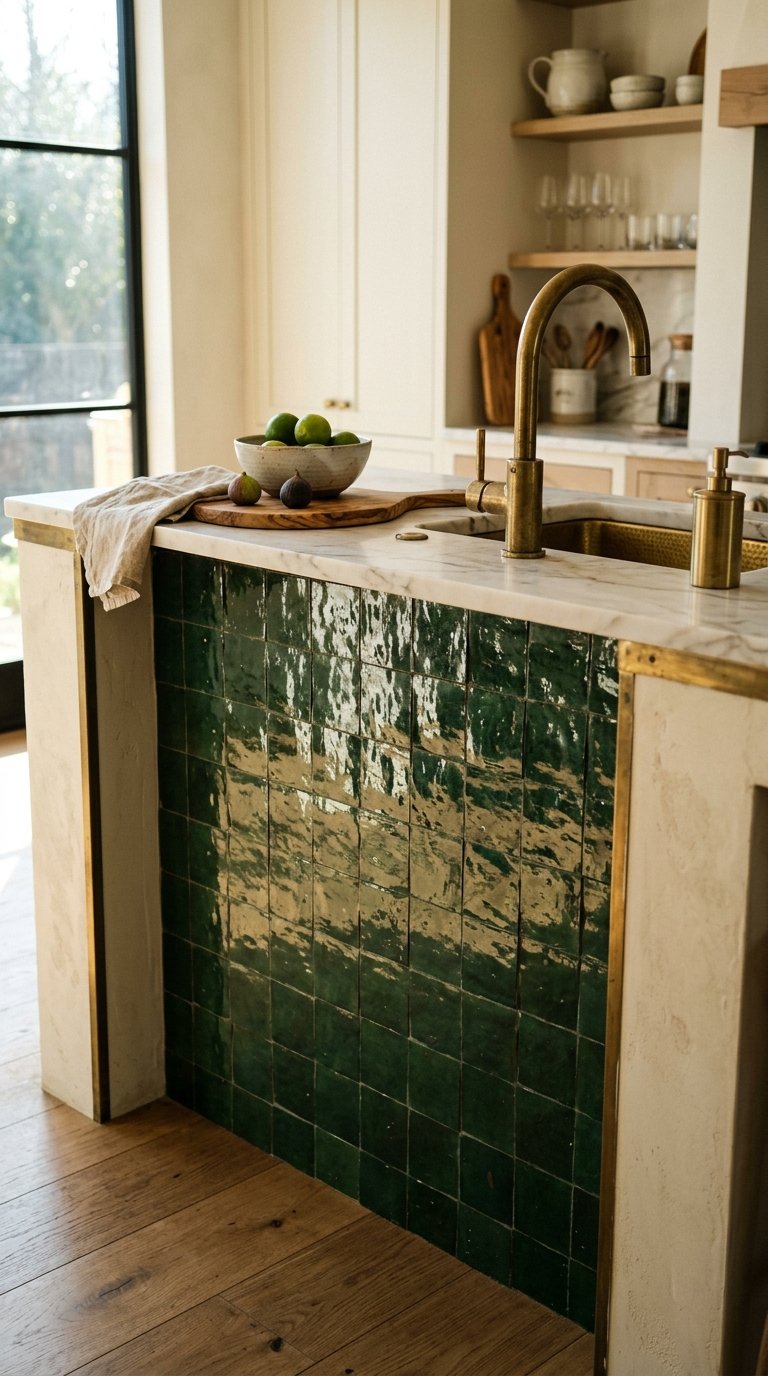
Zellige or hand-made ceramic tile on the island back panel creates the richest, most visually complex seating-side surface treatment on this list. The irregular glaze, surface variation, and light-catching quality of hand-made tile transforms the island face from a flat surface into an active, textured one that reads differently from every angle and at every time of day.
Clé Tile’s zellige in Blanc or Sage costs $22 to $28 per square foot. An 18-square-foot island back panel runs $396 to $504 in tile materials. The high price reflects the authentic hand-production process and the genuine material quality that no factory tile replicates. Pair a white zellige back panel with a dark island base in navy or charcoal for a contrast that makes the tile surface glow against the dark surrounding cabinetry.
7. Reclaimed Wood Back Panel
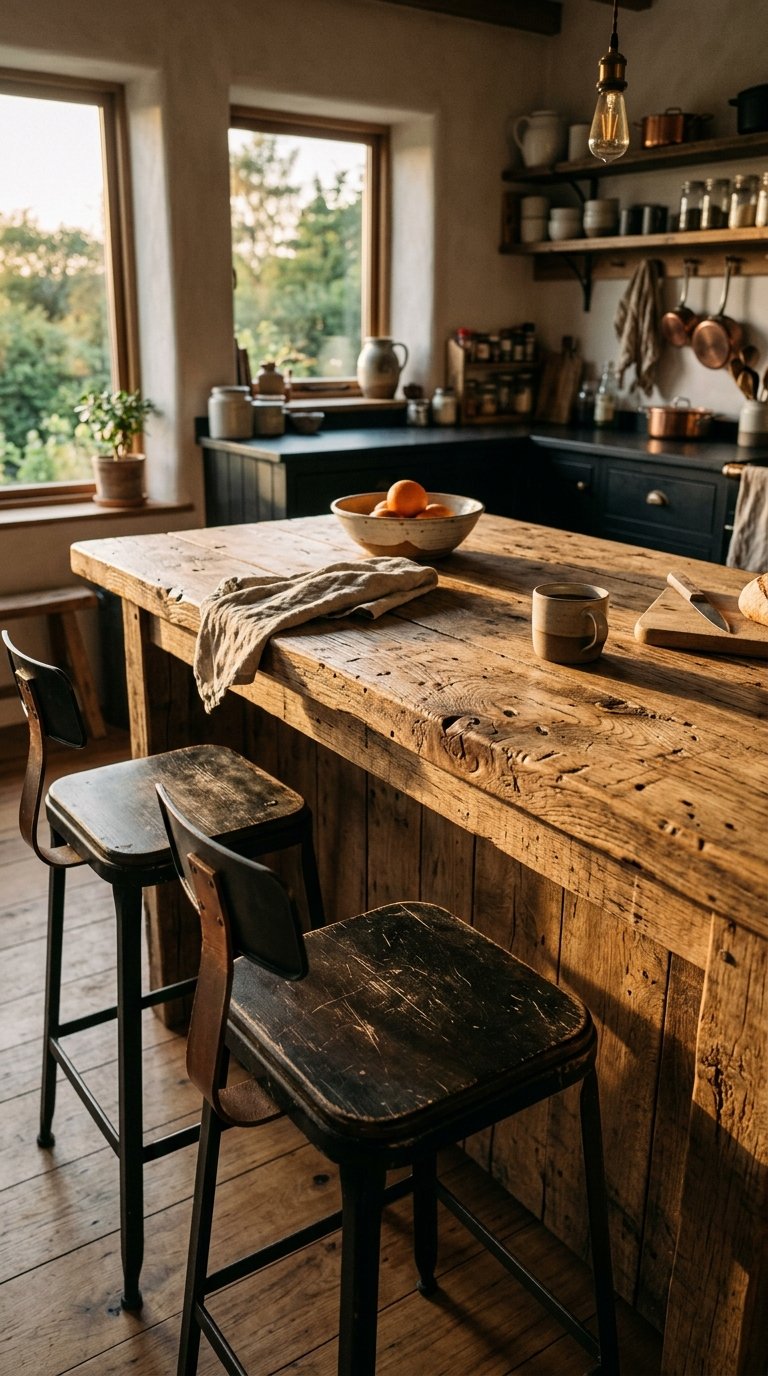
A reclaimed wood back panel on a kitchen island brings authentic material history to the seating-side face in a way no new material replicates. The surface marks, color variation, nail holes, and irregular plank widths of reclaimed timber read as character accumulated over time rather than damage applied in manufacturing.
Reclaimed oak or pine boards from Elmwood Reclaimed Timber or Olde Wood Ltd cost $12 to $25 per square foot for materials. An 18-square-foot island back panel runs $216 to $450 in reclaimed wood. Seal the surface with Rubio Monocoat Oil Plus 2C at $45 per application for a food-safe, natural finish that deepens the color variation without burying the surface character under a thick topcoat.
8. Board and Batten Back Panel
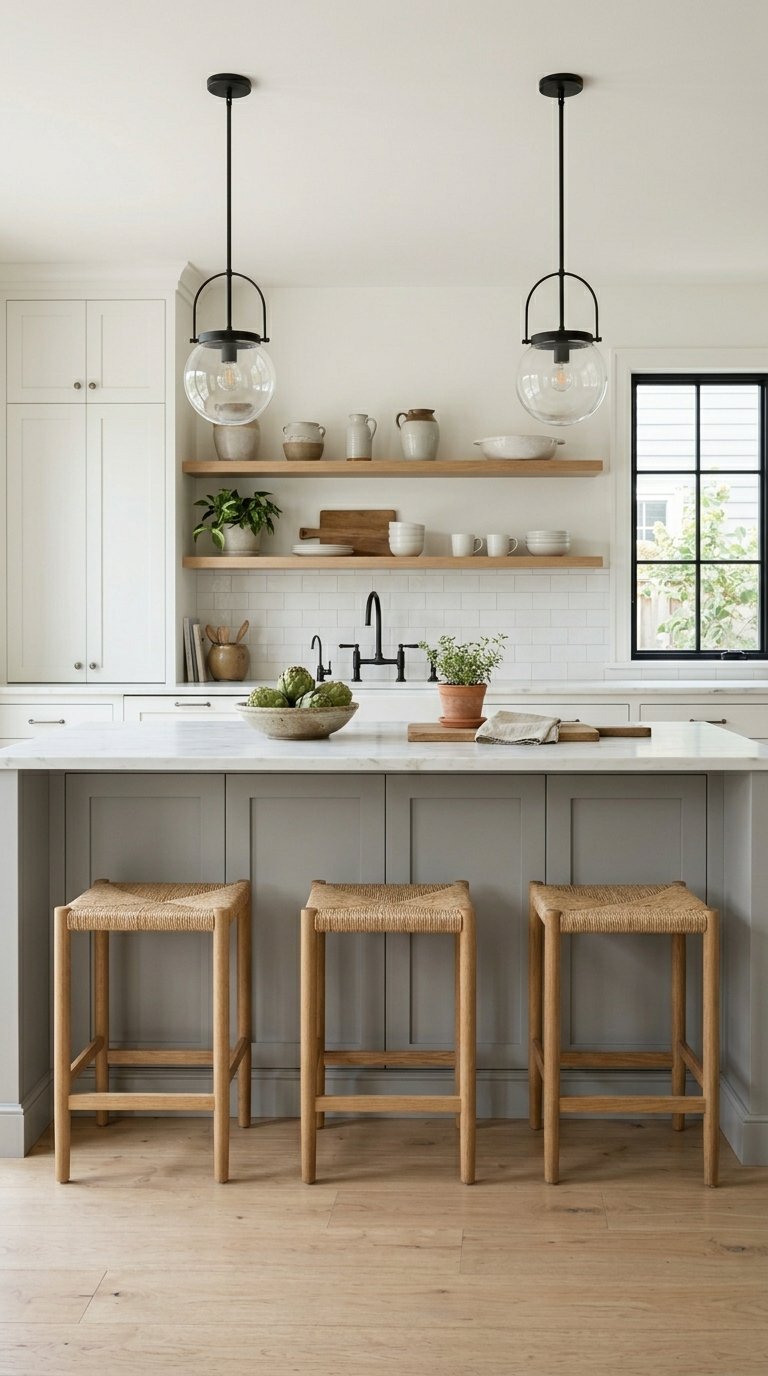
Board and batten on a kitchen island back panel creates a bold geometric grid pattern across the seating face that reads as architectural rather than decorative. The vertical batten strips applied over a flat base board create a three-dimensional surface with shadow lines that give the panel visual weight and structure without requiring custom millwork.
Use 1×4 pine boards for the flat base and 1×2 pine strips for the battens, both from Home Depot at $1 to $2 per linear foot. A standard island back panel uses $40 to $70 in lumber materials. Paint the full board and batten treatment in a single color for a tone-on-tone result, or paint the base board in a lighter tone and the battens in the island base color for a layered two-tone panel treatment.
9. Brick Veneer Back Panel
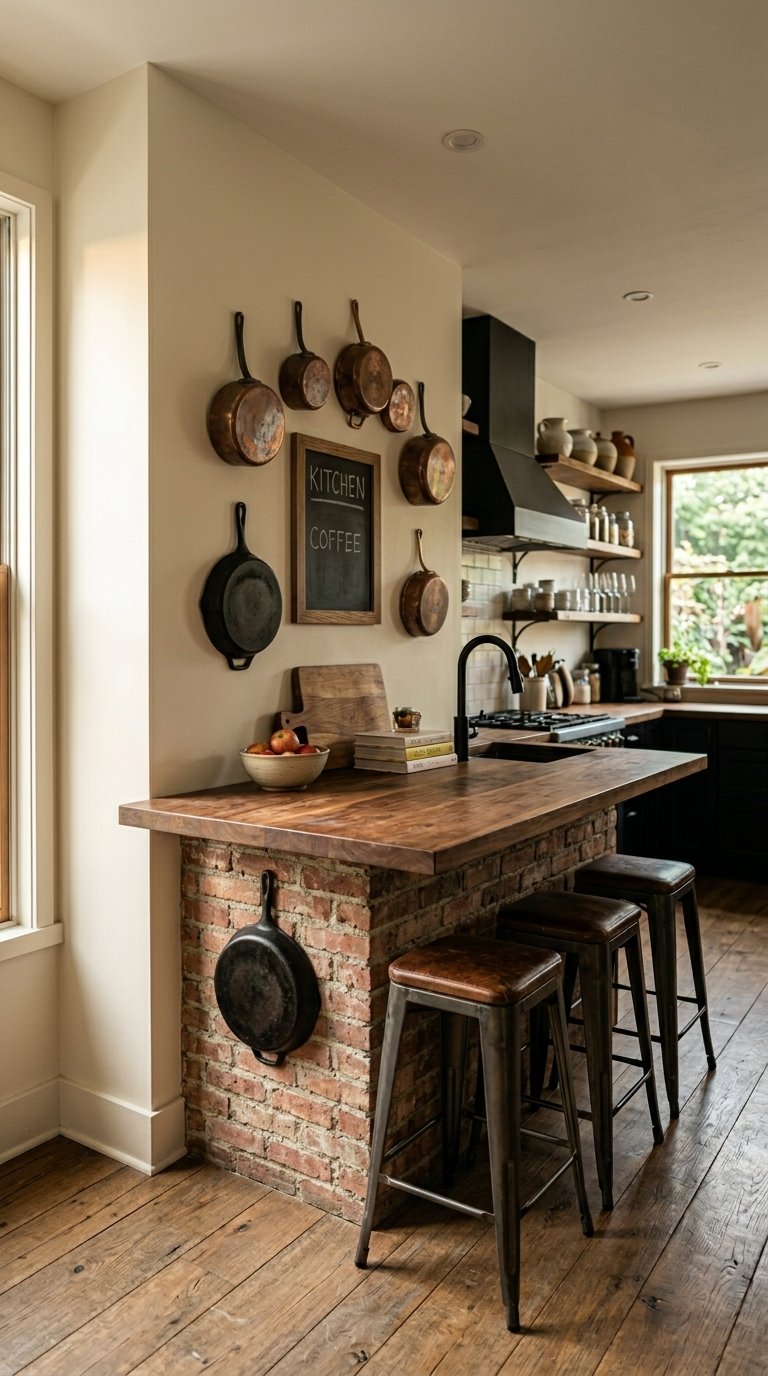
Thin brick veneer on a kitchen island back panel creates a permanent, textural surface that reads as genuinely structural rather than decorative. A single face of thin brick on an island seating side makes the island look as if it was built around an existing brick column, which delivers a level of architectural authenticity that no painted or tiled surface achieves.
Old Mill Brick’s thin brick veneer in a charcoal, aged red, or whitewashed tone costs $8 to $12 per square foot and applies with standard tile adhesive to a plywood substrate. An 18-square-foot island back panel runs $144 to $216 in materials. Apply the brick in a running bond pattern with tight 3/8-inch mortar joints and seal with a penetrating brick sealer from Miracle Sealants to prevent dust and crumbling at the joint edges.
10. Chalkboard Paint Back Panel
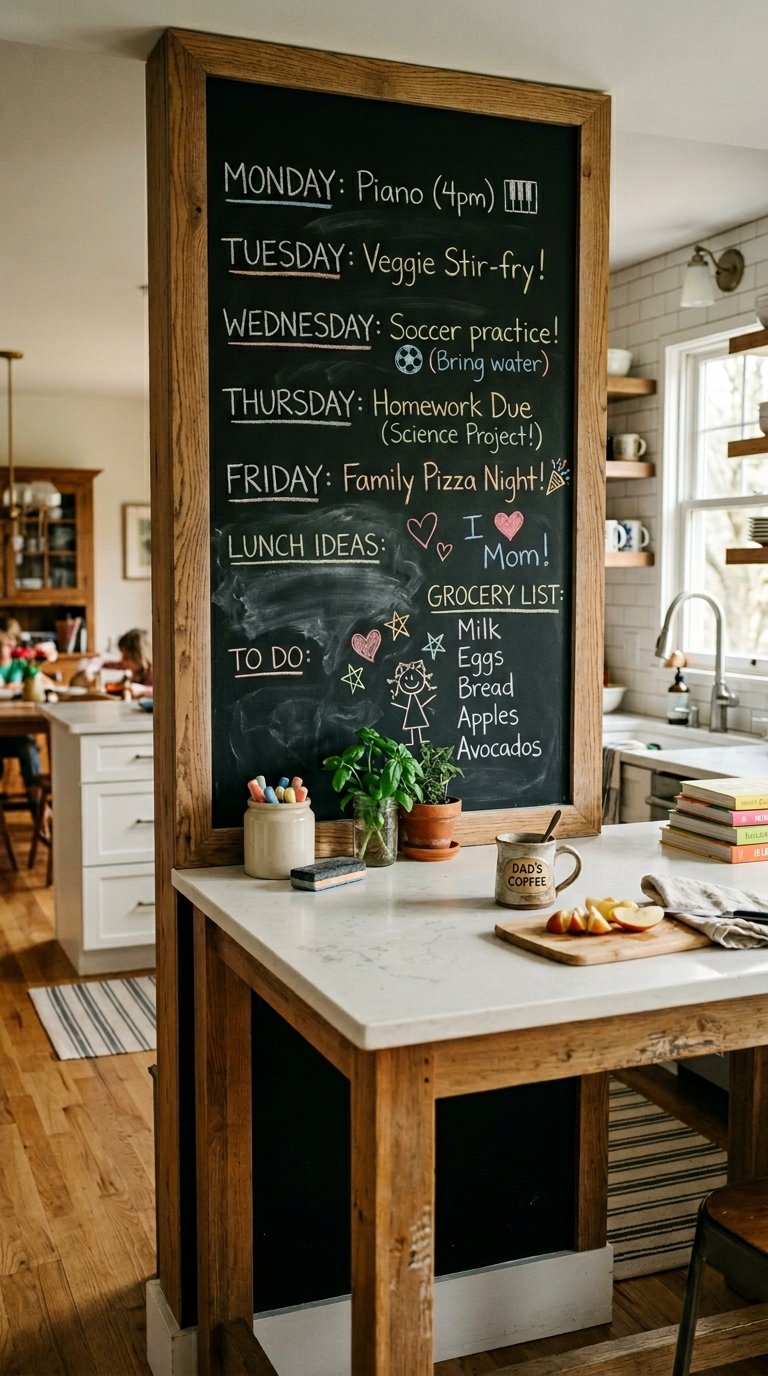
A chalkboard paint back panel on the island seating face turns the largest unused vertical surface in the kitchen into a functional household tool. The chalkboard serves as a grocery list, meal plan, kids’ drawing surface, or family message board built directly into the kitchen without adding any furniture or wall space.
Rust-Oleum’s Chalkboard Spray Paint costs $9 per can and covers a standard island back panel in two coats. Apply it directly over a primed and sanded panel face, cure for three days before use, and season the surface by rubbing a full stick of chalk across the entire face and erasing it before first use. Frame the chalkboard panel with a simple wood molding painted in the island base color for a finished, intentional border that separates the chalkboard zone from the surrounding cabinet surface.
11. Grasscloth or Natural Fiber Wallpaper Back Panel
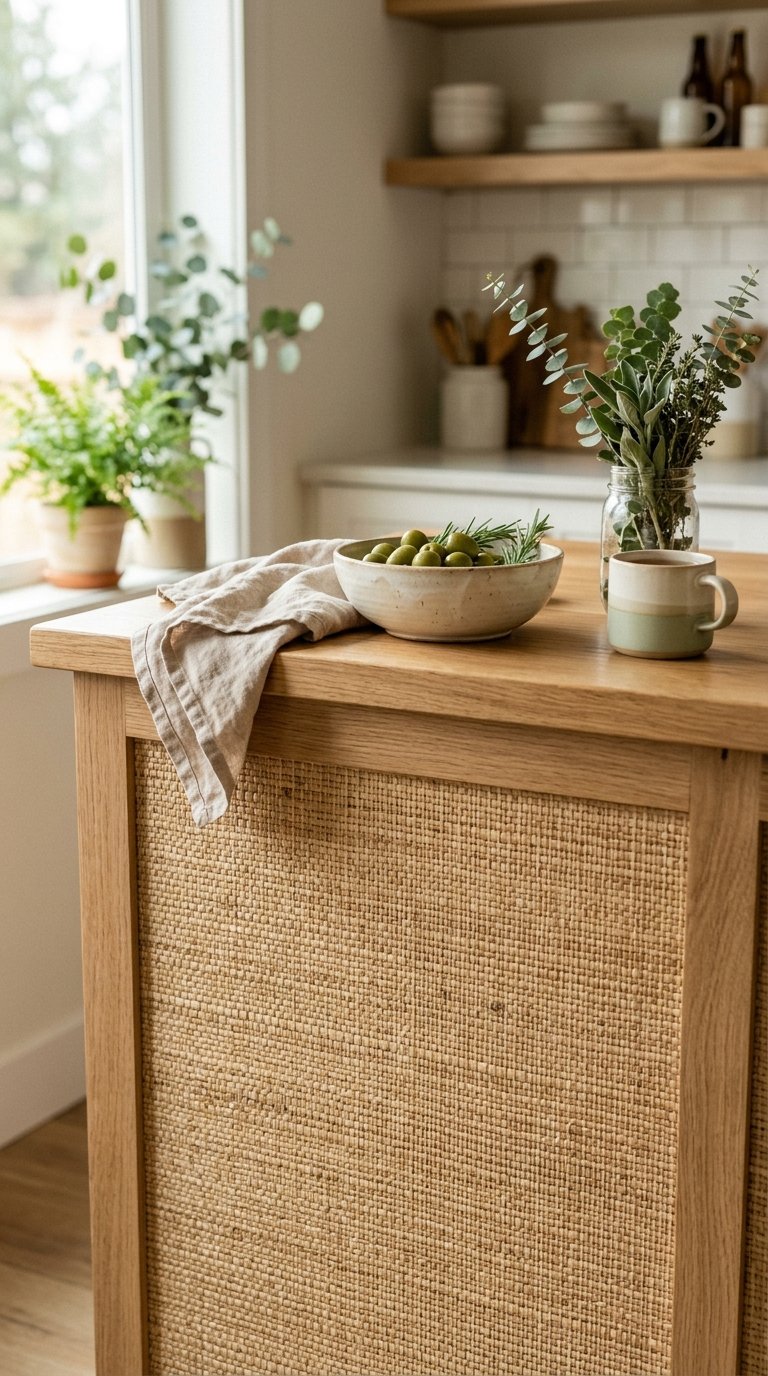
Grasscloth or natural fiber wallpaper applied to a kitchen island back panel adds organic texture and warmth to the seating face in a way no painted or tiled surface replicates. The woven surface of grasscloth introduces a material contrast against the hard cabinet, countertop, and floor surfaces that surround it, making the island seating zone feel softer and more residential.
Serena and Lily’s grasscloth wallpaper costs $12 to $18 per square foot. An 18-square-foot island back panel runs $216 to $324 in wallpaper materials. Apply with standard wallpaper paste to a smooth primed panel face and protect the surface with a matte clear coat from Rust-Oleum at $8 per can to resist kitchen moisture and the inevitable contact from guests leaning against the island face.
12. Moroccan or Encaustic Cement Tile Back Panel
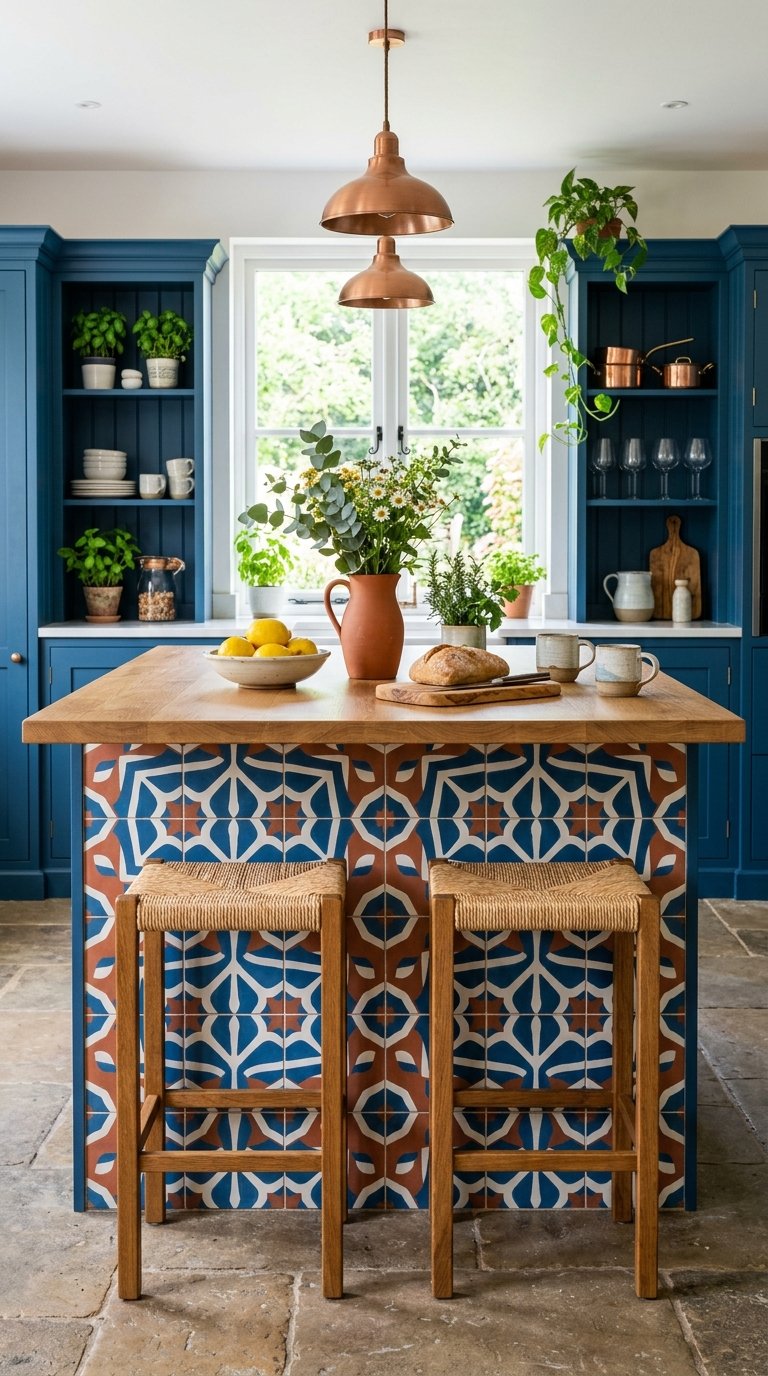
A Moroccan or encaustic cement tile pattern on the island back panel creates a bold geometric focal point on the seating face that draws the eye from across the room. The pattern complexity of Moroccan tile means the back panel reads as a designed surface even in a kitchen where every other material is plain and neutral.
Cement Tile Shop stocks Moroccan star and cross pattern tiles at $12 to $18 per square foot. An 18-square-foot island back panel runs $216 to $324 in tile materials. Seal the cement tile with Miracle Sealants Tile and Stone Sealer at $28 per quart before grouting and again after installation to prevent staining from food contact and spilled beverages at the seating zone. Use a neutral grout color in the same tone as the background tile color to let the pattern geometry read clearly without grout line distraction.
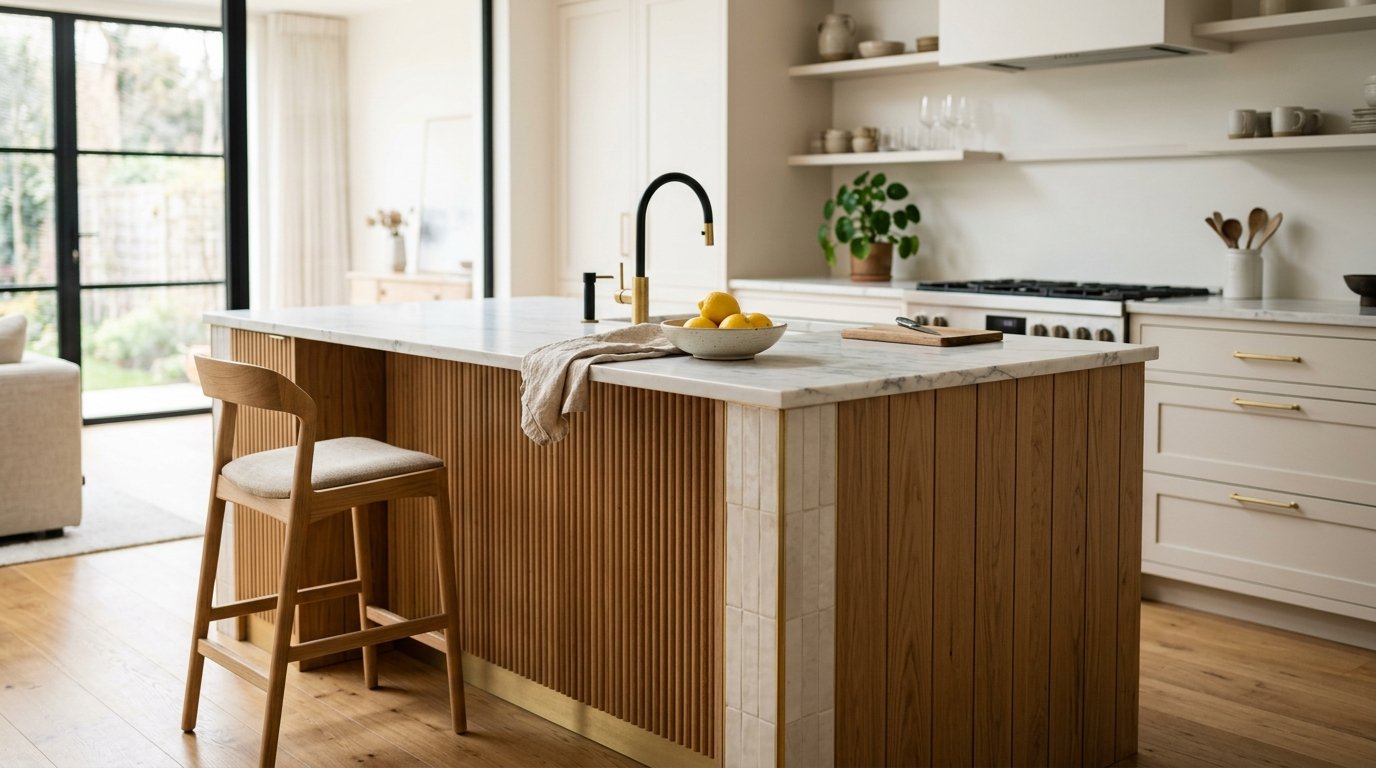
13. Fluted Wood or MDF Back Panel
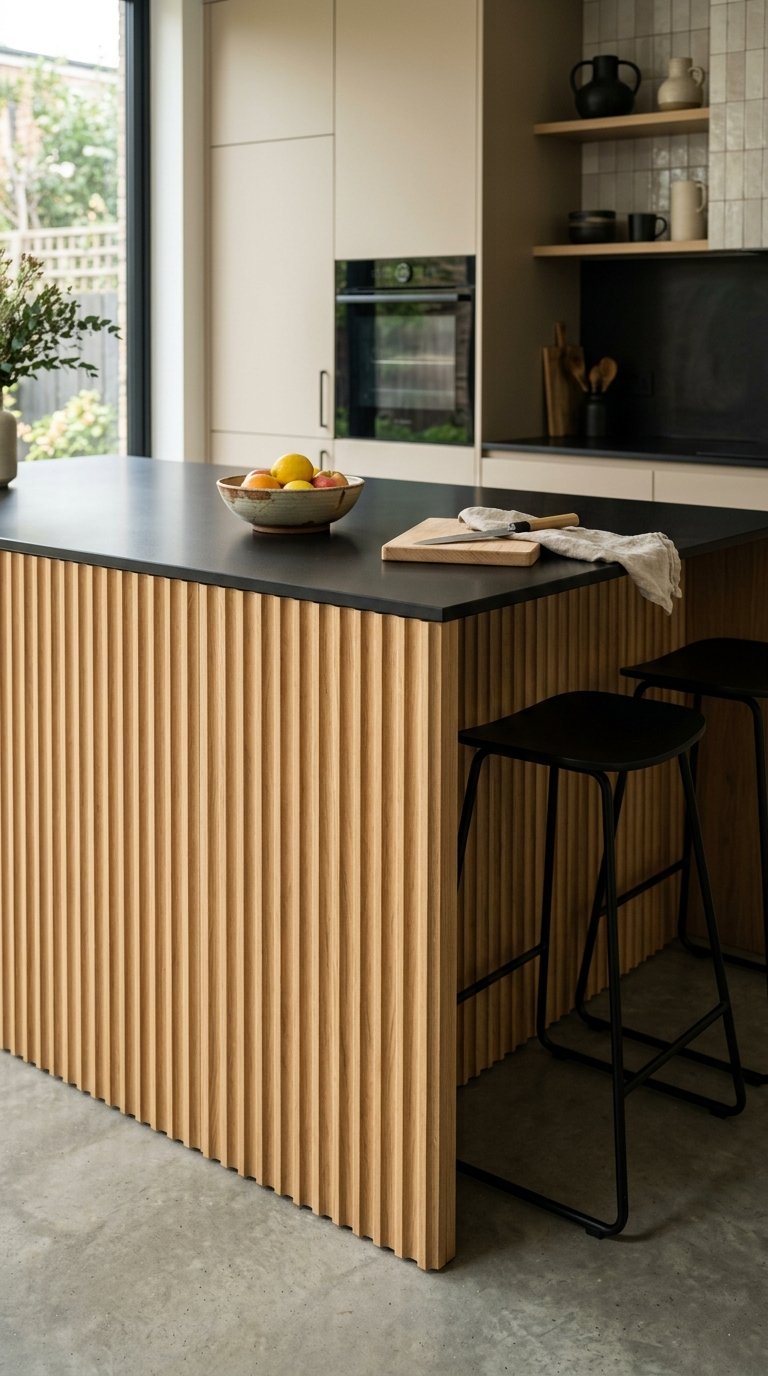
Fluted vertical grooves on a kitchen island back panel add the same architectural detail to the seating face that fluted cabinet doors add to the cabinet front. The alternating ridge and channel profile creates a shadow pattern across the panel surface that gives the island face genuine three-dimensional depth without requiring custom millwork or a skilled carpenter.
Fluted MDF panels from CHPN Store on Amazon cost $45 to $80 for a 4×8-foot sheet, which covers a full standard island back panel in a single piece. Cut to size, apply with construction adhesive, and paint in the same color as the island base or in a contrasting tone for a panel treatment that reads as a deliberate design feature. The fluted surface suits Art Deco, contemporary, and transitional kitchens specifically. FYI, fluted panels are the fastest-growing island back panel treatment in kitchen design searches in 2024 and 2025.
14. Marble or Stone Slab Back Panel
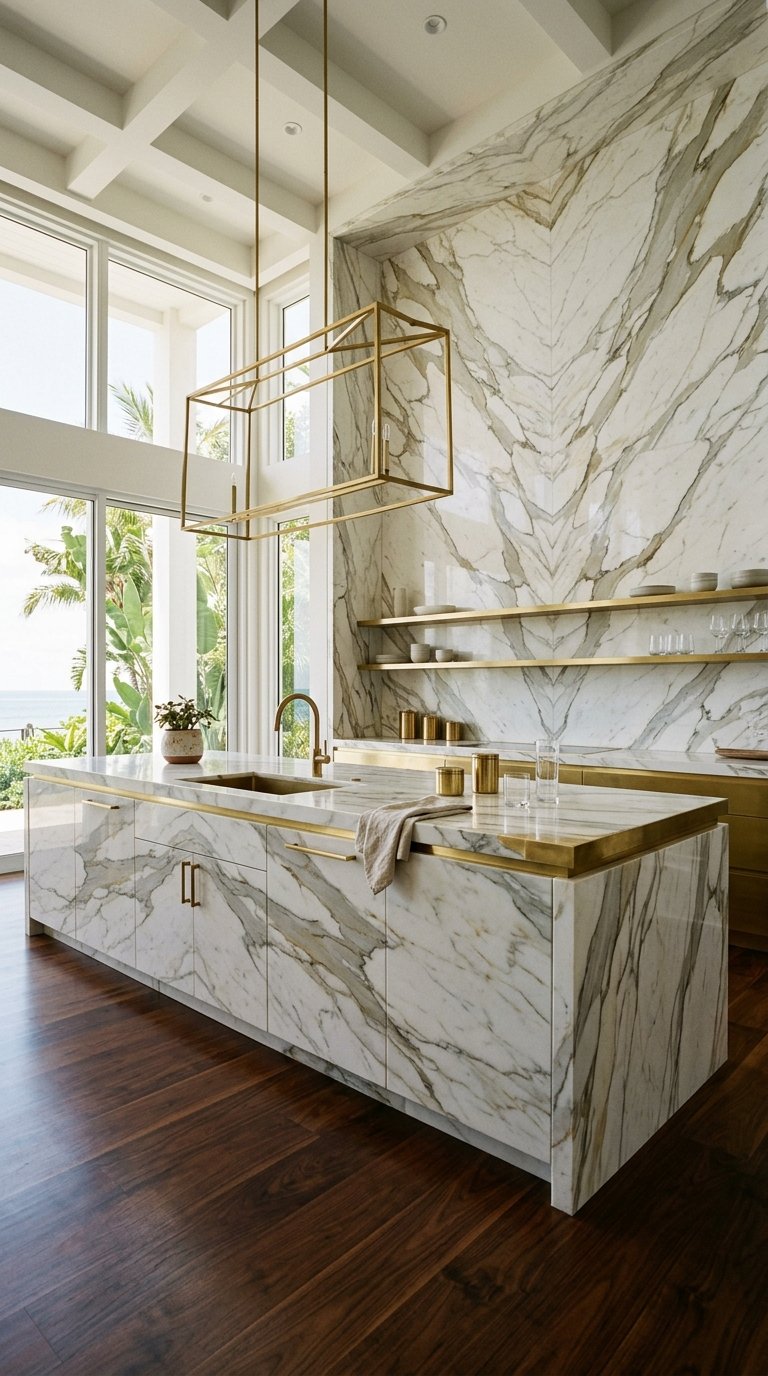
A marble or natural stone slab on the kitchen island back panel creates the most luxurious seating-side surface treatment on this list and the one that delivers the highest material quality per square foot of any option here. A full-height stone slab back panel that matches or complements the island countertop creates a continuous stone story from the top surface down to the floor level.
Carrara marble in a honed finish from Stone Center Online costs $7 to $14 per square foot. An 18-square-foot island back panel runs $126 to $252 in stone materials. Seal with a penetrating impregnating sealer from Miracle Sealants before installation and reapply annually. The stone slab back panel suits contemporary, minimalist, and high-end traditional kitchens where the material investment reflects the broader design ambition of the renovation.
15. Painted Geometric Pattern Back Panel
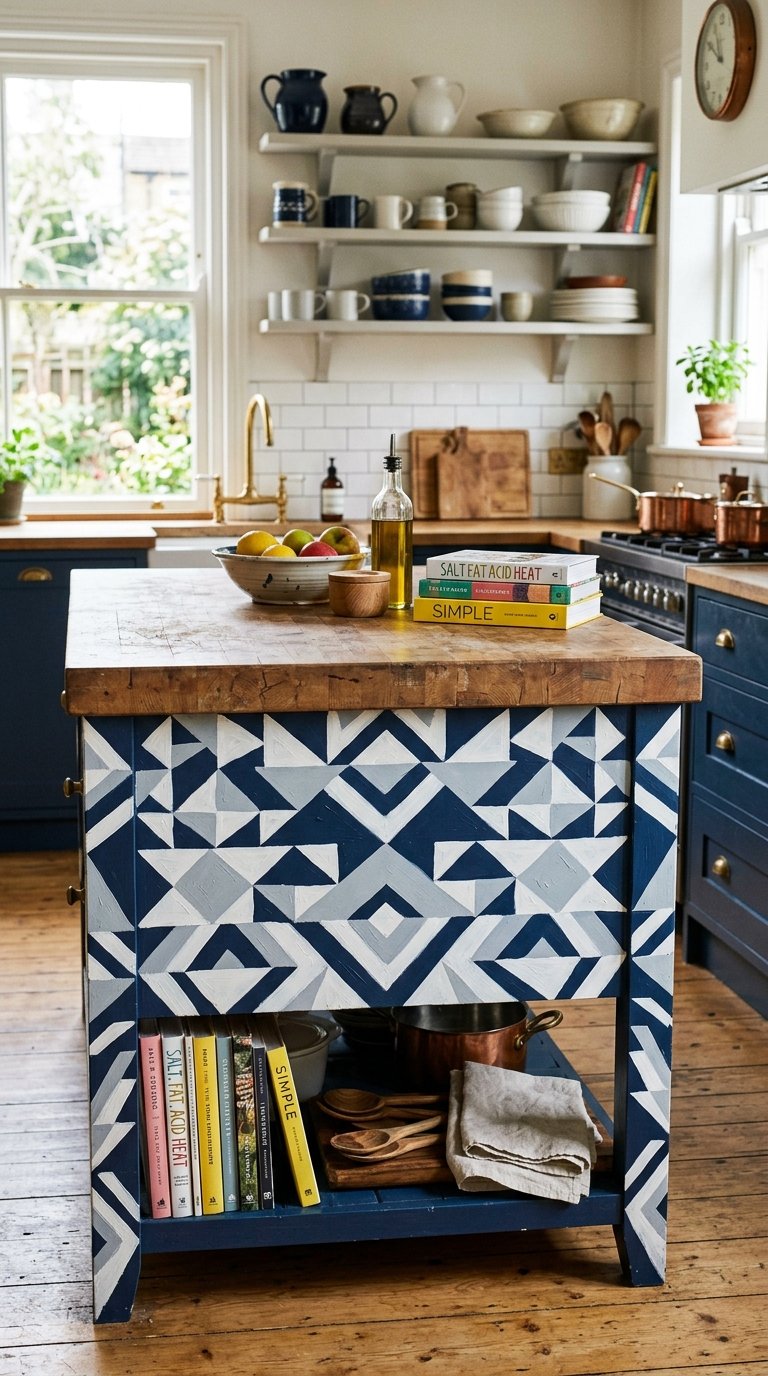
A painted geometric pattern on the island back panel delivers visual complexity and personality at the lowest material cost of any treatment on this list. The pattern serves as the design statement of the island seating face without requiring any additional material beyond paint and painter’s tape. This is the back panel solution for renters and budget-conscious homeowners who want a designed result without a permanent material investment.
Use Benjamin Moore’s Advance alkyd in two colors, the island base color and one contrasting accent color, to paint a diamond grid, herringbone, or chevron pattern directly onto the panel face. Frog Tape at $8 per roll creates clean paint lines on a smooth panel surface without bleed. The total cost for a painted geometric back panel stays under $30 and the result photographs as a deliberate design choice rather than a budget limitation.
16. Mirror Back Panel
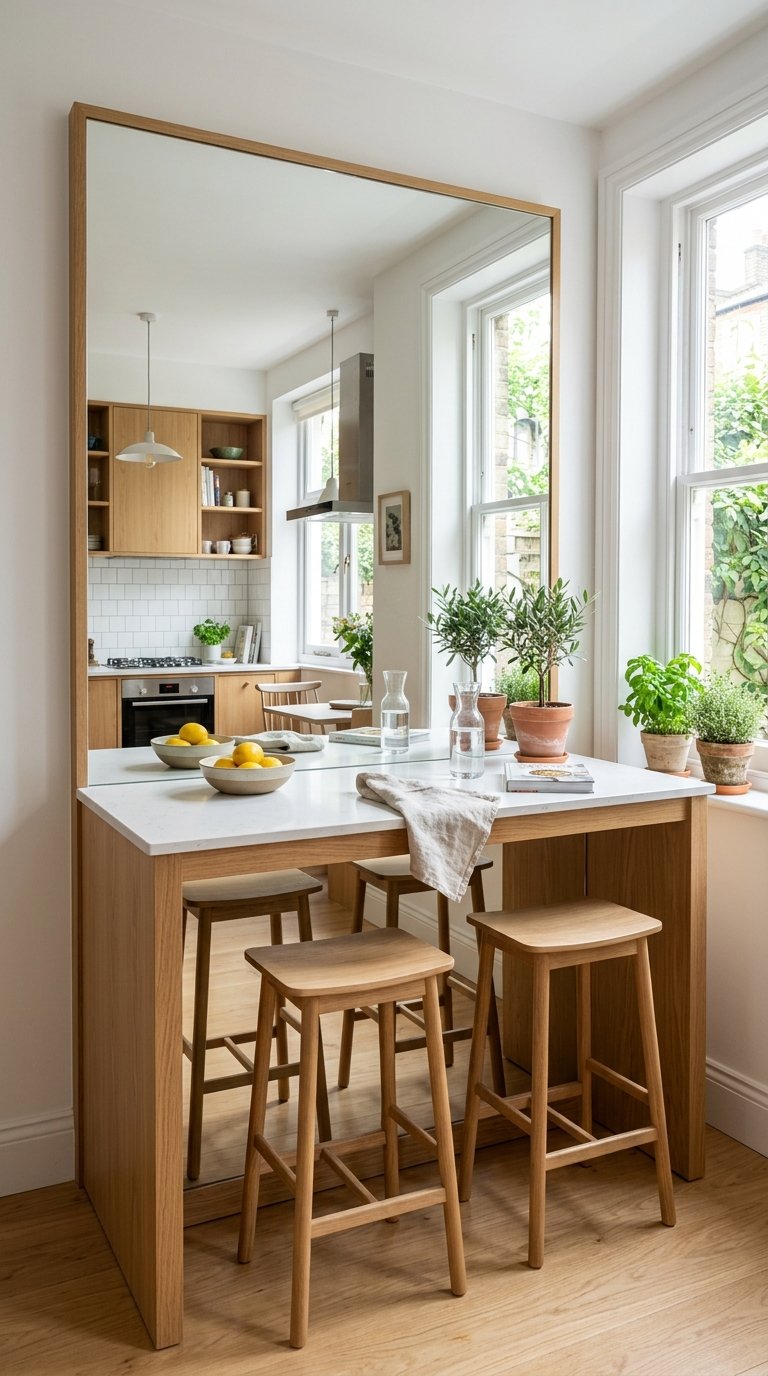
A mirrored back panel on the kitchen island seating face reflects light across the room and makes the kitchen read as significantly larger than its actual dimensions. The mirror effect is particularly valuable in small or galley kitchens where the island occupies a significant portion of the available floor space and a reflective back panel recovers some of that visual volume.
Standard mirror panels from a local glass supplier cost $8 to $15 per square foot cut to size. An 18-square-foot island back panel runs $144 to $270 in mirror materials. Apply the mirror with mirror adhesive from Loctite at $8 per tube rather than standard construction adhesive, which contains solvents that damage the mirror backing over time. Frame the mirror edge with a simple wood molding in the island base color to prevent the raw mirror edge from reading as exposed glass.
17. Metal Panel Back Panel in Stainless or Blackened Steel
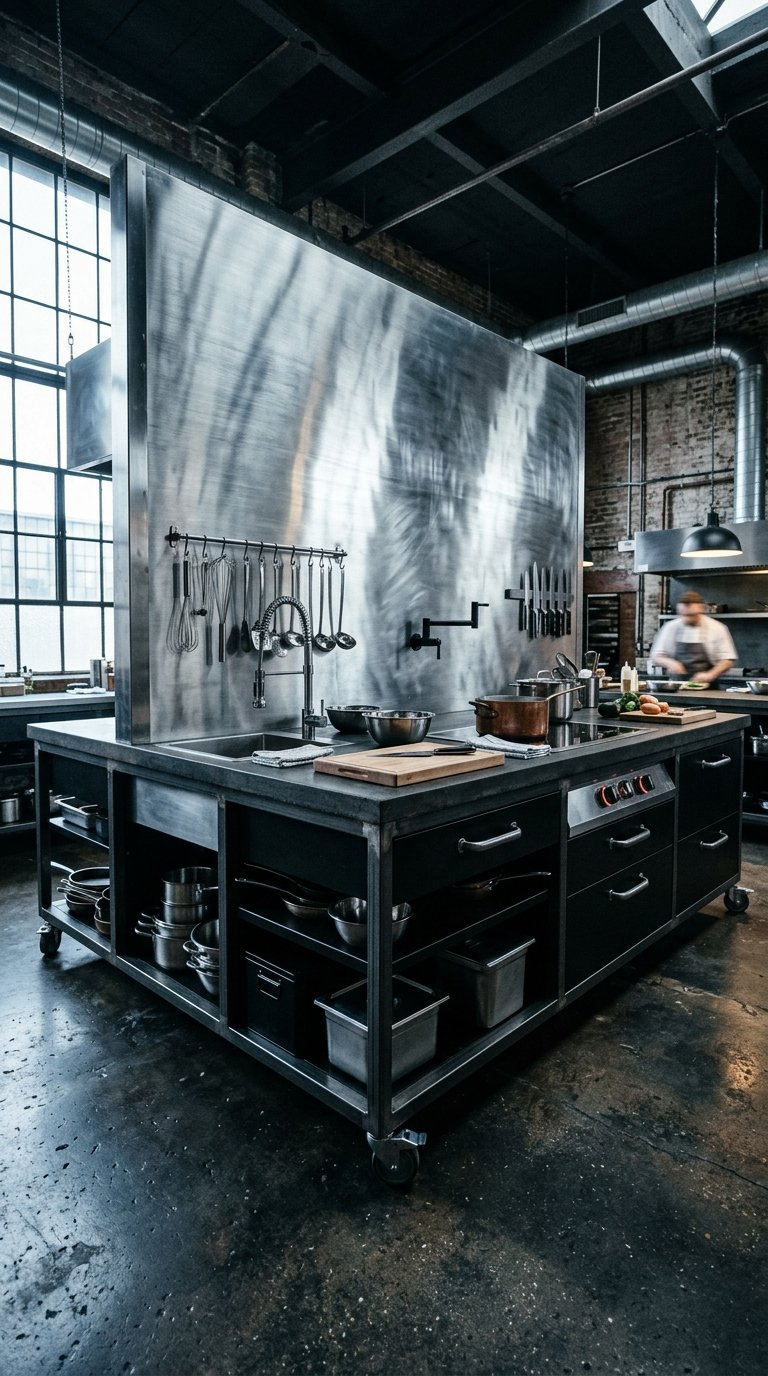
A metal panel on the kitchen island back face, in stainless steel, blackened steel, or corten, creates an industrial material contrast against painted or wood cabinet surfaces that suits loft kitchens, industrial kitchens, and modern kitchens where a soft material treatment would feel inconsistent with the surrounding design.
Stainless steel panels from a local metal supplier cost $15 to $30 per square foot cut to size. Blackened steel panels from online metal suppliers cost $20 to $40 per square foot. Apply with construction adhesive and secure with countersunk screws at the panel perimeter for a permanent installation. A brushed stainless panel on a white island base creates a commercial kitchen reference that suits contemporary and Scandinavian kitchens. A blackened steel panel on a dark charcoal island base creates the most dramatic industrial island treatment available at any budget.
18. Wallpaper Mural Back Panel
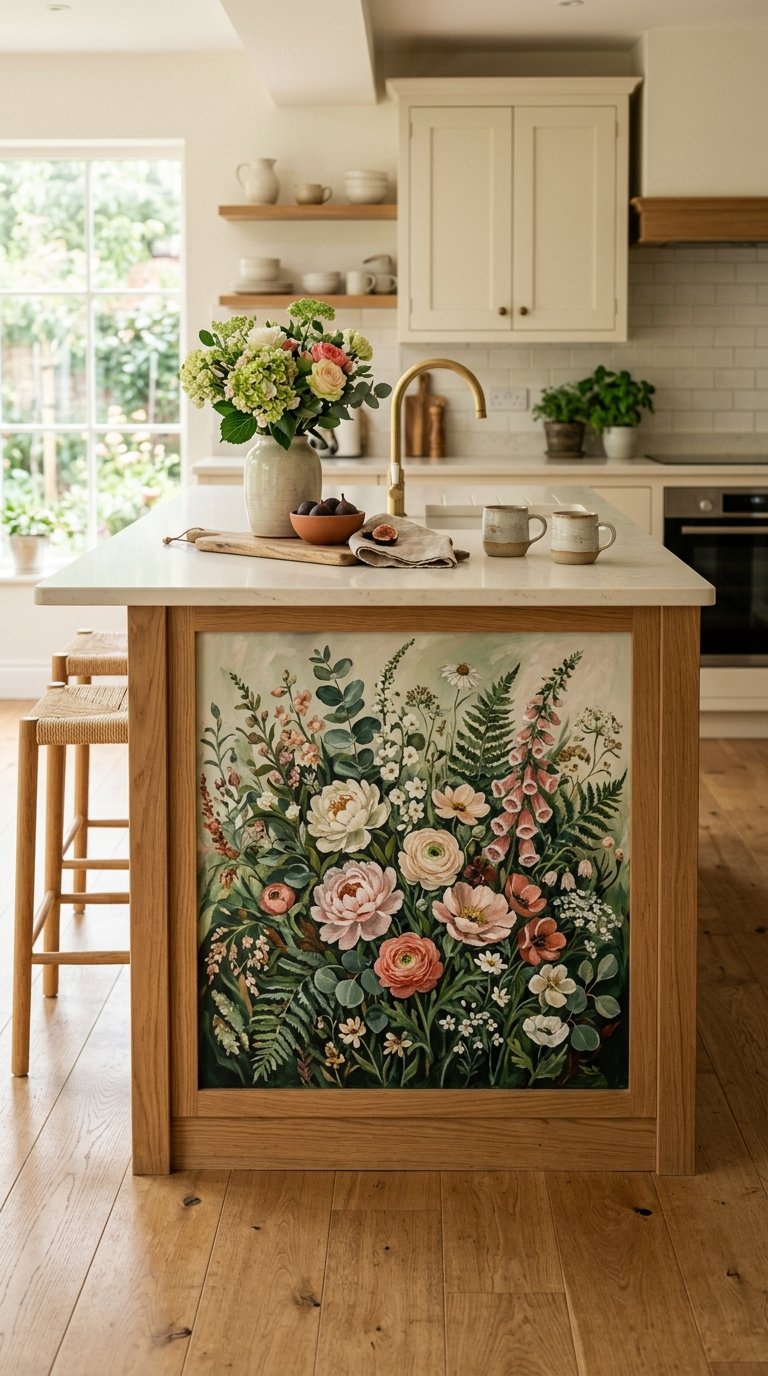
A large-format wallpaper mural applied to the island back panel creates a single focal artwork built into the kitchen without hanging a single piece of wall art. The mural surface suits open-plan kitchens where the island seating face is visible from the living and dining areas and serves as a visual connection point between the kitchen and the adjacent living spaces.
Photowall and Murals Wallpaper both offer large-format custom mural panels sized to any dimension starting at $80 to $150 for a panel covering 18 square feet. Choose a botanical, abstract, or architectural mural in a color palette that complements the island base and countertop materials. Apply with standard wallpaper paste and protect with a clear matte topcoat from Rust-Oleum at $8 per can for moisture resistance in the kitchen environment.
19. Cane or Rattan Inset Back Panel
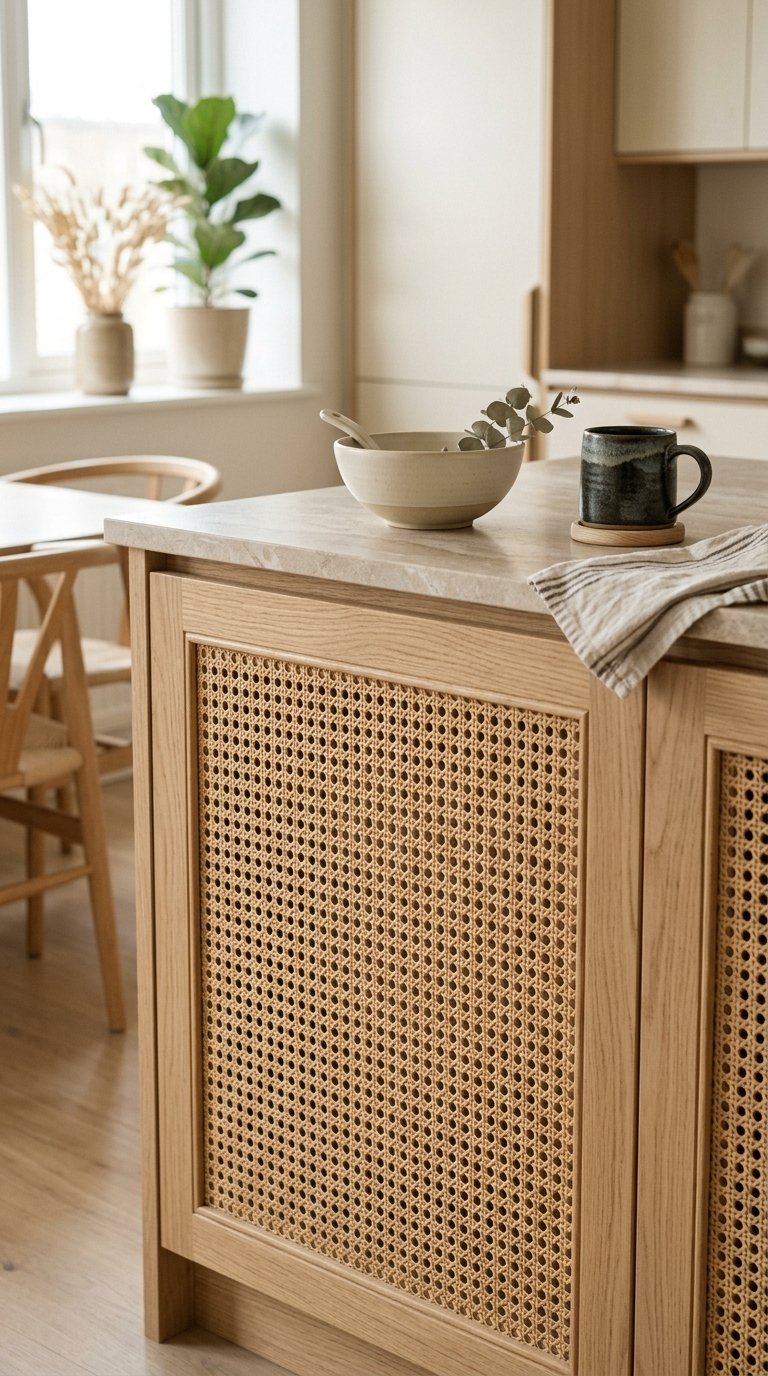
Cane webbing or rattan inset panels on the island back face add a warm, organic texture to the seating side that reads as furniture-quality rather than kitchen-cabinet quality. The open weave of cane webbing creates a visual lightness on the island face that reduces the visual bulk of a large island base and suits coastal, Japandi, and natural material kitchen styles.
Cane webbing rolls from Woodcraft or Amazon cost $3 to $6 per square foot for the material. Install the cane webbing into a routed frame channel in each cabinet door or panel section, or apply it to a backing panel with staples and cover the edges with a wood molding in the island base color. An 18-square-foot island back panel uses $54 to $108 in cane materials. Pair it with rattan or natural fiber bar stools at the seating zone to reinforce the organic material story across the full seating face.
20. Tongue and Groove Wood Back Panel in a Natural Finish
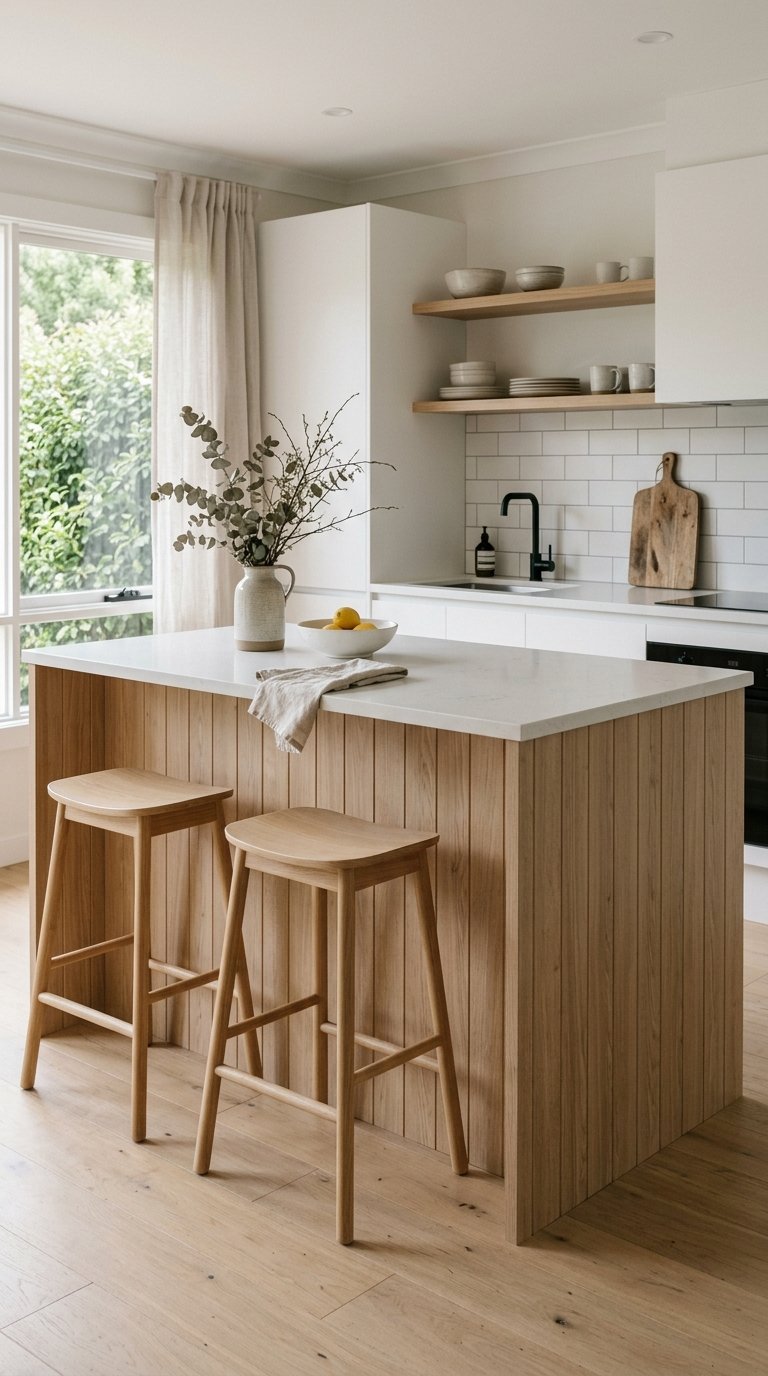
Tongue and groove wood paneling in a natural or lightly stained finish on the island back panel creates a warm, textural surface that reads as crafted rather than manufactured. The tight-fit joint between each board eliminates the shadow gap of shiplap and produces a smoother, more continuous wood surface that suits Scandinavian, Japanese, and modern farmhouse kitchen styles.
Select pine tongue and groove boards from Home Depot cost $1.50 to $2.50 per linear foot. A standard island back panel uses 40 to 50 linear feet, putting the material cost at $60 to $125. Finish with Rubio Monocoat in White Wash or Raw for a natural light wood tone, or in Smoke for a deeper gray-brown tone that complements charcoal or dark island bases. The natural finish suits kitchens where every other cabinet surface is painted and the back panel needs to introduce a warm wood material contrast.
21. Painted Back Panel in a Contrasting Color to the Island Base
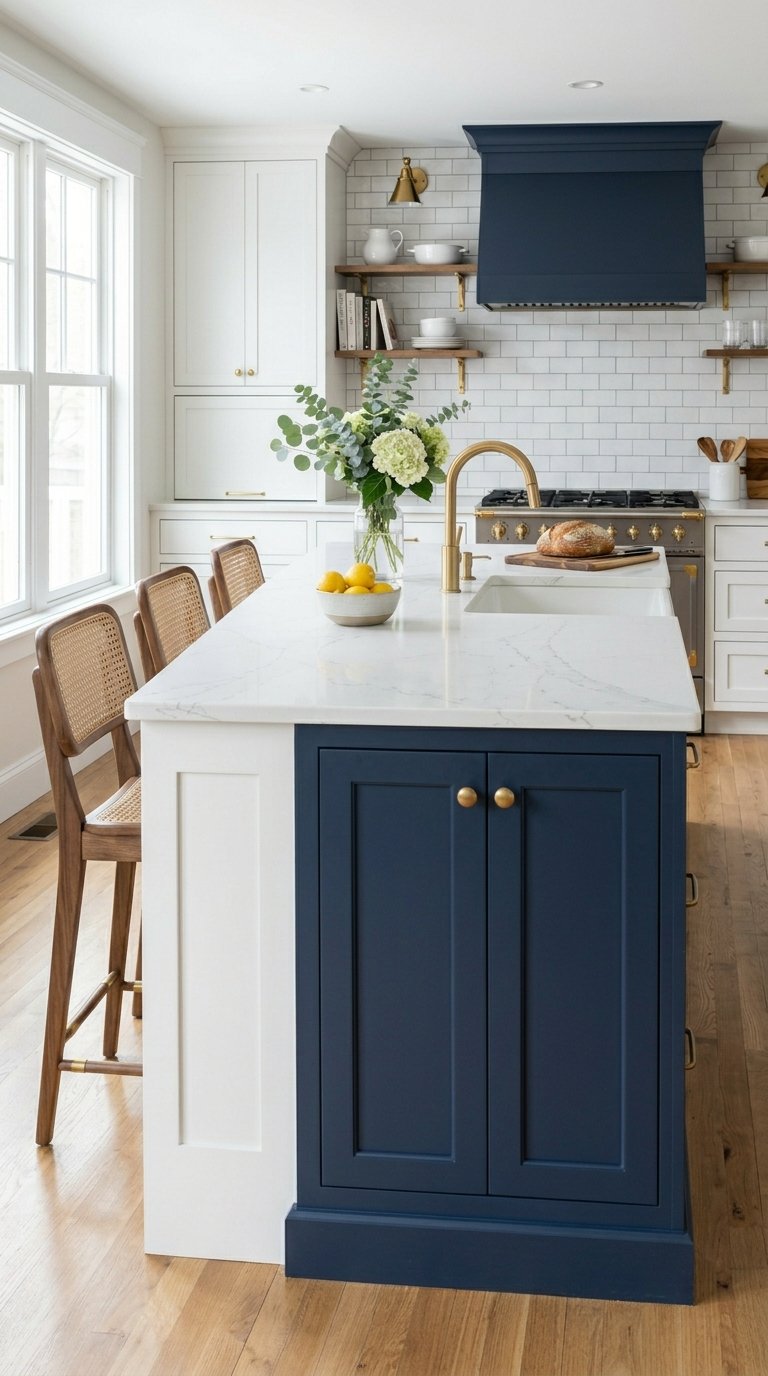
A back panel painted in a contrasting color to the main island base creates a two-tone island treatment where the seating-side face reads as a deliberate design accent rather than a continuation of the cabinet surface. The color contrast signals that the seating face is a different zone of the island with its own visual identity.
Paint the island base in Benjamin Moore’s Hale Navy HC-154 and the back panel in Benjamin Moore’s White Dove OC-17 for the strongest farmhouse two-tone contrast. Or reverse the tones with a white island base and a sage green or charcoal back panel for a color accent on the seating face. The contrasting back panel approach costs nothing beyond the second paint color and creates a visual result that reads as a designed detail rather than a budget decision.
22. Herringbone Wood or Tile Back Panel
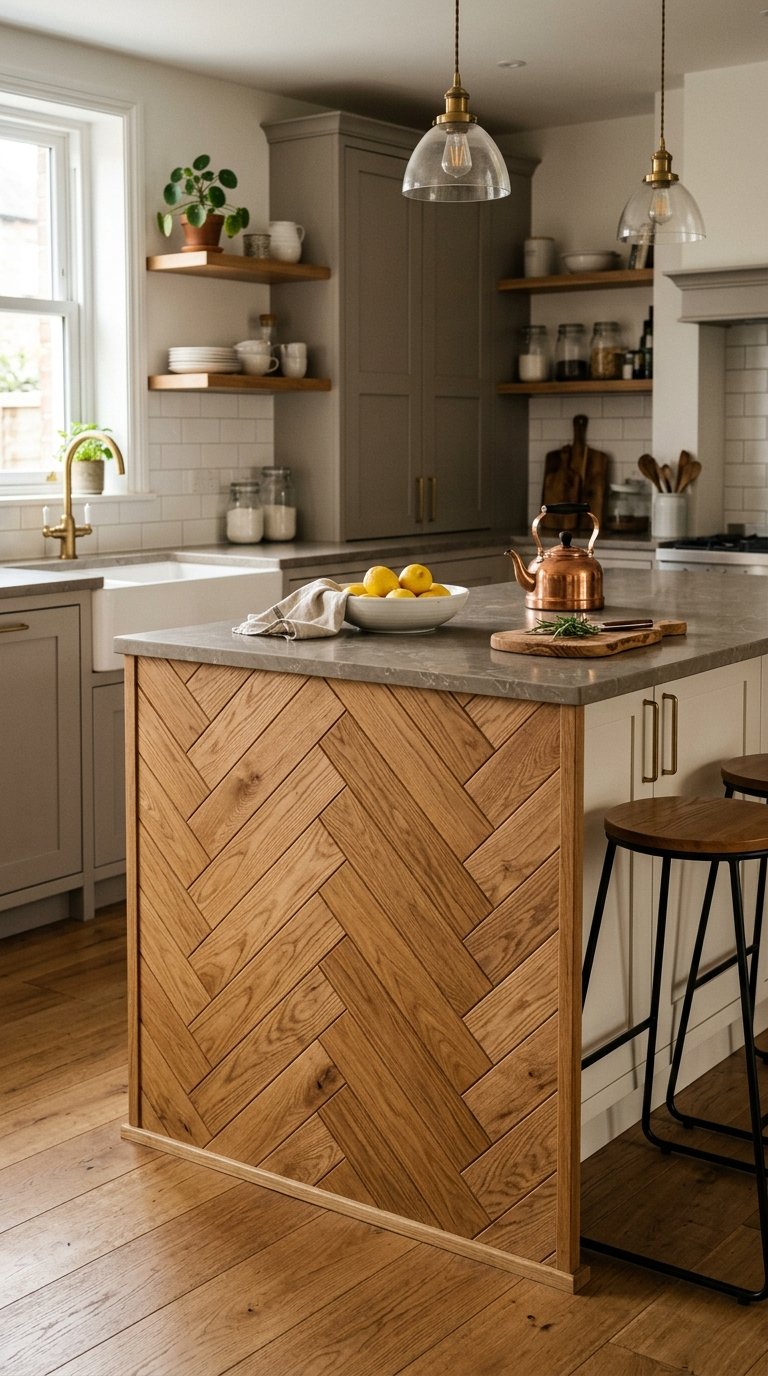
A herringbone pattern back panel in wood or tile on the island seating face creates the most geometrically active surface treatment on this list. The V-shaped directional pattern of herringbone introduces movement and energy to the panel face and suits kitchens where the rest of the design is restrained and the back panel is meant to be the single point of visual complexity.
Use 2×8 or 3×12 porcelain plank tiles from Daltile’s Restore collection in a herringbone layout at $2.49 per square foot for a tile version. For a wood version, use 2-inch wide oak strips in a herringbone pattern from a local hardwood supplier at $4 to $8 per square foot. Both versions require careful layout planning from the center of the panel outward to ensure symmetrical cut tiles or boards at the panel perimeter. Budget an extra 20 percent in materials for the increased waste from the angled cuts at the panel edges.
23. Lacquered High-Gloss Back Panel in a Bold Color
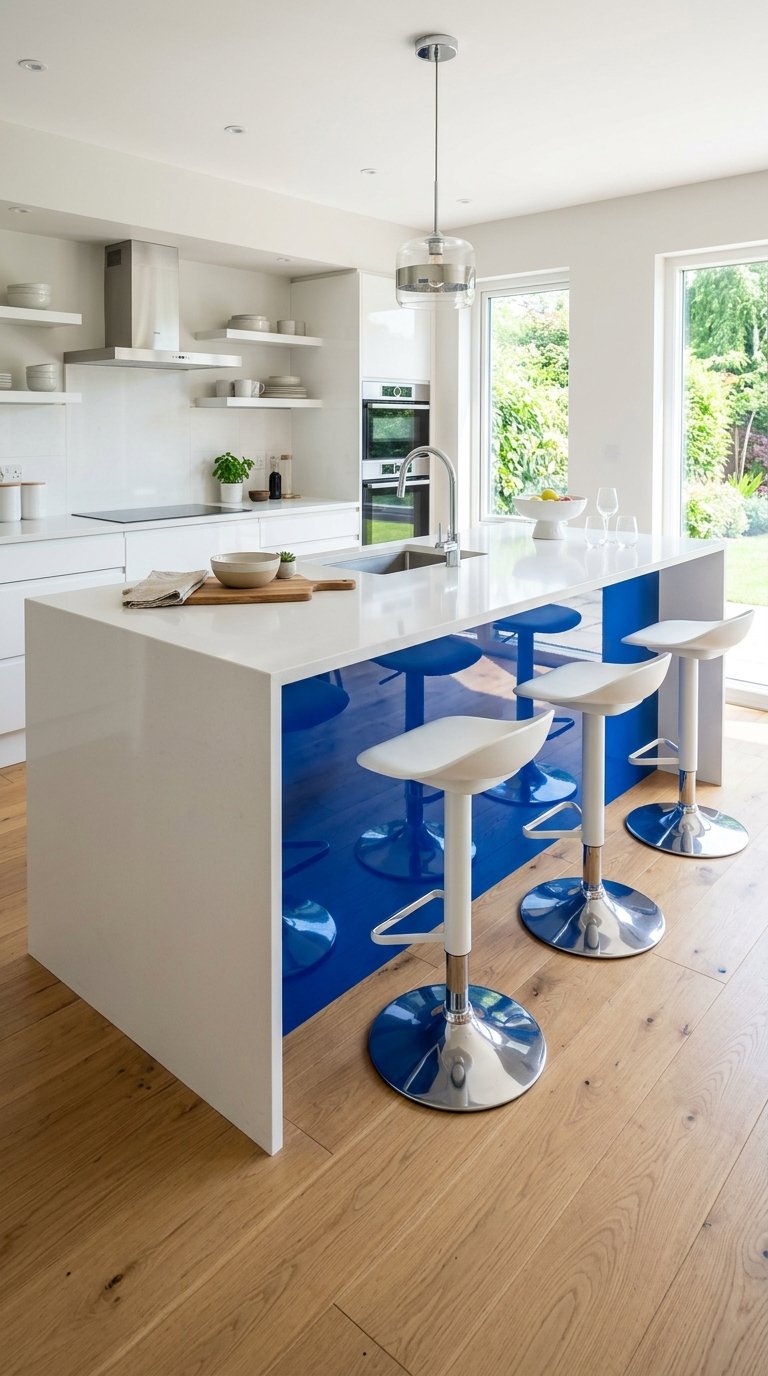
A high-gloss lacquered back panel in a bold accent color creates the most visually impactful island seating face treatment at the lowest material cost of any non-paint option on this list. The high-gloss surface reflects light and amplifies the color intensity, making a bold color choice read at full saturation from across the room.
Apply Rust-Oleum’s High Gloss spray paint in a deep color such as Cobalt Blue, Sunrise Red, or Emerald Green at $8 per can for a DIY lacquered result. For a professional-quality lacquered finish, use a two-part polyurethane topcoat from General Finishes at $45 per quart applied with a fine foam roller. The bold gloss back panel suits contemporary and eclectic kitchens where the island is meant to read as a statement piece and the rest of the kitchen is deliberately restrained to give it space. IMO, a high-gloss cobalt blue back panel on a white island base is the single most striking island treatment achievable under $50 in materials.
Final Thoughts
Your island back panel is 18 square feet of vertical surface that sits at eye level for every person who sits at your kitchen island. Leaving it as a plain painted rectangle is the kitchen equivalent of framing a blank canvas. Every option on this list transforms that surface into a design feature for between $30 and $500 in materials.
Pick the treatment that solves your kitchen’s specific visual problem first. Need warmth in a cold, all-white kitchen? Go reclaimed wood or tongue and groove in a natural finish. Need to add character to a rental without permanent changes? Go wallpaper mural or painted geometric pattern. Need maximum visual impact on a minimal budget? Go chalkboard paint or contrasting color panel. The right back panel treatment does not require a full kitchen renovation. It requires one good decision made on the right surface, and now you know exactly which surface that is.