25 sleek black kitchen island ideas for modern homes guide
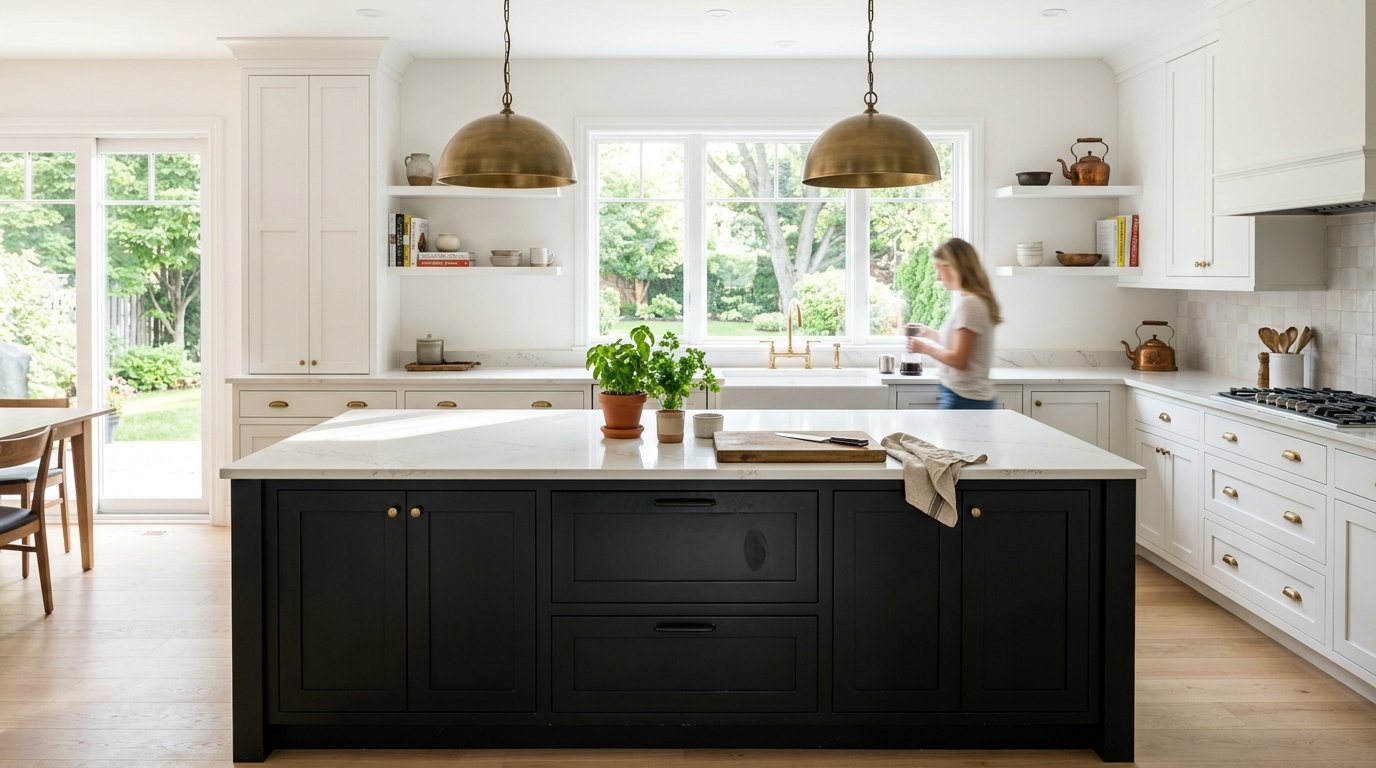
A black kitchen island is the single design decision that separates a kitchen that looks finished from one that looks assembled. It anchors the room, creates contrast against light cabinetry, and delivers a level of visual weight that no white, gray, or natural wood island achieves. If you want a kitchen that reads as intentional from the moment someone walks in, a black island is where that starts.
These 25 ideas give you specific finishes, real product names, accurate price ranges, and the honest reasons each one works. Every idea is built for a real kitchen, not a showroom.
1. Matte Black Shaker Island With White Quartz Countertop
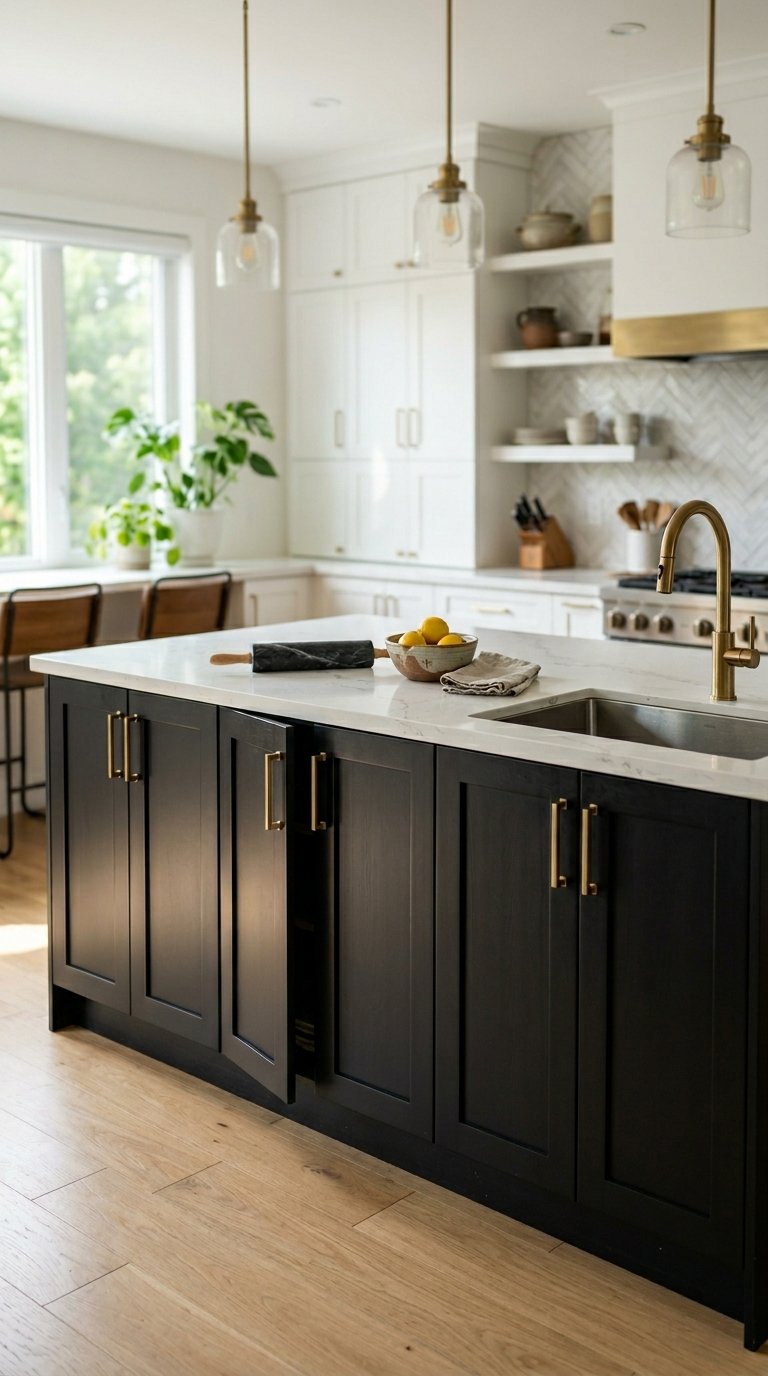
A matte black shaker island with a white quartz countertop is the highest-contrast pairing in kitchen design and the combination that makes both surfaces read at their strongest. The flat, non-reflective matte finish on the black base absorbs light while the white quartz reflects it, creating a dynamic surface tension that pulls the eye directly to the island.
Paint an existing island base in Benjamin Moore’s Onyx 2133-10 using Advance alkyd paint at $70 per gallon for a durable, hard-wearing matte finish. Top it with Caesarstone’s Calacatta Nuvo quartz at $60 to $80 per square foot installed. The combination costs significantly less than a full cabinet replacement and delivers a result that photographs as a high-end custom kitchen regardless of the original cabinet quality beneath the paint.
2. Black Island With Butcher Block Countertop
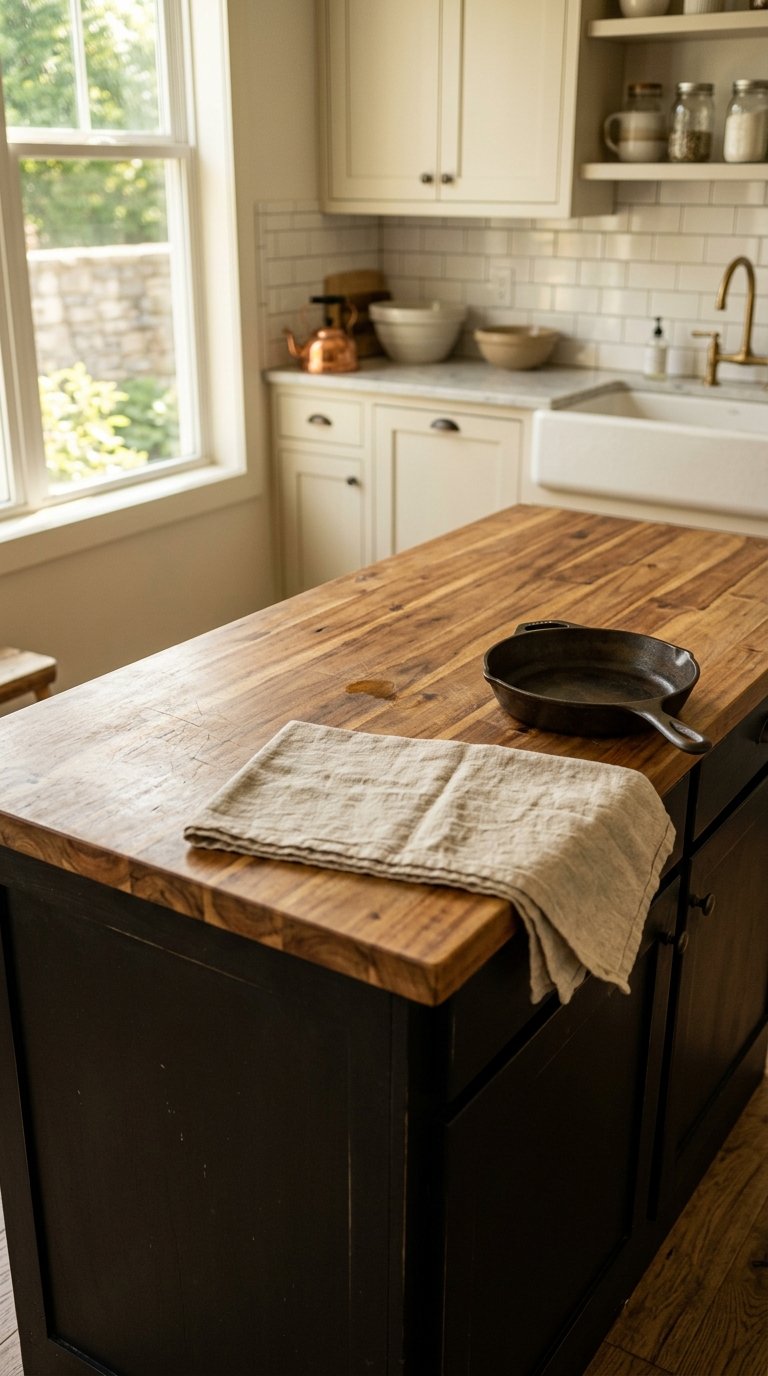
A black island base with a warm butcher block countertop creates the farmhouse-meets-modern contrast that neither material achieves alone. The warm wood grain against a flat black base reads as collected and considered rather than matched and purchased, which is the harder quality to achieve in kitchen design.
IKEA’s SKOGSTA butcher block top in acacia costs $229 for a 74×36-inch surface and fits directly onto IKEA’s SEKTION base cabinets. Paint the base in Sherwin-Williams’ Tricorn Black SW 6258 using Emerald Urethane enamel at $72 per gallon. Seal the butcher block with two coats of food-safe Rubio Monocoat at $45 per application to protect the wood surface from kitchen moisture and daily cutting use.
3. Glossy Black Island With Integrated Sink
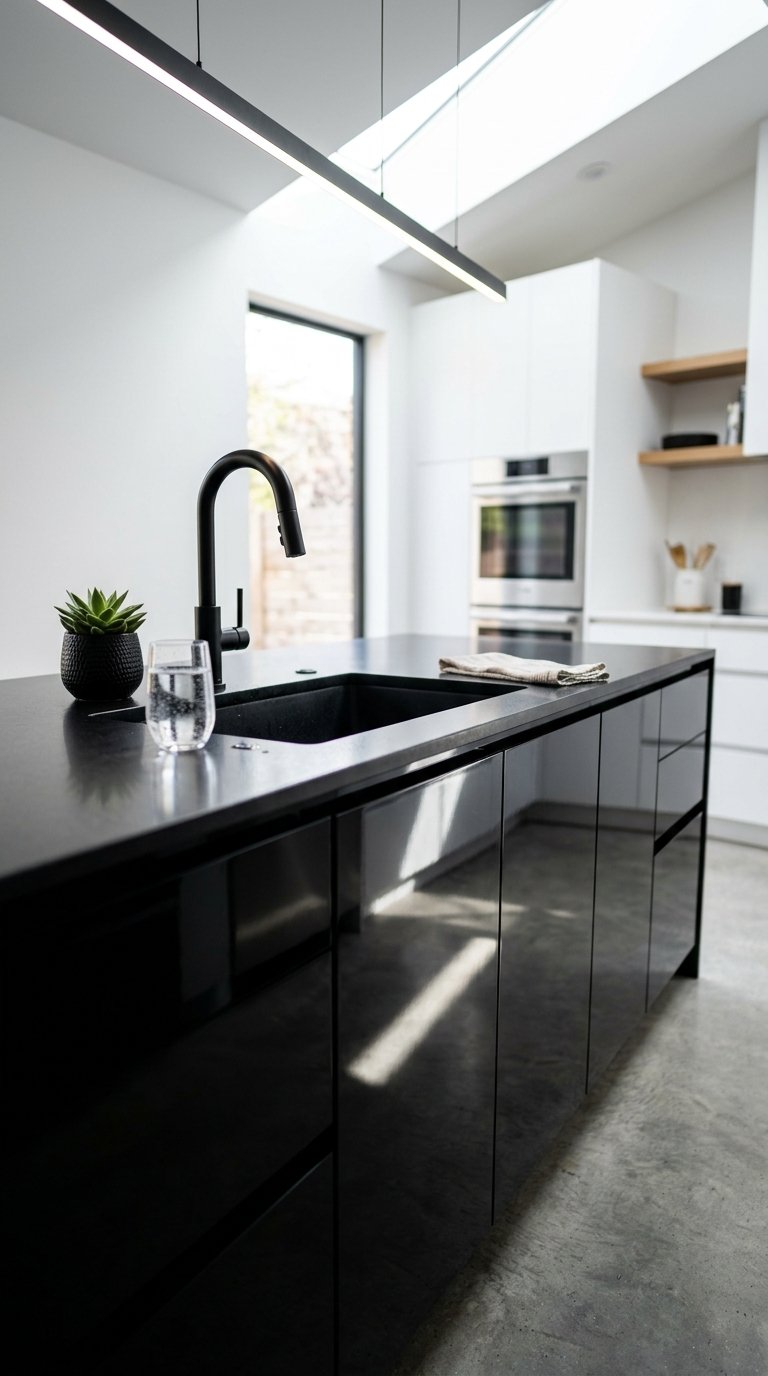
A high-gloss black island with an integrated undermount sink turns the island into a full prep and cleaning station with a polished, reflective surface that suits contemporary and minimalist kitchens specifically. The gloss finish amplifies the black tone and reflects pendant light and natural daylight in a way matte black never does.
Use a two-part epoxy cabinet paint from Rust-Oleum’s Cabinet Transformations kit at $80 for a gloss finish on an existing island base. Integrate a Kraus Undermount stainless sink at $200 to $350 or an Elkay black granite composite sink at $280 to $420 for a tone-on-tone black sink within the black island. The glossy surface shows fingerprints more readily than matte, so pair it with Weiman Granite and Stone Cleaner at $8 per bottle for daily wipe-down maintenance.
4. Black Island With Waterfall Marble Countertop
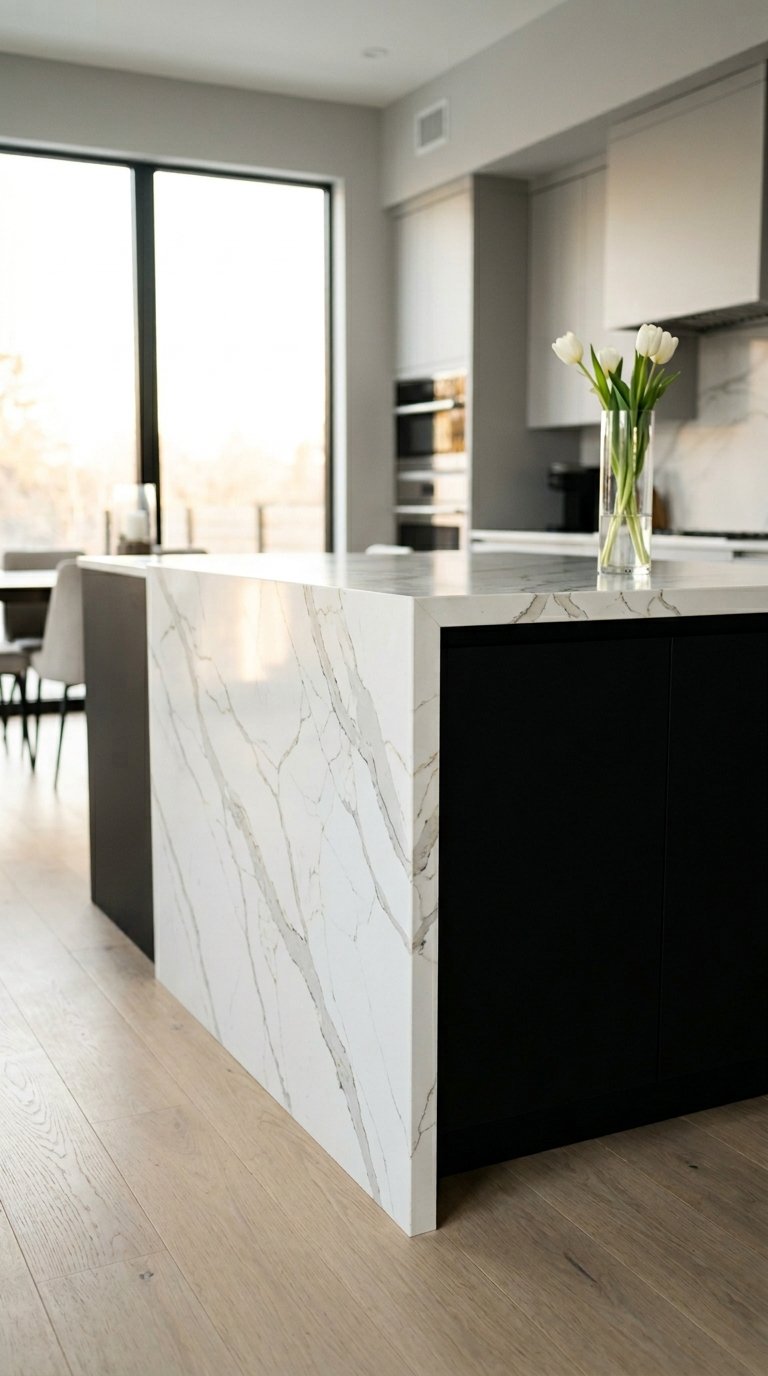
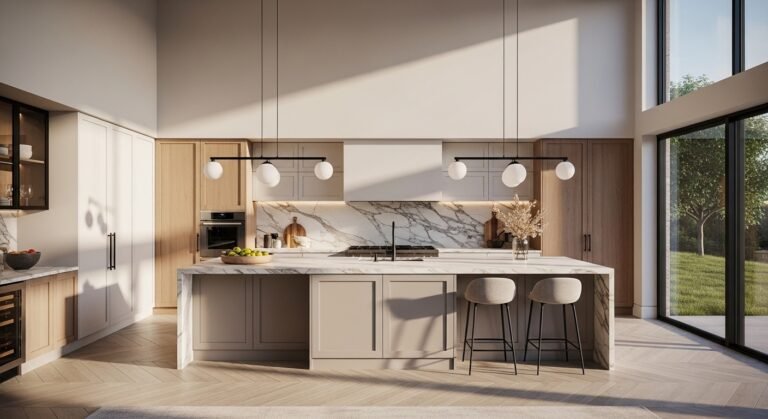
A black island base with a waterfall marble or marble-look quartz countertop creates the most dramatic visual statement of any island configuration in this list. The white veined stone cascading down both sides of the black base creates a stark, sculptural contrast that reads as luxury regardless of the countertop material budget.
Calacatta quartz from MSI’s Calacatta Laza series in a waterfall configuration costs $90 to $150 per square foot installed, including the two vertical side panels. The black base disappears visually beneath the stone, making the countertop appear to float. Use a push-to-open hardware system from Sugatsune at $18 to $30 per door to eliminate visible pulls and keep the black base surface completely uninterrupted.
5. Black Island With Brass Hardware Accents
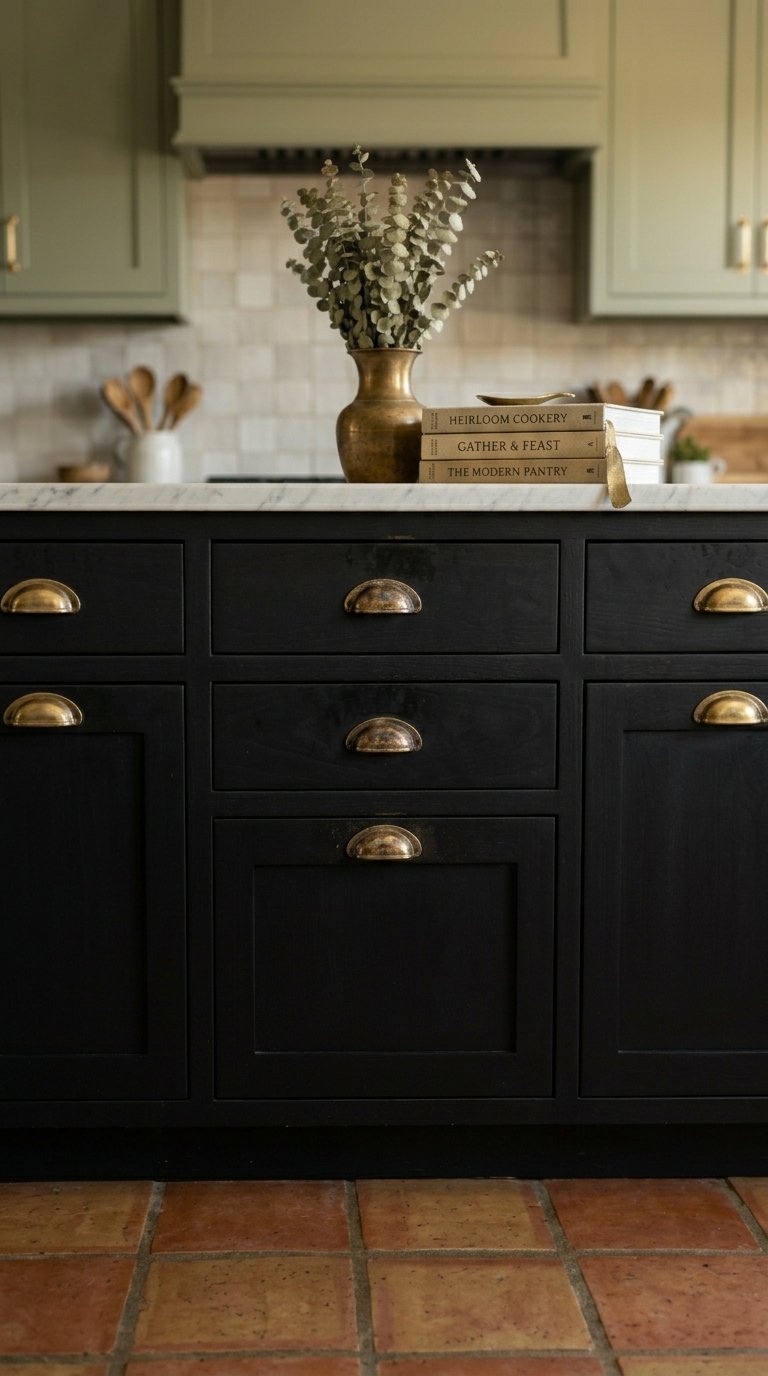
Brass hardware on a black kitchen island creates the warmest and most historically referenced contrast of any metal finish against a dark base. The warm yellow-gold of brass against flat black reads as rich and deliberate in a way chrome, nickel, and stainless steel hardware on a black island never achieves.
Rejuvenation’s unlacquered brass cup pulls cost $14 to $22 each. A standard island with 12 pieces of hardware runs $168 to $264 in hardware alone. Use unlacquered rather than lacquered brass so the hardware develops a natural patina over time that deepens the contrast with the black base rather than fading to a uniform gold tone. Pair the island hardware with a brass faucet from Waterstone at $400 to $600 for a cohesive metal story across the full kitchen.
6. Charcoal Black Island With Open Lower Shelving
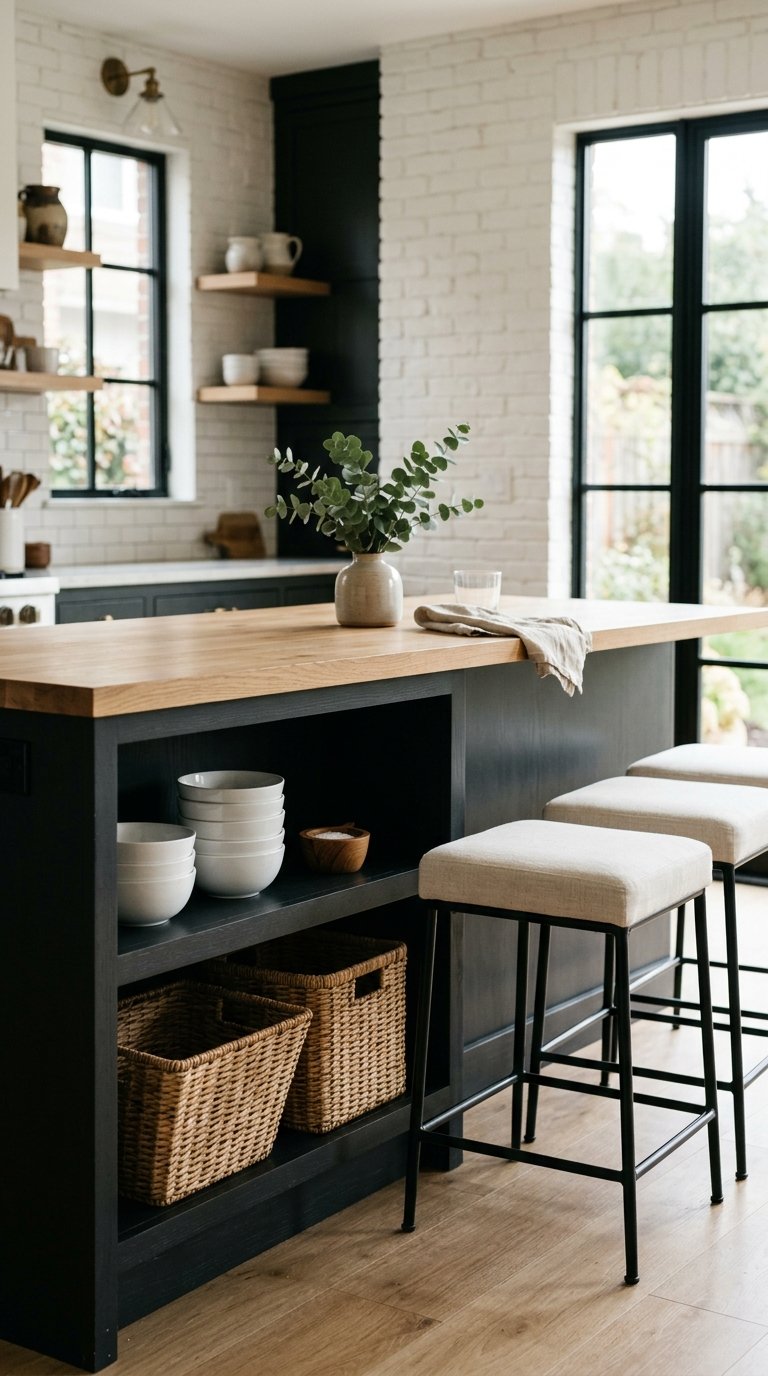
A charcoal black island with open lower shelves on the seating side creates a display and storage opportunity that standard closed cabinet doors never provide. The open shelves soften the visual weight of a fully enclosed black cabinet base and invite the eye into the island rather than stopping at its surface.
Replace standard lower cabinet doors on one island face with open shelves by removing the doors and adding a fixed shelf at mid-height. Style the open shelves with uniform wicker baskets from Target’s Threshold line at $15 to $25 each or stacked white ceramic bowls and cookbooks for a curated display. Paint the interior of the open shelf section in the same charcoal as the island exterior so the shelving reads as a continuous unit rather than an exposed cabinet interior.
7. Black Island With Concrete Countertop
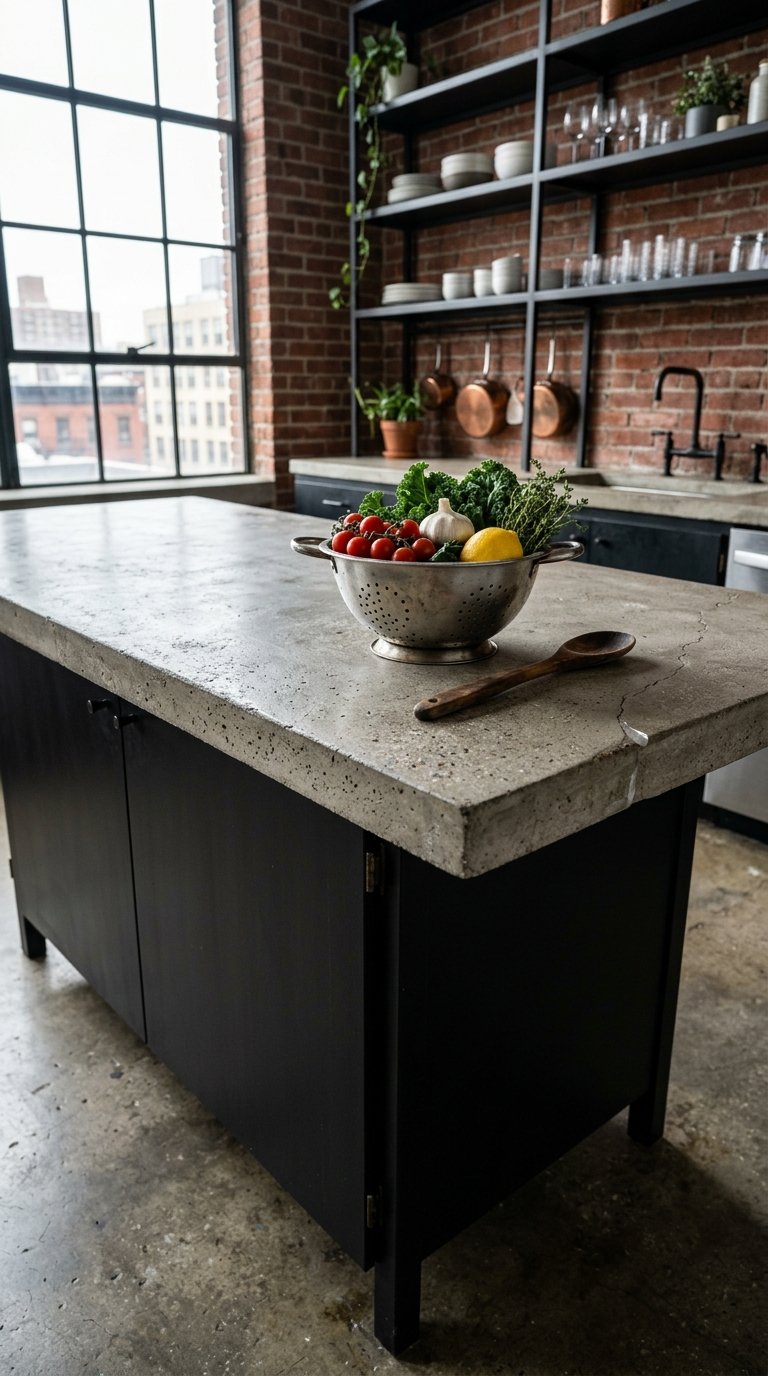
A black island base with a poured concrete countertop creates an industrial-meets-modern combination that suits loft kitchens, Scandinavian kitchens, and modern farmhouse kitchens equally well. Both materials share a raw, structural quality that makes the island read as built rather than bought.
Poured concrete countertops cost $65 to $135 per square foot installed by a fabricator. A DIY concrete countertop using Quikrete’s Countertop Mix at $22 per 80-pound bag reduces the cost to $15 to $30 per square foot in materials. Seal the finished concrete with StoneTech Bulletproof sealer at $28 per quart and reapply every 12 to 18 months to prevent staining from cooking oils and acidic food contact.
8. Two-Tone Island With Black Base and Contrasting Colored Upper Shelf
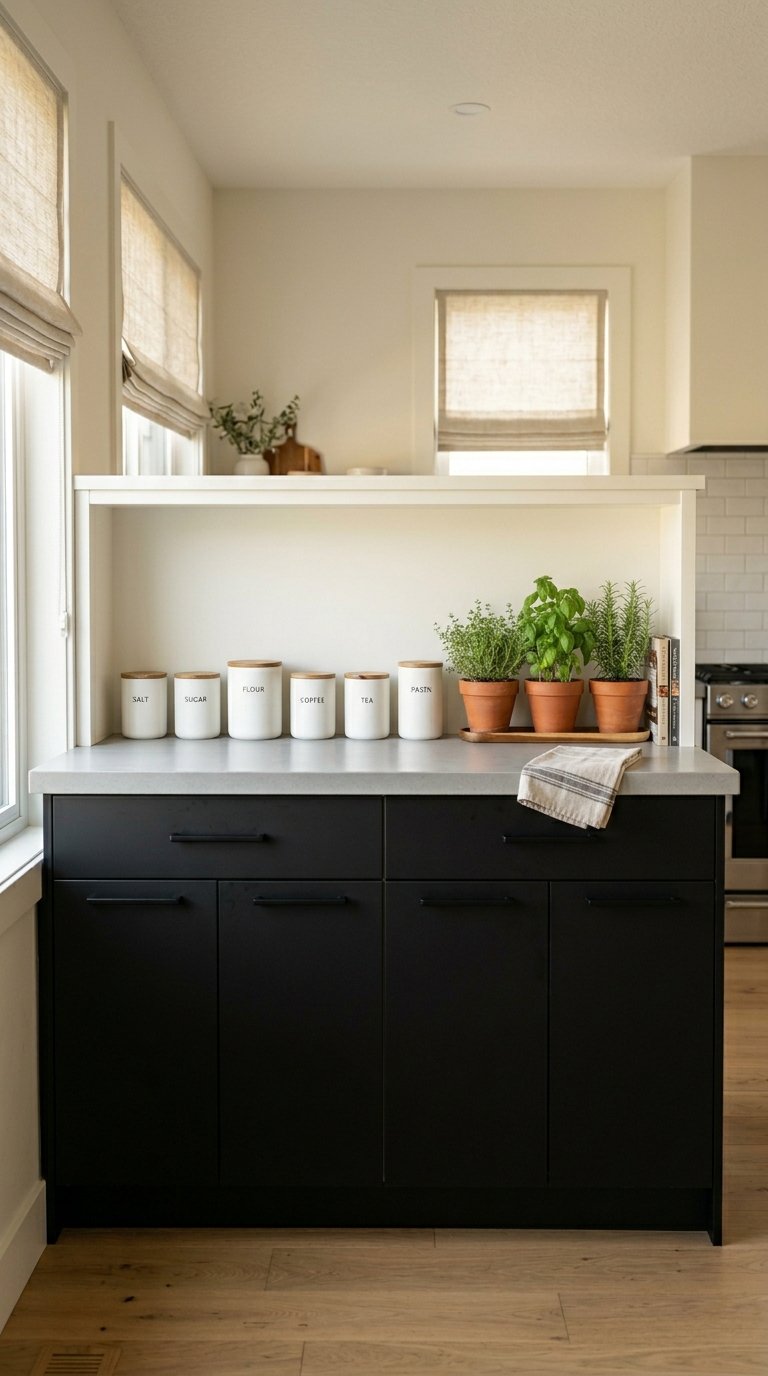
A two-tone island with a black lower base cabinet section and a contrasting colored upper shelf or prep surface above creates a furniture-like layered look that a single-material island never achieves. The color break at the countertop height signals that the two sections serve different functions, prep surface above and storage below.
Paint the lower base in Benjamin Moore’s Black Beauty 2128-10 and the upper shelf structure in Sherwin-Williams’ Alabaster SW 7008 for a warm white contrast. Or reverse the tones with a white base and black upper shelf for a lighter overall visual weight. The two-tone approach works specifically well on larger islands over 6 feet long where a single color across the full length reads as heavy.
9. Matte Black Island With Black Countertop for a Tone-on-Tone Look
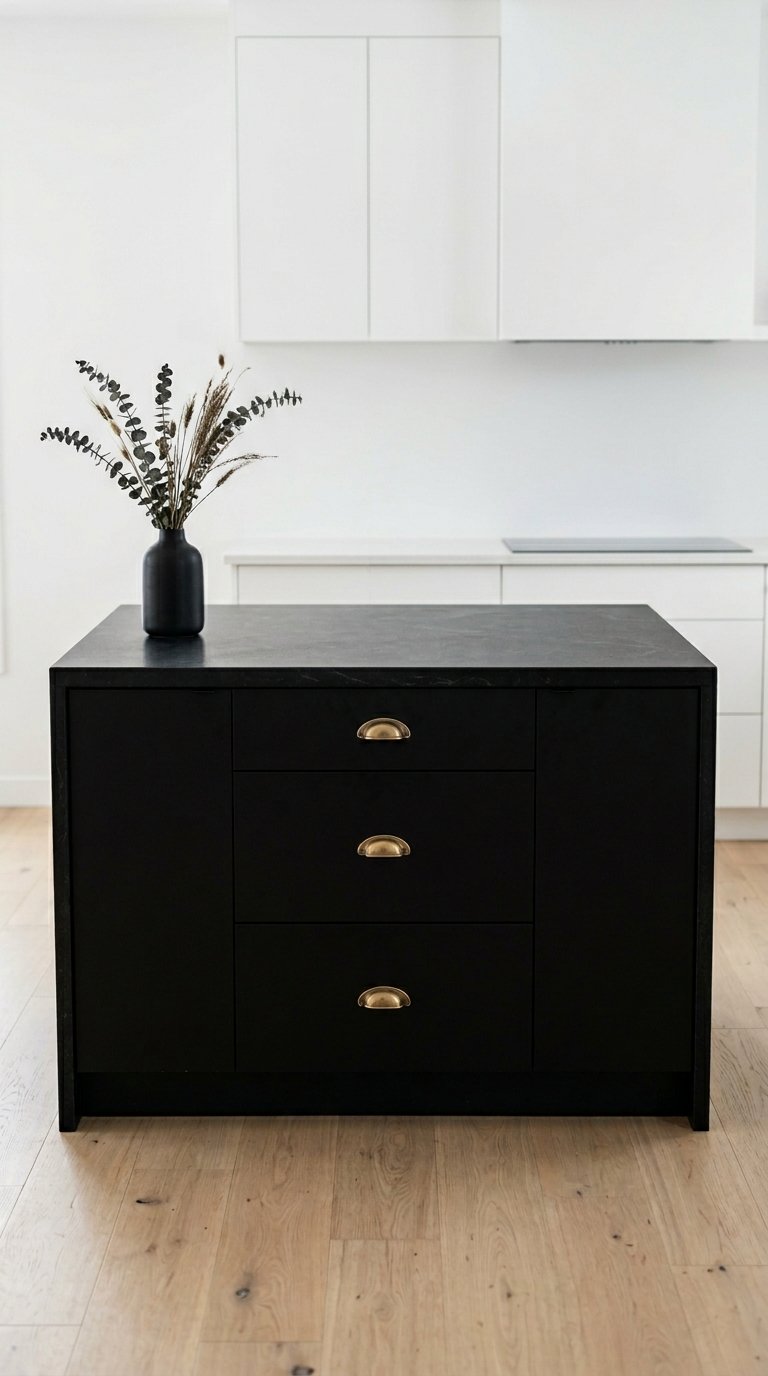
A tone-on-tone black island with a matte black base and a dark black or very dark gray countertop creates an enveloping, monolithic island presence that no contrasting combination replicates. The full-black island reads as a single sculptural mass rather than a combination of surfaces, which suits contemporary and minimalist kitchens where the island is meant to be the room’s dominant statement.
Use Silestone’s Eternal Noir quartz at $75 to $110 per square foot for the countertop to achieve a consistent deep black tone with subtle natural movement. Pair it with a matte black base in Farrow and Ball’s Off-Black No.57, which carries a warm undertone that prevents the full-black combination from reading as cold or institutional. Add a single point of contrast with unlacquered brass pulls to break the monochromatic surface just enough.
10. Black Shiplap Island Base With Farmhouse Sink
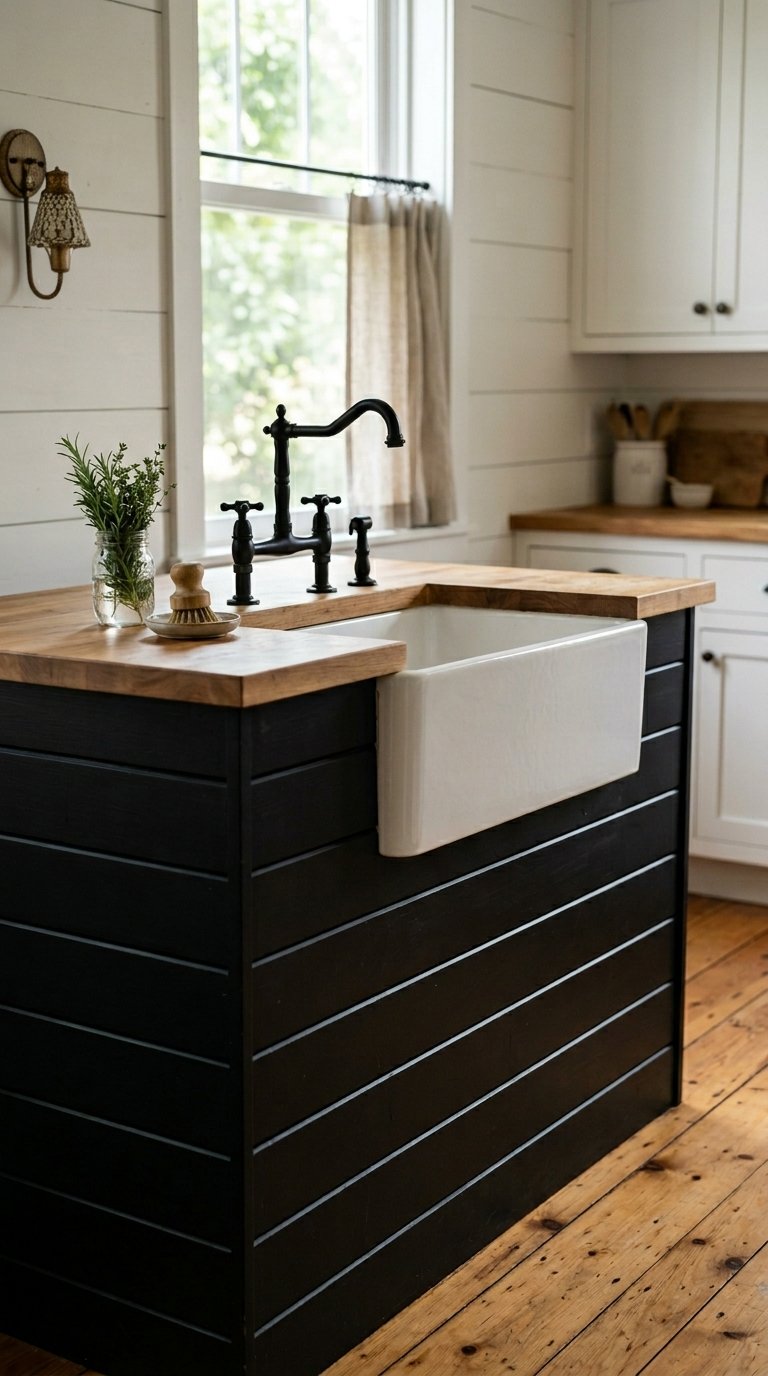
A black shiplap island base with an integrated white fireclay farmhouse sink combines two of the strongest farmhouse design elements into a single focal piece. The horizontal shiplap texture on the island face adds depth and shadow variation to the black surface, preventing the base from reading as flat.
Install primed pine shiplap from Home Depot at $1.20 per linear foot on three sides of an existing island base before painting. Use Benjamin Moore’s Onyx in Advance alkyd for a hard-wearing finish over the shiplap boards. Drop in a Kraus 33-inch fireclay farmhouse sink at $500 to $700 for the white-on-black contrast at the sink zone that makes this island combination immediately recognizable as farmhouse design at its most resolved.
11. Black Island With Seating Overhang and Leather Bar Stools
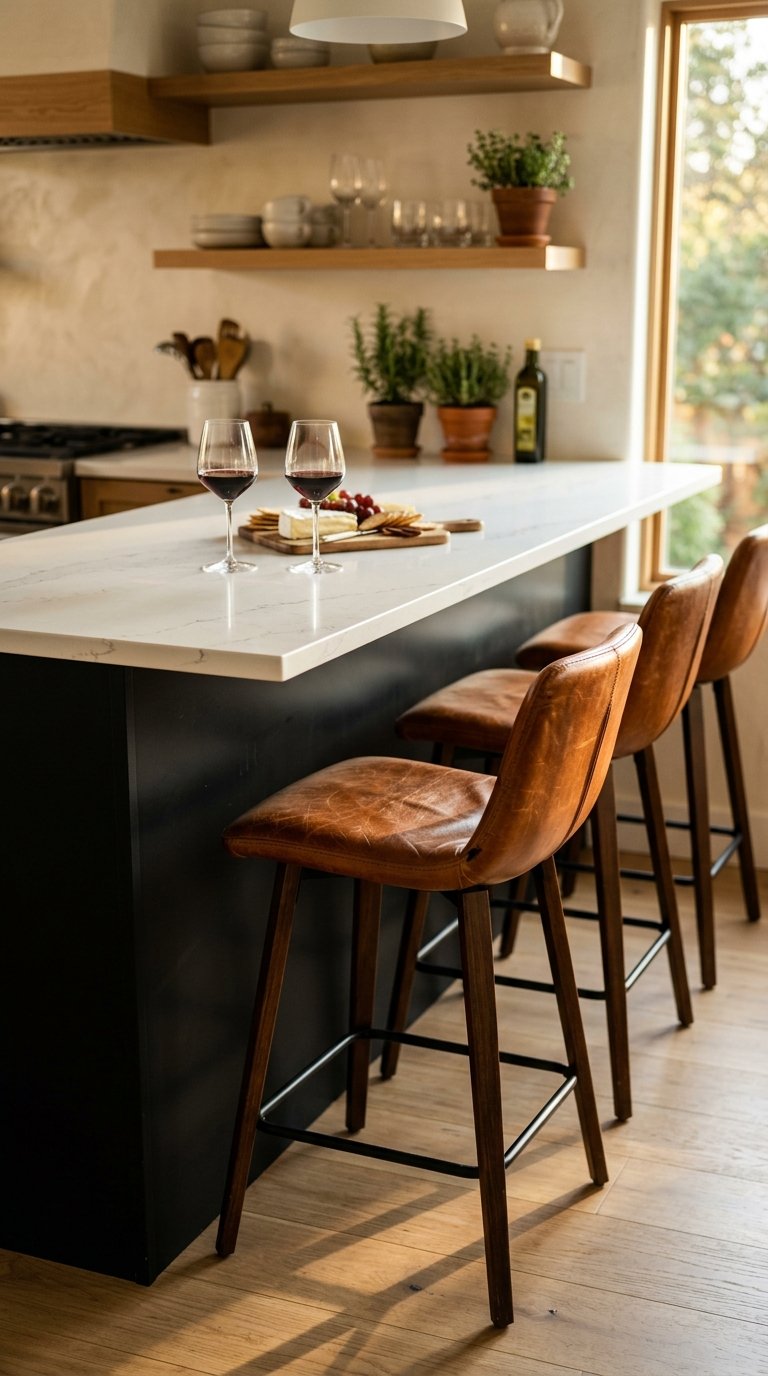
A black island with a generous seating overhang and leather bar stools creates a kitchen gathering point with the visual weight and material quality of a high-end bar. The leather stools add a warm, tactile material to an otherwise hard-surfaced island zone and prevent the seating area from reading as an afterthought to the main island design.
The seating overhang requires a minimum 12-inch depth at counter height or 15 inches at bar height for comfortable knee clearance. Support the overhang with steel L-brackets from Simpson Strong-Tie at $8 to $15 each for spans over 18 inches. Pair the black island with West Elm’s Milo leather counter stools at $250 each or Article’s Sede bar stools in tan leather at $179 each for a warm cognac leather tone that reads as the strongest contrast against a black island base.
12. Painted Black Island With Exposed Brick or Stone Base Detail
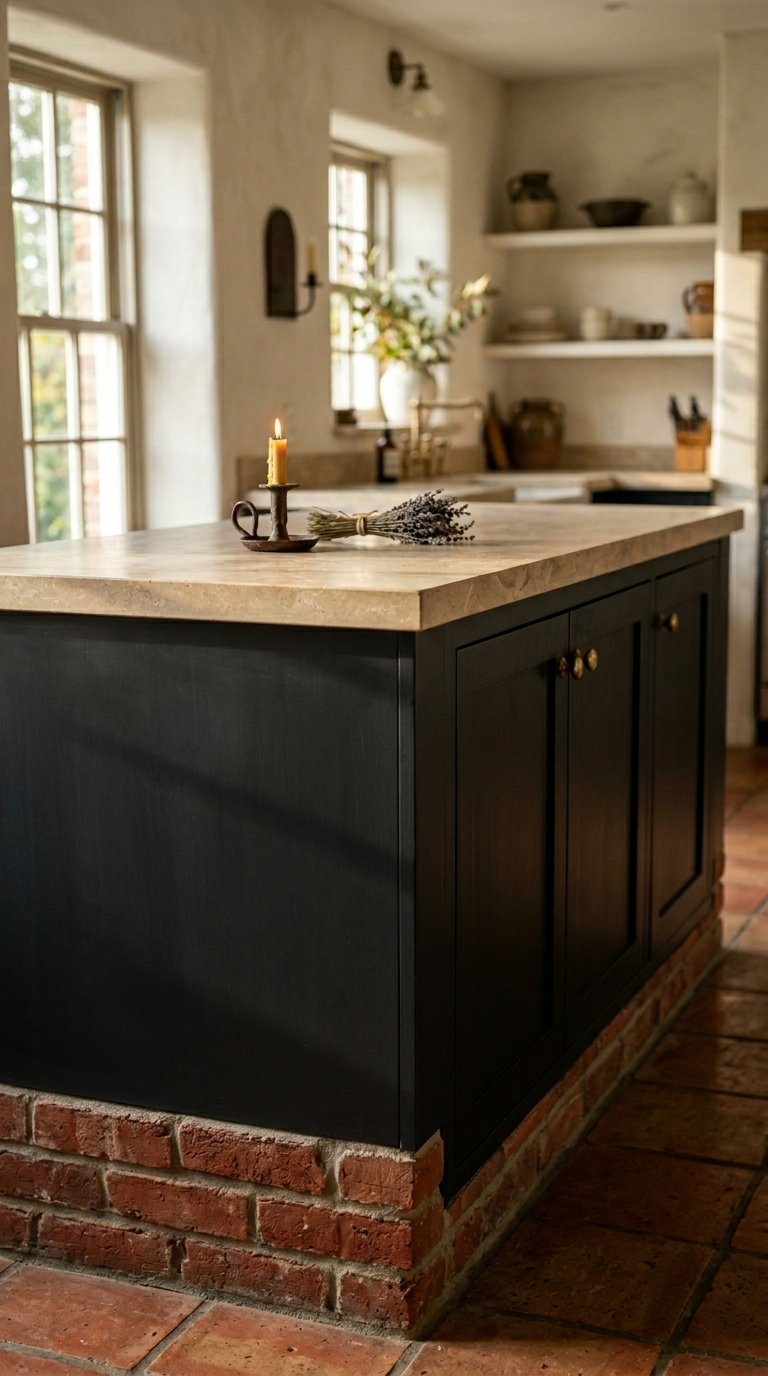
A black painted island with a course of thin brick veneer or stone cladding at the base creates a grounded, textural foundation that makes the island read as a permanent architectural feature rather than a piece of furniture placed in the room. The material change at the base signals weight and permanence in a way a painted toe-kick never does.
Old Mill Brick’s thin brick veneer in a charcoal or aged red tone costs $8 to $12 per square foot and applies to a plywood substrate with standard tile adhesive. A standard island base needs 8 to 14 square feet for the lower third of the base. The black paint above and the raw brick below create a material layering that references both industrial and farmhouse design simultaneously.
13. Black Island With Integrated Wine Rack
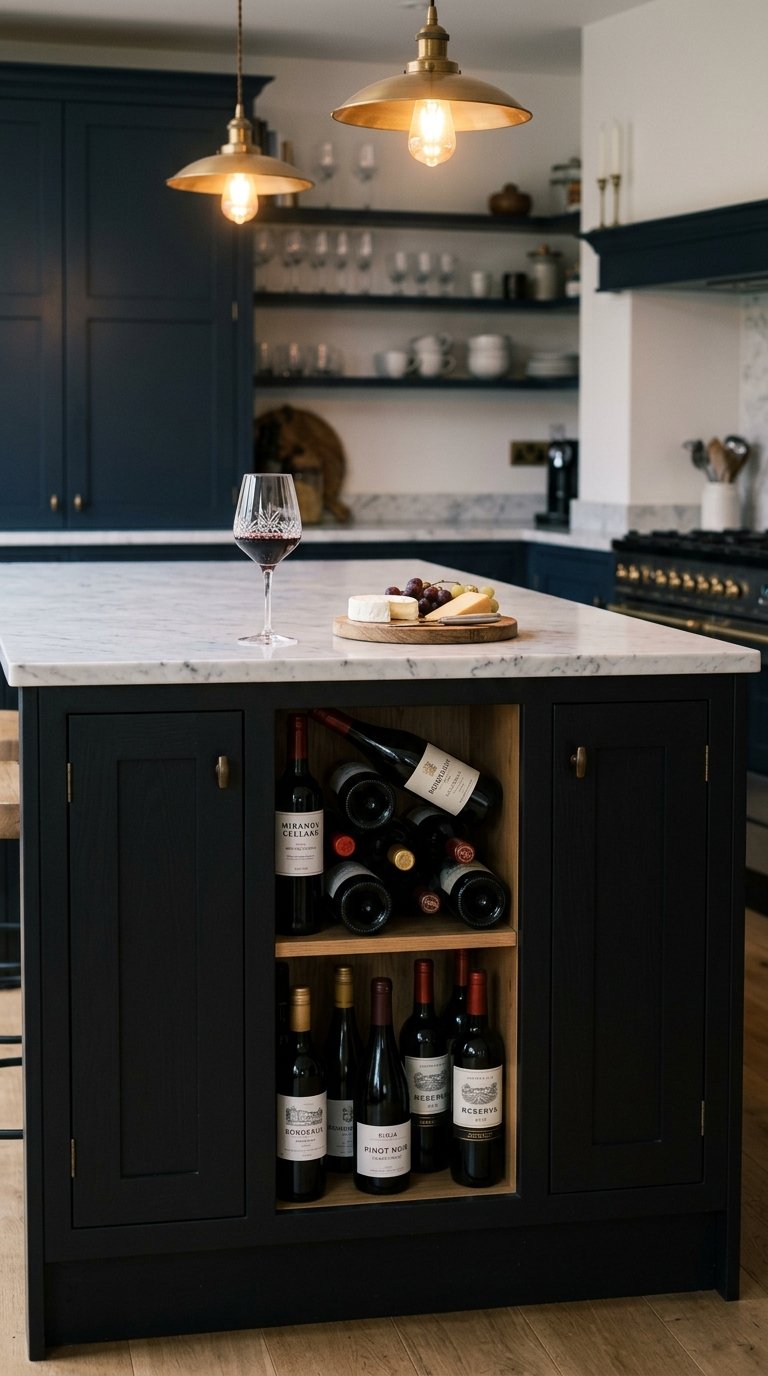
A black island with a built-in wine rack section replaces one or two standard base cabinet doors with an open wine storage compartment that displays bottles as a design element rather than hiding them in a cabinet. A wine rack in a black island reads as a bar feature, which elevates the island’s social function beyond a standard prep surface.
Replace a standard 18-inch base cabinet section with a modular wine rack insert from Rev-A-Shelf at $85 to $140 for a 14-bottle capacity unit. Paint the wine rack frame in the same black as the island exterior so the insert reads as a designed feature rather than an afterthought. Position the wine rack on the seating-side face of the island so bottles are accessible to guests without requiring access to the kitchen work zone.
14. Black Island With Fluted Cabinet Doors
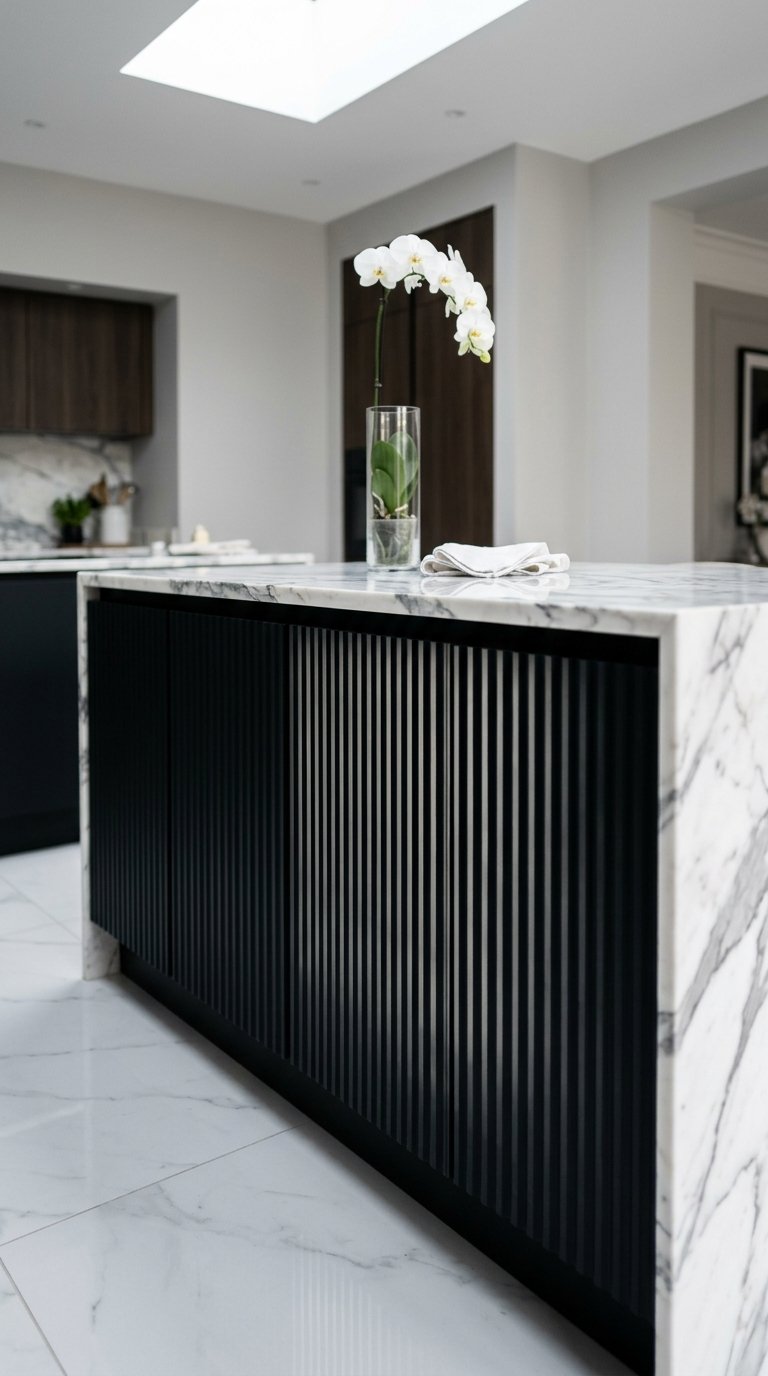
Fluted or reeded cabinet door fronts on a black island add vertical texture to the flat painted surface and create a shadow pattern that changes throughout the day as the light angle shifts. The fluted detail suits Art Deco, contemporary, and transitional kitchens and elevates a standard shaker or flat-front base into a more considered design statement.
Semihandmade sells fluted cabinet fronts compatible with IKEA SEKTION cabinets starting at $85 to $120 per door. Pair them with push-to-open hardware from Sugatsune to eliminate pulls entirely and let the fluted texture be the only surface detail on the black island face. The combination of deep black paint and vertical fluting creates the most visually sophisticated island surface on this list.
15. Black Island With Pendant Lights in a Contrasting Metal
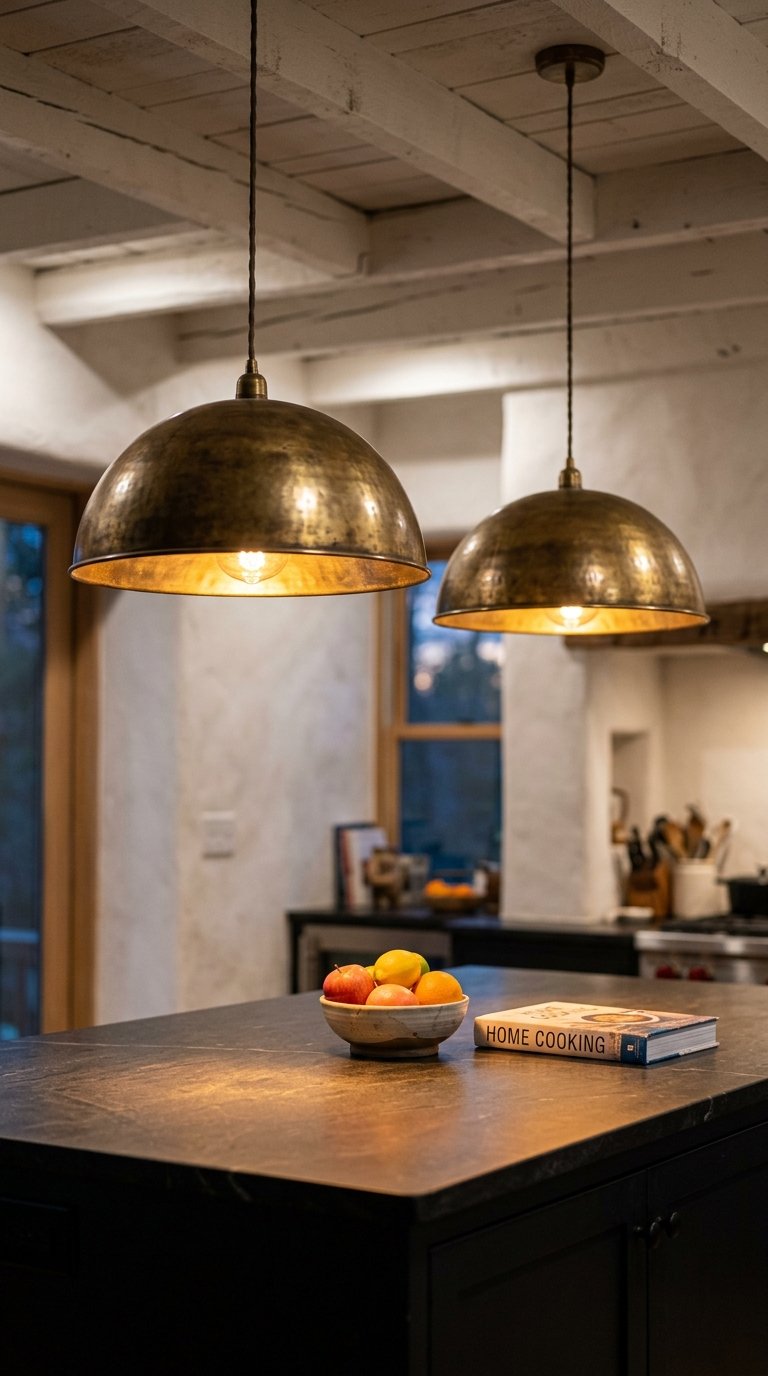
Pendant lights directly above a black island in a contrasting metal finish, aged brass, copper, or polished nickel, complete the island design by adding a vertical element that connects the island surface to the ceiling plane. Without pendant lighting, an island reads as a floor-level object. With pendants above, it reads as a designed zone within the larger room.
Visual Comfort’s Hicks pendant in an aged iron or antique brass finish costs $250 to $320 each. Hang two pendants over a 6-foot island at 32 to 36 inches above the countertop surface. Space them one-third from each end of the island length for a balanced, symmetrical arrangement that reinforces the island as a centered focal point in the kitchen.
16. Black Island With Marble-Look Porcelain Countertop
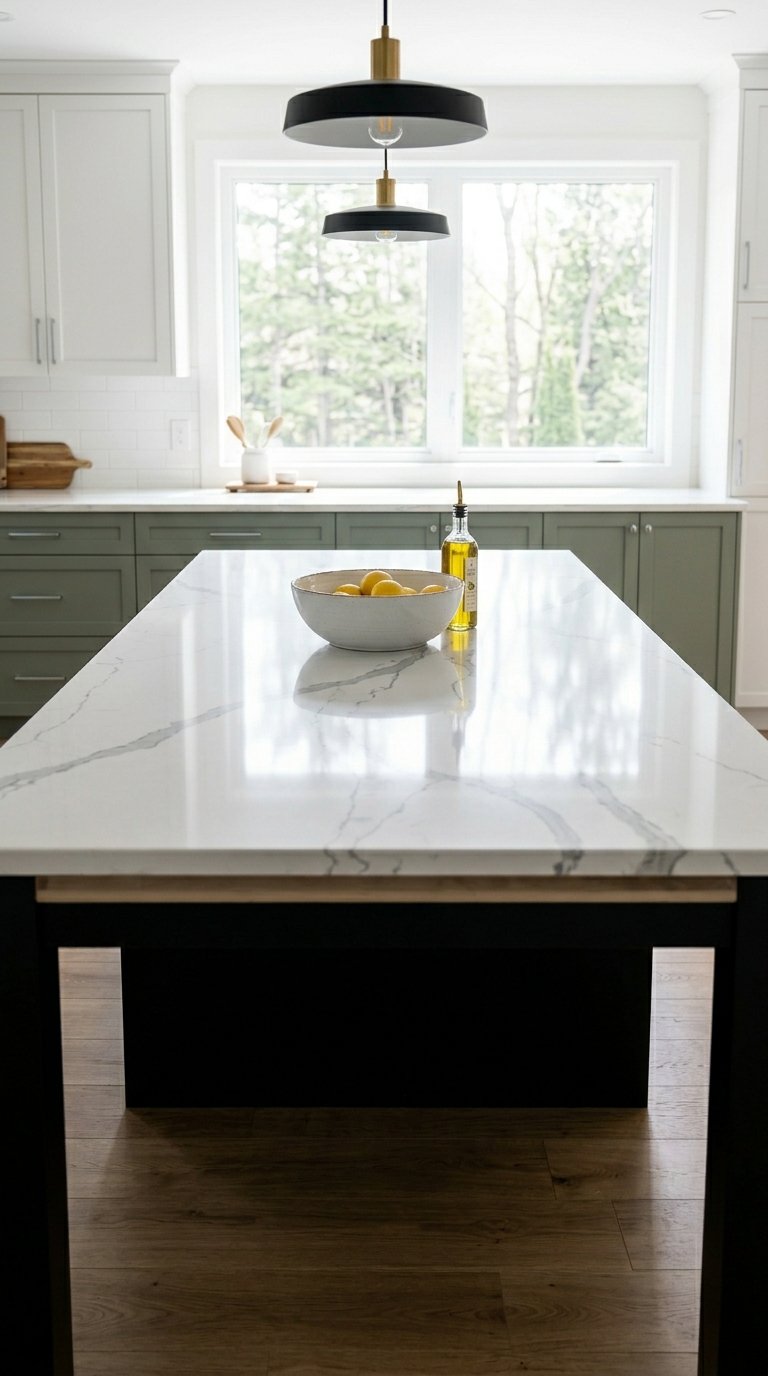
A marble-look porcelain countertop on a black island delivers the visual drama of real marble at a fraction of the cost and with none of the maintenance vulnerability. Real marble requires sealing, etches with acidic contact, and stains with oil. Porcelain requires none of those precautions and costs 40 to 60 percent less per square foot installed.
MSI’s Calacatta Supernatural porcelain slab costs $55 to $80 per square foot installed and delivers a white background with bold gray and gold veining that reads convincingly as natural marble. The large-format slab format with minimal grout joints reinforces the marble illusion at the countertop scale. Pair it with a matte black base in Benjamin Moore’s Onyx for the strongest white-on-black contrast the porcelain veining can achieve.
17. Black Kitchen Island on Casters for a Flexible Layout
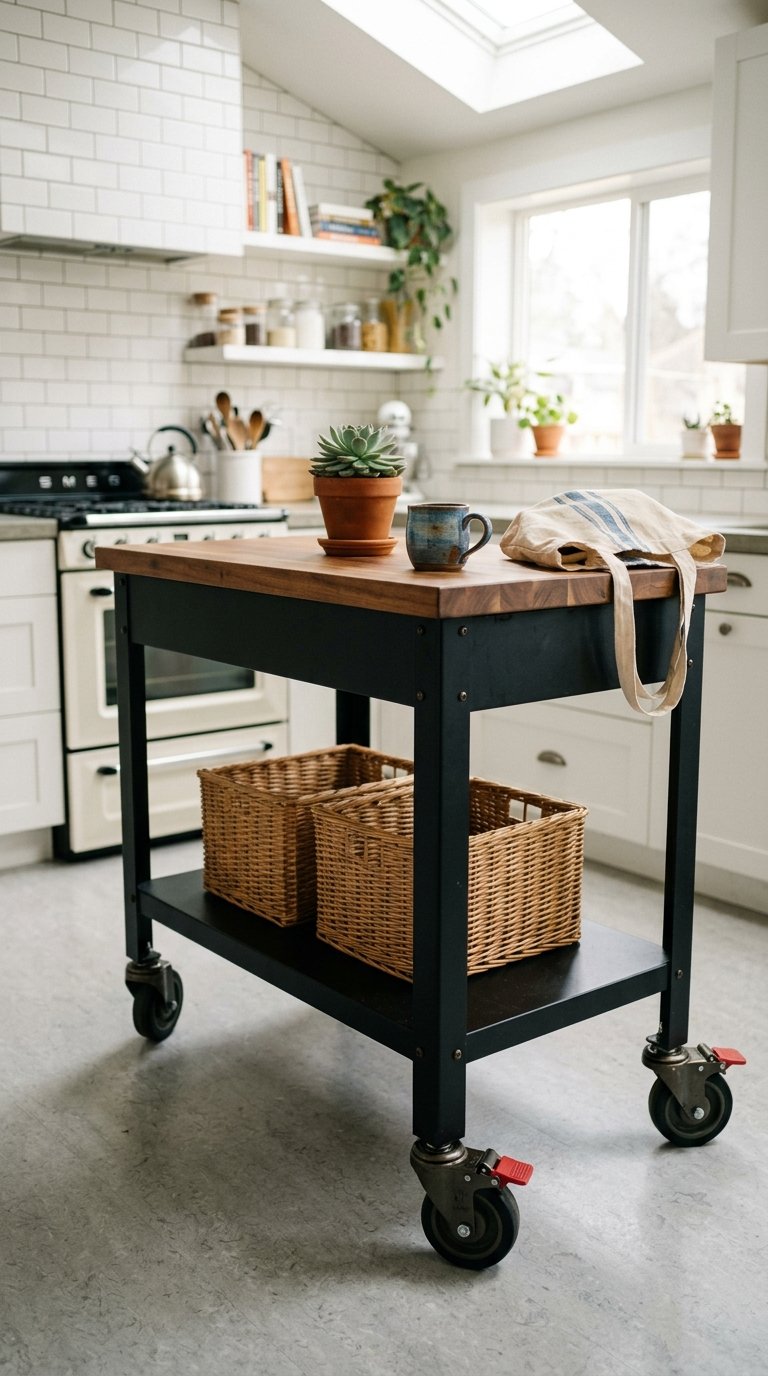
A black kitchen island on locking casters solves the small kitchen problem by providing prep surface, storage, and a design anchor that moves out of the way when the room needs open floor space. The casters reinforce the furniture-piece quality of the island and suit rental kitchens where a permanent built-in island is not an option.
IKEA’s VADHOLMA kitchen island at $329 includes a butcher block top, open lower shelving, and lockable casters at 31×52 inches. Paint the base in Rustoleum’s Chalked Paint in Charcoal at $14 per can for a flat black finish that transforms the VADHOLMA from a stock product into a genuinely black kitchen island. Add new hardware from Rejuvenation to complete the custom result at a total cost under $400.
18. Black Island With Integrated Charging Station
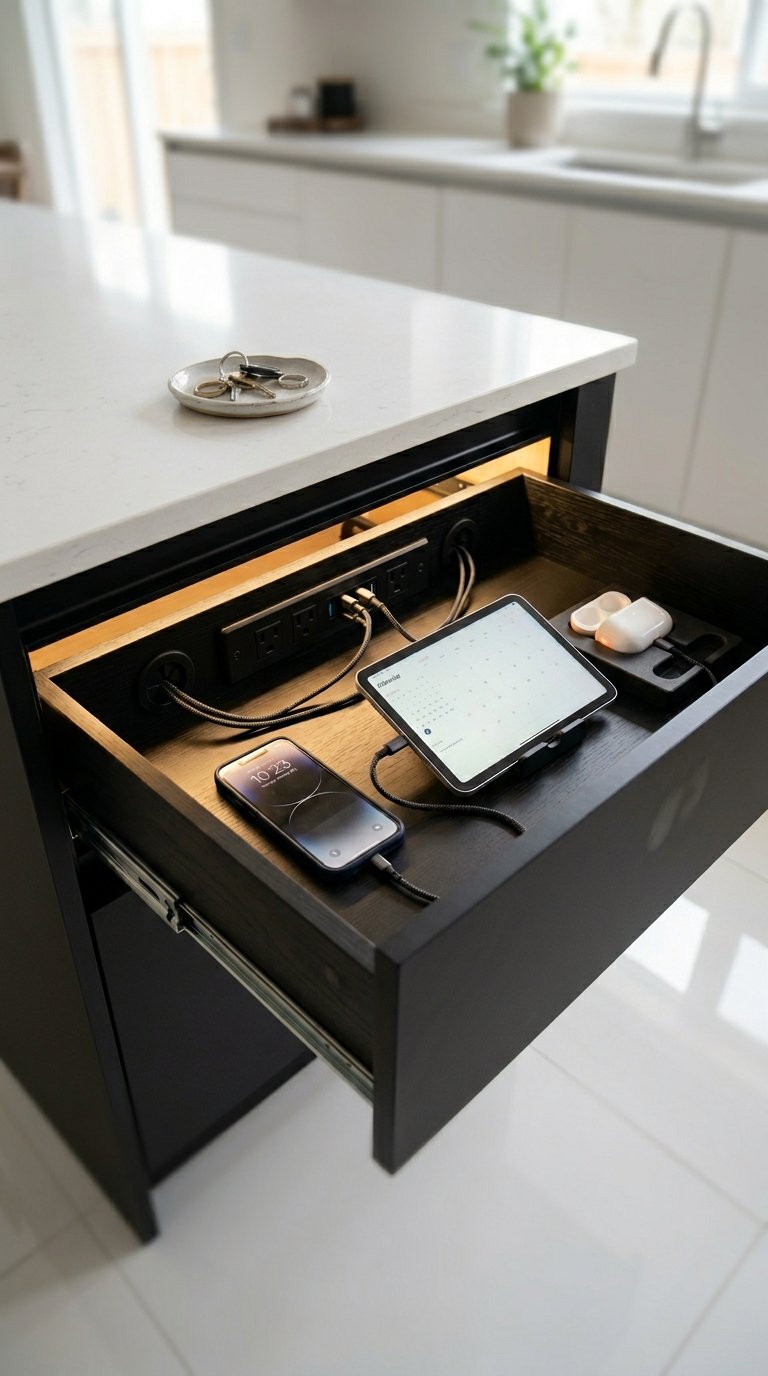
A black kitchen island with a built-in charging station inside a deep drawer or cabinet shelf keeps phones, tablets, and small devices off the countertop and plugged in at all times. A countertop covered in charging cables and devices undermines the clean, considered aesthetic that a black island is meant to establish.
Install a Legrand Wiremold recessed outlet strip at $45 inside a deep island drawer at the back wall. Cut a small cable management grommet hole at the back of the drawer using a 1.5-inch hole saw for $12. The total installation cost stays under $80 and recovers the full countertop surface from device charging clutter permanently.
19. Black Island With a Honed Black Granite Countertop
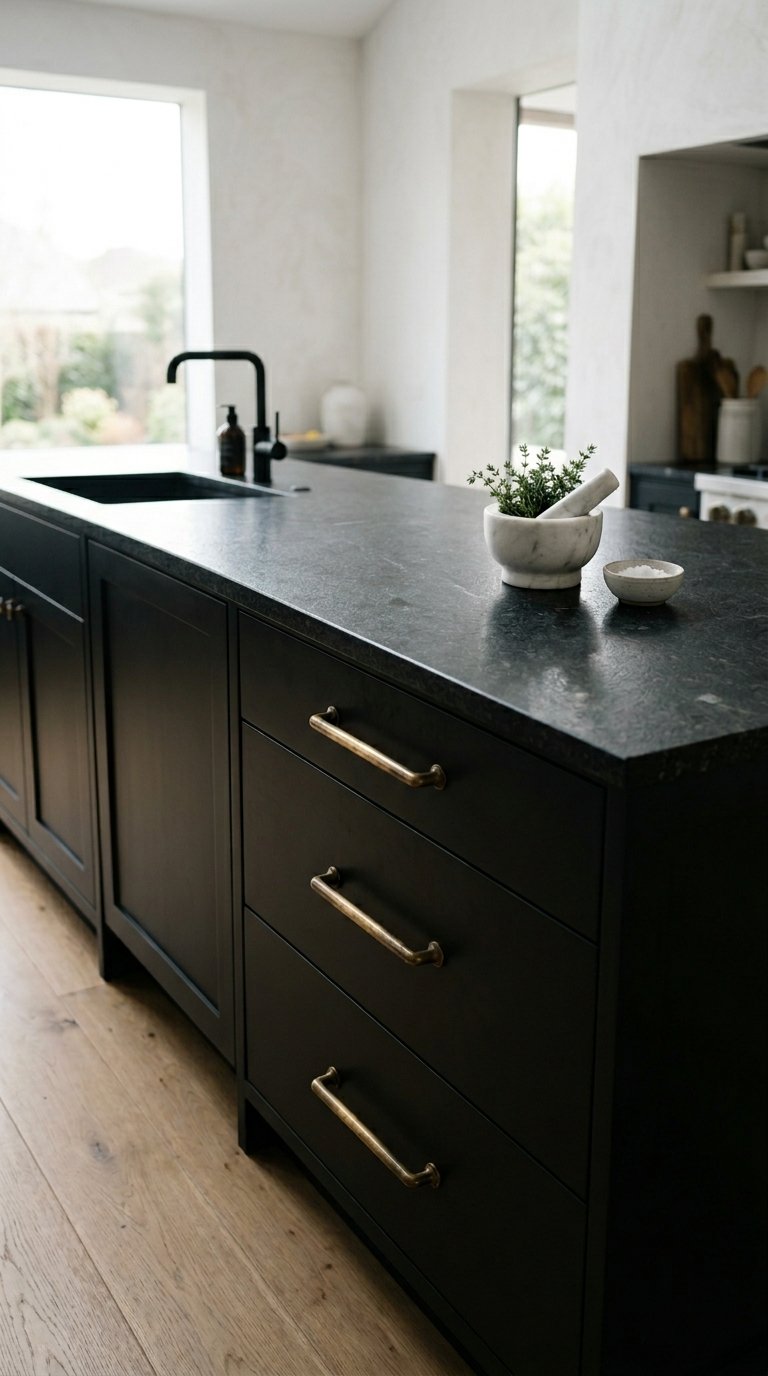
A honed black granite countertop on a black island base creates a tone-on-tone combination with a material distinction between the painted base and the natural stone surface. The granite introduces natural crystal variation and subtle surface texture that a solid black paint finish lacks, preventing the full-black combination from reading as flat or manufactured.
Absolute Black granite in a honed finish from BuildDirect costs $35 to $65 per square foot for the material. Installation adds $40 to $70 per square foot depending on region. Use a matching dark epoxy grout from Laticrete at the countertop perimeter joint so the transition between the stone surface and the painted base reads as seamless rather than a visible material boundary.
20. Black Island With White Subway Tile Backsplash Behind
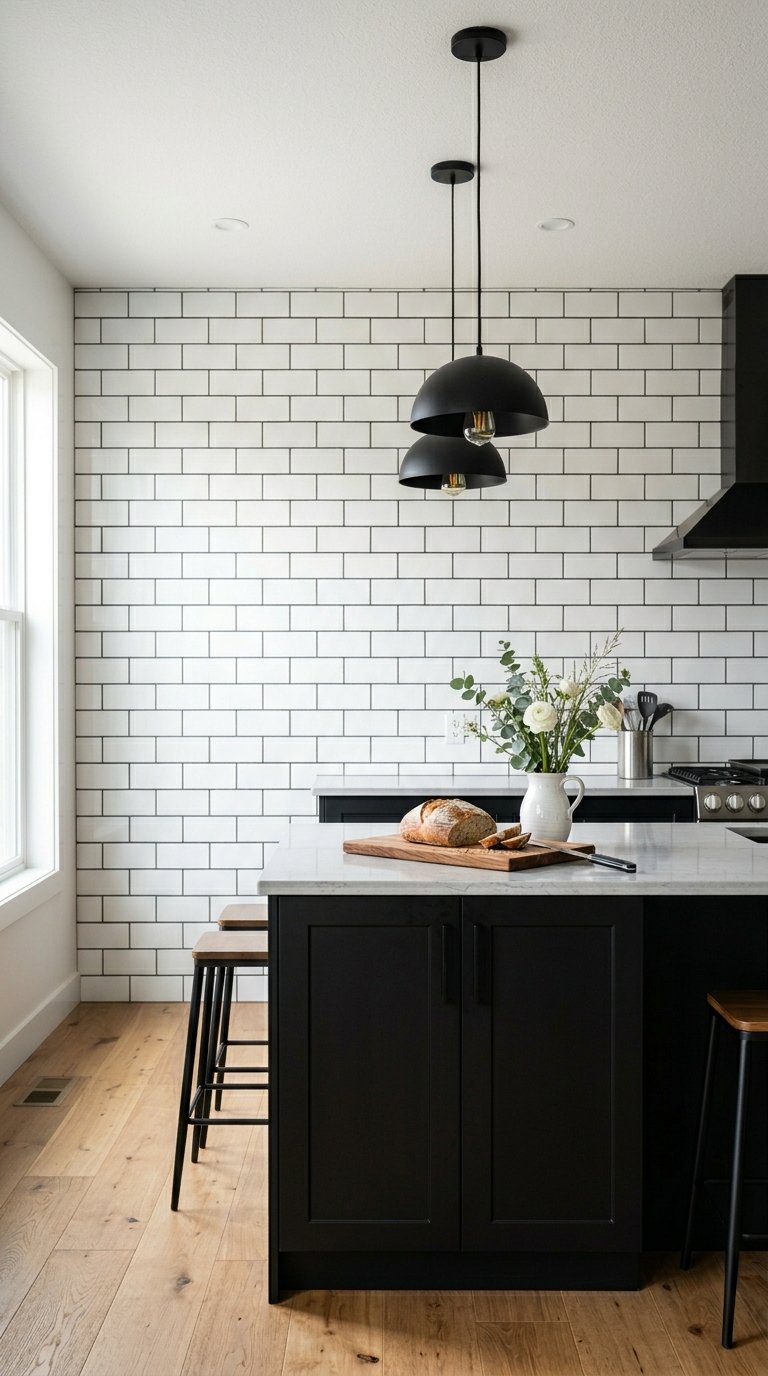
A black island positioned in front of a white subway tile backsplash wall creates a layered depth effect where the dark foreground island contrasts against the bright tiled wall behind it. The subway tile grid provides a structured, repetitive background that makes the black island silhouette read with maximum clarity against the wall.
American Olean’s Bright White 3×6 subway tile costs $1.89 per square foot at Home Depot. Tile the full wall section behind the island from countertop height to the upper cabinets in a running bond pattern with Mapei’s Charcoal grout at $18 per bag. The dark grout lines on white tile create a grid pattern that reinforces the geometric, structured aesthetic of a sleek black island in front of it. FYI, this backsplash-plus-island pairing is the combination that gets repinned on Pinterest more than any other black kitchen configuration.
21. Black Island With Integrated Spice Drawers
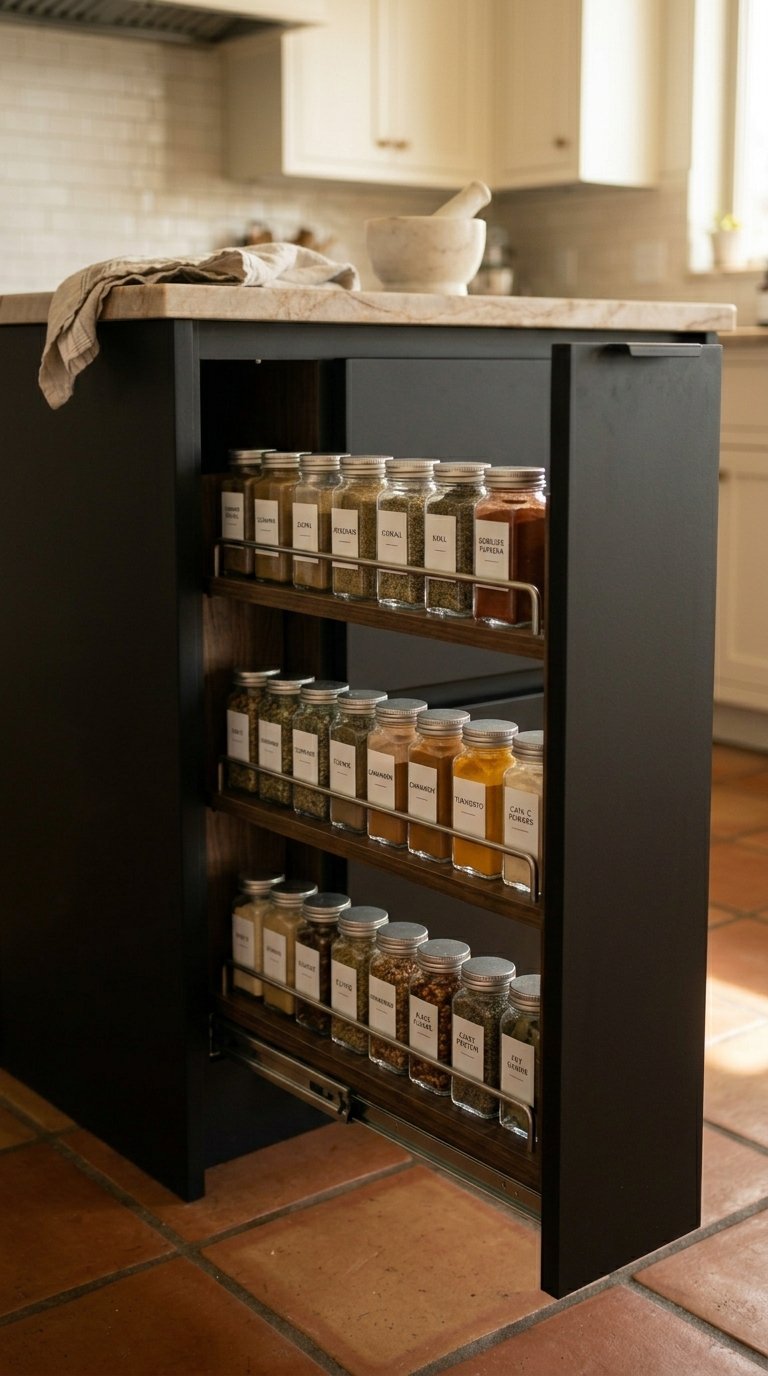
Narrow integrated spice drawers built into the side face of a black kitchen island keep spices organized, accessible during cooking, and completely off the countertop surface. A countertop cleared of spice jars and small bottles looks immediately more expensive and intentional regardless of the actual countertop material.
Build two to three narrow drawers into the end face of an island using a standard 6-inch wide drawer cabinet from Rev-A-Shelf’s pull-out spice drawer line at $95 to $140 per unit. Each unit holds 20 to 30 spice jars on tiered rails and slides on full-extension soft-close runners. Paint the drawer face in the same black as the island exterior so the spice drawers read as a seamless part of the island rather than an add-on feature.
22. Black Island With Furniture-Style Legs
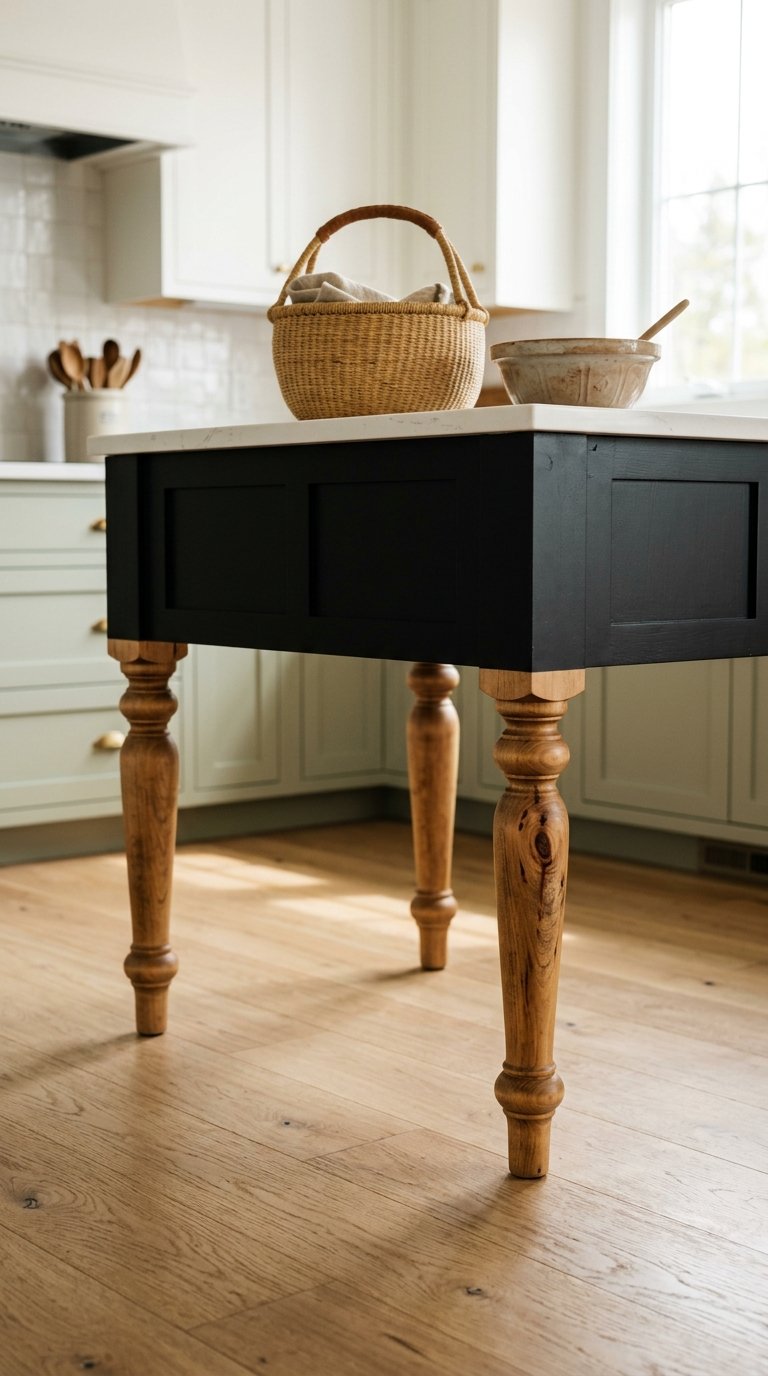
Furniture-style turned or tapered legs on a black kitchen island lift it off the floor and prevent it from reading as a fixed cabinet run. The space between the floor and the island base adds lightness to what is otherwise a heavy, dark mass and signals that the island is a piece of furniture rather than built-in cabinetry.
Osborne Wood Products sells turned poplar island legs in multiple profiles starting at $30 per leg. A standard four-leg island requires $120 in leg hardware. Paint the legs in the same black as the island base for a continuous tone, or leave them in a natural wood stain for a warm material contrast at the base of the island. The natural wood legs against a black base reference the same warm-versus-dark contrast that butcher block countertops create on black islands.
23. Matte Black Island With Integrated Cooktop
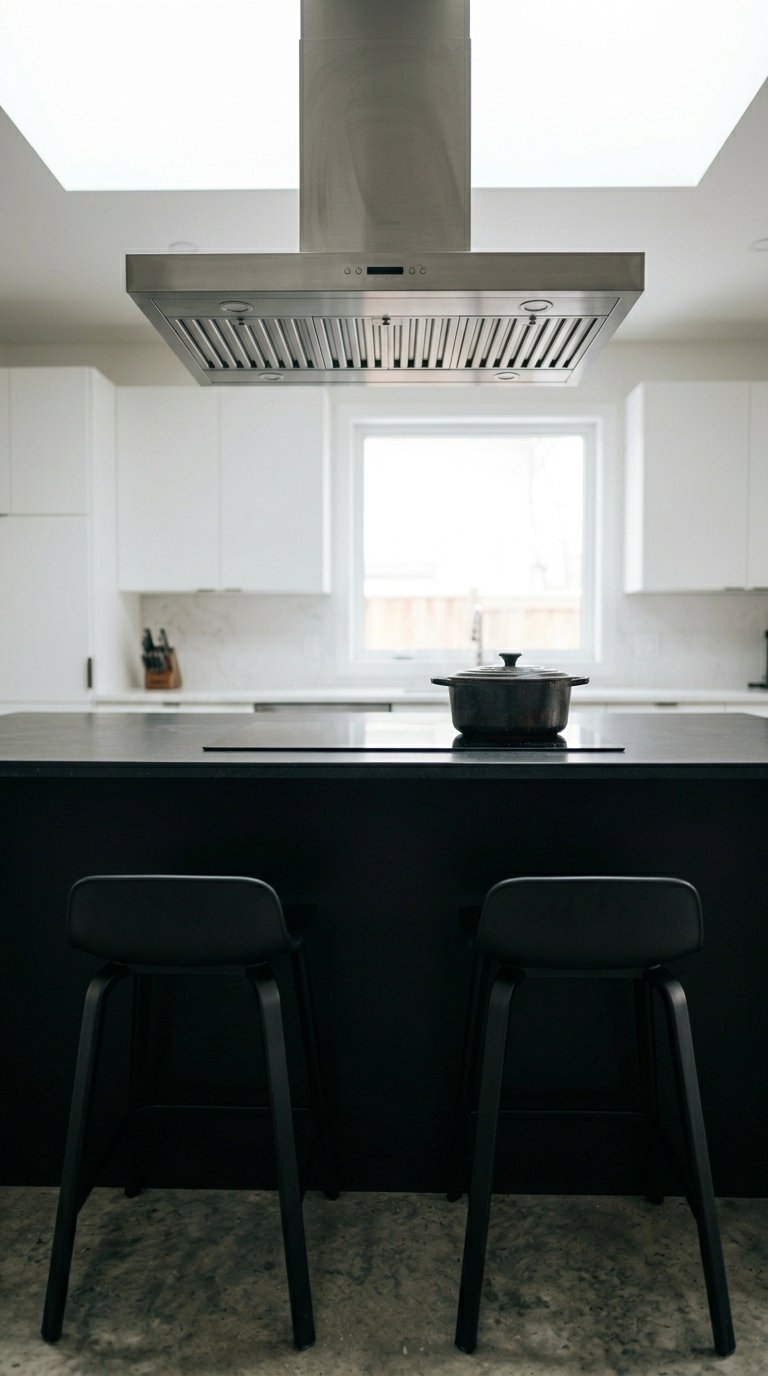
A matte black island with an integrated cooktop turns the island into a full cooking station and the visual center of the kitchen simultaneously. The cooktop surface sits flush with the countertop plane, and on a black island, the black cooktop grate and black burner rings disappear into the island surface for a seamless tone-on-tone cooking zone.
A Bosch 500 series 30-inch gas cooktop in stainless steel costs $900 to $1,100 and drops into a standard island countertop cutout. For a full black surface, the Fisher and Paykel 30-inch induction cooktop in black glass at $1,200 to $1,500 sits flush with the countertop and reads as an extension of the dark island surface rather than an applied appliance. Install a ceiling-mounted range hood above the island at the correct 24 to 30-inch clearance height to complete the cooking station configuration.
24. Black Island With Reclaimed Wood Countertop
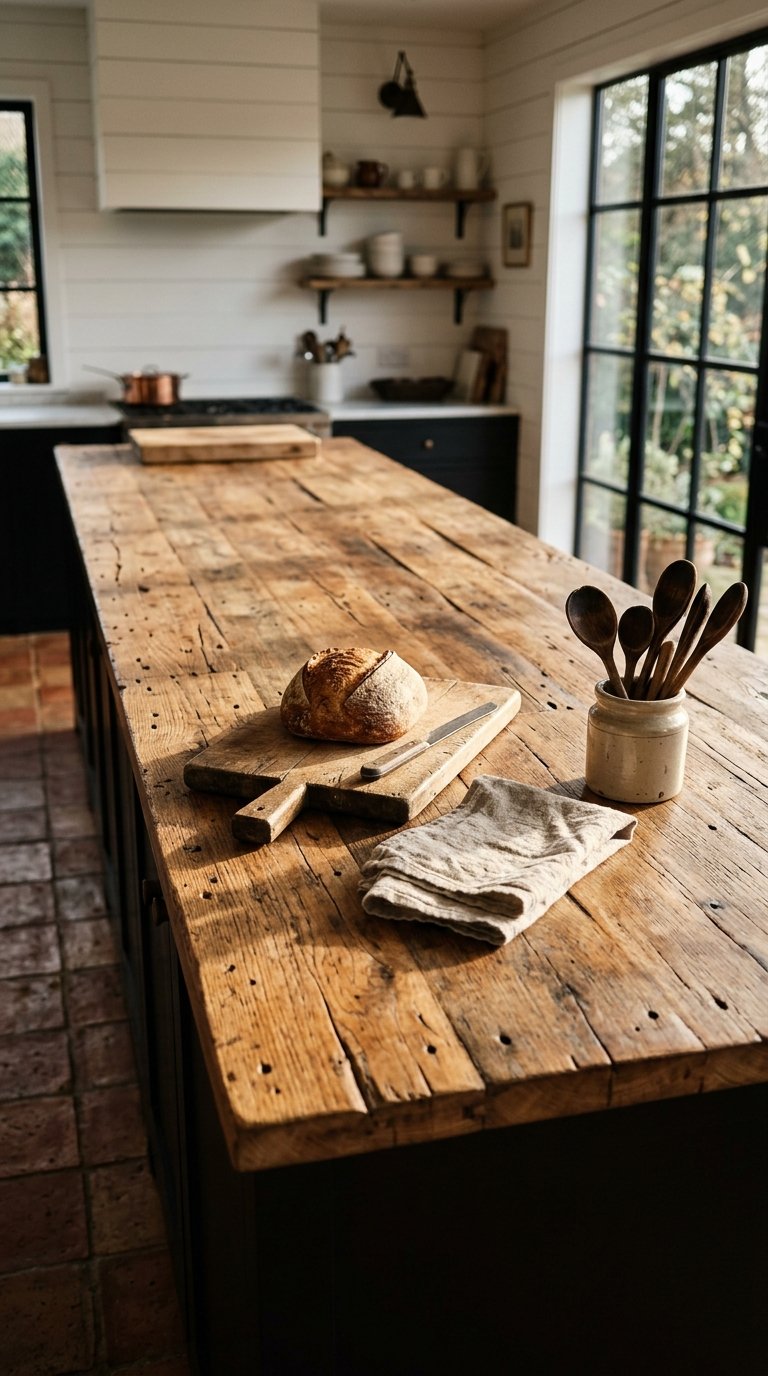
A black island base with a reclaimed wood countertop brings the same warm-meets-dark contrast as a butcher block top but with authentic material history that new wood never provides. The surface marks, nail holes, and color variation in reclaimed timber read as character rather than damage, and they age with the kitchen in a way no new surface replicates.
Reclaimed oak or pine boards from Elmwood Reclaimed Timber cost $12 to $25 per square foot for materials. A 30×72-inch island countertop runs $180 to $375 in reclaimed wood materials. Seal with two coats of Rubio Monocoat Oil Plus 2C at $45 per application for a food-safe finish that enhances the natural color variation of the reclaimed wood without burying it under a thick topcoat.
25. Black Island With a Contrasting Colored Back Panel or Niche
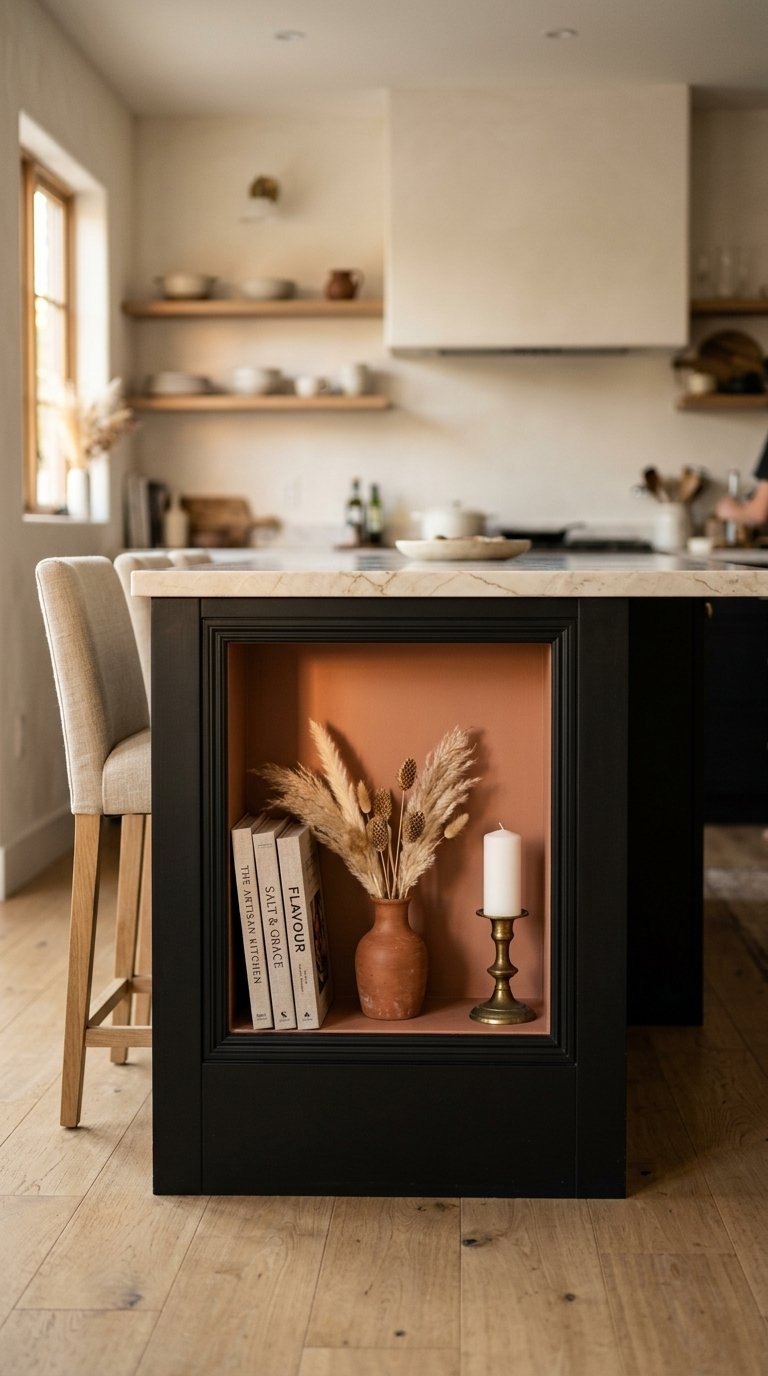
A black island with a contrasting colored back panel or open niche section on one face creates a layered, architectural detail that standard solid cabinet islands never achieve. The color contrast inside the niche, a warm terracotta, sage green, or deep navy, signals that the island was designed rather than assembled.
Paint the niche interior in Farrow and Ball’s Sulking Room Pink No.295 for a warm, earthy contrast against the black exterior, or in Earthborn’s Thatch for a warm sage tone. The niche holds display items such as cookbooks, a small plant, or uniform ceramic vessels. Frame the niche opening with a simple wood molding painted in the same black as the island exterior to give the contrast panel a finished, intentional border.
Final Thoughts
A black kitchen island solves the most common kitchen design problem: a room that looks complete but never quite feels finished. The 25 ideas above cover every budget and every kitchen style, from a $400 painted IKEA island on casters to a $3,000 fluted matte black island with a waterfall marble countertop and integrated cooktop.
Pick the idea that fits your kitchen’s specific needs first. Need contrast against white cabinets? Go tone-on-tone with brass hardware. Need flexibility in a rental? Go casters and chalk paint. Need a full cooking station? Go integrated cooktop with a ceiling hood. The right black island does not require a full kitchen renovation. It requires one good decision made with the right information. You now have both.