21 Minimalist Living Room Ideas That Will Inspire You Now
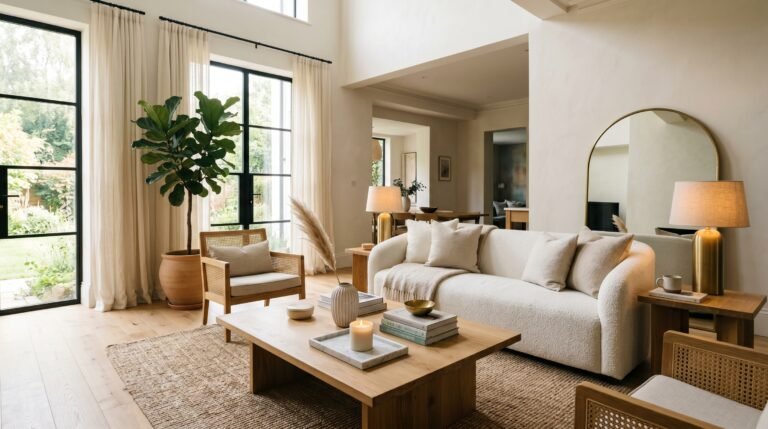
Minimalism isn’t about owning nothing. It’s about keeping only what earns its place and letting everything else go. I spent years adding things to my living room before I figured out that removing things was the move that actually made the space feel better. The day I pulled out a side table, two decorative objects, and a rug that was too small, the room breathed for the first time. These 21 minimalist living room ideas give you the specific decisions that create a room that feels calm, spacious, and genuinely designed rather than simply empty.
1. Start by Removing Before You Add Anything
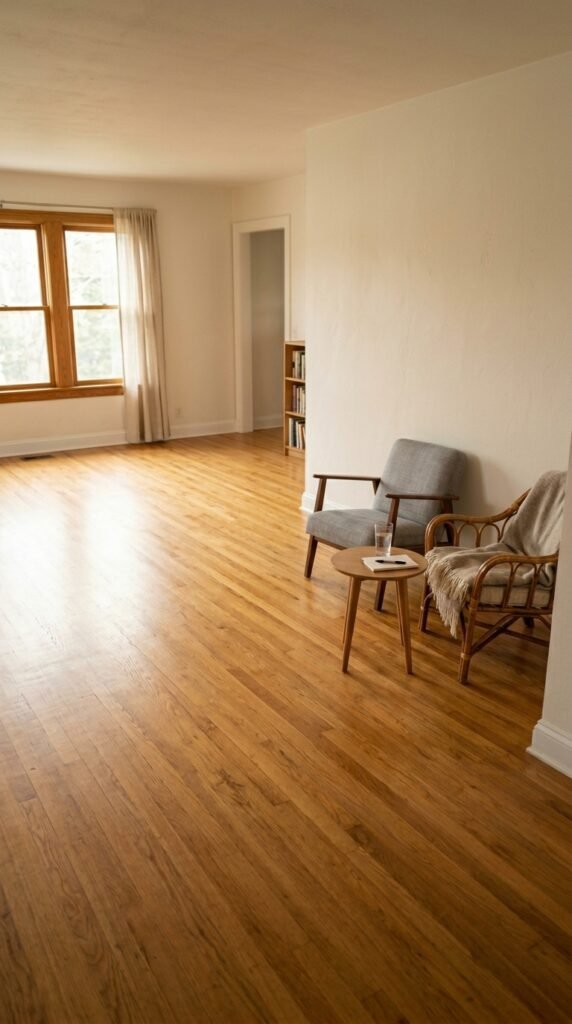
The single most impactful minimalist living room move costs absolutely nothing: remove 40 percent of what currently sits in the room. Most living rooms hold furniture and objects accumulated over years without a single intentional decision about what earns its place. A Princeton Neuroscience Institute study found that visual clutter in living environments directly competes for neural processing resources, reducing focus and increasing perceived stress. Removing objects doesn’t make a room feel empty. It makes it feel like someone made decisions.
Walk through the room with a box and remove everything you’d keep out of habit rather than genuine use or love. Furniture pieces that don’t serve the seating arrangement. Decorative objects sitting on surfaces because they’ve always been there. Books on shelves that you haven’t opened in three years. Put it all in the box and live without it for two weeks before deciding what comes back.
2. Choose One Sofa in a Timeless Silhouette
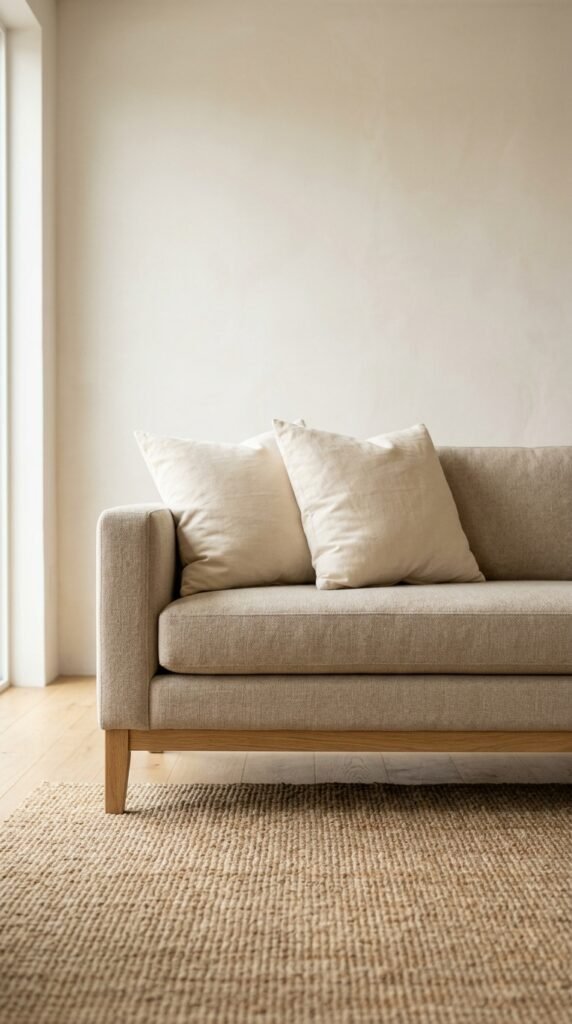
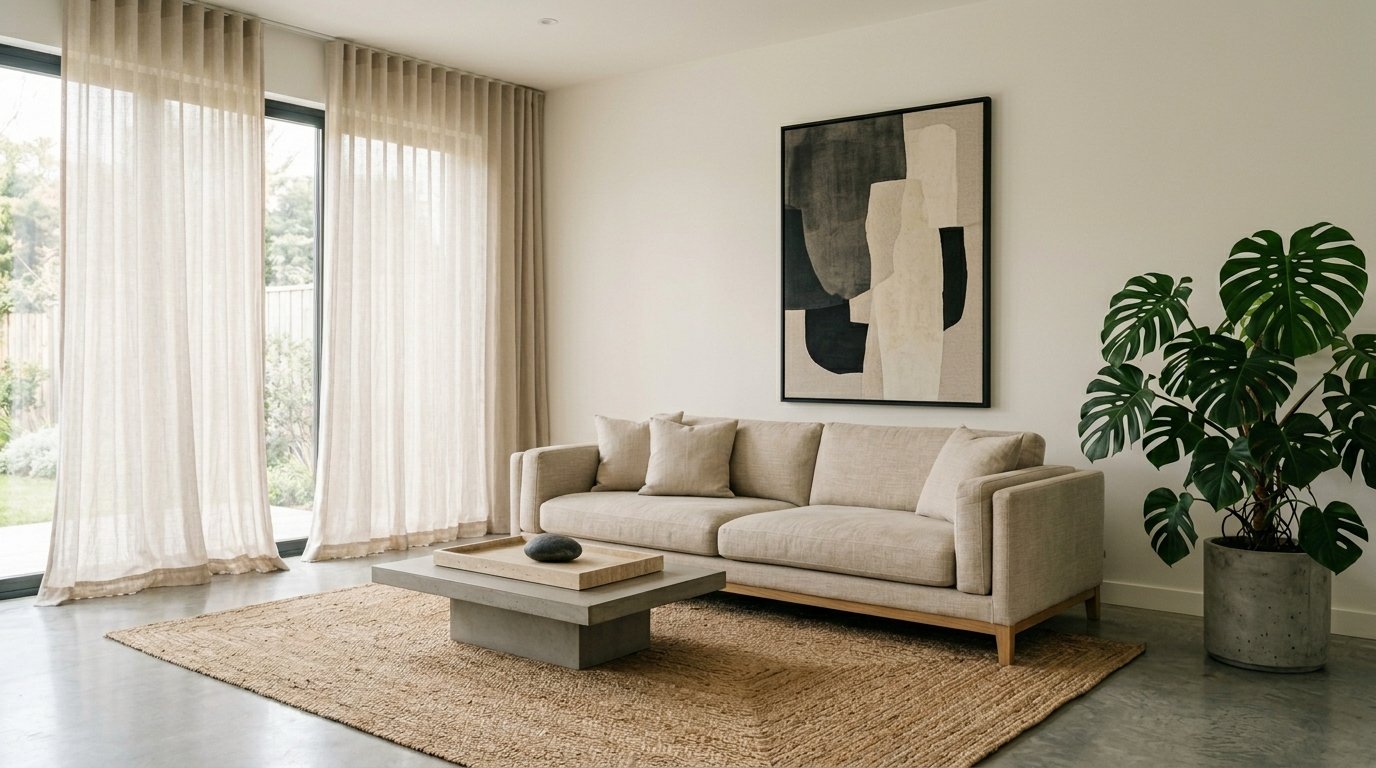
A minimalist living room needs one sofa with a clean, low-profile silhouette and nothing else competing for visual authority in the seating group. The sofa is the room’s dominant visual element and its form sets the aesthetic tone for every other decision you make. Clean track arms, a straight back, and solid legs in natural wood or matte black read as minimalist regardless of the upholstery fabric. Article’s Timber sofa in performance fabric costs $1,200 to $1,500 and holds design relevance for 10 to 15 years. IKEA’s VIMLE in a performance linen cover ($600 to $900) delivers the same profile at a more accessible price point.
Avoid sofas with rolled arms, tufted backs, or decorative nailhead trim. Those details communicate traditional or maximalist design regardless of the color they come in. The minimalist sofa reads as one clean form, not a collection of decorative details applied to a frame.
3. Stick to a Three-Color Maximum
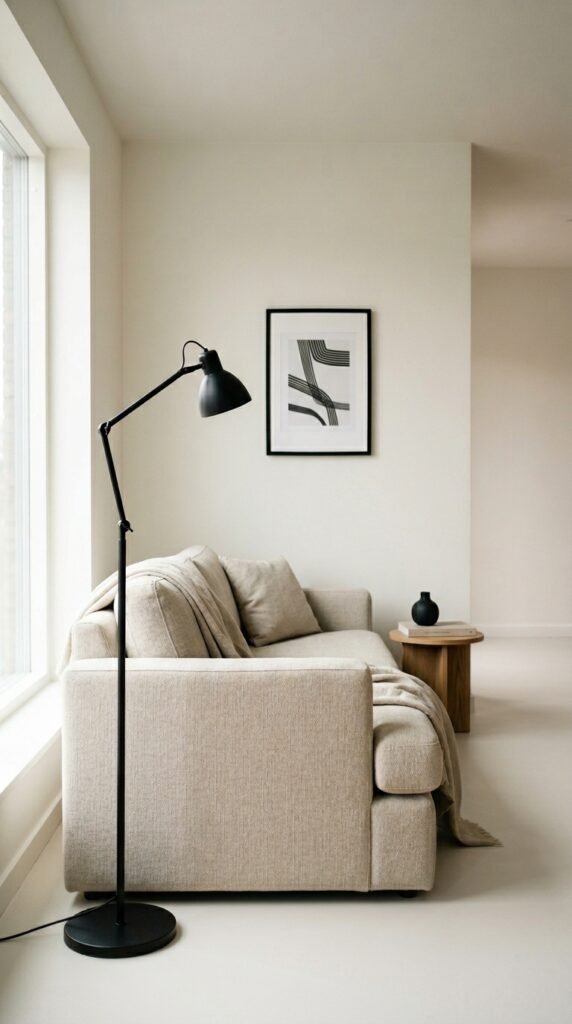
A minimalist living room uses three colors at most: a primary neutral (walls and major furniture), a secondary neutral (rug and curtains), and one accent used sparingly. More than three colors creates visual competition that prevents the room from reading as calm regardless of how well each individual color works. The three-color discipline also makes shopping decisions faster and easier because you know exactly which colors belong in the room and which don’t.
The most effective minimalist color triads keep two tones within the same neutral family and use the third as a grounding element. Warm white walls, a natural linen sofa, and a single matte black accent across lamp bases and drawer pulls. Or soft greige walls, an oatmeal sectional, and one deep sage plant as the color note. Both triads cost nothing to establish and immediately clarify every subsequent purchase decision.
4. Keep Every Surface to One Object Maximum
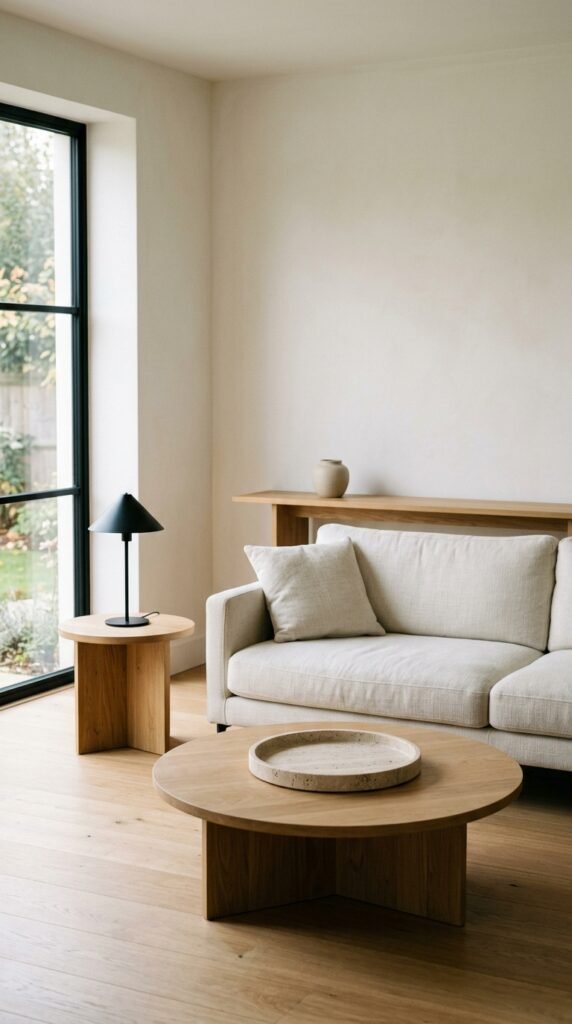
The one-object-per-surface rule is the single most powerful minimalist living room discipline available. Your coffee table holds one tray. Your side table holds one lamp. Your console holds one object. That’s it. Nothing else on any surface. The constraint feels severe until you apply it and realize that the room immediately reads as designed, intentional, and calm in a way that careful arrangement of many objects never achieves.
A 2021 study from Princeton University found that people in rooms with reduced surface object counts reported 28 percent lower perceived stress than people in rooms with standard object density, even when furniture quality was identical. The objects themselves weren’t the stressor. The quantity was. One object per surface costs nothing to implement and delivers measurable results in how the room feels within 24 hours of the edit.
5. Use a Large Single Rug Rather Than Multiple Small Ones
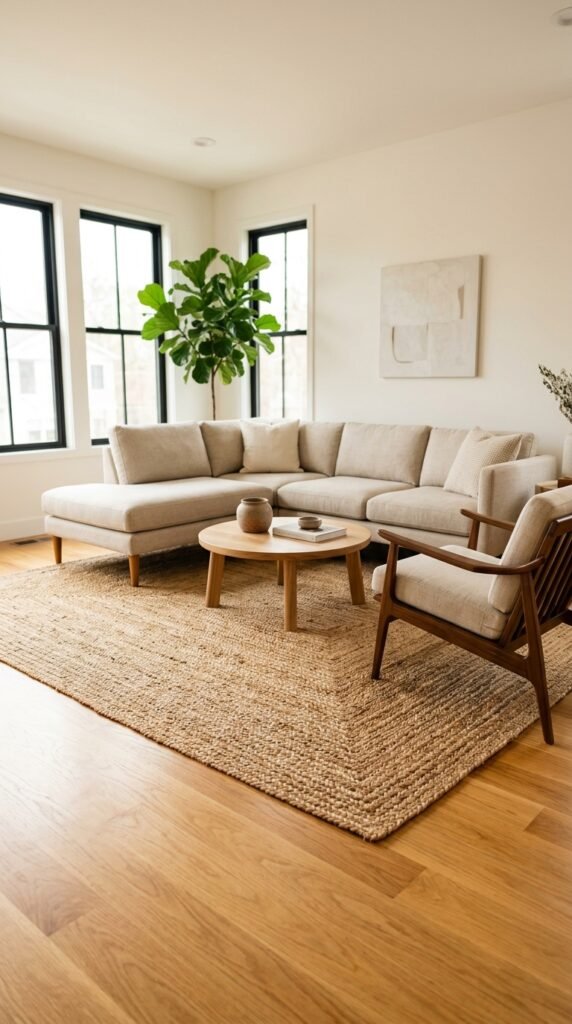
The most common minimalist living room mistake is a rug too small for the seating group. A small rug makes the room look unfinished, makes the furniture look randomly placed, and actively undermines every other minimalist decision you’ve made. The correct rug for a minimalist living room puts all front legs of every sofa and chair onto the rug surface, unifying the seating group as one visual element rather than furniture floating on a bare floor.
A 9×12 rug in natural jute, flat-weave wool, or a solid low-pile option in warm grey or oatmeal costs $120 to $300 from Rugs USA or Loloi and delivers the grounding quality a minimalist seating area requires. One large rug reads as a designed decision. Multiple small rugs read as indecision. In a minimalist living room, indecision is the one thing you can’t afford to display.
6. Choose Furniture With Exposed Legs to Open the Floor
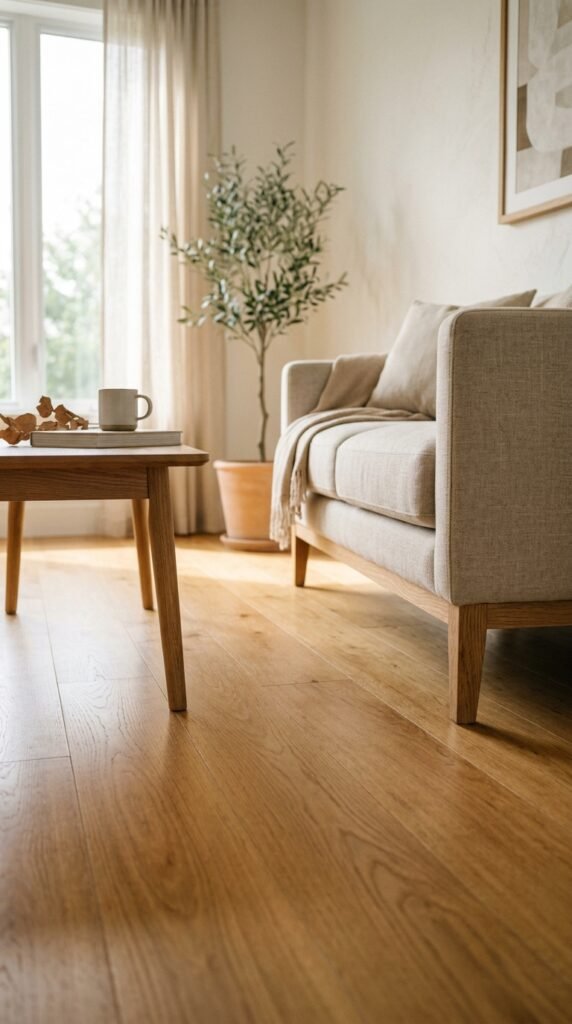
Furniture with exposed legs in natural wood or matte metal creates visual floor clearance that makes a minimalist living room appear significantly larger than the same room furnished with skirted or base-to-floor pieces. The floor visibility under the sofa, chairs, and coffee table lets light travel through the room at floor level, which reduces the visual weight of each piece and makes the overall space feel open and airy. West Elm’s mid-century modern leg sofa and IKEA’s LISABO coffee table both demonstrate this principle effectively at accessible price points.
The leg height matters. A 6-inch leg clearance reads as intentional and creates visible floor space. A 3-inch leg reads as a design afterthought and creates a visual shadow rather than open floor. When evaluating furniture for a minimalist living room, look at the leg-to-frame proportion and choose pieces where the leg contributes to the visual lightness of the overall form.
7. Install Floor-to-Ceiling Curtains in a Solid Neutral
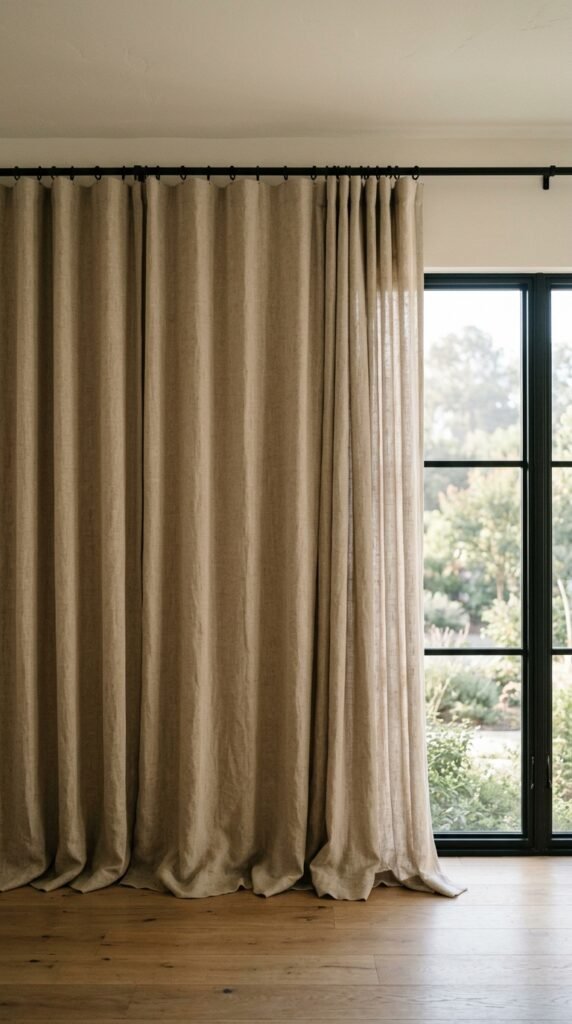
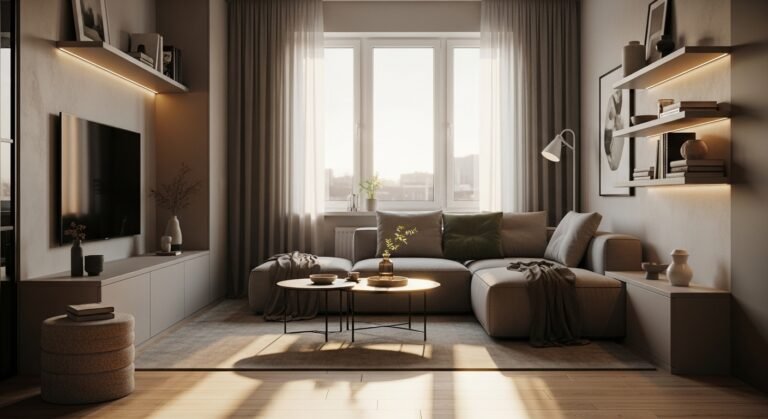
Solid neutral curtains hung at ceiling height and dropped to the floor add architectural scale to a minimalist living room without introducing pattern or visual complexity. The solid fabric in linen, cotton, or velvet functions as a clean wall extension rather than a decorative addition, which is exactly what minimalist window treatment design requires. IKEA’s DYTAG panels in beige linen cost $40 to $60 per panel at 98 inches length, which hits floor at standard 8-foot ceiling height when the rod mounts 4 to 6 inches from the ceiling.
Avoid patterned, printed, or sheer curtains in a minimalist living room. Patterns add visual noise. Sheers suggest incompleteness. A solid, slightly opaque panel in a warm neutral that blends with the wall color behind it reads as an architectural element rather than a decorative one, which is the minimalist curtain ideal.
8. Use Built-In or Hidden Storage for Everything
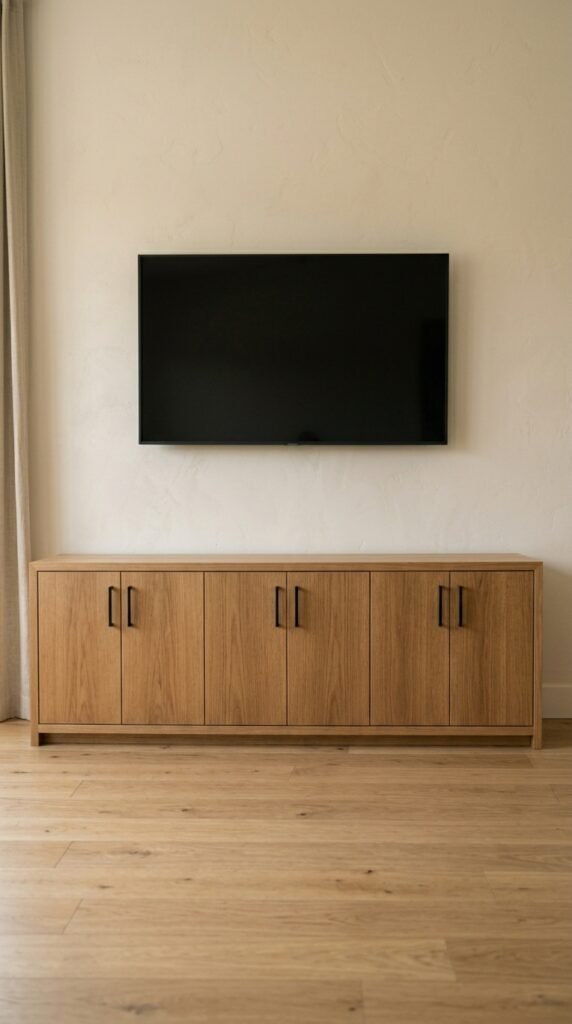
A minimalist living room hides every functional object behind closed doors, drawers, or lids. Remote controls, charging cables, magazines, throws, board games, and every other object of daily function disappears into storage. A media console with solid panel doors handles the television zone. A coffee table with a hidden lift-top stores everything the seating area needs within arm’s reach and out of sight. CB2’s Cavett media console with closed doors costs $799 to $999 and handles a complete media setup invisibly.
The discipline of hidden storage changes your relationship to the room because you stop managing the visual noise of daily life and start living in a space that stays calm regardless of how actively you use it. The investment in proper closed storage costs more upfront than open shelving and pays back every day you live in the room without the visual stress of exposed clutter.
9. Choose One Statement Artwork and Nothing Else
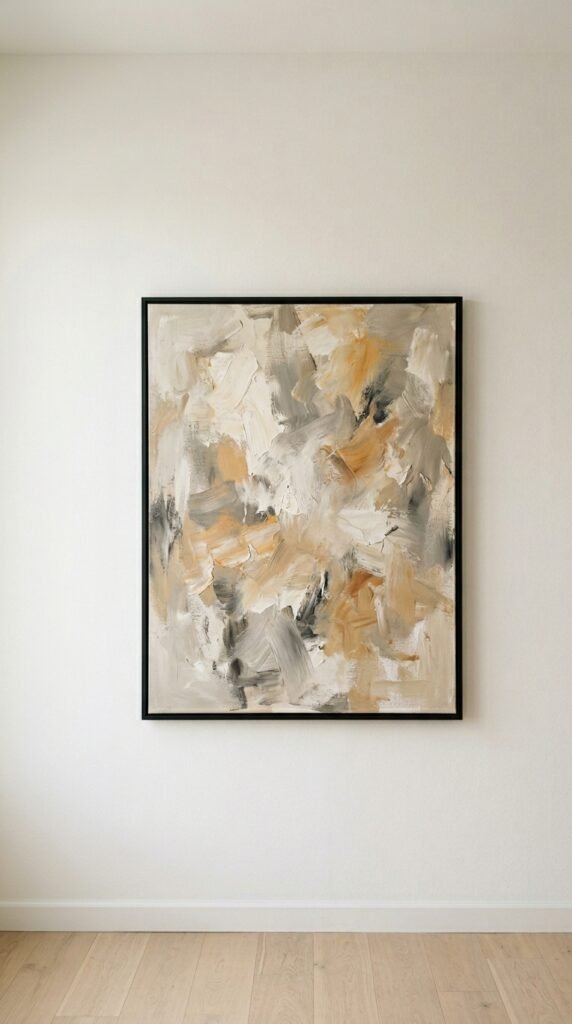
A minimalist living room hangs one artwork with enough scale to command the room’s most prominent wall. A single piece at 40×50 inches or larger gives the eye a destination and makes the empty wall around it function as part of the composition. Ten smaller pieces create visual fragmentation that busy rooms use to fill wall space. A minimalist room uses one piece to demonstrate that the empty wall is as intentional as the object hanging on it.
Society6 and Desenio both offer large format prints in abstract, botanical, and architectural subjects from $30 to $100 that photograph as gallery-quality. Frame the print in a simple matte black or natural oak frame and hang it at 57 inches center height on the wall your primary seating faces. The artwork and its surrounding empty wall together create the visual anchor every minimalist living room needs.
10. Add One Living Plant as the Room’s Organic Element
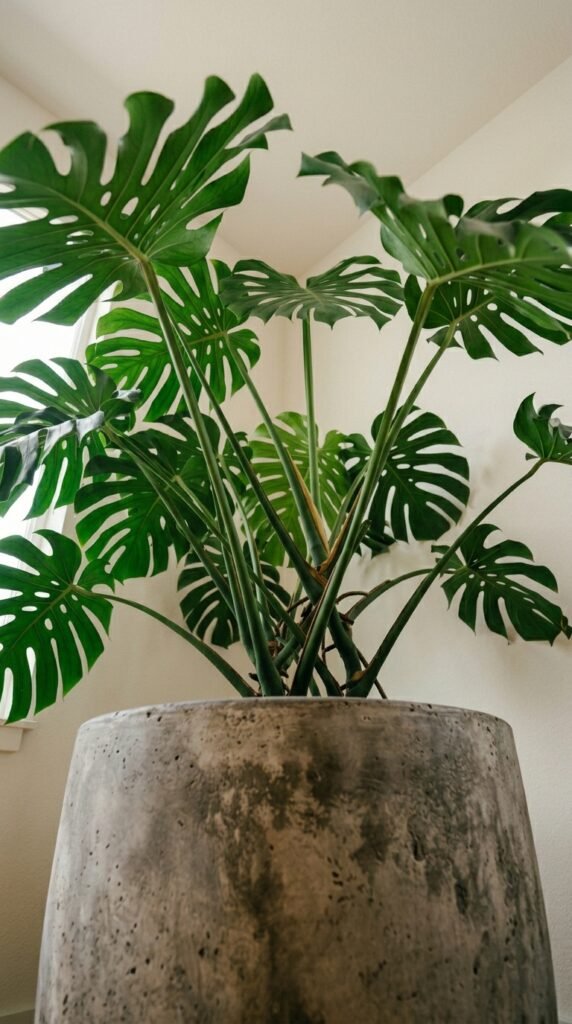
A single large plant in a minimalist living room prevents the space from reading as sterile by introducing the organic form and living quality that designed objects never replicate. A 4-foot fiddle leaf fig, a mature monstera, or a snake plant in a large concrete or terracotta floor pot fills a corner with genuine visual presence for $30 to $150 at most nurseries. The plant earns its place by adding height, life, and a subtle color note within a neutral palette.
One plant. Not three. Not a collection on a shelf. One plant in the room’s most underused corner, in a pot that suits the material language of the room. The plant’s organic irregularity makes the controlled minimalist palette feel human rather than clinical, which is the fine line every minimalist living room walks between designed and uncomfortable. IMO, a large floor plant is the most impactful $50 to $150 upgrade in any minimalist living room.
11. Replace Overhead Lighting With a Sculptural Pendant
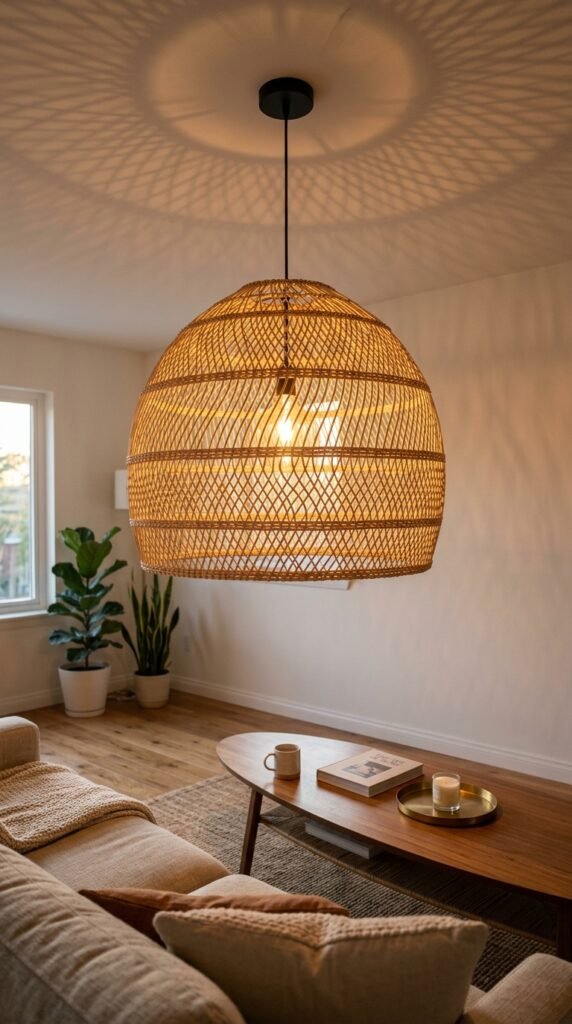
A standard builder-grade ceiling fixture undermines the minimalist aesthetic more than any furniture decision because it sits at the visual center of the ceiling, which makes it the first thing every eye in the room notices. Replacing it with a sculptural pendant in rattan, linen, or blackened steel costs $80 to $200 and shifts the fixture from infrastructure to intentional object. Modernica’s globe pendant, CB2’s Arched pendant, and IKEA’s KNIXHULT rattan pendant all deliver the visual upgrade at different price points.
Choose a pendant with a diameter at least 18 inches for a standard living room ceiling so it reads with visual authority rather than disappearing. A pendant too small for the ceiling is the fixture equivalent of a rug too small for the seating group: it looks like you tried to minimize cost rather than trying to achieve minimalist design.
12. Use a Concrete or Stone Coffee Table as the Visual Anchor
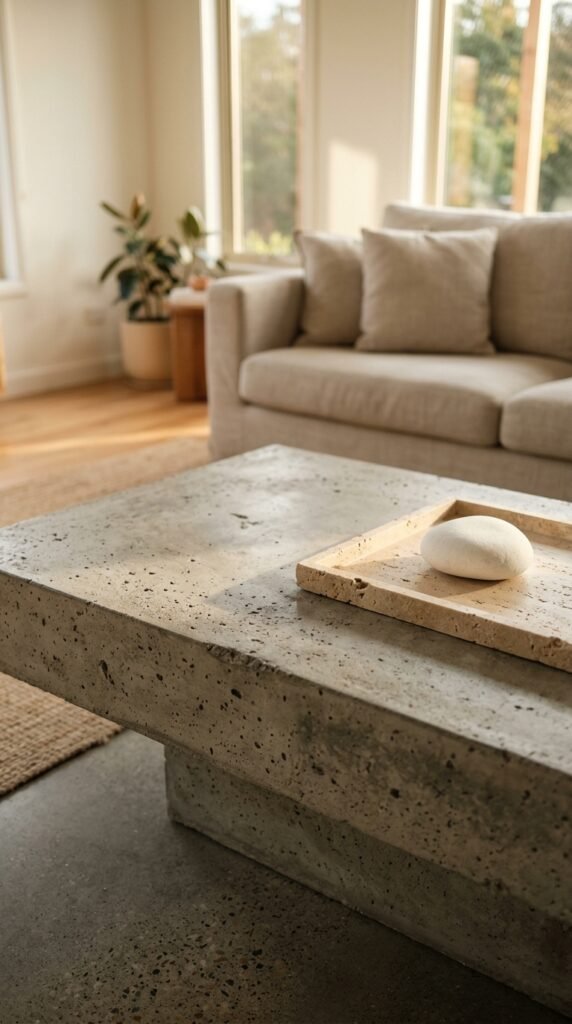
A concrete, travertine, or natural stone coffee table anchors a minimalist living room through material authenticity that no manufactured or laminate alternative communicates at the same authority level. The weight of the material (both visual and actual) signals permanence and considered selection in a way that glass, hollow wood, or resin tables never achieve. CB2’s concrete coffee tables start at $350. A genuine travertine option from West Elm runs $600 to $900. Both hold design relevance indefinitely because natural materials age better than manufactured alternatives.
The coffee table surface in a minimalist living room holds one object: a tray with one item inside it. The tray creates a visual boundary that makes the single object read as a deliberate display. The remaining table surface stays empty. The empty surface is not wasted space. It’s the design decision.
13. Edit the Bookshelf Down to 50 Percent Capacity
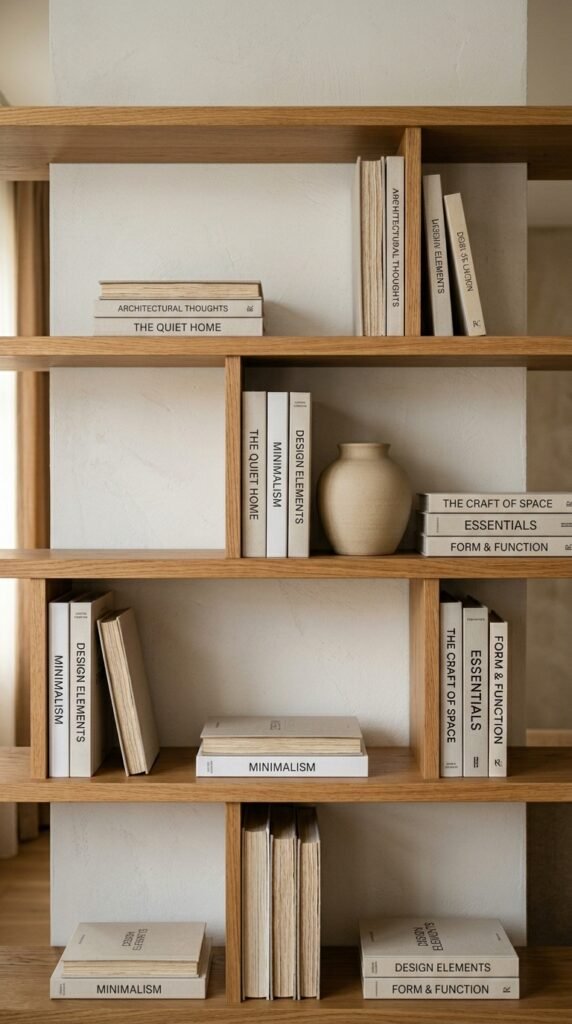
A bookshelf filled to 100 percent capacity reads as storage regardless of how carefully you arrange the books. A bookshelf at 50 percent capacity reads as a designed display element. The empty shelf space within a filled shelf gives the eye room to move and makes each remaining object appear chosen rather than housed. Remove books with bright or mismatched spines, stack remaining books horizontally in groups of two to three, and place one ceramic object between groups. The result transforms a storage unit into a room feature.
Books with garish covers or mismatched spine colors turn spine-in (pages outward) so the natural paper edge creates a warm, linen-like texture band between the more visually coherent spine-out groupings. This technique costs nothing and takes 20 minutes to implement. It changes how a bookshelf reads in a minimalist living room more dramatically than any new furniture purchase at the same price point.
14. Choose Warm White Walls Instead of Bright White
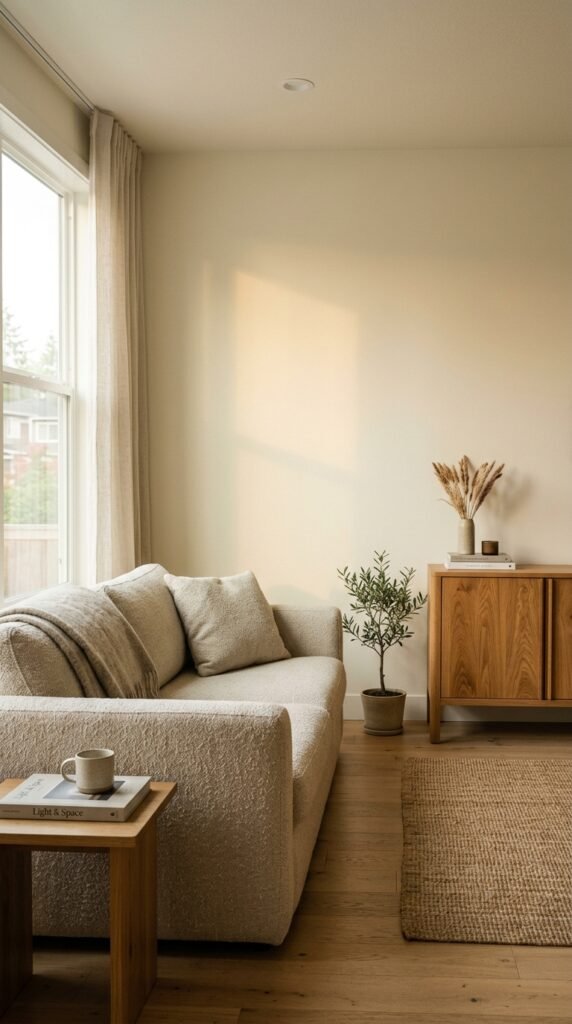
Pure bright white walls read as clinical and harsh in a minimalist living room because they reflect cool blue light that makes the space feel like an operating theater rather than a living environment. Warm white in the off-white family (Benjamin Moore White Dove OC-17, Sherwin-Williams Alabaster SW 7008, or Farrow and Ball’s All White) delivers the clean, open quality of white while maintaining the warm undertone that makes the room feel livable. The difference between a warm white and a cool white reads as the difference between a room you want to spend time in and a room you want to leave quickly.
A gallon of quality interior paint costs $35 to $55 and changes how every other element in the room reads. Natural wood tones look richer against warm white than against cool white. Linen and natural fiber textures read as intentional rather than accidental. Even the quality of natural light changes: warm white walls reflect sunlight with a golden cast rather than the flat, neutral reflection of cool white.
15. Add a Floor Lamp Rather Than Table Lamps
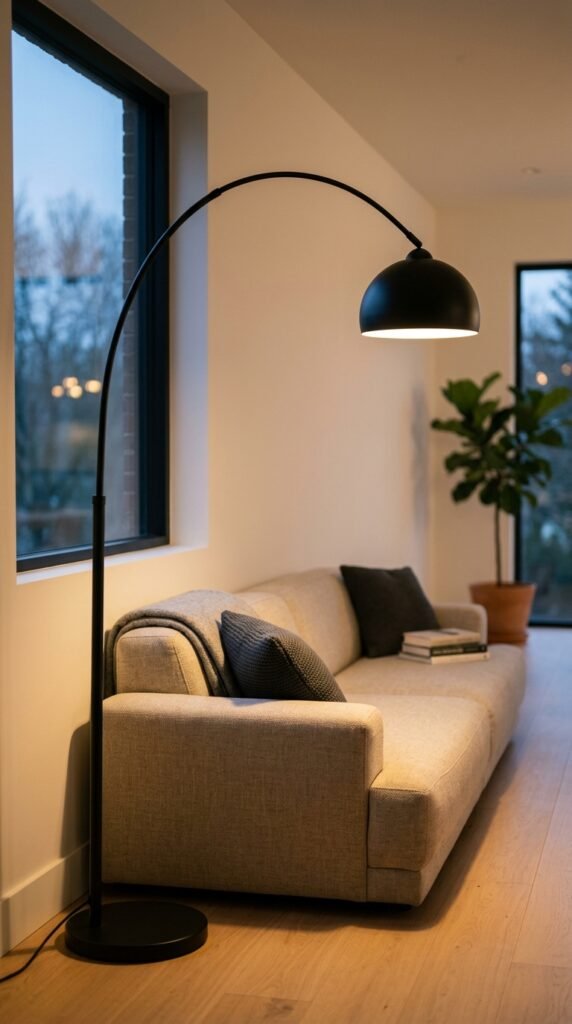
A single floor lamp beside the sofa in a minimalist living room handles the ambient and task lighting while consuming less surface space than a table lamp requires. A floor lamp eliminates the need for a side table beside it, which removes one piece of furniture from the room’s floor footprint. A Brightech Sparq arc floor lamp costs $80 to $120 and provides adjustable light at seated eye level. A HAY or IKEA minimalist floor lamp in matte black or warm brass costs $60 to $200 and adds the fixture as a visual element within the room’s composition.
Position the floor lamp at the sofa end you use most frequently for reading or evening relaxation. The lamp’s position beside the sofa creates a reading nook within the minimalist seating area that gives the room a functional purpose beyond passive television watching. A minimalist living room with a reading lamp beside the sofa communicates that the room is designed for human use, not Instagram photographs. (Although it photographs brilliantly regardless.
16. Keep the Television Out of Sight When Not in Use
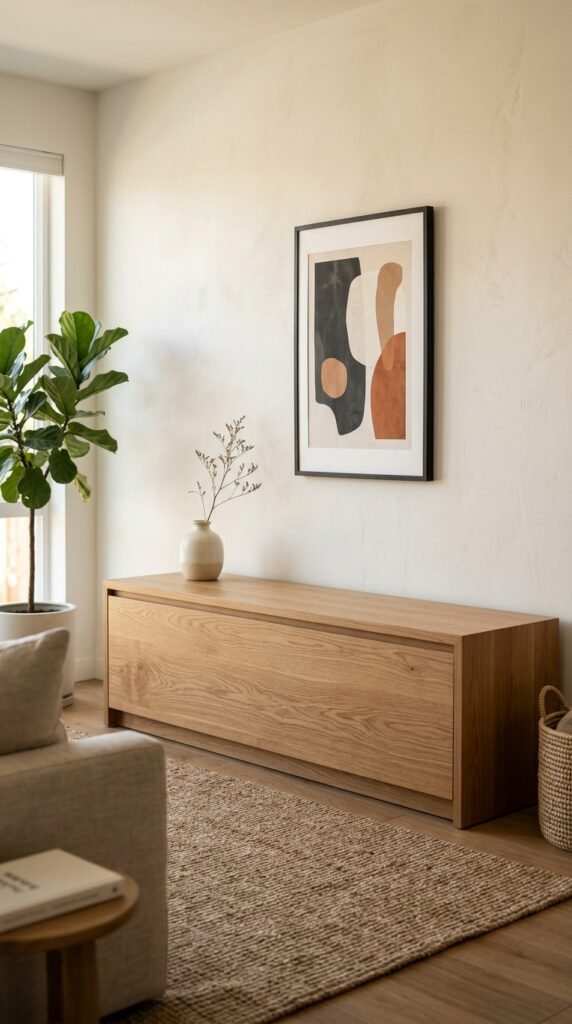
A television mounted on a minimalist living room wall dominates every surface it occupies and competes with every other visual decision in the room when it’s switched off. A dark screen on a white wall reads as a void that pulls the eye regardless of what hangs around it. Solutions include a media console with a lift-top that raises the screen to viewing height and lowers it out of sight when not in use, a floor-to-ceiling panel that conceals the screen behind a sliding element, or repositioning the television to a secondary room where it doesn’t compete with the primary living space aesthetic.
If removing the television from the living room isn’t practical, frame it as an artwork using Samsung’s The Frame television ($700 to $1,200) which displays static artwork when not in use and reduces the visual impact of a dark screen. The Frame’s matte anti-reflective screen and available frame bezels in wood and metal allow it to integrate with a minimalist living room composition rather than dominating it.
17. Use a Console Table Behind the Sofa for Functional Layering
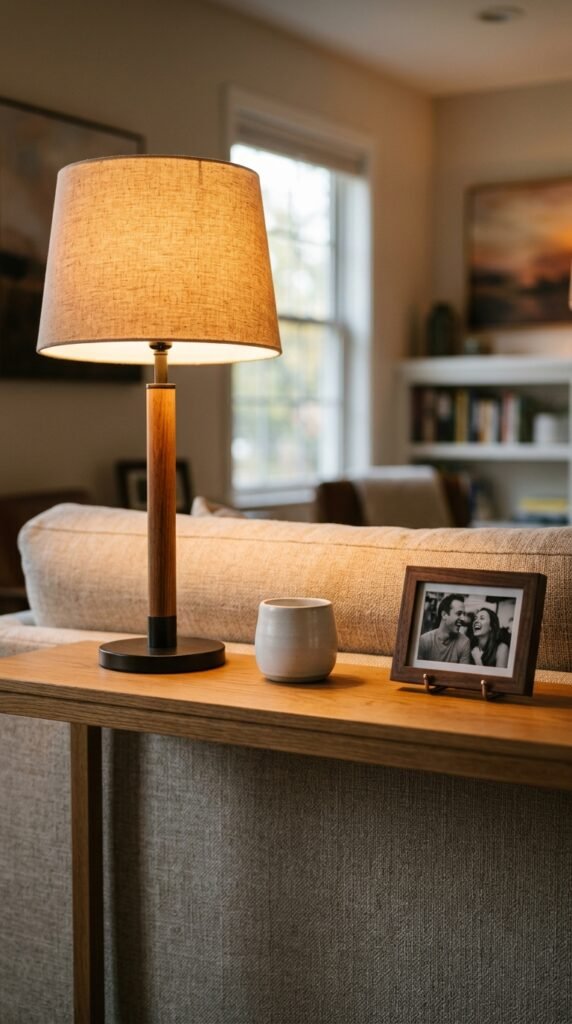
A slim console table behind the sofa adds a functional surface layer without consuming meaningful floor space. A console 12 to 14 inches deep sits flush behind the sofa back and holds a lamp at seated eye level, one small plant, and one decorative object. Three items on the console. Nothing more. The lamp at this position provides the eye-level light source that a minimalist living room’s three-layer lighting scheme requires and that a ceiling fixture alone never delivers.
Console tables in solid oak, matte black steel, or walnut veneer cost $80 to $300 at CB2, IKEA, or West Elm. The IKEA LISTERBY console at $149 in bamboo delivers the natural material quality the minimalist aesthetic requires at a price point that fits most budgets. Choose the thinnest depth available for the specific position behind the sofa to maximize the walking clearance in the room behind the seating group.
18. Choose Textured Neutral Cushions Over Patterned Ones
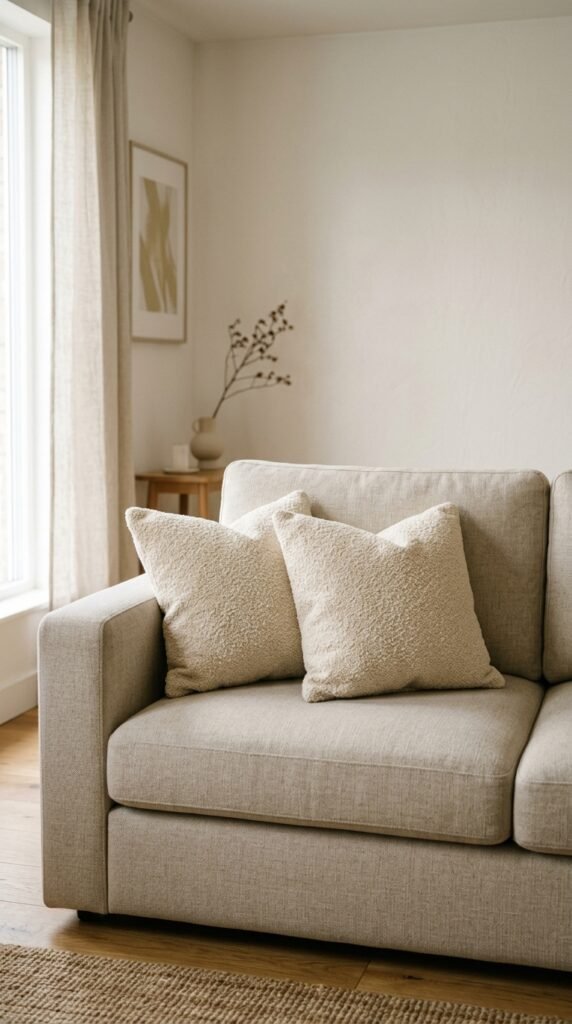
Two to three textured neutral cushions on a minimalist sofa add comfort and tactile interest without the visual noise that patterned cushions introduce in a room where every element competes for a limited visual budget. Bouclé, ribbed velvet, and chunky linen weaves all deliver texture variation within a single neutral tone that reads as considered rather than decorative. Two cushions on a two-seat sofa. Three on a three-seat sofa. No more.
Remove every cushion from your sofa and return only the two or three that earn placement through material quality or tactile interest. A single bouclé cushion in warm cream costs $25 to $45 from H&M Home or Amazon and delivers the texture layer the minimalist sofa needs without the visual complexity a patterned cushion introduces. The restraint of two or three quality cushions reads as more intentional than six coordinating cushions of lesser quality every single time.
19. Use Mirrors Strategically to Amplify Light
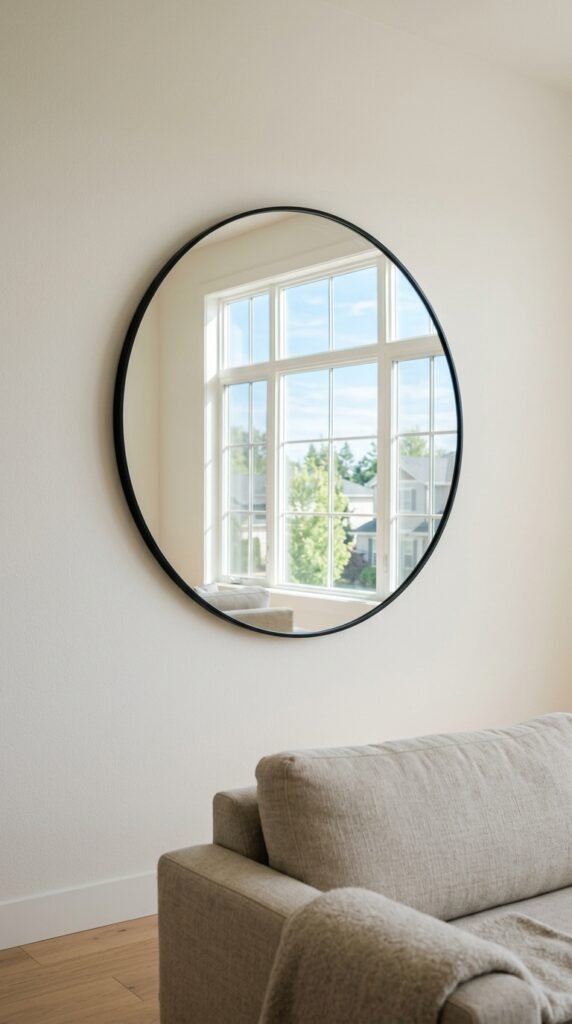
One large mirror in a minimalist living room doubles the perceived space and light without adding visual clutter because a mirror reflects existing elements rather than introducing new ones. Position a 30×40 inch or larger mirror on the wall receiving the most bounce light from the room’s windows and it reflects natural light back into the space, reducing dependence on artificial lighting during daylight hours. The Illuminating Engineering Society estimates strategic mirror placement increases perceived room brightness by 30 to 40 percent.
A round or rectangular mirror in a simple matte black or warm brass frame costs $60 to $150 at IKEA or HomeGoods and produces the same light-amplifying effect as installing a second window at zero structural cost. The mirror in a minimalist living room reads as the room’s one reflective element within a matte-dominated palette, which gives it visual authority without requiring significant wall space or competing with the room’s single artwork.
20. Apply the 60-40 Rule to Every Shelf and Surface
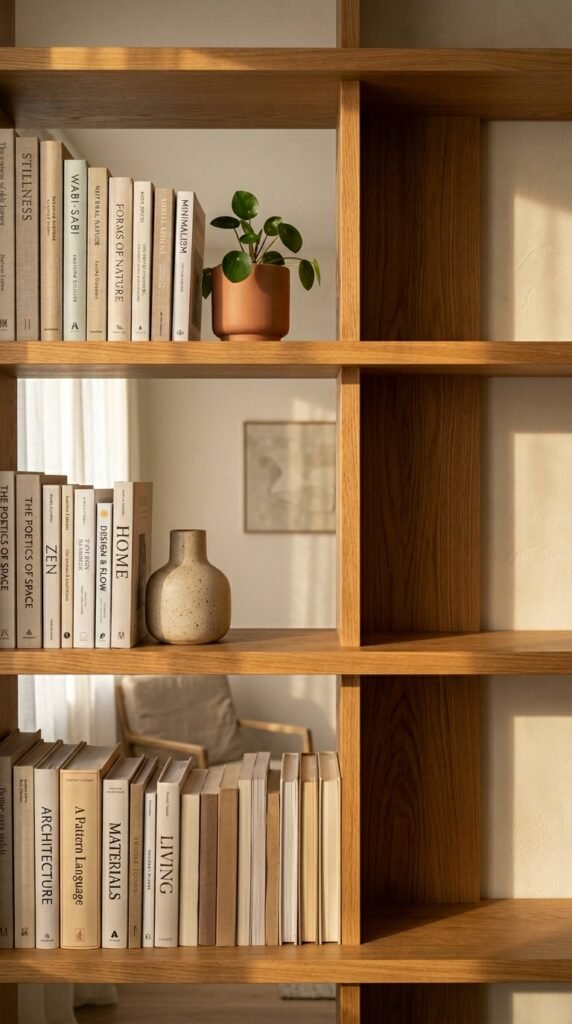
Sixty percent filled, forty percent empty on every surface and shelf in the room. This ratio gives the minimalist living room its visual breathing space while preventing the room from reading as unfinished or stripped. A bookshelf at 60 percent capacity with intentional empty sections reads as designed. A bookshelf at 100 percent capacity reads as storage. The same principle applies to every shelf, surface, and open space in the room: the empty portion is as much a design decision as the filled portion.
Apply the 60-40 rule starting with the most cluttered surface in the room. Remove 40 percent of what currently sits on it and observe the result for 48 hours before deciding whether to return anything. In most cases, the removed 40 percent stays removed because the surface reads better without it. This process costs nothing and has no downside beyond the initial discomfort of living with less than you’re used to.
21. Edit Continuously Rather Than Decorating Once
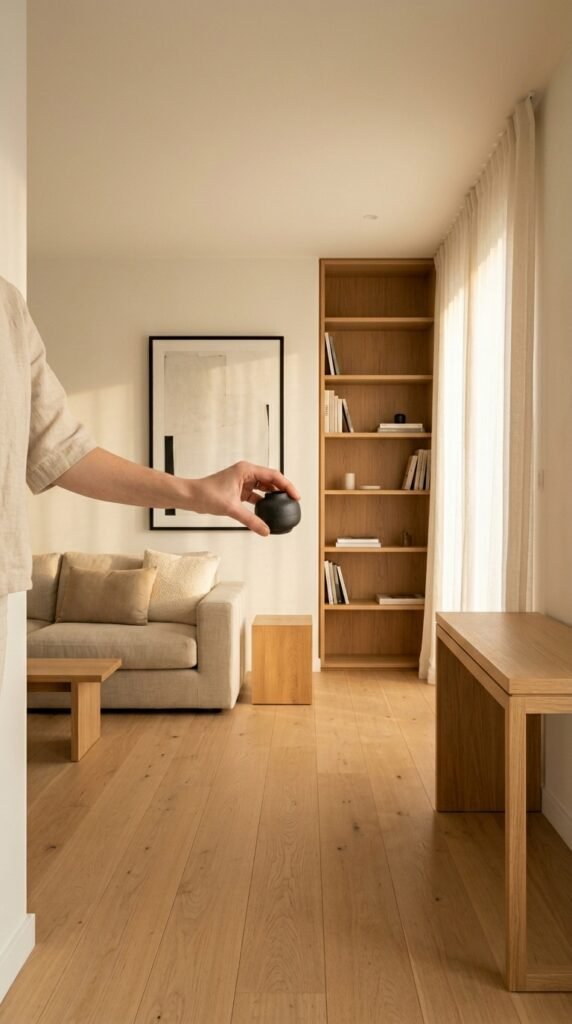
A minimalist living room isn’t a project you finish. It’s a practice you maintain. Things accumulate. Objects arrive as gifts, impulse purchases, and temporary placements that become permanent through inattention. A monthly 20-minute edit where you walk through the room with fresh eyes and remove anything that no longer earns its place keeps the space working as a minimalist environment rather than slowly sliding back toward the visual density you started with.
The practice of continuous editing also changes how you shop. When you know everything in the room needs to earn its place, you evaluate each potential purchase against what’s already there rather than adding it to the existing collection. This single behavioral shift reduces spending on home decor while simultaneously improving the room’s quality, which is the one outcome that no amount of buying ever achieves.
Final Thoughts
A minimalist living room delivers its value through what you remove, not through what you add. Start with the three zero-cost moves that deliver the highest immediate return: remove 40 percent of surface objects, apply the 60-40 rule to every shelf, and size your rug correctly for the seating group. Execute those three this weekend and the room tells a completely different story by Sunday evening. Everything else on this list is the next layer, added one decision at a time, as you get more comfortable with the idea that the empty space in your living room is doing exactly what you designed it to do.